







Abstract
Adolescence is a vulnerable period for the development of academic identification and academic persistence, particularly among African American adolescents. The present study investigated how cultural assets (i.e., private regard and racial centrality) and academic assets (i.e., academic curiosity and academic self-esteem) influence African American adolescent boys’ (n = 109) and girls’ (n = 153) academic persistence over time. Additionally, we explored whether oppositional academic identity mediated the relationships between academic and cultural assets and academic persistence. Data were drawn from a cross-sectional longitudinal study. Results indicated significant direct effects of academic assets on academic persistence at Times 1 and 2 for boys and at Times 1, 2, and 3 for girls. Furthermore, oppositional academic identity mediated the relationship between boys’, but not girls’, cultural assets and academic persistence at Time 1. These findings have implications for understanding the role of assets in the lives of African American youth.
Identification with academics is a key predictor of positive academic behaviors and sustained academic achievement (Gottfried, 1990). Adolescents who believe that doing well in school is important to their future success show higher academic engagement, persistence, and subsequent academic performance (Te Wang & Holcombe, 2010). In particular, academic persistence enables students to continue to engage in academic tasks even when facing challenges and has been associated with mastery of skills and content areas (Véronneau, Racer, Fosco, & Dishion, 2014). Because of the importance of academic persistence, consistent findings that academic persistence wanes in the adolescent years are cause for concern among scholars and practitioners (Roeser, Eccles, & Sameroff, 2000).
African American adolescents, in particular, have been found to suffer significant declines in persistence that are associated with declines in academic outcomes such as academic promotion, grades, high school completion, and attainment of college-level education (Mendoza-Denton, Pietrzak, & Downey, 2008). Identifying the processes involved in the development of African American adolescents’ academic persistence during this vulnerable developmental period can be beneficial for developing interventions to build youths’ academic competencies. Additionally, gender may be an important factor for understanding African American academic motivation and achievement, given work showing that African American boys underperform academically relative to their female peers (Cokley, McClain, Jones, & Johnson, 2012; Mickelson & Greene, 2006; Rowley et al., 2014). The purpose of the current study is to explore the influence of academic and cultural assets on African American adolescents’ academic identity and subsequent academic persistence over time and how this process may differ for boys and girls.
Theoretical Framework
During adolescence, youth are grappling with many issues pertaining to identity development, including their academic identity. More specifically, it is during the “identity versus identity confusion” stage that adolescents are beginning to explore and develop a healthy sense of identity (Erikson, 1950). While all adolescents explore issues of identity during this time, there may be special considerations among African American adolescents due to their interaction with environments structured by a racialized and stratified society (Spencer, Noll, Stoltzfus, & Harpalani, 2001). For instance, they may face more racial discrimination in schools and other institutions leading to more monitoring and restrictive practices from teachers, police, and other authority figures, which may contribute to more complex, and somewhat fraught, academic identity development. For African American adolescents, the task of identity development also includes developing a racial identity or their beliefs regarding one’s racial group membership (Sellers, Smith, Shelton, Rowley, & Chavous, 1998).
According to Garcia-Coll et al.’s (1996) Integrative Model for the Study of Developmental Competencies of Minority Children, ethnic minority children and adolescents’ social positions (e.g., race, ethnicity, and gender), characteristics (e.g., racial identity and academic beliefs), environments (e.g., families, schools, and neighborhoods), and experiences with stratification (e.g., stereotyping and discrimination) should be considered as factors that shape their normative development. This ecological lens provides a culturally relevant understanding of the complex processes that shape African American adolescents’ academic competencies by exploring the influences of their social position and contextual settings. In addition, this model provides alternative explanations for the academic outcomes for African American adolescents in contrast to the cultural-deficit explanations of children and adolescents of color that have dominated the literature.
For instance, one common explanation for racial disparities has been that African American youth are concerned that their peers will perceive them as “Acting White” if they engage in academic behaviors (Fordham & Ogbu, 1986). Because of their desire to fit in and not be ridiculed by peers, African American youth do not focus on academic success according to this hypothesis. The use of the Acting White hypothesis as discussed by media, practitioners, and some researchers has ignored the structural factors initially proposed by Fordham and Ogbu’s (1986) oppositional culture theory, which suggested that due to youth perceiving an unequal opportunity structure, they will devalue education and focus on other activities in which they will have better opportunities for success. Yet there is much variation in African American youths’ academic behaviors. We propose that the characteristics of youth will influence how much adolescents will engage in public oppositional academic identification (hiding academic behaviors from peers) and subsequent academic persistence. In particular, we were interested in understanding how racial identity beliefs and academic beliefs relate to academic persistence over time among African American adolescents. We were also interested in the extent to which adolescents’ public oppositional academic identity mediates the relationships between academic (i.e., academic curiosity and academic self-esteem) and cultural assets (i.e., private regard and racial centrality) and academic persistence over time. Additionally, we will explore the ways in which these processes compare between boys and girls.
Oppositional Academic Identity
According to Fordham and Ogbu’s (1986) cultural ecological theory, African Americans may develop oppositional identities in relation to academic achievement due to unfair opportunity structures in the U.S. society. Due to the history of prejudice and discrimination in the United States that stigmatized African Americans in academic and intellectual domains and limited economic and educational opportunities, African Americans may not perceive as many benefits (e.g., social mobility, financial stability) of academic success for members of their own racial group as for European Americans. This lack of opportunity may cause African Americans to lose academic motivation, lower their academic persistence and effort, and view engaging in academic behaviors as “acting white” (Fordham & Ogbu, 1986, p. 183). African Americans who strive for academic success may experience social pressure to not engage in academic behaviors or may feel that they do not fit in with or have betrayed their racial group (Fordham & Ogbu, 1986). This theory suggests that identifying with their racial group can lead to academic disengagement among African American youth and contribute to academic underperformance. This “Acting White hypothesis” has become a popular explanation for racial educational disparities but few studies have empirically explored (a) the prevalence of academic oppositional identity among Black youth, (b) the relationship between an academic oppositional identity and academic behaviors, and (c) factors that account for variation among African American youth in the development of academic oppositional identity and levels of academic persistence.
The majority of studies exploring these questions have not provided support for oppositional identity as a major contributor to Black-White academic achievement differences (e.g., Ainsworth-Darnell & Downey, 1998; Cook & Ludwig, 1998; Kao & Tienda, 1998; Lundy & Firebaugh, 2005; Nichols, Kotchick, Barry, & Haskins, 2009; Tyson, 2002). In fact, African American adolescents have been found to have more positive attitudes about school than European American students in several studies, even though they have lower academic performance on average (Ainsworth-Darnell & Downey, 1998; Lundy & Firebaugh, 2005). Another study found social benefits for African Americans who academically succeeded (Cook & Ludwig, 1998).
Even though there is not strong evidence that oppositional identity significantly explains racial differences in academic achievement, oppositional identity consistently has been found to be negatively related to academic attitudes and performance. Smalls, White, Chavous, and Sellers (2007) found that adolescents with higher public oppositional academic identity displayed less academic persistence and curiosity and engaged in more negative school behaviors. An analysis of the National Educational Longitudinal Survey of 1988 found that oppositional identity was related to lower mathematics and reading achievement scores across racial-ethnic groups and also predicted high school dropout. Cultural mistrust and oppositional identity also are related to lower educational outcome expectancies, which can lead to lower academic achievement (Irving & Hudley, 2008). Based on Fordham and Ogbu’s (1986) theory and empirical results, we hypothesize that oppositional academic identity will be negatively related to African American adolescents’ academic persistence over time.
While quantitative studies have provided little support for oppositional identity as a major contributor to ethnic academic disparities, some of these studies provide evidence that individual and contextual factors influence the development of an oppositional academic identity. For instance, two studies from the National Educational Longitudinal Survey of 1988 (Lundy & Firebaugh, 2005; Medina, 2012) found that oppositional identity did not account for the achievement differences among White, African American, Hispanic, and Asian American students but that antistudious attitudes were more common among boys in comparison with girls. Tyson, Darity, and Castellino (2005) found that school context mattered in the existence of an oppositional culture among students. Black adolescents often wanted to do well academically and did not report much peer pressure to hide academic success. Instead, Black youth and low-income White youth in schools, where there were clear racial or socioeconomic differences between students placed in advanced classes versus regular classes, expressed opposition to being placed in advanced classes because they did not want to be like the students in those classes. This work suggests that the development of public oppositional academic identity may be influenced by a number of factors, including gender, perceptions of the school climate, and understanding and perceptions of racial and social stratification.
Studies have also found racial ideological beliefs to be related to oppositional academic identity (Smalls et al., 2007). Specifically, possessing assimilation ideology (i.e., Blacks should be like White people) was related to higher public oppositional academic identity, while an oppressed minority ideology (i.e., “emphasizing commonalities between Blacks and other oppressed groups”) was related to lower public oppositional academic identity and more academic engagement. These studies suggest that adolescents’ characteristics and beliefs can influence the formation of an academic oppositional identity. Thus, in the current study, we explore whether adolescents’ academic and cultural assets are related to oppositional identity and its subsequent effects on academic persistence. Due to the importance of connection to one’s race in Fordham and Ogbu’s (1986) cultural ecological theory, we explore private regard and racial centrality as cultural assets. In addition, we explore academic self-esteem and academic curiosity as academic assets due to the literature supporting these constructs as central to academic motivation and persistent behaviors.
African American Adolescents’ Academic and Cultural Assets
Private Regard
During adolescence, African American youth are beginning to explore the personal meaning of their racial group membership. This experience of racial identity development can be positive or negative depending on the meaning one ascribes to being a member of their racial group. In the current study, we will explore private regard, a construct conceptualized by Sellers, Smith, et al. (1998) in their racial identity framework, defined as individuals’ affective feelings about their racial group membership, including an awareness of and pride in the group’s heritage and societal contributions. Overall, African American adolescents endorsing high private regard have been found to have higher academic motivation and performance than African Americans with low private regard (e.g., Butler-Barnes, Williams, & Chavous, 2012; Wong, Eccles, & Sameroff, 2003). In addition, McCreary, Slavin, and Berry (1996) found that African American adolescents who endorsed less positive attitudes about African Americans had more problematic behavior. Positive racial attitudes about African Americans have also been found to serve as a protective factor (Miller, 1999).
Racial Centrality
Another aspect of Sellers, Smith, et al.’s (1998) conceptualization of racial identity is racial centrality, the extent to which individuals feel that being Black is central to their self-concept and a normative way in which they self-identify. Racial centrality has been positively related to academic outcomes, acts as a buffer against the negative effects of discrimination, and moderates relations between other racially relevant constructs and academic outcomes (Byrd & Chavous, 2009; Chavous, Rivas-Drake, Smalls, Griffin, & Cogburn, 2008; Sellers, Chavous, & Cooke, 1998). For example, Chavous et al. (2008) found that for both adolescent boys and girls, racial centrality was a buffer against the negative effects of peer racial discrimination on feelings of school importance.
Additionally, in college students, Sellers, Chavous, et al. (1998) found that the association between racial ideology and GPA differed for high and low race centrality students. For example, they found that endorsing an ideology that promotes the idea that minority individuals share a common struggle was related to higher GPA but only for students with higher racial centrality. These studies show that racial centrality may act as a buffer against the negative effects of racial discrimination and may also serve as a moderator of other racial identity attitudes. This may be because racial centrality determines whether other racial experiences and attitudes have an effect on an individual. For example, if adolescents have high private regard, but race is not central to their identity, private regard may have a diluted or nonexistent effect on other outcomes because, for those individuals, racial attitudes are not central or important to their lives (Sellers, Smith, et al. 1998).
These studies suggest that racial centrality can be a positive aspect of adolescents’ lives; however, the effect of racial centrality may be more negative if adolescents have other negative racial attitudes. Okeke, Howard, Kurtz-Costes, and Rowley (2009) found that endorsement of racial academic stereotypes was related to more negative academic self-concept only when adolescents had high racial centrality. Thus, if race is important to individuals, but their attitudes about race are negative (e.g., they endorse negative racial stereotypes), racial centrality may in fact have a negative association with positive academic behaviors. For example, Altschul, Oyserman, and Bybee (2006) found that Black and Latino adolescents’ feelings of closeness to their racial group (conceptualized similarly to centrality) were positively related to their GPA only when adolescents also felt that academic achievement was a central part of being African American. Thus, both academic assets and racial centrality are important for understanding adolescents’ academic behaviors.
The current study builds upon the extant literature on the established link between racial identity beliefs and academic outcomes (e.g., Altschul et al., 2006; Caldwell, Kohn-Wood, Schmeelk-Cone, Chavous, & Zimmerman, 2004; Eccles, Wong, & Peck, 2006; McCreary et al., 1996; Sellers, Copeland-Linder, Martin, & Lewis, 2006; Smalls et al., 2007; Thompson & Gregory, 2011). We propose that private regard and racial centrality are cultural assets that may help African American adolescents maintain academic motivation. Adolescents with higher private regard and racial centrality will have fewer public oppositional academic identity beliefs and have higher academic persistence over time.
Academic Assets
Adolescents’ values, attitudes, and beliefs about education have been linked with academic outcomes. Academic assets such as academic curiosity are beliefs that support the usefulness of formal education and motivation to learn and are important to the motivation and achievement of students. Despite the important role of academic assets, very few research studies have explored academic curiosity as a personal academic asset. Those studies that have focused on academic curiosity have examined how racial socialization messages and racial discrimination affect academic curiosity, and thus have often focused on this construct as an outcome rather than as a predictor of academic performance and motivation (Eccles et al., 2006; Neblett, Philip, Cogburn, & Sellers, 2006; Smalls et al., 2007; Wong et al., 2003). Studies that have focused on academic curiosity found that it declines throughout adolescence (Gottfried, Fleming, & Gottfried, 2001) and that it is an important asset for academic performance (Von Stumm, Hell, & Chamorro-Premuzic, 2011). One of the outstanding questions concerns the importance of academic curiosity as a personal academic asset for African American adolescents and the impact on academic persistence.
Another construct involved in academic assets is academic self-esteem, a measure of how contingent one’s self-worth is on academic performance (Crocker & Wolfe, 2001). This construct is important to understand as some researchers posit that when there is little connection between academic performance and self-esteem, there is little reason to value academics or make an effort to do well. For example, Osborne (1997) found that the correlation between self-esteem and academic performance decreased dramatically between 8th and 12th grades for African American boys, suggesting potential academic disidentification. This work suggests that low academic contingencies of self-worth may lead to lower academic persistence and achievement due to little motivation to do well, since academic performance does not affect feelings about the self.
However, academic contingencies of self-worth may not relate to other academic performance indicators, as boosting self-esteem is not the only motivation for doing well in school. One may be motivated by the possibility of parental punishment, the recognition that academics is important for upward mobility and future financial stability, or simply a desire to learn. Likewise, if a student’s self-esteem is highly dependent on their academic performance, this may in fact have a negative impact on academic performance or well-being due to heightened performance anxiety. Indeed Hope, Chavous, Jagers, and Sellers (2013) found that African American college students with low self-esteem and a low GPA also had higher levels of academic self-esteem relative to other students. These students were also most at risk for psychological distress, suggesting that adolescents who have higher academic self-esteem may in fact be at risk for psychological problems if they do not perform. For these reasons, it is important to explore and clarify the mechanisms by which academic self-esteem may relate to oppositional academic identification and academic persistence. We contribute to the extant research by examining the roles of academic curiosity and academic self-esteem as personal academic assets that may relate to adolescents’ academic persistence.
The Role of Gender
In addition to cultural and personal assets, individual characteristics such as gender have important implications for African American adolescents’ academic motivation. First, research has shown that Black boys underperform academically and may also experience higher academic disidentification compared with Black girls (Cokley, 2001; Cokley et al., 2012; Rowley et al., 2014; Taylor & Graham, 2007). As early as kindergarten, researchers have found gaps in literacy between African American boys and girls (Matthews, Kizzie, Rowley, & Cortina, 2010). Additionally, in both middle and high school, Black girls have been found to have higher academic achievement than Black boys (Cokley et al., 2012; Mickelson & Greene, 2006). From 2000 to 2010, Black women also earned 66% of the Bachelor’s degrees awarded to Black college students (Aud et al., 2012).
Some work also suggests that boys receive fewer positive racial socialization messages from their parents, which may lead to lower racial centrality and lower private regard among African American boys. For example, Neblett, Smalls, Ford, Nguyên, and Sellers (2009) found that Black girls were more likely to be in groups receiving more positive racial socialization messages, whereas Black boys were more likely to be in a group receiving relatively few racial socialization messages. Bowman and Howard (1985) also found in retrospective reports of Black adolescents and young adults that Black men reported receiving more racial barrier and egalitarian messages from their parents than did Black women. Messages that center on racial barriers, particularly if not combined with more positive socialization messages, may encourage both less positive racial identity attitudes and lowered academic persistence. Furthermore, messages about racial barriers may further fuel feelings of futility around academic achievement as a key to upward mobility, as proposed by Fordham and Ogbu (1986).
Research has been mixed on the extent to which boys and girls have been shown to hold differing racial identity attitudes, with some work showing a few, but not extensive, differences (Cokley, 2001; Neblett, Smalls, et al., 2009; Plummer 1995; Rowley, Sellers, Chavous, & Smith, 1998). Research has shown gender differences in the ways in which African Americans’ racial identity relates to academic achievement. Chavous et al. (2008), for example, found that racial centrality buffered the negative effects of racial discrimination on academic outcomes in different ways for boys and girls. For boys, racial centrality buffered the negative relations between classroom racial discrimination and GPA, between peer racial discrimination and GPA, between classroom discrimination and school importance, and between peer discrimination and school importance. For girls, similar to boys, racial centrality was also a buffer against the negative impact of peer discrimination on school importance. However, with regard to the association between classroom discrimination and academic self-concept, for girls with low racial centrality, classroom discrimination and academic self-concept were positively related, whereas for girls with high racial centrality, there was no relationship between classroom discrimination and academic self-concept (Chavous et al., 2008).
In contrast, Cokley (2001) found that in a sample of African American college students that racial centrality was significantly positively correlated with constructs measuring various aspects of intrinsic motivation for girls only; no significant correlations were found between racial centrality and academic motivation for boys. This work demonstrates the complexities of racial identity’s relationship to African American adolescents’ and young adults’ academic outcomes, which are likely influenced by a number of environmental, social, and individual factors in addition to time and age. In adolescence, for boys, high racial centrality may be especially positive, whereas for girls, the relations between racial centrality and academic outcomes may be more complex. In this study, we aim to understand the ways in which academic and cultural competencies may relate to academic persistence in different ways for African American boys and girls.
The Current Study
In the current study, we sought to examine how academic and cultural assets influenced African American adolescents’ academic persistence and to understand the developmental trajectory of how these assets affect academic persistence over time. We focus on the predictive role of assets and the mediating role of public oppositional academic identity beliefs. We propose that cultural and academic assets will encourage African American adolescents to take pride in their academic accomplishments, which will in turn lead to more academic persistence. Thus, in the current study, we expected the following: (a) African American adolescents who reported higher assets (i.e., private regard, racial centrality, academic curiosity, academic self-esteem) would have lower reports of public oppositional academic identity beliefs over time and (b) lower reports of public oppositional academic identity beliefs would predict higher levels of academic persistence over time. Adolescents’ who self-identified as African American were included in the study. Additionally, given evidence from previous work exploring these processes in African American adolescents (Chavous et al., 2008), we expect private regard to have an indirect effect on academic persistence through oppositional academic identity for both boys and girls. However, we expect racial centrality to have an indirect effect on academic persistence through oppositional academic identity. Additionally, we expect oppositional identity to be negatively related to academic persistence, and for the personal academic assets (academic self-esteem and academic curiosity) to be indirectly related to academic persistence through oppositional academic identity.
Method
Participants
The study included a sample of 263 African American adolescents (n = 110 boys, n = 153 girls) in their 7th-, 8th-, 9th-, and 10th-grade school year from a large Midwestern school district. The study consists of three waves of data and three cohorts of participants. Adolescents ranged from 10 to 17 years of age. At Time 1, 22.5% of students were in the 7th grade, 38.2% in the 8th grade, 24% in the 9th grade, and 15.4% in the 10th grade. More than 46% of the parents reported receiving a college degree or more. Fifteen percent of the students in the school district were African American, 58% were White, 12% were Asian, 4% were Latino, and 11% were other. There were three waves of data and three cohorts of participants with Cohort 1 having data across the three waves and Cohorts 2 and 3 added during Year 2 and 3 of the study, respectively. Thus, we selected Cohort 1 for our analyses because of our interest in longitudinal analyses across the three waves.
Procedures
The data were part of an existing longitudinal study exploring the racial experiences of African American adolescents. The school district was composed of six middle schools and five high schools. Information about the study was mailed to parents and followed up with a phone call if necessary to elicit participation. Parents who provided consent were asked to identify the following: (a) race of the adolescent, (b) adolescent primary caregiver, and (c) contact information. Adolescents who met the requirements of the study and who obtained parental consent were asked to provide assent under the supervision of undergraduate and graduate students who self-identified as African American. The household response rate on average was 74%. Data were collected in years 2002, 2003, and 2004 in Waves 1 to 3, respectively. The sample at Time 1 comprised 328 adolescents, 276 adolescents participated in Time 2, and 260 participated in Time 3. Survey administration lasted approximately 50 minutes. Students were informed that their involvement with the study was completely voluntary and confidential. Students were compensated with local mall gift certificates amounting to $20 for Wave 1, $30 for Wave 2, and $40 for Wave 3.
Measures
Culturally Based Assets
Adolescents’ private regard, or feelings toward African Americans and being African American, was measured with items from the Multidimensional Inventory of African American Identity-Teen (see Scottham, Sellers, & Nguyên, 2008). Adolescents answered three items (i.e., “I am happy I am African American”) on a 5-point scale ranging from 1 (really disagree) to 5 (really agree). We averaged responses to these three items with higher scores representing more positive private regard. Racial centrality was measured with three items (i.e., “I feel close to other Black people”) on a 5-point scale ranging from 1 (really disagree) to 5 (really agree). These items were also averaged with higher scores representing higher racial centrality. Cronbach’s alpha for these subscales were .75 and .56, respectively.
Academic Assets
Adolescents’ level of academic curiosity was measured with the items based on Skinner and Belmont’s (1993) Scale for Academic Engagement. The factor analysis revealed four items, (“I participate when we discuss new material”). The 4-point Likert-type scale ranged from 1 (not at all true) to 4 (very true). Adolescents’ academic self-esteem was assessed with two items (i.e., “My self-esteem gets a boost when I get a good grade on a test or paper”). Cronbach’s alpha for these subscales were .59 and .65, respectively.
Public Oppositional Academic Identity
Adolescents’ academic identity was measured with an adapted version of the impression management subscale from Arroyo and Zigler’s (1995) Racelessness Scale. Three items (i.e., “I feel like I must act less intelligent than I am so other students will not make fun of me”). The response scale ranged from 1 (not at all true) to 3 (very true). We averaged responses to these three items with higher scores representing more negative academic identity. Cronbach’s alpha for this scale was .58
Time 1, Time 2, and Time 3 Measures
Academic persistence
We examined adolescents’ academic persistence using adapted items from the Scale for Academic Engagement (Skinner & Belmont, 1993). The current study included four items (e.g., “If I can’t get a problem right the first time, I just keep trying”; Neblett et al., 2006; Smalls et al., 2007). Responses ranged from 1 (not at all true) to 4 (very true). We averaged responses to these four items with higher scores representing higher levels of academic persistence. Cronbach’s alpha for this scale was .71.
Demographic background and control variables
Demographic background variables in the study included adolescent age.
Results
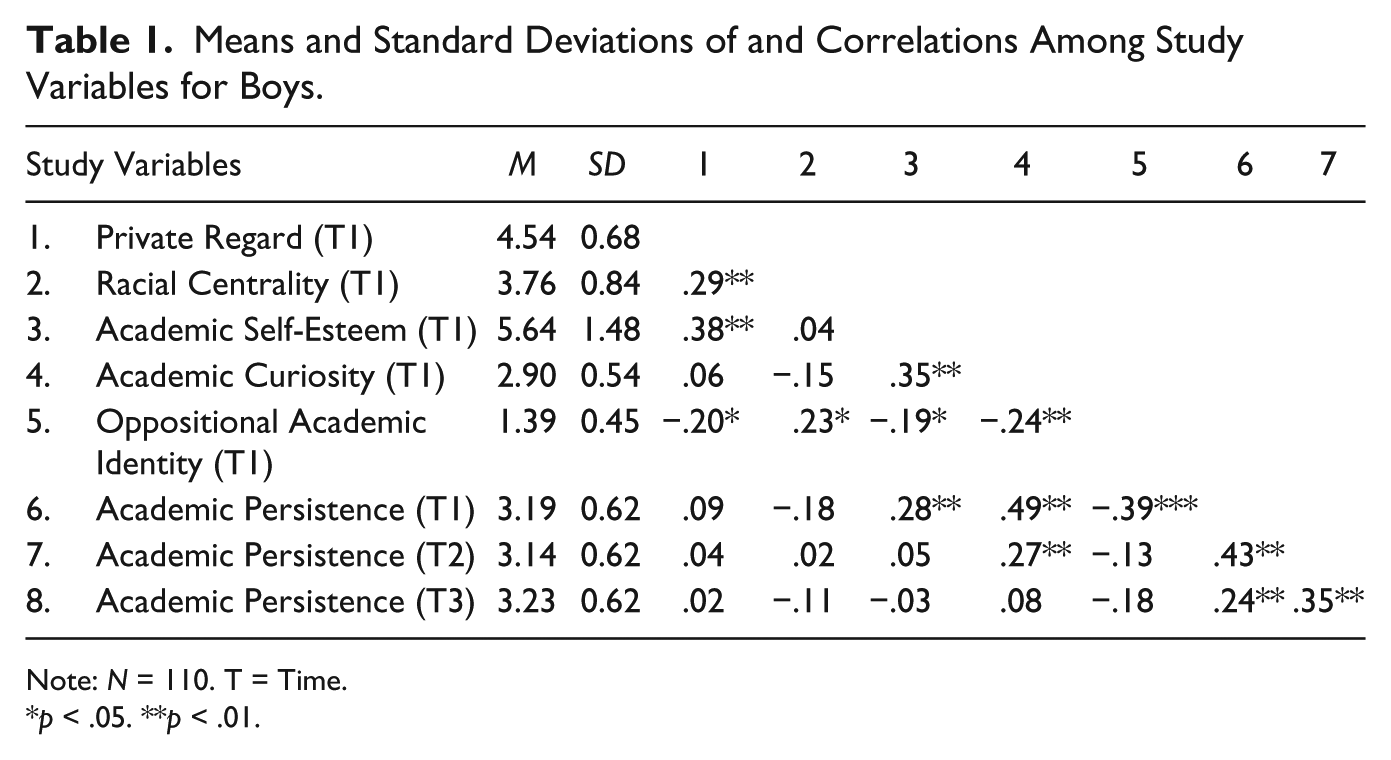
Table 1 provides the descriptive statistics such as the means, standard deviations, and the correlations for the study variables for boys. Findings indicated that academic self-esteem was positively associated with academic persistence at Time 1 (r = .28, p < .01). Academic curiosity was positively associated with academic persistence at Time 1 (r = .49, p < .01) and Time 2 (r = .27, p < .01). Last, oppositional academic identity was significantly negatively associated with academic persistence at Time 1 (r = −.39, p < .01).
Means and Standard Deviations of and Correlations Among Study Variables for Boys.
Note: N = 110. T = Time.
p < .05. **p < .01.
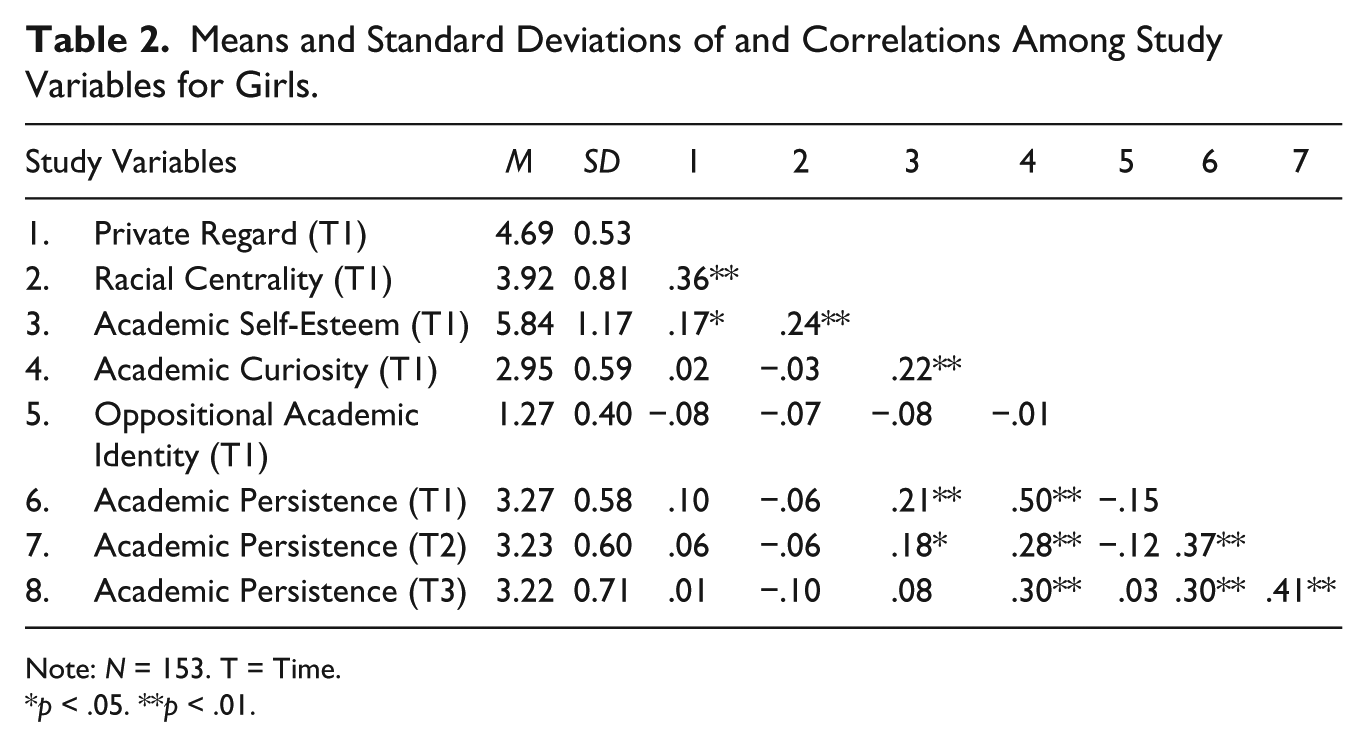
Table 2 provides the descriptive statistics such as the means, standard deviations, and the correlations for the study variables for girls. Findings indicated that academic self-esteem was positively associated with academic persistence at Time 1 (r = .21, p < .01) and Time 2 (r = .18, p < .05). Academic curiosity was positively associated with academic persistence at Time 1 (r = .50, p < .01), Time 2 (r = .28, p < .01), and Time 3 (r = .30, p < .01).
Means and Standard Deviations of and Correlations Among Study Variables for Girls.
Note: N = 153. T = Time.
p < .05. **p < .01.
Growth Curve Analyses
Growth curve analyses were conducted with Mplus 6 (Muthén & Muthén, 1998-2010) to examine how academic (e.g., academic curiosity and academic self-esteem) and cultural (e.g., private regard and racial centrality) assets predicted academic persistence over time and to test whether oppositional academic identity mediated the relationship between assets and academic persistence. Full information maximum likelihood estimation was used across three waves for missing data. The fit of the model was evaluated using five goodness of fit indices: chi-square fit test, comparative fit index (CFI), Tucker-Lewis index (TLI), root mean square error of approximation (RMSEA), and the standardized root mean square residual (SRMR). The data were longitudinal and conducted over three waves. The standard bootstrapping method of 1,000 was employed to estimate the standard errors for the indirect effects (Shrout & Bolger, 2002).
Three separate growth curve models were conducted. Each model was also run separately for boys and girls. First, the unconditional growth model was examined to estimate the initial level (i.e., intercept) and the growth (i.e., slope) of academic persistence over three waves. Linear models were explored and the loadings were fixed to 0, 1, and 2 across academic persistence for Time 1, Time 2, and Time 3, respectively. The model showed a good model fit, χ2(df = 3) = 67.07, p < .01, CFI = 1.00, TLI = 1.00, RMSEA = .00, and SRMR = .01, and indicated that there were differences between adolescent boys and girls academic persistence in the initial level of the intercept. More specifically, girls (B = 3.27, p < .001) had higher levels of academic persistence at the initial level in comparison to boys (B = 3.16, p < .001). However, growth in academic persistence over time was not linear. Because adolescents ranged from 7th to 10th grade, we included adolescents’ age to determine if adolescents’ change in academic persistence over time was because of their age. We then constructed the second model by adding in adolescent age. The results indicated a good model fit, χ2(df = 9) = 75.78, p < .01; CFI = 1.00; TLI = 1.00, RMSEA = .00, and SRMR = .03, indicating no differences due to adolescents’ age on the intercept or slope. The third model included the independent variables: private regard, racial centrality, academic curiosity, and academic self-esteem; mediator: oppositional academic identity; dependent variables: Time 1 to Time 3 academic persistence and adolescent age. The overall model indicated a good fit, χ2(df = 6) = 8.48, CFI =.98, TLI = .87, RMSEA = .04, and SRMR = .03.
In testing the meditational effects, first we tested the association between cultural and academic assets on academic persistence over time. Then we examined the indirect effects of cultural and academic assets on academic persistence via oppositional academic identity.
Boys
For boys, controlling for age, oppositional academic identity (B = −.36, p < .01) and academic curiosity (B = .43, p = .001) were significantly associated with academic persistence at Time 1. At Time 2, academic curiosity was significantly associated with academic persistence (B = .24, p < .05). None of the academic assets and cultural assets were associated with oppositional academic identity or academic persistence at Time 3. We also examined the direct effect of academic and cultural assets on oppositional academic identity. The findings revealed that private regard (B = −.17, p < .05) and racial centrality (B = .16, p < .001) were associated with oppositional academic identity.
We then tested mediation by examining the indirect effects of the independent variables on academic persistence via oppositional academic identity. The findings revealed a significant indirect effect of racial centrality on Time 1 academic persistence through oppositional academic identity (B = −.06, p = .03; 95% CI [−.13, −.01]). The direct effect between racial centrality and Time 1 academic persistence was no longer significant, suggesting full mediation. Additionally, the findings revealed a marginally significant indirect effect of private regard on Time 1 academic persistence through oppositional academic identity (B = .06, p = .06; 95% CI = [.15, .13]). However, the other indirect effects were not significant (see Figure 1).
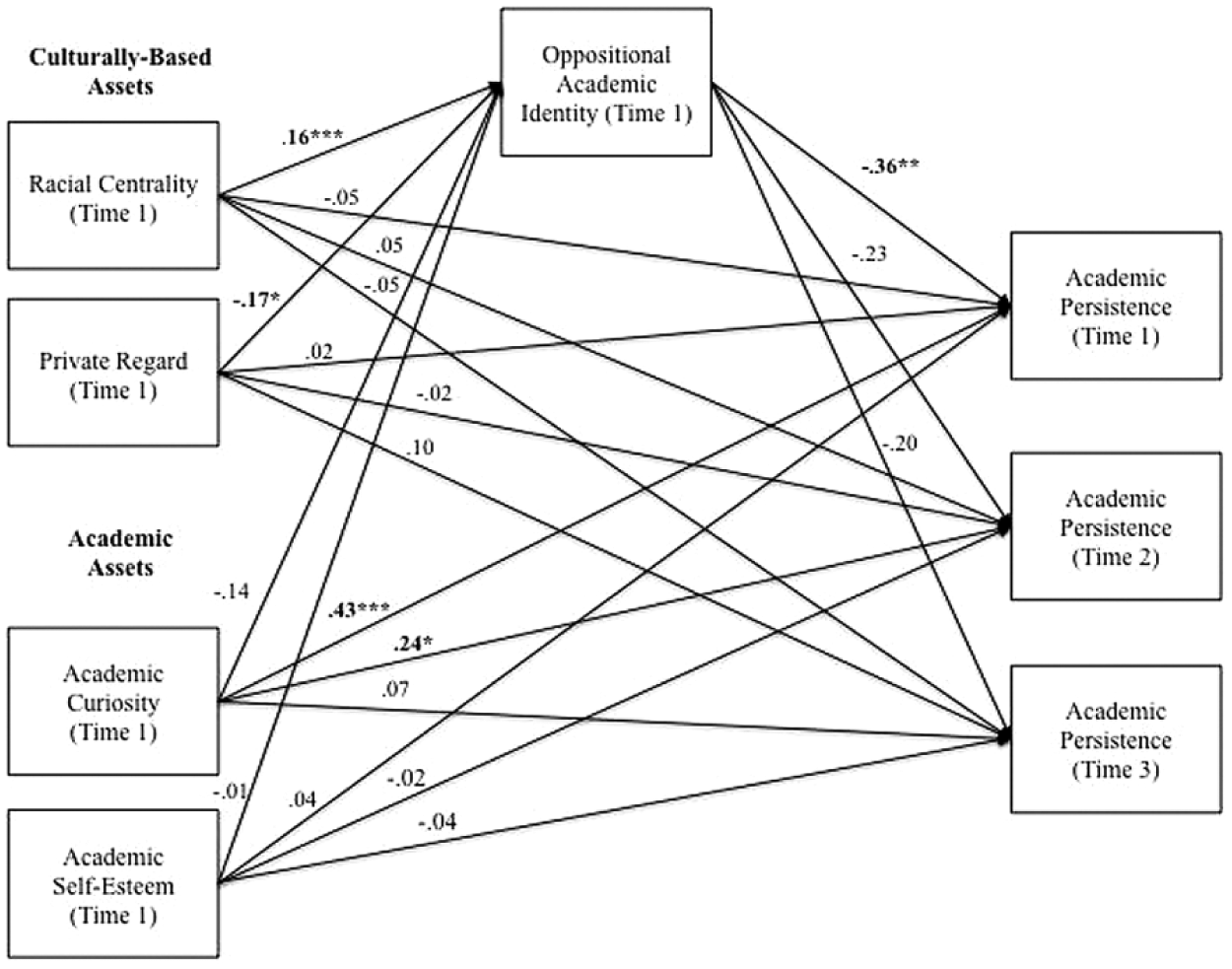
Relationships between cultural and academic assets, academic identity, and academic persistence among African American boys.
Girls
Controlling for age, at Time 1, academic curiosity was significantly associated with academic persistence (B = .45, p < .001). Additionally, at Time 2 and Time 3, academic curiosity was associated with academic persistence (B = .24, p < .05) and (B = .30, p < .010), respectively. Academic assets and cultural assets did not have a direct effect on oppositional academic identity. There were also no mediation effects (see Figure 2).
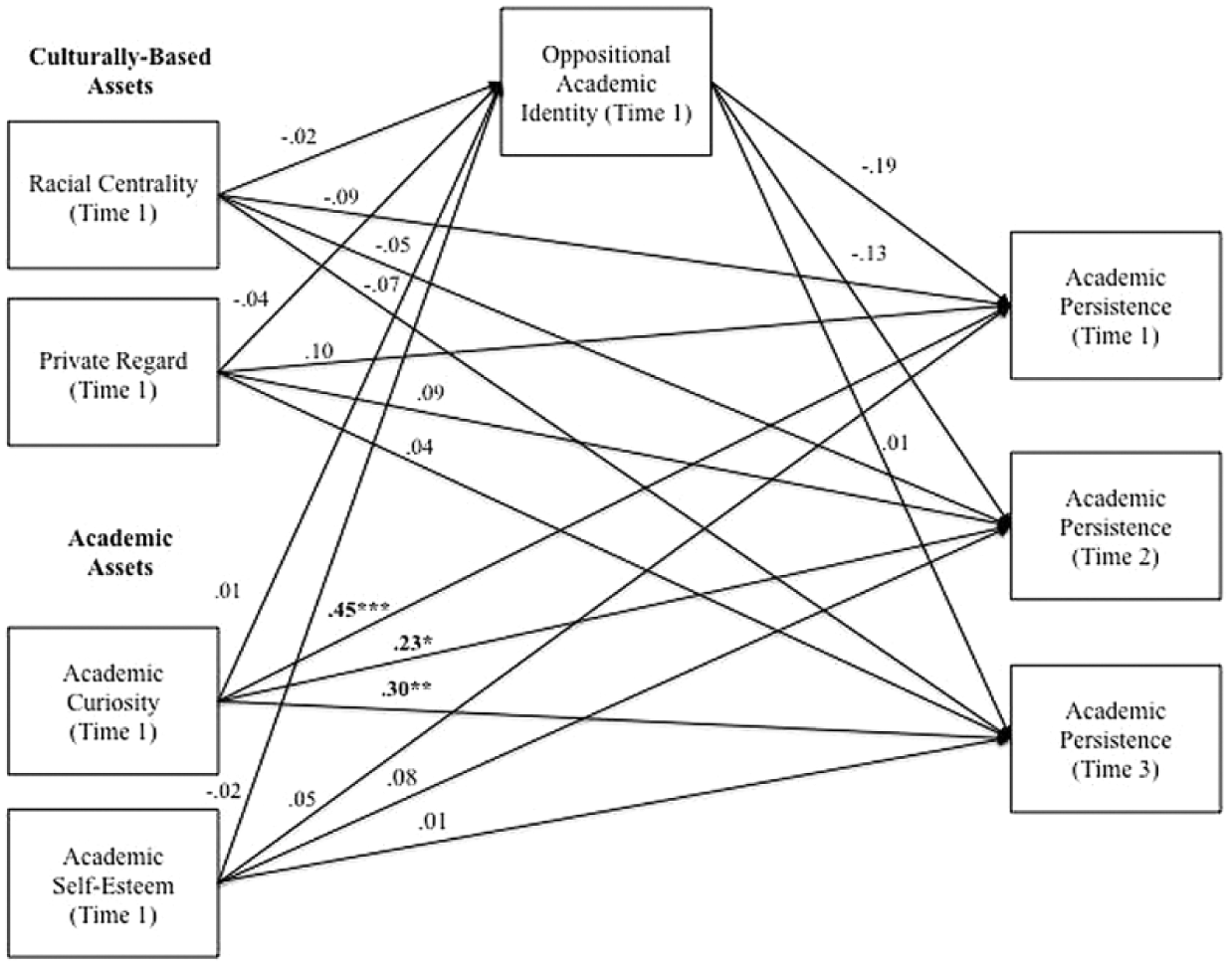
Relationships between cultural and academic assets, academic identity, and academic persistence among African American girls.
Discussion
This study aimed to understand how culturally based and academic assets relate to academic identification and willingness to persist in the face of failure among a sample of African American boys and girls. We found that while culturally based assets related differently to academic identity and academic persistence for African American boys and girls, academic curiosity predicted higher academic persistence across gender.
In terms of academic assets, academic curiosity was the most consistent predictor of academic persistence for African American youth at Time 1, and approximately a year later at Time 2. Academic curiosity and persistence may be related across time because high academic curiosity may indicate intrinsic motivation to learn. Studies have shown that intrinsic motivation, that is, academic engagement that is motivated more by a desire to learn than by external factors, is associated with academic persistence as well as other academic outcomes (Renaud-Dubé, Guay, Talbot, Taylor, & Koestner, 2015; Vallerand & Bissonnette, 1992). For example, Vansteenkiste, Simons, Lens, Sheldon, and Deci (2004) conducted an experiment in which they manipulated the extent to which participants were provided autonomy-supporting (vs. controlled) contexts and intrinsic (vs. extrinsic) motivations. They found that intrinsic motivation was related to taking time to voluntarily continue learning about a topic and task performance. Thus, adolescents’ academic curiosity may indicate passion for learning and thus, these adolescents may be more motivated by further improving their skills and knowledge than in performing. This may enable them to persist on tasks that are difficult. Finally, given the longitudinal nature of this relationship, this work suggests early fostering of academic curiosity and intrinsic motivation for learning may be important for fostering stable academic persistence over time. Educators and practitioners may help students develop academic persistence by effectively engaging and involving them in the classroom. More research is needed in order to explore effective ways to engage and develop African American students’ academic curiosity.
We found differences in the ways in which cultural assets played out for boys and girls. For boys, but not girls, private regard indirectly related to Time 1 academic persistence through oppositional academic identity. Here, private regard was negatively related to oppositional identity, which in turn was negatively related to Time 1 academic persistence. Private regard has been consistently shown as a positive construct for African American youth (Butler-Barnes et al., 2012; Chavous et al., 2003), and may be an especially positive construct for African American boys, who may have particularly challenging and negative racialized experiences in the classroom context (Noguera, 2003; Rowley et al., 2014). Thus, encouraging positive feelings about their racial group membership may improve academic identity in African American boys, allowing them to feel good about themselves by extension, and may encourage them to feel proud of their academic achievements.
In addition, boys’ racial centrality indirectly related to Time 1 academic persistence through oppositional academic identity. Specifically, boys who had higher racial centrality were more likely to hide academic interest and behaviors from peers, which was negatively related to Time 1 academic persistence. In some ways, this provides some support for Fordham and Ogbu’s (1986) theory, both regarding racial centrality as potentially promoting oppositional academic identity and regarding oppositional identity as negatively related to academic persistence. However, given work showing the positive buffering effects of racial centrality for African American boys specifically (Chavous et al., 2008), this may be an oversimplified explanation for this finding. As mentioned, some research has shown that the effect of racial centrality is likely moderated by adolescents’ other relevant racial and academic attitudes (e.g., Byrd & Chavous, 2009; Okeke et al., 2009). Thus, racial centrality may have been positively related to oppositional identity because of moderating variables not explored here in this study. Thus, despite the meditational effect that was found for racial centrality, oppositional academic identity, and academic persistence at Time 1, additional work is warranted to explore additional factors that may explain Black boys experiences within the school setting.
Aspects of African American boys’ experiences may contribute to the gender differences found in this study. As noted above, some work shows that African American boys may receive fewer or less positive racial socialization messages from their parents (Bowman & Howard, 1985; Neblett, Smalls, et al., 2009). Racial socialization has also been shown to be related to academic persistence for African American boys and therefore may be an important construct to understand in order to fully explore the processes by which racial identity relates to academic outcomes for African American boys (Neblett, Chavous, Nguyên, & Sellers, 2009). Given that we theorize that racial centrality may be moderated by other constructs and factors, and in line with Garcia-Coll et al.’s (1996) theory of the development of minority children, it will be important for future research to explore how African American boys’ racial socialization, school environment, and other personal and cultural competencies may moderate the association between racial centrality and oppositional academic identity.
Our findings contrast some previous findings on the association between racial identity and academic motivation. Cokley (2001) explored the ways in which racial identity and academic motivation were associated in different ways for men and women in a sample of African American college students. Cokley (2001) found that among African American college students, there was a correlation between racial centrality and academic self-concept, or intrinsic and extrinsic motivation, for women but not for men. He concluded that racial identity may have more impact on academic outcomes for African American females than for African American males. In contrast, in our study, we did not find an association between racial identity and academic identity or persistence for girls, and did find associations with racial centrality for boys. These contrasting findings may indicate different developmental trajectories by gender with racial centrality playing a bigger role for African American males in adolescence than in emerging adulthood and the reverse trend for African American females.
Our finding that oppositional academic identity was negatively related to academic persistence is consistent with previous work showing negative associations between oppositional attitudes and academic outcomes (Irving & Hudley, 2008; Smalls et al., 2007). We again, however, found this association only for boys. This may be due to, again, African American boys’ particular position in a system of racial stratification that deems African American boys specificallby as more threatening, and in which African American boys may feel isolated, especially given the dearth of African American male teachers (Toldson, 2011). Thus, oppositional academic identity may be a particularly damaging construct for African American boys’ academic persistence.
For girls, neither racial identity attitudes nor academic self-esteem were related to oppositional identity or academic persistence at Times 1, 2, or 3. Additionally, oppositional identity was also unrelated to academic persistence at any time point. However, unlike for boys, academic curiosity was related to academic persistence at all times points. As noted, racial identity’s association with academic motivation and achievement for African American girls may be complex and moderated by other factors not addressed within the current study. Perhaps due to their identity in at least two stigmatized groups, as both African Americans and girls, their intersectional identity may not be fully captured by the constructs presented here. However, the significance of academic curiosity for African American girls’ academic persistence may suggest the importance of fostering early and intrinsic interest in learning, given that academic curiosity predicted academic persistence both roughly 1 and 2 years later for girls.
Overall, we found limited support for our hypothesis that oppositional academic identity would mediate the relations between assets and academic persistence over time. This begs the question of what other factors may mediate the relations between academic and cultural assets and academic persistence. One possibility is that academic and cultural assets may encourage high academic expectations, which may encourage adolescents to persist when facing academic challenges. Having a vision of the future and high academic aspirations may encourage African American adolescents to see beyond temporary setbacks. Additionally, feeling close to and positively about one’s racial group membership and being academically curious may encourage adolescents’ academic identity and desire to go further in their academic career. Future research should explore this possibility, as well as other factors that mediate these processes.
While this study provides more understanding of adolescents’ academic and cultural competencies, there are limitations. First, our study included children from a midsize, relatively affluent and educated Midwestern city. While not a limitation in and of itself, it must be acknowledged that our findings may not generalize to African American adolescents in neighborhoods with different characteristics. As demonstrated by Byrd and Chavous (2009), neighborhood characteristics are important to consider when exploring the ways in which racial identity relates to academic outcomes. Thus, we encourage future studies to explore how these academic and cultural assets, particularly private regard and racial centrality, may relate to academic persistence and academic identity in varying contexts, especially given that previous studies have suggested that these constructs are related.
Second, the measures for public oppositional identity and racial centrality only had fair reliabilities according to the standards suggested by Ponterotto and Ruckdeschel (2007). The low reliabilities decrease the power of the analyses and increase the chance of underestimating the true relationships between the variables of interest in this study (Ponterotto & Ruckdeschel, 2007). The measure for racial centrality, the Multidimensional Inventory of African American Identity-Teen, was constructed and validated specifically for African American youth and has been used in a number of studies to assess associations among racial identity, educational attitudes and outcomes, and psychological well-being (Scottham et al., 2008; Smalls et al., 2007). In the validation study, the measure was related to race-related phenomena including interracial contact and conversations about race. In addition, similar findings regarding public oppositional identity being related to lower academic persistence have been found in previous work exploring relationships between racial ideologies and academic engagement using the adapted version of the Racelessness Scale (Smalls et al., 2007). Thus, despite their low reliabilities, there is support for the construct validity and predictive validity of these measures. Future studies can be designed with stronger measures of these constructs to reduce measurement error and further our understanding of how racial identity is related to academic persistence through educational beliefs and attitudes.
Third, the measures used in this study are all self-reported by the adolescent. Thus, there could be common error variance. However, the different relationships between the various academic and cultural assets and academic persistence suggest that participants varied in their reports of these behaviors and attitudes. Future studies could incorporate multiple reporters, such as teachers and parents to assess academic behaviors. Experimental methods, such as implicit attitude tasks, may also be useful in assessing some of the attitudes and beliefs examined in this study. Additionally, while we explored academic persistence as an outcome, we did not explore how persistence related to actual academic performance. Again, while this was not in the scope of the current study, we encourage future studies to examine the ways in which these constructs predict actual school achievement.
Despite these limitations, our study makes an important contribution to the literature. That is, our work adds to the burgeoning work demonstrating that African American adolescents bring a number of important strengths to their academic lives. Furthermore, few studies have explored the range of personal competencies discussed here. Specifically, we found that for both girls and boys, academic curiosity predicted academic persistence approximately a year later. Additionally, for boys, racial identity had a complex relationship to academic identity and persistence; while for girls, racial identity was unrelated to academic identity and persistence.
These findings have a number of implications for the ways in which schools and parents choose to engage their African American students. Schooling that encourages academic curiosity and intrinsic motivation, as opposed to using extrinsic motivators such as punishment, may further encourage students to persist in the face of failure. This would suggest that the performance orientation that many schools have adopted due to pressures from No Child Left Behind policies may actually be hurting students’ chances at academic success. Thus, more focus on learning goals and learning enjoyment may provide further motivation for adolescents to persist when they face difficulty in their academic tasks. For African American boys, encouraging positive feelings about their racial background membership may additionally encourage them not to hide their academic success, and may lead to persistence in academic challenges. We hope that future studies will continue to explore and discover the diverse strengths African American students possess, which propel them to academic success and upward mobility.
Footnotes
Declaration of Conflicting Interests
The authors declared no potential conflicts of interest with respect to the research, authorship, and/or publication of this article.
Funding
The authors disclosed receipt of the following financial support for the research, authorship, and/or publication of this article: This research was supported by grants from the National Institute of Mental Health (NIMH 5 R01 MH061967-03), the National Center on Minority Health and Health Disparities and the National Science Foundation (BCS-9986101).