







Abstract
Limited research on effective parenting and optimal child outcomes within an African, specifically Ghanaian context exists. This study examined conceptions of effective parenting from the perspective of religious counselors who are often sought by parents for parenting advice. Two research questions were addressed: (1) how do religious counselors conceptualize effective parenting; and (2) to what extent do their conceptualizations reflect current literature and research on effective parenting? Ninety-two religious counselors, 19 Muslims and 73 Christians, were recruited from four urban areas in Ghana. Participants were asked about effective parenting during individual interviews. The findings revealed three major themes and several sub-themes. The three themes were socialization and structure, positive parent-child interaction, and autonomy support. Themes about what constitute effective parenting were both consistent and inconsistent with traditional views of parenting within a Ghanaian cultural context. Findings revealed some contemporary changes of parenting in Ghana with implications for effective parenting.
Conceptualizations of parenting vary widely across time and place. Cultural (e.g., social, religious, economic), as well as political contexts differ and impact perceptions of acceptable parenting (Darling & Steinberg, 1993; Welbourne & Dixon, 2013). For example, some North American settings place much emphasis on parents providing autonomy support whereas some East Asian contexts emphasize structure (Harkness & Super, 2002). Even within North American culture, there are differences as African American parents also value structure, specifically monitoring as a means to enhance a child’s developmental outcomes (Chang & Qin, 2018).
Variations in parenting conceptualization are due to differences in values and socialization goals across cultures. Traditionally, in Ghanaian societies, one of the primary aims of socialization is to raise children to be socially responsible and to eventually provide economic support to their parents and the extended family. Children are raised to adhere to and be respectful of their parents' and other adult extended family members’ wishes (Gyekye, 1998). Traditionally, in Ghana, parenting norms around reciprocity and responsibility have been emphasized (Abraham, 2010; Schildkrout, 1973). Parenting values include hierarchy and structure, social harmony, and social responsibility. Households have followed patriarchal structures with the father and eldest man in the household usually holding power for decision-making (Huang, et al., 2018). Parental structure and control are high as parents assume authoritarian roles and expect deference, obedience, and compliance from children (Gyekye, 1998). Children are socialized to uphold cultural values and collective ideals of harmony and care for members of the community. Unlike some Western and European contexts where independence is emphasized (see Keller, 2016), children in traditional Ghanaian contexts are socialized to fit themselves into the hierarchical social structure (Gyekye; Lystad, 1960). Children are expected to respect the hierarchy inherent in the parent-child relationship.
While parenting is hierarchical, a few more recent studies on parenting practices in Ghana suggested that the interdependent nature of Ghanaians supports some dimensions of autonomy support (such as promotion of volitional actions) and not others (e.g., promotion of independence). Specifically, Marbell and Grolnick (2012) observed that Ghanaian parenting supported promotion of volitional functioning (PVF), but not promotion of independence. Soenens et al., (2007) differentiate between PVF and promotion of independence. Parents use PVF when they empathically invite the perspectives of their children, provide choices when possible, and encourage their children to explore their values and interest. Promotion of independence encourages independent expression, thinking, and decision-making. Promotion of independence of children is perceived negatively in Ghanaian parenting as it is equated with “spoiling a child.” Marbell and Grolnick further observed that the Ghanaian value for deference to elders supports the use of high parental control.
Other studies have examined the dimension of warmth in Ghanaian parenting from the perspectives of parents (Osei-Tutu et al., 2018) and children (Hosny et al., 2020). Osei-Tutu et al. found that Ghanaian parents were less likely to use verbal expressions of warmth and affection. Ghanaian parents were more likely to express warmth through material means, meeting the child’s daily needs for food, clothing, and shelter. The finding is consistent with that of Coe (2011) who found that meeting children’s material needs was not only a responsibility but also an expression of parental love. Ghanaian children aged 5–8 years reported receiving implicit forms of affection (e.g., receiving food, gifts, allowances) but fewer explicit verbal or physical forms of affection (e.g., parents embracing their child in times of distress; Hosny et al.).
The cultural and social milieu in Ghana is changing and these changes may affect parenting practices (Nyarko, 2014), especially in urban areas. For example, younger generations of parents living in urban areas in Ghana reportedly use low levels of parental control and high levels of warmth (Huang et al., 2018). Today, Ghana is changing given increased globalization, migration, urbanization, economic development, and technology (e.g., internet, smart phones, better transportation systems; Nyarko). More people live in large urban areas of Ghana and traditional family structures for training children have weakened (Ardayfio-Schandorf, 2012; Ghana Statistical Service, 2021).
Traditionally, parenting is viewed as a collective responsibility and as such biological parenting and social parenting have been a common feature across various settings in Ghana (Goody, 1975; Gyekye, 1998). Social parenting is provided by older brothers and sisters, aunts, uncles, and grandparents (Huang et al., 2018). Given the weakening in these traditional family structures that support social parenting (Nukunya, 2003), parents have turned to another source of support—religious counselors.
Parents report and seek advice on managing problems in the parent-child relationship from religious counselors in Ghana (Osei-Tutu et al., 2019). Ghana is a highly religious country, with over 95% of the population affiliated with a religious group (Ghana Statistical Service, 2012). Given the prevalence of religiosity in Ghana and the prevalence of parents using religious counselors, we examined perceptions about effective parenting among religious counselors in four urban areas of Ghana. We expected religious leaders living in urban religious spaces in Ghana to have values, norms, and beliefs about effective parenting that differed from what has been observed in Western societies. By focusing on religious counselors, we will be able to understand the perceptions that shape the advice they give to parents. Findings from this study are expected to shed light on parenting in a contemporary West Africa setting with implications for providing counseling and psychoeducation to parents and for increasing parental effectiveness.
Parenting and Religion
Research suggests that religion influences parenting goals, practices, and styles (Darling & Steinberg, 1993). Within Christianity and Islam, religious norms and beliefs around autonomy, hierarchy, discipline, and respect can have varying implications for parenting styles and practices (Chartier, 1978; Ohanian et al., 2018; Ramezani et al., 2019). Prescriptions for obedience and control are common features of major world religions including Christianity, Islam, and Buddhism. Bornstein et al. (2017) found that these prescriptions influence parental practices. In their longitudinal study of Christians, Muslims, Buddhists, and people with no religious affiliation, across Africa, Asia, Europe, and the Americas, Bornstein et al. found that parents who were more religious were more likely to report higher parental control and warmth than those who were not. Acevedo et al. (2015) found that Islamic prescriptions about obedience to Allah and obedience to parents is perceived as the foundation for obedience in other relationships (Acevedo et al.; Franceschelli & O’Brien, 2014). Accordingly, Acevedo et al. found that religious Turkish parents, who are predominantly Muslim, tended to emphasize obedience to authority as a parenting goal. Islamic value for the ability to reason and imagination influenced parental goals around child independence. Religious Turkish parents placed less emphasis on imagination and independence as parental goals (Acedevo et al.).
Ghana is a deeply religious country with more than 95% of the population affiliated with a religious group. About 71% percent of Ghana’s 25 million population is Christian. Islam, which is the second largest religion, is practiced by almost 18% of the population. About five percent of Ghanaians practice African Traditional Religion (Ghana Statistical Service, 2012). A small percentage of Ghanaians practice Hinduism, Buddhism, or Judaism (Pew Research Center, 2018a).
Religion colors every aspect of life in Ghana including marriage and family life (Heaton & Darkwah, 2011). Religion affords parents with prescriptive and proscriptive norms, guidelines, and values which shape ideas about acceptable parenting practices (Bornstein et al., 2017; Mahoney, 2005). Goeke-Morey and Cummings (2017) found that religion can have both adaptive and maladaptive effects on the parent-child relationship. Adaptive effects of religion include increased parental involvement, emotional support, and communication. Maladaptive effects include potential conflicts based on religious doctrine that may misalign with parent and/or child’s expectations. For example, Christian doctrine that children should always honor and obey their parents may conflict with parent and child beliefs about autonomy.
The Current Study
Having children is highly valued in Ghana. The main goals of parenting in traditional Ghanaian contexts are to raise children who can manage adult responsibilities, respect their elders, and embody obligation toward their kin and community (Gyekye, 1998). Parenting norms and values in Ghana include hierarchical relationship and structure, social harmony, and social responsibility (Abraham, 2010; Schildkrout, 1973). Traditionally, Ghanaian parents receive parenting advice from the extended family and the community. Support from extended family may come from uncles, aunts, and grandparents (Adu-Gyamfi, 2014; Esen, 1973). In most traditional communities in Ghana, elders, including grandparents, uncles, and aunts, form part of the support system. They provide advising on a wide range of issues including parenting (Van der Geest, 2015).
Today, the cultural and social milieu in Ghana is changing due to global, technological, and socio-economic developments. These changes may be accompanied by changes in parenting practices. As a result, the extended family structure of Ghana is changing. People living in urban areas, especially, may have weak social networks (Nukunya, 2003). In the absence of strong extended family and community support, some Ghanaian parents turn to religious counselors to support them in being effective parents (Osei-Tutu et al., 2019). Religious counselors are found in Christian and Muslim faith-based organizations and are readily available and accessible. Limited research has focused on the parenting advice religious counselors in Ghana provide. We interviewed religious counselors in four urban settings in Ghana about their ideas of effective parenting. The study can help determine the extent to which the religious counselors’ views map on to traditional expectations of parenting in Ghana.
Two research questions guided the study: (1) How do religious counselors conceptualize effective parenting; (2) To what extent do their conceptualizations reflect current literature and research on effective parenting? Our study contributes to the limited body of literature on perceptions of effective parenting in an African, specifically Ghanaian, context.
Method
Participants
The sample consisted of 92 religious counselors aged between 24 and 80 (M = 51.18, SD = 12.31). The majority (n = 74) were married. Nineteen (Women = 8; Men = 11) were Muslims and 73 (Women = 14; Men = 59) were Christians. These numbers are representative of the percentage of Muslims and Christians in Ghana. In both religious contexts, men and women are allowed to hold the role of religious counselor. However, there are more men in leadership roles including the role of lay counselors in both contexts. This difference accounts for the larger number of men in our samples.
Fifty-nine participants had completed college; 29 had between a basic or high school certificate; and one had no formal education. Three participants did not specify their educational background. Participants reported practicing as lay counselors between 1 and 40 years (M = 13.00, SD = 9.06).
Interview Protocol
The interview protocol was created as part of a larger study by a team of three, including two of the authors. The larger interview protocol consisted of open-ended questions designed to explore the experiences of religious counselors and their views on a wide range of issues related to their practice in Ghana. Interview questions relevant to the current study obtained religious counselors’ perceptions of effective parenting and included the following: (1) What kinds of advice do you offer parents; (2) How should parents raise their children; and (3) What are the features of a good parent-child relationship?
Procedure
The study received IRB approval from a public university in Ghana. A purposeful, convenient, sampling strategy was used to ensure that both Christians and Muslims were included in the sample given these two religions comprise the largest religious groups in Ghana.
Participants were recruited from four urban areas: the capital of Ghana, Accra, and three regional capitals in southern Ghana namely Cape Coast, Koforidua, and Kumasi. The inclusion criteria for participation were (1) self-identification as a lay counselor and affiliation with a church or mosque; and (2) one or more years of lay counseling. Lay counselors are people who have not received formal training as mental health personnel but who offer psychosocial support through counseling and advising. In most settings, lay counseling is a volunteer position and counselors do not receive any financial remuneration for their services.
The recruitment strategies included recruiting members of religious institutions, using snowball techniques, and recruiting participants from a workshop. For the first recruitment strategy, letters introducing the purpose of the study were sent to leaders in religious institutions. Research assistants then spoke with interested religious leaders who in turn recommended counselors within their respective institution. The second recruitment strategy involved using a snowball technique whereby participants referred others they knew. The third recruitment strategy consisted of reaching out to lay counselors participating in a workshop. Research assistants obtained the telephone contacts of workshop attendees and called them following the workshop to gauge their interest. All interviews were scheduled following initial verbal consent. The different recruitment methods were used for practical purposes to reach as many participants as possible. We did not separate the data based on the type of recruitment strategy used. Hence, we did not examine differences in responses across recruitment strategies.
Following informed consent procedures, individual interviews were conducted with each participant. Interviews were conducted in quiet private spaces at the religious institutions, homes of participants, or other places (e.g., shops and organizations) with space conducive for interviewing. The majority (n = 75) of the interviews were conducted in English, the official language of business in Ghana. Seventeen interviews were conducted in Akan, a local Ghanaian language. The interviewers were fluent in Akan and English, and interviewees were conducted in Akan when requested by participants. All interviews were digitally recorded with permission. Duration for the entire interview process (and not just the questions examined in this study) ranged from 20 to 120 minutes (M = 52.12, SD = 19.36). At the end of the interview, participants were thanked for their participation; and were given GHS25 (equivalent to US$6, at the time of the data collection) as a token of our appreciation.
The first author and seven research assistants conducted the interviews. Research assistants were trained and supervised by the first author. Interviewers were Ghanaians and included six women and two men. The research assistants were single and were not parents. Interviewers were matched on region such that interviewers conducted interviews in their respective regions.
Researchers’ Background
It is important to acknowledge the background and potential biases of researchers in a qualitative study. Kingdon (2005) suggests that researchers conducting qualitative studies engage in a process called “reflexivity” which involves making sure that one is aware of personal biases that may influence data analyses. Acknowledging one’s own biases prior to data collection further ensures appropriate rigor during data analyses. Two of the researchers are Ghanaian—one of these researchers currently lives in Ghana and one lives in the United States. One is employed at a Ghanaian university and two are employed at the same university in the United States. The Ghanaian researchers have been socialized within a communal and interdependent culture, which could potentially influence their views about how parents should socialize their children. All the researchers are women. Two of the researchers are parents. All are interested in and have conducted research on Ghanaian cultural values, beliefs, and behaviors, and their influences on psychosocial well-being, and developmental outcomes.
Trustworthiness
Trustworthiness in qualitative research is how reliable and credible the interpretation of the study findings are (Lincoln & Guba, 1986). Ways to achieve trustworthiness include prolonged engagement with and in-depth observation of the target population, peer debriefing, and triangulation (Lincoln & Guba, 1986; Morrow, 2005). Trustworthiness is established by the researcher’s familiarity with the target population through participatory engagement and observations (Morrow, 2005). Two of the researchers live or have lived in Ghana and have interacted informally with members of the target population through attending religious services in faith-based organizations. All three of the researchers have studied and written on African cultural values. Triangulation was accomplished by using two different groups of interviewees, Christian and Muslims.
Data Transcription and Analysis
Seven Ghanaian research assistants were trained to transcribe the interviews using a template designed for the transcription. The first author met regularly with research assistants individually to check on the progress of their work and to troubleshoot any problems or inconsistencies in the transcriptions. English interviews were transcribed verbatim. Akan interviews were transcribed directly into English by three bilingual (Akan and English) speakers.
We used a mixture of inductive and deductive coding analyses. Coders used inductive coding analyses—which involves using raw data to move from specific observations to broader generalizations (Bryman, 2008). The approach allowed the flexibility inherent in inductive analysis to identify themes that are reflective of the cultural setting of Ghana. Thematic analysis was used to analyze the data, following the step-by-step guide outlined by Attride-Stirling (2001). It involved three major steps: (1) extracting basic themes evident in a transcript; (2) summarizing and organizing basic themes into groups based on some conceptual or theoretical principles; and (3) developing the organized themes further into global or superordinate themes based on some conceptual or theoretical principles.
Analyses were conducted by two Ghanaian men who were psychology doctoral candidates. Both had experience using the thematic network analysis described above. The qualitative coding software ATLAS TI was used to facilitate coding. The analysis started with analysts familiarizing themselves with the data by reading through the transcripts and developing a coding framework. The coding framework captured codes derived from participants’ responses. Examples include, “ability of child to express needs to parents”; “ability of child to express feelings”; “accept the child as he is”; and “advise children to listen to parents.” The next stage involved applying the coding framework to all the transcripts. The coding process was undertaken by abstracting segments of the transcripts and assigning appropriate codes. Multiple codes were applied to segments of the texts as appropriate. For example, four codes (care for children, be responsible, listen to children, respect children) were applied to the segment below: If I am advising parents in terms of how they take care of their children, I advise them in such a way that they can take good care of their children and also listen to them because sometimes, most parents do not listen to their children because they think they are kids. But it is not like that, if you are a parent, you need to listen to your child and fulfill his heart’s desires and he will in turn respect and listen to you so that is how I always advise the parents to take good care of their children since the children are their future.
The two analysts coded the transcripts independently, using the coding framework as a guide, and later compared codes for agreement. Coding disagreements were reconciled by the two coders through discussions. After coding all the transcripts, the next stage involved identifying the linkages between the codes. This process involved extracting all the codes and analyzing the linkages between them. Codes that captured similar ideas were grouped together. For example, codes such as listen to children, communicate with the child, and parents should have listening ears were grouped together to form one basic theme called communicate with children. The next stage involved analyzing and grouping basic themes into organizing themes. Here, basic themes with shared conceptual meanings were grouped together. For example, open up to children and communication with children were grouped under open communication. Basic themes that occurred less than three times and did not fit conceptually well with other basic themes were excluded from further analysis (See Hennink et al., 2017). For example, the basic theme, “parental fairness,” occurred only once and did not fit well with any of the organizing themes. Likewise, the basic theme, “fathers should be faithful,” occurred only once and did not fit well with any of the nine organizing themes. It was therefore excluded from subsequent analysis.
For validation purposes, a different set of data analysts were trained to code the data using the organizing themes as a coding frame. The data analysts, who were Ghanaian men with background in clinical psychology, worked independently. They reviewed each participant’s transcript and noted the presence and the absence of each of the nine organizing themes. Each organizing theme was defined. For example, the organizing theme Religious Training was defined as “Parents should provide a religious foundation, opportunities to know the Divine, teach religious values and belief, and relate with others based on the teachings of their faith.” We used the formula described by Miles and Huberman (1994) to determine interrater agreements: Religious training (88.04%), Friendship with child (83.7%), Express affection/appreciation (83.7%), Good parental modeling (81.52%), Discipline (79.35%), and Individuality of children and freedom (78.35%). The remaining interrater agreements were Open communication (78.26%), Responsive to child’s needs (78.26%), and Communal ideals and social skills (70.97%).
The final phase of analysis involved developing superordinate themes. This phase of the analysis was led by the first author, in consultation with the other authors. This phase also consisted of reviewing existing literature on effective parenting practices documented in previous studies from settings outside of the Ghana context (e.g., Grolnick & Ryan, 1989; Keller, 2013; Keller & Lamm, 2005; Schaefer, 1965; Skinner et al., 2005). For instance, consistent with literature, organizing themes about supporting individuality of the child, giving children freedom, and accepting the views of the child were grouped under Autonomy Support.
Results
We identified three superordinate themes: socialization and structure; positive parent-child interaction; and autonomy support. We also observed a few gender differences in the ideas religious counselors communicate about parenting. In the following paragraphs, we discuss and provide quotes to illuminate the superordinate and organizing themes.
Socialization and Structure
Socialization is the primary means through which social norms, values, and behavioral preferences are transmitted from socializing agents (such as parents) to the child (Tyler et al., 2005). In parenting, structure refers to the level of organization (i.e., rules, expectations, consequences, feedback), monitoring, consistency in training practices and discipline in child training (Griffith & Grolnick, 2014; Hardy et al., 1993). In this study, participants (n = 88) stated that parents needed to provide specific guidance, information, and training aimed at helping the child become a responsible adult who contributes to the welfare of his/her community.
There were five main sub-themes under this main theme: (1) Communal ideals and social skills; (2) Responsive to child’s needs; (3) Good parental modeling; (4) Discipline; and (5) Religious training. The sub-themes are presented in Figure 1. Thematic Network for Socialization and Structure. Note. Socialization and Structure covers five sub-themes.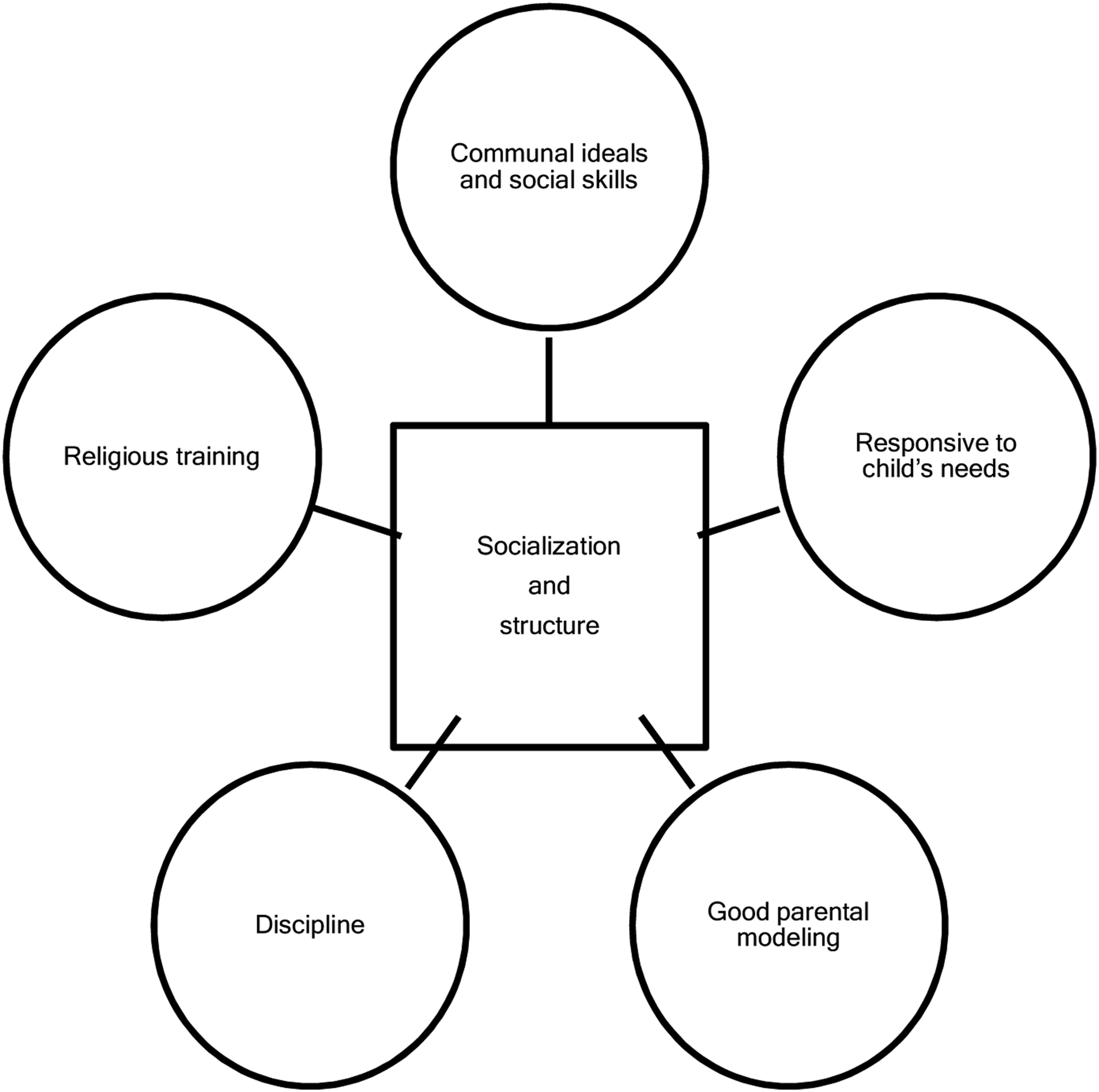
Communal Ideals and Social Skills
Demographic Information for Quoted Participants.
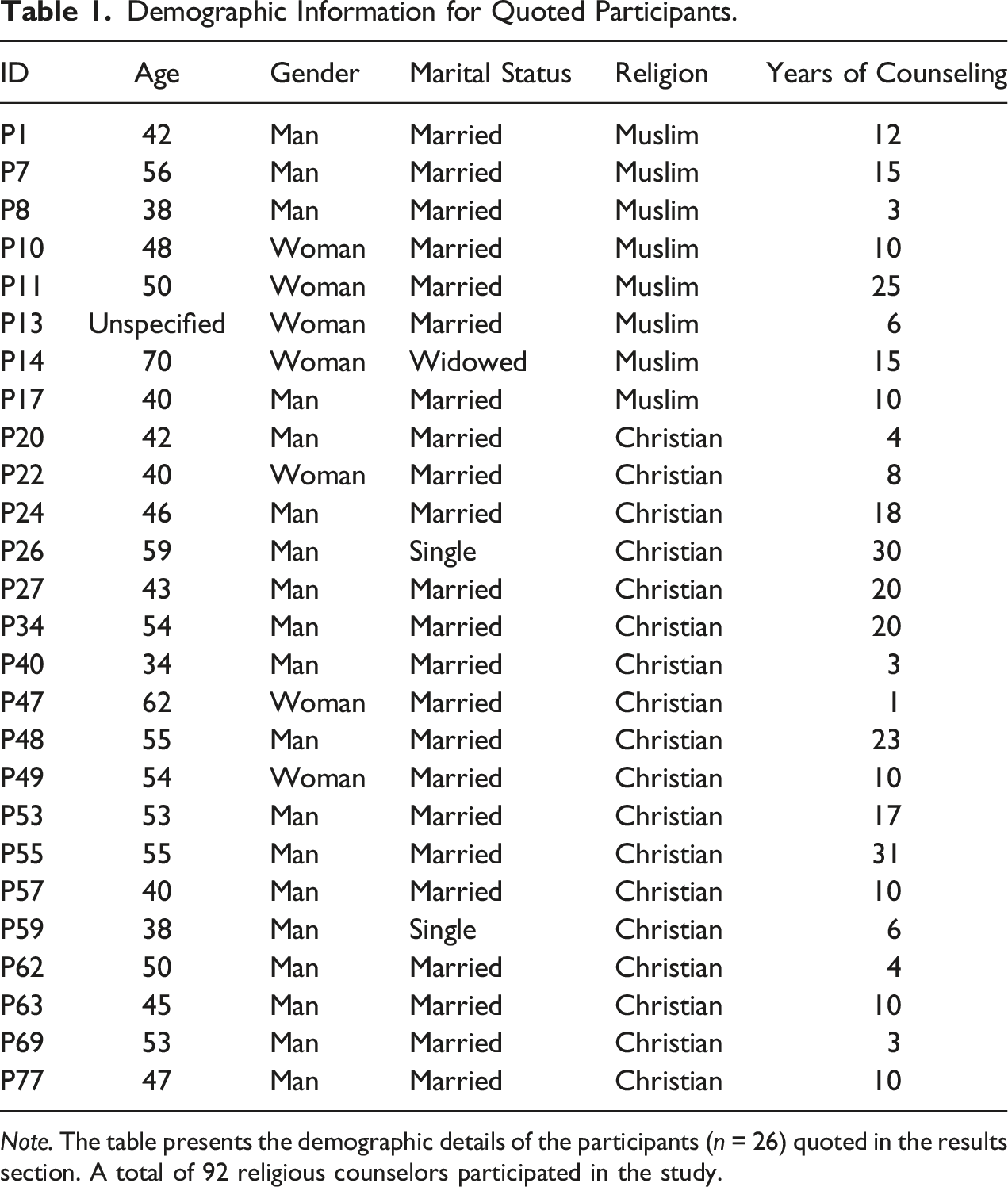
Note. The table presents the demographic details of the participants (n = 26) quoted in the results section. A total of 92 religious counselors participated in the study.
Value for harmony and social cohesion were emphasized by the religious counselors. As an illustration, one participant stated, “Raising of children, it all has to do with understanding the values of society, and also do your best to make your child [a] good and [a] responsible citizen.” (P13). Another example is in the following quote: P62 Teach the child how to live with other people on this earth. You have to make time and teach the child that you are not alone on this earth, you live with people who will treat you differently, so you have to learn how to live with them. You cannot do away with people; there are people in your school, at the workplace and everywhere you go. So, teach the child how to live with people.
Effective parenting also includes social skills training. Greetings are an important part of the social relationship script in Ghana. One will typically greet people encountered in public. Power dynamics in Ghana and cultural scripts require that children will take the lead in initiating greetings. Parents are expected to provide social skills training regarding greetings and other courtesies. One participant stated: “They [children] should learn how to greet people... Respect people, the way they will greet people, the way they will use ‘please’.” (P63).
Teaching children to acquire domestic skills was also identified as an important parenting practice by the religious counselors. Typically, household chores such as cleaning and washing require manual labor. Children take part in these activities subject to their age and gender. In some homes, girls, more so than boys, may be involved in chores associated with cooking. Two participants suggested: P69 As the mother, when you are washing and the child is around, you can tell her to wash her socks. When she comes to the kitchen don’t sack her, maybe she would be looking at the things that you are doing. Give her a small duster to help you clean when you are cleaning the room. With all of these you are molding her, you are training her. P63 They [children] should learn how to sweep, how to wash their [school] uniforms, how to cook and those things. They [parents] must introduce them [children] to learn how to work with their hands and earn money so that they will not grow and become lazy.
Responsive to Child’s Material and Educational Needs
Participants (n = 57) suggested that it was important that parents are consistently supportive to their children by meeting their material needs. One participant stated, “As a parent, you have to take care of your children: their schooling, their welfare.” (P47). Another reiterated, “In fact, the advice I normally offer to parents is about they trying to improve their economic status and then educating their children because like we all know, education is the key to success.” (P7). One participant explained why parental responsiveness was important, “Make sure you [the parent] provide everything the child needs so that [he/she] doesn’t go out ….and look for something.” (P13).
Good Parental Modeling
Some participants (n = 36) suggested that part of good parenting includes modeling the desired behavior. One participant stated, “Normally, for me, what I try to do there is to encourage parents to be role model themselves because for example, if you say this is bad, your child should not see you involving yourself in an activity that you say it is bad because then it weakens your own moral grounds to check that.” (P24). Another participant shared a similar view, “There is one thing you need to do; that is, lead by example as a parent. What you do speaks louder than what you say so you have to lead by example.” (P34). Yet another said, “With parents, the way they talk to their children is also important because that is what the children imitate.” (P8).
Discipline
In parenting, discipline refers to the use of negative consequences to discourage a child from repeating an unacceptable behavior as well as the provision of clear guidance on desirable behavior (Grusec et al., 2017). Discipline practices used by parents was an important issue to some of our participants (n = 49). They emphasized that parents need to be consistent and use appropriate forms of discipline. One participant stated, “[Parents] should be disciplinarians. Not strict disciplinarians but they should be disciplinarians in order to guide their children so that they will come up, telling them the woes and blessings in the society and guide them to do what is right.” (P48). Some participants mainly focused on the use of physical punishment. Participants did not agree on the forms of discipline. Some participants raised concern that parents were too relaxed or even permissive in their use of discipline. One participant lamented: P40 Most often the parents themselves give the children so much liberty when they [children] are going wrong or wayward instead of them [the parents] to sometimes use the cane or spank them, [they say] “oh it’s nothing let me leave her, let me leave him” and it begins to escalate. They [the children] get to a point where they don’t want to even listen to the parents.
Unlike the previous participant, some participants disagreed with the use of physical punishment. In the following quotes two participants suggested the use of verbal caution instead of beating a child or verbally abusing a child: P14 [Parenting] is not all about shouting. Example, you come from town, the child has broken a plate, we don’t beat her. We don’t discipline her because of the broken plate. You can break the plate too. Did you beat yourself? Did you discipline yourself? You break [sic] the plate unintentionally... P57 Some parents raise their children through beatings. So, if the child returns from school and dumps the uniform in the living room so the mother beats her, she [the child] then repeats the same attitude; you should therefore tell the child to desist from that act because if you don’t do that your mother will not beat you.
Religious Training
Religious training is aimed at providing children with a moral and religious foundation for living. Our participants (n = 62) mentioned the importance of religious training. Parents were expected to provide a religious foundation for their children that affords the children opportunities to know the Divine, learn religious values and beliefs, and relate with others based on the teachings of their faith. Regarding providing a religious foundation in which children can develop from, one participant suggested, “Parents, if you want to raise children, first you must consider religion. The religion that you belong [to]. You should train your child to understand your religion.” (P7). Another reiterated, “What I tell parents is that they should draw their children closer to God and make sure to put them on the right track when the need arises.” (P53). Some participants also suggested that effective parents take a sacred view of parenting. One participant hinted, “In raising children, you know in Islam for example we were told God Almighty said: ‘I have given you the children and I am going to ask you on the day of judgment how you brought them up’.” (P1).
Positive Parent-Child Interaction
Positive interaction is the provision of emotional support and expression of affection between parent and child (Baumrind, 1966; Schaefer, 1965). In the current study, religious counselors’ perception of positive interactions was associated with expressions of affection and appreciation; development of friendships; and supporting open communication within the parent-child relationship. Positive parent-child interaction was emphasized by many of our participants (n = 77). Three sub-themes make up this theme. They included (1) Express affection/appreciation; (2) Open communication; and (3) Befriend your children. Figure 2 presents the framework of this theme. Thematic Network for Positive Parent-Child Interactions. Note. The three sub-themes covered under positive interaction.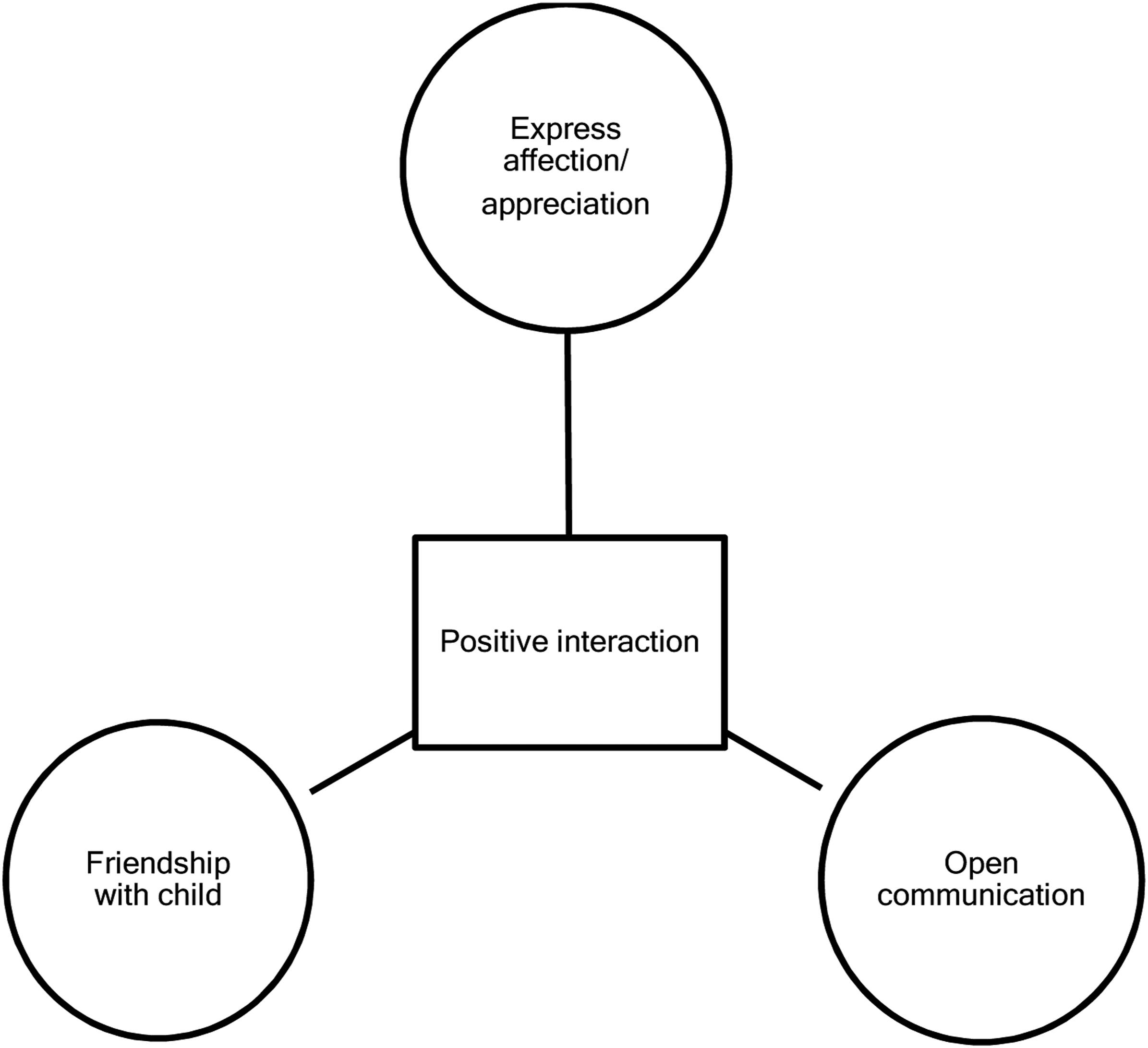
Express Affection/Appreciation
This sub-theme captured religious counselors’ perceptions on parents’ emotional intimacy and public affirmation of love and affection for children. Previous research suggested that parents in Ghana did not often use verbal expressions of affection (Osei-Tutu et al., 2018). Notwithstanding, the current study observed that many participants (n = 42) believed that verbal, as well as public, expressions of love and appreciation of children were an effective parenting practice. One participant stated, “First and foremost, let your child know you love him, you love her…Show her love... Hug them […] You will find 80 percent of parents have never told their daughter or son that I love you.” (P14).
With respect to showing appreciation, the religious counselors expected parents to openly communicate their appreciation for their children. One participant suggested, “You can tell your child in public that she looks beautiful. If you don’t tell her those things, when she goes out, especially if she’s a female, someone might take advantage of her because she has never heard that thing before.” (P59). Another emphasized the importance of parents praising their child: P47 Praise her that oh, [child], oh you have done well... So, as you do that, tomorrow she would repeat it [the good behavior]. If you don’t say anything, when you came back, she had finished all the work at home and when you came, you didn’t say anything, and you went to sit somewhere. She would think even my mother when I do something, she doesn’t appreciate it.
Open Communication
Open communication encompasses parental availability and readiness to listen to their child, being honest in conversation with the child, and understanding the child’s perspectives (Olson & Wilson, 1982; Williams et al., 2012). In the current study, some participants (n = 64) suggested that a good parenting practice was to listen to the child and value the perspective of the child. One participant stated, “Listen to them [children] because sometimes, most parents do not listen to their children because they think they are kids.” (P20). Another suggested, “Let the child know that whatever they tell the parent, the parent will listen and take it seriously.” (P26).
Other participants indicated that parents must create opportunities and a safe environment that makes open communication possible. A participant said, “The parents should create that conducive atmosphere for their ward to be able to bring an issue bothering them.” (P22). Another participant added, “Where each child is free to express himself and be able to go to the parents without fear […] So there must be that good relationship whereby if your child can come to you, tell you your problems…” (P7). The purpose of the open communication was mainly to afford opportunities for the child to discuss problems they encounter and not necessarily to foster a sense of intimacy. Further, some participants emphasized the need for honesty in the parent-child communication. One participant stated, “If you are in the position to provide it [what the child needs/wants] do it for them or tell them to wait.” (P10).
Befriend Your Children
The idea of considering the parent-child relationship as a friendship was emphasized by several participants (n = 47). Here, against the backdrop that Ghanaian relationships are typically hierarchical, and the power structure is often closed, participants suggested that parents who circumvented this cultural script and befriended their children made good parents. The purpose of the friendship was to encourage open communication and temper the authority structure that was typical in some traditional Ghanaian contexts. One participant stated, “Let your child be your friend. Your best friend in the world is your child; and your best friend in the world, the man [i.e., the father], is your son.” (P14). The view was also supported by the participants’ statements below: P27 As a parent, your children should be your friends. So, you let the children know that you are not fighting them, you are there to support them, although they may see you as daddy [or] mummy but you should also get close to them, you have a chat with them. P11 You need to be friends with your children. When you are friends with them, they really open up and then they tell you their problems then you will know how to handle it, not being just like the mother or father or being ‘Boss’; you really need to be friends with them so that they will be more open for you to know their problems and for you to know how to assist them to solve some problems.
Suggestions from predominantly Muslim participants were that parents developed friendships with their children’s friends. One Muslim participant provided a religious background, “The Prophet Mohammed says if you want to know your child, know their friend.” (P17). The purpose of this friendship was to know the child’s associates well and spot red flags in their peers that might be detrimental to their ward. One participant hinted, “At all times, you have to know the friends of your child as a parent and let the friends of your child be your friends also. This will let you know when your child is deviating from what you have taught him or her.” (P10). Similarly, another said “Know their friends in the community. Know those who your child is [with].” (P14).
The religious counselors expected parents to share in leisure or fun activities with their children. One participant stated, “Both children and parents sit together, talk together and sometimes they even eat together, they play together and everything that they do is cordial.” (P48). Another stated, “Every human being wants pleasure and so every child wants some kind of fun. So, there should be activities at home that give the children fun, pleasure, that make them want to come back home and enjoy with [the] parents yeah.” (P70).
Autonomy Support
Autonomy refers to freedom of ideas, wishes, individual preferences, and emotions. It could also mean fitting into the hierarchical social structure and satisfying relational obligations (Keller, 2016; Marbell & Grolnick, 2012). Autonomy support means that children are supported in achieving both types of autonomy. However, the first definition refers to psychological autonomy primarily emphasized in some western settings. The second definition refers to what Keller calls action autonomy and has been observed in some West African contexts (Keller, 2016). In the current study, some participants (n = 28) suggested that parents should support their children’s freedom to express their opinions, make some choices, and make decisions. However, the emphasis was not to support the child as being unique, independent, or special. Rather, the support was to ensure that the child feels part of the family structure and hence supports a sense of belongingness. One participant stated: “…even a common decision, parents are making decisions they call them [children], come and sit down, this is what we want to do so what is your mind, what do you also think.” (P77). Another participant suggested: P62 The child can make suggestions; we reason with them. So, it is like one family, and they think together. It makes the children feel that they are part of the family rather than just taking instructions. Everyone is able to share his or her ideas and it [sic] is taken into consideration.
A few participants suggested that parents should support psychological autonomy. One participant stated, “Parents should supervise their children, but they should give them the ability to operate within their own sphere or scope so that they can have some independence when they leave home.” (P48). Yet another suggested: P49 You don’t have to always impose things on them. If a child is over 18 and wants to go out to a party, I think you have to let him go. But what you can do is that you should know where he is going, who he is going out with, and the time also should be checked.
Gender Differences
Although gender differences were not the focus of this study, we observed a few differences in the advice of religious counselors. For example, women tended to prioritize “being responsive to a child’s needs”; “expressing affection/appreciation”; and having “open communication.” Fourteen women, out of the 20 women who took part in the study, mentioned that these three areas were important in parenting. “Good parental modeling” was emphasized less and was nominated by only seven women. On the other hand, men were more likely to emphasize “religious training” (n = 51; out of the 72 men in the study), “open communication” (n = 50) and “being responsive to the needs of children” (n = 43). These were the top three areas mentioned by men. The area of least focus among men was “autonomy support.” Only 21 of the men in the study discussed issues that were coded under “autonomy support.”
Discussion
We examined conceptions of effective parenting from the perspective of religious counselors who are often sought by parents for parenting advice. The purpose was to explore two research questions: (1) how do religious counselors conceptualize effective parenting; and (2) to what extent do their conceptualizations reflect current literature and research on effective parenting? Nineteen Muslim and 73 Christian counselors were recruited from four urban areas in Ghana and interviewed about effective parenting. The religious counselors provided several perspectives on effective parenting. These perspectives were organized around the three themes of Socialization and Structure, Positive Parent-Child Interaction, and Autonomy Support. Our findings align with and diverge from the extant literature on parenting in Ghana. For example, the sub-theme of “befriend your children” and the theme “provide children with autonomy support” contrast with literature that suggest that children are raised to respect hierarchical relationships and communal responsibilities in Ghana.
Socialization and Structure
The finding that effective parenting involves providing socialization and structure is consistent with previous research on the importance of these for optimal child outcomes. Structure involves monitoring the child’s whereabouts, providing information, guidelines, and expectations and respecting desired behaviors (Grolnick & Ryan, 1989; Guilamo-Ramos et al., 2010). Socialization involves teaching children norms, values, and ways of behaving within their cultural context. Effective parenting requires teaching children communal values, social skills, and religious training. For example, by teaching children to observe greeting norms and other communal values, parents socialize their children to the social hierarchies in the Ghanaian society.
Ghanaian parenting is meant to convey several messages to the child. For example, training children to handle household tasks has inherent benefits for the community. Even though cleaning tasks may start with the child working on their own dishes and clothes, the goal is to equip the child with valuable skills that they can use for their larger family in the future. Cultural messages that are communicated through this training are different from those found in some other contexts where the purpose of children doing household tasks (e.g., children picking up their toys) is intended to benefit the child (Whiting & Whiting, 1975). Most Ghanaian children (86% of girls; 56% of boys) aged between 8 and 13 years spend between 1–16 hours per week engaged in household tasks. A similar pattern is observed in other African settings (Webbink et al., 2012). Here the goal of training children to do household tasks is to ultimately benefit families and communities.
Both the cultural and religious structure in Ghana support the training of children to be religious. Religion is important to most Ghanaians. About 89% of Ghanaian adults reported that religion was very important in their lives (Pew Research Center, 2018b). Structure is also about discipline. There were divergent views on the nature and form of parental discipline. Even though there is empirical evidence on what contributes to effective discipline in training children (Grusec et al., 2017), scholars also acknowledge that discipline practices may have different meanings in different cultures (Streit et al., 2017; Super & Harkness, 1997). Our findings showed two meanings of discipline in Ghanaian parenting. On one hand, some see the use of control and physical punishment as a norm. On the other hand, others encouraged the use of warmth and verbal caution.
Positive Parent-Child Interactions
The second theme around conceptions of effective parenting was Positive Parent-Child Interactions. These practices are aimed at providing emotional support and encouraging expression of affection (Baumrind, 1966; Schaefer, 1965). In this study, religious counselors encouraged open communication, verbal expression of affection, and parent-child friendships. In most Ghanaian settings, open communication is encouraged although verbal and public expressions of intimacy and affection, and friendships between parents and their children are guarded. Guardedness in Ghanaian parenting helps to maintain a proper boundary between children and adults (Adu-Gyamfi, 2014) to sustain social hierarchy in Ghanaian parent-child relationships. The Ghanaian value for reverence and deference to elders and authority dictates that children exercise caution when engaging with adults (including their parents) because of fear that the children will bring embarrassment to the adult. Although children may have opportunities to express their views in the family, they do so with caution knowing that they may be seen as challenging their parents’ authority (Adu-Gyamfi).
Given the hierarchical nature of Ghanaian society, the emergence of the befriend-your-child sub-theme was surprising. However, the context in which effective parenting involves friendship between parents and child may differ for Ghanaian parents than parents from Western cultures. For these lay counselors, parent-child friendships serve to encourage communication, alert parents to problems their children might be experiencing, and help them to monitor their children’s friends. On the surface, this practice may not be different from what happens in Western settings. However, a deeper examination of this theme suggests that the kind of friendships being promoted in the parent-child relationship in Ghana does not necessarily diminish the hierarchical structure of relationships. Hence, these friendships do not assume a peer-like relationship. Also, this sub-theme, when expressed by Muslim lay counselors, seemed to be rooted in religious scripture.
The finding that effective parenting constitutes expressions of affection and friendships between parents and children may also be accounted for by evolving changes in the social context of Ghana. Because of social change, globalization, and more urbanization, the social contexts that supported traditional parenting practices in Ghana may have evolved into new and different parenting practices (Ardayfio-Schandorf, 2012; Nukunya, 2003). Previously, people lived in extended family households where grandparents, uncles, aunties, cousins, and older siblings were key socialization agents. Today, socialization mainly falls on members of the nuclear family, including parent(s) and older siblings. The extended family may have remote effects on the socialization of children. They may voice concerns or offer advice when children visit. Such visits may be short and seldom, hence limiting how much input the extended family would have on a child’s training.
Autonomy Support
Autonomy Support emerged as another theme although recommended practices associated with autonomy support were fewer than the other two themes. In this study, the nature of autonomy support differed from what autonomy support typically means in Western cultures such as in the United States. In the United States, autonomy support means assisting the child in making independent decisions and choices and facilitating a sense of personal control over their actions. When Ghanaian religious counselors discussed autonomy as an effective parenting strategy, they emphasized helping the child find their position within the family structure and did not necessarily dwell on the child’s uniqueness ( Keller, 2016).
In overview, the findings from this study were consistent with but also divergent from current literature and research on parenting within Ghana. Findings revealed effective parenting as conceptualized by religious counselors to include behaviors based on Ghanaian traditional values. These behaviors included discipline, religious training, and the development of social and communal skills. At the same time, other themes emphasized effective parenting included practices such as befriending children, expressing affections, and encouraging autonomy. These practices, at least on the surface, do not seem to align with Ghanaians values regarding raising children. While these themes were present, it is also important to consider that the underlying meaning of these themes seemed to differ from those found in Western culture. For example, providing children with autonomy support does not necessarily mean encouraging them to be independent and in control of their own behaviors but to encourage them to provide input into decisions that affect the family. Befriending children in Ghanaian culture is used as a mechanism for communication rather than for a peer-like relationship. At the same time, these findings do suggest that conceptualizations of effective parenting practices may be evolving in a more urbanized and global Ghana.
Limitations
There are a few limitations to this study. One limitation is that we did not match interviewers to the interviewees on gender and age. Matching on these demographic characteristics may have resulted in more open and disclosing responses. Another limitation is that we did not obtain information on the parenting status of the religious counselors. Being a parent likely would offer some additional expertise on this topic. Interviews were conducted with religious counselors who we assumed were knowledgeable about effective parenting practices in Ghana as they are sought out for parenting advice. However, religious counselors differ from the general population of parents given their roles as advisers, counselors, and in some situations, community leaders. While Ghana is a highly religious country, religious counselors’ opinions may have been shaped by stronger religious practices as Christians and Muslims than the general population. Also, the sample was highly educated with the majority having completed college. These individuals may have been influenced more by new social changes in Ghana consistent with increased globalization than less educated Ghanaians.
Final limitations relate to recruitment methods and interview location We used three recruitment methods, direct contact with religious institutions, snowballing, and post-workshop follow-ups. Each method could have influenced participants’ responses. For instance, participants who were nominated by their institutions to take part in the study might have felt more compelled to speak to the ethos of their faith than those who were not. Responses of post-workshop participants might have been influenced by the information they received at the workshop. Because we did not track the recruitment method of each participant, we are unable to explore how recruitment method might have impacted the data obtained. A related limitation is that we recruited participants from four urban areas but did not track differences in responses based on these locations. These urban areas are geographically and culturally different and might have colored views, However, we were interested in understanding general perceptions of religious counselors across Ghana and recruited from four locations to ensure a diverse sample.
Future Research
Future research should focus on conducting interviews with a more representative sample of Ghanaians who might have more diverse perspectives. Religiosity has been shown to influence family processes (see Heaton & Darkwah, 2011) and since our current sample was religious, their perspectives might differ from a representative sample of parents. Future studies can extend the current one and examine how religious engagement influences conceptions of effective parenting. We anticipate that gender and age might also have implications for what effective parenting is and should be explored in future studies. Finally, it appears that our participants were thinking about parenting by two parents. It would be important for future studies to examine and compare constructions of parenting from single-parents’ perspectives.
Implications and Practice
Findings from this study suggest topics that practitioners, including therapists, educators, and lay counselors, can explore when working with Ghanaian parents and families. One way to do this may be to ask parents what they think effective parenting involves and use their responses as a springboard for discussing effective parenting strategies found in this study. Practitioners might also use findings from this study to help parents develop specific skills to aid in effective parenting. For example, sessions can normalize verbal expression of affection for children. Parents may be encouraged to seek their children’s opinion regarding a family decision to be made. Families might also be advised regarding how to provide specific types of structure during the day.
Practitioners can find out how parents feel about advice on how to raise their children. For example, it may be useful to understand how parents make use of traditional notions of socialization, structure, and discipline as well as contemporary ideas about psychological autonomy and parent-child friendships. Children can also benefit from this study. Practitioners can provide opportunities for Ghanaian children receiving mental health services to discuss how the various parenting behaviors suggested by the religious counselors’ impact on their well-being. Educational services in urban settings where the role of extended families has diminished can also benefit from this study. For example, school counselors can target child interventions that focus on developing skills such as housekeeping and politeness. For the larger community, this study provides a framework on how Ghanaian children are viewed and offers an opportunity to reflect on how the parenting advice provided by religious counselors resonates (or not) with contemporary Ghanaian values. Their views on parenting carry weight and may go a long way to shape the next generation of Ghanaian children.
Conclusions
This study examined conceptions of effective parenting within urban and religious contexts by engaging 92 religious lay counselors in interviews about effective parenting. Three major themes emerged, socialization and structure, positive parent-child interaction, and autonomy support. The socialization and structure theme conveyed the notion that effective parenting consisted of parents providing children with specific guidance and discipline, moral and religious training, communal and social skills, and role models to support the child in becoming a responsible and contributing adult to their family and community. Positive parent-child interaction, the second theme, was an effective parenting practice demonstrated by open communication and expression of affections and appreciation and friendships with children. Autonomy support, the third theme, involved supporting children’s freedom to express their opinions, especially to help them feel a sense of belongingness and part of the family. Some of the sub-themes were unexpected (e.g., verbal affection and befriending children) given Ghanaian culture and may be attributed to evolving family practices given globalization and new social contexts in Ghana.
Our study shows that the perceptions of effective parenting practices held by religious counselors in Ghana do not perfectly map on to traditional parenting notions. There are some areas of overlap as well as areas of divergence. The religious counselors’ ideas on socializing children around Ghanaian value for community, authority, and religion are consistent with traditional parenting goals and expectations. The religious counselors’ views on befriending children seemed different from the traditional prescriptions on respect for social hierarchy. However, a careful examination showed that the practice is aimed at increasing communication between parents and their children. The religious counselors’ views on supporting children’s psychological autonomy and verbal affection seem to depart from traditional parenting practices in Ghana.
Footnotes
Declaration of Conflicting Interests
The author(s) declared no potential conflicts of interest with respect to the research, authorship, and/or publication of this article.
Funding
The author(s) disclosed receipt of the following financial support for the research, authorship, and/or publication of this article: This study was supported by the Volkswagen Foundation, Germany (Grant number 89863). However, the opinions expressed in this publication are those of the authors and do not necessarily reflect the views of the Volkswagen Foundation.
