







Abstract
Academic stress is a common struggle for learners of all ages. High levels of academic stress can sometimes relate to lower academic outcomes and higher attrition rates. Black college students at predominantly White institutions (PWIs) face unique stressors such as discrimination and imposter syndrome. Being low-income can carry added stressors associated with a lack of access to resources. Prior literature indicates that support and stronger relationships with faculty are associated with lower stress levels and higher academic success. The purpose of this study was to develop a better understanding of course-related factors that reduce academic stress among Black, low-income undergraduates at a PWI. Interviews with 19 Black undergraduates recruited from a department that serves low-income, first-generation students revealed a set of interrelated factors that produce greater feelings of support, relatedness, and competence, which aligns with a reduction in stressful experiences. A thematic analysis was used to create descriptive categories and produce a visual representation of these factors. Implications for university staff and faculty are discussed.
Keywords
Stress in educational settings is a pervasive issue that affects learners of all ages and backgrounds. Literature dating back decades has attempted to understand the phenomenon of academic stress and identify its causes (Kohn & Frazer, 1986). A common concern among educators is the extent to which stress hurts student achievement and what can be done to help students cope with stress. There are multiple perspectives for understanding school-related stress and how it is moderated by individual factors such as resilience, learned resourcefulness, and appraisal of stimuli (Akgun & Ciarrochi, 2003; Felsten & Wilcox, 1992). There is also evidence that experiences of stress among students are influenced by broader social contexts such as cultural norms and values (Misra & Castillo, 2004). As it relates to students who are racially underrepresented, there is a body of research that suggests stereotypes associated with race have a significant impact on students’ self-concept, academic self-efficacy, motivation, and stress (Cokley, 2000; Gillen-O’Neel et al., 2011). This all supports the idea that educators and practitioners should seek to understand academic stress through the lens of a student’s culture and access to resources, which could significantly impact whether their experiences of stress would be an asset or an obstacle.
Although there is a large body of literature about academic stress, there are fewer studies on how academic stress is experienced by Black college students within the classroom setting. Most research on Black college students focuses on alleviating their academic stress through social support and campus resources. Most of these studies do not examine the students’ experience inside the classroom. There is a need for research that examines how we can make academic classroom spaces more supportive and conducive to the success and well-being of this population.
Conceptual Framework
Culturally relevant pedagogy (CRP) is a theory of curriculum and instruction that seeks to create more inclusive environments for students within underrepresented populations. This study used culturally relevant pedagogy to analyze the classroom practices and instructor characteristics reported by participants. Gloria Ladson-Billings’ Toward a Theory of Culturally Relevant Pedagogy (1995) is the foundational work on this theory. It defines three criteria of culturally relevant pedagogy: “an ability to develop students academically, a willingness to nurture and support cultural competence, and the development of a sociopolitical or critical consciousness” (p. 483). In practice, an essential theme of CRP is respecting the diverse backgrounds of all learners and considering how their experiences may influence their cognition and reception of course material. Schmeichel (2012) discussed how culturally relevant pedagogy as a good teaching practice can be used to promote equity in classrooms with diverse populations of learners. Byrd (2016) found that “elements of culturally relevant teaching were significantly associated with academic outcomes and racial identity development” (p. 1). CRP is a valuable framework for this study regarding the interconnectedness of cultural affirmation, care for the student, and academic success.
Academic Stress
Stress in educational settings has been a topic of interest in psychology since at least the 1970s (Tobias, 1979). Research focusing specifically on academic stress is usually concerned with identifying its effects on educational outcomes. Arthur (1998) found that stress is moderately correlated with depression and anxiety. This same study found that emotional distress was strongly associated with “the use of emotion-focused and disengagement coping, but not the use of problem-focused coping” (p. 18). In other words, students who experience stress are more likely to engage in avoidant behaviors toward their work, which would lead to lower educational outcomes.
It is worth noting that stress is not considered a hindrance to learning or performance in all circumstances, and many in the field think the right amount of stress can be helpful. Some studies show moderate stress is a good source of motivation because it stimulates arousal just enough to get people focused and on-task (Hasty et al., 2020; Hooda & Saini, 2017). Kumari and Gartia (2012) even found that secondary school students in their study with moderate and high-stress levels performed better than students with lower-stress levels on previous examinations in their classes.
The literature on academic stress demonstrates that this is a complex issue, as stress is only sometimes a negative experience for learners. The sources of stress, the cultural contexts surrounding it, and how individual students respond to it all matter. At times, stress can be a good source of motivation. However, the present study is concerned with stress as a maladaptive experience that contributes to avoidance behaviors and leads to a lack of self-efficacy in a particular context. The definition of academic stress we used is based on previous literature that defines it as “a student’s psychological state resulting from continuous social and self-imposed pressure in a school environment that depletes that student’s psychological reserves” (Zhang et al., 2022, p. 2). Our data collection and analysis focussed on phenomena that may lead to mental fatigue, perceptions of increased pressure, and avoidant behaviors among participants.
Understanding the triggers of stress in college students is just as important as understanding the effects of it. Bhujade (2017) conducted a review of research on stress, anxiety, and depression among college students where they identified the primary stressors of undergraduates as adjustment to a new academic environment, separation from home, difficulty in achieving social intimacy, fear of academic failure, and fatigue (Bhujade, 2017). Some of these stressors have a unique manifestation when experienced by Black students. For example, even though adjustment to a new environment and separation from home is a common experience for undergraduates regardless of race, Black students attending PWIs are further affected by this simply by having to navigate and adapt to a different culture while experiencing difficulty finding people of the same cultural background to support them (Lee & Barnes, 2015). Black college students, in addition to experiencing the hallmark stressors of the college experience, also have the challenge of facing microaggressions directed toward them by fellow students and staff members. Consistently dealing with microaggressions has been shown to hurt Black students’ academic performance, motivation toward career goals, and overall emotional wellness (Hicken et al., 2014; Pusey-Reid et al., 2022; Salami et al., 2021). In light of what is known and not known about the possible triggers of academic stress among students, the present study fills this gap in the literature by focusing on the perceptions of undergraduate students concerning which academic environments they perceive to be related to their levels of stress, as opposed to factors outside of the classroom that the institution or instructor does not control. This knowledge could be of great use to academic institutions that aim to create curricula and learning environments that are more conducive to the success of their students, including those of under-supported populations.
Although there is plenty of literature on factors that cause academic stress, studies about how to address stress among college-aged learners are lacking. Those that do exist focus on individual strategies learners can use, such as mindfulness and stress management techniques (Bennett & Dorjee, 2016; Ramli et al., 2018; Yusufov et al., 2019). More research is needed to provide guidance for making academic spaces at colleges and universities inherently more supportive and less alienating for students.
Experiences of Black and Low-Income Students at PWIs
There is a substantial body of literature on the challenges faced by Black students at predominantly White institutions (PWIs). It is well established that college students within this population experience higher rates of attrition from PWIs than other races (Simmons & Smith, 2020). There is a long-established theme in the literature on this issue, which is that these adverse outcomes among the Black college student population are best understood from environmental and social perspectives (Prillerman, 1989). Guiffrida and Douthit (2010) challenged the belief that Black student attrition in college is due to these students being underprepared for the rigor of college courses. Their literature review emphasized the social experience of Black students at PWIs and suggested the reason for the differences in outcomes is that this population tends to be less supported by faculty and staff and less socially integrated into the campus community. Their review highlighted the interplay between Black students’ communal upbringings, faculty relationships, and campus organizational networks to produce a comprehensive picture of all the relationships that contribute to the success of Black college students.
Cokley (2000) echoed this view and noted that differences in academic outcomes between Black students at PWIs and Historically Black Colleges and Universities (HBCUs) can at least in part be traced to the quality of relationships Black students have with their professors in each type of institution. Cokley’s study, which relied on survey and questionnaire data, is one of the few studies that compares Black students at PWIs and HBCUs, giving a better idea of how the HBCU environment fosters success among Black students. Another example of how HBCUs foster higher academic outcomes among Black students can be found in a 2018 study by Winkle-Wagner and McCoy. Their qualitative study found that STEM students of color at HBCUs perceived their departments and programs as supportive of their needs, in contrast to the sentiments expressed by this population at PWIs, who described feeling excluded at their institutions (Winkle-Wagner & McCoy, 2018). A similar observation was made by Reeder and Schmitt (2013), who analyzed biographical data, college entrance exam scores, and first-year college GPAs of Black students at PWIs and HBCUs to determine that HBCU environments are more likely to be supportive of Black students, especially those who want to explore their interests and environment (Reeder & Schmitt, 2013). These studies highlight the social factors that contribute to the academic experiences of Black college students. It is important to remember the nuances of perceived support and belongingness when discussing academic success among this population.
Being from a low-income background carries unique struggles and additional stressors for college students. Macias (2013) identified deficit thinking and opportunity gaps as evidence of lesser ability among the issues that low-income and first-generation college students face regardless of racial background. Needing to work additional jobs to either fund the way through school or support family back home can also create a situation where low-income or working-class students have less opportunity to be engaged in the campus community, which can hinder their sense of integration and belongingness at their school (Kezar et al., 2015). The intersection of being a minoritized, low-income student can compound all the barriers above together, resulting in a college experience rife with struggles that one must address in order to be a well-adjusted participant in the campus and academic community.
Good Teaching Practices
One variable that moderates the educational experience of college students in any institution is the teaching style of their instructors. Good teaching practices are believed to influence students’ classroom experience and the extent to which they feel empowered in their coursework (Wright, 2011). Although there is no single definition of what constitutes good teaching practice, especially in higher education, some themes are found in the literature on this topic. Chickering and Gamson (1987) identified seven principles that they believe constitute good teaching in undergraduate education: (1) encourages contact between students and faculty; (2) develops reciprocity and cooperation among students; (3) uses active learning techniques; (4) gives prompt feedback; (5) emphasizes time on task; (6) communicates high expectations; and (7) respects diverse talents and ways of learning. (Chickering & Gamson, 1987, p. 7)
Weimer (2002) identified a similar set of practices in her book Learner-Centered Teaching, which contrasts the paradigms of learner-centered and teacher-centered college teaching on a set of constructs that include power balances between instructor and learner, the function of course content, the respective roles of the instructor and student, the responsibility of learning, and the purpose and process of evaluation. Wright (2011) evaluated the concepts Weimer proposed by analyzing examples of each in classroom settings and found that learner-centered teaching produces more effective learning environments and a more enjoyable experience overall for both students and instructors. Because of its ability to create these kinds of learning environments, good teaching could be viewed as a way to mitigate the stressors college students experience, including forms of stress experienced by Black college students.
Purpose of the Study
The goal of this study was to develop a better understanding of course-related factors that reduce academic stress for Black, low-income undergraduates who attend predominantly White institutions. In this study, we analyzed the techniques and behaviors of instructors in light of culturally relevant pedagogy. We examined how techniques that align with this framework may affect the experiences of stress for Black undergraduates. The primary focus of this study was to understand factors embedded into the classroom experience that can lead to less stressful learning environments, such as teaching styles, course content, interactions with other students, and relationships with the instructor.
Examining these will allow education professionals to focus on more solution-oriented approaches when addressing academic stress. The present study builds on the work of other researchers by examining how various factors related to academic stress are connected and perceived by Black undergraduates in classroom settings. This study further expands the literature by providing more qualitative data on how Black students perceive their classroom experiences and interactions with their instructors at a PWI, of which there are few examples. This study was guided by the following research question: Which course-related factors do Black undergraduates attending a PWI believe influence their academic stress?
Method
Research Design
Our study design is consistent with thematic analysis as described by Aronson (1994), which is based on pulling out themes from samples of qualitative data by identifying patterns in the data that relate to some a priori criteria. In this case, the criteria were relevance to our research questions and whether a theme was consistent with our conceptual frameworks of CRP and good teaching practices. The advantages of thematic analysis are that this approach is well-suited for understanding experiences shared by multiple people and that the steps for conducting it are similar to other qualitative approaches, such as grounded theory and ethnography (Kiger & Varpio, 2020).
Participants
Demographic Results.
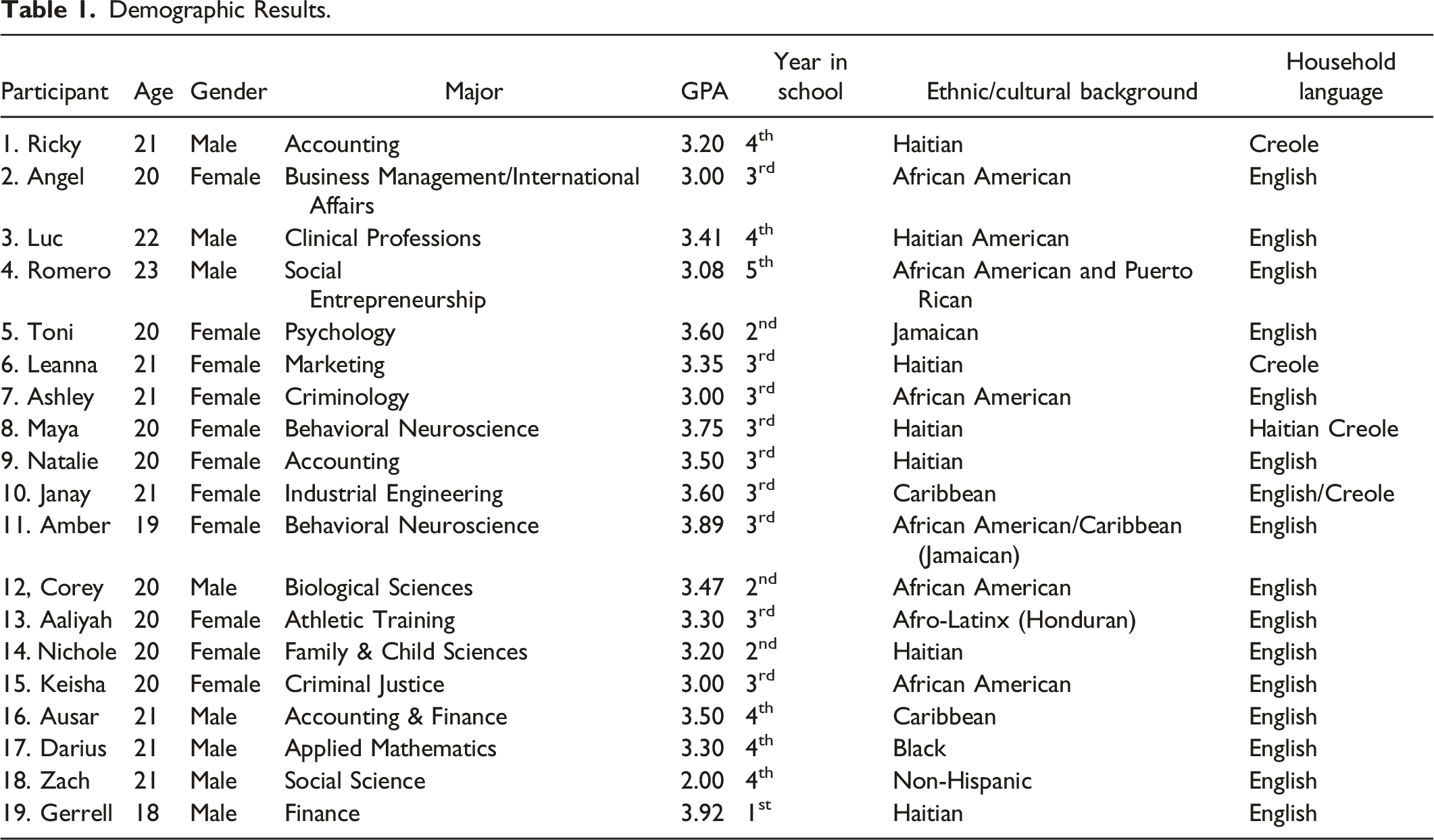
Context
This study was conducted at Florida State University (FSU) in Tallahassee, Florida. FSU is a large, predominantly White, public university with a very high research activity Carnegie classification. The participants in this study were recruited from a department at FSU that supports first-generation and low-income students. Students involved in this department are first-generation in college and have a financial need that may create barriers for them in pursuing and completing their degrees. The department’s approach to addressing these barriers is to provide its students with a comprehensive set of resources and services that include scholarships, grants, tutoring, programming, workshops, professional development, networking opportunities, and a community of fellow students and staff members who understand the experience of being an underrepresented, first-generation college student. Most students in this department begin their time at FSU by participating in a summer bridge program. Many of them lean on the connections made during this time to help them navigate the campus, become better acclimated, and reach their individual goals. For the semester that this data were collected, Fall 2021, there were 2781 Black undergraduates enrolled at FSU (12% of the entire undergraduate population; FSU, 2023). Of those, 928 (approximately 33%) were affiliated with this department. There were 1582 total students affiliated with the department enrolled that semester, meaning Black students comprised approximately 58% of this department’s population at that time.
Procedures
Before any recruitment procedures were conducted, we sought and were granted approval by Florida State University’s Institutional Review Board (IRB), which provides oversight for all research conducted at the institution involving human subjects. Upon approval from IRB, convenience sampling was used to recruit students through this Florida State University department, which supports low-income and first-generation college students. The first author serves as an academic coordinator for the department and has worked closely with many affiliated students. Mass emails were sent using rosters of students that he had already worked with in some capacity, explicitly inviting Black undergraduates to participate. Participants were told that they would be given a $10 Amazon gift card for participating. Once someone expressed interest in participating, an IRB-approved informational sheet and a link to the demographic survey were sent to them.
Once participants completed the demographic survey, a time was chosen for them to do a semi-structured interview over Zoom. The video was used during every interview where possible (given that the internet connection was strong enough to sustain video), and all participants were asked if they were okay with their interview being recorded. They were informed that although video was being used, only the audio from each interview would be saved, and all identifying information would be removed from the interview transcripts. Interviews were set to last at most 90 minutes, with most only being around 30–45 minutes. The longest interview was just over an hour long.
Interviews followed a question-and-answer format. A question would be asked, the participant would respond, and then any follow-up questions regarding the participant’s initial response would be asked if necessary. After this, the next question would be asked. This format remained consistent throughout the interview until all the questions and prompts on the complete interview protocol were incorporated. Occasionally, something a participant brought up previously would be returned to later in the interview if time permitted and if it seemed relevant to the study. If a response to a question or prompt was brief, the participant would typically be asked to elaborate or provide examples. This was done to ensure the data yielded from interviews would be as rich and substantive as possible. If a participant touched on topics in their interview that seemed sensitive or personally distressing, they were reminded of the counseling resources included on the informational sheet they were provided. In one case, an interview was cut short, and the recording was stopped for a participant who seemed especially troubled by personal experiences they were sharing with the interviewer. At the end of each interview, participants were asked if they had any questions for the interviewer or further information they wanted to share that they were not asked about. Once the interview was wrapped up, they were emailed their $10 gift card reward.
Interview Protocol
The same primary questions were given to all participants. Some of these include: “Tell me about the most stressful class you’ve taken in college so far. What was it like and what made it so stressful?”, “What has a professor/instructor ever done that’s made you feel at ease in their class?”, and “What kinds of things do other students do in your classes that add to your stress?” Questions about experiences surrounding race and ethnicity were not asked of any participants upfront to not lead them to discuss race in their interview if they did not feel it was a significant factor in their classroom experiences. Race-related questions were only asked as follow-up questions if participants brought up that topic first. Follow-up questions were also asked that were specific to how the primary questions were answered. For some interviews, the order of questions was changed to see if that made a difference in how participants responded. Participants seemed to respond similarly no matter the order of the questions.
Interview questions were developed through a smaller pilot study involving just four participants. This pilot study was conducted as part of a class on qualitative methods taken by the first author in 2020.
Data Analysis
Open coding (Glaser, 2016) was applied to all interview transcripts to find relevant themes. This was done by reading through each transcript and coding relevant information by highlighting responses that fell under various categories of responses. A rough codebook was developed that included the broad categories of stress-reducing factors, stress-inducing factors, general observations and themes, responses to stress, and thoughts and emotions. Once data were highlighted based on these categories, we broke down the categories into more specific subcategories. The first three authors did this individually. Themes were then shared and deliberated on to find areas of agreement. This deliberation process led to specific themes being created, revised, or redefined until every team member felt the themes captured all the significant data.
Once we had an agreed-upon set of themes, each member made several attempts to create visual representations of the themes and how they related. Like with the interview data, these drafts of models were then shared, discussed, and refined to ensure they accurately represented the data in the most parsimonious manner. Several iterations of this process were done until the team arrived at a final model. This part of the analysis is consistent with theoretical coding, which is creating a relational model through which each substantive category is connected to a core idea (Hernandez, 2009). In our case, we developed a model that showed how our core categories related to each other and worked together to reduce feelings of stress among the target population.
Trustworthiness
The first author’s positionality is that of a higher education professional and PhD student, who shares the experience with the participants in this study of attending FSU as a Black, first-generation college student. He is an alumnus and current full-time employee of the department from which participants were recruited and served as the primary investigator. The following two authors are both undergraduate research assistants, who are also Black, first-generation college students. Both are members of the same department and matriculated into FSU through this department’s summer bridge program. They became part of the data analysis team through their connections to the first author as his students. The last author is a professor of educational psychology, who is a White, first-generation college graduate, and former Pell grant recipient. Her primary research interest is effective teaching, and she coordinates several programs related to diversity and equity in education. She assisted the first author with decisions about research design and analysis, and she assisted with writing.
To increase the validity of the theoretical model produced by the analysis, we requested help from other graduate students in educational psychology. We had volunteers agree to look over the model and the descriptions of themes and factors included in it. Each volunteer was sent two interviews. Then, they each met with the first author to provide feedback on how well the model captured the information in the interviews. No volunteer received the same interview as another. The feedback in these meetings further validated that the model presented in our findings is representative of the interview data collected. Most feedback pertained to the presentation of our visual model and whether certain pieces of data fit better with other themes than where we had them. For example, one of the participant quotes we had under effort in making class engaging was seen by one of our volunteers as more representative of an identity piece because it dealt with the student connecting with the professor over shared experiences. Adjustments based on feedback like this were made so that our volunteers were also satisfied with how the overall model’s data were organized.
Results
Theoretical Model of Course-related Stress Reducing Factors
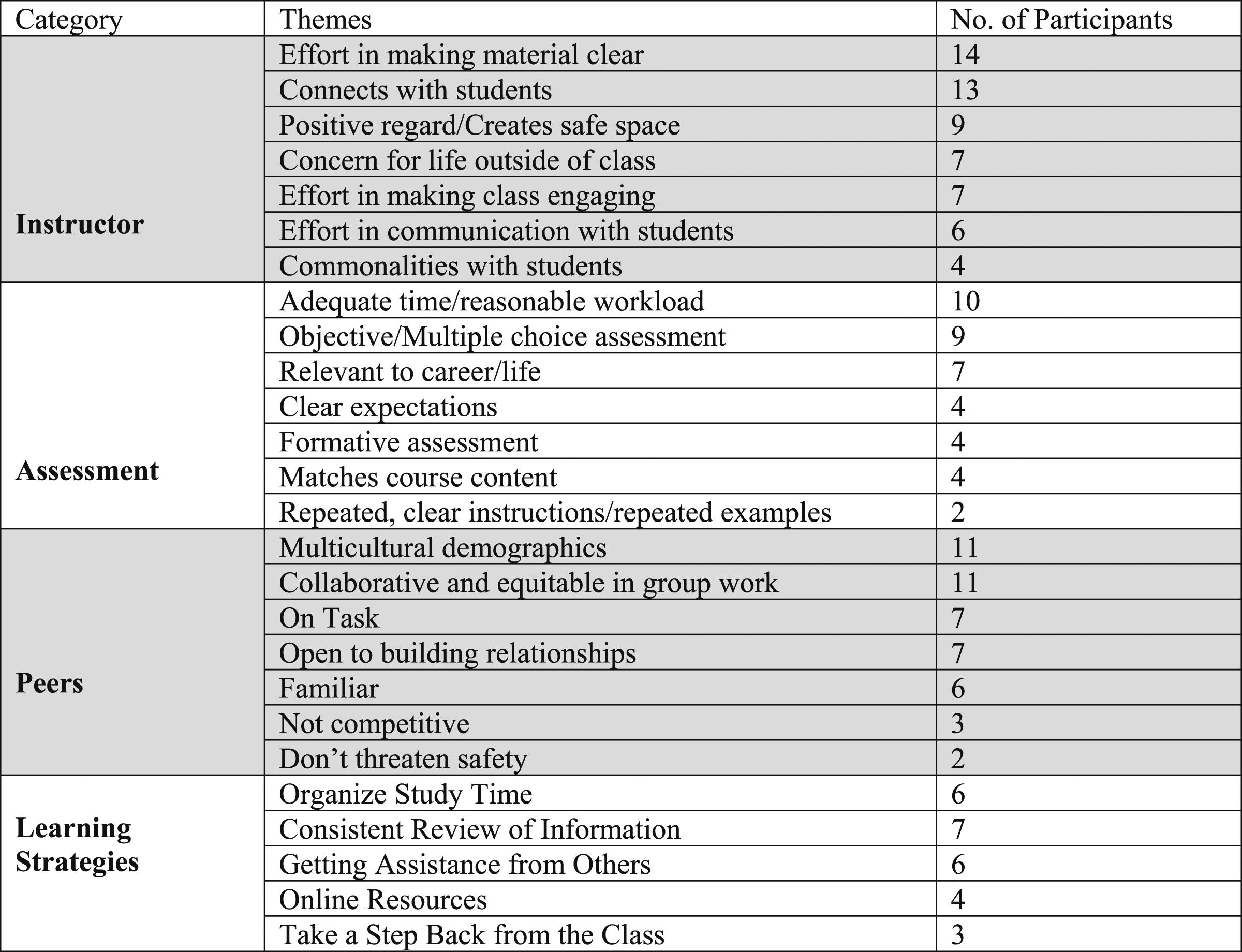
Analysis of participant interview data resulted in the model depicted in Figure 1 and the themes outlined in Figure 2. This model represents relationships between factors that reduce the frequency of stressful experiences in classroom settings by increasing participants’ experiences of feeling supported, related, and competent. All factors fall under one or more categories: instructor, assessment, peers, or learning strategies. All four categories can be considered interrelated because they all work with each other to produce a less stressful learning environment that is more conducive to learning and building connections. Themes were included based on whether they could be viewed as a response to the research question and whether they provided ideas for how instructors and institutional personnel could create more comfortable and inclusive learning environments. In general, if two or more participants brought up a theme, it was considered for inclusion. Theoretical model of course-related stress reducing factors. Salience of themes.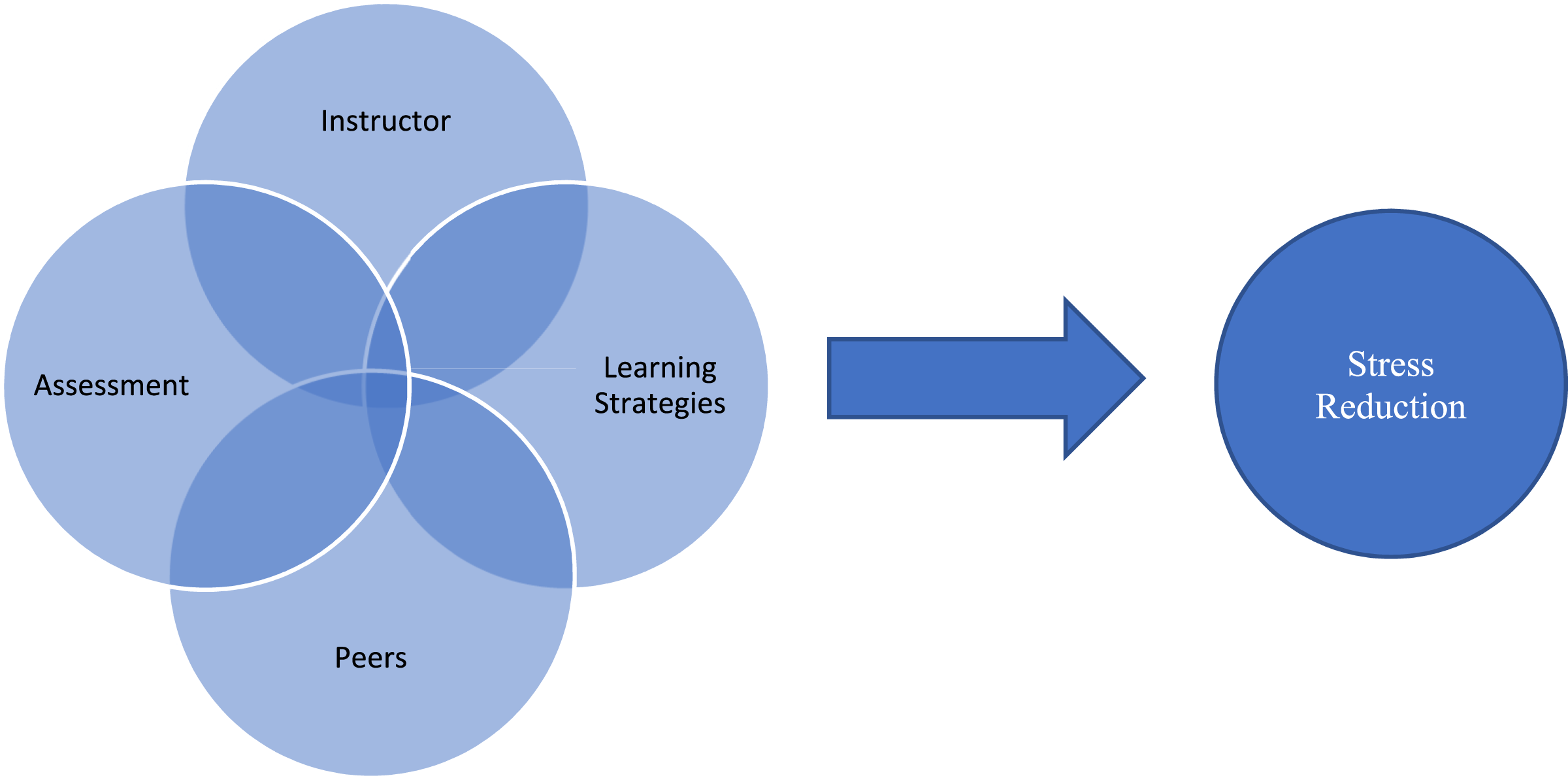
The course instructor has the most significant impact over most factors related to student stress. This is evidenced by the fact that when asked to describe classes that were and were not stressful, participants usually began by describing what the instructor for that course was like: their style of teaching, their personality, the amount of support and help they gave, etc. The factors that have the most significant influence over whether a student feels comfortable in a course can usually be traced back to the instructor and how they manage the class.
Themes
In this section, we describe the categories identified in the data, which revolve around factors in the model that contribute to participants feeling more supported, connected, and competent in their classes. The combination of these factors contributes to a reduction of stressful experiences in and relating to their classes. Figure 2 lists the most salient themes in order of how many separate interviews they appear in.
Instructor
Factors within the instructor category deal with characteristics and skills an instructor possesses that the participants perceive as more cultivating of a less stressful academic environment.
Effort in making material clear
Participants described examples of different ways their instructors went to extra lengths to ensure their material was well-received and understood by the class. Consider this example: He was different because he took the time to explain what he was talking about. He took the time to explain how you derive the shapes, and what they are, and took the time to do practice problems as he went along with the information. That helped better and I felt like I went to his office hours once and he was very nice with explaining things and tried to help you out and then didn’t expect you to know everything (Maya).
Instructors made sure their material was well received by asking for student feedback on how explicit the material is, offering office hours and effectively going over material with students during those office hours, providing lecture and course material in various formats, taking time to further elaborate on the material in lectures, and offering extra sources of information in addition to the primary course text. Participants reported that an instructor doing things like this makes them feel that the instructor cares more about their job and how much their students are learning, which creates a more stress-free environment for them.
Connection with students
This theme refers to how instructors get to know their students, and students feel like they know their instructor. A common way this gets accomplished is through class discussions and activities. It also happens through individual conversations students may have with instructors after class or during office hours. Take this example from Leanna: We would have conversations with her about everything, like Greek life, we talked to her about college, almost anything, and I love that. It made me really like her because it wasn't just like, she was just my teacher. We had a relationship with her.
Participants report feeling like they know personal things about their instructors and having things in common helps them feel more comfortable in class.
Positive regard/creates safe space
“Safe,” in this case, refers to a mentally and emotionally safe space. This theme refers to an instructor’s steps to ensure that students feel safe, understood, and valued in class. A common word used when participants describe instructors and classrooms that fit with this theme is “welcoming.” It also emerges in how instructors communicate with students. Instructors who show respect to students and speak to them with sincerity and warmth make participants feel more comfortable and less stressed in their classes. Showing kindness and empathy when students are having a difficult time with the material is another way instructors create a safe space. Consider this interview excerpt from Janay: I like the professors that do show that they care. That definitely gets rid of the stress because it's like okay, I know I did bad right now. But I know he’s going to help me figure it out… I'm not stressing those classes at all, because I'm very transparent with my professors and with my issues that I deal with mentally, health wise, all of that stuff. I have no doubt in my mind that if push comes to shove, they will help me.
This example illustrates positive regard’s impact on the extent to which students seek out help and are willing to engage in the class.
Concern for life outside of class
The most common way this theme is represented is by instructors acknowledging that students have lives and responsibilities outside their class and trying to be mindful of that. Many participants describe how this came up at the beginning of the pandemic when some instructors started to be more lenient in response to the challenges many students were experiencing outside of class at that time. Checking in on students during class to ask how they were dealing with the pandemic and related challenges also made participants feel like their instructors cared about them as people and not just as their students. Showing this makes students feel that they have a little more room for error or adjustment because they know that an instructor who shows this kind of concern will be more understanding, and that takes a lot of pressure off of them, which leads to reduced stress, as shown in this quote from Romero: The way he handled everything definitely gave me a lot more respect for him… He asked us what our comfort was all the way and that was one of the first times I felt that from a professor who didn't look like me. Just empathy in general will help. If I approach someone and say I wasn't able to do this, most of the time, a professor would be like okay. Most of them will even let you turn in late, there will be a penalty or something and they won't really care. But especially in my new major, a lot of my professors will have empathy, they understand… there’s a lot of things going on besides just school in life. I feel like most academic professors just expect you to care about school being your number one priority. So, I think that's something that I really appreciate it has helped me not feel stressed out.
Effort in making class engaging
Instructors who demonstrate this skill will use instructional methods and learning aids that encourage more engagement from students and keep their attention. These instructors are usually described as fun but are also perceived as caring more about their students because participants notice that it takes more effort on their part to make class engaging. This can be shown in simple ways, such as making a PowerPoint presentation more visually appealing to keep students’ attention or including references in the lesson to things that students are familiar with. This is exemplified in the following response from Aaliyah: What he would do is have fancy little backgrounds on PowerPoints and put those up while we're walking in class. Other professors sit there until class starts which I don't like but whenever they try to make the class, like our surroundings look more interesting, that ties me in because it makes me not want to fall asleep in class.
It can also be shown by setting up the classroom more appealingly and teaching with more energy and enthusiasm. Participants connected more engagement to feeling less stress in a class because being engaged and entertained makes the class naturally more fun.
Effort and openness in communication with students
Participants expressed how important it was for a professor to communicate well and clear expectations for the class: “But the reason why it was so stress free is because the professor was actually a very good communicator. She explained everything that she wanted from beginning to end and how the semester was going to go” (Ricky). A common way effort in communication is demonstrated is when instructors respond to emails from students promptly. Being consistent in communication and quick about sending updates and information makes students feel that they have the necessary information to perform well in class. When a professor does not communicate consistently, it adds to feelings of uncertainty for participants, which stresses them out.
Commonalities with students
This theme is related to connection with students but slightly different. Connection can take other forms, and it is important to participants that the instructor tries to connect with them, but commonalities are optional. A reason why students are receptive to instructors whom they share things in common with is that it normalizes their experience and affirms them that they belong here. This is represented in the following examples: “I would say maybe relate to them as if they were an undergrad because I’ve spoken to a couple of my professors, and they told me how hard it was for them in undergrad, because I didn’t know that I’m not the only one who struggled with accounting” (Natalie). Aaliyah also went in-depth into how much it means to her when she knows that a professor had a similar upbringing as her being from a small town and coming into the higher ed environment with no connections or not as a legacy. She stressed how knowing that an instructor started from the bottom like her meant a lot to her because it normalized her own experience and let her know that she could achieve what they had despite the lack of resources she started with.
Assessment
Themes within the assessment category deal with types of assessment and an instructor’s style in conducting and facilitating assessment.
Adequate Time Expectations and Reasonable Workload
These two are grouped because they both deal with the instructor having reasonable expectations concerning what their students can accomplish. Participants emphasized that instructors understanding how much time and effort their assignments require and allowing for a reasonable amount of time to get assignments done was necessary for whether they felt they could perform well in a class. This is illustrated in these quotes from Maya and Janay: “When you have a lot of assignments to do, it’s really hard to actually learn in a class. Because you’re just trying to finish the assignments and meet the deadlines instead of really trying to absorb the information” (Maya). I get a homework assignment on Tuesday that's due Thursday morning, but I got three other classes that I need to do homework for…, and you think I'm going do your homework with what 10 questions in two days, and have it to you by Thursday? Nah, that's unrealistic (Janay).
Participants view time as a resource, and over-assigning depletes that resource rather quickly. Instructors who schedule assignments so that students feel like they have enough time to work and who have reasonable expectations of what students can accomplish relieve their students of an extra mental burden.
Objective/multiple choice assessments
A recurring theme in these interviews is participants reporting that they prefer more straightforward and objective assessment types, as opposed to open-ended or open to interpretation. Most of the participants said they do not enjoy writing essays, and when pressed further about this, some of them said that it is because papers are subjective. It is up to the professor how good their paper is: “But it gets stressful because it’s subjective… it’s based on how the professor feels about it. So I like math” (Janay). This problem is exacerbated when they do not feel they are given a rubric or guidelines that make it clear enough how they are going to be graded or what they should be focusing on as they work on their assignment: “I don’t like writing papers. It’s not that I’m not good at it. Just there was one class I took and the TA was really nitpicky about everything” (Natalie). Some participants have also said that open-ended questions on exams take longer, which stresses them out more when they see those questions. If the exam or quiz is timed, then written questions make it harder to complete other questions on the exam.
Relevance to career and life
Participants report that they are usually more interested in a course or course material when they understand how that material is relevant to their career goals or life in general: “I like how she related real life into the lectures, which made it more engaging” (Nichole). This does not mean, however, that they are only interested in classes that are relevant to their major. Sometimes, they can find interest in a liberal studies or general education course if the instructor engages the class and shows how understanding the course material can enrich their lives. A quote from Aaliyah shows that material connected to real life makes a class more accessible and more interesting because it involves topics that students relate to: “It was an ethics class so it wasn’t really hard to jump into because we talked about stuff like is the death penalty morally wrong or right, abortion, and things like that.” Participants who brought up the topic of relevance always did in reference to being asked about classes that were the least stressful for them. When asked follow-up questions on why this makes a class less stressful for them, they usually reported that it made them more interested in the material, so they did not see the class as much of a chore or a burden on them.
Clear expectations
Participants emphasized the need for clear expectations regarding assignments and exams to be communicated to them. Multiple participants said that not having clear expectations for them makes it to where they have trouble understanding how to prepare for exams or work on assignments. He would give us study topics and we would have to study almost all of them because you didn't know which one he was going to throw at us. So I would study maybe three or four of them and hope for the best, honestly, and usually one of them showed up (Angel). They leave you in a limbo, with expecting what's going to be on the exam. For instance, there's 60 concepts and 60 different ways you can do something instead of them telling you. Hey, you know, you should really pay attention to ABCD they tell you study all of this. And it'll be on the exam, when you take the exam, only 20 of the concepts were used. So I could have used half or even a quarter of that time studying for your class and studying for some other class, but it just wasn't known. That doesn't help (Natalie).
It also creates situations where they may not understand why they got specific grades or how to improve in the class if they get an unfavorable grade: “And I remember just getting C’s on the test and just not understanding why I was getting C’s on these tests” (Angel). Not knowing how to prepare for an assignment or exam that might be high stakes, and not understanding how to improve your performance contributes to perceiving a class as stressful.
Formative assessment
Participants reported that there are two main reasons why opportunities for formative assessment reduce the amount of stress they experience in a class. The first reason is that formative assessments allow them to practice the material before formal exams with higher stakes. The second reason is that having formative assessments means that their final grade in a class will be based on more than just exams, giving them more room for error on exams and giving them more chances to pull their grades up. Both of these take some of the pressure off of them when it comes to preparing for exams because it means they are already preparing better, and they believe they do not need to spend as much time preparing for an exam outside of class.
Matches course content
Participants said that it stresses them out when the items on an exam or homework assignment do not match the material they learned in class. When it comes to exams, this usually catches them off-guard because they never expect to sit down for an exam and do not recognize the questions. This immediately creates a stressful situation for them because any way they might have prepared for the exam is no longer helpful: “When the material just doesn’t match the work and we just have to kind of figure it out. I don’t like that” (Janay).
Repeated instructions and examples
Three participants emphasized that having instructions for an assignment repeated to them and clearly described helps them better understand what they are supposed to be doing, which takes away some of the stress from uncertainty. Participants appreciate how repeated step-by-step instructions for assignments eliminate confusion. Some even said they would rather have this than be given the independence to do what they want with an assignment. If you show me an example and then gave me a similar example to where I can figure it out. I can do it instead of giving me extra steps to do or just go over a few examples. So, I can get the steps down on how to do the problem (Angel).
This relates back to students not liking subjective or open-to-interpretation assignments. They prefer clear and consistent instructions on how to accomplish the assignment. A straightforward guide or rubric helps with this.
Peers
This category has to do with the connection they feel to their peers in the class and their perceptions of how their peers treat and collaborate on work with them.
Multicultural Demographics
The most common theme in this domain is that participants reported feeling more comfortable when they had other people of color in their classes, especially if they were other Black students. Participants reported a few reasons for feeling this way. They were more likely to already know other Black students in a class anyway; when there are other Black students, they feel like they have people in the class who are going to look out for them, and they find it easier to link up with other Black students to study together or collaborate on assignments. There is one anecdote from Aaliyah that is worth highlighting here because she describes what it can look like for Black students to look out for each other in a predominantly White academic space: She would always put her book bag in the seat [next to her]. And I noticed that whenever I would come down the aisle, she would take it out. And then I started doing it for her too. And there was one time where I came really late because of a field trip to FAMU for OL [orientation leaders]. And she had the book bag saving the seat and I saw someone walk past, and she didn’t move her book bag. But when I came down, she moved it. That's when I kind of knew, but I don't know. It's small stuff like that. Now that I'm looking back at it a lot of the times when I'm in class in person, it's usually a group of like Black people and we usually sit close together. Sometimes we engage in conversation, but we're still sitting near each other.
At other times, Black students in a class would also inform participants about campus involvement, internships, jobs, etc. Having other minorities in the class also helped them feel even more like they belonged in that space. Ten participants reported that only seeing White students in a class made them uncomfortable because it made them feel more othered and induced imposter syndrome. They related this to how that put more pressure on them to perform in the class, which echoes the literature on the connection between stereotype threat and academic performance.
Collaborative and equitable in group work
Another common theme regarding when participants felt more at ease with their peers is how they work together on group assignments or in-class activities. Participants felt more comfortable in a class when their classmates did their fair share of work whenever they had to work together and when they were open and eager to collaborate with them. Classmates who come off as selfish or trying to outdo other students usually make participants less enthusiastic about working in groups. For example, Leanna contrasted her experience of working in two different groups where one was a lot more cooperative, and in the other, group members were trying to outdo each other and show they did more work than everyone else. She became frustrated over the latter because she felt they should work as a team since they would all receive the same grade anyway. Participants also consistently expressed frustration over group members not carrying their fair share of the workload and how that added to their stress because it made them worry more about their grade. Participants also emphasized that group work feels the best when they feel they are treated the same as everyone else in the group. Interestingly, some participants reported being treated as incompetent, and there were a couple who reported being treated like they were supposed to be a leader or know everything. In either case, they preferred when everyone in the group was considered equal.
On task
An interesting and unexpected theme that came out from interviews came from participants consistently saying that it stresses them out when other students in their classes either do not apply themselves, do not do what they’re supposed to, are disrespectful to the professor, or otherwise cause distractions in class: “Yeah, I hate when other students are like significantly lazy, to the point where they complain about anything and don’t want to do anything. That really bothers me” (Romero). When asked why these things cause them to stress, a couple of participants said that they feel other students not doing what they are supposed to puts negative attention on them when they are on task and trying to apply themselves in class. Participants also said that when students cause distractions or disrespect the professor, it disrupts the flow of class, which causes them stress.
Open to building relationships
Another prominent theme in the peers domain is participants emphasizing how it makes them feel more comfortable in a class when they have opportunities to build relationships with their peers, either in the context of group work or not. Some examples of these opportunities include having class discussions about topics related to or not related to academics, expressing similar interests in campus organizations, hobbies, or career pathways, and making group chats with classmates to talk about work. Through these and similar processes, participants feel like they are given chances to really get to know their classmates on a personal level, making them feel like they have more support. It also allows them to bond over the class, increasing resilience and motivation. This is best shown in the following quote from Natalie: I’m most comfortable when we’re open with each other, when we’re like listen this exam is to be hard, we don’t know what’s going on with the professor, why would they do this to us right now? And we would just take a breath and we’re like, okay, we can do this. We can do this stuff. So we take a moment, we have a little cry, and it was like, but we're going finish it. We’re going to do great. And just the motivation, the courage and everything like that. Just the teamwork aspect of it, I think that makes me feel the most comfortable.
One participant said that when taking a class with only White students, talking to them about their hobbies and what they do outside of class made him feel more connected to them and helped him feel more comfortable in class when he previously experienced imposter syndrome.
Familiar
Sometimes, just having familiar faces in a classroom made participants feel more at ease, even if that other student is not Black. A couple of participants reported that seeing other students from their support department in a class made them feel more comfortable, regardless of the other student’s race: “And granted, you know the [redacted] student doesn’t necessarily have to be Black. They could be White, they could be Hispanic…” (Corey). This theme also relates to relationship building because the things participants reported as allowing them to build relationships with their classmates, also make the other people in their class more familiar and recognizable to them when they see them elsewhere around campus or in other classes.
Not Competitive
This ties back to something that came up when participants talked about their experiences working in groups, but it also shows up in other ways, too. A couple of participants reported that when classmates did not seem like they were competing, they felt a lot more comfortable in the class. One participant gave a clear example of this when they described being stressed out when students seemed to care too much about what grades other students got and would make others feel bad if they did not perform as well as them: They kind of made people feel different for the grades they got. They were like oh, what did you get on exam one? And they will start a whole poll of like, oh, I got 100 through a 90 or a 90 through an 80. And it's like, I don't know. But yeah, it's just kind of real competitive in there. They try to do stuff like that (Amber).
Participants were much more comfortable when they feel like their classes function as a community of learners, and everyone supports each other, not trying to outdo one another.
Safety
Although most participants did not bring this topic up, safety was discussed in a couple of interesting ways in both physical and virtual academic settings. When asked about being stressed by the actions of classmates, Aaliyah (who identifies as a woman) reported feeling more uneased in classes that included male athletes as her classmates because of their reputation for harming women. She also reported having a couple of negative interactions with male athletes in her class but did not detail what these interactions looked like. Two participants also discussed how using Honorlock for virtual exams caused them a great deal of stress partially because they were required to scan their bedrooms, and this made them concerned for their privacy and how images captured of their room might be used. These examples represent how it is harder to focus in class when one feels like one’s safety is potentially threatened.
Learning Strategies
When asked how they deal with stressful classes, participants reported using various techniques and tips taught to them by campus departments such as the tutoring center or other departments that provide academic support.
Organize study time
The most common strategy participants reported for handling especially stressful classes was better managing their time and designating specific times to study, work on assignments, and get reading done. Organizing their time made it more likely that they could complete tasks and study adequately. To do this, they used tools like calendars and planners to help them stay organized. This reduced their stress by making them feel better equipped for the class.
Consistent review of information
Another common tactic used by participants was the constant review and rehearsal of information. This was typically done in preparation for an upcoming exam. There are some differences in when this tactic is applied. Some reported doing it to cram for an exam that was coming up soon, but others did it throughout the semester to make sure they were staying on the top of information so they did not have to try to learn too much right before an exam. Most participants, however, described their use of this technique in the second way to ensure they were keeping up with the material throughout the semester.
Online resources
Participants reported using educational websites and online tools to help them learn the material and fill in gaps that needed to be addressed in class. The most common of these resources was YouTube, followed by Khan Academy. Participants would sometimes look up videos on the topics they were currently learning. They did this to find material on the information that was clearer and more direct than the instruction they were getting in class.
Getting assistance from others
Participants also talked about how they would turn to others for assistance in difficult classes. This included going directly to the professor for help, meeting with TAs or learning assistants, attending tutoring sessions on campus, or even going to their academic networks of other students for help. One participant, Aaliyah, talked about asking other people in a campus organization that she was in for tips and assistance if they took a class before that she was currently struggling with.
Taking a “step back” from the class
Lastly, a typical response among participants, when asked how they handle stressful classes, was taking a short break or “stepping back” from the class to focus on personal things like self-care or hobbies. They did this to regroup when a course became too overwhelming, and they were unsure how to handle it. Sometimes their hobbies were also therapeutic and provided them with a way to relax so they could think more clearly about handling the class. This was best exemplified by Janay, who said that she used coping mechanisms like “painting, photography, and music” to help her when she was stressed out by a class.
Several of the themes from Figure 2 align with practices associated with CRP. Specifically, themes related to instructors showing care for students, putting effort into engaging with them, creating a safe space, creating a collaborative learning environment, and making sure material is clear directly parallel several ways that CRP has been operationalized across studies. These themes are paralleled in a literature review on CRP conducted by Morrison et al. (2008) and match the components of CRP they describe as investing and taking personal responsibility for students’ success, creating and nurturing cooperative environments, and modeling, scaffolding, and sharing power in the classroom, and clarification of the challenging curriculum.
Discussion
The purpose of the present study was to better understand course-related factors that reduce academic stress among Black, low-income undergraduates at a PWI by using a qualitative methodological approach. This study expounds upon existing literature, which shows that very few studies examine factors specifically related to classroom experiences that contribute to academic stress among college students. Most research on stress among Black college students tends to focus on stress-inducing factors outside of the classroom and emphasize the social experience of being Black on a college campus. Even literature focusing on resilience and empowerment among Black college students is more likely to study social support and the strengths of community resources as ways of addressing stress. Very few studies give us ideas on how classroom management, assessment, instructional methods, and student–instructor interactions can be addressed to create more inclusive learning environments in higher education. The themes and theoretical model produced by this study are an excellent first step to designing future research that can target more specific aspects of the classroom experience for Black college students.
The key insight from this study is the interrelatedness between instructor, assessment, peers, and learning strategies and how these factors contribute to the classroom experience for Black students both separately and together. The instructor is the critical component of this relationship because of how they determine the course dynamics. The instructor is not only responsible for how they interact with students and how they approach teaching material in the most effective ways, but they are also responsible for choosing inclusive forms of assessment that do not place more burden than what is necessary on their students, and in creating opportunities for empowering and mutually beneficial collaboration between students.
Even some factors related to peer interactions that participants reported as playing a role in their stress and safety levels could also be tied back to how instructors manage the course. One example of this is when Corey reported a distressing situation in one of his virtual classes taught over Zoom where some students were posting comments in the chat to intentionally taunt Black students and deride Black Lives Matter during the nationwide BLM protests in the summer of 2020. This participant directed most of his frustration to the course instructor for not doing anything about it and for not even acknowledging what was going on in the chat and choosing to ignore it. There are other examples from the interviews where students discussed peer interactions, both positive and negative, in terms of how the instructor set the conditions for these interactions and allowed them to play out.
The insights gained from this study are consistent with two other theoretical frameworks: self-determination theory and culturally responsive teaching (CRT) (Deci & Ryan, 2012; Gay, 2002). The core of the theoretical model shows how academic stress is reduced when support, relatedness, and competence are increased. This is similar to the core idea of self-determination theory, which proposes that motivation is facilitated when people experience relatedness, competence, and autonomy. Although the concept of autonomy was not explored thoroughly through this study, several participants gave responses that touched on how much independence they prefer to have in their classes. However, this was only vaguely discussed in the interviews.
Other research has been done that explores the relationship between motivational theories, including self-determination theory and culturally responsive teaching. Previous research supports the idea that strategies associated with culturally responsive teaching can enhance the motivation of multicultural student populations (Aronson & Laughter, 2016). The data collected from the current study suggest that these same CRT themes, which enhance motivation, also reduce stress among learners. These include students feeling cared for by their instructors, having instructors and classmates who relate to their experience, and finding personal relevance in the course material, all endorsed by the culturally responsive teaching framework (Gay, 2002). Further research should be conducted on the relationship between CRT and experiences of stress. Most research on CRT and related theories focuses on its relationship to motivation and academic outcomes, but not how it can reduce academic stress.
Another critical insight from the results pertains to how participants dealt with stressful classes. The techniques reported by participants show up in the literature related to academic resourcefulness, which has been shown to bolster students’ commitments to succeeding in their classes and remaining at the institution (Xuereb, 2015). Kennett et al. (2019) found evidence that “teaching students requisite academic resourcefulness skills to deal with academic challenges assists them in increasing focus on their academic studies as opposed to non-academic activities” (Kennett et al., 2019, p. 136). The results of the current study underscore the importance of teaching students these techniques early. All of the participants in this study would have most likely learned these strategies in their first semester at the university, having participated in the summer bridge program of the support department. However, since many students do not have a support system like this in place, we recommend that course instructors take a more significant responsibility in helping students learn how to prepare themselves for the work they assign and directing them to campus entities that can help them develop their resourcefulness. These entities could include tutoring centers, libraries, academic support departments, etc.
Furthermore, culturally responsive pedagogy was initially adopted as a framework when culturally responsive teaching fits the results better. The difference between the two is that culturally relevant pedagogy focuses more on developing an empowering curriculum, whereas culturally responsive teaching focuses more on instructional methods. Schmeichel (2012) describes the difference between the two theories as “something that a teacher can do, instead of a critical stance that a teacher takes” (Schmeichel, 2012, p. 211). Even though we make the connection between the two theories in the description of the framework, it seems that culturally responsive teaching is what ended up having the more significant impact on participants, as they were much more likely to focus on how the instructor taught, but not so much on whether or how empowering or culturally relevant the curriculum was.
Limitations and Future Research
One limitation of this study is that all participants were recruited from the same support network at FSU. Hence, the variety of responses gathered was probably more limited than if they had been recruited from across different campus programs or multiple universities. Future research could benefit from employing naturalistic observations in classroom settings at PWIs that include Black students. It could have been enlightening to see how Black students interact with each other, with non-Black students, and with the instructors in those settings. By doing that, one may see that parts of that experience get left out when asked about it, or discrepancies may arise between how students behave and what they report.
Recommendations
Based on the findings of this study, the responsibility of creating a less stressful learning environment, by ensuring that it is safe, supportive, and inclusive, falls mostly on the course instructor. A significant part of that preferred setting lies in how instructors interact with and support their students. Institutions and academic departments should heed this by developing some professional development program that seeks to train instructional faculty on the most relevant tenets of student success theories, CRT, and good teaching practices. When selecting faculty for hiring, promotion, and tenure, it is also recommended that their history dealing with students and their attitudes on the importance of developing positive instructor–student relationships be considered. One tool used in this effort is student feedback surveys that can be easily collected from all courses. These surveys should include questions that allow students to report their perceptions of how well an instructor manages the course and supports students in meeting course goals. Most institutions already conduct course evaluations every semester. Those could be revised to capture student experience more thoroughly in a course.
A takeaway from this study is the role of different types of assessment and how they relate to the learning experience. The responses from participants should encourage instructors to think more critically about the assessment they use and how it serves the learning goals. A common issue reported by participants was feeling that the material they were being tested on did not match the material discussed in the lecture or the reading. Instructional alignment is a well-established concept in K-12 education (Cohen, 1987). There is evidence that aligning outcomes, instruction, and assessment is associated with more robust student performance and higher levels of teacher efficacy in K-12 settings (Baez-Hernandez, 2019; Teasdale & Aird, 2022). Higher education institutions should make more vigorous attempts to institute this practice. One way this can look is for academic departments to institute standards and guidelines for how the material on exams is taught to ensure a clear connection between the two.
Some institutions already have departments or centers dedicated to promoting and training instructional staff on effective teaching methods. At many schools, departments that serve this purpose are referred to as Center(s) for the Advancement of Teaching, Center(s) for the Advancement of Teaching and Learning, Center(s) for the Advancement of Teaching and Faculty Development, etc. These centers are usually tasked with conducting and disseminating emerging research on learner-centered teaching and other equitable teaching practices and supporting faculty who wish to implement these practices into their courses. Departments like these should be invested in, developed, and promoted to university faculty.
The interview data point to another topic in the field, which is that of belongingness. Many of the participants in this study talked about how their interactions with their instructors and peers contributed to the extent to which they felt more like a valued part of that learning community. The results of this study are similar to those found by Booker (2007). Their study uncovered several themes related to faculty and peer interactions and how those interactions contribute to a sense of belongingness among Black undergraduates at a PWI. Interestingly, when asked about stress-related topics, the present study participants discussed topics parallel to those found in studies on belongingness, support, and learner-centered teaching. This fact points to future research that can be done that more thoroughly explores potential relationships between these constructs.
As a final important point, it should be stated that no participant said they need their instructors to be Black, only that they be good at teaching and show they care about them. Some said it might enhance their experience if they had more Black instructors, but they can still learn from instructors not of the same race. Cultural barriers can persist, which should be addressed with cultural competency training and more education on CRT for instructors. However, the teaching practices this study supports are designed to make all learners feel more included and valued within the course setting. In our goal to find ways to reduce stress among a specific population, our analysis has also cast light on a much broader web of factors that start with departmental culture and trickle down to faculty preparation, classroom management, and finally, the unique subjective experiences of each student. Our recommendations point to a much-needed paradigm shift in higher education that would better facilitate equity, community building, and empathy as prerequisites for student success.
Footnotes
Declaration of Conflicting Interests
The author(s) declared no potential conflicts of interest with respect to the research, authorship, and/or publication of this article.
Funding
The author(s) received no financial support for the research, authorship, and/or publication of this article.
