







Abstract
In this study, we explored Tanzanian secondary school students’ identification of pressing concerns in their daily lives and their civic engagement actions. Data were collected in two phases. In Phase 1, 48 boys and girls in the Dar es Salaam and Pwani regions of Tanzania participated in one of eight focus groups. Using thematic analysis, we identified initial themes. In Phase 2, two additional focus groups were conducted with 13 students in a girls’ school in Dar es Salaam to explore in greater detail the themes, especially those related to girls and women. Using thematic analysis across the two phases we identified eight interlocking pressing concerns discussed by the youth: Corruption/Misuse of Resources, Poverty and Unemployment, Limited Resources, Gender-Based Violence and Discrimination, Bias and Conflict, Diminished School and Learning Environment, Diminished Quality of Life and Future Potential, and Community Health. Youth engaged in a range of civic actions, including educating self and others, joining student groups, and being a leader and role model.
Civic engagement is a marker of human development; in fact, it is considered one of the five life transitions denoting the attainment of adulthood status (Campbell & Erbstein, 2011). Civic engagement—or what some Kiswahilli youth refer to as “siasa na jamii” (society and politics)—broadly refers to individual and/or collective action taken to identify and address pressing societal concerns (Schoon et al., 2025). “Even more than a particular set of actions, civic engagement is how we interact with our communities and society at large to address or prevent a public problem or concern” (Hope, 2022, p. 4). In this sense, civic engagement is less about participating in formal politics and more about identifying concrete ways to improve the day-to-day realities of people. Although important for all youth, acquiring a sense of efficacy in making a difference in one’s community is particularly important for youth in developing countries (Aristarick, 2016). Engaging such youth ensures most of the changing population has the skills and commitment to improve the communities in which they live, and by extension the nation (Ginwright, 2011). There is surprisingly little published research on the civic engagement of youth in developing countries in Africa, particularly East Africa.
Research on civic engagement has blossomed over the past few years, with much of the literature centered in a Western context. Scholars have articulated differing frameworks describing the ways youth challenge injustices and address social problems as part of this new research. Wray-Lake and Abrams (2020) presented a model describing the pathways in which Black and other Youth of Color in the US take action to make society better. They described a range of youth engagement based on their awareness of community engagement, sense of empowerment to act, ecological assets in their environment that support civic activity, and potential adversity that serve as barriers in civic engagement activities. The authors admittedly noted that current models of civic engagement may not capture the range of youth’s experiences across contexts.
The purpose of this study was to explore civic engagement among youth in Tanzania, with a focus on describing the most pressing concerns youth identified in their lives and the activities they currently engage in as a demonstration of civic involvement. Generally, youth civic engagement can be understood as the process of youth being actively involved and contributing to the positive development of their own lives, families, communities, and nation (Schoon et al., 2025). Given that aspects and contexts of youth civic engagement is just as distinctive as the global world is diverse, it is necessary to consider the salient cultural nuances that influence young people. Similar to the arguments made by critical educators such as Paulo Freire (1992), we incorporated a discussion of the most pressing concerns youth identified in their environment because we see this as the first step in the civic engagement process; the assumption here is that the type and cause of societal injustice motivates one to take action and determines the type of action one takes.
Contextualizing Civic Engagement in Tanzania
Historically, Tanzania has fostered tradition, culture, heritage, communalism, and a deep national pride, which serve as the foundation of developing a sense of civic responsibility. The very founding of the country rests on collective responsibility. Julius Nyerere, the country’s first president, instituted policies such as Ujamaa (family hood) with the Arusha Declaration and Education for self-reliance (Nyerere, 1967). These initiatives were predicated on traditional values of “mtu ni watu” (a person is because of other people). Nyerere and the early founders made assumptions about the past and its application to the present ignoring such things as intra/inter-tribal conflicts and overpopulated geographical areas of African states (Alofun, 2014).
A lot has changed in Tanzania since the 1967 Arusha Declaration. Tanzania’s population has almost tripled in size and now ranks as one of the fastest growing populations in the world (African Institute for Development Policy, n.d.; Agwanda & Amani, 2014). Tanzania’s growing population is also experiencing an unprecedented “youth bulge.” The 2022 census reported that approximately 53.7% of Tanzania’s 61.7 million people are between the ages of 15 and 35. Additionally, youth aged 15–24 who are still students make up 19.2% of the total population (United Republic of Tanzania President’s Office, 2022). These changing demographics have significant implications that will and have transformed Tanzania. Historically, countries that have experienced youth bulges have tended to emerge from them much wealthier. The right human capital investment could result in higher levels of development for the country and improvement in the quality of life for its citizens (African Institute for Development Policy, n.d.).
Youth bulges in communities influence nations, moving them either toward social cohesion (Aristarick, 2016) or toward ethnic divisions, extremism, and violence (Urdal, 2006). With a high percentage of young people in Tanzania, there is great potential for youth to work for equitable development and harmonious social relations (Mkama, 2016). Scholars and activists, such as Nobel Peace Prize winner Wangari Maathai of Kenya, advocated for increased participation by youth to advance social cohesion within a culture (Florence, 2017). In essence, young people are crucial to the sustained progress and development of emerging economies like Tanzania.
Tanzania has attempted to capitalize on the youth bulge. For example, Tanzania in 1996 instituted the National Youth Development Policy of the Ministry of Labour and Youth Development, which implemented youth development programs and promoted youth civic participation (United Republic of Tanzania, 1996). The policy was updated in 2007 to focus more on youth development issues (United Republic of Tanzania, 2007). Anchored by this charge, Tanzania has developed various governmental and non-governmental organizations that have developed youth civic participation opportunities (Mkama, 2016). This is evidenced by the multitude of youth organizations (e.g., Tanzanian Youth Alliance, Restless Development, Youth for Change Tanzania, Tanzania Development Forum for Youth), governmental collaborations (e.g., YES Country Network) and University partnerships (e.g., University of Dar es Salaam JEMA and TUSEME projects). These initiatives are all in line with The Tanzania Development Vision 2025, which aimed to achieve a high-quality livelihood for its people, attain good governance through rule of law, and develop a strong and competitive economy (United Republic of Tanzania, 2000). Moreover, the revised Tanzania Development Vision 2050 emphasizes supporting youth to maximize human potential by harnessing women and the growing youth population to drive national development and engage as creative, thoughtful, and confident citizens (United Republic of Tanzania, 2024).
Youth Civic Engagement in Tanzania
Some scholarship has explored civic engagement activities among youth in Tanzania (e.g., United Nations Democracy Fund, 2022). For example, Project Next Generation (2016) investigated young people’s perceptions of their role in society and their suggestions for policy changes to address pressing social concerns. Results from focus groups indicated that youth were sociable, energetic, optimistic, aspired to be successful in their careers, could set goals, and gave back to their communities. They found that despite obstacles, Tanzanian youth believed their lives were better than their parents and that their lives will be even better in 5 years.
Findings from youth civic engagement projects also described the challenges Tanzanian youth perceive as most pressing in society. While most youth participants in the extant research remained optimistic about the future, they were realistic about the challenges, including lack of motivation, fear of financial insecurity, lack of employment opportunities, corruption, ill health, nepotism, general living conditions and lack of capital to start businesses, with the overall hardship of life being felt more by rural participants (Project Next Generation, 2016; YouthMap Tanzania, 2014). For example, YouthMap Tanzania (2014) found that youth were unable to overcome barriers to gain employment. To complicate matters even more, most institutions in Tanzania have limited capabilities to provide resources, services, and infrastructure to address these concerns.
Developmental science scholars have noted that civic or community participation is crucial part of positive youth development (i.e., characterized by competencies, connections, commitments, and confidence) to make changes in their own lives as well as others’ (Eccles & Gootman, 2002). In that vein, developing the skills needed for civic engagement during adolescents and early adulthood becomes a pathway to and a predictor of future civic engagement (Wray-Lake & Abrams, 2020). A critical perspective of the social world including laws and larger structures that shape lived experiences is included in several youth civic engagement models as a pre-requisite for informed, engaged action designed to improve the community wellbeing (e.g., Campbell & Erbstein, 2011; Hope & Jagers, 2014).
Emerging research supports the link between critical analysis and social action (Heberle et al., 2020). For example, Hope and Jagers (2014) found that African American adolescents and young adults who were more aware of institutional discrimination reported greater levels of civic engagement such as volunteering, community work, protesting, having a political discussion, and such. Similarly, the TUSEME Program in Tanzania provided a framework for girls to understand and challenge various forms of marginalization (Mkumbo et al., 2015). Evaluation data suggest that girls who participated in the program took an active role in solving academic and social problems facing them in and out of school, felt comfortable reporting sexual abuse incidences to authorities, and reported increased knowledge and positive behaviors concerning sexual and reproductive health.
Research findings are less clear about the ways gender may influence the civic engagement process from critical analysis to social action. Some researchers have examined gender differences in levels of civic engagement. Much of this research has been conducted in Western countries and suggests there are few gender differences among adolescents in terms of understanding democratic concepts and levels of engagement (e.g., Manganelli et al., 2014). Other researchers have examined potential gender differences in the type of civic engagement one participates in (Cicognani et al., 2012). Findings from US youth suggest girls are more likely than boys to be sympathizers of civic issues but less likely to be informed future voters or civic leaders (Wray-Lake & Shubert, 2019). Girls’ beliefs concerning civic engagement may be linked to gender, cultural, and ethnic stereotypes (Daniel et al., 2013). Missing from the research is a consideration of potential gendered social and political issues in which adolescents may want to take action in Africa generally and Tanzania more specifically.
Purpose
Building on the civic engagement research in Tanzania and in other countries, the purpose of the current study was to (a) explore youth’s understanding (critical analysis) of the social concerns most affecting them, (b) examine youth’s solutions to the most pressing concerns, and (c) what actions, if any, they (plan to) engage in to improve society. A secondary purpose of the investigation was to explore if and how these social issues were gendered. The study includes the perspective of youth in an East African country (published civic engagement research on African countries has largely been invisible in the international literature), explicitly considers gender as a process variable as opposed to a static demographic variable as it is often examined in studies that include gender (see Heberle et al., 2020) and provides youth an opportunity to describe how they experience civic engagement. The latter is particularly important to expand “expert” understanding of civic engagement and to inform future measurement and interventions in Tanzania.
Method
Research Design
In this study, we used codebook reflexive thematic analysis qualitative designs (Braun & Clarke, 2022). The combination of these approaches allowed for an iterative coding process in which codes identified in earlier stages of analysis were used to guide subsequent analysis and identification of themes; having a codebook is flexible and can be modified throughout coding. We incorporated reflexivity through consideration of our individual positionalities and through group dialogue among the research team (Braun & Clarke, 2022). As a compliment to thematic analysis, we selected a focus group method as it allows for exploration of social issues and enables researchers to assess indigenous knowledge, especially in African countries (Nyumba et al., 2018). Two phases of data analysis were included in the design to capture multiple perspectives and buttress trustworthiness. Phase 1 of the project was designed to identify general themes related to participants’ perception of the most pressing problems in their communities, what they think is needed to improve the issues, and what kinds of actions they have done to address the issues. The first phase of the project was conducted in Kiswahili. Phase 2 of the project was designed to triangulate the original findings in English and to provide more in-depth exploration of the emerging themes. In Phase 2, we purposively collected data from a girls’ secondary school because it provided an opportunity to explore more specific questions related to civic engagement unique to girls and young women that emerged in Phase 1.
Participants
Researcher Participants
The first author is a Tanzanian woman scholar with expertise in gender issues and curriculum studies. She was the director of a gender studies program at the time of data collection. She is fluent in both Kiswahili and English and has an extensive understanding of political issues in the country. The second and third authors are both African American women Black Studies and psychology scholars; they are English-only speakers, and they spent an academic year living in Dar es Salaam and visited the country for 2–5 weeks on six different occasions. The first two authors have research and applied interest in gender base violence and the first and third authors specialize in youth development. Each author entered the study with the assumption that youth (a) are central to improving community and societal wellbeing in the future, (b) have insight about what actions are needed to improve societal concerns, and (c) understand the concerns that leaders should most focus on. Additionally, there was agreement about the need to invite young women’s perspectives on the issue because their voices are often overlooked or marginalized in school and public settings. The authors differed in their understanding of what might emerge from the young women’s focus groups, with the first author having a more expansive definition of sexism and gender-based violence. Some of these differences are noted in the data analysis section. The researchers’ fields of study and epistemological approaches influenced all aspects of the study. While all three authors designed the project, Phase 1 of the study best reflected the first author’s (Tanzanian) research practices in terms of participant sampling, recruitment, and data collection. Given her status in the field of education, she was able to gain access to a diverse range of schools. Phase 2 of the project incorporated additional data collection practices of the other two authors (United States American). Throughout the process, the two authors from the United States interrogated their assumptions and “resource” privilege as it related to data collection and analysis.
Focus Group Participants
Phase 1
Participants were 48 students (30 girls and 18 boys) attending one of the four government-owned secondary schools in the Dar es Salaam and Pwani/Coast regions of Tanzania. One site was co-educational (n = 30), one was a boys’ school (n = 6), and two were girls’ schools (n = 12). Education in Tanzania consist of three levels: pre- and primary (equivalent to elementary school in the US), secondary (equivalent to middle and high school in the US), and tertiary (university). Participants in the current student were secondary advanced level education or Forms 5 and 6 which is roughly equivalent to grades 11, 12, and 1 year of post-high school in the US. The sample represented the main African ethnic groups in the region (e.g., Wazaramo, Sukuma, Chaga, Hehe, Digo, Ngoni, Meru, Iraqw, Mbulu, and Ndengereko) and participants were either Christian, Musim, or both; participants were 18–21 years-old (mode age = 19 years-old) and partook in one of eight focus groups; each group consisted of six participants.
Phase 2
Thirteen students attending a government secondary school for girls in Dar es Salaam participated in one of two focus groups. Although the school was a recruitment site for Phase 1, the participants in Phase 2 were new to the study. The girls ranged in age from 18 to 21-years-old (mode = 20 years-old). The sample was diverse in terms of tribe/ethnic groups (11 different ethnic groups including Chaga, Hehe, Haya, Digo, Ngoni, Meru, Iraqw, Mbulu) and religion (8 Christian, 4 Muslim, and 1 from a Christian and Muslim background).
Procedure
Participant Recruitment
Institutional human subjects’ approval was received from the affiliated US institutions prior to data collection. Approval from appropriate regional, district, and municipal offices were also acquired before obtaining approval from the targeted schools. A purposive sampling method was used. The first author identified four schools reflecting the diversity of youth in the Dar es Salaam/Pwani region. Each school that was approached agreed to serve as a recruitment site. The headmaster/mistress at each school then identified potential students to participate in the study based on their evaluation of who would be able to speak in depth about civic engagement. All the students recruited in the study signed a written consent form. As a token of appreciation, refreshments were served during the focus group discussions and participants received a pen, notepad, and a small item equivalent to $2 USD.
Data Collection
In Phase 1, there were two focus groups at each of the four high schools consisting of six students in each group. A Tanzanian former schoolteacher and doctoral student in education conducted the focus groups in an empty classroom on school grounds. Under the supervision of the first author, he conducted the Phase 1 focus groups in Kiswahili, and he coordinated Phase 2 recruitment. The Phase 2 focus groups were conducted in English by the last two authors 6 months after the first wave of data collection. English is the mode of instruction in all government secondary schools. The second two authors were not in country during Phase 1 of the project; they facilitated the discussions in Phase 2 of the study to have more in-depth familiarity with the data.
In the first focus group in Phase 2, the young women were talkative, and each group member freely shared their perspectives. Although two group members were particularly vocal, the others also were engaged and responded to inquiries and to the discussion. There was laughter in the room and participants were respectful of disagreements in viewpoints when they emerged. This focus group lasted about 90 minutes. The young women in the second Phase 2 focus group were more reserved. It was conducted later in the day and there was lower energy in the room. Each participant responded to the focus group prompts; however, one participant was more talkative than the others and one student only spoke on a few occasions. The relatively quiet participant seemed less comfortable talking in English, although it was clear by her responses, she was fluent in English. This focus group lasted about an hour.
Focus Group Interview Protocol
The focus group interview protocol for both phases consisted of five main questions: What are the most pressing issues/difficulties in your daily life?; Of the list of issues you have just identified as a group, which ones would you say are the top pressing issues?; What would you like to see done to address the top issues identified in the group?; What have you done to address one or more of the issues?; Some people who write about this topic refer to these actions as “civic engagement.” How do you define these types of actions? In addition to the standard focus group interview questions, Phase 2 participants were given a list of the preliminary themes identified in Phase 1 of the project toward the end of the focus group. Students responded to the themes and provided additional feedback.
Recording and Data Transformation
In Phase 1 of the project, the facilitator took detailed notes during and after the discussions. The facilitator translated the detailed notes into English; the first author reviewed the English translation and compared it to the original Kiswahilli data for accuracy. Both Phase 2 focus groups were audio-recorded, and the first one was transcribed verbatim for data analysis; given the relatively short responses in the second focus group, analysis was completed on the audio recording and quotes were transcribed for the purposes of the results.
Data Analysis
Data analysis consisted of an iterative process and was informed by standard general thematic analysis (Braun & Clarke, 2022) and focus group specific thematic analysis practices (Vicsek, 2007). We followed Braun and Clarke (2022) suggested phases of thematic analysis, including familiarizing ourselves with the data; generating data-driven codes through a line-by-line analysis of the transcript, recordings, and notes; searching for themes to connect the codes; and reviewing and defining the emergent themes, making sure to maintain the context and story of the students’ voices. The data analysis also incorporated an understanding of the situation of the focus groups and a within and between focus group analysis as recommended by Vicsek (2007).
In Phase 1 of the study, the first author and the facilitator reviewed the detailed notes taken in each focus group. The first reviewed students’ responses by each focus group and then organized the content by school. The first author helped to translate the content from Kiswahili into English. The second and third authors familiarized themselves with these data by talking with those involved with collecting the data and immersing themselves in the translated focus group content. As authors, we first collectively read and discussed the text from Phase 1 focus groups. We shared our initial impressions of the data and then journaled about our emerging thoughts. Next, we independently conducted a line-by-line analysis of the data, coded the transcribed content by school, searched for themes and commonalities across the schools, and began to create a visual scheme of the interconnections between the emergent themes. The codes emerged through moving between the text, our independent analysis, and dialogue among ourselves. Throughout this process we revised our visual scheme and revisited the codes and emerging themes; the dialogue included asking questions to clarify the underlying message in the youth words. The dialogue also included naming similarities and divergences in our independent analysis. As a team we discussed disagreements and when we determined that cultural misunderstandings were at the foundation of the differences in perspectives, the first author’s analysis was upheld as the cultural insider. Most of the cultural misunderstandings were about sex, especially consensual sex between teenagers, which is viewed as a major social problem and inappropriate in Tanzania more so than in the US.
The second and third authors reviewed the content of the two focus groups in the Phase 2. We first conducted a line-by-line analysis of the transcript and compared the findings to the emergent themes found in Phase 1 and then we reviewed the audio recording of the shorter focus group to listen for consistency in themes and to identify potential new themes; relevant passages were transcribed at that time. Throughout the data analysis process, we compared and contrasted the codes across the two phases of data collection. There were remarkable similarities in the content of the Phase 2 focus groups compared to Phase 1 focus groups. The main difference was that the young women in the second phase of the project spent more time discussing various forms of gender discrimination and violence. Thus, when we asked participants to comment on the themes that we identified in Phase 1 of the project, they elaborated on the themes and did not identify new interpretations of our analysis. In the discussion of the results, the short quotes came from both phases of the project, but the longer quotes were extracted from Phase 2 of the project to capture the exact words of the participants. As a larger team we also reviewed and discussed the emerging codes.
Trustworthiness
Trustworthiness in qualitative researchers refers to the degree to which the findings are credible and dependable in terms of other researchers finding similar results using the same methods. Triangulation in qualitative research helps promote quality and trustworthiness by examining consistency across different data sources. According to Denzin (2012) there are four main types of triangulation: data, methodological, theoretical, and investigator. We implemented investigator triangulation. The differences in training and nationality among the three authors allowed for an exploration of the data from multiple perspectives. Triangulation also occurred in terms of the data; Phase 1 and Phase 2 data were collected at different times by different investigators and in the two official languages of Tanzania. In addition, we followed Nowell et al. (2017) recommended steps for establishing trustworthiness, including documenting thoughts about potential themes, keeping records of field notes, peer debriefing among the three authors, using a coding framework, diagraming emerging themes to help with interpretation, soliciting feedback on emerging themes (i.e., inviting Phase 2 participants to comment on the emerging themes), keeping detailed notes about the emerging themes, and developing consensus in decisions. The first author audited the emerging findings in Phase 2 by reviewing the data, codes, and interpretations. The first author also provided edits to ensure the analyses were culturally syntonic.
Results
What are the Most Pressing Issues/Difficulties in Young Peoples’ Daily Life?
Youth-Identified Pressing Issues Themes in Phases 1 and 2 (N = 61).
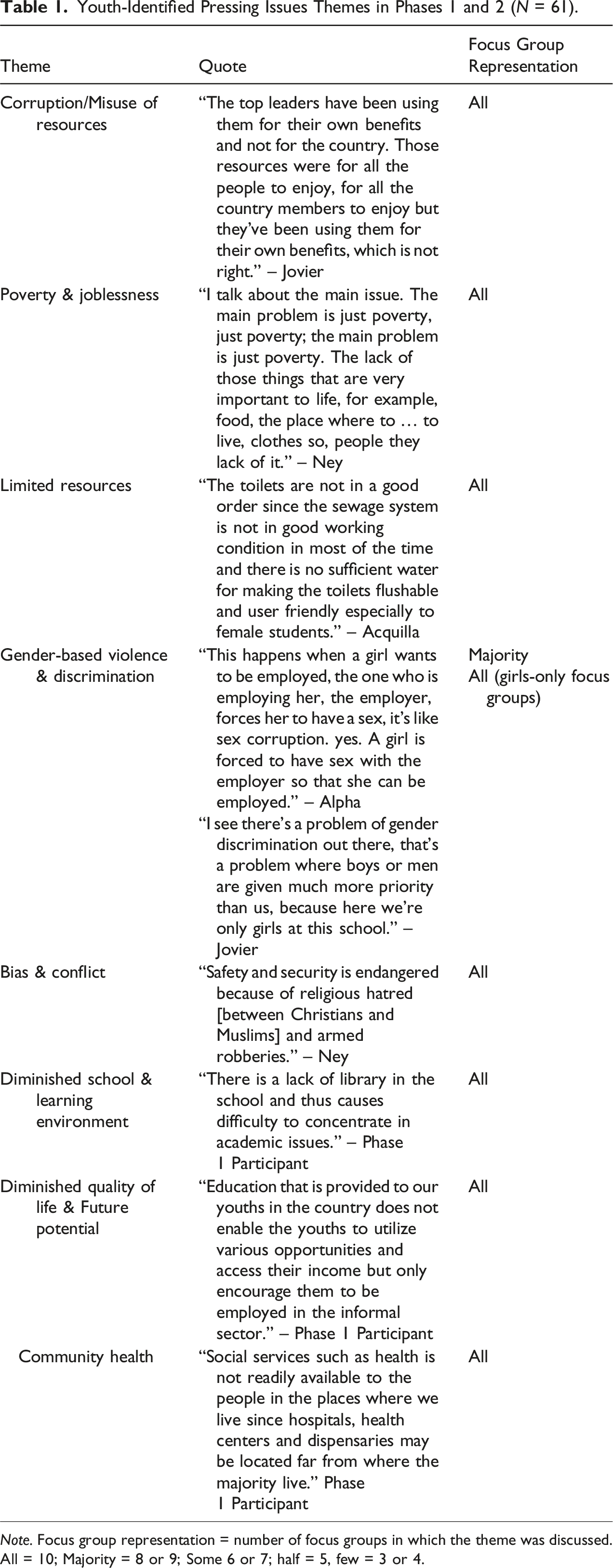
Note. Focus group representation = number of focus groups in which the theme was discussed. All = 10; Majority = 8 or 9; Some 6 or 7; half = 5, few = 3 or 4.
Theme 1: Corruption/Misuse of Resources
Corruption/Misuse of Recourses was mentioned in each of the focus groups and, moreover, it was identified as a major concern by the youths in every focus group. In each focus group, at least one student referenced corruption in general as a main concern: “Corruption in our society” or “corruption and abuse of power is rampant.” In each focus group, the youth specified the types of corruption such as “embezzlement” or they provided examples of corruption they observed in society such as in school, among the police, but mainly within government.
Participants consistently connected the corruption to poor leaders. Ney (all names used in the manuscript are pseudonyms) was outspoken about this issue: The bad leaders, most of them, they are found in the most important institutions, for example, government. They just use corruption a lot. [They take] a lot of money; that money is used selfishly and [then the] majority [of the people] become poor. . . [Poverty] is caused by leaders because in Tanzania, we’ve got a lot of national resources, we have money [and] they use these badly….
Ney continued to provide an analysis of corruption in all sectors of society, including in schools and hospitals. Others agreed with her evaluation either verbally or by nodding their heads.
Theme 2: Poverty and Joblessness
Although Tanzania is resource rich in terms of minerals and gas, and forest and marine resources, participants observed that most people in the country languish in poverty. In each of the focus groups, youths described extreme poverty that touched every aspect of private and public life; they talked about poverty making it difficult for families to support children in various endeavors such as attainment of quality education. Students also described hunger as an expression of poverty. Happy captured the essence of this theme succinctly: “The problem that we mostly face is poverty in our daily lives. Children aren’t taken to school, poor living conditions where families cannot have three meals a day, epidemic diseases such as cholera.”
Youth in each focus group mentioned that poverty was reflected in and a consequence of joblessness and unemployment. Students talked about the limited jobs available, especially to young people and to women and how this contributes to poverty and many social problems discussed later. However, not every participant attributed poverty to corruption or joblessness. For example, Acquilla believed that poverty was “due to the laziness of the people who did not take work opportunities seriously.”
Theme 3: Limited Resources
Youth in each focus group named and connected the corruption and misuse of resources to the limited resources and under-development in the country in terms of poor infrastructure (e.g., “Structures such as roads are built below standards and thus they get damaged so easily in a shorter period of time”), poor quality or too few educational, social, and health services (e.g., lack of access to hospitals and medical care in the neighborhoods where people live) and environmental hazards and toxins (e.g., “In the neighborhood and in other places there is a problem of poor sewage management which makes lots of air pollution due to foul smell and the possibility of disease outbreak”).
Theme 4: Gender-Based Violence and Discrimination
Young women attending the two secondary schools for girls said that gender discrimination, “sexual corruption,” and exploitation were serious concerns affecting their daily lives. Some participants simply asserted something to the effect that “gender discrimination” was the top priority. In the Phase 2 focus groups, participants described the specific ways in which girls and women were discriminated against and taken advantage of in relationships, families, schools, places of employment, and society in general. Interestingly, issues of gender did not surface during the co-educational focus groups, or the young men only focus groups.
Rayce’s comments reflect the sentiments about the broad scope of gender discrimination young women identified. “The most problem facing us is gender discrimination because they feel that men are working harder than girls. Men are given more priority than girls. In education. Searching for jobs.” Another participant added “in political issues.” To which Rayce continued: “Political issues, the priority is men. Even decision making. They make decisions and decisions [made, are] for men.”
In addition to gender discrimination, the young women noted the various ways in which girls and women experience gender-based violence, including “child labor and marriages involving girls below 15” and “rape and child abuse in the neighborhood.” “Sexual corruption” was a form of gender-based violence the youth identified as particularly problematic for young women searching for jobs (sextortion). Later in the discussion, Ney shared a story connecting being poor to sex corruption: I am the first in my family [to graduate secondary school], and my mom depends on me. When I am finished with my school, I want to be employed. So employer, he doesn’t give me a job, because maybe I am not [from the right] type of tribe or he needs money from me. You see the problem?. . . You going to do a sexual kind of corruption. The employer you do that with, then he will give you a job.
Theme 5: Bias and Conflict
Although not the focus of the discussions, in the majority of the focus groups at least one student mentioned intergroup bias and various forms of conflict as sources of concerns. Students in Phase 2 mentioned “tribalism” as being problematic, especially in getting a job. Participants also mentioned religious bias and intergroup conflict: “There has been a tacit push toward religious based hatred [Christians versus Muslims] which posses a threat on peace and tranquility in our society” (Ney).
Family conflict also was a source of stress, particularly in Phase 2. Students identified family conflict around intergenerational issues, the use of traditional healing, and the stress of marital discord on children. For example, family conflict was a tremendous source of concern for Melody: The society I am in, the only thing I see that has been hitting on my head is family conflict. The first victims are me and my pals and friends. There is no peace in families. Parents fight and it really makes sometimes other kids wish to run away from home from all the things. And it makes you lose concentration in school.
Theme 6: Diminished School and Learning Environment
In each focus group, students identified several ways in which corruption, poverty, limited resources, conflict, and gender exploitation (for girls and women) influenced their school experiences. Some of these experiences were shaped by larger social structures and some of these experiences were recreated within the school context. Participants discussed problems related to limited resources in the schools, including no school library, not enough chairs and desks, and no access to computers. Diana described the frustration this way: Mostly we face the problem of inadequacies. Inadequacies for attaining quality education. The lack of instruments. It's a problem. Our laboratory we lack some tools. We don’t have them. They are old ones. We get wrong measures because the instruments we use are old and broken.
Students in most of the focus groups blamed corruption as the cause of many of the inadequacies Diana mentioned. In particular, youth talked about the misuse of school fees and other resources allocated to the students. Students did not see how the fees their parents paid for school maintenance or supplies were being used to benefit the school. One student gave the following example: “each and every student is required to pay for computers while the computer subject is not taught to all of us but a selected few.”
Students in each of the focus groups commented on the poor and inadequate infrastructure of the schools. Students identified the physical school environment as being especially problematic: “Lack of clear separation between residential, business and schooling areas is a problem in the country and hence, learning is affected. For example, you may find a very nice school surrounded by business shops and markets or even bars selling alcohol and loud music, which makes learning difficult.” The lack of separation of these activities creates all kinds of problems for students, including high noise level making it difficult to concentrate and potential exploitation of students—particularly girls—by people going to the neighboring bars or shops.
Students in each site identified poor quality education as a pressing concern. Students essentially said that many people did not receive an education or when they did, the education was of poor quality. According to participants, the poor quality of education was in part due to the limited resources and in part due to some of the behaviors of teachers: “It is not easy sometimes to finish the topics because some teachers come late or do not attend classes completely. Some teachers do not prepare properly their lessons, and it becomes difficult for students to understand and follow the lessons.”
In Phase 1, issues around students feeling silenced in their schools emerged as a subtheme. Students mentioned feeling silenced or disrespected by teachers and they noted their voices were not considered in school policies and decisions. Students specifically blamed being disrespected within the schools on the failure to convene “school barazas”—the school meeting between teachers and students where students get an opportunity to air their views on various issues of interest and complaints. For a long period of time the school meeting between teachers and students commonly known as ‘school baraza’ has never been convened. This is not healthy since it is through the school baraza where students get an opportunity to air their views on various issues of interest and complaints.
Towards the end of the last focus group in Phase 2, we asked the participants if they felt being disrespected was a pressing concern to which they emphatically said yes or nodded.
Theme 7: Diminished Quality of Life and Future Potential
In each of the focus groups, participants discussed multiple ways in which the larger systems of corruption, poverty, conflict, and/or school experiences were perceived to influence the quality of life and future potential of youth. Much of these conversations centered on education and employment. Participants talked about the lack of jobs waiting for them when they graduate secondary school and even college (e.g., “Lack of employment among youth is rampant”). They also discussed the kind of education they receive and how that limits their future prospects: “Education that is provided to our youths in the country does not enable the youths to utilize various opportunities and access their income but only encourage them to be employed in the informal sector.” Another student connected poor education to limited opportunities for personal development: “Lack of self confidence among youths and lack of proper education that can help young people to be creative and deal with their environment through legal channels to earn a living is not common.”
Moving away from a structural analysis, students identified individuals and their parents as the sources of the diminished future potential of youth. Youth blamed parents for not taking their children to school or for raising them in a “bad way.” The Phase 1 boys-only focus group commented that the idleness and laziness of youth—particularly boys and men—were pressing issues. This sentiment is succinctly captured in the following quote: “Idleness where young men who are able to work but do not want to work.” From this perspective, individuals limit their own future potential. A few of these students further believed that “idle” people were “lazy” and “should be penalized, or punished.”
Theme 8: Community Health
Structural constraints and individual choices were perceived to shape the community health which incorporated safety and health of youths. Students mentioned safety in employment (e.g., “The working conditions for majority especially uneducated youths are not safe”) and/or in transportation as community health concerns. Youth talked about how dangerous the roads were in terms of erratic driving and horrible roads, which results in far too many traffic accidents. Some transportation issues appeared to disproportionately affect girls. Phase 2 participants explained to us that many youth rely on public transportation to get to school and some noted that girls were vulnerable to being “harassed by daladala [bus] conductors.” Jovier, for example, linked the transportation issue to the safety concerns faced by girls: “. . .there’re people who live very far from school, so they have to travel long way in order to reach at school, so on the way they can face problems like being raped.”
Participants also expressed concern about physical health, which they perceived was primarily due to the poor infrastructure and limited resources in the country. Access to clean water and an effective sewage system were specifically mentioned as problematic. For example, a student commented “In the neighborhood and in other places there is a problem of poor sewage management which makes lots of air pollution due to foul smell and the possibility of diseases outbreak.” The lack of water was noted to be particularly troublesome for girls, who sometimes would miss school for a week at a time because they were menstruating and could not get proper sanitary pads and there was no place to clean themselves at school.
By far the biggest behavioral health concern noted by the students was drug abuse. Students in each of the focus group sites mentioned this as a major problem. Students provided theories about the causes of drug abuse—including “lack of education,” “no employment,” and “peer pressure”—and the consequences of drug abuse such as “prostitution,” “inappropriate sex,” “drug trafficking,” and “idleness.” One student summed it up like this: “There is an increasing number of young people individually or in groups with no employment. This is dangerous because the young people are likely to engage themselves in illegal activities such as robberies, drug trafficking, drug use and abuse.” Alpha echoed this sentiment, when she said: “The most important problem we’re facing first is peer pressure. . . Peer pressure leads to drug abuse and prostitution. This is due to lack of education and social skills on how to deal with peer pressure.”
What Would Young People Like to See Done to Address the Top Issues Identified in the Group?
Youth-Identified Solution Themes Phases 1 and 2 (N = 61).
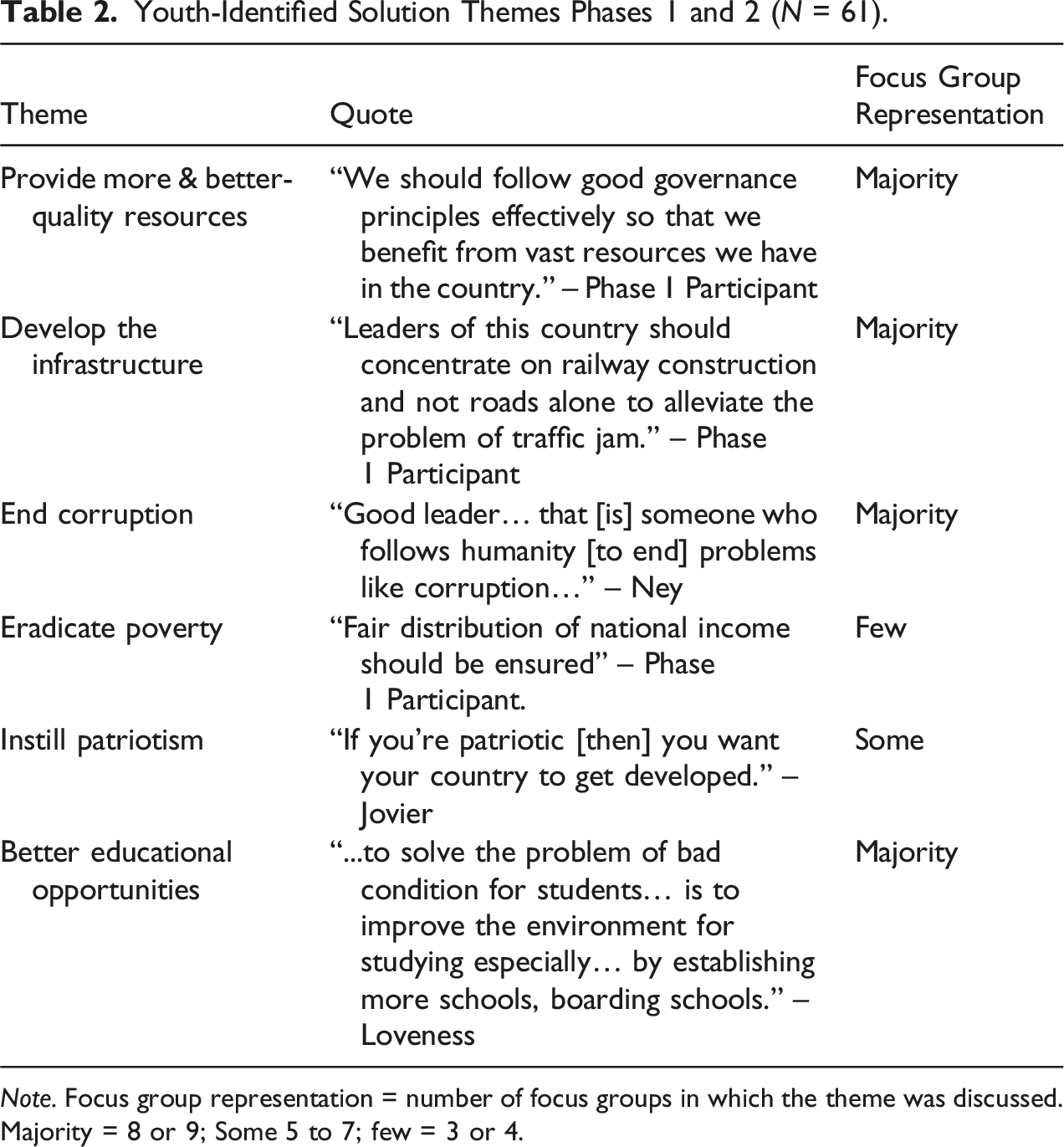
Note. Focus group representation = number of focus groups in which the theme was discussed. Majority = 8 or 9; Some 5 to 7; few = 3 or 4.
Relatedly, in the majority of the focus groups at least one student also noted the government should Develop the Infrastructure, particularly communication and transportation. For example, a participant said “leaders of this country should concentrate on railway construction and not roads alone to alleviate the problem of traffic jam.” In the majority of the focus groups, at least one student wanted to see the government work to End Corruption by enforcing laws and regulations. This was particularly emphasized in the four girls-only focus groups. For example, Happy suggested “strict laws [be] enacted against corruption and holding leaders accountable.”
In three of the girls only focus groups, participants recommended the government and leaders Eradicate Poverty through creating more jobs for youth and access to credit facilities so that youth can access funds at a low interest rate. Phase 1 participants specifically recommended “Fair distribution of national income should be ensured” and “Control birth rate so that people get few children who they are able to take care of.”
In about half of the focus groups, students mentioned one way to address the pressing social issues is to Instill Patriotism, namely, through civic education. This broad recommendation was designed to tackle problems related to corruption and other ills in society. Jovier highlighted the importance of instilling patriotism; she asserted “if you’re patriotic [then] you want your country to get developed.” Students in these focus groups suggested that some form of civic education could promote patriotism and help every day people have the knowledge to demand change. One student commented: “Citizens should be empowered so that they understand their rights and know how to make sure that their rights are not denied and are able to make their leaders accountable to the mistakes they commit.”
What are Young People Doing to Address One or More of These Issues/Difficulties?
Youth Action Themes Phases 1 and 2 (N = 61).
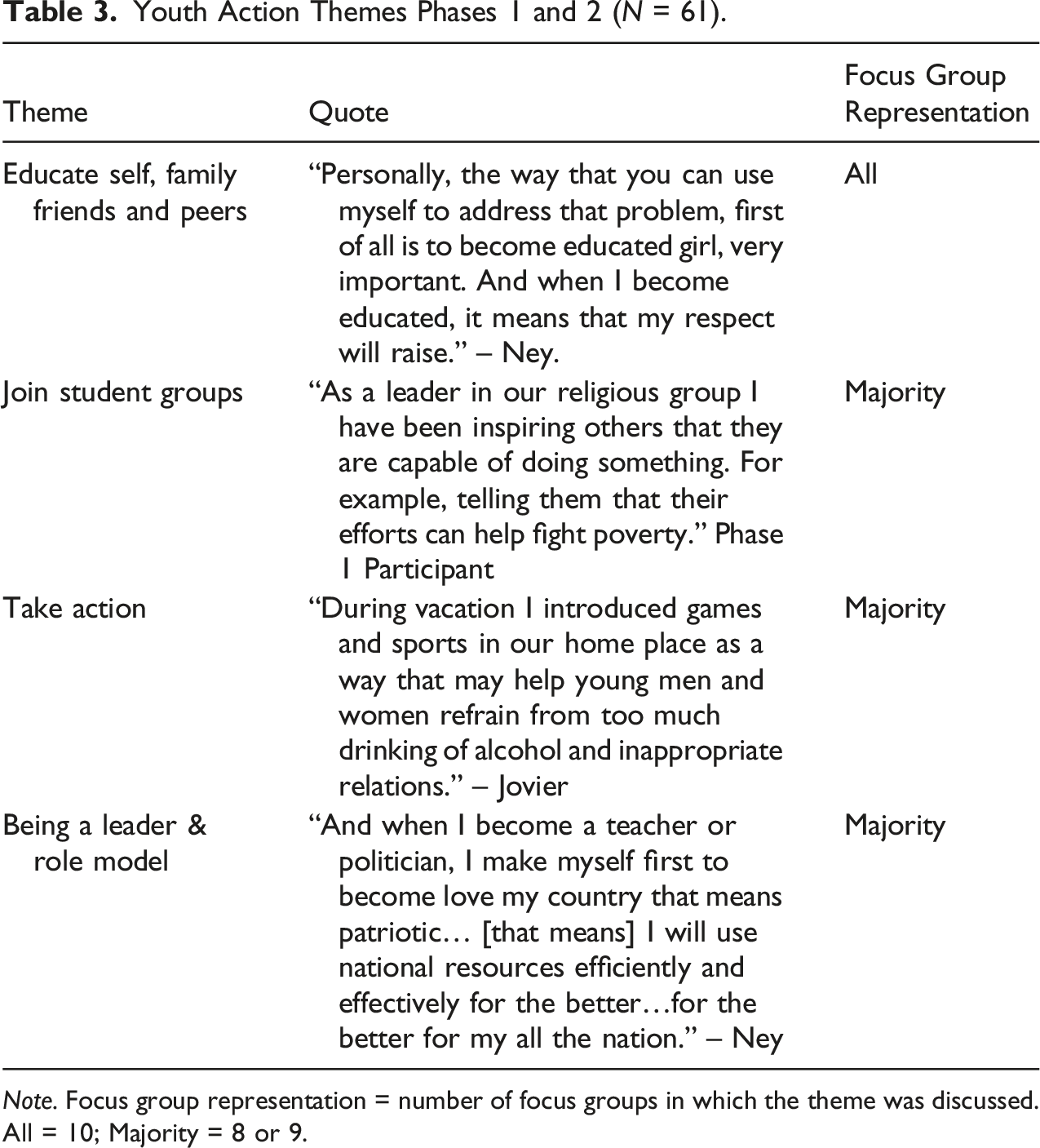
Note. Focus group representation = number of focus groups in which the theme was discussed. All = 10; Majority = 8 or 9.
In addition to sponsoring debates and projects or having one-on-one conversations with people, students in the majority of the focus groups indicated they Join Student Clubs as one vehicle to educate others. Here are some student testimonials: “I joined Tax Club to share and educate others related to taxes and the development of the country.” “In FEMA Club we have been sensitizing our friends and colleagues about drug trafficking, use and abuse, and we have started awareness raising on HIV/AIDS.” “As a member of Peace Club we have been discussing on a lot of issues related to peace so that we make this world a nice place to live in.”
Participation in student clubs also provided youth opportunities to work with others to Take Action. For example, a student said: “As a member of Roots & Shoots, we have been moving from one place to another encouraging other people to plant trees by giving them seedlings and educating them how to care for them.” Students described taking action outside of school clubs including working with religious organizations and helping with neighborhood clean-up activities. In the boys-only focus group, a participant “mobilized other young people in their home place to do maintenance for their road, which was impassable, and it worked.”
In most of the focus groups, but particularly in the girls-only school, participants talked about addressing these concerns by Being a Leader and a Role Model. Students described being leaders at school and in religious groups. Through their future leadership activities they imagined themselves modeling “being a responsible citizen” and what it means “not being corrupted, being fair.” Ney said she is serving as a role model by becoming educated and thus gaining respect and future employment. She dreams of becoming a teacher or politician to “teach kids in a community or society to [be] raised up in a good way so that when they become my age, they can eradicate those stupid problems like corruptions, womanizing, and prostitution.” Jovier talked about using past leadership opportunities to challenge negative stereotypes about girls’ intellect and capabilities: I see there’s a problem of gender discrimination out there, that’s a problem where boys or men are given much more priority than us. I used to study in a school where there’re two genders - girls and boys. I contested for leadership position and by doing that I also won. So, by doing that also I could show the people that even girls can be leaders and lead in a proper way, the same way or even better than boys.
Discussion
The purpose of the investigation was to listen to the voices of young people in Tanzania in terms of their understanding of pressing societal issues (critical analysis), the solutions to these concerns, and their current civic engagement activities to address these concerns. Findings map onto various dimensions of the civic engagement processes, including first naming the social injustice or pressing issue (e.g., Freire, 1992), and then civic participation, empowerment, and development (Wray-Lake & Abrams, 2020). The young women emerging adults in this study highlighted the role of gender in the concerns youth face and stereotyping about who can be leaders in making change (i.e., civic participation and empowerment).
The youth voices in this study seem to be consistent with the stated governmental vision of the youth civic engagement and the development of Tanzania. Wabike (2015) noted that since independence in 1961, Tanzania has policies [not necessarily in all their practices] that outline the importance of Tanzanian youth civic engagement for its continued development as a country (e.g., the Arusha Declaration’s education for self-reliance, 1967, National youth development policy 1996, the National Strategy for Civic Education in Tanzania, 2011, and the Tanzania Development Vision, 2050). However, youth posit that despite ongoing efforts of the Tanzanian government, the current educational system does not provide sufficient competencies needed to be civically engaged (YouthMap Tanzania, 2014).
In terms of naming the most pressing issues facing youth, findings from the systematic analysis of the focus groups extend in-country national reports (e.g., Project Next Generation, 2016) by providing a critical analysis of the issues that are and have historically been problematic to the development of Tanzania. According to the thematic schemes of the youth, corruption/misuse of resources, poverty, limited resources, gender-based violence and discrimination, bias and conflict, diminished school and learning environment, diminished quality of life and future potential, and safety, health and wellbeing were the most pressing issues in their lives. They viewed corruption as one of the main sources of poverty, the reason for limited resources in the country, diminished school and school environments, and poor infrastructure. Poverty and poor infrastructure, from their perspective, served as the basis for health concerns such as waterborne infections, peer drug abuse and criminality and sexual exploitation.
Another interesting theme that was consistent with emerging civic engagement research is viewing school as a site of oppression and missed opportunity. Successful completion of secondary schools in Tanzania can encourage hope and expand opportunities, but these opportunities go unfulfilled in an environment of underperformance in school, youth joblessness, and gender inequality (DeJaeghere, 2018). Youth in the study identified schooling as a priority and critical to individual, family, and community wellbeing. The students were engaged in their educational process, but many felt disrespected, not listened to and not part of decision-making process. They also felt that the school was so concerned with the technicalities of basic schooling (e.g., reading, writing and arithmetic) that the teachers and school staff ignored the personal experiences of their daily lives.
Parallel with participants’ observations, previous research concerning youth civic engagement in Tanzania found that a fundamental function of education is for improving the quality of life for its citizens and important to developing a sense of civic responsibility later in life (Kambuga, 2013; Komba, 2013). Kambuga (2013) further posited, school serves as one of the key socializing agents for youth whereby students learn what democratic participation looks like on these grounds and to build a sustainable future for the country. However, youth in this study reported their school practices as a departure from cultural expectations. For example, it is customary for Tanzanian schools to host “barazas” or open forums for youth to express their concerns and identify solutions to these concerns. Students in our focus groups reported that their schools had neglected to implement these cultural mechanisms designed to listen to student voices. Thus, students believed the role of the school was to foster active student participation in the learning process.
Not only did young women in the focus groups provide a critical analysis of gender as a pressing social issue, but they also discussed specific ways they were working to challenge gender-based violence (i.e., civic participation and empowerment). For the young women in this sample, gender played a role in the types of concerns they experienced and their actions to address these concerns (i.e., in the four young women-only focused group discussions, youth provided a sharp analysis of gender-related social concerns). The participants in Phase 2 talked at length about these issues. According to these participants, improving the status of girls and woman is very important to Tanzanian development. They discussed the problem of gender hierarchies, forced sexual favors, teenage pregnancy and the gender gap in education and employment. The participants’ perceptions reflected the documented realities of many girls and women (Wamoyi et al., 2019). Extant literature supports that many young women in Tanzania face multiple burdens (lower incomes, higher rates of unemployment, sex bribes, harassment, and negative stereotyping) and some of these women enter into transactional sex as a means to secure income or basic necessities (Wamoyi et al., 2019).
For the young women participants in this study, gender-based violence was also manifested in the exclusion of girls in education and leadership. Thus, they perceived that girls’ and women’s pathways to civic empowerment and development were thwarted due to these forms of exclusionary violence. The participants’ analyses were consistent with the research suggesting school leadership is both an expression of civic responsibility among youth and a pathway to civic engagement in adulthood (Arensdorf & Brungardt, 2017; Kisusu & Tongori, 2020). In fact, one of the functions of girls-only secondary schools in Tanzania is to provide young women leadership opportunities and to cultivate empowerment. That is why Jovier’s statement about civic engagement consisting of being a role model and showing others that girls can be an effective leader is so poignant.
Several models of civic engagement outline the importance of assisting youth in adopting civic or democratic values which promote the common good or what some call civic engagement values (e.g., Kinyondo & Pelizzo, 2019; Wray-Lake & Abrams, 2020). Participants in this study discussed the need for a cultural shift in civic engagement values as a way of creating a better society. Students believed the key to moving forward was promoting love, respect, compassion, and instilling patriotism. Very few civic engagement scholars, however, investigate the adoption of other values such as respect. In one of the few studies, Braun-Lewensohn (2016) found that universal and collective in-group values (e.g., peace, nationality) were linked to civic efficacy and youth involvement among Israeli adolescents. These findings highlight the role of values in performing civic responsibility. There is little consideration in the literature of the actions youth take to promote values such as love and compassion as a form of civic engagement in-and-of-itself. One could argue these are the core values underlying laws and policies promoting democratic practices.
In addition to describing common civic participation activities discussed in the literature (e.g., joining student groups and organizations, volunteering for neighborhood improvement projects), youth also described educating their peers, family, and community members about pressing social issues as an expression of civic engagement. Research supports strong personal connection in Tanzania as an effective mechanism to pool scarce resources, in contexts of resource scarcity and weak state performance (Riutta, 2007). With notable exception, few international studies delve into this aspect of working to improve society. Many students felt it was their duty to educate others about their rights (e.g., a right to receive a receipt) and oppression in the society (e.g., the nature and harm of gender-based violence). This finding is consistent with Wagle’s (2006) research with a community sample in Kathmandu. He found that about 80% adult respondents reported having informal policy talks with friends or relatives as a form of political participation. Actions to educate peers also include sponsoring debates at school. Such discourse was designed to educate others and stimulate critical discussion of pressing social topics.
Limitations
Although the current study begins to address the gaps in the literature, there are several noteworthy limitations. First, the focus groups were conducted in only two of the 25 regions of Tanzania. Thus, the experiences may reflect the views of young adults primarily living along the eastern coast areas and not necessarily the voices of those living in traditional villages or other regions. The focus group methodology also poses a set of limitations. Although each participant spoke at least once during the discussions, some voices may have been silent due to individual difference issues (being shy or less confident) as well as cultural issues (e.g., wanting to please the adults in the room, not wanting to confront or challenge others in public). Consequently, some youth may have elected to agree with the group opinion as opposed to sharing their individual perspective. The nature of our data collection particularly in Phase 1 did not allow for us to attribute demographic characteristics (other than gender) to the specific quotes. Future studies may want to conduct individual interviews to capture the complexities of multiple voices and to link these perspectives to the characteristics of the speaker; this would help to further contextualize the findings.
The interview format may have also limited deeper exploration of content related to the process of civic engagement. The interview protocol included questions about participants’ critical analysis of pressing social issues and actions they take to address the issues generally; however, we did not probe youth about the specific actions they engage in to address specific concerns, making it difficult to connect their critical analysis to their reported actions. Because we wanted to center youth voices and identify potentially unexplored domains in the literature, we did not explore youths’ sense of efficacy to effect change or other traditional dimensions of civic engagement. Explicitly discussing efficacy would provide additional insights about future research and intervention efforts.
Implications for Future Research and Practice
Findings from the current investigation offer some insights about future research directions. Exploration of more complex models of civic engagement, incorporating traditional indicators of youth political development (e.g., critical analysis, political efficacy, and action) as well as process variables related to the inspiration or motivations sparking a commitment to working toward the common good as well as measuring a wider range of what could be construed as civic actions (e.g., leadership roles, peer education) and values associated with such actions (e.g., love, compassion). Given that this line of research is relatively new in Tanzania, mixed methods and longitudinal designs might help researchers continue to develop developmentally and contextually appropriate models of civic engagement. The findings from the second phase of the project point to the importance of considering the ways in which gender influences what girls and women see as pressing issues and the types of changes that are needed in society. Specifically, further consideration of the ways in which the social construction of gender can inspire youth to become involved in their communities and the expression of the actions is warranted. Also, although youths in this study indicated peer education was a valued expression of civic engagement, we have no information about youth’s knowledge regarding the topics discussed or the quality of the exchanges. Future researchers may want to consider evaluating interventions designed to prepare youth for effective ways to talk to friends and relatives about social and policy issues.
There are several implications for improving learning conditions and fostering civic engagement in Tanzanian schools. First, additional resources are needed to create learning environments that support both students’ educational and wellbeing needs. Any efforts to implement new initiatives must prioritize youth participation, ensuring that improvements align with cultural values and best practices. School counselors and psychologists should be better integrated into the education system to support student development. Currently, those responsible for assisting youth with mental health concerns also serve as disciplinary officers, creating an atmosphere of fear rather than support. This is particularly concerning given the continued use of corporal punishment. Finally, leadership development programs should be formally incorporated into the curriculum, empowering students to take an active role in shaping their education and contributing to community development.
Consistent with research, recommendations, policies, and models concerning youth civic engagement and the positive development of Tanzania, what resonated loud and clear in the focus groups were youth’s dreams and aspirations of being leaders, change agents and understanding that it was their time to work to improve society. Jovier explained it best: it’s time: “zamu yako [‘your turn’]… That’s the word which. . . is still used by the youth of Tanzania. It mean[s] ‘it’s time for youth to also participate in the decision making of our country.’”
Footnotes
Declaration of Conflicting Interests
The author(s) declared no potential conflicts of interest with respect to the research, authorship, and/or publication of this article.
Funding
The author(s) received no financial support for the research, authorship, and/or publication of this article.
