







Abstract
An account of an intellectual journey across disciplinary borders combined with a foray into new teaching methodologies that resulted in the construction of a popular course in urban history at a flagship public university that made a significant contribution to a transforming curriculum. The article discusses various obstacles to success as well as the unanticipated rewards of this experiment.
“Sin Cities” is an undergraduate lecture course in urban history that I created a little over a decade ago and have been teaching annually at the University of Kansas ever since. It employs the enticement of readings, films and discussions of nightclubs and cabarets, police corruption, taboo behavior depicted in cinema, illicit drug use, organized gambling, smuggling, and prostitution to acquaint students with a number of important themes in the history of the modern city: spectacle and consumerism, urban space and the struggle for order, the rise of mass tourism, the city as a moral labyrinth, and the battle between cosmopolitanism and antiurbanism. This is a bit of an excursion for a college town audience at a flagship institution of twenty-five thousand students situated in the heart of the Midwest. At the time I launched the course, I was the undergraduate director in the History Department and I was trying to initiate some curricular changes that involved making our offerings more attractive to nonhistory majors by orienting them along thematic lines, rather than the traditional form of national histories presented within well-worn time parameters. As a potential model, this less conventional course opened up some creative space for faculty seeking to design lecture classes that could reach a wider audience at the upper division level and to push back against the national current of declining students in the humanities. It has been a popular class, often among the first to fill at enrollment, while attracting about two-thirds of its students from other majors including psychology, architecture, English, business, and international area studies. The enrollment has ranged from forty students at its initiation up to ninety-one students and then back down into the forties when I became uneasy with a growing element of anonymity produced by that size and managed to cap the course at a level that felt more engaging to both me and to students. It also consistently has had an inverse gender ratio to the rest of the department’s offerings, with about twice as many women as men taking the course (the most recent syllabus is at the end of this article).
“Sin Cities” was the long-term result of a self-guided experiment in what administrators like to call “professional development.” I had completed a series of articles on streetcar workers, general strikes, urban transport, and anarchism in early twentieth century Montevideo, Uruguay, and I had been teaching a rotation of courses on the social history of Latin America, some inherited and expected, and one that I carried over from a previous position that compared nationalist revolutions in the global context of colonialism. I had also experimented briefly with a team-taught course on the history of Los Angeles, my home town. Just after achieving tenure, with the time and freedom to think about various directions for future research as well as how to construct a repertoire of courses that would more closely reflect my own interests, I decided to shift from a focus on transportation labor history in Latin America toward an expansion of my growing interest in the uses of urban public space. This topic seemed more relevant to contemporary political issues as the streets of major cities in South America and Eastern Europe were coming back to life after long periods of authoritarian rule. I had not been trained as an urban historian in graduate school so I knew that I needed to acquire a stronger theoretical base from which to launch interesting research questions if I was going to dig deeper into the history of cities. I knew that I would not be satisfied simply delving into the urban historiography of Latin America, Europe, and the United States and then filling some gaps with empirical evidence that no one had previously examined.
1
This transition in perspective roughly coincided with serving as a faculty fellow in the Center for Teaching Excellence (CTE) at the University of Kansas and that gave me an opportunity to explore issues related to interdisciplinary teaching that paralleled this shift in my research agenda. The association with CTE allowed me to reconceptualize some approaches to teaching more generally, including the use that I had been making of multimedia materials, and it allotted me the time to read accounts of how other professors had revamped their teaching over long careers. I began to see that my boredom with certain courses was not simply an offshoot of my personality, but could be looked at structurally and ameliorated through different practices and creative efforts. During this period, I was most influenced by Jane Tompkins’s teaching autobiography, A Life in School, which convinced me that risk-taking and experimentation could be a natural and liberating part of teaching. She recalled, . . . While I was teaching the more experimental courses my life was a roller coaster. I’d go to bed at night, obsessed with thoughts of what happened in class that day. The teaching was not an orderly progression through a body of material. It was not about the mastery of knowledge or the acquisition of a skill. It was about letting chaos in, about not knowing, not being in control. . . . How’s it going to turn out? Every time, I’m afraid it won’t work. It’s exhilarating, this seat-of the-pants pedagogy. The rewards are deep; the price has also been high . . . A classroom free of fear. Pedagogy as the creation of a safe place.
2
I was not yet ready to abandon lecturing, as Tompkins had done (that would take many more years of experience and more experimenting as well as a leap into philosophy and ethics) but I was willing to venture into terra incognita and drag students with me as I crossed a disciplinary border into sociology.
Something that also came to mind at that time was a pair of very amusing articles from 1962 and 1980 that I had read in graduate school by the anthropologist Bernard Cohen who undertook an ethnographic study of a history department.
3
For a while he lived with the “natives” of what he came to call “Historyland” and he compared them with his own tribe of anthropologists, coming to the observation that Just as the idea of the authentic establishes a boundedness by which the anthropologist is able to tell one set of natives from another, so national histories—constituted by the way archives are organized—set boundaries around the historian’s object of study. Concentration on national history by the natives of that nation encourages the historian to think of “theory” as being commonsense or to assume that societies and cultures are national.
4
At the end of the earlier essay, Cohn formulated a serious conclusion: It is frustrating but revealing to work in another culture. Biculturality—that is, a thorough immersion in the culture and work ways of another discipline rather than some cross- and multidisciplinary team approach—prepares us better, no matter what our specific discipline, for our continuing quest to understand man, his works, and his societies.
5
The idea of embarking on a solo journey toward interdisciplinarity through immersion appealed to me more than the alternative of finding a partner in Sociology with whom to team-teach a course, a project that would have taken a great deal of time to schedule and organize, and which did not have the probability, by itself, of getting me to my own goals. 6 So I formulated a plan and requested a part-time reassignment to the Sociology Department, determining that the best route to understanding the broad theories underlying urban studies would be through the discipline of sociology. I confess that I was a bit naïve at that point and failed to appreciate the notion of academic territoriality and the institutional fear of losing control over scarce resources as they manifested themselves at my institution and elsewhere, around the turn of the century. At this same time, the Carnegie Foundation’s Boyer Commission on Educating Undergraduates in the Research University issued a report that lamented the “principal barrier to interdisciplinary research and study has been the pattern of university organization that creates vested interests in traditionally defined departments” and recommended that “universities must seriously focus on ways to create interdisciplinarity in undergraduate learning.” 7 Locally, while the Sociology Department was delighted with my proposed move, the chair of my own department initially discounted it as an unnecessary distraction and an unimaginable foray into a “boring” field. Eventually I negotiated a temporary reallocation of time that resulted in my teaching one sociology class four times over a six-year period. It was not what I had originally hoped, certainly not immersion in another department’s culture, but it did give me the opportunity to dig deeply into urban theory and to test out its utility in the classroom immediately.
I resurrected a long-abandoned course in urban sociology, renamed it “Deciphering the City,” and worked up the exploration of contemporary topics such as the proliferation of shantytowns and homelessness, suburban alienation, riskless tourism, the varying impacts on the modernizing city of the automobile, rickshaws, subways, the department store and the shopping mall, gendered spaces, and how the built environment affects collective behavior. I fitted various theories and schools of urban studies together with particular cities: Georg Simmel and Walter Benjamin with a section on Berlin; Edward Soja with memory and Los Angeles; Dean MacCannell and new urbanism with Disney’s town of Celebration; and John Hannigan with postmodern Las Vegas and Tokyo. At other times theorists were introduced in conjunction with themes either broad or narrow: Ivan Illich on utopian cities; Sharon Zukin on public space; Elizabeth Wilson on gender and film noir cities; John Urry on the automobile and suburbia; William H. Whyte on the social life of the downtown street and Siegfried Kracauer on the hotel lobby. Overall, I felt released from the conventions of periodization and geographical limits that I had struggled with in my previous courses.
For a historian of Latin America this was quite a leap and I have to confess I have never been so scared in the classroom as I was the first time I taught this sociology course, to a group of forty-one undergrads without the aid of any graduate teaching assistant or advice about the expectations of these particular students. Moving into the present was one thing, but taking on a semester’s worth of new cities from East Asia, Europe, and the United States led to a degree of queasiness. I remember trying to stay in the traditional comfort zone of chronological historical narrative, almost hiding in lectures on the nineteenth century, and being unceremoniously pushed out of this by midsemester student evaluations that told me bluntly to move quickly into more contemporary issues that they found more intriguing. I was also surprised to find that these students enjoyed small-group discussions, which history students tended to view as busy work. The students in “Deciphering the City” also seemed to have less patience with watching hour-long documentaries so I took the tactic of screening ten-minute film clips as provocations for discussion, a method that I have since adopted successfully in all of my courses. I did still hold on to some aspects of teaching in the humanities, but I integrated them so that the course truly became interdisciplinary in content and method. Although the first writing project involved reading from pairs of essays in an urban studies reader geared toward the social sciences and discussing how the authors viewed the relationship between urban public space and social order, the third project was to analyze a short story in terms of course themes such as urban landscapes, power relationships, social control, and neighborhood and community. After a couple of iterations and revisions, and the gradual decline of my in-class nervousness, the course began to run quite well.
As my “contract” to teach in Sociology expired, I started to think about how I could take some of what I had developed in “Deciphering the City” and bring it back with me to History. The cross-disciplinary experience was already having an impact on my research, which expanded its focus from a single city to urban Latin America as a whole resulting in a long historiographical essay on the development of public space in the region, published in an interdisciplinary journal. 8 But I also wanted to rescue some of what I had accomplished in the classroom as well, and integrate it into the history curriculum. By this time, the History Department had had a number of discussions about the necessity of developing writing and research skills, critical analysis and methodological expertise consistently and deliberately throughout the major curriculum. A new course, in fulfillment of some of these aspirational trends, could therefore offer some opportunities for students to work with historical documents, engage in comparative analysis, draw on theory from other disciplines and improve their writing skills through a series of essays that required increasing sophistication and effort. The idea of creating a generic course entitled “Urban History” with an emphasis on content coverage was not intriguing to me and in any case I was not sure how to structure such a course in an appealing way, so I thought of something both more eye-catching and fitting with my own sensibilities: teaching urban history from the social margins and enticing students through an examination of the decadent “underbelly” of the city. “Sin Cities” would investigate the history of modern cities globally and approach a few select cases from the angle of what sociologists have been labeling “deviance”: vice, organized crime, drug use, and collective taboo behavior. I had the serendipitous pleasure of launching it just as the film “Sin City” hit the theaters and so enrollments far exceeded expectations and have continued to be robust over the ensuing years. The course’s popularity is due at least in part to its relevance to student lives—students have written that the readings, discussions, and films combine to alter their perceptions of urban space and this has had a particular immediacy as many of them move to cities to launch professional careers upon graduation, as nurses, lawyers, teachers, nongovernmental organization (NGO) employees, and even an urban planner. Like no other class of mine, this one has resulted in former students sending me queries months and years later about further readings that might help them in their work or stopping me on the street, in restaurants or in stores to tell me what the class meant to them. My overall impression is that it has helped students to become more observant about cities, more conscious of the possibilities in exploring them, and less inclined toward the urban dread that their upbringing in small towns in Kansas or suburban Chicago, Kansas City and St. Louis may have fostered.
“Sin Cities” was somewhat unconventional in approach for my department at that time, eschewing chronology for social themes with contemporary resonance, drawing on a wide range of voices and exploring cases drawn from several continents in contrast to the traditional practice of framing the narrative within national histories following linear trajectories which still characterized most of our curriculum ten to fifteen years ago. Although the time parameters of “Sin Cities” are roughly 1870 to 1960, the course tends to fold in on itself periodically as it moves across the globe and through the semester. In any given iteration, we might end the section on Havana with Fidel Castro closing down the casinos and immediately start a new section on Paris with the Commune’s utopian experiment of 1871. This unorthodox flow fits well with a recurring theme in the course—historical memory—which I drew from Walter Benjamin’s idea of the palimpsest and cities. The idea of history bleeding through from era to era (instead of ending neatly as episodes) gives students a sense of how history is constructed and how its fluidity can be useful and relevant to current issues.
I chose to focus on a series of case studies of individual cities known for their debauchery or creativity, an approach often employed in the social sciences, and I have found this to be useful for a variety of reasons. The historical cases constitute two- or three-week modules, so if a student is bored with Berlin, he or she knows that very shortly Los Angeles or Shanghai will be up for examination. Also, from my point of view, the course will not get tedious if I switch out cases from time to time, which I have done depending on the availability of better readings or films and based on the varying enthusiasm visible in student discussions or course evaluations. So far, I have developed and discarded Las Vegas and New Orleans, substituted Paris and San Francisco or Los Angeles and given more room to the treatment of jazz cities and the city as it is depicted in film noir. For the next, and last, version of “Sin Cities” I am seriously considering replacing Los Angeles with Buenos Aires, which would give the course a significant Latin American content and bring me back to my scholarly origins.
The course is constructed primarily as an exercise in comparative history, a methodology that seems more natural to sociology and is rarer in history.
9
As Stefan Berger has pointed out, comparative historians might also ask whether the same problem was present in different societies to a similar degree. Such an observation might have escaped the attention of historians who focused on one particular society. For example, the focus on national histories in Europe in the nineteenth and twentieth centuries hid from sight the fact that, beyond the boundaries of national states, something like a European experience in economic, social, political and cultural life was developing.
10
To make this aspect of the course function well, I spend some time at the beginning of the term laying out key concepts that can be employed throughout the semester as we move from one case study to another, so the comparison is cumulative and takes place organically. Many of these concepts came directly out of my experience teaching sociology: the spectacle city; cosmopolitanism and the role of the stranger in the city; the “city of lies” or the labyrinth city, which comes from the noir fiction of Raymond Chandler; public space and gendered space; the balancing of fear and desire by a city’s residents; and the dual city or the colonial city built on policies of racial segregation, fear, and social control. Although the main required readings are now all historical rather than from the social sciences, I incorporate the latter through a theoretical scaffolding set up early in the course so that students can apply these concepts comparatively to the different cities that come in for review as we progress through the semester. This has the effect of displacing the usual emphasis on historical narrative (and with it the anxiety about memorizing small data) and instead leads to recurrent questions about whether cities have their own distinct cultures that can sustain them for decades against political or economic adversity, about what factors propel the rise and decline of sin cities, and whether cities are marked by a particular drug of choice (absinthe, opium, rum, cocaine) and if so what those might tell us about the ethos of the city across several decades. In short, the frontloading of theory in the course keeps students’ eyes focused on comparative analysis in each class session and across the readings. They have the opportunity to fully develop this method in the comparative research project in which they exercise some choice among various pairs of cities to investigate and about what themes they wish to employ in the historical analysis (see syllabus). Although the project is designed to get undergraduate students familiar with primary historical sources, journal articles, and the process of conducting historical research, it is in effect an exercise in historical sociology because of the questions it asks and the emphasis on applied theoretical concepts. Also, students can play freely across historical eras, finding parallels and contrasts in one city at one time with another city in a different decade.
Another strategy that I have deployed in “Sin Cities” is to insert life stories of nonconformists within the narrative of cities that might help students to get a hook in to a particular case study, a way of moving from the social to the individual levels of analysis, but still keeping with the overall theme of breaking conventions. This method acknowledges the disciplinary diversity of the students who choose to enroll in this course, including a significant number of psychology and English majors. Many of these biographies have come from recent publications, reissued books or rereleased films: Felix Feneon, a Parisian anarchist, publisher and crime journalist; Emily Hahn, a New Yorker writer who remade her life in Shanghai with a Chinese lover; Louise Brooks and Josephine Baker, American actresses and performers who blossomed in the rarified atmosphere of interwar Paris and Berlin; Man Ray, a New Yorker who renamed himself and opened the door to surrealist photography in Paris; Rodney Neyra, a leper who choreographed outrageous musical shows at the Tropicana nightclub in Havana and put Afro-Cuban culture firmly into the national consciousness; Julius Fromm, a Jewish immigrant entrepreneur from Eastern Europe who made, and lost, a fortune from his condom factory near the Alexanderplatz in Berlin before being forced to flee Nazi Germany; and trumpeter Don Cherry, a refugee from the Dust Bowl who grew up in Los Angeles, played on Central Avenue, the jazz Mecca of the west coast, and invented the Free Jazz movement with Ornette Coleman before creating the first sounds of what would become world music, by borrowing instruments and rhythms from Africa and beyond. These border crossers shared a disdain for convention, often actively overturning it, in their quests for fame, fortune or freedom, and their stories provide useful insights into what made sin cities vibrant.
The new history course also benefitted in particular ways from my simultaneous participation in a semester-long Faculty Seminar conducted by the director of the CTE, Dan Bernstein, in which I learned some basic methods of intentional course design that would better promote student learning. The key result of this was that “Sin Cities” had something that “Deciphering the City” never had: a set of explicit goals described on the first page of the syllabus and tied directly to course assignments. The first goal was oriented toward the content of urban history, the second to skill and theory in the humanities, the third and fifth goals to methodology, and the fourth to a basic general skill. These goals have stayed constant through the various versions of the course. I also chose not to have “Sin Cities” included in the group of courses that fulfills general education requirements so that I would not have to alter these five goals to fit other purposes.
The transference from interdisciplinary urban studies into urban history was not a smooth one. I had to abandon some very good works of fiction and journalism along the way so that students would be exposed to different historical methods and sources such as oral history, journal articles, and the use of one hundred-year-old travel accounts, as well as the development of visual literacy through the analysis of vintage postcards and documentary and feature films. Although I could rely on a short stint in a graduate film studies program from decades previous for background on analyzing films, my encounter with postcards was more recent and not as well developed. Although I had used historical postcards in my research on Latin American urban history, I did not fully appreciate how useful they would be as teaching implements until I employed them on an academic trip to Havana to illustrate a lecture on the history of the modern city. As it happened, the time parameters of “Sin Cities” dovetailed perfectly with the Golden Age of postcards, making them fairly easy to acquire and quite interesting to “read” as a counterpoint to texts, lectures, more recently produced films and other materials. Soon my presentations were illustrated with turn-of-the-century images (and messages) of Chicago slaughterhouses, Berlin cafés, New Orleans Mardi Gras, Havana night spots, the Algiers Casbah, and Paris’s Moulin Rouge. These postcards gave students a chance to visualize the cases that we were discussing and they also helped to vary the tempo of a lecture presentation, bringing in something that seemed more spontaneous than a Powerpoint bulleted lecture and less unrelenting than the pace of a documentary film, both very manipulative forms of narration. The postcard was a kind of free space that invited questions and comments both by its very static nature and also by its openness to interpretation. Not all my teaching ventures in this course turned out so well. One short-lived experiment in collectively produced research papers that leaned heavily on the teamwork ethic of sociology proved to be disastrous, and I reluctantly jettisoned it after two attempts in the interests of reducing student complaints and focusing more intensely on the conceptualization of their research. Finally, the global nature of this course makes the pool of suitable graduate assistants larger than with region-specific courses and the more advanced ones have taken advantage of the opportunity to craft their own interesting presentations on casinos, race in New Orleans, gendered spaces in San Francisco, and corruption in Las Vegas. Two recent teaching assistants have gone on to use some of the methods and orientations that we have practiced in “Sin Cities” in their own courses as they have developed their teaching repertoires in their first academic jobs.
This experiment in creating interdisciplinarity in one scholar’s mind has had some unforeseen effects. It gave me much more confidence to try out different ways of teaching since I was more open to the experience of failure and learning from it. The types of teaching experiments that I have tried since this time were (1) teaching a course on the cultural history of Latin America chronologically backward, starting with the present and unwrapping it like an onion to reveal a nineteenth century core; (2) engaging in two different team-taught interdisciplinary courses, one on the Visual City with my wife, Catherine Preston, who teaches in Film and Media Studies and the other on the Experience of Travel with a member of the English Department, Mary Klayder, who runs several study abroad programs; (3) reworking a World History course that no faculty member had taught for several decades and shifting the focus from comprehensive area coverage to the overarching themes of commodities, cities and the movement of people; and (4) developing a course for a new general education requirement in ethics that examines the intersection of “History, Ethics, and Modernity,” something which has involved reading much more philosophy, and European history, than I thought I could handle. In the latter case, I followed Jane Tompkins’s lead and abandoned the lecture in favor of a discussion-driven course. Without the experience of teaching sociology and then developing “Sin Cities,” I would not have had the confidence to dive into these projects from the deep end, nor the patience to let them develop in spite of some occasional failures. My teaching repertoire has grown much more diverse and much richer as a consequence.
On a more general level, my interdisciplinary journey can be seen as a modest local intervention in some of the critiques of higher education that have emerged from inside the university in the last decade. In a deliberately provocative book, Andrew Hacker and Claudia Dreifus have criticized the professoriate for being too bound to their disciplines, adopting something akin to tribal identities during graduate education and sustaining these once they become professors. After suggesting that interdisciplinary work has had an impact in the sciences, they claim that “in the social sciences and the humanities, doubtless because those disciplines are less secure about what they actually do, the borders remain rigidly guarded.”
11
Departments do often operate like “fiefdoms” and their members by and large stay within disciplinary borders unless they find joint appointments in multidisciplinary programs.
12
Their teaching is often the last thing to venture outside the safe zone even if their research methodologies and reading take some samples from the other side. In a reasoned, historical analysis, Andrew Delbanco observes that Today, the word “interdisciplinary” is bandied about at every academic conference and praised in every dean’s report, but in fact most of our academic institutions are much less interdisciplinary than were their counterparts in the past. . . . Serious collaboration in the work of educating undergraduates is rare . . . And faculty disengagement . . . is by no means peculiar to certain institutions. It is a natural, if not inevitable, consequence of the bureaucratization and what is sometimes called the “balkanization”—the splintering of the faculty into mutually wary interest groups—of modern academic life.
13
This view is largely supported by observations from a different institutional perspective, that of a former president of Harvard University. Derek Bok bemoans the autonomy of faculty housed in isolated departments and observes that Professors and departments are not obliged to co-operate with other units or individuals even when it might be educationally desirable for them to do so. . . . The undergraduate program that results is typically a whole that is smaller than the sum of its parts.
14
Taken together, these authors see a vast untapped potential in interdisciplinary teaching, both for students and for faculty. For the latter, I can say that crossing a disciplinary border was indeed a mind-opening experience with long-term repercussions. I do not think that it is a coincidence that today I serve on a university committee, made up of faculty from thirteen different fields, that is about to propose significant changes to the undergraduate core curriculum. My role in that process has been to question definitions, to articulate new goals and, at times, to serve as a bridge between divergent perspectives. I cannot imagine getting to this place without my experience teaching sociology.
Sin Cities
History 303 Spring 2017
Anton Rosenthal University of Kansas
The city may be the most important human invention. This course will offer a comparative global introduction to the history of the modern city by looking at the ways in which certain metropoli developed an attractive underbelly of decadence at the same time as they sought to be centers of a vibrant cosmopolitan life. In this process, different social groups pushed for order or chaos in the city, sometimes with catastrophic consequences. To assess the nature of this core tension, we will examine the changing roles played by popular culture, gambling, drug use, prostitution, crime, violence, nightlife, tourism and corruption in the life of the city, in some cases going back to the nineteenth century to trace the origins of modern urban culture.
The course is organized around five case studies drawn from across the world and set in different eras—Berlin, Shanghai, Paris, Havana, and Los Angeles. We will approach these cities through a wide range of sources including journalistic reportage, oral history, memoir, travel accounts, photography, music and film, in addition to secondary historical interpretations. Each of these cities at some point cultivated a reputation as an “open city” in which taboos could be broken, unconventional behavior was tolerated, lives were reinvented and fortunes were made and lost overnight. Because of the importance of this reputation to the history, growth and culture of the city, the representations of cities constructed through different media will be a central focus of the course.
We will explore a variety of themes that are important to understanding the history of the modern city generally: spectacle and consumerism; urban space and the struggle for order; time of day and public behavior; the changing relationship between work and leisure; the social effects of war and revolution on the city; the rise of mass tourism; and the battle between cosmopolitanism and antiurbanism. In investigating these topics, we will make brief forays into a secondary set of cities.
Course Goals
To have students develop an appreciation for the central role that cities played in shaping modern societies around the globe.
To have students develop new perspectives on urban change and social tensions by engaging in critical analysis of contested spaces in the city.
To introduce students to the comparative method of historical analysis.
To improve the writing skills of students, including the overall presentation of their work.
To improve the visual literacy of students.
Required Texts
Students are responsible for purchasing and reading the texts listed below. Please avoid e-book versions, as students will be required to fully footnote sources with page numbers and some e-readers do not have this capability. Some students may wish to order books through an on-line source such as Powell’s Books or the Chicago Seminary Book Co-op. The texts have also been placed on one-day reserve in Watson Library.
Rosa Lowinger and Ofelia Fox, Tropicana Nights (Harvest Books, 2006)
David Clay Large, Berlin (Basic Books, 2000)
Stella Dong, Shanghai 1842-1949: The Rise and Fall of a Decadent City (Morrow, 2000)
Eve Babitz, Eve’s Hollywood (NYR Books, 2015)
Additional short readings on Blackboard or distributed as handouts will be announced from time to time during the semester. There is also some reading on reserve in Watson Library that will be required to complete the writing assignments.
Grading
Social Landscape Essay 80 points Due February 9
Proposal for Research Project 30 points Due February 28
Midterm Exam 60 points In class—March 7
Comparative Research Project 100 points Due April 27
Final Exam 90 points Friday, May 12, 1:30-4
Participation and Quizzes 40 points Note Attendance Policy!
Total 400 points
A course grade of “F” will be assigned in the event that a student is absent more than six times for any reason or if a student fails to turn in every one of the assignments or take both exams.
Everyone is expected to take the exam according to the schedule. There will not be an early final exam so please do not request special accommodation.
A plus/minus grading scheme will be used in this class according to an overall percentage of the possible points. As a model,
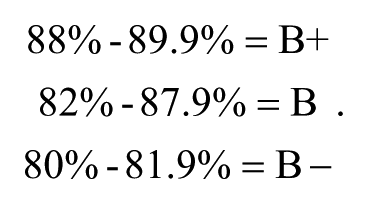
Writing assignments will be evaluated on the coherency of their arguments, strength of their substantiation of claims, quality of research or extent of use of course materials, reflection, overall presentation and clarity of writing including sentence construction and grammar. No assignments will be accepted more than fourteen days after the original due date.
Quizzes
Unannounced quizzes may be given from time to time in this class, so it is essential that students attend all classes and keep up with the reading as listed in this syllabus. There are no “make up” quizzes, but students will be allowed to drop their lowest quiz grade of the semester, so they should reserve that option for illness. Quizzes will be factored into the participation grade, but active and engaged classroom participation in the form of thoughtful questions and informed, reflective responses is the key component of that evaluation.
Assignments
Social Landscape Essay
Select a book from the list below, available on one-day reserve at Watson Library. Read several chapters or sections of that book, at least one of which pertains to the twentieth century, so that you will have sufficient material to answer the following questions and connect them to course materials and concepts. Then write an essay of five to six pages that analyzes the cityscape of your chosen metropolis. Your essay should offer an answer to each of the following questions:
How did the social landscape of the city change over time? What social classes and groups became agents of change in the city?
What aspects of the city does the author describe in detail and what do these descriptions reveal about the culture of the city?
What opportunities does the city appear to offer its residents and what limitations does it place on their behavior?
Ruy Castro, Rio de Janeiro: Carnival under Fire
John Banville, Prague Pictures
Edmund White, The Flaneur: A Stroll Through the Paradoxes of Paris
Michael Eaude, Barcelona: The City that Re-invented Itself
Caroline Brook, Moscow: A Cultural History
Richard Tames, London: A Cultural History
Milton Osborne, Phnom Penh: A Cultural History
Bob Dent, Budapest: A Cultural History
Maryvelma O’Neil, Bangkok: A Cultural History
Andrew Beattie, Cairo: A Cultural History
James Higgins, Lima: A Cultural History
Louise McKinney, New Orleans: A Cultural History
Jason Wilson, Buenos Aires
Paul Buck, Lisbon
Elizabeth Nash, Madrid
Krishna Dutta, Calcutta
Peter Clark, Istanbul
Nick Caistor, Mexico City
Jonathan Boardman, Rome
Claudia Lightfoot, Havana
Steven Mansfield, Tokyo: A Cultural History
Charles King, Odessa: Genius and Death in a City of Dreams
Charles King, Midnight at the Pera Palace
Mike Gonzalez and Marianella Yanes, Tango: Sex and the Rhythm of the City
Lila Caimari, While the City Sleeps: A History of Pistoleros, Policemen, and the Crime Beat in Buenos Aires before Perón
Bruno Carvalho, Porous City: A Cultural History of Rio de Janeiro
2. Comparative Research Project
Students will choose one pair of cities from the list below:
Bucharest and Johannesburg
Los Angeles and Mexico City
Odessa and Chicago
Miami and Rio de Janeiro
Amsterdam and New Orleans
Bangkok and Havana
Barcelona and San Francisco
Shanghai and Cairo
Buenos Aires and London
Beirut and Istanbul
New York and Tokyo
Paris and Algiers
Mumbai (Bombay) and Berlin
They will then find and read at least nine sources on the pair of cities selected. These sources do not need to be books and it will be more useful to include articles from scholarly journals (some examples of these that are particularly relevant to this class are The Journal of Urban History, Comparative Studies in Society and History, and The Journal of Historical Sociology, but there are many more journal titles that would be suitable and they can be located through databases such as Academic Search Complete and Historical Abstracts). Other useful sources might be
travel accounts from the period under study, similar to those used in lectures;
memoirs of key participants in the city’s life;
secondary historical works that analyze urban processes;
newspapers that provide contemporary descriptions; and
government reports on crime or the entertainment industry, and so on.
Course texts may be used but they will not count toward the minimum number of sources.
At least three of the sources must be journal articles (and not book reviews). Journal articles are usually fifteen to thirty pages long and are richly documented with extensive footnotes. They should not be confused with short book reviews that often also appear in scholarly journals.
At least two of the sources must be primary historical documents, one for each city, marked with an asterisk (*). Primary documents are normally created at the time of the events or processes under consideration and may include government reports issued by ministries, and newspaper articles or travel accounts published during the era being researched. They might also include memoirs and oral histories published many years later but involving participants and witnesses to the original events. Each primary source should be described in the bibliography so that it is clear how it functions as a primary source. Each journal article should be noted in the bibliography with two asterisks.
No more than one citation may be a webpage or other internet source (please be cognizant of the quality of any site used) and no encyclopedias of any kind may be used.
A two-page double-spaced proposal and a one-page bibliography (following the citation model in the syllabus) that postulates one central argument, describes what the paper will investigate, the time period of the study, and what it hopes to discover is due on Tuesday, March 8 (primary sources should be marked with an asterisk and journal articles with two asterisks—at least six sources should be included in this preliminary bibliography). After collecting and reading these sources, the student will write an essay of eight to nine pages that compares the key elements of the two cities at any point between 1870 and 1990 (a reasonable era to investigate would be a single decade in each city’s history, though the cities do not have to be analyzed for the same decade—the Wasserstrom article is useful on this point). In all cases, the analysis should be limited to twenty-year periods to permit significant depth of inquiry. Please remember that well-developed comparisons discuss both similarities and differences in their cases. This historical comparison must go beyond merely a parallel description. It must evaluate the two cases and fully answer four of the following five questions:
Was there an attempt to construct a cosmopolitan culture in either city and what type of opposition did it meet?
In what ways can these be considered “spectacle cities”?
To what degree did they tolerate what might have been considered taboo behavior in other locales?
What were the risks and pleasures associated with living in these cities?
Which of the two cities was the most “decadent” in terms of its culture? Why?
Please note: All research essays should contain a one-page bibliography in addition to the nine pages of text. Each primary source should be marked with an asterisk to identify it and each journal article should be marked by two asterisks. Please number the pages. We will stop reading at the end of page 9, so please edit your work and prioritize your date and arguments.
Weekly Schedule
(The schedule is subject to change and students are responsible for all changes announced in class. Readings are to be completed by the beginning of the week in which they are assigned.)
January 17: Introduction
January 19: An Overview of Theory and Methods
Review of Ekrich in The Nation
Film: “The Castro”
January 24-26: Key Concepts: Strangers and Cosmopolitanism
Film: “The Visitor”
Reading: Wasserstrom article; city study titles on reserve for first essay
January 31: The Landscape of the Spectacle City and the City at Night: 1893 World’s Fair
Films: “Chicago, City of the Century” “World’s Expo”
Reading: Large, 47-155
February 2: The City as Labyrinth: The Casbah and Colonialism in Algiers
Films: “Pepe le Moko” and “The Battle of Algiers”
February 7: Berlin: The Word City and the Visual City
Reading: Large, 157-253
Films: “Legendary Sin Cities” “Berlin, Symphony of a City”
February 9: Berlin: The Modern Woman, The Cabaret and the Street
Films: “The Blue Angel,” “Pandora’s Box” “Louise Brooks”
First essay due on Social Landscape
February 14-16: Berlin: Disorder, Chaos and the Destruction of the Sin City
Reading: Large, 255-317
Films: “People on Sunday,” “M,” “The Nazis: A Warning From History, Part I”
February 21: Shanghai as a Western Enclave
Reading: Dong, 1-153
Film: “Legendary Sin Cities”
February 23: Shanghai Women
Films: “Shanghai Gesture,” “Shanghai Triad”
February 28: Shanghai: Opium and the Police; Port of Refuge
Reading: Dong, 154-294
Film: “Port of Last Resort”
Research Project Proposal due February 28
March 2: Discussion of Shanghai 1842-1949: The Rise and Fall of a Decadent City
March 7: Midterm Exam (bring a bluebook)
March 9: Paris: Haussmann, Anarchists, and Montmartre
Film: “Toulouse-Lautrec and Montmartre”
March 14: Paris:, Absinthe and The Surrealists
Film: “Luminous City”
March 16: Paris: Josephine Baker and Montparnasse
Film: “Zou Zou”; “Legendary Sin Cities”
Spring Break: Week of March 21
March 28: Nostalgia and The Making of a Tourist City
Films: “Meyer Lansky,” “Havana”
Reading: Tropicana Nights, Parts I and II
March 30: Havana’s “Golden Era” and the Labor Movement
April 4: Havana and the Revolution
Reading: Tropicana Nights, Parts III and IV
Films: “Guerrilla Wars,” “Buena Vista Social Club”
April 6: Discussion of Tropicana Nights
April 13: Jazz Cities and Districts of Sin
Films: “Ken Burns’ Jazz,” “Jazz ’34”
April 18-20: Los Angeles Imagined: Film Noir and Beyond
Reading: Babitz, 1-108
Films: “Chinatown,” “The Changeling,” “Devil in a Blue Dress,” “Double Indemnity” “Murder My Sweet,” “Somewhere in the Night”
April 25: Law and Order in Los Angeles
Reading: Babitz, 108-194
Film: “Los Angeles Plays Itself,” “Mulholland Falls”
April 27: Los Angeles as a Cultural Capital
Research Project due on April 27
May 2: Discuss Eve’s Hollywood
Reading: Babitz, 194-296
May 4: The Future of Cities
Footnotes
Acknowledgements
The author would like to thank Claire Wolnisty, a former graduate teaching assistant for this course and now an assistant professor of history at Angelo State University, for her helpful comments on an earlier draft, and also an anonymous reader for some useful suggestions. Their efforts made this a better piece.
Declaration of Conflicting Interests
The author declared no potential conflicts of interest with respect to the research, authorship, and/or publication of this article.
Funding
The author received no financial support for the research, authorship, and/or publication of this article.