







Abstract
This article examines how white supremacy diluted the nationwide struggle to eliminate racial residential segregation known as the Fair Housing Movement. As the sole civil rights organization dedicated to fair housing, the National Committee Against Discrimination in Housing (NCDH) fought valiantly to help African Americans buy homes in white neighborhoods and generated the political momentum necessary for the passage of fair housing laws from 1950 through 1987. However, it also disseminated a moderate vision of fair housing that depended on white Americans’ comfort. This vision left the NCDH vulnerable to criticism from Progressive and Black Power fair housing activists who believe in fair housing on African Americans’ terms or advocate for reinvestment in African American neighborhoods. Although these factions remain ignored and underfunded, they challenge the notion of a unified national Fair Housing Movement and offer an alternative, more equitable vision of this often-overlooked portion of the Civil Rights Movement.
Separation is not the same as segregation. Segregation defeats a man within his own neighborhood. He is whipped by the foreknowledge that his separation is not one of choice, and doomed because he cannot leave if he so chooses. Voluntary separation is a source of sustaining values. It is not separation that is dangerous, but lack of understanding of it on the part of whites.
Franklin H. Williams watched Robert L. Carter deliver the keynote speech during the 1968 National Committee Against Discrimination in Housing (NCDH) conference. He heard his longtime friend and NCDH president not only extol integration and an end to housing discrimination, but also call for the “dissolution” of segregated, working-class, African American neighborhoods. 2 Williams was not scheduled to speak, but he had to say something. He strongly disagreed with his former NAACP Legal Defense Fund (LDF) colleague’s view of fair housing. His tenure as U.S. Ambassador to Ghana caused him to reject a traditional form of integration that caused African Americans to abandon their cultural institutions and communities for white ones. 3 He distinguished between separation and segregation. 4 He asserted that segregation was disempowering because it was an expression of anti-Black racism, while Black people’s decision to create separate spaces was a source of Black empowerment. 5 The atmosphere in the room grew tense. The two former colleagues were now on opposite sides of the Fair Housing Movement.
Williams’s intervention before the 1968 NCDH conference challenged the national fair housing organization’s core beliefs. While the NCDH supported ending racial discrimination in the housing market by lobbying for state and local fair housing laws and the federal Fair Housing Act of 1968, it also vigorously campaigned against reinvesting in African American communities. NCDH leadership justified this seemingly contradictory ideology by explaining their belief, that it was pointless to “gild the ghetto” because white supremacy created deteriorating conditions in African American communities that reinvestment could not cure. 6 Thus, the NCDH believed that the only way for African Americans to access decent housing was to move to white neighborhoods. In doing so, they underscored the limitations of their commitment to ending white supremacy in the housing market, which upheld racism in the Fair Housing Movement.
Williams’s words also reflected a fissure within the Fair Housing Movement. From the 1960s through the 1980s, factions emerged that were critical of the NCDH for supporting a moderate fair housing ideology that was committed to racial equality under the law, yet was complicit in anti-Black racism. In the 1960s, Black Power activists confronted the group’s deep-seated belief that integration was the primary means to achieve an open housing market. Black Power fair housing activists’ criticism reflected the growing tension between integration and Black Power that spread from the Civil Rights Movement to the Fair Housing Movement. 7 Local Black Power activists in Shaker Heights, Ohio and South Orange and Maplewood, New Jersey believed in fair housing on African Americans’ terms instead of those of their white neighbors. They also believed in African Americans holding political and economic power in integrated communities (Figure 1).
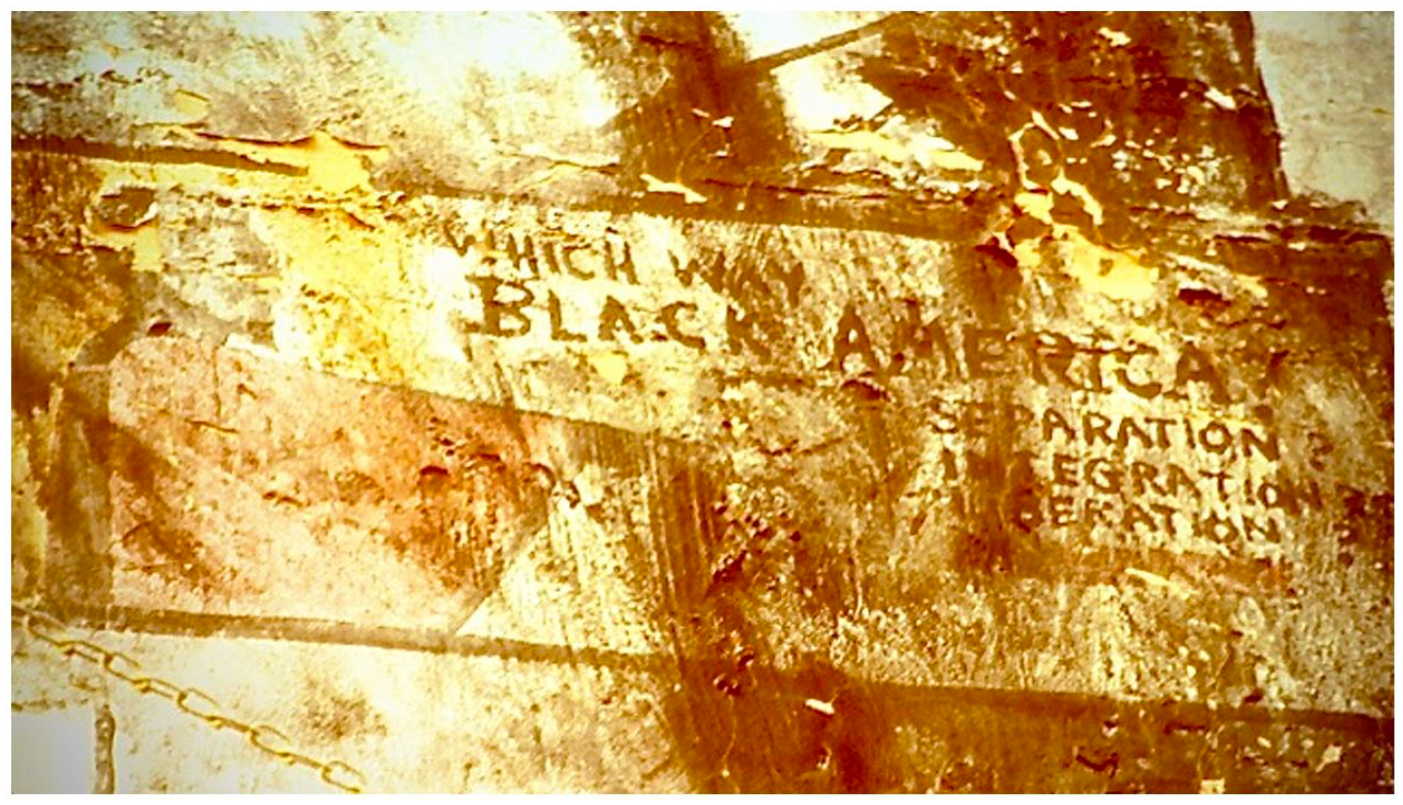
Which Way Black America? Separation? Integration? Liberation? Chicago, Bernard Kleina Photography. 8
Unfortunately, the commitment to Black Power in those communities was intermittent. They briefly explored Black Power fair housing strategies and temporarily coalesced with their white neighbors’ view of integration before resuming these strategies in the mid-2010s. In the 1970s and 1980s, private, nonprofit fair housing centers that worked alongside the NCDH also criticized the interracial organization. The salary differences between white and Black NCDH staff and its lack of racial diversity also disturbed them. 9
This article argues that the Progressive and Black Power factions of the Fair Housing Movement have been largely untapped resources for Black Liberation by championing reinvestment in Black communities and providing Black people with political and economic power. These factions have faced limited support compared with the moderate faction of fair housing leaders, led by the NCDH, because it wielded tremendous influence over many Americans as a result of significant funding and media coverage. The NCDH spread a message to hundreds of integrating communities that the only way that African Americans could obtain access to decent housing and amenities was to move to predominantly white communities. As the Progressive and Black Power factions did not have the same funding, media attention, and influence, their goals were not achieved in the 1960s and 1970s. After the NCDH collapsed, the National Fair Housing Alliance (NFHA) emerged as a major leader of the Progressive Fair Housing Movement, supported by its more than two hundred constituent private nonprofit fair housing councils across the country. 10 Although it does not have the same support that the NCDH once had, its agenda presents an opportunity for the country to right the wrongs of housing discrimination and racial residential segregation. Its vision has the potential to fulfill the radical promise of the Progressive and Black Power fair housing factions by reinvesting in Black communities.
Besides challenging the notion of a unified Fair Housing Movement, this article rejects integration as the sole means by which African Americans can access the resources that housing discrimination pilfered from their communities. Instead, it advocates for a more equitable form of fair housing that reinvests in African American communities without causing gentrification. Gentrification can occur for many reasons, including reinvesting in African American neighborhoods. It can cause rents to rise and then lead to longtime African American residents being displaced from their neighborhoods. 11 Gentrification can also occur due to loopholes in the Community Reinvestment Act of 1977 (CRA), which provides banking services to residents of historically redlined communities but lacks racial specifications and language that prioritizes long-term residents to benefit from the Act. 12
The moderate, Progressive, and Black Power fair housing factions complicate traditional narratives of suburbanization, fair housing’s limitations, the Fair Housing Movement’s traditional temporal period, and its depiction as a solely regional movement. Early suburban scholarship from Sam Bass Warner Jr. and Kenneth Jackson portrayed suburbs as all-white. 13 Other scholars at the same time also perpetuated the myth of the “tipping point” or the point at which whites would flee and these communities would re-segregate as non-white. 14 More recent urban and suburban scholarship from Thomas Sugrue, Robert Self, Kevin Kruse, Matthew Lassiter, and Becky Nicolaides depict white communities as plagued by racial turmoil at the prospect of integration. 15
By contrast, this article examines northern whites’ response to desegregation with a managed plan for integration as a form of neighborhood defense to shield their suburbs’ progressive reputations and high property values and prevent their communities from white flight and racial transition from white to Black. It underscores African Americans’ valiant but failed attempts to define integration on their own terms. In doing so, it challenges previous scholarship that focuses solely on the moderate faction of the Fair Housing Movement as defining fair housing efforts. 16
A few scholars, for example, Juliet Saltman and Andrew Wiese, have acknowledged the potential of radical fair housing factions, but most histories of the Civil Rights Movement have focused on issues other than economic justice. 17 The Fair Housing Movement’s success would have been pivotal in achieving that justice. Homeownership is a primary driver of wealth for most Americans, making it indispensable to closing the racial wealth gap. 18
Moreover, scholars traditionally recognize the temporal period of the Fair Housing Movement as occurring from the late 1940s through the 1980s. I borrow from Jacquelyn Dowd Hall’s concept of a Long Civil Rights Movement to document a Long Fair Housing Movement extending through the 2010s. 19 In the 2010s, Progressive and Black Power activists fought and won key battles for equity for people of color in general and Black people specifically.
By examining primary sources, including national and local newspapers, oral history interviews with national and local fair housing activists, and minutes and annual reports from federal and local fair housing organizations, this article shows the Fair Housing Movement’s significance to broader Civil Rights Movement history. It portrays a less well-known nationwide campaign comprising local struggles that created housing protections for African Americans parallel to their struggle to access equal education and eliminate discrimination in public accommodations. These struggles remain unfinished but are a final frontier in the Long Civil Rights Movement.
Reframing the Fair Housing Movement
In the Fair Housing Movement’s prime during the 1960s and 1970s, key figures helped elevate the Movement’s fight against housing discrimination. In 1966, Martin Luther King marched for fair housing in Chicago where he faced tremendous hostility and violence. 20 King famously remarked that he had “never seen, even in Mississippi and Alabama, mobs as hateful” as he had “seen . . . in Chicago.” 21 In the mid-1970s, the NCDH launched a series of public service announcements (PSAs) across local television stations in thirty-five TV market areas to help local fair housing organizations educate the American public about housing discrimination and fair housing. 22 One of the commercials featured actor Carroll O’Connor (best known for portraying America’s most infamous fictional bigot Archie Bunker on All in the Family) discussing housing segregation. 23 Key civil rights leaders served on the NCDH Board of Directors, including Vernon Jordan, Dorothy Height, Roy Wilkins, Whitney M. Young, Jr., A. Philip Randolph, and baseball legend Jackie Robinson. 24 Despite all of the attention that fair housing received in the 1960s and 1970s, it has receded from the American consciousness.
Americans may have forgotten the Fair Housing Movement because hundreds of civic groups ceased fair housing efforts after the Fair Housing Act passed. 25 These groups felt that the federal government would enforce the law and disbanded. 26 With their dissolution, the memories of the Movement may have disappeared from the American consciousness as well. 27
Further complicating the legacy of the Movement are the competing ideologies of many fair housing advocates, which include the limitation of African American residents within formerly white communities and some Black residents’ challenge to their communities’ problematic policies. For example, the Ludlow neighborhood of Shaker Heights, Ohio prioritized white homebuyers to receive loans in the 1950s and 1960s to maintain integration. 28 South Orange, New Jersey’s early initiatives, prioritized white homeowners but later included more progressive strategies such as aid to Black Newark residents, before and after the Newark Rebellion of 1967. 29 Black residents also shaped integration for several years before the suburb adopted more moderate policies from the 1990s through the early 2010s. In Oak Park, Illinois Black and white residents fought for an open housing ordinance in the 1960s, but the same ordinance also prevented a concentration of Black residents from forming. 30 Oak Park’s housing center also assisted more white than Black residents in locating homes during the first five years of its operation from 1972 to 1977. 31
White residents in integrating communities often chose voluntary integration because it was in their communities’ best interest to avoid racial violence in response to integration. Recalling the Fair Housing Movement’s complexity causes white Americans to reckon with supporting limited integration efforts while undermining broad access to housing, free from discrimination. Moderate integration ideology placates white Americans. It challenges—but does not eliminate—white supremacy in the housing market.
In the late 1980s, another fair housing ideology emerged, adding additional complexity to the notion of the Fair Housing Movement as being solely concerned with residential integration. In 1988, some leaders of private nonprofit fair housing centers formed the NFHA and embraced a more equitable form of fair housing than many white, local suburbanites had in prior decades. The NFHA is a major leader of the Progressive faction of the Fair Housing Movement. This faction offers African Americans a choice between remaining in their own neighborhoods and moving to white neighborhoods. 32 That choice includes ensuring that African American neighborhoods have similar resources as white ones, which requires reinvestment in African American communities. 33
Reinvestment in African American communities is significant because decades of divestment were the long-term causes of numerous urban rebellions in the 1960s, including rebellions in Newark and Detroit in 1967, and the nationwide rebellions after George Floyd’s murder at the hands of police officers in May 2020. Rebellions have often served as cries of anguish from working-class African Americans and shone a spotlight on their lack of access to capital, concentrated poverty in their communities, and inability to accrue intergenerational wealth as a result of housing discrimination. 34 Reinvestment has the potential to provide many African Americans with well-resourced schools, and increase their rates of homeownership and overall wealth.
Although reinvestment in African American communities holds great promise, it must occur without causing gentrification and subsequently displacing residents. The NFHA has been able to reinvest in African American neighborhoods without gentrification ensuing for two reasons. First, their actions can be interpreted as the application of a stringent form of affirmative action to the housing market. They explicitly provided long-term African American residents with specific assistance due to the harm that housing discrimination caused their communities and deprived their communities of wealth. 35 Second, they listen to feedback from community leaders. 36 This feedback helped the NFHA best reinvest in the community that it sought to serve.
In reconceptualizing the Fair Housing Movement, it is ultimately important to remember it not as a unified movement, but one of competing factions. The Progressive and Black Power factions of the Movement challenged the NCDH’s almost complete control of the national Fair Housing Movement during its existence from 1950 through 1987. 37 Ultimately, by nourishing the well-being of predominantly Black communities, those factions challenged the white supremacy that the NCDH had embedded in the Fair Housing Movement.
Is Separate, But Equal Inherently Unequal? An Intellectual History of Anti-Racist Ideology
The moderate fair housing ideology of the NCDH reflected the beliefs of key figures involved in the organization. Robert Weaver and Kenneth Clark were part of a generation of moderate civil rights activists who believed that inequality plagued Black spaces. For middle-class, moderate white and Black civil rights leaders, anti-racism in the years immediately following World War II (WWII) through the early 1960s had two components: supporting African Americans’ access to the same amenities and institutions as their white counterparts and criticizing the racism that kept them confined to separate, underresourced spaces, whether they were neighborhoods, schools, or other institutions. 38 During the 1950s, many civil rights leaders had fairly uniform views on anti-racism because government agencies repressed more radical views and associated them with Communism. 39 The false connection between radicalism and Communism caused some civil rights groups to distance themselves from radical solutions, making economic justice agendas difficult to promote. 40 Although their efforts focused on anti-Communism, it had the chilling effect of silencing dissenting voices who were not Communists. 41 Thus, relatively moderate voices prevailed during this era, and Weaver, Clark, and the NCDH affiliate groups that they influenced espoused a moderate anti-racist ideology that was common for that period.
Kenneth Clark helped frame the NCDH’s view of integration through his involvement in Brown v. Board of Education. The case not only provided a moral argument against discrimination but also informed the NCDH’s view of integration and segregation. While Clark helped the NAACP topple school segregation with a test that demonstrated the negative impact of segregation on African American children’s psyches, he also used his several-year stint as an NCDH board member to share with the staff his belief that segregated Black institutions bred poverty and a lack of opportunity. 42 In a speech at the 1965 NCDH conference in Chicago, he made a correlation between segregated Black neighborhoods, institutionalized racism, and the lack of social mobility for African Americans. 43 According to Clark, “A ghetto is not a voluntary gathering of people of dark skin but rather an involuntary confinement of powerless people—institutionalized racism. It dehumanizes.” 44
Given Clark’s prior experience providing expert testimony in Brown, his view that integration afforded African Americans greater opportunities in housing, education, and other institutions was fairly typical for this time period. 45 However, there was a negative underside to Clark’s argument and focus on the supposed pathologies that afflicted residents of low-income African American neighborhoods. This logic failed to root out the racism that produced unequal conditions in their neighborhoods that made integration an attractive alternative in the first place.
It also aligned with mainstream anti-racist ideology, echoing Gunnar Myrdal’s An American Dilemma, which Clark had a role in researching. 46 It is plausible that the then contemporary memory of these spaces prevented these men from imagining separate spaces in which African Americans could derive empowerment. However, this mainstream anti-racist viewpoint ignores the existence of all-Black towns, churches, schools, and other institutions that assumed profound cultural significance within the African American community throughout American history, especially after African Americans gained their freedom in 1865. 47
Nonetheless, despite Clark’s influence, it would be inaccurate to portray him as the genesis of the NCDH’s preference for racial integration over reinvesting in low-income, Black communities. NCDH president Robert Weaver was more influential in cultivating the group’s beliefs due to his expertise in the intersection of race and housing.
Weaver began his housing career in the late 1930s and used his position as one of the most prominent African Americans in the New Deal to advocate for African Americans’ right to housing. From 1938 to 1940, Weaver served as the special assistant in charge of race relations to United States Housing Authority (USHA) administrator Nathan Straus. 48 Though his title was nebulous, it reflected his ability to establish himself as indispensable to federal bureaucracy, especially on matters pertaining to race and housing. Although he could not always protect African Americans’ interests while with the USHA, he demonstrated his political savvy by ensuring that the agency hired Black construction workers and produced public housing projects for African Americans. 49 He also tried to integrate public housing, but opposition to this program limited its impact and ultimately “cost him his job.” 50 Following WWII, Weaver co-founded the NCDH alongside white fair housing activists Charles Abrams, Algernon Black, and Hortense Gabel. 51 He later served as the first Housing and Urban Development (HUD) Secretary from 1966 through 1968. 52
Apart from his experience in politics, Weaver’s scholarship also informed the perspective of the NCDH toward integration and African Americans. Weaver’s The Negro Ghetto was a crucial part of a new genre of social science literature that emerged in the WWII and post-war period. While The Negro Ghetto helped the NAACP convince the Supreme Court that racially restrictive deed covenants were unenforceable in Shelley v. Kramer, it also pathologized African Americans. 53 Before Shelley, the pervasiveness of racially restrictive covenants prevented African Americans from purchasing homes in many white communities. 54 As a result of Shelley, courts could no longer enforce these racially restrictive covenants and African Americans could theoretically live wherever they wanted, including in the white communities that once excluded them. 55
In The Negro Ghetto, Weaver depicted the structural conditions that led to the formation of low-income Black communities in the Urban North following the Great Migration. He also examined how the Great Depression increased unemployment in low-income Black communities, leading them to become “social and economic cancers” followed by an increase in crime as a result of “idleness.” 56 Most troubling of all his assessments was his description of how racism prevented African Americans from following European immigrants’ example of leaving their ethnic neighborhoods. According to Weaver, white immigrants who improved themselves “economically and culturally” had “a chance to move . . . into another section of the city,” while “the Negro has no such escape.” 57 Weaver observed correctly that racism prevented African Americans from leaving their neighborhoods, unlike white immigrants. However, his belief that leaving an ethnic community for an integrated community depended on someone improving themselves “culturally” underscores how he likely transmitted this belief to the NCDH—that any segregated Black community suffered from pathology and should be dismantled.
“An Open, Integrated Society”: The Birth of the Fair Housing Movement
The NCDH formed after several civil rights groups’ failed battle to integrate in 1949 Stuyvesant Town, a middle-income veterans’ housing development in New York City. 58 Although these groups did not integrate Stuyvesant Town, they coalesced in 1949 to form a precursor to the NCDH, known as the New York State Committee Against Discrimination in Housing (NYSCDH). 59 The NYSCDH rallied to help New York City and New York State enact fair housing laws in 1957 and 1961, respectively. 60 But the organization’s leadership soon realized that it was necessary to create a national organization to combat housing discrimination. 61
From the NCDH’s inception in 1950, members debated how to best achieve its “goal of an open integrated society, ghetto-free, with full equality of opportunity in housing for all.” 62 Although the NCDH fought for fair housing laws, it pursued fair housing in a way that pushed a racist agenda and transmitted these beliefs to the communities that it advised. When examined closely, this mentality was characteristic of the post-WWII social scientific rationale that informed Brown v. Board of Education, that separate Black neighborhoods bred inequality. 63
Certainly, Clark and Weaver’s ideologies informed the NCDH’s policies of moving people of color to predominantly white communities, as they were transformative figures in the organization’s development. Weaver served at least three terms as NCDH president and Clark served on the Board of Directors. 64 Operation Open City (OOC) is an example of how they expected integration to work on the ground. With the support of the National Urban League and War on Poverty funding, the NCDH developed OOC in January 1964 with the purpose of opening the public housing market by dispersing Black and Puerto Rican New Yorkers throughout New York City. 65
The plan involved moving them from the low-income, predominantly Black and Latinx communities of Harlem; Bedford Stuyvesant, Brooklyn; South Jamaica, Queens; and the South Bronx to white neighborhoods with greater supplies of affordable and rent-controlled apartments. 66 The program sought white residents who were committed to forming fair housing groups, which shared with OOC the availability of affordable housing for prospective residents of color. 67 It also made their neighborhoods more hospitable to people of color by curtailing housing discrimination and ensuring that they were comfortable. 68 Missing from this program were a set of policies to remedy the conditions that necessitated these New Yorkers’ flight from their neighborhoods for equal access to affordable housing.
By the mid-1960s, a growing cadre of young African American activists began to add complexity to the dichotomy between integration and investing in separate Black spaces. They insisted that separate Black spaces could serve as sources of cultural pride instead of inferiority if African Americans chose to separate instead of having separation forced upon them. 69 This dichotomy appeared not only in the Civil Rights Movement but also in the Fair Housing Movement. 70 These activists did not view integration as a remedy to segregation. Rather than supporting integration as a goal in itself, they saw it only as a means by which African Americans could gain resources that had been mined from or denied to Black communities, producing their underdevelopment. 71 Their goal was to encourage reinvestment in Black communities, which many fair housing leaders neglected because they viewed Black neighborhoods as irredeemable and riddled with crime, poverty, and unequal access to resources.
The growing tension between fair housing advocates who supported reinvesting in Black communities and those who believed in moving African Americans to white communities surfaced at the April 1967 NCDH conference in New York City. 72 Most fair housing advocates, certainly those in the NCDH, believed that separation always bred inequality, a premise that emerging Black Power fair housing advocates like Franklin H. Williams rejected. The themes of the conference were “Model Cities and Metropolitan Desegregation” and “Model Cities: Promise or Threat?” 73 One of the four major workshops was devoted to “the revitalization of the racial ghetto.” 74 The workshop contradicted the beliefs of many NCDH officers, but its inclusion was an attempt of the NCDH to appeal to Black Power activists with a temporary recognition of their demands. 75
Black Power Does Not Necessarily Mean Anti-Integration
The next year, Black Power fair housing activists’ strong challenge to the NCDH’s integration initiatives was on full display at the 1968 NCDH national convention. At the October 1968 conference, civil rights leader and NCDH president Robert L. Carter and Franklin H. Williams presented clashing views of fair housing. Carter’s view of segregation is reflected in his significant role in challenging racially segregated schools. Carter spent years at the NAACP LDF conducting legal and historical research to build the legal argument that school segregation was unconstitutional. 76 Carter clearly equated separate Black spaces with injustice and carried those beliefs into his fair housing work.
Williams once agreed with his close friend’s definition of integration. Earlier in life, he equated integration with justice and an escape from the indignities associated with the degradation that white supremacists imposed on many Black spaces. Williams personally suffered the humiliation associated with racial segregation while serving in the Army. 77 While traveling on a segregated train, Williams was forced to sit on the floor of the “Colored” section because all of the seats were full. 78 The toilet malfunctioned and spread sewage on the floor, where Williams sat. 79 He endured the entirety of the two-day trip in these miserable conditions. 80 This experience was a pivotal moment that inspired Williams to eradicate racial segregation. 81
When Williams and Carter worked together at the NAACP LDF under Thurgood Marshall, they handled a variety of cases, including school desegregation cases and criminal cases. 82 Moreover, they developed the legal strategy to strike down racial covenants in housing. Both joined a 1947 meeting of Black legal minds at Howard University, where they discussed strategy for one of the cases that would serve as precedent for Shelley v. Kraemer. 83 Later, while West Coast Regional Director of the NAACP, Williams helped fight against racially restrictive covenants in a case that reaffirmed Shelley. 84
Despite these earlier experiences, Williams’s term as U.S. ambassador to Ghana changed his view of integration. Williams’s stint in Ghana strengthened his racial pride and caused him to reject a traditional form of integration that caused African Americans to abandon their cultural institutions and communities for white ones. 85 Instead, he believed that Black Power meant that African Americans, like other ethnic groups, must have pride in themselves and their communities “in order to achieve real racial integration in America.” 86
Williams felt that his stance did not contradict fair housing efforts. 87 He distinguished between segregation and African Americans’ decision to separate from whites. 88 Williams believed that segregation was oppressive while Black separation was empowering. 89 He did not understand why anyone, “Black or white . . . should fear Black power.” 90 He believed that African Americans “developing, determining, and finding their own identities . . . is a necessary prerequisite for Black Americans to enter into a truly integrated experience with white America” 91 (Figure 2).
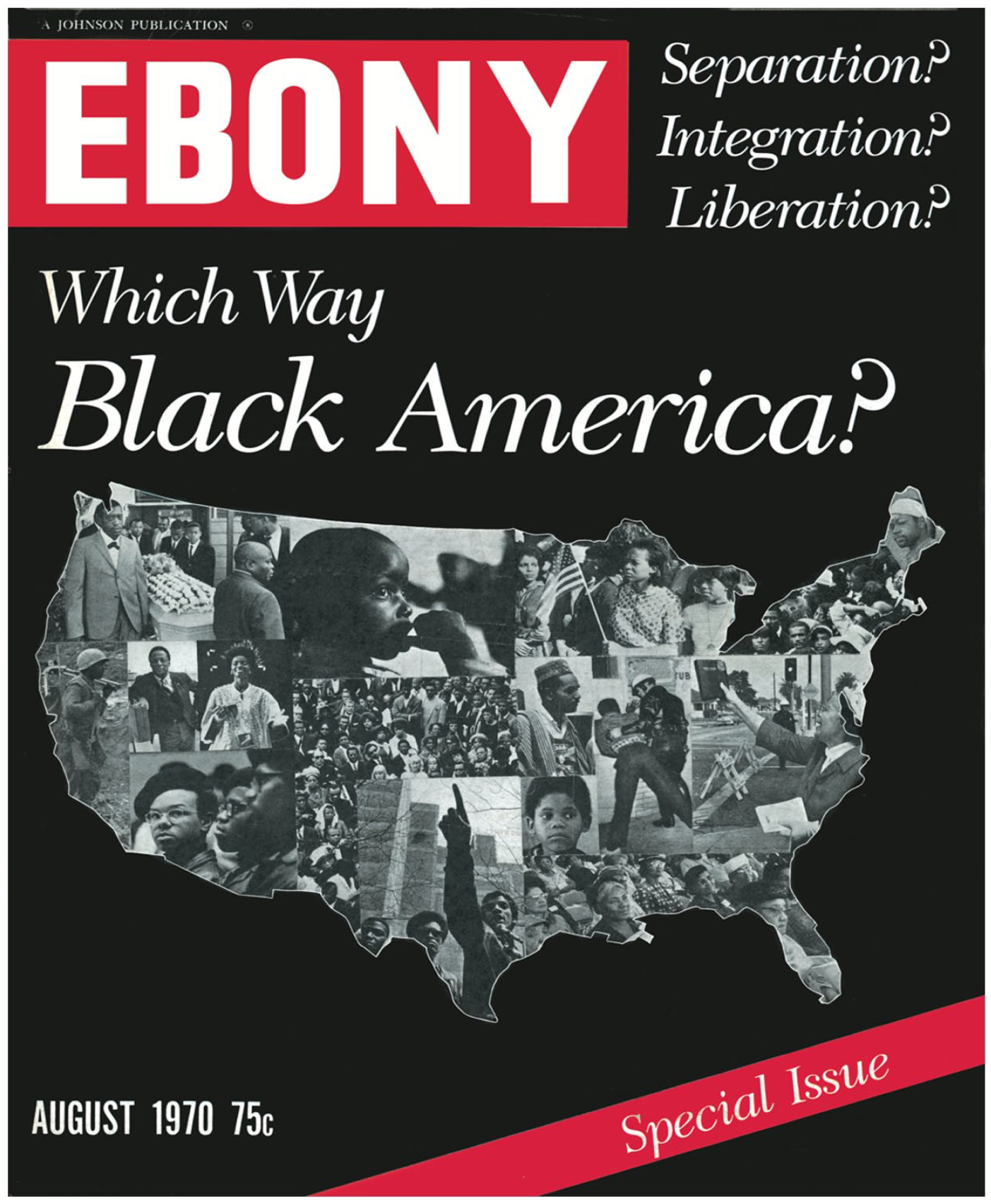
The August 1970 issue of Ebony magazine reflected the differing views Black people in America had toward issues of integration, Black spaces, and Black Liberation. 92
The split between the moderate and Black Power factions of the Fair Housing Movement did not fall completely along neat racial lines, as was generally the case with contemporary civil rights organizations. By the mid- and late 1960s, the Student Nonviolent Coordinating Committee (SNCC) and the Congress of Racial Equality (CORE) pivoted from interracial organizing to Black consciousness-raising and creating programs for Black communities. 93 Both organizations’ transition from interracial politics to an exclusive focus on Black empowerment was the result of Black nationalists’ assumption of CORE and SNCC’s helms. 94 By comparison, it appears that most, if not all, of the NCDH leadership—both Black and white—embraced integration and rejected Black Power. 95 However, some African American leaders in integrated communities did embrace Black Power.
By the late 1960s, local Black Power activists wanted to ensure that integration did not occur at the expense of Black homebuyers’ and residents’ comfort, safety, and well-being. They symbolically rejected an older concept of integration that “permitted Negroes to come in out of the cold if they weren’t too noisy . . . and didn’t all come in at the same time.” 96 The newer model of integration that began to take shape envisioned Black Power as not necessarily “anti-integration” and instead reimagined African Americans negotiating their commitment to integration “from a position of strength.” 97
African American Shaker Heights and South Orange residents began to renegotiate their positions in their communities. Several Black South Orange residents left the Fair Housing Council, which had the tripartite functions of educating white residents of South Orange and the neighboring town of Maplewood about integration, working with realtors to open the local housing market, and locating homes for Black newcomers on blocks that were not resistant to integration. 98 Less than two weeks after the 1967 Newark Rebellion, the pastor of South Orange’s historically Black church invited Fred E. Means, former chairman of Newark-Essex CORE and president of the Organization of Negro Teachers of New Jersey, to give an address on Black Power. 99 He organized the forum because that year’s national Black Power Conference was held in Newark, only five miles away, and piqued parishioners’ interest in learning more about the concept. 100 Means remarked, “Newark’s power structure had been listening to what it wanted to hear” and consequently “cut off communication with grass roots [sic] Negroes.” 101 The pastor directed attendees’ attention toward racial dynamics in South Orange, declaring, “There is an Immediate [sic] need in South Orange for the inclusion of Negroes in positions where decisions are made.” 102
The event continued to resonate with Black residents a year later as they felt underrepresented in decision-making positions after the Board of Education failed to close South Orange and Maplewood’s public schools for Martin Luther King’s funeral. 103 The pastor’s call to become more involved in South Orange, combined with the school board’s insensitivity, led in 1968 to the formation of an all-Black organization of South Orange and Maplewood residents. 104 Instead of continuing the Fair Housing Council’s goal of fair housing that took into account white residents’ priorities first, this group focused on remaking South Orange as a welcoming environment through cultural events and holding historically white institutions accountable for their mistreatment of African Americans. 105
In Shaker Heights, members of a Black-led neighborhood association were interested in integration to secure equal city services, public education, and economic stability “rather than from a desire for extensive social contact with whites per se.” 106 The association initially formed in 1962 to maintain the neighborhood’s racial balance by preventing white residents from panic selling, but abandoned this goal as the neighborhood and the association’s leadership transitioned from white to Black and Black members embraced a different vision of integration. 107 Stable integration to secure economic stability was integral to this neighborhood where almost 40 percent of its families had incomes lower than the median income for Cuyahoga County. 108
Consequently, the association challenged local institutions’ racist integration practices. One of its focuses was the local housing office, which had long been suspected of providing preferential treatment to white homebuyers over Black homebuyers. Although founded in 1967 to inform both Black and white homebuyers of available housing, the local housing office repeated the suburb’s early practices of prioritizing white homebuyers to maintain integration. 109 The housing office steered Black buyers away from affordable homes in integrated areas and toward neighborhoods that were outside of many Black buyers’ price range. 110 After half of the housing office’s coordinators—two Black and four white women—resigned in a public protest over the disparate treatment of white and Black prospective homebuyers in April 1979, Black leaders publicly supported the coordinators and reiterated the office’s pattern of discriminatory practices. 111 Finally, in June 1979, the housing office unveiled a new policy that promised Black and white prospective homebuyers equal treatment. Under the new policy, whites were to be shown homes in predominantly Black areas and Blacks would be shown homes in predominantly white areas. 112 Both communities’ African American residents were informed by Black Power to create a more malleable form of integration that better suited their needs, with varying degrees of success. In later decades, Shaker Heights and South Orange pursued integration in a way that prioritized white residents’ comfort.
Given how Black Power played out in Shaker Heights and South Orange, Williams’s beliefs did not negate fair housing efforts and instead described a different form of fair housing. Fair housing did not have to mean assimilation into whiteness. It could mean removing the discriminatory barriers that prevented African Americans from living in the homes and neighborhoods of their choice while celebrating their cultural identities, Black Pride, power in their neighborhoods, and control of their institutions. Nationally, the NCDH made occasional gestures toward recognizing Black Power, but largely ignored it and continued to focus on integration, eliminating low-income African American communities, and creating a fair and open housing market. 113
Further Fractures within Fair Housing
While African American civil rights activists challenged the NCDH’s problematic anti-racist ideology, their efforts foreshadowed its decline. The reasons for its decline were numerous. They included internal issues, competition from a new fair housing organization, and Progressive fair housing activists’ challenge to the group’s legitimacy. By 1970, the NCDH was “in imminent danger of bankruptcy—financial, organizational, and spiritual.” 114 That same year, the NCDH faced the loss of its Ford Foundation and HUD funding. 115
As a condition of receiving funding again, the Ford Foundation required the entire group’s reorganization. 116 The NCDH Board of Directors “changed from an organization of organizations to a Board of Directors composed of 35 individuals elected annually.” 117 The director and co-director resigned, and they were replaced by a new director Ed Holmgren, who previously served for ten years as the executive director of the Leadership Council for Metropolitan Open Communities (LCMOC). 118 The LCMOC formed in 1966 in response to Martin Luther King’s demand that Chicago “make a long-term commitment to end housing discrimination in the metropolitan area” following his citywide fight for fair housing. 119
Local civic associations’ alienation from the NCDH compounded these issues. 120 They expressed their frustration with the NCDH at the February 1971 national fair housing conference in Chicago where they charged that the NCDH was more concerned with “its own funding, glory, and survival than with the growth and development of the local movement organizations.” 121 As a result, some of these groups sought out a new organization that could provide them with guidance to achieve fair housing.
National Neighbors formed in 1969 to fill the temporary vacuum that the internal disorganization of the NCDH created and to encourage local civic groups to become members. 122 It also appealed to local leaders who wanted greater local participation in a national organization. 123 Although its official mission was stabilizing neighborhoods that had already integrated, it duplicated a major function of the NCDH: serving as an umbrella organization to integrated communities. At its founding conference the same year, leaders from twelve integrated communities expressed the need for a national organization to aid their associations. 124 Aside from duplicating the mission of the NCDH, National Neighbors also applied for and competed with the NCDH for its main source of funding: The Ford Foundation. 125
The decline of the NCDH was also complemented by a growing split between moderate and Progressive fair housing activists that same decade. Former NFHA Director Shanna Smith recalled that she and other “private fair housing groups” began to question the way that the NCDH ran its operations. 126 However, private fair housing groups’ criticism emerged gradually as they became more aware of the NCDH’s policies over time.
Private, nonprofit fair housing centers proliferated in the 1970s after many civic groups decided to no longer pursue fair housing after the Fair Housing Act was signed, and the Housing and Community Development Act of 1974 provided private, nonprofit fair housing centers with funding. 127 Following the passage of the Fair Housing Act of 1968, the hundreds of civic organizations that worked to ensure their neighborhoods’ stable integration felt that they no longer had to fight for fair housing. 128 They believed that, because the Fair Housing Act passed, housing providers would comply with the law. 129 As a result, almost all of these civic groups dissolved. 130
However, the Housing and Community Development Act of 1974 helped facilitate the proliferation of private, nonprofit fair housing centers. The Act provided states with community development block grants and required citizen participation to prepare a city’s funding application for those grants. 131 In response to this new law, both the NCDH and HUD wanted to ensure that this new funding abided by fair housing laws. 132
The NCDH created the Handbook for Citizen Fair Housing Advocacy Under the Housing and Community Development Act of 1974, which recommended how fair housing groups could ensure equal housing opportunities for people of color and working-class communities. 133 The NCDH supplemented its handbook through its conferences, publications, and field assistance to encourage citizens to organize coalitions and even helped create such coalitions in Hempstead, a community on Long Island, New York; Haverford, Pennsylvania; East Hartford, Connecticut; Parma, Ohio; and Livonia, Michigan. 134 In addition to these efforts, in 1976, HUD’s Office of Equal Opportunity (now known as the Office of Fair Housing and Equal Opportunity) published a manual that informed these groups of how they could obtain funding. 135 The preface stated that the enforcement of the Housing and Community Development Act of 1974 depended on the creation of “viable fair housing organizations.” 136
Some regional HUD Fair Housing and Equal Opportunity Offices likely advised citizen community groups about the Act’s equal opportunity provisions to require fair housing enforcement as a condition of localities receiving block grants. 137 Consequently, citizens used this funding to start forming private, nonprofit fair housing centers. 138 It was especially imperative that citizens formed private, nonprofit fair housing centers as some localities refused funding because they did not want to comply with “the Act’s housing assistance and equal opportunity requirements.” 139 Over the next few months and years, newspaper advertisements for fair housing directors appeared in cities such as Alliance, Massillon, and Canton, Ohio. 140
Private nonprofit fair housing groups began to interact gradually with the NCDH in the 1970s. From 1975 to 1990, Shanna Smith, former National Fair Housing Alliance Director, was Director of the Toledo Fair Housing Center. 141 The Toledo Fair Housing Center and other private nonprofit fair housing groups such as the LCMOC had learned about the NCDH in the 1970s because of its use of litigation to “secure building sites in predominantly white areas” and to integrate specific properties that public housing authorities owned. 142 These, and other local fair housing advocates, also met NCDH officials at annual HUD conferences. 143 The NCDH sponsored Fair Housing Center Directors’ conferences in June and December 1981, provided training, and published pamphlets and directories on the centers’ NCDH “affiliate” status that the centers could use for fundraising. 144 In contrast to the policies of the NCDH, private nonprofit fair housing groups embraced integration strategies that prioritized African Americans’ needs, rather than whites’ comfort. Smith defined private nonprofit fair housing groups as private because they were nongovernmental agencies and challenged “anybody who violates the Fair Housing Act.” 145
Most often, these civic associations placated white residents and ultimately patched up, rather than resolved, the white supremacy that permeated their housing markets and communities. 146 Smith recalled that the moderate fair housing activists, who endowed their neighborhood civic groups with fair housing functions as a form of neighborhood defense, believed “white was right.” 147 Most of the integration efforts of neighborhood associations in South Orange, Shaker Heights, and Oak Park created policies that depended on convincing white residents to remain in the community, ensuring that white residents were comfortable with their neighbors selling their homes to African Americans, or appealing to white homebuyers to purchase homes to maintain integration and offset an influx of African Americans. 148 Oak Park was one of the most egregious examples because the suburb’s local fair housing law contained a clause that allowed the village board to declare home sellers or leasers exempt from the law to prevent a concentration of Blacks from forming in one area. 149 Oak Park’s policy bore similarities to the NCDH’s Operation Open City and its efforts to disperse Black and Puerto Rican New York City residents throughout the metropolitan region to break up low-income Black and Puerto Rican neighborhoods, almost a decade earlier.
As the Fair Housing Centers deepened their relationship with the NCDH, they began to scrutinize some NCDH executives’ practices. 150 While private nonprofit fair housing leaders appreciated the NCDH’s support for fair housing and use of litigation to integrate specific properties that public housing authorities owned, they began to notice that Executive Director Ed Holmgren, who was previously the executive director of the LCMOC, did not interact with local executive directors like Smith or her contemporaries. 151 Although he ignored the private nonprofit leaders, Holmgren was comfortable using their successful case/litigation information “to . . . get their [NCDH’s] funding from Ford [The Ford Foundation].” 152 Smith thought that Holmgren’s actions underscored the NCDH leadership’s generally “condescending attitude toward the executive directors within the private fair housing movement.” 153 Smith and two other private nonprofit fair housing center leaders used the two-day June 1980 NCDH annual conference, which included private fair housing centers among its attendees, to advocate for private nonprofit fair housing groups’ needs. 154 They led a panel that focused on “assisting new fair housing groups in program and organization.” 155
On January 1, 1981, the NCDH Board of Directors finally inaugurated a plan to recognize “local nonprofit fair housing groups” as affiliates of the NCDH. 156 That same year, Kale Williams of the LCMOC was appointed to the NCDH’s Board of Directors. 157 Three other private nonprofit fair housing leaders followed Williams’s appointment and advocated for increased representation of the private nonprofit Fair Housing Movement. 158 All three directors were “vocally critical” of Holmgren and raised concerns about the “lack of racial . . . diversity on the staff and salary differences between white and African-American staff.” 159 They complained to the NCDH’s Board of Directors until he resigned. 160
But the NCDH’s troubles were far from over. In 1987, the NCDH lost its Ford Foundation funding and collapsed. 161 This moment marked the end of the Fair Housing Movement as the nation had known it. The Movement would survive, but it would not receive the media attention that the NCDH helped it receive. Despite its limitations, the NCDH had effectively raised awareness of housing discrimination as a pivotal civil rights issue.
Who Were the Progressives? The Rise of the NFHA 162
After Holmgren’s resignation and the NCDH’s loss of its Ford Foundation funding, thirty-four private fair housing centers explored a new coalition that became the National Fair Housing Alliance. 163 Initially at the behest of several fair housing centers in Ohio, as well as other fair housing centers—including those in Detroit, Chicago, New Jersey, and New York City—the thirty-four fair housing centers met informally to decide whether to assume control of the NCDH or begin a new organization. 164
Fair Housing Councils were concentrated in the Midwest for several reasons. The first reason was the LCMOC’s role as a hub of fair housing outgrowth because Williams provided complementary training to many other private nonprofit fair housing leaders throughout the Midwest. 165 The second reason was a Midwestern HUD official’s financial support of fair housing in the region through community development block grants. 166 He strictly interpreted the Housing and Community Development Act as a mandate to distribute federal funding to affirmatively further fair housing. 167 Ultimately, the private nonprofit fair housing leaders decided to form a new organization after they were unable to obtain a full audit of the NCDH’s financial records. 168 In 1988, thirty-four fair housing centers met in Lombard, Illinois to set a vision for their new organization and created the NFHA. 169
After founding the NFHA, they contacted politicians for funding. One leader reached out to HUD Assistant Secretary of Fair Housing and Equal Opportunity Judith Brockman, while the other leaders reached out to national Democratic lawmakers. 170 As a result of these meetings, the fair housing centers were able to persuade the Reagan Administration to fund their Fair Housing Initiatives Program (FHIP), which began in 1989 to support state and local public agencies and “private nonprofit organizations” whose programs prevent or eliminate housing discrimination. 171
The initiative that most distinguishes the NFHA from its moderate fair housing peers is its commitment to reinvesting in communities of color, instead of solely focusing on moving African Americans to white communities. For example, in 2009 the NFHA and its constituent Fair Housing Councils conducted an investigation of properties that were impacted by the foreclosure crisis that caused the Great Recession. 172 It found that foreclosed or real estate–owned (REO) properties in white communities were well maintained, while REO properties in African American and Latinx communities were poorly maintained. 173 Subsequently, in 2012, the NFHA and its constituent Fair Housing Councils filed a HUD administrative complaint against Wells Fargo, one of the largest owners of REO properties, for its disparate treatment of REO properties in African American and Latinx communities. 174 In 2013, Wells Fargo agreed to invest $39 million into the communities that it harmed in the form of homeownership programs as well as programs for neighborhood stabilization, property rehabilitation, and housing development. 175 Of this amount, the NFHA reinvested $27 million in African American and Latinx neighborhoods distributed evenly in nineteen cities. 176 Each city received approximately $1.4 million. 177 The NFHA provided more than 10,000 people with financial literacy or homeownership training workshops, helped 700 families become first-time homeowners, prevented almost 800 foreclosures, and rehabilitated 685 abandoned and blighted homes or lots. 178
By reinvesting in communities of color, the NFHA wanted to offer African Americans a “choice.” 179 An important part of that choice was to “make economic investments in the African-American community so that the people who are living there have a higher quality of life,” instead of being forced to leave their homes. 180 At the same time, the NFHA also supported any African Americans who wanted to leave their neighborhoods for “integrated or predominantly white neighborhoods to be closer to work” or “to give their children a different . . . experience,” but Smith asserted, “in order to have real choice, you had to have neighborhoods that were comparable.” 181
These examples of community reinvestment appear to provide African American and Latinx communities with financial resources without gentrifying them. The NFHA’s reinvestment strategies first began with partnerships with local community organizations to listen to African American and Latinx residents discuss how they wanted money reinvested in their communities and were imperative to facilitating development on longtime residents’ terms. 182 As a core belief of the Progressive faction of the Fair Housing Movement is to reinvest in African American communities, it is important to ensure that reinvestment does not cause gentrification. It is vital that this type of reinvestment offers an alternative to gentrification because, frequently, reinvestment in African American and Latinx neighborhoods can result in longtime renters’ inability to afford the new cost of living and being forced to move. 183
When the term gentrification was coined in the 1960s, it referred to affluent people moving into a working-class neighborhood, displacing its original residents, and changing the neighborhood’s character; since the 1960s, several other processes may induce gentrification. 184 They include, but are not limited to, city governments encouraging gentrification to generate tax revenue; international investors purchasing properties in Black neighborhoods and displacing longtime residents; even affluent African Americans acting as gentrifiers when they move to working-class African American neighborhoods; and, in the early twenty-first century, white Americans seeking relatively affordable housing in yet-to-be gentrified Black and Latinx neighborhoods as white, working-class neighborhoods already gentrified, which caused housing prices to increase. 185 Given the many ways in which gentrification can occur, fear that reinvestment in Black neighborhoods could cause gentrification and subsequently displace residents is reasonable.
The Community Reinvestment Act as currently written also unintentionally contributes to gentrification and the racial transition of neighborhoods from Black to white. 186 The Act intends to “correct the damage of redlining” by requiring banks “to solicit borrowers and depositors from all segments of their communities.” 187 Federal regulators judge banks’ performance based on how well they meet the needs of their “entire community, including low- and moderate-income neighborhoods.” 188 This current evaluation model focuses on where residents live instead of who they are. 189 Studies and articles published in 2018 reveal that the CRA actively perpetuates discrimination; mortgages in predominantly Black neighborhoods intended to comply with the CRA were being given mostly to white residents of those neighborhoods. 190 Furthermore, the Act fails to hold banks accountable for denying mortgages at higher rates for Black and Latinx borrowers compared with white borrowers, despite the Act outlawing redlining. 191 This pattern of unintentional discrimination is the result of the Act lending “in certain geographic areas,” thereby allowing banks to “meet the law’s requirements by lending to white homebuyers in historically Black neighborhoods.” 192 Therefore, the CRA accelerates these neighborhoods’ gentrification and racial transition from Black to white. 193
These examples of reinvestment and flaws within the CRA suggest that potential models of reinvestment in communities of color need to center longtime residents and be explicitly race-specific to prevent gentrification. The NFHA’s reinvestment plan is one example because it aids longtime Black and Latinx residents. Another potential model is to add race as a factor to banks’ exams when evaluating how well they comply with the CRA. 194
In an August 2022 comment letter to the federal agencies responsible for implementing the CRA, the NFHA advocated for race to be added to the CRA to ensure that Black and Latinx people benefit from reinvestment in their communities. 195 In the letter, the NFHA framed the CRA as part of a series of civil rights laws that Congress passed between 1964 and 1977. 196 As the CRA’s original intention was to curtail redlining in communities of color, the NFHA insisted that the Act did not define “low-and-moderate income (‘LMI’) neighborhoods as a sole definition of underserved communities.” 197 Furthermore, the NFHA argued that the Act’s focus on “LMI issues” has not significantly diminished redlining for people of color, especially because banks make fewer loans to communities and people of color “even within LMI communities.” 198 This observation implies that white residents of LMI communities disproportionately benefit from the Act because it currently lacks a racial lens. By encouraging banks to serve Black and Latinx individuals instead of the neighborhoods where they live, the NFHA makes a strong case that adding race to the CRA would make it come closer to fulfilling its mission.
While the policy of moving Black people to white-dominated suburbs reflects the legacy and continued influence of the moderate faction of the Fair Housing Movement, reinvesting in Black communities reflects the impact of the Progressive faction that split from the NCDH. 199 The Progressive branch of the Fair Housing Movement is committed to an anti-racist ideology that centers the people whom it aids. 200
Conclusion: The Movement and Memory
Despite the meticulousness of the private nonprofit Fair Housing Movement in interpreting and enforcing the Fair Housing Act of 1968, it ultimately lost the battle for widespread public recognition and historical memory, compared with its more prominent “mainstream” counterpart. Civic groups in communities like Shaker Heights, Ohio; Oak Park, Illinois; and South Orange, New Jersey helped build carefully crafted reputations as progressive communities that were willing to experiment with integration. Their civic leaders genuinely believed that fair housing was moral, but a more complicated narrative existed alongside that belief: one of neighborhood defense. 201 That defense depended on protection from white flight and subsequent resegregation as Black communities. To do that, they built a community image as enlightened and progressive based on their prevention of white flight.
The underlying irony, however, is that white residents did not flee because they restricted and carefully policed the number and class status of the African Americans allowed to become residents. Their neighborhood defense also depended on residents, civic leaders, and town officials forgetting the history of racial strife that occurred in each community’s early integration efforts. They also had to forget the frequent controversies that emerged when Black residents challenged their treatment within communities that integrated on white residents’ terms, to craft narratives of racial harmony in more recent years.
These civic groups’ efforts, combined with the inattention to the Progressive and Black Power factions of the Fair Housing Movement, distorted public perception and obscured the choices that Americans had between the moderate, Progressive, and Black Power factions of the Fair Housing Movement.
Moderate fair housing policies historically foreclosed more equitable solutions, and these communities received the lion’s share of the funding and publicity. In 1963 and 1968, Shaker Heights was featured in Cosmopolitan and Reader’s Digest, respectively. 202 In 1976, Oak Park received the National Municipal League’s All-America City Award. 203 In the 1990s and 2000s, South Orange received extensive coverage in The New York Times. 204 These communities likely received these opportunities because they rarely offended the banks, city government, and other “powers that be.” 205 Conversely, the NFHA and their affiliated Fair Housing Councils had to challenge these institutions and risked having many of these institutions revoke their funding. 206 Similarly, Black Power factions in Shaker Heights and South Orange, as well as at the 1968 NCDH national conference, offered an alternative that provided integration on African Americans’ terms.
In recent years, it appears that the Black Power faction of the Fair Housing Movement has been experiencing a resurgence in South Orange and Maplewood. In 2014, the South Orange-Maplewood Black Parents Workshop (BPW) formed after a Black student was denied entry into an advanced math class although she met all of the requirements. 207 Her parents filed a complaint against the school district with the U.S. Department of Education Office for Civil Rights. 208 After the complaint was settled, the student’s father joined other Black parents in launching the BPW that same year. 209 Despite the settlement, Black students continued to be concentrated in less academically rigorous courses and fewer Black students were placed in advanced courses. 210
As a result, the BPW continued to work with the South Orange-Maplewood School District to resolve the types of discrimination that Black students faced over the past few years, such as being placed in less rigorous courses, racially segregated elementary schools, and Black students receiving harsher discipline than white students. 211 In 2018, the group filed a lawsuit against the school district for these discriminatory practices. 212 Two years later, the two parties reached a settlement. 213 The school district made several concessions including having a former New Jersey Supreme Court justice monitor its integration plans, improving its recruitment of teachers of color, and publicly reporting class enrollments, suspensions, and expulsions by race and gender. 214 Although these issues will likely persist, the advocacy of the BPW demonstrates Black South Orange and Maplewood residents’ renewed fight for equity in their communities.
While the fight for racial justice in South Orange and Maplewood’s schools continues, a new program to help Black and non-white Latinx people become homeowners suggests that South Orange and Maplewood are considering more equitable, rather than moderate fair housing initiatives. 215 It provides first-time, Black and non-white Latinx homebuyers with loans of up to $7,500 to purchase homes in South Orange or Maplewood, New Jersey. 216 Fifty percent of the loan is eligible for loan forgiveness after five years of residence. 217 Its purpose is to help narrow the racial wealth and racial homeownership gaps. 218 Unfortunately, the loan is too small to make a significant impact. From 2015 through 2019, the median home values in South Orange and Maplewood were $604,300 and $527,900 respectively. 219 During that same period, Black New Jerseyans’ median income was only $53,247. 220 Therefore, without additional financial assistance, this program will not make homeownership in South Orange and Maplewood more attainable for many Black New Jerseyans. Although the program has some potential flaws, it is a first step for a community with a long history of prioritizing white homebuyers and homeowners over Black homebuyers and homeowners.
Ultimately, while the moderate faction of the Fair Housing Movement won the battle for visibility and historical memory, it lost the battle for the ability to effect more meaningful change. The NFHA’s work challenges the idea of the “tipping point” because it pursues fair housing strategies that center African Americans, while Black South Orange and Maplewood residents’ ongoing activism forces their community to acknowledge that racial integration does not equal racial equity. The continued existence of the Progressive and Black Power factions provides hope that a more equitable form of fair housing can be achieved in the present.
Footnotes
Acknowledgements
I am deeply appreciative of the thorough feedback that Glenda Gilmore, Anthony Pratcher II, and Clemmie L. Harris provided on several versions of this article. Conversations with Walter Greason also helped me clarify some of the article’s themes. Lastly, I would like to thank my peer reviewer for their incisive comments.
Declaration of Conflicting Interests
The author(s) declared no potential conflicts of interest with respect to the research, authorship, and/or publication of this article.
Funding
The author(s) received no financial support for the research, authorship, and/or publication of this article.
