







Abstract
The aim of this article is to explore the diffusion of the USSR housing, planning, and architecture related to Spain in the transnational networks through the development of two international congress. The French magazine L’Architecture d’Aujourd’hui organized a trip to the Stalinist Soviet Union in 1932. The aims were to stage the I Réunions Internationales d’Architectes (RIA) and to discover the progress of Soviet urban planning and housing after the First Five-Year Plan. At the time, Spain was a newly declared republic that was eyeing the situation in the international context as a reference for development. In 1948, the RIA was transformed into the International Union of Architects (IUA) and organized the second meeting in Moscow, the V IUA Congress, under the support of the Khrushchev regime in 1958. Spain was then a dictatorship attempting to overcome the international isolation of the Franco regime. The chronicles of these meetings show the contradictions and similarities of ideas at two very different points in time for both countries.
Introduction
The process of internationalization of Spanish architecture and urban planning throughout the twentieth century included the dissemination and media presence of the work of architects in foreign publications, and their participation in exhibitions and events such as world fairs, where they had a long and distinguished series of pavilions and exhibits. The different forms of international presence included congresses and international meetings of architects and planners, where Spain played a seemingly minor role, but which should not however be overlooked when mapping this set of actions and initiatives. Since the end of the nineteenth century, congresses have been a route widely used by architects and planners to advertise and disseminate both their projects and their theoretical approaches and significantly favored the exchange of positions and experiences.
This article proposes a critical appraisal of two episodes that have to do with the Spanish presence in international networks. It focuses on the flux of planning and architectural ideas around the International Union of Architects (IUA) in the USSR in 1932—Réunions Internationales d’Architectes (RIA)—and 1958. The location in the USSR of two international congresses of an association is not accidental. These meetings witness the vicissitudes at two significant moments. The chronicles of these meetings reflect the interest of the host country but also help to understand the circumstances of the attending countries through the different testimonies transmitted to the media, in this case, from the Spanish point of view. These texts show the friction and traction between Spain by the visitors and the USSR hosts.
Relations between Spain and the USSR in urban planning and architecture underwent a series of ups and downs at a time of unique and dramatic political upheaval. While the Bolshevik Revolution of 1917 alarmed monarchical Spain, the publicity for the achievements of the new Leninist model aroused curiosity in the 1920s, and the Spain of the Second Republic that arose in 1931 came to admire the policies driving Stalinism. The information about Soviet economic reforms became widespread in Spain and soon made their mark on the cultural environment with the diffusion of the new framework of the cities and the society.
The starting point of this article is the exposition of an antecedent in the relationship between both countries: the Spanish linear city concept was a reference for Soviet disurbanism. The two main issues focus on the Spanish observers’ critical view of the Soviet experiment about housing and planning, the main ideas transmitted by the hosts and interpreted by the attendees.
The Spanish Linear City and Soviet Disurbanism
The only Spanish urban initiative disseminated internationally in the early twentieth century besides the American grid from the sixteenth century 1 was the linear city concept by Arturo Soria. The Spanish proposal was born around 1884, but the international recognition began at the Union Internationale des Villes Congress in Ghent (1913). A clear draft and a translation into French in a pamphlet by an enthusiastic Benoit Levy—leader of the Association Internationale des Cités Linéaires (1931) in connection with the French Garden City Association—had a major international impact.
The proposal consisted of promoting new settlements based on a transportation line. So it was easily assimilated to the Marxist axiom of the gradual abolition of the distinction between town and country by a more equable distribution of the population over the country.
In 1930, Nikolai Miliutin published Sotsgorod. The problem of the construction of socialist cities. 2 His commitment to the city has links with the linear city theory: rail transport as a structuring and shaping axis of the city, and the desire to overcome the conventional way of relating the city to the countryside, expressed as disurbanism. 3 Miliutin referred to Arturo Soria’s scheme for the linear city linking two pre-existing cities, the linear disurbanist plan. El Lissitzky also mentioned the same scheme 4 in Russland Die Rekonstruktion der Architektur in der Sowjet Union, although the source of the information was not cited in either case. Miliutin proposed establishing linear cities with a maximum of 100,000 to 200,000 people to blur the distinction between the rural and urban proletariat. This idea was adopted as a working policy for a while, and many Soviet settlements were laid out along transportation arteries in a linear fashion. His theory stressed the rigid order of parallel strips of industry, transportation, and residence with facilities, separated by green buffer zones. Industrial workers and agricultural workers would live in the same collective homes and attend the same technical schools in the residential strip. In this context, Miliutin presented his blueprint for the linear plans for Magnitogorsk, the Stalingrad tractor factory, and a car manufacturing plant in Gorki (Nizhni Nóvgorod) under the Henry Ford model pursued by Stalinism.
Miliutin’s distinctive contribution was his systematic—even rigid—parallelism of zones and his use of vegetation bands to insulate residences from the bustle of industry and heavy transport 5 ; although the linear cities defined by Miliutin, Moisei Ginzburg, and Ivan Leonidov were soon criticized and never went beyond the theory (Figure 1).
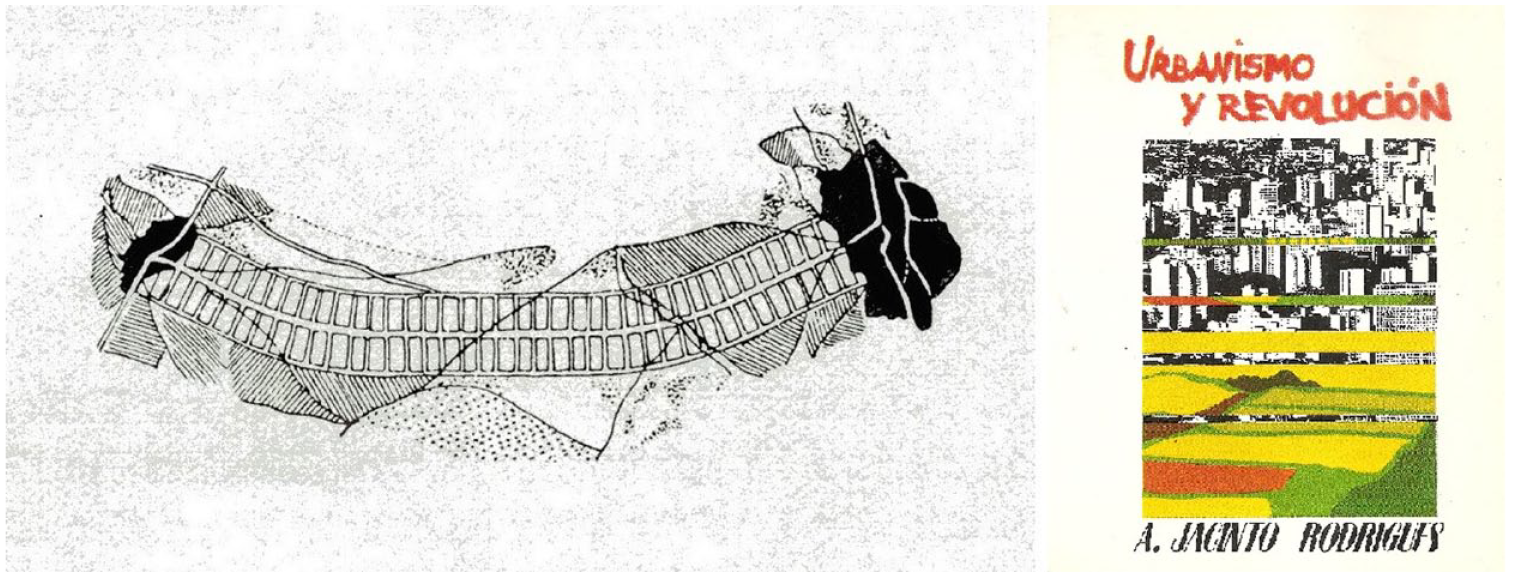
Linear city that joins two pre-existing cities by Arturo Soria, introduced in 1913; and interpretation of disurbanism. El Lissitzky, Russland. Die Rekonstruktion der Architektur in der Sowjetunion, Wien: Anton Schroll & Co. 1930. 35; Rodríguez, A. Jacinto, Urbanismo y revolución, Madrid: H. Blume Ediciones, 1979.
Meanwhile, the Stalinist administration was immersed in its first Five-Year Plan for Economic Development (1928-1932) under the scientific management of the economy and Fordism. The Five-Year Plan implied focusing on population mapping according to scientific principles. The city was part of the homogeneous territorial discourse on which it regularized the entire industrial and agricultural production cycle. The Giprogor, the Russian Institute of Urban Planning and Investment Development created in 1929, was the institute for constructing new cities and reforming existing ones. It was responsible for surveying the topographic plans for the cities, the outskirts, and the new sites. It was also in charge of designing projects and buildings for social, cultural, and administrative institutions.
Spain and the USSR in the European Networks
The year 1932 was a year of hopeful anticipation in Spain as the Second Republic, proclaimed in April 1931 after the defeat of the monarchy of Alfonso XIII, focused its efforts on overcoming Spain’s endemic backwardness. Looking abroad, there was some curiosity to learn what had been achieved since the Bolshevik revolution in terms of architecture and planning. All Western countries, whether or not supporters of Soviet politics, kept a close eye on the initiatives taking place in the Soviet Union. 6
The Spanish journals took note of the Soviet advances: they translated into Spanish and discussed the new Soviet cities published in foreign journals, such as the article on housing in Russia in Arquitectura, 7 the Spanish professional journal, and A.C. Documentos de Actividad Contemporánea published by the Grupo de Artistas y Técnicos Españoles para el Progreso de la Arquitectura Contemporánea (GATEPAC), the Spanish branch of the Congrès International d’Architecture Moderne (CIAM), contained a description of the Green City in Moscow in the first issue in 1931. Conferences such as “Urbanismo Soviético” in a cultural center in Madrid were announced in the newspapers in 1932.
It was Le Corbusier who provided the first direct links to Moscow for the CIAM transnational network when he suggested in 1930 that CIAM needed a doctrine of urbanism so that it could direct the vast urbanization process then beginning in the USSR under the first Five-Year Plan. 8 As a result, in June 1931, the preparatory meeting of the Comité International pour la Résolution des Problémes de l’Architecture Contemporaine (CIRPAC) in Berlin set directives for CIAM 4, planned to be held in Moscow on the theme of The Functional City. In March 1932, the CIRPAC held a second preparatory meeting in Barcelona, with the enthusiastic collaboration of young Spanish architects such as José Luis Sert and Josep Torres Clavé from Barcelona, Fernando García Mercadal from Madrid, and José Manuel Aizpúrua from the Basque Country, along with Le Corbusier, Walter Gropius, Marcel Breuer, and van Eesteren, among others. The first result of the meeting was the commission by the Catalan government of an urban extension plan for Barcelona, the Macià Plan, based on the principles of the functional city that were going to develop at the frustrated CIAM for 1933 in Moscow.
From outside to inside, the USSR invited Ernst May as a lecturer in 1929 and later as a planner of scientific functionalism. In September 1930, May was named the chief town planner and housing expert in Leningrad for developing two hundred new communities applying British Garden City principles, which he had apprehended working with Barry Parker and Raymond Unwin at Hampstead Garden Suburb in 1910. 9 The mission was a dramatic litmus test for exporting social housing experiments in Western Europe 10 with the Brigade—composed of twenty-one architects, May’s best collaborators in Frankfurt—and Hannes Meyer’s Roten Bauhausbrigade as participants. Even the American capitalist Henry Ford would collaborate in building this new society with the Nizhny-Novgorod automobile plant, 11 along with the designer of prefabricated industries, the American industrial architect from Detroit, Albert Kahn.
From inside to outside, the Soviet Union was deploying some very effective diffusion abroad through its active participation in international exhibitions and the activity of VOKS (The Soviet Union Society for Cultural Relations with Foreign Countries), which was a strategy intended to create international networks to spread the Soviet model. It was founded in 1925 to cooperate in the establishment and development of cultural and scientific relations between institutions, public organizations, and workers in the areas of culture and science in the USSR and other countries, and the newsletter—Les Nouvelles Soviétiques. Bulletin Périodique de la Société pour les Relations Culturelles between l’URSS et l’Étranger—was published in French, English, and German. VOKS was one of the references followed by anyone interested in these events, including Spain, where the French version of the newsletter circulated.
RIA in the USSR (August 26, 1932-September 14, 1932)
In this context, André Bloc, the editor of the French magazine L’Architecture d’Aujourd’hui, and his young assistant the Hungarian-born architect Pierre Vago prepared a meeting of architects in the USSR. The trip to the Soviet Union had two goals: to stage the I RIA, whose aim was to learn about and disseminate the work of foreign colleagues; and to establish links between European nations. According to Cohen, 12 they achieved a more moderate program that was generally less radical, in both its perspectives on the architecture and its political outlook, than the views of most CIAM members. The background of the RIA—and later on the IUA—was that people occupied important positions in the architects’ associations, the academy, or the departments of planning. As an example, the Spanish participant César Cort was the Chair of Urbanología in the School of Architecture in Madrid, and later, when the RIA became IUA, the Spanish representative was the Professional Association of Architects.
L’Architecture d’Aujourd’hui 13 gave an account of the trip, and a report was published in La Construction Moderne, 14 which sent two journalists to the meeting (Figure 2). The delegation consisted of twenty-four professionals, mainly architects, of whom the most notable one was the architect and planner Donat-Alfred Agache. Three representatives from southern Europe (Spanish, Portuguese, and Italian) were also on the trip.
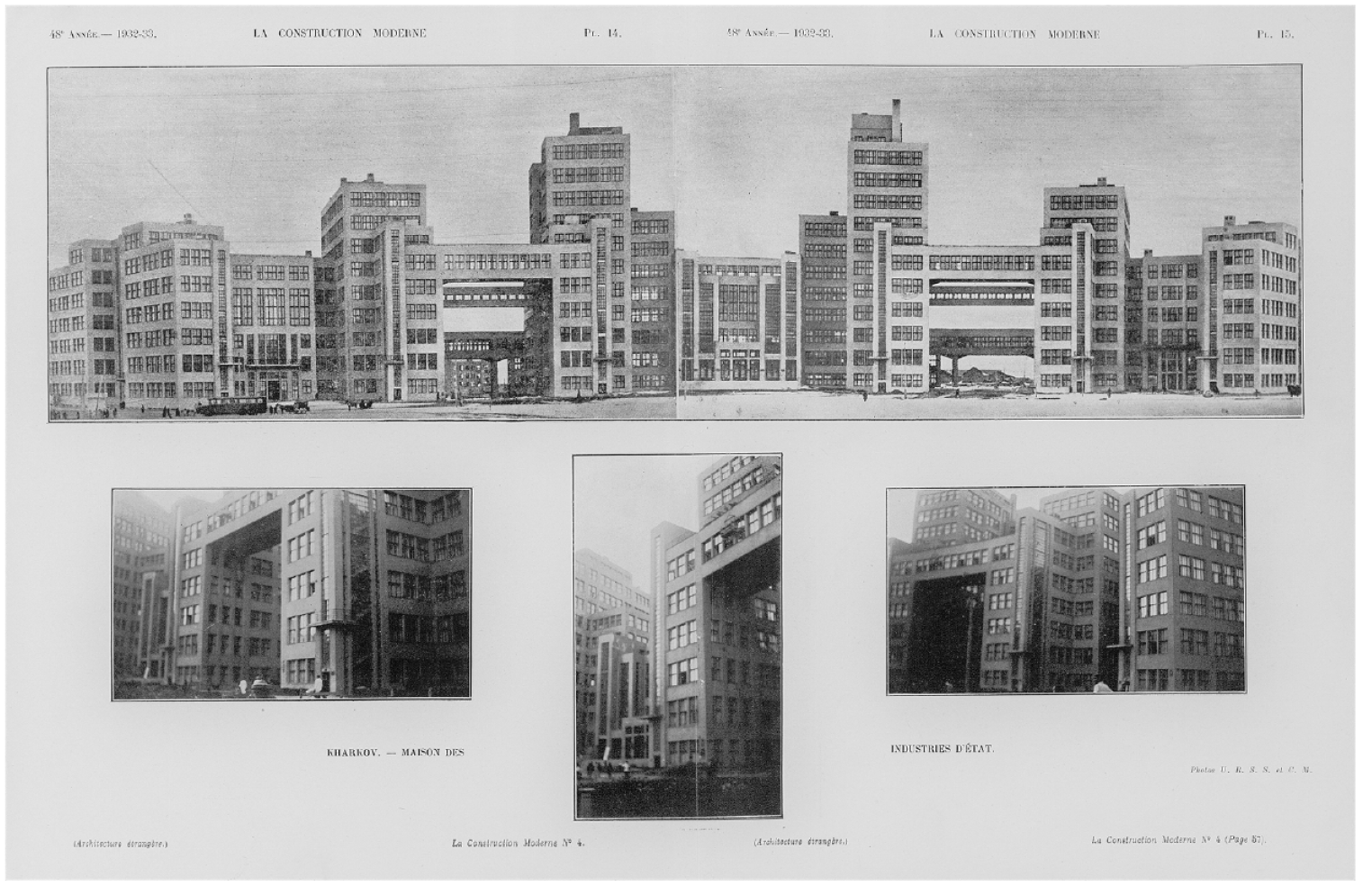
The state industry houses, in Dzerzhinskaya Square, Kharkiv, by Serguei Serafimov, Samuel Kravetz, and Mark Felger, 1925-1928. I Réunions Internationales d’Architectes, 1932. “L’Architecture Soviétique à l’occasion d’un voyage d Architectes Français en Russie (September 1932),” La Construction Moderne, 48, no. 4 (October, 1932). Pl. 14.
The Spanish architect and planner César Cort hoped to learn how housing linked to regional planning resources and other broad economic activities in Soviet Russia; he again met Agache, with whom he had coincided at the inter-Allied Congresses of Paris (1919) and London (1920) and in the Congrès International d’Urbanisme et d’Hygiène Municipale in Strasburg (1923). Cort also contacted the Portuguese architect Pardal Monteiro, with whom he collaborated—along with the Portuguese architect Cottinelli Telmo—in organizing the congresses of the Federación de Urbanismo y de la Vivienda (FUV) in Spain and Portugal (1940-1954). Monteiro, in turn, received the commission of Pacheco Duarte, Minister of Public Works under the Portuguese dictator Salazar, to invite Agache to elaborate an extension plan for Lisbon, evidence of the Portuguese admiration for his work in Rio de Janeiro (1927-1930). 15 The Italian art critic and journalist Pietro Maria Bardi, whom Le Corbusier had introduced to the CIAM, was commissioned by the Milanese newspapers L’Ambrosiano and Il Lavoro Fascista and narrated his chronicle in a dialectical discourse in the pamphlet Un fascista al paese dei soviets (Figure 3).
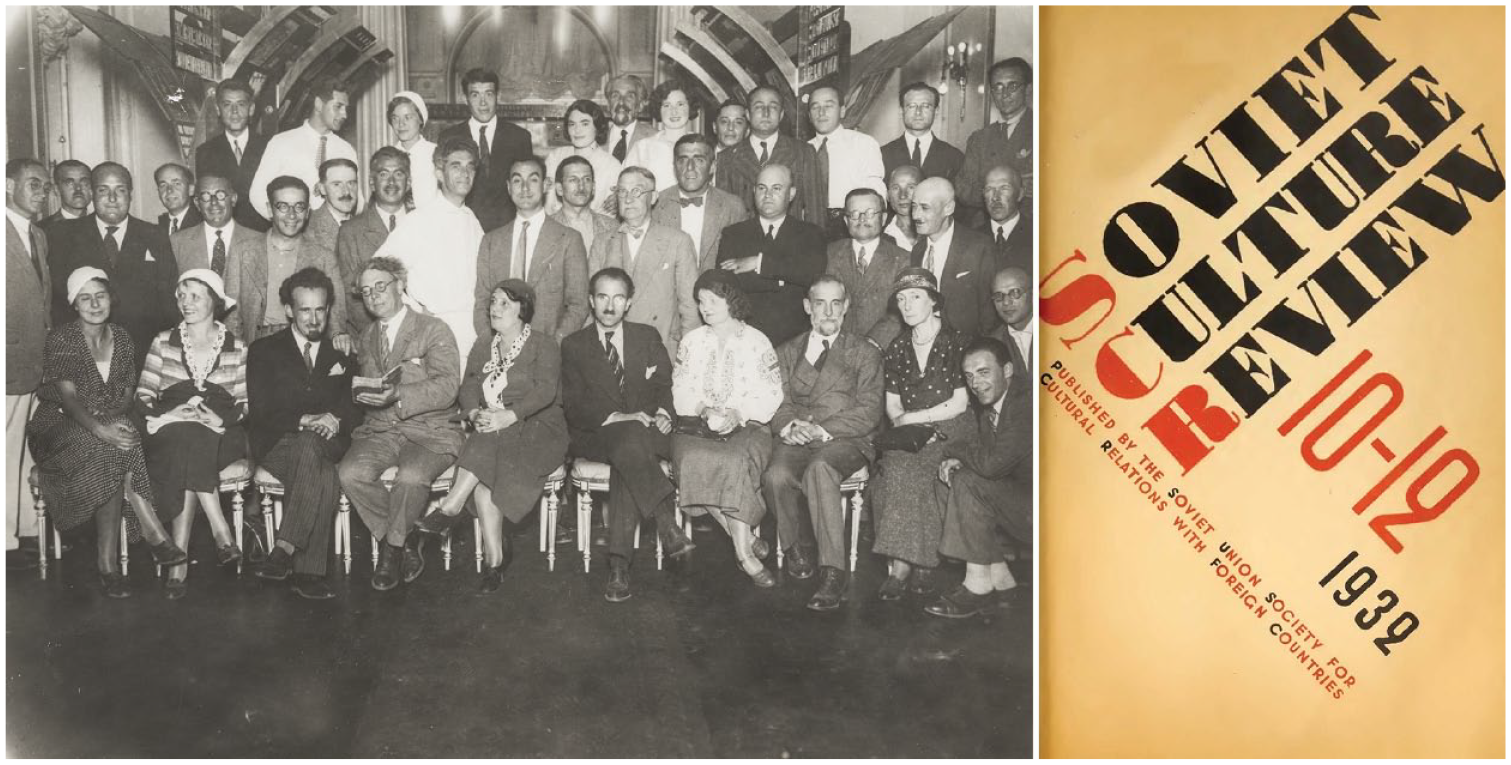
“After the Society for Foreign Cultural Relations (VOKS) meeting.” I Réunions Internationales d’Architectes, 1932; Soviet Culture Review. Collection Centre Canadien d’Architecture/Canadian Centre for Architecture, Montréal.
The official Soviet travel agency Intourist prepared, supervised, and controlled the route. The Soviet itinerary included visits to Moscow, Leningrad, Kyiv, Kharkiv, and Rostov-on-Don, where a spectacular engineering work, the Dnieper Dam and the Lenin Dnieper Hydroelectric Power Station 16 —and its settlement Zaporizhzhia—had recently been inaugurated. Pietro Bardi echoed the Leninist slogan “Communism is Soviet power plus the electrification of the whole country.” 17 Warsaw, where Helena and Szymon Syrkus collaborated with L’Architecture d’Aujourd’hui, was also on the route.
VOKS hosted the RIA meetings and recorded the minutes of the event. 18 The VOKS headquarters in Moscow held the first meeting, the second one took place in Kharkiv, and the final was in Warsaw. The sessions of the Congress developed around three thematic blocks: the first dedicated to the study of formalism and rationalism in contemporary architecture; the second dedicated to public buildings and mass housing; and the third to the analysis of urban problems such as the adequacy of old cities and their reconstruction.
In Moscow, communal housing models such as the Narkomfin, the communal apartment building by Moisei Ginzburg and Ignaty Milinisand, and the VTsIK residential complex for civil servants by Boris Iofan were examples of the interest in how to address mass housing. Domestic and children’s facilities showcased the new role reserved for Soviet women outside the home in a moment of questioning the family home structure. The questioning of the traditional role of women in society and the consequence on housing policies and, therefore, on urban planning were one point highlighted by the chronicles, whether positive or negative.
Regarding planning, there were two especially relevant sessions because of the participation of Professor Vladimir N. Semenov in Moscow and the engineer Professor Oleksander L. Einhorn in Karkhiv. Moscow’s chief urban planner from 1930 to 1934, Professor Semenov who had worked in London under the influence of the Garden City movement (1908-1912) and who had developed his career in pre-revolutionary Russia, 19 presided over an explanatory session examining various Moscow adaptation and extension projects and the plan for the reconstruction of Moscow—he used the word “unacceptable” for the radical Le Corbusier project. Semenov directed the formulation of a general plan for the city approved in 1935. Cort 20 criticized the intervention in Moscow’s urban heritage since problems were being resolved at such a speed that initiatives such as the construction of a skyscraper for Kremlin officials were being promoted with no concern for the value of the environment, and destroying historical buildings and neighborhoods. These actions were evidence of the Soviet lack of respect for local historical heritage, 21 appearing as a contradiction with the attitude of respect to the heritage exposed by Semenov.
Soviet city planning was of great interest for the attendees, as in the case of the plan for the reconstruction of the city of Kharkiv, the third Soviet city behind Moscow and St. Petersburg, or Leningrad, when it became the capital of Ukraine from 1928 to 1934. The master plan was presented by Professor Einhorn appointed chief of the Dipromist—Ukrainian State Science Research Institute of City Planning—and the team of planners in charge of the Kharkiv Plan, along with the architect Oleksander M. Kasiani. 22 The plan for the city was a progressive radial development over fifteen years, according to the Five-Year Plan periods: from 1932 to 1937, and the 1947 plan. The distribution of industrial activities in this city was envisaged based on the areas served by the various railway lines and a link belt. There was a project for radial highways with an outer ring road, which failed to obtain the support of the authorities due to the excessive economic cost and bureaucratic obstacles. Although it appeared evident that any progress would be achieved thanks to the private vehicle, the municipal officials opted for public transport (Figure 4).
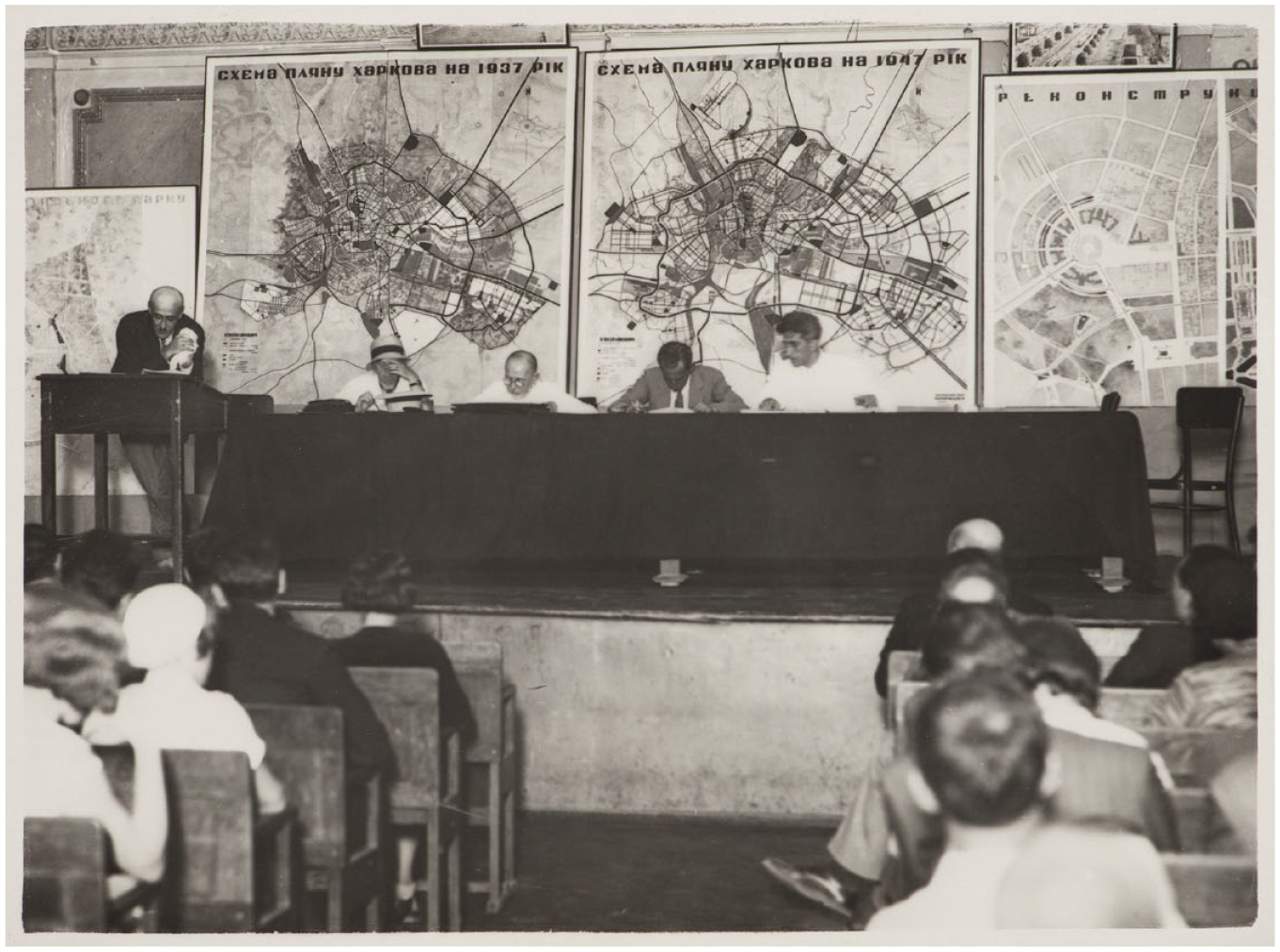
Conference of Professor Einhorn about the urban development of Kharkiv, I Réunions Internationales d’Architectes, 1932. Collection Centre Canadien d’Architecture/Canadian Centre for Architecture, Montréal.
The interior reform project was focused on the central square with the iconic buildings recently raised in Dzerzhinsky Square. So, the city center was an architectural ensemble. In the film The General Line; The Old and the New (1929) by Sergei Eisenstein, the scenes depicting the dance of the tractors (1:57:00), highlighted by Crawford, 23 showcased the entry of industry into the territory and the State Industry House in Dzerzhinsky Square, the new architecture represented the new Soviet cities (1:26:25). These data are significant considering the diffusion role reserved for cinema: “All of them [Youth] believe in Lenin’s phrase: of all the arts, the most important for Russia is cinema.” 24
The attendees visited the new settlement Novyi Kharkiv (1930-1932), situated in the southeast circulation separated 7 km from the city center. Organized in a linear zoning along the highway, in the northern part of the area there was the productive sector, Kharkiv Tractor Plant—the second one after Magnitogorsk—and in the south, separated by a green belt 500 meters wide, there was the social city for 100,000 to 120,000 inhabitants for the workers of the tractor plant. The initial project covered 615 hectares but was not completely developed. The rayon was the background of the organization for these new settlements. Although there are variations depending on the different sources, the numbers of the rayon were 25,000 to 30,000 inhabitants, a maximum density of 460 inhabitants per hectare, and the percentages of land uses were 25 percent of buildings, 50 percent of them were public, and 75 percent dedicated to green and open space and facilities. The rayon was a sum of kvartaly—in the Moscow Plan of 1935, the kvartal was 12 hectares accommodating 6,000 people.
The layout of Novyi Kharkiv was a rigid rectangular grid of streets organized with plots 8 to 10 hectares, zhilkombinat, 25 kvartal, or superblock, which was the neighborhood unit. Western architects of the Roten Bauhausbrigade, such as the Dutch architect Lotte Stam-Beese, developed some of the plots. The socio-residential urban unit of 1,500 to 3,000 inhabitants was the house-commune and factory-kitchen. About this point, Bardi opted for his social anthropology: the house was essential for the ethics of the population, so the policy of reducing housing to a dormitory without a kitchen was supposed to lose the domestic dimension. This was one of the most controversial of Western issues regarding the Soviet social principles shown in these housing patterns: the lack of a role for the family—represented by the Soviet politician Alexandra Kollontai’s contribution 26 —and the lack of sexual morality.
César Cort gave several conferences on his way back to Spain after his trip to the Soviet Union, which were picked up by numerous media outlets from the daily press as El Debate, La Época, El Sol, ABC, and Acción Española, and specialized publications such as La Construcción Moderna, APAA, 27 and the Boletín de la Sociedad Central de Arquitectos. Through these conferences, he described a society that had become impoverished after a tremendous effort. It was a moment of dismay in Soviet life, with overcrowding in houses and cities and a constant increase in the urban population at the expense of the countryside, 28 leading to streets populated with people in rags and where senior civil servants and army officers were the privileged social classes. This opinion was also the impression expressed by Agache in his conference at the Collège Libre des Sciences Social in January 1934, when he spoke of the image of the absolute Soviet control over millions of men and women and of the resigned vision of Eastern fatalism at the service of utter poverty. 29 For Bardi, 30 the Soviet experience had to be analyzed, understood, and socially denied. Soviet ideology was obsolete, reflected by the persistence of hierarchical and individual order and the reinforcement of the army. So, “Roma o Mosca? Roma” was the title of the first chapter of his pamphlet.
As a result, Cort highlighted evident contradictions in the Soviet planning approach shown to the congressional attendance:
The opposition between speculative city versus Soviet city was not as fair as Stalinism proposed. Cort pointed out the possibility that—as there was no private property in the USSR—the lack of speculative interests did not necessarily translate into the success of the urban plans, perhaps because the designer was not able to use that freedom in the giant bureaucratic Soviet State.
Soviet urban planning focused on the null possibility of participation. Although the Giprogor had different branches distributed throughout the vast territory, it was headquartered in Moscow, thus centralizing the process and controlling excessive bureaucracy. Soviet citizens had no right to be informed and to object to the plans. Cort compared it to the Spanish situation, where citizens intervened, at least in theory, under the Estatuto Municipal (1924). The Spanish Act was devoted to municipal responsibilities and very limited in planning. This possibility of participation provided supervision at the often misguided discretion of the political authorities.
The Soviet territorial planning based on unifying the defense of their new principles was to turn to individual Western architects to propose their new cities. The examples of the collaboration by Le Corbusier and Meyer aligned with the dependence on the technical support by capitalists such as Ford.
The RIA meetings continued supported by L’Architecture d’Aujourd’hui. They took place in Milan (1933), in the heart of Mussolini’s Italy, in parallel with the Milan Triennial Exhibition of Decorative Arts and Modern Architecture (La Triennale di Milano) and the Italian Architects’ Union meeting, dedicated to the issue of Schools of Architecture 31 ; in Central Europe, 32 with meetings in Prague and other cities in Czechoslovakia, and in Budapest, with the closure in Vienna (1935), and the meeting in Paris coincided with the Paris International Exhibition (1937). 33
The Inflection Points in the USSR and Spain
As occurs in dictatorships, Soviet principles did not remain immutable over time; there were internal processes of change. 34 Cooke described this variation in the architectural approach 35 when the denunciation of Modernism and the inauguration of Socialist Realism were accompanied by the creation of a Soviet Academy of Architecture in 1933 under the party censors. The Stalinist government had opted for an archaic monumental style, as was demonstrated in the contest for the Palace of the Soviets, 36 and the controversy was shown in journals. 37 Even in December 1932, Gideon and van Eesteren attended a meeting in Moscow to prepare the congress with Moisei Ginzburg and Nikolai Kolli. When van Eesteren came back to the Moscow IUA Congress, he met again Kolli, and members of VOKS, among others. But the IV CIAM finally took place on the steamer Patris II in the Mediterranean Sea in 1933. May had left the USSR in 1934—the housing activist Catherine Bauer believed that the rigid geometrical German Zeilenbau scheme and the inability to cope with a backward building industry contributed to his failure 38 —and in 1937, the Western architects network in the USSR ended, 39 although there were some exceptions as with Kurt Liebknecht, one of the May brigade, who stayed on as a member of the staff of the Moscow Academy of Architecture until 1948.
However, interest in Soviet planning continued in Spain until the outbreak of the Civil War (1936-1939). In Bilbao, the architect Estanislao Segurola published a pamphlet in 1934 where he explained in detail the pattern of the planned Soviet city based on housing and public services, community housing where the family was renounced in pursuit of the individual woman or man, and the community of workers. 40 Two new entities of social measure emerged to replace the nuclear family: first, the worker, and second, the aggregate collective comprising numerous individuals working toward the same goal—the “free and equal association of producers” envisioned by Friedrich Engels and defended by Kollontai 41 —which was noted by Segurola. He distinguished three models of buildings: family housing, housing with services, and communal housing. The regulated and hierarchical scheme of the Soviet city began with a nucleus of 2,500 to 3,000 inhabitants whose aggregation determined different levels of service layout; a communal building with a refectory and a kindergarten; two units with the medical office and grocery stores; four nuclei equaled a quartal (kvartaly), 10,000 to 12,000 population, with a school, laundry room, and post office; two quartals comprised the rayón (rayon), 20,000 to 24,000 population with a club and public bathrooms; two rayóns equipped with a fire service and a sanatorium; and four rayóns (80,000-96,000 population) formed the city, with sports, culture, and a public administration center (Figure 5).
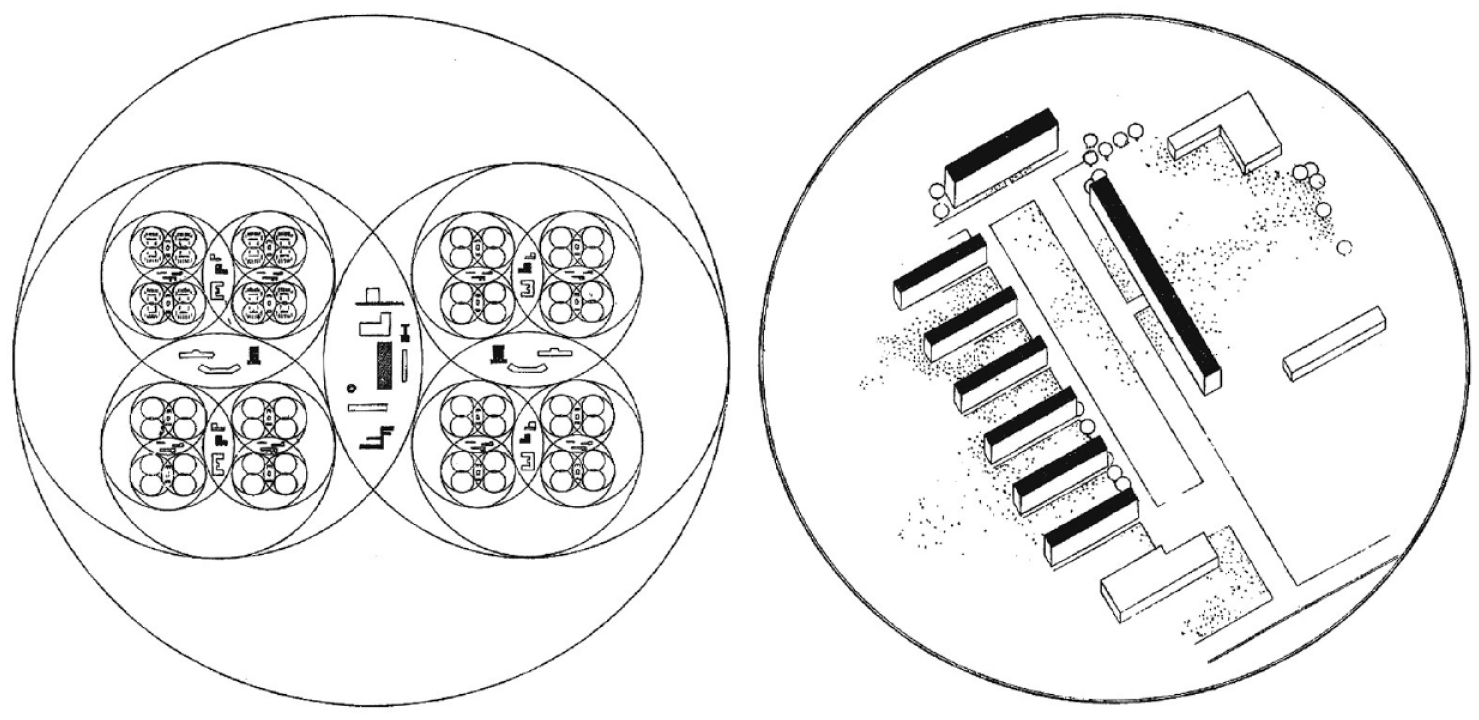
Russian urban scheme. Estanislao Segurola, Urbanismo en general y urbanismo aplicado a Bilbao, Bilbao: Col. Aparejadores de Bizkaia, 2005 (1ª Ed. 1934), p. 13.
In 1935, an article in A.C. Documentos de Actividad Contemporánea 42 dedicated to architecture and planning in the USSR criticized the archaic nature of Soviet architecture, while another admiringly described the Great Moscow Plan. The last references before the Spanish Civil War were “The Great Moscow” bureaucratic and industrial Soviet capital in Arquitectura 43 and “The Soviet City. Miliutin ideas” in the municipal journal Ayuntamientos. 44
Everything changed in Spain after General Franco’s victory over the Soviet influence in the Spanish Civil War (1936-1939). Afterward, Europe suffered its disaster. World War II began just after the Spanish Civil War ended. Europe suspended international planning meetings in 1940 and returned to normal in 1946 under the leadership of the Allies’ interests.
The Spanish Architects and the IUA in the Cold War
What became of the networks created by Spanish architects and planners after the Civil War and the establishment of the Franco regime after 1939? Although the Spanish attendance at international congresses on architecture practically ceased—or was effectively reduced to the name of Josep Lluís Sert, already installed in the United States and who would, in turn, introduce the architect José Antonio Coderch, also from Barcelona, to the international scene—, Spanish practitioners resumed their presence on the international scene by taking part in the congresses of the International Federation for Housing and Town Planning (IFHTP). This situation was the prelude to the participation of Cort—who aimed to spearhead Spain’s reconstruction—at the Stockholm Congress (1939), the last before World War II, where he went to obtain information for this undertaking. Pedro Muguruza, Franco’s favorite architect—the chosen one instead of Cort and responsible for planning and designing Franco’s mausoleum in the Valle de los Caídos (Valley of the Fallen)—attended the Hastings Congress (October 7, 1946-October 12, 1946), the first after World War II. A Spanish delegation, along with French and Portuguese, attended as observers to the Pan-American Congresses of Architects, again active after World War II with the sixth Congress in Lima (1947). The IUA congresses were perhaps where Spain made the best level on the international scene despite the Spanish political context.
The first international post-World War II meeting took place in the Royal Institute of British Architects (RIBA), London, in September 1946, days before IFHTP Congress, under the presidency of Patrick Abercrombie, as a kind of foundation of the IUA under the observers from CIAM and IFHTP. 45 In June 1948, the RIA, along with the Comité Permanent International des Architectes, was transformed into the IUA in the first Congress in Lausanne—Switzerland was a neutral country 46 —with Pierre Vago as general secretary and Abercrombie as the president. The main issue of the IUA was to unite architects from all over the world, regardless of nationality, race, religion, or architectural doctrine, and federate their national associations. It, therefore, assumed the base of the RIA.
The foundational congress of 1948 was attended by Spanish exiles, as narrated by the architect Bernardo Giner de los Ríos, minister in the defeated Second Republic, in his book Cincuenta años de arquitectura española, 47 published in Mexico in 1952. Vago contacted Giner de los Ríos at the preparatory meeting in London in 1947 to invite the Spanish exiles: forty-five architects were living in Latin America, such as Giner in Mexico, and two in Eastern Europe: Luis Lacasa in the USSR and Manuel Sánchez Arcas in Poland. 48 Giner de los Ríos, because of his political responsibility, and the Communists Lacasa and Sánchez Arcas were the three most severely purged, and banned from working ever again as architects in Spain. Spanish exiles represented Spain in some events since the country was still not recognized by the United Nations; this would occur in 1955, although international recognition had already begun after Spain’s acceptance by some international agencies in 1951. Spain was then a dictatorship that attempted to overcome the international isolation of the Franco regime because of the dictatorial government.
From that moment on, Franco’s Spain found in the congresses an opportunity to showcase its architectural achievements beyond its borders. The IFHTP Lisbon Congress (1952)—Portugal was also under the dictatorship of Salazar, close to the Spanish dictatorship 49 —represented the restoration of normality in terms of Spanish international presence. The IUA Congress in Lisbon (1953), entitled Architecture at the Crossroads, was devoted to an analysis of the many varied trends in architecture and was attended by some Spanish architects such as Cort, representing the FUV, and other representatives from the Direction of Public Administration, Madrid Council, and the Madrid Professional Association of Architects. Cort highlighted the appeal of the Soviet delegation “[. . .] with their astute interventions and answers that were a model of Soviet diplomacy.” 50 Some Catalan architects were attached to the French IUA branch that applied for the incorporation of Spain, which was examined at the fourth meeting in Athens. Thus, Spain’s admission was ratified in the IV Congress in The Hague in 1955, together with that of China, Korea, Hungary, Japan, and Romania, and the assembly unanimously accepted the invitation of the Soviet Section to host the 1957 assembly and congress in Moscow. The Spanish architects were stunned with the decision because Franco’s regime was anti-Communist, but limited their protest to a comment in an article in the official journal. 51 The IUA postponed the congress to 1958 due to the Hungarian situation caused by the Soviet invasion.
The IUA proposed to the young Spanish architect Antonio Perpiñá to participate in the Moscow preparatory meeting in Warsaw. The reason was Azca, his winning project for a commercial and business center in the extension of Paseo de la Castellana, the south–north Madrid axis, in 1954.
Antonio Perpiñá traveled as the representative of the Urban Commission to the preparatory meeting in Warsaw in June under the leadership of Helena Syrkus, IUA delegate in Poland. He met Sánchez Arcas, exiled in Poland and a spy for the Communist Party, who was his cicerone. Polish planning system was similar to the Soviet model, as it happened in the Eastern Bloc. Perpiñá took note of two singular facts. First, the Institute of Town Planning was active in diffusion policy with a “popular journal devoted to planning and architecture with 95,000 units.” 52 These types of comments about the effort to disseminate through architectural journals of the Eastern Bloc would be repeated in the Moscow Congress. Second, he highlighted the equalizing conditions between sexes in the Eastern Bloc: 40 percent of those studying architecture were women. This incorporation of women into the labor force was in the whole process: the giant housing program was supported by poorly skilled labor unable to do a good job, despite a notable presence of women doing heavy-duty work like shoveling, sand, and gravel, wheeling concrete, laying bricks, and driving trucks. Later on, the U.S. chronicles of the Moscow Congress highlighted that “about fifty percent of the 9,000 Soviet architects were women.” 53
Even though the quality of the architecture was disappointing, the treatment of industries far from the city center and the green infrastructure linked to the cultural and sportive facilities presented some interest. Helena Syrkus explained to the audience how strategies of de-Stalinization would improve the situation. Stalin’s death in March 1953 was an opportunity for change in the USSR and Eastern countries.
IUA Congress in Moscow (July 20, 1958-July 28, 1958): Nikita Khrushchev and the Mass Housing Production
Nikita Khrushchev was a newcomer to power known for supporting the mass production of housing through standardization and industrial methods to resolve the Soviet Union’s endemic urban housing shortage. To overcome this challenge, the construction system needed to become ever cheaper and quicker and this was the focus of interest in this period of the Cold War. 54 In 1950, it was the prefabrication system that Khrushchev defended at the National Conference of Builders, Architects, Workers in the Construction Materials and Manufacture of Construction and Roads Machinery Industries, and employees of Design and Research and Development Organizations on December 7, 1954. Khrushchev, the first secretary of the CPSU Central Committee, signed the decree “On Elimination of Excesses in Design and Construction,” on November 4, 1955, which radically changed the development of Soviet construction. This was the first attempt to put into practice the ideas of the decree that proclaimed “simplicity, the rigour of forms, and cost-effectiveness of solutions.” 55
Khrushchev traveled to Germany and Scandinavia—he was impressed by what he saw in Tapiola, a modern residential suburb of Helsinki—to study foreign science and techniques in the field of construction in 1957; anonymous prefabricated architecture was the hallmark of mass production. 56 So the Soviet government company for foreign trade Technopromimport and the French Society of Architects, via Raymond Camus, an expert in concrete panels patented his technology in 1949 and signed an agreement. 57 Eight years later, the USSR purchased from the French company its first production line for manufacturing panels and a license from Camus’ company for the production of mass concrete items. 58 The result was the K-7 series of Soviet five-story buildings, the Khrushchovkas.
The organizers of the Moscow IUA Congress (1958) introduced to the attendance the Ninth Quarter (kvartal ninth) in Novye Cheremushki by Nathan Osterman, Sergei Liashchenko, and Gueorgui Pavlov. Novye Cheremushki, a rayon in construction for 60,000 inhabitants in south-west Moscow, foreshadowed by the 1930s Stalinist proposals as a kind of universal urban plan. The shift from the Stalinist kvartal was the open-plan Khrushchev mikrorayon, 12 hectares, planned for 5,000 to 10,000 residents with residential blocks, greenery, and facilities (schools, kindergartens, shops, and so on). This modernist urban district shown to the audience was similar to the neighborhood unit but based on public transport and not the systemic use of the automobile.
The kvartal ninth in Novye Cheremushki was designed as an experimental district intended to test different methods and find the best solution. As a result of thirteen experimental four-story houses, four-section residential blocks—three nine-story towers were added later—were arranged according to a carefully thought-out plan by landscaping specialists and landscape architects. It was the first experimental prefabricated housing settlement built in 1956 to 1958, which quickly set the canon for hundreds of developments throughout the Soviet Union, although constructed of low-cost panels, bricks, or blockwork, and with very small units, derisively referred to as Khrushchovkas (Figure 6).
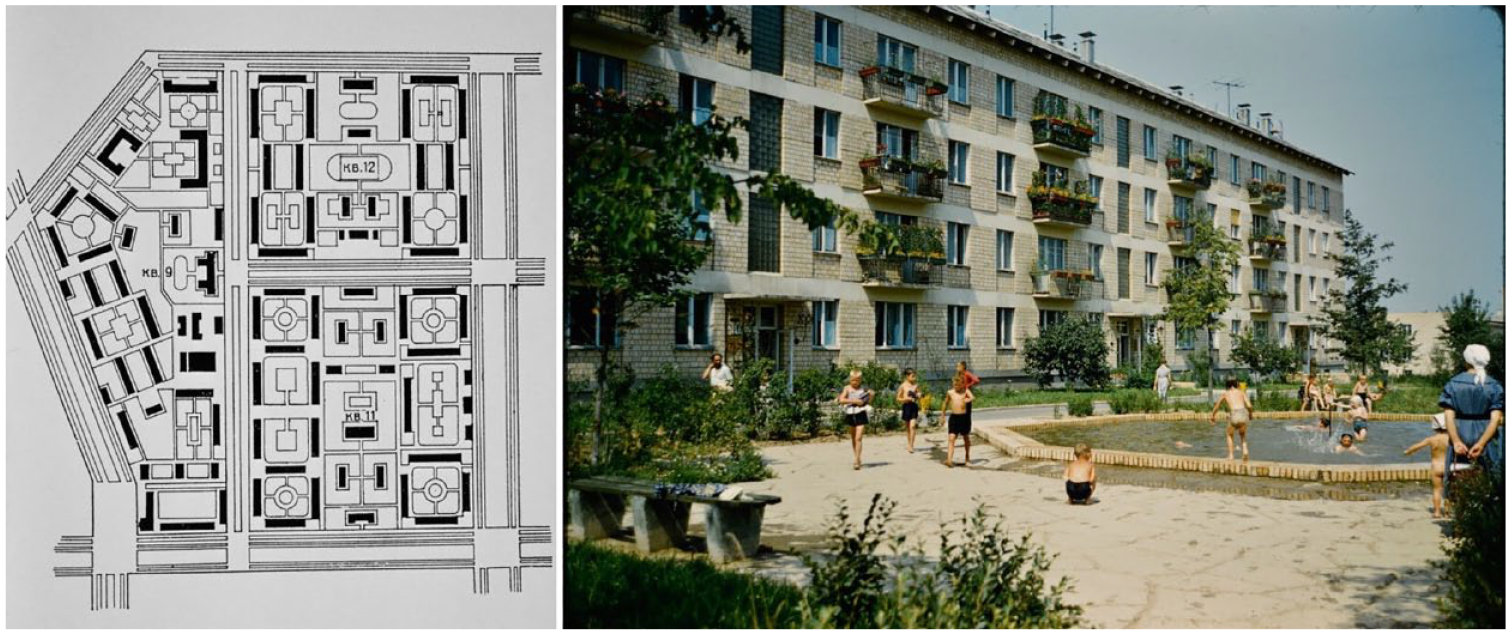
Novye Cheremushki, kvartal ninth (KB 9). Moskva, Planirovka i Zastroika Goroda 1945-1957, and John Reps Papers, #15-2-1101. Division of Rare and Manuscript Collections, Cornell University Library.
If the IUA Congresses of Lisbon, “Architecture at the Crossroads,” and The Hague, entitled “Housing 1945-1955: program, project, and production,” demonstrated that the role of the architect in the housing shortage was related to planning, Moscow producing the fragments of evidence.
In the Moscow Congress, the three main issues presented were: planning, functional, and aesthetic aspects; legislative, social, and economic issues in the implementation of plans; economic, social, and legislative principles of town building in West European countries; and technical problems and the industrialization of building. The result of the congress was enunciated in a series of very general principles that did not generate any new path, as the need for a hierarchical structure for planning, density as the main parameter for housing is based on a neighborhood unit, zoning by function linked to circulation system, aesthetic value as identity helped by industrially developed methods of construction, and the optimization of bureaucratic processes and legislative support. For Glendinning, 59 this meeting institutionalized the USSR’s new openness toward international modernist architecture and planning.
The fact that the USSR was ready to invite architects and city planners from all over the world indicated that they felt that their city planning and urban renewal program could stand the test of inspection by foreign visitors. At the same time, the USSR participated in the World’s Fair held on the Heysel Plateau in Brussels, Belgium, from April 17, 1958 to October 19, 1958. 60
This was the first major international congress on urban planning and architecture in the USSR, so it offered architects around the world an exceptional opportunity to exchange ideas and become acquainted and was a good opportunity to show the urban Soviet mass housing initiative. Nikita Khrushchev even met the organizers of the IUA Congress for an hour and half. 61 A total of 1,500 delegates from fifty-one countries—the American delegation was small since architects in the United States do not participate in the IUA—attended sessions on issues of legislative, social, and economic aspects, and the technical and industrialization problems of building production, under the heading “Construction and reconstruction of towns 1945-1957,” under the presidency of the Soviet architect Pavel Abrosimov (Figure 7).
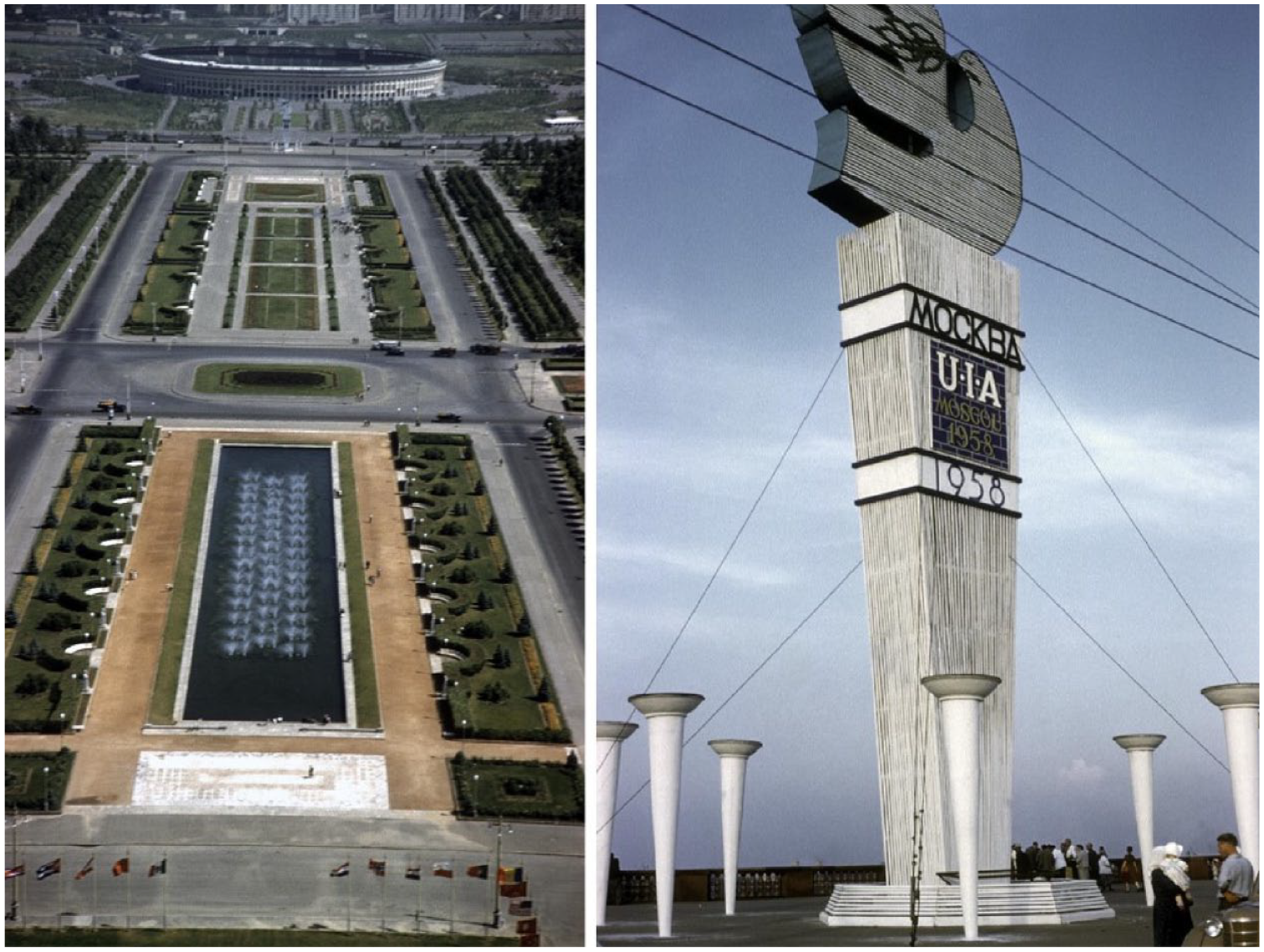
“Union Internationale des Architectes (1958)” http://quod.lib.umich.edu/u/ummu/x-09-02179/09_02179. The University of Michigan Library Digital Collections. Louis Redstone (gift) Accessed: March 02, 2020.
The Soviets 62 placed the congress in a neoclassical building, one of the famous seven skyscrapers built in Moscow. This skyscraper’s architecture was criticized by Soviet architects themselves. This debate was introduced by the exiled architect Lacasa on the Spanish delegation:
On the subject of architecture, I told them: “Soviet architecture today looks just as ugly to me as it does to you and for the same reasons as you. Just because I live here and agree with the ideology, it does not mean I think everything here is excellent.” 63
The Spanish Meeting Point in the Country of the Soviets
One of the events that took place along with the congress was the panel exhibit. 64 Twenty-eight countries participated in sending standardized panels. 65 The USSR had gathered two half-size copies of the exhibit which were traveling throughout the country, and a selection of the panels conformed to an IUA permanent travel exhibit.
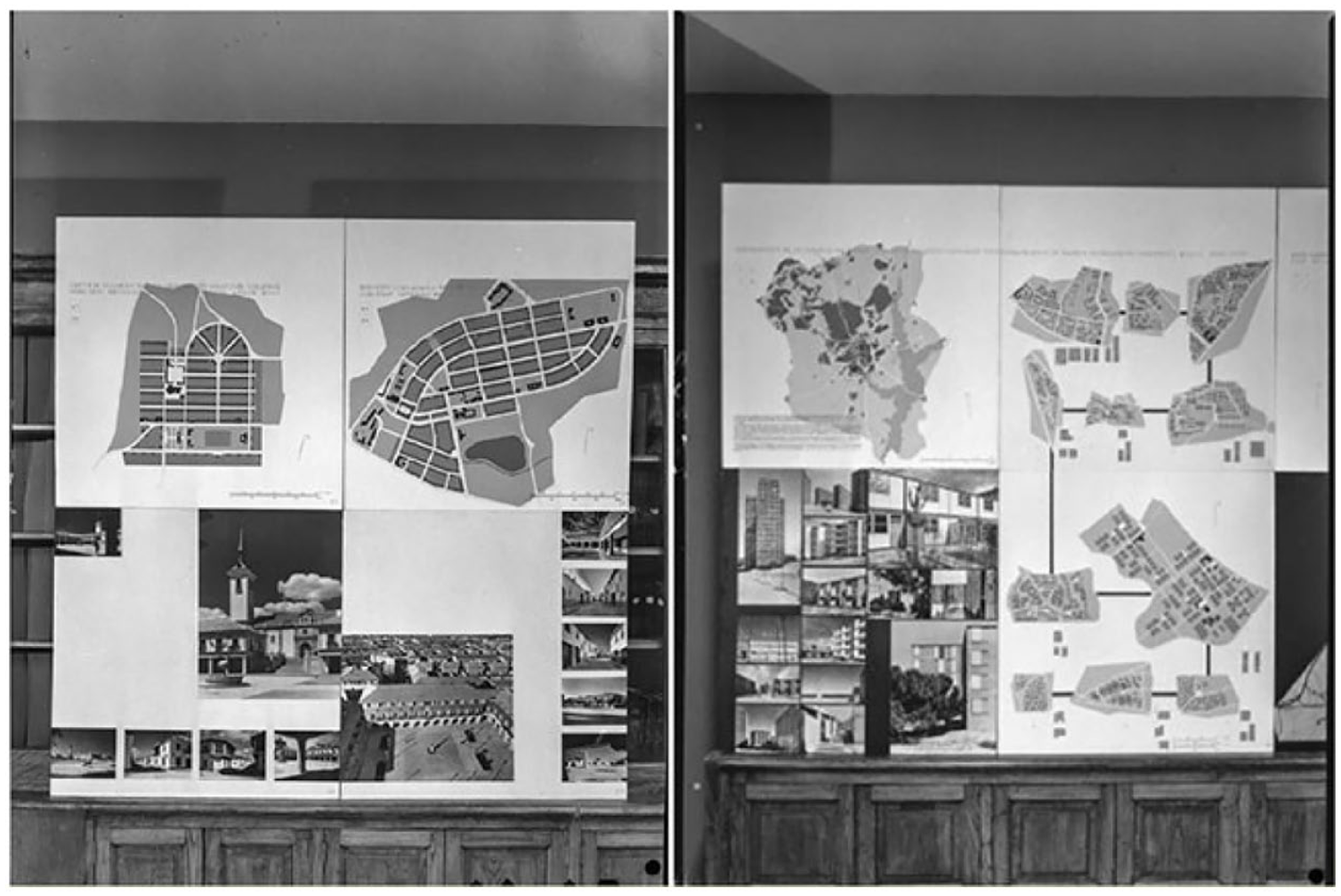
Spain presented the colonization villages of Esquivel (Seville, 1952) 66 by the architect Alejandro de la Sota, and Vegaviana (Cáceres, 1953-1954) 67 by the architect Fernández del Amo at the exhibition on the Moscow State University campus at the Moscow Congress. These panels were among the projects that attracted the most international attention due to their architectural and urban planning quality. In fact, the rural utopia of Franco’s dictatorship was one of the most interesting territorial approaches in terms of the rural development of the 1950s and is the subject of a vast body of both national and even international literature. 68
The Spanish delegation displayed panels with photos by the Spanish photographer Joaquín del Palacio “Kindel.” Kindel was an acclaimed architectural photographer, and Fernández del Amo acknowledged that the success was “no doubt in part because of the photos.” 69 The panel was structured into four modules: site plan, general context, aerial view, and a mosaic of architectural views. Both villages were promoted by the Instituto Nacional de Colonización (National Institute of Colonization, INC). The Second Republic had launched a national hydraulic policy that was subsequently continued by Franco encouraged by the Agro Pontine colonization of Fascist Italy. Three hundred villages linked to agricultural developments were built by the INC—plus twenty by the Dirección General de Regiones Devastadas (General Directorate for Devastated Regions; Figure 8).
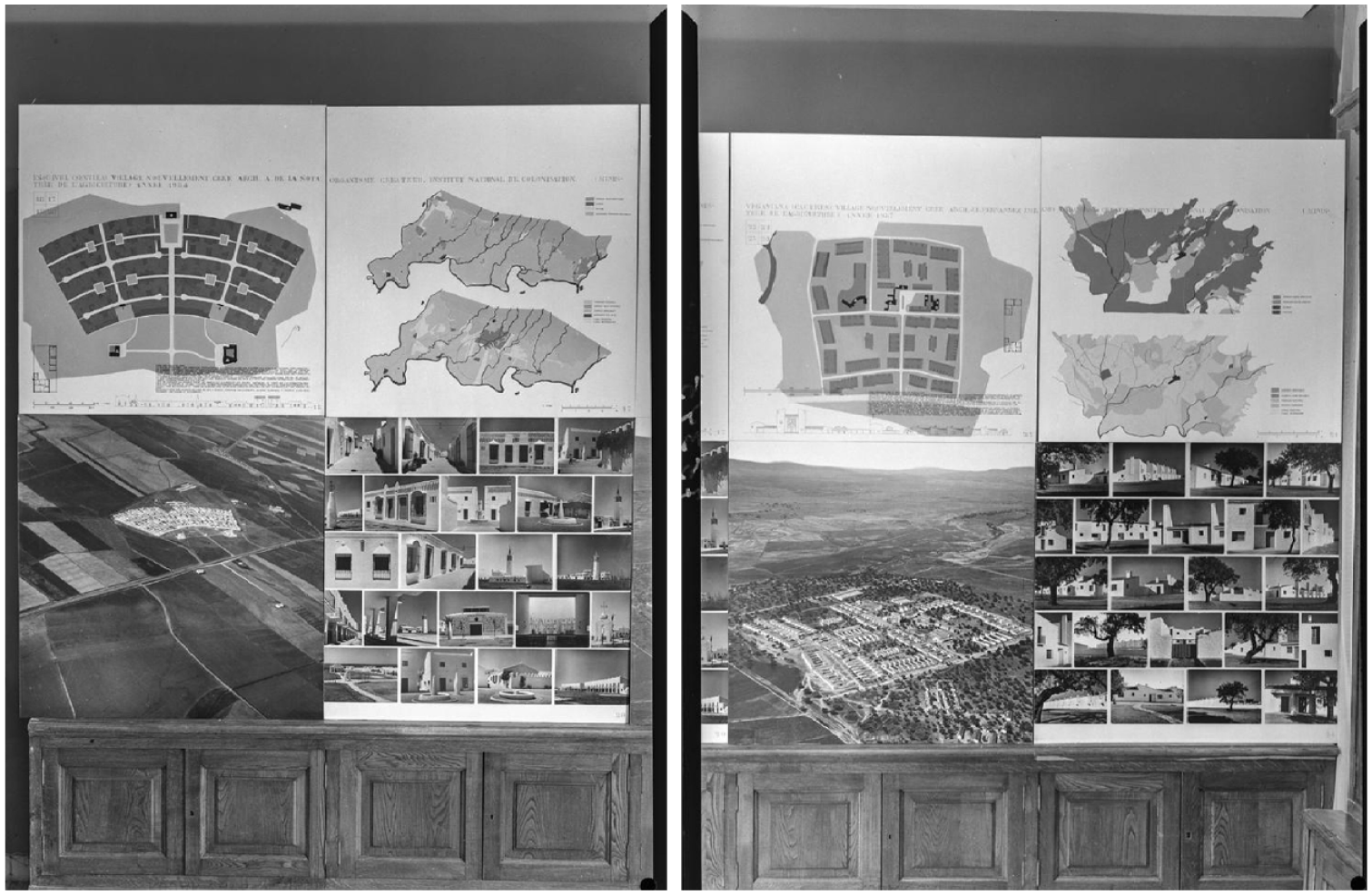
Vegaviana and Esquivel, panels presented at the UIA (1958). Juan Manuel Pando Barrero. Archivo Pando, IPCE, Ministerio de Cultura y Deporte.
The main feature of the colonization villages was their singular geometry in a structure in which rows, pairs, or single houses with service areas were displayed in association with consolidated agricultural land plots. Vegaviana, a village of about 250 terraced houses with amenities (church, social housing, school, council), was awarded first prize for planning for human concentration at the sixth São Paulo Art Biennial of 1961. 70 The architect Francisco Javier Oiza, a participant at the Moscow Congress, offered a Spanish point of view: “before the perfect geometry, the human and perfect space of this small community. In contrast, the vast Soviet program was always faithful to the number, the colossal, and the disproportionate.” 71 The construction industry was conceived as a rationalization of crafts.
Spain presented also two panels about post-war reconstruction, Brunete (Madrid) and Belchite (Zaragoza), both villages were destroyed during the Civil War and rebuilt by Dirección General de Regiones Devastadas, from 1938 to 1957. These new villages were symbols of the regime’s propaganda. The last three panels were dedicated to social housing in Madrid: the ordinance of the outskirts of the city to face the problem of slums, a product of the massive internal exodus from the countryside to the city. The motto, “we want owners and not proletarians,” 72 expresses the housing policy as one of the pillars of Franco’s government. One of the governmental initiatives was the Plan de Urgencia Social 73 (Urgency Social Plan) passed in 1958 about social housing. In the case of the Plan de Poblados Dirigidos (Directed Villages Plan), 74 people were given the option of building their own houses under the supervision of technicians, and young architects from the School of Architecture of Madrid. In the exhibition, two of the proposals were shown: the poblado Orcasitas (1958) with 2,044 dwellings by the architects Antonio Vázquez de Castro, Rafael Leoz, Joaquín Ruiz Hervás e Íñiguez de Onzoño, demolished in 1984 because of structural problems, and Fuencarral, by José Luis Romany Aranda, with a total of 1,839 dwellings, 385 single-family homes, a school group, an administration office, and three markets that housed 135 commercial plots. The Spanish proposal introduced the concept of community planning with a Church-Market-School-Administration core (Figure 9).
Belchite and Brunete reconstruction, and Madrid outskirts new settlements, panels presented at the UIA (1958). Juan Manuel Pando Barrero. Archivo Pando, IPCE, Ministerio de Cultura y Deporte.
One of the main contributions of this congress for Spain was that it led to the meeting between the architects representing the proud and anti-communist Franco’s Spain and the Republican exiles. The Spanish architect Luis Lacasa was living in China as a translator when he was invited to the IUA Congress by the Soviet authorities—he was an alternate member of the Soviet Central Committee—and testified about the Spanish delegation: I went to greet my colleagues. The first I embraced in the hall was Mariano Serrano Mendicute. Then the others appeared: Mariano Gª Morales, an old friend, a fellow member of the Café de Gijón club for many years; José Fonseca, whom I knew superficially; Carlos de Miguel, a classmate of my brother Fernando, director of the Revista Nacional de Arquitectura, Julián Laguna [linked to the Spanish administration through his responsibilities in social housing and promoter of the Poblados Dirigidos], whom I did not know, an architect businessman and at the time an organizer of Catholic students; and four young people, Perpiñá, [Francisco Javier] Sainz de Oiza, [Rafael de] La Hoz, and [Francisco de Asís] Cabrero.
75
(Figure 10)
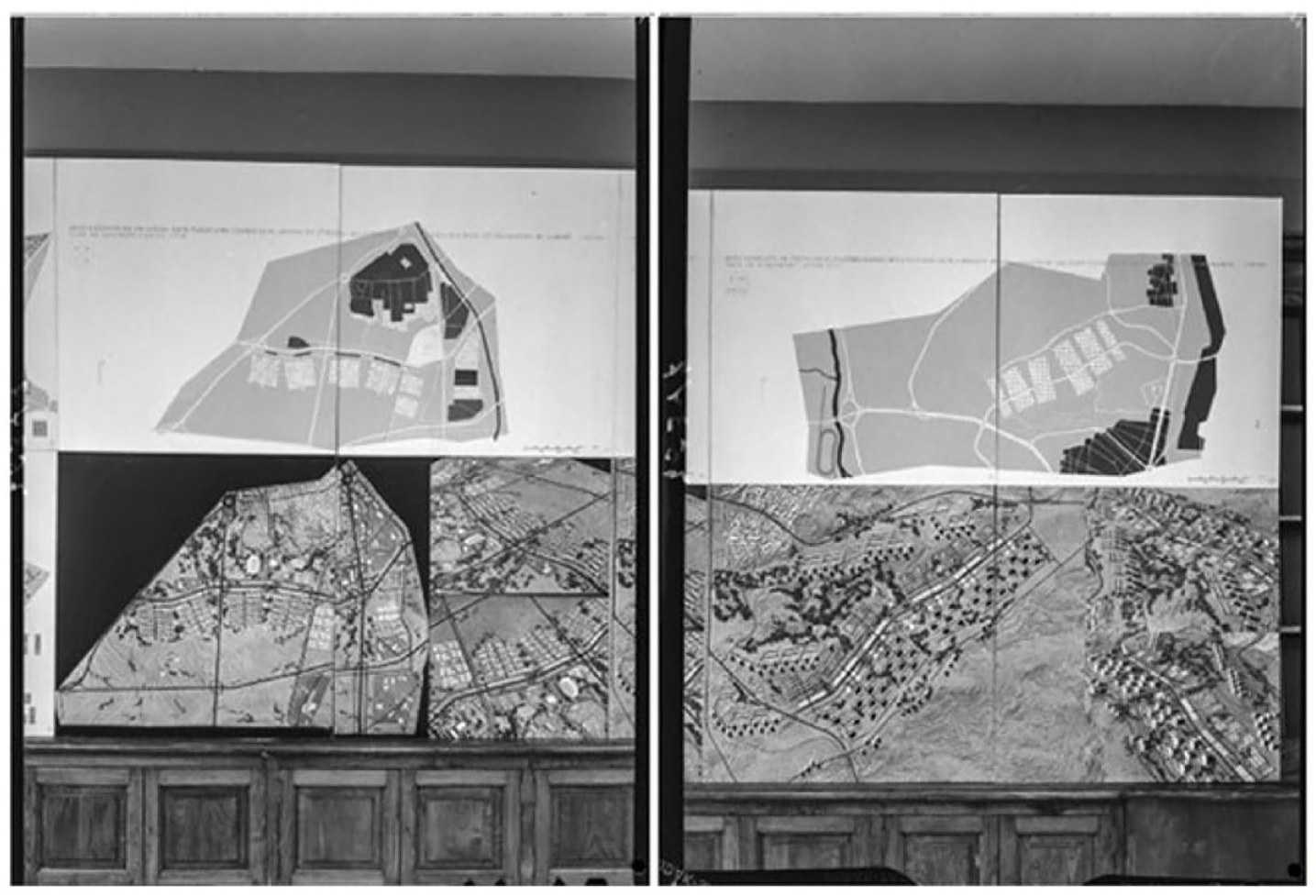
Orcasitas and Fuencarral, models and schemes, panels presented at the UIA (1958). Juan Manuel Pando Barrero. Archivo Pando, IPCE, Ministerio de Cultura y Deporte.
Spain continued to collaborate with the IUA. In 1959, the IUA participated with the Moscow traveling panels in the commemorative exhibition of the centenary of the Cerdá Barcelona Plan and the First National Congress on Urban Planning. 76 The VI Congress of the IUA, supported by the RIBA, was inaugurated in London on July 3, 1961, on the theme of “New Techniques and New Materials and Their Influence on Architecture.” Spain was represented by the works of the Spanish architect Emilio Pérez Piñero on folding reticular structures—which aroused the curiosity of Buckminster Fuller—and Ricardo Urgoiti on removable compressed air structures. Rafael Leoz received an award for the film on the HeLe module in 1967 in Prague, and again in 1969 at the IUA Congress in Buenos Aires, in the category “Social architecture towards the future,” with a second extended version entitled “Networks and spatial rhythms.” In 1972, Emilio Pérez Piñero received the August Perret Prize, granted by the IUA to reward technological advances applied to architecture. Finally, in 1975 Madrid hosted the IUA Congress, with the support of the Central Society of Architects, under the theme “Creativity: Design and Technology.” These are a good testimony of Spain’s journey through this long process of internationalization, in this case culminating with the appointment of the Spanish architect Rafael de la Hoz as president of the IUA between 1981 and 1985; this time, under the democracy established in Spain after the dictator died in 1975.
Conclusion: The Epitome of a Failure and Success in the Internationalization Process
The RIA and IUA congresses in the USSR celebrated around fifteen years after a revolution and a world war. In both cases, the respective dictatorships of the vast Soviet territory proudly demonstrated their progress in the reconstruction efforts. Based on serving the economic progress, the Stalinist regime prioritized Soviet planning in the 30s, and the Khrushchev regime, mass housing production.
The Soviet technicians showed to the 1932 RIA Congress attendance the development supported by the opening toward Western professionals based on the British Garden City rationalized by the Germany of Weimar and the disurbanism from the Spanish linear city. It was the moment to show the technological advances, be it large technical infrastructures such as dams, the new language of architecture, and new ways to populate a country. But they also revealed the absence of new planning tools that would allow the USSR to export this new way of making cities.
In the 50s, Soviet and Spanish dictatorships addressed the lack of housing. Khrushchev’s USSR focused on standardizing mass housing construction, considered as an industrial issue. The serialization expressed in the industrialized neighborhood unit as a repeated model implemented over the vast Soviet territory was not interesting for the Spanish attendance to the IUA Congress. All this approach collided headlong with the anti-communist Spanish dictatorship principles from the Catholic background, the domestic scale, the family as the social unit, the middle class of housing owners as their social background, and the construction industry as a rationalization of crafts. If the chronicles highlighted the active role of women from the Soviet bloc in the professional field of architecture and urban planning, Spain was not yet prepared to break with the Catholic Triad “Home–Family–God” and women would have to wait to be incorporated into the labor world. In the IUA meeting, the Spanish attendees reaffirmed these principles. They were proud young people who, beyond their affinity or not with the Franco regime, sought a justification for their architecture and urbanism. Despite their differences, the dictatorships had one point in common. They looked abroad for references to develop their territorial and housing policy without renouncing to their ideology.
Footnotes
Declaration of Conflicting Interests
The author(s) declared no potential conflicts of interest with respect to the research, authorship, and/or publication of this article.
Funding
The author(s) received no financial support for the research, authorship, and/or publication of this article.
