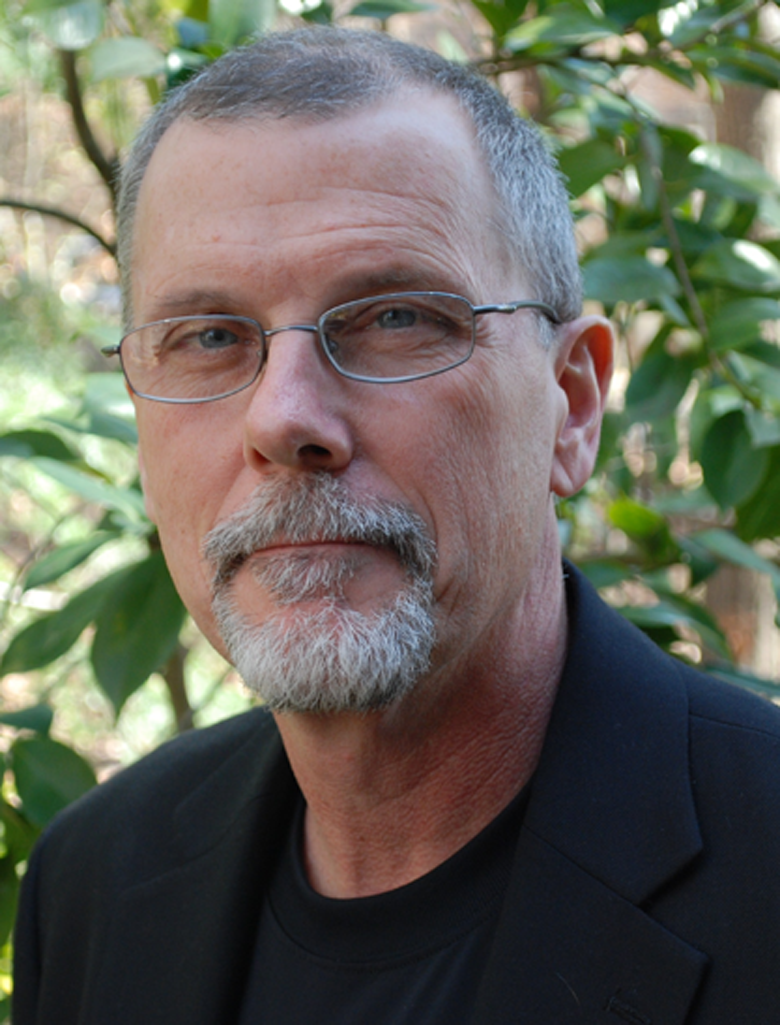
 William Buskist is the Distinguished Professor in the Teaching of Psychology at Auburn University and a Faculty Fellow at Auburn’s Biggio Center for the Enhancement of Teaching and Learning. At Auburn, he directs the Psychology Department’s Teaching Fellows program, which prepares graduate students for academic teaching careers. He has coauthored or coedited several books on the teaching of psychology and teaching in higher education. He is a member of the planning committee for the National Institute on the Teaching of Psychology. He is also a past president of the Society for the Teaching of Psychology (STP) and a fellow of Divisions 1, 2, and 52 of the American Psychological Association. In 2009, Dr. Buskist received the American Psychological Foundation’s Charles L. Brewer Distinguished Teaching of Psychology Award. Six of his graduate students have been honored with national teaching awards.
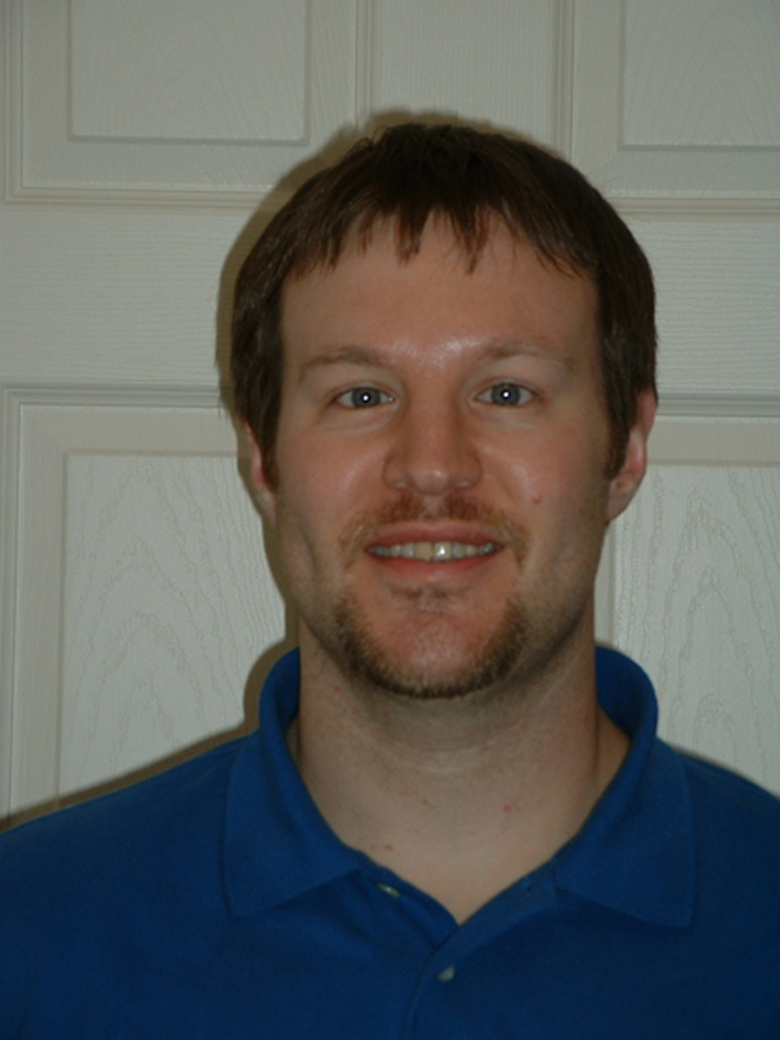 Bryan K. Saville is an associate professor in the Department of Psychology at James Madison University. He earned a PhD in experimental psychology at Auburn University, where he had the good fortune to study with Bill Buskist. In 2002, he received the McKeachie Early Career Award from STP. He has authored or coauthored 35 book chapters and journal articles on such topics as effective teaching practices, the importance of research experience in undergraduate education, and single-subject research designs. He is also the author of A Guide to Teaching Research Methods in Psychology, published in 2008 by Wiley-Blackwell. Dr. Saville is a fellow of Division 2 of the American Psychological Association and currently serves as associate editor for Teaching of Psychology and as STP’s vice president for awards and recognitions.
***
Saville: You attended college at Brigham Young University (BYU), but you’re originally from Jamestown, New York. How did someone from upstate New York end up all the way across the country in Provo, Utah?
Buskist: Actually, that’s an interesting, but rather long, story. To keep it short, let me just say that I went to BYU because I had the chance to play baseball in a rigorous conference (the Western Athletic Conference, or WAC); it also seemed like a good opportunity to experience an entirely different place and, to some extent, an entirely different culture.
Saville: So you didn’t attend BYU for its academic offerings, at least initially?
Buskist: No. I was 18 at the time, and all I wanted to do was play baseball—I was a pitcher. But as it turned out, BYU provided me an excellent undergraduate education, even though I was not a good student for the first 3 years of college. I hurt my arm late during my freshman year and couldn’t play baseball any longer. Fortunately, I was able to keep my athletic scholarship and remain in school. After bouncing around a few academic majors, I finally became serious about school.
Saville: What were some of the other majors you tried out before you settled on psychology?
Buskist: I don’t know if I can remember them all, but I know that business and political science were among them. I was the most serious about political science and was about 3 hours short of fulfilling the major when I switched to psychology.
Saville: What first drew you to psychology?
Buskist: I think there might have been several factors involved, but if I had to narrow it down to one, it would be the research methods class I took. It was the first time I was introduced to the idea that one could study human actions scientifically. That discovery, coupled with the fact that I really liked research design and analysis, led me to stick with psychology as my major. It was one of the smartest career decisions I ever made.
Saville: After earning your undergraduate degree in psychology, you decided to stay at BYU and work on your graduate degree in psychology. What led you to stay at BYU for graduate school?
Buskist: I didn’t become interested in graduate school until about April of my senior year. My wife, Connie, and I weren’t really sure what we wanted to do after graduation. As luck would have it, though, one of my psychology professors, Paul Robinson, approached me about the possibility of entering the doctoral program in experimental psychology, which was just getting off the ground. Because I was a late bloomer, my undergraduate GPA was fairly low, and I was admitted to the experimental program on a provisional basis. I worked very hard my first year of graduate school, earned top grades, and apparently convinced the graduate faculty that I could pass muster.
Saville: Most Teaching of Psychology (ToP) readers are probably familiar with your empirical research on teaching; few of them, though, may be aware that your scholarly roots are in operant conditioning, or as it is called these days, behavior analysis. Tell us a bit about your “former life” as a lab researcher.
Buskist: My undergraduate research methods teacher, Paul Robinson, was a behavior analyst, as was Hal Miller, from whom I took an undergraduate class in motivation. Together, their perspectives on the study of psychology led me to develop an interest in their research. Paul worked with pigeons studying errorless learning and overlearning; Hal worked with rats, pigeons, and people studying choice and preference. Although I started my doctoral study under Paul, I eventually switched to Hal because I found studying humans more interesting than studying rats and pigeons. Besides, a lot of the work in Paul’s lab involved shaping keypecking by hand, and I kept falling asleep waiting for some of the birds to emit reinforceable behavior!
Saville: You’ve told me before that you spent a lot of time in the lab while you were in graduate school, but you never mentioned much about teaching. What type of teaching experience did you get while you were completing your doctoral degree?
Buskist: My first assistantship was as a graduate teaching assistant (GTA) for a research methods course that Paul taught; I think I did that for 1 year. I later served as a teacher of record for courses in research methods, learning, and sociobiology. I also had the chance to teach for BYU Extension at Dugway Proving Ground, a U.S. Army facility located in western Utah. I taught introductory psychology, learning, and sociobiology there. Compared to teaching on a college campus, teaching on a military installation was quite a different experience.
Saville: In what ways?
Buskist: Because I was teaching on a base, the military context provided an entirely different environment for teaching than the typical campus environment. For example, attendance was mandatory; the students, all dressed in their fatigues, sat upright in their chairs, took extensive notes, and started and ended their comments with “sir”; and, on occasion, students carried their sidearms with them in class. I was especially cordial to these students!
Saville: You’ve written elsewhere that you weren’t really fond of teaching while you were in graduate school. When did you begin to enjoy teaching, and at what point did you realize that you wanted teaching to have a central role in your career?
Buskist: I left graduate school hell-bent on being a laboratory researcher. The only problem was that I couldn’t find a college or university that would hire me. I applied for over 50 jobs, and I didn’t land one interview. My wife and I were just about to give up when I lucked into a position at Adams State College, in Alamosa, Colorado. It was early July 1982, and the department chair there, Bob Compton, was desperate to fill a sudden resignation. He called the department chair at BYU, who urged me to give Bob a call. I did, and I was fortunate enough to get the job. My course load was four courses a semester with two new preps. Although I wasn’t able to do research there, I worked alongside some truly outstanding teachers who taught me a lot about the importance of teaching. It was at Adams State that I truly gained an appreciation for teaching. Although I didn’t realize it at the time, the stage was being set for my transition out of the lab and into the classroom.
Saville: Is there anything you learned in the lab that has carried over into the classroom and influenced the way you teach?
Buskist: Not directly. What I did learn in my lab days, though, was how to supervise undergraduates who are interested in getting research experience in preparation for graduate school. This sort of teaching involves a lot of one-on-one work and problem solving. The lab provided ample opportunity to learn a bit about career counseling and writing letters of recommendation.
Saville: After you left Adams State for Auburn, you continued the research you had started in graduate school and published several articles on human operant behavior. What happened at Auburn that led you to switch your focus exclusively to the teaching of psychology?
Buskist: Back in the 1980s, Peter Harzem, my department head at the time, asked me to help him revamp how we taught Introductory Psychology. I became fascinated by the problems associated with teaching large sections of the course and found myself spending more and more time reading the teaching literature. I soon started attending teaching conferences where I met a host of kindred spirits. I felt a connection with these good folks that I didn’t feel with the people who attended purely research conferences, and these connections led to several exciting writing and research collaborations (e.g., Buskist & Davis, 2006; Davis & Buskist, 2002; Perlman, McCann, & Buskist, 2005; Smith & Buskist, 2008). At that point, I decided to concentrate all of my research on teaching-related issues. That decision turned out to be another one of the smartest career decisions I’ve made.
Saville: Much of your early research in the teaching of psychology focused on master teachers and the qualities and behaviors that distinguish them from ordinary teachers. What initially drew you to this topic?
Buskist: I figured that if I wanted to learn everything I could about excellent teaching, I had to go beyond what was in the literature and actually talk to and observe excellent teachers in action; I also needed to talk to their students about their experiences with these teachers. This approach led directly to the development and refinement of the Teacher Behavior Checklist (TBC; Buskist, Sikorski, Buckley, & Saville, 2002; Keeley, Furr, & Buskist, 2010; Keeley, Smith, & Buskist, 2006; Schaeffer, Epting, Zinn, & Buskist, 2003).
Saville: Has what you have learned about master teachers changed your approach to teaching?
Buskist: Absolutely. I’ve tried to apply much of what I’ve learned in my research to my own teaching. For instance, if you ask master teachers what has changed most in their teaching over the course of their careers, the vast majority will tell you that “less is more.” They tend to cover less content than they did at the outset of their careers. Master teachers focus more on how well their students are learning the content that is being covered. If a student or group of students is having difficulty with a concept, master teachers tend to spend proportionately more time explaining and re-explaining that concept and providing as many examples as it takes to get the point across. Master teachers sacrifice content for enhanced clarity and understanding. So nowadays, I try not to cram every fact and figure I can into a course. Instead, I spend more time elaborating on particular concepts, providing as many relevant examples as I can, and working alongside my students to help them think clearly about these concepts and examples.
Saville: As your research on master teachers has shown, exceptional teachers are keenly aware of how their students learn and respond to them in the classroom. As your teaching has evolved, have you also seen a change in the way your students learn and respond to you in the classroom?
Buskist: I think over the years I’ve developed a very relaxed style of teaching and interacting with students that helps them both feel comfortable in the classroom and enjoy learning about psychology. If I sense the class is not comfortable, then I quickly try to figure out what I need to do to put things back on track. Sometimes, it’s as simple as slowing my delivery pace or taking time to get discussion going again.
Saville: Recently, there has been some discussion that students today are different than students from decades past. For instance, some have suggested that you have to teach today’s “millennial” students differently than yesterday’s “Gen Xers.” Has this been your experience?
Buskist: To tell you the truth, I don’t believe in attaching labels to different generations of students. In fact, I think it’s a lot to do over nothing. Of course, every new generation of students is different in some way than the previous generations, and giving different labels to each generation explains very little, if anything, about them. Times change, as do the conditions under which we live; but people are fundamentally people, and the basic processes by which they learn do not change.
Saville: You’ve been the recipient of many teaching awards, including STP’s Robert S. Daniel Award for outstanding teaching at the university level and the American Psychological Foundation’s Charles L. Brewer Award for Distinguished Teaching of Psychology. What would you say is your proudest accomplishment as a teacher?
Buskist: That’s an easy question. I am truly grateful to have received these two particular awards, and they hold a special place in my heart as I reflect over my teaching career. Nonetheless, and without a doubt, my proudest accomplishment is that so many of my graduate students have distinguished themselves as truly outstanding young teacher-scholars. Six of these students—you, Jason Sikorski, Trish Benson, Jessica Irons, Tracy Zinn, and Jared Keeley—have received national awards for their teaching. Each of these students developed a passion for teaching in graduate school, which fueled their desire to learn everything they could about becoming more effective teachers.
Saville: For many years you’ve maintained a large and productive graduate-student research group, the EDGE group (Burgess & Buskist, 2006), that focuses its research efforts on the teaching of psychology. For those not familiar with EDGE, can you tell us a little about it?
Buskist: Sure. EDGE is a small, but diverse, group of students interested in empirically examining pedagogical issues. Each student is a project leader of a team of two or three other students and also a member of another similar team led by a different graduate student. This organization allows each student to be both a “lead dog” and a “follower dog.” Each team hatches and develops an idea, guides that idea through the IRB process, conducts the research, analyzes the data, and composes a first draft consisting of every part of an APA-style paper except for the Discussion section. At that point, I review the work, make my edits, and return the manuscript to the team. The team then revises their report and submits it to all other members of EDGE for comments and suggestions on what they might address in the Discussion section. Thus, EDGE’s organization gives its members ample opportunity to experience all aspects of pedagogical research, including peer review and editing.
Saville: Over the years, the EDGE group has been extraordinarily successful in getting its work published in peer-reviewed journals, some of which have rejection rates of 80% of more. To what factors would you attribute this success?
Buskist: I attribute our success to good students who ask insightful questions and who are willing to work hard to find the best answers to those questions. As a group, we’ve been fortunate to ask questions about teaching that the editors and readers of ToP (and a few other journals) have found interesting. To some degree, it really has been a matter of asking the right questions at the right time. I should also mention that EDGE members have had a heck of a good time talking and arguing about the issues we’ve researched. We’ve really had a lot of fun over the years.
Saville: The EDGE group has covered a fairly wide array of topics related to the teaching of psychology. Are most of the questions derived from previous research, or are they mainly based on classroom experiences that you and your students have had over the years?
Buskist: It’s hard to say for sure, but I think, if anything, our research stems from a blend of our own classroom experiences and reading and examining the teaching literature. For example, our experiences with some introductory psychology students led us to question how many students read—or even bought—the course textbook. This observation led to a study in which we investigated how students used their textbooks (Sikorski et al., 2002). We found that nearly a third of the students in our course at Auburn did not even purchase a text; those students who did buy the book used it infrequently to study for tests and quizzes. We ended our paper with suggestions (such as frequent quizzing over text material) for motivating students to purchase and study their texts.
Saville: Has there been any particular piece of EDGE research that really stands out to you as one that has impacted the way teachers of psychology teach?
Buskist: I’d have to say that our work on the TBC has generated more attention than probably the rest of our work combined (Buskist et al., 2002; Keeley et al., 2010; Keeley et al., 2006). Some people have used it to conduct their own research on master teaching (e.g., Vulcano, 2007), others have written me and asked if they could use it as a teaching evaluation instrument in their courses, and still others have wanted to know more about it and have extended us invitations to speak on their campuses or at teaching conferences.
Saville: Many of the students who have been a part of EDGE over the years were not your PhD students. Why do you think so many students are drawn to doing research on the teaching of psychology?
Buskist: All graduate students in our department serve as GTAs during their first year of graduate school. To help them with their GTA duties, they take a year-long course I teach called “The Teaching of Psychology.” This course exposes GTAs to both theory and research on teaching. I think the combination of their GTA experiences and what they learn in this course instills in them an interest in teaching as a research area. They all recognize the fact that what they learn through their research on teaching may ultimately help them to become more effective teachers.
Saville: Speaking of GTAs, you’ve also published a number of studies addressing issues that GTAs might face in the classroom. What are the key issues you think teachers should discuss with their GTAs?
Buskist: Wow, that’s a big question, one that we could probably discuss for hours. Let me just say two things about teaching GTAs about teaching. First, many new GTAs are petrified of teaching—like many people, they fear public speaking. So, it is important to be supportive and encouraging of new GTAs; let them know that they will make mistakes, just like you did when you first started teaching, and that it is okay to make mistakes as long as they learn from them. Second, once GTAs have had some experience and developed a bit of confidence in their teaching, give them some room to develop their own style. I believe in baptism by fire when it comes to teaching—you can only hold new GTAs' hands for so long. If you micromanage their activities, all they learn is how to follow your directions and your style of doing things. To help GTAs mature as teachers, you have to let them discover their own personal strengths as instructors and then build their teaching style around those strengths.
Saville: At Auburn, graduate students are literally “thrown” into the classroom the minute they set foot on campus. Although they also take your teaching seminar at the same time, GTAs really do “learn as they go.” For instance, I remember teaching three discussion sections of introductory psychology the very first week I was at Auburn. Because so much of learning to teach is baptism by fire, what do you say to those GTAs—or early-career faculty, for that matter—who may start off on the wrong foot and, as a result, think they might not be cut out for teaching?
Buskist: When I first meet with a fresh batch of new GTAs at the beginning of each fall semester, I walk them through their responsibilities and tell them that they are bound to make mistakes. Even teachers who have been honing their craft for decades still make occasional mistakes. I tell these students that making a mistake is okay and not to fret over it. I tell them that as long as no one dies or is maimed or otherwise hurt seriously, no real harm has been done. This perspective seems to help the GTAs relax a bit and realize that nothing bad is going to happen to them for making a mistake in their teaching.
Saville: You’ve had a successful career doing teaching research at a large, research-oriented university, where research on teaching is often not valued as much as other types of research. What advice would you have for graduate students or early-career psychologists who also have interests in the teaching of psychology but might be afraid to pursue this line of research, especially if they happen to be at these larger, research-oriented universities?
Buskist: Great question. With one exception, I would never advise a graduate student to specialize in the teaching of psychology as a research area. After all, how many job advertisements do you come across for someone in this specialty area? (Answer: almost none.) I encourage the graduate students with whom I work to focus on a more traditional research area for their master’s and dissertation work and then take up pedagogical research as a secondary interest. The nice thing about this combination of interests is that most colleges and universities are looking for someone who specializes in a traditional area of psychology and who knows something about teaching and teaching well. As a general rule, I’ve found that graduate students who conducted pedagogical research were also our best graduate-student teachers.
Saville: You said that there was an exception to the advice you just mentioned. What’s the exception?
Buskist: The exception would be a graduate student who can firmly tie pedagogical research to a traditional area of psychology such as learning and memory or cognition. For example, consider recent work on the so-called testing effect (e.g., McDaniel, Roediger, & McDermott, 2007), in which testing improves students' retention of class material better than additional studying. I have a PhD student at Auburn, Christopher Howard, who is attempting to extend laboratory findings on the testing effect to the classroom. In essence, he is studying how principles of learning and memory influence student performance in the classroom. He is actually conducting research that is firmly nested in cognitive psychology and directly linked to the scholarship of teaching and learning.
Saville: In 2007, you were president of STP. What was that like?
Buskist: Being STP president was an incredible experience in every positive way imaginable, but it was a lot of work. Fortunately, STP is populated with lots of bright, hard-working, and forward-thinking folks. So, although the STP president is out front and looks as if he or she is leading the charge, the truth is that everyone is pitching in and leading the charge. As a result, there is a lot of good work being done on behalf of psychology teachers everywhere. I’d have to say that, overall, the best part about being involved in STP is the chance to be around and learn from some incredibly talented and gracious folks. Joining STP was also one of the smartest things I’ve done in my career.
Saville: You were heavily involved with STP long before you were elected STP president. What stands out most for you with that work?
Buskist: Actually, there are three things. The first was working to help establish the Graduate Student Teaching Association (GSTA) and serving as its first faculty advisor; the second was helping to establish the Excellence in Teaching column and serving as its founding editor, which is now in its 10th year of publication on the PsychTeacher discussion list; and the third was helping to develop STP’s e-book publications program. I’ve especially enjoyed co-editing the Teaching in Autobiography series (Benson et al., 2005; Irons et al., 2007). As a matter of fact, Jared Keeley, Jeff Stowell, Barney Beins, and I are working on the third volume right now.
Saville: You’ve also been involved with the planning committee for the National Institute on the Teaching of Psychology (NITOP) for quite a while. Would you tell us a little bit about that work?
Buskist: NITOP holds its annual conference each January in St. Pete Beach, Florida. The committee’s job is to assist the program chair, Doug Bernstein, and the conference coordinator, Joanne Fetzner, to develop a top-notch slate of speakers and activities for each conference that reflects state-of-the-art advances in both psychological research and the teaching of psychology. I like this work a lot because it is a fun and effective way to get psychology teachers from all levels together with top names in the field to talk about how to put psychology into the minds and hands of our students.
Saville: Let’s change gears just a bit. Some readers of ToP may not know that, in addition to being an award-winning teacher, you’re also an accomplished triathlete and martial artist. As you mentioned earlier, you had a baseball scholarship at BYU, so I’m guessing that you’ve been involved in athletics for a long time. How did you become interested in triathlons and the martial arts?
Buskist: I’ve always liked challenging physical activities and being in good physical condition. Both these sports demand that you get into, and remain in, good condition. In the case of triathlons, I decided on a whim to give a local one a try (no pun intended), and I was hooked immediately. I got involved in martial arts because one of my sons started and lost interest, which left me holding the balance of a contract with the martial arts academy’s owner. I decided to complete the contract myself and found out I really enjoyed the sport—and that was 5 years ago.
Saville: Are there any lessons you’ve learned while competing in triathlons or in the martial arts that have carried over into the classroom? Similarly, have there been any lessons from the classroom that have served you well in your athletic endeavors?
Buskist: I’ve never really thought about comparing teaching with triathlons and martial arts or vice versa. I am not sure what lessons transfer from one domain to another, but I do think that all three activities have one striking similarity: Each provides pretty demanding opportunities for personal growth and self-discovery, particularly if one desires to “master” them. For me, teaching is as much a quest for self-discovery as it is an opportunity for sharing one’s love of knowledge with others. Likewise, participating and competing in triathlons and in the martial arts demands self-discovery (and a lot of self-improvement, albeit in a different domain). If there is any carryover among the three activities, it is that my physical conditioning has a lot to do with the high energy levels I bring to my classroom teaching.
Saville: Thanks a lot, Bill, for taking the time to do this interview with me.
Buskist: You’re most welcome, Bryan. It’s been a genuine pleasure.








