







Abstract

The Society for the Teaching of Psychology (Division Two) celebrated the 36th year of its annual Teaching Awards Program 1 at the August convention of the American Psychological Association in Toronto, Ontario. Each 2015 winner received a plaque and a check for US$1,500. The Society for the Teaching of Psychology recognized outstanding teaching 2 in six categories: (a) Wayne Weiten Teaching Excellence Award (2-year college), (b) Mary Margaret Moffett Memorial Teaching Excellence Award (high school), (c) Wilbert J. McKeachie Teaching Excellence Award (graduate student), (d) Jane S. Halonen Teaching Excellence Award (first 7 years of full-time teaching at any level), (e) Robert S. Daniel Teaching Excellence Award (4-year institutions), and (f) the Adjunct Faculty Teaching Excellence Award.
Wayne Weiten Teaching Excellence Award
 The 2015 Wayne Weiten Teaching Excellence Award for faculty teaching at the 2-year college level goes to Lynne N. Kennette. She is a professor of psychology in the School of Interdisciplinary Studies at Durham College in Oshawa, Ontario. Kennette earned her PhD in 2012 from Wayne State University in the Cognition, Developmental and Social Psychology Program. Her thesis topic addressed psycholinguistics, an area in which she continues to publish.
Durham College is Kennette’s first full-time teaching job out of graduate school, and she is the only full-time psychology instructor on the faculty. The college does not offer a psychology degree per se, but the psychology courses they do offer are electives or prerequisites for college diploma programs or for transfer to other university programs. Kennette teaches the introductory psychology sequence, which divides the discipline into issues addressing foundations, biology, sensation/perception, learning, and personality in the first class and human motivation, development, cognition, abnormal, and therapies in the second.
Regular readers of these award announcements may recognize Kennette’s name, as she was the 2011 winner of the Wilbert J. McKeachie Teaching Award. Kennette has built on her training and experiences as a graduate student instructor and full-time professor to become an even more effective teacher. Her growth as an effective teacher can be demonstrated in a variety of ways, including in her philosophy, which deepened and expanded in her progression from a novice to expert teacher (Shulman, 1987). The importance of her availability and delivery highlighted in her earlier philosophy has been revised to be about students’ engagement of and connection to the material. Recognizing the importance of focusing on students, she cites a clever comment by Mager (1968, p. 7), “if telling was the same as teaching we would all be so smart we could hardly stand it.” Kennette continues to recognize that her availability to students is important but now as a means to engage students better and facilitate their learning. It is the insight born of experience that what a faculty member is saying may be less important than what her students are hearing.
She has found a variety of innovative ways to facilitate student learning. Her toolbox of techniques includes clips from popular TV shows demonstrating psychological processes (e.g., The Big Bang Theory has a great episode on operant conditioning) and activities ranging from in-class experiments and exercises to game-like polling and quizzing. One novel pedagogical technique she developed since her graduate student teaching days is described as the Start-Stop-Continue Reflection and Feedback Activity. After an exam, students reflect on their test performance and list at least one thing they and the instructor should stop, start, and continue doing in order to improve their performance for the next test. This activity is designed to promote students’ metacognitive awareness, monitoring, and control of their learning and highlights Kennette’s focus on students’ learning and success.
Kennette’s teaching is appreciated by her students, colleagues, and administrators alike. Letters from all three constituents refer in notably different ways to her ability to create an effective learning environment in her classroom that encourages student achievement and success. For students, her effectiveness lies in her sensitivity and responsiveness to them; for colleagues, it is in the richness and sharing of her pedagogical toolbox; and for administrators, it is the focus on and achievement of institutional outcomes.
Kennette is also recognized for her service related to teaching and learning, which the Weiten Award criterion defines as both curricular and cocurricular activities that increase student interest and involvement in psychology, raise community awareness of psychology as an applied science, and/or use the principles of psychology to improve the human condition. Kennette is a mentor to students seeking to pursue undergraduate degrees in psychology and related disciplines, even offering lectures at the local university psychology department to strengthen the connection between the institutions. As the only full-time instructor at Durham College, she also supports and mentors the part-time psychology instructors to become more effective instructors. In addition, she mentors faculty at other institutions about the scholarship of teaching and learning (SoTL) research and professional development, proposing presentations with them at psychology teaching conferences. She serves on the institution’s research ethics board and continues her service in the discipline as a reviewer for conferences and serves on the American Psychological Association (APA) Division 2 selection committees for the McKeachie Teaching Award.
Engaging in the SoTL is the third criterion for the Weiten Award. Even as a graduate student, Kennette was deeply committed to SoTL in psychology, completing a Certificate of Teaching Development from the Office for Teaching and Learning at Wayne State University. She has continued SoTL activities as a full-time instructor. She completed a program of courses to earn a College Teaching Certificate from her home institution and a series of Focus on Learning seminars from St. Lawrence College in addition to attending many other seminars and workshops. She is not just a student of SoTL but now contributes as a scholar. She has published work on student learning in psychology face-to-face and online classes in Psychology Teaching Review, Excellence in Teaching, and the Journal on Excellence in College Teaching (special issue on Brain-Based Learning). In addition to publishing in the SoTL, she has been regularly presenting posters, workshops, presentations, and roundtables at psychology and pedagogical conferences.
Kennette was an award winning teacher in graduate school, who became an award winning faculty member. Charting the growth of Kennette’s teaching excellence presents a picture of deepening pedagogical understanding, an expanding set of effective practices, and greater scholarship and leadership about teaching and learning. Our guess is that we have not heard the last of Kennette’s contributions to the discipline. The Society for the Teaching of Psychology is pleased to present Lynne Kennette with the Wayne Weiten Teaching Excellence Award for instructors at 2-year institutions.
Mary Margaret Moffett Memorial Teaching Excellence Award
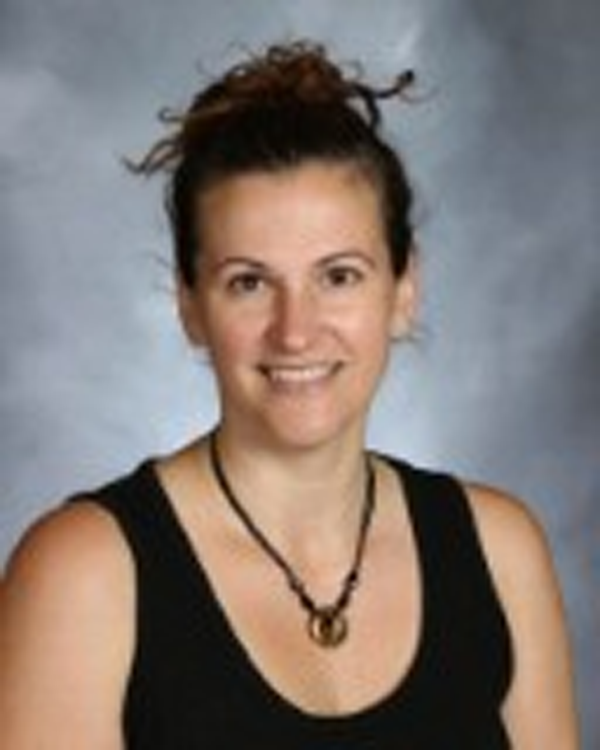 The 2015 winner of the Mary Margaret Moffett Memorial Teaching Excellence Award for outstanding high school teaching is Tina Athanasopoulos of John Hersey High School in Arlington Heights, Illinois. She earned her bachelor of science in psychology from Loyola University of Chicago, where she was a member of the honors program. She completed her master’s degree in school counseling from Northeastern Illinois University and her certificate of advanced study in education from the University of Illinois, Urbana-Champaign. She has taught at John Hersey High School for 15 years, winning both the Excellence in Instructional Leadership Award and the Educator of Outstanding Leadership Award from that school.
Athanasopoulos teaches five sections of advanced-placement (AP) psychology, and she pioneered AP psychology in her six-school district. She developed the course objectives and learning outcomes for AP psychology, and teachers across her district continue to use them for their courses. The enrollment in her AP psychology courses has grown each year, and her students continue to earn the highest percentage of AP psychology passing scores in the district. Elina Sagaydak, a former student, recalls that “in my high school, no class is more recommended than AP psychology,” due to Athanasopoulos’s engaging teaching style. In addition to teaching at John Hersey High School, Athanasopoulos is also an affiliate professor in the School of Education at North Park University in Chicago. She teaches courses in cognition and developmental psychology to aspiring teachers. She also created an online course in adolescent development for the university. She is dedicated to helping her students and the teachers she is mentoring learn psychology, so they can apply its concepts to their daily lives and work.
Athanasopoulos is also actively involved in providing professional development for psychology teachers. She is a workshop consultant for the College Board in AP psychology, leading workshops at Northwestern University. Her workshops have remained so popular that the university offers two 1-week institutes each summer under her leadership. Athanasopoulos was a member of the AP Psychology Test Development Committee, a group of eight psychology educators who help create questions used on the AP psychology exam. She is an assistant chief reader and an exam leader for the AP psychology exam, the only high school teacher who has ever held that position. Her appointment to this position at the AP Reading speaks to the level of respect and competence she demonstrates in her work. Athanasopoulos also directed the annual ChiTOPSS professional development meeting for 7 years. This annual meeting brings together Chicagoland area psychology teachers to share teaching strategies and hear from scholars about the latest research in the discipline. The meeting attracts more than 75 teachers annually.
Athanasopoulos actively promotes student interest in psychology. Not only are her classes popular at John Hersey, but her students continue to study psychology after high school. Former student Elina Sagaydak is enrolled in an accelerated medical school program at her college, which leaves little time for other pursuits. However, Sagaydak is minoring in psychology due to Athanasopoulos’s influence on her in high school. Athanasopoulos has developed several innovative activities to engage students in psychology. Each year, her students create children’s books about brain function, which they go and share with local elementary students. This activity not only helps Athanasopoulos assess student knowledge of biological bases of behavior, but it also engages students in active communication of psychology to others. She also collaborated with English teachers in her school for an interdisciplinary lesson for the book Lord of the Flies. She developed lessons to teach students about Milgram’s obedience research and Zimbardo’s prison guard study and linking those lines of research to modern examples of obedience and role playing such as the Abu Gharib prison controversy. These studies and examples were then linked to the action in Lord of the Flies, teaching students how to apply scientific psychology to literature. Finally, she and two other colleagues founded the annual Psychology Bowl competition which brings together students from Chicagoland area high schools to compete scholar’s bowl style to answer questions based on the APA’s National Standards for High School Psychology Curricula and the College Board’s AP Psychology Course Description. This Psychology Bowl competition has been going strong for more than 10 years, with more than 20 teachers bringing their students each year to participate.
Athanasopoulos has been a leader in high school psychology education for almost 20 years, and she is showing no signs of slowing down any time soon. She is among the most popular teachers on her campus as well as being one of the most popular AP psychology workshop leaders in the nation. Her engaging style, her strong work ethic, and her humility all work to make her a recognized leader and innovator in her field. She is an effective teacher who stimulates student interest in psychology each day. She is passionate about providing quality professional development for her colleagues as she leads workshops, hosts conferences, and organizes student competitions in psychology each year. In recognition of her effectiveness as a teacher, her leadership in the field, and her dedication to students of psychology, the Society for the Teaching of Psychology is pleased to award Tina Athanasopoulos with the 2015 Mary Margaret Moffett Memorial Teaching Excellence Award for high school teachers of psychology.
Wilbert J. McKeachie Teaching Excellence Award
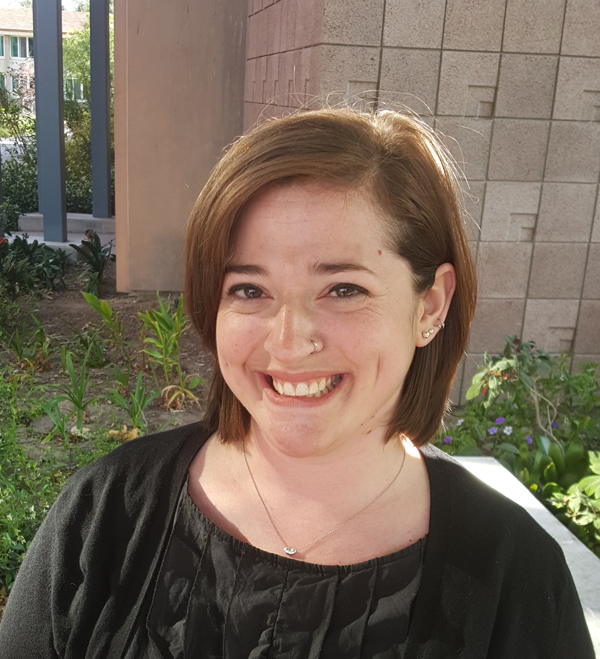 The 2015 winner of the Wilbert J. McKeachie Teaching Excellence Award for outstanding teaching as a graduate student is Molly Metz from the University of California, Santa Barbara (UCSB). Metz received her bachelor of science from Otterbein College in Westerville, Ohio, where she was the president of Psi Chi. She is a PhD candidate in social psychology at UCSB with an anticipated graduation in 2015. Metz is also pursuing a Certificate in College and University Teaching (CCUT) from UCSB, a rigorous program for graduate students interested in building and refining their skills in teaching at the university level.
Metz is a highly valued graduate student teaching assistant at UCSB. She assists in teaching courses in introduction to social psychology, positive psychology, and advanced research methods in psychology. She attended the UCSB Summer Teaching Institute for Associates and is the lead teaching assistant for the Teaching Assistant Advisory Panel. Not only is Metz a teaching assistant, but she has been appointed as an independent instructor, a status akin to a lecturer, in which she teaches classes on her own. Metz is called on often to lead workshops on teaching strategies, and she leads panels of and for teaching assistants. In addition, Metz is the graduate teaching fellow for the UCSB CCUT program, and in her role as a fellow, she mentors more than 40 aspiring university teachers through the program. The CCUT program, according to its director, Diane Mackie, “requires a range of teaching experiences and deliverables which are designed to encourage thoughtful, innovative, and self-analytic teaching practices among graduate students interested in teaching in higher education.” Participating in this program is an honor in and of itself, but Metz’s role as the appointed fellow puts her “in the very top echelon of graduate student teachers on campus,” according to Mackie.
Metz is generous about helping her students as they pursue their studies. She regularly invites undergraduates to join in research projects, a practice she has engaged in since her days as an upper class student at Otterbein. Metz recalled a time when she invited a first-year at Otterbein to join in her in some senior-level research, wanting the student to experience the research and presentation process in the hopes of inspiring her to continue work in psychology. Metz revealed that someone had done the same for her when she was entering the field and she wanted to repay that kindness forward. In their nomination letters for Metz, her students expressed their gratitude and appreciation for her mentorship of their work. She recently helped an honors undergraduate student win two research grants for her research and has cowritten a paper currently under review with that student. Another student wrote that she was “stunned” that Metz remembered her desire to be more involved in research when Metz approached her about collaborating on a grant-funded research proposal. The project was funded, and the student reflected that Metz spent the year doing “what she does best: she taught me” about all aspects of the research process, enabling the student to become more confident and enter a psychology PhD program.
Metz has developed several effective teaching materials as a graduate student. A syllabus she developed was published with project syllabus (a project of the Society for the Teaching of Psychology), and she has two activities published with the Office of Teaching Resources in Psychology (another project of the society). One project involves have students read a story by Dr. Seuss to discuss the role of bias in a nonthreatening way. Student evaluations reflect that Metz consistently earns high ratings for her teaching, often with those rankings scoring above the university average. Student comments from evaluations highlight Metz’s “shining personality,” her passion for teaching, the strong effort she gives to prepare supplementary materials for class, and her ability to explain complex concepts well. One student remarked that she viewed Metz more as a professor than a teaching assistant “because that’s how exceptional she is.”
Metz has already distinguished herself as an outstanding teacher, mentor, and scholar as a graduate student. She is among the best graduate student teaching assistants at UCSB, as recognized by her students, peers, and instructors. She has published teaching syllabi and resources to share with others, and she participates in professional conferences such as the National Institute for the Teaching of Psychology and the Society for Personality and Social Psychology teaching conferences. She mentors and partners with students in research, helping them receive grant funding and working through the research and presentation process successfully. In recognition of her effectiveness in teaching, her professional identity as a teacher of psychology, and her conscientious mentorship of students in psychology, the Society for the Teaching of Psychology bestows the 2015 Wilbert J. McKeachie Teaching Excellence Award honoring graduate student teachers of psychology to Molly Metz of the UCSB.
Jane S. Halonen Teaching Excellence Award
 The 2015 winner of the Jane S. Halonen Teaching Excellence Award for early career teachers is Courtney Stevens of Willamette University in Salem, Oregon. Stevens has been recently appointed associate professor at Willamette, teaching courses in cognitive neuroscience, introduction to psychology, research methods, and language and literacy acquisition as well as seminar courses for seniors (education science and language, brain, and mind) and first years (poverty and public policy). She earned her master’s and PhD in cognitive neuroscience from the University of Oregon and her bachelor’s degree in linguistics from Reed College, where she was inducted into Phi Beta Kappa. Since earning her PhD, Stevens has gained teaching and research experience as a research associate at the University of Oregon, as a research fellow at Weill Medical College of Cornell in New York, and as a visiting professor at Sarah Lawrence College. In addition, she received additional training at the Latin America School for Cognition, Education, and Neural Science in Argentina and at the Merck Summer Institute for the Biology of Developmental Disabilities at Princeton. She has won several awards throughout her career, including state finalist for the Rhodes Scholarship, a National Science Foundation (NSF) graduate research fellow, a dissertation fellowship award, the 2010 Faculty Achievement Award for Excellence in Teaching and Scholarship from Willamette, and the 2012 Next Generation Award from the Society for Neuroscience.
Stevens brings a strong scholarly research background to Willamette, a small liberal arts college that places an emphasis on quality teaching. Stevens has worked on several grant-funded projects throughout her career, including several research grants from Willamette and serving as a key personnel for two Institute for Education Sciences grants. She currently has two NSF proposals pending review, one of which will investigate teaching strategies for pre-med students to increase their knowledge of behavioral sciences in preparation for the upcoming changes to the Medical College Admissions Test. Stevens is widely published, often with her undergraduate students as coauthors. She has published in top journals in neuroscience, including Brain Research, Neuropsychologia, Journal of Learning Disabilities, Developmental Cognitive Neuroscience, and Teaching of Psychology (ToP).
She mentors her students to be researchers as well. She has mentored more than 25 undergraduates during her time at Willamette, including two who have earned Phi Beta Kappa. She has been the chair or cochair of seven undergraduate thesis committees, and one of her students earned a “best presentation” award at the Oregon Society for Neuroscience conference. Her commitment to mentoring her students goes above and beyond the call of duty. She often brings her students to her alma mater, the University of Oregon in Eugene, to give them access to the high-end technology and equipment they need. One summer, she opted to rent a house in Eugene so she and her undergraduate students could reside closer to the equipment they needed, and she could mentor them through their research. Clearly, her commitment to scholarship and her mentoring of students are remarkable.
Stevens is an active teacher who incorporates debates and discussions into every class. One colleague noted that she always asks probing questions designed to challenge students’ misperceptions in a way that isn’t threatening but engaging. She is active in promoting a scientific understanding of psychology in her teaching as well. She consistently requires students to propose their own research designs, and she graphs class data in real time to demonstrate how to interpret data. She is keen on using data to drive her instruction, even though, in her words, she “hates grading” and prefers to think of herself as more of a coach than a judge of student work. Despite hating to grade, she admits she loves to give feedback, and she constructs class assignments to allow her to provide timely feedback so that students do not fall behind. This love of feedback perhaps drives her pursuit of feedback on her assignments from colleagues. She has developed several class projects and assignments that have been published in peer-reviewed journals. These assignments include a Neuroscience Community Outreach Project, a Community Grant-Writing project for First-Year Seminar students, and data-based literacy modules with exam questions for introductory psychology.
Stevens’ service to the university and her profession are also noteworthy. She serves on the Academic Council at Willamette, which oversees academic policy in the College of Liberal Arts. She participated for 2 years in a Keck-funded iScience initiative that improved science education at Willamette. The two project codirectors spoke glowingly of her participation in that initiative, noting how her presentations were well received and among the best of the program. While a research associate at the University of Oregon, Stevens served on the Undergraduate Education Committee for Psychology for which she conducted the first systematic review of the department’s grade distributions and inflation and coordinated an online syllabus archival project, which is still in use. She is a reviewer for the Journal of Undergraduate Neuroscience Education, and she has presented several workshops on quality teaching at Willamette. She has also been invited back several times to the University of Oregon to share her experiences about best practices in undergraduate education and mentoring. She also researched and authored a video segment on attention development for Changing Brains, a DVD available to general audiences.
The highest compliment a teacher can receive occurs when her students hope to emulate her as they move forward in their careers. Each of Stevens’ students who wrote nomination letters expressed this quality about her. Whether they were going into graduate work in clinical neuropsychology, pursuing certification as a teacher, or studying school psychology, all of her former students hoped they would model their careers after Stevens. Some hoped to teach like her. Others hoped to emulate her research skills and scientific creativity. And still others hoped to inspire their own students like she did. Helen Neville, Stevens’ undergraduate advisor and professor at the University of Oregon, stated, “Courtney comes alive when talking about teaching and learning,” and this energy is evident in her students’ enthusiasm for her influence on their lives. In recognition of her exceptional scholarly accomplishments, her commitment to active teaching practices, her dedication to sharing those practices with others through peer review, her development of innovative courses, and her success in mentoring students into the profession, the Society for the Teaching of Psychology presents the 2015 Jane S. Halonen Teaching Excellence Award for early career teachers to Courtney Stevens of Willamette University.
Robert S. Daniel Teaching Excellence Award
 The 2015 winner of the Robert S. Daniel Teaching Excellence Award for outstanding teaching in a 4-year institution from the Society for the Teaching of Psychology is Pam Marek of Kennesaw State University (KSU) in Kennesaw, Georgia. Marek earned her PhD in cognitive psychology at the University of Florida and has been a faculty member for more than 17 years. She began her teaching career as a visiting assistant professor at St. Michael’s College (Colchester, Vermont) and then as an assistant and associate professor at Anderson College (Anderson, South Carolina) before arriving at KSU, where she has been for more than a decade.
Marek teaches a range of courses in the curriculum, including introductory psychology, experimental psychology, social psychology, cognitive psychology, and research methods. Her course evaluations are uniformly high, and she has won a number of awards for her work with students, including the Georgia Board of Regents Felton Jenkins, Jr. Hall of Fame Teaching Excellence Award (2015), KSU Foundation Distinguished Teaching Award (Spring 2013), KSU—CETL Recognition as Mentor of Undergraduate Scholar (Spring 2011 and Spring 2012), and the Distinguished Teaching Award Winner—College of Humanities and Social Sciences, KSU (Spring 2011).
Student evaluations and awards are an indicator of her teaching effectiveness. Although effective teaching may take a variety of forms, Marek’s effectiveness is best appreciated through her unique teaching philosophy and style and the impact it has on students. As a teacher, she invites students in her classes to participate in a process she describes as studenting, by which she engages students in pedagogically relevant activities so they will appreciate the scientific foundations of the discipline. By using a rich pedagogical toolbox, she promotes students’ active engagement in psychology’s scientific nature through rapport building, discovery learning, and critical thinking. As she describes it, rapport building is promoted by respecting students’ perspectives and being flexible to their needs, discovery learning is encouraged through students’ research and writing, and critical thinking is fostered by students considering evidence bearing on each of multiple theoretical perspectives. Her studenting activities are carefully tailored to class level: from reviewing research on sleep and stress in introductory psychology or conducting a personally significant decision-making project in her cognitive psychology to completing research proposals and projects in research methods and experimental classes.
Marek’s studenting activities require them to engage in and reflect on authentic activities central to learning the discipline’s scientific foundations in a supportive environment. A small but significant way Marek does this is by creating a research conference in which students in her experimental and research classes present their work. The conference is complete with printed programs and a receptive audience (students, faculty, and administrators), seemingly to ensure that students understand the ultimate goal is not a grade but dissemination. Not surprisingly, her impact on students is profound and continues well beyond the classroom. In her portfolio, Marek documents examples of students she has inspired to complete their education and seek careers in psychology or related fields.
Marek’s passion and commitment to students make her not just an effective teacher but also an influential mentor of students’ professional development. Marek has a notable record of mentoring students’ scholarship and academic goals during the past 10 years at KSU. She mentored 38 students on 32 presentations at the Georgia Undergraduate Research Conference in Psychology, a local conference sponsored by KSU. Another 13 students were coauthors on seven presentations at regional and national conferences. Five students were also coauthors on published papers in peer-review journals such as Personality and Individual Differences, the Journal of Happiness Studies, and the North American Journal of Psychology.
This productivity is the product of a pipeline in which students whose interest and motivation are not just learning the discipline but adopting its values, skills, and intellectual traditions. This process of transforming a “student-in-a-psychology-class’ into a “psychologist-in-training” also requires professional mentoring that is often embedded in other activities such as teaching and advising. Marek excels in this form of professional mentoring as well. In her 10 years at KSU, she has supervised more than 60 students on such transformative activities as directed study research, Honors projects, undergraduate teaching assistantships, and internships. All this is above and beyond the 50–60 students she advises yearly, helping them to understand how to use the opportunities afforded by KSU to achieve professional goals.
Marek shines as a role model in the SoTL. She has 20 papers published in peer-reviewed papers, with many in ToP. According to Google scholar, her work is widely cited, including one paper that is most read and one of the three most cited articles in ToP. Add to this work numerous SoTL-related chapters, invited book reviews, conference talks, teaching materials, and grants, it is easy to see how she is a national leader in the evidence-based approach to teaching and learning in psychology.
Marek has focused her service to the department, university, and discipline around her dedication as a teacher and scholar. According to her letters, she was a leader in her department to consolidate, assess, and align the curriculum to disciplinary and institutional standards. Similarly, she serves effectively as college representative and secretary of Undergraduate Program Curriculum Committee, which adjudicates all curriculum changes, and the campus Institutional Review Board. At the disciplinary level, Marek serves as a valued reviewer and effective editor of the Methods and Techniques section of ToP. Her service was praised by two editors of the journals, using surprisingly similar language, as thorough, thoughtful, and incisive.
Marek’s dedication, organization, and tireless energy to her students; their professional success; the scholarship of teaching and learning; and the implementation of effective practices make her a deserving winner of the Daniel Award. Even among a department of strong teachers and scholars of teaching and learning, Marek has distinguished herself as a role model for many who are themselves going to be psychology teachers. She seems to have performed this generativity effortlessly by serving as a role model and caring mentor of students long after they leave her class. As one of her students who is now in the field wrote: I have been learning from and collaborating with Pam since I was an undergraduate psychology major in 2006 …. Pam remains the most dedicated mentor I have worked with, who has had the greatest influence on me as a budding scientist and instructor.
Adjunct Faculty Teaching Excellence Award
 The 2015 winner of the Adjunct Faculty Teaching Excellence Award is Albee Therese Ongsuco Mendoza. She was trained as a health psychologist with a master of arts degree and PhD from East Carolina University and an internship at the Integrated Behavioral Health Consortium of Indiana. Mendoza has worked as a staff therapist for Catholic Charities in Bloomington, Indiana but caught the teaching bug and sought out a teaching position. She obtained an adjunct position at Ivy Tech Community College in Bloomington Indiana, where she teaches a range of courses, including introduction to psychology, lifespan development, abnormal psychology, drugs and human behavior, and health psychology. She is also planning to teach classes in the Department of Human Services, including Interviewing and Assessment and Service Environment for Youth Professionals.
Mendoza’s courses are evaluated quite positively by students, peers, and administrators, with each noting that she is highly motivated to engage students in the discipline and promote their achievement and success in the discipline. She attributes her effectiveness as a teacher to using multiple pedagogical strategies that promote not only specific disciplinary knowledge through hands-on activities performed individually and in groups but also college-level study and time management skills. Her commitment to student engagement and success is exemplified by class requirements for service learning in her courses. The service learning activities engage students in critically applying the material they are learning but also help them appreciate the value and significance of the material. In her health psychology class, students write weekly letters to community members living with HIV/AIDS. As she describes it: the students incorporated concepts learned in the course such as managing stress and pain in their letters, reinforcing the course material while providing support to clinic patients. The project was so well-received that a number of students and patients continue to write to each other after the semester ended.
Even as a graduate student, Mendoza was involved in stimulating others’ interest in psychology by disseminating research findings from community-wide outreach projects at local and professional conferences. She has continued this tradition as an adjunct professor by helping to develop support services for impoverished families and children. Interestingly, she provides support not just to students but fellow adjuncts as well. As one colleague put it, Mendoza “is a fantastic colleague and a wonderful collaborator” by virtue of having offered both pedagogical and professional support.
The third adjunct award criterion is to demonstrate commitment to student learning and intellectual growth. Fulfilling this criterion is a source of pride to Mendoza. Her pedagogical strategies emerge by being receptive to students, eliciting their stories and struggles with the material, and seeking to have them exercise their critical thinking skills. She has developed a variety of hands-on activities such as having students make neurons out of pipe cleaners in her introduction to psychology class or pouring various amounts of liquid to mark blood alcohol concentrations in her drugs and human behavior class. She has also designed group activities to promote students’ communication skills as they develop understanding of psychological concepts.
Mendoza engages and is responsive to students. She solicits and assesses student achievements, needs, and concerns and formulates new pedagogical strategies to help them. But she also keeps the students accountable for their own success and responsible for their learning. She keeps high standards for students to extend their knowledge and comprehension of research methods and design and to grow as critical thinkers.
The final criterion for the award, the advancement of one’s professional identity as a teacher of psychology, is another area in which Mendoza excels. She collaborates with others by being involved in interdisciplinary committee work, community organizations, and mentoring of graduate students. Her identity as a teacher of psychology is further strengthened by advocating for psychology’s role to colleagues in the medical and health-care fields. Finally, she presents regularly at national school counseling meetings and local setting, furthering her professional community connections. In recognition of her outstanding contributions to the teaching of psychology, the Society for the Teaching of Psychology bestows the 2015 Adjunct Teaching Excellence Award to Albee Therese Ongsuco Mendoza of Ivy Tech Community College.