







Abstract
Background:
First-generation (FG) college students have been a popular subpopulation to study within educational literature as these students experience many unique challenges in their academic careers causing them to drop out within their first year. This gives courses with high first-time freshman numbers such as introductory psychology courses a unique opportunity to reach many of these students.
Objective:
The purpose of this study is to examine new perspectives of FG students that may further explain hindrances to retention and achievement.
Method:
One hundred and ninety-three undergraduate students in an introductory psychology course completed surveys on task values in reference to psychology content at three different time points across the semester. Students’ exam scores were also reported as a measurement of academic achievement.
Results:
Analyses showed that FG college students reported higher levels of cost value and growth in cost value across the semester compared to non-FG college students.
Conclusion:
FG college students experience academic challenges that may be related to their valuing of their educative experience in psychology courses.
Teaching Implications:
Educators should actively attempt to alleviate academic obstacles facing FG college students by increasing access to the professor, ease of access to help, and assignment clarity.
Keywords
A possible path to a better socioeconomic status (SES) is through earning a 4-year degree (Bowen et al., 2005), but students whose parents have not themselves received a 4-year degree are more likely to drop out at higher rates and receive lower grades than students who have at least one parent with a 4-year degree (Engle & Tinto, 2008; McConnell, 2000; Pascarella et al., 2004; Próspero & Vohra-Gupta, 2007). This finding is most troubling, given that students who are least likely to obtain a college degree are the ones who are most likely to benefit from it economically (Brand & Xie, 2010).
Many prior researchers have explored a number of psychological and economic factors contributing to the difference between first-generation (FG) and non-first-generation (NFG) academic performance in higher education, including that FG students have lower self-efficacy compared to NFG (Ramos-Sánchez & Nichols, 2007), are more likely to be of a lower SES (Cho et al., 2008), experience less feelings of connectedness to their university culture and peers (Dumais & Ward, 2010; Inkelas et al., 2007), and demonstrate less college preparedness via lower ACT scores, high school grade point average, and enrollment in remedial courses (Atherton, 2014; Mehta et al., 2011). Although these studies have provided valuable information on differences between FG and NFG students, there are further cognitive and motivational differences that have yet to be explored. The purpose of this study is to go beyond these findings by examining new perspectives of FG students that may further explain hindrances to retention and achievement.
A central motivation theory in education based heavily in the sociocognitive perspective is expectancy value theory (EVT). This foundational theory focuses on how students give meaning to their educational experiences and in turn how that meaning can either inspire or hinder motivation to engage in tasks (Eccles, 2005; Wigfield & Eccles, 2000). Given that many FG college students’ motivations for attending a 4-year educational program are that of obtaining a means to a better occupation (Billson & Terry, 1982), an FG student may have differing levels and conceptions of the value of their educative experience. Building on the challenges in motivation and engagement resources that FG students face in comparison to NFG students marked differences in motivational perceptions of their educative experience are likely. In a review of previous research conducted on the relationship between generation status and academic achievement, there was a dearth of literature that looked at the role of task values. According to the EVT model of motivation, a task value is the reason a student believes they should engage in a task (Eccles, 2005; Eccles & Wigfield, 2002). There are four task values defined within this theory that address various value assessments made by the student about the task at hand that influences their level of motivation and engagement in the task. The four task values prompted by this theory are intrinsic value, attainment value, utility value, and cost value. Intrinsic value (also referred to as interest value) refers to a person’s liking or feelings of enjoyment of a particular task. Attainment value refers to a person’s belief of the value of the task for their sense of self that doing well in a particular task is valuable to them because they view success in that area as important to how they identify. Utility value refers to a person’s belief of the usefulness of the task, especially in reference to their future goals. Finally, cost value refers to a person’s assessment of the amount of effort and resources are required to be successful at the task. These values have been associated with academic choice and success but have not been specifically looked at with FG college students (Bong, 2001; Bruinsma, 2004; Wigfield & Eccles, 2000).
Even within the literature on task values and education, there is little attention paid to how variations in task value beliefs may lead to poor academic outcomes for FG college students. There is much to be explored in how task values can be a benefit or hindrance for FG college students who are more susceptible for dropping out after their first year of college (Ishitani, 2008; Martinez et al., 2009). Given that introductory psychology courses are taken by roughly 60% of all undergraduates who have earned 10 or more credits (Adelman, 2004), this venue is a gateway to reach and connect with FG students. Further, introductory psychology content has apt application and relevance to other fields, majors, and future occupations (Ciarocco, 2018; Halonen & Dunn, 2017) and personal experiences (Dunn et al., 2010; Ritchey & Bott, 2010), a major component to perceptions of utility (Harackiewicz et al., 2016), intrinsic, and attainment values (Wigfield, 1994). Given its wide content applicability and access to a dearth of FG college students who are likely to be within their first year of university, when they are especially at risk of either dropping out or continuing on, introductory psychology courses provide an ideal context and content to facilitate beneficial task values for both FG and NFG students. The current study seeks to study the possible difference in perceptions of task values between FG and NFG students and provide further implications of how introductory psychology courses may facilitate utility, attainment, and intrinsic values and decrease potential cost value for college students.
FG College Students and Achievement
FG students have unique obstacles and challenges when it comes to engagement with academia and transitioning into higher education than most traditional students, which affects their academic progress (Oyserman & Destin, 2010; Stephens et al., 2012). Many FG students come from the families of low SES and, within a higher education context that is predominantly middle class, can find the culture hard to relate to and find their place (Housel & Harvey, 2009). FG students are more likely to come from ethnic minority groups. Between 53% and 38% of Hispanic students and 45% and 40% of Black students are likely FG college students, a figure much higher than their White peers (Nomi, 2005; Saenz et al., 2007). Also, FG students are more likely to be working full- or part-time jobs than NFG students, making FG students less likely to be able to live on campus or engage in relationships with other peers or faculty (Pike & Kuh, 2005; Terenzini et al., 1996). This disconnect from the college culture that FG students feel within their educative experience can account for lower persistence and achievement (Housel & Harvey, 2009; S. E. Johnson et al., 2011; Ostrove & Long, 2007).
For many FG students, the reason for attending college is based on utility, such as a better-paying salary, not necessarily valuing the educative experience itself (Billson & Terry, 1982; Byrd & MacDonald, 2005; Bui, 2002). Since the motivation for many FG students engaging in higher education is predominantly a desire for better employment and/or desire to make a contribution to their families and communities (Harackiewicz et al., 2016), ideals that are reminiscent of utility and attainment values, the current research study deems it appropriate to further explore how FG students’ task values compare to NFG students specifically in a course setting that allows its content to easily transfer to other majors, jobs, and life experiences (Dunn et al., 2010; Ritchey & Bott, 2010).
EVT
A central theory in the contemporary sociocognitive perspective of motivation is EVT. EVT focuses on how students give meaning to their experience within their educational contexts and how that meaning gives motivation to pursue specific tasks (Eccles, 2005; Wigfield & Eccles, 2000). EVT further breaks down into two components of a students’ belief: their belief in their ability to accomplish a task (self-efficacy) and their perception of if the task is worth being pursued (task value; Wigfield & Eccles, 2000). The focus of this study will be on the latter component, task value.
According to the EVT model of motivation, task value is described as the reason students believe they should engage in a task (Eccles, 2005; Eccles & Wiglfield, 2002). Within this particular construct, there are four task values that emerge: intrinsic value, attainment value, utility value, and cost value. Intrinsic value (also referred to as interest value) is operationalized as a person’s liking or feelings of enjoyment of a particular task. Attainment value refers to a person’s belief of the value of the task for their sense of self that doing well in a particular task is valuable to them because they view success in that area as important to how they identify. Utility value is defined as a person’s belief of the usefulness of the task, especially in reference to their future goals. Finally, cost value is described as a person’s assessment of the amount of effort and resources that are required to be successful at the task. These values have been associated with academic choice (Bong, 2001; Bruinsma, 2004), success (Wigfield & Eccles, 2000), and interest development (Hulleman et al., 2010).
Although all task values can motivate a student to engage in a task, they may encourage differing types of engagement. For example, utility and attainment values have shown to be predictive of positive achievement outcomes (Cole et al., 2008). Also, utility value has shown associations with deep cognitive engagement with high school students (Greene & Miller, 1996). Further, studies have demonstrated the motivational benefits of intrinsic value such as the likelihood of course enrollment (Harackiewicz et al., 2008), effort on school assessments (Spinath et al., 2006), classroom interest (Durik & Harackiewicz, 2003), and effort in STEM courses (Cole et al., 2008). Although attainment, utility, and intrinsic values have been given a large amount of interest within educational research, cost value has been relatively understudied.
Cost has been found to stifle engagement in exercise in children (Chiang et al., 2011) and college students (Chen & Liu, 2009), higher level of cost is associated with lower likelihood of math course enrollment (Luttrell et al., 2010), and high cost suppresses motivation to engage in difficult tasks (Eccles & Wigfield, 1995). Also, recent research by Conley (2012) indicated that cost value not only has a distinct and important role in discerning subjective cost values of students but was also found to be an important factor in predicting both achievement and affective outcomes. Given that differing task values have distinct effects on engagement and achievement, it will be important to further explore their relationship to generation status.
EVT and FG College Students
Researchers have studied the connection between student retention and task value. FG students are more likely to drop out at the end of their first year and have poor graduation rates making factors that affect retention critical to FG students (Collier & Morgan, 2008; Ishitani, 2008; Kuh, 2001). A longitudinal study conducted by Bong measured students’ task value beliefs and self-efficacy, as well as exam performance and future enrollment which found that both the utility and intrinsic values students assigned to coursework influenced their continued enrollment. Bong only measured utility, intrinsic, and attainment values, and so further evidence on cost value and retention should also be explored. Another study demonstrated a positive relationship between intrinsic value and number of academic hours earned (Bruinsma, 2004). Since FG students are at risk of dropping out and not returning to complete their degrees (Ishitani, 2008), this finding corroborates the importance of further exploring the relationship between EVT and FG students given the possible benefits for retention.
Previous research has indicated that FG students feel guilty for leaving their families and/or work to pursue a degree of which their family and peers may not understand the benefits. This can prevent the facilitation of attainment or intrinsic valuing of tasks (Hodges-Payne, 2006; London, 1992; Petty, 2014). When considering the benefits of task values to academic achievement, this becomes even more troubling.
EVT and Achievement
EVT and specifically task values have shown promise for student retention as well as course performance; specifically, with intrinsic and utility values of course material (Bong, 2001; Bruinsma, 2004; Rosenzweig et al., 2019). With academic achievement, Bong’s (2001) research demonstrated that utility value predicted midterm performance as well as perceiving value in tasks was more likely to lead students to adopt mastery-achievement goals for tasks, which has been shown to be positively related to academic performance (Harackiewicz, Barron, et al., 2000; Harackiewicz, Durik, et al., 2008; Rosenzweig et al., 2019). When it comes to task value, as students recognize the usefulness of an academic domain and its personal interest, they are more likely to persist when confronted with obstacles and be more willing to engage in new tasks (Bong, 2001). Given that psychology course content is widely applicable to many careers and personal experiences, it would seem likely that a psychology survey course such as introduction to psychology would be a crucial context for inspiring attainment and utility valuing of academic material (Ciarocco, 2018; Dunn et al., 2010; Halonen & Dunn, 2017; Ritchey & Bott, 2010). Although application of course material to students’ personal experience and task values may not occur spontaneously, the unique applicability of course content (Dunn et al., 2010) and teaching of material for real-world application (Gurung et al., 2016) are markers of introductory psychology courses that make them highly susceptible to such experiences. Research on task value interventions indicates that simply having college students write about how course material related to their lives (Hulleman et al., 2010) increased levels of utility value, topic interest, and academic performance. Since the course content of introductory psychology courses have students relating material to their personal experiences (Dunn et al., 2010; Gurung et al., 2016), using this inherent course structure may facilitate task value above and beyond other large section introductory courses.
Research has determined that task values fluctuate throughout the semester, with interest and perceived value dropping steadily throughout the semester (DeBacker et al., 2004; Wigfield & Eccles, 2000; Xie et al., 2006). Further research by M. L. Johnson and colleagues (2014) on task values and self-efficacy demonstrated that task values not only fluctuate throughout the semester, but that they show a cubic pattern indicating that students may be reevaluating their motivations as they experience various obstacles and successes such as exam grades. Given these changing patterns of task values and motivation levels over the course of the semester, research will need to examine whether this pattern is consistent and is similar for both FG students and NFG students (Bong, 2001; Heddy & Sinatra, 2013).
The Current Study
Evidence suggests that FG students have more external responsibilities such as employment and family responsibilities as well as social pressures outside of their school context than NFG students (Hodges-Payne, 2006; Pascarella et al., 2004). Given these external factors and additional challenges, FG students may be less likely to be intrinsically interested and engaged in their course material. Further, research suggests that a prime motivator for FG students to enroll in higher education is to obtain a higher or better paying job (Billson & Terry, 1982), their value of the material outside of its future utility will likely be minimal (Wilbur & Roscigno, 2016), and it is probable that FG students will exhibit higher levels of cost value and utility value. Many FG students feel guilt from families and peers for leaving their careers or family responsibilities in order to pursue an opportunity that these persons may not understand (Hodges-Payne, 2006; London, 1992; Petty, 2014). These feelings of guilt may not only prevent FG students from experiencing intrinsic value but may also facilitate higher levels of cost value. Since FG students have a focus on obtaining a more materialistic goal and perceive their educative experience as a means to an end, they may experience higher utility value in place of intrinsic or attainment value (Vuong et al., 2010; Wilbur & Roscigno, 2016). The current study goes beyond previous research that has yet to examine the perceptions of task values of FG students across the semester. This research extends the literature and adds to our understanding of teaching introductory psychology as a major gateway class to help retain FG students who may be experiencing high cost and low intrinsic, attainment, and utility values.
Research Questions
Given the analysis of the current literature, the following research questions have been created:
Method
The design for this study was a survey method with two groups (FG vs. NFG). Participants were measured on task value and exam scores three times (i.e., 8th week, 12th week, and 16th week of the semester) to determine relationships between variables with the change over time. Only three survey administrations were used to prevent survey fatigue and prevent attrition, given that FG students were already a small portion of the major sample. Because exam feedback may directly influence students’ initial task value, the first survey administration occurred before the first exam, and the rest of the survey implementations happened prior to the next exam. The measured variables are as follows: (1) demographics, (2) task value (including four subcomponents of intrinsic, utility, attainment, and cost values), and (3) exam scores.
Participants
This study utilized a convenience sample of 193 undergraduate students in an introductory psychology course at a large university in the mid-South. Four students were eliminated for failing to meet the study criteria of being 18 or older. The participants were compensated by receiving extra credit toward their psychology course grade. Participants ethnicity was 75.6% White, 9.6% American Indian or Alaskan Native, 8.8% Latino/a, 8.3% Asian, and 5.7% African American. Participants were 64.5% female and most were between 18 and 22 years old. Looking at generational status, 25.9% of participants reported being FG students, whereas 74.1% reported being NFG students. Demographic information separated by generation status can be found in Table 1.
Demographic Information Separated by Generation Status.
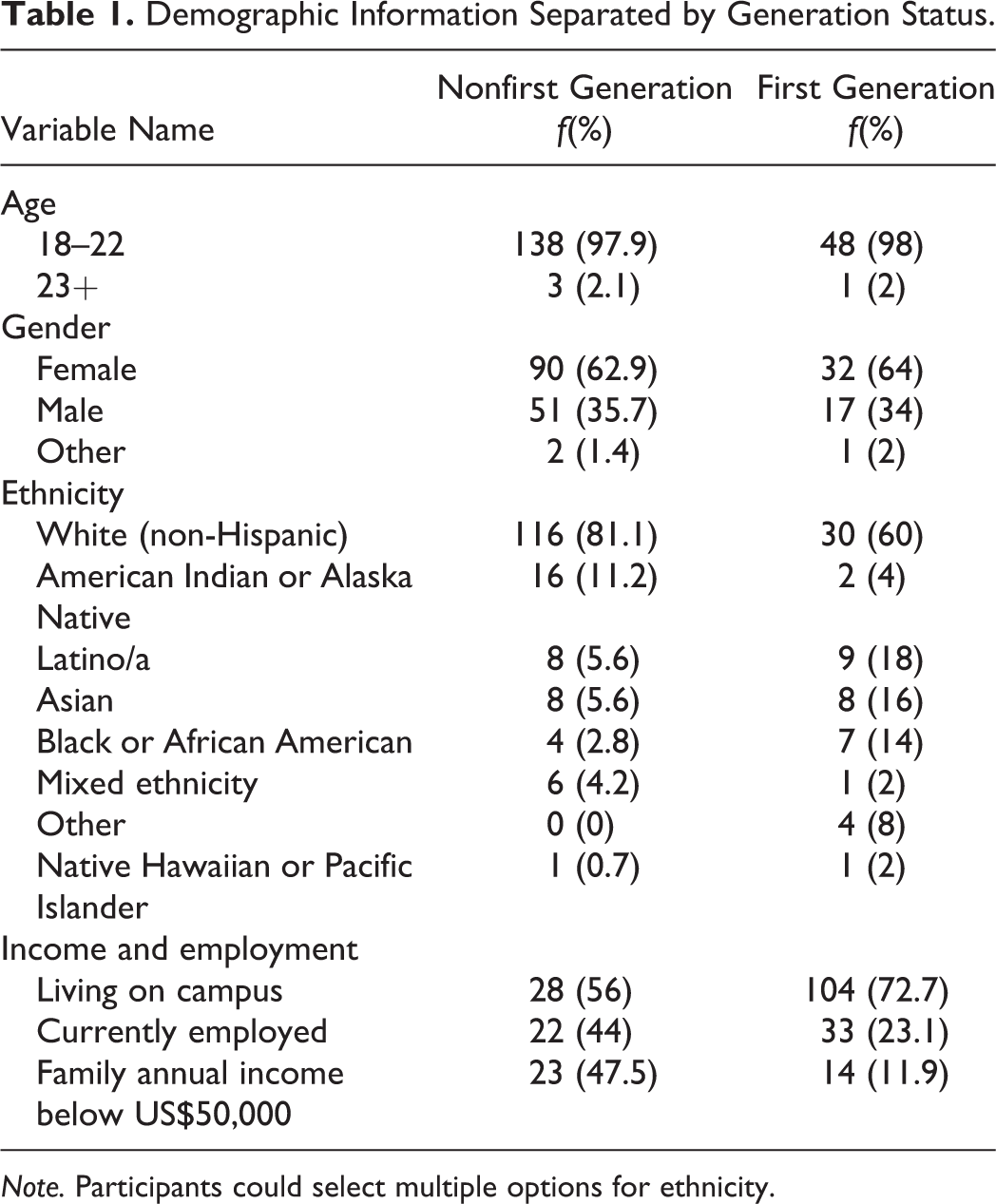
Note. Participants could select multiple options for ethnicity.
Instruments
Demographics
To discern generation status, a demographic measurement was included. Students were asked to identify the highest level of education completed by either one of their parents/guardians as suggested by the literature (McConnell, 2000; Próspero & Vohra-Gupta, 2007; Wilbur & Roscigno, 2016). To prevent facilitating stereotype threat, the demographic survey was the last survey participants filled out within the first survey implementation (Steele & Aronson, 1995).
Task value
Task value was measured by using an 18-item 7-point Likert-style scale that includes the four components of task value as pertaining to the psychology course content, as adapted from previous research (Conley & Karabenick, 2006). Intrinsic (or interest) value refers to participants’ liking or enjoyment of psychology (e.g., “I find psychology very interesting”) and was measured using six items. Cronbach’s αs ranged from .97 to .95 across time points, indicating that the scale demonstrated high reliability. Utility value refers to participants’ beliefs of the usefulness of the area of study (e.g., “Psychology is useful to me for things I do outside of school”) and was measured using five items. Cronbach’s αs ranged from .93 to .91 across time points, indicating that the scale demonstrated high reliability. Attainment value refers to the participants’ belief of the value of the subject area for their sense of who they are (e.g., “Being someone who is good at psychology is important to me”) and was measured using six items. Cronbach’s αs ranged from .95 to .94 across time points, indicating that the scale demonstrated high reliability. Cost value refers to participants’ assessment of the amount of effort required to be successful in the subject area (e.g., “Success in psychology requires that I give up other activities I enjoy”), and cost was measured using two items. Cronbach’s αs ranged from .92 to .88 across time points, indicating that the scale demonstrated sufficient reliability.
Exam scores
To discern whether there is a difference between generation status and achievement, exam scores for each participant were collected. There were four exams administered throughout the semester in the course, but only three exam grades were collected that coincide with the time line of the motivational measurements. Each exam was over the previous unit’s material and was not cumulative. They included 25 multiple-choice questions for the first exam, and for the second and third exams, there were 40 multiple-choice questions. These were obtained directly from the instructor to be a measure of course content understanding. Given that the number of questions on the tests were not equivalent, exam scores were converted to percentage correct. Once the exam scores were collected and paired with participants’ other measures, they were deidentified.
Results
The descriptive information for the variables can be found in Tables 2 and 3. The reported reliability coefficients are sufficient for the scales used during the study as each iteration reported a Cronbach’s α of .80 or higher (Cronbach, 1951). As reported in Table 2, there was an issue of attrition across the length of the study. The differential between the condition group sizes can be seen in Table 3 and should also be considered when interpreting results. Issues of sphericity, kurtosis, and homogeneity will be discussed within each analysis.
Means, Standard Deviations (SDs), and Other Descriptive Information.
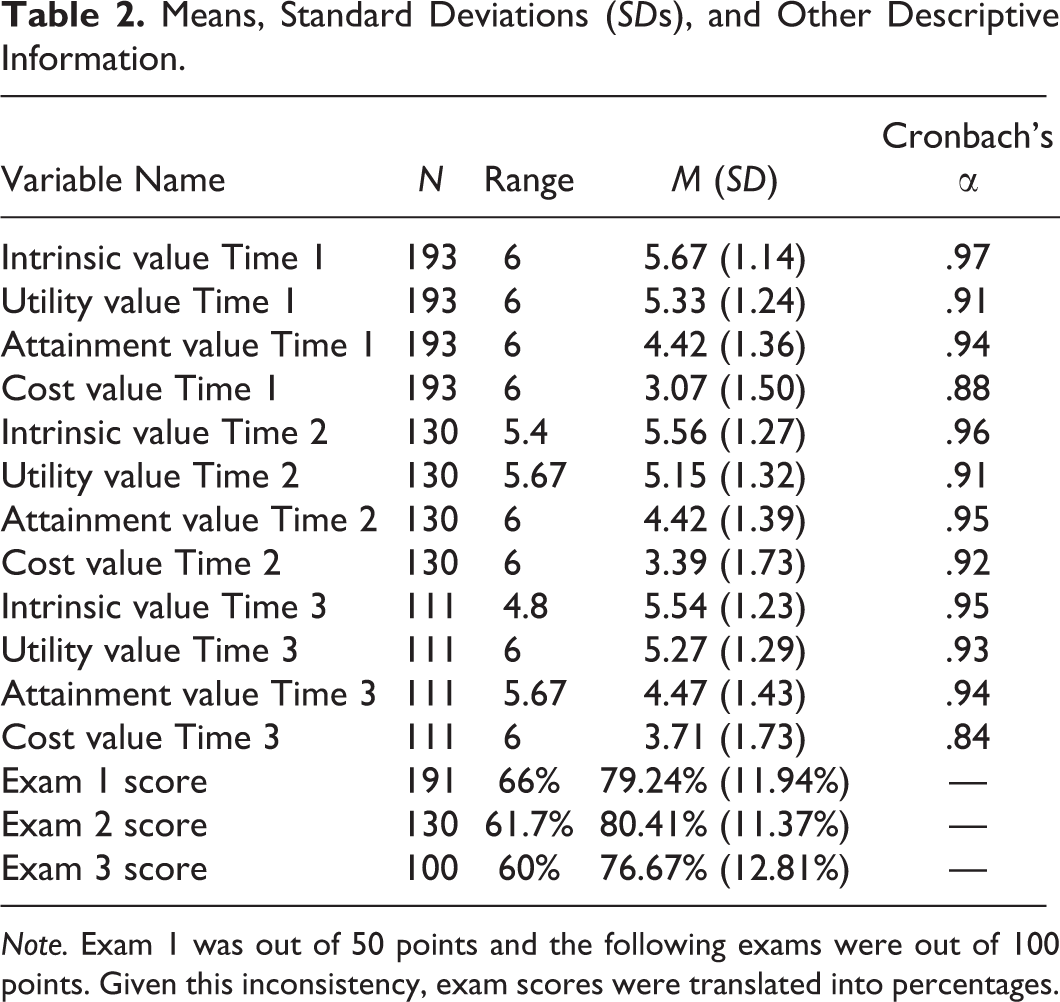
Note. Exam 1 was out of 50 points and the following exams were out of 100 points. Given this inconsistency, exam scores were translated into percentages.
Means (M) and Standard Deviations (SDs) Separated by Generation Status.
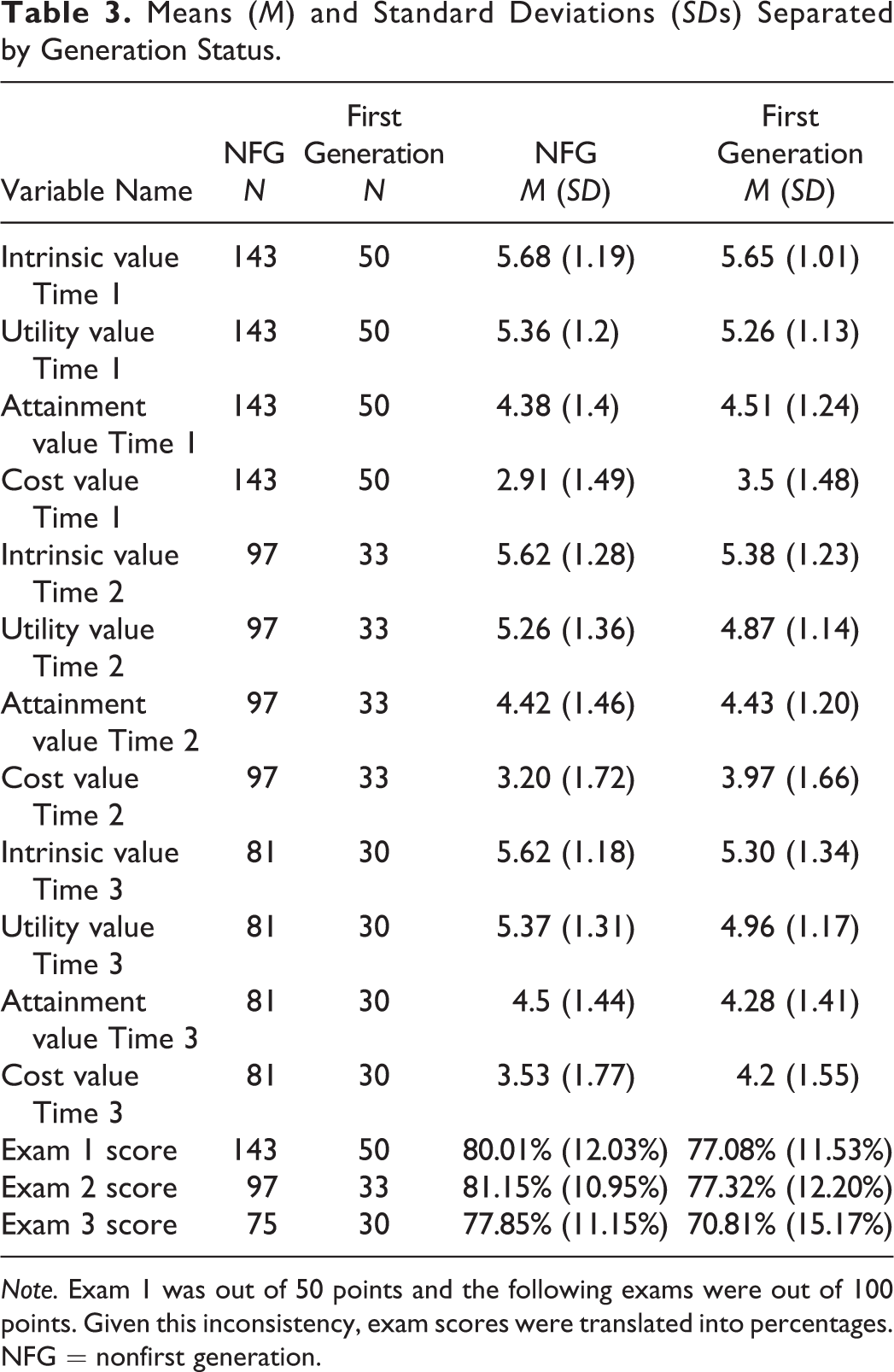
Note. Exam 1 was out of 50 points and the following exams were out of 100 points. Given this inconsistency, exam scores were translated into percentages. NFG = nonfirst generation.
Preliminary Analysis of Data
Before analyses were conducted, the data were screened for missing data points, normality, and outliers. Since there were fewer than 20% missing data points for any particular item, an item-mean score replacement was deemed to be the most effective method for handling missing data points (Downey & King, 1998). Normality could be assumed in the remaining analyses, given that the skewness and kurtosis levels were within three as an absolute value (Tabachnick & Fidell, 2001). Data were screened for outliers by using a boxplot examination with an interquartile range rule multiplier of three (Hoaglin & Iglewicz, 1987). Using this analysis, no outliers were found within the data. Because groups were predetermined and not randomly assigned, they were unequal in size. To address this, each analysis will report any violation of the Levene’s test of homogeneity.
Assessment of Demographic Differences Between FG and NG Students
A χ2 test was used to indicate demographic differences between generational status groups. The χ2 test was run on each demographic variable, but only significant results will be reported. Looking at ethnic differences, the FG student sample was significantly greater in Latino/a participants, χ2(1, N = 193) = 7.098, p = .008, and African American participants, χ2(1, N = 193) = 8.651, p = .003, and significantly lower in the amount of White participants, χ2(1, N = 193) = 8.969, p = .003, than the NFG student sample. Also, the FG student sample was significantly greater in the amount of students who did not live on campus, χ2(1, N = 192) = 5.115, p = .024, who were currently employed, χ2(1, N = 191) = 8.334, p = .004, and were significantly lower in their family annual income, χ2(3, N = 158) = 29.895, p < .001. Descriptive data can be found in Table 1.
Differences in Exam Scores and Task Value Between FG and NG Students
The first research question addressed the difference of exam scores and task value between FG students and NFG students across the semester. To address this question of change over time, a mixed factorial analysis of variance (ANOVA) was performed on each of the components and will be reported separately. Participants who did not have scores for each time point were excluded from the analysis. Results from the Greenhouse–Geisser test are reported when sphericity is violated (Greenhouse & Geisser, 1959). According to Cohen (1988), a partial η2 (
Exam scores
Research Question 1 addressed exam score difference between FG students and NFG students across the semester. A 2 × 3 mixed factorial ANOVA was conducted using time as the within-subjects factor and group (NFG and FG) as the between-subjects factor. Descriptive data for these analyses can be found in Table 3. The ANOVA showed that the Time × Group interaction was not significant, F(1.972, 193.221) = 0.349, p = .706,
There was also a significant between-subjects effect for generation status with a moderate effect size, F(1, 98) = 7.743, p < .001,
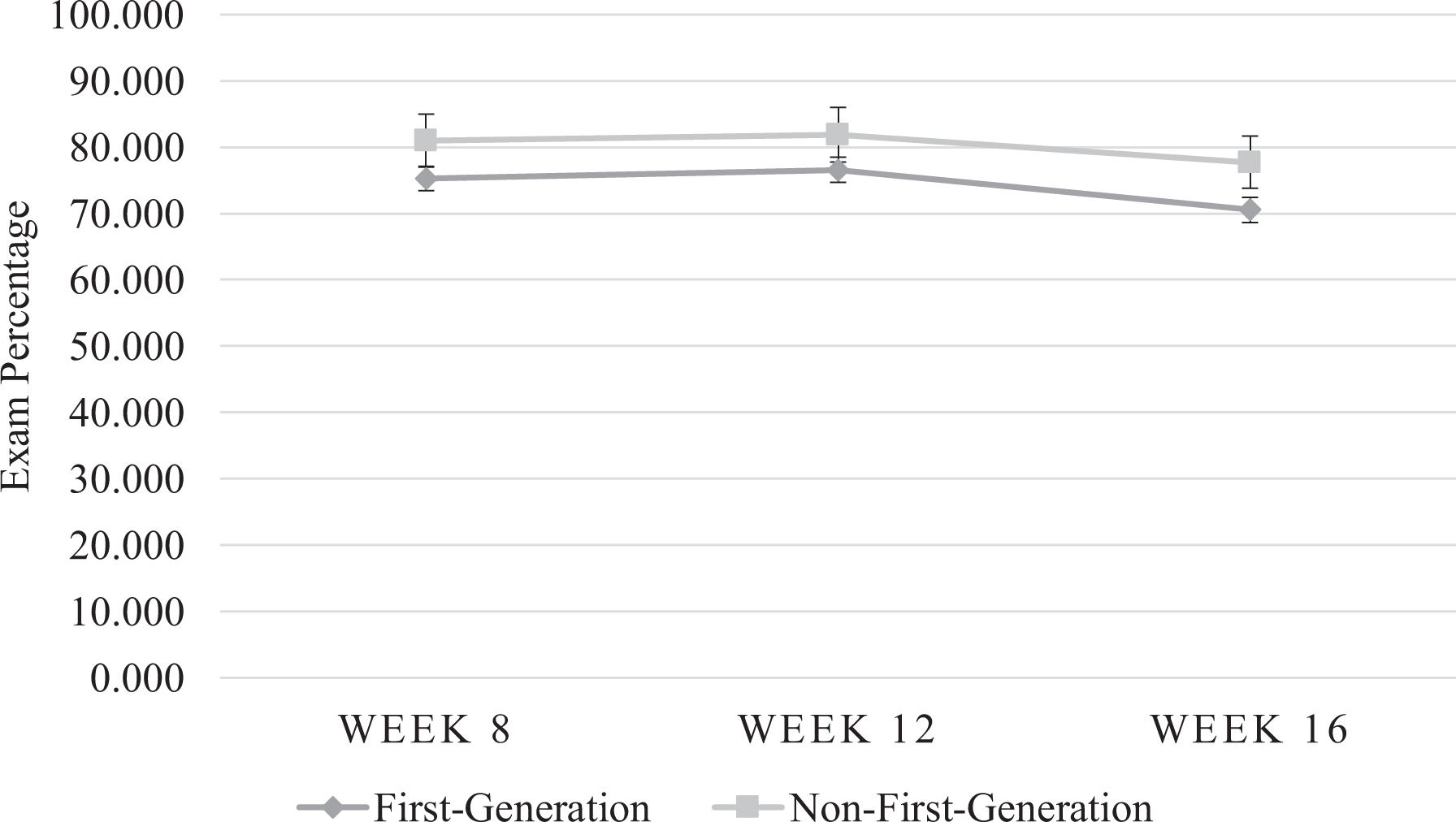
Means on exam scores at three different time points separated by generation status.
Task values
Research Question 1 part (b) addressed task value score differences between conditions across the semester. Because task value was broken up into its subcomponents (intrinsic, attainment, utility, and cost), the ANOVA results will be reported for each component. The mixed ANOVA was conducted using time as the within-subjects factor and group (NFG and FG) as the between-subjects factor. Given that the Box Test was nonsignificant in each of the following analyses, equality was assumed even with uneven group sizes (Tabachnick & Fidell, 2001).
The ANOVA indicated that there was no significant result for Intrinsic Time × Group interaction, F(1.720, 185.76) = 0.091, p = .887,
There was also a significant between-subjects effect for generation status with a moderate effect size, F(1, 108) = 7.553, p = .007,
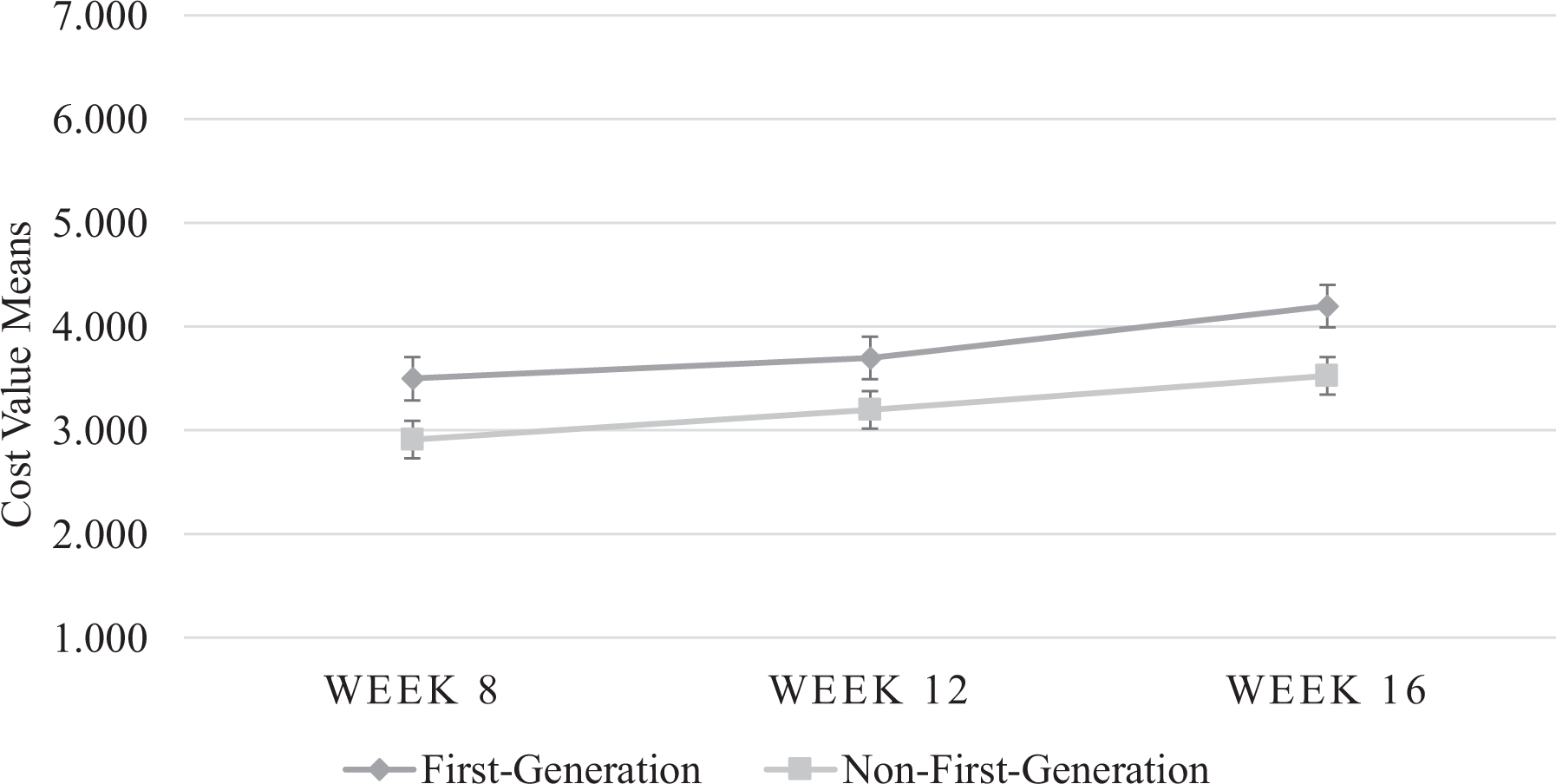
Means on cost value scales at three different time points separated by generation status.
Growth Curve Analysis for FG and NFG Students
The second research question addressed whether generation status was associated with different growth rates over the course of the semester on task values. The ANOVA results determined whether there were differences between groups across time, but to gain a clearer picture of the growth and change over the semester on task value subcomponents, growth curve modeling (GCM) was used. This specific type of analysis has benefits over an ANOVA in that further exploration of the change between participants given time and condition, as well as if participants are different in their growth depending on condition, or in this case, generation status (Singer & Willett, 2003).
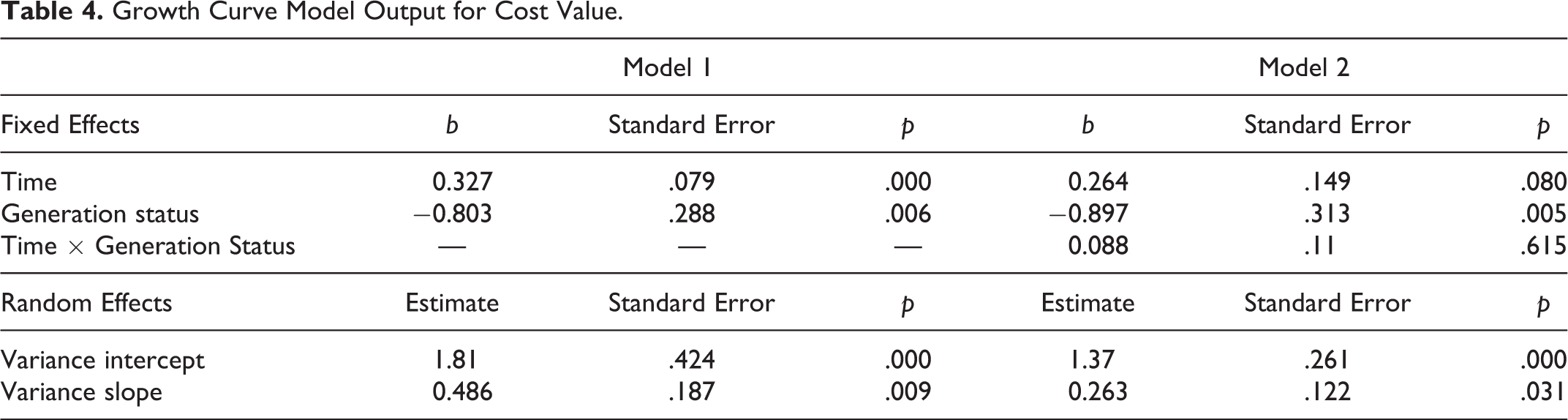
Given that the trend analysis for cost value and exam scores indicated a linear trend (p = .001), the GCM was run using a linear time trend for each model. Each model was run using a restricted maximum likelihood (REML) estimation since there was no use of model comparison and REML being less biased with smaller sample sizes. For these analyses, generation status was coded 0 = non-FG and 1 = FG and time was coded 0 for the 8th week of the semester, 1 for the 12th week of the semester, and 2 for the 16th week of the semester.
Table 4 contains the parameter estimates from the growth curve model for cost value. Model 1 included time and generation status as fixed predictors of cost value. Both time and generational status emerged as significant predictors in the model. Also, the variance estimates for students’ intercepts and slopes were both statistically significant. Model 2 incorporated the previous fixed effects, along with a term reflecting the cross-level interaction between time and generational status. This effect was nonsignificant in the model, alongside the fixed effects of time and generation status. Results are shown in Table 4.
Growth Curve Model Output for Cost Value.
Discussion
For Research Question 1, FG students were predicted to experience lower levels of intrinsic and attainment values and higher levels of cost value across the semester compared to NFG students. The repeated measures ANOVA confirmed the higher level of cost value prediction for FG students. Although the levels of intrinsic and attainment value were lower with a
Research Question 2 predicted that generation status would be a significant factor in influencing participant’s growth parameters on task values over the course of the semester. Although the repeated measures ANOVA gave an indication of the change across the semester in the dependent variables as compared by generation status, a growth curve model was used to further expand on the rate of growth and change across time. The model was not statistically significant indicating that generation status was not a predictor of attainment value, utility value, or intrinsic value growth parameters. Generation status was a predictive factor in the level of cost value at Time 1 (the intercept) and the rate of change in cost value across the semester. This finding reflects similar results found within the repeated measures ANOVA indicating that FG students exhibit higher levels of cost value than NFG across the semester and at the start of the semester.
Theoretical and Educational Implications
Looking at the results, FG students showed no significant difference in levels of attainment, utility, or intrinsic value. Given that these task values are associated with academic benefits such as interest development (Hulleman et al., 2010), academic achievement (Cole et al., 2008; Wigfield & Eccles, 2000), and academic choice (Bong, 2001; Bruinsma, 2004), the fact that FG students show no difference compared to NFG students is a positive result. Given that utility value is related to persistence (Bong, 2010), this could indicate why FG students show such resilience in their academic endeavors even when confronted with higher perceptions of cost value. This finding corroborates a similar theory found in work by Garriott and colleagues, where FG students reported high levels of life satisfaction and academic satisfaction and high levels of personal cost (Garriott et al., 2015). The findings of this study indicate that FG and NFG students have nonsignificant differences in intrinsic, utility, and attainment values, but this finding will need to be replicated in future studies to confirm this is the case.
Looking at applications to the teaching of psychology, a few implications arise from this study’s findings. FG students indicated a significantly higher level of cost at the beginning of the semester than NFG students, which suggests that FG students are starting the semester assuming that the course content is going to be more difficult for them. Researchers would argue that this is due to a disconnect between FG students and the social capital of higher education (Davis, 2012), but cost in this study was specific to psychology content and success in the course. We then see that this perception of cost only increases throughout the semester for FG students, indicating that the relevance of the material to their future goals over time is not enough to combat the perceptions of extreme cost for FG students. Even though NFG students’ level of cost also increases as the semester continues, what is troubling is that the gap between generational status does not close. FG students start higher and end higher in their perception of cost. This is especially troubling given that at least 70% of the FG students in the sample had only completed one or less semesters at a 4-year university putting these students in the danger zone for FG students given their increased likelihood to drop out after their first year of college (Ishitani, 2008; Martinez et al., 2009).
What this indicates for teaching of psychology for FG students is that educators may need to take further action within course design to reduce perceptions of high cost for FG students that may lower motivation. In work by Barron and Hulleman (2015), the role of cost value in student motivation was explored. A major takeaway from their work was that cost, specifically effort-related cost (the amount of effort required by the task itself), may not always be unmotivating. The effort can be perceived positively if the student is motivated to engage in the material, and in order to feel motivated, Barron and Hulleman (2015) argue that a student must not just value the task (utility value) but also feel as if there are no barriers preventing them from investing time, energy, and resources into the activity. Instead of lowering the amount of effort required of FG students, it would be beneficial to remove academic barriers unique to FG students, so they can focus their energy into the course material itself. For FG students, this may prove difficult due to external stressors beyond the classroom setting, but the instructor can alleviate some significant barriers that students may perceive within the classroom (e.g., availability of the professor, clarity of expectations in assignments, ease of access for help with university- and course-related requirements, and learning communities; Buch & Spaulding, 2008; Davis, 2012; Stoloff et al., 2012).
Limitations
Within this investigation, limitations exist related to the population, context, and research design. To begin, the university is considered to have students who are mid to high SES, which may affect other individual differences and access to resources. An eventual goal is to conduct a similar study within populations that sample from lower SES groups to parse out individual differences and increase external validity.
Related to the limitation above, we found that the FG student sample had significantly more underrepresented minority students and lower SES students. These demographic differences in FG versus NFG students are common in the literature (Harackiewicz et al., 2016). That is, FG students are more likely to be underrepresented minorities and come from lower SES families. Given that the goal of the study was to explore differences in FG status, we did not further analyze among ethnicities or household income levels. However, we encourage future researchers to investigate demographic group differences in depth, as this direction of research has important educational and social mobility implications. For example, Harackiewicz and colleagues (2016) found that utility value interventions were statistically more effective for FG-underrepresented minority students than FG-non-underrepresented minority students. Thus, we posit that these demographic differences are important and need to be studied in greater depth an introduction to psychology courses.
Another major limitation of this study is the scale used to measure task values. Although the scale had been previously used in peer-reviewed scholarly work and provided satisfactory reliability coefficients, the fact that only two items were used to assess cost does bring about some unease, especially when considering that cost may have multiple subcomponents as argued by current research (Barron & Hulleman, 2015; Flake et al., 2015). Future research on cost value should be cognizant of this theoretical development and select a more appropriate measure that considers all components of task value.
Future Directions
The current research project defined cost value as a student’s belief of how much effort and resources will be used to complete a task (Eccles & Wigfield, 2002). What is lacking in this definition is how a student may interpret “effort” and “resources” considering their own background. For FG students who primarily view their educative experience as a means to a better occupation (Billson & Terry, 1982; Ishitani, 2008) and experience guilt from peers and family (Hodges-Payne, 2006; London, 1992; Petty, 2014) as well as more likely to be ethnic minority students (Pike & Kuh, 2005; Terenzini et al., 1996) which can be linked to negative feelings of self-worth and belongingness (Gummadam et al., 2016; Means & Pyne, 2017), their interpretation of “effort” and “resources” could focus more on monetary components, stress on family, and cultural capital versus an NFG student who may interpret “resources” as emotional or cognitive in nature. Given these considerations, future research should consider this issue of ecological validity of cost value and seek to further understand the complexity of perception of cost value for diverse groups. For instance, it may be more appropriate for future studies of cost value perceptions of FG students to consider using an updated cost definition proposed by Barron and Hulleman (2015) that includes four subcomponents of cost: effort related to the task, effort unrelated to the task, loss of valued alternatives, and negative psychological experiences. Certain components of this definition may not be malleable, such as loss of valued alternatives, but future research should focus on the possibility of changing students’ perceptions of cost in regard to effort related and unrelated to the task as well as negative psychological experiences. Perceptions of these components of cost may be able to be changed based on educational interventions that alleviate perceptions of effort or encourage other valuing of tasks that can overpower the negative effects of cost value preventing task engagement.
Conclusion
The goal of the present study was to investigate the difference between FG students and NFG students in their task values, and exam performance in introductory psychology across the course of a semester. The findings of this study indicate that FG students experience significantly higher levels of cost value than NFG students across the course of the semester. Further, it was found that generation status was a contributor to the rate of growth and starting point of cost value over the course of the semester for participants, providing further evidence of the perception of higher education being of high cost to FG students even when the utility of the material and relevance to future goals is palpable, as what is commonly found in an introductory psychology course. The findings have important theoretical and practical implications within education and the teaching of psychology. Although much more research needs to be conducted to determine the causal relationship between task value and generation status, the initial findings of the current study provide useful information for universities to develop supports for FG college students and how psychology educators can amend curriculum to address the difficulties faced by FG college students.
Footnotes
Declaration of Conflicting Interests
The authors declared no potential conflicts of interest with respect to the research, authorship, and/or publication of this article.
Funding
The authors received no financial support for the research, authorship, and/or publication of this article.
