







Abstract
Background:
Career options available to psychology graduates are often underestimated despite psychology being a marketable and versatile degree with hundreds of career options.
Objective:
This article identifies which career options students perceive as available to psychology graduates and assesses student interest in psychology-related careers.
Method:
In Study 1, 12 focus groups consisting of 59 psychology majors were asked to list the career options available to psychology graduates. In Study 2, 430 psychology students rated their interest in 273 psychology-related careers.
Results:
Study 1 revealed careers perceived as available to psychology graduates were most often in counseling (92%) and applied-settings (50%) with child-related (42%), business (25%), and research (25%) careers listed less often. Study 2 revealed psychology majors were most interested in counseling and child-related careers, with 18 of their top 20 careers of interest involving mental health or working with children.
Conclusion:
Students are often unaware of career options in psychology beyond counseling. Consequently, they tend to be most interested in careers related to counseling and children, particularly careers involving the mental healthcare of children.
Teaching Implications:
Findings may encourage psychology departments to communicate the broad range of psychology career options for the recruitment and advising of psychology majors.
It has been previously reported that Gen Z students, born between 1995 and 2010 (Seemiller & Grace, 2016), are likely to gravitate toward the psychology major (Collisson et al., 2021). Their generations’ focus on diversity, culture, and inclusiveness (APA, 2013a), their own mental health struggles and previous experience with psychotherapy (APA, 2019), as well as their desire to help others thrive in a threatening world (Seemiller & Grace, 2016)—such as overcoming the negative effects of living through a global pandemic and continued racial injustice—suggest Gen Z students may be a good fit with the psychology major (Collisson et al., 2021). Many Gen Z students may underestimate the marketability and versatility of a psychology degree (Appleby, 2018; Halonen & Dunn, 2018) and thus perceive limited career options available to psychology majors.
In a recent graduation speech to Fremont High School’s 2020 graduating class, Senator Ben Sasse of Nebraska criticized the career options, employability, and salary of psychology graduates before discouraging students from selecting psychology as a major. He said, 95% of all gainfully employed psychologists—and I’m serious, there are dozens of them who are gainfully employed—their job is really just to help people forget high school. And the other 5%, they just research hamsters who got lost in mazes. […] There will always be money to be made in psychology. No, that’s a joke. Do not—if you’re heading to college—do not major in psychology. That part’s not a joke. (Fremont Tribune, 2020)
As compared to graduates from professional programs, such as nursing, business, or engineering, psychology graduates tend to accept jobs lower in salary, not requiring a college degree, nor directly related to their major (Rajecki & Borden, 2009). Indeed, surveys of psychology graduates reveal as many as 37% are employed in areas not at all related to psychology; whereas as few as 23% are employed in areas directly related to psychology (Borden & Rajecki, 2000; Rajecki & Borden, 2009). Thus, it is not surprising many psychology students feel unprepared for postgraduate careers and perceive their degree as not highly marketable (Vespia et al., 2018).
As Gen Z students consider going to college and selecting a major, they will likely do so while the U.S. is in the greatest economic downturn since the Great Depression (Gopinath, 2020). Therefore, many of them are likely already questioning the career options available to psychology graduates. Given high school students’ relatively limited background in psychology (Department of Education, 2011; Ernst, 2016), prospective students may listen to Senator Sasse and others’ underestimate of psychology’s versatility and rely on negative stereotypes, such as “you can’t do anything with an undergraduate psychology degree” or, “you have to go to graduate school to get a job” (Brinthaupt et al., 2012).
Thus, to recruit and retain students, it is imperative psychology programs clearly communicate the many career options available to its graduates (Appleby, 2018; Meyers, 2020). In fact, a needs assessment revealed psychology students desire greater professional development and perceive faculty members as experts on psychology-related careers (Vespia et al., 2018). Unfortunately, faculty often do not feel prepared to provide career advising (Schwartz et al., 2018). This is particularly true given some faculty’s limited professional experience outside of the academy and penchant for research and academic careers (Halonen & Dunn, 2018). This hesitancy or inability on the part of faculty to communicate the wide range of career options available to psychology majors is reflected in a national survey of psychology chairs that shows professional development receives less focus in psychology programs than other APA goals, such as critical thinking or communication (Stoloff et al., 2015).
Fortunately, there are many resources to assist faculty in career advising, including a special issue of Teaching of Psychology (Christopher & Golding, 2018), that can support and encourage professional development within psychology programs. Recommendations often include providing more career planning activities (e.g., self-assessment and career exploration; Prehar & Ignelzi, 2012), greater connectivity with professional alumni (Lawson, 2018), more widely accessible advising (Golding et al., 2018; Swartz et al., 2018), and most commonly, greater inclusion and focus on careers within the curriculum (Atchley et al., 2012; Halonen & Dunn, 2018; Haskell et al., 2012; Petersen et al., 2014; Roscoe & McMahan, 2014; Thomas & McDaniel, 2004).
In the process of providing professional development for psychology majors, it is important for faculty to be aware of which careers are of special interest to students, as well as which careers they may overlook or be unaware. This information may guide psychology programs as they consider which careers to highlight on promotional materials, mention when meeting with prospective students, or invite presenters for career panels for their majors. A greater knowledge of the careers that students are most interested in, and those they tend to overlook or be unaware, can reveal “career blind spots” which advisors and psychology programs can then target.
What Can You Do With a Psychology Degree?
According to a national survey of college graduates (NSF, 2017), an estimated 3.5 million people hold a bachelor’s degree in psychology. Of psychology graduates with a bachelor’s degree, approximately 2 million (56%) do not earn a graduate degree. Of the remaining 1.5 million psychology graduates who earned a graduate degree, 1.1 million students (30%) did so in a field other than psychology. Only 14% of undergraduate psychology majors earned a graduate degree in a psychology program (APA, 2018b). Furthermore, 72% of people who hold a Bachelor’s degree in psychology are employed, 24% are not in the labor force, and only 4% are unemployed. Holding an advanced degree in psychology marginally improves employability with 76% of those with a Master’s degree and 82% of those with a doctoral degree being employed (NSF, 2017).
Unlike graduates from professional programs, like nursing which has highly focused career options (Beck, 2000), psychology graduates have a wide range of career options (Appleby, 2018). Surveys of college graduates show those with a bachelor’s degree in psychology were employed in 92 out of 129 different occupational categories (NSF, 2017). No single occupational category was selected by more than 5% of psychology graduates—with management, social work, and administration tied for the most popular category. A previous survey of college graduates, which used a broader classification system, again showed no clear majority in career type among graduates with a bachelor’s degree in psychology (NSF, 2013). The job categories reported most often were in sales (20%), other (19%), professional service (17%), management (16%), teaching (11%), finance (9%), employee relations (5%), and research (3%).
As these national surveys reveal, there are hundreds of career options available to psychology graduates. In 2018, Appleby compiled a list of approximately 300 psychology-related careers, which is publicly available on the Society for Teaching of Psychology’s (STP) webpage (https://www.teachpsych.org). Each career contains several URL links to additional information regarding the job description, education needed, anticipated job outlook, salary, and other relevant information. The careers are grouped into 15 categories, including for example: counseling, business, human resources, and military.
Of the hundreds of psychology-related careers compiled by Appleby (2018), only 57 include the term “psychologist” in the job title. The remaining 200 and more careers relate more generally to working with people or data. Less than half of the careers listed only require a bachelor’s degree (see Landrum, 2018 for additional careers options for a BA in psychology). Because there is a large number of careers in so many different areas, psychology students are likely unaware of the breadth of career options available to graduates.
Given the wide-ranging career options for psychology majors (Appleby, 2018), the curriculum of undergraduate psychology programs is designed to broadly develop knowledge, skills, and abilities and thus prepare students for graduate training or the workforce (APA, 2013a). Undergraduate psychology programs are well positioned to provide applied-learning activities (Cranney et al., 2011), develop professional skills (McGovern et al., 2010), and thus connect students’ undergraduate experience with post-graduate career and advanced educational goals (Morris et al., 2013). Moreover, the APA Guidelines for the Undergraduate Psychology Major (2013) suggests programs should foster psychological knowledge, critical thinking, social responsibility, communication, and professional development. Recently, the APA Committee on Associate and Baccalaureate Education convened a working group to identify psychology-related skills most relevant to the 21st century workforce (see Naufel et al., 2018, 2019). Specifically, Naufel and colleagues reviewed psychology-related job postings and surveyed employers who most often hire psychology graduates regarding the skills they most desired in applicants (e.g., ability to listen, learn new material, work effectively in teams; Landrum & Harrold, 2003). The working group identified 17 specific skills, grouped in five skill domains: cognitive, communication, personal, social, and technology. These skills map well onto many, if not all, of the goals for undergraduate psychology programs (APA, 2013a). Thus, given the many career opportunities available to psychology graduates (Appleby, 2018) and a wide-range of skill development within psychology curriculum (APA, 2013a; Naufel et al., 2018, 2019), a degree in psychology is both versatile and marketable.
Current Research
Contrary to Senator Sasse’s graduation speech, psychology graduates are in demand (Halonen, 2019). There are many wide-ranging career options available to psychology graduates (Appleby, 2018) and yet, psychology students may not be fully aware of their options. They may have limited perceptions of the careers available to them (Roscoe & McMahan, 2014). Therefore, identifying the careers of interest to Gen Z students, particularly those they may overlook or be unaware, is of particular usefulness for teachers of psychology. Knowing which careers students perceive as available options, as well as the ones of which they are unaware, may inform psychology programs in a number of ways. It may explain why some prospective students underestimate the career options for psychology graduates, inform which careers faculty choose to discuss in class, and which professionals are invited to career panels. Thus, in two studies, we asked which careers Gen Z psychology students perceive as available to graduates and which, of the many, psychology-related careers available to them are they most interested in (Appleby, 2018).
The aims of the current research were twofold. First, in Study 1, we sought to identify which careers Gen Z students perceive as available to psychology graduates. To answer this question, we conducted focus group interviews of Gen Z psychology majors, specifically asking them to list career options available to psychology graduates. Given the exploratory and open-ended nature of students’ responses, we content coded their responses to identify common career types. The goal of content coding responses was to reveal common perceptions among students, as well as which careers tend to be overlooked or unknown. We did not predict the number of careers students may list. Given stereotypes about psychology’s limited career options (Brinthaupt et al., 2012), we predicted that students would likely generate far fewer career options than the hundreds of psychology-related careers listed by Appleby (2018).
In Study 2, we sought to assess students’ interest in each of the 273 specific, psychology-related careers listed by Appleby (2018). In Study 2, Gen Z psychology students, including psychology majors and non-psychology majors, rated their interest in hundreds of psychology-related careers, including those they may not have realized were related to psychology. We did not predict students’ interest in any specific career. Instead, in a descriptive fashion, we created lists of the top 20 careers of most and least interest for psychology majors and non-psychology majors. Finally, in an exploratory fashion, we compared whether psychology and non-psychology majors differ in their overall career interest, interest in careers which require graduate rather than bachelor’s degrees, and interest in careers within various psychology subdisciplines.
We suspect our findings will extend previous research regarding psychology students’ career perceptions and interests. In fact, many studies have documented psychology students’ desire for greater professional development (Vespia et al., 2018), the versatility and marketability of a psychology degree (Halonen, 2019; Halonen & Dunn, 2018), and faculty members’ unfamiliarity with career advising (Schwartz et al., 2018), particularly given the large number of psychology-related careers available (Appleby, 2018; Landrum, 2018). Thus, identifying which careers Gen Z students perceive as available, followed by their careers of greatest interest, may inform researchers, advisors, and administrators as they promote professional development within psychology programs (APA, 2013a)
Study 1: Perceived Careers Available to Psychology Graduates
Method
Participants
Fifty-nine participants (51 women, 86%; 8 men, 14%) were recruited from four sections of lower-division psychology courses at a private, diverse (designated by the Department of Education as a Hispanic serving and Asian American and Native American/Pacific Islander serving institutions) university in Southern California. Although, 86% of participants in this study were female, this compares to national research showing that 78% of psychology majors are female (Department of Education, 2018). The study was part of a larger project to understand incoming Gen Z psychology majors and thus was available only to freshman or sophomore psychology majors.
All participants were between the ages of 17–21 years (Mage = 18.29, SDage = 0.83). The majority of participants were 18 years old (58%), followed by 19 years old (22%) and 17 years old (12%). Approximately 80% identified as freshman, followed by 20% sophomore. Participants varied in race and ethnicity, such that the majority of participants identified as White (52%), followed by Hispanic (23%), Asian (11%), Black (9%), and other (5%). Sixteen participants (28%) identified as first-generation college students. Three participants (5%) reported transferring into the university from another institution.
Materials and Procedure
Psychology majors enrolled in General Psychology or Human Growth and Development were invited to participate in a focus group study titled, “Discussion of the Psych Major (Only available for psychology majors).” Students were recruited online via the department’s SONA system, a platform for recruiting and crediting student participation in research. When students selected the study, they read a brief description which invited them for a discussion about why they chose to major in psychology, their expectations, and career options after graduation. Study timeslots were scheduled for 1-hour blocks and participants had the option to receive either one SONA credit 1 or a $10 USD Amazon gift card as remuneration.
To ensure students participated within a group, focus groups of fewer than three students were rescheduled until a time when more participants had enrolled. Thus, there were a total of 12 focus groups, ranging in size from three to eight students (Mgroup size = 4.92, SDgroup size = 1.56). Focus groups were located in a private room, equipped with recording technology and comfortable seating. The length of focus groups ranged from 25.43 minutes to 60.93 minutes (Mtime= 45.09 minutes, SDtime = 10.89 minutes).
Upon participants’ arrival, a trained 2 student research assistant welcomed the participants and asked them to complete an Informed Consent Form and select their preferred remuneration method. All participants were asked whether they wished to receive either one SONA credit or a $10 USD gift card to Amazon.com. Of the 59 participants, 55 (93%) chose to receive course credit. No faculty member was present at any of the focus groups.
Once all participants arrived, the research assistant asked 20 open-ended questions, pausing for responses as appropriate. Focus group responses were audio recorded and later transcribed by trained research assistants. All questions and material are publicly available via the Center for Open Science (Collisson, 2021). Of the 20 questions asked of participants, one question (the 10th question asked) related to the current study. It was, “What type of jobs are available to psychology majors?” At the conclusion of the study, participants were debriefed, remunerated, and dismissed.
Results
The focus group interviews were first transcribed and then four research assistants and the first author read each group’s responses and coded content themes via group discussion. When participants specified a specific career title (e.g., Child Life Specialist), it was directly coded as a specific career category. When participants described a career in general (e.g., someone who helps children), the researchers content coded a general career category (e.g., children-focused). Any disagreements regarding content code categories were resolved collectively via a discussion until consensus was reached. Frequencies of careers mentioned are listed in Table 1.
Content Analysis and Frequency Results Regarding Types of Jobs Available for Psychology Graduates.
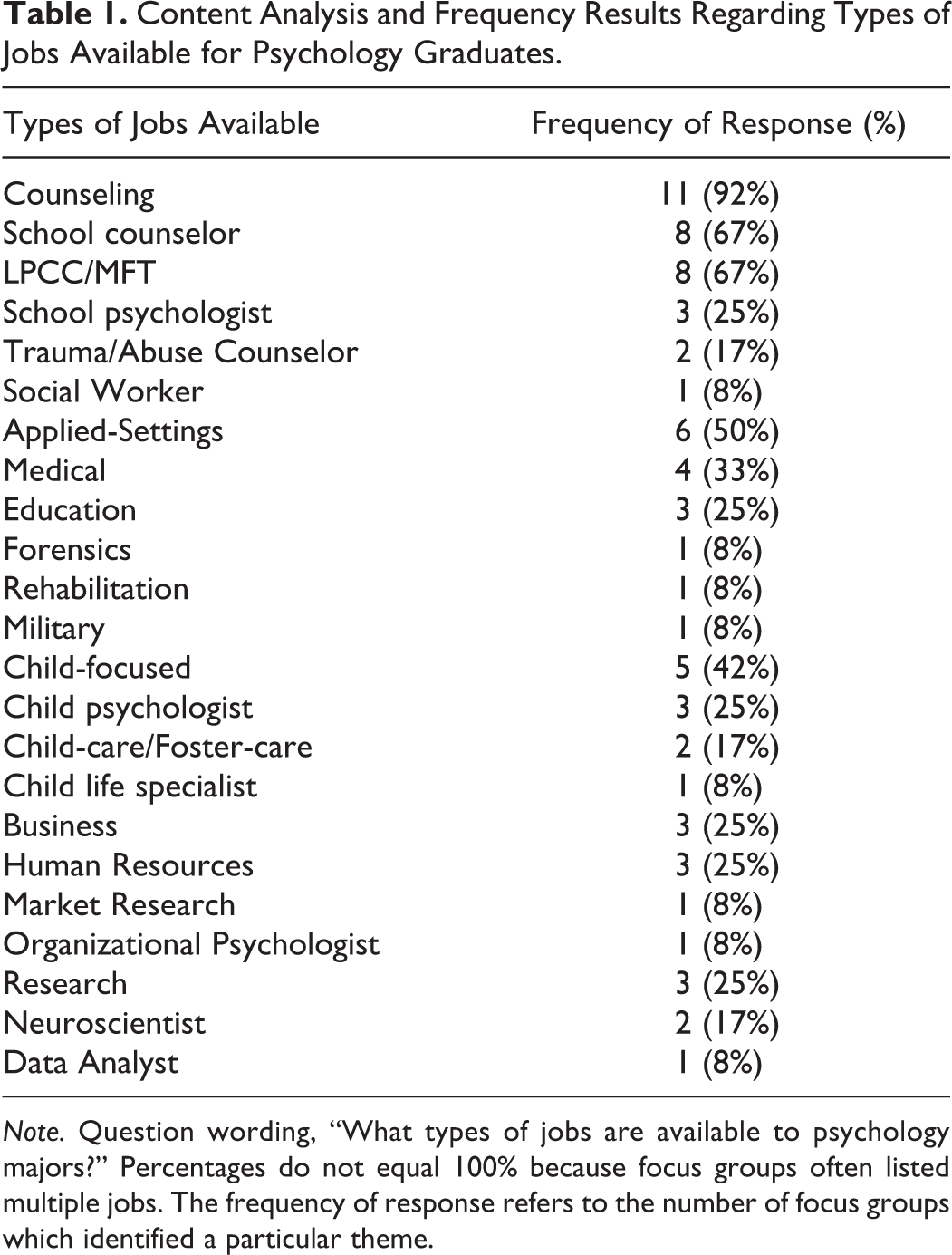
Note. Question wording, “What types of jobs are available to psychology majors?” Percentages do not equal 100% because focus groups often listed multiple jobs. The frequency of response refers to the number of focus groups which identified a particular theme.
To assess interrater reliability, two additional research assistants later read each focus group’s response and independently coded responses using the previously created categories. Their content code results demonstrated high levels of interrater reliability, and acceptable agreement with the previous research team’s initial content coding results (shown in Table 1), as evidenced by 84% pairwise agreement across raters. Cohen’s κ, a metric which adjusts for chance agreement among raters, also showed acceptably moderate to substantial levels of agreement (κ = .58; Cohen, 1960; see McHugh for further interpretation). Both researchers’ content code results aligned with those presented in Table 1, as evidenced by 83% and 90% pairwise agreement respectively. All transcripts, content code results, and interrater reliability analyses are publicly available as supplemental material.
As seen in Table 1, Gen Z psychology majors most often identified counseling related careers as available to psychology graduates. School Counselor and Clinical Counselor/Therapist were the two most commonly listed careers. The second most commonly listed career category was in regard to other careers in applied psychology. No groups mentioned specific applied careers but described how psychologists could work in hospital or school settings, for example. Less than half of the focus groups mentioned any careers related to children. The least often listed careers were in business and research.
Discussion
The majority of focus groups of psychology majors perceived careers in counseling as most available. Approximately half listed careers in applied settings, such as medical or education; fewer mentioned careers related to research, children, or business, such as human resources or marketing. This is surprising because psychology graduates, especially those with a bachelor’s degree, are often employed in areas such as sales, management, and administration (NSF, 2013, 2017). Sales, management, and administration were not specifically mentioned in students’ open-ended responses. This suggests a potential gap in psychology students’ knowledge of their own career options.
In all, 18 careers were listed by the focus groups. Thirteen careers were listed by name (e.g., School Counselor, Neuroscientist) and five were described more generally as applied psychology careers within medical, educational, forensic, rehabilitation, or military fields. Given the hundreds of career options available to psychology graduates (see Appleby, 2018), participants likely overlooked or were unaware of other career options. To further explore students’ interest in psychology-related careers, particularly those they overlooked in Study 1, we conducted Study 2.
Study 2: Interest in Psychology-Related Careers
Method
Participants
Five hundred and eight Gen Z students enrolled in lower-level psychology courses (i.e., General Psychology, Human Growth and Development) participated. Sixteen participants started, but did not complete, the survey and were excluded from analysis. To ensure data quality, the time participants took to complete the survey was analyzed. Eleven participants had exceptionally large completion times (i.e., greater than 42.68 hours) and were removed from analysis. After standardizing the remaining participants’ response time, eight participants had z-scores greater than 3.0 and were considered outliers and excluded from analysis (Ratcliff, 1993). Nineteen participants were excluded because they completed the survey in an unreasonably short amount of time, less than 5 minutes which equates to approximately one item per second. After excluding these participants, the average completion time was 16.09 minutes (SDTime = 17.26) and ranged from 5.18 minutes to 2.89 hours. Finally, 20 participants were excluded because they answered the same rating for all careers (15 participants selected all 1’s, four selected all 3’s, and one selected all 5’s).
Participants’ ages ranged from 17 to 29 years (Mage = 19.23, SDage = 1.43). Most participants were 18 years old (n = 150, 35%), followed by 19 years old (n = 147, 34%). Because our focus was on Gen Z psychology students’ career interests specifically, we excluded the three participants older than 25 from our analyses (i.e., excluded one participant age 27 and two participants age 29). Thus, our final sample size was 430 participants (317 women, 74%; 113 men, 26%). Participants’ age ranged from 17 to 24 years (Mage = 19.18, SDage = 1.21).
The plurality of participants identified as White (n = 207, 48%), followed by Hispanic (n = 89, 21%), Asian (n = 66, 15%), Biracial (n = 29, 7%), Black (n = 25, 6%), and Other (n = 14, 3%). Most participants were Freshmen (n = 201, 47%) and Sophomore (n = 133, 31%), followed by Junior (n = 69, 16%) and Senior (n = 27, 6%). Seventy-three participants (17%) were psychology majors. There were 357 non-psychology majors (83%); the most popular other majors included Nursing (n = 90, 21%), Kinesiology (n = 68, 16%), Allied Health (n = 37, 9%), and Undeclared (n = 21, 5%).
Materials and Procedure
Participants in General Psychology and Human Growth and Development courses were recruited via a SONA student research participation system, and presented with an online survey. The survey was said to last no more than 30 minutes and thus award 0.5 SONA credits. The purpose of the study was presented as a “survey to better understand people’s interest in various types of careers.” Participants were not told the careers were related to psychology. If students agreed to participate, they were presented with an online URL link to the survey, which was hosted via Qualtrics survey software.
The online survey presented participants with 273 psychology-related careers (see Appleby, 2018) in random order. The list of careers was adapted from the “Online Career-Exploration Resource for Psychology Majors” created by Appleby (2018), available on the Society for Teaching of Psychology’s website (https://teachpsych.org). Note that the list of careers used in the study was slightly smaller than the online list because careers which appeared to be duplicates or whose names were exceptionally similar were excluded. All materials are available online via the Center for Open Science (Collisson, 2021).
For each of the 273 careers, participants were asked to rate their degree of interest, using a 5-point scale ranging from 1 = Not at all interested to 5 = Extremely interested. For the sake of brevity, participants were not provided with a job description for each career. If participants were unfamiliar with a job or career, they were asked to conduct a brief search online. Afterward, participants completed basic demographic items (i.e., age, gender, ethnicity, major) and were debriefed.
Results
Raw data and descriptive statistics of students’ interest in all 273 careers are available as supplemental material online via the Center for Open Science (Collisson, 2021).To summarize which careers were the most interesting to current Gen Z psychology majors, we first divided the sample into psychology majors and those majoring in a discipline other than psychology. Then, we calculated the mean interest in each career and rank ordered the careers to create lists of the 20 careers of greatest interest (Table 2), as well as the 20 careers of least interest (Table 3), for psychology majors and non-psychology majors, respectively.
Top 20 Psychology-Related Careers of Greatest Interest to Gen Z Students Majoring in Psychology Versus Other Fields.
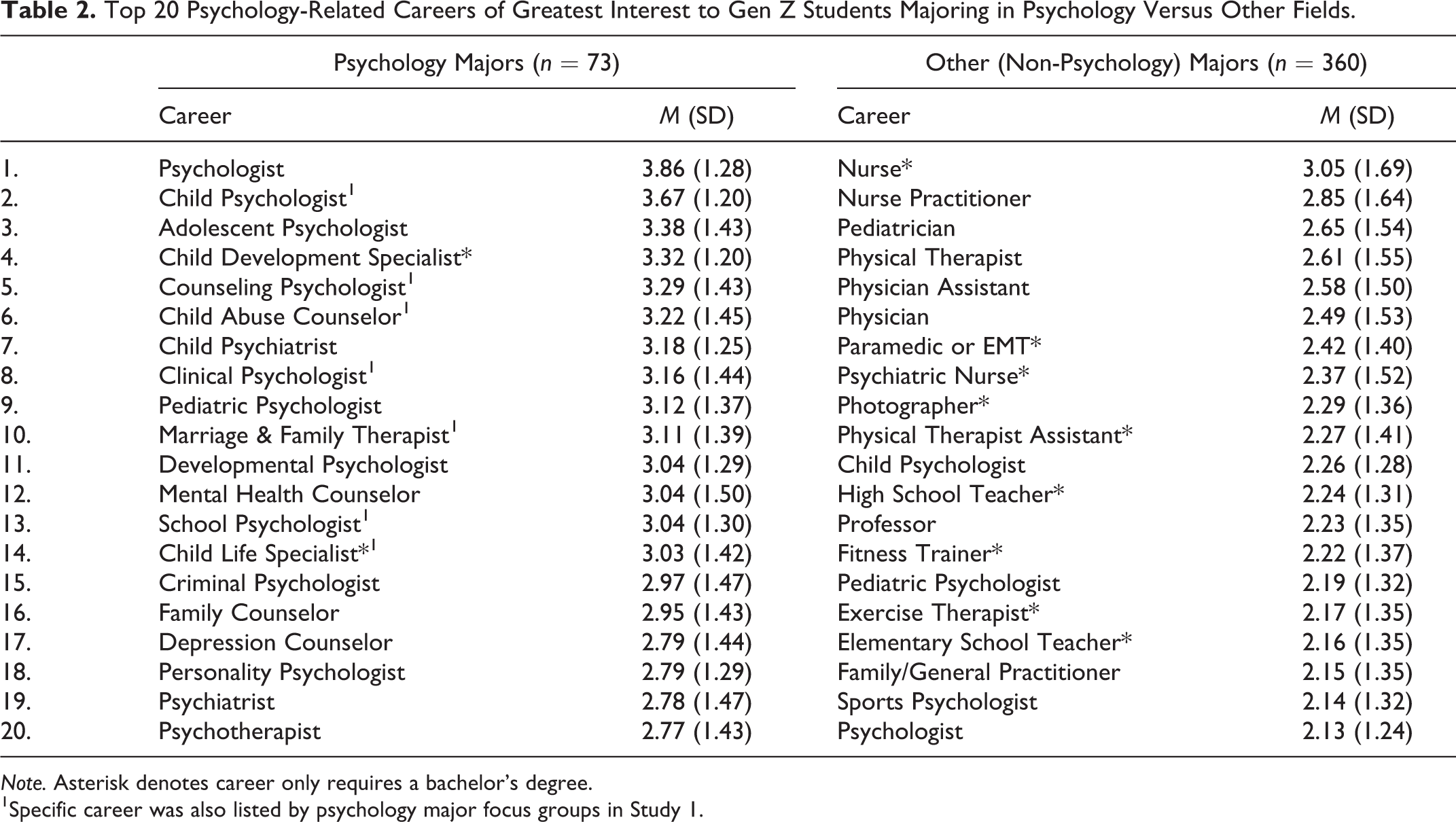
Note. Asterisk denotes career only requires a bachelor’s degree.
1Specific career was also listed by psychology major focus groups in Study 1.
20 Psychology-Related Careers of Least Interest to Gen Z Students Majoring in Psychology Versus Other Fields.
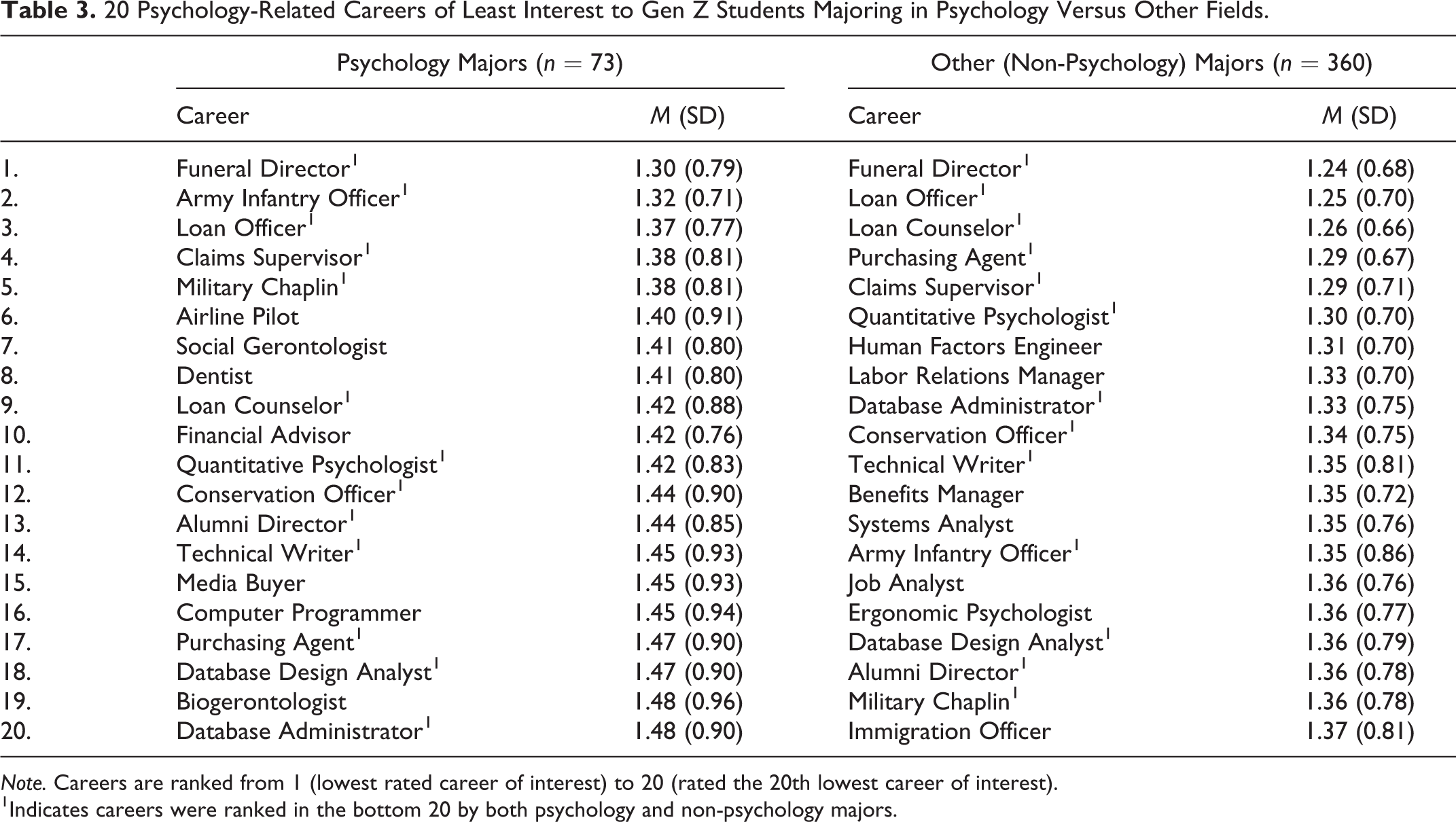
Note. Careers are ranked from 1 (lowest rated career of interest) to 20 (rated the 20th lowest career of interest).
1Indicates careers were ranked in the bottom 20 by both psychology and non-psychology majors.
Psychology Majors’ Career Interests
As seen in Table 2, psychology majors were most interested in careers related to counseling and children. Eighteen of the top 20 career interests of psychology majors involved mental health service or working with children. Eight of the top careers include both counseling and children (Child Psychologist, Adolescent Psychologist, Child Development Specialist, Child Abuse Counselor, Child Psychiatrist, Pediatric Psychologist, School Psychologist, Child Life Specialist).
Psychology majors were largely interested in counseling-related careers. This mirrored the findings in Study 1, such that psychology majors most often perceived counseling-related careers as available to graduates. However, as shown in Table 2, careers related to developmental psychology in general, particularly those involving children, were also of strong interest to psychology majors. These findings suggest psychology majors may overlook or be unaware of careers related to children and families, despite their interest in working with children.
Several psychology-related careers were notably absent from psychology majors’ list of top career interests. Psychology majors’ interest in Industrial/Organizational Psychology ranked #62 overall, yet the Bureau of Labor Statistics projects Industrial/Organizational Psychology to be the fastest growing occupation, with an anticipated growth rate of 53% between 2014 and 2022 (Farnham, 2014). Similarly, the Bureau of Labor Statistics projects Genetic Counselor to be the ninth fasting growing occupation (Farnham, 2014), yet participants interest in Genetic Counseling ranked #155 overall.
Additionally, Table 3 shows the lowest rated careers of interest for psychology majors. Of the 20 careers which elicited the least interest, 13 were also listed by non-psychology majors, including the five lowest rated careers for psychology majors (Funeral Director, Army Infantry Officer, Loan Officer, Claims Supervisor, Military Chaplin). Although such careers could be of interest to some specific students, our findings identify these careers as generally of low interest to students, regardless of whether they major in psychology. Of note, Quantitative Psychologist was also listed within the 20 least interesting careers by both psychology and non-psychology majors. Careers such as Airline Pilot, Social Gerontologist, and Dentist were rated of least interest by psychology majors, but not non-psychology majors.
Non-Psychology Majors’ Career Interests
The top-rated psychology-related careers identified by students who are not psychology majors are also reported in Table 2. They tend to be most interested in careers related to healthcare. However, this finding should be interpreted cautiously given the large number of Nursing, Kinesiology, and Allied Health majors included in the sample. Nevertheless, it may be worthwhile for psychology faculty teaching lower-division courses to highlight the field of health psychology and other health related psychology careers (e.g., Public Health Social Worker, Psychiatric Nurse), the importance of a social science background when preparing for the MCAT (APA, 2013b) and careers in nursing, physical therapy, and allied health. Pediatric nursing and child-centered careers (e.g., Child Abuse Counselor, Family Caseworker) are also likely to capture the interest of non-psychology and psychology majors alike.
Exploratory Analyses
In an exploratory fashion, we compared psychology and non-psychology majors’ career interest ratings by creating 18 summary scores. First, we calculated average interest in all psychology-related careers by averaging participants’ interest ratings for all 273 careers. Second, we calculated two scores to summarize interest in psychology-related careers which require either a bachelor’s degree or graduate degree, as indicated by Appleby (2018), by averaging participants’ interest ratings for careers requiring a bachelor’s or graduate degree, respectively. Third, we calculated scores to represent participants average interest in careers from 15 psychology subfields, as indicated by Appleby (2018) and seen in Table 4, by averaging participants’ interest ratings of careers within each subfield. Some careers were listed in more than one subfield, such as Child Life Specialist (listed in children/families, health and medical services subfields) and Marriage and Family Therapist (listed in children/families, counseling, therapy subfields). All psychology-related careers, their education requirement, and subfield are available on the Society for Teaching of Psychology’s webpage (https://teachpsych.org); coding, syntax, data, and analyses are available via the Center for Open Science (Collison, 2021).
Comparisons of Psychology and Non-Psychology Majors Average Career Interest by Career Educational Requirement and Psychology Subfield.
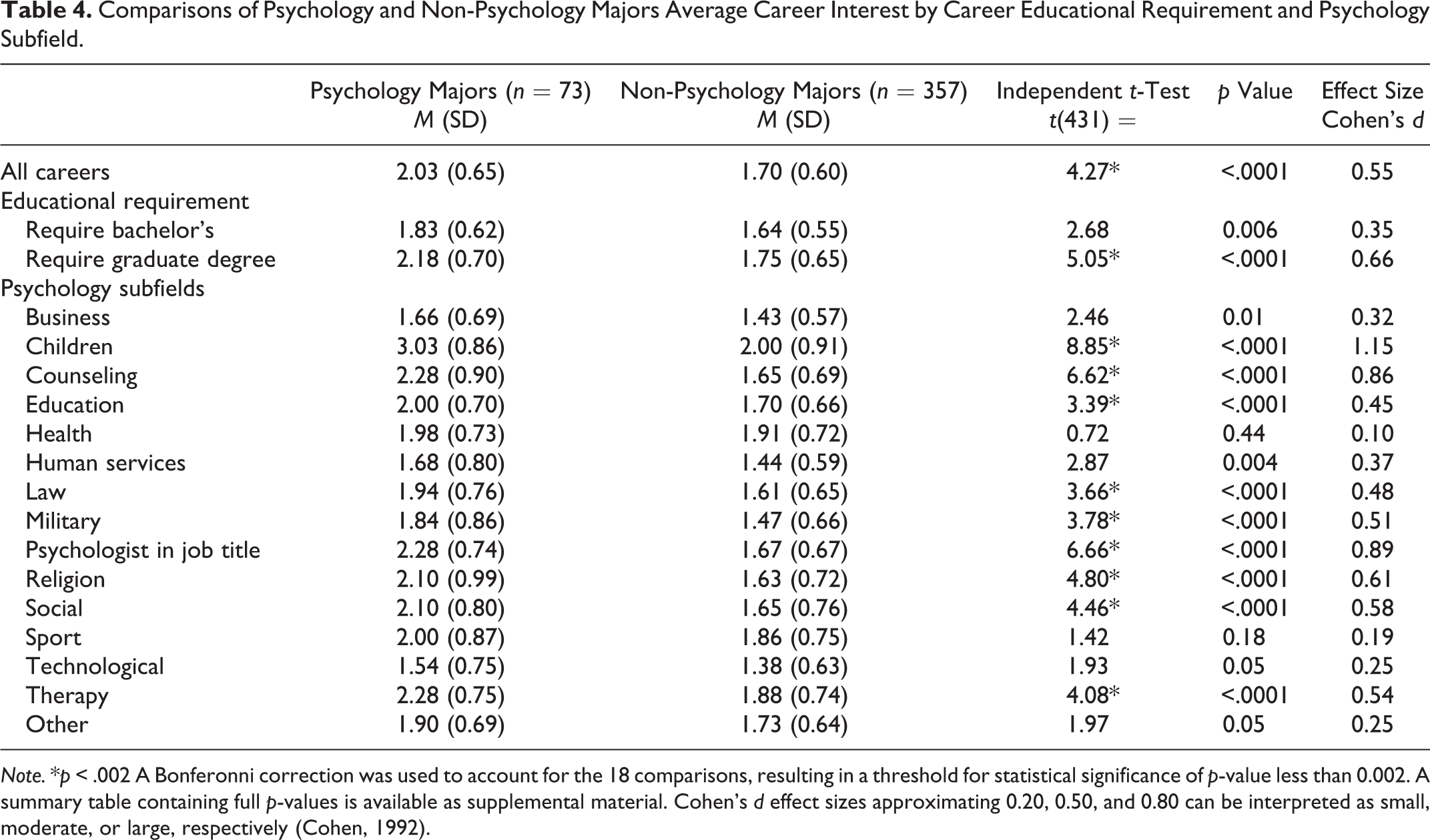
Note. *p < .002 A Bonferonni correction was used to account for the 18 comparisons, resulting in a threshold for statistical significance of p-value less than 0.002. A summary table containing full p-values is available as supplemental material. Cohen’s d effect sizes approximating 0.20, 0.50, and 0.80 can be interpreted as small, moderate, or large, respectively (Cohen, 1992).
To compare psychology majors and non-psychology majors average career interests, we conducted a series of independent samples t-tests, using a Bonferroni correction to account for inflated Type 1 error rates (see Streiner & Norman, 2011). As seen in Table 4, psychology majors had significantly greater interest, on average, for all psychology-related careers than non-psychology majors. Psychology majors, as compared to non-psychology majors, also expressed greater interest in careers which required a graduate degree.
We further explored the potential interaction between psychology majors, versus non-majors, interest in careers which required a graduate degree, versus bachelor’s degree, by conducting a 2 (major: psychology, non-psychology) × 2 (education requirement for career: bachelor’s degree, graduate degree) mixed factorial ANOVA, with educational requirement as a within-subjects variable. As seen in Figure 1, there was a significant main effect of major, F(1, 431) = 17.20, p < .001, ηp2 = .04, such that psychology majors had greater career interest on average than non-psychology majors. This was a small to moderate effect size (Cohen, 1965; ηp2 = .01 and ηp2 = .06 are interpretable as a small and moderate effect sizes, respectively). There was also a large, significant main effect of education requirement, F(1, 431) = 151.69, p < .001, ηp2 = .26, such that careers requiring a graduate degree elicited greater interest than careers which required a bachelor’s degree. There was also a large, significant, spreading interaction between major and education requirement, F(1, 431) = 41.04, p < .001, ηp2 = .09, such that stronger interest in careers requiring a graduate, rather than bachelor’s degree, was greater for psychology majors than non-psychology majors.
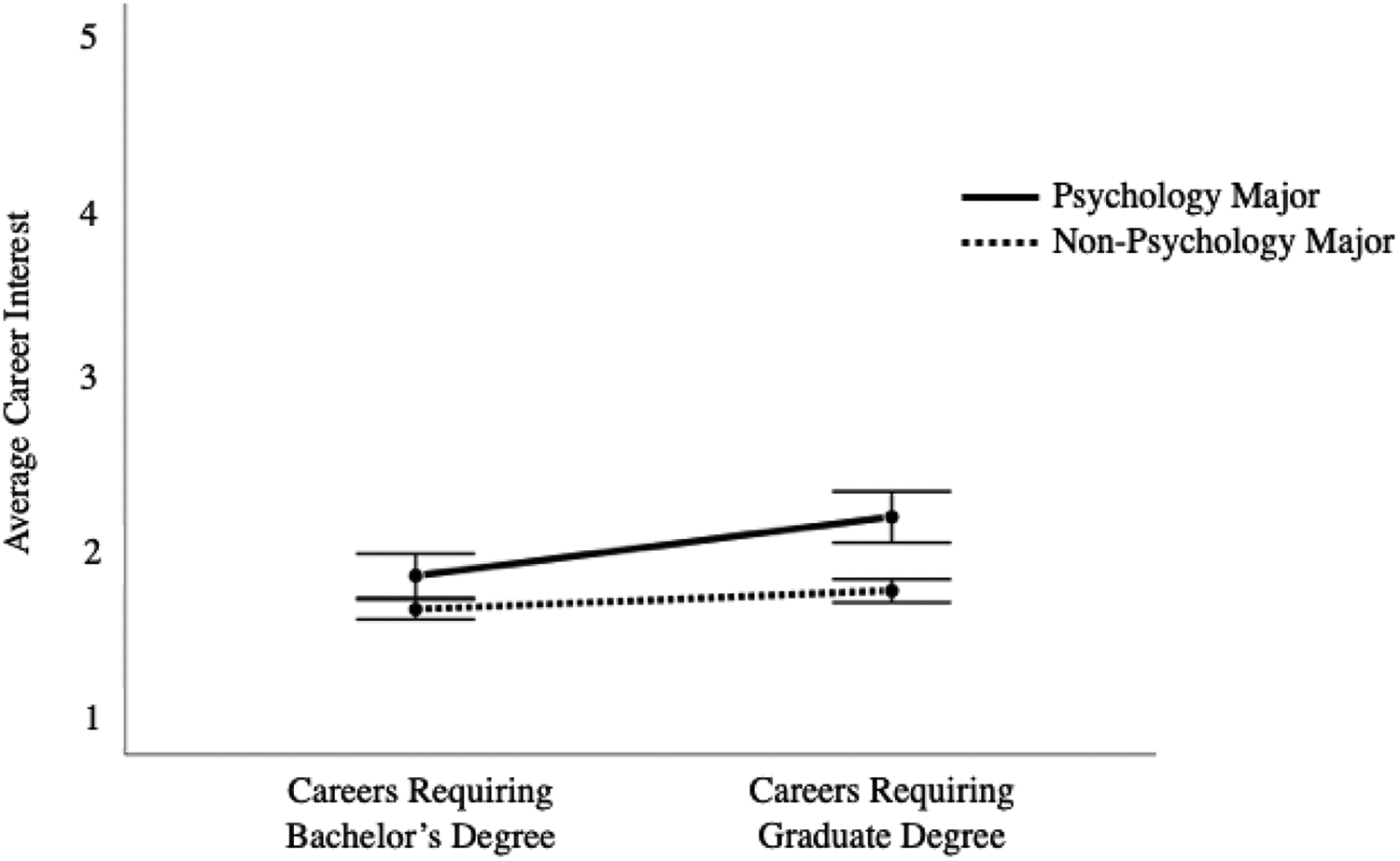
Average career interest as a function of major and educational requirement for career. Note. Error bars represent 95% confidence intervals.
Discussion
Given the many psychology-related careers available (Appleby, 2018), psychology majors tend to express greatest interest in careers related to counseling, health, and children. This pattern was also found in our exploratory analyses, which showed psychology majors have greater interest than non-psychology majors regarding careers within nine of the 15 psychology subdisciplines.
It is also interesting to note that psychology majors’ interest ratings for the top 20 psychology-related careers ranged from 3.86 to 2.77. Given the scale ranged from 1 (Not at all interested) to 5 (Extremely interested), psychology majors in lower-level psychology courses seem not to have established especially strong career interests yet, or at least not a strong common interest. Given the number of pre-requisite courses, research, and field experiences necessary for acceptance to graduate school or entry level jobs (see Keith-Spiegel & Wiederman, 2000), this finding may suggest the need to begin career development early in a psychology major’s course of study. In fact, Atchley and colleagues (2012) note a general lack of career-related courses within psychology programs and the value of equipping psychology students with knowledge of career options early in their education. Admittedly, our findings cannot speak to whether psychology students are unique in not having established strong career interests because we assessed non-psychology students’ interest in psychology-related careers. Whereas some students may likely enter professional programs, such as nursing, with a specific career interest in mind (Beck, 2000), we suspect other students may be at least somewhat uncertain about their career opportunities or uninvolved in career exploration (see Orndorff & Herr, 1996).
Notably, psychology majors and non-majors did not differ in their interest in careers related to business, health, human services, sport, technology, and other (not specified) subfields. Thus, faculty teaching lower-division or general education courses—which contain many psychology and non-psychology majors—may interest a wide-range of students by referencing careers in these areas as examples or invite guest speakers from related areas.
Furthermore, of the top 20 psychology-related careers of interest to psychology majors, seven (Child Psychologist, Counseling Psychologist, Child Abuse Counselor, Clinical Psychologist, Marriage and Family Therapist, School Psychologist, Child Life Specialist) were explicitly listed as options among the psychology major focus groups in Study 1. Psychology students’ knowledge of, and interest in, these specific careers is important to note. But more importantly, their top careers of interest that were not listed in Study 1, such as a Child Development Specialist, Criminal Psychologist, or Psychiatrist, appear to be worthwhile career options for faculty to introduce, given psychology students’ lack of knowledge but high level of interest.
What should be of particular interest to psychology programs is that many of the top-rated careers involved both mental healthcare and children (Pediatric Psychologist, Child Abuse Counselor). These careers, specifically, were also not generated as potential career options by psychology major focus groups in Study 1. Thus, these careers may be “blind spots” that are of particular interest to psychology majors. Psychology programs may better recruit prospective students and advise majors by showcasing career options related to counseling, health, and developmental psychology in general, with a particular focus on children. Although it should be noted that some participants were recruited from developmental psychology courses which may have impacted their interest in careers involving children.
Another interesting finding from Study 2 was psychology majors’ tendency to be more interested in psychology-related careers which require a graduate degree than careers which require a bachelor’s degree. Indeed, 18 of the top 20 careers of interest to psychology majors required a graduate degree. Whereas only 11 of the top 20 careers of interest to non-psychology majors required a graduate degree. This pattern was also evidenced in exploratory analyses which showed psychology majors express a greater interest in careers requiring a graduate degree than non-psychology majors. Furthermore, in Study 1, the careers which psychology majors thought were available also tended to require a graduate degree. Thus, it seems teachers of psychology may need to educate students about the career options available to them, especially those which require a bachelor’s degree (Landrum, 2018). Moreover, students, friends, and family members may espouse stereotypes about psychology, such that few jobs are available to psychology graduates or students need to earn a graduate degree to find a job (Brinthaupt et al., 2012). These negative stereotypes could contribute to psychology major’s unawareness of their many career options and their tendency to be most interested in careers requiring advanced degrees. Future studies may explore how psychology majors differ from other majors regarding their career perceptions and aspirations.
General Discussion
The aims of the current research were twofold. First, in Study 1, we sought to identify which careers Gen Z psychology majors identify as available to psychology graduates. This reveals what careers students think are available, as well as which careers they tend to overlook or be unaware. Second, in Study 2, we assessed Gen Z students’ interest in a wide-range of specific, psychology-related careers to pinpoint which ones they are most interested in.
In short, we found psychology majors tend to identify careers in counseling as most available. Only half of the focus groups from Study 1 identified careers in applied settings, even fewer identified careers related to children or research. Thus, there are blind spots in psychology majors’ awareness of career options. We also found, when students were presented with a list of careers in Study 2, they expressed the most interest in careers related to counseling, health, and children – particularly those requiring a graduate degree. Together, these findings cautiously suggest the importance of highlighting a wide array of psychology-related careers, particularly those related to counseling, health, and working with children.
It is important to note we do not suggest omitting other career options from promotional materials or career advising (see Conroy et al., 2020). By no means are all Gen Z psychology students interested in counseling, working with children, nor careers which require a graduate degree (APA, 2018b). Instead, when advisors have personalized information about a student’s career interest, such as an interest in business for example, it may then be advantageous to describe related, popular, and fast-growing careers, such as those within the field of industrial/organizational psychology (Farnham, 2014). Furthermore, when psychology programs make broad appeals to prospective students, without personalized knowledge of their career interests, it may be worthwhile to first highlight psychology’s breadth of career options, then introduce careers of greatest interest to students broadly, such as counseling, health, or child-related careers. Finally, survey results from a large, stratified random sample of undergraduate psychology programs show 73% of associate degree granting institutions, and 78% of bachelor degree granting institutions, help students find careers within their psychology subfield of interest (Conroy et al., 2020). Notably fewer institutions help students find a career mentor (32% Associate institutions, 42% Baccalaureate institutions).
Limitations and Future Directions
A limitation of both studies was the data was collected from a single university which was not be fully representative of psychology majors and students at other institutions. For instance, the career interests of participants from a single university could be influenced by job availability or exposure within the local community, a university’s mission, as well as any previous conversations they may have had with psychology faculty, the psychology program, or the admissions office. We urge caution when generalizing our findings to Gen Z psychology students broadly because our research included responses from only 489 participants (n = 59 in Study 1, n = 430 in Study 2) currently enrolled in a lower-level psychology course. We urge faculty to replicate and extend our findings, particularly at their own universities, to more accurately gauge each university’s students’ unique career interests.
Moreover, the majority of participants in both studies identified as women. Although national research shows 78% of psychology majors are female (Department of Education, 2018), gender stereotyping of careers exists (see Zhang et al., 2009) and could affect psychology students’ career interests, such that men may report greater interest in stereotypically masculine careers than women (Gadassi & Goti, 2009). It may be worthwhile for future studies which recruit large samples of psychology students to specifically explore gender stereotyping of psychology-related careers as well as potential gender differences in career interest.
The participants in this study were entirely underclassmen in Study 1 and predominately underclassmen in Study 2. This limitation partly reflects the recruitment of participants from lower-division psychology courses as well as a focus on Gen Z students (born between 1995 and 2010; Seemiller & Grace, 2016). As students experience more advanced coursework (Halonen & Dunn, 2018) and internships (Petersen et al., 2014), and students connect with career services (Conroy et al., 2020) and faculty advisors (Swartz et al., 2018), their career interests may likely change. Future longitudinal studies may explore how psychology students’ career interests change over time and as a function of course and mentorship experiences.
Additionally, this study presented Gen Z psychology students’ current perceptions of available psychology-related careers, as well as their current career interests. It did not aim to compare Gen Z students’ career interests to previous generations. Future studies, particularly cross-sectional studies, may want to explore how Gen Z psychology students’ career interests may differ across generations.
It is also important to note that our findings are based on data collected just prior to the outbreak of COVID-19 and the national response to the murder of George Floyd. It is difficult, if not impossible, to anticipate how these experiences may have affected students’ career interests. For instance, the mental health challenges presented by threats of disease contagion and resulting social distancing (APA, 2019) could spur greater interest in careers related to health, as well as clinical and counseling psychology and many other psychology subfields, including, but not limited to, school counseling and school psychology (Pfefferbaum & North, 2020). Similarly, the national and global attention to race relations and police brutality could spur greater interest in applied psychology or careers in law (Tartaro & Krimmel, 2003; Vermeer et al., 2020). Nevertheless, how psychology students’ career interests may vary as a function of specific life experiences is an empirical question to be explored in future research.
Implications
Our findings may have implications for career advising and how psychology programs might prevent the possibility of students avoiding psychology because of career misperceptions. Unfortunately, students and their families often endorse negative stereotypes regarding the employability of psychology majors (Brinthaupt et al., 2012). Therefore, it is important that teachers of psychology, and psychology programs in general, be prepared to dispel such stereotypes by communicating the many career options available to psychology graduates. The special issue of Teaching of Psychology, Career Issues and the Undergraduate Psychology Major, contains many, useful articles for faculty to expand their understanding of various careers in psychology, including psychology-related career websites (Golding et al., 2018) strategic use of alumni (Lawson, 2018), and career information within the curriculum (e.g., Halonen & Dunn, 2018).
Students’ early perceptions of psychology-related career options may come from a range of sources, including promotional materials (APA, 2018a) or conversations with teachers of psychology (Swartz et al., 2018). Our findings suggest that, in addition to describing psychology’s versatility (Halonen, 2019) and wide-ranging career options (Appleby, 2018; Landrum, 2018), it may be worthwhile to highlight careers in counseling and health, especially those that focus on the mental healthcare of children.
Our findings may also have implications for the professional development of current psychology majors. Resources on professional and career development, including the special issue of Teaching of Psychology and other international works (e.g., Morris et al., 2013), suggest students’ career development could be increased through greater connectivity with professional alumni (Lawson, 2018), applied learning and workforce-related skill development (Naufel et al., 2018, 2019), and greater inclusion and focus on careers within the curriculum (Atchley et al., 2012; Halonen & Dunn, 2018; Haskell et al., 2012; Petersen et al., 2014; Roscoe & McMahan, 2014; Thomas & McDaniel, 2004). Faculty may help students “connect the dots” between the knowledge and skills fostered during their undergraduate education (APA, 2013a) and the expectations of graduate school and the workforce (Keith-Spiegel & Wiederman, 2000) by utilizing resources such as the American Psychological Association’s skillful psychology student (see Naufel et al., 2018, 2019) and the United Kingdom’s psychology student’s employability guides (Lantz, 2011). Furthermore, we encourage teachers of psychology to familiarize themselves with the broad range of careers available to psychology majors, including those in Table 2 as well as those listed by Appleby (2018). Teachers of psychology might utilize this knowledge when deciding which examples to highlight in their courses and which professionals to invite to guest lecture or present at career panels.
Conclusion
Today, prospective Gen Z students may hear misperceptions about the employability of psychology majors from Senator Sasse (Fremont Tribune, 2020) and others (Brinthaupt et al., 2012; Logue, 2016). They may weigh the value of a college degree, and the psychology major specifically, to the cost of student loan debt and chance of postgraduate unemployment (Department of Education, 2020). As of 2020, 44.7 million students bear the weight of 1.56 trillion dollars in student loan debt (M = $32,731, Mdn = $17,000; Friedman, 2020) and the U.S. economy is struggling to recover amid a global pandemic (Gopinath, 2020). Thus, psychology students’ perceived career options and interests are timely and relevant. Knowing which careers they tend to be most interested in, but overlook, may help teachers of psychology overcome career blind spots and foster students’ career development (Swartz et al., 2018).
Supplemental Material
Supplemental Material, sj-pdf-1-top-10.1177_00986283211013842 - “Oh, the Places You Can Go” Gen Z Psychology Students’ Perceived Career Options and Interests
Supplemental Material, sj-pdf-1-top-10.1177_00986283211013842 for “Oh, the Places You Can Go” Gen Z Psychology Students’ Perceived Career Options and Interests by Brian Collisson and Brian E. Eck in Teaching of Psychology
Supplemental Material
Supplemental Material, sj-pdf-2-top-10.1177_00986283211013842 - “Oh, the Places You Can Go” Gen Z Psychology Students’ Perceived Career Options and Interests
Supplemental Material, sj-pdf-2-top-10.1177_00986283211013842 for “Oh, the Places You Can Go” Gen Z Psychology Students’ Perceived Career Options and Interests by Brian Collisson and Brian E. Eck in Teaching of Psychology
Supplemental Material
Supplemental Material, sj-sav-1-top-10.1177_00986283211013842 - “Oh, the Places You Can Go” Gen Z Psychology Students’ Perceived Career Options and Interests
Supplemental Material, sj-sav-1-top-10.1177_00986283211013842 for “Oh, the Places You Can Go” Gen Z Psychology Students’ Perceived Career Options and Interests by Brian Collisson and Brian E. Eck in Teaching of Psychology
Supplemental Material
Supplemental Material, sj-sps-1-top-10.1177_00986283211013842 - “Oh, the Places You Can Go” Gen Z Psychology Students’ Perceived Career Options and Interests
Supplemental Material, sj-sps-1-top-10.1177_00986283211013842 for “Oh, the Places You Can Go” Gen Z Psychology Students’ Perceived Career Options and Interests by Brian Collisson and Brian E. Eck in Teaching of Psychology
Supplemental Material
Supplemental Material, sj-xlsx-1-top-10.1177_00986283211013842 - “Oh, the Places You Can Go” Gen Z Psychology Students’ Perceived Career Options and Interests
Supplemental Material, sj-xlsx-1-top-10.1177_00986283211013842 for “Oh, the Places You Can Go” Gen Z Psychology Students’ Perceived Career Options and Interests by Brian Collisson and Brian E. Eck in Teaching of Psychology
Supplemental Material
Supplemental Material, sj-xlsx-2-top-10.1177_00986283211013842 - “Oh, the Places You Can Go” Gen Z Psychology Students’ Perceived Career Options and Interests
Supplemental Material, sj-xlsx-2-top-10.1177_00986283211013842 for “Oh, the Places You Can Go” Gen Z Psychology Students’ Perceived Career Options and Interests by Brian Collisson and Brian E. Eck in Teaching of Psychology
Footnotes
Author Contributions
Brian Collisson contributed substantially to the idea development, writing of the manuscript, overseeing data collection, and data analysis. Brian Eck contributed substantially to the idea development, writing, and revision of the manuscript. All data and materials are publicly available via the Center for Open Science (Collisson, 2021).
Declaration of Conflicting Interests
The authors declared no potential conflicts of interest with respect to the research, authorship, and/or publication of this article.
Funding
The authors received no financial support for the research, authorship, and/or publication of this article.

Notes
Supplemental Material
Supplemental material for this article is available online.
References
Supplementary Material
Please find the following supplemental material available below.
For Open Access articles published under a Creative Commons License, all supplemental material carries the same license as the article it is associated with.
For non-Open Access articles published, all supplemental material carries a non-exclusive license, and permission requests for re-use of supplemental material or any part of supplemental material shall be sent directly to the copyright owner as specified in the copyright notice associated with the article.
