







Abstract
Background:
Animations of scientific concepts may improve comprehension by explaining and visualizing the steps of complex processes, but unless they engage student interest in meaningful ways, their effectiveness as teaching tools is limited. We achieve this through a novel approach to animation design that includes the target audience (undergraduates) so that the resultant animations align with their learner characteristics.
Objective:
This case study investigated whether undergraduate-generated animations were more effective educational tools than informationally equivalent text-and-illustration presentations and whether learners’ background influenced the relative benefits of animations.
Method:
Incorporating feedback from faculty and undergraduates, we created animations and text-plus-illustration content to explain how neural signals are generated and measured by scalp electrodes. Neuroscience majors and non-majors were presented with either animations or static presentations followed by comprehension and engagement assessments.
Results:
Both groups showed comprehension and engagement benefits for animations. Although majors showed better overall comprehension, animations improved comprehension for non-majors over static presentations.
Conclusion:
When educational content is directed for a target audience, animations can be more effective teaching tools for a broader student audience.
Teaching Implications:
The relevance of online tools for remote instruction makes animations, developed for and by undergraduates, important tools for effectively introducing difficult content.
Given the increase in workforce demands for a science-educated public (Vilorio, 2014), the National Academy of Science (1999) has tasked science educators to improve teaching practices and educational outcomes for all students. Instructors have turned to active learning curricula and the use of educational technology to convey complex scientific mechanisms to their students and improve cognitive and affective engagement in the classroom (Ainsworth, 2008; Crouch & Mazur, 2001; Stith, 2004). The challenge is to create flexible, open-source teaching tools that can be used across a variety of contexts for a wide range of students. This is especially important at the collegiate level because undergraduates report that assigned animations are often boring and not targeted at their knowledge level, leading them to ignore large parts of the animation (Guo et al., 2014). In this study, we propose that effective educational animations begin with the involvement of the target audience in the design and development process because they can adjust the animation to meet their cognitive capacities and prior knowledge. We created a series of animations as part of an NSF-funded initiative to develop undergraduate training materials for cognitive electrophysiology (PURSUE: Preparing Undergraduates for Research in STEM Using Electrophysiology) (Bukach et al., 2019).
Animations have the potential to make difficult dynamic concepts accessible and to increase the depth of understanding in a wider student audience. They can also present concepts in a format that can reduce the perceived effort of learning, leading to greater liking of the material (Reber et al., 1998). For these reasons, educational animations have become an important part of higher education, providing an important content-delivery tool (e.g., Brame, 2015; Schmid et al., 2014). However, animations cannot be easily modified by instructors and therefore, careful consideration needs to be given to their design in order to ensure effectiveness across a variety of class types and learners. Here we review best practices for effective animation design that take into account the information processing limitations and prior knowledge of the learners. We then present a case study that describes our novel approach in achieving best practices in animation design by including the target audience, namely undergraduates, in the development process. We test the effectiveness of these animations across a wide range of students by comparing the comprehension and engagement of neuroscience majors and non-majors following either our animation or informationally equivalent static, multimedia content.
Animation is a process that produces a sensation of motion in the viewer through a sequence of images produced in a digital environment (Bétrancourt, 2005). A number of empirical studies have shown that animations can benefit learning over traditional text-based explanations (e.g., Guy, 2012; Hays, 1996; Kay, 2012; Lowe, 2003; Rackaway, 2012; Trevisan et al., 2009). Their pedagogical advantage appears to be greatest for complex, dynamic processes that are too fast or too small to observe yet essential for understanding key processes (Harrison, 1995; Kehoe et al., 2001; Tversky et al., 2002). Because static slides, text, or illustrations do not always adequately convey dynamic concepts, animations may have an advantage in conveying procedural information. Animations can reveal non-visible aspects of dynamic processes or the steps of the procedure in a slower, more ordered manner (Ainsworth, 2008; Hwang et al., 2012), and can help learners create mental models of how the process works (Mayer, 2014). Examples include the movement of atoms in a gas (Russell et al., 2000), the sequence of outputs in a computer algorithm (Kehoe et al., 2001), and the stages in a mathematical solution (Scheiter et al., 2006). Stith (2004) argues that lectures incorporating animations lead to a more complete understanding of certain biological concepts than lectures using static illustrations. Animations may also influence the affective responses of learners. Research has documented that when people subjectively feel that their processing is fluent, or less effortful, it increases their liking of the material (Reber et al., 1998). By extension, if animations make difficult information feel more accessible, students may like learning more through animated presentations, be more motivated to learn the material, and pay more attention to the content (Hays, 1996; Lowe, 2003).
Designing and developing quality animations for effective learning is not easy (Tversky et al., 2002). There is no guarantee that people will learn better from animations than static presentations (Daly et al., 2016; Lowe & Schnotz, 2014), as measured by improved learning outcomes, test scores, and engagement ratings, especially at the post-secondary collegiate level (Ainsworth, 2008; Berney & Bétrancourt, 2016; Hegarty et al., 2003; Höffler & Leutner, 2007; Kalyuga, 2014; Lowe & Schnotz, 2014; Moreno & Mayer, 2007; Tversky et al., 2002). Two important factors to consider when designing effective animations are limitations in human information processing systems, and characteristics of the learner such as prior knowledge and cognitive ability.
Features of Effective Educational Animations
Best practices for the design of animations include recognizing and accounting for the fact that humans have limited capacities for processing perceptual and cognitive information (Mayer, 2014). Working memory is a limited capacity part of the human memory system that combines the temporary storage and manipulation of multisensory information with long-term memory in the service of cognition (Baddeley & Hitch, 1974). Given these processing limitations, effective multi-media learning tools must help the learner focus on and select critical information for understanding the depicted process. When information-processing capacities are exceeded, learning can be compromised (Sweller, 1994; Wouters et al., 2008).
Multimedia learning involves the integration of words with pictures to help learners create organized knowledge representations, or schemas of the information (Mayer, 2014). Implementing successful multimedia design principles can address many of these information-processing limitations (Brame, 2015; Mayer & Moreno, 2003). Table 1 presents these principles and how they can be implemented. The inclusion of these principles in the design of an animation can help to focus limited-capacity attentional systems on the processing of relevant content.
Multimedia Learning Goals (Modified From Mayer, 2014) and Implementation in the Animations.
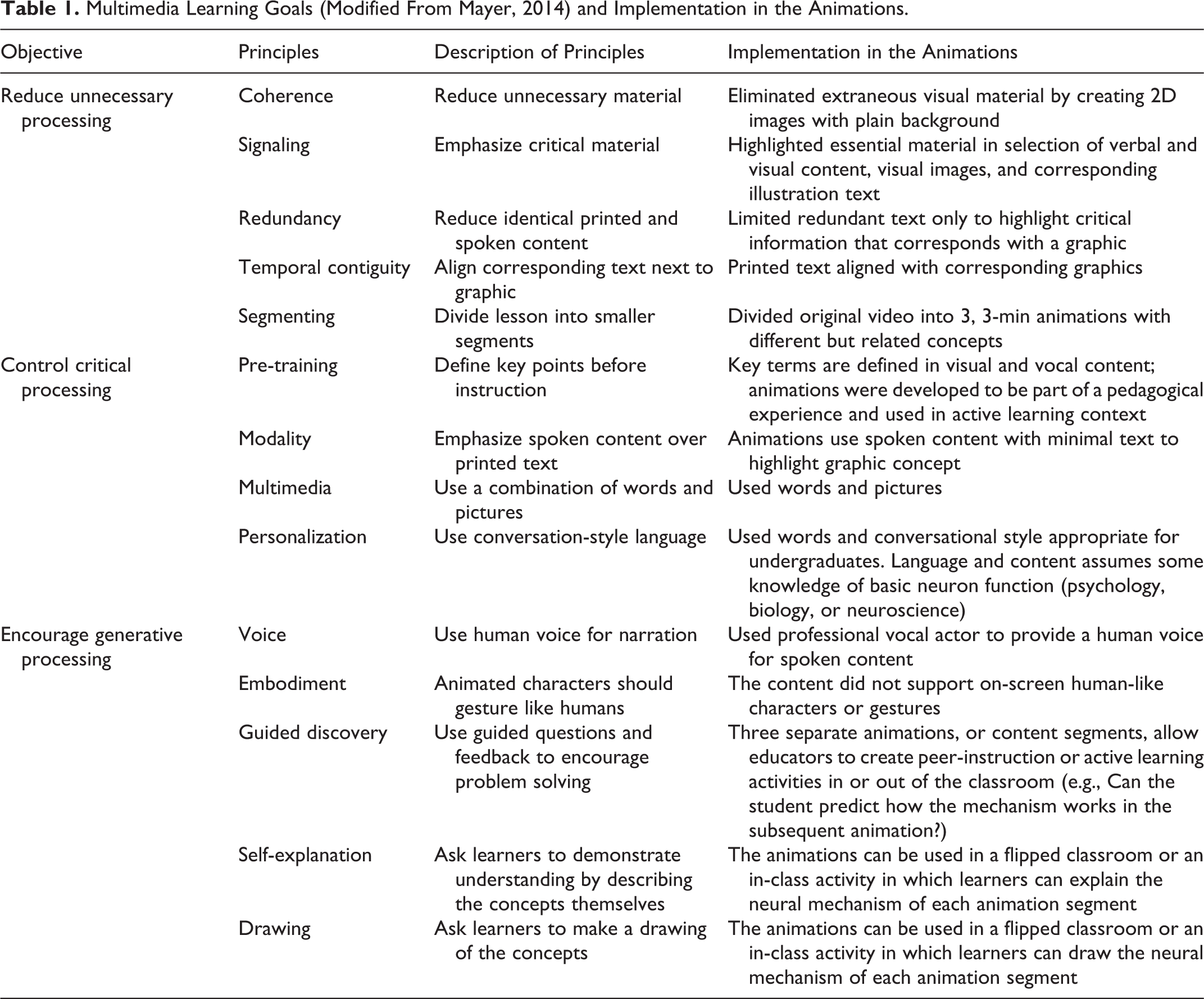
One principle of multimedia design is to minimize extraneous processing to focus attention on relevant information for the learning goal (Mayer, 2014). Irrelevant information (e.g., music, complex backgrounds) must be kept to a minimum, cues should signal critical information, images should be simplified, and text should be limited (Butcher et al., 2014; de Koning et al., 2009; Ibrahim et al., 2012; Mayer & Johnson, 2008; Mayer & Moreno, 2003). Reducing irrelevant information along with segmenting, or chunking, information into separable concepts reduces the processing load for new information (Guo et al., 2014; Spanjers et al., 2010; Tversky et al., 2002).
Another multimedia learning principle is to manage essential processing by helping the viewer attend to critical information without overwhelming working memory (Mayer, 2014). Key terms should be defined in the animations, but text should be kept to a minimum. Concurrent narration should be presented along with graphic illustrations to highlight important concepts to help the learner integrate new information into existing knowledge (Lowe, 2003; Mayer, 2014; Mayer & Moreno, 2003; O’Day, 2007; Sweller, 1994). Attention to critical information is also enhanced by the engaging and affective nature of animations using this strategy. Engagement in and learning from animations increases when a conversational, rather than formal, style of language is used (Guo et al., 2014; Mayer, 2014). Conversational language encourages students to develop a sense of social partnership with the narrator that leads to greater engagement and effort. In sum, animation design that draws attention to relevant information can help integrate new information with a learner’s existing knowledge to enhance learning.
Characteristics of the Learner
Another best practice in animation creation is taking into account the characteristics of the learner. One reason why animations may not be effective is that they fail to align with learner knowledge levels (Arslan-Ari, 2017; ChanLin, 1998; Kalyuga, 2014) and cognitive abilities (e.g., Hegarty & Sims, 1994; Lowe & Boucheix, 2008; Yang et al., 2003), such that learners cannot apply prior knowledge to the content domain. Prior knowledge determines how learners process new information. Learners’ ability to extract relevant knowledge and learn this new information relies on their ability to form accurate mental representations and integrate new content into a mental model (Bennett & Dwyer, 1994; Bonner, 1988; Schnotz et al., 1993). However, for novice learners, the visualization of animations can them construct a mental model to help compensate for this knowledge deficiency (ChinLin, 1996). Animations can provide top-down guidance to direct learners to decipher and interpret dynamic information accurately, emphasizing which aspects of the content should be attended to for mental model construction (Kriz & Hegarty, 2007).
Despite evidence that multimedia learning tools are effective for learners with little prior knowledge in a topic area, they may be less effective, and even impair learning, for learners with greater prior knowledge (e.g., expertise reversal; for a review, see Kalyuga, 2014). If learners have prior knowledge and familiarity with a topic, then animation information is redundant because they can mentally simulate the dynamic processes from diagrams (Hegarty et al., 1999). Moreover, when Kalyuga and colleagues (2000) examined the effectiveness of several instructional formats as learners gained expertise in a topic, they found that instructional techniques effective at novice stages became less effective and even had negative outcomes at later learning stages. They postulated that when learning activities target the formation of a previously acquired mental model, these activities may interfere with the prior knowledge and potentially overload working memory capacity. Thus, it is important to pitch animations for the knowledge level of the targeted learner. One way to do this is to include students in the animation development process.
Current Study
In this case study, our goal was to create an animation to depict a difficult neuroscience concept and then demonstrate that it was both effective and engaging for a wide range of undergraduates (i.e., both majors and non-majors). We implemented best practices in animation design by not only adhering to multimedia design principles, but also including the undergraduate target audience in the development process. This novel approach considers both the cognitive capacity and the prior knowledge of the intended learners (Lowe & Schnotz, 2014).
Although several studies have specified important features of good animations for use in college science courses (e.g., Stith, 2004), they rarely address how animations can be developed to better meet the cognitive and affective learning needs of the students for whom they are developed. Educational animations and illustrations are often created by professional animators or educators. Although educators offer expertise in content and pedagogical knowledge, their expertise may be a barrier to providing guidance to artists who are creating the animations. The expertise and detailed content knowledge of animation authors may inhibit their ability to understand what critical concepts and parts of the process may be most difficult to comprehend for those with little to no background. In contrast, undergraduates are able to highlight difficult concepts, point out places where lack of prior knowledge might impede learning, and identify information that covers prior knowledge that may be perceived as boring.
Specifically, our animations explained a difficult but essential concept in cognitive electrophysiology—how neural signals are generated and measured by scalp electrodes. Cognitive electrophysiology, an area of cognitive neuroscience that relates cognitive processes to brain activity, involves many dynamic processes that lend themselves to animation. They were created by undergraduates for undergraduates so that the information content for both types of presentations was aligned with the cognitive capabilities and prior knowledge of the target audience. Undergraduates share characteristics with the intended audience and can provide relevant input into the appropriate level of content complexity level, pacing, and multisensory integration given student
To demonstrate the success of our animation design approach for a wide range of undergraduates, neuroscience majors and non-majors viewed either the animations or informationally equivalent static, text-plus-illustration versions and were assessed for comprehension and engagement immediately after. We compared the relative effectiveness of animated versus static text-plus-illustration presentation strategies to facilitate undergraduate comprehension and engagement, and to determine whether the same presentation strategy was equally effective for learners with different levels of prior knowledge (non-majors versus neuroscience majors). We predicted that animations would lead to an overall increase in learner comprehension because they revealed the non-visible aspects of dynamic processes not typically covered in standard psychology, neuroscience or biology courses. Further, they were designed to focus learners’ attention on the conceptual features required for mental model construction, allowing irrelevant information to be ignored (Lowe & Schnotz, 2014). The relative ease of learning through animation, given the complexity of the neural processes involved in neural signal generation and measurement, should also increase student engagement with the material.
Because prior knowledge can have a significant effect on learners’ ability to process new information and integrate it with existing knowledge, we also examined whether a student’s background knowledge and interests (i.e., students' declared major) influenced the relative effectiveness of the animations and learner's engagement. Although prior knowledge should give an advantage to majors over non-majors at test, we predicted that non-majors should show a greater improvement in comprehension from animated compared to static presentations because animations will compensate for their inability to mentally simulate the neural processes accurately from static images. Neuroscience majors may show less of an animation advantage over static presentations as they may have already formed adequate mental models of some of the depicted processes.
Method
Participants
Participants were 133 undergraduate students from four liberal arts colleges who participated for partial course credit in introductory psychology or core neuroscience courses. None were involved in the animation creation or pre-testing. Participants were assigned randomly to either the animation or the static “text-and-illustration” group. A total of 129 participants (62 female; ages 18–24; 22 Hispanic; 32 Asian, four Afro-American, 72 Caucasian, 21 Other) produced comprehension scores above chance on all three segments. Their data is analyzed below. These participants were further classified into non-major groups (i.e., they did not declare neuroscience, pre-med, or biology as their major: n = 74; non-majoranimation = 35, non-majorstatic =39) or neuroscience major groups (i.e., they declared neuroscience, pre-med, or biology as their major: n = 55; majoranimation= 32, majorstatic = 23).
Stimuli
“Understanding EEG signal generation: From neuron to electrode” animations
The animations were created as part of an NSF-funded initiative to develop undergraduate training materials for cognitive electrophysiology (PURSUE: Preparing Undergraduates for Research in STEM Using Electrophysiology; Bukach et al., 2019). In cognitive electrophysiology courses, a particularly difficult concept to convey is how neural activity is generated and then measured by scalp electrodes. Many neuroscience undergraduates report difficulty understanding how to bridge the conceptual gap between the activity of a single neuron and synchronous activity of thousands of cortical neurons measured by EEG. A team of undergraduates, in collaboration with PURSUE principal investigators, created a series of three animations and informationally equivalent text-and-illustration versions to portray the steps in this process: how neurons generate electrical signals, how dipoles (i.e., electrical fields) are produced that can be detected by scalp electrodes, and what factors influence the strength of a signal at a particular electrode. The development of these materials followed PURSUE’s cycle of innovation, an iterative cycle of implementation, assessment and revision shown to produce more effective educational materials (American Society for Engineering Education, 2009, Santiago-Roman et al., 2011; see also the ADDIE model (Kurt, 2018)).
The original animation was a single, full-color, computer-generated, 3-D, narrated animation that detailed the progression from the generation of post-synaptic potentials and the creation of dipoles leading to the EEG signal measured by scalp electrodes. Nine undergraduate research assistants, from cognitive neuroscience laboratories at three liberal arts colleges, critiqued the original animation in terms of length, visualization format, script content, storyboard progression, clarity of presentation, accuracy of presentation, and level of engagement. Despite positive evaluations regarding subject matter, 3-D visualization, and level of viewer engagement, they identified the long duration, conceptual complexity, visualization complexity, color choices, and assumed prior viewer knowledge as points for improvement.
Taking into account the above critiques and multimedia learning principles (e.g., Brame, 2015; Mayer, 2014), a new animation series was developed that went through multiple iterative revisions (Santiago-Roman et al., 2011). Undergraduates, with faculty mentors, vetted the scripts for accuracy, level of conceptual complexity, engagement, information load, pacing, and language tone/word choice. To increase student engagement and to manage information processing load, three, short, 3-min videos were created to increase watch time and decrease mind wandering. Specifically, the original animation was divided into three, 3-min segments that each addressed a separate dynamic concept: 1) How are neural signals generated and what are electrical potentials? 2) What is a dipole and how do they form in the brain? 3) How does the timing of neural electrical activity and the orientation of neurons relative to the scalp influence the signal measured by scalp electrodes? To keep student interest, the script used conversational language and the professional voice-actor narrator spoke relatively quickly with enthusiasm. Content scripts described each process in non-technical terms that did not require a background in physics so they would be suitable for incoming students.
For these animations, multimedia learning principles were implemented in several ways. Key words were used in the image to highlight important elements and eliminated complex backgrounds. Animation panels followed multimedia learning guidelines for combining visual images, on-screen text, and narration. 2D images removed extraneous visual details to clearly represent the depicted process. Clarification text was added next to graphics to highlight critical concepts. Color and other visual elements were used to emphasize the organization of the material as well as combined auditory and visual inputs to explain the phenomena.
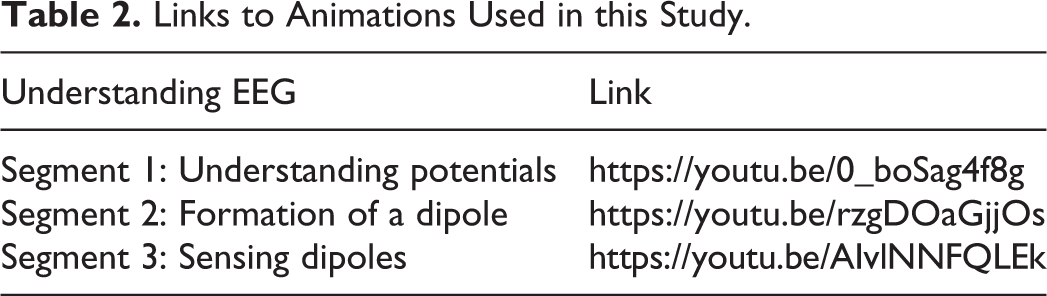
Table 1 describes how the animations addressed many of the multimedia learning principles prescribed by Mayer (2014) and includes ways the animations can be used in a pedagogical setting. A professional voice actor recorded each script to provide intelligible narration at an enjoyable pace. The panels were rendered into animations, and synchronized with audio inputs using After Effects (https://www.adobe.com/products/aftereffects.html). Links to the versions of the animations assessed in this study can be found in Table 2 and final versions are available on the PURSUE website (Animations v2.1, v2.2, and v2.3: http://pursueerp.com).
Links to Animations Used in this Study.
“Understanding EEG signal generation: From neuron to electrode” static text-and-Illustration versions
For each of the three animation segments, informationally equivalent, static, text-and-illustration versions of the animations were created by presenting the scripts as text with corresponding illustrations portraying the end-points of the procedural steps. Nine undergraduate research assistants and faculty at three liberal arts colleges compared the animations and static, text-and-illustration versions to ensure they contained equivalent information.
Assessments
To assess learner comprehension, multiple-choice assessments were developed for each segment. Each segment had eight questions to evaluate how well it communicated key concepts, from basic facts to concept extension (Krathwohl, 2002), for a total of 24 questions. Each question had five options, designed so that if the animations were used in a class, instructors could use the pattern of responses to target specific conceptual errors.
Procedure
Participants accessed the study via an on-line link to Qualtrics (https://qualtrics.com). After providing informed consent, participants were assigned randomly to either the animation or the static text-and-illustration group. For all three segments, they first watched or read the presentation and then answered the associated multiple-choice questions. Segments 1, 2 and 3 were presented in sequential order. To increase the likelihood that participants watched the animation or read the text, participants were not able to advance to the assessment questions until the video ended or 3 min had passed.
After completing all three segments, participants provided demographic information (age, gender, major, ethnicity, school year, highest level of parent education, and interest in STEM fields) and answered engagement questions for the presentation as a whole. They rated their level of agreement from 1 (strongly disagree) to 5 (strongly agree) with the following questions: 1) The information had a clear layout; 2) I enjoyed the information format; 3) I found the information confusing (reverse coded); 4) I found the information more interesting than what is normally presented to me in my classes; 5) I learned something new; 6) I would not seek out resources like this again (reverse coded); and 7) The visuals were clear and understandable.
Results
Comprehension
Proportion correct scores were calculated for each participant across segments to create a comprehension score. An analysis of variance (ANOVA) was conducted for the between-subject factors of background (major, non-major) and presentation (animation, static) using proportion correct scores. Note, results did not differ when gender was added as a covariate. A significant main effect of presentation group, F(1, 125) = 8.52, p = .004, η p 2 = .064, showed a clear advantage of animation (M = .78, SD = .16) over static (M = .69, SD = .16) versions for comprehension scores. A significant main effect of background group, F(1, 125) = 22.56, p = .0001, η p 2 = .153, indicated that neuroscience majors (M = .81, SD = .14) had higher overall comprehension scores than non-majors (M = .65, SD = .22), presumably because of their prior knowledge on the topic. The presentation group by background group interaction was not significant, F(1, 125) = 1.033, p = .31, η p 2 =.008 (Figure 1), with the majority of the variance explained by the animation advantage for both background groups. Nonetheless, based on previous expertise reversal findings, we predicted a priori that non-majors might benefit more from animations than static presentations because majors might have pre-existing mental models of these processes and not benefit from having the process steps visually explained. A planned comparison between animation and static presentations for non-majors confirmed that non-majors were significantly more accurate in animation compared to static presentation conditions, F(1, 125)= 9.21, p = .003, ηp2 = .069. In contrast, majors did not show a significant difference in comprehension between presentation conditions, F(1, 125)= 1.56, p = .21, ηp2 = .012.
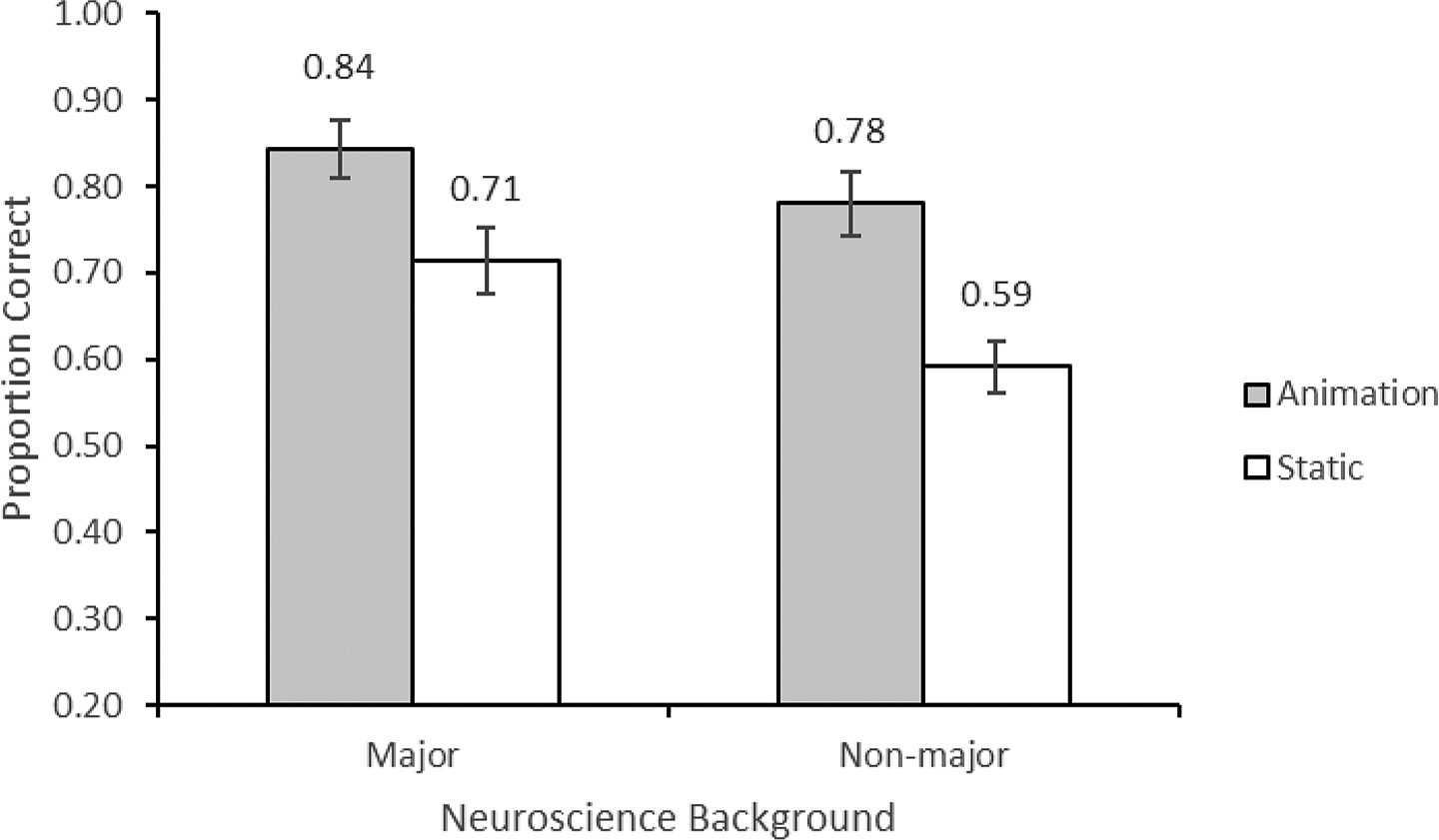
Comprehension scores by neuroscience background for animation vs. static presentations (error bars represent standard error).
Engagement
The engagement questions included two negative questions that were reverse coded. Cronbach’s α for the seven engagement questions was .85, indicating good internal consistency. A mixed-model ANOVA was conducted for between-subject factors of presentation (animation, static) and background (major, non-major) and the within-subject factor of question on engagement ratings. The results of this analysis are reported in Table 3. Note, results did not differ when gender was added as a covariate.
ANOVA Results for Engagement Ratings.
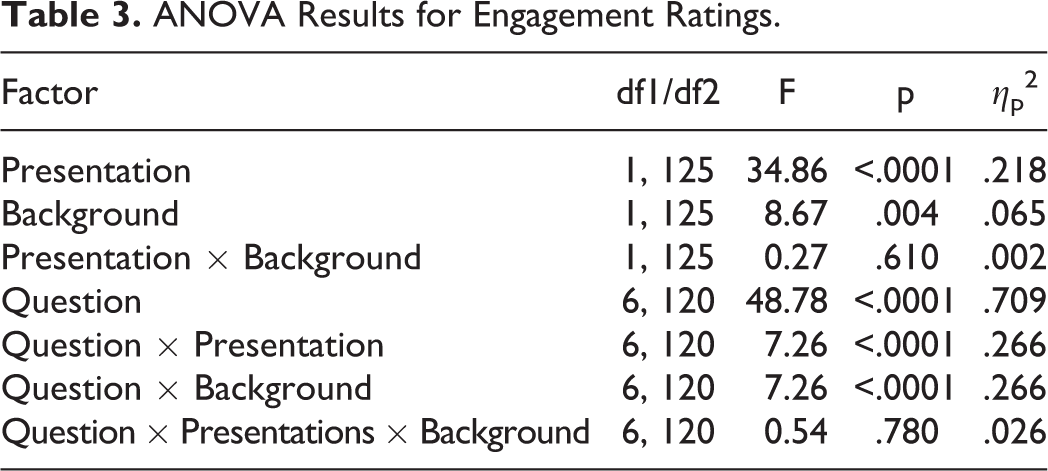
A significant main effect of presentation group indicated that animations (M = 3.88, SD = .65) were more engaging than static presentations (M = 3.22, SD = 0.63). Not surprisingly, a significant effect of background group showed that neuroscience majors (M = 3.72, SD = .68) found the overall content to be more engaging than non-majors (M = 3.39, SD = .60). However, there was no presentation by background interaction. Both majors and non-majors were significantly more engaged with animation presentations. Importantly, the values of the ratings (Figure 2) indicate that both majors and non-major were positively engaged with the materials and they were at least neutral (i.e., a rating of 3 indicates neither agree nor disagree), on average, in their overall engagement of even the statically presented material.
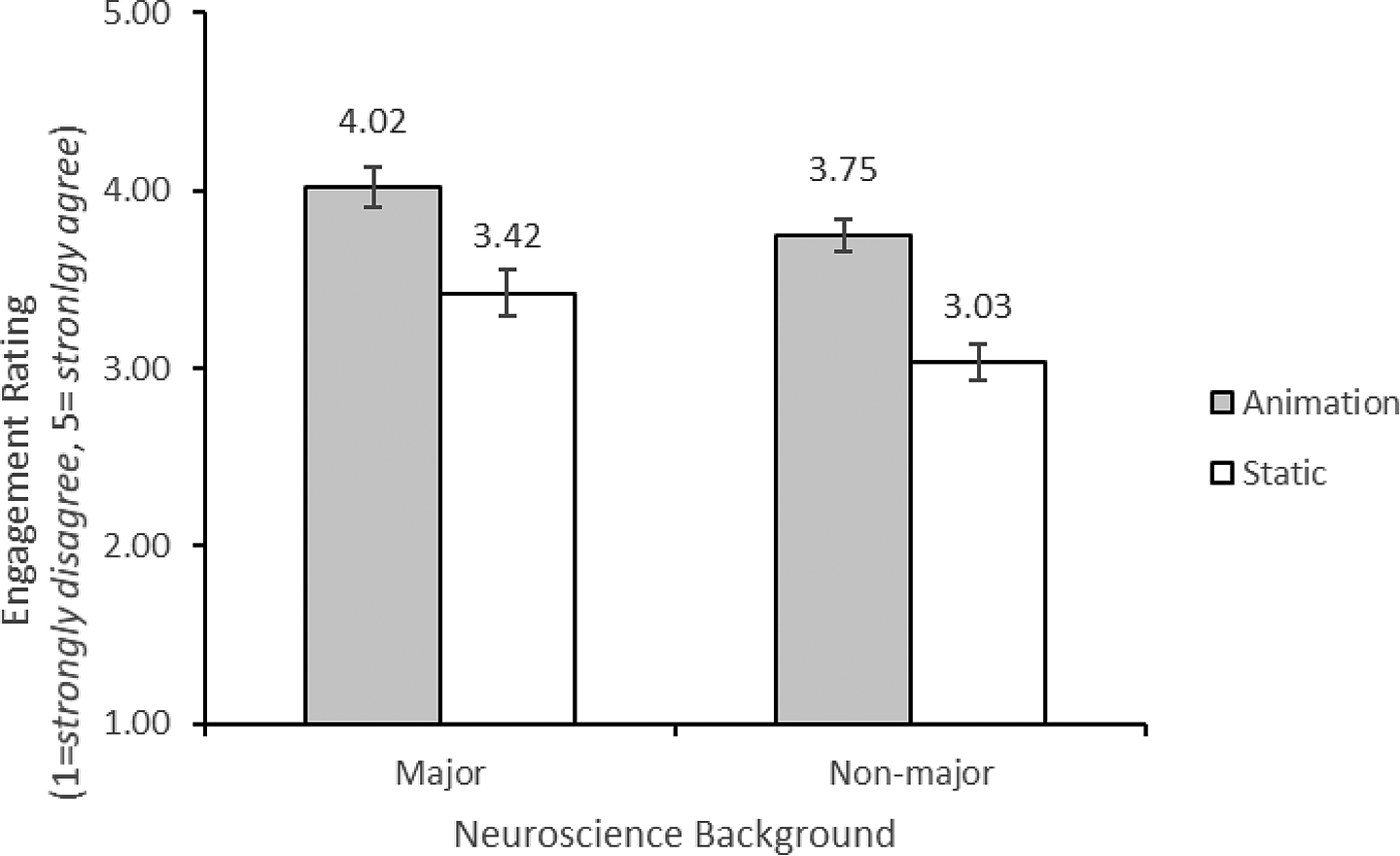
Engagement ratings by neuroscience background for animated and static presentations (error bars represent standard error).
The significant main effect of question indicated that participants learned something new and would seek out similar content, but they were generally neutral as to whether the content was more interesting than normal (Figure 3). In addition, the values of the ratings indicated that participants endorsed the content as being enjoyable and clearly laid out (i.e., mean values greater than 3). However, the main effect of question interacted with presentation and background, but there was no three-way interaction.
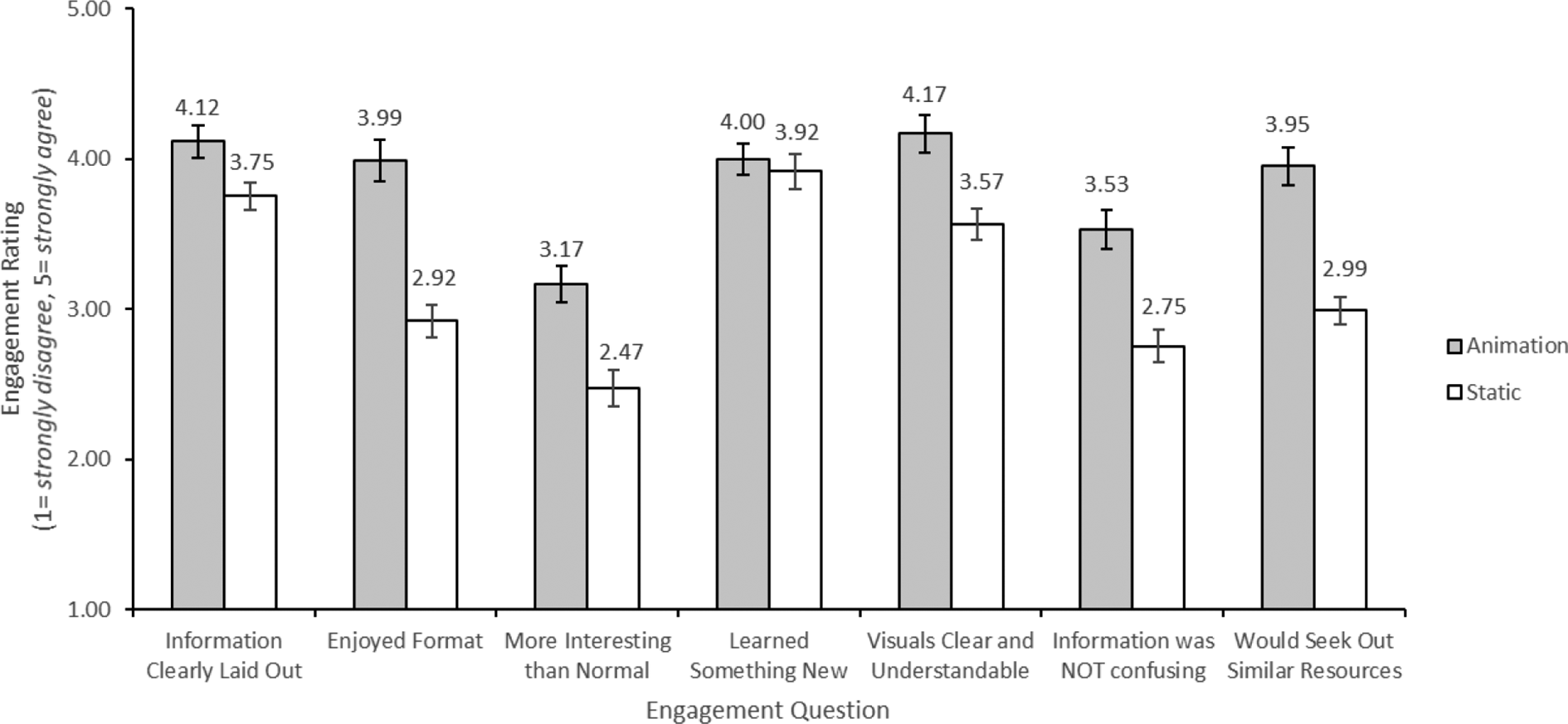
Engagement ratings by question for animated and static presentations (error bars represent standard error).
The significant question by presentation interaction indicated that presentation affected engagement (Figure 3). Simple effects analyses showed that compared to the static group, the animation group more strongly endorsed all the engagement questions (ps < .01). The only question that did not differ between groups was that they learned something new (ps > .43). Interpreting the mean rating values, the animation group’s mean question ratings were all above 3.5, suggesting they enjoyed the format, the information was clearly laid out, the visuals were clear and understandable, the information was not confusing, and that they would seek out similar resources in the future. Of interest, however, are the mean ratings for the static group. That the static group positively endorsed (e.g., ratings over 3.5) that the information was clearly laid out, that they learned something new, and that the visuals were clear and understandable. However, the static group’s ratings were neutral on the format, on whether they would seek out similar information, on finding the information confusing, and on whether it was more interesting than normal. Together, these ratings suggest that even though animations were more engaging overall, the content delivered via the static presentations was well received. This suggests that constructing content to follow multimedia learning principles and meet target audience cognitive levels has benefits regardless of presentation style.
The significant question by background interaction indicated that prior knowledge and interests affected engagement (Figure 4). Simple effects analyses revealed that compared to non-majors, neuroscience majors more strongly endorsed that the information was clearly laid out, that the information was not confusing, and that they would seek out similar resources (ps < .0001). Engagement ratings did not significantly differ between majors and non-majors for clear and understandable visuals, the format was enjoyable, the material was more interesting than normal and that they learned something new (ps > .14). Qualitatively, majors and non-majors generally agreed (i.e., mean scores above 3.38) that the information was clearly laid out, the visuals were clear and understandable, that they enjoyed the format, and that they learned something new. Only majors thought the information was not confusing and that they would seek out similar resources. Importantly across the questions, the lowest mean ratings by non-majors were essentially neutral and significantly above the “disagree” rating level. Taken together, these results support the idea that the content, regardless of presentation, was engaging for majors and non-majors, with the exception that non-majors were less interested in the topic.
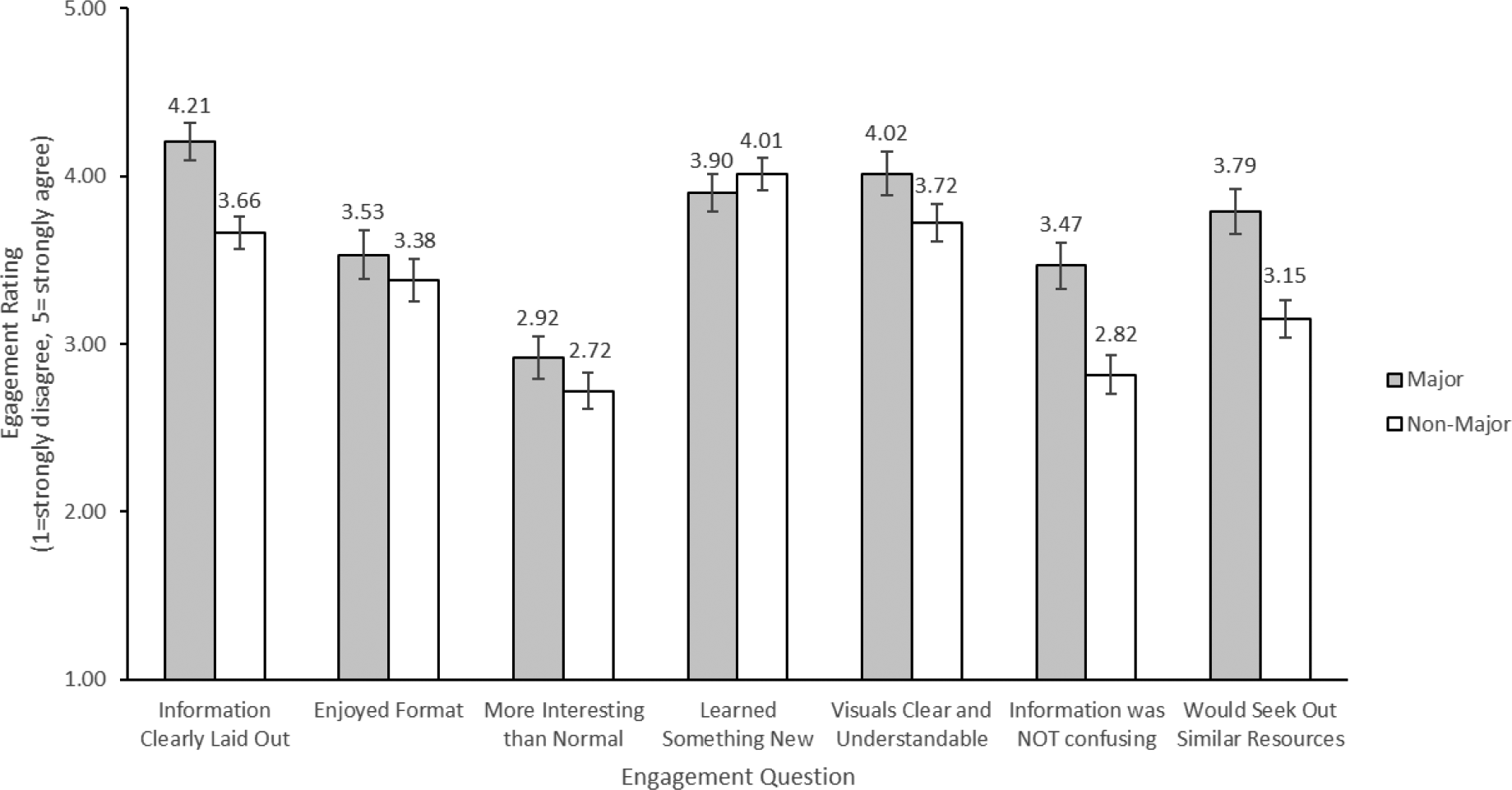
Engagement ratings by question for neuroscience background (error bars represent standard error).
Discussion
When designing the content for animations, it is important to consider how to create content to improve comprehension for a broad audience with a wide range of capabilities. For undergraduate education, the question is how can the learning tools keep majors interested without losing the non-majors? Animations, as part of an active learning curricula, have the potential to make difficult dynamic concepts accessible and to increase the depth of understanding in a wider student audience (e.g., Ainsworth, 2008). In this case study, we took an innovative approach to creating effective animations by employing the target audience, namely undergraduates, in the design process to align the instructional content with their own specific perceptual and cognitive capacities. Many scientific animations for students at the college level are created by artists and experts with little consultation of college students. By excluding undergraduates from the animation development process, educators may be missing an important source of information to presenting critical scientific information at an appropriate level of complexity that maintains undergraduate interest. Our goal was to demonstrate that animations that incorporate these best practices in animation development can lead to effective learning tools that can be used to supplement undergraduate neuroscience, biology, psychology, and cognitive electrophysiology courses. Our findings support the validity of this approach by showing that, compared to informationally equivalent static text-plus-illustration version, animations improved comprehension and engagement for wide range of students, with and without prior content backgrounds.
Cognitive electrophysiology, a method used to relate cognitive processes to brain activity, involves dynamic processes that lend themselves to animation. We created animations to explain how neural signals are generated in the brain and measured by scalp electrodes. Specifically, we investigated whether animation benefits could be observed via the comprehension and engagement of undergraduates with different backgrounds and interests. Neuroscience majors and non-majors viewed either a series of three animations or static presentations and then answered comprehension and engagement questions. Comparing animations to informationally equivalent static text-and-illustration versions, we documented improved comprehension and higher engagement for animations for both neuroscience majors and non-majors. As predicted, majors retained more content than non-majors, but only non-majors showed a significant comprehension difference between animations and static presentations. Thus, animations improved the educational performance of not only majors who are already interested in the content and have applicable backgrounds for understanding the content, but also non-majors who may not have existing interest and relevant knowledge.
Both majors and non-majors produced higher comprehension scores for animations. The animations may have helped non-majors make connections allowing them to construct a mental model of the neural processes (Mayer, 2014). Of interest, animations did not interfere with neuroscience majors’ performance, showing no expertise reversal effects (Kalyuga, 2014). It is possible that the information on measuring neural signals was new even to neuroscience majors. This interpretation is supported by the engagement question in which both majors and non-majors agreed that they learned something new, regardless of format. In addition, it is possible that we observed an animation benefit across a wider range of college students because we specifically tailored the content to match their cognitive characteristics. Nonetheless, our a priori contrasts revealed that non-majors with little background knowledge benefited significantly more from animations than comparable static text-plus-illustration presentations.
Examination of the selective effect of animations for both groups is important. If one thinks of the comprehension scores as grades, one can see that animations raised majors’ mean comprehension scores from a C (71.2%) to B (84.3%) grade, but more importantly, animations raised non-majors’ mean comprehension scores from an F (59.2%) to a C (76.3%) grade. In practical terms, these animations had a profound effect on student performance, even when students viewed them outside of an instructional setting. The level of improvement of receiving the content via animations for non-majors is of consequence. The comprehension scores indicate that non-majors, without instructional support, understand the concepts and that animated presentations are making a meaningful difference. These results, combined with those from prior studies, suggest that for maximal influences on student comprehension, instructors should consider students’ prior knowledge when using animations as instructional tools.
Animations were not just beneficial for comprehension, but they also had a strong effect on student engagement. The animation group’s mean engagement score was significantly higher than that of the static presentation group. Collapsing across major, participants indicated that they enjoyed the content and would seek out resources like it in the future. The wish to learn more about a topic is critical to furthering education outside the classroom. Although most undergraduate courses require that students review material on their own, it is unclear the extent to which college students do so. In a pilot survey conducted for this study, 28% of students indicated they do not finish all the readings assigned to them and only 9% report completing all assignments. Animated presentations of some of the material may keep the students’ interest longer than traditional textbook text and illustration formats. Thus, these findings have important implications for educating students in science because students are more likely to spend more time learning the topic if they find the information more engaging and interesting.
As expected, we found that majors indicated higher overall engagement ratings than non-majors. Those with prior knowledge and interest in cognitive neuroscience found the content engaging with clear visual formats and information. They agreed that they would seek out similar resources such as the ones used in this study. Of note, however, are the responses of non-majors or those with little prior neuroscience background or interest. They generally agreed that the information was relatively clear and well laid out. These responses provide support for the effectiveness of our design process that uses iterative feedback from the target audience to refine and revise the educational content and images.
Implementing Animations in an Active Learning Classroom
For this study, we wanted to compare the immediate effectiveness of animations compared to static text-plus-illustration presentations directly, outside of an active learning context or classroom. However, these animations were designed to be used as part of an active learning classroom. It is how animations used within a relevant pedagogical setting make them more effective learning tools (Crouch & Mazur, 2001; Wouters et al., 2008). Here we provide some suggestions about they could be used within a course context.
To help undergraduates benefit the most from educational animations, instructors can provide additional tools to help students process the information and monitor their own understanding, both in the classroom or as part of a homework assignment. One tool is the use of guiding questions in conjunction with animations. Students have shown increased comprehension if they are given guiding questions to think about while watching the animation (Kreiner, 1997). In the classroom, the use of guiding questions can help students focus on the relevant content of the animation (Lawson et al., 2006). For example, a guiding question could be viewed next to an animation embedded in a course slide or a set of questions could be given to students to be filled out as they watch the animation or after they watch an animation. As part of an out-of-classroom assignment, animations can be viewed prior to class and students can be asked to answer a set of guiding question and be encouraged to review the animations, and move backwards when desired, to better understand the points conveyed. Studies have shown that this pre-class preparation can improve student comprehension of new material (Brame, 2015).
Instructors can also use assessment questions for each animation as evaluation tools in their courses. If questions are designed to implement Bloom’s taxonomy (Bloom et al., 1956; Krathwohl, 2002), then instructors can use the pattern of correct and incorrect answers for the various questions to reveal which concepts are most difficult for students. Bloom’s taxonomy proposes that a set of evaluation questions should assess factual knowledge, content comprehension, the application of knowledge in a new situation, analysis of how concepts relate to each other, the synthesis of ideas, and the evaluation of information. Again, if such evaluation tools were used in conjunction with the animations prior to class, instructors can use the class’s patterns of responses to revisit difficult concepts during class time. In sum, whether inside or outside of class time, structured activities involving animations can encourage students to be active learners, rather than passive learners, by helping them engage in deeper processing and self-evaluation of knowledge. They can also help students avoid the “illusion of learning” by giving them immediate feedback about what they do and do not understand (Paik & Shraw, 2013).
Further, current best pedagogical practices endorse the use of multimedia learning tools embedded within interactive curricula concepts. Support from peers as part of a structured activity can help integrate the concepts of the animations with other course content and lead to the formation of integrated mental models. This helps learners focus on important concepts within animation, learn from mistakes, show how errors can occur and how to understand the correct process. Active in-class activities and off-line discussions can be developed around the animations, such as having student vote for the correct answers after viewing the animations and then discussing why one answer is best. Alternatively, students could watch the animations and then check with their neighbor or go into small groups to understand the concepts. Further, students can help develop better assessments by working with other students to develop new questions (e.g., Crouch & Mazur, 2001). This would help their peers better understand the concepts presented in the animation. These peer interactions can help to optimize the cognitive capacity of the learners at different levels because those with less background are given the opportunity to go back to the content and pace themselves through the material; those with more background can strengthen their knowledge by pointing out relevant details and tutoring lower-level students. This peer interaction concept holds for static text-plus-illustration versions as well.
Limitations, Future Directions, and Conclusions
Although this study verified the immediate comprehension and engagement benefits of our animations, the generalizability of our outcomes are limited in several ways. First, the materials were tested with undergraduates at liberal arts colleges. An important next step for this work would be to extend our participant sample to include undergraduates at different types of institutions ranging from community colleges to large state universities. Although we had a relatively large sample, our sample included an intellectually homogenous group of high-functioning students and we were only able to distinguish performance between neuroscience majors and non-majors. Examination of a broader undergraduate body would help to increase our understanding of how background knowledge relates to the effectiveness of our animations.
Second, we tested our content outside of a learning environment and only assessed immediate retention. Our goal was to directly compare immediate comprehension and engagement from animated to static presentation formats. Because students participated in this study as part of an experiment for credit, their responses were anonymous and we were unable to track them to assess long-term learning. However, the larger purpose of developing these materials was to use them in an integrated classroom context. Above we proposed ways to use our materials within a pedagogical context. Future studies can assess undergraduate performance and engagement in courses at different colleges where the materials are used to supplement course concepts so that we can evaluate how effective they are in supporting instructional guidance and with a broader range of student levels. Within a course context, we would be able to administer pre-tests to establish baseline knowledge and then follow up with additional tests over the course of a semester to determine how well the knowledge is maintained and how it might be transferred to other related problems.
Finally, we were unable to compare the effectiveness of our animations with existing professionally generated animations. The reason why these animations were created was that, to our knowledge, no existing animations covered how neural signals were generated and measured by scalp electrodes. Hopefully this approach of creating animations in collaboration with the learners will be used by other educators so that it can be tested and verified in multiple contexts.
In conclusion, this study presents a novel approach that scientists, educators, and animators alike can use to generate more effective and engaging course materials. The involvement of undergraduates in the animation development process can produce animations that appeal to a wide variety of students with varied backgrounds. Further, a greater emphasis on the community aspect of this approach can affect student outcomes and their interest in exploring more STEM content in their academic careers. The integration of non-traditional experience, such as the application of artistic visualization and computer image rendering, with learning pedagogy can draw in students with art and computer science interests who might not otherwise consider science content as relevant to their interests. In fact, this integration of the arts with science has led to an extension of STEM (science, technology, engineering, mathematics) to STEAM (science, technology, ARTS, engineering, math).
Supplemental Material
Supplemental Material, sj-docx-1-top-10.1177_00986283211023061 - Effectiveness of Undergraduate-Generated Animations: Increasing Comprehension and Engagement for Neuroscience Majors and Non-Majors
Supplemental Material, sj-docx-1-top-10.1177_00986283211023061 for Effectiveness of Undergraduate-Generated Animations: Increasing Comprehension and Engagement for Neuroscience Majors and Non-Majors by Catherine L. Reed, Emilia Hagen, Cindy M. Bukach and Jane W. Couperus in Teaching of Psychology
Footnotes
Declaration of Conflicting Interests
The authors declared no potential conflicts of interest with respect to the research, authorship, and/or publication of this article.
Funding
The authors disclosed receipt of the following financial support for the research, authorship, and/or publication of this article: This research was sponsored National Science Foundation (NSF DUE: 1625521, 1625610, 1626554,1914858, 1914834, 1914855), the James S. McDonnell Foundation (Understanding Human Cognition Scholar Award), and the Scripps College Johnson Award.

Supplemental Material
Supplemental material for this article is available online.
References
Supplementary Material
Please find the following supplemental material available below.
For Open Access articles published under a Creative Commons License, all supplemental material carries the same license as the article it is associated with.
For non-Open Access articles published, all supplemental material carries a non-exclusive license, and permission requests for re-use of supplemental material or any part of supplemental material shall be sent directly to the copyright owner as specified in the copyright notice associated with the article.
