






Abstract
Japanese women have been collaborators in Japan’s aggression in other Asian countries for over a hundred years. The present struggles of the women in these countries make this fact even clearer to us. … We want to express our sincere apologies to our Asian sisters. We want to learn from and join in their struggles. Tokyo, Japan, 1 March 1977
Anglo-academic discussions of transnational feminisms often under-acknowledge transnational feminist activist knowledges, epistemologies, texts, linguistic labours and non-Anglophone feminist thought. The knowledge practices involved in everyday transnational women’s activism and required for the translation of feminist activist thought—reading, interpreting, summarising, translating and editing—are forms of linguistic and intellectual labour through which feminist ideas can travel transnationally.
I learned this by spending a number of years elbow-deep in activist texts, 1 not as a researcher but as a language worker (translator, interpreter, language teacher) in pre-internet era, Japan-based transnational feminist organising (Lunny, 1995). In the early 1990s, feminist groups in Asia were developing the discourses and strategies of women’s human rights, a process involving significant cultural and linguistic translation (See Josei no jinken iinkai [Women’s Human Rights Committee] and Saito, 1994). I learned then to think of transnational feminisms and transnational feminist thought as: 1) emerging out of in/formal networks and grassroots women’s movements; 2) developed and spread by the everyday knowledge practices carried out in women’s movements; and 3) multilingual in origin yet often dependent upon English, a colonial language, for cross-border diffusion. My experiential activist learning also included lessons from translation work about the global hegemony and circulation of English(es), and later about the under-recognition of transnational feminist activist knowledges (within the Anglo-academic discourses), and the frequent failure of feminist scholarship to account for what I describe as ‘Anglo privilege’. By this I mean the oft-unrecognised advantages and power that accrue to English speakers in many contexts, including benefits of time, labour, access, voice and agency, which are differentially accessed and experienced by native and non-native English speakers. I draw on these insights to suggest critical citational praxis as an everyday knowledge practice or intervention for better engaging multilingual, movement-based transnational feminist knowledges and texts. We can therefore decentre (somewhat), or at least resituate, Anglo-academic transnational feminisms within a more epistemologically and linguistically diverse framework.
Linguistic Labour: Translating Activist Texts and Teaching Feminist English in Japan
Forum Yokohama was the international branch of Yokohama Women’s Association for Communication and Networking (YWACN), a municipally funded not-for-profit organisation that administered two women’s centres providing resources—texts, workshops, classes, printing machines and meeting rooms—to advance grassroots initiatives for gender equality. 2 YWACN had amassed hundreds of foreign newsletters through international exchanges with grassroots women’s groups, as well as a large collection of Japanese minikomi (‘mini communications’, a play on masukomi, ‘mass communications’). The bulk of the international materials were in English, yet most of the people who came to our library were Japanese women with varying English abilities. They sought and studied information or became involved in some form of women’s or community activities.
I was hired in 1991 to prepare for the opening of Forum Yokohama as a foreign contract worker. My job involved making the primarily English materials more accessible to Japanese readers. This involved reading through a stack of newsletters from women’s groups, assigning key words to the publication and ferreting out details about the organisation. I would then synthesise this information into an organisational ‘bio’ with mandate and contact details, as well as a short ‘newsletter synopsis’ that characterised the topics covered. Once translated from English into Japanese, this information was displayed with the most recent issue of a given newsletter in the library.
The Japanese and international newsletter collections balanced an Anglo-academic, Western-centric presentation of feminist thought within the library’s collection. Having been suggested by a US university-based feminist research centre, most of the feminist books were American academic and popular feminist texts written in English. My colleagues asked me to teach an English course using newsletter articles as texts, hoping that a guided introduction to global grassroots women’s thought would encourage greater use of the collection. These various forms of linguistic labour profoundly shaped how I came to understand transnational feminist activisms and knowledges.
Learning from Transnational Feminist Activisms, Knowledges and Texts
My extensive reading of the alternative body of feminist thought found in grassroots publications revealed the limits of my understanding of feminisms, raising uncomfortable questions about how my own privilege and knowledge gaps were shaping my presentation of organisations and issues. Furthermore, working as an ally/volunteer with other local feminist groups by providing translation/interpretation services for Asian women’s human rights meetings introduced me to long-time activists from all over Asia. I learned that much of the world’s feminist thought and practices emerged from multisited, multilingual, locally grounded and transnationally networked collective struggles. It was a very different view of feminisms, activisms and epistemologies than I had encountered in North American feminist classrooms in the late 1980s. Beyond the emerging intersectional focus on race, gender, class and sometimes sexual orientation, my first on-the-ground encounter with transnational feminisms taught me to recognise global English hegemony and Anglo privilege as powerful forces within transnational feminisms. I carried these concerns with me when I encountered Anglo-academic transnational feminisms scholarship after beginning my doctoral studies in 2004.
Lesson 1: Transnational Feminist Activisms Produce Knowledges that Deserve Recognition—as such
M. Jacqui Alexander and Chandra Talpade Mohanty (2010) have called for alternative and movement-based genealogies of transnational feminist thought. Grassroots feminist newsletters are a good place to start. These newsletters published from at least the 1970s onwards are evidence that women all over the world were actively theorising their situations by documenting, researching, analysing and strategising, much like their Western counterparts were, and that they were exchanging ideas transnationally (see Figures 2,3,5,6,7,8). While there are important specificities of activist epistemologies addressed more directly in the social movement literature (Barker and Cox, 2002; Bevington and Dixon, 2005; Lunny, 2006; Choudry and Kapoor, 2010; Lunny, 2016), these activist texts were, I believe, theoretical. By this, I mean that these activist texts described and analysed the problems women faced and prescribed solutions, which is what I had learnt to expect from feminist theories in North American feminist classrooms (Tong, 1989). Newsletters and reports described problems women faced and the actions they took to respond to them (see Figures 1 and 4 for Japanese domestic circulation examples). They drew on formal and informal research to examine and theorise local, cultural, regional, national and global root causes of such problems. They were pedagogical, with key words unpacked in text boxes and glossaries. Books, reports and videos offered for sale promoted knowledge diffusion. Finally, these activist texts were action-orientated: through them, transnational networks shared updates on projects that spanned multiple contexts and recorded many non-textual knowledge practices involved in grassroots organising (for example, interrupting and shaming perpetrators of domestic violence after being alerted by a woman blowing a whistle, literally). The details of the struggles and the ingenuity of the tactics captured in these early 1990s women’s and NGO newsletters were often new to me. Yet, arguably, these documents employed recognisable modes of feminist knowledge-making—theory, research and pedagogy.
Pre-internet era feminist and NGO newsletters provide evidence of alternative transnational feminist knowledge practices and dissemination systems. As a language worker immersed in the textual evidence of transnational feminist activist thought, I was curious about what, where and how feminist knowledges travelled. I began to recognise transnational feminist knowledge production as grounded in the everyday knowledge practices required to transmit feminist thought across cultural and linguistic borders. These practices produced feminist knowledges and texts intended primarily for other grassroots and NGO women activists. This pre-internet production and exchange of activist texts was a main means of disseminating transnational feminist activist knowledges from at least 1975. Not always able to travel to meetings, far-flung activists used newsletters and reports to learn from and about each other’s struggles, facilitating collective feminist knowledge-making across borders, and groups were as concerned with sharing their own analyses as they were with learning from other women’s movements. 3
Yet, there is little citational evidence that North American feminist scholars were reading early transnational feminist movement-generated literature or engaging it as a heterogeneous body of feminist thought. This is somewhat understandable given the circulation patterns of early international women’s newsletters. For many activists, Western-based scholars were not seen as primary interlocutors. For their part, critical Anglo-American university-based scholars do reference movements ‘elsewhere’ quite consistently from at least the early 1990s onwards, though often as case studies or touch stones; whereas movement knowledges, activist epistemologies and the learning that transpires through transnational feminist activisms are far less commonly engaged as such (Lunny, 2016). Although the more recent anticolonial and anti-racist scholarly knowledge project of Anglo-American ‘transnational feminisms’ offers a compelling comparative, relational and intersectional analysis of transnational relations of power, it nevertheless seems to recentre the North American university-based positionalities in understandings of transnational feminist knowledge-making, for example by usually involving a North American university-based research partner in transnational feminist knowledge creation projects (as seen in Nagar and Lock Swarr, 2010). On the other hand, feminist newsletters show that activist knowledge partnerships were often regional, for instance Asia-specific, and also often South–South. The ‘global feminisms’ scholarship, often differentiated by its engagement with United Nations-related advocacy, more often references activist texts, though usually as primary data; it less often cites the concerns and ideas raised in activist texts in research-shaping and research-situating ways. Activists ‘elsewhere’ and their ideas become objects of study rather than knowledge-producing interlocutors (Lunny, 2016). Exceptions that grapple overtly with transnational feminist activist knowledges, epistemologies and pedagogies as such highlight the relative absence or instrumentalisation of activist knowledges (Alvarez, 2002; Ackerly, 2004; Dubois et al., 2005; Hewitt, 2009; Alexander and Mohanty, 2010; Conway 2011, 2013). Transnational feminist movement knowledges were thus subsumed or marginalised in North American feminist classrooms and scholarship even as the transnational and global feminisms frames were being developed, and a review of references and bibliographies in recent publications suggests not much has changed.
How might Anglo-academic transnational feminist scholarship better account for the multilingual, multisited movement-based genealogies, methodologies and epistemologies of transnational feminisms, broadly conceived? Citational praxis—reflection, theorising and action on everyday citational practices—is promising. Scholarly citational practices likely played a part in how, actually, Anglo-academic transnational and other feminist scholarship developed with little direct or sustained interlocution with transnational feminist activists and their ideas. Laura Briggs (2008, p. 79), aware that the ideas for which scholars are credited (cited) often emerged from movement-generated analyses, asks: ‘How do we cite movement knowledges?’. Certainly, it is complicated to credit the seemingly ephemeral and distant collective insights that inform the theories within which transnational feminist scholars broker. Movement knowledges are under-archived. I have struggled to find citations for ideas learned through the daily work of activism. Nevertheless, as scholars, we need to reflect upon our own citational choices, asking whose knowledge we use to construct our research and syllabi. We can examine what sources we read, assign and cite, looking for the presence of movement-generated, non-English or translated texts. We can also begin to recognise theory, research and pedagogy in less familiar formats, such as placards, chants, blogs, posts and newsletters (Bevington and Dixon, 2005). The #MeToo movement has demonstrated this by using social media to share stories and analyses that have generated collective descriptions and analyses of, and strategies for resistance to, sexual violence. Teachers can also assign more activist texts as course readings, with an eye towards highlighting their theoretical contributions. Monolingual Anglophones can read translated or English sources, while multilingual students can work on texts from feminist groups that are in other languages.
Scholars can, in short, begin to better integrate alternative movement-generated transnational feminist thought. Reading, summarising, quoting, annotating, assigning, debating, critiquing and citing—familiar everyday knowledge practices—are entry points to this shift. By changing the objects of our citational practices, we can collectively rethink the ‘hierarchisation’ of transnational feminist knowledges, recognising the contributions and weaknesses of transnational feminist thought and activist knowledges, beyond Anglo-academic norms.
Lesson 2: The Strategic Use of Global English(es) as a Medium of Transnational Feminist Exchange Increases Reach Yet (Re)produces English Hegemony
In transnational feminist activist milieux, I learned to question the global hegemony of English, English linguistic imperialism and the common-sense assumption of the ‘natural, neutral and beneficial’ (Pennycook, 1994, p. 7) use of English as a global language. English ability did facilitate participation in transnational feminist deliberations, but it could also create tensions between allies internationally and locally. Furthermore, defaulting to preferred English terms when translating can lead to the overwriting of important non-Anglophone feminist insights. Many transnational activists and bi- or multilingual scholars know that ‘at the international level, feminism happens in English’, 4 but English hegemony has not been a main concern in Anglo-academic transnational feminisms scholarship.
The foreign academic and local grassroots texts in Forum Yokohama’s library were primarily in English, which provided evidence for the reach of English across the region. Depending on national contexts and colonial legacies, English might be a mother tongue, a medium of education, an official language, used in NGO sectors or heard in daily life. English language ability might cleave class or ethnic identities. Therefore, grassroots groups consciously and pragmatically used accessibly written English for international newsletters. Even so, using English to communicate transnational feminist thought was fraught. My nakama (colleagues) were both awed and intimidated by the English fluency of other Asian activists, particularly from the Philippines and India. Some tensions existed amongst Japan-based activists as well. Bilingual women were more likely to attend international gatherings and to participate in conversations shaping transnational strategies, whereas monolingual activists were more concerned with local manifestations of human rights violations—which they sometimes felt were overshadowed at transnationally-focused events.
English hegemony also risks overwriting meanings and homogenising otherwise diverse culturally and linguistically specific feminist thought. For example, at the time, Western feminists favoured the blunt term seiteki dorei (‘military sexual slavery’). However, zainichi (Korean residents of Japan) and some Japanese activists preferred to use jugun ianfu (‘military comfort women’) prefaced with iwayuru (‘so-called’); they explained that erasing ian from this term problematically obscures the concept of ‘comfort’—often provided by way of sex with Asian women 5 —as a kind of compensation provided by corporations and the military to Japanese sarariman (salarymen or office workers) and soldiers for their loyal labour. 6 Such erasure thereby undercut an important feminist, anti-racist and anti-colonial critique of transhistorical patriarchal practices.
Realising that although translation into English is intended to facilitate transnational exchange, it also involves the threat of subsuming local insights under English discourses, I began to question the ideological weight not just of Western feminism but also of ‘feminist English’. I worried that my own linguistic and conceptual limitations played a kind of gatekeeping role, especially when I had to suggest which newsletters to synopsise and display, or to describe a grassroots group as ‘feminist’ based upon its direct critique of patriarchy and sexism, without knowing their stance on the use of the word. Likewise, activist translators have had long discussions about how best to translate terms such as sex, gender, feminism, accountability and human rights, often resorting to hybrid notations possible in Japanese by using the language’s three different writing scripts: kanji (Chinese character with Japanese pronunciation), cursive ひらがな (hiragana) for Japanese words, and angular カタカナ (katakana) for foreign loan words. 性 is pronounced as sei and can be written in hiragana as せい, referring ambiguously to sex, gender, sexuality as well as a person’s nature. Conventionally, gender is translated as 性別 (seibetsu), with betsu emphasising the difference and distinctiveness of sex. Feminists often choose to use katakana ジェンダー (pronounced genda- not sei) either instead of the kanji 性 or by using a katakana subscript under the kanji that overwrites its pronunciation to genda-, creating a subversive feminist meaning of gender expressible through katakana as borrowed from English, yet exceeding the possibilities of English in some ways.
English remains a rarely problematised default in North American feminist scholarship. Anglo-American geographers, multicultural educationalists and some North America-based Indigenous, Latina and Francophone/Quebec scholars have offered episodic incisive interventions that have attempted to provoke deeper reflection and critical theorising of English linguistic privilege, Anglophone hegemony, ‘Anglo-normativity’, Anglo-American privilege, English monolingualism and how much feminist thought gets lost in translation to English (Baril, 2016 is especially good; see also Descarries, 2003, 2014; Gallagher-Geurtsen, 2007; Pereira, 2014; Browne, 2015; Hassan, 2015). Despite the actual multilingualism of feminisms worldwide, the ‘Anglo-normativity’ of transnational feminist scholarship is rarely critiqued, though recently Sylvanna M. Falcón (2016) made a promising intervention emphasising the importance of translation, multilingualism and awareness of imperial privilege in transnational feminist research practices. As of yet, these interventions have not resulted in a visible collective investment in challenging English hegemony by promoting self-reflexive critique or citational praxis in Anglo-American transnational feminist scholarship.
So how can feminist scholars—monolinguists, multilinguists, native English speakers and non-Anglophones—undertake such theorising? English hegemony can be theorised in tension with an understanding of Englishes—de-homogenised and pluralised—as potent and fraught tools in activist struggles. Drawing on my own Canadian/Quebec context, I suggest the use of the term ‘allo’lingual as one possibility. In Quebec, the relationship between language, cultural dominance and power is inescapable. Here, one often hears the word ‘allophone’ (Office québécois de la langue française, 2005) used to refer to native speakers of a language other than French or English who are linguistic and ethnic minorities in Quebec. This ‘other than’ emphasis might be appropriated as a reminder of English-language dominance within transnational feminist studies. I propose the subversive use of the term ‘allo’lingual to refer to texts/knowledges ‘other than’ those written in English. With the quotation marks around ‘allo’ (‘other’) signalling the power relations that create language hierarchies, using the term ‘allo’lingual can serve as a reminder of English hegemony in a way that the term ‘multilingual’ does not. While admittedly rather binary, exploring the dynamics of ‘allo’lingualism can begin an important conversation.
Lesson 3: Anglo Privilege must be Addressed in Transnational Feminist Knowledge-Making
As fault lines among women, English language abilities reveal inequities of time, labour and agency. In Japan, I learned that the linguistic labour of Anglicising transnational feminisms was unevenly distributed, draining some non-Anglophone women of time, energy and money, even as it gave them greater agency in transnational gatherings. Park Hwami (1999), 7 Zainichi founder of the anti-racist English benkyo-kai (study circle) the Colours of English and my activist mentor, pragmatically determined ‘to make English into my anticolonial weapon’ and was only able to actualise this strategy through a large investment of her own personal resources. As a native English speaker, I realised that I had never had to make a similar investment simply to access transnational conversations. Learning Japanese, however time-consuming, did not provide that kind of access. Furthermore, whereas my activist counterparts paid to learn, as a native speaker I was paid to teach feminist English by a number of groups. This arrangement invited intersectional reflection on power inequities and Anglophone privilege.
My informal activist learning made me acutely aware of how my fluency in English augmented privileges afforded to me due to my whiteness, academic training and middle-class background. At Forum Yokohama, I was hired ostensibly for my speed in processing the high volume of feminist materials in English but also, I suspect, for what I represented: a foreign feminist. In Japan, whiteness and English-speaking are routinely elevated and conflated. White, English speaking, fluent in Japanese, functional in French and trained in feminist and Japanese studies, I brought a knowledge base that bridged Japanese and Western feminisms. Yet, even in areas where my knowledge base was shaky—such as global grassroots feminisms—my perspective, whether regarding word choice or subscription to a foreign newsletter, was (over)valued. As usually the only available native speaker, I received English texts for a neitibu chekku (‘native check’), and I was often entrusted to know best when translating ideas generated in other languages into feminist English. Consequently, I learned first-hand how Anglo privilege operated in transnational feminist milieux.
Towards Collective Citational Praxis
Although I had read Mohanty’s (1984) ‘Under Western eyes’ and had academic training in East Asian Studies and Women’s and Gender Studies, I was unprepared for the breadth of perspectives and depth of analyses apparent in the array of women’s collective knowledge-making and resistance that I encountered a quarter of a century ago. That experience permanently altered my understanding of feminisms, activisms and how certain knowledges travel. Multilingual transnational feminist activist knowledges irrevocably decentred Western and Anglophone feminisms for me. While my own informal activist learning was transformative, I also realised that even many such isolated decentrings cannot truly budge dominant ways of feminist knowing. Instead, a broad-scale shift in knowledge-making practices must occur. Collective scholarly citational praxis, whereby feminist scholars more routinely read and cite ‘allo’ligual and activist texts, offers a method for decentring Anglo-academic norms in feminist research. Case studies and invocations of ‘allo’lingual transnational feminist activisms are not enough. Citational praxis that integrates transnational feminist activist knowledges, especially ‘allo’lingual texts, can resituate Anglo-academic norms within transnational feminisms contextually, as but a few of the many multilingual, heterogeneous, transnational bodies of feminist thought and action.
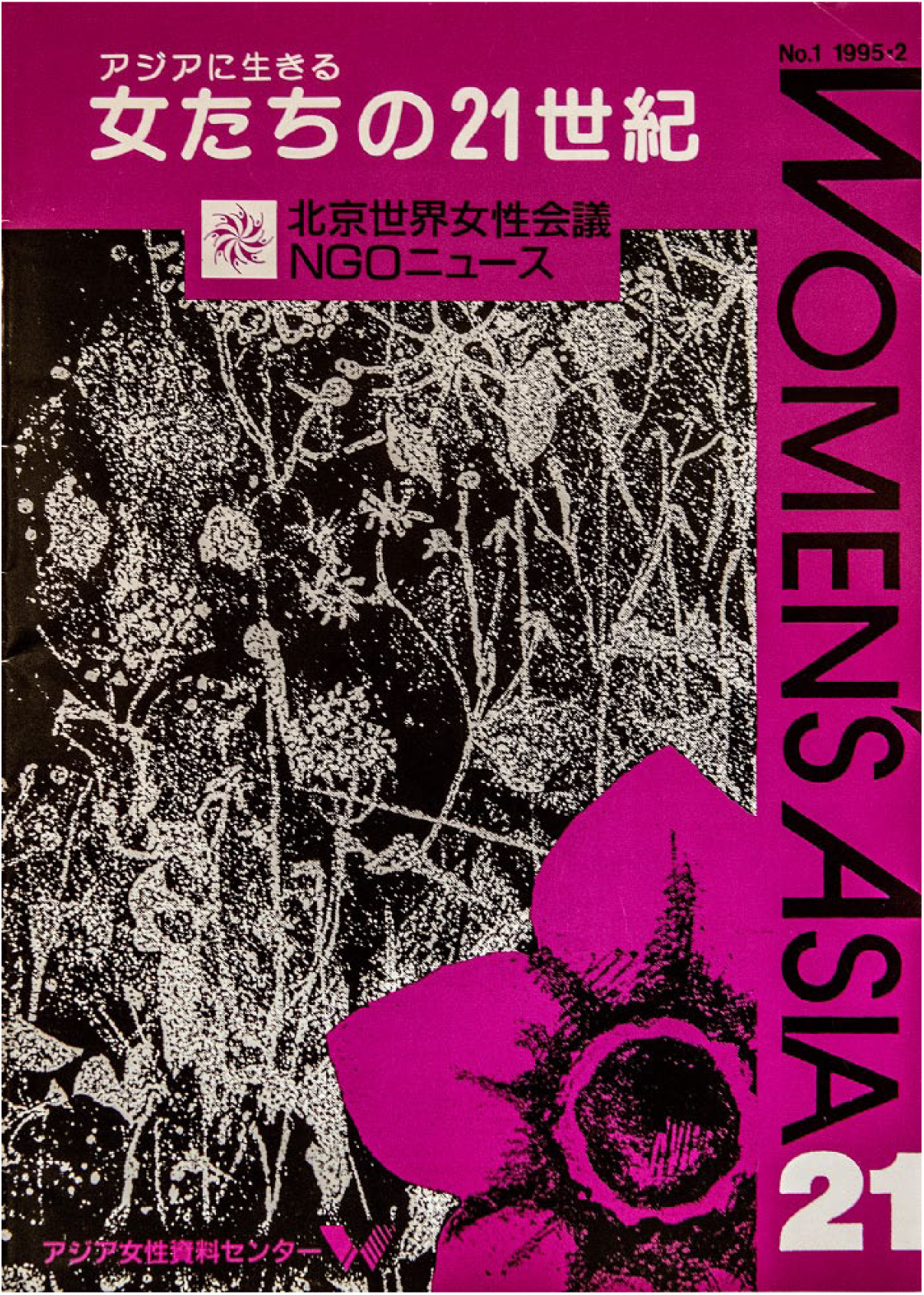
Japanese version of the inaugural issue of the Women’s Asia 21: Voices from Japan newsletter, produced by Asia-Japan Women’s Resource Center prior to the NGO Forum on Women in Huairou, China, 1995
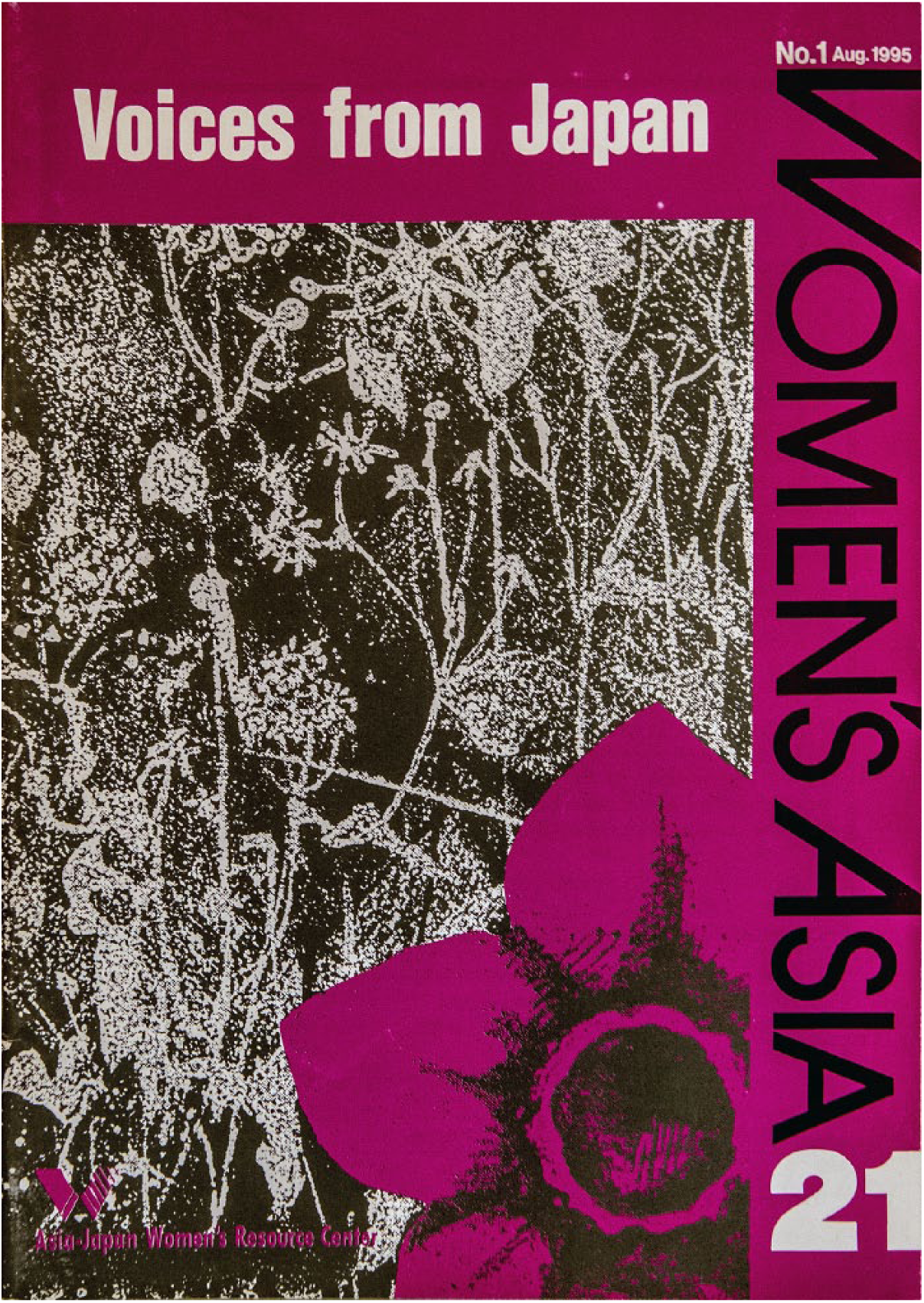
English version of the inaugural issue of Women’s Asia 21: Voices from Japan with content for international feminist audiences, published by Asia-Japan Women’s Resource Center just prior to the NGO Forum on Women in Huairou, China, 1995
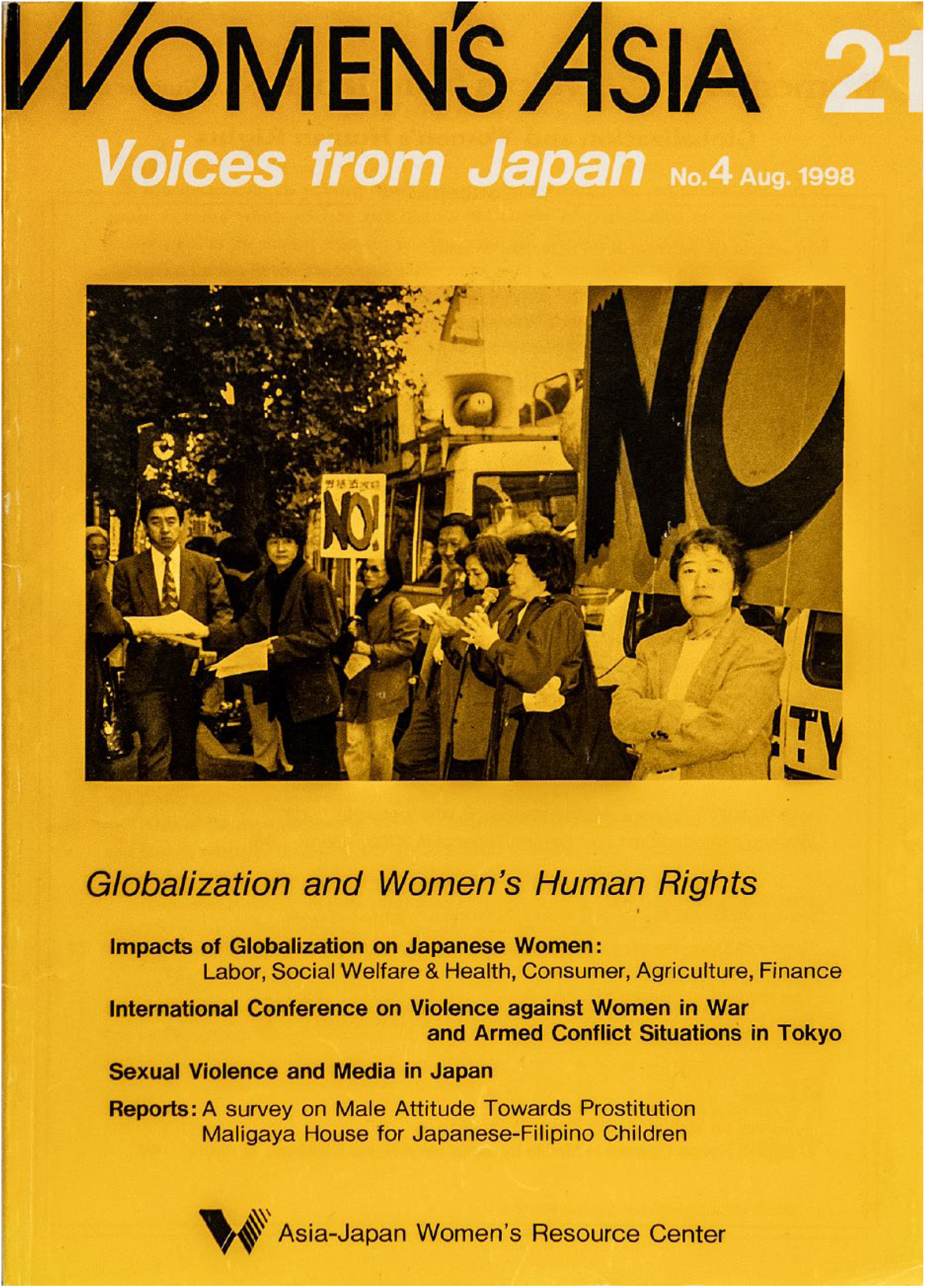
English version of Women’s Asia 21: Voices from Japan’s thematic issue on ‘Globalization and women’s human rights’, 1998
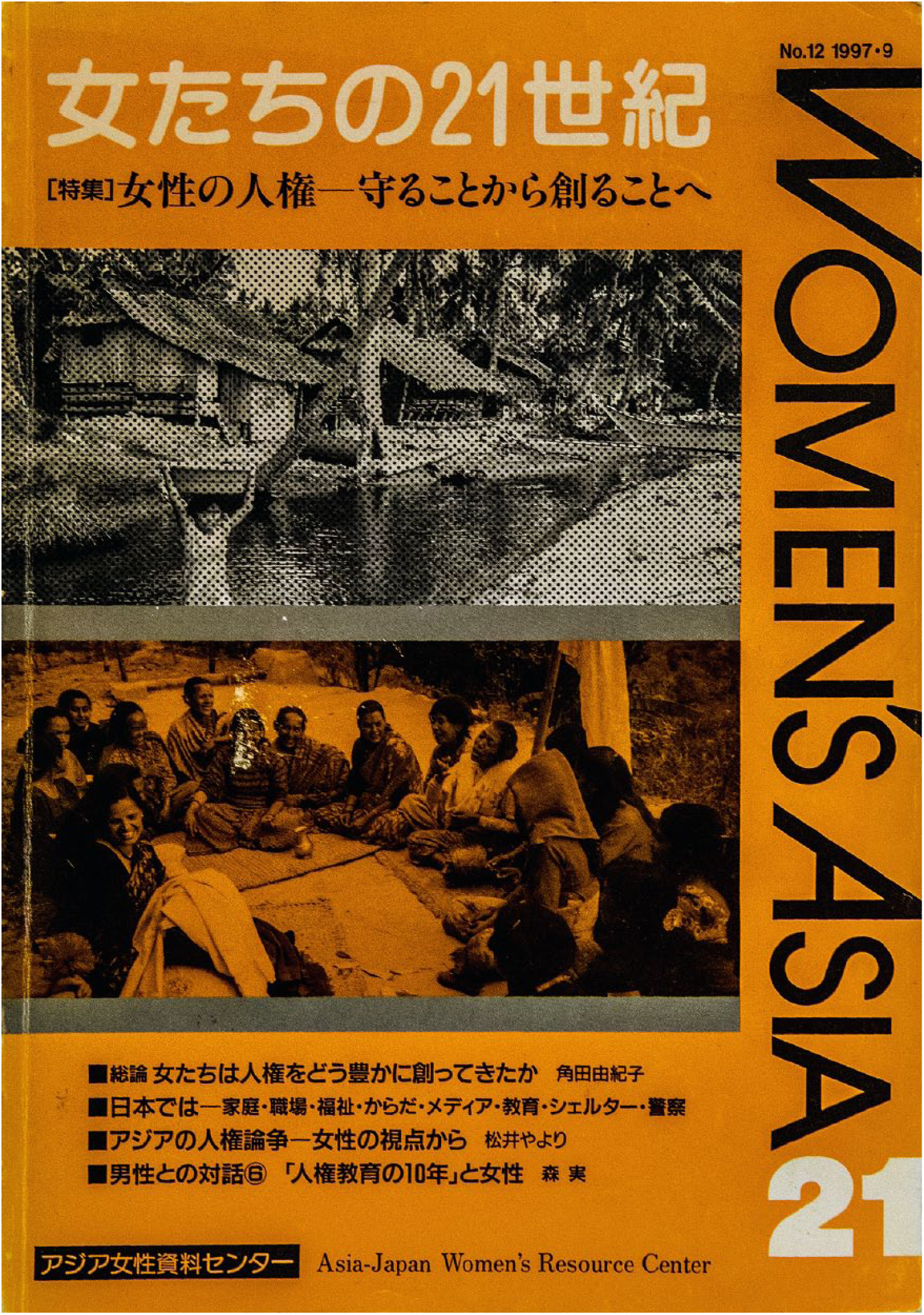
Japanese edition of Women’s Asia 21: Voices from Japan’s thematic issue on ‘Women’s human rights—from defending to creating’ (my translation), 1997
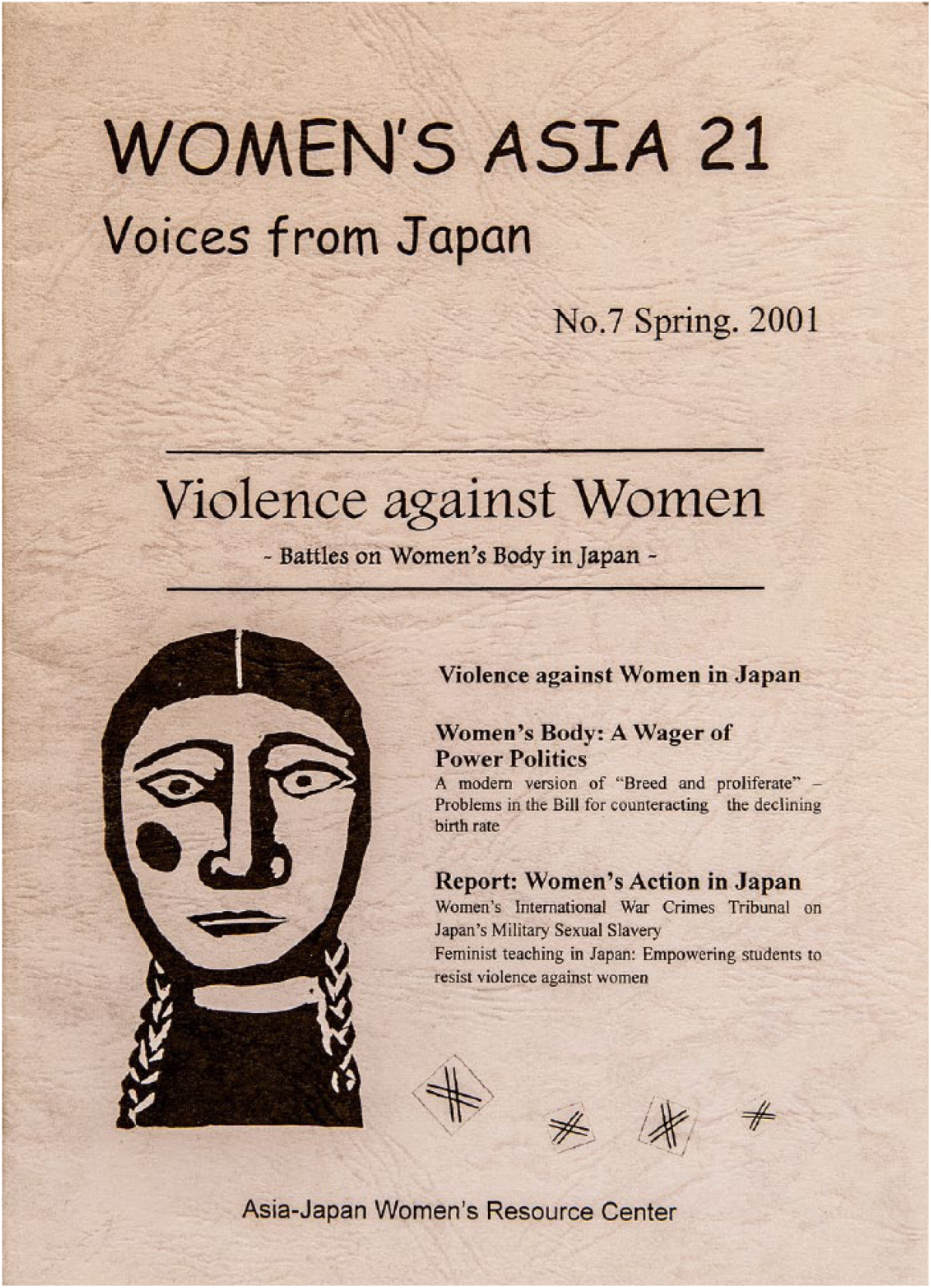
English edition of Women’s Asia 21: Voices from Japan on ‘Violence against women: battles on women’s body in Japan’, 2001
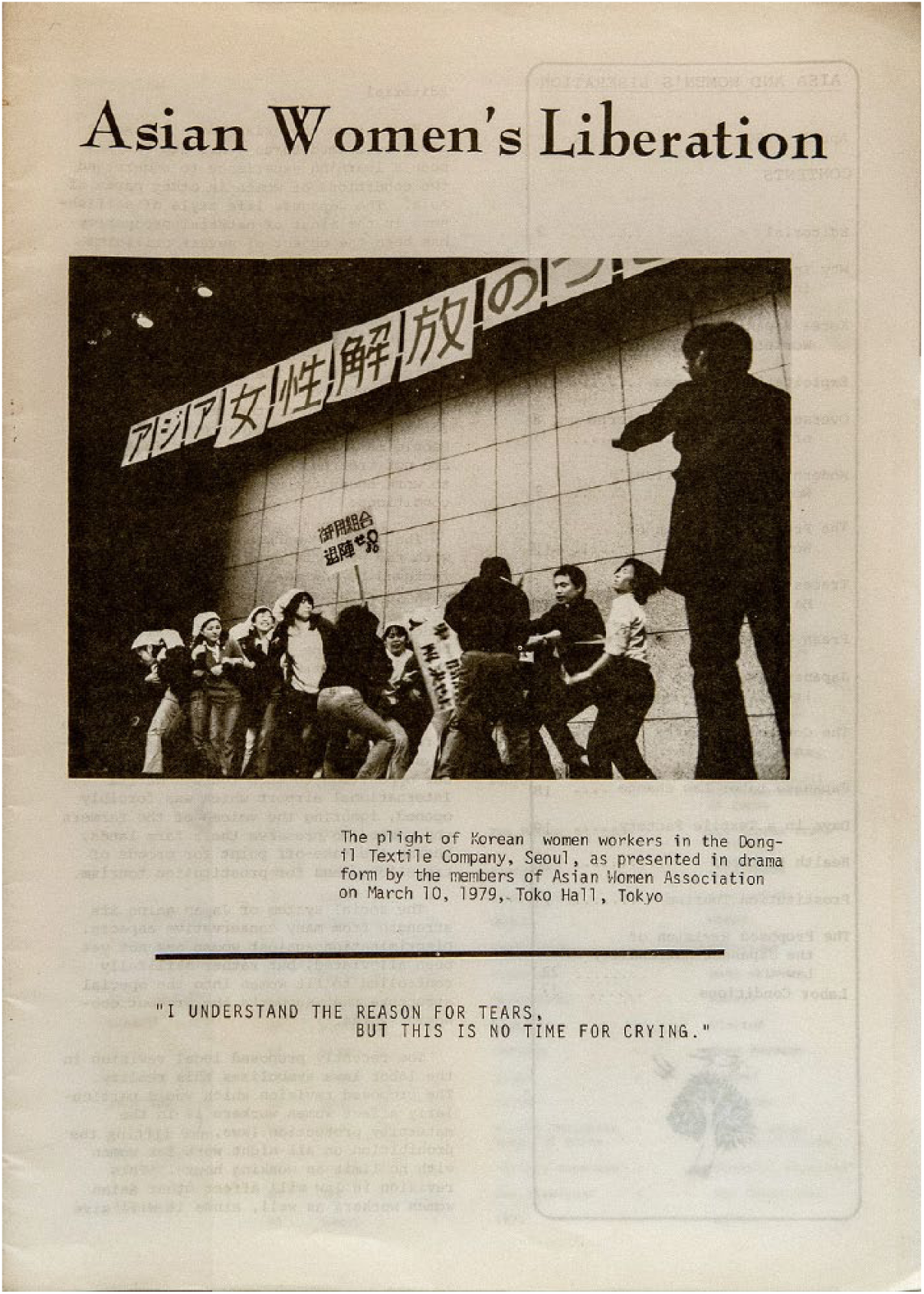
Second English edition of Asian Women’s Liberation by Asian Women’s Association, Tokyo, 1980; the inaugural issue was published in 1977
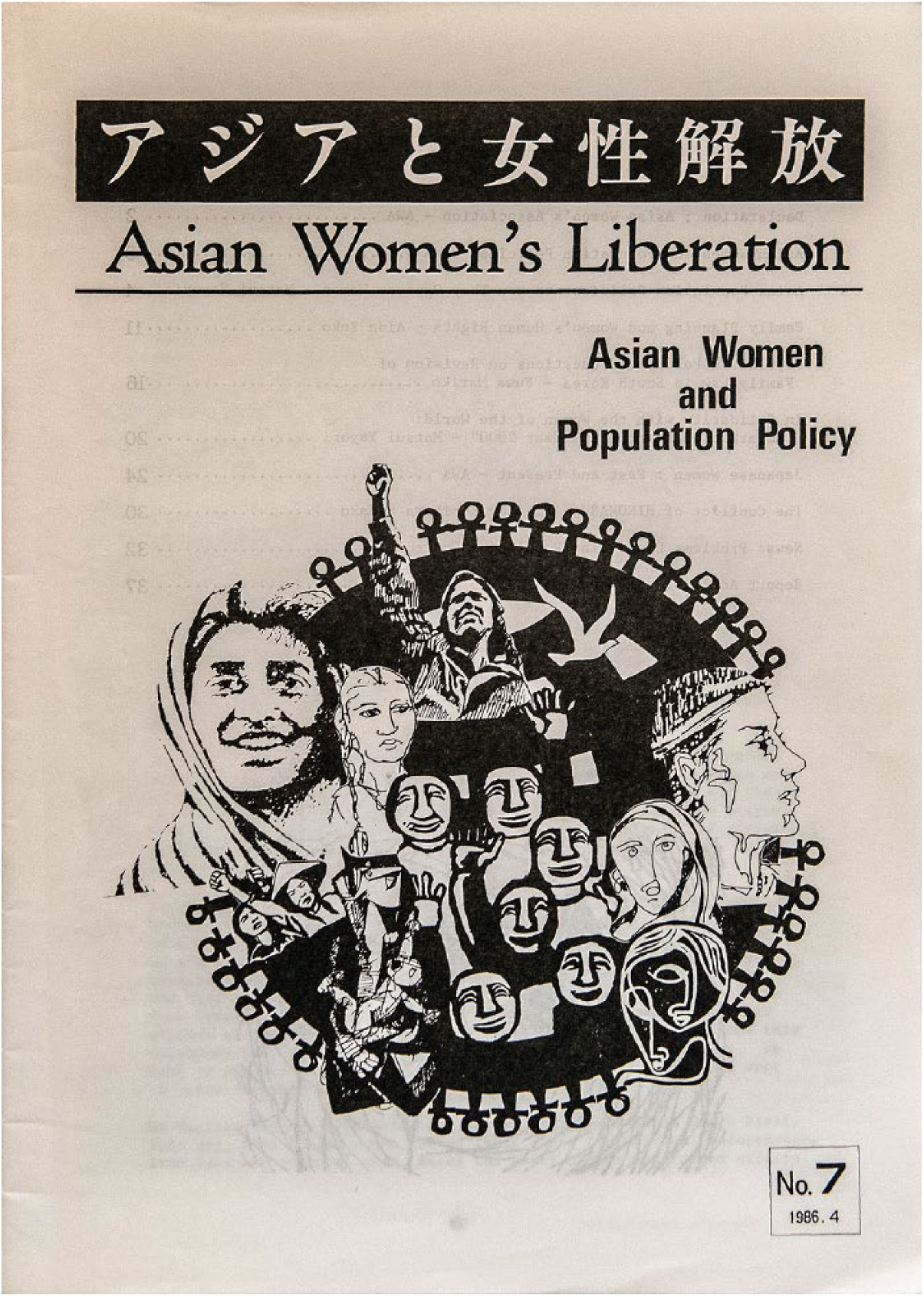
Japanese edition of Asian Women’s Liberation on ‘Asian women and population policy’ by Asian Women’s Association, Tokyo, 1986
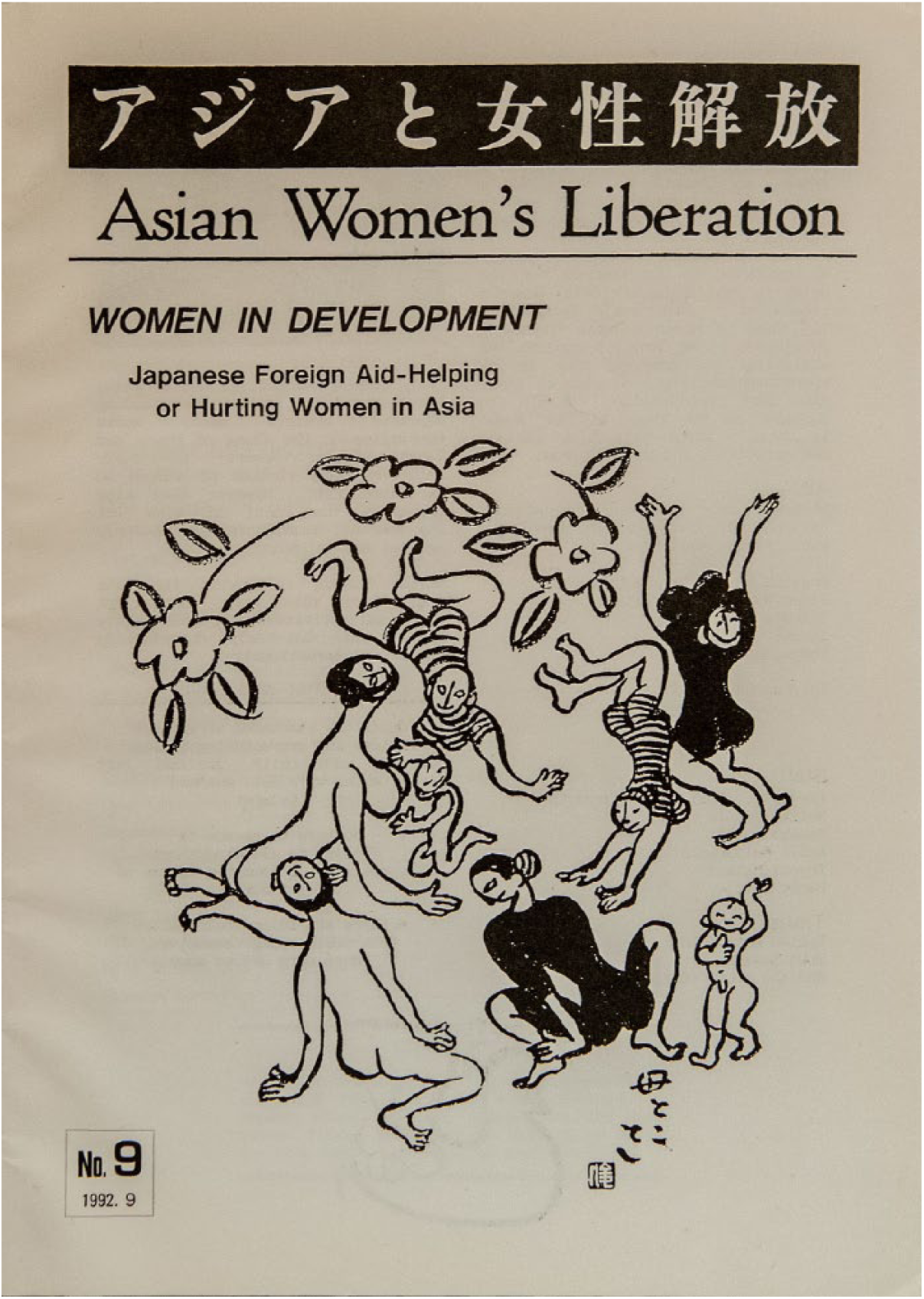
English edition of Asian Women’s Liberation on ‘Women in development: Japanese foreign aid-helping or hurting women in Asia’ by Asian Women’s Association, Tokyo, 1992
Footnotes
Acknowledgements
Most of the ideas in this piece originated in my twelve years in Japan. To my nakama, I offer my heartful gratitude for the many lessons and laughs along the way: tanoshikatta, osewaninarimashita, ganbatte kudasai! I am particularly indebted to Park Hwami, Yayoi Taguchi, YWACN, AJWRC and the Tokyo lesbian/queer community. Dr Homa Hoodfar, Dr Rachel Berger, Dr Gada Mahrouse, Dr Viviane Namaste and Dr Natalie Khouri-Towe offered helpful feedback on the ideas in this article, as did my lovely partner, Nisha, aka Dr Tanisha Ramachandran. My thanks to Erica Still for editing.
1
Some of the bigger transnationally active international networks are still operating and have some older publications available through online ordering or archives (http://dawnnet.org/, https://femnet.org/, http://www.wluml.org, http://isis.or.ug, https://www.cladem.org/eng/, https://huairou.org/network/member-networks/groots/), but many newsletters and reports produced by the smaller grassroots members of these networks are hard to find. A Philippines-based group, Isis International, announced in August 2018 that it is hoping to continue its efforts to digitise defunct journals from feminist organisations (Somera, 2018).
2
Forum Yokohama operated from 1993 until 2005.
3
For example, see the newsletter Ajia to Josei Kaihoh (Asia and Women’s Liberation), first published in 1977 by Ajia onnatachi no kai (Asian Women’s Organization), http://ajwrc.org/jp/modules/myalbum/viewcat.php?cid=5 [last accessed 16 September 2018]. The English version of this newsletter, Asian Women’s Liberation, is archived at http://www.ajwrc.org/eng/modules/myalbum/viewcat.php?cid=3 [last accessed 16 Sept 2018]. See also The Asia-Japan Women’s Resource Center’s Joseitachi no nijuisseki (Women’s 21st Century), http://ajwrc.org/jp/modules/myalbum/viewcat.php?cid=1[last accessed 16 September 2018]. Note that the title of the English version of this publication is not a translation of the Japanese title but Voices from Japan. This English title was chosen by Matsui Yayori to emphasise the importance of the transnational flow of feminist activist thought being from, and not simply to, Japan (see Figures 2,3, ).
).
4
Dr Homa Hoodfar, personal communication, 14 August 2018.
5
The term ‘Asian’ is sometimes used in Japanese in a implicitly derogatory way to imply ‘non-Japanese’ Asians. Here, feminists were acknowledging the sexist but also racist and colonialist overtones of the way in which sex with women from other Asian countries was and is seen as an earned ‘comfort’ owed to hardworking soldiers/businessmen.
6
I do not have access to the newsletter article that made the connection between the corporate and military control of male sexuality. This connection was discussed in meetings and eventually made its way into a newsletter article.
7
For Japanese and Zainichi Korean names, surnames appear first as is standard practice.
Author Biography
Deborah Rose Lunny has a PhD from Concordia University in Interdisciplinary Studies. Her fields are: transnational feminisms, social movement learning and social justice pedagogies. Her dissertation ‘Citing/siting transnational feminisms: academic and activist epistemologies’ negotiates the tensions between Anglo-academic and movement-based iterations of transnational feminisms. Debbie also has a BA Honours in Japanese Studies from McGill University and an MA in Japanese Literature from Chicago University. She worked in queer and women’s human rights Japan-based activism for over a decade. She teaches Humanities full-time at John Abbott College. Her research projects include ‘decolonising’ college education and social justice pedagogies, and integrating transnational feminist and social movement learning frameworks.