






Abstract
In this paper, a hybrid time-varying delay projective synchronization method for a complex dynamical network is proposed using a hybrid feedback controller. The existing synchronous errors of the delay projective synchronization are constant. However, the synchronous errors of the time-varying delay projective synchronization show time-varying delay. The time-varying delay projective synchronization improves the delay projective synchronization and the different component variables of the system of the node achieve a different time-varying delay projective synchronization. This paper researches the hybrid time-varying delay projective synchronization of two different types of complex dynamical network. Numerical simulations are given to demonstrate the effectiveness of the proposed synchronization scheme.
Introduction
Complex networks have been a research topic in many fields, from mathematical and biological sciences to engineering sciences; from large electric power networks, global transport network and the human brain to a variety of metabolic networks; from scientific research cooperation networks to the international trade network (Strogatz, 2001; Wang and Guan, 2010; Wen et al., 2015a).
The research directions of many complex networks have gained extensive attention from all communities of science, and complex network science has been promoted by the scholars of various fields. Synchronization is a natural phenomenon (Chen et al., 2013; Wang et al., 2013; Wei et al., 2014) and is one of the research topics of complex dynamical networks due to its practical applications in such fields as secret communication, information science, biology and pattern formation, etc. (Chen et al., 2012a, 2012b; Wen et al., 2015b). Thus far, various synchronization methods have been researched, such as projective synchronization (Chai et al., 2012; Li, 2012; Nian and Wang, 2013). Wu et al. (2014) investigated projective synchronization for complex networks and achieved the vector of a general coloured network synchronized to a different scale factor; Yu et al. (2014) investigated projective synchronization for networks and the vector of node of the networks synchronized to the same scale factor. Shi et al. (2014) designed a sliding mode controller to achieve projective synchronization for delay networks, and Ghosh and Banerjee (2013) developed projective synchronization for a neural network. Lü et al. (2014) developed lag projective synchronization for complex networks and Dai et al. (2014) developed finite-time projective lag synchronization for coupled dynamical networks. Zhang et al. (2013) developed modified projective synchronization and Liu et al. (2014) developed modified projective synchronization between different fractional-order systems. Abualnaja and Mahmoud (2014) developed projective synchronization for chaotic complex non-linear systems, and other projective synchronizations have been investigated (Agrawal and Das, 2014; Boulkroune and Mohammed, 2011; Farivar et al., 2012; Ghosh and Banerjee, 2013; Khan and Poria, 2013; Li et al., 2014; Luo and Wang, 2013; Mahmoud et al., 2013; Nian et al., 2013a, 2013b; Ojo et al., 2013).
In a practical application, time delay always exists and affects synchronization (Shi et al., 2014). However, the signals delay is not only invariant but also time varying in transmission systems. There is much research on time-varying delay projective synchronization for a complex dynamical network; however, these studies focused on the state variables with time-varying delay. The synchronous errors of the delay projective synchronization for the above-mentioned paper are defined as
This paper is organized as follows: in the next section, the definition and related content of time-varying delay synchronization are introduced. Then, time-varying delay projective synchronization for a generalized delay complex dynamical network is investigated. Time-varying delay projective synchronization between two delay complex dynamical networks is investigated and lastly a numerical simulation is described.
Principle of synchronization
The following system (1) describes complex networks with a controller:

where


where

and

or


Synchronization of generalized complex dynamical networks mean that the state of the network (1) and system (4) are gradually consistent. The network (1) and the network (6) realize synchronization, which may be called synchronization between two complex dynamical networks. The following section investigates the synchronization of a generalized complex dynamical network and synchronization between two complex dynamical networks.
Synchronization of generalized complex network
The controller with linear and non-linear parts is designed to realize time-varying delay synchronization in the complex network (1) and the system (4).

with



where

the time derivative of Equation (12) is

Substituting Equations (1) and (2) into Equation (13),
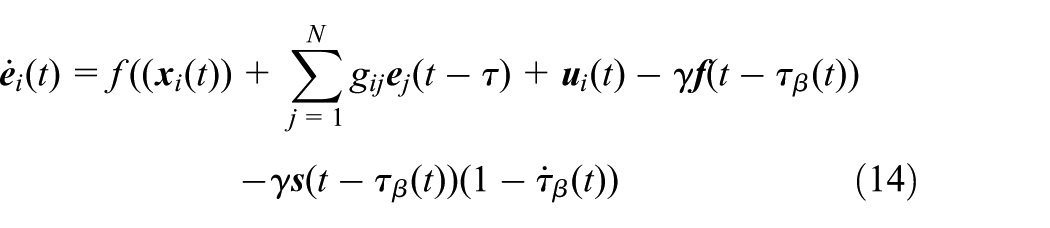
Substituting Equation (8) into Equation (14),

The Lyapunov function can be chosen as follows
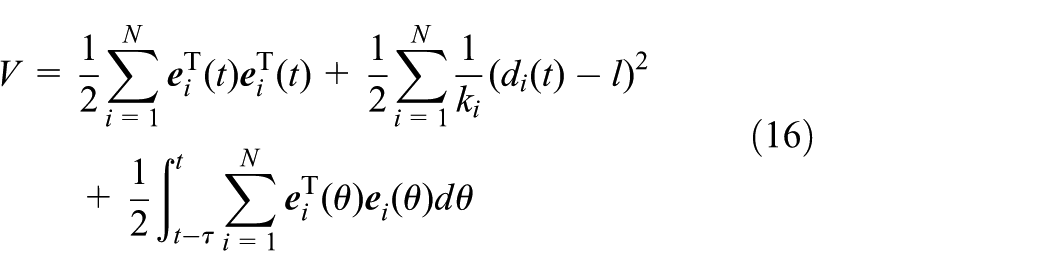
where k is feedback strength coefficient,
The time derivative of Equation (16) along Equation (15) is
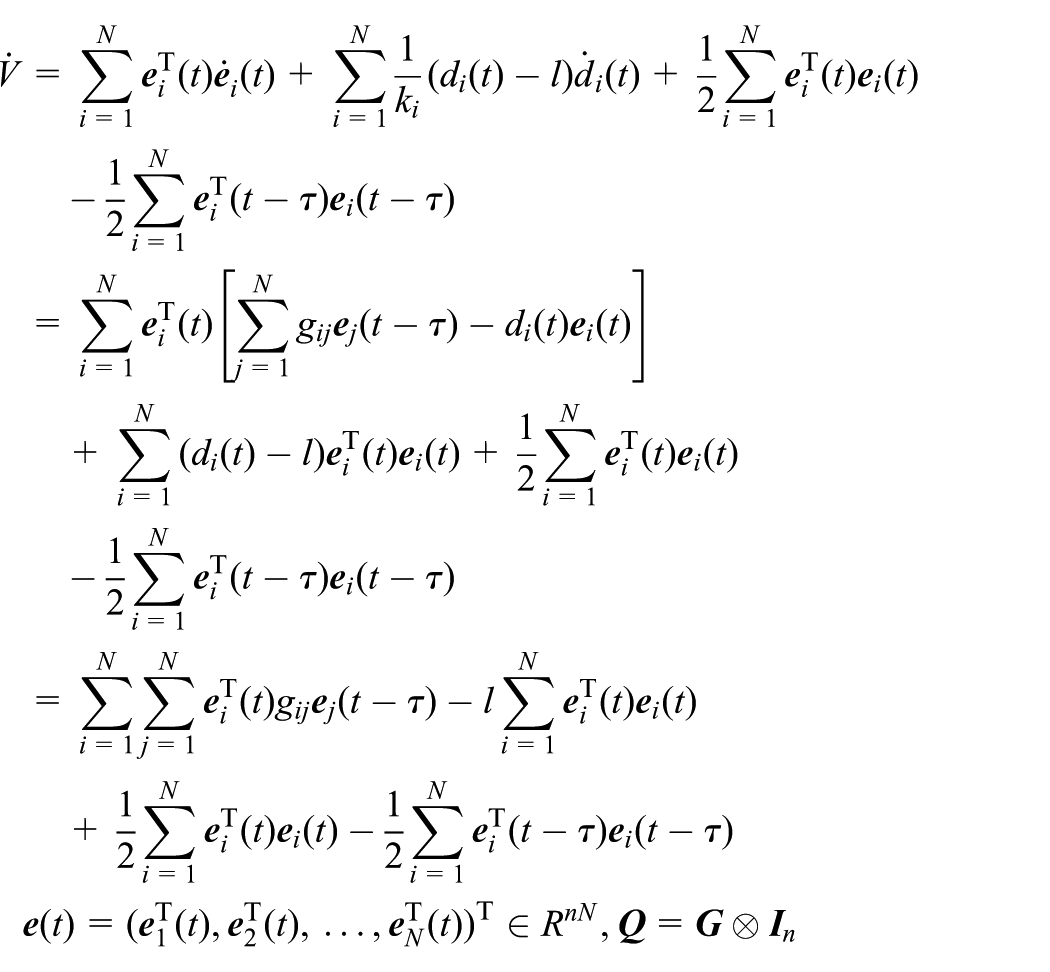
where ⊗ is the Kronecker product. The following inequality can be obtained by Lemma 1:
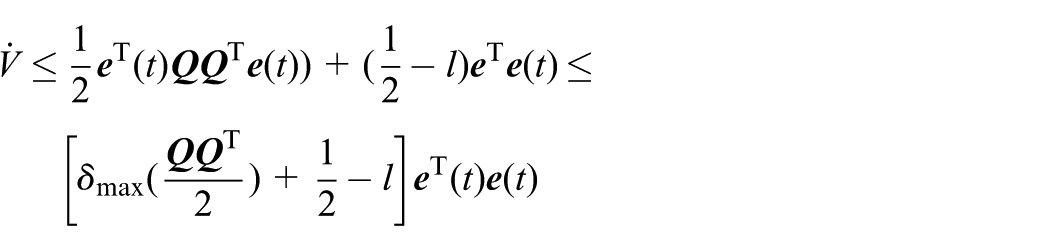
where

Then the error dynamic system (15) is asymptotically stable in accordance with the Lyapunov stability theory. The proof is completed.
Synchronization between two complex dynamical networks
The following system (17) describes delay complex dynamical networks

where

with
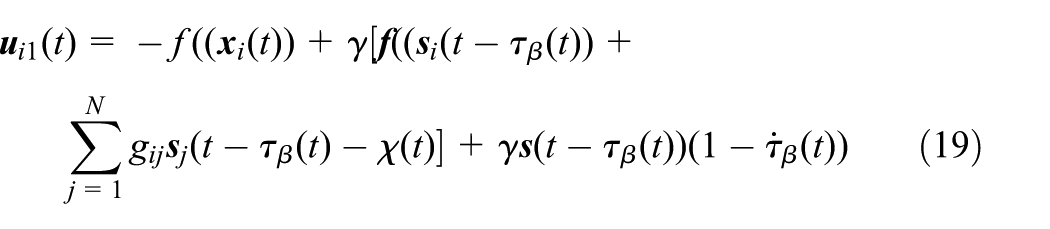


where

the time derivative of Equation (12) is
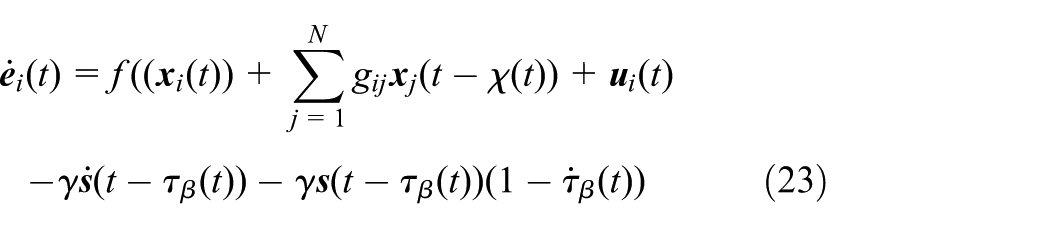
Substituting Equations (17) and (2) into Equation (23),

Substituting Equation (17) into Equation (24),

The Lyapunov function can be chosen as follows
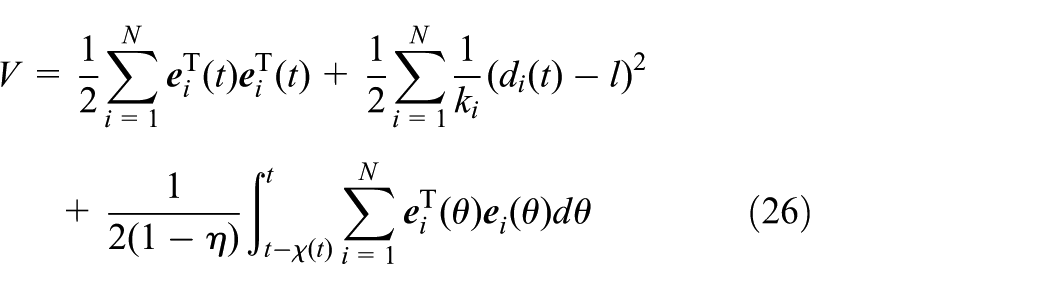
where
The time derivative of Equation (26) along Equation (25) is
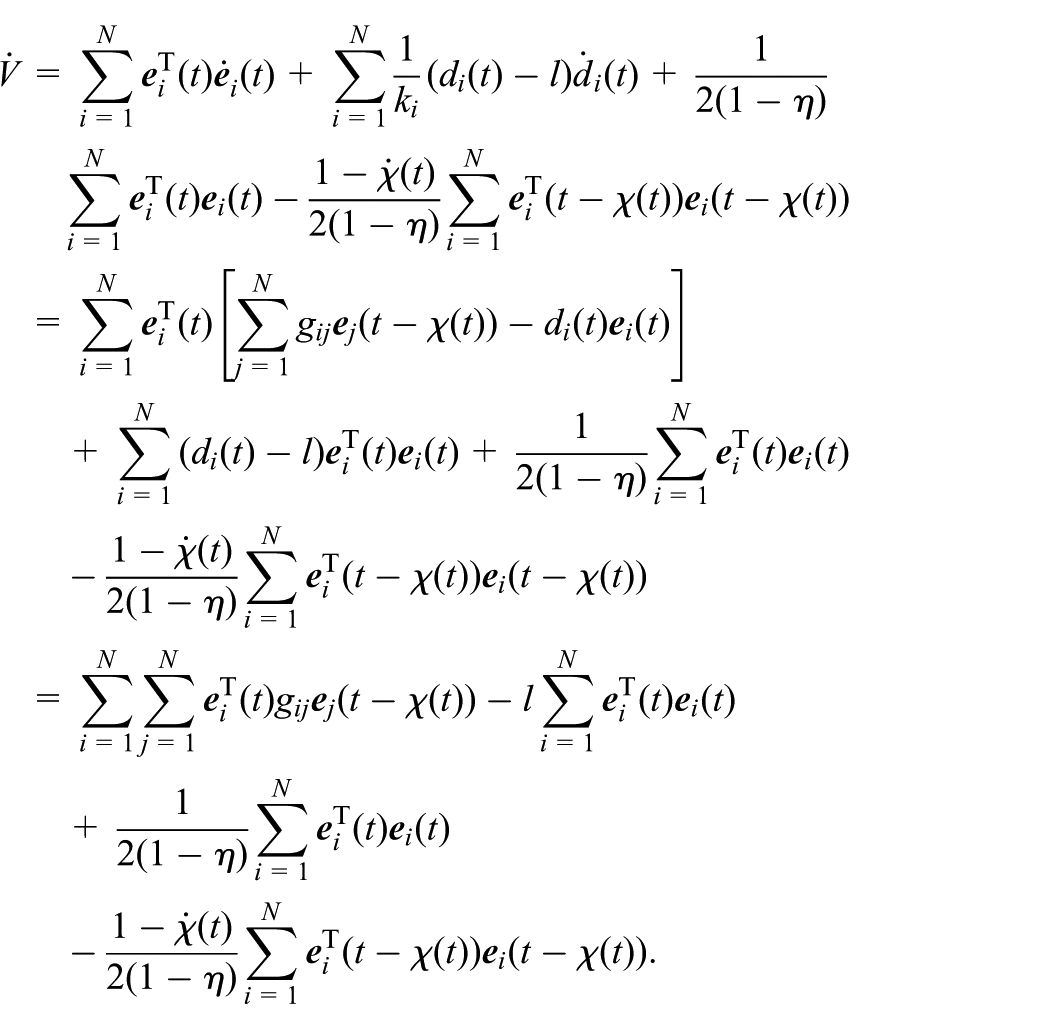

where ⊗ is the Kronecker product. By Theorem 2,
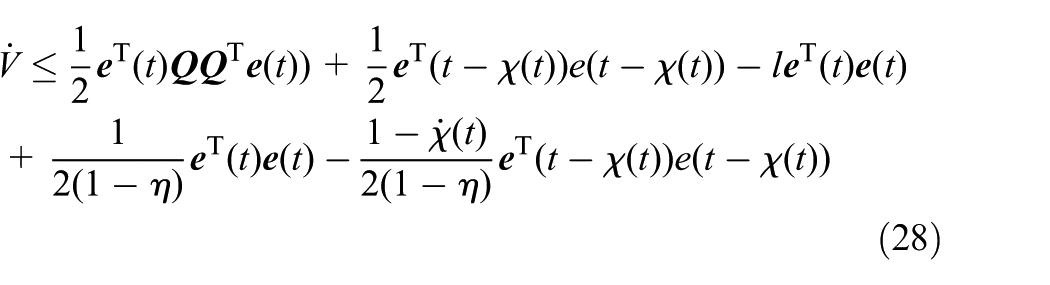
From Assumption 1,
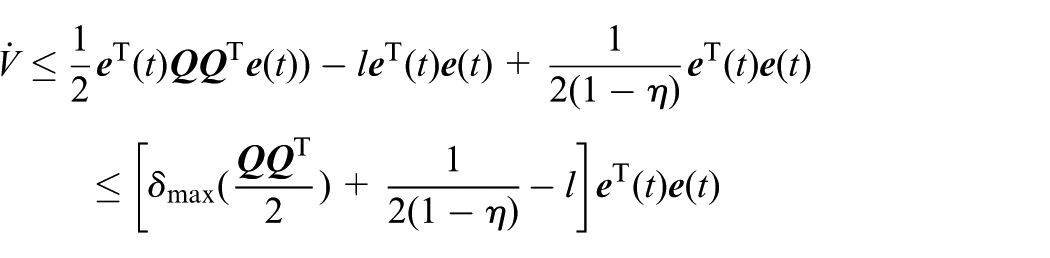
where
The error dynamic system (25) is asymptotically stable on the basis of the Lyapunov stability theory. The proof is completed.
Numerical simulations
We choose a chaotic Lorenz system as the system of nodes of a complex dynamical network.
The following Equation (29) is a Lorenz system:

where
The matrix

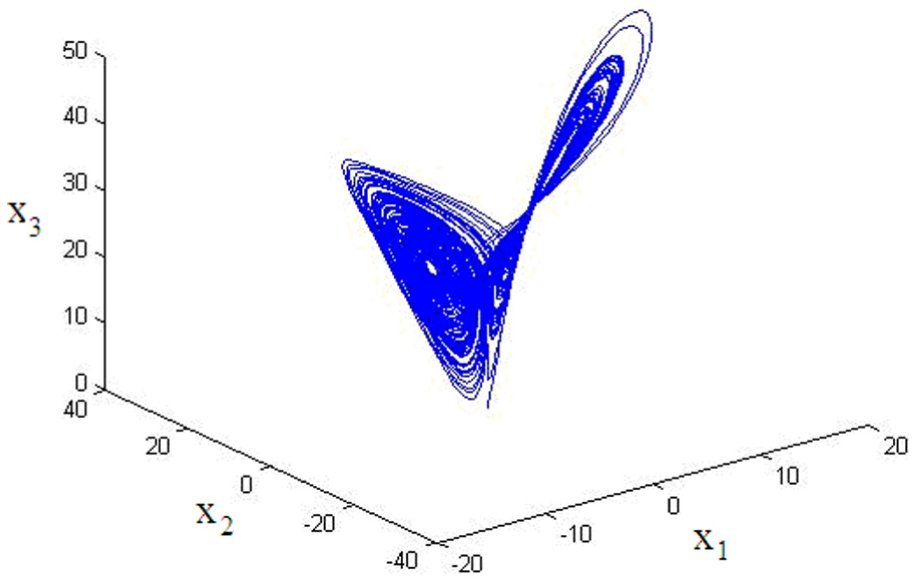
Chaotic attractor of the system (29).
Synchronization of generalized complex network
The following system (30) illustrates that the node of complex networks (1) is a Lorenz system
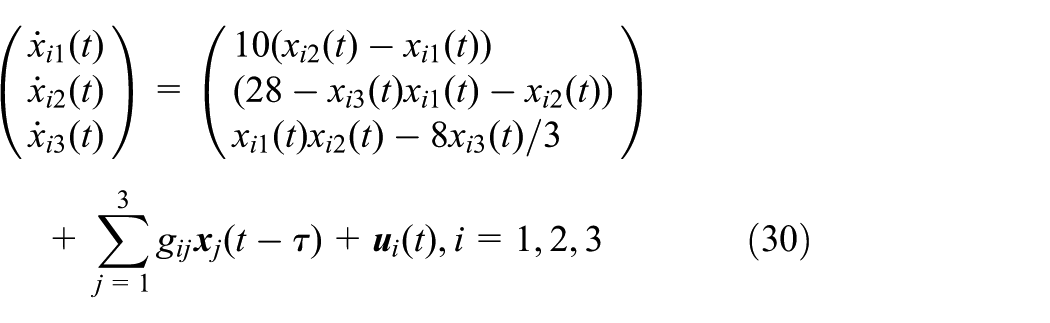
The controller


with



In this section of numerical simulations, the initial states are chosen as follows

The simulation results are showed in Figures 2 and 3. Figure 2 illustrates synchronization errors

The synchronization errors.
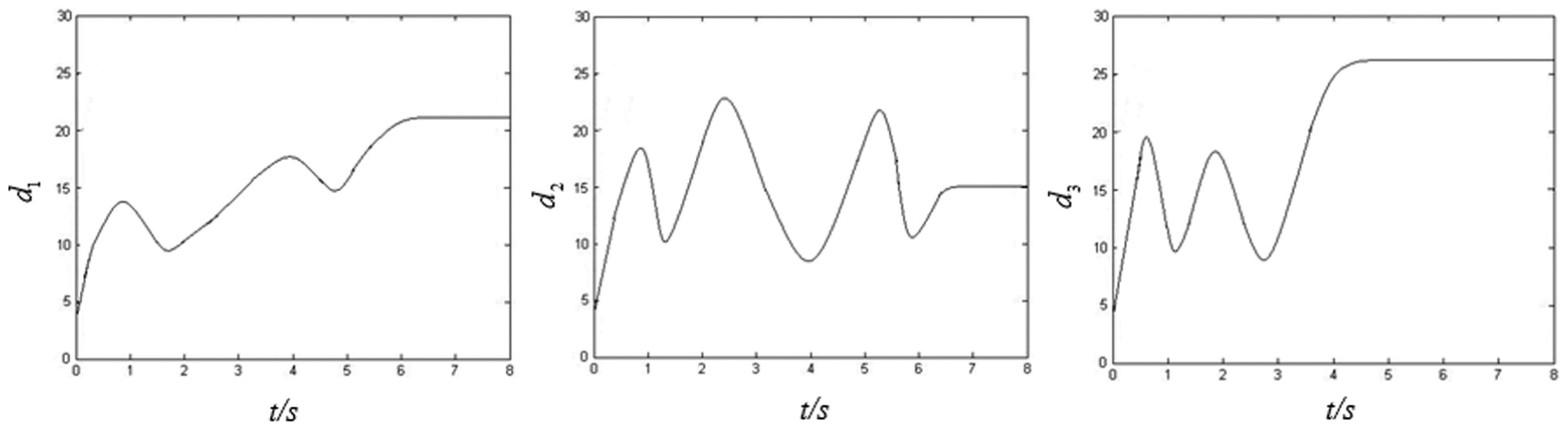
The adaptive feedback gains of synchronization.
Synchronization between two complex dynamical networks
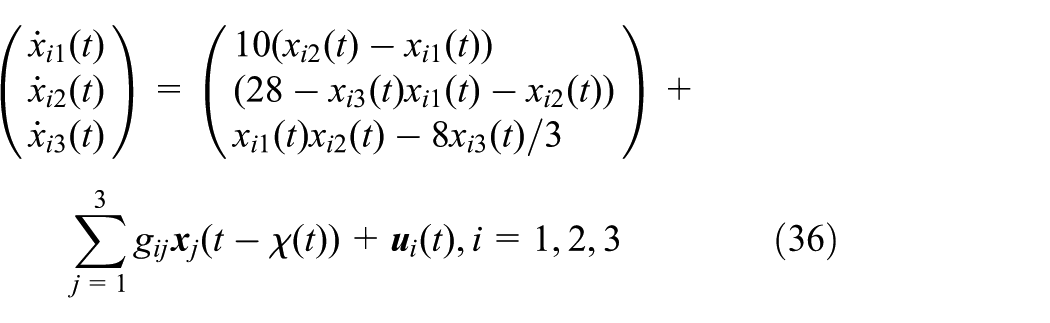
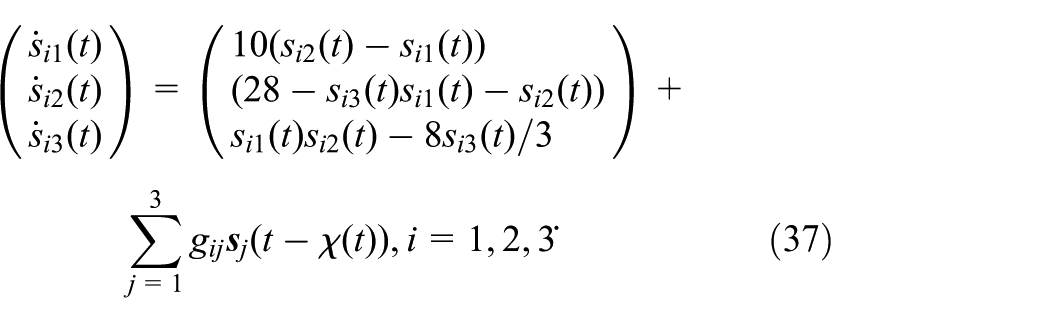
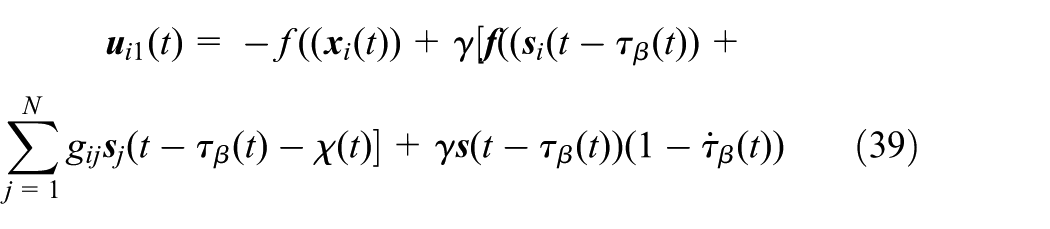
Equations (36) and (37) describe the node of complex networks (17) and the complex networks (6) are all the Lorenz systems, respectively.

with


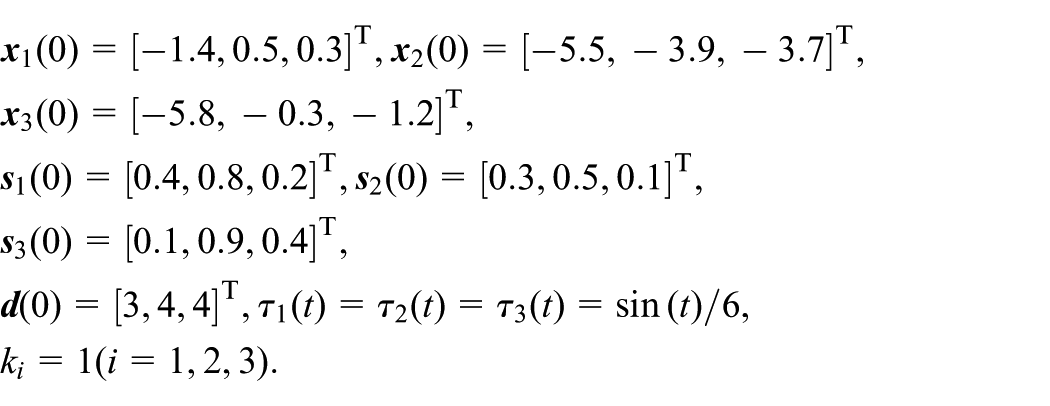
The following is the initial state of the systems (36) and (37)
The simulation results are showed in Figures 4 and 5. Figure 4 illustrates synchronization errors
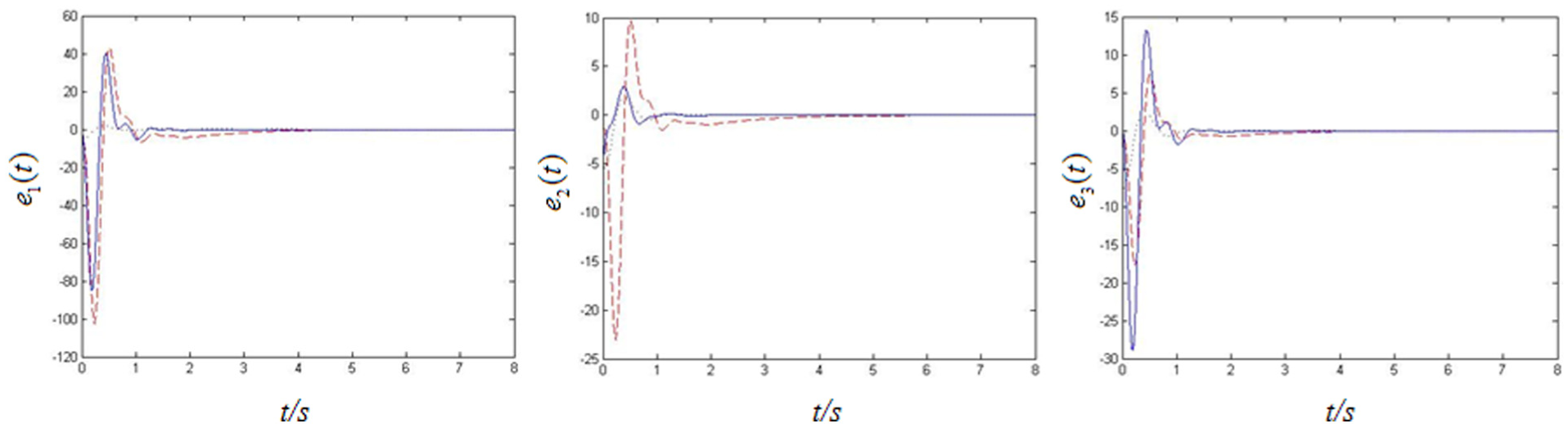
The synchronization errors.
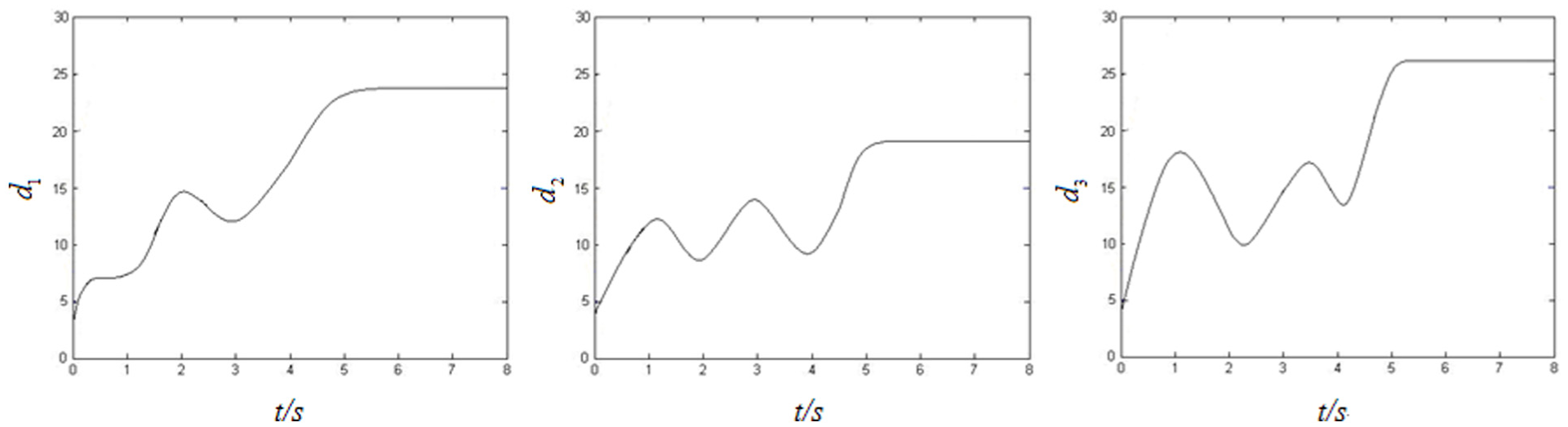
The adaptive feedback gains of synchronization.
Conclusions
This paper proposes a time-varying delay projective synchronization method, which improves delay projective synchronization, and researches time-varying delay projective synchronization for complex networks, the different elements of vectors of the system of the nodes achieving different time-varying delay projective synchronization. Compared with delay projective synchronization, the time-varying delay projective synchronization has universality. Numerical simulations are offered to show the availability of the proposed synchronization method.
Footnotes
Declaration of conflicting interest
The authors declared no potential conflicts of interest with respect to the research, authorship, and/or publication of this article.
Funding
The authors disclosed receipt of the following financial support for the research, authorship, and/or publication of this article: The first author would like to thank the support of Doctor Start-up capital of the BeiHua University (No. 199500096). The second author would like to thank the support of the National Natural Science Foundation of China (No. 61072111) and Jilin city science and technology plan projects(No. 201464042). The third author would like to thank the support of the Nature Science Foundation of the Xinjiang Uygur Autonomous Region (Nos. 201442137–26). The fourth author would like to thank the support of the Natural Science Foundation of Sichuan Province (No. 2016JY0179), the Innovation Group Build Plan for the Universities in Sichuan (No. 15TD0024), the Youth Science and Technology Innovation Group of Sichuan Provincial (No. 2015TD0022), the High-level Innovative Talents Plan of Sichuan University of Science and Engineering (2014) and the Talents Project of Sichuan University of Science and Engineering (No. 2015RC50). The fifth author would like to thank the support of the foundation of Dalian Nationalities University (DC1201010710).