






Abstract
This article presents a novel hybrid fractional-order intelligent proportional-integral-derivative (PID) controller integrated with a fractional-order fuzzy PID controller for load frequency control of a realistic interconnected two-area power system, where each area is powered from a different source. The strategy presented here involves incorporating a damping controller based on a thyristor-controlled series capacitor in the system. In doing so, the parameters of the current controller are optimized via craziness-based particle swarm optimization. The effectiveness of the strategy presented here in load frequency control is validated by extensive simulation examples. The results are compared with a recently published technique based on a fractional-order PID controller. Finally, the sensitivity analysis of the plant is studied by varying the plant parameters and operating load conditions from their prescribed values. It is observed that the current controller is a robust controller and performs satisfactorily with variations in system parameters and load patterns.
Keywords
Introduction
Electrical power distribution is highly significant; power companies are responsible for providing an uninterrupted, reliable, efficient and effective power supply to their customers with an acceptable quality. A modern electrical power system network is made up of different controlled areas; for stable operation of power system utilities, the total generation of each controlled area must match total load demands plus associated plant losses; in addition, system frequency and power exchange must be regulated accordingly (Gomaa Haroun and Li, 2017). This strategy, termed load frequency control, plays a significant role in electrical power plant operation and control. Load frequency control involves continuously observing the system frequency, calculating net deviations of the system frequency from the prescribed value as the area control error (ACE) and accordingly adjusting the valve settings of the generators so as to minimize the ACE (Huang et al., 2017). Thus, the objective of load frequency control is to regulate power produced from various sources in each area so that the frequency of the power system and tie-line power are kept within stated values (Guha et al., 2016a; Huang et al., 2017; Zamani et al., 2016). The diverse generation units in the electrical power system are coherently interconnected by a stiff network; this is why the frequency deviations are supposed to be equal in an area. An adequate controller design for the power plant must cope with load demand and system perturbations, and it should provide an acceptable power quality while preserving both voltage and frequency within stated limits. With the ever increasing size and complexity of modern power systems, insufficient control might deteriorate the frequency and the system oscillation might spread into a wide area, resulting in a system blackout.
Hitherto, several control strategies, such as sliding-mode control, fuzzy logic control, optimal control, adaptive control, self-tuning control, robust and intelligent control, have been designed for complex power systems to enhance their dynamic performance under the occurrence of load perturbations. A survey of the literature reveals that, owing to its simple user-friendly architecture, most scientists are focusing on the proportional-integral-derivative (PID) controller or its alternative to handle load frequency control problems (Arya and Kumar, 2017; Ganguly et al., 2017; Gomaa Haroun and Li, 2017; Guha et al., 2016a, 2016b, 2017; Pradhan et al., 2016). Gomaa Haroun and Li (2017) suggest optimization based on a novel hybrid fuzzy logic intelligent PID (FLiPID) strategy for an interconnected complex power plant with nonlinearities. It has been shown that this FLiPID strategy surpasses other controllers in improving the system dynamic performance. Pradhan et al. (2016) designed a fuzzy PID controller for an interconnected complex power system, in which the controller gains are tuned using the firefly algorithm.
Recently, fractional-order PID (FOPID) has been introduced; this is a generalized type of the classical PID controller (Arya and Kumar, 2017; Morsali et al., 2017; Panda et al., 2012). Regarding this controller, the derivative and integrator parts have non-integer orders; therefore, the order should be determined by the designer. As a result, would have five scaling parameters would have to be determined for the controller (Arya and Kumar, 2017). Arya and Kumar (2017) and Morsali et al. (2017), have presented a FOPID controller based on optimization algorithms to develop a load frequency control strategy for a power system according to time domain performance indices.
In addition, the significance in power plant schemes of utilizing power electronic devices in the form of a flexible alternating current transmission system (FACTS) is extensively recognized (Morsali et al., 2016; Zare et al., 2015); this system provides improved resilience and adaptability. This extra flexibility allows the independent adjustment of certain system variables, such as tie-line power flows, which are not easily controllable. Owing to its fast dynamic performance, a number of FACTS devices, such as the thyristor-controlled series capacitor (TCSC) have been utilized in transmission lines of interconnected power systems to regulate tie-line power fluctuations (Morsali et al., 2016; Zare et al., 2015). Zare et al. (2015), presented a new TCSC structure and proved that the TCSC device greatly enhances the dynamic performance of a power plant when inserted in series along the tie-line.
In most existing load frequency controls applied to power systems, linear models are studied but non-linearity limitations are neglected. However, evaluation of the performance of load frequency control without consideration of the generation rate constraint and the governor dead band might not represent a realistic controlled area in complex power systems.
In this article, a novel hybrid fractional-order intelligent PID (FOiPID) controller integrated with a fractional-order fuzzy PID (FOFPID) controller is suggested as a secondary controller strategy for a load frequency control mechanism. The strategy presented here is incorporated into an interconnected multi-area power system with diverse sources in the presence of a TCSC-based damping controller. The FOiPID controller is a new strategy introduced in this field; it is considered effective in solving the load frequency control problem. This technique is based on an extended state observer, which estimates the uncertainties of the plant and guarantees that the trajectory tracking error will rapidly tend to zero. Furthermore, to compensate for the uncertainties of the plant, the FOFPID controller is designed and added in parallel with a FOiPID controller, which is subjected to the plant, thus the controller is termed a FOiPID-FOFPID controller. Accordingly, the performance of the interconnected multisource power system is evaluated using the FOiPID-FOFPID controller incorporated with a TCSC device along the tie-line. Several simulations are conducted on the plant to validate the performances of the presented strategy.
The following are the main contributions of this article:
A new structure of a fractional-order-based hybrid fuzzy intelligent PID controller coordinated with a TCSC device is proposed for load frequency control.
The controller’s gains are adapted using a craziness-based particle swarm optimization algorithm.
The interconnected complex power system is assessed using the suggested scheme, in which the physical constraints for nonlinearities are taken into account.
The dynamic performances of the current controller is confirmed by comparing the results with a recently published article based on a FOPID controller for an identical system (Morsali et al., 2017).
Sensitivity analysis is conducted to prove the robustness of the suggested controller.
The remainder of this article are organised as follows. Mathematical modelling of the system is addressed next, followed by TCSC modelling. The structures of the FOPID, FOiPID and FOFPID controllers are then elaborated on and the objective function is stated, followed by its optimization solution. Simulation results and comparative analysis are presented. Finally, conclusions are drawn.
Power system under testing and TCSC modelling
System modelling
In this article, a two-area interconnected power system comprising a different generation utility, such as thermal, hydro or gas, in each control area is studied. A schematic diagram of the proposed power plant is displayed in Figure 1; the detailed architecture for a realistic power plant is established in Figure 2.
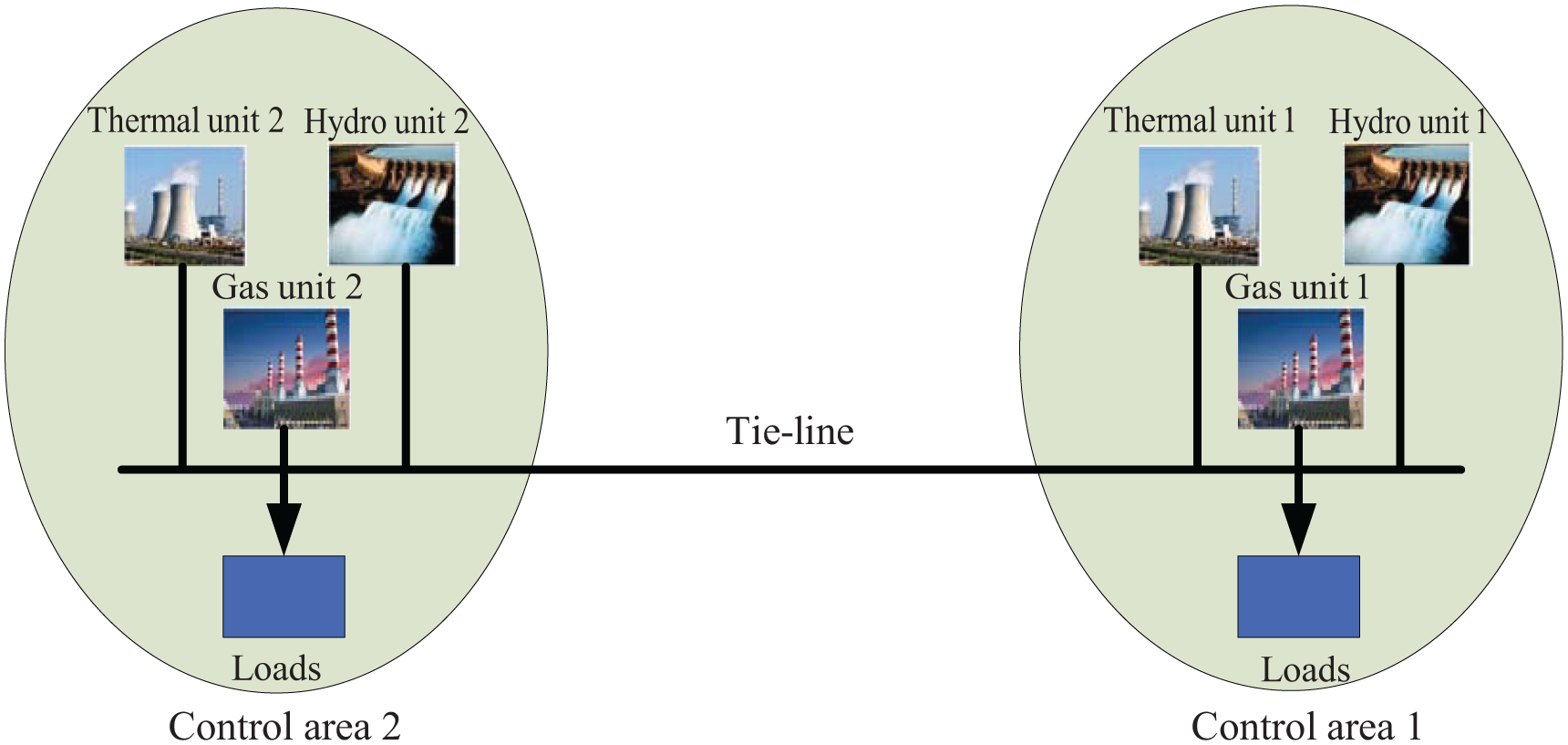
Interconnected two-area power plant.
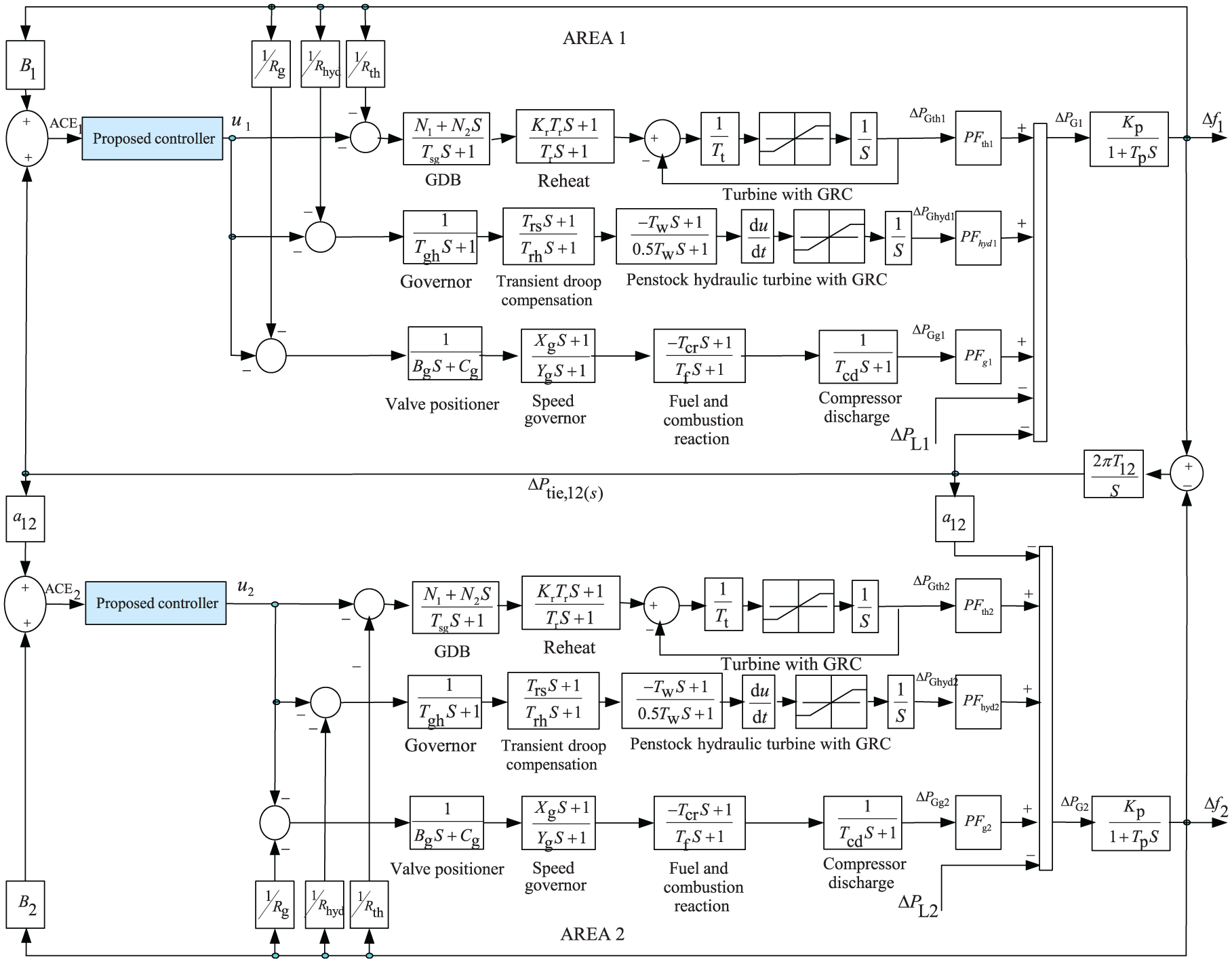
Transfer function model of multisource interconnected power system, comprising thermal, hydro and gas generation utilities.
All the power plants in each control area are combined to make a control area that can be represented by an equivalent plant dynamics. In Figure 2,
The governor dead band model of the dead band type can be linearized in terms of the change and the rate of change in speed. Following most recent articles (Morsali et al., 2016; Zare et al., 2015), the Fourier coefficients of

Under nominal operating conditions, the total power generated,


and

For a small load change in area 1, equation (2) can be modelled as

Similarly, equations (4) and (5) can be modelled for the area 2 as


As highlighted in Figure 2, the inputs to the controllers are their respective ACEs, and the outputs from the controllers are the signals


where
Mathematical modelling of TCSC in load frequency control
The TCSC is a power electronic device that is incorporated in series with the tie-line between two interconnected power plants to regulate the power flow by varying the line reactance (Morsali et al., 2016; Zare et al., 2015). It provides inductive reactance as well as capacitive reactance compensation to modify the active power flow of the tie-line. This ameliorates the active power exchange for the interconnected power systems. The TCSC is a variable reactance,

where


in which

To attain a more efficient TCSC dynamic-based damping strategy than the basic structure, a lead–lag block is proposed, as shown in Figure 3. Therefore, the frequency deviation in area 1, i.e.

where
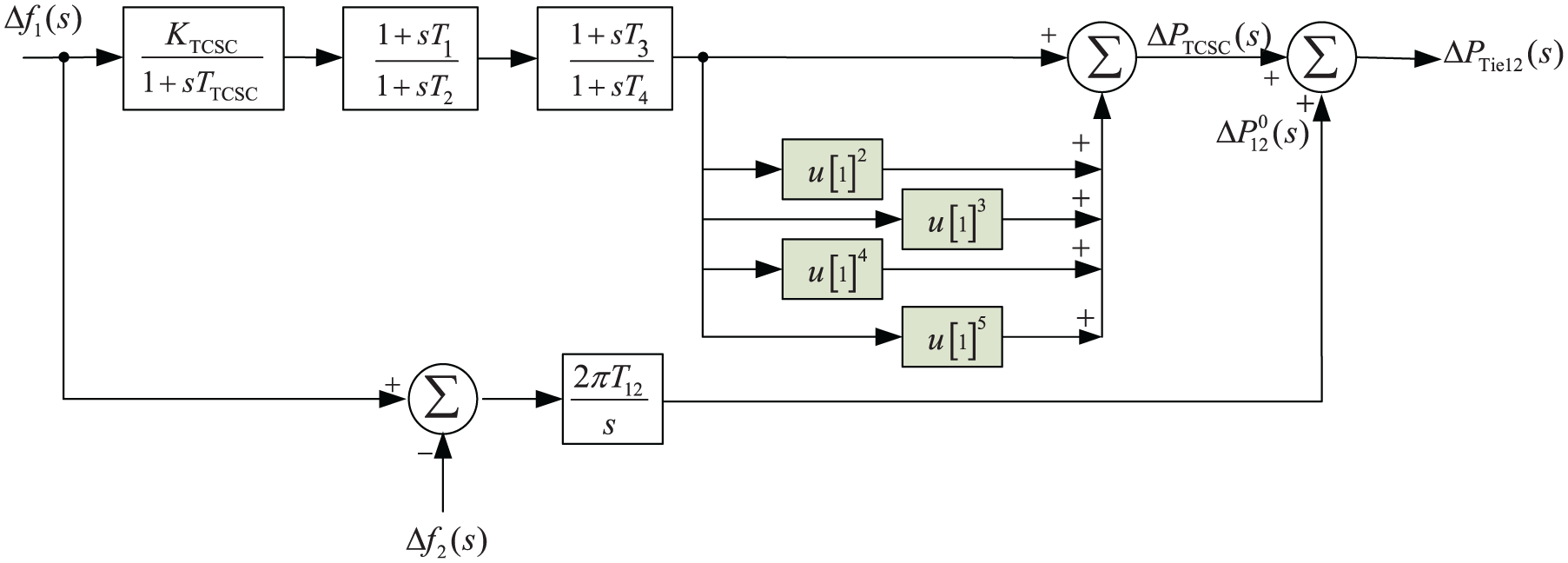
Structure of damping controller based on thyristor-controlled series capacitor (TCSC).
Controller structures
A review of fractional calculus
Fractional order is generally defined by the operator

Based on the Riemann–Liouville approach, the fractional-order differential and fractional-order integral can be stated as in equations (16) and (17), respectively

where

where

Under zero initial conditions for

where s signifies the Laplace operator.
FOPID controller
The FOPID or

where
Fractional-order intelligent PID controller
The dynamic structures for a general single-input single-output nonlinear system can be stated as (Fliess and Join, 2008)

where

where
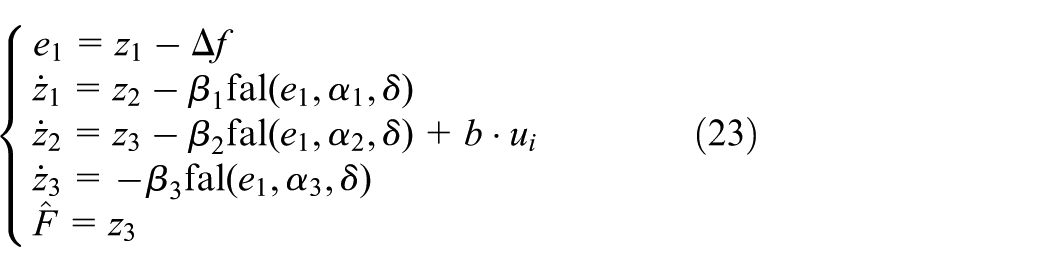
where

In the extended state observer architecture,
According to the aforementioned, the performance of the controller depends on the parameters
Fractional-order hybrid fuzzy intelligent PID controller design
The FOiPID-FOFPID controller, shown in Figure 4, which is composed of a fractional-order fuzzy PID controller integrated with a fractional-order intelligent PID controller is proposed here as a secondary controller for an interconnected multi-area power system. In Figure 4,

where, the parameters A, B and C are synthesized from the error and control signal (Qiao and Mizumoto, 1996). The fuzzy logic controller (FLC) output will be a function of the fractional-order rate of error instead of the traditional integer-order derivative of the error signal. The output signal of the FOFPID design can be highlighted as

where
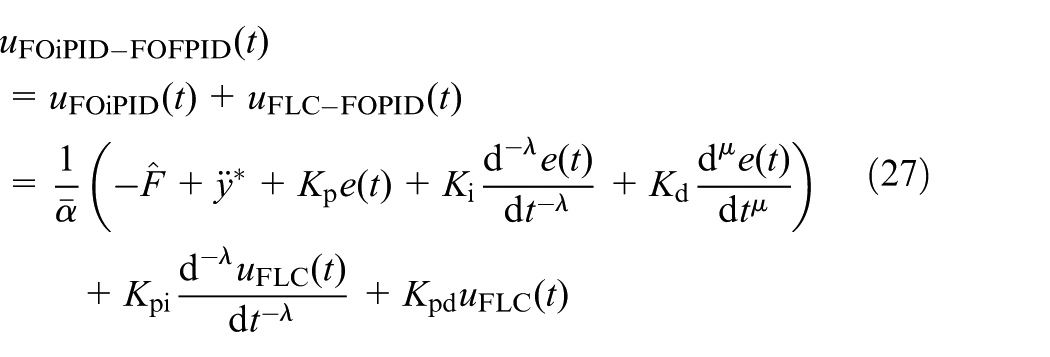
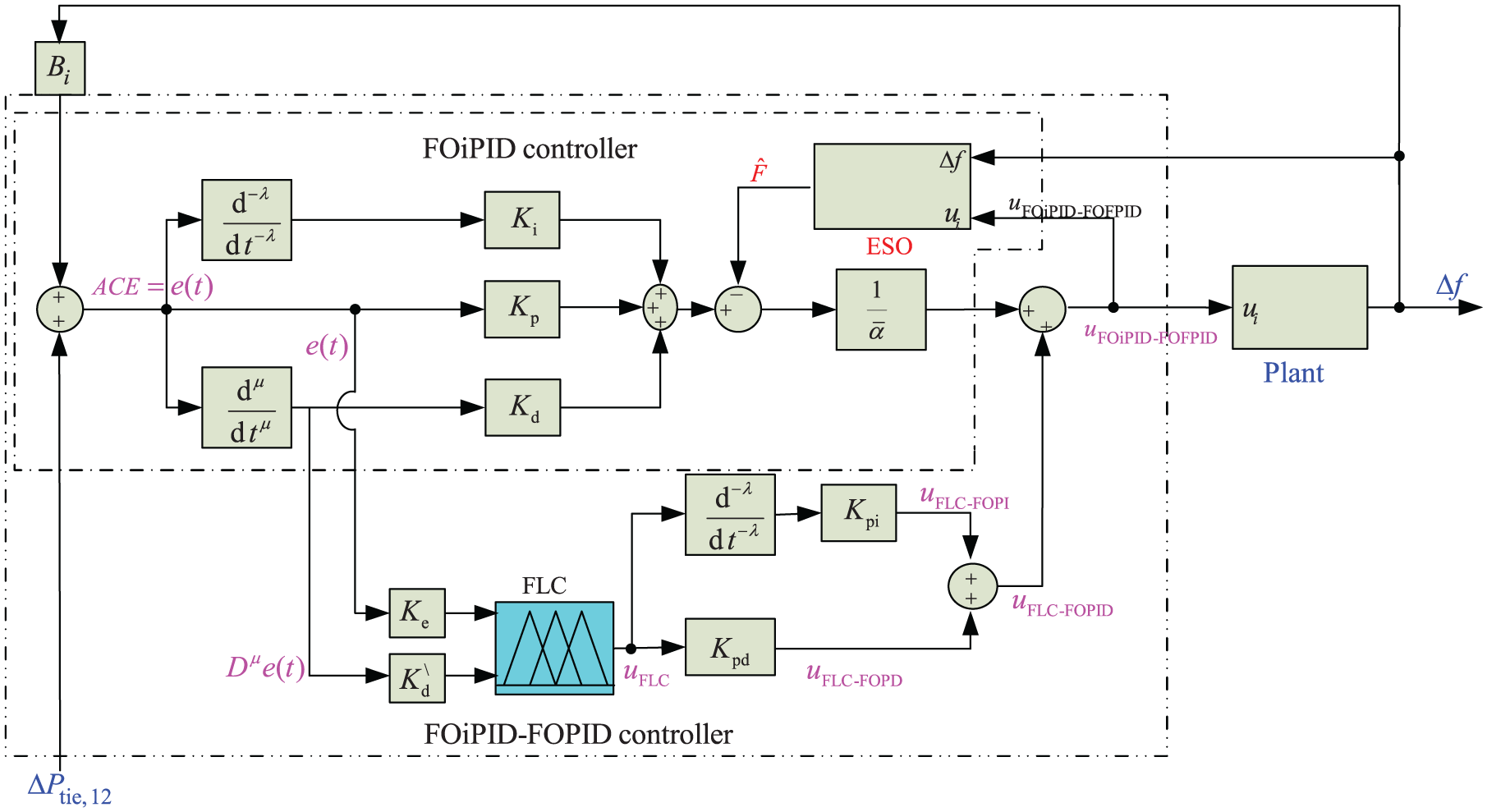
Fractional-order hybrid fuzzy intelligent PID controller architecture.
Fractional-order hybrid fuzzy intelligent PI+PD controller design
This type of controller is composed of the FLC based on FOPI and FOPD controllers, as shown in Figure 5, with the addition that the input–output scaling factors are chosen independently (Das et al., 2013). The two-part stages of the fractional-order fuzzy PI+PD controller employ the same fractional-order rate for fuzzy inference except after multiplication by diverse optimally optimized, input scaling factors, which modify FLC-1 and FLC-2 in various ways to give the architecture more flexibility. The control output of this scheme is modelled as

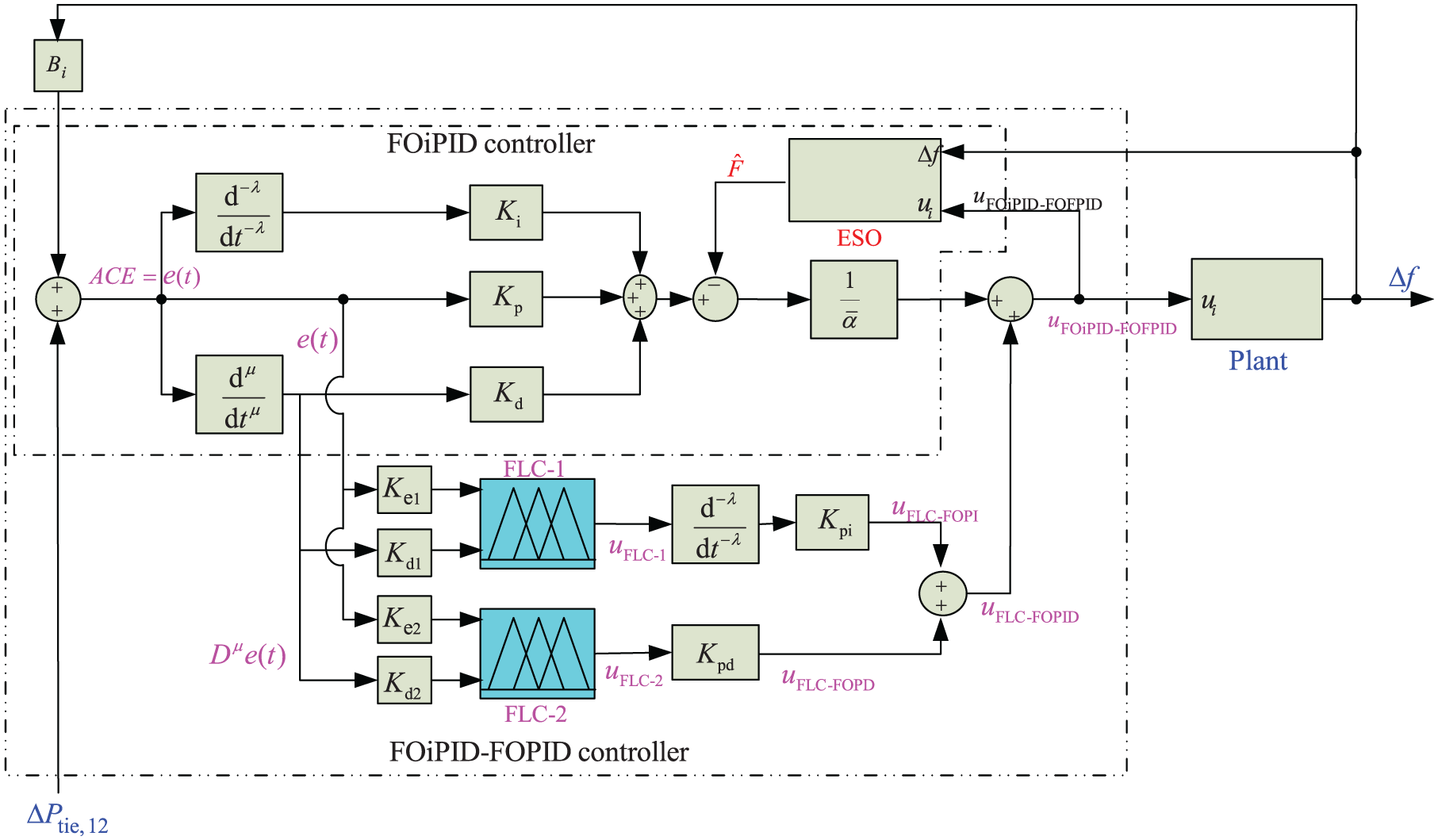
Fractional-order hybrid fuzzy intelligent PI+PD controller architecture
To obtain the final expression for the fractional-order hybrid fuzzy intelligent PI+PD (FOiPID-FOFPI+PD) controller, as highlighted in Figure 5, equation (22) is combined with equation (28) to give

The error
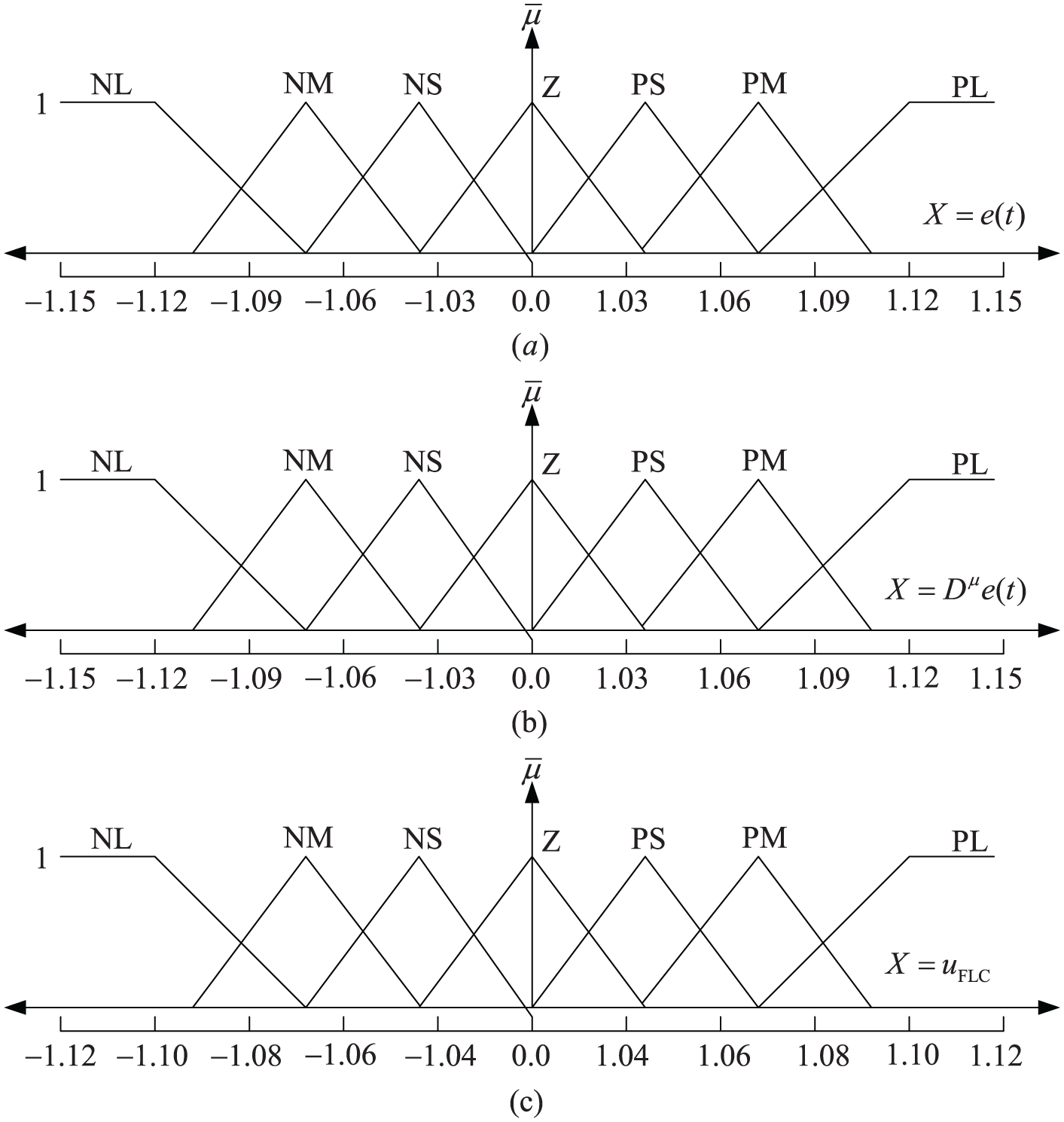
Membership function of fuzzy logic controller: (a) input signal
Fuzzy rule base.
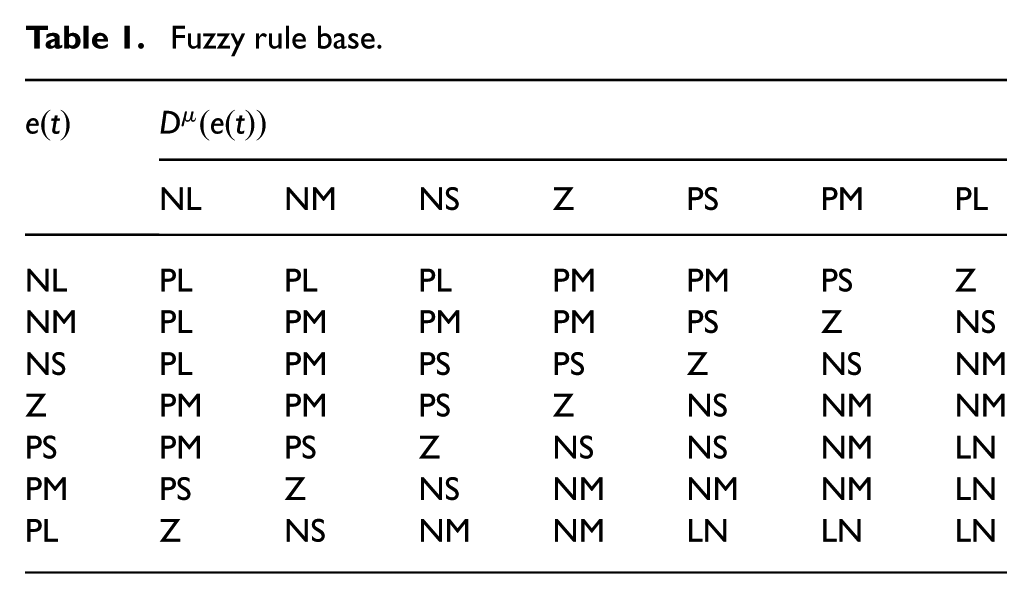
In this study, the proposed fractional-order-type fuzzy PID controller is designed with the same structure as the FLC, and the final output
The objective function and its solution
Objective function for controller design
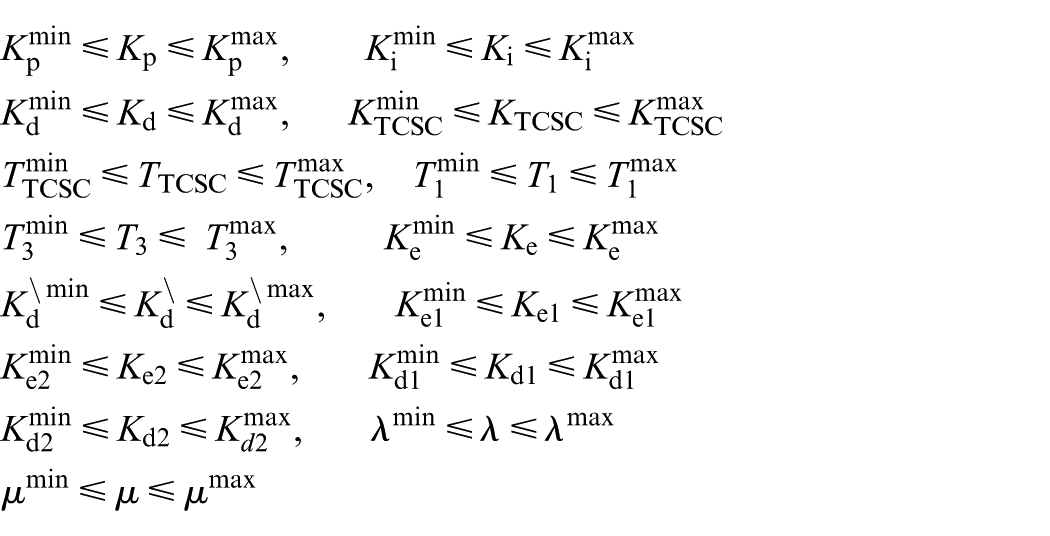
In this article, the integral time-weighted absolute error (ITAE) and the integral time squared error (ITSE) are stated as objective functions to optimize the controller’s parameters (Sahu et al., 2015)


where
Craziness-based particle swarm optimization
Particle swarm optimization is one of a wide category of swarm intelligence techniques for solving optimization issues; it was first introduced by Kennedy and Eberhart (1995). It can deliver higher-quality solutions than other stochastic algorithms. Particle swarm optimization employs particles that signify potential solutions of the issue. Each particle flies over the space at a certain velocity that is dynamically tuned according to its individual flying experience. The modified position of the ith particle of the swarm


with
Since the standard particle swarm optimization technique can fall into premature convergence, particularly for intricate problems with many local optimum and optimization parameters (Gomaa Haroun and Li, 2017). The craziness-based particle swarm optimization technique is introduced, which is particularly effective in exploring the global optimum in an intricate search space. The main difference between particle swarm optimization and craziness-based particle swarm optimization is the propagation mechanism to define a new velocity for a particle, which is (Ho et al., 2005)

where

In flocks of birds or schools of fish, a bird or a fish will often change direction suddenly (Ho et al., 2005). This is described using a ‘craziness’ factor and is modelled in the primary algorithm (pattern) by employing a craziness variable (Ho et al., 2005). However, this mechanism is eliminated in subsequent patterns by introducing a cornfield vector. To keep the diversity of the particles in an optimization technique, it is essential to retain the craziness operation in a particle swarm optimization algorithm. Therefore, a craziness factor is reintroduced in the suggested algorithm to guarantee that the particle will have a predefined craziness probability to keep the diversity of the particles. Thus, before updating its position using equation (33), the velocity of the particle is crazed by

where


where
Simulation results and discussion
In the following, the load frequency control designed in this article is tested, through computer simulation, on the complex interconnected two-area power system shown in Figure 2. The dynamic modelling of the system was developed in MATLAB/SIMULINK, while the MATLAB code of the proposed method was written separately in the .m file. The simulation results are compared with the FOiPID and FOPID (Morsali et al., 2017) controllers. In this study, three cases are considered. In case 1, the simulation is performed using the nominal values of the parameters given in the appendix; initially the system is subjected to 1% step load perturbations in area 1, then the simulations are conducted at different times, such that load perturbations give a 0.01 p.u. step change in the load demand of area 1 at
Case 1: step load perturbations
In this scenario, the two-area interconnected power system is initially incorporated with the FOPID, FOiPID, FOiPID-FOFPI+PD and FOiPID-FOFPID controllers under a 1% step load demand in each area as a secondary controller. The optimum factors of the controllers are attained using a craziness-based particle swarm optimization algorithm, furnished in Table 2. The simulation results of the closed-loop control system for the scheduled parameters are shown in Figure 7 and a quantitative analysis of the performances is tabulated in Table 3.
Optimal values of the controller gains coordinated with the thyristor-controlled series capacitor controller.

FOPID: fractional-order PID; FOiPID: fractional-order intelligent PID; FOFPID: fractional-order fuzzy PID; PID: proportional-integral-derivative.
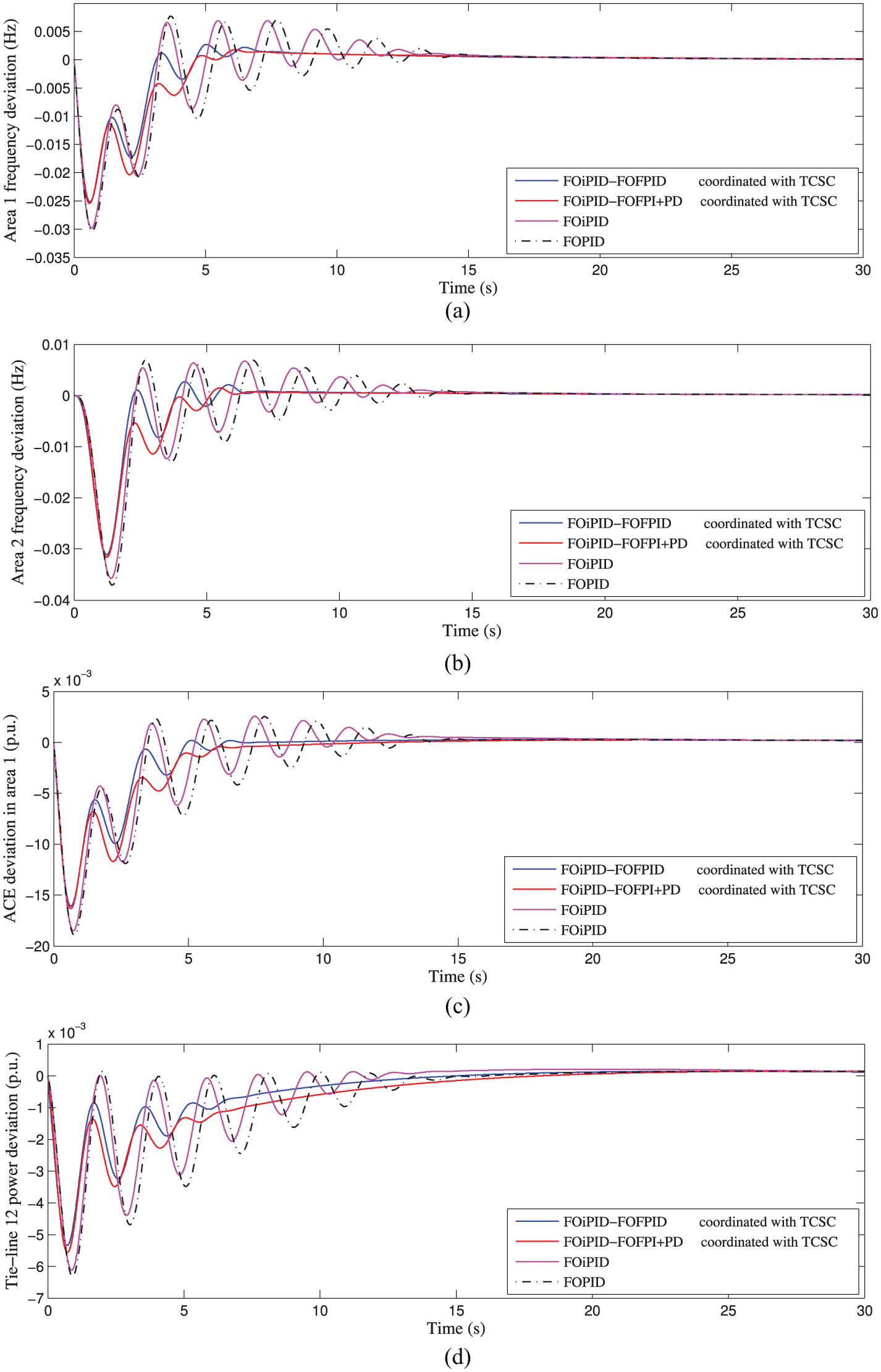
Scenario I: (a)
System dynamic characteristics with the optimized controllers.
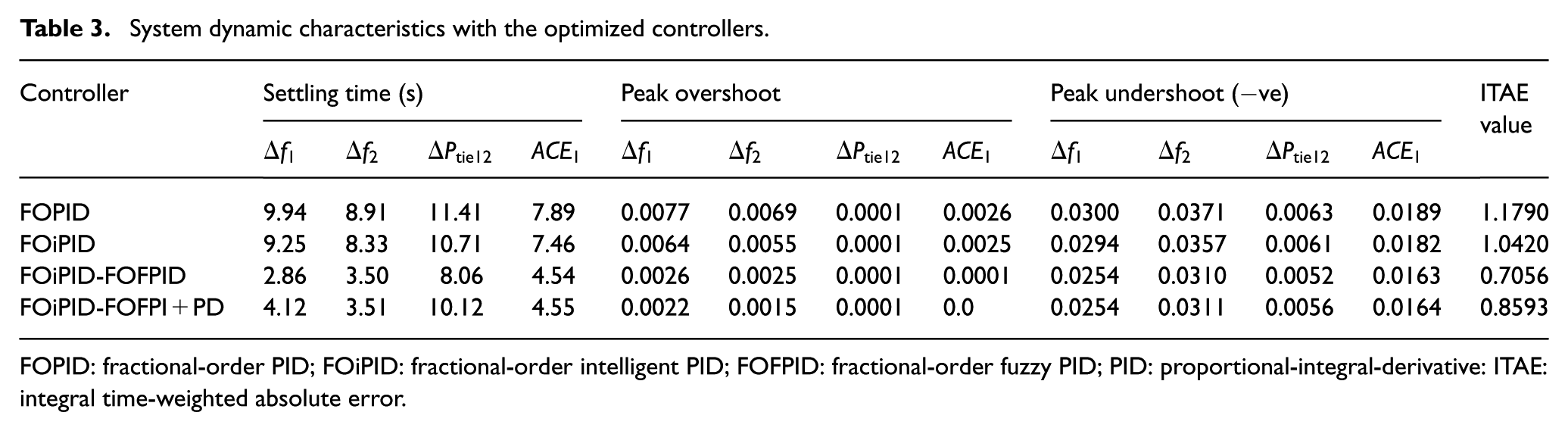
FOPID: fractional-order PID; FOiPID: fractional-order intelligent PID; FOFPID: fractional-order fuzzy PID; PID: proportional-integral-derivative: ITAE: integral time-weighted absolute error.
The simulation results obtained for the suggested controller are compared with the FOiPID and fractional-order PID controllers (Morsali et al., 2017), for the identical power system. It is clear from Figure 7 that during the transient the load demand increases in area 1 but that this load is met by importing power from the area 2; this load then diminishes to zero at steady state. This highlights the fact that in the steady state the local power demand in all areas is met locally. It can also be observed from Figure 7 that the frequency errors
Furthermore, to investigate the robustness of the proposed controller, the load demand is assumed to be 0.01 p.u. step load perturbation in area 1 at
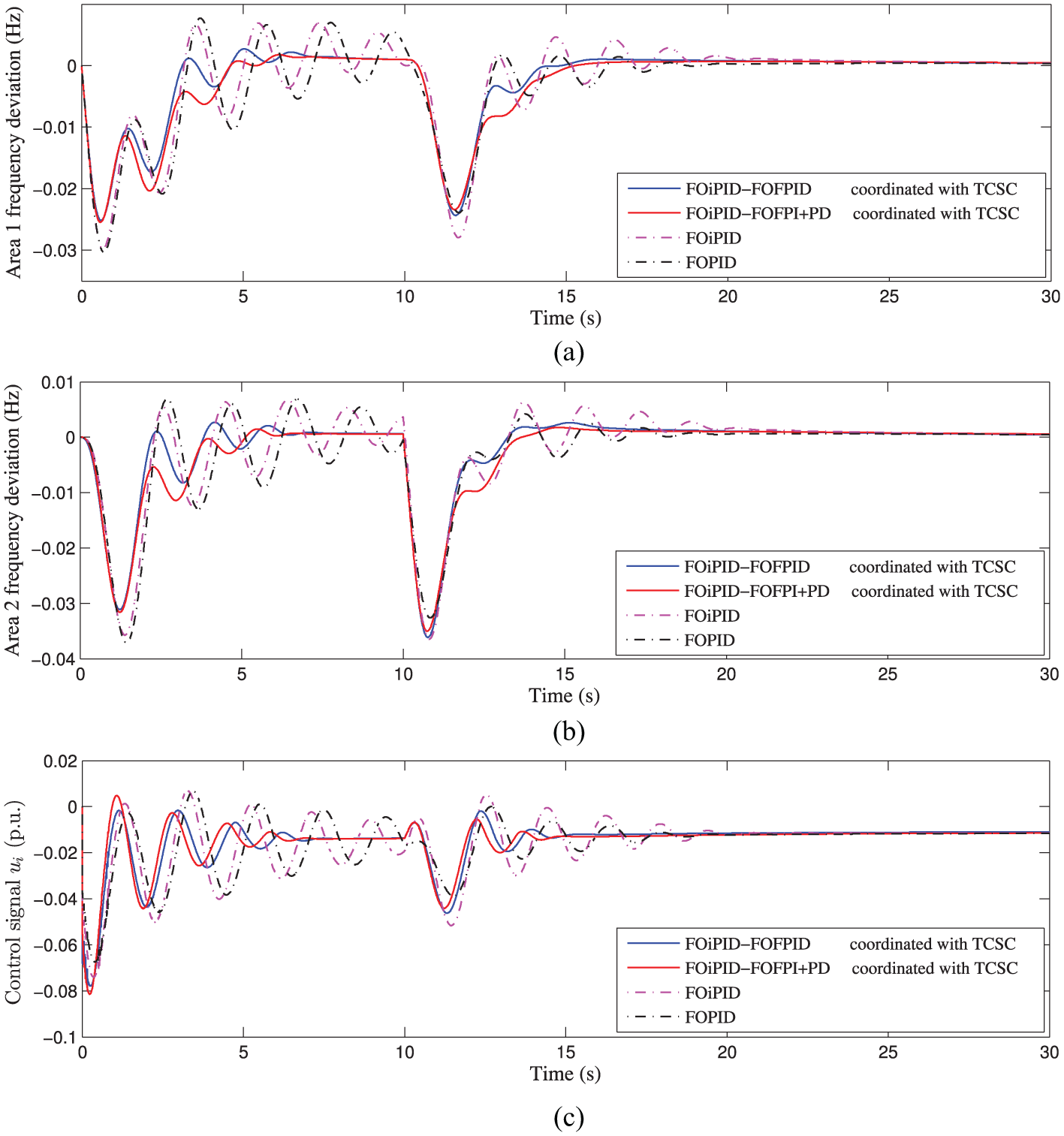
Responses of the step load change: (a) frequency error in area 1; (b) frequency error in area 2; (c) Control signal inputs in area 1.
Case 2: sinusoidal load perturbations
To evaluate the efficiency of the strategy presented here under a continuous load pattern, the sinusoidal load change represented by equation (39) with varying amplitude is applied to area 1 (Pradhan et al., 2016)

The responses of the frequency errors, ACEs and tie-line power deviations are shown in Figure 9. The simulations revealed that the frequency errors
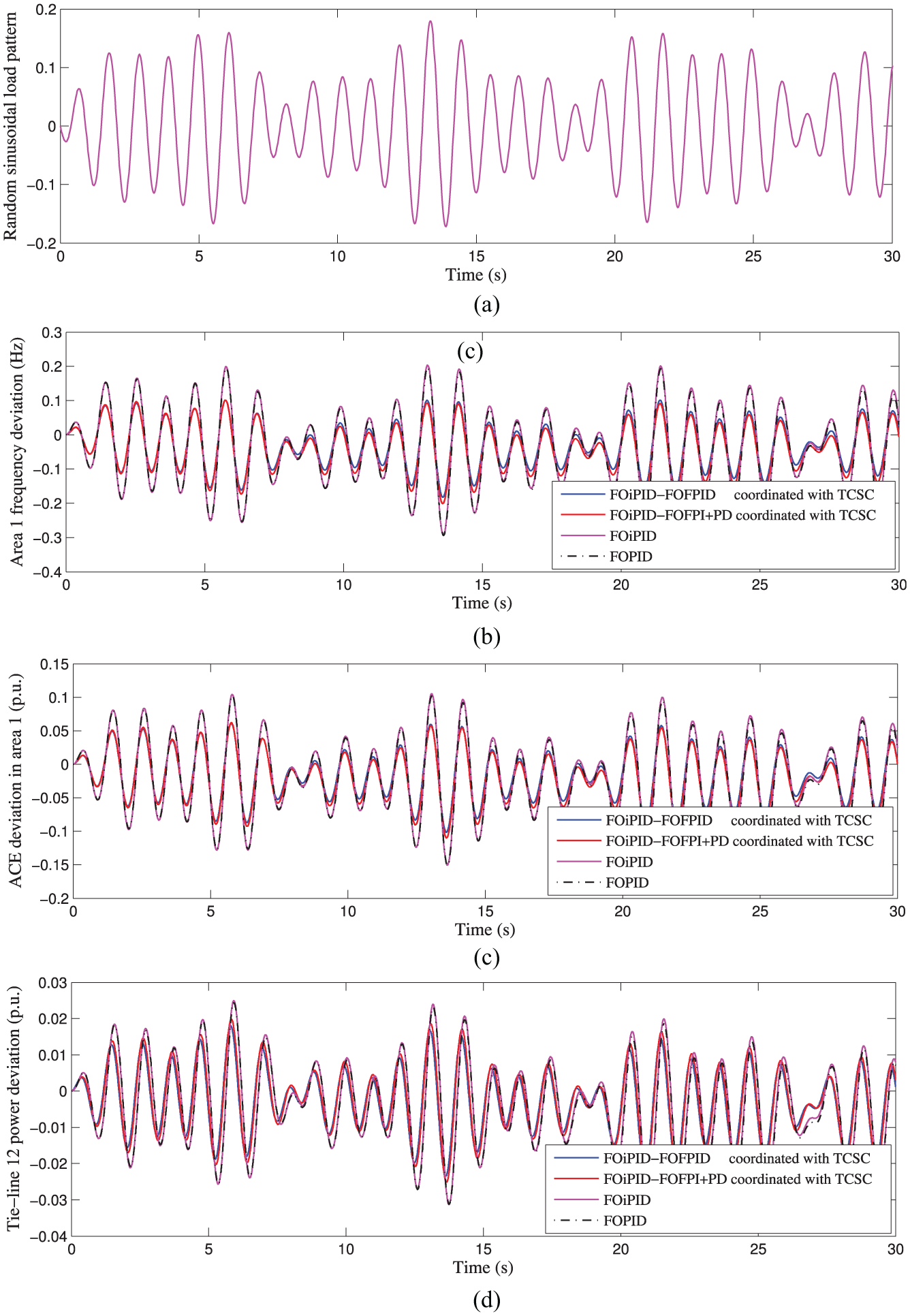
Scenario 2: (a) sinusoidal load perturbations; (b)
Case 3: sensitivity analysis
In this case, sensitivity analysis is performed for the system, under a wide change in system parameters and loading conditions (Gomaa Haroun and Li, 2017; Pradhan et al., 2016). To do this, the operating load conditions
Sensitivity analysis of the system under different scenario uncertainties.
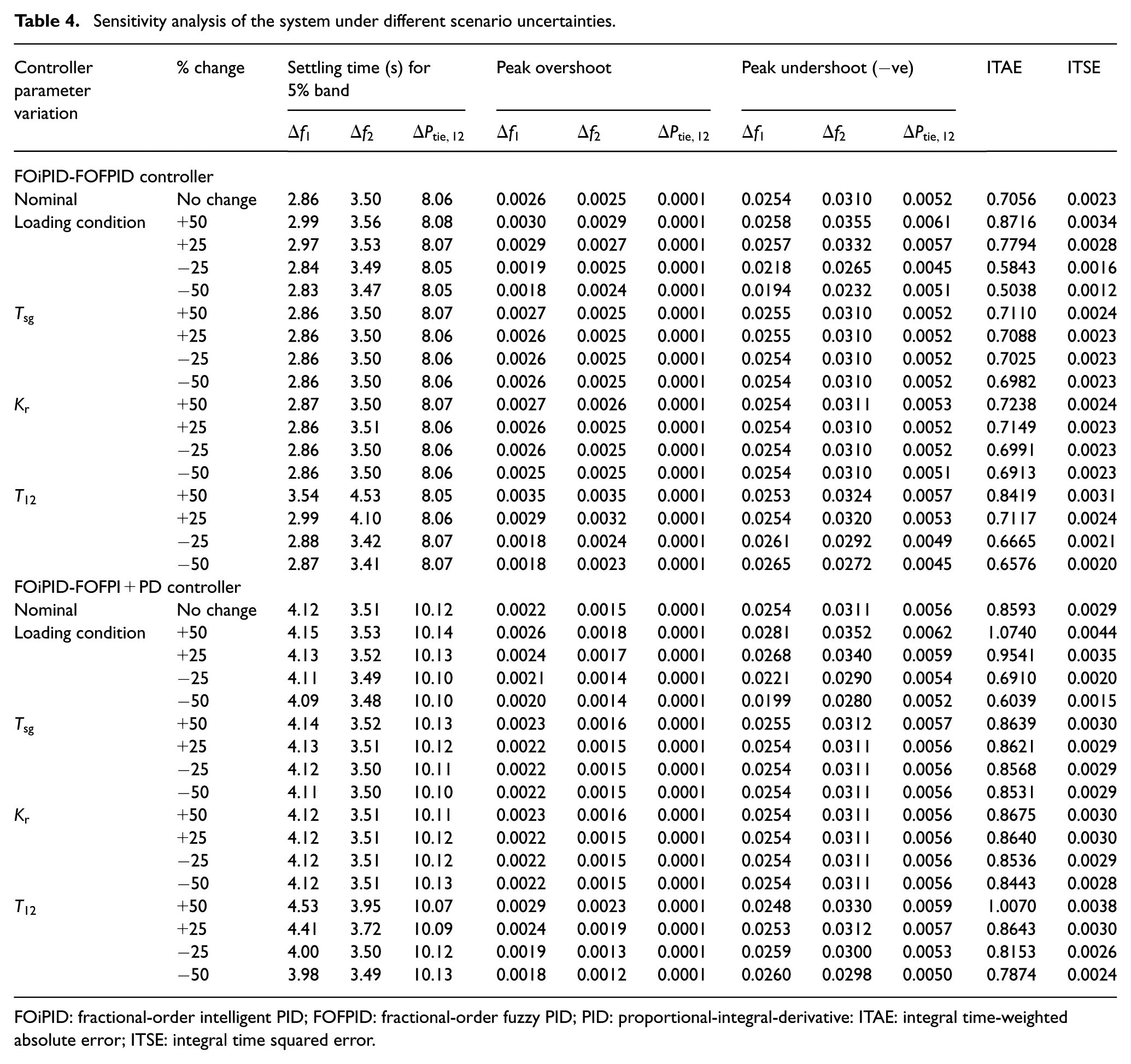
FOiPID: fractional-order intelligent PID; FOFPID: fractional-order fuzzy PID; PID: proportional-integral-derivative: ITAE: integral time-weighted absolute error; ITSE: integral time squared error.
For better insight into the results of the sensitivity analyses, the frequency errors
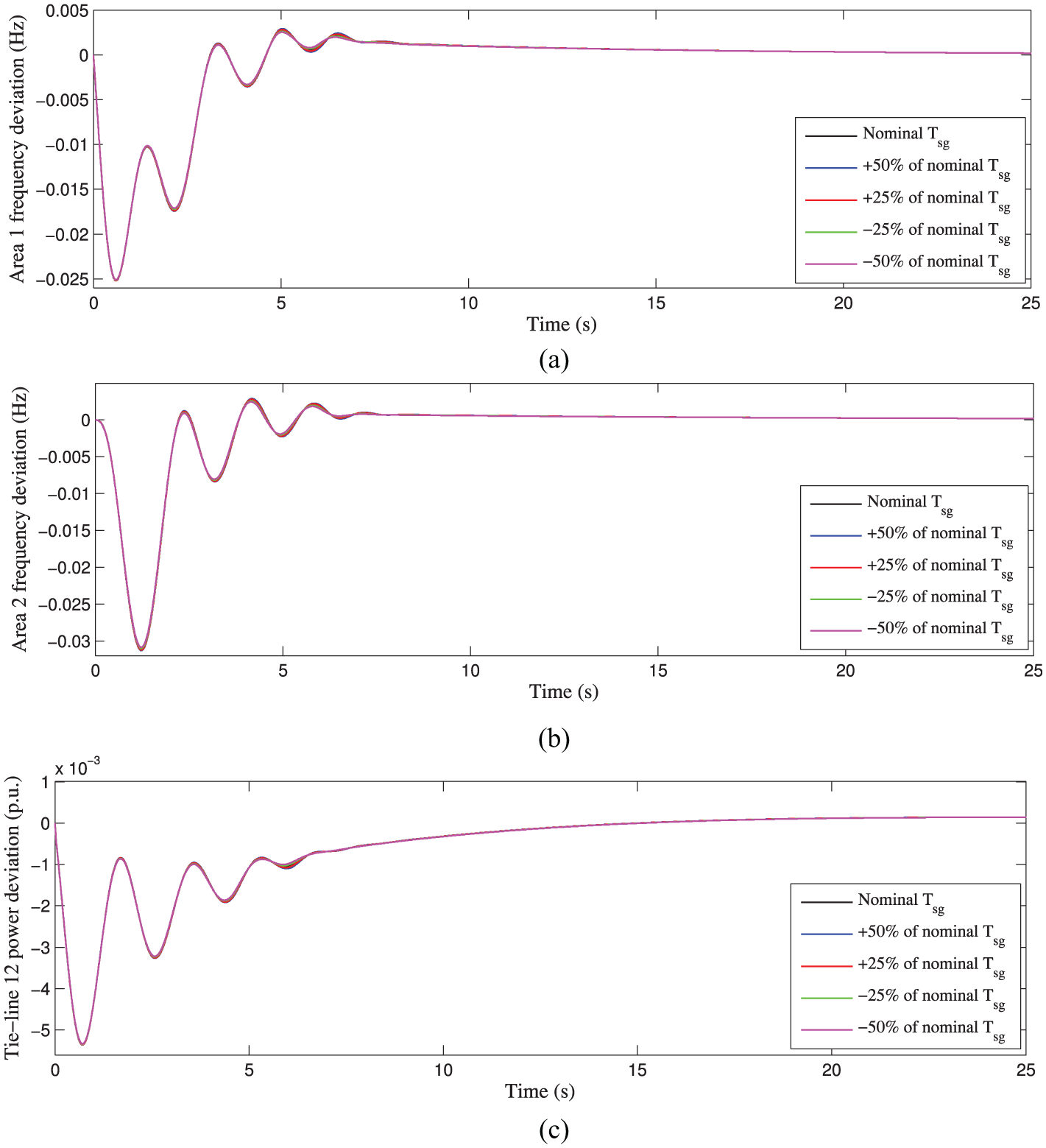
Scenario IV: dynamic responses of the suggested controller under variation in
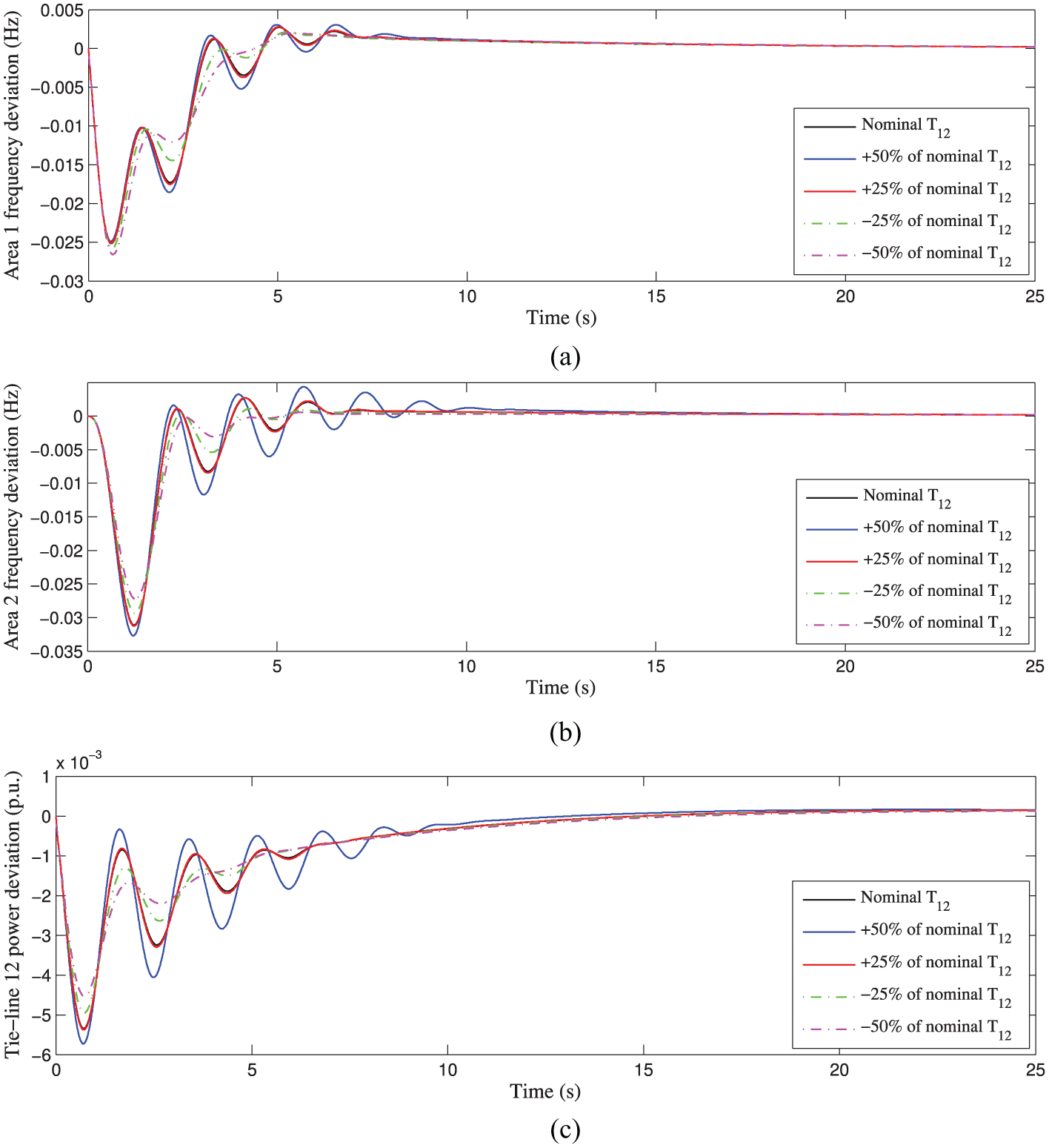
Scenario IV: dynamic responses of the suggested controller under uncertainties in
Conclusion
An attempt has been made in this article to diminish the area frequency and tie-line power oscillations after a sudden load perturbation using a FOiPID-FOFPID controller coordinated with a TCSC in an interconnected multi-area power system, to improve the responses of the power system areas. This approach utilizes an observer based on algebraic techniques to estimate the unknown uncertainties, which are then added to the controller as feedback. The physical constraints of the generation rate constraint nonlinearity and governor dead band impact are also considered in the plant, for a challenging investigation. The craziness-based particle swarm optimization technique has been employed to optimize the controller gains and other parameters in finding a global optimal solution. It is found that, in all the scenarios considered, the area frequency, tie-line power flow deviations and ACE become zero at the steady state.
Responses of the current controller are compared with FOPID and FOiPID controllers under different load perturbations, such as step and sinusoidal load change patterns. Simulations showed that the current controller gives higher dynamic performances than the other controllers in consideration of less settling time, minimum peak overshoot or undershoot of the frequency errors
Footnotes
Appendix
System parameters
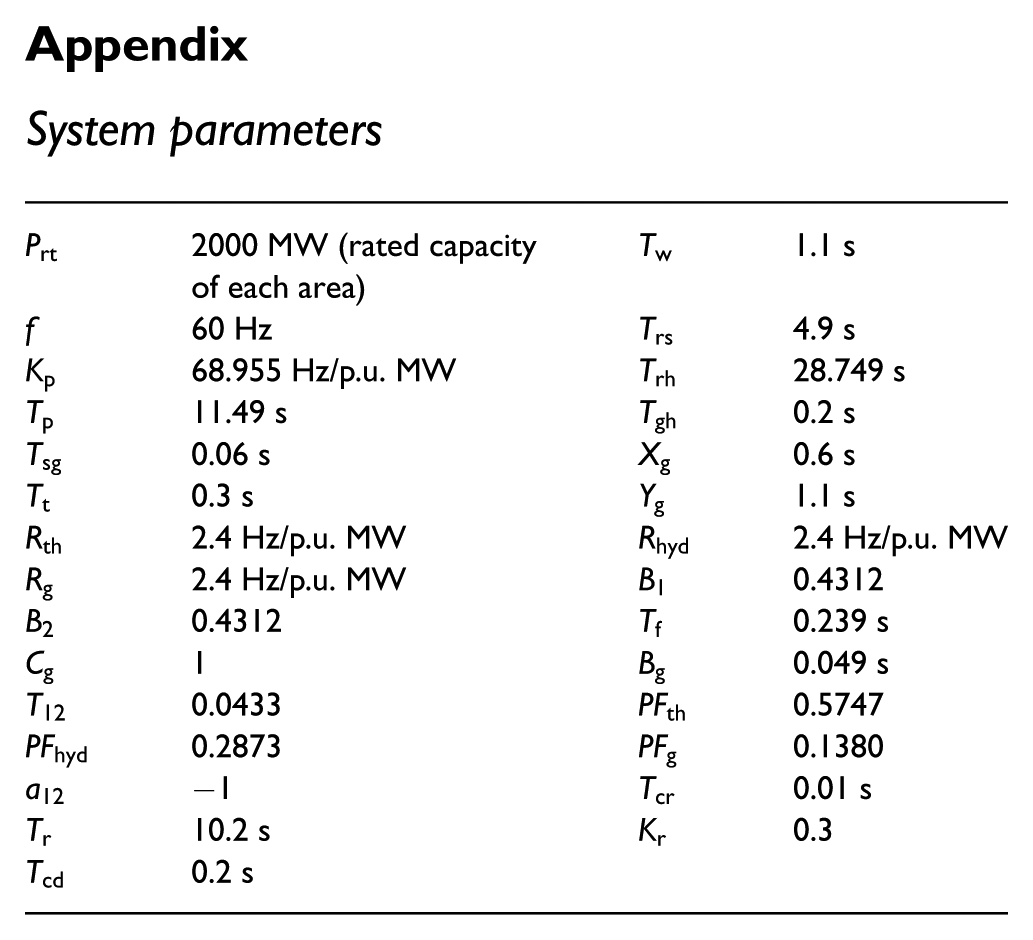
| 2000 MW (rated capacity of each area) | 1.1 s | ||
| f | 60 Hz | 4.9 s | |
| 68.955 Hz/p.u. MW | 28.749 s | ||
| 11.49 s | 0.2 s | ||
| 0.06 s | 0.6 s | ||
| 0.3 s | 1.1 s | ||
| 2.4 Hz/p.u. MW | 2.4 Hz/p.u. MW | ||
| 2.4 Hz/p.u. MW | 0.4312 | ||
| 0.4312 | 0.239 s | ||
| 1 | 0.049 s | ||
| 0.0433 | 0.5747 | ||
| 0.2873 | 0.1380 | ||
| 0.01 s | |||
| 10.2 s | 0.3 | ||
| 0.2 s |
Declaration of conflicting interests
The author(s) declared no potential conflicts of interest with respect to the research, authorship, and/or publication of this article.
Funding
The author(s) disclosed receipt of the following financial support for the research, authorship, and/or publication of this article: This work was supported by the National Natural Science Foundation of China (grant numbers 61871221 and 61273076) and a Chinese governmental scholarship (grant number CSC 2015GXZT30).