







Abstract
In recent years, the rapid development of electric vehicles has raised a wave of innovation in lithium-ion batteries. The safety operation of lithium-ion batteries is one of the major bottlenecks restraining the development of the energy storage market. The temperature especially the internal temperature can significantly affect the performance and safety of the battery; therefore, this paper presented a novel framework for joint estimation of the internal temperature and state-of-charge of the battery based on a fractional-order thermoelectric model. Due to the nonlinearity, coupling, and time-varying parameters of lithium-ion batteries, a fractional-order thermoelectric model which is suitable for a wide temperature range is first established to simulate the battery’s thermodynamic and electrical properties. The parameters of the model are identified by the electrochemical impedance spectroscopy experiments and particle swarm optimization method at six different temperatures, and then the relationship between parameters and temperature is obtained. Finally, the framework for joint estimation of both the cell internal temperature and the state-of-charge is presented based on the model-based state observer. The experimental results under different operation conditions indicated that, compared with the traditional off-line prediction method, the model-based online estimation method not only shows stronger robustness under different initial conditions but also has better accuracy. Specifically, the absolute mean error of the estimation of state-of-charge and internal temperature based on the proposed method is about 0.5% and 0.3°C respectively, which is about half of that based on the off-line prediction method.
Keywords
Introduction
Motivation and challenges
Lithium-ion batteries are gradually becoming common energy storage techniques for electric vehicles (Lin et al., 2021), micro-grids, and portable energy storage applications due to their high energy density, low self-discharge rate, and no memory effect (Liu et al., 2020). The operation temperature of a battery not only affects its performance but also has a direct impact on the safety of the energy storage system (Tang et al., 2019). The incidence of battery fires from time to time places high demands on the design of battery cooling systems and battery management systems (BMS; Wang et al., 2020d). Battery temperature monitoring can be used to validate battery thermal models and support battery module design. When the battery temperature exceeds a safety threshold, the detection system sends an alarm signal for early warning to avoid danger (Lee and Kim, 2020). Current methods of measuring battery temperature include resistance temperature detector (RTD) and thermocouple; however, both of them are difficult to accurately obtain the battery internal temperature (Xu et al., 2021). The infra-red (IR) imaging limited by cost and accuracy is difficult to be integrated with embedded BMS.
Literature review
There is already a large body of literature on battery thermoelectric modeling, internal temperature, and capacity estimation. Lin et al. (2013) proposed a thermal model for cylindrical lithium-ion batteries which is beneficial for battery health monitoring. Zhang et al. (2016) proposed a simplified thermoelectric model to estimate the battery internal temperature, and the Kalman filter (KF) method was employed to estimate the cell state in real time. Liu et al. (2018) presented a data-driven approach to predict the cell’s internal temperature. The radial basis function (RBF) neural network and the extended Kalman filter (EKF) were used to estimate the internal temperature for thermal management. Feng et al. (2020) presented an electrochemical thermal neural network model which contained a simplified single-particle (SSP) submodel and a lumped-parameter thermal submodel to predict the core temperature and terminal voltage of the battery. The unscented Kalman filter (UKF) was used to co-estimate the battery state-of-charge (SOC) and state-of-temperature which can rapidly eliminate the initial errors and provide satisfactory performance. To predict the SOC of a lithium-ion battery pack, Wang et al. (2020a) introduced a splice Kalman filtering algorithm with adaptive robust performance. Combined with the composite equivalent model, an efficient and robust SOC of the battery pack is finally realized. Sun et al. (2020) proposed an internal temperature modeling and monitoring method. Specifically, the sensor bias was considered as an extended state, and accordingly, the state estimation was performed using the UKF. Xie et al. (2020) presented a core temperature estimation method for lithium-ion batteries using a one-dimensional (1D) model and a dual Kalman filter (DKF). Based on the enhanced single-particle model (SPM), Ma et al. (2020) presented a novel scheme for cell core temperature estimation based on a reduced-order pack model and KF. Moreover, the reduced-order pack model was validated using computational fluid dynamics (CFD). Zhu et al. (2020) presented an online core temperature estimation approach based on the lumped thermal–electrical model and an extended state observer. The experimental validation showed that the prediction error of battery core temperature is within 1.2°C. Wang et al. (2021) presented a battery temperature estimation method by using a dual ensemble Kalman filter (DEKF).
Recent theoretical developments have revealed that model-based temperature estimation methods can effectively observe the internal temperature of the cell (Feng et al., 2020). However, a reliable model is a basis for a model-based state estimator. This appears as a more straightforward problem compared to internal temperature estimation. Based on the above literature analysis, the thermoelectric model of the battery should contain an electrical submodel that fully reflects the electrical properties of the cell and a thermodynamic model submodel to characterize the thermodynamic properties inside and outside the cell. Current thermoelectric models mainly contain two types: electrochemical thermoelectric models and equivalent circuit thermoelectric models. The electrochemical thermoelectric models can accurately describe the internal behavior of the cell (Wang et al., 2021). However, the large number of partial differential equations (PDEs) makes the electrochemical thermoelectric models hard to be applied in practical applications (Tian et al., 2021). Compared with the electrochemical thermoelectric models, equivalent circuit thermoelectric models provide a more simple computational approach (Hu et al., 2011).
Ideas and contributions
The widely used integer-order modeling theory does not accurately characterize the dynamics of the cell. The literature preliminarily verifies that the fractional-order model is more accurate, which fully demonstrates that the fractional-order calculus provides a new way for accurate modeling of lithium-ion batteries (Wang et al., 2020b). Moreover, Wang et al. (2020c) provided the basic theory and experimental validation methods for fractional-order modeling and parameter identification of lithium-ion batteries. To further extend the application of fractional-order models and verify the effectiveness of fractional-order thermoelectric models in temperature estimation, this paper presented a novel framework for joint estimation of the internal temperature and SOC of the battery based on a fractional-order thermoelectric model. The main achievements, including contributions to the field, can be summarized as follows:
A fractional-order thermoelectric model is first proposed to mimic the cell thermodynamic and electrical properties. Based on which, the coupling and time variability of battery parameters can be well resolved. Then, the electrochemical impedance spectroscopy (EIS) experiments and particle swarm optimization (PSO) algorithm are employed for parameter identification.
The framework for joint estimation of both the cell internal temperature and SOC is presented based on a model-based joint estimator. Specifically, the Bayesian filters are used to construct the complete estimation framework and improve the estimation accuracy.
Experiments under different operation conditions are designed. The modeling and internal state estimation results have verified the effectiveness of the proposed method.
The remainder of this paper is structured as follows: Section ‘Fractional-order thermoelectric model’ introduces the model structure and parameter identification approach of the fractional-order thermoelectric model. Specifically, the EIS experimental results and the parameter identification results are used to verify the accuracy of the battery model. Section ‘Framework for internal temperature and SOC estimation’ presented the framework for joint estimation of the internal temperature and SOC. In section ‘Results and discussion’, experimental studies under different operation conditions are presented to verify the effectiveness of the proposed method.
Fractional-order thermoelectric model
Model of cell electrical properties
Currently, the common models used to simulate the battery electrical properties include the equivalent circuit models and the electrochemical models. In this work, the fractional-order equivalent circuit model which can reflect the characteristics of the cell impedance spectroscopy at different frequencies is used to model the cell electrical properties. The structure of the fractional-order model is shown in Figure 1(a), which consists of a Warburg-like element to mimic the cell linear characteristic at low frequency, a resistor to mimic the cell characteristic at high-frequency, a constant phase element (CPE) in parallel with a resistor to mimic the semi-elliptic characteristic at mid-frequency, and a voltage source to represent the cell open-circuit voltage (OCV). It should be noted that the internal parameters of the fractional-order equivalent circuit model at different SOCs and temperatures are different. Therefore, these parameters are written as functions of SOC and temperature, as shown in Figure 1. Where z and Ti represent the cell SOC and internal temperature, respectively.
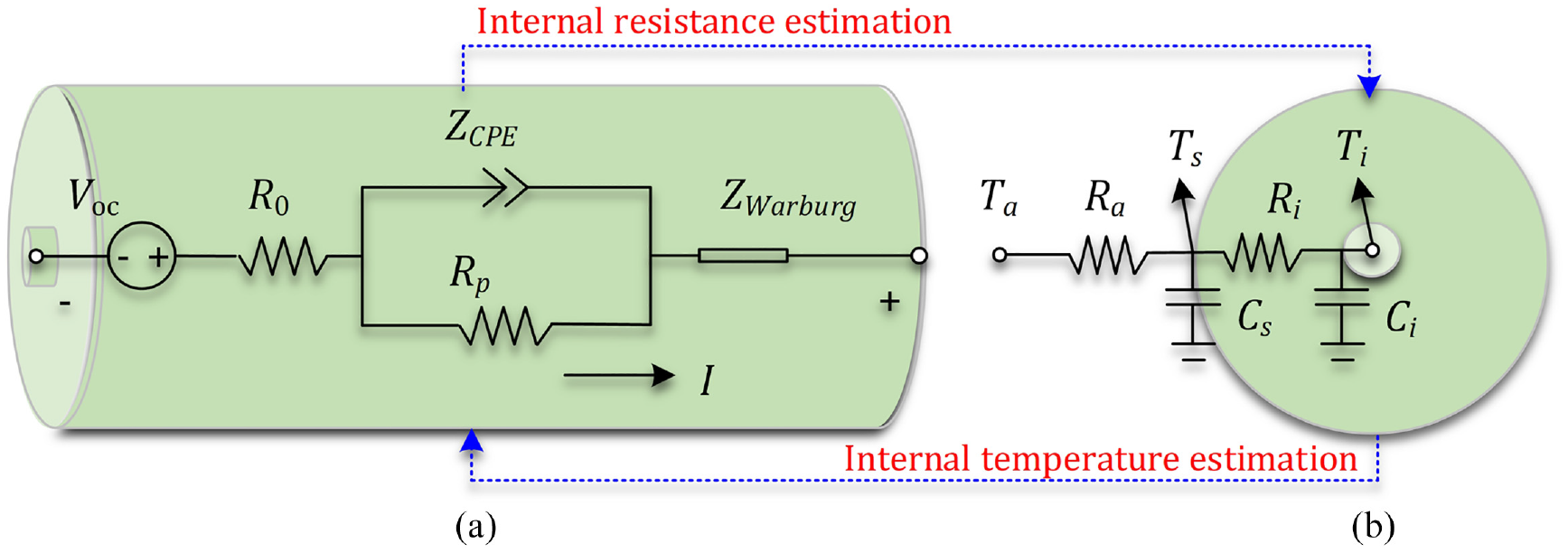
Structure of the fractional-order thermoelectric model: (a) fractional-order equivalent circuit model and (b) thermodynamic model.
The Laplace transformation of the impedance of CPE is expressed as equation (1)

where C characterizes the capacitive reactance property of CPE, f represents the frequency, j2 = −1, and α represents the fractional order of CPE. It should be noted that when α = 1, the CPE is regarded as an ideal capacitor, and when α = 0, the CPE is regarded as an ideal resistor.
Similarly, the Laplace transformation of the impedance of the Warburg-like component is expressed as equation (2)

where W characterizes the capacitive reactance property of the Warburg-like component and β represents the fractional order of the Warburg-like component.
According to Kirchhoff’s law, the mathematical model of the fractional-order equivalent circuit model is obtained by



where ξ is the fundamental operator of the fractional-order calculus, Vt represents the cell terminal voltage, Voc represents the battery OCV, VCPE represents the voltage of CPE, VWarburg represents the voltage of the Warburg-like component, R0 represents the ohmic resistor, and I represents the cell current.
The mathematical expression of ξμ is written as
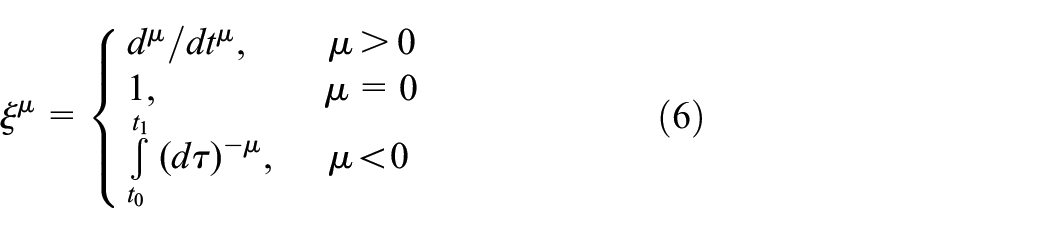
The Grünwald–Letnikov (GL) definition is one of the commonly used definitions of fractional-order calculus (Gutierrez et al., 2010; Scherer et al., 2011), shown as follows



where μ is the integral–differential order and [·] represents the integer part of ·.
The transfer function of the battery model in the frequency domain is expressed as

where s = j2πf.
By using fractional-order calculus, the transfer function of the battery model can be rewritten to the fractional-order differential equation as

Based on the GL definition, the restructured equation is expressed by

Model of cell thermodynamic properties
The thermodynamic model of the battery is shown in Figure 1(b). In this work, the cell thermodynamic properties are modeled based on the following three assumptions: First, thermal conduction is assumed to be the only way to transfer heat. Second, the heat generation is assumed to be uniformly distributed. Third, the surface temperature and internal temperature are assumed to be uniform (Park and Jaura, 2003). Then, the cell thermodynamic properties are expressed as equations (13) and (14)


where k is the current sampling time,

The above equation shows the relationship between the heat generation of the cell and the parameters of the fractional-order equivalent circuit model. However, the temperature also affects the lithium-ion activity and the charge/discharge rate of the cell, thus affecting the SOC and the model parameters of the fractional-order model.
Model parameter identification
Based on the online operation data, the PSO-based parameter identification approach is employed to identify the fractional-order submodel parameters, and the least square method is used to identify the thermal submodel. The parametric boundaries of the PSO algorithm are obtained from the EIS experiments.
The experimental platform to extract the frequency response and temperature of the lithium-ion battery is shown in Figure 2. The experimental setup consists of an electrochemical workstation Squidstat Plus for the EIS testing, a temperature chamber for thermostatic control, a temperature monitor for cell internal and surface temperature acquisition, and a host computer for data acquisition and analysis. In this work, the amplitude of the alternating current (AC) sinusoidal signals for the EIS test is set to 100 mA, and the signal frequency range is set at 0.02 Hz to 10 kHz. The A123 ANR26650 lithium-ion battery is chosen as the subject of the experiment.
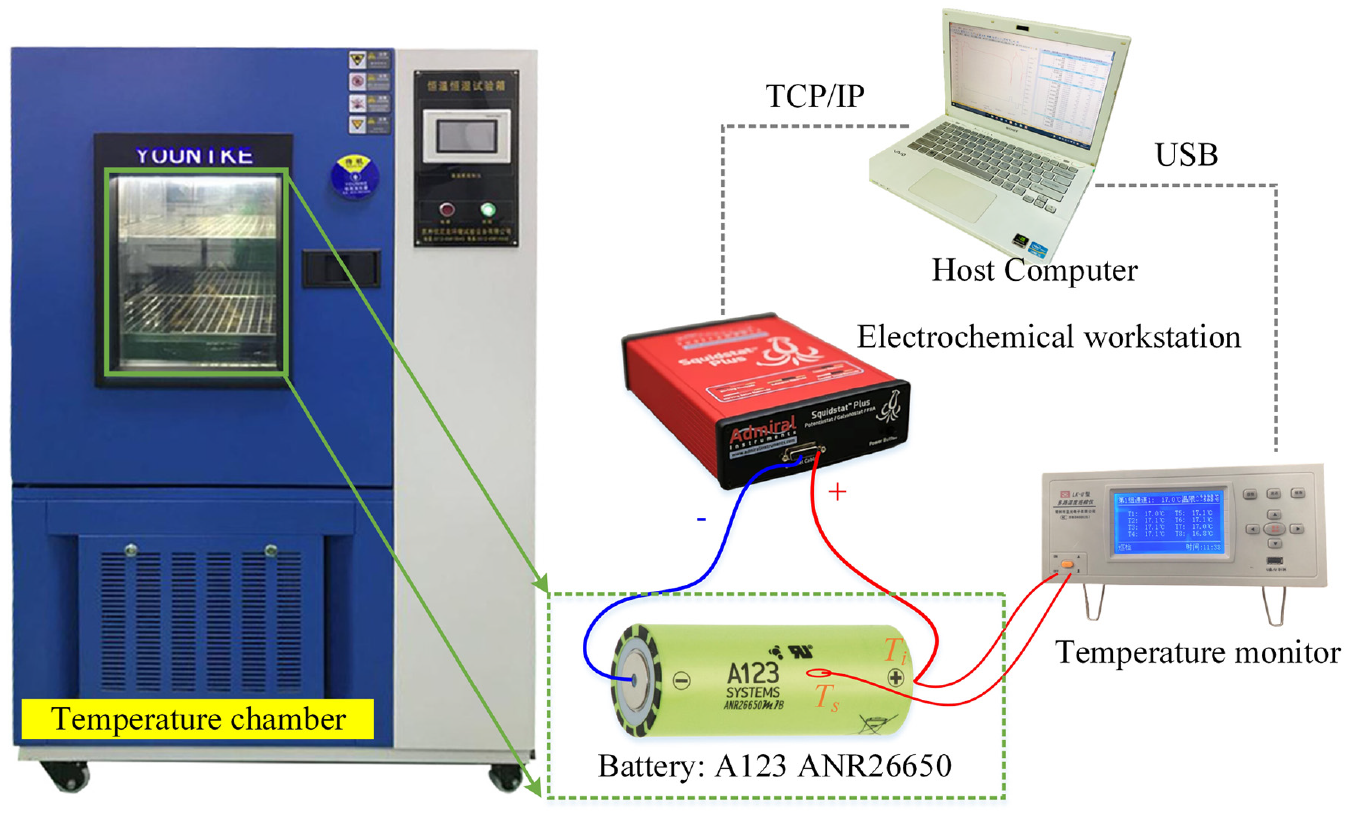
Experimental platform.
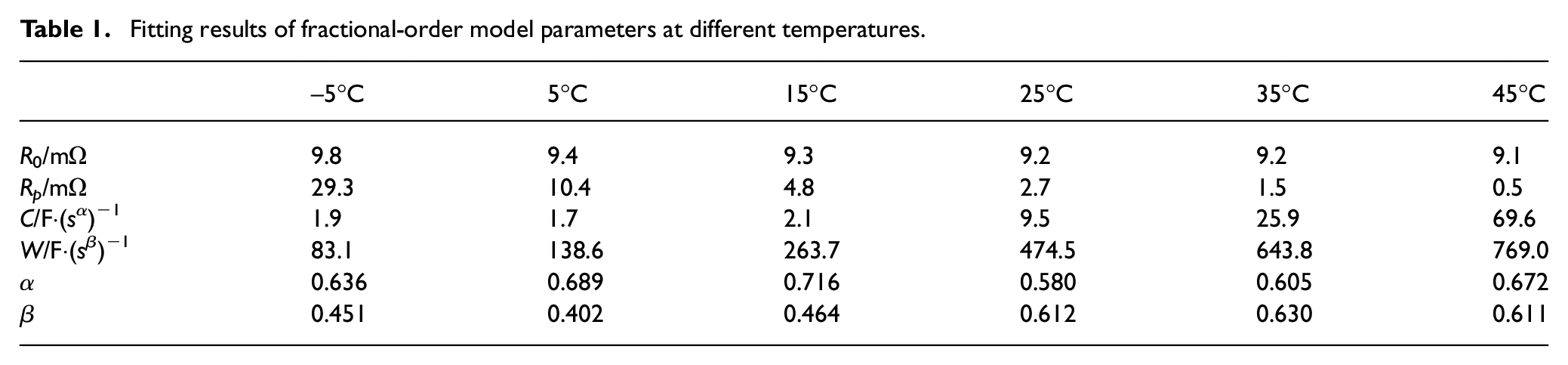
By applying a sequence of small AC sinusoidal signals with different frequencies to excite the tested battery, the voltage response can be measured, and then, the battery impedance is calculated by dividing the voltage by its corresponding current. By applying the impedance experimental results to the impedance spectrum fitting tools, we can get the initial values of fractional-order model parameters which can be used to determine the parametric boundaries of the PSO algorithm. The Nyquist plots of battery impedance spectrum and its fitting results at different temperatures are illustrated in Figure 3. Experimental results indicate that the temperature has a great impact on the battery impedance, especially in low and medium frequencies. As the temperature decreases, the real part of the battery impedance will shift to the right, which indicates the increase in the battery’s ohmic internal resistance. More detailed model parameters fitting results that can be used as benchmarks for parameter identification are listed in Table 1.
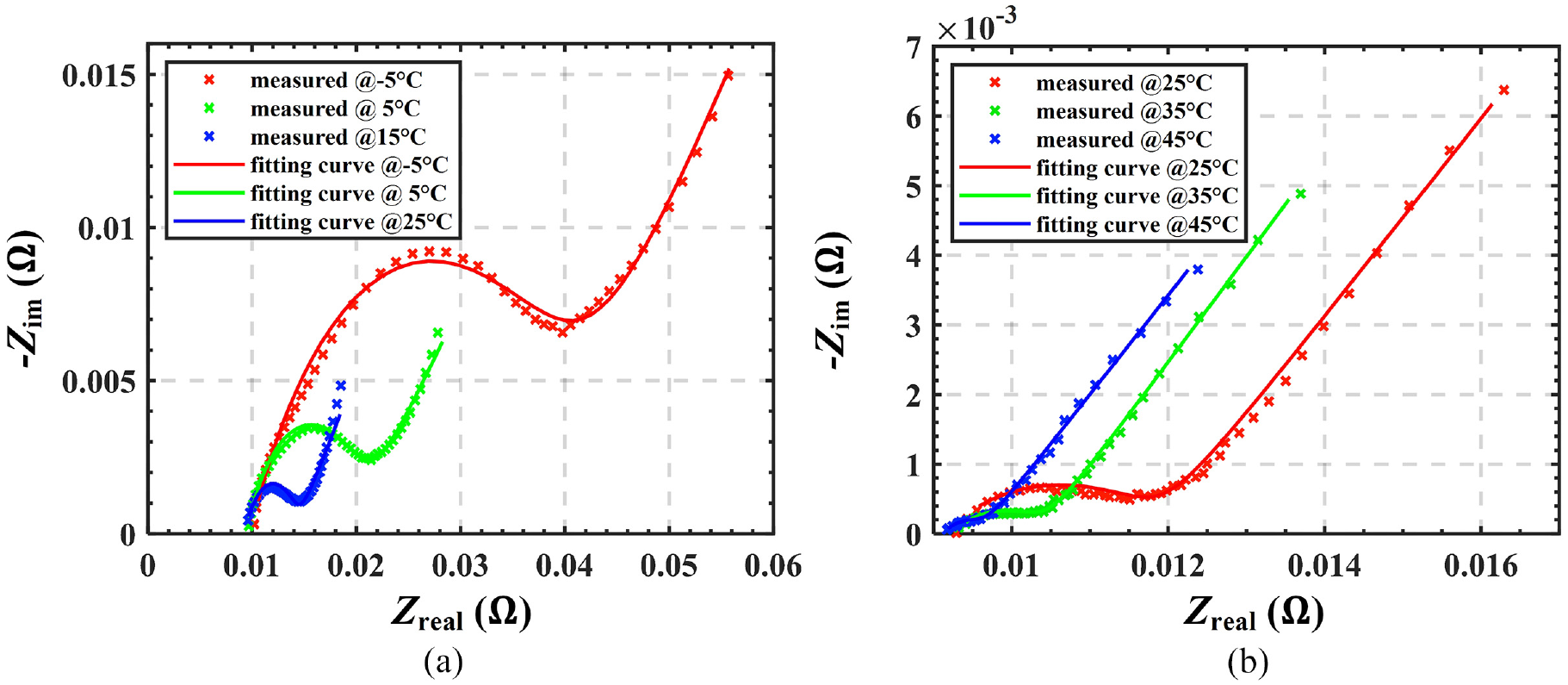
EIS diagram for the impedance of lithium-ion battery at different ambient temperatures: (a) −5°C to 15°C and (b) 25°C to 45°C.
Fitting results of fractional-order model parameters at different temperatures.
To identify the proposed model parameters, several dynamic tests are performed, where a low-current (average is about 0.6 C) Urban Dynamometer Driving Schedule (UDDS) is conducted to identify the fractional-order electrical submodel parameters, and another high-current (average is about 1.6 C) dynamic test is performed to identify the thermal submodel parameters. Some other tests like battery capacity tests and OCV tests are also conducted to get the battery properties such as capacity and OCV. These tests are repeated at six different ambient temperatures, namely −5°C, 5°C, 15°C, 25°C, 35°C, and 45°C. Based on the PSO method, as shown in Figure 4, the electrical submodel parameters are first identified. Furthermore, to verify the accuracy of identified parameters, another Dynamic Stress Test (DST) is conducted, where the voltage prediction results of the fractional-order model at different temperatures are plotted in Figure 4. The experimental results indicate that by adopting the fractional-order model to simulate the electrical behavior of the battery, the actual terminal voltage of the battery under different temperature conditions can be accurately approximated.
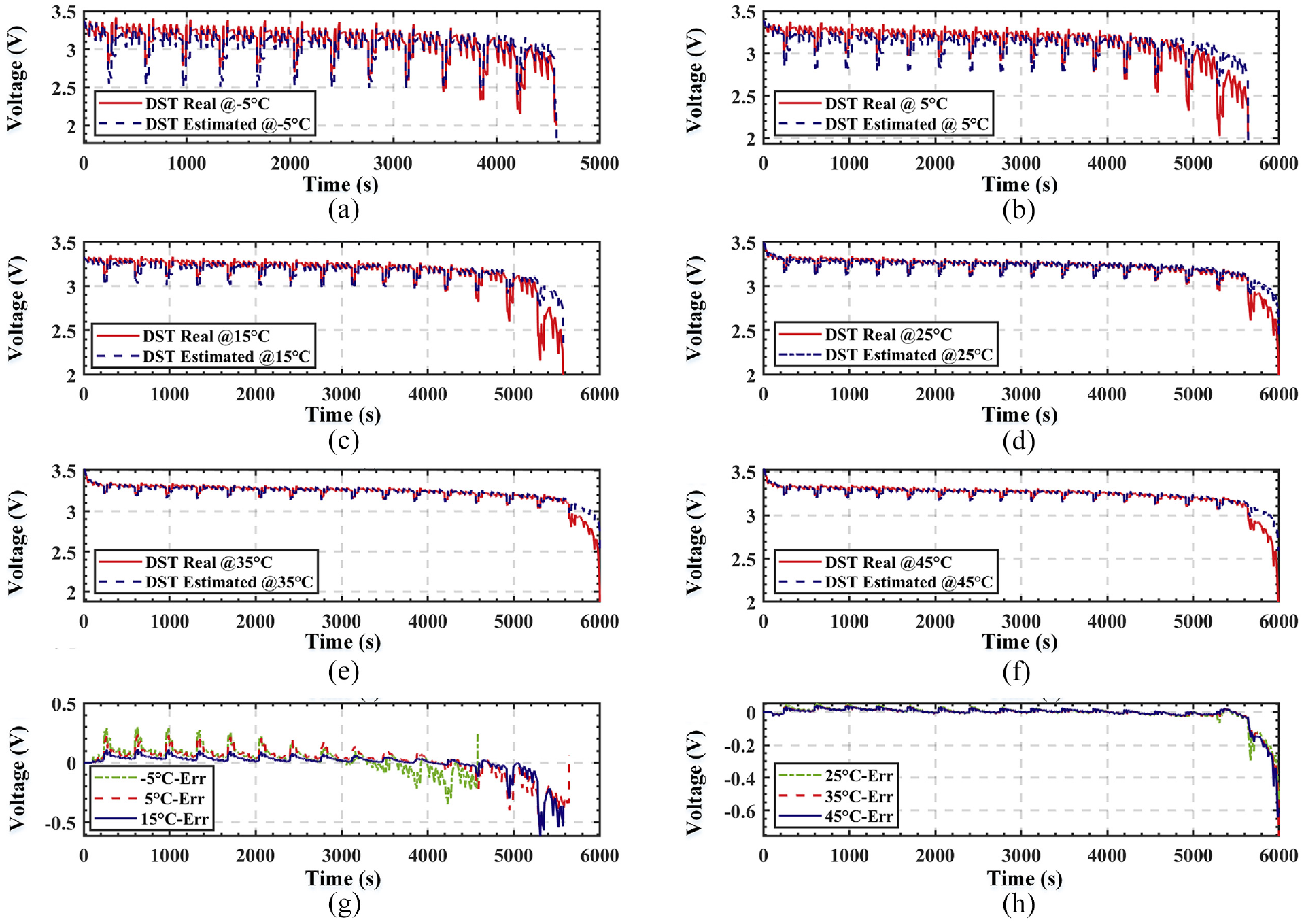
Voltage prediction results of the fractional-order model at different temperatures: (a) −5°C, (b) 5°C, (c) 15°C, (d) 25°C, (e) 35°C,(f) 45°C, and (g) and (h) prediction errors.
Based on the high-current dynamic test data at 25°C and the least-squares method, the identification result of the thermal model parameters is that the thermal resistors Ri and Ra are 4.72°C/W, 6.49°C/W and the thermal capacitors Ci and Cs are 117.65 J/°C, 13.40 J/°C, respectively.
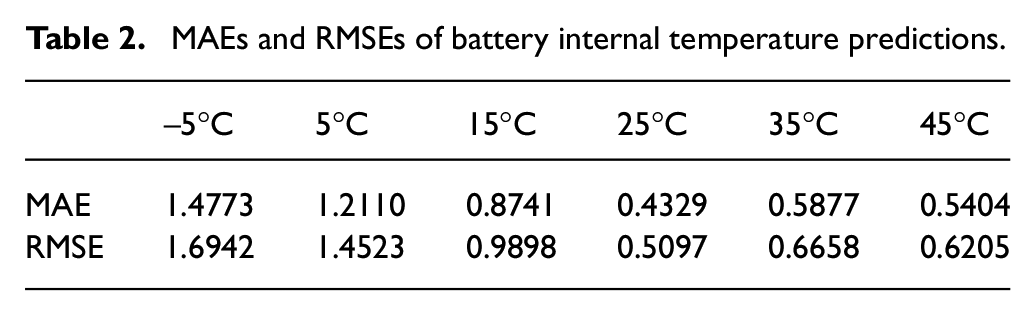
To further verify the precision of the thermal submodel, the identified parameters at 25°C are applied to predict the battery internal temperatures at other ambient temperatures. The predicted and measured temperatures are shown in Figure 5. We can find that there is still a big deviation between the temperature prediction result and the measurement result when the state observer is not used, especially in a low-temperature environment. For a more precise description, the mean absolute errors (MAEs) and root mean square errors (RMSEs) of temperature predictions are calculated and listed in Table 2. As the ambient temperature rises, the prediction error gradually decreases, except for the result at 25°C, which is used for parameter identification. This phenomenon may be caused by more severe temperature fluctuations at low ambient temperatures. The low temperature can reduce the battery capacity and increase the internal resistance, as shown in Table 1 and Figure 5, the battery discharging time gets shorter, but the internal temperature increment becomes higher when the ambient temperature is low.
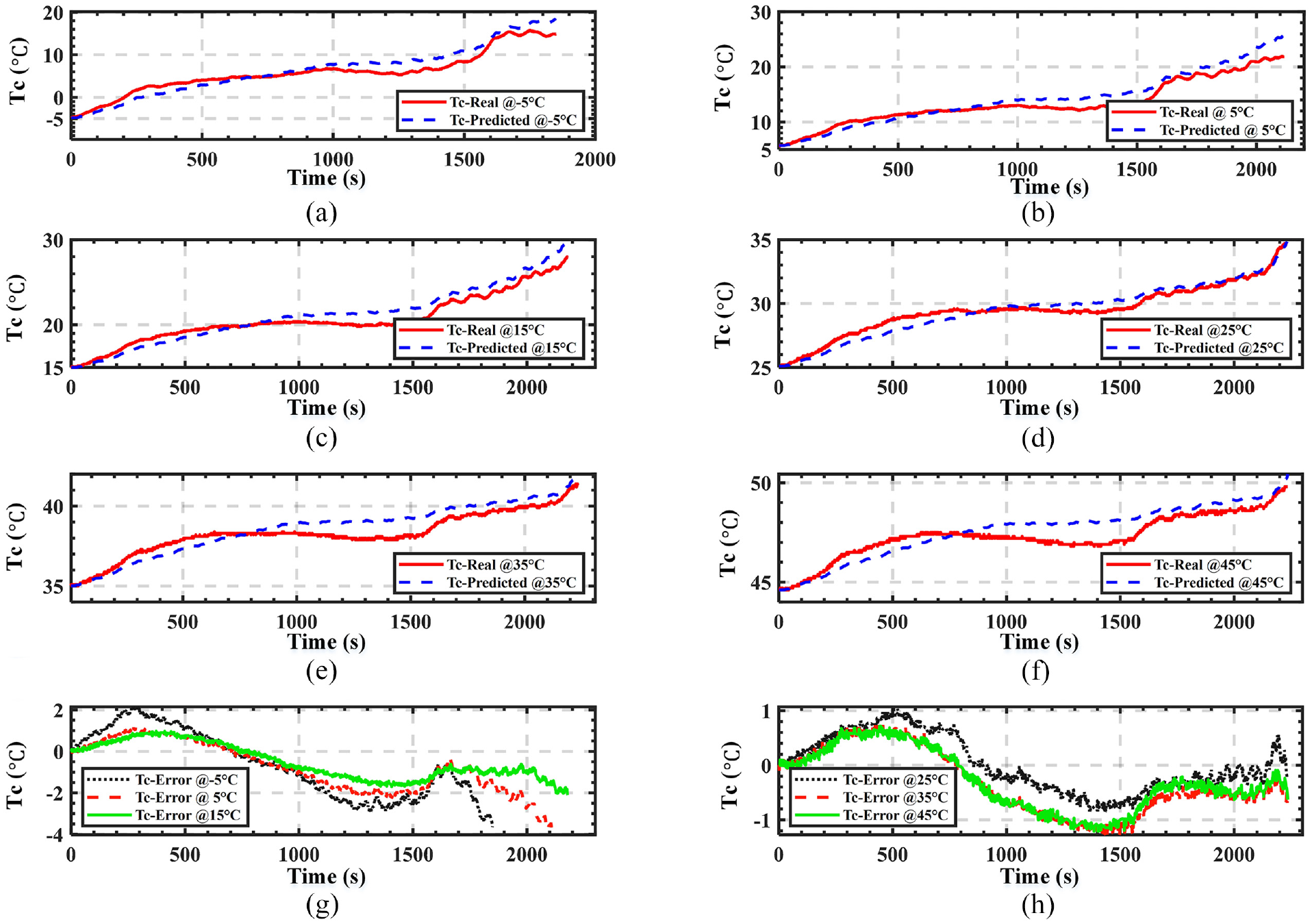
Internal temperature prediction results of the thermal submodel at different temperatures: (a) −5°C, (b) 5°C, (c) 15°C, (d) 25°C, (e) 35°C, (f) 45°C, and (g) and (h) prediction errors.
MAEs and RMSEs of battery internal temperature predictions.
Framework for internal temperature and SOC estimation
The two crucial states of the battery that need to be estimated in this work are the remaining capacity and the internal temperature. The remaining capacity of the battery is commonly expressed by the cell SOC which can be expressed as the percentage of battery remaining capacity to total capacity as equation (16)
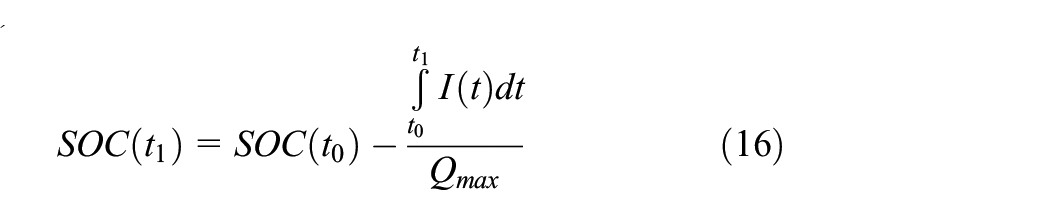
where SOC(t0) and SOC(t1) represent the battery SOC at time t0 and t1 and Qmax is the battery total capacity.
Assuming the discrete state transition and measurement equations for the state estimation are given by equation (17)

where k is the time step, w and v are the process noise and measurement noise which subject to Gaussian distribution (p(w) ∼N(0, Q), p(v) ∼N(0, R), where Q and R are the covariance matrix of noise variables), f is the state function, and g is the output function. According to equations (12)–(14), the state space equations of fractional-order electrical submodel are not standard linear equations, while the thermal submodel is composed of standard linear equations. Therefore, in our work, the Kalman filter–Particle filter (KF-PF) algorithm is presented for joint estimation of battery temperature and SOC, where the KF is used for battery internal and surface temperature estimation, and the PF is used for SOC estimation.
For battery internal temperature estimation, equations (13) and (14) can be discretized by forward difference method and rewritten as the state-space equations

where xk = (Tc(k),Ts(k))T and uk = (Q(k),Ta(k))T

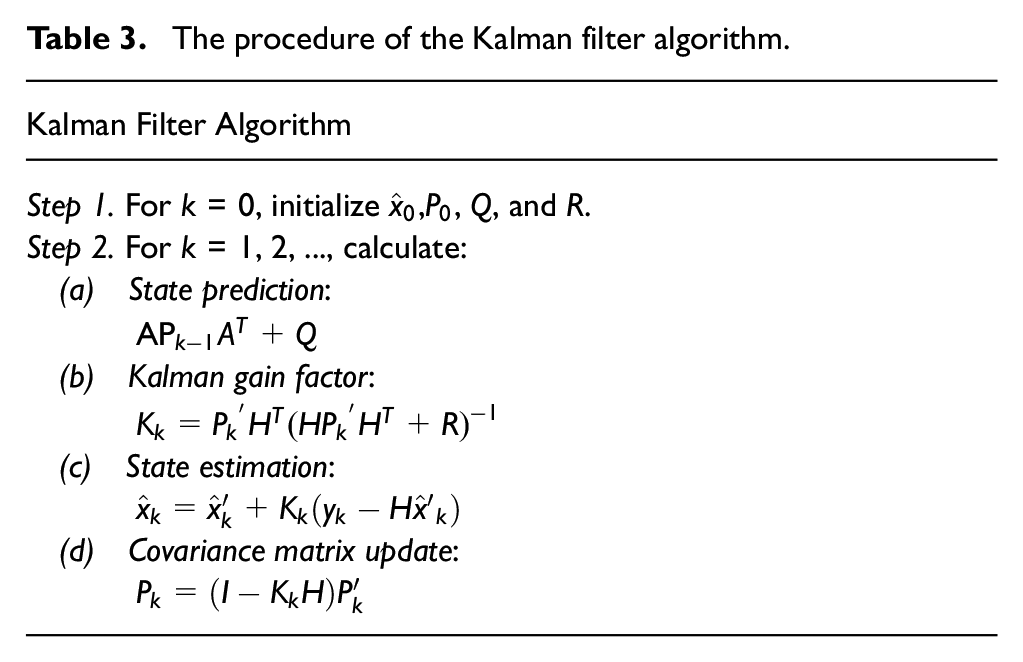
With battery surface temperature as a measurable variable, the internal temperature of the lithium-ion battery can be estimated by KF. The procedure of KF is shown in Table 3 where P
k
is the covariance matrix between the estimated value
The procedure of the Kalman filter algorithm.
PF is a recursive filter that follows Monte Carlo methods to represent the posterior probability of a random event through a set of random samples (called particles) with weights and to estimate the state of the system from a sequence of observations containing noise or incompleteness. The state-space model of the particle filter can be nonlinear, and the noise distribution can be of any type. The recursive estimation based on sequential estimation of the weights is called sequential importance sampling particle filter. The PF algorithm has been detailed and introduced in Haug (2012).
For battery SOC estimation, equations (12) and (16) are discretized into equation (19)

where Vp represents the voltage across the impedance elements. After that, the output of the fractional-order electrical submodel is calculated by
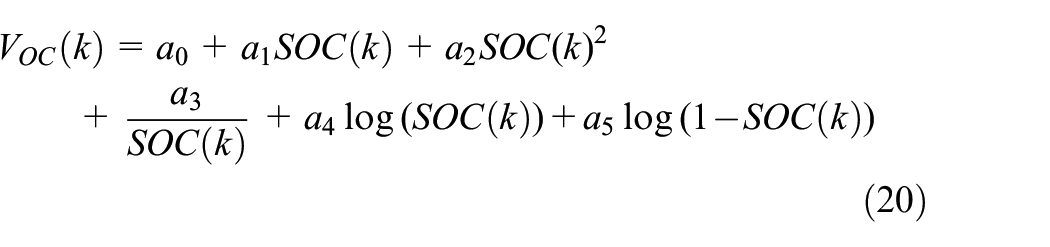
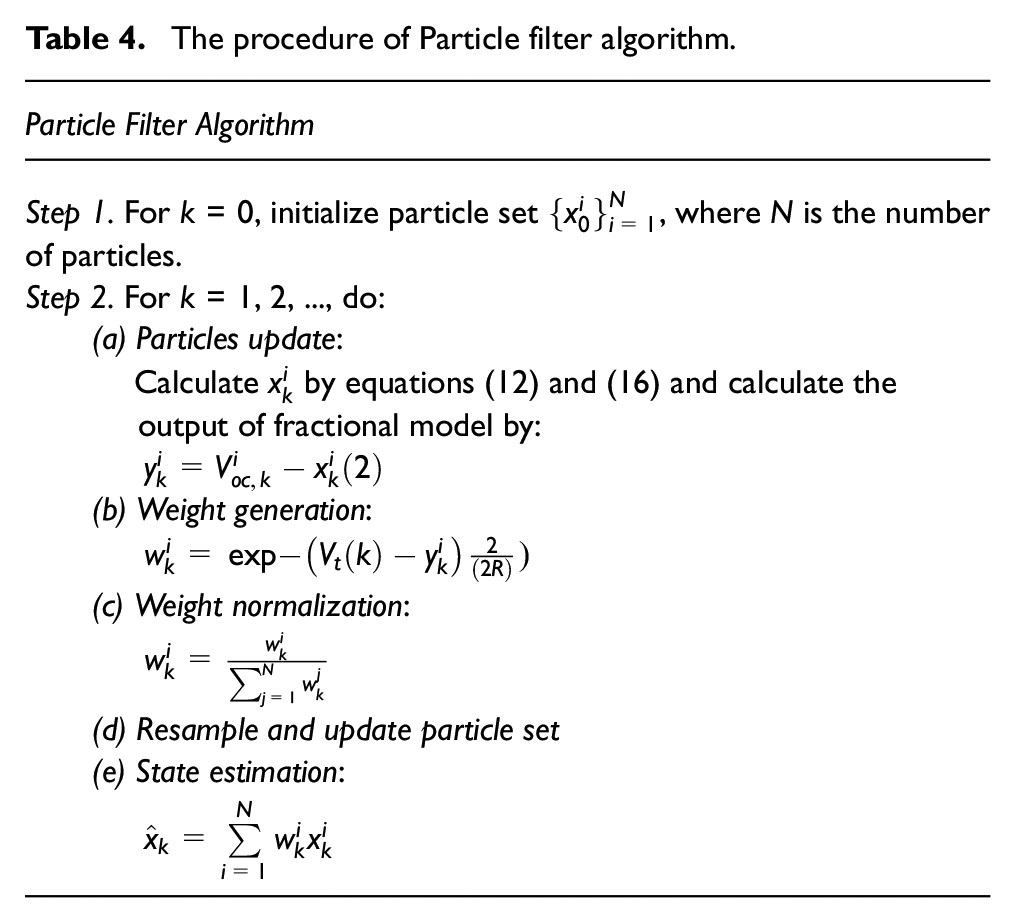
where a0 to a5 are the coefficients that can be determined by fitting the OCV-SOC curve obtained from experiments. With SOC and Vp as state variables xk = [SOC(k), Vp(k)]T, the procedures of particle filter can be performed as shown in Table 4.
The procedure of Particle filter algorithm.
The entire flowchart of parameter identification and state estimation framework is shown in Figure 6. The EIS experiments are used to obtain the parameter constraints. The PSO and KF-GPF algorithms are employed for battery parameter identification and state estimation. The state transition equations and measurement equations are shown in equations (14) and 15. The parameters of the cell model are affected by the internal temperature and SOC, and after each state estimation cycle, the estimated values of the internal temperature and SOC of the cell will be used to update the fractional-order thermoelectric coupling model parameters, and the updated parameters will modify the matrix coefficients in the state transfer matrix thus ensuring the accuracy of the model and the estimation results.
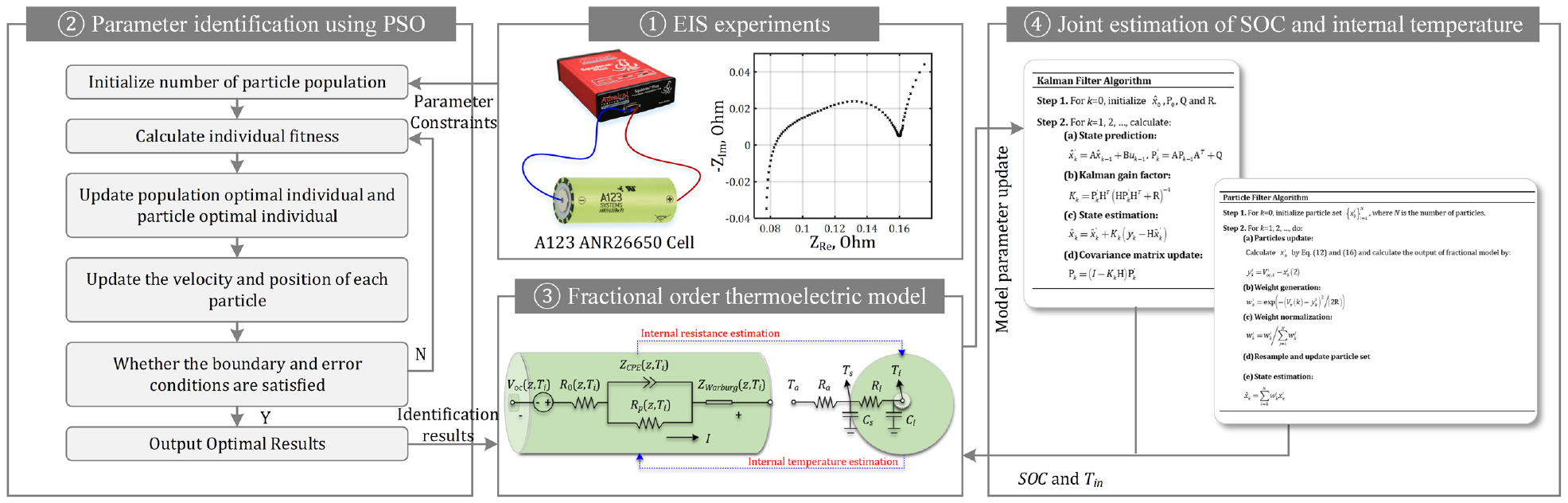
Flowchart of parameter identification and state estimation framework.
Results and discussion
Parameters setting
To verify the effectiveness of the presented fractional-order thermoelectric model and state estimation algorithms proposed above, several experimental tests are carried out at different ambient temperatures. Based on the parameters identification results in section ‘Model parameter identification’, the initial values of fractional-order electrical submodel parameters are first set the same as the identification result at the corresponding temperature. With battery operation, the increment of battery internal temperature will be monitored by KF in real time, which will change the parameters of the fractional-order model based on the linear interpolation method. Meanwhile, according to the results of thermal model parameters identification, as shown in Figure 5, thermal model parameters are less affected by temperature. Therefore, we do not consider the influence of temperature on the thermal model parameters and set it to the identification results at 25°C. To further highlight the tracking ability of the proposed state estimation method to the battery real state, we uniformly set the initial temperature to 15°C and the initial SOC to 0.5, which can form a certain error with the true initial value.
Battery state estimation
Based on the algorithm flow and framework introduced in section ‘Framework for internal temperature and SOC estimation’, we perform the proposed state estimation method on the experimental data at different ambient temperatures. To compare open-loop model prediction and closed-loop state estimation, we input data into the thermal and electrical submodels and state estimation method simultaneously at 25°C. With battery surface temperature as a measurable variable, the battery internal temperature prediction can also slowly match the real value. But it takes more than half of the entire operating time to achieve a better temperature prediction, which is unacceptable in practical applications. For battery SOC estimation, since there is no feedback mechanism and measurable variables to adjust the prediction results, the electrical submodel cannot compensate for the impact of the initial error on the results, which leads to a large error in the SOC estimation during the entire battery operation. On the contrary, through the output feedback mechanism of KF and PF, the temperature and SOC joint estimation algorithm we proposed can eliminate the initial error and match the real value in a short time.
The state estimation results on the other five different ambient temperatures are plotted in Figures 7 and 8. For battery internal temperature estimation, most of the estimation errors during the battery operating process are less than 1°C. Comparing with the open-loop prediction results in Figure 5, which is obtained without setting initial error, the proposed estimation method still significantly improves the results. This mainly benefits from the thermoelectric coupling model, in which the electrical submodel parameters will be corrected with the internal temperature changes. The preciser electrical submodel parameters will improve the accuracy of the heat generation calculations, thereby further improving the accuracy of the thermal-sub model. For battery SOC estimation, the PF algorithm also shows excellent state estimation performance. As displayed in Figure 8(g) and (h), the proposed method can compensate for the impact of initial errors within 100 s, which makes it possible for practical applications.
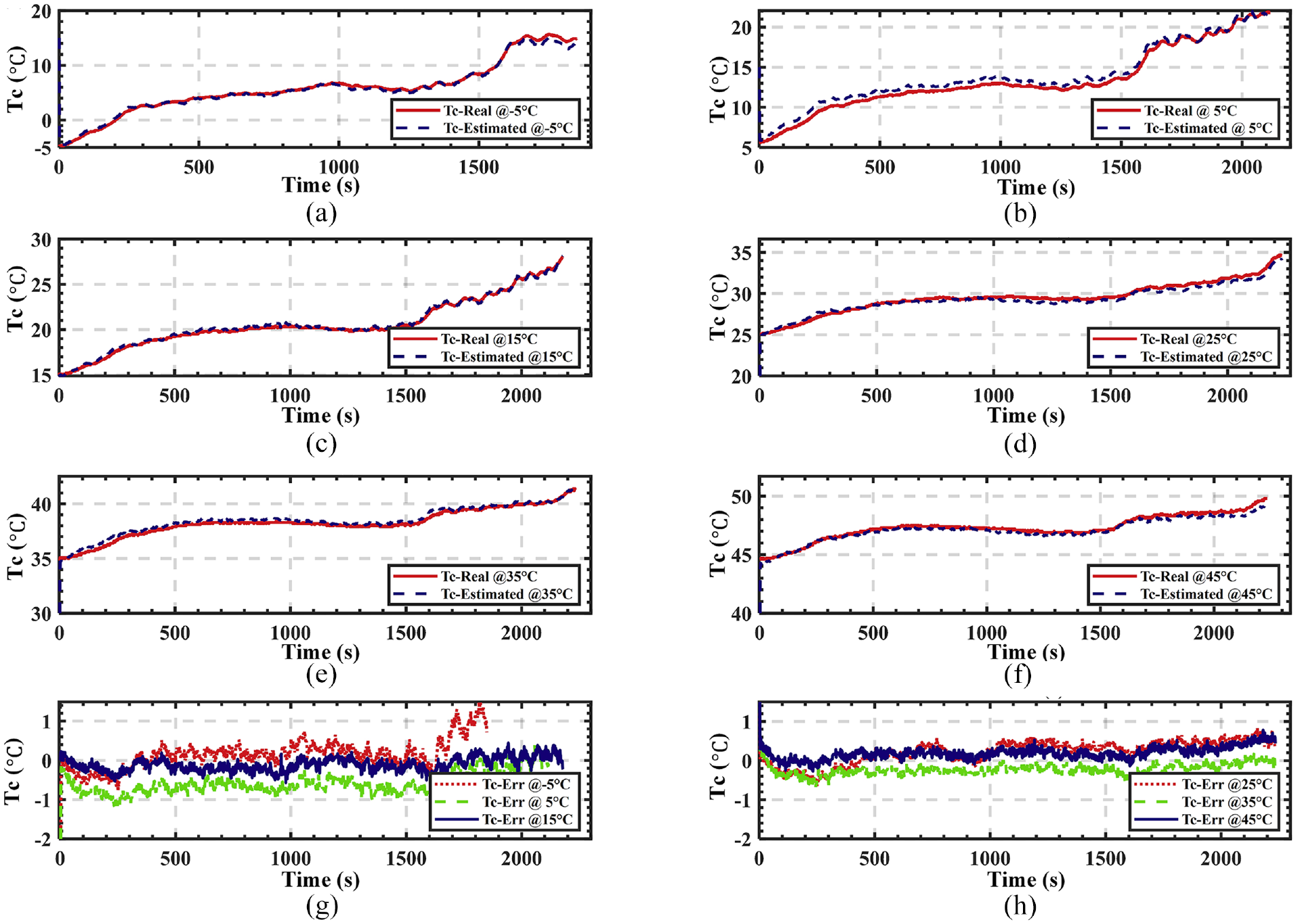
Internal temperature estimation results for lithium-ion battery: (a) −5°C, (b) 5°C, (c) 15°C, (d) 25°C, (e) 35°C, (f) 45°C, and (g)–(h) estimation errors.
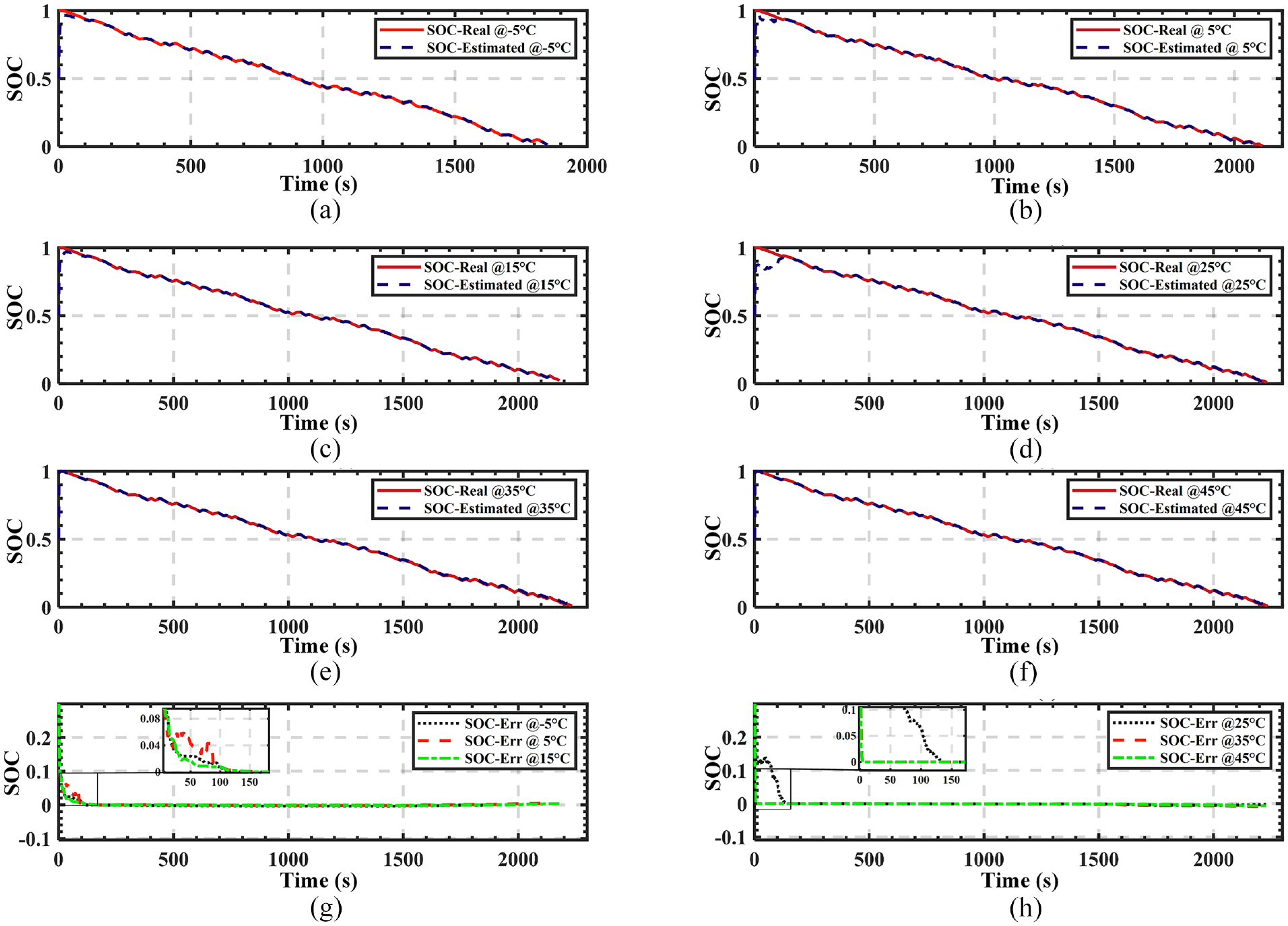
SOC estimation results for lithium-ion battery: (a) −5°C, (b) 5°C, (c) 15°C, (d) 25°C, (e) 35°C, (f) 45°C, and (g)–(h) estimation errors.
To describe the performance of the temperature-SOC joint estimation method more accurately. The MAEs and RMSEs are also calculated and listed in Table 5, where most of the temperature estimation errors are about 0.5°C, and most of the SOC estimation errors are about 1%. Results indicate that our proposed joint estimation method exhibits excellent estimation performance in battery internal temperature and SOC. Since initial states of the lithium-ion battery are often difficult to determine in actual use, model-based open-loop state prediction methods are usually difficult to meet users’ requirements. However, our joint estimation method can eliminate initial errors simultaneously and quickly, and the accuracy of the battery states estimation can be guaranteed.
MAEs and RMSEs of battery internal temperature and SOC estimation.

Conclusion
The state of charge and internal temperature of the battery are important factors that affect the battery’s characteristics and safe operation. Therefore, this paper proposes and verifies a joint estimation framework of battery state of charge and internal temperature. In order to solve the characteristics of nonlinearity, strong coupling, and time-varying parameters of lithium-ion batteries, a fractional-order thermoelectric model suitable for a wide temperature range is established. Based on the results of parameter identification at different temperatures, the parameters of the battery fractional model can change in real time with the temperature estimation results. On this basis, a Particle-Kalman filter state observer is constructed for the joint estimation of the internal temperature and state of charge. Through experimental analysis and verification, the method can estimate the internal state of the battery with high estimation accuracy and fast convergence. Compared with the traditional model-based open-loop forecasting method, our proposed online estimation method shows better robustness and can reduce the internal temperature estimation error by about half. Our future work will include the investigation of battery aging mechanisms and battery fast charging strategies using fractional-order thermoelectric models.
Footnotes
Declaration of conflicting interests
The author(s) declared no potential conflicts of interest with respect to the research, authorship, and/or publication of this article.
Funding
The author(s) disclosed receipt of the following financial support for the research, authorship, and/or publication of this article: This research was supported by the National Natural Science Foundation of China with Grant No. 61803359 and the USTC Research Funds of the Double First-Class Initiative with Grant No. YD2350002002.
