In this paper, we aim to study the mean exponential stability of stochastic highly nonlinear delay system with regime-switching diffusion, multi-links and distributed delay under aperiodic intermittent control. To address the stability challenges posed by high nonlinearity, multiple time delays, stochastic disturbances, complex network topology, and abrupt mode switching, we propose an effective solution as follows: Novel Lyapunov functionals containing both quadratic term and q-power term () of state variables are constructed, and the auxiliary timers are designed to avoid the discontinuity of control. By combining graph theory, Dupire’s functional derivatives and Dupire’s functional Itô formula, we successfully prove that the infinitesimal generator is strictly negative defined on the working period and resting period of control, respectively, and then derive the sufficient conditions ensuring mean exponential stability. The key constraints include strongly connected graph structure, strict inequalities of Lyapunov function coefficients, strict inequalities of growth restrictions on coupling functions and distributed delay, and average working time ratio, respectively. The stochastic delayed FitzHugh–Nagumo system with state-switching is applied, and the aperiodic intermittent control is designed, where the numerical simulation results indicate the effectiveness of our results.
Generally speaking, many practical systems are inevitably influenced by random factors present in the real world (Xu and Ding, 2024). Moreover, as research progresses, time delays inevitably emerge in system dynamics and significantly affect system states (Zhao et al., 2024). It has been reported recently that the coupling effects of stochastic disturbances and time delays will greatly impact on system dynamics (Guo et al., 2022; Ma et al., 2019; Tang et al., 2015).
On the other hand, due to the more complex dynamic characteristics of stochastic highly nonlinear systems and the fact that the stochastic highly nonlinear systems cannot fulfill the linear growth condition, such as the FitzHugh–Nagumo system (Blaustein and Filbet, 2023), it is very difficult to study the stochastic highly nonlinear systems. It has been reported recently that the traditional Lyapunov methods should be combined with the new functional analysis methods to deal with the stochastic highly nonlinear systems (Cao and Zhu, 2021; Gao et al., 2020). Therefore, many scholars have started to study the stochastic highly nonlinear delayed systems (SHNDSs). For example, Liu et al. (2020) used the Halanay inequality method, which could guarantee the exponential stability of SHNDSs. Zhao and Zhu (2023) stabilized the stochastic highly nonlinear delayed systems with neutral terms by the discrete-time feedback control function. Recently, Phan-Van and Gu (2024) further improved the delay decomposition approach and the accuracy of stability criteria is greatly improved.
Stability is a basic dynamic property describing a system’s ability to reach equilibrium from any starting point. Researchers have created several stability analysis methods, including finite-time stability (Zhang and Chen, 2024, 2025) and input-output stability (Costa, 2025; Li et al., 2025). Intermittent control works for stabilizing complex systems (Zhang et al., 2025a) and managing uncertain nonlinear systems (Ruan et al., 2024). Studies also show adaptive intermittent control can achieve better efficiency (Liu et al., 2024).
Dupire proposed the functional derivative and the corresponding functional Itô formula, now known as Dupire’s derivative and formula, in Dupire (2019). By defining an appropriate Lyapunov functional and combining it with the Dupire’s functional Itô formula, the sign of can be directly estimated. Therefore, the Dupire’s functional Itô formula has unique advantages in studying the stability of stochastic functional differential systems (Zhang et al., 2025b). This paper attempts to use the Dupire’s functional Itô formula to study the mean square stability of SHNDSs with switching diffusion, multi-links and distributed delay under intermittent control. However, such a Lyapunov functional is not easy to find, which is one of the highlights of this paper.
Based on the above discussion, this paper begins to study SHNDSs with switching diffusion, multi-links and distributed delay under intermittent control. By constructing a new Lyapunov functional that includes square terms and qth power terms (), and introducing an auxiliary timer, combined with graph theory, Dupire’s functional derivative and Dupire’s functional Itô formula, we can obtain that is negative definite in both the working interval and the rest interval of the control cycle, thereby ensuring the stability of the system. We apply the theoretical results to the FitzHugh–Nagumo system and verify the feasibility of the theoretical results through numerical simulations. The main contributions of this paper include the following:
Since the drift and diffusion terms of highly nonlinear systems no longer satisfy the linear growth condition but satisfy the polynomial growth condition, this paper constructs a new Lyapunov functional. Through the Dupire’s functional Itô formula, the criterion for the mean exponential stability of SHNDSs is given.
Introducing multi-links and distributed delay into SHNDSs is a rarely studied problem. Inspired by Wang et al. (2022), this paper constructs a functional through an auxiliary timer and combines Dupire’s derivative and graph theory methods to perfectly realize the negative definiteness of , and this negative definiteness holds in both the working interval and the rest interval of the control cycle.
The remaining parts of this paper are arranged as follows: the second part describes the model formulation and assumptions in detail. The third part outlines the theoretical results and stability criteria. In the fourth section, we apply the derived theoretical results to the FitzHugh–Nagumo system with multi-links and distributed delay. Subsequently, in the fifth section, we conduct numerical simulations, and the results support the validity of the theoretical findings. Finally, the sixth section summarizes the work of this paper.
Notations: In this paper, we set , , , and define ℕ as . Let ℝ denote the set of real numbers, and denote the set of non-negative real numbers. Let denote the n-dimensional Euclidean space, and |⋅| denote the Euclidean norm of vectors belonging to . Let ”” denote the trace of a square matrix and the superscript ”T” be the transpose of a vector or a matrix. Regarding any function , its right and upper Dini derivative is defined as . For , denotes the family of continuous functions from the interval to , and for any , the norm is defined as . Consider a complete probability space , where the filtration satisfies the standard conditions: includes all ℙ-null sets, and the filtration is right-continuous, and is the one-dimensional Brownian motion defined in .
Preliminaries and model formulations
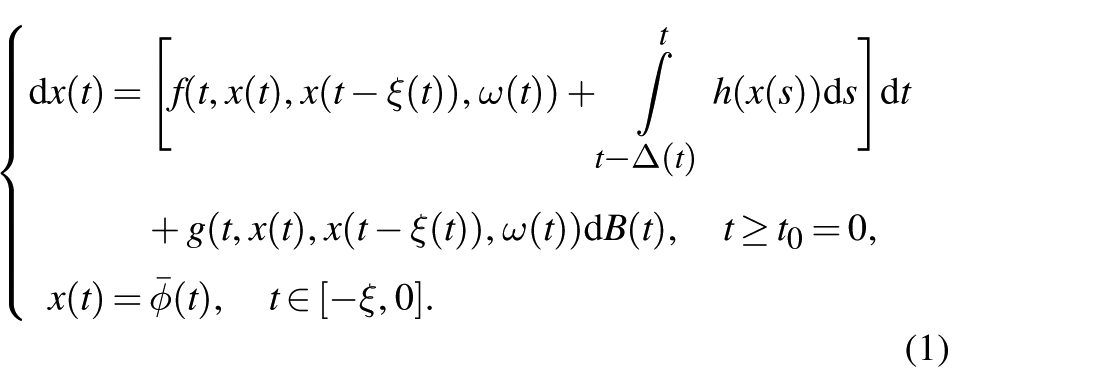
Consider the following stochastic delayed system with regime-switching diffusion and distributed delay:
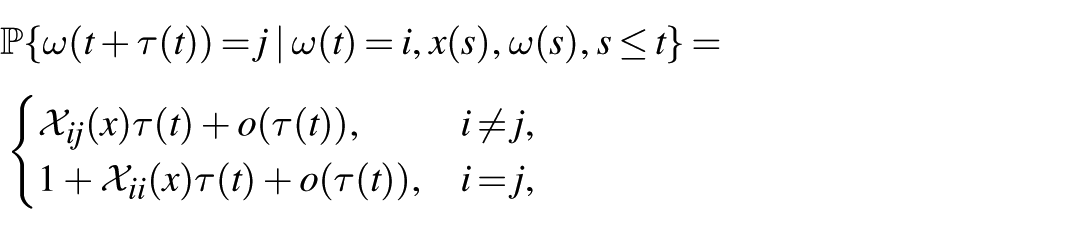
where denotes the state vector, , and , is a stochastic perturbation function, and set as a time-varying delay, satisfying and . The delay is time-dependent and satisfies , with its rate of change bounded by , and is a mechanism-switching diffusion process, taking values in , and its generator satisfies:
where , , . And there exists a positive constant such that , while is the initial condition of system (1).
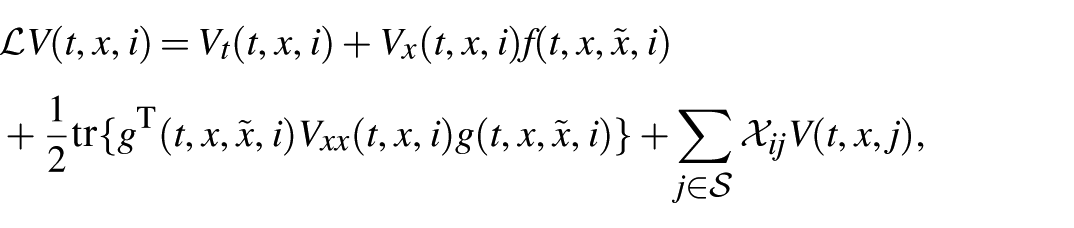
For a Lyapunov function , which is once differentiable with respect to the first variable and twice differentiable with respect to the second variable, the operator is defined as
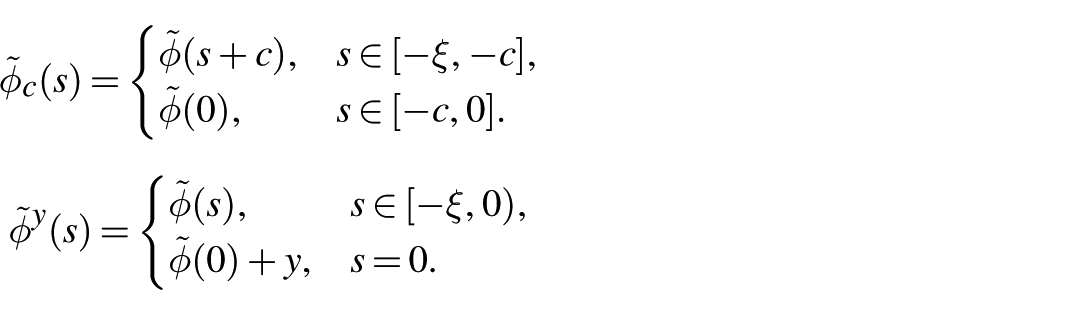
where For and denoting the family of cadlag functions, , , define horizontal and vertical perturbations
Assume . Define horizontal and vertical partial derivatives: , , where is the unit vector with 1 as its zth element. Suppose that F is a family consisting of functional satisfying: (1) the functional is continuous; (2) the partial derivatives exist and are continuous; (3) on bounded closed sets, are bounded. If , define
Then, the Dupire’s functional Itô formula is as follows:
Lemma 1.As established in Li and Shuai (2010), let the number of nodes of graph G be,be the weighted adjacency matrix, andbe the algebraic cofactor of the kth diagonal element of the Laplacian matrix of Ã. Then, for any function, the following holds
where ℚ is the set of spanning unicyclic graphs of,is the weight of the unicyclic graph Q,is the directed cycle of Q, andis its edge set. In particular, ifis strongly connected, then for all, we have.
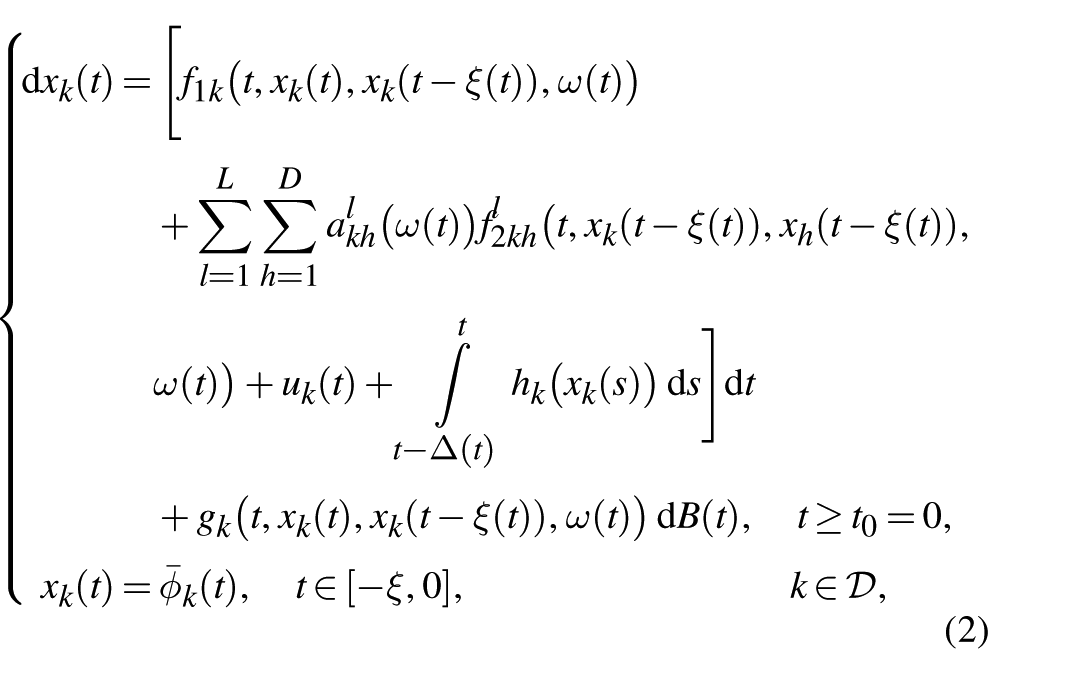
Consider a stochastic high-nonlinear time-delay system with regime-switching diffusion, multi-links, and distributed delay, and impose intermittent control on it. The following controlled system is given as
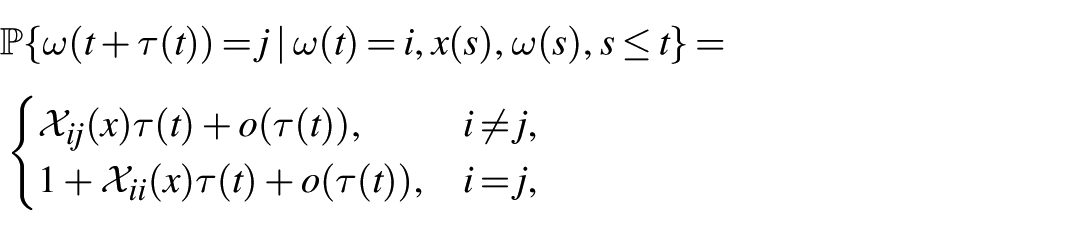
where denotes the state vector of the kth node, , and . In addition, is the coupling function, and is the coupling strength. We set as a stochastic perturbation function, and set as a time - varying delay, satisfying and . The delay is time-dependent and satisfies , with its rate of change bounded by , and is a mechanism - switching diffusion process, taking values in , and its generator satisfies:
where , , . And there exists a positive constant such that , while is the initial condition of system (0). is the intermittent controller of the kth node, where , , is the control gain. and are the time nodes. is the working time interval in the control period, and is the rest time interval in the control period. For any , denotes the total working time of in , and denotes the total rest time of in , satisfying . We give some assumptions:
Assumption 1.For any, there existandsuch that, for all. Here,is called the average working time ratio of the kth node.
Assumption 2.There exist positive constants, such that.
Definition 1.The trivial solution of system (2) is said to be pth moment exponentially stable if there exist constantsandsuch that for any initial datathe following inequality holds:
When, it is usually called exponentially stable.
Remark 1. In recent years, significant progress has been made in the study of system stability under intermittent control. However, most existing results are restricted to systems that satisfy the linear growth condition (Wang et al., 2022; Zhang and Chen, 2018). For systems with highly nonlinear characteristics, relevant research remains scarce due to the limitations of current analytical tools. The multi-links coupling system investigated in this paper exhibits strong nonlinearity, which further highlights the necessity of this work.
Main results
This section presents the sufficient conditions for the mean exponentially stable of system (0) as follows:
Theorem 1.If Assumption 1 and the following conditions hold, then system (0) is mean exponentially stable.
The graph structure, where, is strongly connected.
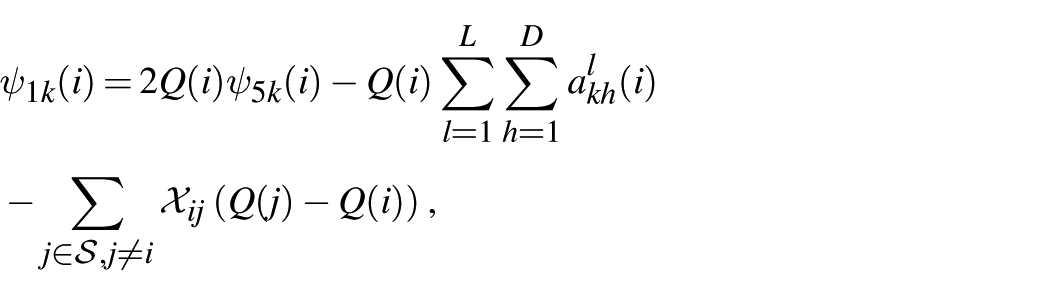
There exists a non-negative function. For any, there exist positive numberssuch that. There exist positive numbers, non-negative numbers, and the functionsatisfying:
When,
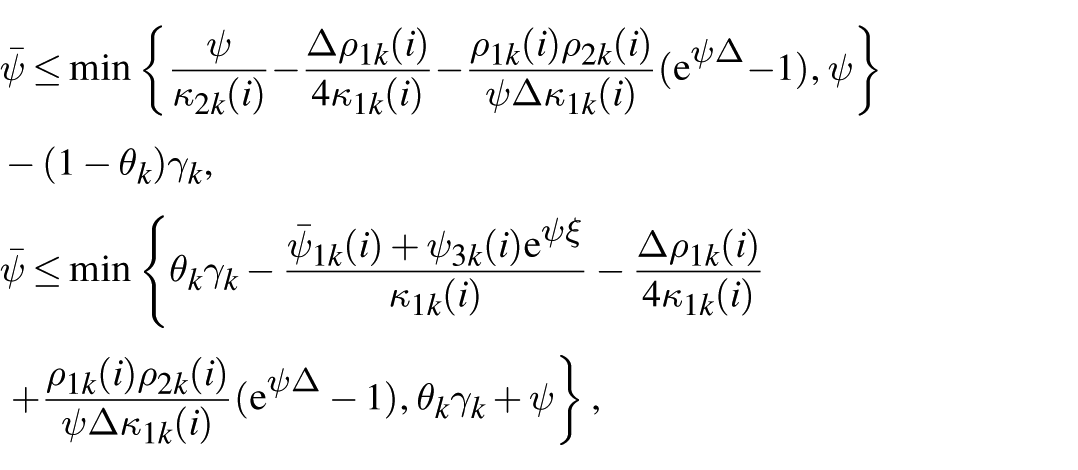
When,
wheresatisfies that along each directed cycleof the graph structure,,.
For any,, there exists a positive numbersuch that.
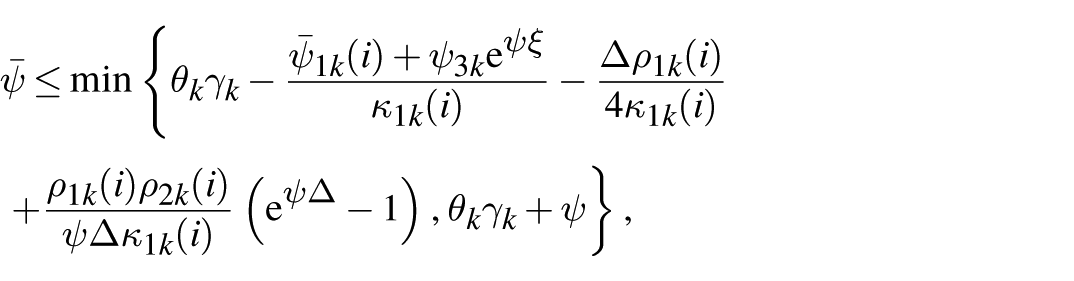
For any,, the following inequalities hold,,
and
is satisfied, whereare positive numbers.
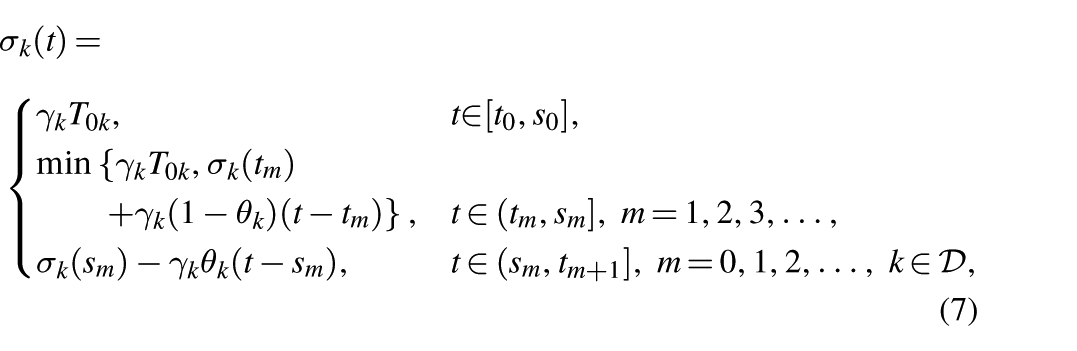
Proof. For the kth node, construct an auxiliary timer
where is a given parameter, is the average working rate given in Assumption 1, and is a tuning parameter. It is easy to see that is continuous. And it satisfies , . When , , and when , .
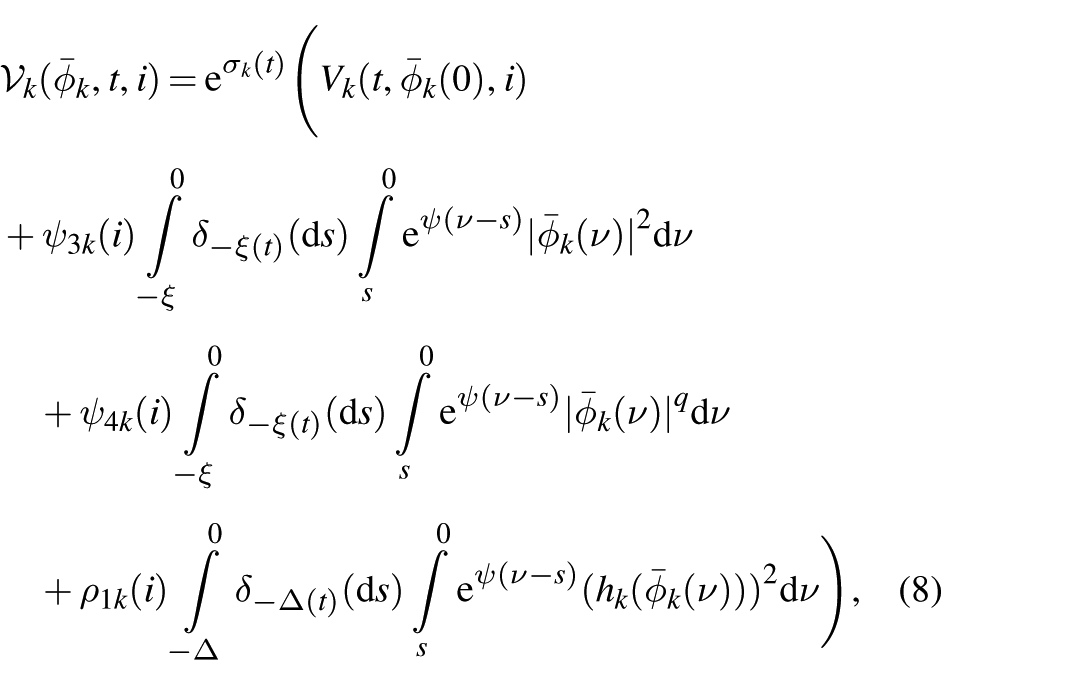
The functional is constructed as follows:
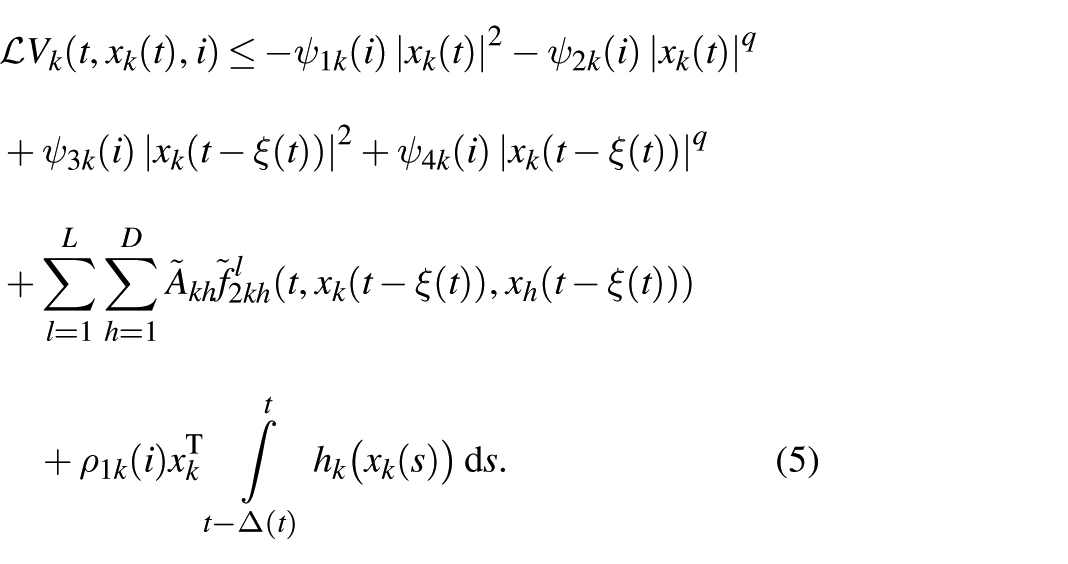
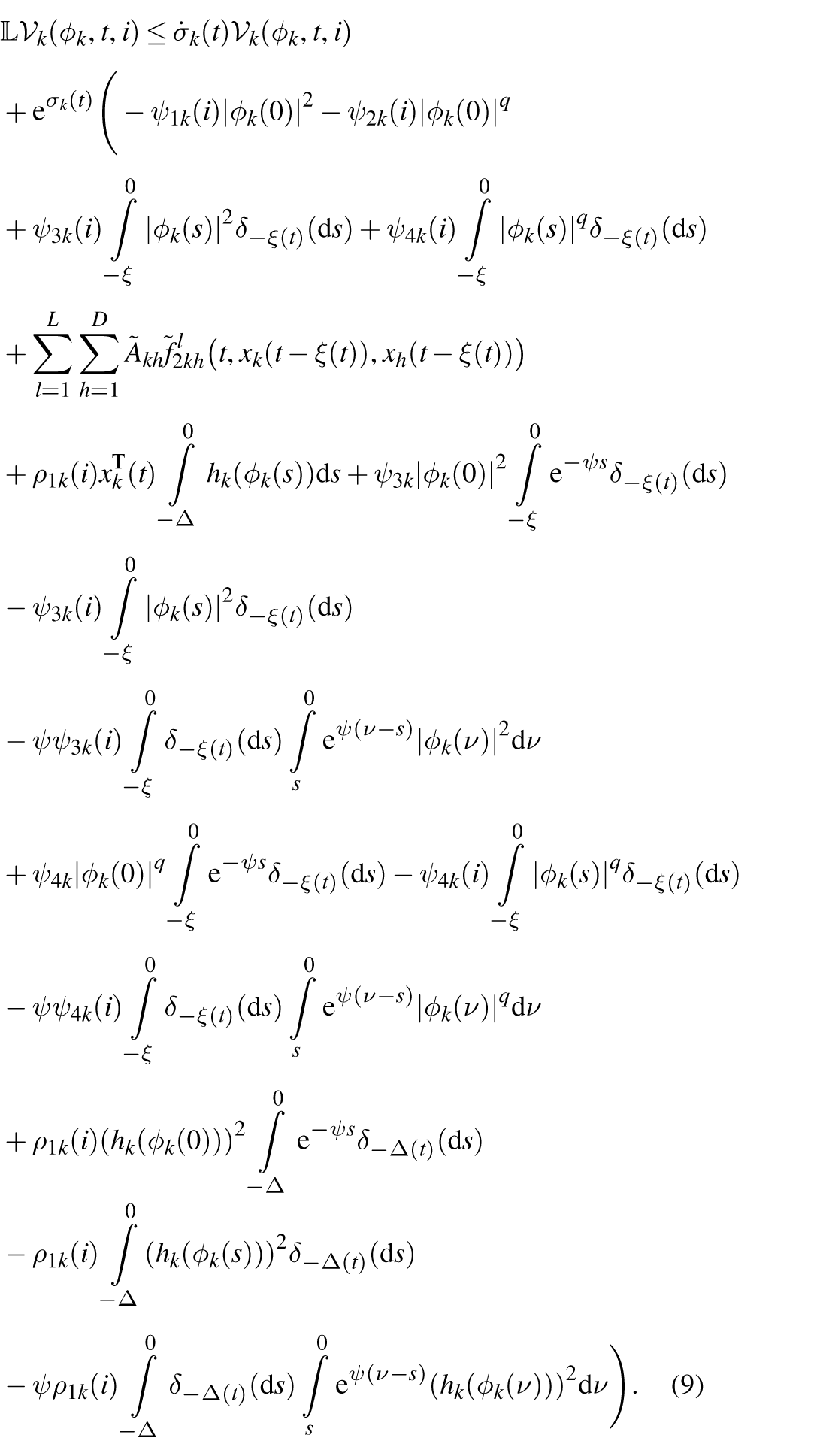
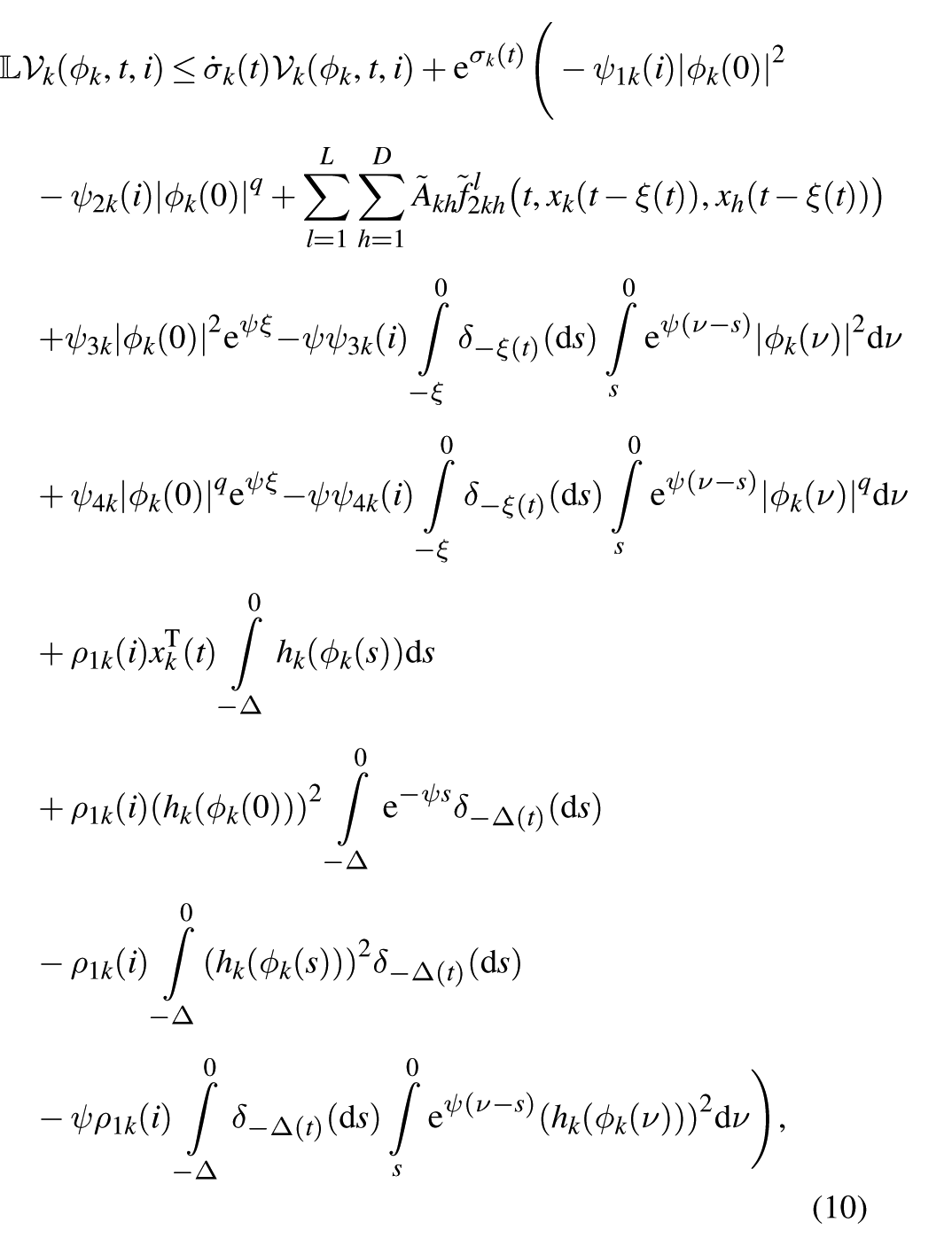
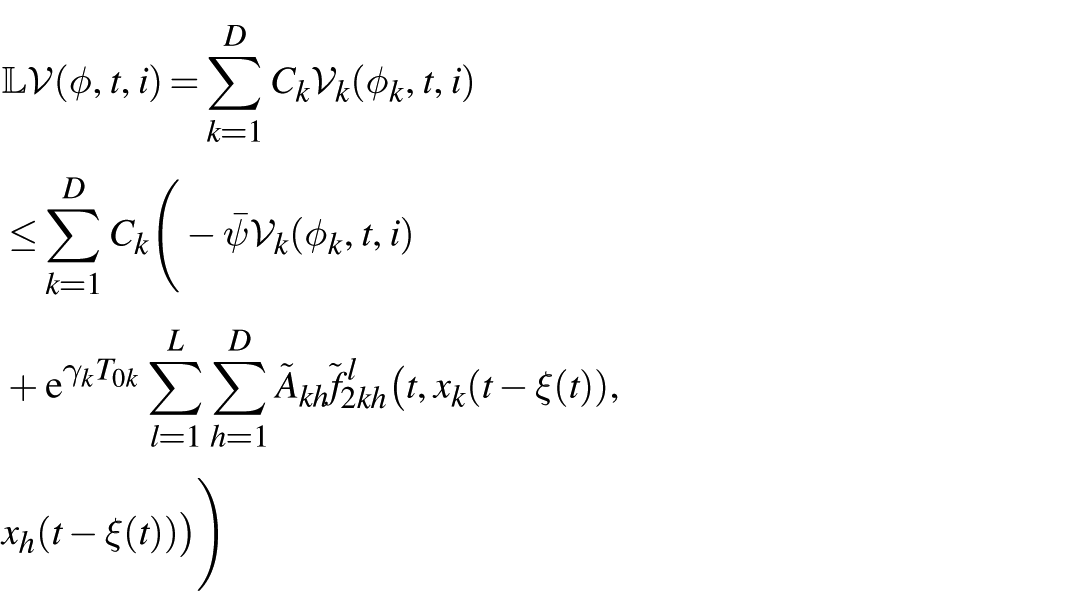
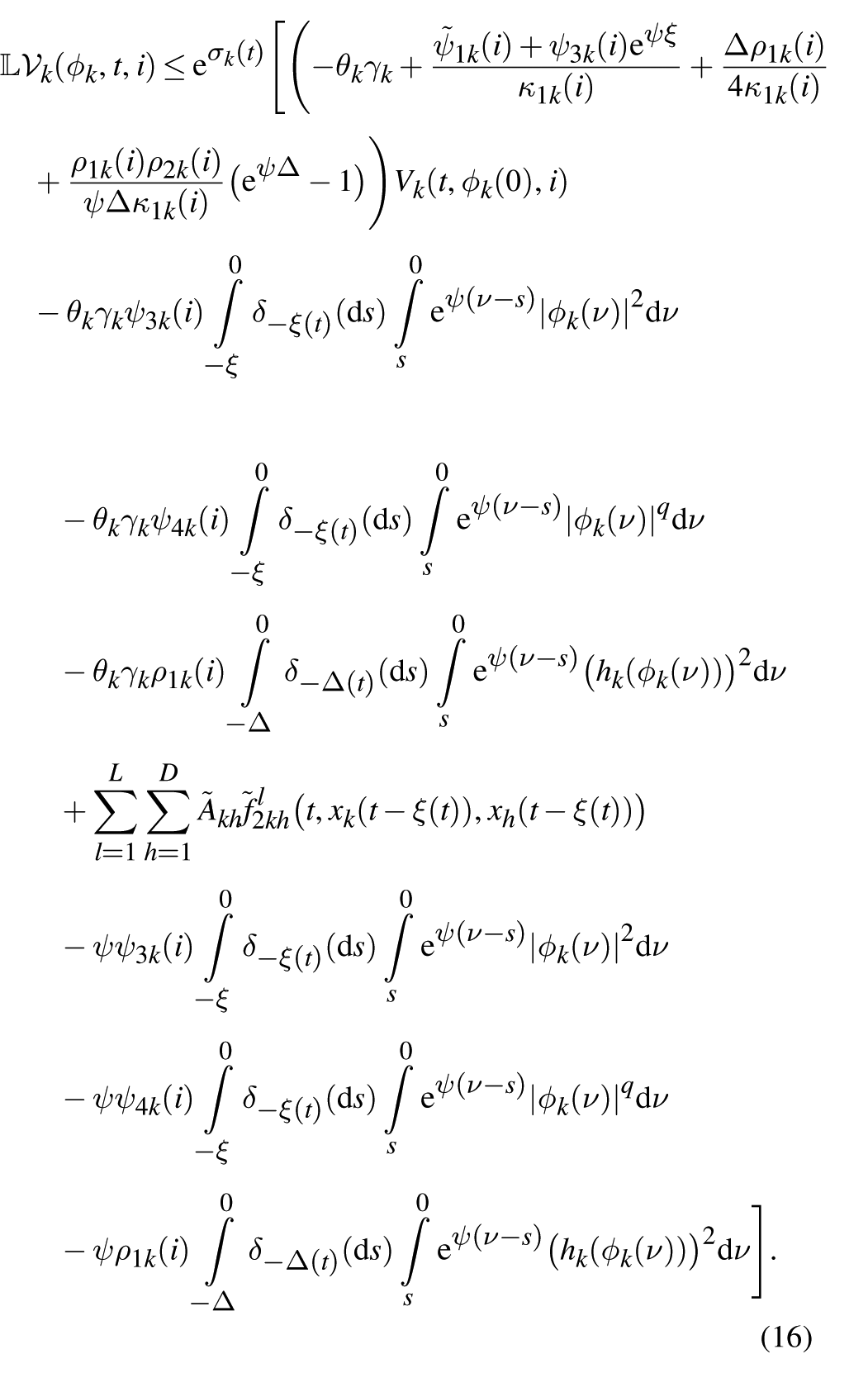
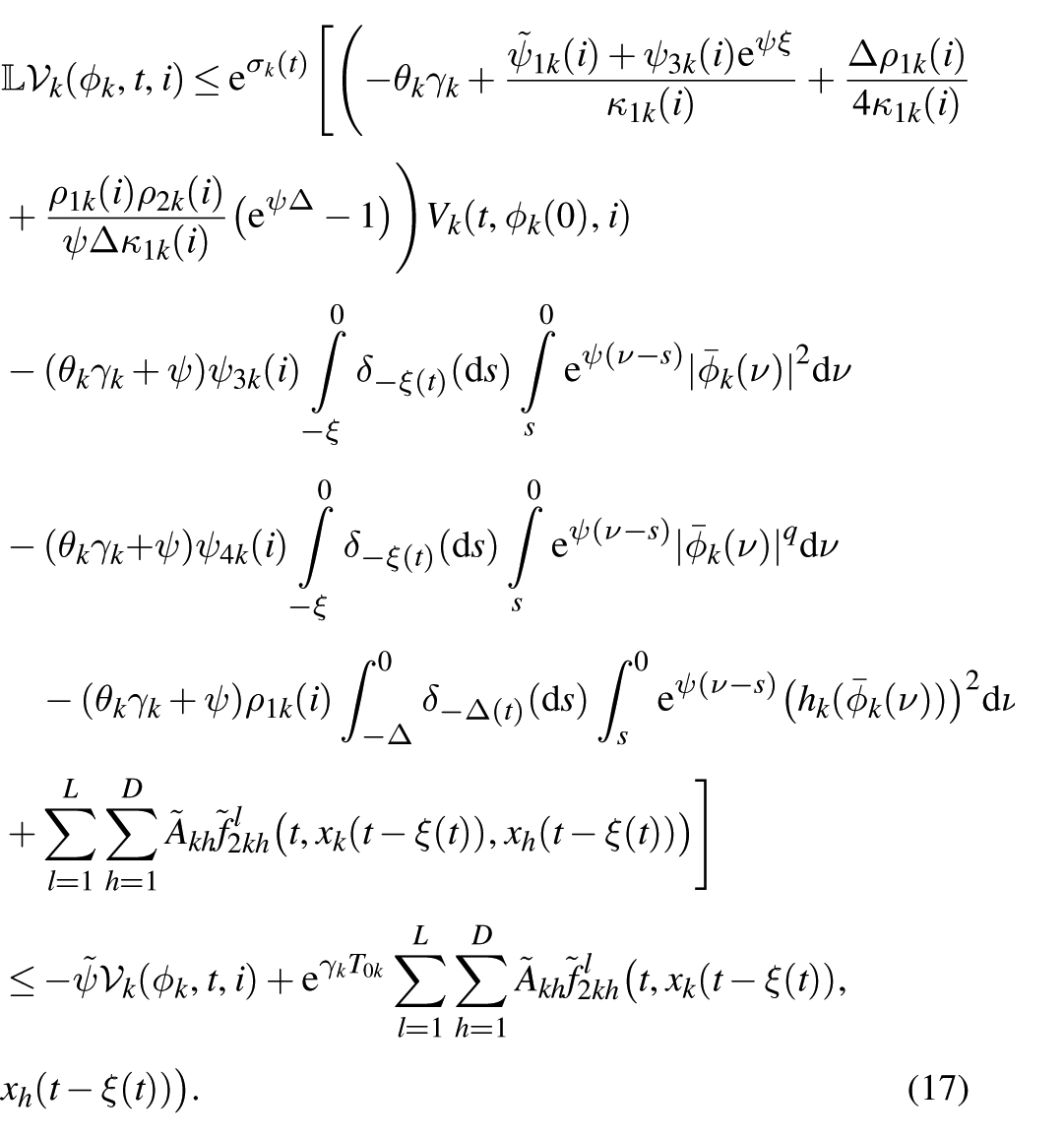
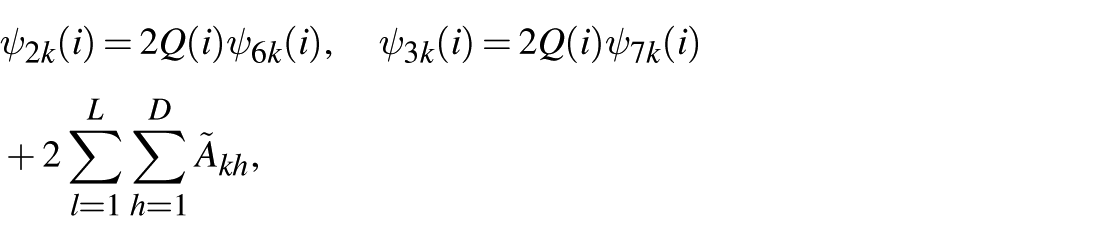
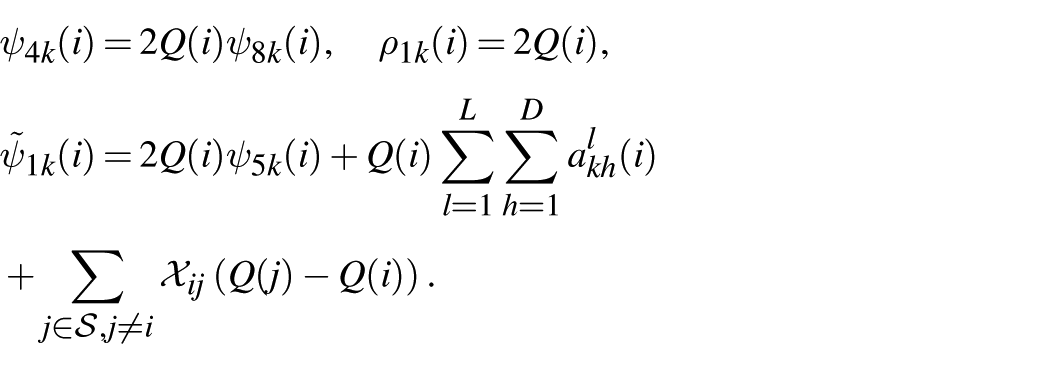
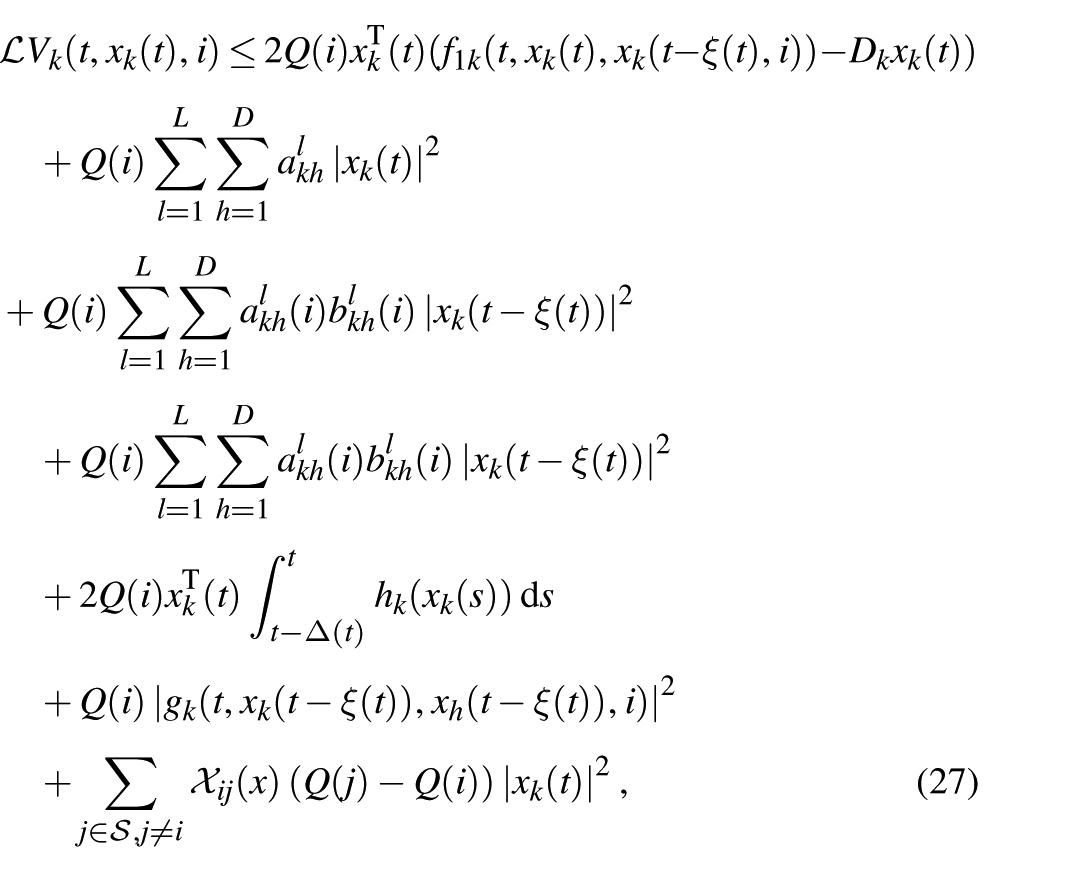
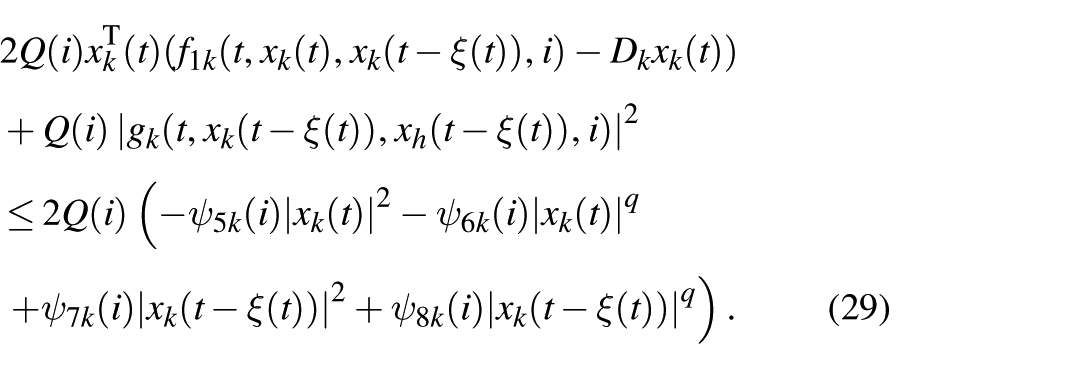
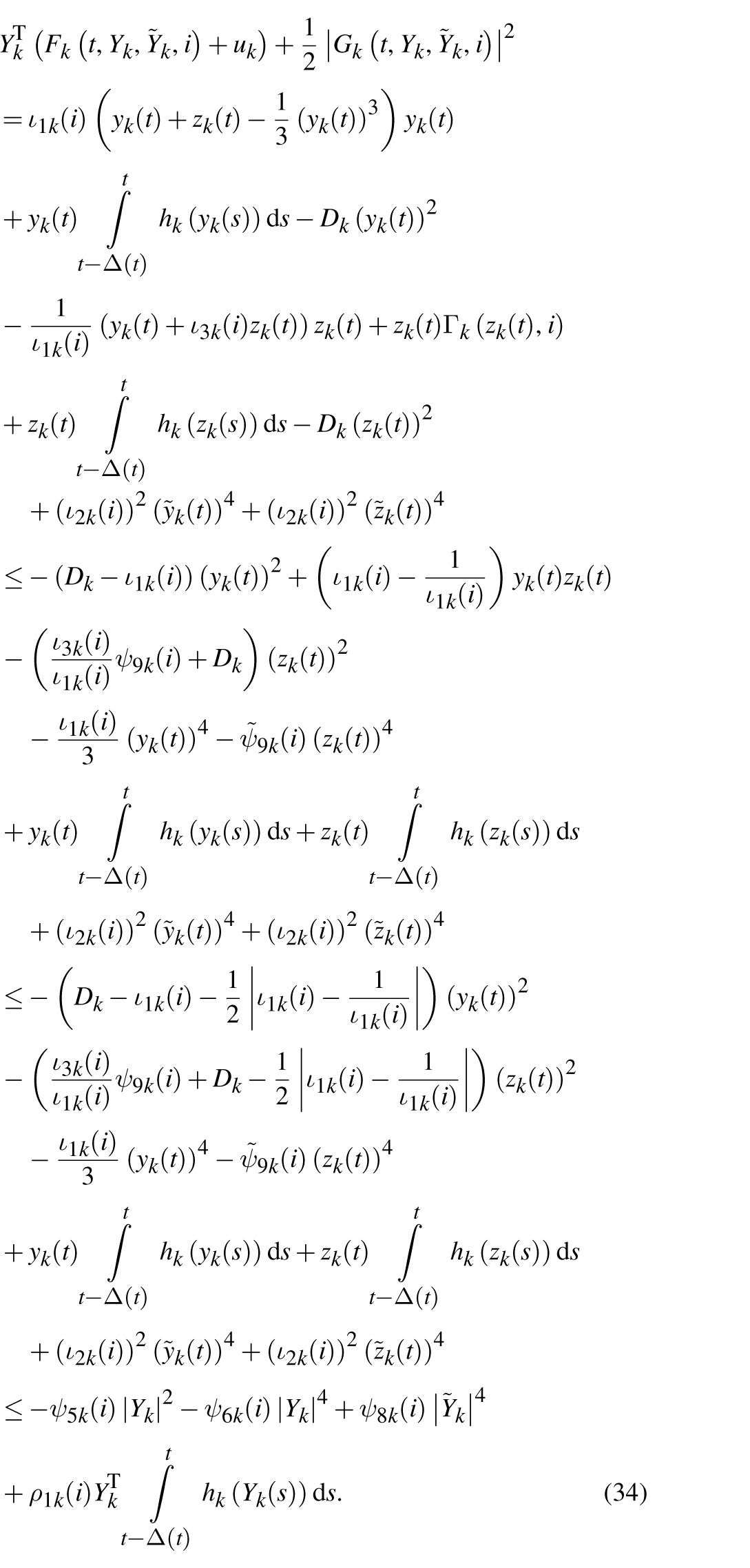
where is the Dirac measure centered at , is the Dirac measure centered at . Reconstruct , where denotes the algebraic cofactor corresponding to the kth diagonal element in the Ã’s Laplacian matrix. For system (2), let and . When , by applying the Dupire’s derivative and combining it with the given conditions, we have
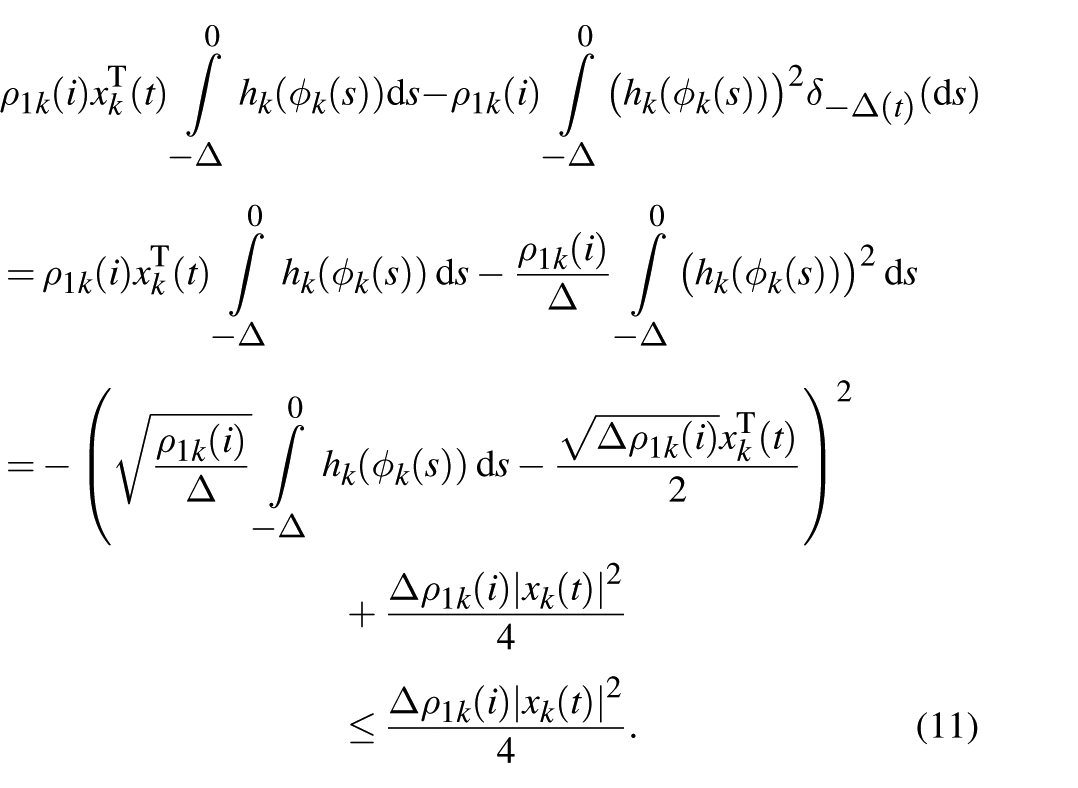
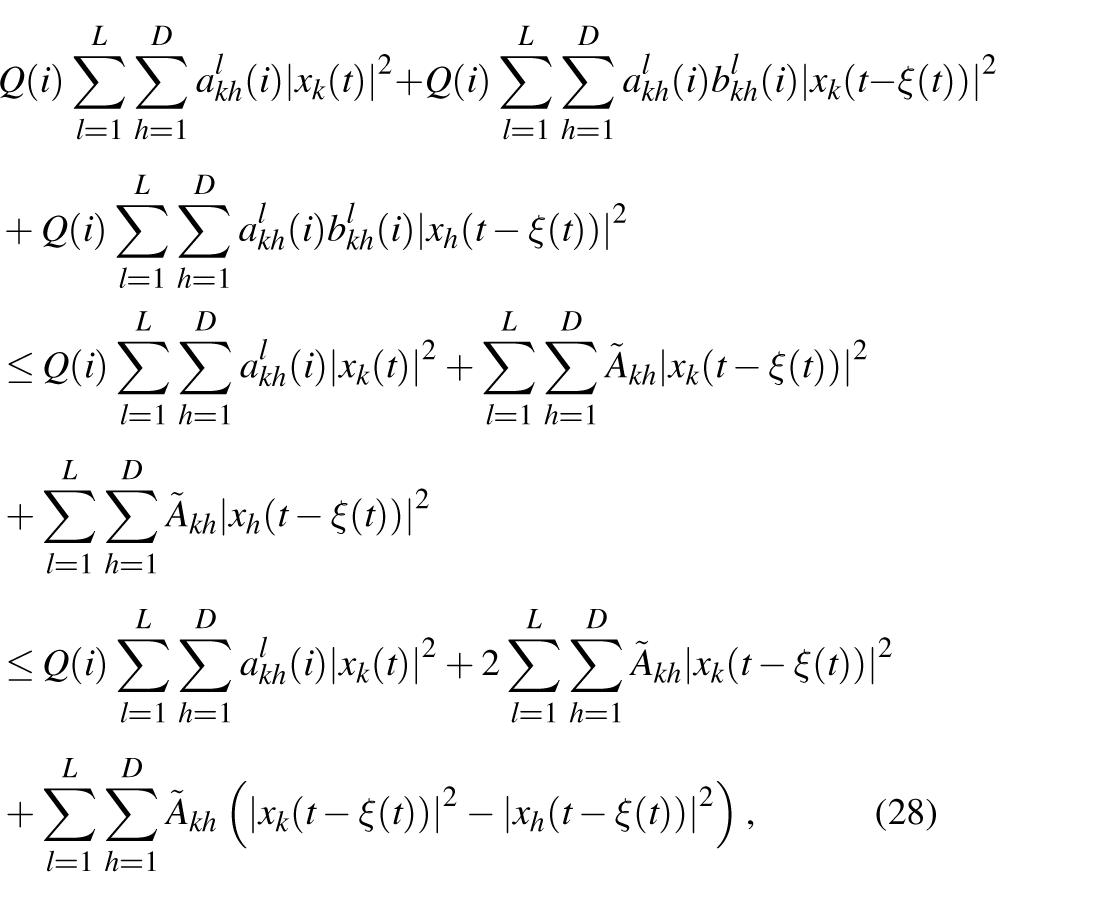
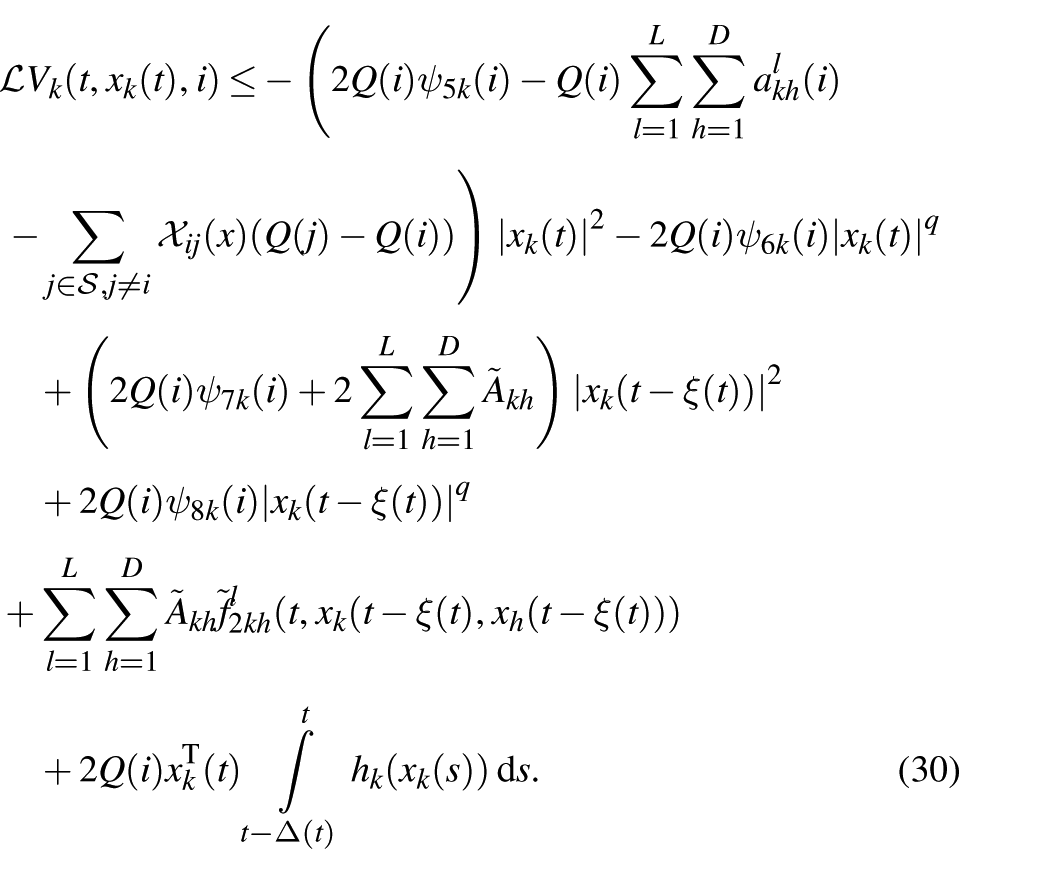
By gradually scaling cross terms and integral terms, complex redundant terms can be eliminated, resulting in the following simplified expression
where
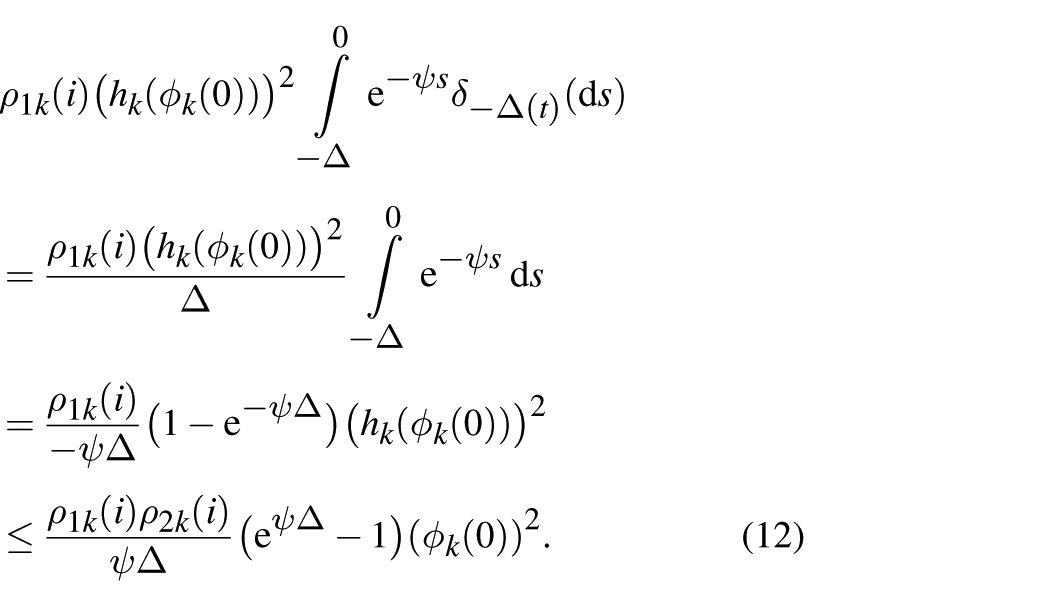
Scale another term of the distributed delay integral
Substituting the above result into the inequality, we thus obtain
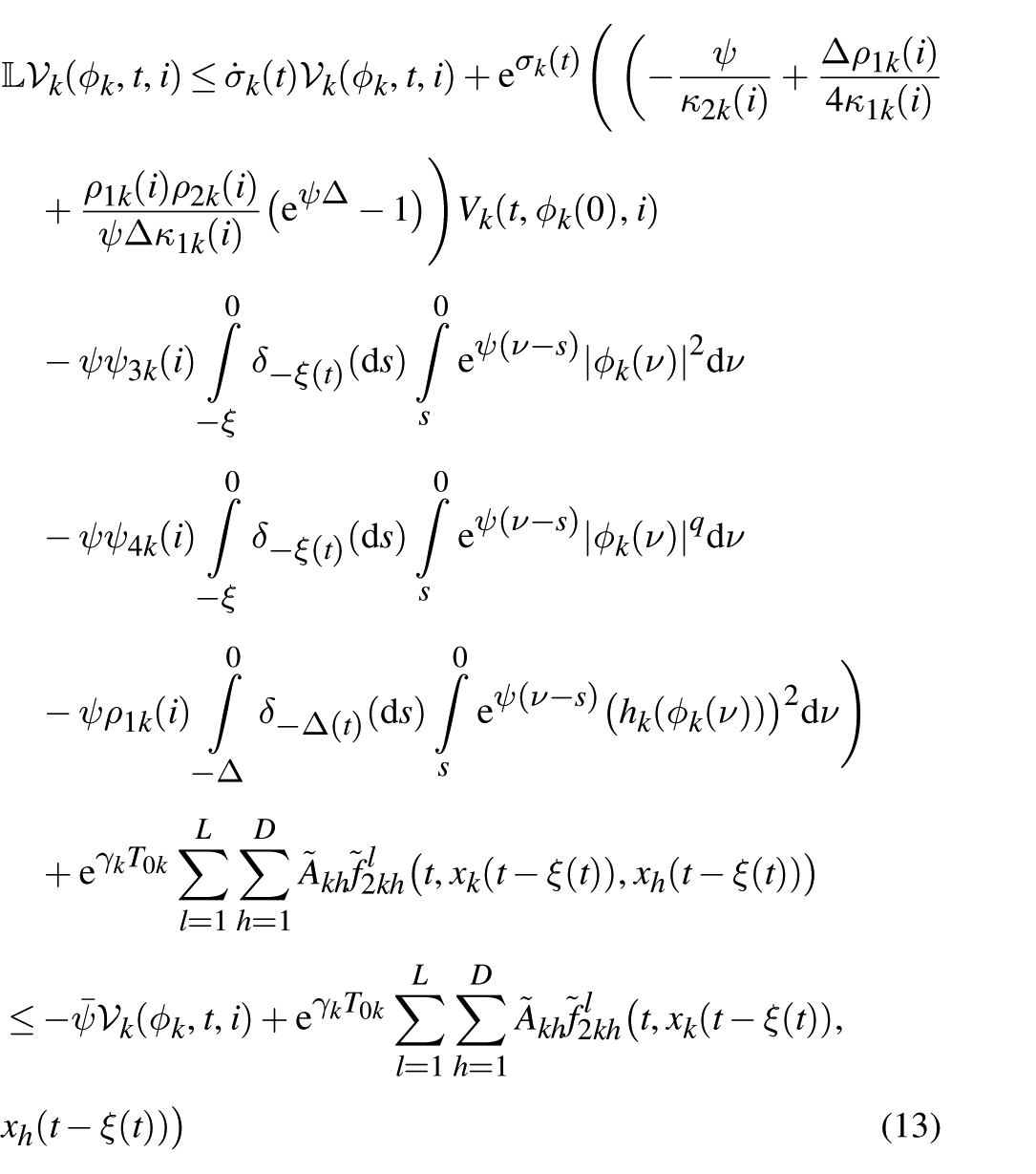
Finally, we have
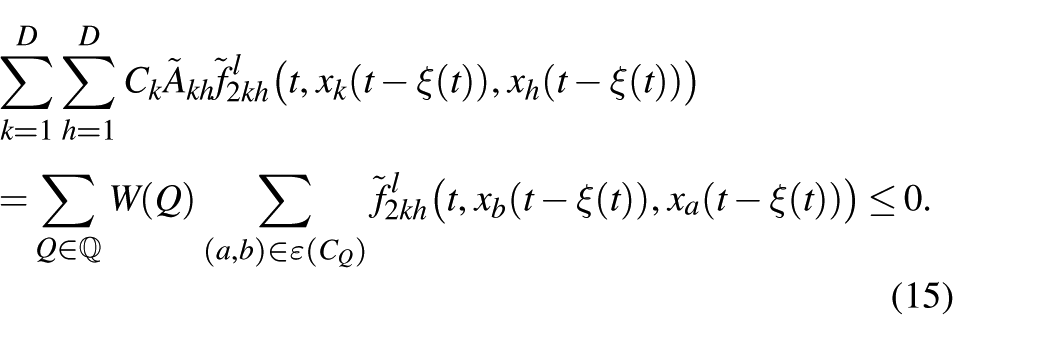
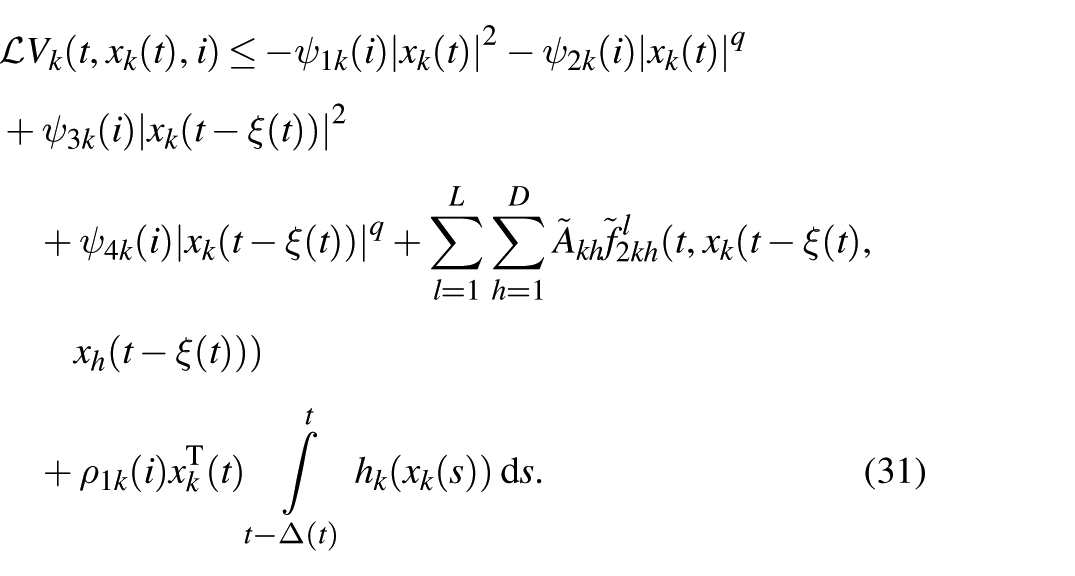
Combining Lemma 1 with Condition 3 and the fact that , we obtain that
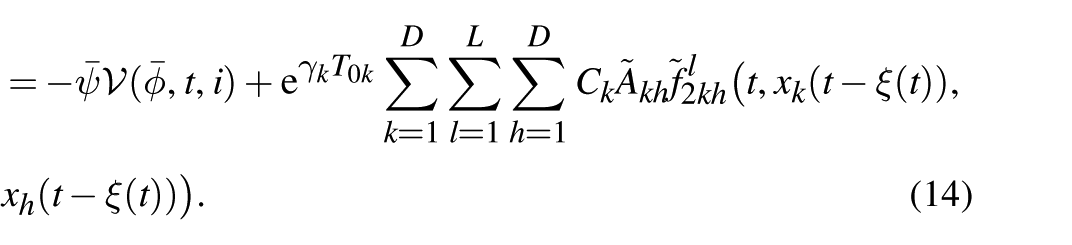
Substituting (15) into (14), we conclude that
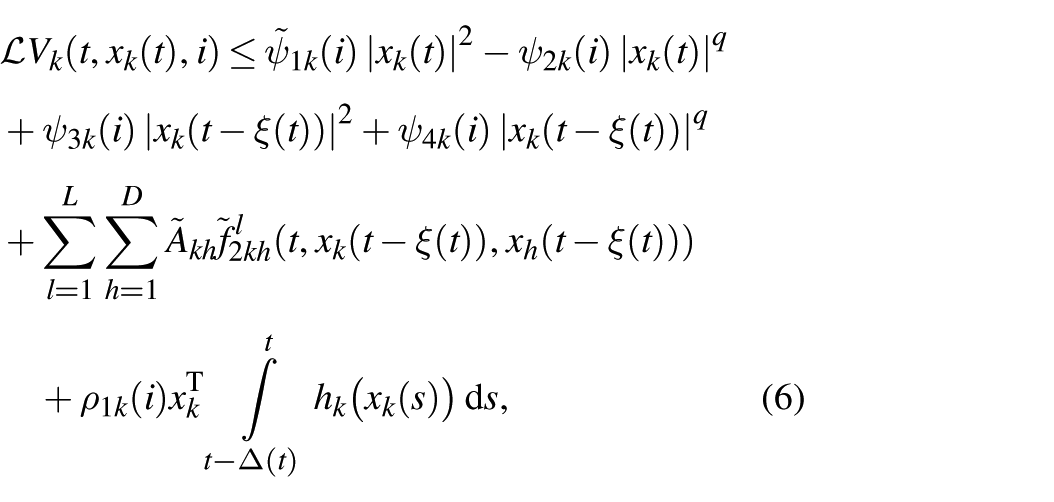
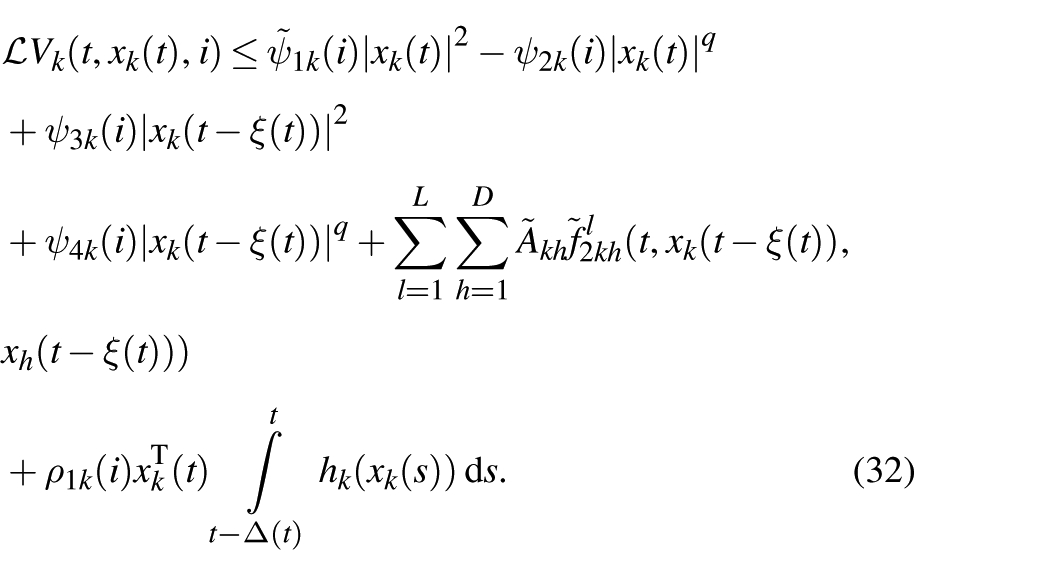
We have proven that the control working interval ) satisfies the operator negative definiteness condition, and now we analyze the control resting interval ).
When , it can be obtained that
Correspondingly, we can also get that
Substituting the above scaling results into the previous formula, it can be derived that
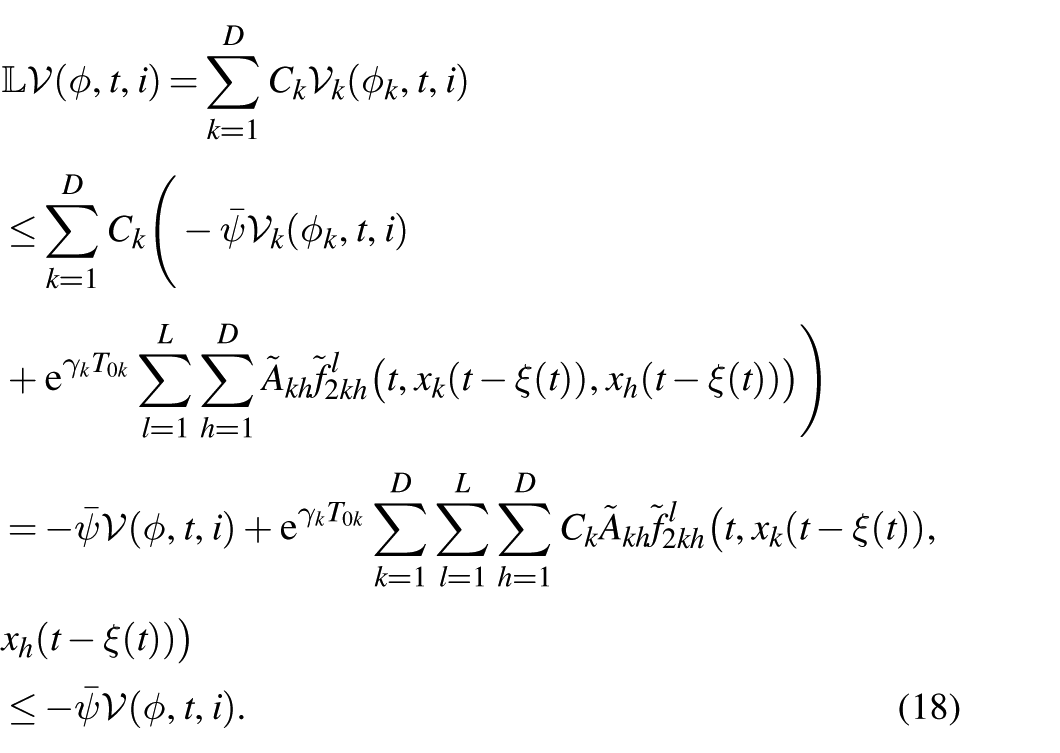
According to the Dupire functional Itô formula:
Taking expectations, we have:
Therefore:
Multiplying by :
Notice that the left-hand side is exactly the derivative of a product:
Hence:
That is, for any :
Dividing both sides by :
Due to the continuity of , which establishes the mean exponential stability of the system (0).
Remark 2. Theorem 1 establishes a universal stability criterion for stochastic hybrid networked dynamical systems with regime-switching and multi-links characteristics under intermittent control. The auxiliary timer serves as a crucial element that effectively resolves the contradiction between the discrete nature of intermittent control and the continuity requirement of Lyapunov functional analysis. Compared with existing criteria that are only applicable to periodic control, the condition proposed in this theorem demonstrates enhanced adaptability in aperiodic control scenarios by relaxing strict periodicity constraints on control intervals.
To improve the operability of the theory, we present the following theorem.
Theorem 2.If Assumptions 1, 2, 3 and the following conditions hold, then system (0) is mean exponentially stable.
For any, there is
and
where
The graph structure, where, is strongly connected.
Proof. Let . When , we have
due to
Finally, we can derive that
Subsequently, we can obtain
Similarly, when , we have
Then Condition 2 in Theorem 1 holds. From Conditions 1 and 2 in Theorem 2, we can derive that Conditions 1, 3, and 4 in Theorem 1 hold, so the system is mean exponentially stable.
Remark 3. In existing studies on the stability of our target system (highly nonlinear multi-links systems), common control strategies include continuous delay feedback and periodic intermittent adjustment. These methods either require persistent control input or are constrained by fixed control cycles. Theorem 2 in this paper, however, is based on the designed aperiodic intermittent control mechanism. This mechanism adjusts the control interval adaptively according to the real-time state of the system, which not only avoids the waste of control resources caused by fixed cycles but also ensures that effective control is applied in time when the system tends to be unstable. This is a key improvement of our research compared with traditional control schemes for the same type of system.
An application of FitzHugh–Nagumo system
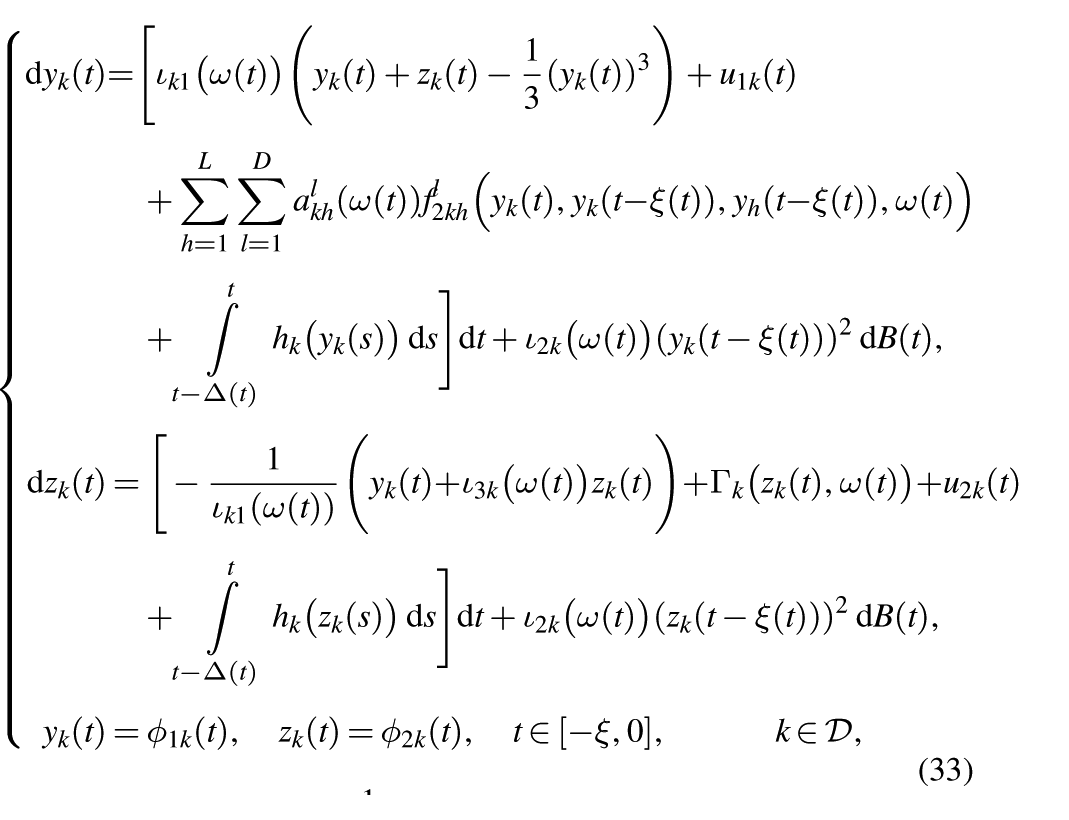
We apply the above results to the FitzHugh–Nagumo system with multi-links and distributed delay. In view of this situation, consider the following model:
where , are all positive numbers, and is a nonlinear function. Let and with the intermittent control law:
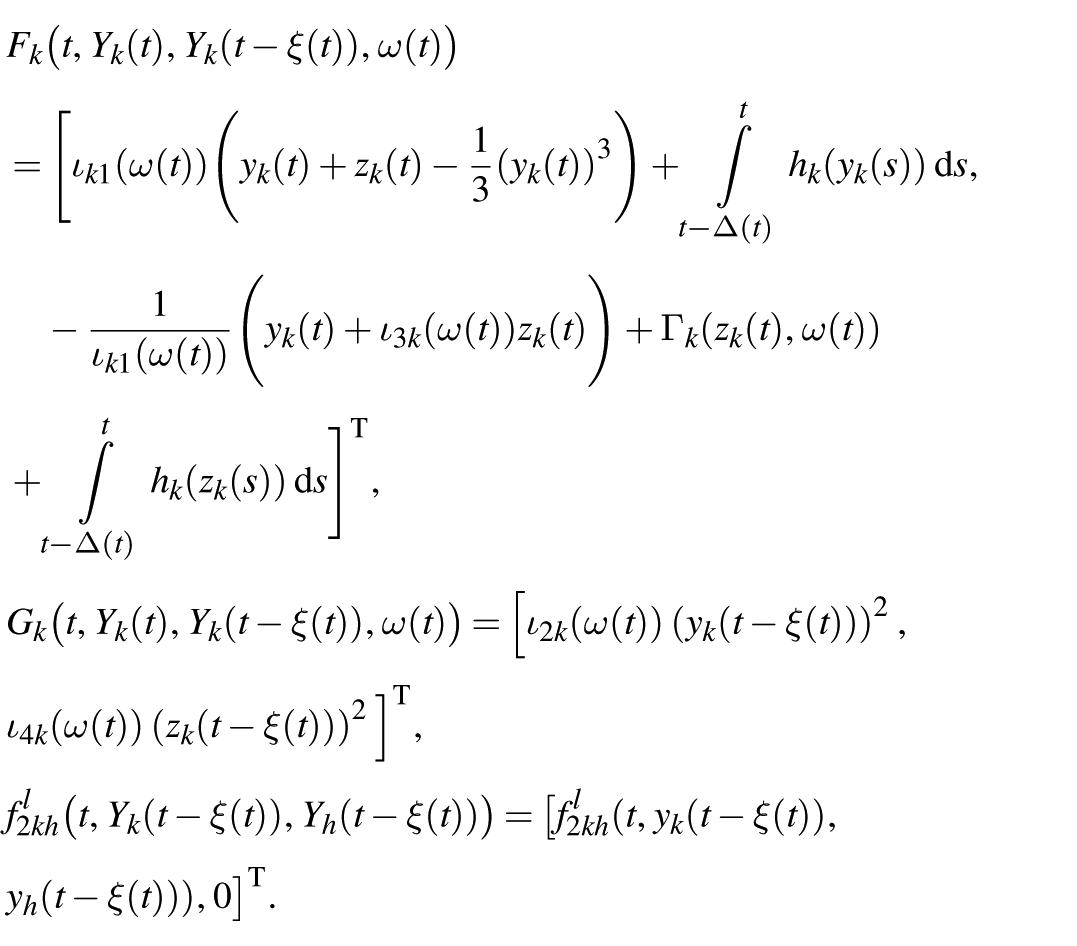
The system functions are defined as
Theorem 3.Suppose Assumption 1 holds and the following conditions are satisfied. Let the graphbe strongly connected, whereand. Then the system is mean exponentially stable.
There exist positive constants,, such that
There exist positive numberssuch that
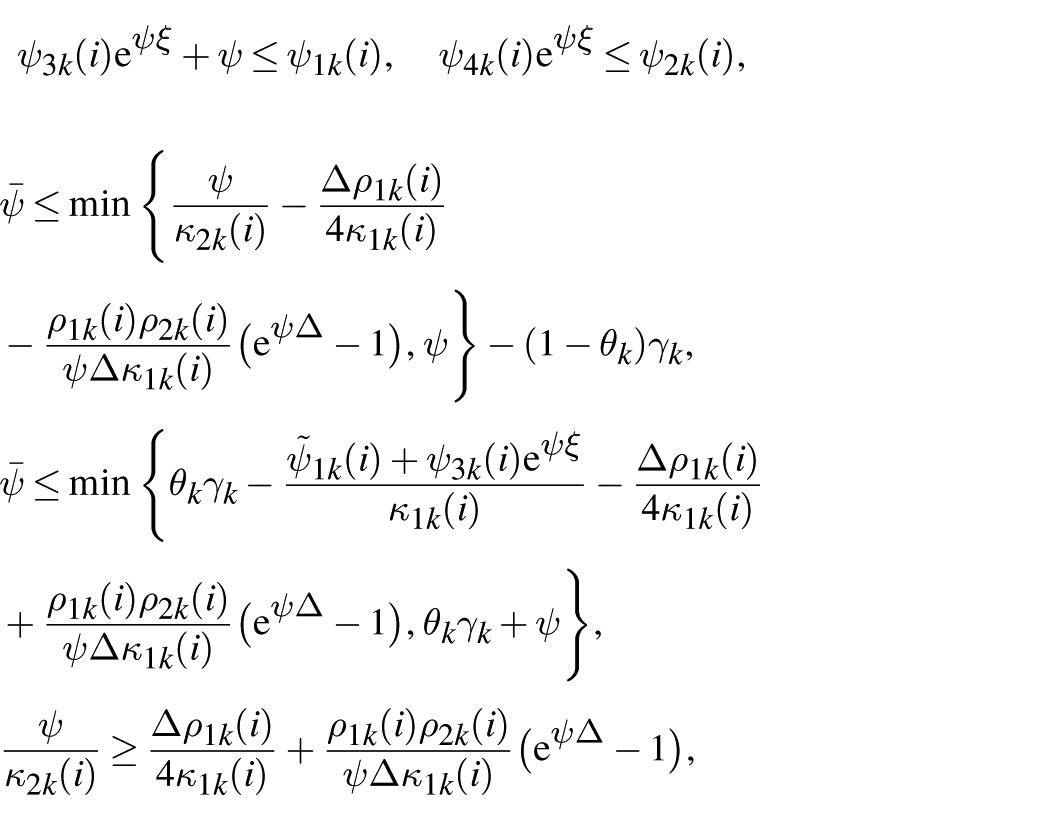
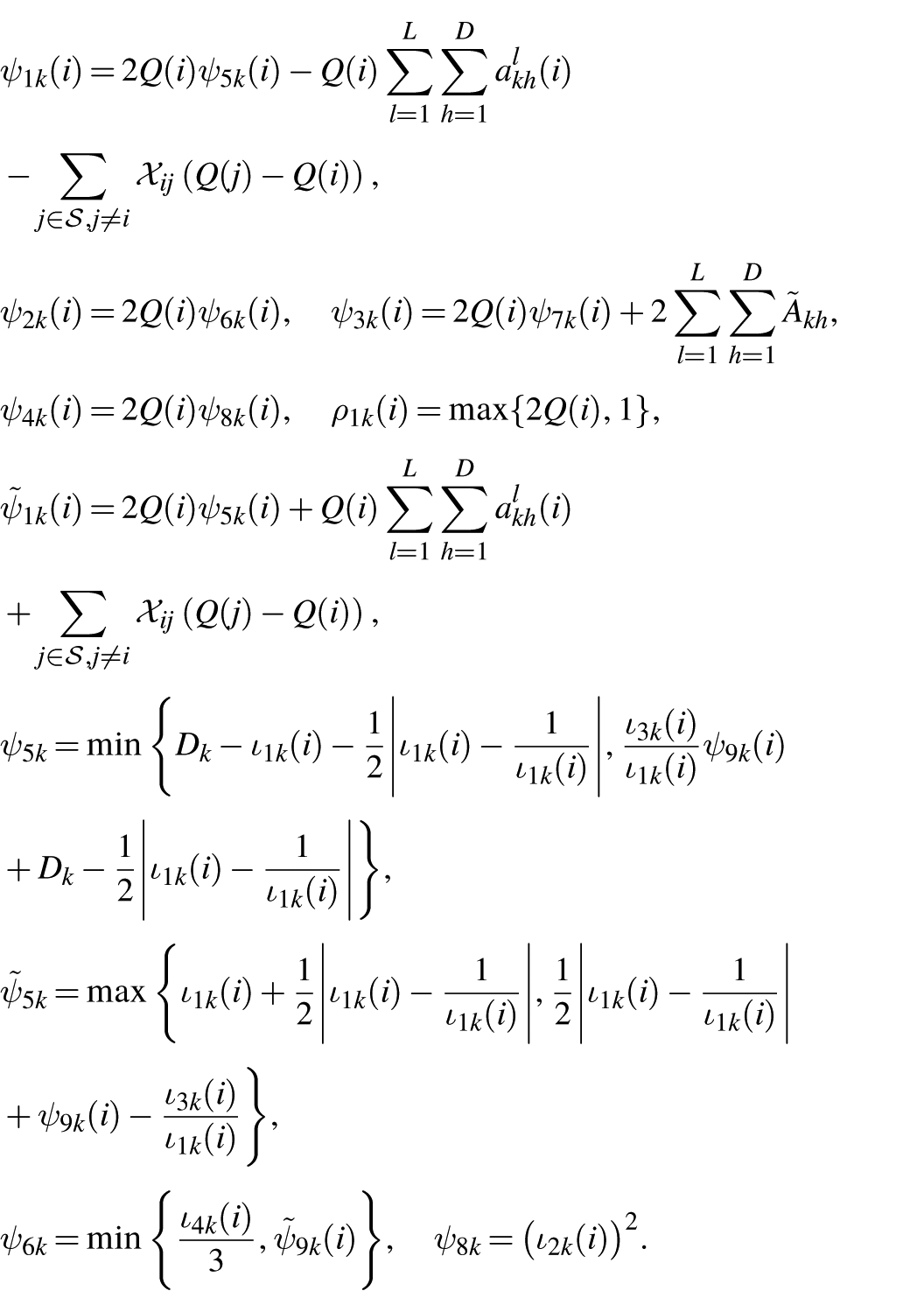
For any, there is
and
where
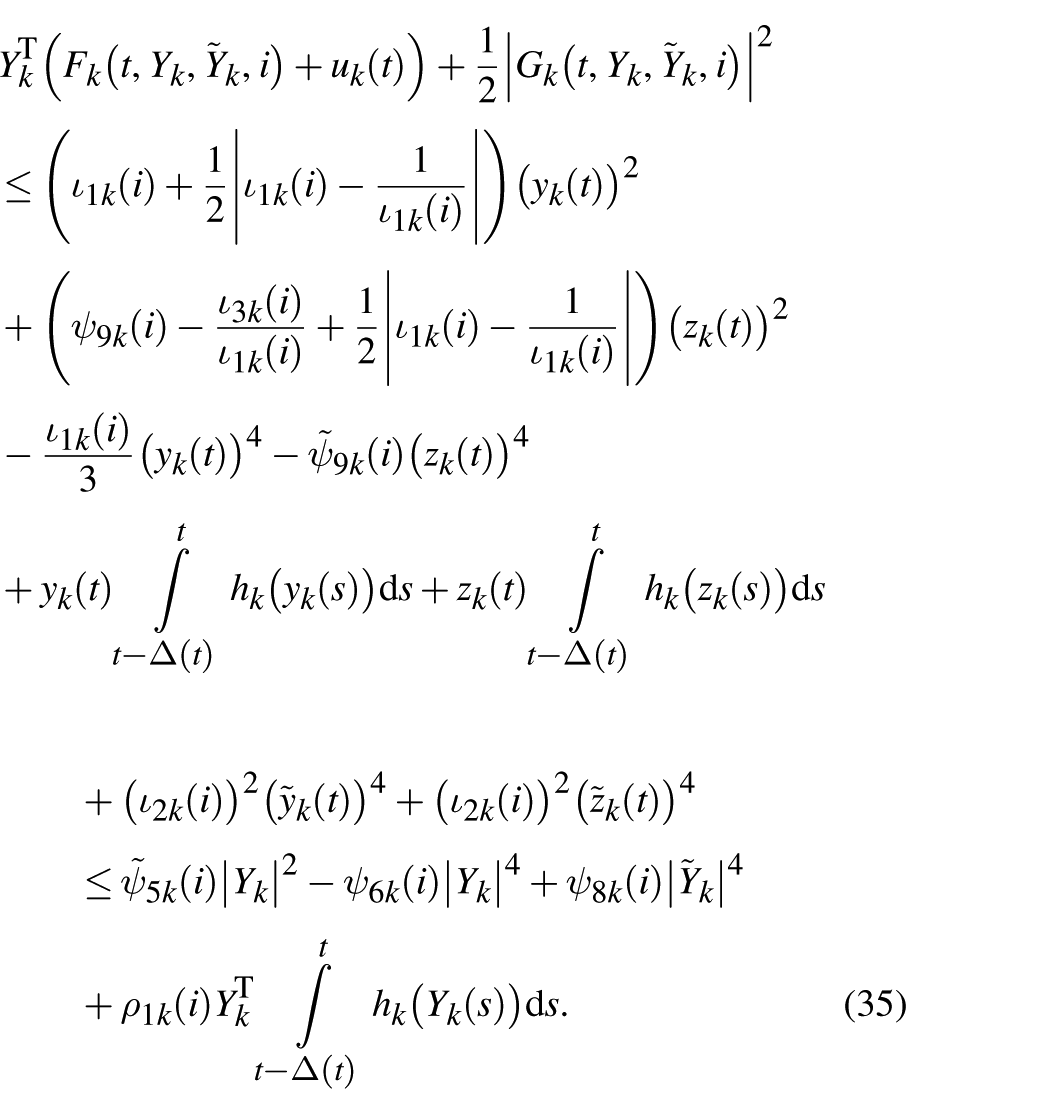
Proof. From Condition 1, we can derive that Assumption 2 holds. When , we have
Similarly, when , we have
Thus, Assumption 3 holds. From the given conditions and Condition 3, we deduce that Conditions 1 and 2 of Theorem 2 are satisfied. Therefore, the system is mean exponentially stable.
Remark 4. Multi-links systems have been widely studied for their extensive applications in network com-munication (Fan, 2024) and industrial control (Kivila et al., 2021). Previous studies mainly focused on single-link or linear multi-links systems. In fact, highly nonlinear multi-links coupled systems can more realistically describe practical engineering scenarios. Moreover, this system is expected to achieve stability under aperiodic intermittent control, which will be verified by subsequent numerical simulations.
Numerical example
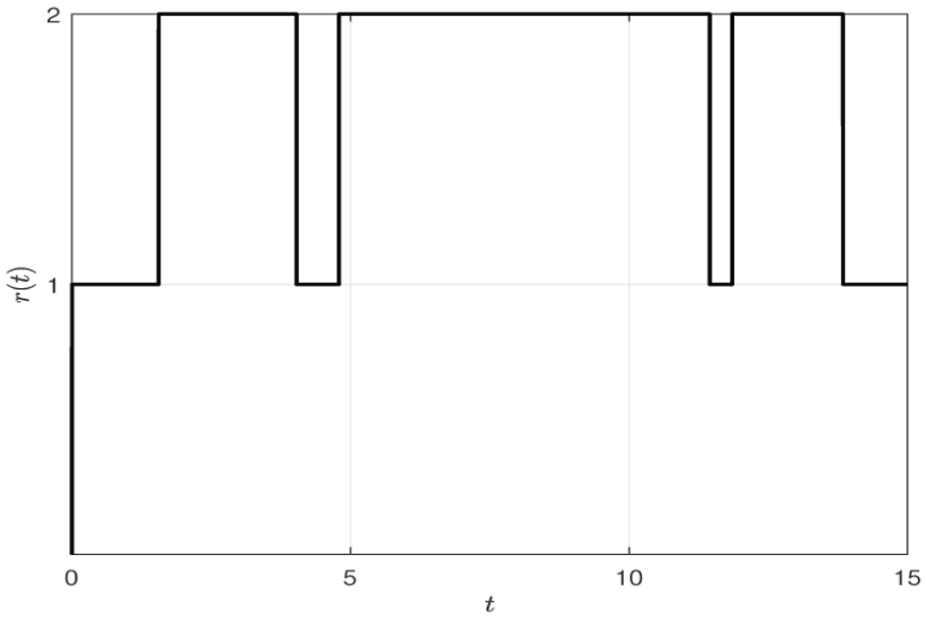
In this section, numerical simulations are conducted to validate the theoretical results. We consider a stochastic highly nonlinear delayed system under regime-switching diffusion and intermittent control. The system consists of nodes and operates under , switching modes, with dynamics following the structure outlined in system (0).
To characterize the regime-switching behavior, we define the generator of the diffusion process using state-dependent transition rates:
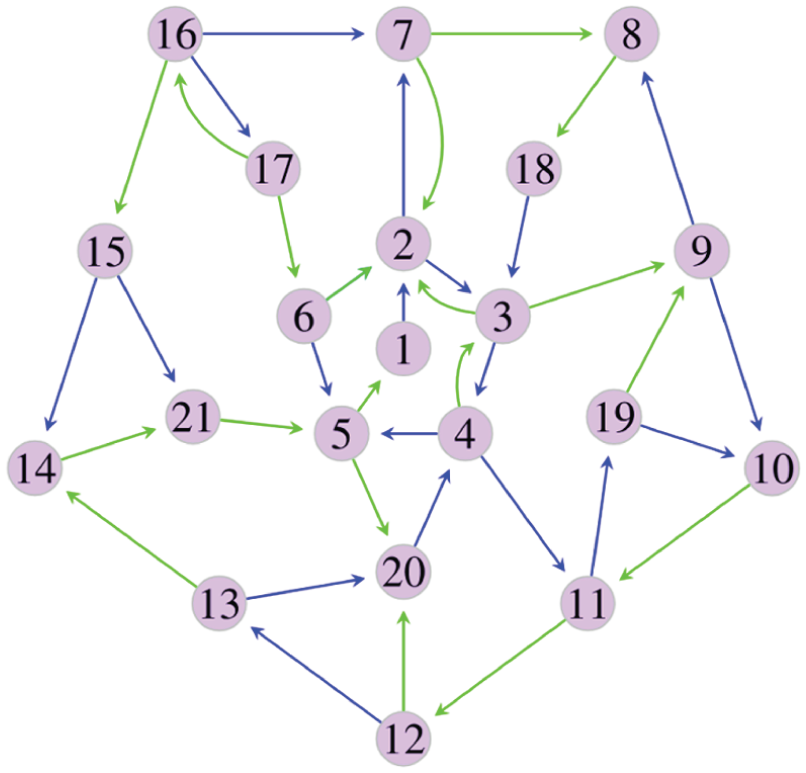
where denotes the switching rate from regime i to j. The network topology is modeled through weighted adjacency matrices for Regime 1 and for Regime 2, with non-zero entries representing coupling strengths under regime s, and the values of are given as follows. The nonzero elements of are , , , , , , , , , , , , , , , , , , . The nonzero elements of are , , , , , , , , , , , , , , , , , , with unlisted elements setting as zero. In addition, the weight matrix is chosen such that . The corresponding sketch map of the digraph is shown in Figure 1.
Sketch map of digraph.
Temporal parameters include s simulation duration, maximum discrete delay, and distributed delay bound. Intermittent control parameters consist of gain , duty ratio , auxiliary timer rate . The coupling functions are implemented as: with , which satisfies Assumption 2; the distributed delay function is selected as , which satisfies with ; and is set as with .
The system parameters are configured as follows: , , , , , , , . The weight matrix configuration satisfies , with bounding constants and , ensuring the structural conditions of Theorem 1. Setting the decay rate , through simple calculations, we can obtain that , , , , . Using the above, we rigorously verify all stability conditions:
The delay stability criterion and hold;
The nonlinear constraints and are satisfied;
The inequalities in Condition 3, and are met;
The inequalities in Condition 3, , and are valid;
The weight matrix boundedness and are preserved.
Numerical simulations confirm these theoretical predictions, demonstrating exponential convergence of all nodes. The coupling function implementation and delay term treatment collectively validate the sufficient conditions established in Theorem 3 under the specified parameters maximum delay and distributed delay.
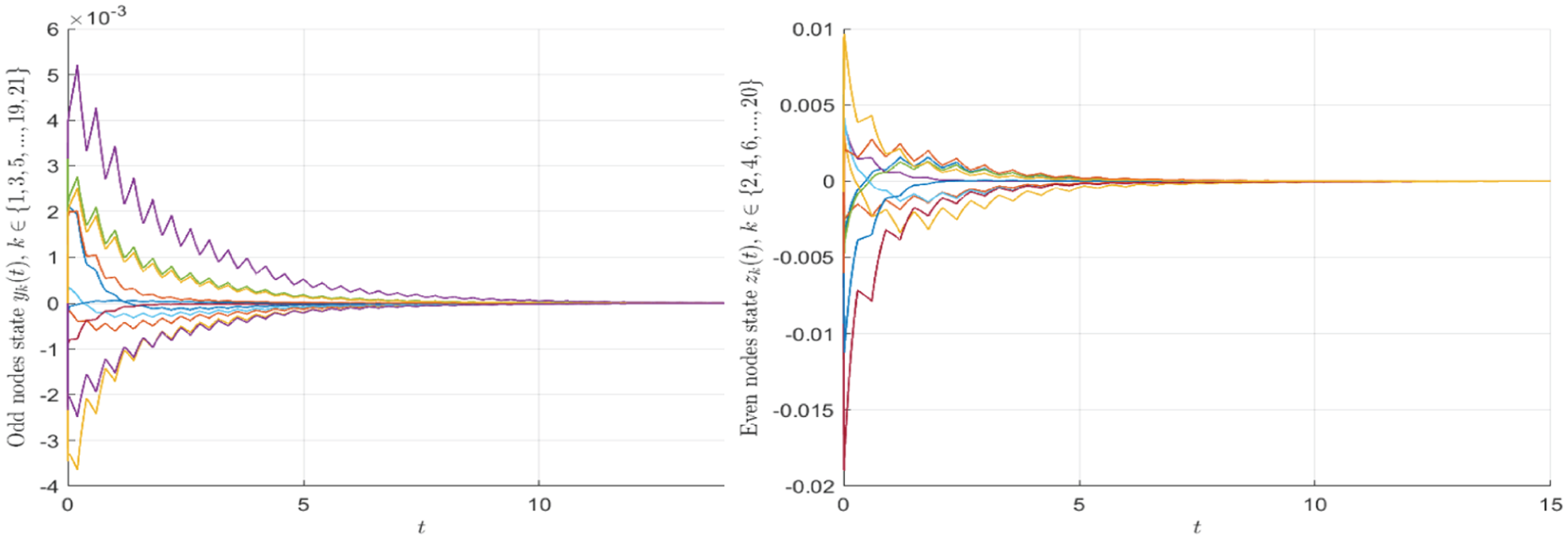
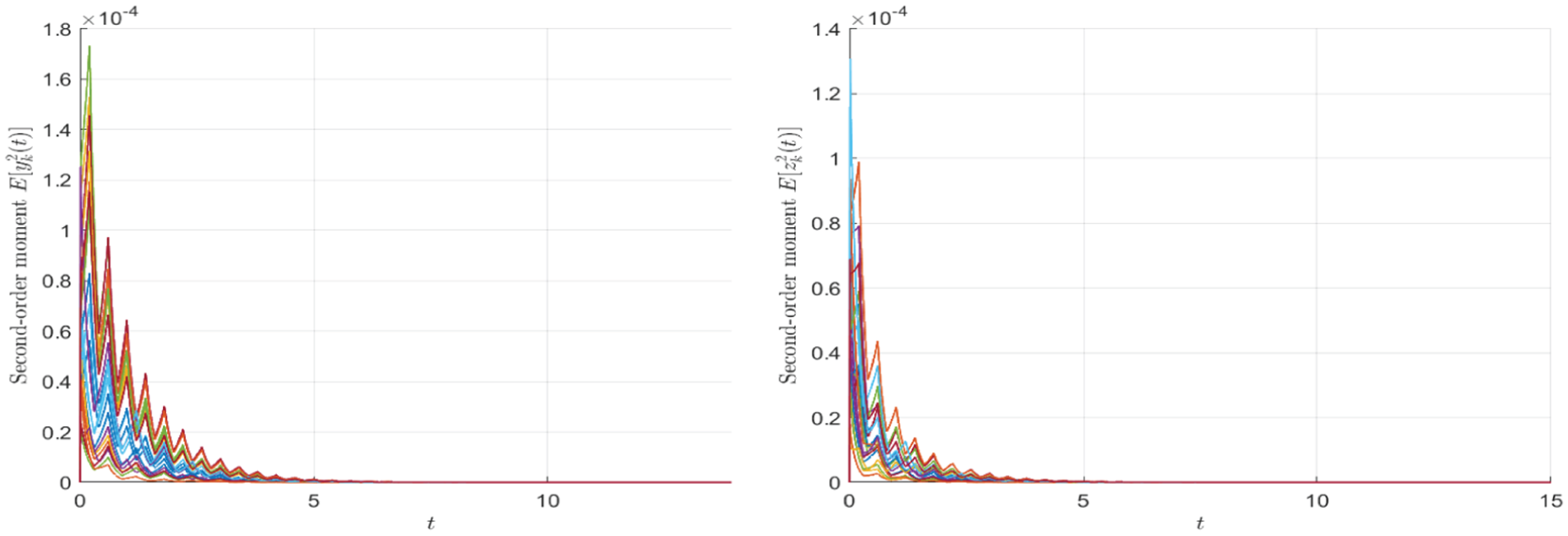
Under properly selected initial conditions, Figure 2 demonstrates the phase diagram and state transition trajectory of node 10, revealing the system’s dynamic characteristics from both phase space and time domain perspectives. Figure 3 presents the state trajectories of odd-numbered and even-numbered nodes, respectively. Figure 4 quantitatively depicts the synchronization error evolution path of the entire system, showing favorable convergence trends. All node states are observed to achieve effective convergence. These results collectively validate the correctness of the theoretical analysis.
State transition trajectory.
State trajectory of odd-numbered nodes(left) and state trajectory of even-numbered nodes(right).
The synchronization error path of the system.
Remark 5. These results substantiate the effectiveness and applicability of the designed control framework for stabilizing SHNDS with time delay and stochastic regime-switching. It should be noted that the stability criteria in the theorems are sufficient conditions for the system to be stable. That is, if the system meets these conditions, it must be stable, but there may be cases where the system is stable but does not fully meet these conditions. In the numerical simulation, we will focus on verifying the situation where the system meets the criteria to confirm the correctness of the theoretical results.
Conclusion
In this paper, the mean exponential stability problem for stochastic highly nonlinear time-delay system with regime-switching diffusion, multi-links coupling and distributed delay under intermittent control is studied. By establishing the new kinds of Lyapunov functionals and auxiliary timers, the complete stability analysis framework is established. Different from previous literature works, the proposed complete stability analysis framework combines graph-theoretic approach and Dupire’s functional analysis method. The rigorous mathematical proofs show that the system keeps mean exponentially stable dynamic characteristics in the two periods of working and resting. Theoretical analysis shows that the strong connectivity of network topology, constraint conditions on Lyapunov function parameters and some restrictions on time-delay coupling functions are the main reasons to achieve the system stability.
In contrast to the control strategy, the proposed intermittent control method overcomes the restriction of fixed-period control and the control timing can be adjusted in real-time according to system states as well as improves the control efficiency greatly. To verify the theoretical results, we consider the application to stochastic delayed FitzHugh–Nagumo system with regime-switching. Numerical simulation results show that all node states can reach the equilibrium points rapidly. The method used to prove the auxiliary timers’ existence is innovatively introduced. Particularly, the existence of auxiliary timers ingeniously solve the contradiction between intermittent control’s discontinuity and the requirements of stability analysis’s continuity. Compared with the traditional method, this method provides new ideas to study the stability of complex systems.
At the theoretical level, the stability criteria of nonlinear system with time-delay characteristic and stochastic switching characteristic are established. At the application level, the effective intermittent control method is proposed. In the future, it is possible to further extend this application to more complex network system or combine with an adaptive control method. Meanwhile, the practical engineering application of this method is worthy of further discussion. This work provides new theoretical methods and tools to study the stability of complex nonlinear system, and has important academic value and engineering application value.
Footnotes
ORCID iD
Xinyao Zheng
Funding
The authors received no financial support for the research, authorship, and/or publication of this article
Declaration of conflicting interests
The authors declared no potential conflicts of interest with respect to the research, authorship, and/or publication of this article.
Data availability statement
The data that support the findings of this study are available from the corresponding author upon reasonable request.
References
1.
BlausteinAFilbetF (2023) Concentration phenomena in FitzHugh-Nagumo equations: A mesoscopic approach. SIAM Journal on Mathematical Analysis55(1): 367–404.
2.
CaoWZhuQ (2021) Razumikhin-type theorem for pth exponential stability of impulsive stochastic functional differential equations based on vector Lyapunov function. Nonlinear Analysis: Hybrid Systems39: 100983.
3.
ChenRSunMXuK, et al. (2022) Clustering-based cross-sectional regime identification for financial market forecasting. In:International conference on database and expert systems applications, vol. 13427, Vienna, Austria, 22–24 August, pp. 1–15. New York: Association for Computing Machinery.
4.
CostaEF (2025) Input-output stochastic stability for Markov jump linear systems. IEEE Transactions on Automatic Control70(1): 635–641.
5.
DuanHWangGSongY, et al. (2025) A novel time-delay multivariable grey model and its application in predicting oil production. Engineering Applications of Artificial Intelligence139: 109505.
FanX (2024) Distributed delayed impulsive control for μ-synchronization of multi-link structure networks with bounded uncertainties and time-varying delays of unmeasured bounds. Chaos, Solitons and Fractals186: 115226.
8.
GaoZLiuGHeY, et al. (2020) Novel stability criteria for aperiodic sampled-data systems via a time-squared-dependent augmented functional. International Journal of Systems Science52(8): 1539–1550.
9.
GuoZXieHWangJ (2022) Finite-time and fixed-time synchronization of coupled switched neural networks subject to stochastic disturbances. IEEE Transactions on Systems, Man, and Cybernetics: Systems52(10): 6511–6523.
10.
HanXChengPLiuX (2025) Stabilization of impulsive regime-switching diffusion systems by aperiodically intermittent control. International Journal of Robust and Nonlinear Control35(6): 3211–3225.
11.
HanZWangYJinZ (2024) Final and peak epidemic sizes of immuno-epidemiological SIR models. Discrete and Continuous Dynamical Systems-Series B29(11): 4432–4462.
12.
HuaWWangYLiuC (2024) New method for global exponential synchronization of multi-link memristive neural networks with three kinds of time-varying delays. Applied Mathematics and Computation471: 128593.
13.
KivilaABookWSinghoseW (2021) Modeling spatial multi-link flexible manipulator arms based on system modes. International Journal of Intelligent Robotics and Applications5(3): 300–312.
14.
LiMShuaiZ (2010) Global-stability problem for coupled systems of differential equations on networks. Journal of Differential Equations248(1): 1–20.
15.
LiYLyuHFengJ, et al. (2025) On the input-output decoupling of Boolean control networks by state feedback. Asian Journal of Control27(4): 1817–1830.
16.
LiYZhangYFengJ (2023) Synchronization of delayed neutral-type multi-weights networks with jump diffusion via intermittent control. International Journal of Control97(4): 728–743.
17.
LiuGYangYZhaoX, et al. (2024) Adaptive fuzzy practical bipartite synchronization for multiagent systems with intermittent feedback under multiple unknown control directions. IEEE Transactions on Fuzzy Systems32(5): 3211–3225.
18.
LiuYLiuJLiW (2020) Stabilization of highly nonlinear stochastic coupled systems via periodically intermittent control. IEEE Transactions on Automatic Control66(10): 4799–4806.
19.
LüLLiCLiG, et al. (2018) Adaptive synchronization of uncertain time-delayed and multi-link network with arbitrary topology. Physica A: Statistical Mechanics and Its Applications503: 355–365.
20.
MaTCuiBWangY, et al. (2019) Stochastic synchronization of delayed multiagent networks with intermittent communications: An impulsive framework. International Journal of Robust and Nonlinear Control29(11): 4432–4462.
21.
Phan-VanHGuK (2024) Structured invariant subspace and decomposition of systems with time delays and uncertainties. International Journal of Robust and Nonlinear Control34(5): 2737–2742.
22.
RuanZHuJMeiJ (2024) Robust optimal triple event-triggered intermittent control for uncertain input-constrained nonlinear systems. Communications in Nonlinear Science and Numerical Simulation129: 107718.
23.
TanZWuY (2025) On regime switching models. Mathematics13(5): 1128.
24.
TangZParkJHLeeTH, et al. (2015) Mean square exponential synchronization for impulsive coupled neural networks with time-varying delays and stochastic disturbances. Complexity 2015: cplx.21647.
25.
WangHJiangDHayatT, et al. (2020) Stationary distribution of stochastic NP ecological model under regime switching. Physica A: Statistical Mechanics and its Applications549: 124064.
26.
WangPSuHWangR (2022) Asynchronously intermittent decentralized control of large-scale systems. IEEE Control Systems Letters6: 2737–2742.
27.
XuLDingF (2024) Decomposition and composition modeling algorithms for control systems with colored noises. International Journal of Adaptive Control and Signal Processing38(1): 255–278.
28.
ZhangCChenT (2018) Exponential stability of stochastic complex networks with multi-weights based on graph theory. Physica A: Statistical Mechanics and its Applications496: 602–611.
29.
ZhangLChenY (2024) Distributed finite-time ADP-based optimal secure control for complex interconnected systems under topology attacks. IEEE Transactions on Systems, Man, and Cybernetics: Systems54(5): 2872–2883.
30.
ZhangLChenY (2025) Finite-time adaptive dynamic programming for affine-form nonlinear systems. IEEE Transactions on Neural Networks and Learning Systems36(2): 3573–3586.
31.
ZhangNHuQParkJH, et al. (2025a) Exponential stability of stochastic highly nonlinear delayed systems with regime-switching diffusion under asynchronous intermittent control. IEEE Transactions on Automatic Control70(5): 3583609.
32.
ZhangNZhangZParkJH, et al. (2025b) Asynchronous switching fuzzy control for stochastic highly nonlinear systems with Markov jump and periodic time-varying delay: By Dupire’s functional Itô formula. IEEE Transactions on Automation Science and Engineering22: 13741–13751.
33.
ZhangYXueWZhouY, et al. (2025c) CORE: Multi-link graph attention network with inter-regional collaboration for continuous sign language recognition. Pattern Recognition167: 111716.
34.
ZhaoYWangLXieX, et al. (2024) Asynchronous switching control for fuzzy Markov jump systems with periodically varying delay and its application to electronic circuits. IEEE Transactions on Automation Science and Engineering22: 1100–1111.
35.
ZhaoYZhuQ (2023) Stabilization of stochastic highly nonlinear delay systems with neutral term. IEEE Transactions on Automatic Control68(4): 2544–2551.
36.
ZhouMXiangH (2019) Feedback controls for desired dynamical behaviours of a new stochastic ecosystem with regime switching. International Journal of Control94(8): 2200–2214.
37.
ZhuPZhiQGuoY, et al. (2019) Analysis of epidemic spreading process in adaptive networks. IEEE Transactions on Circuits and Systems II: Express Briefs66(7): 1252–1256.