






Abstract
This paper proposes a solution to the predefined-time formation tracking problem of autonomous aerial vehicles (AAVs). To enhance the systems’ coordination performance and convergence rate, a predefined-time hierarchical control (PTHC) framework is developed. Furthermore, a prescribed-performance control mechanism is introduced to impose prior constraints on both transient and steady-state behaviors during the design stage, thereby ensuring that the tracking error remains within predefined bounds. For the state estimation process, a predefined-time distributed estimator based on nonsingular sliding mode control is designed, effectively avoiding the singularity issues commonly encountered in conventional sliding mode approaches. In the control implementation, an adaptive strategy integrating neural networks with reinforcement learning is proposed to improve the systems’ resistance to external disturbances, actuator faults, and modeling uncertainties. This combination significantly enhances the robustness and reliability of the controller, ensuring stable operation under complex and dynamic environments. The designed control strategy ensures the realization of the desired formation tracking goal within the predefined time. The paper further establishes a set of sufficient criteria to ensure predefined-time stability. Finally, extensive simulation studies are conducted to verify the proposed control methods’ efficiency, robustness, and practical applicability.
Keywords
Introduction
A multi-agent system (MAS) comprises numerous intelligent agents that exchange information and collaborate to complete complex tasks through distributed sensing, cooperative decision-making, and coordinated control (Gao et al., 2024a; Gu et al., 2025; Han et al., 2017b; Liu et al., 2025). As one of the most important types of intelligent agents, an autonomous aerial vehicle (AAV) is capable of flying autonomously or according to remote control commands (Han et al., 2016, 2017a). However, a single AAV has certain limitations in terms of payload capacity, mission range, and fault tolerance, making it difficult to independently complete complex engineering tasks. To overcome these limitations, cooperative operation among multiple AAVs has emerged, leveraging inter-agent communication and task sharing to achieve more-efficient group coordination. Multi-AAV systems can flexibly adapt to changing environments or mission requirements, and each AAV can dynamically adjust its role, trajectory, or behavior according to real-time conditions. This flexibility significantly enhances the applicability of AAV systems in a wide range of scenarios. In recent years, cooperative formation control technology for multiple AAVs, as a key enabling technique for multi-AAV cooperative missions, has become a prominent research topic and has attracted increasing attention (Jin et al., 2024; Zhang and Duan, 2024). Nevertheless, existing methods still suffer from limited adaptability and robustness when operating in complex environments, which provides important motivation for further research.
Cooperative time-varying formation tracking (TVFT) control for AAVs has recently become a key research focus (Wei et al., 2023; Wu et al., 2023b; Yan et al., 2023), with the primary goal of enhancing overall system performance. Among the existing approaches, Yan et al. (2023) propose an event-triggered formation control method for discrete-time MAS, aiming to achieve efficient and stable formation flying of multiple UAVs under time-delay conditions. Wei et al. (2023) propose a robust UAV formation control strategy that integrates a cost-based switching law, dynamic event-triggered mechanism, and disturbance observers to maintain stable consensus under failures and communication constraints. However, in practical and complex environments, such methods may still face limitations in adaptability. Consequently, time-varying formation control strategies with higher robustness and flexibility have attracted increasing attention.
Achieving a rapid convergence rate is crucial in real-time formation control systems. Conventional control methods that rely on asymptotic stability can merely ensure exponential convergence, which fails to satisfy the stringent requirements of AAVs for fast response and high-precision performance. To address this issue, the finite-time stability theory has been widely adopted (Ding et al., 2024; Wu et al., 2023a), enabling system convergence within a finite time. However, the main drawback of such methods lies in their dependence on initial conditions, that is, when the initial states are large, the convergence time may increase significantly. To overcome this limitation, the fixed-time control method (Meng et al., 2023; Miao et al., 2024) was developed, ensuring that the system converges within a constant time bound that does not rely on the initial conditions. Nevertheless, this time bound is implicitly determined by the system parameters and cannot be specified in advance during the design stage. However, the predefined-time control approach extends the fixed-time method by allowing the designer to specify the convergence time explicitly during the design stage. This feature enhances system predictability, task-scheduling efficiency, and adaptability to diverse mission requirements. At present, several predefined-time consensus and formation control methods for AAVs have been proposed (Li et al., 2025; Yang et al., 2024). However, when introducing predefined performance constraints and reinforcement learning (RL) mechanisms, it remains challenging to simultaneously ensure rapid convergence, stability, and robustness. Therefore, investigating RL-based predefined-performance formation control methods is of great significance for enhancing the intelligence and real-time control capability of AAVs.
In addition, the concept of prescribed performance control (PPC) has been increasingly adopted in recent years to explicitly constrain the transient and steady-state behaviors of system-tracking errors within predefined time-varying boundaries (Yang et al., 2024; Zhang et al., 2024; Zhou et al., 2024). By introducing performance functions, PPC provides a systematic way to shape error evolution, ensuring that tracking errors remain within user-specified bounds at all times. When integrated with predefined-time control, this combination enables not only bounded tracking error evolution but also guaranteed convergence within a user-specified time horizon. However, the integration of PPC into predefined-time formation control for AAVs has not been fully explored.
Although such methods improve the system’s robustness to some extent, existing studies still fail to fully address the key control challenges in AAVs. For MASs, various control schemes based on predefined-time sliding mode surfaces have been proposed to ensure that system states converge within a predefined time (Guan et al., 2025; Jia et al., 2023; Song et al., 2024). However, these approaches generally suffer from singularity issues. Specifically, when the system state approaches the origin of the sliding surface, the control input may become unbounded, thereby hindering practical implementation and even leading to system instability. This problem becomes more severe in systems characterized by complex nonlinear dynamics and strong coupling. In particular, for AAVs, nonlinear behaviors, external disturbances, and communication uncertainties make the direct application of existing control methods impractical. To overcome these challenges, this paper introduces a predefined-time nonsingular sliding mode control mechanism into the observer design. This mechanism not only enables fast estimation of unknown states but also effectively avoids divergence in control inputs caused by singularities. Consequently, both estimation accuracy and system robustness are significantly improved, providing a more practical control strategy for AAVs operating in complex environments.
Recently, neural networks (NNs) have shown strong nonlinear approximation capabilities and have been widely applied in control design for systems with unknown dynamics (Gao et al., 2024b; Greene et al., 2023; Li et al., 2023). Compared to traditional methods, NNs provide better adaptability and generalization capabilities, making them suitable for complex systems subject to environmental disturbances. Motivated by these developments, RL has attracted increasing attention as a label-free control methodology that learns decision-making policies from interactions with the environment. The actor-critic framework, consisting of an actor network responsible for producing control actions and a critic network for assessing and improving the policy, has been shown to effectively enhance the robustness and control accuracy of nonlinear systems. Studies have successfully applied RL to complex dynamic systems (Gong and Yang, 2024; Ma et al., 2023; Wang et al., 2023). However, most RL methods are designed based on finite-time or asymptotic stability frameworks, with convergence times depending on initial conditions, and they lack integration with predefined-time control, making them less suitable for tasks with strict time constraints. Therefore, combining RL with predefined-time control to achieve user-defined convergence times remains an open challenge.
Motivated by the above analysis, this paper investigates the predefined-time TVFT problem for multiple AAVs. Serving as a substantial theoretical extension of our preliminary investigations into networked marine vehicles (Zhao et al., 2025), this manuscript addresses a significantly more demanding control scenario. Unlike the study by Zhao et al. (2025), which mainly focused on the basic convergence of the system without strictly imposing prior constraints on transient tracking behaviors and relied on estimators that may suffer from singularity issues, this paper addresses the more challenging issue of achieving strict transient and steady-state performance guarantees. To this end, considering the strong nonlinearity and coupling characteristics of multi-AAV systems, a novel predefined-time hierarchical control (PTHC) framework is employed to decompose the complex TVFT problem into two tractable subproblems. Specifically, the proposed strategy integrates prescribed-performance constraints, an NN-based RL mechanism, and a nonsingular sliding mode estimator. The main contributions of this paper are summarized as follows:
To address the control challenges of multiple AAVs, this paper proposes a hierarchical predefined-time TVFT control algorithm. The proposed control strategy is designed to effectively handle model uncertainties, time-varying disturbances, and malicious attacks, enabling the AAV swarm to be flexibly configured according to mission requirements in aerial surveillance and cooperative combat tasks, thereby achieving fast convergence and stable coordination performance.
Unlike the method in Zhao et al. (2025), this paper introduces prescribed performance constraints, which effectively ensure both the transient and steady-state performance of the system and enable the controller to achieve adaptive regulation within the system. On this basis, an NN is further integrated with the actor-critic RL framework to construct a computationally efficient control scheme with online learning capability. Benefiting from the introduction of prescribed performance constraints, the proposed scheme achieves fast response, real-time control, and high-precision tracking in complex environments, demonstrating significant engineering application value.
Unlike the methods in Gong and Yang (2024) and Zhao and Yang (2024), this paper innovatively integrates RL with observer-based predefined-time sliding mode control. This approach enables the explicit setting of the convergence time during the design phase and ensures that the system converges within the specified time through controller parameter tuning, while simultaneously enhancing steady-state performance.
Notations
Let
Preliminaries
Graph theory
The communication topology of the N-vehicle system is modeled by a digraph
For generality, the set of vehicles is partitioned into two disjoint subgroups, denoted by
A diagonal matrix

A can be expressed as:

where

for some positive constants a
and b. In this context, the time-varying parameter

alongside the auxiliary function

Model formulation
In the coordinated control of multiple AAVs, a commonly adopted approach is the inner–outer loop hierarchical structure. Specifically, the outer loop is responsible for generating the desired trajectory and attitude, while the inner loop achieves attitude stabilization and tracking through appropriate attitude controllers. For better understanding, each vehicle is assigned an earth-fixed frame
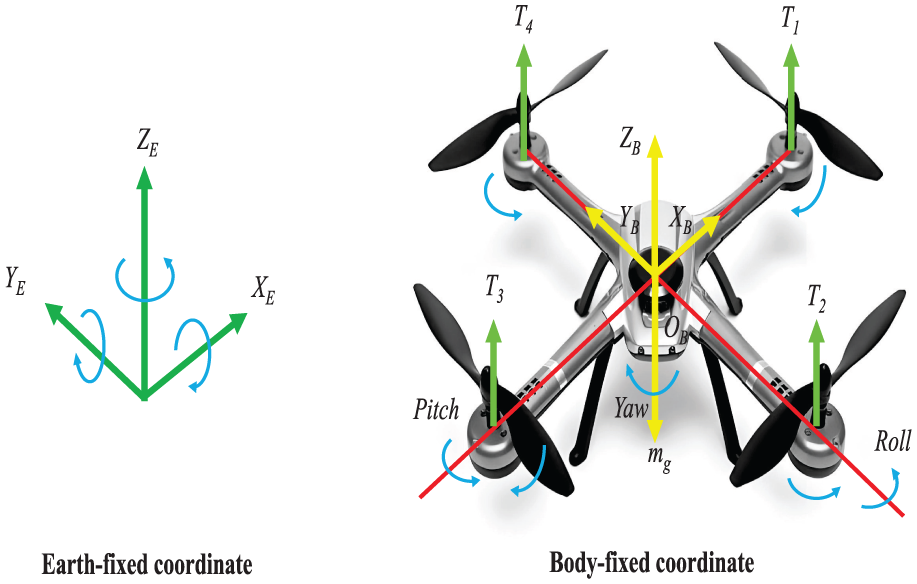
The earth-fixed frame
Since this paper primarily investigates the cooperative formation task of multiple AAVs, the focus is placed on position control in the outer loop. Assume that there exist multiple AAV systems composed of N identical individuals, whose dynamics can be described by the following equations (Chen et al., 2023):
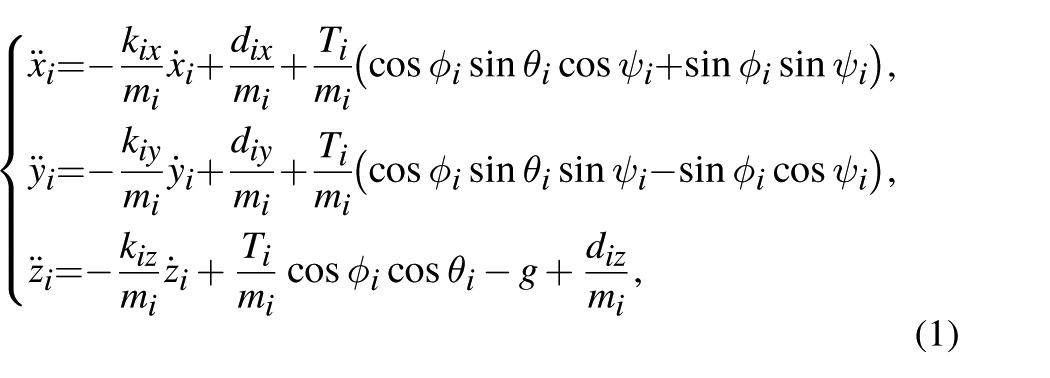
where
Define

where
The leaders trajectory in the

where
Problem formulation
This paper focuses on developing cooperative algorithms to address the predefined-time formation tracking control problem of AAVs, which will be formally defined later.
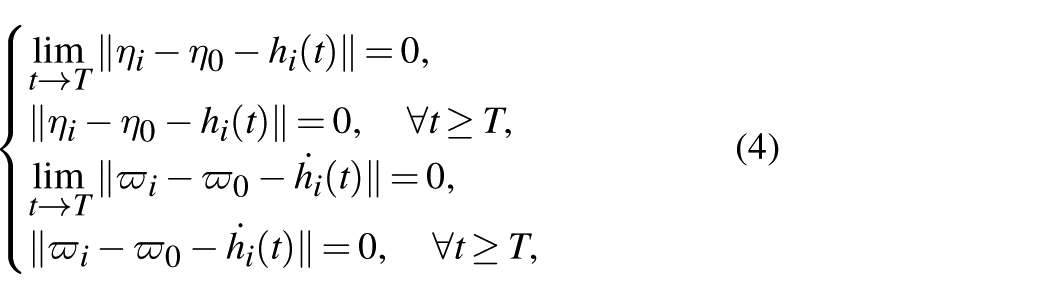
where
Main results
Preliminary of prescribed performance
To ensure that the tracking error

where
A feasible predefined-time performance function is defined as

where
To transform the constrained error into an unconstrained form, we define

where
Consequently, the original tracking error

This transformation allows the constrained tracking objective to be equivalently enforced by controlling the unconstrained transformed variable
Combining (3) and (4), the unconstrained error can be represented as

and its time derivative can be deduced as

in which
Moreover, taking the time derivative of

Hierarchical control algorithm for predefined-time formation tracking
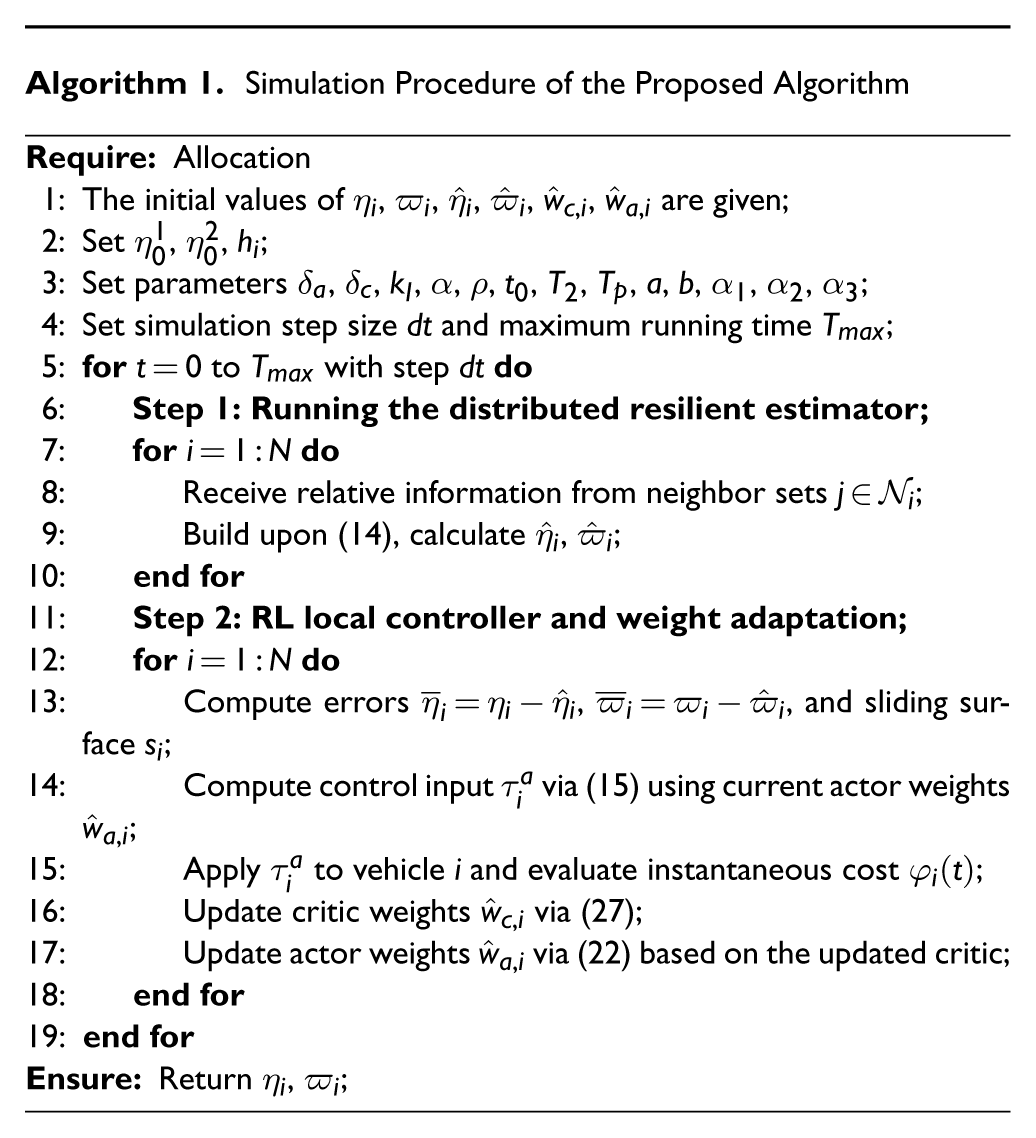
This subsection develops a PTHC method to address the TVFT problem of AAVs. The proposed approach consists of two main components: first, a distributed estimator is designed to allow each vehicle to accurately obtain the leaders state information; second, an RL-based controller is introduced to ensure that the formation task is accomplished within a user-specified time horizon. The structure and implementation process of this control strategy are described in detail below.
Define
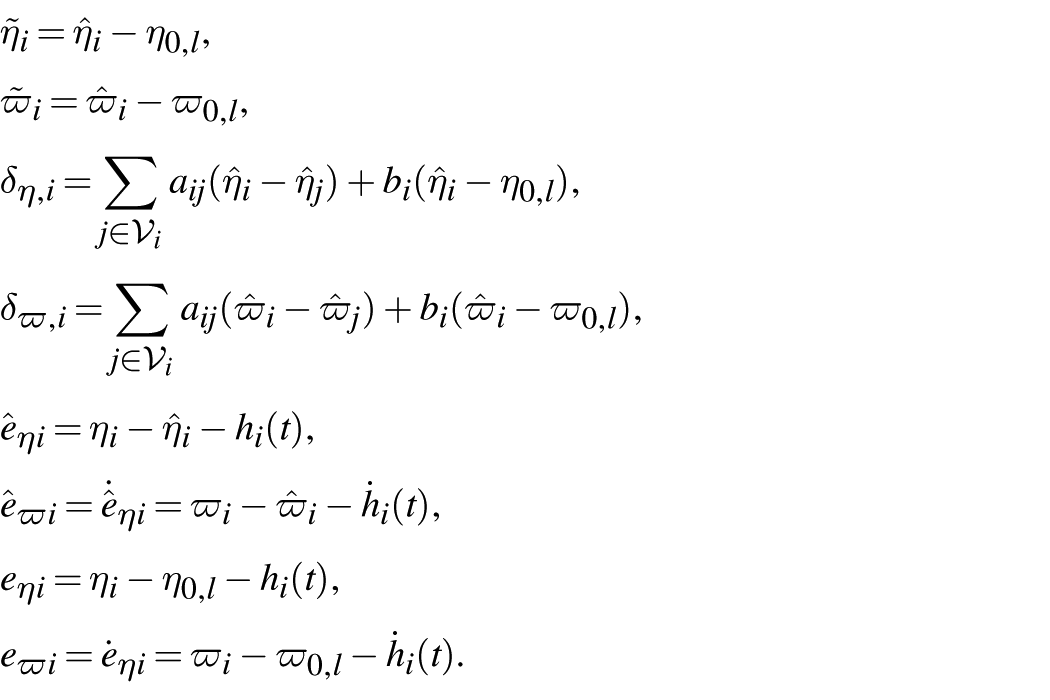
The sliding surfaces are given by:


where
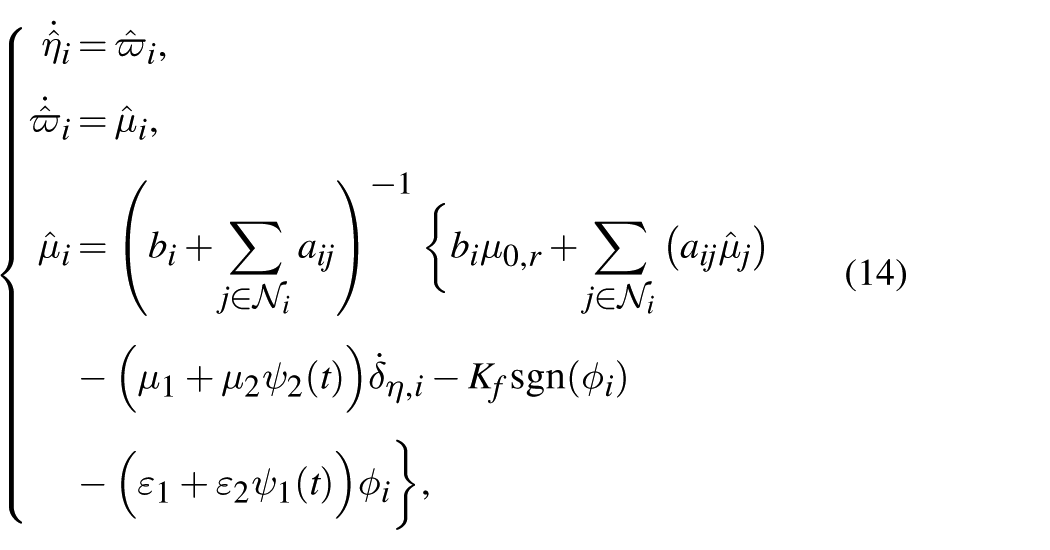
The dynamics of the proposed predefined-time distributed estimator are governed by:
Inspired by Zhao et al. (2025), the predefined-time local controller is designed as follows:
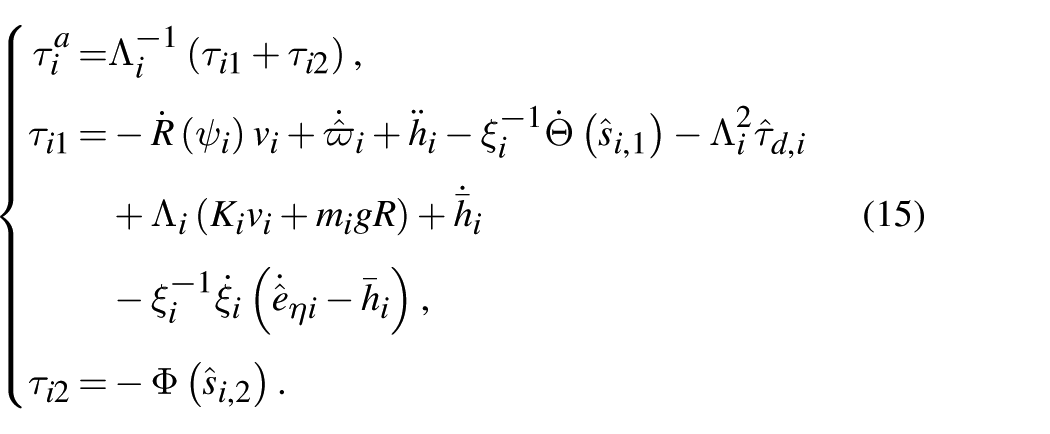
where

with
The proposed hierarchical control scheme integrates two layers: a predefined-time distributed estimator and a predefined-time local controller. The overall architecture is depicted in Figure 2.
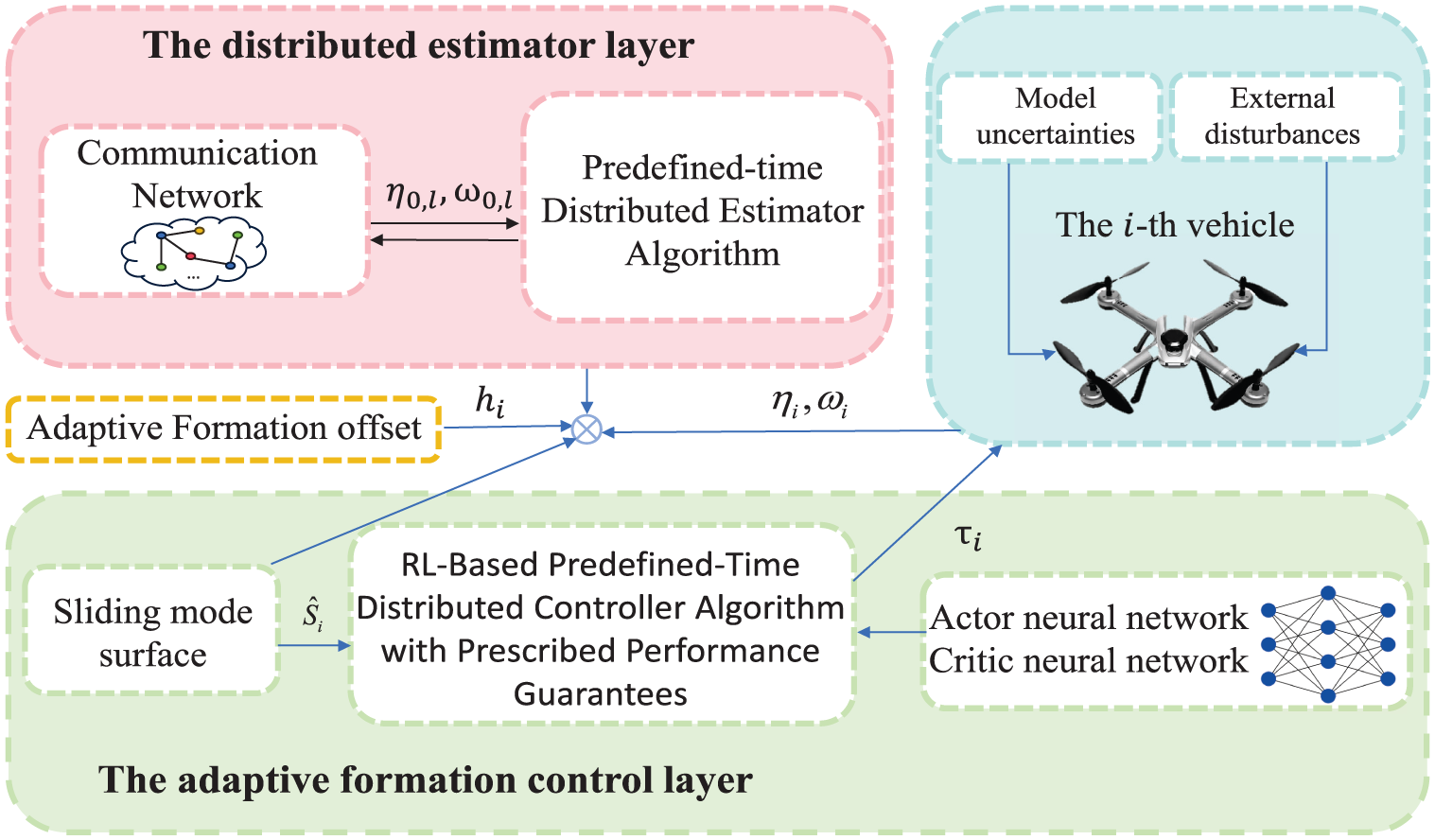
Structure of the proposed hierarchical control method.
It can be approximated by an actor NN as

where

where

where

the adaptive updating law is thereby obtained as
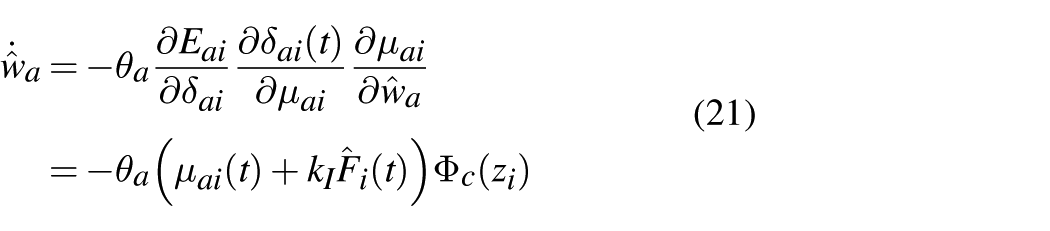
where

Define the cost function as

where

Here,

which is employed to guide the parameter adaptation of the critic. Accordingly, the weight update law is formulated as

By further simplification, the critic weight adaptation law can be expressed as

where
Analysis of the distributed estimator layer
The stability of the predefined-time distributed estimator in equation (14) is analyzed in this section. To facilitate the analysis, we introduce the following compact vector forms:

where
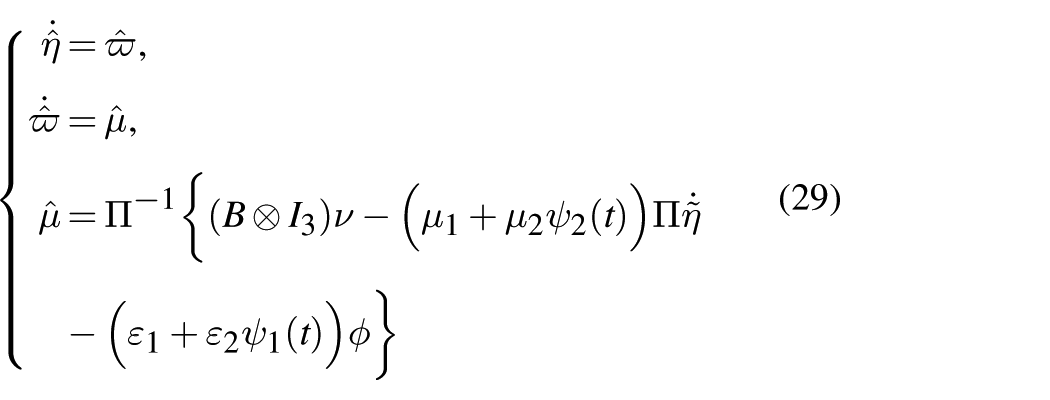
where

A Lyapunov function for equation (12) is selected as

By applying Lemma 1, it becomes evident that

Then select the following function as the candidate Lyapunov function:

which implies that the designed
Prescribed-performance predefined-time RL controller design for AAVs
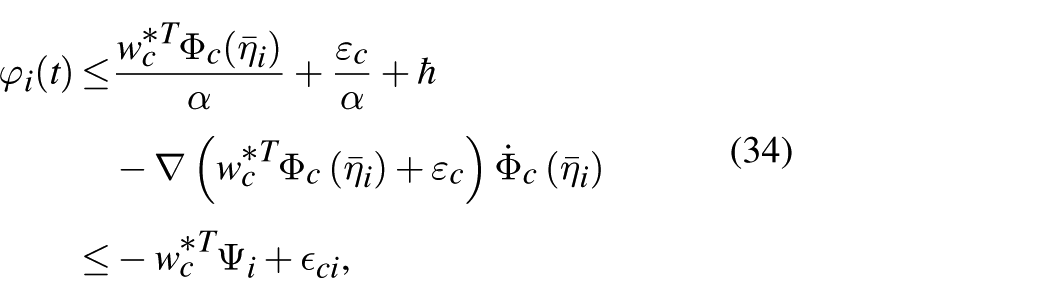
Following the conclusion of Theorem 1, the sufficient condition for guaranteeing predefined-time formation tracking is derived in this subsection.
where

The derivative of

Applying Young’s inequality gives:

The derivative of
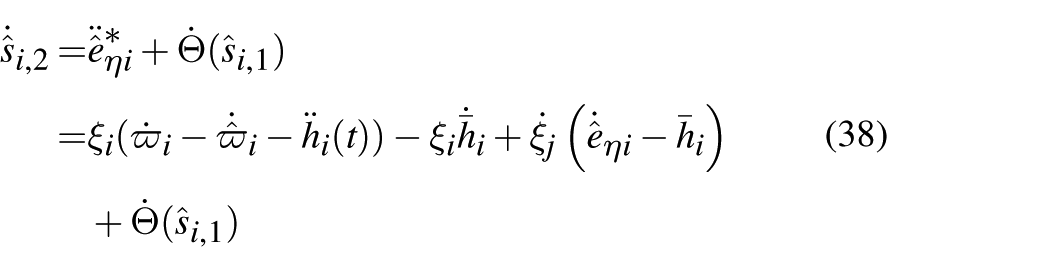
Substituting equation (15) into equation (38):

Using the NN properties, it follows that
Consequently, it can be derived that:
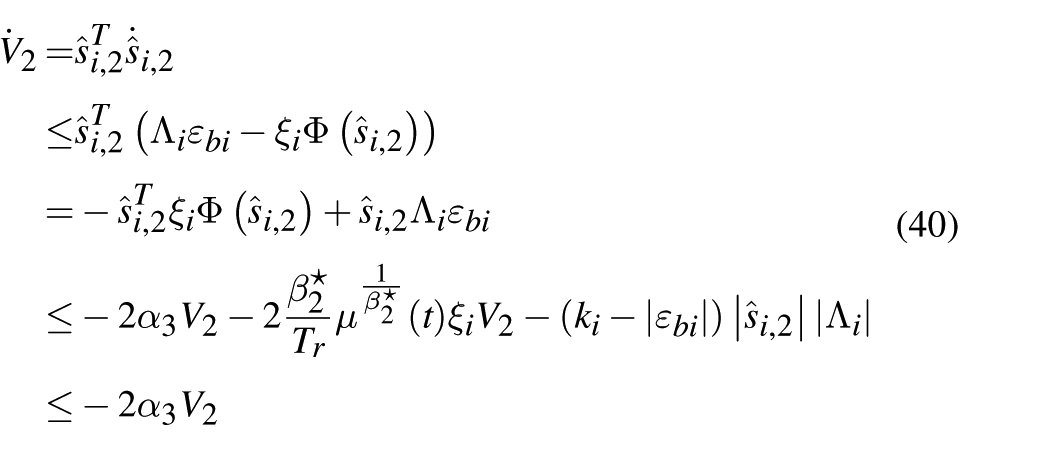
where
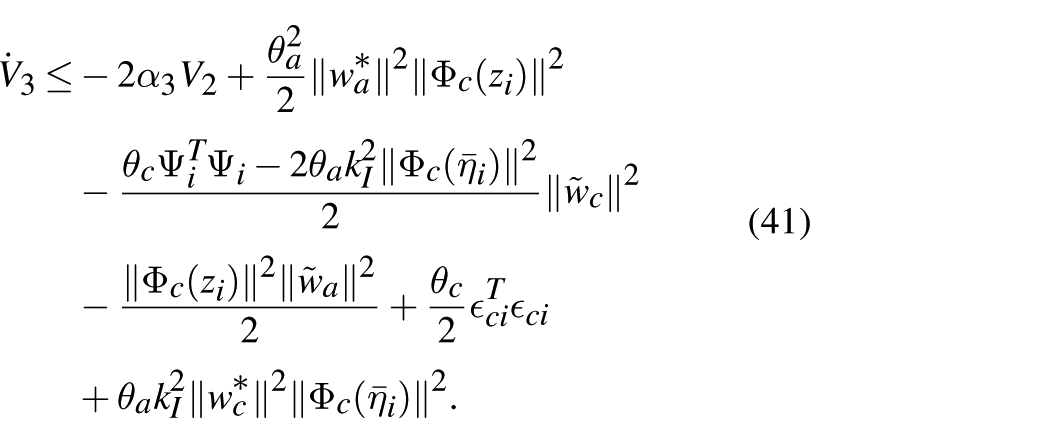
Let

where
Next, it is proved that the states reach the origin within the predefined time. The derivative of the Lyapunov function

By Lemma 1,

According to Lemma 1, the construction of the Lyapunov candidate
Furthermore, since both

and

Therefore, both
Simulations
In this section, quadrotor AAVs are employed as examples to verify the effectiveness of the proposed scheme.
The communication topology is shown in Figure 3, where the nodes
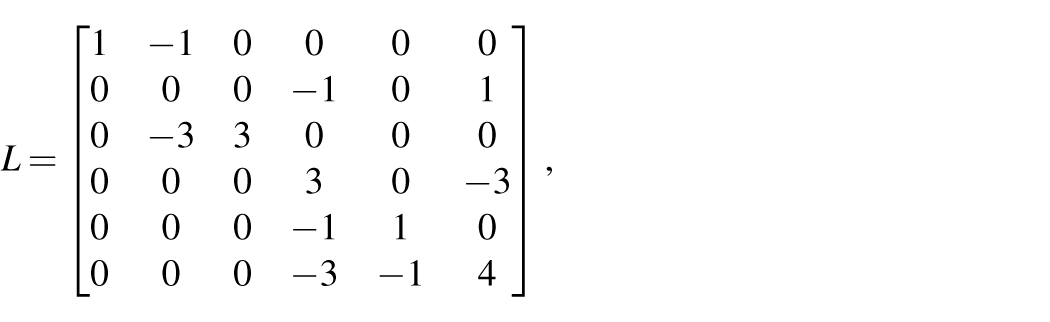
and
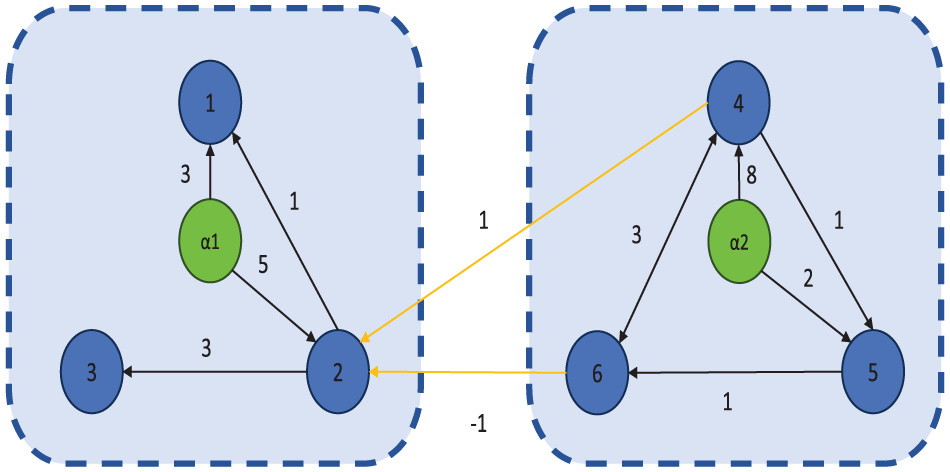
The communication topology of the AAVs.
The prescribed-performance parameters in equation (6) are selected as
The simulation results of the AAV formation tracking control problem are shown in Figures 4–8, with the analysis summarized below.
Figure 4 shows the estimated states
Figure 5 illustrates how the state deviations
Figure 7 shows the AAV formation trajectories, confirming effective tracking and successful formation of the desired geometry. As illustrated in the figure, the AAVs maintain a high level of cooperative consistency during convergence, which verifies the stability and robustness of the proposed control scheme throughout the formation process. This also demonstrates the algorithms’ applicability to tasks like aerial patrol, swarm delivery, and search-and-rescue operations.
Figure 8 shows the time responses of the actor and critic weight derivatives for vehicle 1. At the beginning, both weights exhibit rapid adaptive changes, followed by a gradual stabilization phase, indicating that the proposed algorithm possesses effective self-tuning and stable control performance. Fifteen distinct curves are presented, each showing the weight changes of the vehicles’ actor and critic networks.
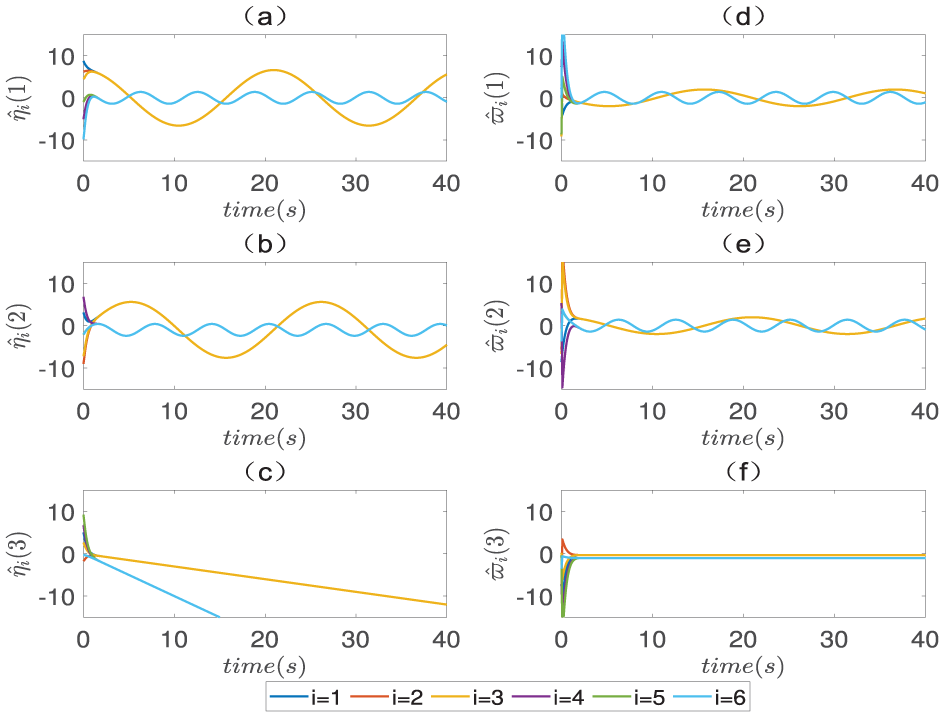
Subplots (a)–(c) depict the evolution of
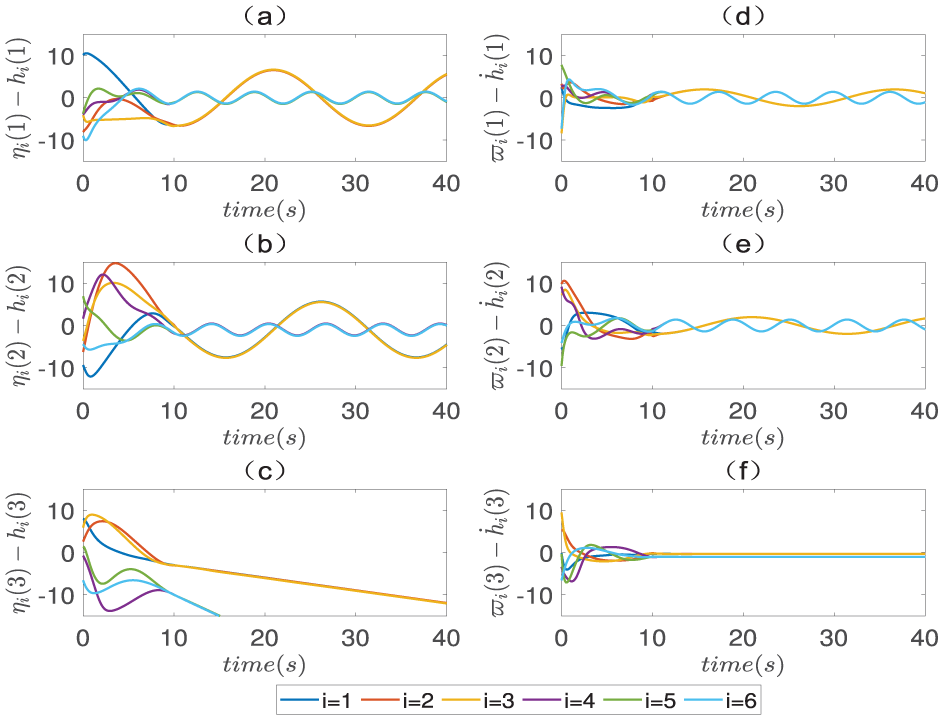
Subplots (a)–(c) display the evolution of
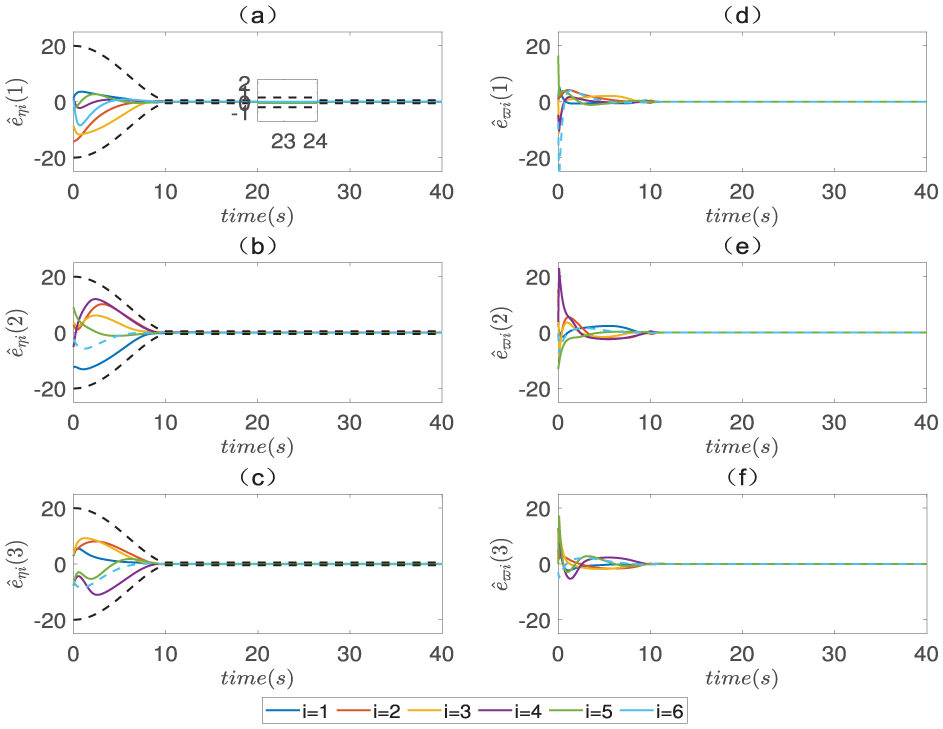
Pictures (a)–(c) and (d)–(f) present the evolutions of
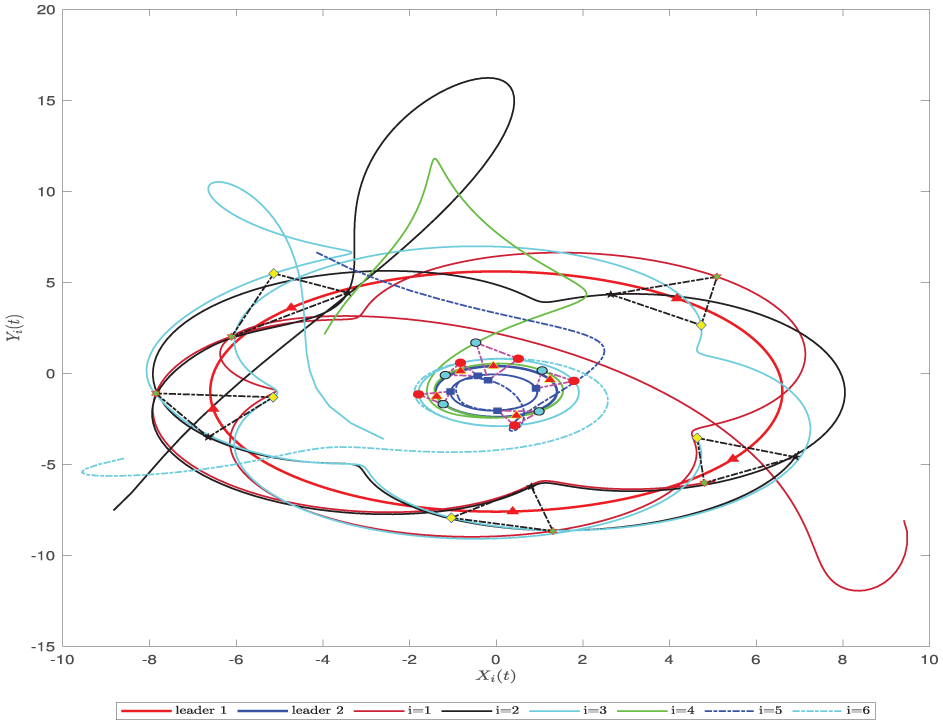
Using equations (14) and (15), the two-dimensional time-varying formation tracking control (TVFTC) trajectories of the AAVs are depicted in the
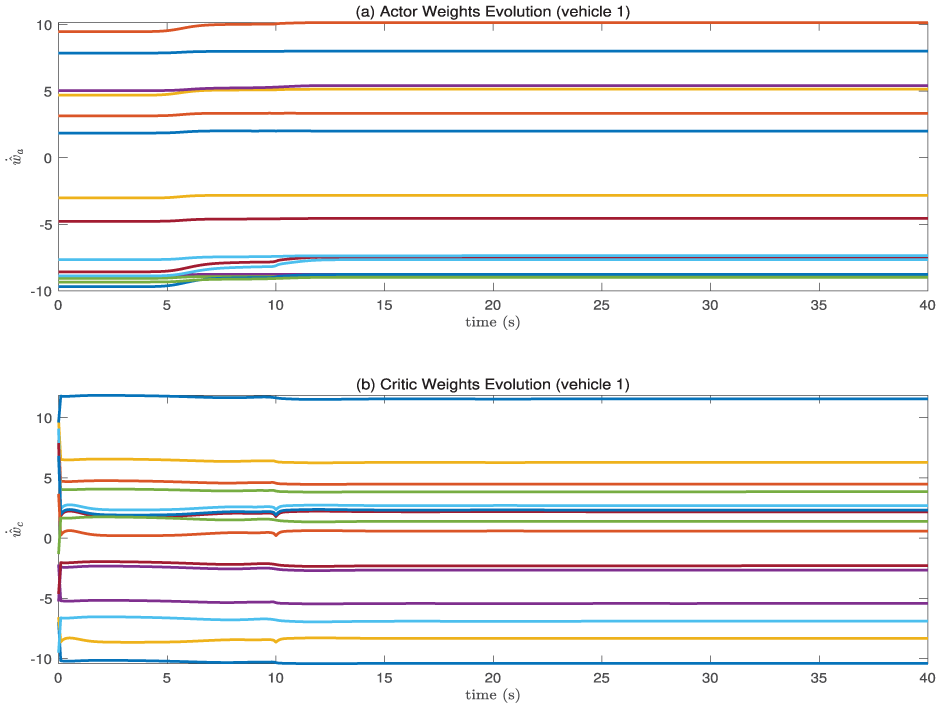
The evolution process of actor-critic weights
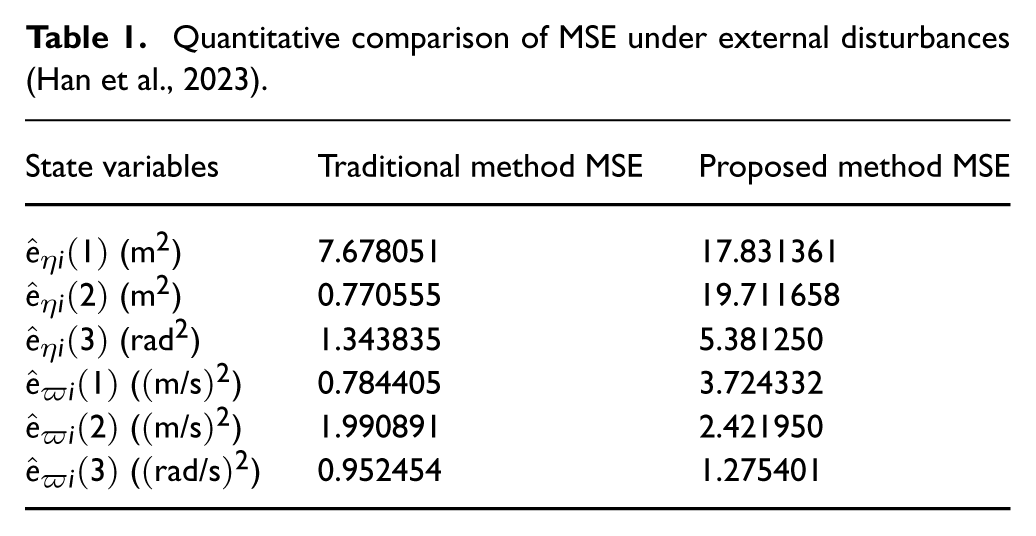
To further validate the superior performance and robustness of the PTHC framework, a comparative simulation study is conducted. Under identical initial conditions and time-varying external disturbances, the proposed PTHC scheme is comprehensively compared with a traditional fixed-time sliding mode control method. As demonstrated by the tracking performance curves of the traditional method in Figure 9 and the subsequent quantitative analysis (taking the first vehicle as an example), the mean square error (MSE) of the tracking performance under the PTHC scheme is significantly reduced compared to the traditional approach in Table 1. This fully substantiates that under complex external disturbances, the PTHC framework can achieve higher-precision trajectory tracking and exhibits superior anti-disturbance robustness.
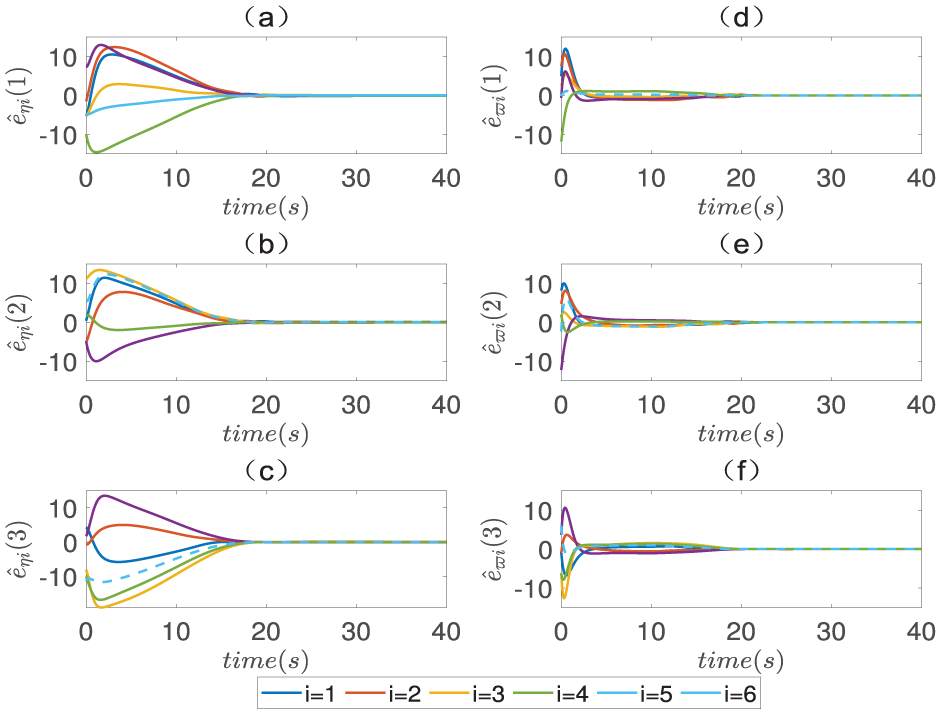
Pictures (a)–(c) and (d)–(f) present the evolutions of
Quantitative comparison of MSE under external disturbances (Han et al., 2023).
Conclusion
The predefined-time formation tracking problem of AAVs under uncertain conditions is investigated in this paper. A two-layer hierarchical control framework is proposed. The upper-layer distributed estimator is designed based on the nonsingular sliding mode control, which eliminates the singularity issues of traditional sliding mode approaches and enables accurate estimation of the leaders trajectory within a predefined time. The lower-layer local controller is developed using RL to achieve the TVFT objective. Future work will focus on integrating deep RL with multi-agent game-theoretic mechanisms to realize intelligent evolution of control strategies, autonomous coordination, and attack recognition, thereby enhancing the systems’ autonomy and intelligence in dynamic mission environments.
Footnotes

Funding
The authors disclosed receipt of the following financial support for the research, authorship, and/or publication of this article: This work was funded by the National Natural Science Foundation of China (62473136) and the Hubei Provincial Education Department Science and Technology Research Program for Young Talents (Q20232502).
Declaration of conflicting interests
The authors declared no potential conflicts of interest with respect to the research, authorship, and/or publication of this article.
Data availability statement
Data sharing is not applicable to this article as no datasets were generated or analysed during the current study.