This paper investigates online distributed aggregative optimization of multi-agent systems over directed graphs characterized by row-stochastic mixing matrices, where each agent possesses a time-varying cost function determined by its individual decision variable and a global aggregative variable. To address this problem, we first propose a novel accelerated distributed algorithm incorporating gradient tracking and dynamic consensus mechanisms. Then, the designed algorithm integrates heavy-ball momentum to enhance convergence speed, and the linear convergence rate is rigorously analyzed as well. Finally, the theoretical results are validated in the multi-robot target tracking scenarios to show the effectiveness of the algorithm.
In the past decades, distributed optimization (Yang et al., 2020) of multi-agent systems (MASs) has attracted lots of attention due to its broad applications, such as unmanned vehicles (Zhao et al., 2023) and smart grids (Braun et al., 2016). The objective of distributed optimization is to design an algorithm such that agents can cooperatively minimize the sum of local cost functions determined by its own decision variable. Recently, considering the cooperative feature and global performance of MASs, scholars developed a novel distributed optimization framework, called distributed aggregative optimization (DAO) (Li et al., 2021). Typically different from the distributed optimization issues, each cost function in DAO contains an extra global aggregative variable to perform some kind of aggregation of all the local variables, which is significant in many scenarios (e.g. improving the efficiency of machine learning computations, optimizing resource allocation, and so on). As a note, many DAO methods (Chen et al., 2024) have been conducted successively.
With similar research interests in distributed optimization, how to relax the requirements of graphs for DAO problems has attracted much attention. For instance, Chen et al. (2023) and Huang et al. (2025) studied the DAO problem over an undirected graph. To overcome the undirected assumption of graphs, few DAO strategies Xi et al. (2018) were proposed for MASs under weight-balanced digraphs. Apart from the connectivity of graphs, the DAO methods for MASs with time-varying characteristics were widely investigated as well. To be specific, Reisizadeh et al. (2022) proposed a two-time-scale decentralized gradient descent algorithm for a broad class of lossy sharing of information over time-varying graphs. Sun et al. (2016) studied nonconvex distributed optimization in a setting where the communication between nodes is modeled as a time-varying sequence of arbitrary digraphs. Carnevale et al. (2022) studied distributed optimization in multi-agent networks where the communications between nodes are modeled as a time-varying digraph. Rahili and Ren (2016) addressed a time-varying distributed convex optimization problem for continuous-time MASs. Moreover, considering an MAS that cost functions and constraints are both time-varying, the distributed optimization issues were solved in the literature (Zhang et al., 2021). However, most of the existing time-varying DAO results are only suitable for undirected graphs or weight-balanced digraphs. Therefore, to our knowledge, how to construct an online DAO framework for MASs with a time-varying aggregative cost function under weight-balanced digraphs is still an open issue.
As a note, in practical scenarios, the distributed optimization tasks are generally expected to be accomplished as soon as possible, which means the convergence speed is an important performance indicator (Liu et al., 2025) of a distributed algorithm. To accelerate convergence speed, Pan et al. (2023) proposed an accelerated Nash-equilibrium learning algorithm by integrating a momentum term into a gradient descent step by harnessing the smoothness of cost functions. Song et al. (2020) integrated the heavy-ball method with a consensus-based gradient method to seek the Nash equilibrium with an improved convergence rate.
Motivated by the aforementioned observations, this paper proposes an accelerated online DAO algorithm for MASs over unbalanced digraphs. The main contributions are as follows:
We first investigate the online DAO for MASs with time-varying aggregative cost functions over unbalanced digraphs, and a novel DAO algorithm framework is constructed using gradient tracking and dynamic consensus mechanisms.
By adopting the heavy-ball momentum technique, the convergence speed of the proposed DAO algorithm is enhanced. In addition, the linear convergence rate is rigorously analyzed as well.
The rest of this paper is organized as follows. Section “Preliminaries and problem formulation” introduces the formal problem formulation along with the necessary assumptions on the objective functions and the constraint sets. In Section “Algorithm design and convergency analysis,” the DAO algorithm is illustrated, and the convergence rate of the algorithm is rigorously analyzed. The simulation examples are conducted in Section “Numeric simulations” to demonstrate the efficacy and performance of the algorithm, and the conclusions are drawn in Section “Conclusions.”
Preliminaries and problem formulation
Notations
Let represent an N-dimensional real vector space. We use to denote a stacked vector, where . Vector X is positive if all entries are positive. Let diag(A) denote a diagonal matrix whose diagonal elements correspond to those of the matrix A where . Let represent the standard Euclidean norm for vectors and matrices, and denotes the spectral radius of a matrix. We use ⊗ to denote the Kronecker product, to denote the N-dimensional identity matrix, and to denote the N-dimensional vector of all ones. Furthermore, let denote the gradient (first-order derivative) of a function f, and let and denote the partial derivatives of a function f with respect to its first and second arguments, respectively. For a closed, convex, and compact set X, we define the projection of a vector y onto X as . The distance from a point y to the set X is given by .
Graph theory
Let denote a weighted directed graph, where is the vertex set and represents the set of directed edges. A directed edge exists if agent j can receive information from the agent i. In this case, i is an in-neighbor of j, and j is an out-neighbor of i. For each vertex , the set of in-neighbors is denoted by , and the set of out-neighbors is denoted by . The cardinality of a set is denoted by . The graph is said to be balanced if, for every vertex , .
Problem formulation
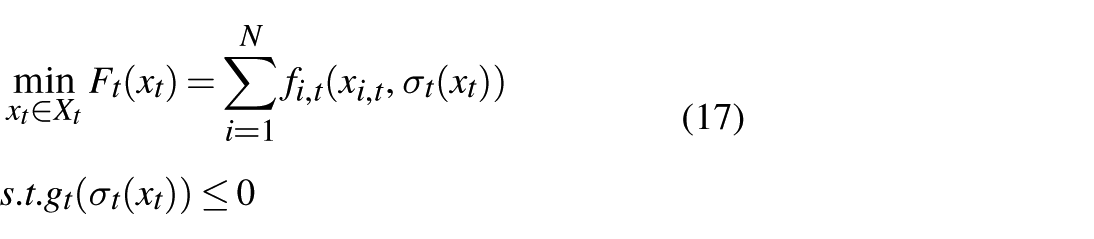
In this paper, we consider a DAO problem over a strongly connected digraph (not necessarily balanced), formulated as
with
where is the global decision variable, and denotes the local variable of the agent i. Each agent i possesses a private time-varying cost function , and is the aggregative function. represents the feature function for each agent i at time t. All agents communicate over a digraph, and agent i only has access to its own , and local information from its neighbors at each time t. Assume that, at every time t, is the optimal solution of the feature equation . Given a time horizon , the objective of the MAS is to minimize the dynamic regret defined as
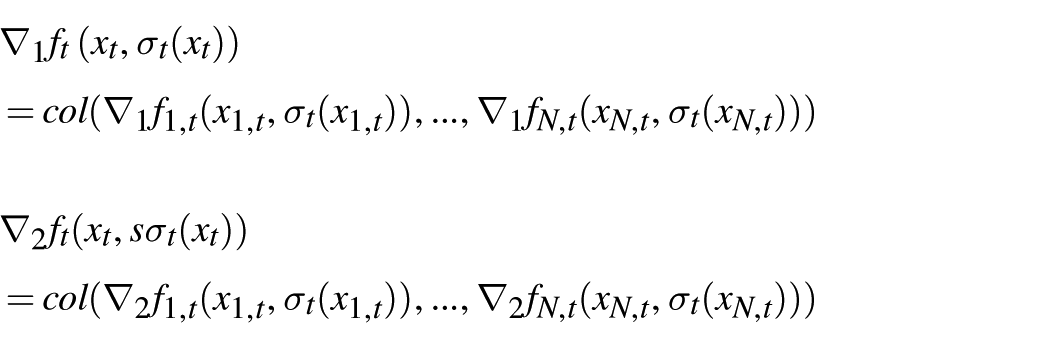
In addition, we use to represent the global equation, where . The derivatives of the first and second variables of are defined as
We define and
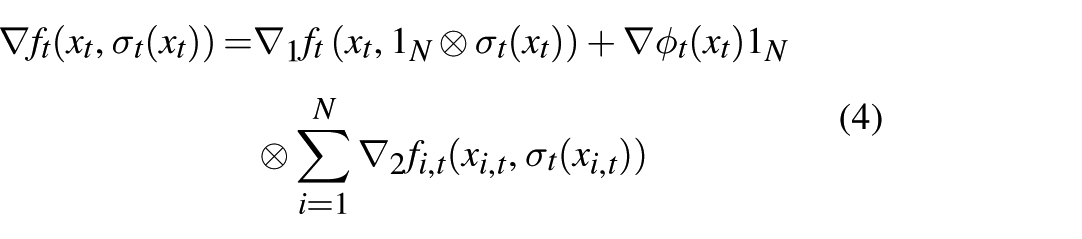
The derivative of a global variable is
The DAO problems are investigated under following assumptions:
Assumption 1.(Chen et al., 2024) This directed graph is strongly connected, and the weighted adjacency matrixof the graph is row-stochastic. In addition,
That is, A is a row-stochastic matrix.
Assumption 2.At any time, the feasible setis non-empty, closed, and convex. Moreover, for each, the functionis differentiable and satisfies the following properties:
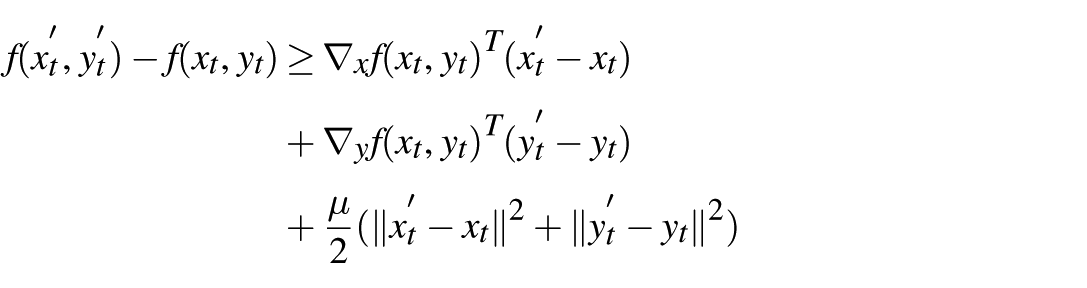
is μ-strongly convex, i.e., for anyand
is also-Lipschitz continuous, i.e., for anyand
is-Lipschitz continuous, i.e., for anyand
Remark 1. The convexity (and strong convexity) assumption in Assumption 2 is standard in distributed aggregative optimization literature, especially in multi-robot coordination and economic dispatch problems, where cost functions typically represent quadratic tracking errors, energy consumption, or resource allocation penalties. For example, Carnevale et al. (2022) made the same assumption about the objective function . More similar assumptions can be found in Zhang et al. (2021) and Braun et al. (2016), and cover many practical scenarios. Future works may develop new fundamental theory to address DAO issues for non-convex settings.
Assumption 3.At any time, the aggregative functionisdifferentiable, and for all, it satisfies.
In addition, before the algorithms design, we first present some necessary lemmas as follows:
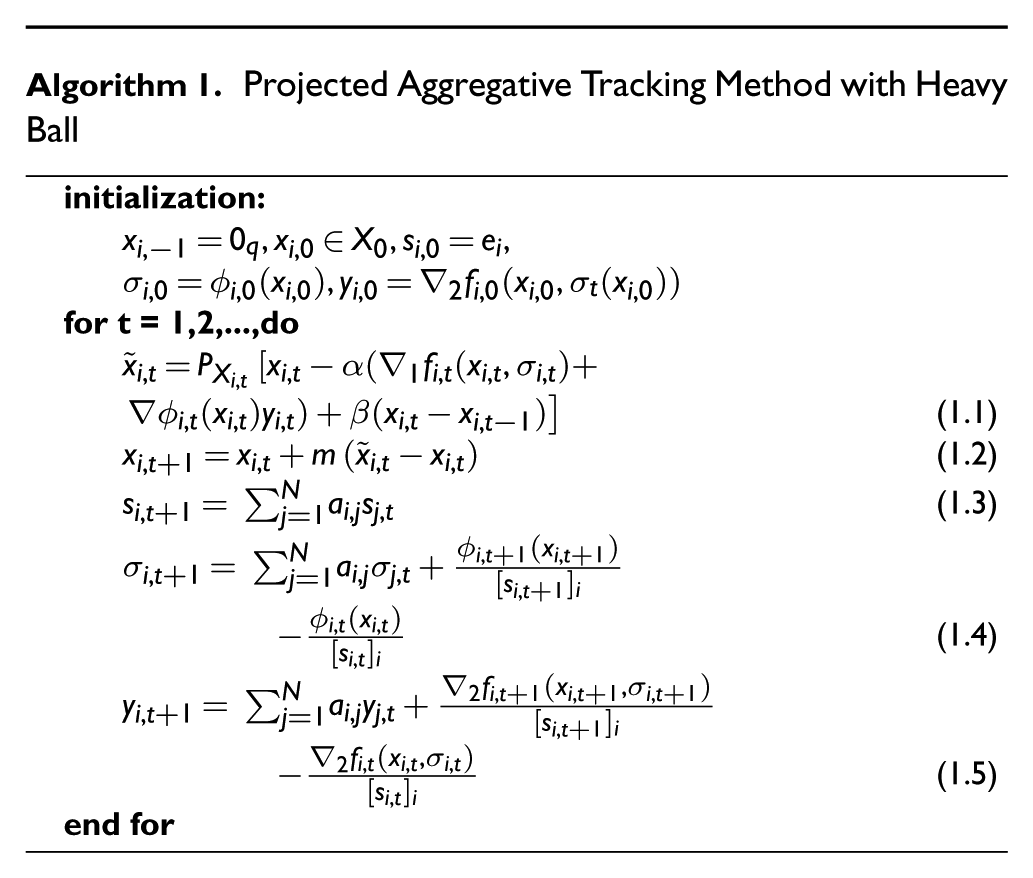
In this section, we propose an accelerated online DAO algorithm for MASs over digraphs to realize (1).
Algorithm 1. Projected Aggregative Tracking Method with Heavy Ball
initialization:
for t = 1,2,…,do
(1.1)
(1.2)
(1.3)
(1.4)
(1.5)
end for
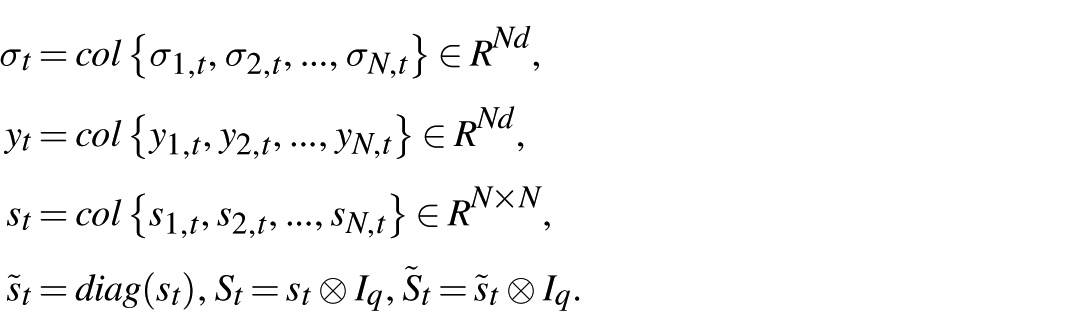
Here, represents the ith component of . To accelerate the convergence of the algorithm, we introduce an auxiliary historical variable . The constants , and denote step-size parameters. (1.3) is designed to estimate the left Perron eigenvector of the row-stochastic adjacency matrix A, where . The variables and are introduced to estimate and respectively.
Suppose that
Then, the above algorithm can be written in the following stack form
Remark 2. Under Assumption 1, the adjacency matrix A is primitive. By the Perron–Frobenius theorem, there exists a unique positive left eigenvector such that , where and .
From (5c), it can be deduced that , so . It is obvious that there exists an upper bound ŝ and such that and .
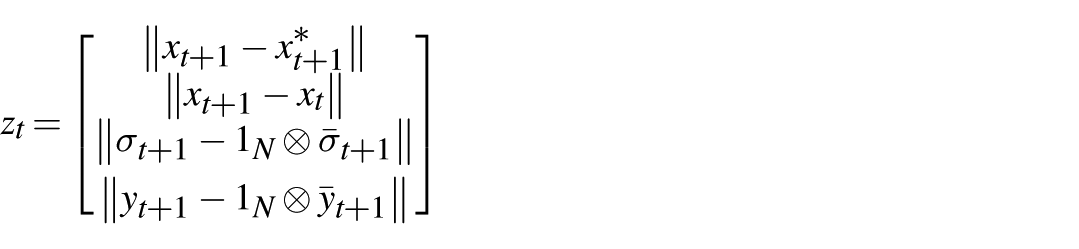
First, Let’s define the weighted averages with respect to the Perron vector π as follows: . Suppose, are the optimal solutions to the problem. The stack vector is defined as follows:
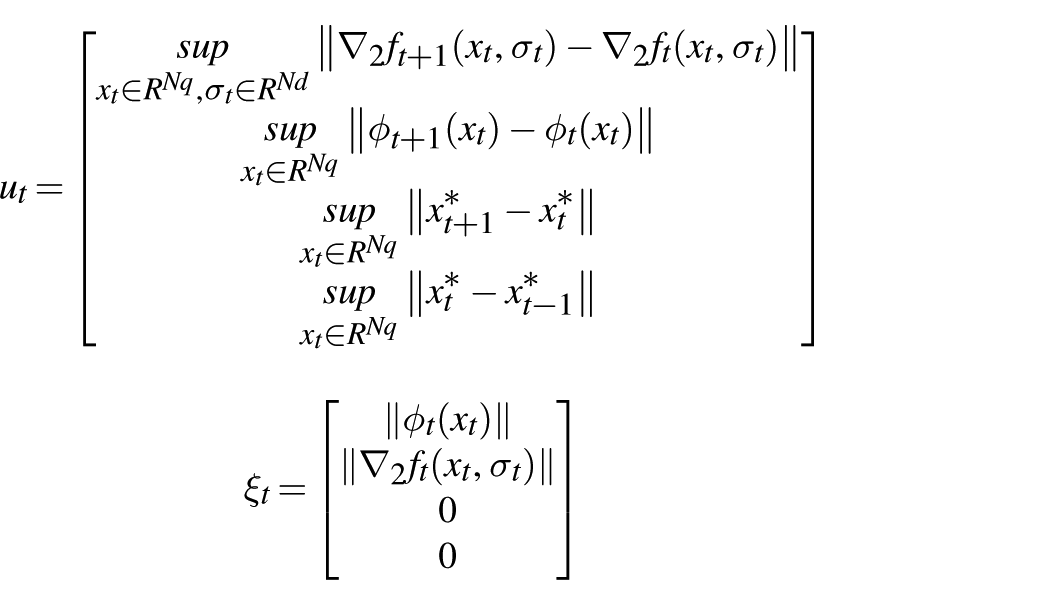
where , , , and represent the margin norm between the optimal value, the gap norm between each state, the norm of the aggregate variable tracking error, and the norm of the gradient variable tracking error, respectively. Moreover, two important vectors which will be used later are defined as follows:
Convergence analysis
Three necessary lemmas of convergence analysis are first given as follows:
Lemma 6.Following equations hold:
1..
2.
Proof. Multiplying both sides of (5d) by , we can obtain that
Then,
Under initial conditions , it follows that . With the similar analysis, can be easily proven. □
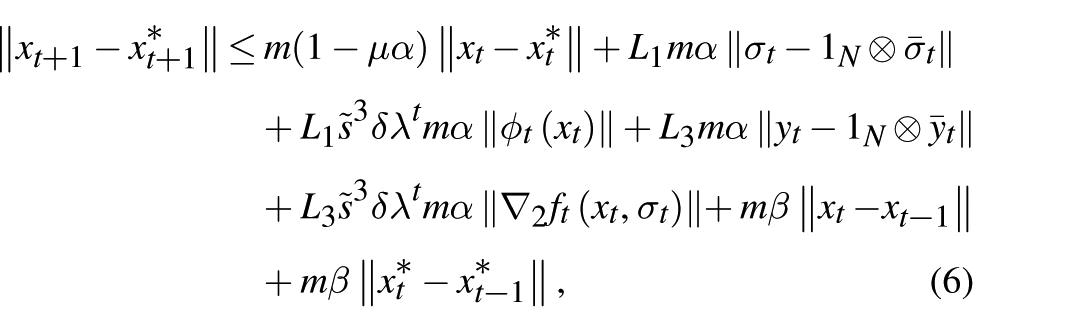
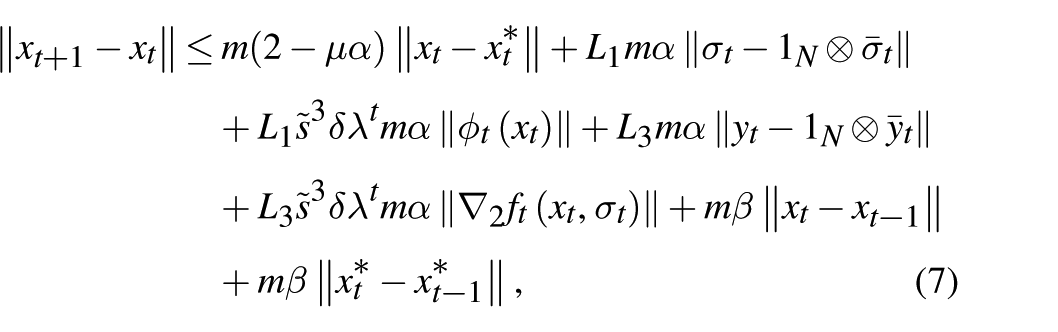
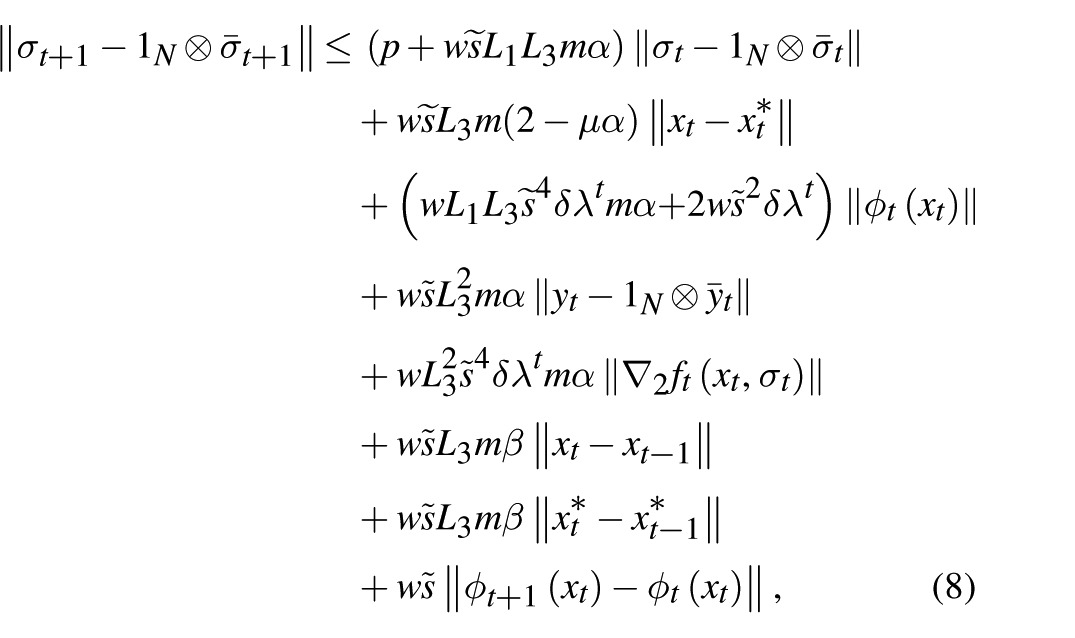
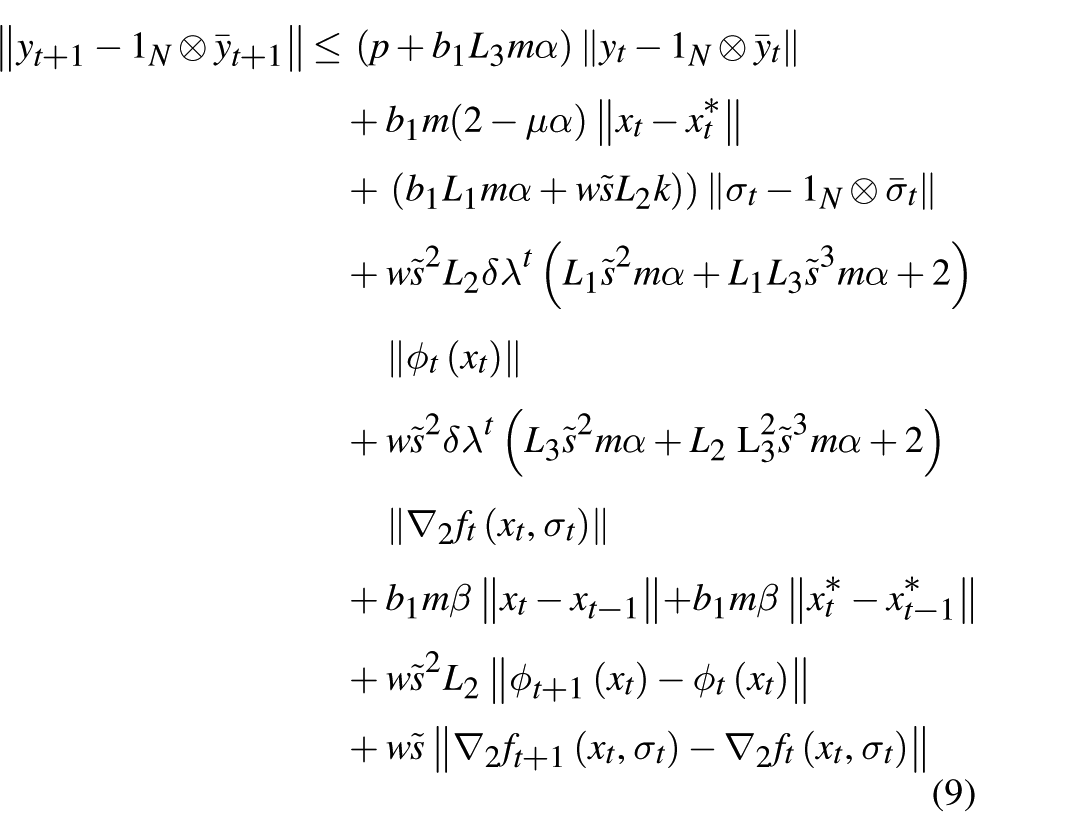
Lemma 7.Each component of vectorsatisfies following inequalities
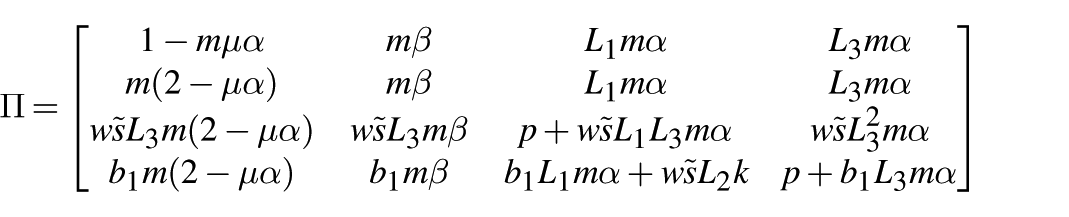
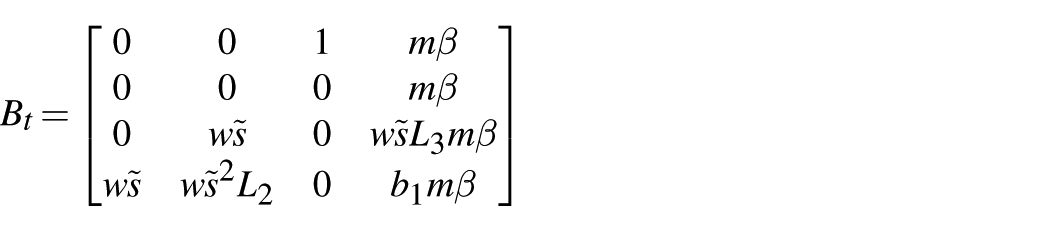
Lemma 8.By organizing the above coefficients, we can obtain,
where
Proof. Above conclusion can be easily derived via simple calculation. □
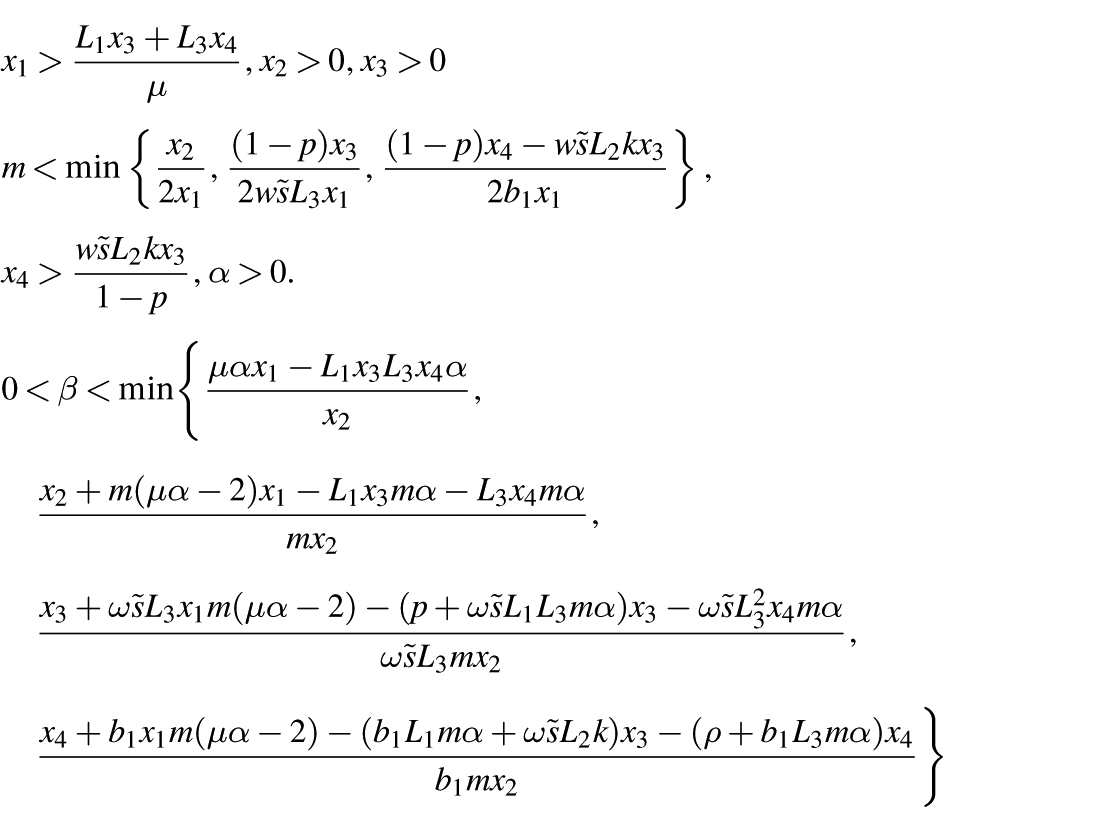
Theorem 1.There exists a positive vectorandwhich satisfy that
So that.
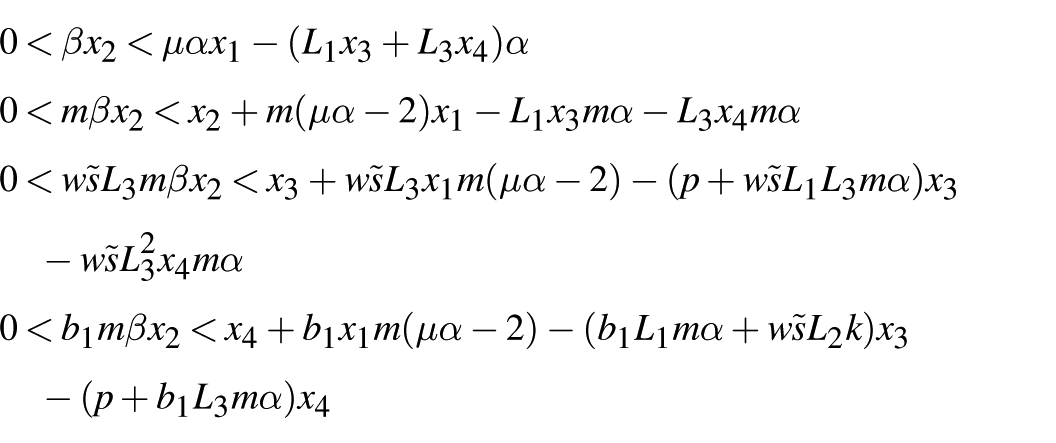
Proof. By Lemma 3, if there exits a positive vector , so that , then . The inequalities are equal to:
Take first inequality as an example, since β and are both positive, the first less-than sign is easily obtained. By introducing the range of β and ,i.e., and , the second less-than sign can be obtained as well. With the similar analysis as mentioned above, other inequalities can also be proved by introducing parameter ranges in 1, which completes the proof. □
Regret analysis
In this section, the regret analysis of the proposed Algorithm 1 is presented. Suppose that and are both bounded, i.e., there exist constants C and D such that and . Then, we have following results
Theorem 2.There exists a constant, such that
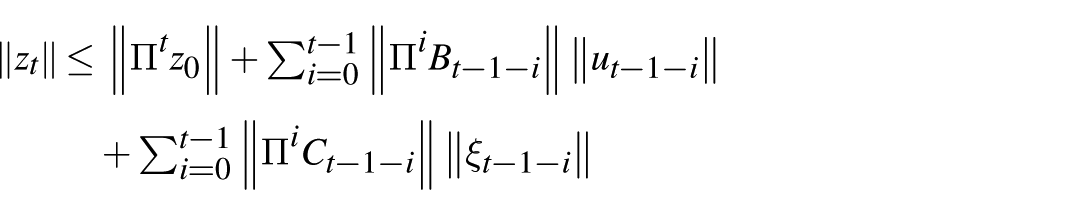
Proof. It is seen from Lemma 8 that . Expanding this expression, we can get:
Taking the modulus on both sides
Because and are bounded, then
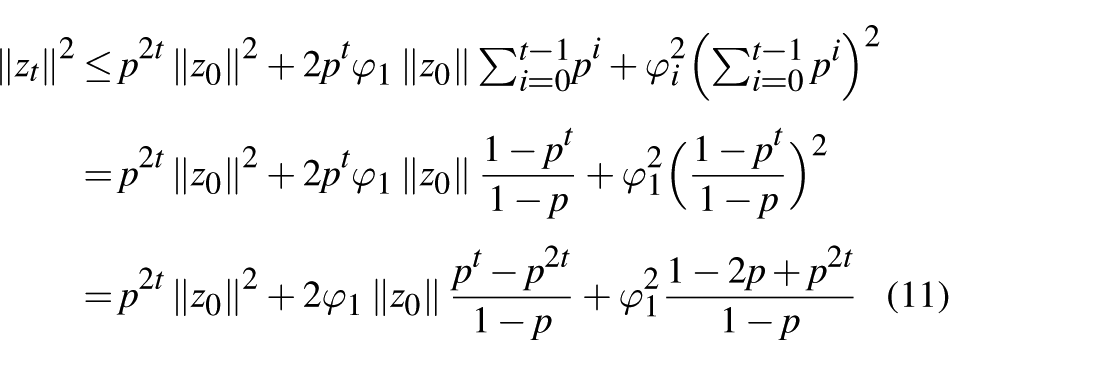
Let , then . According to Xi et al. (2018), for some , and , we have .
Then, . Squaring both sides, we have
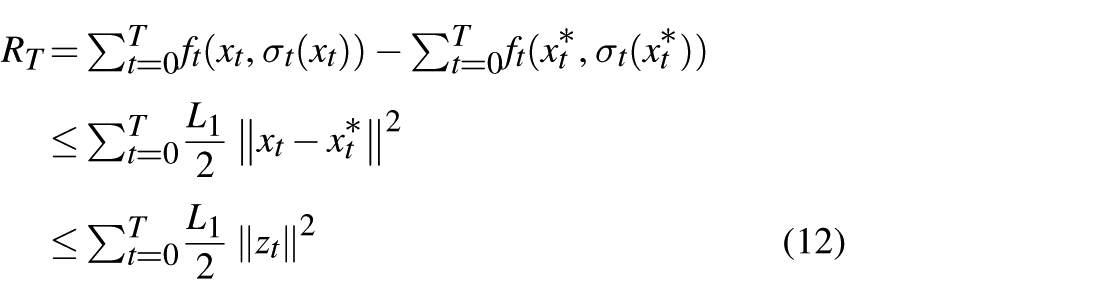
According to Assumption 2, is smooth, so it holds that
Then,
By inserting (11) into (12), Theorem 2 is proven. □
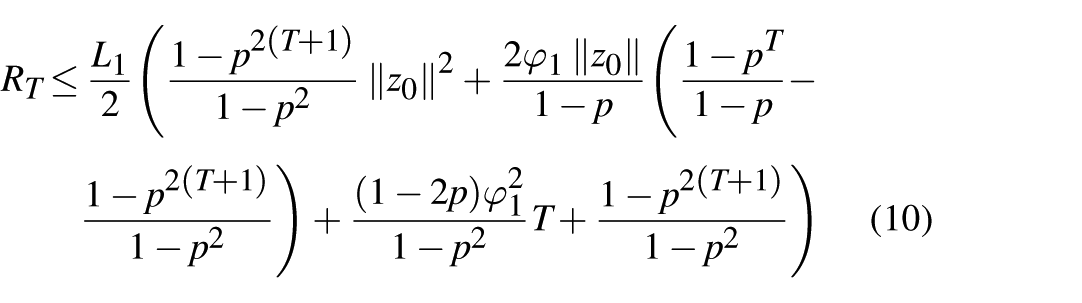
Based on Theorem 2, the convergence rate of average regret satisfies
Remark 3. That is, our algorithm achieves linear convergence for aggregative optimization over directed graphs with row-stochastic matrices. In addition, since the computation complexities of , , (), one heavy-ball term, , , σ and y are , , , , , , and , respectively, we have
By contrast, the presented result “heavy-ball nonlinear perturbation-based gradient-tracking (HBNP-GT)” in Doostmohammadian and Rabiee (2025) performs exponential convergence, and the computation complexity is
Based on above analysis, the introduction of heavy-ball momentum term in this paper does not alter the order of the computational or communication complexity since the momentum term only incurs a constant additional cost associated with storing a previous iterate and performing basic vector operations. Moreover, our result is suitable for MASs with time-varying cost function under row-stochastic and switching graphs, which is typically different from result (Doostmohammadian and Rabiee, 2025).
As a note, it is seen that the proposed PATM-HB algorithm has polynomial per-iteration complexity with respect to the network size N. However, the scalability of the network is inherently constrained by the Perron vector estimation mechanism, which may limit the applicability of algorithm in large-scale scenario or strict communication constraints.
Theorem 3.Let
then we have
Proof.
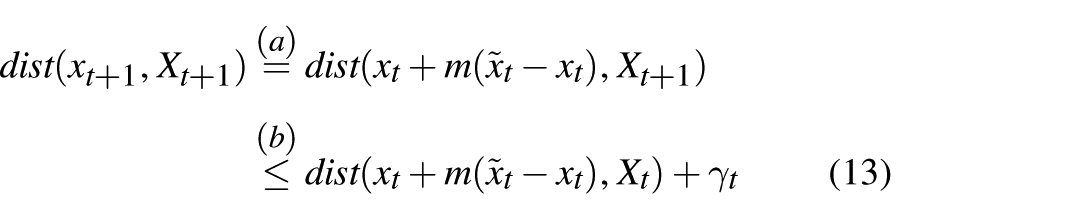
where in (a), we substitute (5b) into left side, and in (b), we subtract the term .
Let , , then we add and extract the term in the (14)
Due to , then , so . Substituting (14) and (15) into (13), we can get
The elements of (16) are always positive, then
□
Remark 4. (Doostmohammadian et al., 2025) addressed the distributed optimization issue of communication delay under strongly connected digraphs by introducing an augmented consensus formulation to transform the time-delay system into a higher-dimensional non-time-delay system, and proves
where is the augmented matrix of C. However, our result cannot be directly extended to the case with time delay since the considered graph is row-stochastic and switching graphs (see Assumption 1). Future work may investigate aggregative optimization for the systems with time delay by reconstructing the gradient tracking algorithm and conducting spectral analysis again.
Moreover, some practical DAO problems may subject to coupling resource constraints. To handle above situation, we extend the accelerated distributed online aggregative optimization framework by incorporating a primal–dual mechanism. To be specific, consider the following constrained aggregative optimization problem:
where represents a convex resource constraint. By introducing the Lagrange multiplier as shown in Turan et al. (2020), a potential solution is first to transform the above problem into the following unconstrained formulation
then the proposed algorithm may be applied to solve the constrained optimization issue.
Numeric simulations
This section presents numerical experiments to validate the effectiveness of the proposed algorithm. The experimental scenario involves a defense robot positioning task, where five factories are distributed at fixed locations. Each factory is assigned one robot, and the objective is to optimize the collective positioning strategy under communication constraints.
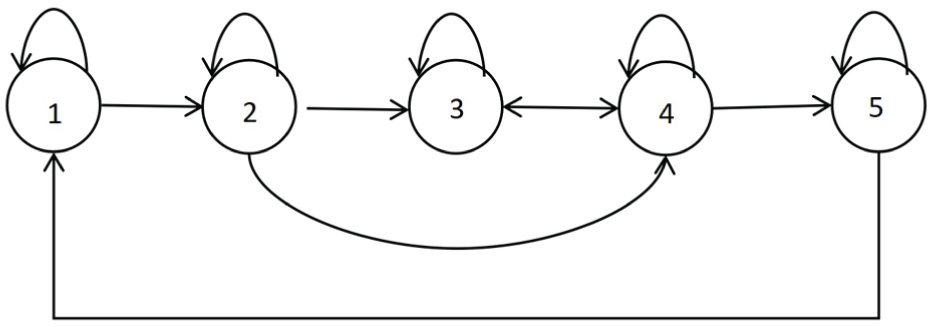
The objective of the robot positioning task is to select five optimal locations such that the total distance from each robot to its assigned factory is minimized, while also reducing the dispersion of the robots relative to the factory centers. The five robots are unable to communicate arbitrarily; instead, they can only exchange information according to a predefined directed communication graph, as illustrated in Figure 1.
Communication graph.
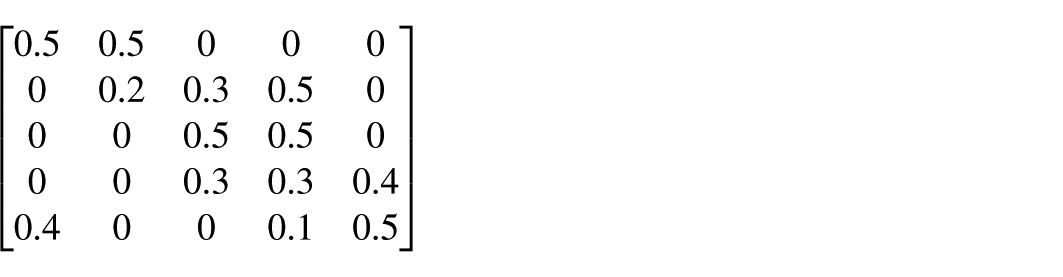
The adjacency matrix A =
The fixed locations of the five factories are given as , and . The objective function for each agent is formulated as
where , . As a note, models a dynamic disturbance or environmental factor that influences the protective performance of the robots . Each robot must select a construction site from a time-varying feasible set defined as , .
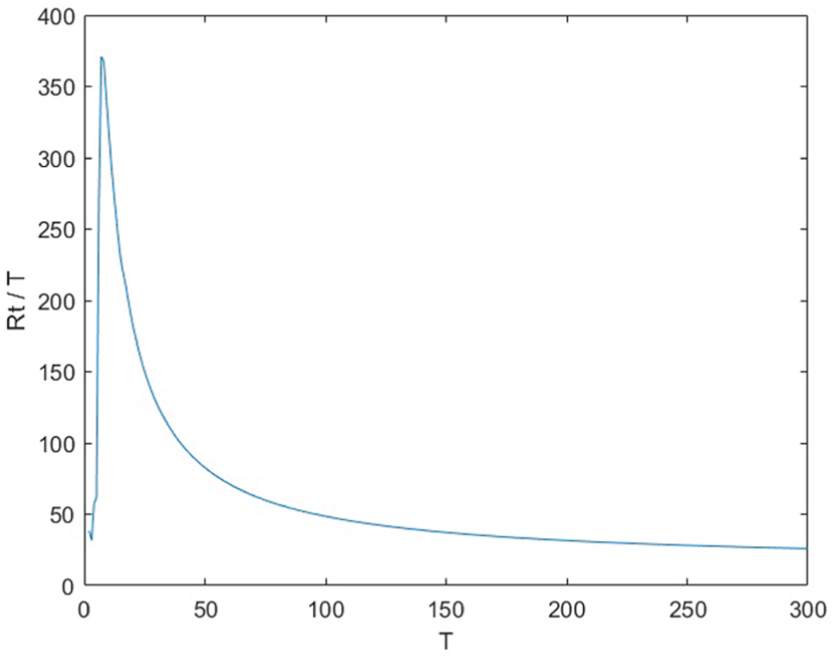
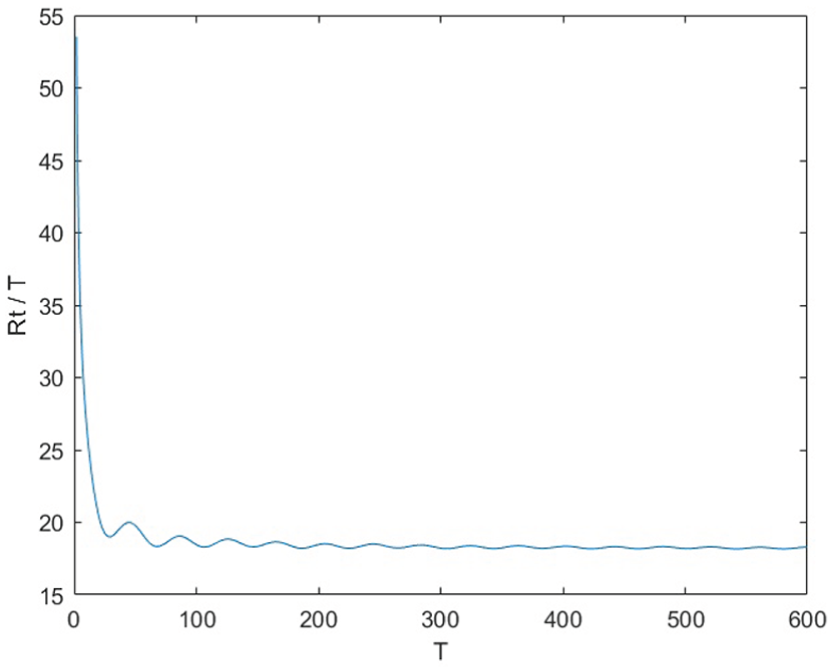
In this experiment, we set , . For the parameters in the proposed algorithm, we choose , , and . As clearly illustrated in Figure 2, the average regret converges consistently to a constant value over time, demonstrating the stability and effectiveness of the algorithm in both static and time-varying settings.
Evolution of average regret with parameters , and .
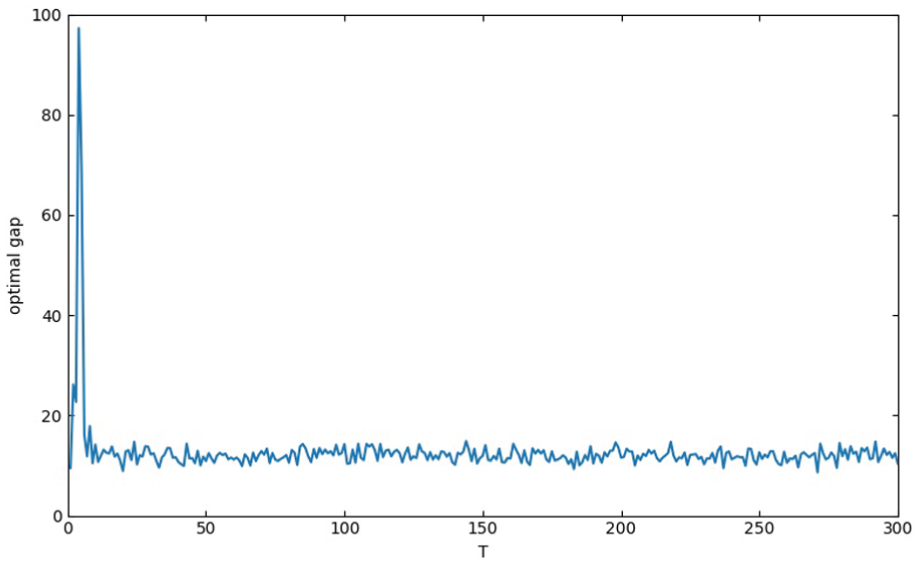
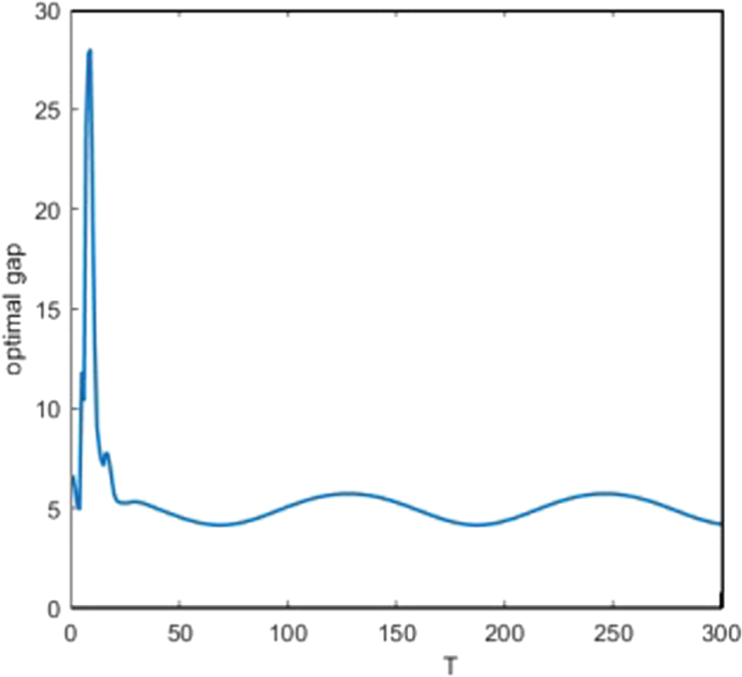
We define the optimality gap as and the variation of the optimality gap over time is plotted below in Figure 3.
Evolution of optimal gap for, , and .
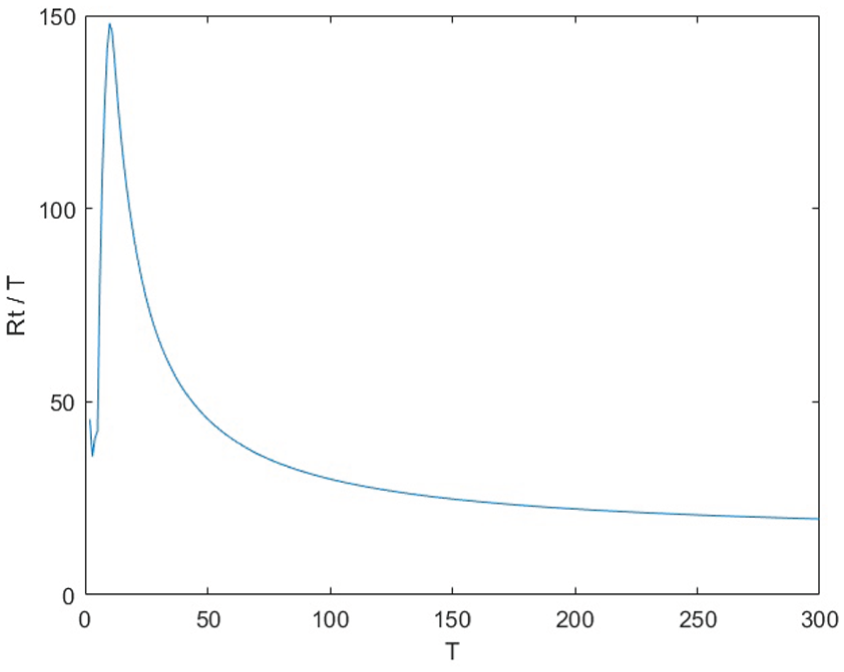
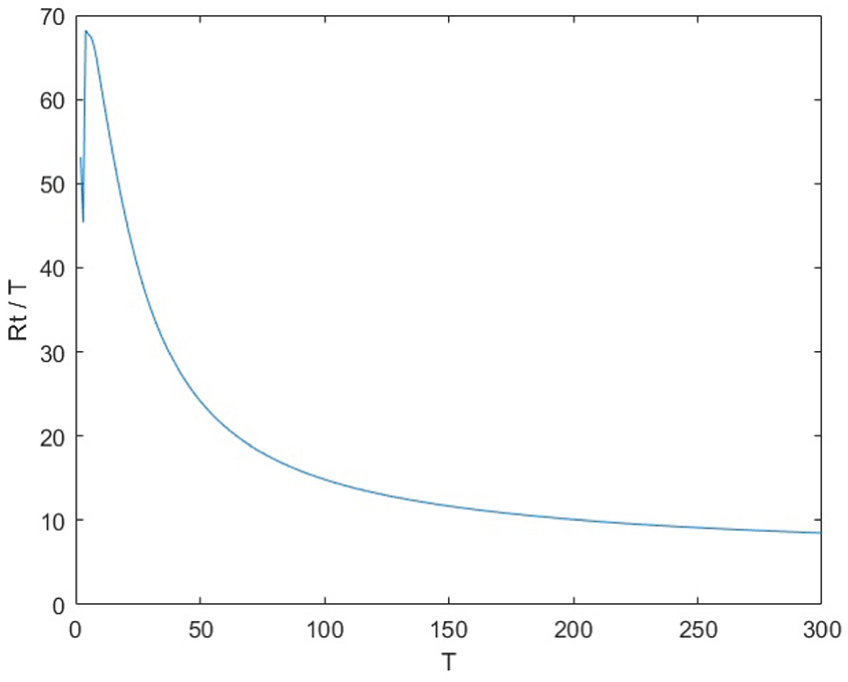
To highlight the effect of our gradient tracking method, we set , , and to observe the speed of convergence. This result is shown in Figure 4.
Evolution of average regret with parameters , and .
In this situation, the variation of the optimality gap over time is plotted in Figure 5.
Evolution of optimal gap for , , and .
From the simulation results, it is seen that as the weight of tracking term decreases, the convergence speed slows down.
Here, we provide a simulation example the A-DAGT algorithm with heavy-ball term in Chen et al. (2024). By setting , , and , the speed of convergence is shown in Figure 6.
Evolution of average regret with parameters , , and for A-DAGT algorithm with heavy-ball term.
To compare with the projected aggregative tracking algorithm in Carnevale et al. (2022), we assume that the objective function is the aforementioned , while imposing no restrictions on the graph, which is defined as an undirected graph. Then, we let and . The speed of convergence is shown in Figure 7.
Evolution of average regret with parameters , , and for the projected aggregative tracking algorithm in Carnevale et al. (2022).
Based on the above simulation result, by adjusting the parameters , and m, our algorithm can achieve the same convergence rate as the A-DAGT algorithm with the above two algorithms.
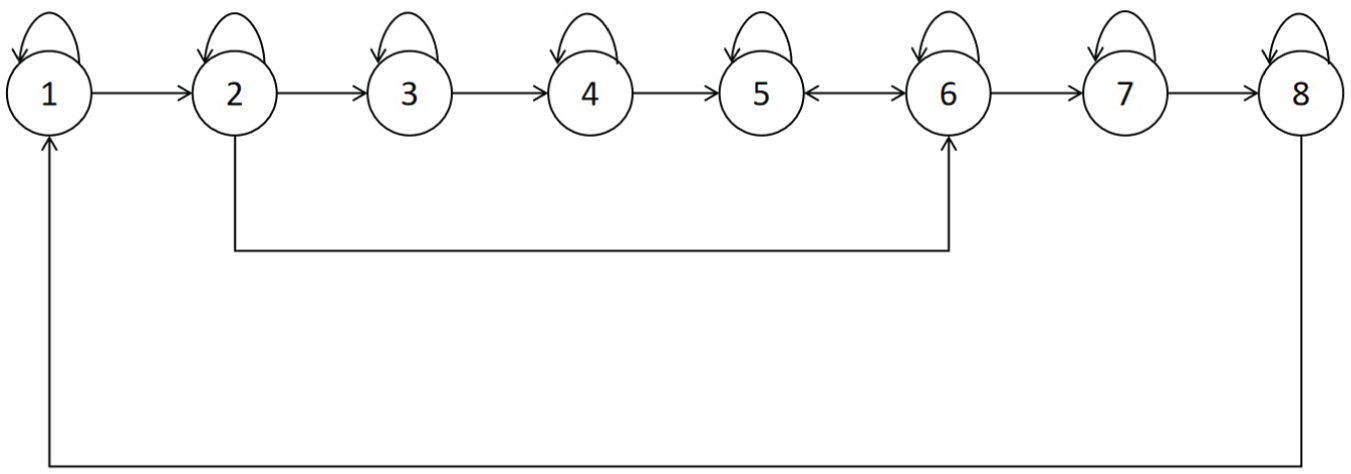
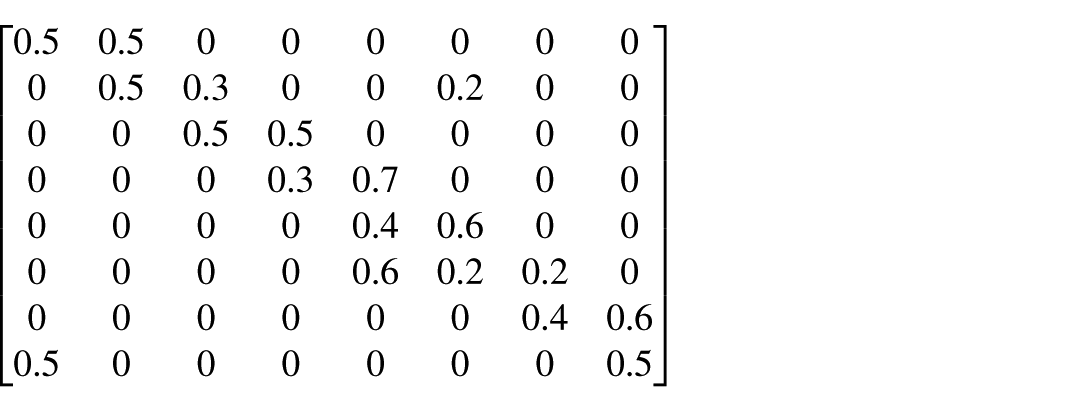
In what follows, an extra simulation is conducted for an optimal resource allocation setting. To be specific, consider eight fixed terminals with resource demand , and a central server who needs to allocate resource to these terminals, where the feasible range of each terminal is , and an aggregative term is introduced to reflect the user’s experience. The eight robotics can exchange information in such a communication graph Figure 8.
Communication graph for eight terminals.
The adjacency matrix is:
In the above setting, the objective function is formulated as:
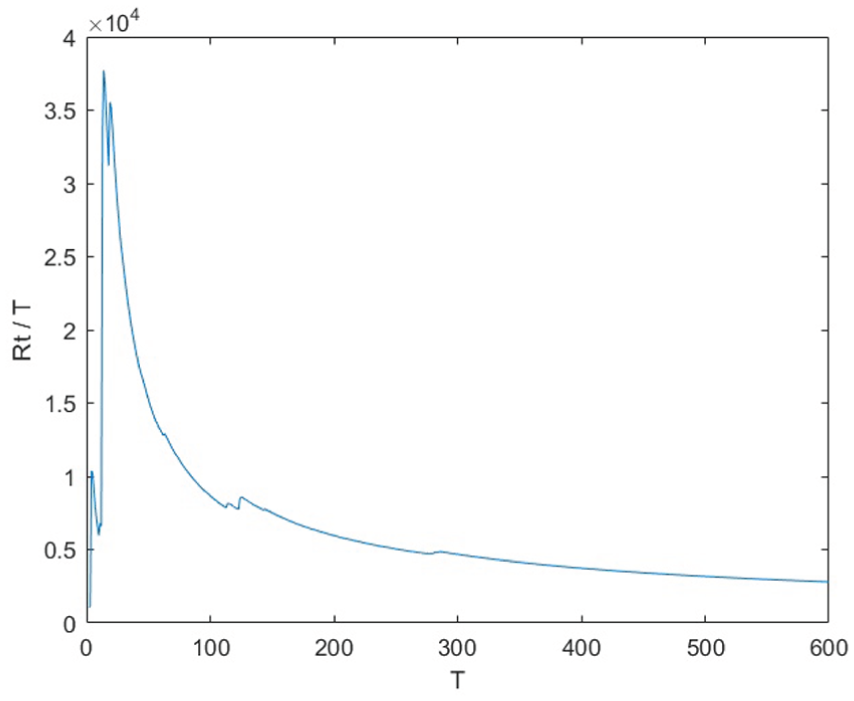
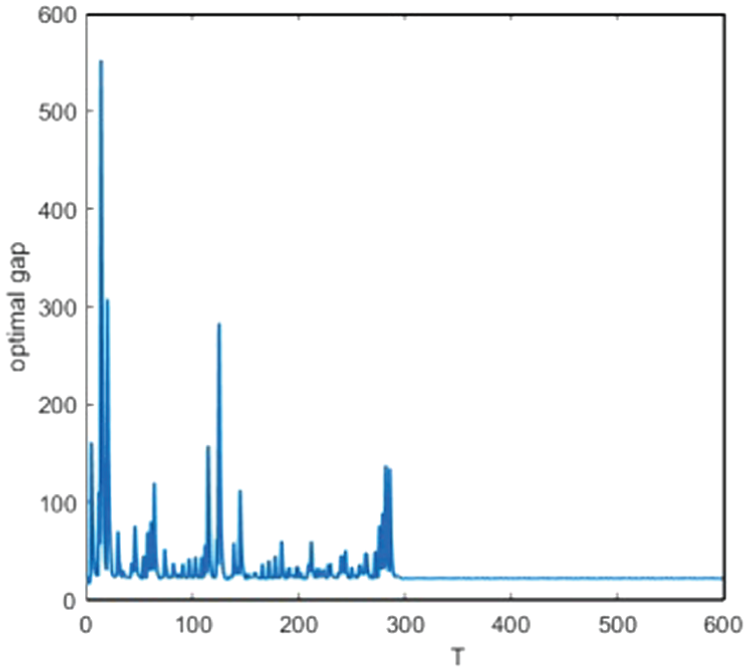
where , , , , , , , , , and . Let , , and , the average regret and the variation of optimality gap are plotted in Figures 9 and 10, respectively. Clearly, the proposed algorithm (5a) to (5e) still works in optimal resource allocation setting.
Evolution of average regret with parameters , , and for resource allocation problem.
Evolution of optimal gap with parameters , , and for resource allocation problem.
Conclusions
This paper has investigated online DAO of MASs over directed graphs characterized by row-stochastic mixing matrices, where each agent possesses a time-varying cost function determined by its individual decision variable and a global aggregative variable. First, we have proposed a novel accelerated distributed algorithm incorporating gradient tracking and dynamic consensus mechanisms. Then, the designed algorithm has integrated heavy-ball momentum to enhance convergence speed, and the linear convergence rate has been rigorously analyzed as well. In final, the theoretical results have been validated in the multi-robot target tracking scenarios to show the effectiveness of algorithm.
Footnotes
Appendix 1
Acknowledgements
The author thanks the anonymous reviewers and the Associate Editor for their valuable comments and suggestions, which helped improve the quality of this manuscript.
ORCID iD
Jiahui Fang
Ethical considerations
This article does not contain any studies with human or animal participants. There are no human participants in this article and informed consent is not required.
Consent to participate
Not applicable.
Consent for publication
Not applicable.
Funding
The authors received no financial support for the research, authorship, and/or publication of this article.
Declaration of conflicting interests
The author declared no potential conflicts of interest with respect to the research, authorship, and/or publication of this article.
Data availability statement
The data that support the findings of this study are available from the corresponding author upon reasonable request.
References
1.
BraunPGrüneLKellettCM, et al. (2016) A distributed optimization algorithm for the predictive control of smart grids. IEEE Transactions on Automatic Control61(12): 3898–3911.
2.
CarnevaleGCamisaANotarstefanoG (2022) Distributed online aggregative optimization for dynamic multirobot coordination. IEEE Transactions on Automatic Control68(6): 3736–3743.
3.
ChenLWenGFangX, et al. (2024) Achieving linear convergence in distributed aggregative optimization over directed graphs. IEEE Transactions on Systems, Man, and Cybernetics: Systems54(7): 4529–4541.
4.
ChenMWangDWangX, et al. (2023) Distributed aggregative optimization via finite-time dynamic average consensus. IEEE Transactions on Network Science and Engineering10(6): 3223–3231.
5.
DoostmohammadianMRabieeHR (2025) Momentum-based accelerated algorithm for distributed optimization under sector-bound nonlinearity. arXiv. https://doi.org/10.48550/arXiv.2506.22855
6.
DoostmohammadianMRameshNKAghasiA (2025) Delay-tolerant augmented-consensus-based distributed directed optimization. Systems & Control Letters205: 106260.
7.
HornRAJohnsonCR (2012) Matrix analysis. Cambridge University Press.
8.
HuangJYangCWuS, et al. (2025) Distributed aggregative optimization algorithm for solving multi-robot formation problem. IEEE Transactions on Control of Network Systems12(3): 2102–2114.
9.
LiXXieLHongY (2021) Distributed aggregative optimization over multi-agent networks. IEEE Transactions on Automatic Control67(6): 3165–3171.
10.
LiuJChenSCaiS, et al. (2025) Accelerated distributed aggregative optimization. IEEE Transactions on Automatic Control70(9): 5792–5807.
11.
PanWXuXLuY, et al. (2023) Distributed Nash equilibrium learning for average aggregative games: Harnessing smoothness to accelerate the algorithm. IEEE Systems Journal17(3): 4855–4865.
12.
RahiliSRenW (2016) Distributed continuous-time convex optimization with time-varying cost functions. IEEE Transactions on Automatic Control62(4): 1590–1605.
13.
ReisizadehHTouriBMohajerS (2022) Distributed optimization over time-varying graphs with imperfect sharing of information. IEEE Transactions on Automatic Control68(7): 4420–4427.
14.
SongCWuCLvZ, et al. (2020) Distributed heavy-ball Nash equilibrium seeking algorithm in aggregative games. In: 2020 39th Chinese control conference (CCC), Shenyang, China, 27–29 July 2020, pp.5019–5024. IEEE.
15.
SunYScutariGPalomarD (2016) Distributed nonconvex multiagent optimization over time-varying networks. In: 2016 50th Asilomar conference on signals, systems and computers, Pacific Grove, CA, 6–9 November 2016, pp.788–794. IEEE.
16.
TuranBUribeCAWaiHT, et al. (2020) Resilient primal–dual optimization algorithms for distributed resource allocation. IEEE Transactions on Control of Network Systems8(1): 282–294.
17.
XiCMaiVSXinR, et al. (2018) Linear convergence in optimization over directed graphs with row-stochastic matrices. IEEE Transactions on Automatic Control63(10): 3558–3565.
18.
YangZPanXZhangQ, et al. (2020) Distributed optimization for multi-agent systems with time delay. IEEE Access8: 123019–123025.
19.
ZhangYDall’AneseEHongM (2021) Online proximal-ADMM for time-varying constrained convex optimization. IEEE Transactions on Signal and Information Processing over Networks7: 144–155.
20.
ZhaoJHuHHanY, et al. (2023) A review of unmanned vehicle distribution optimization models and algorithms. Journal of Traffic and Transportation Engineering10(4): 548–559.