This article addresses the problem of trajectory tracking control of a quadrotor with unknown mass and external disturbances. Adaptive sliding mode control (ASMC) approach integrated with a radial basis function neural network (RBFNN) is proposed to enhance the tracking performance of the quadrotor. To cope with model uncertainties arising from unknown mass and external disturbances, adaptive laws based on RBFNN are employed to estimate and compensate for these unknowns in real time. The stability of the closed-loop system is rigorously established for each control stage using the Lyapunov theory. The effectiveness of the proposed control methodology is validated through numerical simulations under various scenarios, including unknown mass and external disturbances, and its performance is benchmarked against both sliding mode control (SMC) and ASMC approaches. The results illustrate the enhanced performance of the suggested RBFNN-ASMC technique under unknown mass and external disturbances, generating considerable reductions in root mean square error (RMSE) and improved on-track percentage (OTP).
Quadrotor unmanned aerial vehicles (QUAVs) are widely employed in civilian and military applications due to their VTOL capability, hovering, agility, and payload capacity (Labbadi et al., 2022; Raza et al., 2020; Zhang et al., 2018). In agriculture, they enable precision tasks such as crop spraying, and improving efficiency and productivity (Desa et al., 2023; Hanif et al., 2022; Saeed et al., 2023; Shaw and Vimalkumar, 2020). These growing applications have driven continuous research in advanced flight control systems to improve performance and autonomy.
Over the past decade, numerous sophisticated control strategies have been devised and refined for the 6-degree-of-freedom (6DOF) model to enhance the stability and position-tracking capabilities of QUAVs. To address the quadrotor’s tracking control problem, linear control techniques such as proportional–integral–derivative (PID), linear-quadratic regulator (LQR), , and 2DOF have been proposed (Araar and Aouf, 2014; Dong et al., 2013; Li and Li, 2011; Martins et al., 2019; Saeed et al., 2022). The above-mentioned control schemes rely on local linearization, and as the flight condition deviates from hovering, their performance deteriorates and may even result in instability.
To overcome the limitations introduced by local linearization and to handle model uncertainties and external disturbances, numerous nonlinear control schemes have been proposed for quadrotor trajectory tracking. To tackle the path-following problem of a quadrotor with uncertain parameters and external disturbances, the sliding mode control (SMC) technique with fixed sliding gain has been suggested (Almakhles, 2019; Elmokadem et al., 2016; Eltayeb et al., 2020). SMC is an effective control technique due to its high robustness to model uncertainties and external disturbances.
Numerous adaptive sliding mode control (ASMC) strategies have been developed for quadrotor reference tracking to enhance robustness against parametric uncertainties (Bouadi et al., 2011; Mofid and Mobayen, 2018), external disturbances (Brahim et al., 2023; Darwito and Indayu, 2023; Mofid et al., 2020; Wang et al., 2020), and the combined effects of both parametric variations and external disturbances (Eltayeb et al., 2022; Huang and Yang, 2022; Vahdanipour and Khodabandeh, 2019; Weng et al., 2024; Xie et al., 2021; Zhao et al., 2021). In Bouadi et al. (2011), ASMC was utilized for quadrotor altitude tracking and attitude stabilization under parametric uncertainties. Adaptive control laws were designed to estimate the parameters of the 4DOF model to compensate for variations in mass and moments of inertia. In Mofid and Mobayen (2018), ASMC was designed using a proportional–integral (PI) sliding surface for quadrotor position tracking under parametric uncertainties. Adaptation laws were formulated to estimate the unknown constant parameters. In Mofid et al. (2020), an adaptive PID-SMC scheme was proposed for quadrotor position tracking under external disturbances. Adaptation laws were developed to estimate the external disturbances, while parametric uncertainty was not considered. In Wang et al. (2020), a finite-time disturbance observer-based terminal SMC strategy was proposed for position tracking of a quadcopter. External disturbances were considered in all six channels, namely, the translational axes and the rotational axes . The model parameters were assumed constant; hence, parametric uncertainties were not included in the control design. In Brahim et al. (2023), ASMC was developed for trajectory tracking of a 4DOF quadrotor model to handle external disturbances and actuator constraints. The hyperbolic tangent function was employed in the control law to achieve a smoother control signal. In Darwito and Indayu (2023), an SMC scheme based on an adaptive neuro-fuzzy inference system was designed for quadrotor position tracking to handle external disturbances in the translational dynamics (x, y, and z axes). In Vahdanipour and Khodabandeh (2019), an ASMC scheme based on the backstepping strategy was proposed for position control of a quadrotor with variable mass. The adaptive estimation controller was designed to estimate the system mass. To address external disturbances and inertia variations, a fractional-order SMC was employed. In Xie et al. (2021), an adaptive backstepping SMC strategy was suggested for the 6DOF model of a quadrotor to follow a desired path. Adaptive laws were used to estimate the unknown constant mass and moments of inertia. Moreover, a disturbance estimator was incorporated into the proposed control law to enhance robustness against external disturbances. In Zhao et al. (2021), an adaptive terminal SMC scheme for a 6DOF quadrotor model was presented. In this approach, mass and external disturbances were estimated online. However, it is important to note that the effects of unknown mass and external disturbances were not considered simultaneously in this study. In Eltayeb et al. (2022), an integral ASMC strategy was suggested for quadrotor reference tracking subjected to variable mass and external disturbances. Adaptive laws were utilized to estimate external disturbances. In addition, an adaptive switching gain mechanism was employed to handle parametric uncertainty without explicitly estimating the unknown mass of the quadrotor. To reduce chattering, the tanh function was used in the control law. In Huang and Yang (2022), an adaptive neural network–based nonsingular fast terminal SMC scheme was proposed for quadrotor trajectory tracking under model uncertainties and external disturbances. A disturbance observer was designed to estimate external disturbances online, while radial basis function neural network (RBFNN)-based adaptive laws were employed to approximate the model uncertainty term representing the effects of parameter variations. In Weng et al. (2024), a cascaded adaptive control scheme was suggested for QUAV position control with varying mass and external disturbances. Adaptive laws were formulated to estimate the mass and external disturbances. ASMC was employed in the outer-loop subsystem to track the position of the quadrotor, while in the inner-loop subsystem, adaptive recursive SMC was developed to drive the attitude tracking error to zero.
Although various adaptive and neural network–based control strategies have been proposed in the literature to enhance the tracking performance of quadrotor UAVs, existing studies lack distinct RBFNN-based adaptive control laws to estimate the unknown mass and external disturbances. To bridge this gap, this study presents RBFNN-ASMC scheme designed to achieve precise position tracking under unknown mass and the combined effects of mass variation and external disturbances. In the proposed framework, the unknown mass is adaptively estimated using RBFNN-based adaptive law, while separate RBFNN-based adaptive laws are employed to estimate external disturbances in real time.
Contributions
Compared with previous studies, the main contributions of this article are summarized as follows:
ASMC scheme based on RBFNN is developed for precise quadrotor position tracking under unknown mass and external disturbances. The proposed approach integrates a neural network with the SMC framework to effectively handle system nonlinearities, mass variations, and external perturbations.
Distinct RBFNN-based adaptive laws are formulated to estimate the unknown mass and external disturbances in real time, enabling dynamic control adaptation.
Closed-loop stability is ensured through Lyapunov theory, and the effectiveness of the proposed RBFNN-ASMC strategy is validated via simulations, demonstrating superior root mean square error (RMSE) and on-track percentage (OTP) performance compared to the SMC and ASMC schemes.
The rest of this article is organized as follows: Section Quadrotor dynamic model introduces the dynamic model of the system. Section Control design details the methodology adopted for the design of the ASMC. Simulation results, along with a brief discussion, are provided in Section Simulation results and discussions. Finally, Section Conclusion concludes the article, followed by the list of references.
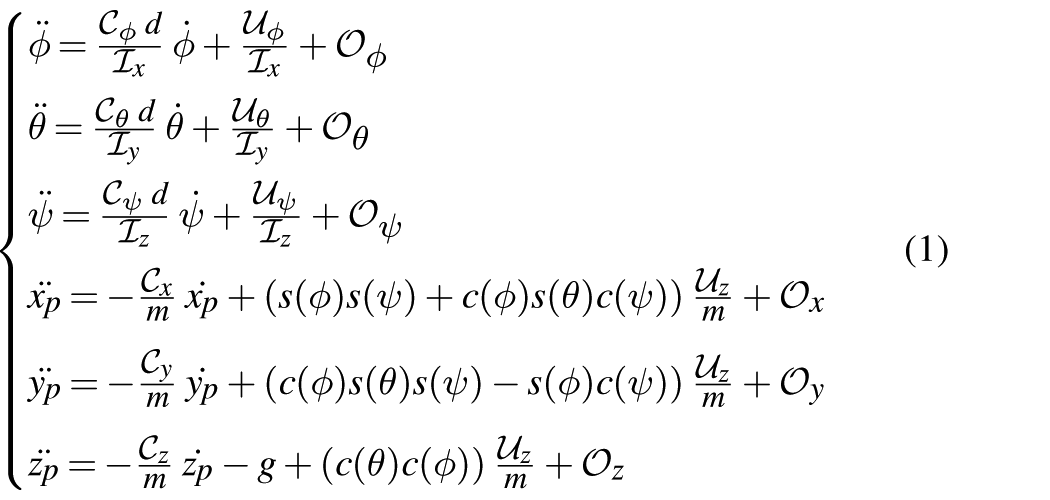
where , , and are the linear positions, ϕ, θ, and ψ are the angular positions, , , and are the rolling, pitching, and yawing moments, are the moments of inertia, d is the arm length, m is the unknown mass, g is the gravitational acceleration, is the upward force, and denote and , and and () are the drag coefficients and external disturbances. The external disturbance is assumed to be unknown but bounded, such that , where represents the known upper bound of the disturbance (Wei et al., 2025).
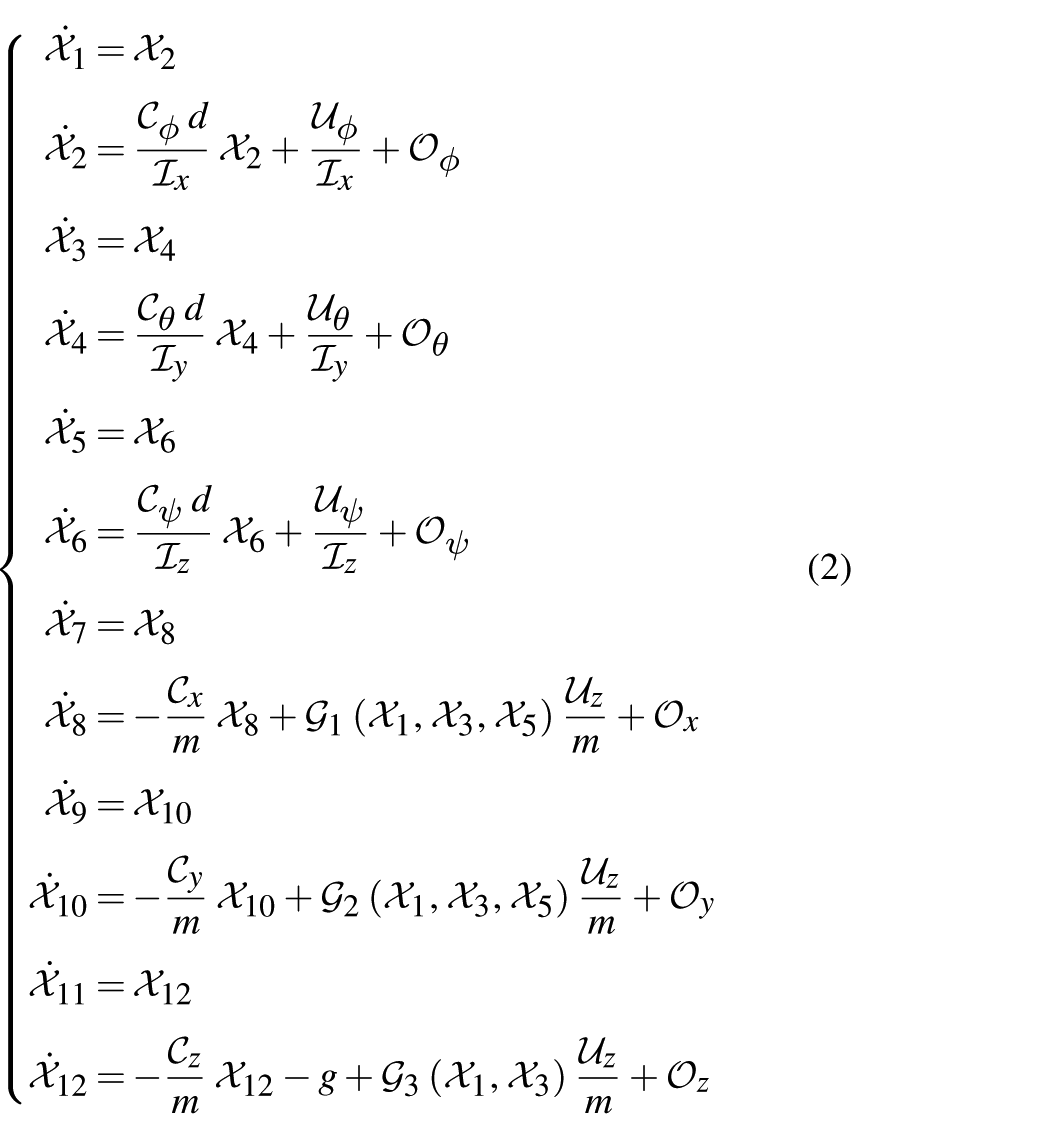
The state space model can be written in the form of equation (1) as follows:
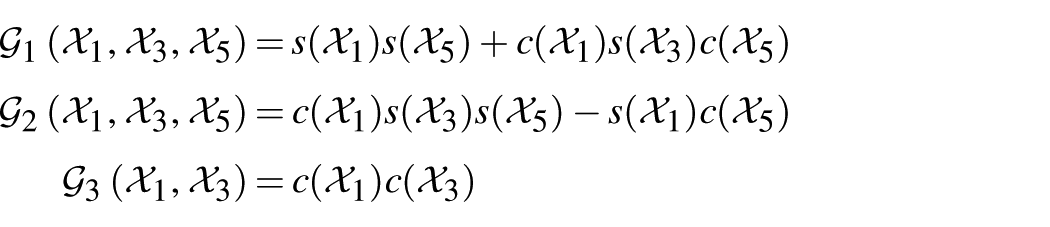
where
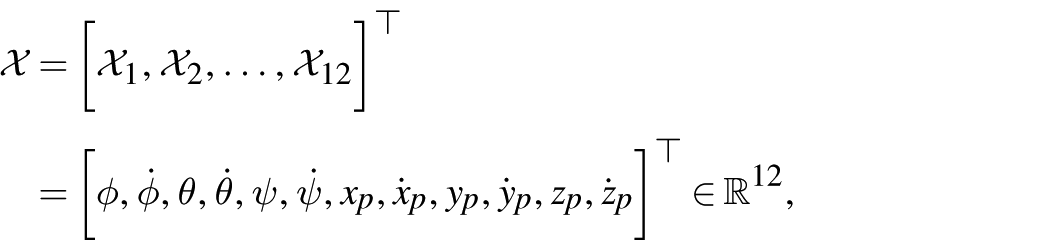
where denotes the state vector of the system.
Control design
To ensure robust quadrotor position tracking under unknown mass and external disturbances, an RBFNN-based ASMC is developed. Based on the dynamics, the control system is split into two subsystems.
The inner loop subsystem comprises , , and .
The outer loop subsystem comprises , , and .
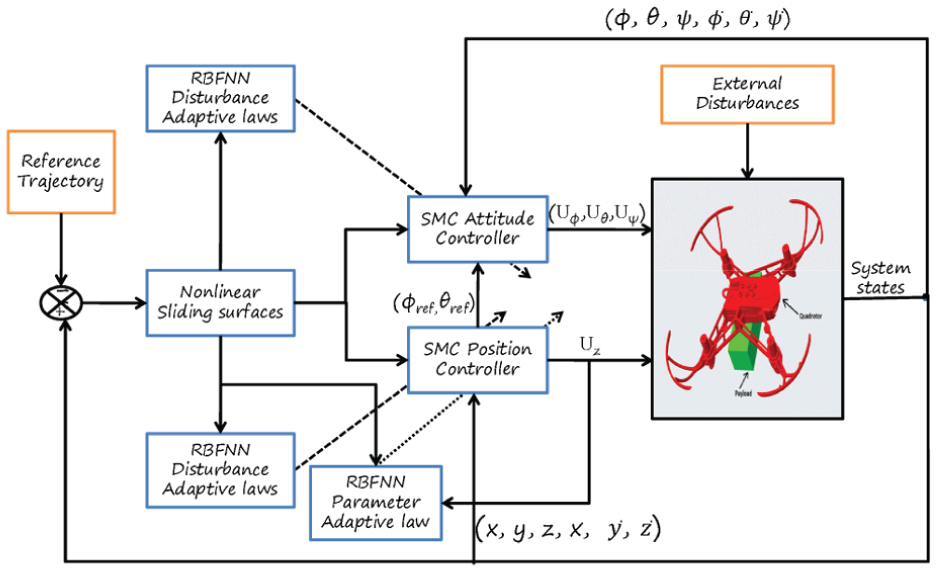
RBFNNs are employed in both the inner and outer control loops to enhance system adaptability and robustness. In the inner loop, they are utilized to estimate the external disturbances acting on the system, while in the outer loop, they are designed to estimate the unknown mass and external disturbances in real time. Separate adaptive laws are formulated for estimating the disturbances acting along all six channels, as well as for the mass estimation. The overall block diagram of the closed-loop system is illustrated in Figure 1.
Closed-loop quadrotor system.
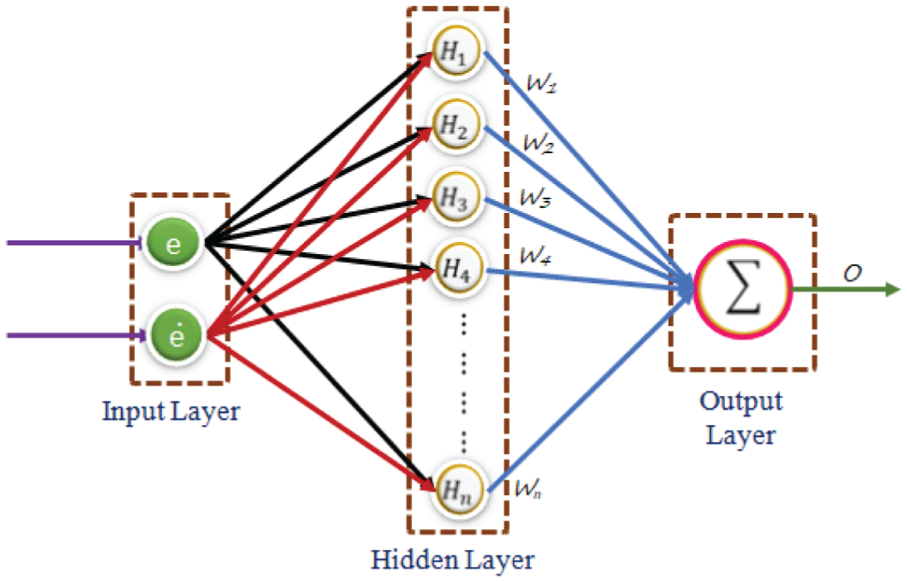
Figure 2 illustrates the architecture of the RBFNN, which is a three-layer feedforward neural network capable of adaptively approximating unknown system parameters and dynamics (Mahmood et al., 2025; Zhu et al., 2025). The input layer transmits the input vector to the hidden layer, where e and ė denote the tracking error and its derivative, respectively. The hidden layer output is computed using Gaussian activation functions as follows:
where represents the center of the Gaussian function corresponding to the neuron in the hidden layer, denotes its spread, and is the squared Euclidean distance between the input vector and the center of the Gaussian function. The output of the RBFNN is expressed as:
where denotes the estimated weight vector and δ represents the bounded approximation error satisfying .
RBFNN architecture.
Inner loop control design
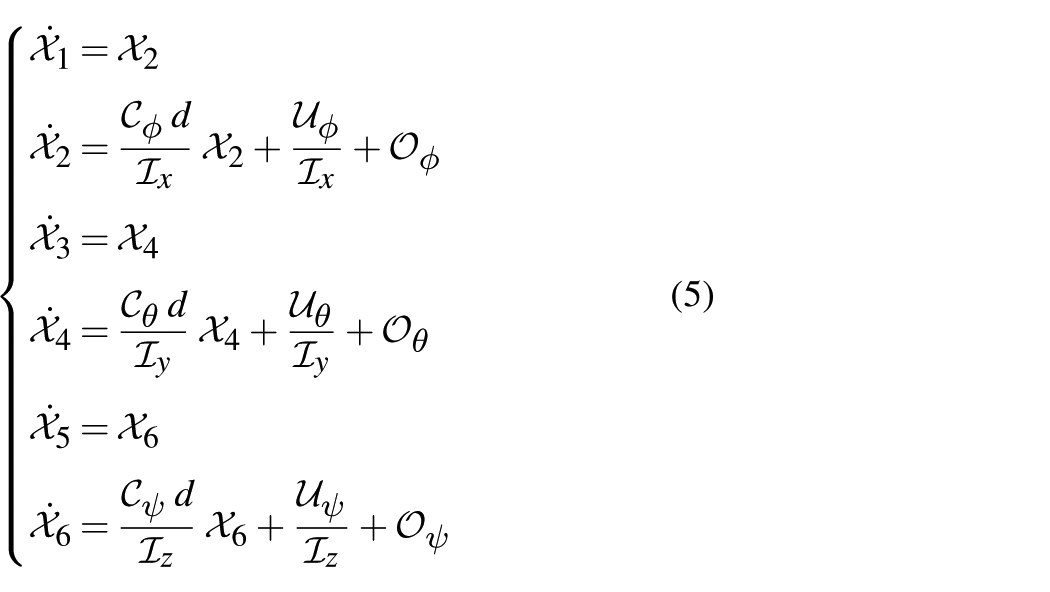
The 3DOF model of the inner loop subsystem is represented based on equation (2) as
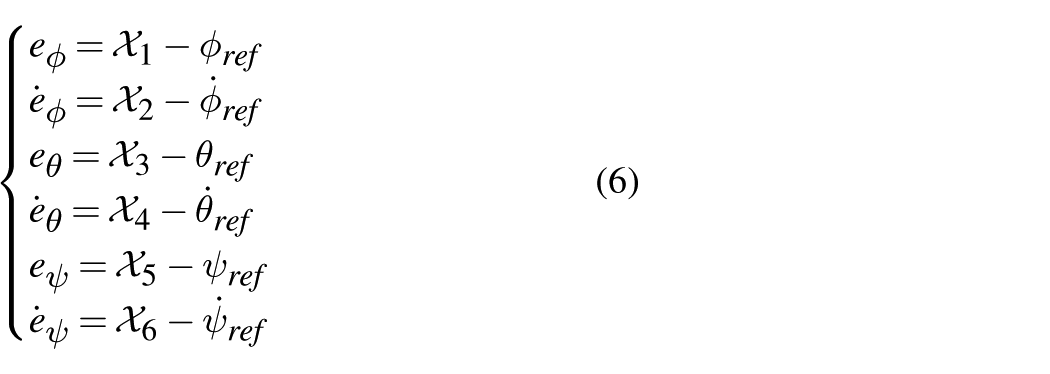
The state error can be defined as
The variables , , and indicate the desired attitude. To achieve the desired performance, SMC scheme based on a nonlinear sliding surface is proposed. The expression for the sliding surface is given by
Here, , with and representing the design parameters.
By applying the time derivative on in equation (7), we can obtain
Equation (11) indicates the SMC law for the roll dynamics. The parameter is the design gain chosen to ensure roll-axis stability.
Remark 1. Similarly, SMC control laws for pitch and yaw dynamics can be designed and are expressed as follows:
The parameters and denote the design control gains for the pitch and yaw dynamics, respectively.
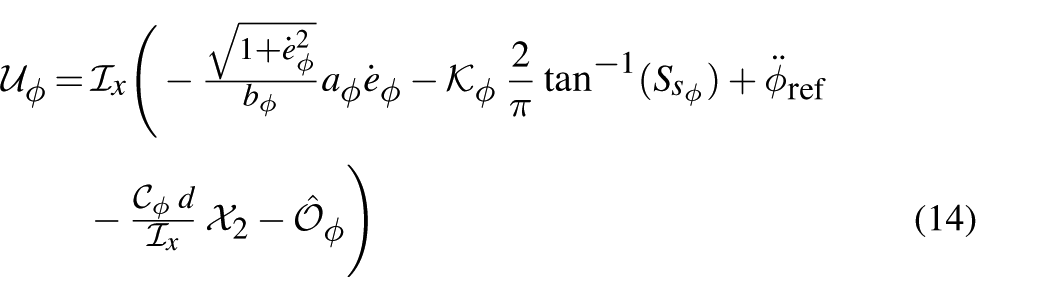
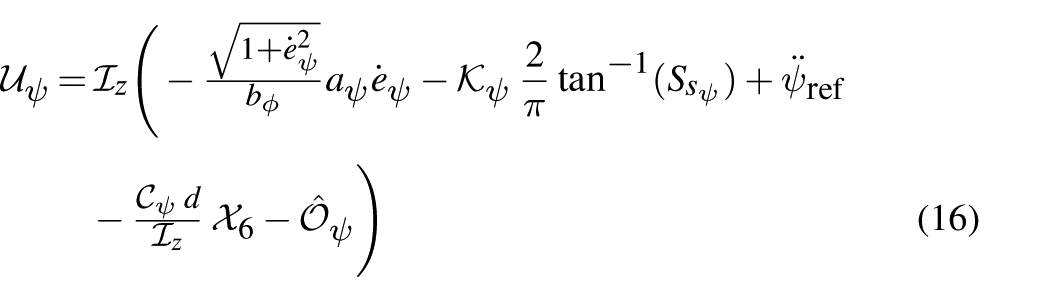
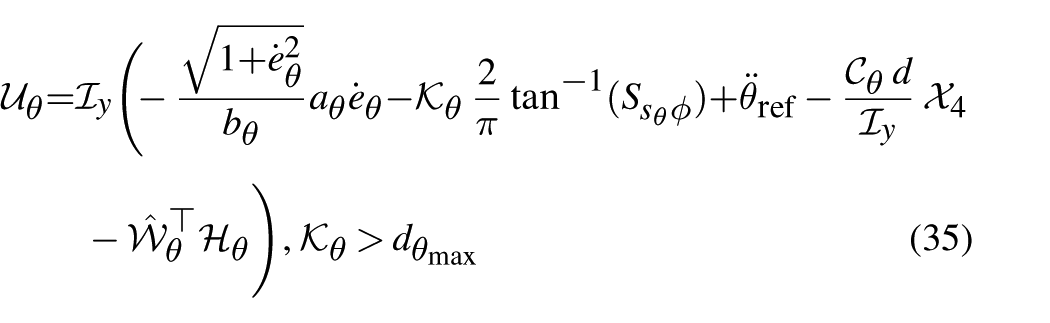
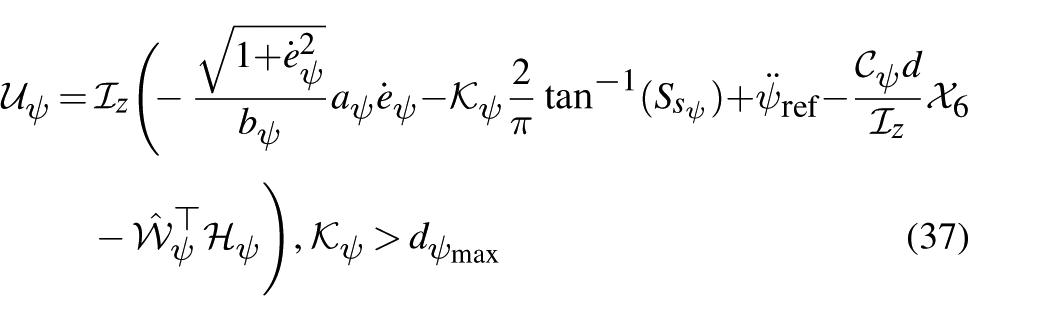
Due to the unknown disturbances, the control laws for the inner loop subsystem, derived from equations (11) to (13), are obtained as follows:
To reduce the chattering, the is approximated by .
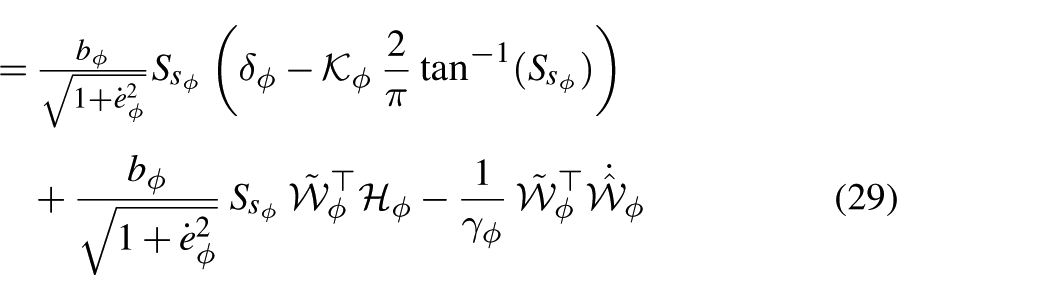
The unknown disturbances in the inner-loop channels (roll, pitch, and yaw) are approximated using RBFNNs. The estimated output of each RBFNN can be expressed as
where denotes the adaptive weight vector and represents the activation function vector of the ith RBFNN. Each element of is computed as
where represents the input error vector.
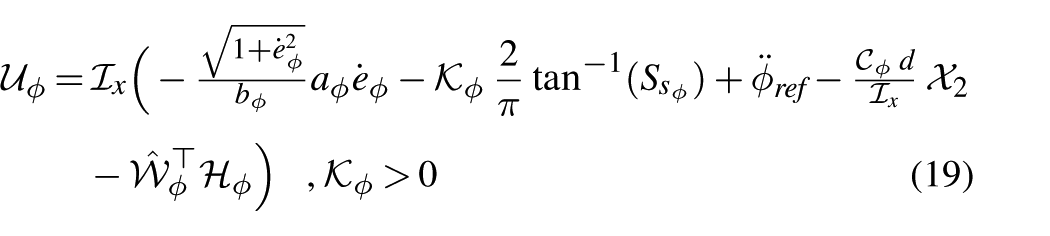
Theorem 1.For the roll dynamics, the ASMC law based on RBF neural network, formulated using equations (14) and (17), ensures that the roll angle tracks the desired trajectory and guarantees the asymptotic stability of the closed-loop system.
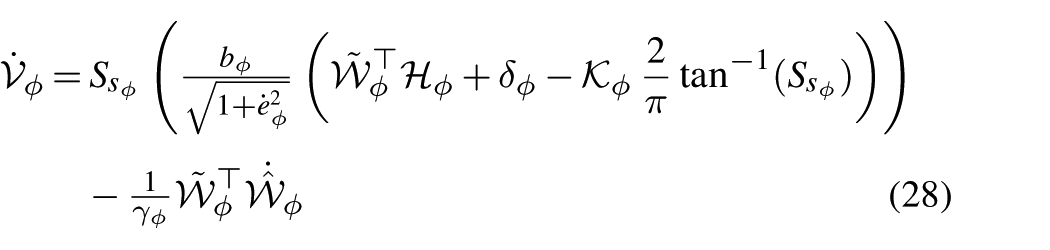
Proof: The asymptotic stability of the closed-loop system is established using the Lyapunov stability criterion. To establish roll dynamics stability, consider the Lyapunov function
Since the estimation error is assumed to be bounded as , the derivative of the Lyapunov function satisfies
To ensure that for all , the control gain is selected such that
This condition ensures that is strictly negative definite. Furthermore, holds only when . Therefore, it follows that as , and the closed-loop system is asymptotically stable.
Remark 2. RBFNN-based ASMC laws for pitch and yaw dynamics are derived similarly to the roll dynamics, yielding:
Outer loop control design
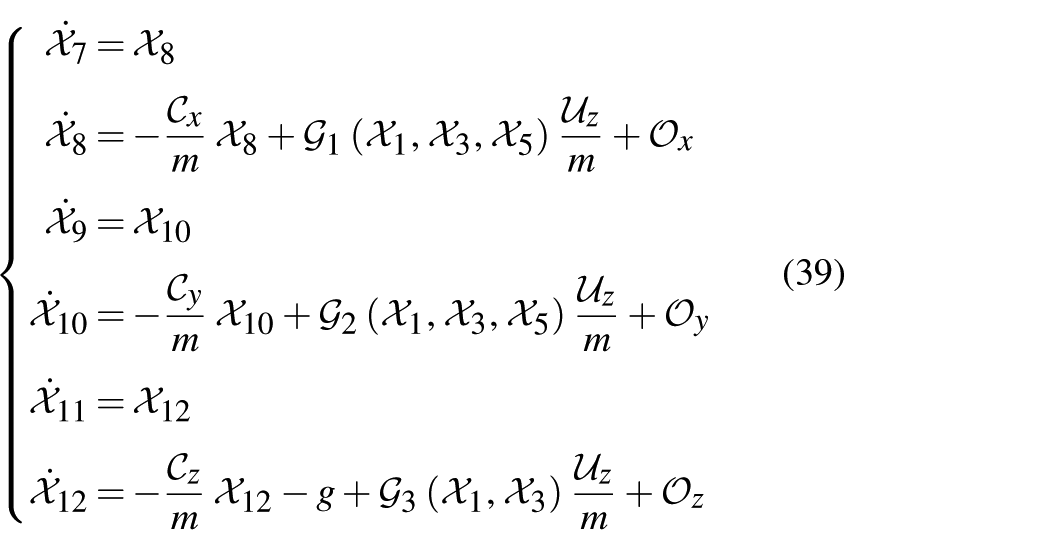
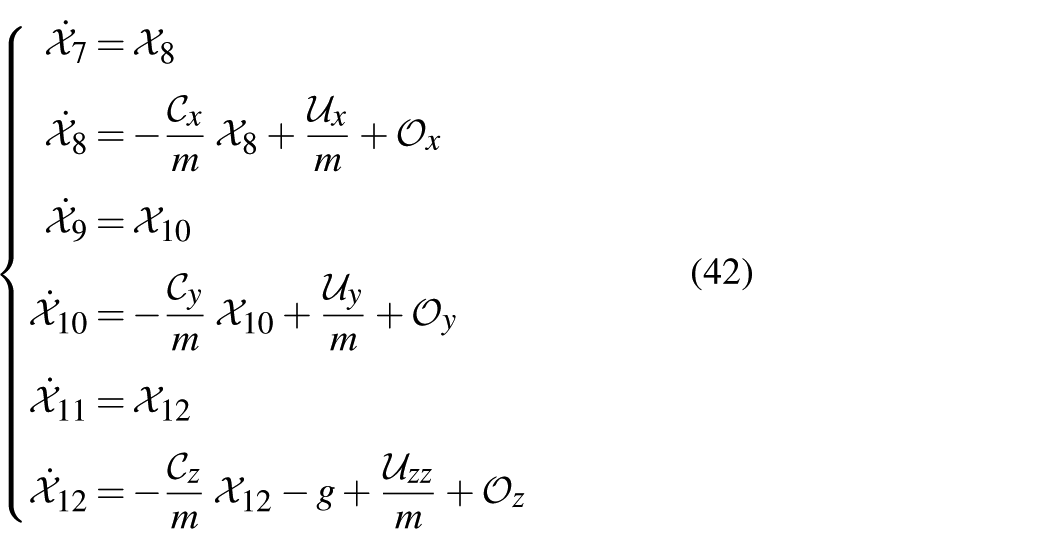
From equation (2), the outer loop state-space model is:
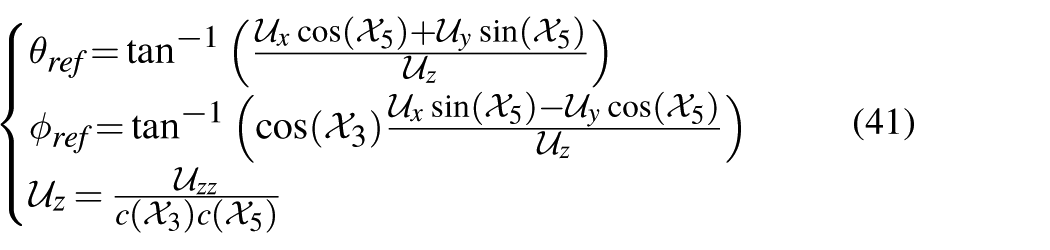
The virtual control inputs are
From equation (40), the desired attitudes , , and are given by
The notations , , and denote the desired positions. The nonlinear sliding surface for the outer-loop subsystem is given by
where and () are design parameters. Differentiating equation (44), yields
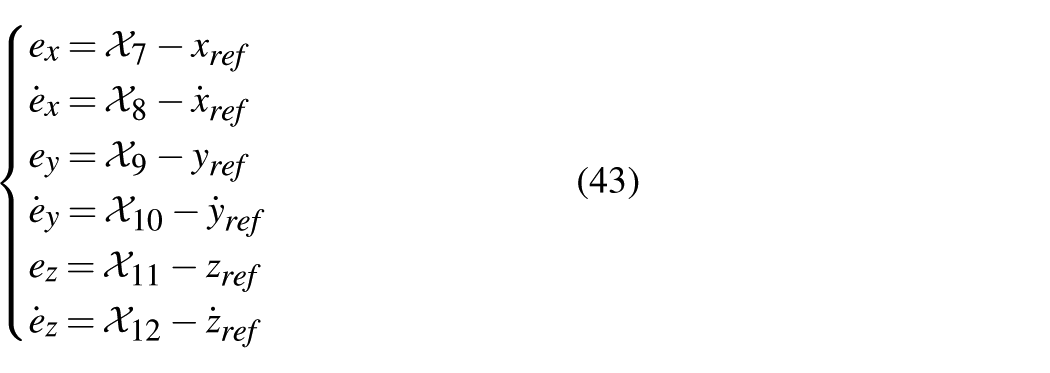
Using equations (42), (43), and (45), the SMC law for altitude control can be formulated as
Equation (49) gives the SMC law for altitude, with gains and that ensure stability and convergence.
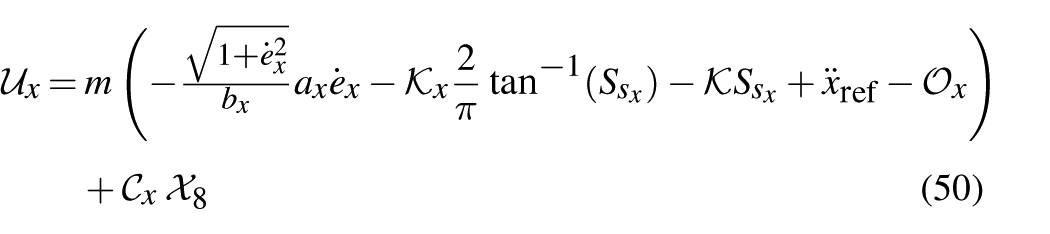
Remark 3. Likewise, the SMC laws for the x- and y-position dynamics can be expressed as
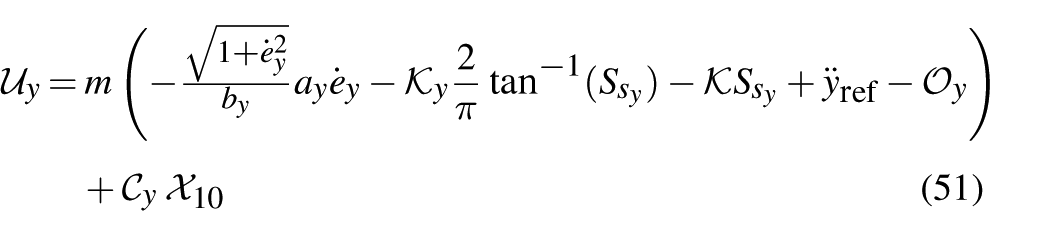
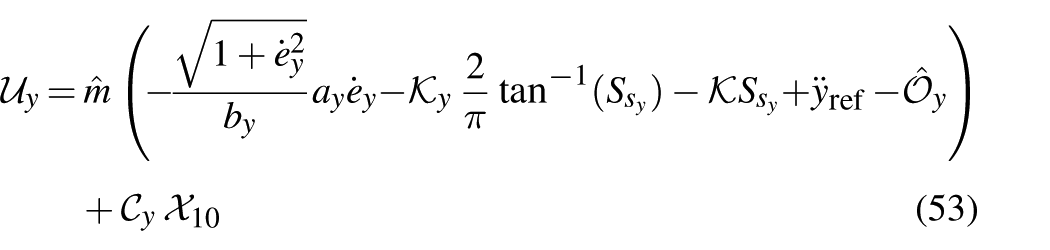
With unknown mass and disturbances, the position control laws (equations (49) to (51)) are
The unknown mass and disturbances in the outer loop are estimated using RBFNNs. The estimated outputs of these RBFNNs are defined as
where , , , and denote the adaptive weight vectors, while , , , and represent the corresponding activation function vectors of the RBFNNs.
Each element of (), and are computed as
where and denote the input error vectors.
Theorem 2.For a quadrotor with unknown mass and external disturbance, the ASMC law based on RBFNN, formulated using equations (54), (57), and (58), ensures altitude tracking and guarantees the asymptotic stability of the closed-loop system.
where
Proof: To establish the asymptotic stability of the altitude dynamics, we propose the following function as a Lyapunov candidate:
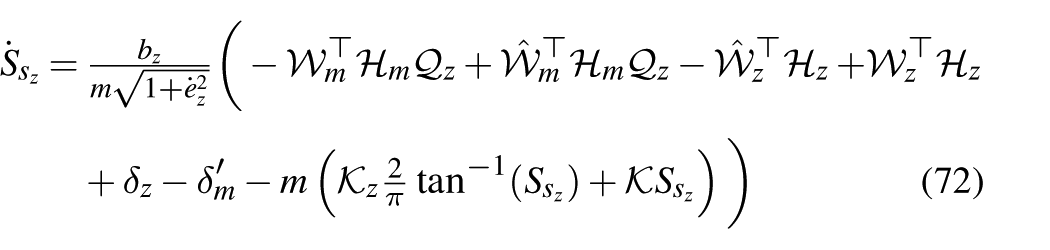
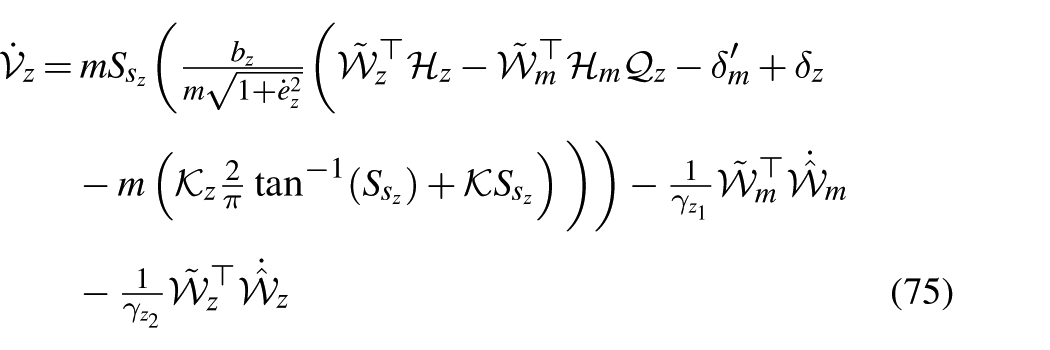
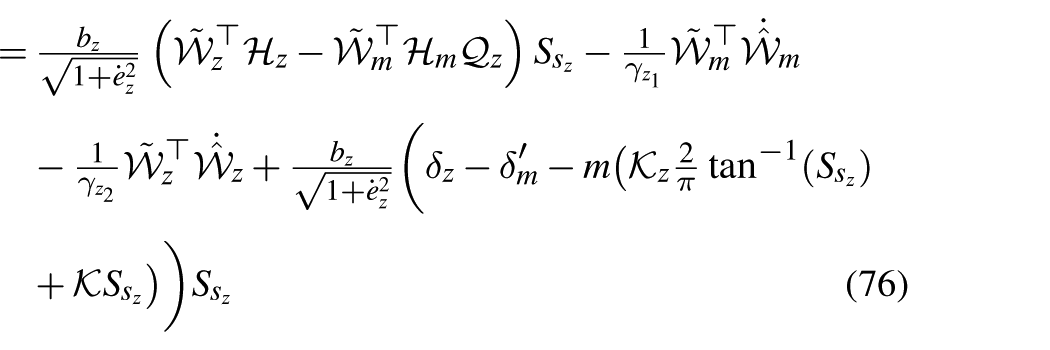
The time derivative of equation (66) yields the following result
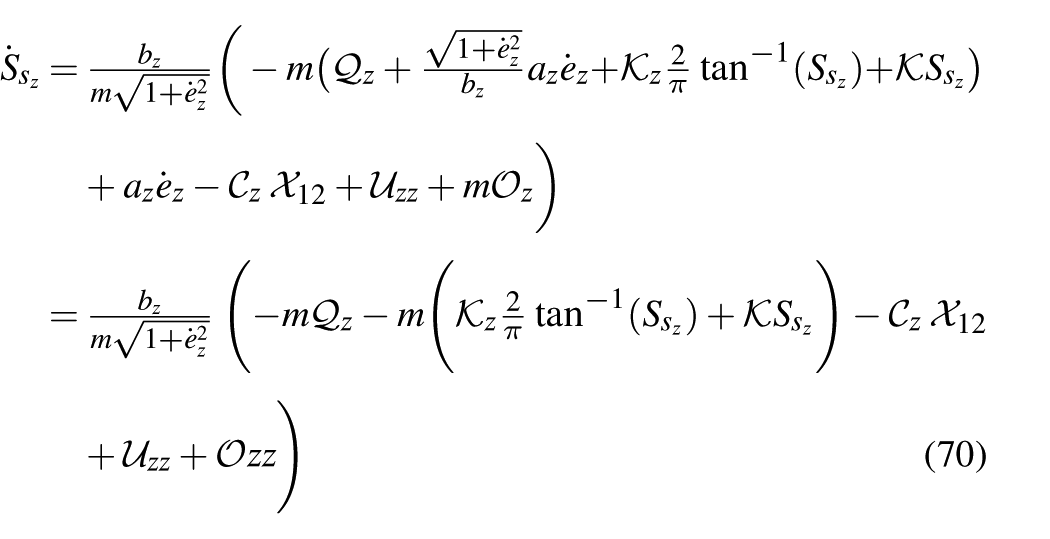
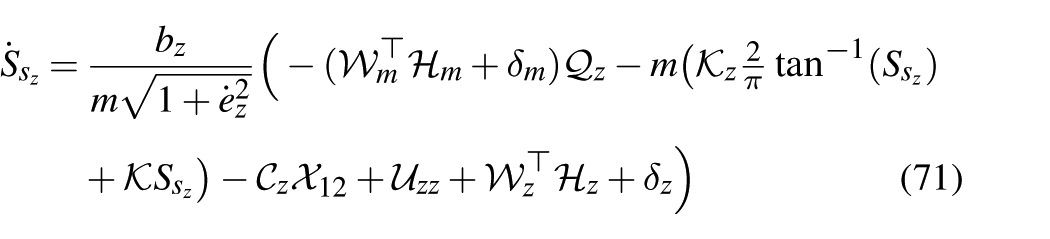
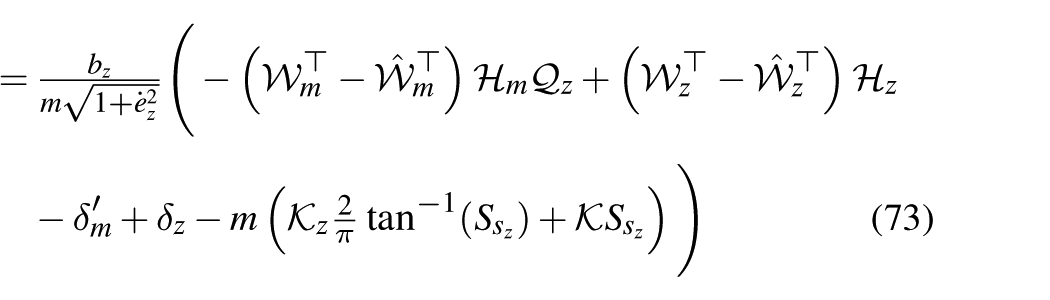
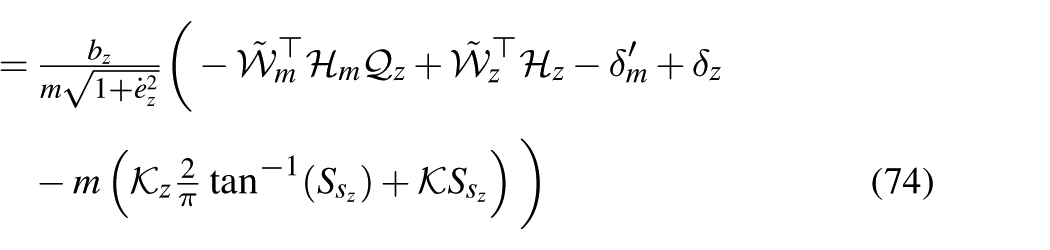
By substituting the adaptive laws defined in equations (63) and (64), which are designed to estimate the mass and altitude disturbance, respectively, equation (76) can be reduced to
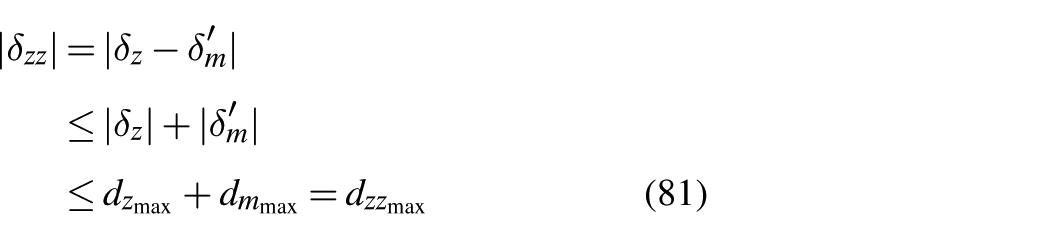
Since both and are assumed to be bounded, it follows that
Therefore, the Lyapunov derivative satisfies
To guarantee that for all , the control gain is selected to satisfy the following inequality:
where and denote the bounded positive mass variation.
This condition ensures that is strictly negative definite. Moreover, holds only when , implying that as . Consequently, the closed-loop system is asymptotically stable.
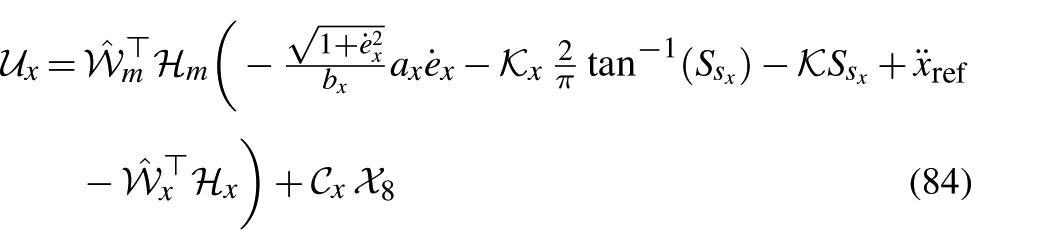
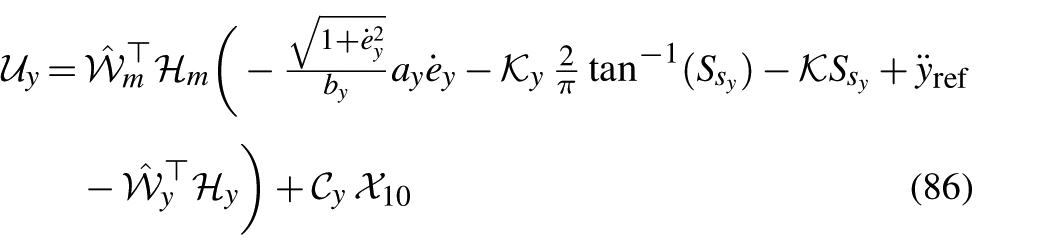
Remark 4. The processes for deriving the RBFNN-based ASMC laws in the x-position and y-position are similar to those in the z-position. The corresponding control laws are written as follows:
Simulation results and discussions
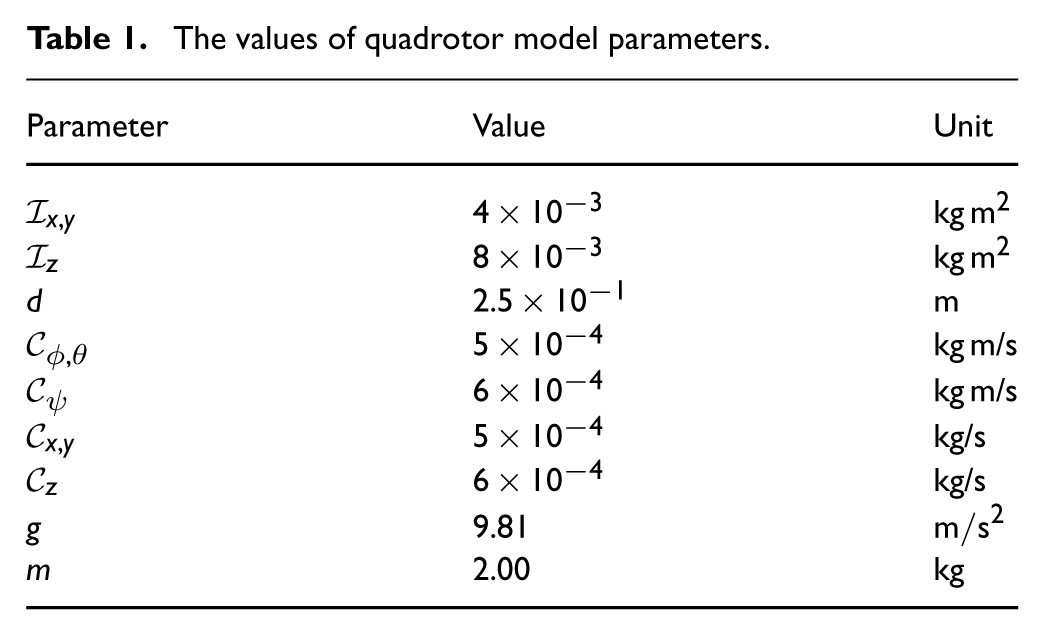
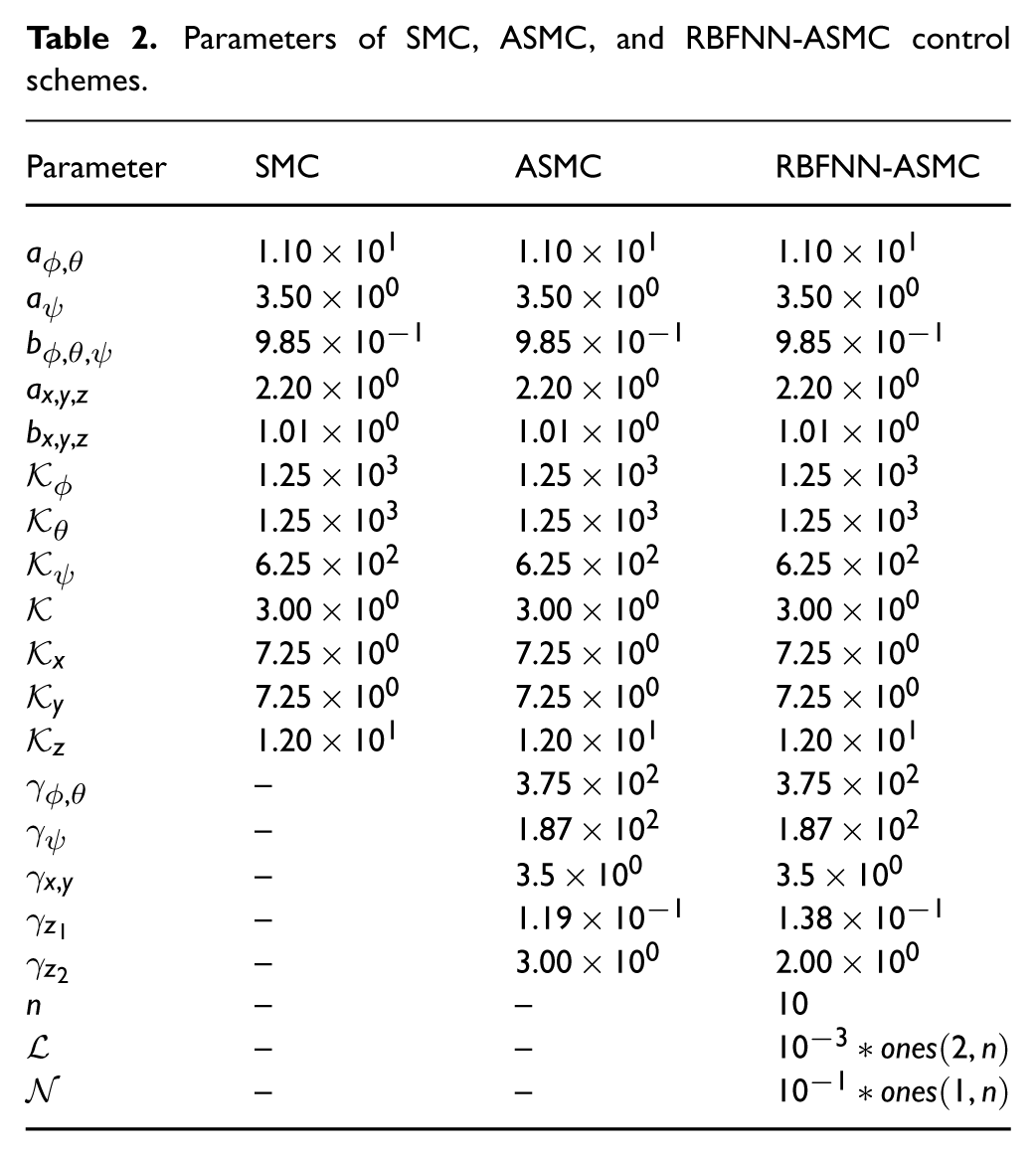
This section evaluates the proposed control scheme via MATLAB/Simulink simulations under unknown mass and external disturbances. The parameters of the quadrotor and the controllers used in the SMC, ASMC, and RBFNN-ASMC schemes are summarized in Tables 1 and 2. Three scenarios are considered: (1) position tracking with unknown mass; (2) position tracking with both unknown mass and external disturbances; and (3) position tracking with both unknown mass and stair-step disturbances. These scenarios are designed to comprehensively assess the controller’s performance under unknown mass condition and its robustness against combined mass variation and external disturbances. In all cases, the yaw angle tracks a 30∘ reference. For SMC design, the quadrotor mass is assumed to be 1 kg. Comparative results with SMC and ASMC demonstrate the proposed method’s effectiveness in handling mass variation and disturbance rejection.
The values of quadrotor model parameters.
Parameter
Value
Unit
d
m
kg m/s
kg m/s
kg/s
kg/s
g
m
kg
Parameters of SMC, ASMC, and RBFNN-ASMC control schemes.
Parameter
SMC
ASMC
RBFNN-ASMC
–
–
–
–
–
n
–
–
–
–
–
–
Case 1: The scenario mimics an agricultural spraying process, incorporating the unknown mass described in equation (88). Initially, the actual mass remains for the first 5 seconds. The spraying begins at the 5-second mark and continues until the 25-second mark. From to , the load is set to .
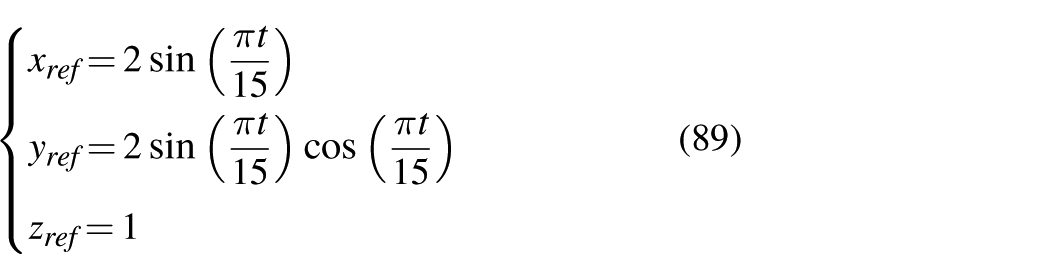
The quadrotor is required to track the desired position trajectory and maintain a yaw angle of under unknown mass condition. The desired trajectory is defined as follows:
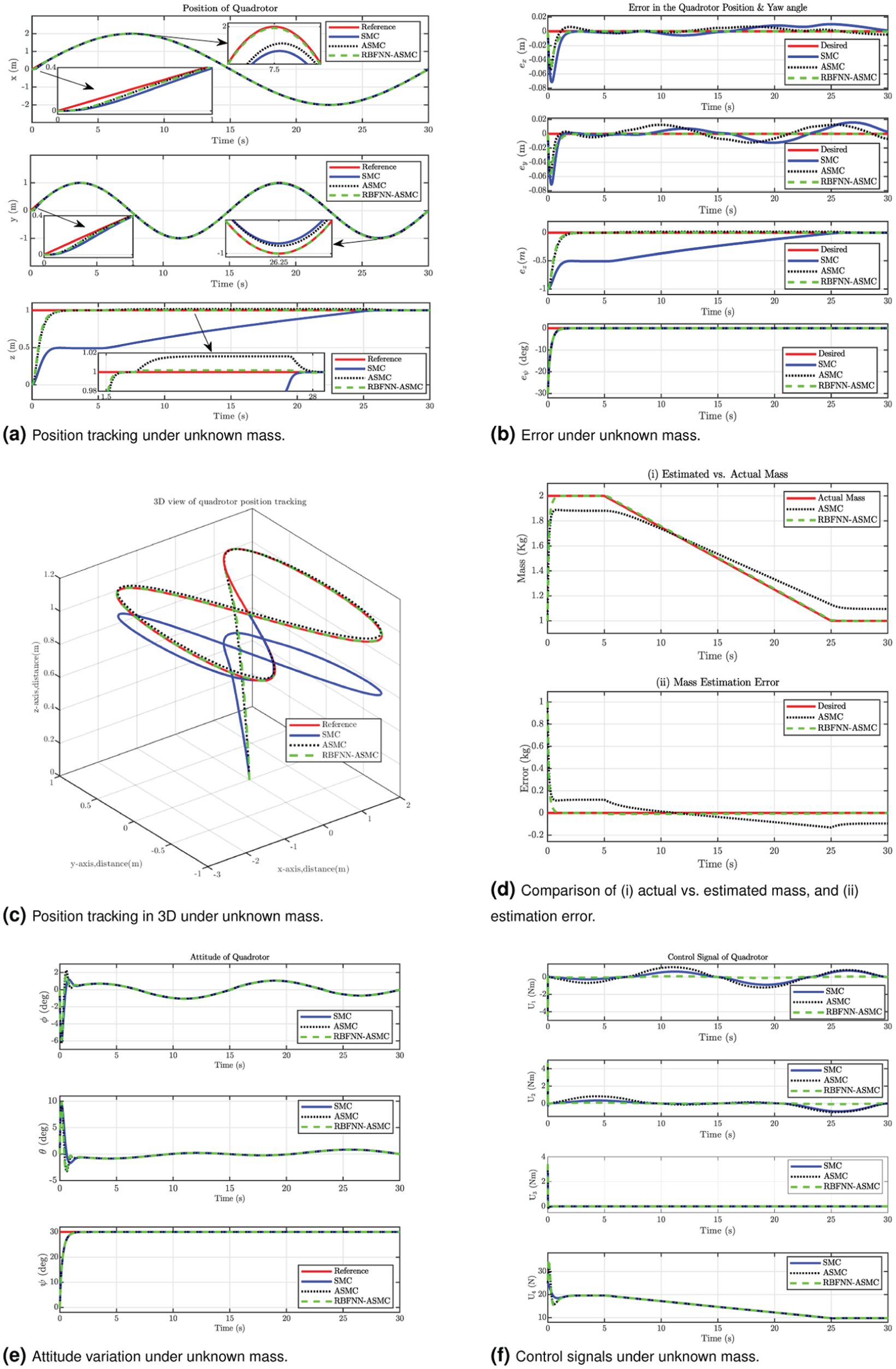
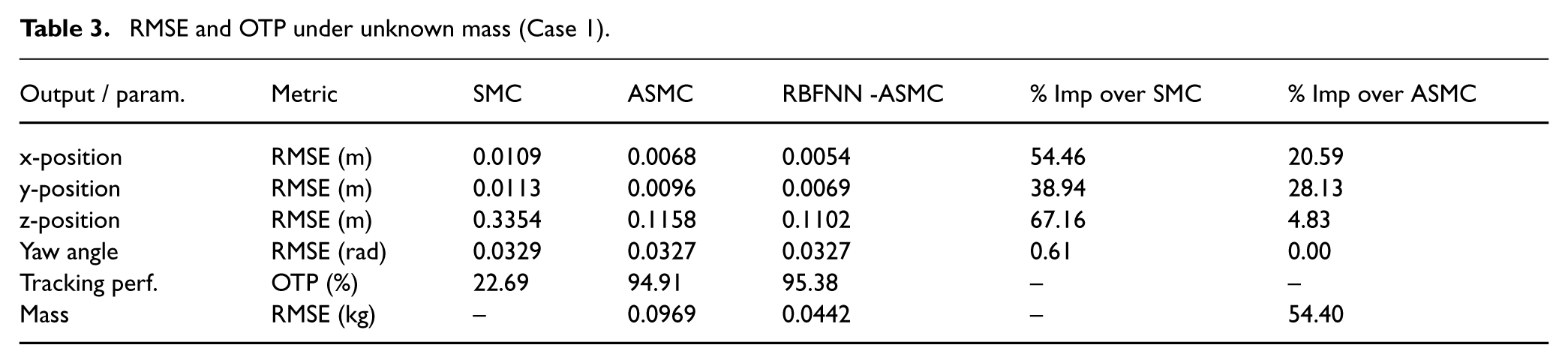
The results presented in Figure 3(a) demonstrate the effectiveness of the proposed RBFNN-ASMC controller in achieving accurate position tracking under unknown mass conditions, demonstrating superior performance compared to the SMC and ASMC schemes. In particular, the SMC controller exhibits significant deviation in the position when the mass variation becomes large. The corresponding tracking errors are shown in Figure 3(b), where the RBFNN-ASMC scheme achieves faster and more precise error convergence compared to the other methods. A three-dimensional trajectory comparison is provided in Figure 3(c), while Figure 3(d) illustrates the mass estimation performance. Although the ASMC provides a reasonable estimate of the unknown mass, the RBFNN-ASMC achieves a more accurate estimation of the unknown parameter. Figure 3(e) presents the attitude responses of the inner-loop subsystem, confirming stable rotational dynamics, whereas Figure 3(f) shows the corresponding control signals. Furthermore, a quantitative comparison of the three control strategies SMC, ASMC, and RBFNN-ASMC is provided based on two key performance indices: RMSE and OTP.
Overall response of the control schemes (Case 1). (a) Position tracking under unknown mass. (b) Error under unknown mass. (c) Position tracking in 3D under unknown mass. (d) Comparison of (i) actual vs. estimated mass, and (ii) estimation error. (e) Attitude variation under unknown mass. (f) Control signals under unknown mass.
The RMSE is defined as:
where is the instantaneous tracking error and ς is the number of observations in the dataset. The OTP metric measures the proportion of time the quadrotor remains within a 5% tolerance of the desired 3D trajectory. The Euclidean tracking error at each time step is given by
where denote the instantaneous tracking errors along the x, y, and z axes, respectively. The OTP is then computed as
where is the number of time steps for which m (i.e., within a 5 cm tolerance), and is the total number of time steps in the simulation.
The percentage improvement (Imp) is defined as follows:
Table 3 summarizes the RMSE and OTP results for and mass estimation during sinusoidal trajectory tracking under unknown mass condition. The proposed RBFNN-ASMC demonstrates significant performance improvements, achieving RMSE reductions of 54%, 39%, and 67% compared to the SMC along the x, y, and z axes, respectively, and reductions of 21%, 28%, and 5% relative to ASMC. Moreover, the OTP value increases from 22.69% with SMC to 94.91% with ASMC and reaches 95.38% with the proposed RBFNN-ASMC. The RMSE for mass estimation decreases from to , representing a 54% improvement compared to the ASMC approach.
RMSE and OTP under unknown mass (Case 1).
Output / param.
Metric
SMC
ASMC
RBFNN -ASMC
% Imp over SMC
% Imp over ASMC
x-position
RMSE (m)
0.0109
0.0068
0.0054
54.46
20.59
y-position
RMSE (m)
0.0113
0.0096
0.0069
38.94
28.13
z-position
RMSE (m)
0.3354
0.1158
0.1102
67.16
4.83
Yaw angle
RMSE (rad)
0.0329
0.0327
0.0327
0.61
0.00
Tracking perf.
OTP (%)
22.69
94.91
95.38
–
–
Mass
RMSE (kg)
–
0.0969
0.0442
–
54.40
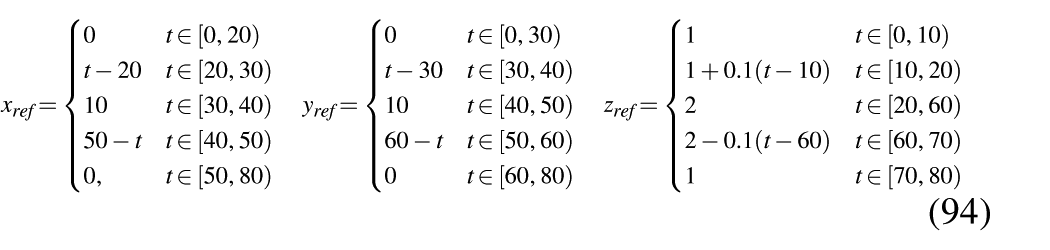
Case 2: In this case, the step–ramp trajectory tracking performance of the proposed RBFNN-ASMC controller is evaluated and compared with SMC and ASMC schemes, considering unknown mass and external disturbances. The desired step–ramp trajectory is defined as follows:
The position and attitude accelerations are subjected to external disturbances defined as (Huang and Yang, 2022):
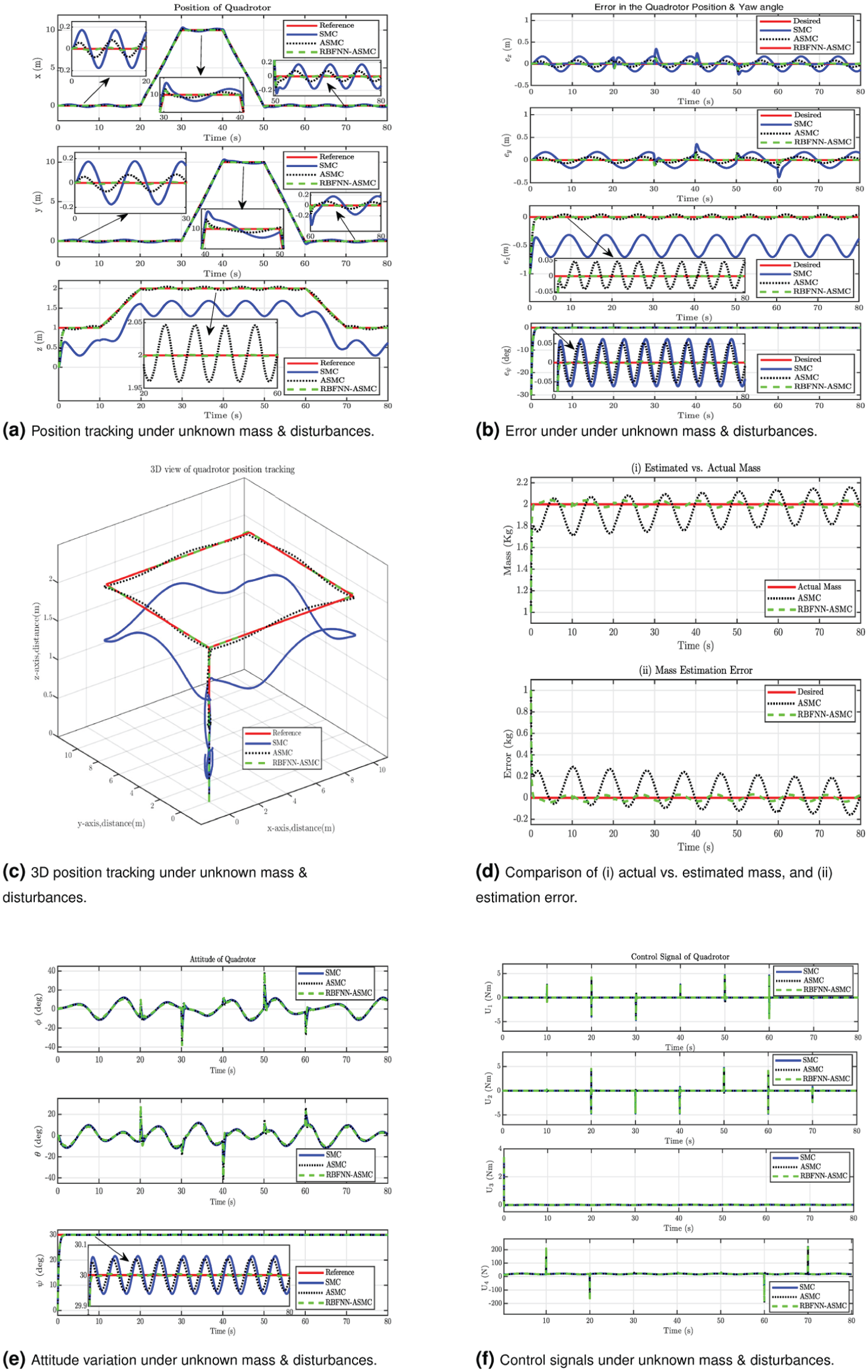
Figure 4(a) compares the position responses under SMC, ASMC, and the proposed RBFNN-ASMC. The designed RBFNN-ASMC achieves the highest tracking accuracy, effectively compensating for mass uncertainty and disturbances. The tracking errors (Figure 4(b)) and 3D trajectories (Figure 4(c)) confirm the superior path-following capability of the proposed controller. Figure 4(d) shows that the RBFNN-ASMC provides a closer approximation of the actual mass compared with ASMC. The attitude angles and control signals are shown in Figure 4(e) and (f). Overall, RBFNN-ASMC demonstrates enhanced precision, robustness, and disturbance rejection compared with SMC and ASMC.
Overall response of the control schemes (Case 2): (a) position tracking under unknown mass and disturbances, (b) error under under unknown mass and disturbances, (c) 3D position tracking under unknown mass and disturbances, (d) comparison of (i) actual versus estimated mass and (ii) estimation error, (e) attitude variation under unknown mass and disturbances, and (f) control signals under unknown mass and disturbances.
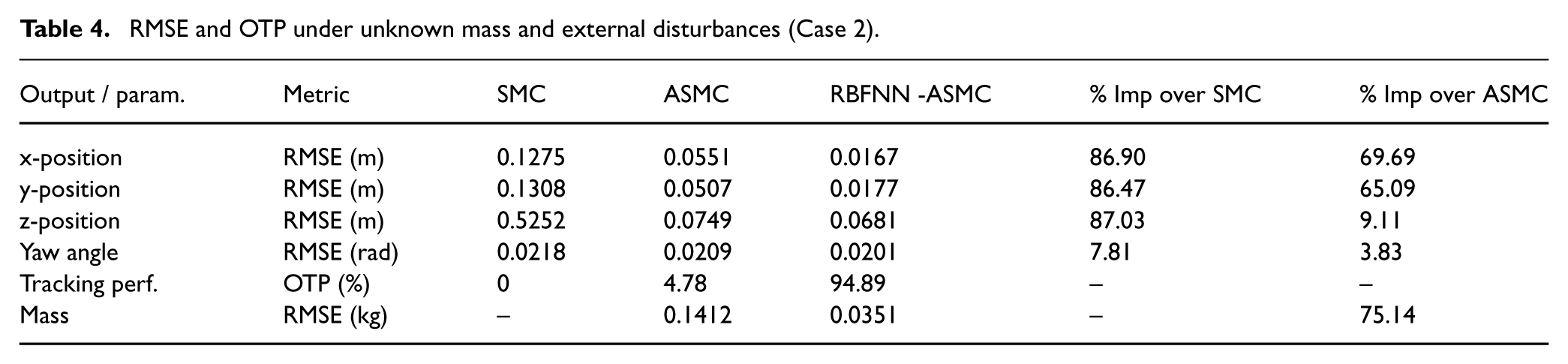
Table 4 summarizes the quantitative results under unknown mass and external disturbances. Compared with SMC, the proposed RBFNN-ASMC achieves RMSE reductions of 87%, 86%, and 87% along the x-, y-, and z-axes, respectively. Relative to ASMC, it achieves 70%, 65%, and 9% RMSE reductions along the corresponding axes. In terms of overall trajectory performance (OTP), RBFNN-ASMC attains 95%, outperforming SMC (0%) and ASMC (5%). The RMSE in mass estimation is reduced from to , reflecting a 75% improvement over ASMC. This substantial reduction underscores the superior robustness of the proposed scheme in accurately estimating mass under external disturbances.
RMSE and OTP under unknown mass and external disturbances (Case 2).
Output / param.
Metric
SMC
ASMC
RBFNN -ASMC
% Imp over SMC
% Imp over ASMC
x-position
RMSE (m)
0.1275
0.0551
0.0167
86.90
69.69
y-position
RMSE (m)
0.1308
0.0507
0.0177
86.47
65.09
z-position
RMSE (m)
0.5252
0.0749
0.0681
87.03
9.11
Yaw angle
RMSE (rad)
0.0218
0.0209
0.0201
7.81
3.83
Tracking perf.
OTP (%)
0
4.78
94.89
–
–
Mass
RMSE (kg)
–
0.1412
0.0351
–
75.14
Case 3: In the third case, the control systems’ tracking ability is assessed under the combined effect of unknown mass and stair-step disturbances. The desired trajectory is defined by the following equation (Weng et al., 2024):
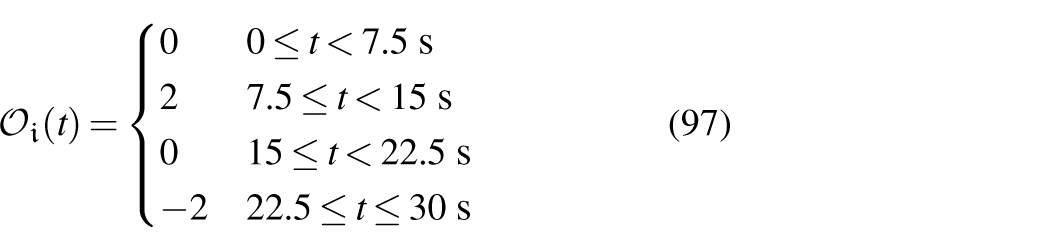
The external stair-step disturbance, denoted as (), is defined as a piecewise function that alternates between , , and at specific time intervals, as expressed in (97).
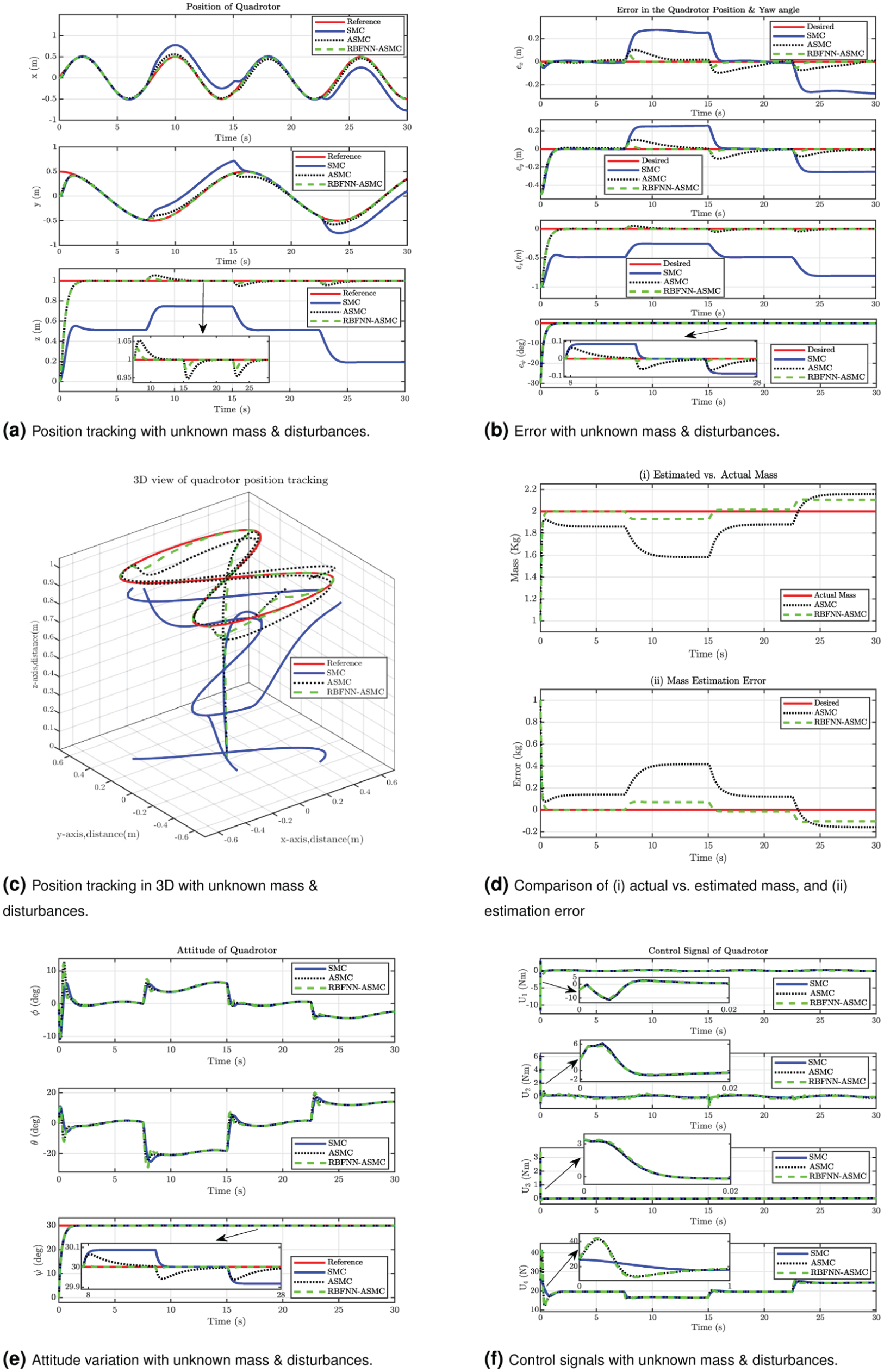
Figure 5(a) illustrates the position tracking performance for all three control schemes, while Figure 5(b) depicts the corresponding tracking errors. Figure 5(c) shows the 3D trajectory comparison, providing a comprehensive visualization of the tracking behavior under this combined uncertainties scenario. Figure 5(d) presents the mass estimation results, comparing the actual mass with the estimated mass obtained using the ASMC and RBFNN-ASMC control schemes under the influence of stair-step disturbances. It is evident that the RBFNN-ASMC provides a more accurate and stable estimation of the unknown mass. Figure 5(e) illustrates the stabilization of the yaw angle , along with the corresponding tilt angles required to achieve the desired positions . The control inputs are depicted in Figure 5(f). All control schemes exhibit the ability to follow the reference trajectory despite the presence of unknown mass and stair-step disturbances. However, the RBFNN-ASMC controller demonstrates superior performance, achieving more accurate tracking, enhanced disturbance rejection, and improved convergence of tracking errors.
Overall response of the control schemes (Case 3): (a) position tracking with unknown mass and disturbances, (b) error with unknown mass and disturbances, (c) position tracking in 3D with unknown mass and disturbances, (d) comparison of (i) actual versus estimated mass and (ii) estimation error, (e) attitude variation with unknown mass and disturbances, and (f) control signals with unknown mass and disturbances.
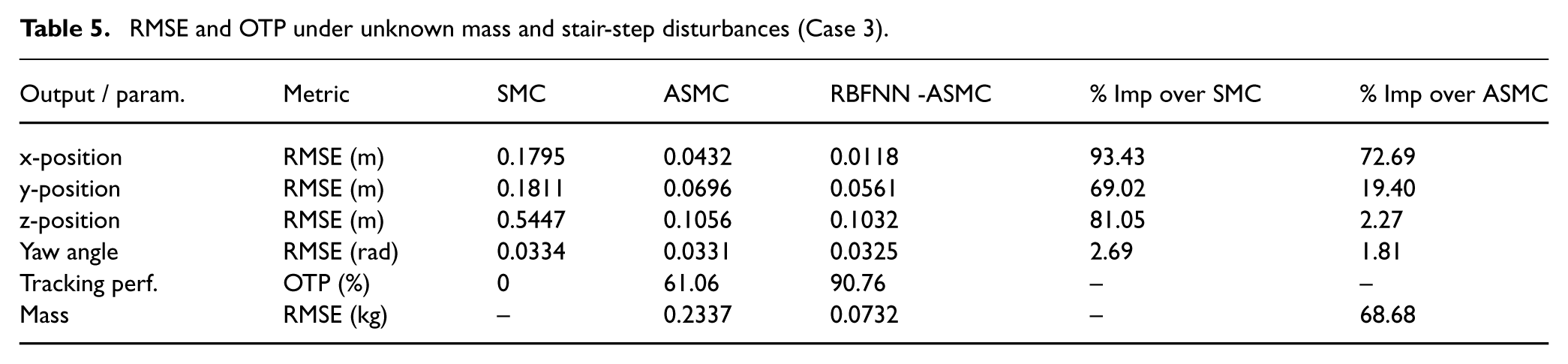
Table 5 summarizes the RMSE and OTP values for , and mass estimation during sinusoidal reference tracking under unknown mass and external disturbances. The proposed RBFNN-ASMC outperforms SMC and ASMC across all metrics. The RMSE along the x-, y-, and z-axes is reduced by 93%, 69%, and 81% compared to SMC, and by 73%, 19%, and 2% compared to ASMC, respectively. Furthermore, the OTP is significantly enhanced, increasing from 0% with SMC and 61% with ASMC to 91% with the proposed approach. The RMSE in mass estimation decreases from to , demonstrating a 69% improvement over ASMC and highlighting the proposed scheme’s enhanced robustness in mass estimation under stair-step disturbances.
RMSE and OTP under unknown mass and stair-step disturbances (Case 3).
Output / param.
Metric
SMC
ASMC
RBFNN -ASMC
% Imp over SMC
% Imp over ASMC
x-position
RMSE (m)
0.1795
0.0432
0.0118
93.43
72.69
y-position
RMSE (m)
0.1811
0.0696
0.0561
69.02
19.40
z-position
RMSE (m)
0.5447
0.1056
0.1032
81.05
2.27
Yaw angle
RMSE (rad)
0.0334
0.0331
0.0325
2.69
1.81
Tracking perf.
OTP (%)
0
61.06
90.76
–
–
Mass
RMSE (kg)
–
0.2337
0.0732
–
68.68
Conclusion
This paper presents the RBFNN-ASMC strategy to address the trajectory tracking problem of a quadrotor under unknown mass and external disturbances. RBFNN-based adaptive laws were employed for the online estimation and compensation of unknown mass and external disturbances, thereby enhancing robustness and adaptability. The closed-loop system’s stability was proven using the Lyapunov theory. The effectiveness and robustness of the suggested strategy were confirmed by simulation results, which showed better performance metrics than SMC and ASMC approaches. The findings suggest that this control strategy is highly suitable for UAV applications demanding high-precision trajectory tracking under uncertain dynamic environments, including parametric uncertainty, external disturbances, and their combined effects.
Footnotes
ORCID iDs
Azmat Saeed
Ahmad Mahmood
Funding
The authors received no financial support for the research, authorship, and/or publication of this article.
Declaration of conflicting interests
The authors declared no potential conflicts of interest with respect to the research, authorship, and/or publication of this article.
Data availability statement
Data sharing is not applicable to this article as no datasets were generated or analyzed during the current study.
References
1.
AlmakhlesDJ (2019) Robust backstepping sliding mode control for a quadrotor trajectory tracking application. IEEE Access8: 5515–5525.
2.
AraarOAoufN (2014) Full linear control of a quadrotor UAV, LQ vs . In: 2014 UKACC international conference on control (CONTROL), Loughborough, 9–11 July, pp.133–138. IEEE.
3.
BouadiHCunhaSSDrouinA, et al. (2011) Adaptive sliding mode control for quadrotor attitude stabilization and altitude tracking. In: 2011 IEEE 12th international symposium on computational intelligence and informatics (CINTI), Budapest, 21–22 November, pp.449–455. IEEE.
4.
BrahimKSEl HajjajiATerkiN, et al. (2023) Finite time adaptive SMC for UAV trajectory tracking under unknown disturbances and actuators constraints. IEEE Access11: 66177–66193.
5.
DarwitoPIndayuN (2023) Adaptive neuro-fuzzy inference system based on sliding mode control for quadcopter trajectory tracking with the presence of external disturbance. Journal of Intelligent Systems and Control2(1): 33–46.
6.
DesaHAzizanMAIshakN, et al. (2023) Experimental analysis of flight altitude for enhanced agricultural drone spraying performance. Journal of Robotics, Networking and Artificial Life10(1): 71–76.
7.
DongWGuGYZhuX, et al. (2013) Modeling and control of a quadrotor UAV with aerodynamic concepts. World Academy of Science, Engineering and Technology7(5): 901–906.
8.
ElmokademTZribiMYoucef-ToumiK (2016) Trajectory tracking sliding mode control of underactuated AUVs. Nonlinear Dynamics84(2): 1079–1091.
9.
EltayebARahmatMFBasriMAM (2020) Sliding mode control design for the attitude and altitude of the quadrotor UAV. International Journal on Smart Sensing and Intelligent Systems13(1): 1–13.
10.
EltayebARahmatMFBasriMAM, et al. (2022) Integral adaptive sliding mode control for quadcopter UAV under variable payload and disturbance. IEEE Access10: 94754–94764.
11.
HanifAHanXYuS (2022) Independent control spraying system for UAV-based precise variable sprayer: A review. Drones6(12): 383.
12.
HuangSYangY (2022) Adaptive neural-network-based nonsingular fast terminal sliding mode control for a quadrotor with dynamic uncertainty. Drones6(8): 206.
13.
LabbadiMDjemaiMBoubakerS (2022) A novel non-singular terminal sliding mode control combined with integral sliding surface for perturbed quadrotor. Proceedings of the Institution of Mechanical Engineers, Part I: Journal of Systems and Control Engineering236(5): 999–1009.
14.
LiJLiY (2011) Dynamic analysis and PID control for a quadrotor. In: 2011 IEEE international conference on mechatronics and automation, Beijing, China, 7–10 August, pp.573–578. IEEE.
15.
MahmoodAUr RehmanFOkashaM, et al. (2025) Neural adaptive sliding mode control for camera positioner quadrotor UAV. International Journal of Aeronautical and Space Sciences26(2): 733–747.
16.
MartinsLCardeiraCOliveiraP (2019) Linear quadratic regulator for trajectory tracking of a quadrotor. IFAC-PapersOnLine52(12): 176–181.
17.
MofidOMobayenS (2018) Adaptive sliding mode control for finite-time stability of quad-rotor UAVs with parametric uncertainties. ISA Transactions72: 1–14.
18.
MofidOMobayenSWongWK (2020) Adaptive terminal sliding mode control for attitude and position tracking control of quadrotor UAVs in the existence of external disturbance. IEEE Access9: 3428–3440.
19.
RazaAMalikFMazharN, et al. (2020) Finite-time trajectory tracking control of output-constrained uncertain quadrotor. IEEE Access8: 215603–215612.
20.
SaeedABhattiAIMalikFM (2022) 2-DOF output feedback control of quadrotor subject to parametric uncertainties and time delay. In: 2022 international conference on recent advances in electrical engineering & computer sciences (RAEE & CS), Islamabad, Pakistan, 18–20 October, pp.1–5. IEEE.
21.
SaeedABhattiAIMalikFM (2023) LMIs-based LPV control of quadrotor with time-varying payload. Applied Sciences13(11): 6553.
22.
ShawKKVimalkumarR (2020) Design and development of a drone for spraying pesticides, fertilizers and disinfectants. International Journal of Engineering Research & Technology9(5): 1181–1185.
23.
VahdanipourMKhodabandehM (2019) Adaptive fractional order sliding mode control for a quadrotor with a varying load. Aerospace Science and Technology86: 737–747.
24.
WangFGaoHWangK, et al. (2020) Disturbance observer-based finite-time control design for a quadrotor UAV with external disturbance. IEEE Transactions on Aerospace and Electronic Systems57(2): 834–847.
25.
WeiLTanMKLimKG, et al. (2025) Adaptive disturbance stability control for uncrewed aerial vehicles based on radial basis function neural networks and backstepping sliding-mode control. IEEE Transactions on Aerospace and Electronic Systems61(5): 11208–11219.
26.
WengFWeiHHuJ, et al. (2024) ASMC and ARSMC cascaded controller design for QUAVs with time-varying load and unknown disturbances. IEEE Access12: 73033–73044.
27.
WuXXiaoBQuY (2022) Modeling and sliding mode-based attitude tracking control of a quadrotor UAV with time-varying mass. ISA Transactions124: 436–443.
28.
XieWCabecinhasDCunhaR, et al. (2021) Adaptive backstepping control of a quadcopter with uncertain vehicle mass, moment of inertia, and disturbances. IEEE Transactions on Industrial Electronics69(1): 549–559.
29.
YangPWangZZhangZ, et al. (2021) Sliding mode fault tolerant control for a quadrotor with varying load and actuator fault. Actuators10(12): 323.
30.
YangWCuiGYuJ, et al. (2020) Finite-time adaptive fuzzy quantized control for a quadrotor UAV. IEEE Access8: 179363–179372.
31.
ZhangYChenZZhangX, et al. (2018) A novel control scheme for quadrotor UAV based upon active disturbance rejection control. Aerospace Science and Technology79: 601–609.
32.
ZhaoJDingXJiangB, et al. (2021) A novel control strategy for quadrotors with variable mass and external disturbance. International Journal of Robust and Nonlinear Control31(17): 8605–8631.
33.
ZhuJLongXYuanQ (2025) Adaptive terminal sliding mode control for a quadrotor system with barrier function switching law. Mathematics13(8): 1344.