






Abstract
The selective catalytic reduction (SCR) denitration process is characterized by high inertia, significant time delay, and strong nonlinearity, which poses a significant challenge for the control problem. In this paper, an internal model control (IMC)-based active disturbance rejection control (ADRC) strategy with delay compensation is proposed. By decomposing the plant dynamics into a nominal model and an uncertain part, IMC and extended state observer (ESO) in ADRC are used to handle these two parts, respectively. Then a modified simultaneous perturbation stochastic approximation (MSPSA) algorithm is employed to perform online parameters optimization, including the parameter in the IMC filter and two bandwidth parameters in the ADRC. The proposed algorithm incorporates a memory function that recalls historical data, enabling real-time updates of optimal parameters as operating conditions change. Simulation results demonstrate that the proposed scheme outperforms traditional proportional-integral-derivative (PID) control and linear ADRC, showcasing superior control effectiveness.
Keywords
Introduction
During the power generation process in power plants, a significant amount of nitrogen oxides (
With the growing maturity of SCR systems, extensive research has been conducted on control strategies. Researchers have proposed various strategies to optimize the denitration process, including data-driven disturbance rejection predictive control (Wu et al., 2016), neural-network-based predictive control (Tang et al., 2023), deep reinforcement learning (Zhao and Quan, 2026), and advanced particle swarm optimization (PSO)-based approaches (Li et al., 2025; Yerolla et al., 2025). While numerous studies have yielded optimization effects, most algorithms are effective only under specific operating conditions. As the load of the SCR system varies, the plant dynamics shift significantly. The aforementioned methods are generally unable to effectively handle these plant parameter variations.
Active disturbance rejection control (ADRC) treats model uncertainty as an internal disturbance (Li and Gao, 2020) and suppresses it, thereby resolving issues related to uncertain models under varying conditions. ADRC was originally proposed by Han (2009) and includes the tracking differentiator (TD), extended state observer (ESO), and state error feedback (SEF) (Han, 1995, 1998; Han and Wang, 1994). Currently, ADRC technology is widely applied in complex industrial processes (Bandyopadhyay et al., 2020; Castaneda et al., 2015; Gao, 2014; Sun et al., 2022; Wu et al., 2024). Driven by the increasing complexity of practical plants, ADRC theory continues to evolve, leading to developments such as predictive ADRC (Tang et al., 2017) and cascade ADRC (Li et al., 2018). Furthermore, combining ADRC with other advanced strategies has shown promise; for instance, Mahapatro and Subudhi (2023) proposed a robust decentralized controller by embedding a modified linear active disturbance rejection control (LADRC) within an internal model control (IMC) framework to handle multivariable system interactions. Jin et al. (2024) successfully integrated IMC with ADRC for permanent magnet synchronous motor control, enhancing dynamic decoupling and robustness. Similarly, IMC-based proportional-integral (PI) schemes have proven effective in regulating nonlinear dynamics in renewable energy systems (Somanshu et al., 2025).
To optimize the performance of the SCR denitration processes under varying operating conditions, virtual decomposition and cascade control methods can effectively enhance performance (Li et al., 2023). Among these factors, controller parameter selection determines performance quality. The introduction of bandwidth parameterization (Gao, 2003) greatly simplifies tuning. However, during load variations in the SCR system, optimal parameters must still be searched for in real time.
Methods for optimizing control parameters, such as neural networks and partial least squares, face challenges in establishing performance models and ensuring reliability. Non-model-based swarm intelligence methods, such as PSO, Genetic Algorithms, improved pigeon-inspired optimization (Liu et al., 2025), and Fish Swarm Algorithms, incur high computational costs and have limited engineering feasibility for online applications.
In recent years, advanced strategies such as disturbance-observer-based adaptive fuzzy control (Zhang et al., 2025; Zhang and Shao, 2025) and fixed-time synergetic ADRC (Ahcene et al., 2025) have significantly enhanced system adaptability against complex nonlinearities and external perturbations. However, the disturbances addressed in these frameworks differ fundamentally from those inherent to the SCR process. While these advanced methods excel at mitigating bounded disturbances in strict-feedback systems via sophisticated fuzzy approximators, the SCR denitration process is predominantly governed by massive thermal-fluid inertia and severe pure time delays. Consequently, the primary “disturbance” in SCR systems mainly comprises unmodeled dynamics induced by load shifting and delay-related modeling mismatches, necessitating a tailored, computationally efficient delay compensation mechanism rather than computationally intensive fuzzy logic.
Specifically within the ADRC domain, integrating data-driven optimization has become a prominent trend. Recent studies have explored hybrid data-driven ADRC combined with SMC (Roman et al., 2024), adaptive ADRC using recursive parameter identification for time-varying systems (Michalski et al., 2024), and predictive generalized ADRC strategies tailored for plants with significant time delays (Jain and Hote, 2023). In this context, an effective online parameter optimization method is urgently required. The simultaneous perturbation stochastic approximation (SPSA) algorithm (Chin, 1997; Robbins and Monro, 1951) is highly suitable for such data-driven tuning. Recent advancements, such as the guided-SPSA for quantum variational circuits (Periyasamy et al., 2024), demonstrate the algorithm’s evolving capability to handle high-dimensional optimization.
Although existing data-driven methods achieve robust disturbance rejection, standard online tuning algorithms—including basic SPSA—often suffer from convergence lag and transient oscillations during sudden load switches in large-delay processes. To address this, this paper proposes an innovative IMC-based cascade ADRC framework equipped with a delay compensation module for the SCR denitration system. This structural design decouples the nominal model from uncertain dynamics, significantly reducing the ESO’s sensitivity to large delays. Furthermore, an enhanced SPSA algorithm featuring a memory mechanism is introduced for autonomous online parameter optimization. By instantaneously resetting parameters using historical optimal data, this memory bank eliminates convergence lag, ensuring swift, smooth, and overshoot-free transitions during continuous load variations. Simulation results confirm that the proposed scheme outperforms traditional cascade proportional-integral-derivative (PID) and LADRC in setpoint tracking, disturbance rejection, and robustness.
The remainder of this paper is organized as follows: section “SCR denitration process” introduces the SCR denitration process model and discusses control challenges. Section “IMC cascade active disturbance rejection controller” presents the principles of ADRC and the structure of the IMC cascade ADRC controller. Section “Parameter optimization” introduces the SPSA algorithm and the parameter tuning flow. Simulation validations are provided in section “Simulation.” Finally, section “Conclusion” concludes the paper.
SCR denitration process
Modeling of SCR denitration process
SCR is a post-combustion denitration method as shown in Figure 1, which that first achieved commercial operation in the late 1960s. It utilizes reducing agents to selectively react with

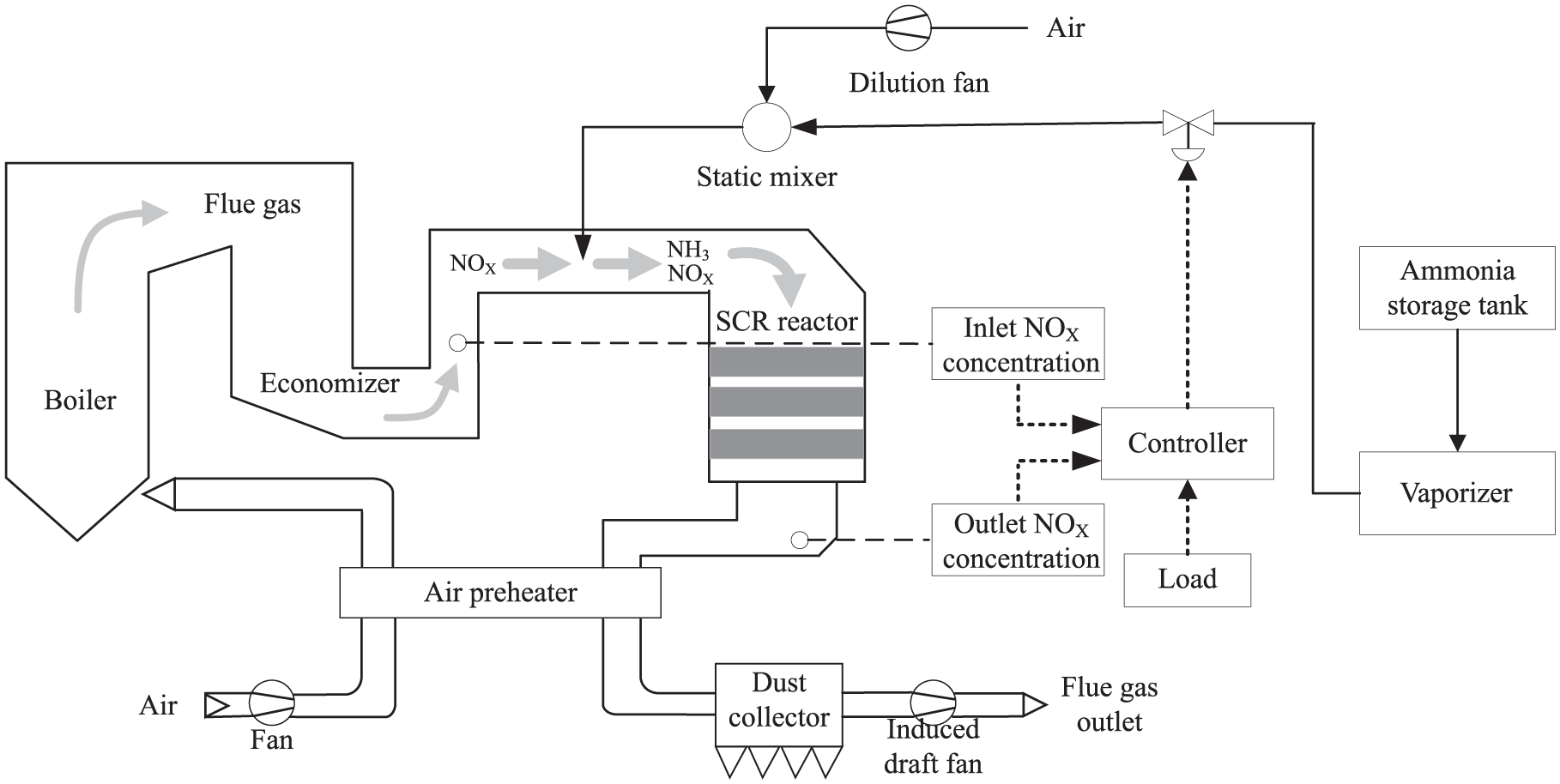
SCR denitration process.
There are many performance indicators affecting the denitration efficiency of SCR, primarily: flue gas flow rate, inlet/outlet
The outlet

Here,

Analyses of control difficulties
The SCR denitration model is characterized by significant time delays, making traditional control methods such as PID, sliding mode control (SMC), and standard ADRC inadequate. In practical power generation, maintaining safety necessitates strictly zero overshoot during the control process—a requirement that traditional methods often fail to meet without significantly compromising response speed. Furthermore, frequent load variations cause substantial shifts in plant dynamics. Consequently, utilizing fixed parameters leads to performance degradation, and offline parameter optimization techniques are ill-suited for handling real-time process variations.
This study proposes the inclusion of a delay compensation module in the controller to effectively mitigate the performance degradation associated with large time delays. Additionally, an SPSA module is incorporated to facilitate online parameter optimization. This allows for aggressive parameters during large deviations to facilitate swift tracking, while adopting conservative parameters during small deviations to ensure zero overshoot. Consequently, the system adaptively accommodates load fluctuations and real-time operational conditions. This autonomous approach obviates the need for manual intervention and prevents frequent startup and shutdown cycles of thermal power units, thereby enhancing overall system efficiency.
IMC cascade active disturbance rejection controller
Principle of ADRC
ADRC, originally proposed by J. Han, is a robust control paradigm that operates independently of precise model parameters. Its fundamental philosophy involves treating internal model uncertainties and external environmental disturbances as a lumped “total disturbance.” By estimating and compensating for this total disturbance in real time, ADRC effectively transforms an uncertain nonlinear plant into a canonical chain of integrators. Building upon this, LADRC employs a bandwidth-parameterization technique, simplifying complex tuning into the adjustment of a single bandwidth parameter. A typical second-order LADRC system comprises three core components: a second-order linear tracking differentiator (LTD), a third-order linear extended state observer (LESO), and a linear state error feedback (LSEF) control law.
The LESO serves as the cornerstone of the LADRC framework. It formulates the “total disturbance”—which encompasses both internal model uncertainties and external interferences—as an extended state variable. By processing system input–output data through linear gains, the LESO achieves real-time estimation of both the nominal system states and this extended state.
The parameters in the equation are explained as follows:y is the actual output value,u is the control quantity given by the LSEF control rate,w is the disturbance of the plant,
Suppose that the model of the controlled object is

where y is the output of the system,u is the control quantity,b is the high-frequency gain of the system, and f is the generalized disturbance. Taking
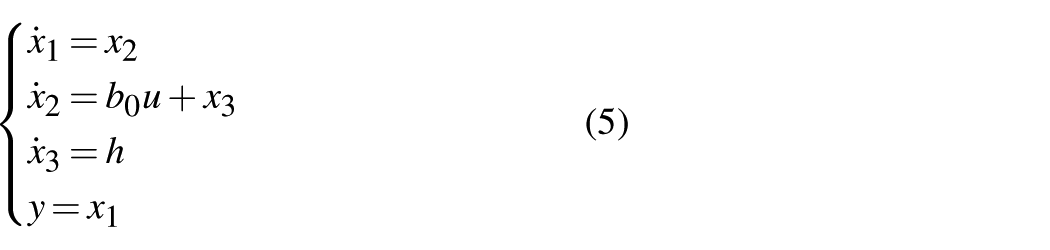
The third-order linear ESO is designed as follows
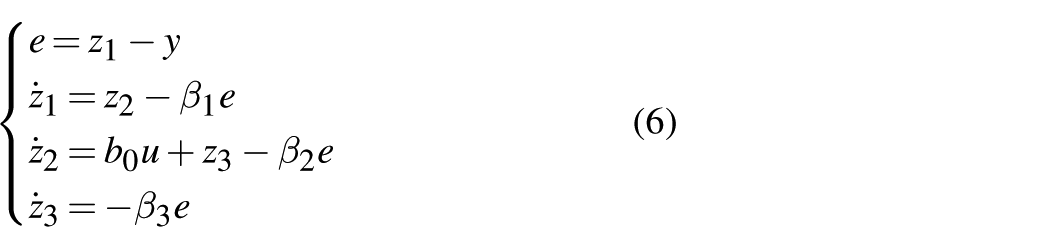
where e is the observation error;
The disturbance compensation control law is

where
IMC cascade active disturbance rejection controller
Controlling high-order systems with significant delays presents a complex engineering challenge. For such systems, the disparity in observer gains becomes significant, making it difficult to balance the convergence speed of each state estimate in a standard high-order ESO. Furthermore, plant parameters vary with operating conditions, leading to performance degradation. To address this, we decompose the plant dynamics into a nominal part

where
An IMC is designed for the nominal model
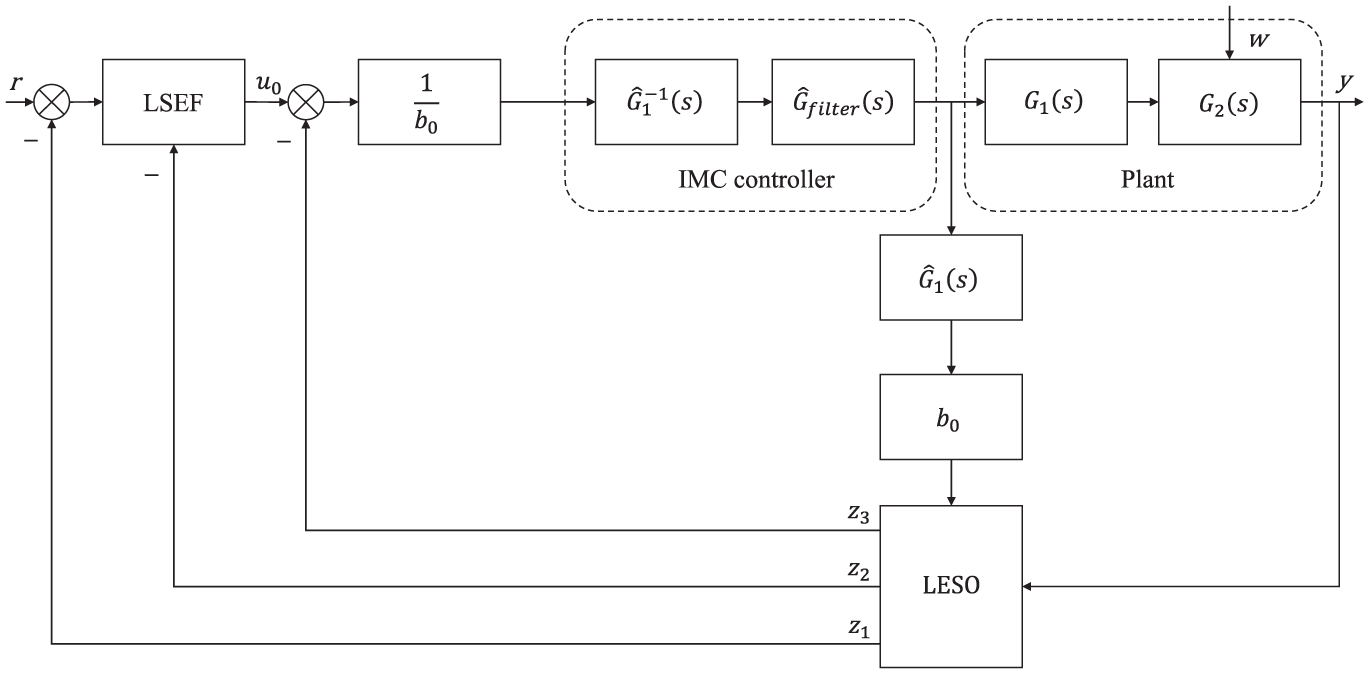
IMC cascade ADRC structure.
In the IMC block,

where
IMC-based cascade ADRC with delay compensation
Delay compensation techniques are employed to mitigate the adverse effects of significant delays, transforming the effective open-loop response into a more manageable form. This approach reduces the computational burden on the LESO while concurrently enhancing observation precision. The fundamental concept involves reducing the observer’s sensitivity to measurement delays through a specialized compensation structure, as illustrated in Figure 3.
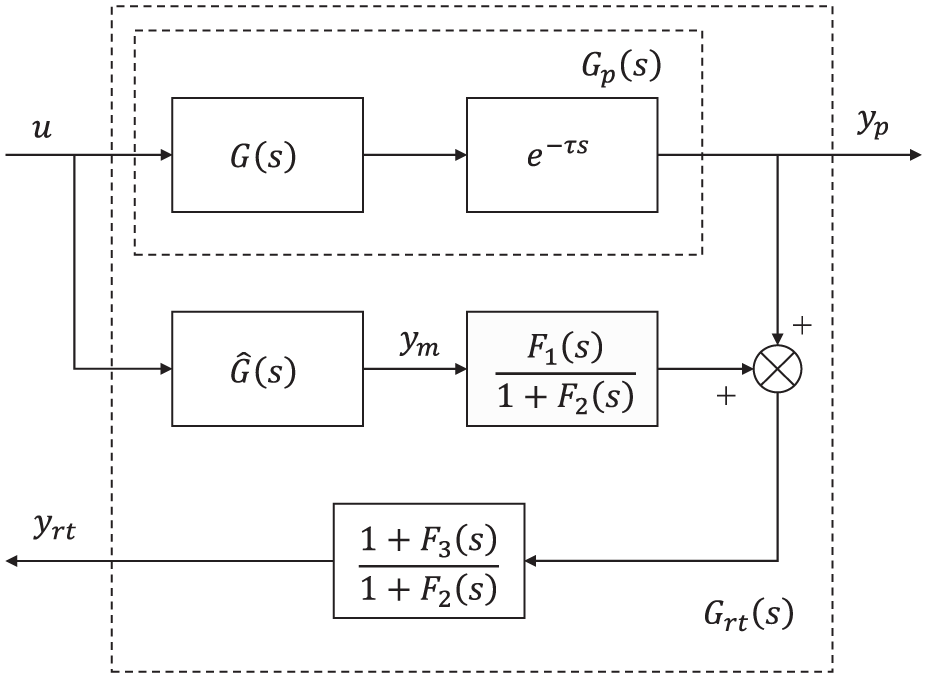
Block diagram of the delay compensation module.
The design principle is as follows: when the input reference changes rapidly (i.e., high-frequency components dominate), the feedback signal

This leads to the transfer relationships


Consider the plant described by equation (2). The time delay satisfies
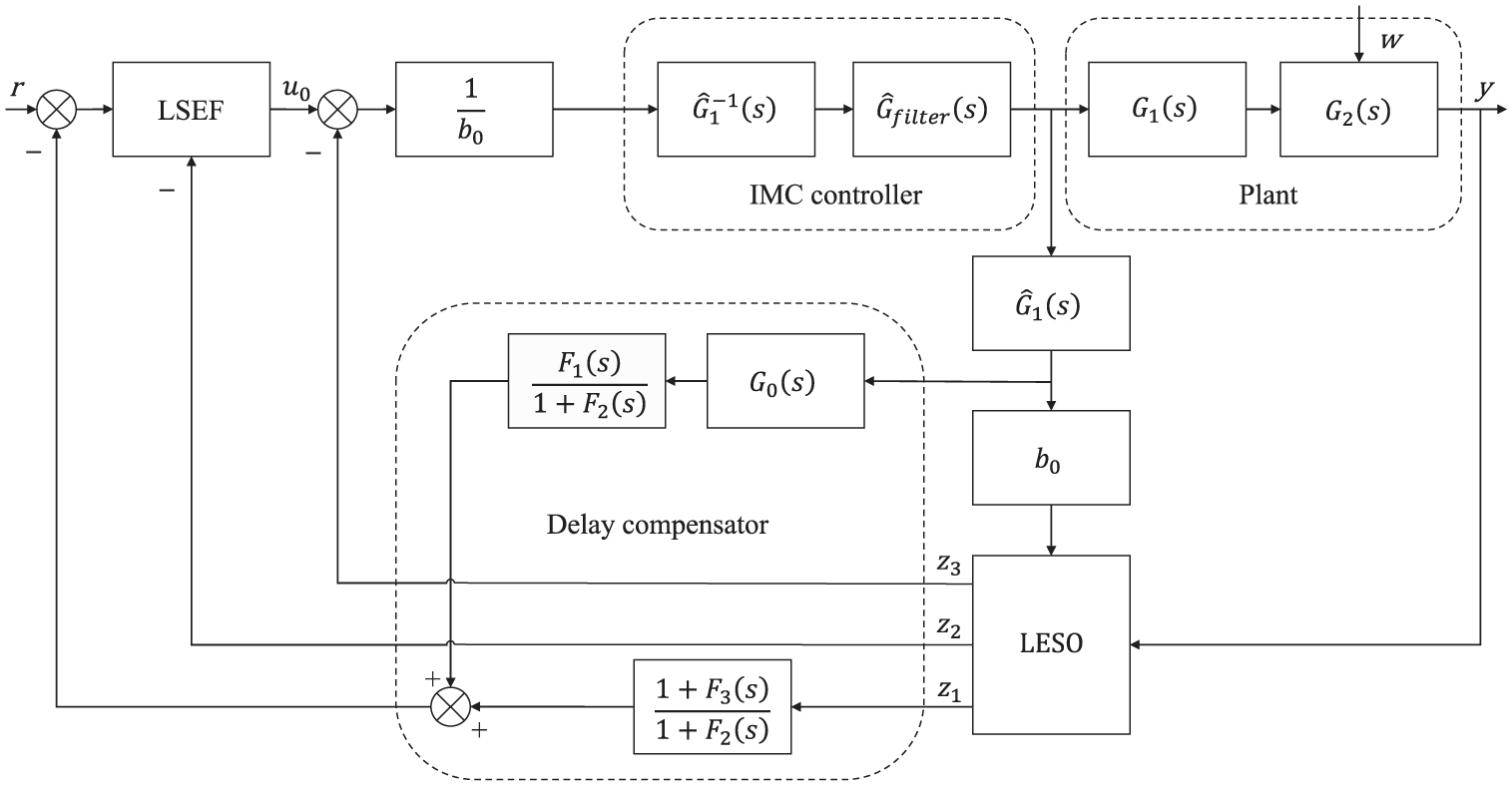
Structure of IMC-based cascade ADRC with delay compensation.
Parameter optimization
Principle of SPSA algorithm
The stochastic approximation (SA) algorithm (Chin, 1997; Robbins and Monro, 1951), initially introduced by Robbins and Monro (1951), is an optimization method based on stochastic gradient descent. It is primarily utilized to address optimization challenges in online and incremental learning scenarios. Its fundamental premise revolves around iteratively refining parameter estimates via gradient descent. Unlike conventional gradient descent techniques, SA selectively incorporates information from a subset of samples during each iteration, thereby avoiding the computational burden of processing the entire dataset. The basic update rule for the SA algorithm is

Here,
The SPSA algorithm is a refined iteration of SA, tailored to effectively address high-dimensional and nonlinear optimization challenges. Its foundational premise entails introducing random perturbations to all parameters simultaneously and estimating the gradient based on function values post-perturbation. The SPSA iterative update law is defined as

where
At the heart of the SPSA algorithm lies the simultaneous perturbation mechanism. For each iteration, two measurements of the loss function
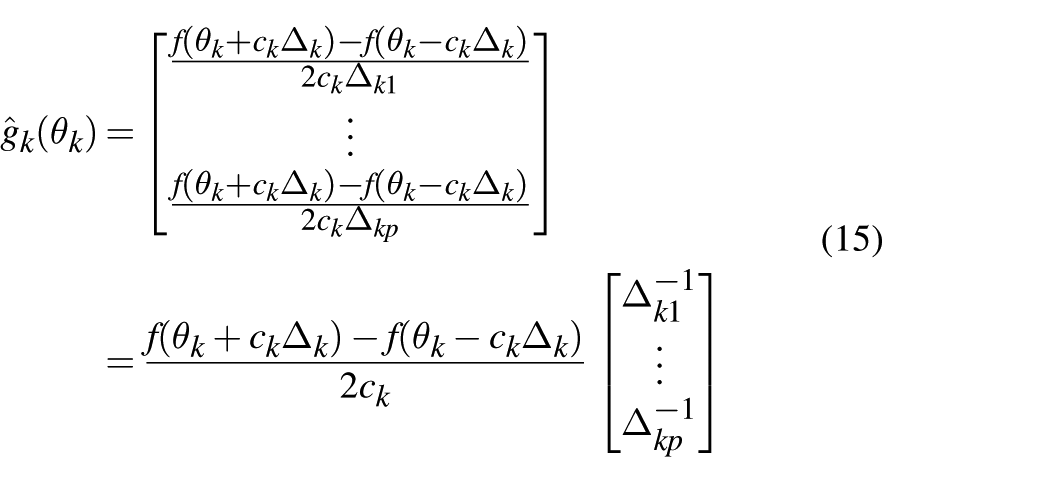
The calculated result is substituted into equation (14) to update the parameters. This perturbation-driven methodology effectively circumvents challenges inherent in high-dimensional problems by requiring only two function evaluations per iteration, regardless of the dimension of the parameter vector.
SPSA-based parameter optimization for IMC-ADRC
In the proposed IMC-based cascade ADRC system, the inner loop IMC, the outer loop LSEF controller, and the LESO involve multiple parameters that require optimization. Based on the bandwidth parameterization technique for linear ADRC, the system performance is primarily determined by three critical parameters: the controller bandwidth (
Dynamic adjustment of these parameters in response to tracking errors can significantly enhance control performance. During periods of large error, parameters can be tuned for aggressive tracking, while near the setpoint, they can be adjusted to prevent overshoot. Furthermore, the SPSA algorithm enables the system to adapt rapidly to the load variations inherent in SCR denitration processes.
When tuning the controller parameters using the SPSA algorithm, it is necessary to estimate the order of magnitude of the parameters and establish the upper and lower limits for parameter adjustments. The learning rate


where
Let

where y is the system output and r is the reference setpoint. The schematic of the online parameter optimization process is illustrated in Figure 5.
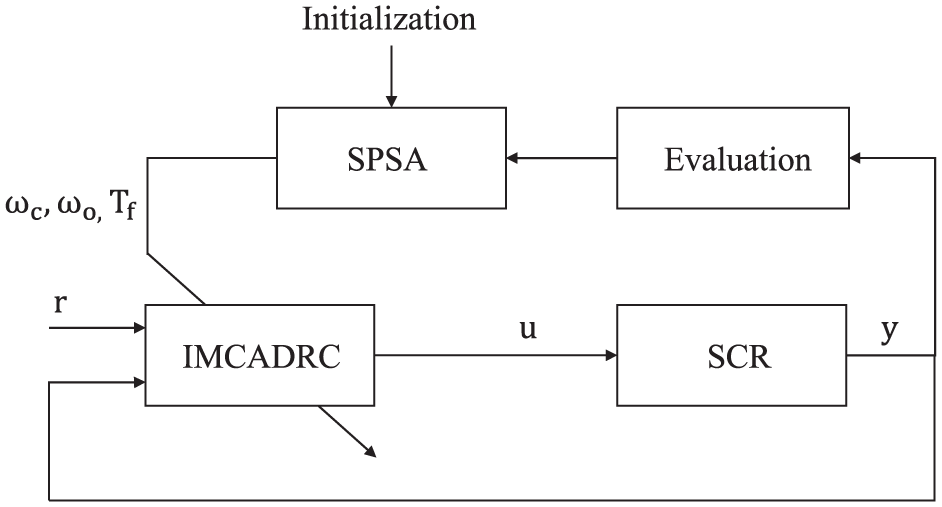
Flowchart of the SPSA-based online parameter optimization.
Assuming noise-free measurements for the purpose of theoretical derivation, the parameter update law is given by
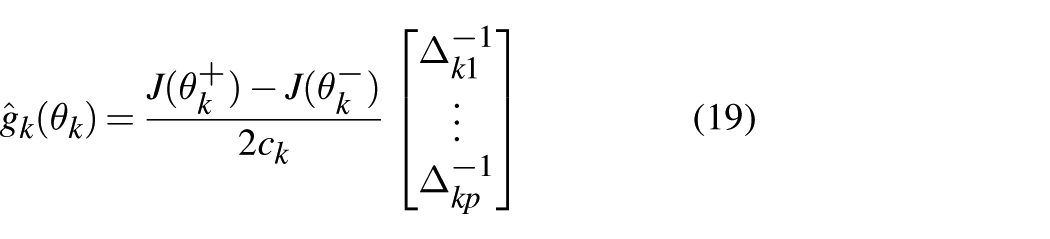
The bias of this gradient estimate is analyzed as follows. Let

Expanding the cost function
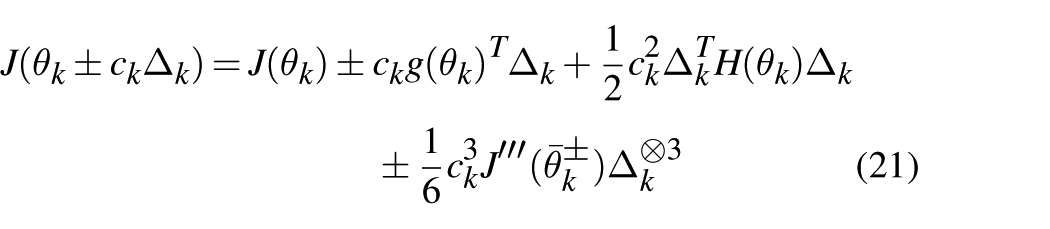
where
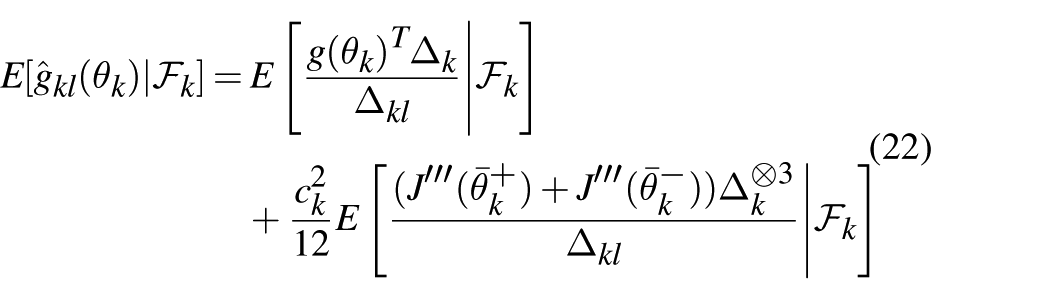
The first term simplifies to

Since
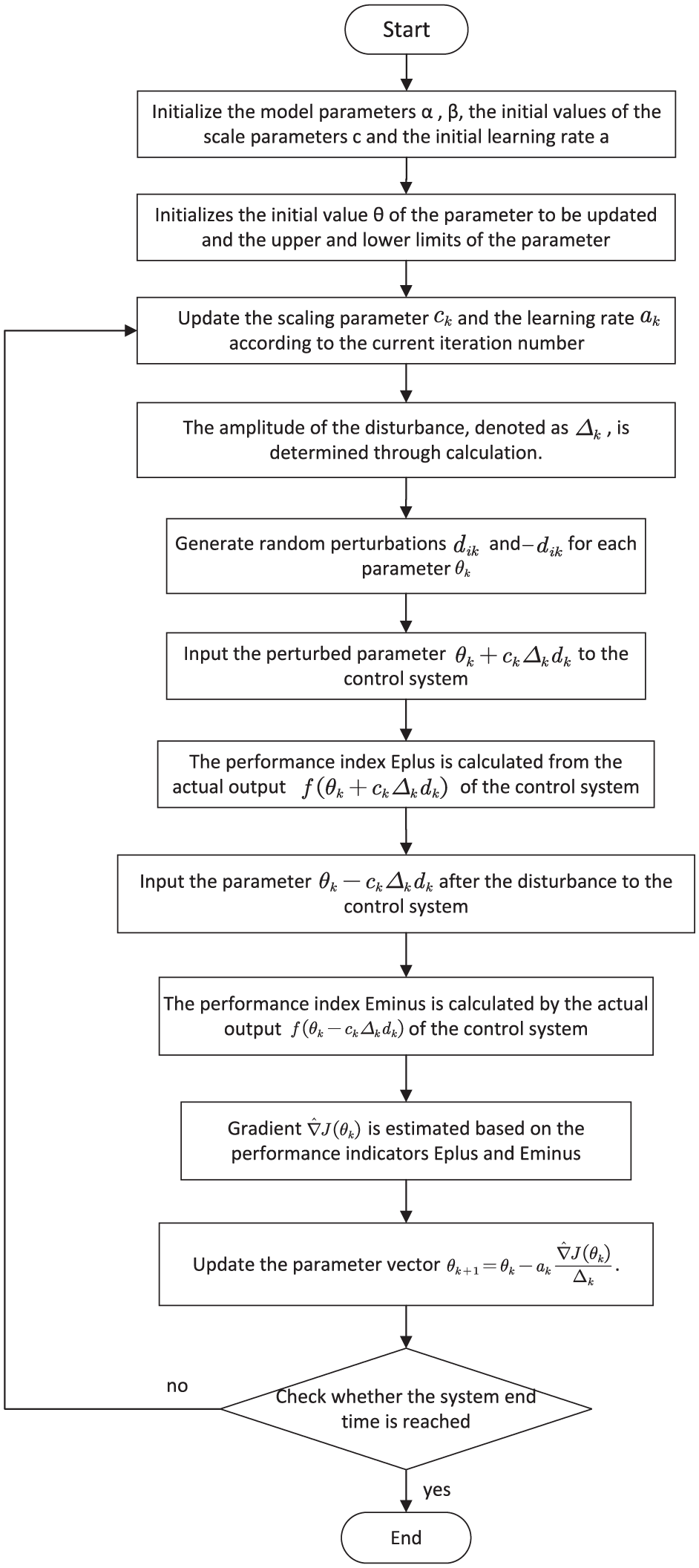
Online parameter optimization of SPSA algorithm.
SPSA-memory optimization
When the load of the SCR denitration process fluctuates, relying solely on the most recent parameter estimates for continuous optimization may lead to slow convergence, particularly when the new operating point deviates significantly from the previous state. This lag in adaptation can severely degrade transient control performance.
To address this, this study proposes a parameter resetting mechanism triggered by load changes. Since load transitions are frequent in practical operation, the optimal parameters obtained from previous SPSA iterations can be stored and utilized as optimal initial guesses for subsequent transitions. To facilitate this, a memory bank (look-up table) is constructed to store optimal control parameters corresponding to different operating conditions. Upon the detection of a load transition, the system retrieves the recommended parameters corresponding to the new operating range from the memory bank to initialize the controller. Subsequently, building upon these initial values, the SPSA algorithm further fine-tunes the parameters via stochastic perturbations and gradient descent, ensuring convergence to the precise optimum for the current operating conditions. This approach ensures that the controller initiates from an appropriate starting point, thereby mitigating the learning lag typically associated with standard SPSA, significantly shortening the initial parameter searching distance, and accelerating the tracking speed. Furthermore, the memory bank is dynamically updated whenever the SPSA algorithm converges to a parameter set that yields superior performance metrics compared to the currently stored values.
Simulation
To verify the control performance of the proposed IMC-based cascade ADRC with delay compensation, comparative simulations were conducted against traditional PID control and LADRC. To accurately represent the varying operating conditions of the SCR denitration process, the simulation employs different plant transfer functions



The plant model is decomposed into a nominal model

Based on the 300 MW condition, the nominal model is defined as follows

The uncertain part is represented as

where
The IMC controller is designed based on the nominal model

In SCR denitrification systems, it is strictly required that the
The parameters for the LADRC were tuned using the bandwidth-parameterization method. To strike a balance between response speed and robustness, the controller bandwidth and observer bandwidth were selected as
The parameter settings of the SPSA algorithm in the experiment are shown as follows. The controller bandwidth
Tracking performance simulation
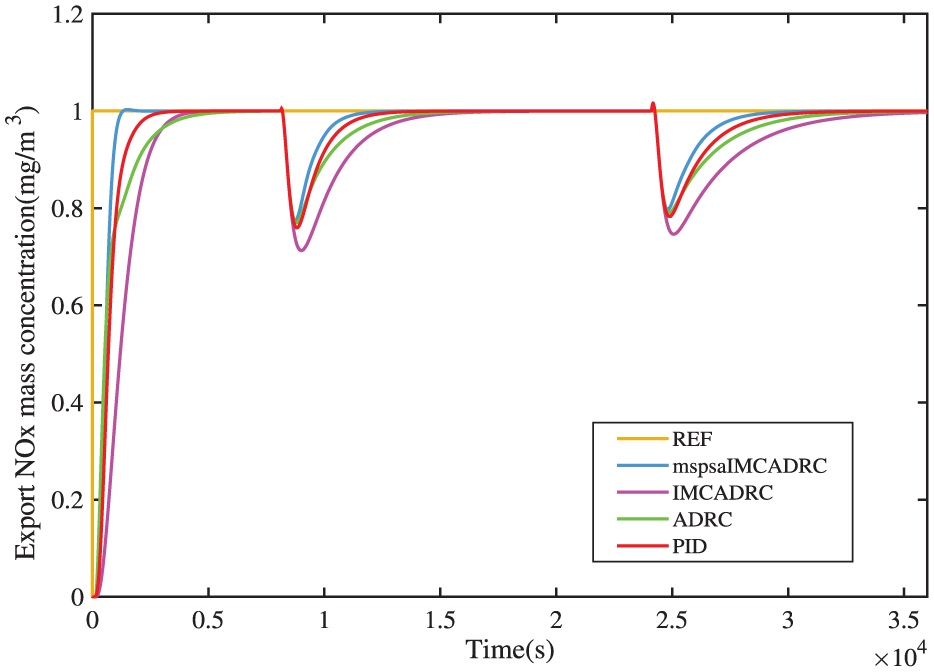
To accurately simulate the complex time-varying load conditions of the SCR denitration process, a timer was integrated into the simulation process to regulate load variations. The system was initialized at a load of 300 MW. Subsequently, the load was increased to 400 MW at 8000 s and further to 500 MW at 24,000 s. Consequently, the system’s transfer function evolved in response to these load shifts. This simulation compares the performance of four controllers: PID, ADRC, IMCADRC, and the memory-based SPSA-optimized IMCADRC (mspsaIMCADRC). Figure 7 displays the step response curves for each controller.
Step response curves for four controllers.
To quantitatively assess the effectiveness of the control strategies, Table 1 presents detailed performance metrics for the four controllers during step response and disturbance rejection tests. Regarding setpoint tracking performance, the mspsaIMCADRC exhibits remarkable superiority. It achieves a rise time (
Quantitative performance comparison of four controllers in setpoint tracking and disturbance rejection.

In terms of disturbance rejection, the analysis focused on the system’s performance following the sudden load change at 8000 s. Subject to load fluctuations, all controllers demonstrated varying degrees of dynamic deviation. Notably, the mspsaIMCADRC suppressed the maximum dynamic deviation to 0.2254, marginally outperforming the other controllers. More significantly, the proposed method demonstrated a substantial advantage in recovery speed. With a recovery time of just 2633.9 s, it effectively halved the duration required by traditional algorithms. These findings strongly confirm that integrating MSPSA online optimization with an internal model structure significantly enhances both system rapidity and robustness under variable operating conditions.
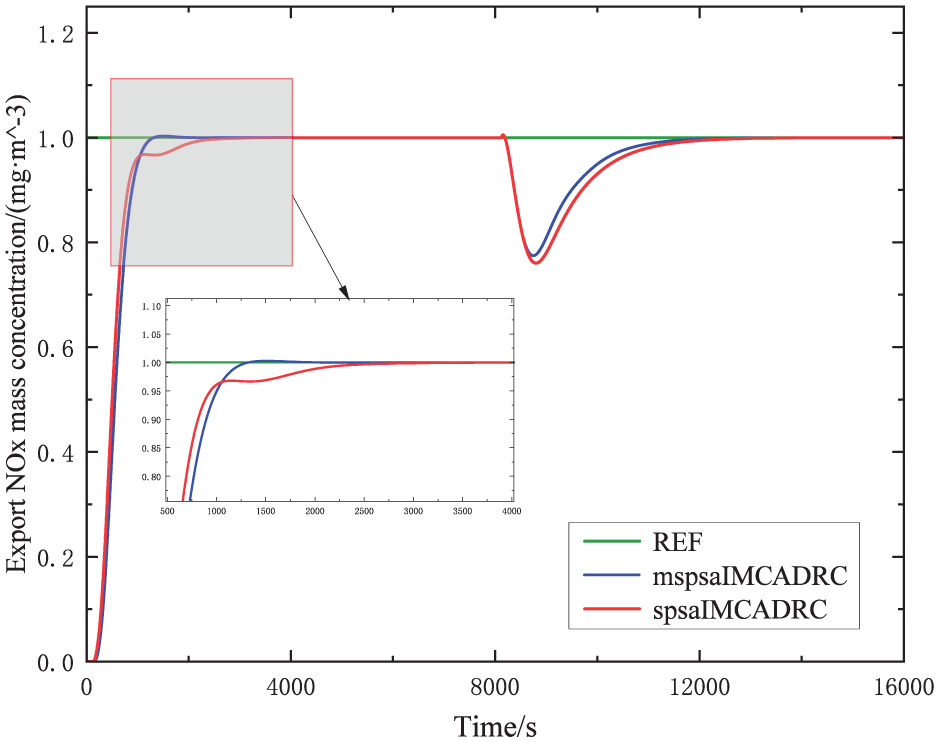
Figure 8 further elucidates the specific contribution of the memory module within the optimization algorithm. While standard SPSA optimization enhances performance during the initial ascent, it often induces a response delay during load switching (Ai et al., 2024), as the algorithm persists in adjusting parameters based on prior values. This delay extends the time required for the system to track reference values. By incorporating a memory function, the MSPSA algorithm retrieves and resets parameters corresponding to the current load condition using historical data. Simulation results indicate that with the inclusion of the memory function, the maximum dynamic deviation induced by disturbances is reduced by 6.19%, and the time to recover to a steady state is shortened by 13.04%. Consequently, the update process during load switching becomes smoother, leading to further improvements in tracking performance. The memory-based approach eliminates the delay associated with re-learning, ensuring rapid adaptation to new operating conditions without overshoot.
Impact of memory module on tracking and disturbance rejection.
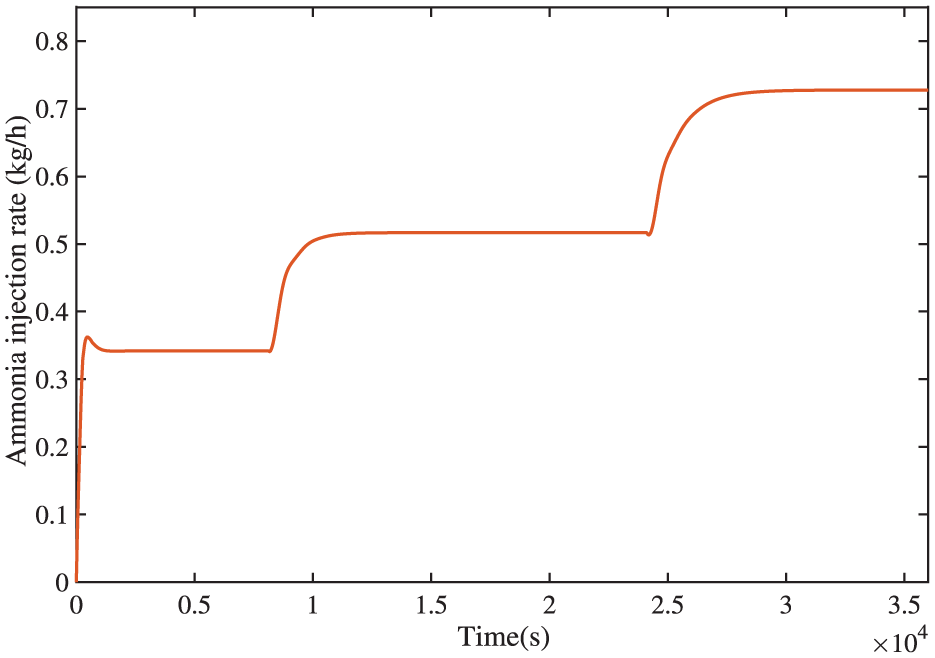
Furthermore, Figure 9 records the variation of the control input during the simulation to evaluate the actuator-friendliness of the proposed strategy in practical industrial applications. As illustrated, the control effort generated by the MSPSA-IMCADRC remains remarkably smooth and safely bounded throughout the entire operation. Even under severe load transitions at 8000 and 24,000 s, the controller executes rapid yet continuous adjustments without inducing hazardous overshoots or oscillatory behavior in the control signal. This smooth and stable control trajectory conclusively demonstrates that the proposed algorithm satisfies the stringent actuator constraints of real-world thermal power units, thereby ensuring prolonged equipment lifespan and safe operational continuity.
Trajectories of the control input under varying load conditions.
Stability analysis
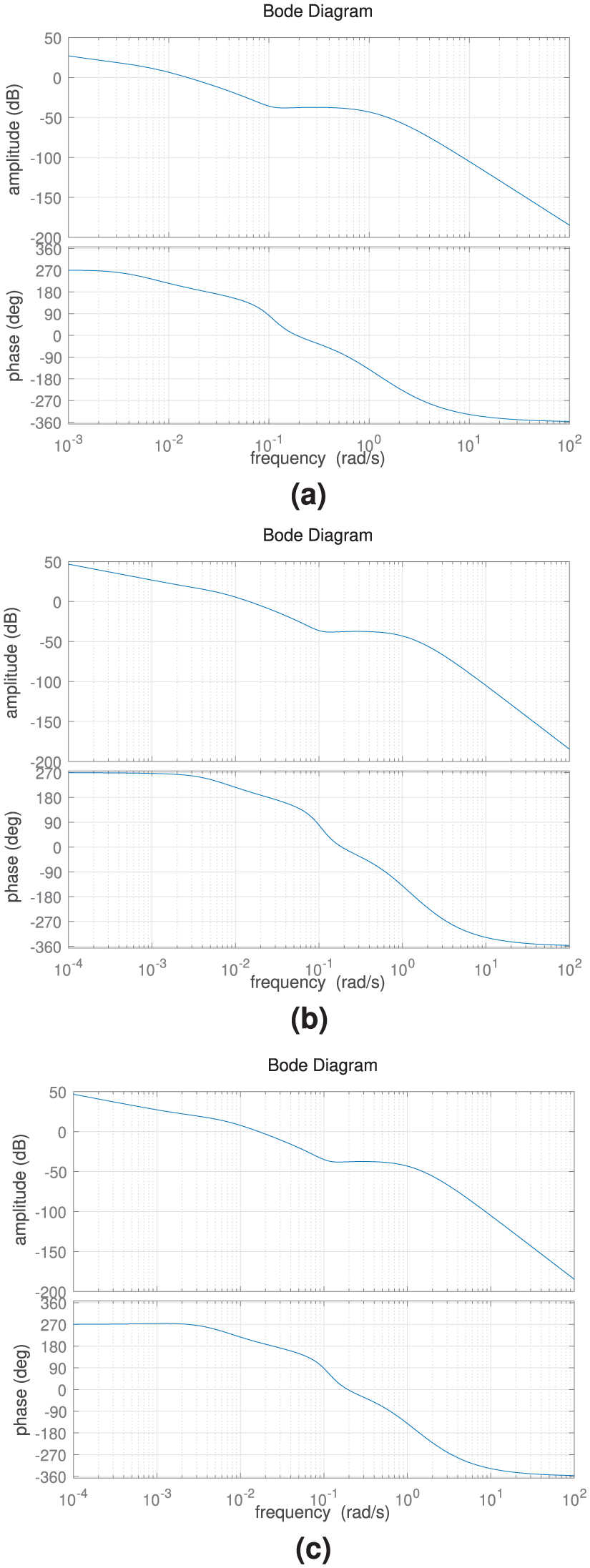
In the control structure shown in Figure 4, the inclusion of the IMC in the inner loop effectively compensates for the nominal dynamics


Since
To assess robustness, the time constant of the inertial element in the plant was varied by


Bode diagram of the system when the load is 300 MW: (a) the amplitude margin and phase angle margin of the system under 300 MW load; (b) amplitude margin and phase margin after the time constant is increased by 20%; (c) amplitude margin and phase margin after the time constant is reduced by 20%.
The minimal variation in PM (
SPSA parameter optimization procedure
In the simulation, the SPSA algorithm achieves online parameter optimization for the IMC-based cascade ADRC. The trajectory of the three key parameters (
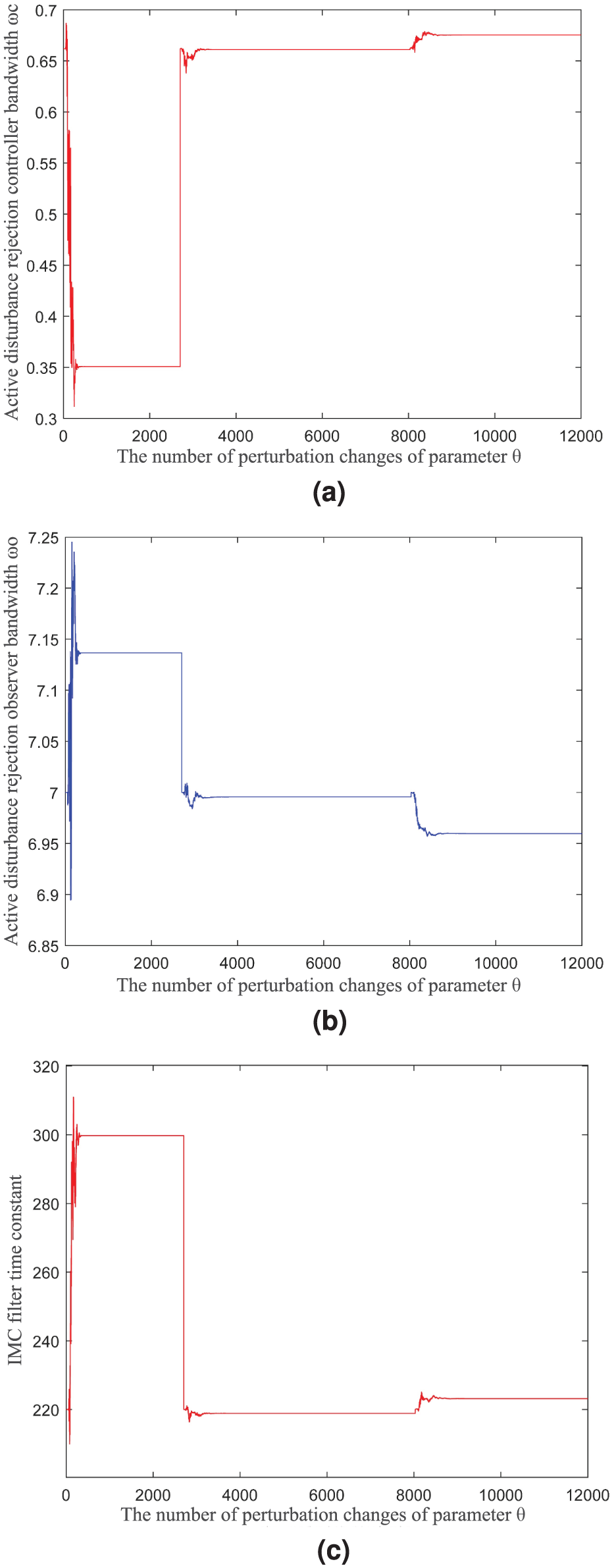
Trajectories of controller parameters during SPSA online optimization: (a) active disturbance rejection controller bandwidth
Conclusion
This paper proposes a memory-based SPSA online optimization strategy for the IMC-based cascade ADRC system, specifically designed for SCR denitration processes. To assess the feasibility and benefits of this approach, comparative simulations were conducted against traditional PID, linear ADRC, and IMC-based cascade ADRC without optimization. The setpoint tracking simulations and disturbance rejection simulations lead to the following conclusions:
The IMC-based cascade ADRC architecture effectively handles the large inertia and significant delays inherent in SCR systems, ensuring zero overshoot, faster response speeds, and stronger disturbance rejection capabilities compared to traditional methods.
The proposed system demonstrates exceptional robustness. When the SCR system undergoes load variations or parameter uncertainties, the controller maintains stability and rapidly recovers to the setpoint.
Integrating SPSA online parameter optimization significantly enhances the adaptability of the controller. By dynamically tuning the bandwidths and filter time constant, the system achieves superior tracking performance across varying operating conditions.
The incorporation of the memory-based initialization mechanism eliminates the learning lag typically associated with SPSA during load transitions. This feature enables the system to adapt almost instantaneously to new load levels, reducing the recovery time by approximately 50% and suppressing dynamic deviations.
In summary, the proposed MSPSA-optimized IMC-based cascade ADRC offers a highly effective solution for the precise and robust control of SCR denitration process in coal-fired power plants.
Footnotes

Funding
The authors disclosed receipt of the following financial support for the research, authorship, and/or publication of this article: This work was supported by The Natural Science Foundation of Guangdong Province, China (grant numbers 2024A1515140029, 2023A1515010949).
Declaration of conflicting interests
The authors declared no potential conflicts of interest with respect to the research, authorship, and/or publication of this article.
Data availability statement
Data sharing is not applicable to this article, as no data sets were generated or analyzed during the current study.