






Abstract
Bipedal walking, as the most representative form of locomotion, is important for health and quality of human life. Model predictive control (MPC) has been widely employed for bipedal walking generation, but existing methods often struggle to simultaneously ensure stable tracking performance, physiological plausibility, and acceptable computational cost. To address this issue, an event-triggered linear time-varying model predictive control (ET-LTV-MPC) framework is proposed. Based on oscillator-generated desired trajectories, the control framework integrates a time-varying linearized model for future state prediction with a re-optimization mechanism triggered by foot contact, allowing timely re-optimization at hybrid state transitions while explicitly enforcing physiological torque constraints. Numerical simulations have been conducted using a compass model and compared with representative controllers. The results show that the ET-LTV-MPC achieves superior tracking accuracy while maintaining the joint torque within the physiological constraints. It also reduces the peak error caused by foot contact and provides a more favorable balance between tracking accuracy and computational cost than NMPC. Parametric analysis reveals that the optimal prediction window is approximately 0.2 s into the future, which is comparable to reported sensorimotor response latencies during human walking. These findings demonstrate that the proposed ET-LTV-MPC provides an accurate, computationally efficient and physiologically meaningful tool for generating bipedal walking.
Keywords
Introduction
Locomotion is one of the most fundamental motor skills that enables humans to interact with and adapt to the environment (Severini and Zych, 2022). With global populations aging, the incidence of mobility impairments and gait disorders continues to rise, making the study of human locomotion more urgent (Wang et al., 2024). Bipedal walking, as the most representative form of human locomotion, is crucial to human health and quality of life and has become a focus of this field (Crompton et al., 2023). Understanding the mechanisms underlying human walking not only provides valuable physiological insights for health and rehabilitation (Das et al., 2022), but also guides the design and control of humanoid robots and lower-limb exoskeletons (Narayan and Dwivedy, 2025; Reher and Ames, 2021).
The origin of the research on bipedal walking can be traced back to the 1990s. McGeer (1990) used a rimless wheel model to describe passive walking and demonstrated that stable limit cycles could be achieved on an incline purely through gravity and collisions. However, the applicability of this model was limited by slope steepness. To overcome this limitation, the researchers shifted focus to more complex biomechanical models. The simplest biomechanical model is called the compass model, which introduces two rigid links and a rotating hip joint to approximate the behavior of a bipedal robot (Darici and Kuo, 2023; Garcia et al., 1998). Later, to capture more details, these foundational models were expanded to multi-link models. For example, the five-link model introduced the upper body and the knee joint, providing a more detailed representation of human-like gait dynamics (Borzova and Hurmuzlu, 2004; Castillo et al., 2023). To improve accuracy, the addition of muscle tissue further enhanced the simulation of muscle-joint interactions and led to the development of musculoskeletal models (Schumacher et al., 2025; Sylvester et al., 2021).
To bridge the gap between biomechanical models and practical walking systems, the most critical aspect is control. Initially, passive walking control can achieve natural periodic gaits, but showed limited adaptability to terrain, making it difficult to achieve stable walking on flat ground (Collins et al., 2005). This led to the introduction of proportional–derivative (PD) control strategies to achieve basic trajectory tracking and gait stabilization (Aoi and Tsuchiya, 2007). Inspired by biological neural networks, control strategies based on the central pattern generator (CPG) were introduced to generate rhythmic movement patterns by mimicking the coordination of neuron firing in the spinal cord (Minassian et al., 2017). In addition, researchers developed methods based on the zero-moment point (ZMP), which enhance stability by ensuring that the ZMP stays within the support polygon, preventing the human body from losing balance during movement (Park and Youm, 2007). Furthermore, the hybrid zero dynamics (HZD) method was developed to combine passive dynamics with active control, focusing on stable internal behaviors to achieve bipedal walking (Sharbafi and Seyfarth, 2015).
Recently, there has been growing evidence that human motor control operates according to optimal principles (Mathis and Schneider, 2021; Razavian et al., 2023). Therefore, model predictive control (MPC) has emerged as a promising framework to explain bipedal walking because of its ability to explicitly handle system dynamics, constraints, and optimization problems. Brasseur et al. (2015) introduced a linear MPC based on a center of mass (CoM) model and significantly improved walking performance on flat ground by using linear differential inclusion to constrain nonlinear dynamic feasibility. Vu Trieu Minh et al. (2020) designed a nonlinear MPC (NMPC) architecture that computes joint torques and trajectories for a multi-link walking model, reproducing human walking patterns measured by a Vicon motion-capture system. Ding et al. (2021) developed an NMPC framework based on an inverted-pendulum-plus-flywheel model that adjusts step location, CoM height, and angular momentum, achieving robust bipedal walking in multiple scenarios. Dallard et al. (2025) proposed a closed-loop MPC scheme that enhances the MPC based on the stable linear inverted pendulum model with an explicit model of ZMP dynamics and contact forces, enabling robust walking on uneven terrain.
However, existing MPC-based studies on bipedal walking still have several limitations. First, most MPC methods rely on highly simplified CoM-ZMP or linear inverted pendulum models, and constraints are usually imposed at the CoM/ZMP level rather than directly on joint torques. Second, most MPC methods update the control input at fixed sampling intervals. In hybrid walking systems, such fixed-period updates can lead to transient mismatches between the prediction model and the true dynamics at impact, which may degrade tracking accuracy. Third, NMPC methods can capture richer nonlinear dynamics, but they remain computationally demanding and often require specialized solvers, reduced update rates, or powerful hardware to maintain performance. Finally, the majority of MPC-based walking studies primarily evaluate stability, robustness, and disturbance rejection, while rarely discussing how controller parameters relate to physiological characteristics of human walking.
To address the above limitations, this paper makes the following contributions:
An event-triggered linear time-varying model predictive control (ET-LTV-MPC) framework was developed for bipedal walking, which directly applies physiological constraints to joint torques rather than CoM/ZMP level. To address the transient mismatch between the predictive model and the actual dynamics during impact, an event-triggered mechanism is designed that optimizes the control input upon detection of foot contact. To alleviate the computational burden of NMPC, a linear time-varying prediction model is introduced, which captures the essential behavior of the nonlinear dynamics and simplifies the optimization problem as a quadratic program.
A series of experiments were conducted to provide quantitative reference and address the lack of systematic comparisons among bipedal walking controllers. First, the proposed ET-LTV-MPC was compared with PD and linear quadratic regulator (LQR) controllers, demonstrating the ET-LTV-MPC achieves superior trajectory tracking performance while keeping the control torque within physiological constraints. Then, the ET-LTV-MPC was compared with the conventional LTV-MPC and NMPC, demonstrating the ET-LTV-MPC reduces the peak error caused by foot contact and has a much shorter solution time and a better trade-off than NMPC.
This study linked the key MPC design parameters to physiological characteristics of human walking. In particular, the optimized joint torque generated by the proposed ET-LTV-MPC is shown to remain consistently within the physiological constraints observed in human walking. In addition, the optimal prediction horizon corresponds to predicting approximately 0.2 second into the future, which is comparable to reported sensorimotor response latencies during human walking. These findings make the controller design more convincing and interpretable from a bio-inspired control perspective, addressing the lack of exploration on how MPC relates to human walking physiology in existing studies.
The rest of this paper proceeds as follows. Section “Bipedal walking model” establishes the biomechanical modeling of the bipedal walking system based on the compass model. Section “Control framework design” details the design methodology for the proposed ET-LTV-MPC framework, as well as the PD and LQR controllers for comparison. Section “Results and discussion” presents the results of the numerical simulations conducted to validate the performance of the proposed controller and analyze its physiological plausibility. Finally, Section “Conclusion” summarizes the contribution of this paper and outlines the directions of future research.
Bipedal walking model
Bipedal walking is a periodic motion, and each cycle consists of two primary phases: the swing phase and the foot contact. In this study, the compass model is adopted for biomechanical modeling and controller validation, as it provides a clear representation of bipedal walking dynamics and has been widely used in related research (Garcia et al., 1998). This model has a swing leg and a stance leg that are connected at the hip. The hip mass is M, the leg mass is m, and the leg length is l. The foot of the stance leg is constrained on the ground, and the stance leg can only rotate around the hip joint.
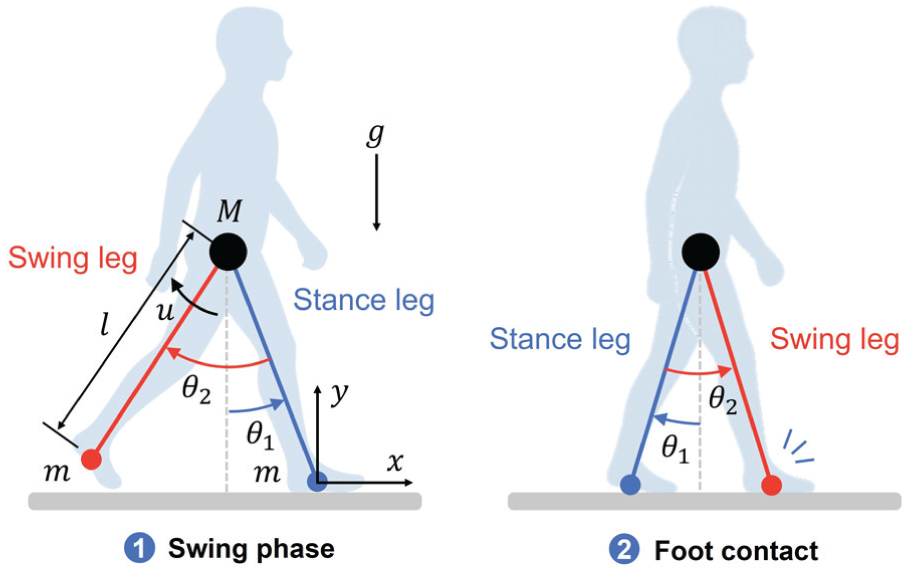
The compass gait model used for bipedal walking analysis in this study.
Swing phase
In the swing phase, only the stance leg is in contact with the ground. The dynamic equation of the model can be obtained using Lagrangian mechanics.
The kinetic energy of the hip mass is

The potential energy of the hip mass is

Similarly, the kinetic energy of the swing leg mass is

The potential energy of the swing leg mass is

The Lagrangian equation of the system, defined as the total kinetic energy minus the total potential energy, is given as follows

The generalized torques acting on the two angles are derived as

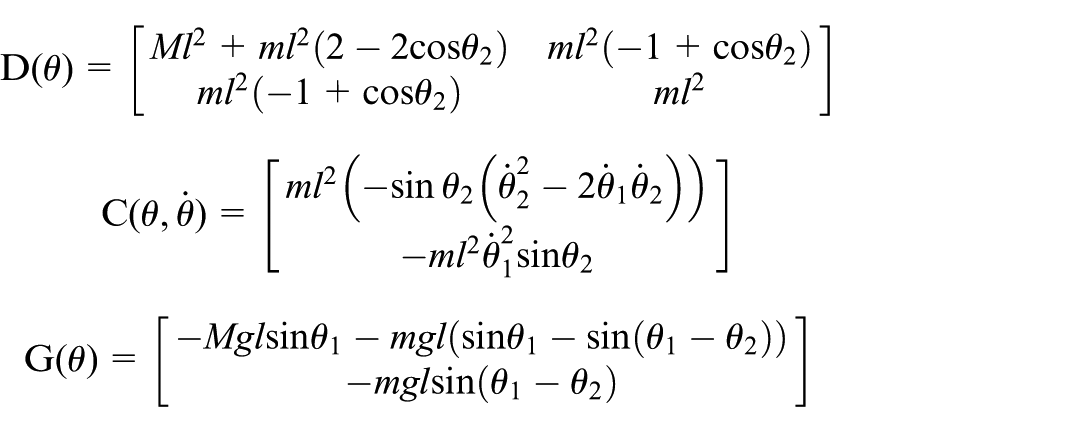
By rearranging the above equations, the dynamic equation of the compass model in the swing phase can be expressed in matrix form as

where
Foot contact
When the swing leg lands on the ground, the foot contact occurs and leads to a sudden change of state. The foot contact is assumed to occur only when all the following contact conditions are simultaneously satisfied (Gregg et al., 2011; Gregg and Spong, 2010)

where h is the height of the swing foot. The first condition ensures that the height of the swing foot is zero. The second condition ensures that the height of the swing foot is decreasing.
At the moment of foot contact, an impact may occur between the tip of the swing leg and the ground. To simplify the analysis, the following assumptions are made:
The swing leg does not slip or rebound upon contact;
The stance leg leaves the ground without generating any interaction force;
The control torque is assumed to be continuous and non-impulsive during the impact;
Immediately after contact, the swing leg becomes the new stance leg, while the previous stance leg becomes the new swing leg. Under these assumptions, when the swing leg strikes the ground, an inelastic collision occurs, resulting in an instantaneous change of the system state.
According to the law of conservation of angular momentum, the angular momentum before and after the impact remains constant. The angular momentum of the whole system around the contact foot is conserved, leading to

where
Similarly, the angular momentum of the partial system around the hip joint is conserved, leading to

At the instant of impact, due to the exchange of the stance and swing legs, the following geometric relationships hold

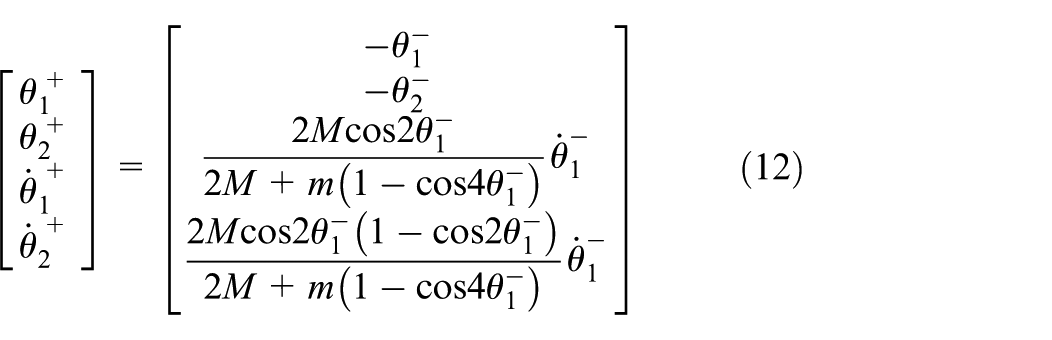
Combining the above relationships, the state transition of the system before and after foot contact can be expressed as
Control framework design
This section presents the design of three control methods for the bipedal walking model. In addition to the proposed ET-LTV-MPC framework, classical LQR controller and PD controller are also implemented for comparison.
ET-LTV-MPC framework
Previous research has demonstrated that oscillators can effectively generate rhythmic signals for bipedal walking control (Kuo, 2002). Therefore, this study introduced an oscillator to generate the desired angle between two legs

where constant A is the amplitude that determines the stride, φ is the phase, and
It should be noted that foot contact will cause a state change:
The bipedal walking system is underactuated because only the swing leg joint is actuated, while the stance leg moves passively according to the system dynamics. Previous research has demonstrated that when
To achieve this objective, an ET-LTV-MPC framework is developed, which consists of five steps: time-varying model establishment, future state prediction, solution optimization, repeated execution, and foot contact triggering. Figure 2 shows the whole process of the proposed ET-LTV-MPC framework.
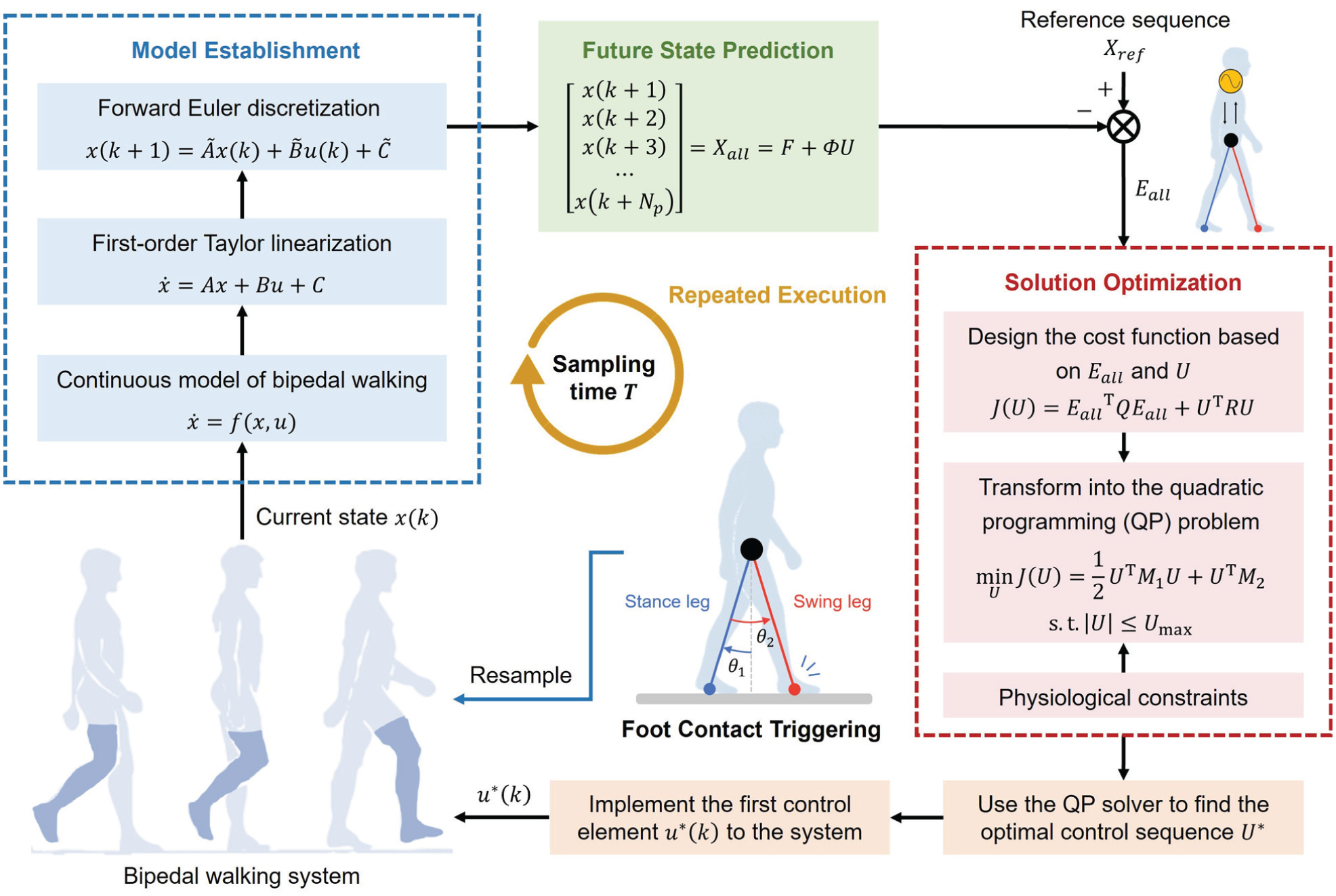
Overview of the proposed ET-LTV-MPC framework for bipedal walking, which consists of five steps: model establishment, future state prediction, solution optimization, repeated execution, and foot contact triggering.
The first step is to establish a linear time-varying model for future state prediction. The continuous dynamic equation introduced in equation (7) can be rewritten as

where
By performing a first-order Taylor linearization around the current reference state
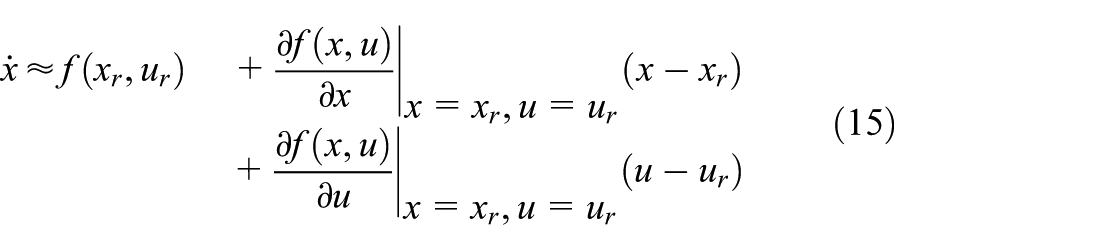
This can be expressed in the form

where A and B are Jacobian matrices with respect to x and u, respectively, and

Applying the forward Euler method for discretization yields

where k represents the current time step and T is the sampling period.
Therefore, the discrete linear model used for the prediction can be obtained

where
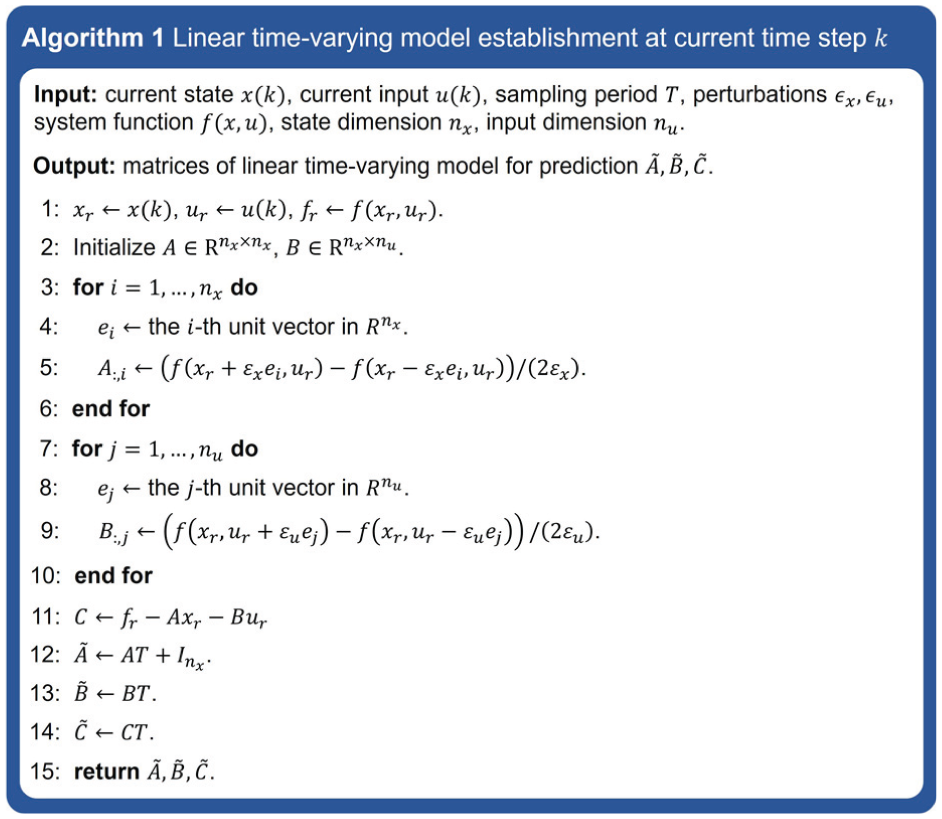
Pseudo-code for the algorithm to establish the linear time-varying model.
The second step is to make predictions for the future state using the established model. Given the current state

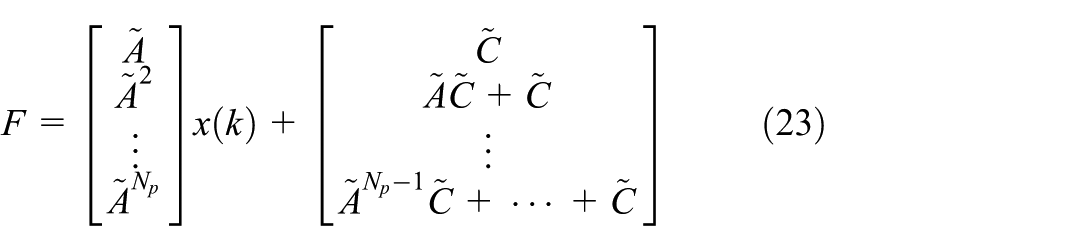
where

and U is the vector of possible future control inputs
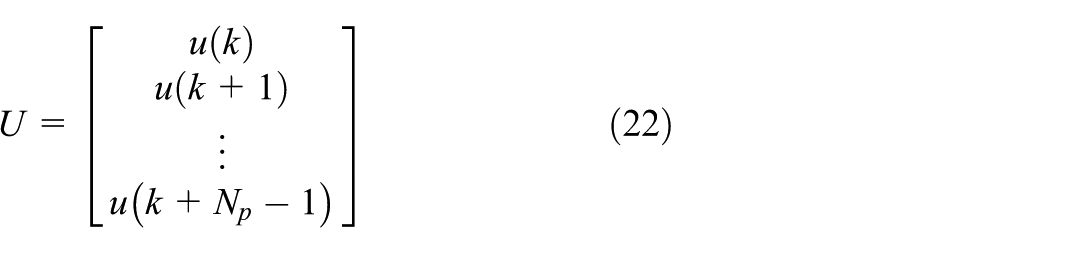
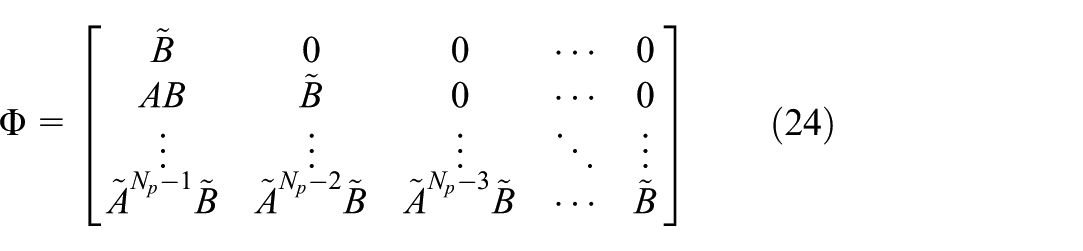
The matrices F and Φ are defined as
The third step is to design a cost function and solve the optimal control sequence. Based on the current state
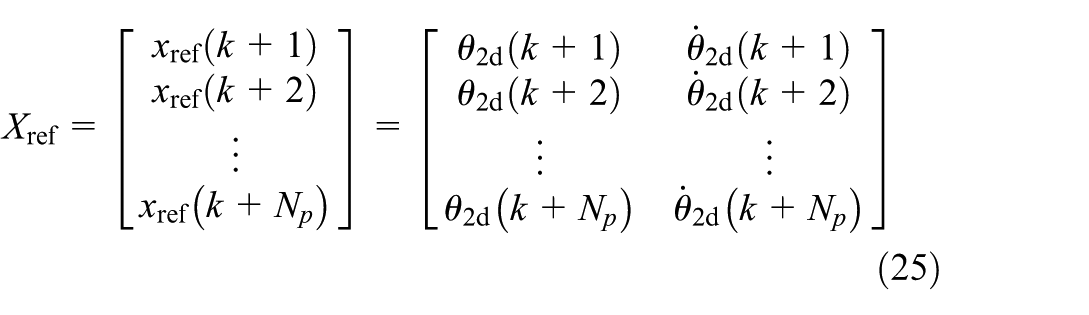
The tracking error between the predicted states and the oscillator-generated desired trajectory is given by

The control objective of the walking system is to minimize both the tracking error and the control energy. Therefore, the cost function is designed as

where Q and R are symmetric positive definite weighting matrices that determine the relative importance of tracking accuracy and control effort.
Substituting equation (20) into the above cost function yields

Expanding and rearranging the terms gives the standard quadratic form

Therefore, the cost function can be expressed as

where
In practical human bipedal walking systems, there exist physiological and actuator constraints. The control input u represents the torque of the hip joint, which is limited by a maximum admissible value. Therefore, control constraints are introduced as

In matrix form, this can be expressed as

This transforms the optimal control problem into a quadratic programming (QP) problem, which minimizes a quadratic cost function subject to linear inequality constraints

This QP problem is convex and can be solved efficiently using standard and mature optimization solvers. At each control step, the optimal control sequence
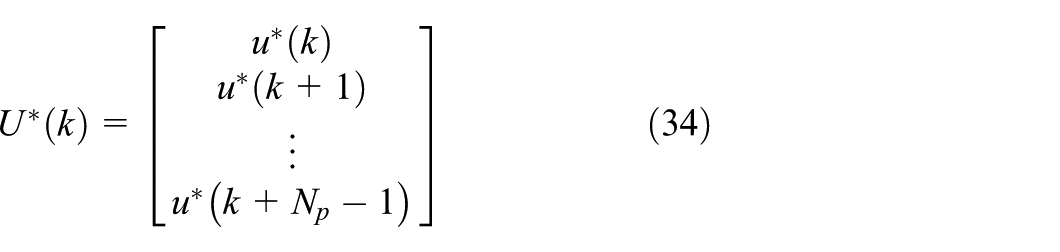
The fourth step is to apply the optimal control input to the bipedal walking system and repeat the process. To ensure real-time control performance, only the first element of the optimal control sequence
The fifth step is foot contact triggering. Foot contact may occur at any time during walking and can cause a sudden change in the system state. Previous studies on human walking have shown that foot contact information provides a strong timing cue and can reset the ongoing locomotor phase, with basic muscle activation patterns tightly linked to the contact event (Tamura et al., 2020). Inspired by this evidence, the controller in this study adopts a contact-triggered re-optimization scheme. In the repeated execution process of the MPC, the currently computed optimal control input
It should be noted that the event-triggered mechanism designed in this study is different from the conventional event-triggered control strategy that replaces periodic updates in order to reduce the average update frequency or computational load. The proposed ET-LTV-MPC framework still operates under the periodic time event mechanism, and the event-triggered update is introduced only as an additional re-optimization when foot contact occurs between two adjacent sampling instants. Therefore, the role of the event-triggered mechanism here is not to eliminate periodic updates, but to complement them by improving responsiveness to hybrid state transitions.
LQR controller
The LQR controller is another classical optimal controller that has been widely applied in system control (Barreda et al., 2025). In this study, an LQR controller is designed using the continuous linear model introduced in equation (16). The control objective is to regulate the state

where Q and R are symmetric positive definite weighting matrices that determine the trade-off between state tracking accuracy and control effort.
By minimizing J, the optimal continuous-time state-feedback control law is obtained as

where

The feedback gain is then given by

PD controller
A PD controller is also designed for comparison using the same control variables
The PD control law is defined as

where
Results and discussion
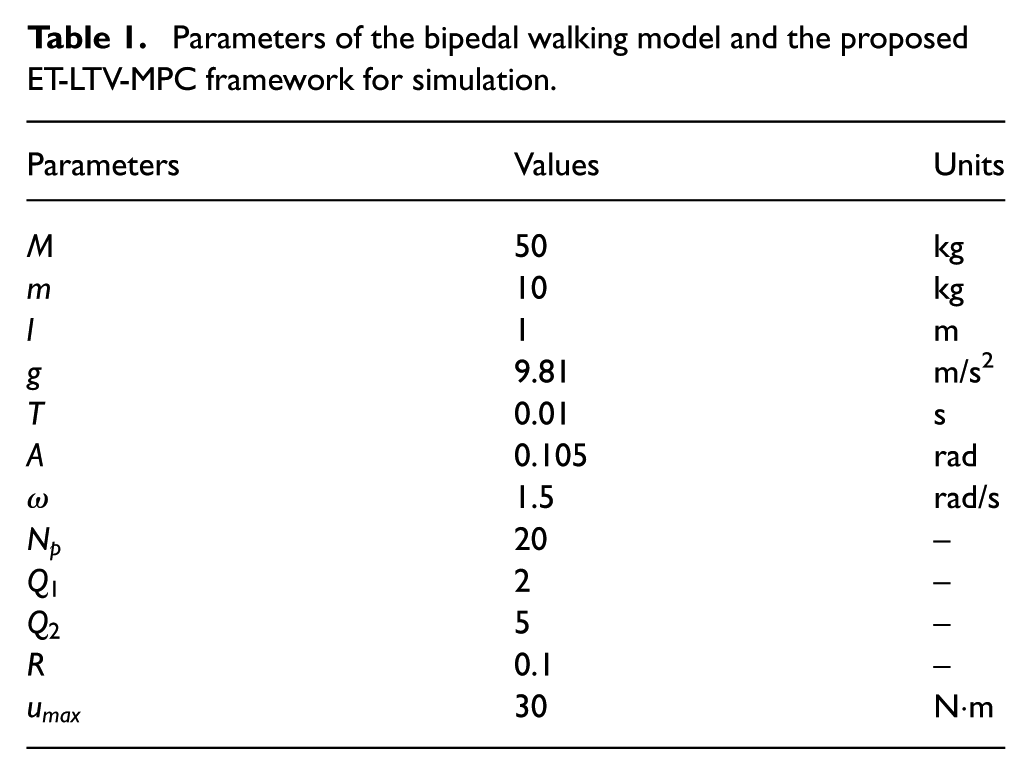
The research objective is to develop an ET-LTV-MPC framework capable of generating more stable and physiologically constrained bipedal walking behavior. To validate the proposed control framework, numerical simulations were conducted in the MATLAB/Simulink environment. The simulation parameters of the bipedal walking model and the ET-LTV-MPC framework are listed in Table 1. The parameters of the bipedal walking model were set in accordance with previous research (Aoi and Tsuchiya, 2007). The simulation duration was set to 20 seconds. The weighting factors
Parameters of the bipedal walking model and the proposed ET-LTV-MPC framework for simulation.
Generation of periodic gait
Figure 4 illustrates one walking cycle of the simulation based on the designed ET-LTV-MPC framework, including both the swing phase and the foot contact event. The upper plot shows the sequential motion of the stance and swing legs, where the green arrows indicate the corresponding time instants in the angle and angular velocity plots below, and the red arrow marks the moment of foot contact. The lower plots present the variations of
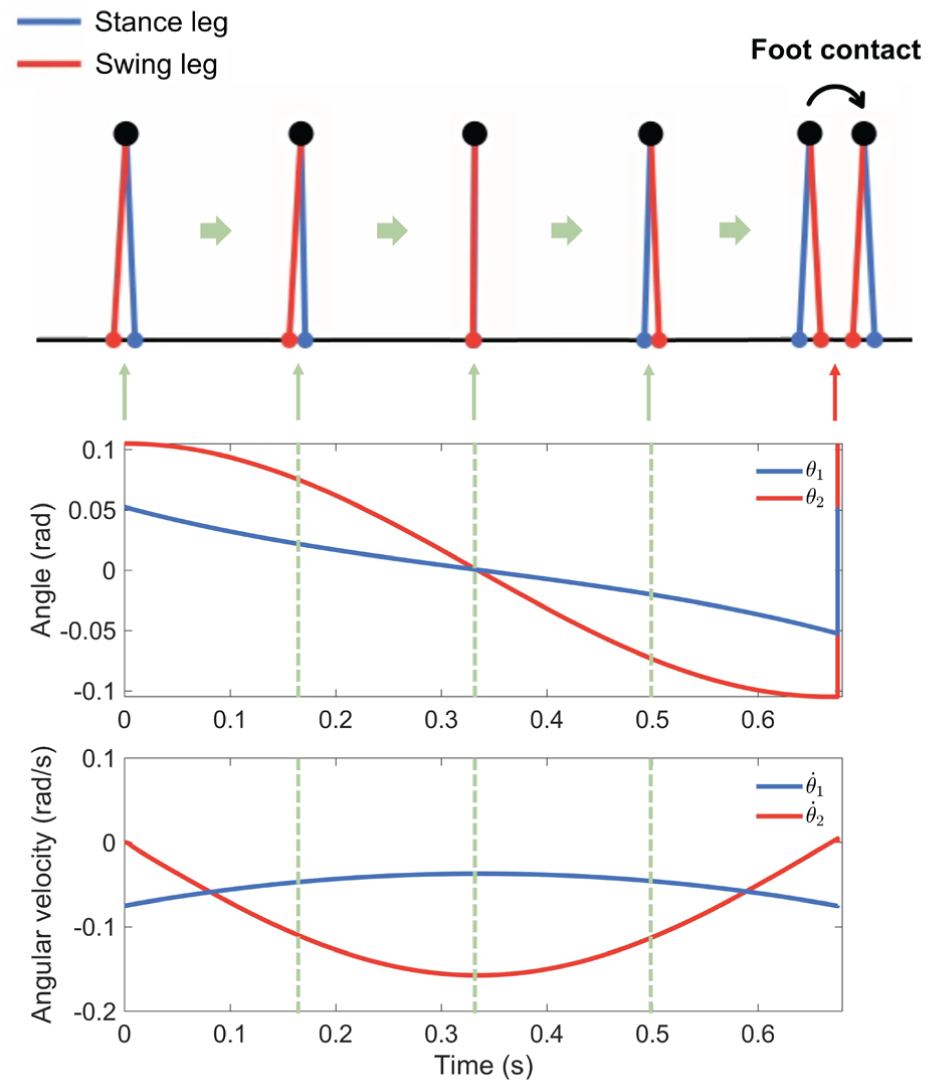
One walking cycle of the compass model.
Figure 5 shows the simulation results of
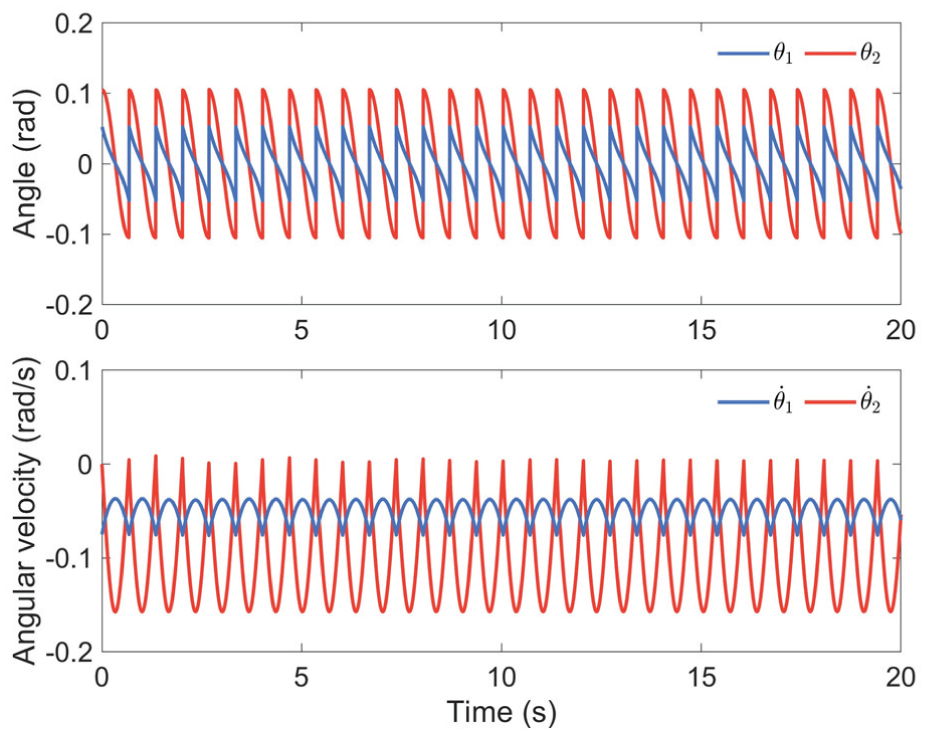
Simulation results of
Influence of prediction horizon
To investigate the trajectory tracking performance, simulations were conducted to evaluate how the ET-LTV-MPC framework performs when following the desired rhythmic trajectories generated by the oscillator. The objective of this experiment is to examine how the prediction horizon
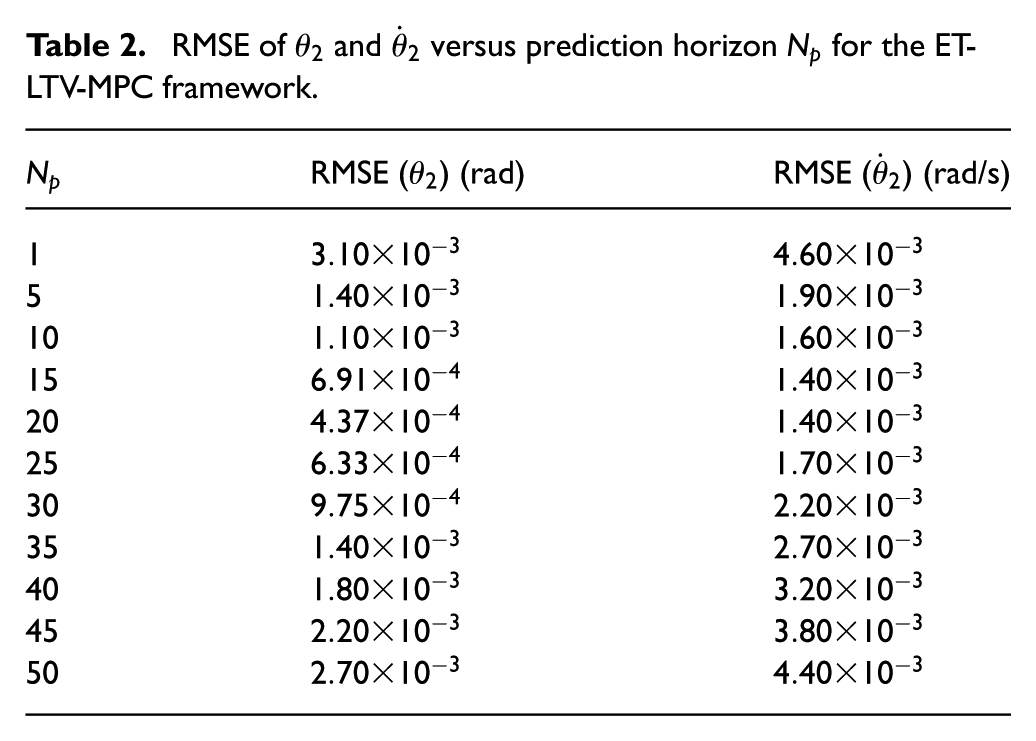
Table 2 and Figure 6 show the variation of the RMSE for
RMSE of
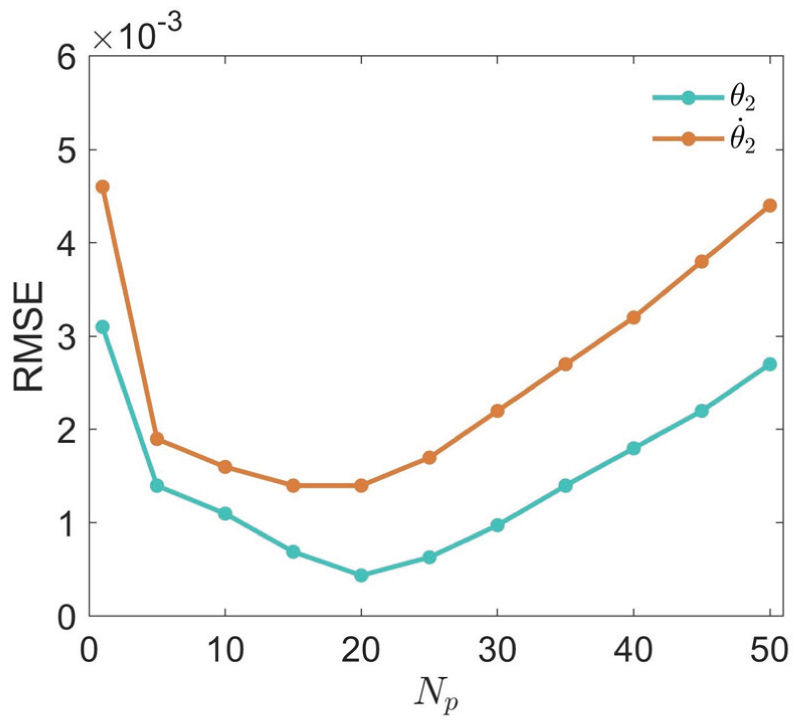
Variation of the RMSE of
Since the sampling time of
Comparison with PD and LQR controllers
To further evaluate the performance of the proposed ET-LTV-MPC framework, comparative simulations were conducted with the PD controller and the LQR controller. For the PD controller, increasing the proportional and derivative gains can effectively improve tracking accuracy and reduce error, but it also leads to a significant increase in control input amplitude. Similarly, for the LQR controller, enhancing the state-error weighting or reducing the input weighting in the cost function can also reduce tracking error, but again at the expense of higher control torque. Therefore, in order to keep the control inputs within the physiological torque limits, the PD and LQR gains were tuned conservatively. In contrast, the ET-LTV-MPC framework inherently satisfies the physiological constraint through optimization, maintaining the input torque within the predefined bound during the entire control process. When all three controllers were tuned so that their control inputs remained within the physiological constraint, the trajectory tracking results were obtained as shown in Figures 7 and 8. Figures 7 and 8 compare the trajectory tracking performance of the three controllers for
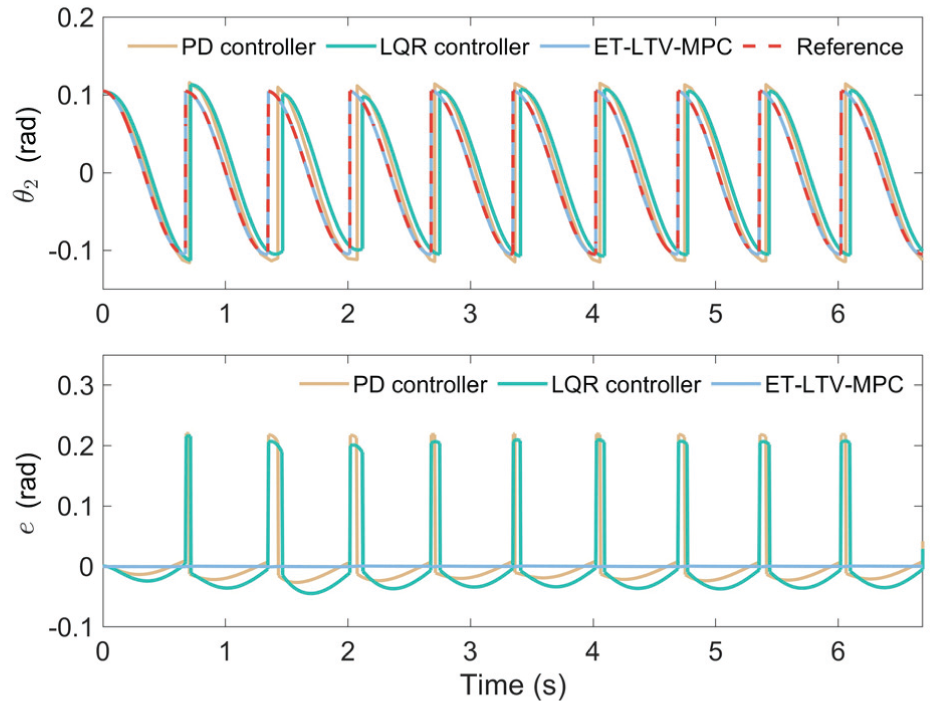
Tracking performance of
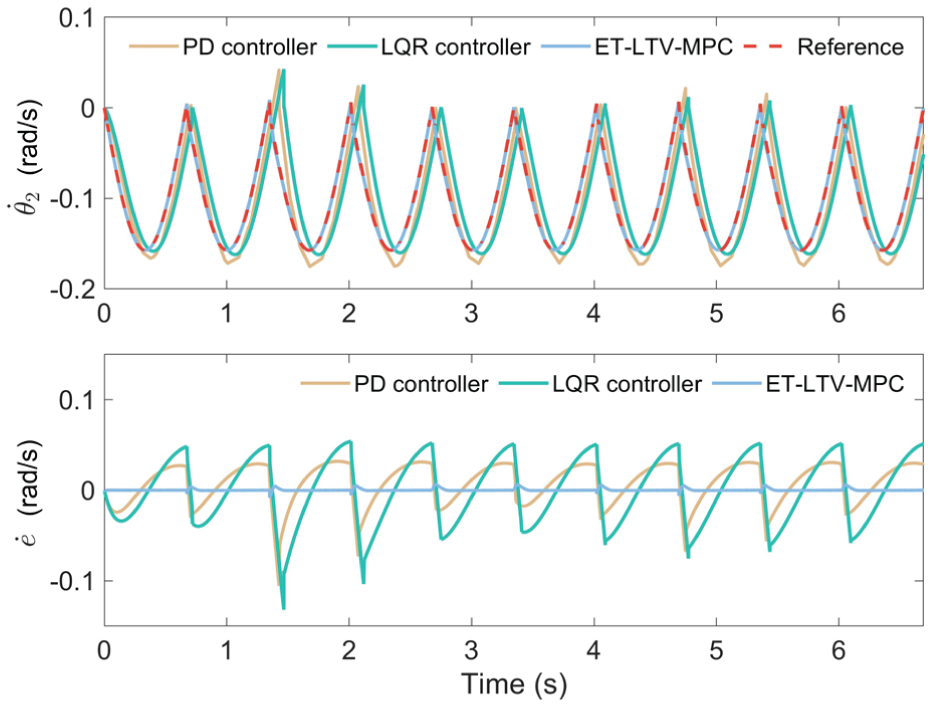
Tracking performance of
The inferior performance of the PD and LQR controllers can be attributed to their limited ability to account for future state evolution. Both controllers generate control actions based solely on the instantaneous state errors without explicitly considering the system’s future dynamics. Although the LQR controller is optimal in the sense of minimizing a quadratic cost function, it operates under a fixed linearized model and static weighting matrices, which restricts its ability to adapt to the time-varying and nonlinear nature of bipedal walking. Consequently, both PD and LQR controllers tend to exhibit phase lag and oscillatory behavior when tracking periodic trajectories. In contrast, the proposed ET-LTV-MPC framework continuously updates a linear time-varying model around the current operating point, enabling it to predict and optimize over future states within each control horizon. This predictive mechanism allows the controller to anticipate dynamic changes rather than merely react to them, leading to smoother transitions and enhanced stability. Furthermore, unlike conventional event-triggered strategies based on state-deviation conditions (Zhang et al., 2024), the event-triggered mechanism in this study is designed to respond specifically to foot contact events. When foot contact occurs, the system undergoes a sudden hybrid state transition, and maintaining the previous control input could induce large tracking errors. Therefore, upon detecting foot contact, the controller immediately resamples the system state, updates the prediction model, and resolves the optimization problem to compute a new control input. This mechanism enables the controller to remain adaptive and stable through the discrete–continuous transitions inherent in bipedal walking, ensuring both high tracking accuracy and physiological plausibility.
To further evaluate the practicality of the proposed controller under physiological constraints, the trade-off between tracking accuracy and control effort is examined. For the PD controller and the LQR controller, increasing the gains for the former and increasing the state error weight for the latter can not only improve tracking accuracy but also amplify the control torque. To ensure a fair comparison with the proposed method, the gains of the PD controller and the LQR controller were adjusted so that their tracking RMSE matched the level achieved by the ET-LTV-MPC framework, and then the required torques were compared.
Figure 9 shows the control torques for the three controllers under the same RMSE level. The PD controller produces relatively large torque amplitudes with abrupt jumps at phase transitions, while the LQR controller exhibits even greater torque peaks that frequently exceed the physiological limit. This excessive control effort is inconsistent with human motor behavior, which relies on a smooth and energetically efficient torque modulation. In contrast, the proposed ET-LTV-MPC framework maintains the torque strictly within the physiological constraint and generates rhythmic periodic control inputs that closely resemble the modulation patterns observed in human walking.
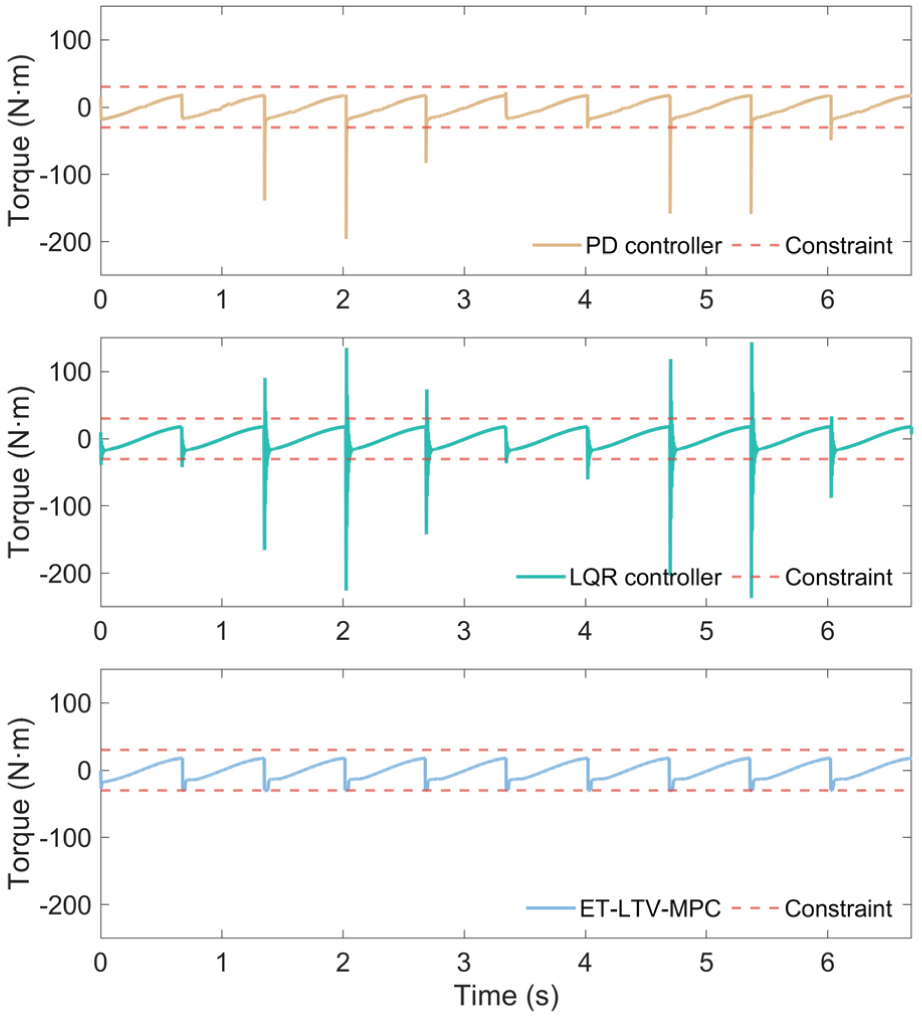
Control torques of the PD controller, LQR controller, and ET-LTV-MPC framework.
The simulation results collectively demonstrate that the proposed ET-LTV-MPC framework achieves superior performance compared to conventional PD and LQR controllers. It provides accurate trajectory tracking, maintains control torque strictly within physiological limits, and generates smooth and rhythmic control patterns consistent with human walking. Parametric analysis shows that a moderate prediction horizon of
Comparison with LTV-MPC and NMPC
Furthermore, to clarify the contribution of the event-triggered mechanism and to clarify the rationale for using a linear time-varying model in the controller design, two additional comparative simulations were conducted. In the first experiment, the proposed ET-LTV-MPC was compared with a conventional LTV-MPC without event-triggered re-optimization. Both controllers use the same time-varying linearized model, sampling period
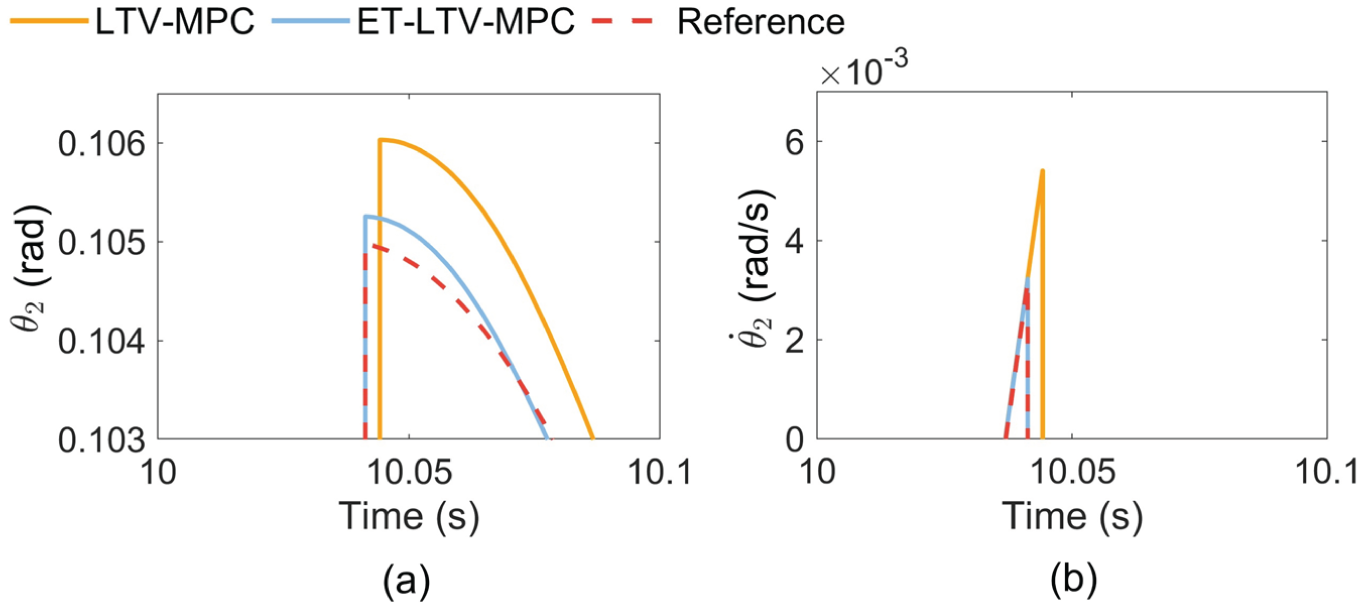
Enlarged tracking performance around a foot contact event under the conventional LTV-MPC and the proposed ET-LTV-MPC: (a)
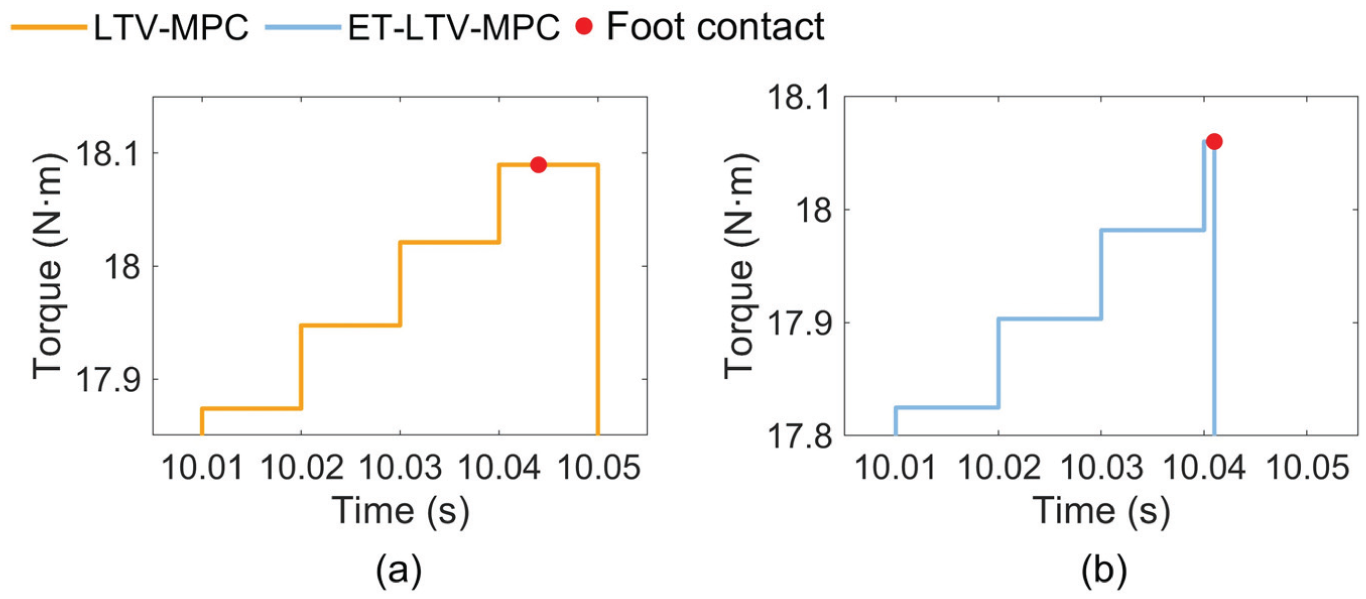
Control torque around a foot contact event: (a) conventional LTV-MPC with fixed 0.01 second sampling period, which continues to apply the torque computed from the pre-contact model; (b) proposed ET-LTV-MPC, where the detected foot contact triggers an immediate re-optimization based on the post-contact model.
The difference in update timing is further illustrated in Figure 12. As shown in Figure 12(a), the conventional LTV-MPC updates the control input only at the periodic sampling instants. In contrast, Figure 12(b) shows that the proposed ET-LTV-MPC retains the same periodic updates but introduces an additional immediate update when foot contact is detected. In the 20 second simulation, the periodic mechanism performs 2000 optimizations due to the fixed sampling period of 0.01 second, while the event-triggered mechanism introduces only 29 extra re-optimizations associated with foot contact events. Therefore, the additional computational burden caused by the event-triggered mechanism is only 1.45%, while the tracking performance is noticeably improved.
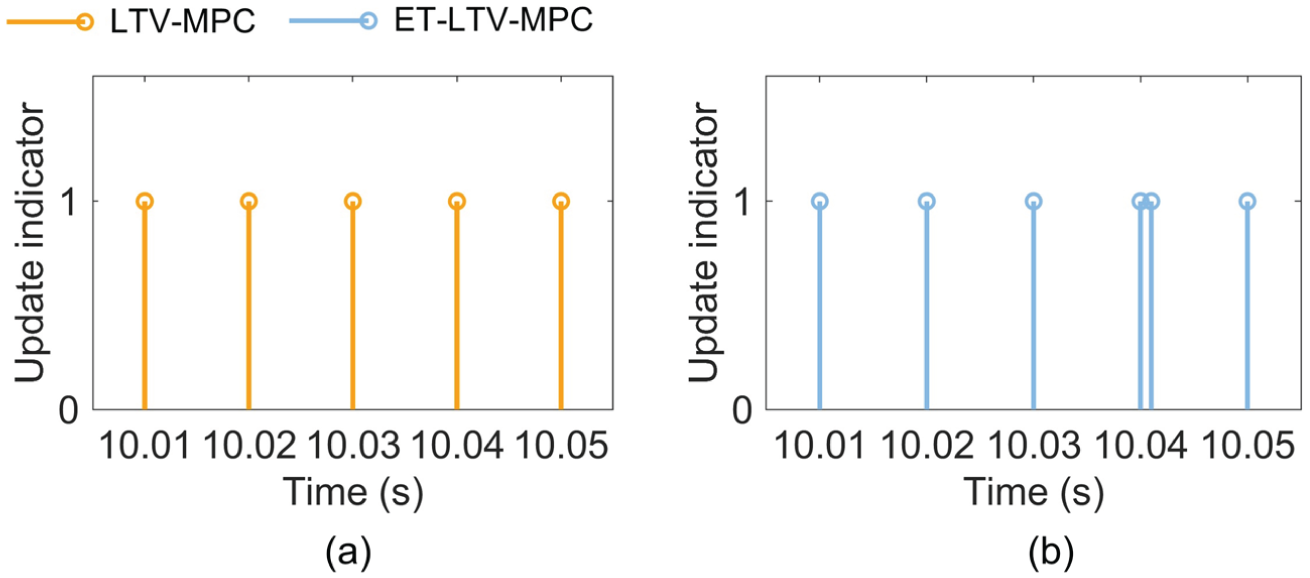
Update instants around a foot contact event: (a) conventional LTV-MPC with periodic time event mechanism, (b) proposed ET-LTV-MPC with additional event-triggered update.
Second, to examine the real-time feasibility of the proposed controller and to clarify the trade-off between model fidelity and computational complexity, a set of computational experiments were carried out. In this study, the QP problems generated by ET-LTV-MPC are solved in MATLAB/Simulink using the QP solver of the Model Predictive Control Toolbox. The solver is set to active-set, so the QP problem is solved by the KWIK active-set algorithm provided in the block. The default solver options are adopted, where the maximum number of iterations is automatically computed but not smaller than 120, the inequality-constraint tolerance is
To quantitatively evaluate the benefit of model linearization, an additional NMPC is implemented using the full nonlinear walking model as the prediction model. The NMPC uses the same parameters as the proposed ET-LTV-MPC. On the same hardware platform, the average solver time measured by the Simulink Profiler is
Conclusion
In this paper, a novel ET-LTV-MPC framework was developed for physiologically constrained human bipedal walking. Based on an oscillator-generated desired trajectory, the controller combines a time-varying linearized model for future state prediction with a contact-triggered re-optimization mechanism. Numerical simulations demonstrated that the proposed controller successfully achieved periodic and stable gait patterns. The results of the comparative simulations show that the proposed framework maintains high tracking accuracy without violating physiological torque constraints, reduces the peak error caused by foot contact, and achieves a favorable trade-off between tracking performance and computational cost. Furthermore, the identified optimal prediction window is approximately 0.2 second into the future, which is comparable to reported sensorimotor response latencies during human walking. These findings demonstrate that the proposed framework provides a physiologically plausible and computationally efficient approach to bipedal walking control. However, this study still has limitations. First, the proposed control framework is currently only applicable to two-dimensional models and has not been validated on three-dimensional multi-joint models. Second, all simulations are conducted on flat, rigid ground and do not consider ground or environmental uncertainties such as uneven terrain and variations in friction. Future work will extend the proposed framework to more complex models and incorporate ground uncertainties to further assess its robustness in realistic locomotion scenarios.
Footnotes
Acknowledgements
The authors would like to thank editor and anonymous referees for their helpful and very delicate comments.

Funding
The authors received no financial support for the research, authorship, and/or publication of this article.
Declaration of conflicting interests
The authors declared no potential conflicts of interest with respect to the research, authorship, and/or publication of this article.
Data availability statement
Data sharing not applicable to this article as no datasets were generated or analyzed during the current study.