







Abstract
In a competition-driven meritocratic learning environment, academic achievement can have a direct effect on self-esteem and self-concept. As such, academic achievement can act as an antecedent to grit and self-esteem. This study examined the longitudinal reciprocal relationships of academic achievement, consistency of interest (CI), perseverance of effort (PE), and self-esteem among fourth-grade and fifth-grade primary school students in South Korea, who were under heavy pressure in a performance-oriented learning environment. Data pertaining to 2,240 students were extracted from the 2018 Korean Children and Youth Panel Survey conducted by the National Youth Policy Institute, and cross-lagged structural equation modeling was conducted to examine the longitudinal relationship between three variables. The results revealed that academic achievement had a statistically significant positive relationship with CI, PE, and self-esteem; CI had a statistically significant positive relationship with PE; and PE had a statistically significant positive relationship with self-esteem through the mediation of academic achievement. In addition, self-esteem demonstrated the highest level of stability, and although CI and PE demonstrated similar levels of stability, CI displayed slightly greater stability compared to PE. Findings from this study suggest the need to support grit and self-esteem among Korean students under pressure in performance-oriented academic environments.
Keywords
Introduction
Humans aspire to success in the social contexts to which they belong (Schüler et al., 2019). Among many influencing factors, grit is a key predictor of success. Grit is defined as “passion and perseverance for long-term goals” (Duckworth et al., 2007, p. 1087) and can be measured using two subscales: (a) consistency of interest (CI) and (b) persistence of effort (PE). Despite controversy over the term (e.g., grit has been criticized for placing the onus of change on students as opposed to systems that care for them; Credé, 2018), grit has been demonstrated to have positive correlations with academic achievement (Akos & Kretchmar, 2017; Credé et al., 2017; Park et al., 2017), self-esteem (Weisskirch, 2018, 2019), motivation (Karlen et al., 2019), and life satisfaction (Clark & Malecki, 2019). Therefore, along with other noncognitive variables (e.g., conscientiousness [Porapat, 2009] and growth mindset [Dweck et al., 2014]), grit appears to play a positive role in many areas of life.
In South Korea (hereafter, Korea), one of the biggest concerns for adolescents is schoolwork, with more than 66% of pre-college students receiving private tutoring (Korea National Statistical Office, 2021). Moreover, 64% of students are exposed to stress due to schoolwork, exams, and grades (Ryu et al., 2019). These data suggest that Korean students are significantly burdened with schoolwork, and academic achievement is highly important for their success in life. This approach to learning aligns with Trautwein et al.’s (2006) description of meritocratic learning environments, which emphasize the significance of both achievement and student “efforts” that are reinforced through social comparison. Indeed, academic achievement has been repeatedly reported as an antecedent to self-esteem and motivation among Korean students (Park & Sohn, 2019; Shin & Sohn, 2015). Unfortunately, in a meritocratic school environment, academic achievement can have a direct effect on self-esteem and motivation (Trautwein et al., 2006) and may act as an antecedent to grit and self-esteem (Park & Sohn, 2019).
Although ample studies have examined grit in the context of learning, achievement, and self-esteem, a number of gaps in the literature remain. First, previous research examining the relationship between grit and achievement has only considered grit as an antecedent to academic achievement (Akos & Kretchmar, 2017; Park et al., 2017). Second, grit-related longitudinal studies have generally focused on estimating the overall impact of grit (O'Neal et al., 2018; Postigo et al., 2021), despite the potential for its subconstructs (i.e., CI and PE) to have different functions (Credé et al., 2017; Schmidt et al., 2018). Third, although CI and PE have been associated with long-term positive life outcomes (Bowman et al., 2015), previous studies have not considered the mutual influence of CI and PE on these outcomes (Jiang et al., 2019). Fourth, most studies examining the relationship between grit and self-esteem have used cross-sectional designs, with a mixed tendency of setting the antecedent between grit and self-esteem, making it difficult to clearly distinguish the reciprocal relationship (Kim et al., 2021; Li et al., 2018). Finally, few studies have explored academic achievement, grit, and self-esteem together (Weisskirch, 2018).
Therefore, this study aimed to examine the longitudinal reciprocal relationships of grit, self-esteem, and academic achievement among Korean primary school students, with academic achievement positioned as an antecedent variable. This study focused on fourth-grade and fifth-grade students, the developmental stage children begin to develop awareness of their abilities and personal traits, build self-identity (Mruk, 2006), and cope with more demanding schoolwork (Hwang, 2006). By identifying potential antecedents of academic achievement in the context of Korean academic settings, this study sought to provide guidance on helping students proactively participate in learning, develop grit, and attain a positive self-image.
Correlations between the two subscales of grit
Grit is composed of two dimensions, namely, CI and PE (Duckworth et al., 2007), which have been empirically verified in a number of studies (Duckworth & Quinn, 2009; Schmidt et al., 2017). CI represents the degree to which people maintain passion for a particular goal over a long period of time, and PE represents the degree to which they persist in making an effort to achieve the same goal over time (Datu et al., 2016; Disabato et al., 2019; Duckworth & Gross, 2014). With rare exceptions (Clark et al., 2020), most studies found CI and PE to be positively correlated (Dixson et al., 2016; Karlen et al., 2019; Muenks et al., 2017).
Although the two grit subscales appear to be correlated, they can be interpreted as distinct variables (Credé et al., 2017; Ponnock et al., 2020). The positive interaction between CI and PE may be important in forming long-term life outcomes (Bowman et al., 2015). Moreover, grit's effect on achievement may be more appropriately explained by PE than CI or the total score of grit (Credé et al., 2017). However, little attention has been paid to the correlation between these subscales, with previous studies focusing on grit's factor structure (Datu et al., 2016; Tyumeneva et al., 2019) or the cognitive and psychological aspects of the distinct functions of CI and PE (Credé et al., 2017; Muenks et al., 2017; Ponnock et al., 2020).
According to the expectancy-value theory, valuing of tasks (e.g., interest in tasks) has positive effects on student effort and persistence (Wigfield & Eccles, 2000). In this regard, a previous study on grit (Yoo et al., 2015) found a significant positive effect of CI on PE. On the other hand, there PE has also been found to positively predict valuing of tasks (interests) (Wolters & Hussain, 2015), and both effort and interest mutually influence one another (Xu, 2018). These mixed results suggest that longitudinal studies are needed to confirm the relationships between CI and PE.
Relationship between grit and academic achievement
Cross-sectional studies examining the relationship between grit and academic achievement, and the cognitive outcome of learning, can be largely divided into two categories: (1) studies that examine the relationship between grit as a whole and achievement and (2) studies that examine the relationship between subfactors of grit and achievement. First, studies investigating the overall influence of grit among middle school students, without differentiating between the subfactors, found that grit had a positive effect on academic achievement (Clark & Malecki, 2019; West et al., 2016). More specifically, Clark and Malecki (2019) found that grit had a positive effect on self-reported academic achievement and actual grade point average. Dumfart and Neubauer (2016), however, reported that grit had no significant effect on high school students’ academic achievement. Usher et al. (2019) investigated the influence of grit on academic achievement during the pre-high school years and found that grit had a negative, albeit weak, effect on primary school students’ academic achievement. Second, studies investigating the influence of CI and PE among high school and college students (Bowman et al., 2015; Muenks et al., 2017; Rimfeld et al., 2016) found that PE had a significant, positive effect on achievement, but CI did not have a significant effect. Dixson et al. (2016), however, found that neither PE nor CI had a significant effect.
Only a few studies performed a longitudinal evaluation of the relationship between grit and academic achievement. A study with dual-language primary school students indicated that grit had a longitudinal indirect effect on literacy achievement, mediated by engagement (O'Neal et al., 2018). A longitudinal follow-up study with a 4-year interval among primary school students revealed that grit had a positive effect on academic achievement (Postigo et al., 2021). A longitudinal study of overall grit, CI, PE, and academic achievement among Chinese primary school students with a 6-month interval demonstrated reciprocal effects between overall grit, PE, and academic achievement, but not between CI and academic achievement (Jiang et al., 2019). Therefore, the relationships between grit, CI, PE, and academic achievement do not appear to be uniform, with PE exerting a more positive effect on academic achievement than CI. In addition, while grit influenced academic achievement in longitudinal studies conducted in Western countries (O'Neal et al., 2018; Postigo et al., 2021), such as the United States and Spain, grit and academic achievement were found to have a reciprocal effect in China, due to competitive pressure in academic settings (Jiang et al., 2019).
Despite this growing literature on grit and academic achievement, previous studies had several limitations. First, although the relationships between the subscales of grit and academic achievement can be determined only through a longitudinal follow-up research design, in which CI and PE are separately evaluated, most studies used a cross-sectional design and failed to explore the reciprocal relationship between grit and academic achievement. Second, although baseline academic achievement is an important control variable (Bowman et al., 2015), most of the previous studies omitted baseline academics when determining the relationship between grit and academic achievement. As academic achievement can influence grit (Jiang et al., 2019), the reciprocity of the relationship between the two should be considered. Third, although grit scores may differ depending on school years (Usher et al., 2019), most previous studies on the relationship between CI and PE focused on postprimary school students, leaving out primary school students who began to be exposed to the pressure of school performance and become aware of their abilities, traits, and self-identity (Mruk, 2006). The present study aimed to address these limitations by examining the longitudinal relationships between grit's subfactors and academic achievement, focusing on primary school students.
Relationship between self-esteem and academic achievement
Self-esteem is an individual's assessment of their own value (Rosenberg, 1965) and is important in many aspects of students’ lives, including life satisfaction (Gilman & Huebner, 2006) and social relations (de Moor et al., 2021; Harris & Orth, 2020). A reciprocal causal relationship has been demonstrated between self-esteem and academic achievement among Chinese primary school students (Wang et al., 2021) and Mexican primary and middle school students (Zheng et al., 2020). A US study with primary school students found that self-esteem had a positive effect on academic achievement, with students in lower grades showing a stronger tendency than those in higher grades (Cvencek et al., 2018). A longitudinal study with US high school students revealed that self-esteem had a weak positive effect on academic achievement during some school years, but not vice versa (Marsh & O’Mara, 2008).
These results indicate mixed trends in the relationship between self-esteem and academic achievement, including a reciprocal causal relationship (Wang et al., 2021; Zheng et al., 2020) and a unidirectional relationship (Cvencek et al., 2018; Marsh & O'Mara, 2008). Although the cause of these discrepancies is unknown, findings may point to the need to consider the specific learning environment of students when examining this relationship. Trautwein et al. (2006) argues that the meritocratic learning environment, which highlights the importance of academic achievement, can affect individual learners in an environment of competitive comparison. On the other hand, ego-protective learning, emphasizing the role of self-determination, may facilitate an environment where academic success or failure is determined by factors other than academic achievement. The Korean education system is a performance-oriented learning environment characterized by strong academic competition and pressure regarding school performance (Seon & Oh, 2013), similar to the meritocratic learning environment described by Trautwein et al. (2006). Therefore, this study, situated within a Korean learning environment, aimed to determine whether academic achievement acts as an antecedent to self-esteem to inform approaches for reducing the negative consequences of a performance-oriented learning environment.
Relationships between grit, self-esteem, and academic achievement
Overall grit has been found to have a positive effect on self-esteem among adults (Kevin et al., 2020; Li et al., 2018), and, among college students, PE has shown a positive effect on self-esteem (Weisskirch, 2018). One of the few studies that examined the reciprocal relationship between grit, self-esteem, and academic achievement supported direct, negative effects between grit and academic achievement, as well as direct, positive effects between self-esteem and grit. Findings also supported indirect effects of self-esteem on academic achievement through academic enthusiasm (Kim et al., 2021). Other research (Weisskirch, 2018) found that self-esteem among college students influenced PE and CI, with more influence on PE, and that PE had a positive effect on academic achievement.
To summarize, most studies investigating relationships between grit, self-esteem, and academic achievement used a cross-sectional research design, and the directions of influence between grit or its subscales and self-esteem demonstrated mixed results. Furthermore, previous studies focused on college or middle school students. Yet, it may be particularly important to explore these relationships among primary school students, who begin to feel the pressure of social comparison and build self-identity in a competitive environment. Considering the age-dependent variability in grit scores (Credé et al., 2017), this longitudinal study focused on primary school students to inform a pathway toward positive self-esteem and support students in coping with a social environment that overemphasizes academic achievement.
Stability of grit, self-esteem, and academic achievement
Grit is perceived as a stable but variable trait (Duckworth, 2016), and a variety of studies have examined the stability of grit from this perspective. In studies with primary school students using autoregressive cross-lagged models, the autoregression coefficient of grit was reported to be in the range of .48 to .64, with PE and CI being .52 and .45, respectively (Jiang et al., 2019; Postigo et al., 2021), which suggested that grit was moderately stable. Heritability estimates for PE and CI among twin pairs were found to be 37% and 20%, respectively, suggesting a lower environmental impact (Rimfeld et al., 2016).
In addition, the stability of self-esteem has attracted the attention of many scholars. In-Albon et al. (2017) investigated the longitudinal relationship between self-esteem and internalizing problems among 11-year-old students, conducting three assessments at 7-year intervals, and revealed autoregressive coefficients of self-esteem of .44 to .52, with coefficients in the period between the first and second waves lower than between the second and third waves. A longitudinal study with fifth and sixth graders estimated the shared variance of the state and trait factors of self-esteem to be between 62% and 87%, considerably higher than the shared variance related to occasion-specific factors, accounting for between 12.3% and 37.2% of the variance, which suggested that self-esteem was trait-like factor, but it can change depending on the occasion. The researchers conclude that although trait differences in self-esteem appear relatively stable, self-esteem appears to fluctuate and may need to be considered on a continuum (Lee, 2014). Therefore, this study examined the stability of self-esteem among primary school students, whose level of stability may be lower than that of postprimary students (Robins & Trzesniewski, 2005).
Regarding academic achievement, the autoregressive coefficient among primary school students was found to be .97 based on the scores of final exams conducted at the end of each semester (Wang et al., 2021). O'Neal et al. (2018) found an autoregressive coefficient ranging from .71 to .74 using reading comprehension scores, while Jiang et al. (2019) found an autoregressive coefficient of .68 using test scores. While these studies revealed a considerably high level of stability for the variable academic achievement, the values were largely obtained using exam scores. In summary, except for some studies, there is lack of research examining the stability of grit's subfactors, and most studies have used actual scores to measure the stability of achievement. The present study aimed to determine the stability of grit subfactors, self-esteem, and academic achievement based on self-report of past academic achievement score.
Present research
This study examined the longitudinal, reciprocal relationships of grit, self-esteem, and academic achievement. We utilized cross-lagged structural equation models with fourth-grade and fifth-grade students, encompassing the period when the pressure of school performance starts to increase. More specifically, given the distinct functions of grit's subfactor in the learning context (Credé et al., 2017), this study aimed to investigate the mutual relationships between CI, PE, self-esteem, and academic achievement using a longitudinal research design. We examined the relationship between CI and PE based on expectancy-value theory (Wigfield & Eccles, 2000), which argues that values such as interest can positively influence effort, and Wolters and Hussain (2015), which argue that PE can positively influence interests such as task value.
As academic achievement can affect self-concept due to social comparison in a performance-oriented learning environment (Trautwein et al., 2006) and high academic achievement can solidify self-concept and enhance perseverance for future learning (Jiang et al., 2019; Wong & Vallacher, 2018), this study sought to explore the possibility of academic achievement acting as an antecedent to grit and self-esteem in a competitive learning environment. This study aimed to clarify the intervariable causal relationships currently presented as mixed research outcomes and help students to engage in learning with grit and positive self-concept in meritocratic learning environments. CI and PE can have a discriminatory relationship with cognitive and psychological factors (Muenks et al., 2017; Ponnock et al., 2020), making the interaction of CI and PE an important consideration for individual outcomes (Bowman et al., 2015).
The following research questions were set based on the argument (Credé, 2018) that examining the two subfactors of grit independently can predict success or achievement more accurately than calculating grit as a total score:
Method
Participants
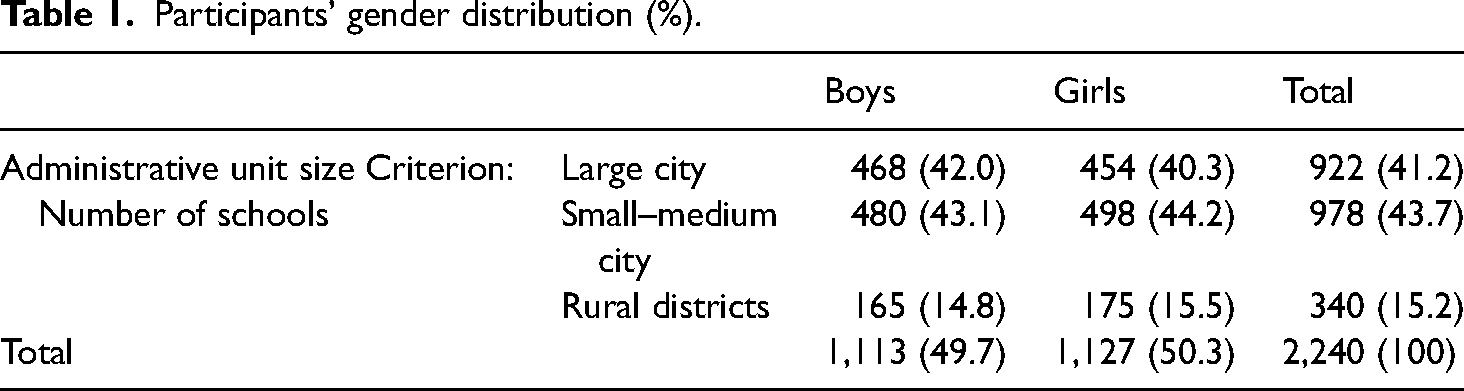
This study used panel data from the Korean Children and Youth Panel Survey 2018 (KCYPS 2018, 2018-2024) for fourth grade (2018) and fifth grade (2019) conducted by the National Youth Policy Institute. These data were procured from the Korea Youth Policy Institute (https://www.nypi.re.kr/archive/board?menuId=MENU00252), which is a database containing data that were collected using a multistage stratified cluster sampling method to identify various dispositional and developmental patterns among children and adolescents. KCYPS data were collected using tablet-assisted personal interviews to reduce the time required for questionnaire distribution and collection and to increase the survey accuracy and efficacy. The survey was conducted on students from 171 schools from 17 municipalities and provinces, taking into account administrative unit size and using the probability proportional to size sampling method, with minimum criteria of two classes and 50 students. Out of a total of 2,607 students, the interview data of 2,240 students were selected for analysis, after excluding 170 respondents who did not participate in the second wave or answered incompletely (maintaining rate: 93.5%) and 177 respondents who could not report their level of academic achievement and answered “I don’t know.” The distribution of respondents by gender and region is shown in Table 1.
Participants’ gender distribution (%).
Psychometric tools
Grit
The eight-item Grit-S Scale developed by the Duckworth Lab (homepage: https://angeladuckworth.com/research/) was adapted to measure the level of grit of primary school students. The Korean version translated and validated by Kim and Hwang (2015) was used in the study after obtaining permission from Duckworth, the developer. The scale is divided into two subscales—CI, with items such as “I was obsessed with a certain idea or project for a short period of time but later lost interest,” and PE, with items such as “I am a hard worker.” Items were rated on a four-point Likert scale (1 = not like me at all; 4 = very much like me). The internal consistency (Cronbach's α) of the grit scale in this study was .723 (CI: .694; PE: .663) for the fourth graders and .695 (CI: .699, PE: .682) for the fifth graders.
Self-esteem
The Rosenberg Self-Esteem Scale (Rosenberg, 1965) was adapted to measure the level of self-esteem among the participants. This scale consists of five positive self-esteem items, for example, “On the whole, I am satisfied with myself,” and five negative self-esteem items, for example, “I certainly feel useless at times.” Items were rated on a four-point Likert scale (1 = strongly disagree; 4 = strongly agree). The internal consistency (Cronbach's α) of the self-esteem scale in this study was .831 for the fourth grade and .835 for the fifth grade.
Academic achievement
Items assessing academic achievement in the KCYPS 2018 were used to measure the level of academic achievement in this study. Based on Försterling and Morgenstern's (2002) assertion that subjective judgment of student achievement is related to actual achievement, the students’ self-reported academic achievements were used in this study. The self-reported evaluation of each respondent for the preceding semester of the same school year with the help of one item such as “which of the following do you think was your grade in the previous semester?” was considered for analysis. Items were rated on a five-point Likert scale (1 = very low; 5 = very high).
Data processing
Data analysis was performed using SPSS 18.0 and AMOS 20.0. The longitudinal stability of the measurement model was verified using a longitudinal confirmatory factor analysis with a three-factor model consisting of CI, PE, and self-esteem. CI and PE included four observation variables per item, and self-esteem included three observations as a result of factor analysis. The analysis results are presented in Supplemental Tables S1 and S2. Comparison of the fit of configural invariance and metric invariance models was confirmed, and was used to comprehensively assess the fit of the Tucker–Lewis Index (TLI), Comparative Fit Index (CFI), and root mean square error of approximation (RMSEA) taking into account sampling sensitivity, where values of ΔCFI exceeding .01 represented unacceptable model fit (Cheung & Rensvold, 2002). Subsequently, the full-information maximum likelihood (FIML) method was used to estimate the coefficients of the models configured for the cross-lagged structural equation models analysis. This model takes into account the temporal order of the longitudinal data and allows for the identification of cross-lagged structures (Pakpahan et al., 2017). In addition, χ^〖2〗 was considered to test the fit of the research models; however, the fit of TLI, CFI, and RMSEA was comprehensively assessed to reflect the model sensitivity to the sample size and a bootstrap analysis was performed (1,000 bootstrap samples with 95% confidence intervals) to test the mediating effect.
Research model
Two models were constructed to determine the longitudinal relationships between CI, PE, self-esteem (SE in Figure 1), and academic achievement (ACH in Figure 1) among primary school students (Figure 1). Drawing on previous research (Weisskirch, 2018), Model 1 posited that CI, PE, and self-esteem were antecedents to academic achievement. Drawing on previous research (Jiang et al., 2019; Trautwein et al., 2006) and considering the meritocratic school system in Korea, Model 2 considered the controlling effect of academic achievement.
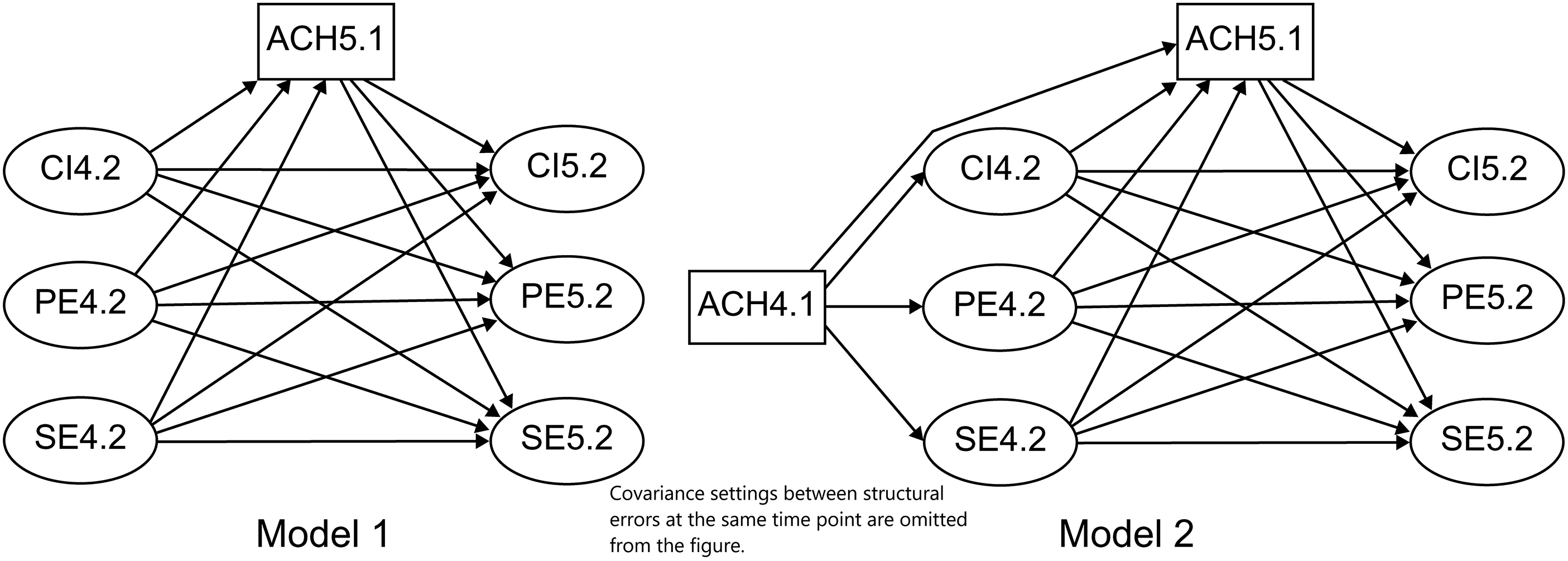
Research model.
Results
Descriptive statistics and correlation analysis
Table 2 presents the descriptive statistics and correlation analysis of grit, self-esteem, and academic achievement.
Descriptive statistics and correlation analysis.
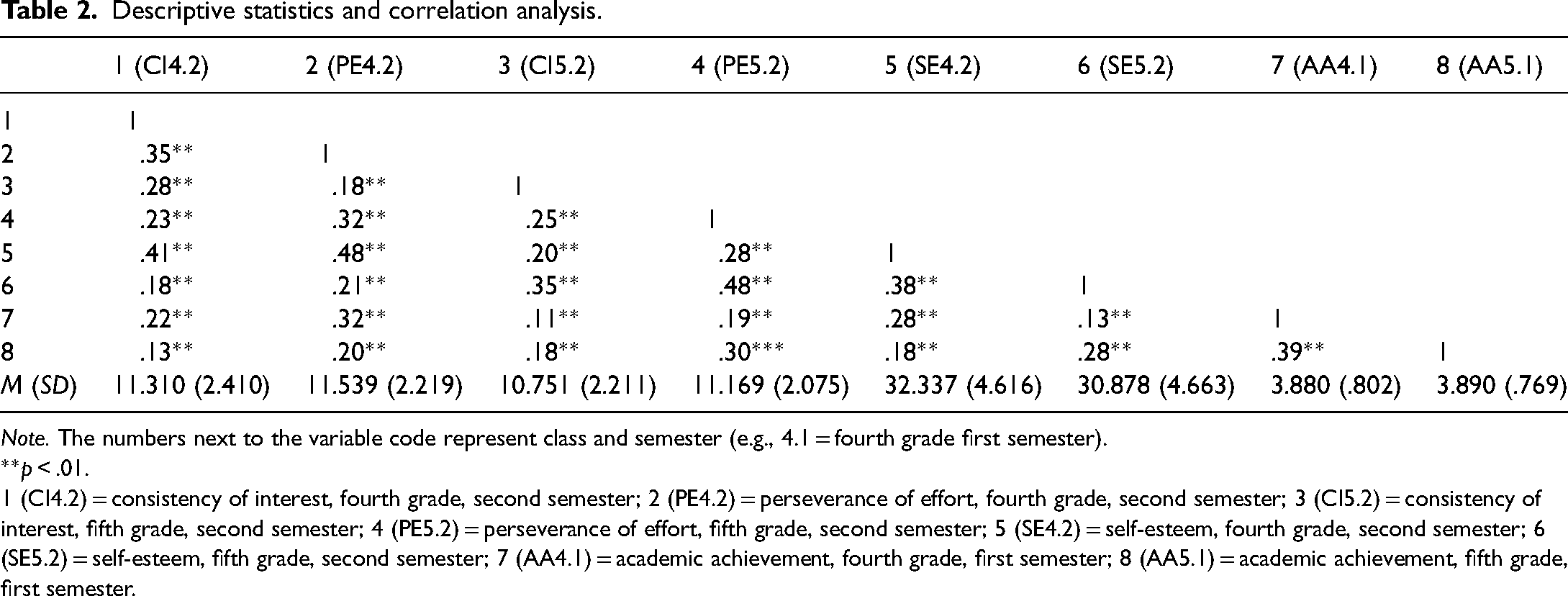
Note. The numbers next to the variable code represent class and semester (e.g., 4.1 = fourth grade first semester).
p < .01.
1 (CI4.2) = consistency of interest, fourth grade, second semester; 2 (PE4.2) = perseverance of effort, fourth grade, second semester; 3 (CI5.2) = consistency of interest, fifth grade, second semester; 4 (PE5.2) = perseverance of effort, fifth grade, second semester; 5 (SE4.2) = self-esteem, fourth grade, second semester; 6 (SE5.2) = self-esteem, fifth grade, second semester; 7 (AA4.1) = academic achievement, fourth grade, first semester; 8 (AA5.1) = academic achievement, fifth grade, first semester.
Analysis of the research models
Longitudinal measurement equivalence verification
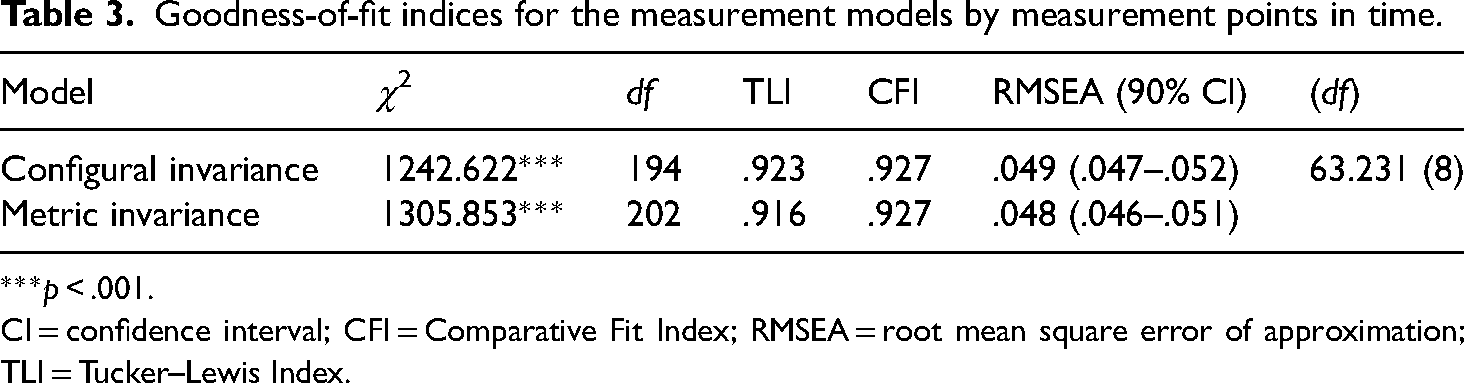
Prior to performing the cross-lagged structural equation model analysis, construct validity was confirmed by testing the configural invariance and metric invariance of CI, PE, and self-esteem. The results are presented in Table 3.
Goodness-of-fit indices for the measurement models by measurement points in time.
p < .001.
CI = confidence interval; CFI = Comparative Fit Index; RMSEA = root mean square error of approximation; TLI = Tucker–Lewis Index.
The metric invariance model's χ2 was statistically significant (p < .001). With TLI and CFI values above .90, ΔCFI maintained at .00, and TLI and RMSEA maintained at appropriate levels of fit, the metric invariance model was considered as being established.
Analysis of the cross-lagged structural equation model
The results of the fit analysis of the cross-lagged structural model are presented in Table 4.
Goodness of fit of the cross-lagged structural equation model.
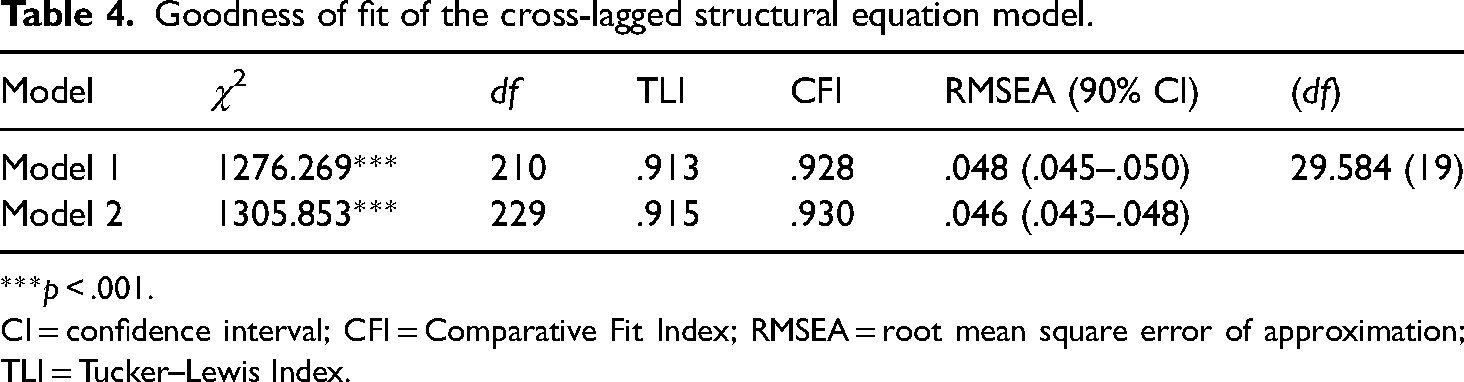
p < .001.
CI = confidence interval; CFI = Comparative Fit Index; RMSEA = root mean square error of approximation; TLI = Tucker–Lewis Index.
The comparison of the fit of Models 1 and 2, Δχ^〖2〗 revealed a value lower than the critical value of 30.14 (df = 19) in Model 2. Consequently, Model 2, which proved to be a simpler model with higher fit indices, was selected as the final model.
Longitudinal relationships between grit, self-esteem, and academic achievement
The results for the longitudinal relationships between grit, self-esteem, and academic achievement are presented in Table 5 and Figure 2.
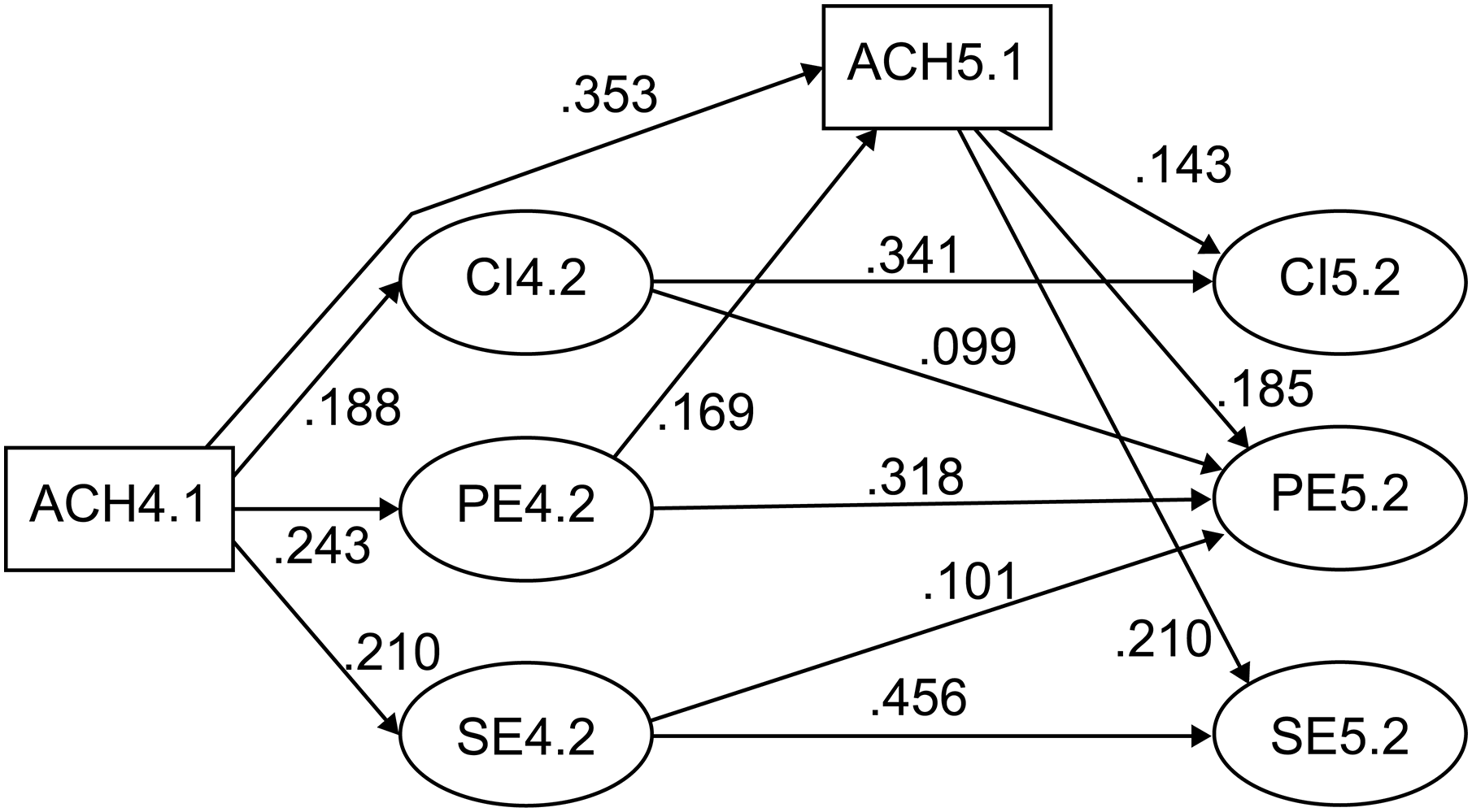
Longitudinal effects between grit subscales, self-esteem, and academic achievement (path values are standardized coefficients).
Longitudinal relationships between the grit subscales (CI and PE), self-esteem, and academic achievement.
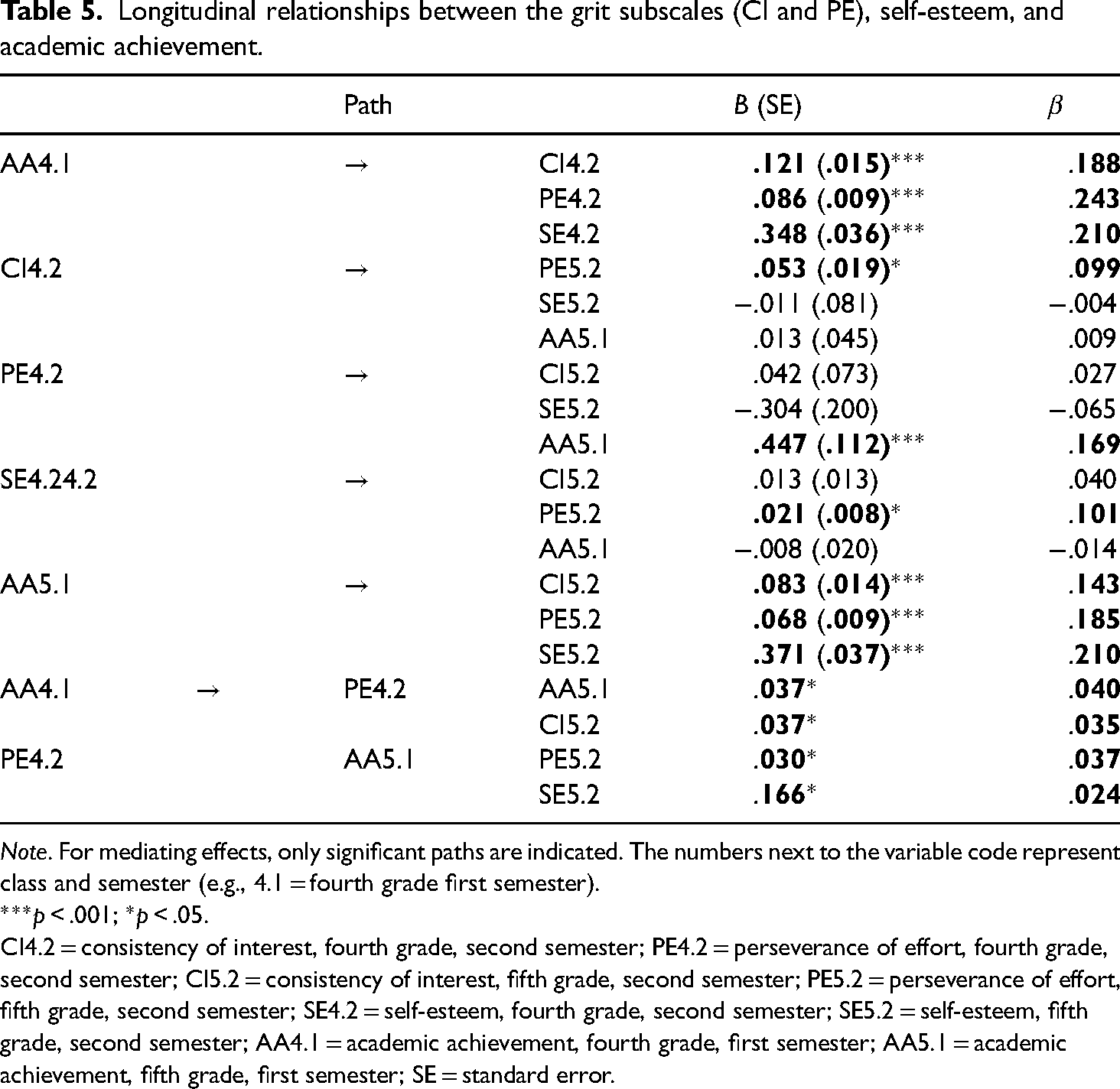
Note. For mediating effects, only significant paths are indicated. The numbers next to the variable code represent class and semester (e.g., 4.1 = fourth grade first semester).
p < .001; *p < .05.
CI4.2 = consistency of interest, fourth grade, second semester; PE4.2 = perseverance of effort, fourth grade, second semester; CI5.2 = consistency of interest, fifth grade, second semester; PE5.2 = perseverance of effort, fifth grade, second semester; SE4.2 = self-esteem, fourth grade, second semester; SE5.2 = self-esteem, fifth grade, second semester; AA4.1 = academic achievement, fourth grade, first semester; AA5.1 = academic achievement, fifth grade, first semester; SE = standard error.
Stability of grit, self-esteem, and academic achievement
The results of the stability analysis CI, PE, self-esteem, and academic achievement are presented in Table 6 and Figure 2. Findings suggest that self-esteem was relatively stable, and the grit subscales were generally similar, with CI outperforming PE slightly.
Autoregressive coefficients of grit subscales (CI and PE), self-esteem, and academic achievement.
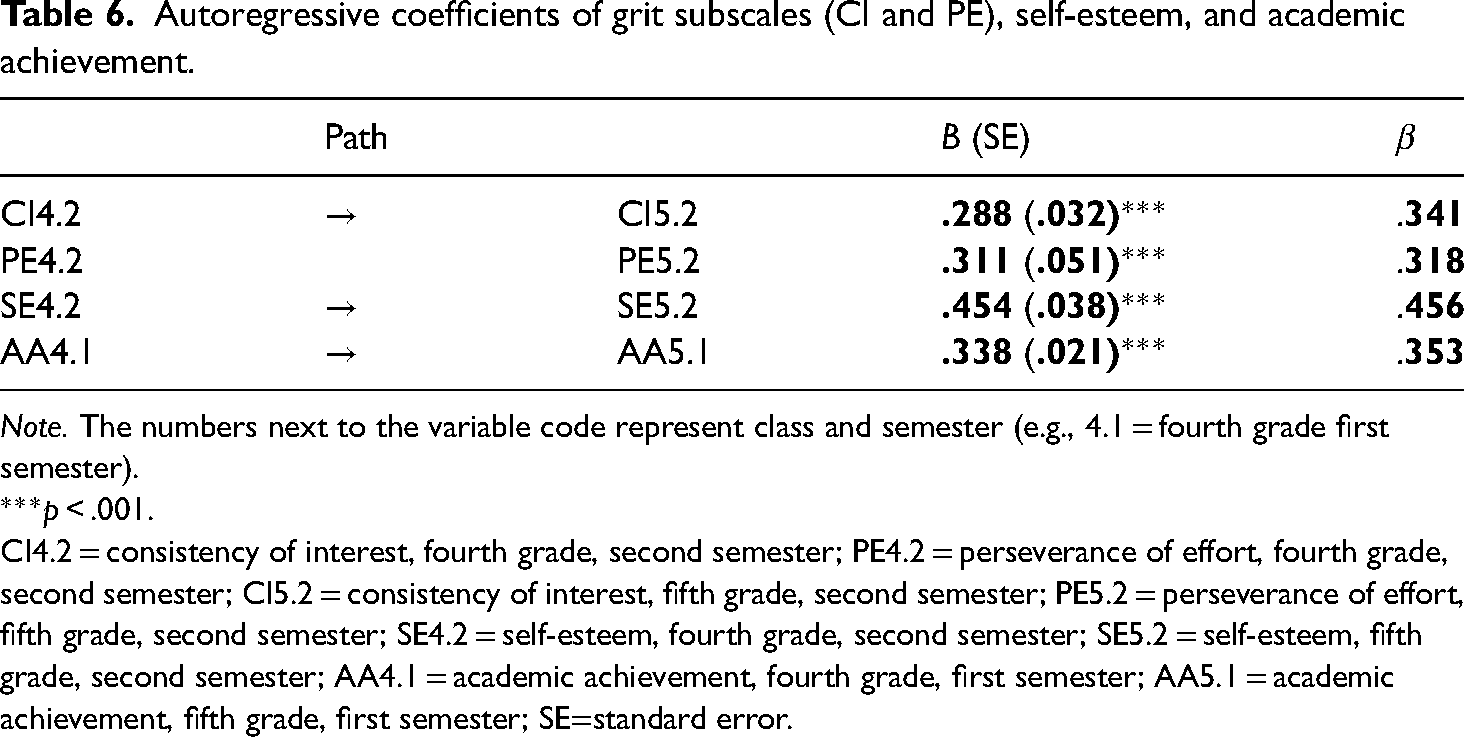
Note. The numbers next to the variable code represent class and semester (e.g., 4.1 = fourth grade first semester).
p < .001.
CI4.2 = consistency of interest, fourth grade, second semester; PE4.2 = perseverance of effort, fourth grade, second semester; CI5.2 = consistency of interest, fifth grade, second semester; PE5.2 = perseverance of effort, fifth grade, second semester; SE4.2 = self-esteem, fourth grade, second semester; SE5.2 = self-esteem, fifth grade, second semester; AA4.1 = academic achievement, fourth grade, first semester; AA5.1 = academic achievement, fifth grade, first semester; SE=standard error.
Discussion
This study aimed to determine the longitudinal relationships of grit subscales, self-esteem, and academic achievement among primary school students in Korea in a performance-oriented learning environment. In the following sections, first, the relationships between the subfactors of grit and those with related variables are discussed; second, the stability of each variable is discussed; and finally, the educational implications of the results of this study are presented.
Longitudinal relationships between the two subscales of grit
CI had a positive, statistically significant relationship with PE. Although PE did not demonstrate significant, direct effects on CI, the model did support an indirect effect of PE on CI through academic achievement. This finding was consistent with results reported by Yoo et al. (2015), supporting a significant and positive relationship between CI and PE based on their study examining grit and the efficacy of self-regulated learning among high school students. Findings may be explained by the expectancy-value theory, which posits that interest has positive effects on sustained effort (Wigfield & Eccles, 2000). Interest value refers to participating in a task with interest and enjoyment in a structure similar to intrinsic motivation (Wigfield & Eccles, 2000), which can reinforce effort on a task (Waterman, 2005). In the context of the present study's findings, it can be argued that a consistent interest in learning is more likely to sustain efforts to achieve goals. Moreover, Smith et al. (2020) found that CI demonstrated a positive relationship with flow (e.g., being fully focused and engaged in the task at hand, regardless of external stimuli; Csikszentmihalyi, 1990), a similar construct to PE.
On the other hand, PE had no significant relationships with CI at subsequent time points, which may be due to the age-specific developmental differences in CI. CI has been found to be higher in primary school students compared to college students (Lim, 2017), and it may decrease as students progress from primary school to middle and high school (Kim et al., 2015). As mentioned earlier, interest value is related to intrinsic motivation, which decreases with grade level (Kim, 2002; Kim & Kim, 2011). Thus, the lack of a significant effect of PE on CI over time may be partially explained by the fact that the level of CI itself may decrease as school level increases and there is higher pressure toward academic success, regardless of PE level. However, as current research on the longitudinal relationships of CI and PE is lacking, further research is required.
Longitudinal relationship between grit and academic achievement
Academic achievement had a positive relationship with CI and PE, while only PE had a positive relationship with academic achievement. This was partially in line with findings reported by Jiang et al. (2019), who found that grit and academic achievement had a reciprocal relationship. Moreover, previous studies indicate that PE had a significant relationship with academic achievement (Bowman et al., 2015; Muenks et al., 2017; Rimfeld et al., 2016). Korea is among the highest-ranked nations in students’ performance in the cognitive domain, but is ranked low in the affective domain (Cho et al., 2019), which is suggestive of the high pressure of school performance to which Korean students are exposed. This performance-oriented academic environment may explain the relationship of academic achievement on the long-term traits of CI and PE. This is consistent with Korean studies indicating that academic achievement had a positive relationship with academic motivation (Park & Sohn, 2019; Shin & Sohn, 2015).
Only PE had a significant relationship with academic achievement, and vice versa, through the mediation of PE at the follow-up measurement stage, suggesting that PE and academic achievement likely reinforced each other in a virtuous cycle. Consistent efforts toward academic achievement may lead to academic successes, and teachers, students, and parents attach importance to these efforts (Marsh et al., 2016). Note, however, that in the present study, CI did not have a significant relationship with academic achievement. This finding may be partially associated with the dispositional tendency of early adolescence, in which younger adolescents may present with higher CI than older students (Kim et al., 2015). Early adolescents may take an interest in and have curiosity for things beyond academics, such as peer relationships, exploring and forming their own identity and areas of interest, and pursuing various goals (Flunger et al., 2016). Furthermore, intense stress due to schoolwork (Ryu et al., 2019) combined with a learning environment associated with lower levels of academic interest and efficacy compared to other countries (Cho et al., 2019), may have contributed to difficulties in maintaining academic interest for the Korean students in the present study.
Longitudinal relationships between grit, self-esteem, and academic achievement
Academic achievement had a positive relationship with self-esteem, while self-esteem had a positive relationship only with PE. This finding is consistent with a study by Chung et al. (2014), which found that higher performance was positively related to self-esteem. Academic achievement in early adolescence serves as visible feedback regarding competencies in relation to self-evaluation (Wang et al., 2021) and a positive self-evaluation may serve as an effective coping mechanism (Moksnes & Lazarewicz, 2016) leading to greater effort to maintain one's self-worth (Valentine et al., 2004). This finding is especially relevant in the Korean context, with learning environments where academic achievement is overemphasized (i.e., prioritzing academic achievement in self-evaluation). Findings are consistent with the impact of the meritocratic learning environments (Trautwein et al., 2006).
Given the relationship between academic achievement and self-esteem, students should be provided with individualized achievement experiences and positive feedback to encourage a positive perception of learning (Kim, 2008). Moreover, schools should shift to a growth-referenced evaluation, which places emphasis on one's own growth as an alternative to comparison with others. In the relationships between PE, CI, and self-esteem, PE had a positive relationship with CI and self-esteem through academic achievement. This finding suggests that the cycle between PE and academic achievement can influence grit and self-evaluation in an achievement-driven learning environment. However, studies comparing students from different countries should be conducted in the future.
Stability of grit, self-esteem, and academic achievement
Although the stability levels of CI and PE were found to be lower than those presented by Jiang et al. (2019), this may be partly explained by the fact that Jiang et al. (2019) studied fourth, fifth, and sixth graders, while this study focused on fourth graders. As the level of grit can change over time (Peña & Duckworth, 2018) and age-dependent variability of grit can be more dynamic in early adolescence compared to other developmental stages (Lim, 2017), the level of grit may change in primary school students. Duckworth et al. (2007) examined the relationship between age and grit in adults aged 25 to 65 years and reported that grit increases with age. Kim et al. (2015) found that the higher the school year, the lower the grit among primary, middle, and high school students. These contradictory findings highlight the need to conduct in-depth research regarding age-dependent levels of grit, taking into account variability in the stability of grit depending on age, school year, and cultural background.
Self-esteem was found to be a moderately stable variable, which was in line with previous studies (In-Albon et al., 2017; Marsh et al., 2005). The Trait-State-Occasion model (Cole et al., 2005), which determines the levels of the trait and state of a psychological construct, revealed that 57% of primary school students’ self-esteem is an unchangeable and stable trait factor, and 43% of the variable state factor is attributable to the changeable occasion factor (Park, 2019). This means that self-esteem is trait-like, but it can change depending on the circumstance. Thus, self-esteem can be considered both as a stable and a changeable factor. In particular, as primary school students’ self-esteem may be lower than postprimary students (Robin & Trzesniewski, 2005), an active educational approach is required to help them positively perceive and evaluate themselves.
A relatively low stability of academic achievement was observed, which was contrary to the results of previous studies using test scores (Jiang et al., 2019; O'Neal et al., 2018; Wang et al., 2021). This difference may be partially due to the differences in the measurement methods of academic achievement. This study used a retrospective self-report item, “Which of the following do you think was your grade in the previous semester?” The accuracy of self-reported achievement may vary depending on the actual achievement level and gender (Gilger, 1992). In addition, Wang et al. (2021) and Jiang et al. (2019) measured academic achievement for only three subjects (Chinese, Mathematics, and English), while O’Neal et al. (2018) only measured achievement in literacy. In contrast, the question in the present study covered all subjects, which may have caused dimensional comparisons (Müller-Kalthoff et al., 2017) depending on the respondents’ focus, resulting in lower stability compared to previous studies.
Limitations and future directions
This study had several limitations that should be considered. First, this study used retrospective self-report scores for measuring academic achievement across subjects. Given the considerable differences in the relationship of grit with academic outcomes depending on subjects, such as greater relationship with mathematics than language (Schmidt et al., 2017), the relationship between grit and academic achievement should be further examined by investigating the influence of subject-specific grit. Second, this study used measures subscales of general grit and self-esteem. However, general-specific and domain-specific grit constructs should be differentiated, depending on variables, such as the domain-specific grit of learning occasion (Clark & Malecki, 2019; Cormier et al., 2019) and self-esteem (Rosenberg et al., 1995). Third, this study measured the grit subscales CI and PE, self-esteem, and academic achievement at only two assessment points, determining the longitudinal relationships between the three variables. Further research should explore the intervariable causal relationships by expanding the follow-up assessment to three or more time points. Fourth, as there may be differences in the direction of influence of academic achievement on academic self-concept and other noncognitive variables depending on the learning environment (Trautwein et al., 2006), an international comparison should be conducted, including students from many countries, to identify differences in the direction of influence between grit and self-esteem. Fifth, we need to consider the various controversies regarding grit, such as a lack of theoretical clarity on the reasons for CI and PE being subfactors of grit, questions about predictability of success, and problems with measurement questions. Indeed, the internal consistency reliability of CI and PE was relatively low compared to other variables in the present study. Another problem related to the construct of grit is that it does not account for systemic forces of injustice (e.g., poverty and racism) that undermine opportunities for success for marginalized youth. Sixth, in this study, the relationship of achievement on the subfactors of grit reflects the current state of Korean education. Hence, its findings may not generalize beyond the learning environment of the present study. Seventh, the use of cross-lagged structural equation models to identify causal relationships between variables is controversial and an alternative is the random intercept cross-lagged panel model (RI-CRPM) (Lüdtke & Robitzsch, 2021), which can control for stable covariates based on data from more than three waves. Future research should take this into account.
Conclusions
This study investigated the relationships of the grit subscales CI and PE, self-esteem, and academic achievement using a longitudinal research design. Findings reinforce the longitudinal relationships across constructs, and support the stability of CI and PE, subscales of grit. Findings inform the need for interventions addressing the virtuous cycle of effort and success in the context of a competition-driven meritocratic learning environment. Positive grit and self-esteem may require success experiences during learning, meriting growth-oriented education-assisted approaches rather than reinforcing competition between students.
Supplemental Material
sj-docx-1-spi-10.1177_01430343231216973 - Supplemental material for Longitudinal relationships between grit, self-esteem, and academic achievement among Korean primary school students
Supplemental material, sj-docx-1-spi-10.1177_01430343231216973 for Longitudinal relationships between grit, self-esteem, and academic achievement among Korean primary school students by Sanghyun Park in School Psychology International
Footnotes
Availability of data and material
The data that support the findings of this study are available from Korea National Youth Policy Institute but restrictions apply to the availability of these data, which were used under license for the current study, and so are not publicly available.
Declaration of conflicting interests
The author declared no potential conflicts of interest with respect to the research, authorship, and/or publication of this article.
Funding
The author received no financial support for the research, authorship, and/or publication of this article.

Supplemental material
Supplemental material for this article is available online.
Author biography
References
Supplementary Material
Please find the following supplemental material available below.
For Open Access articles published under a Creative Commons License, all supplemental material carries the same license as the article it is associated with.
For non-Open Access articles published, all supplemental material carries a non-exclusive license, and permission requests for re-use of supplemental material or any part of supplemental material shall be sent directly to the copyright owner as specified in the copyright notice associated with the article.
