







Abstract
Air source absorption heat pump is promising in energy saving and emission reduction of heating and domestic hot water, but performs badly or even cannot work in cold climate. The ammonia/absorbent air source absorption heat pump with low-pressure boosting is proposed to solve the problem. The hybrid air source absorption heat pump + compressor system is modeled and the compression ratio is optimized to obtain maximum primary energy efficiency. The integrated system is simulated with air temperature ranging from −30℃ to 10℃ and hot water temperature from 30℃ to 60℃. Comparative simulations on three working fluids reveal that NH3–LiNO3 system has the lowest compression ratio and the highest primary energy efficiency value. By pressure boosting, the air source absorption heat pump can operate under air temperatures as low as −30℃. Primary energy efficiency of the hybrid system is about 15–50% higher than that of coal boiler, showing great potential for heat supply in cold regions.
Keywords
Introduction
The energy consumption of heating and domestic hot water is very high. Figure 1 shows that the energy consumption of heating in urban area of north China increased from 72 million tce (ton of standard coal equivalent) to 153 million tce from 1996 to 2008, while domestic hot water in urban residential buildings consumed about 28.1 million tce in 2008, taking the second largest part of building energy.
1
With the increase of building areas and improvement of people’s requirements on indoor environment, the amount of energy demanded by heating and domestic hot water will keep increasing.
Energy consumption of heating and domestic hot water.
1
(a) heating in northern towns in China, (b) urban residential building energy in 2008 (excluding heating).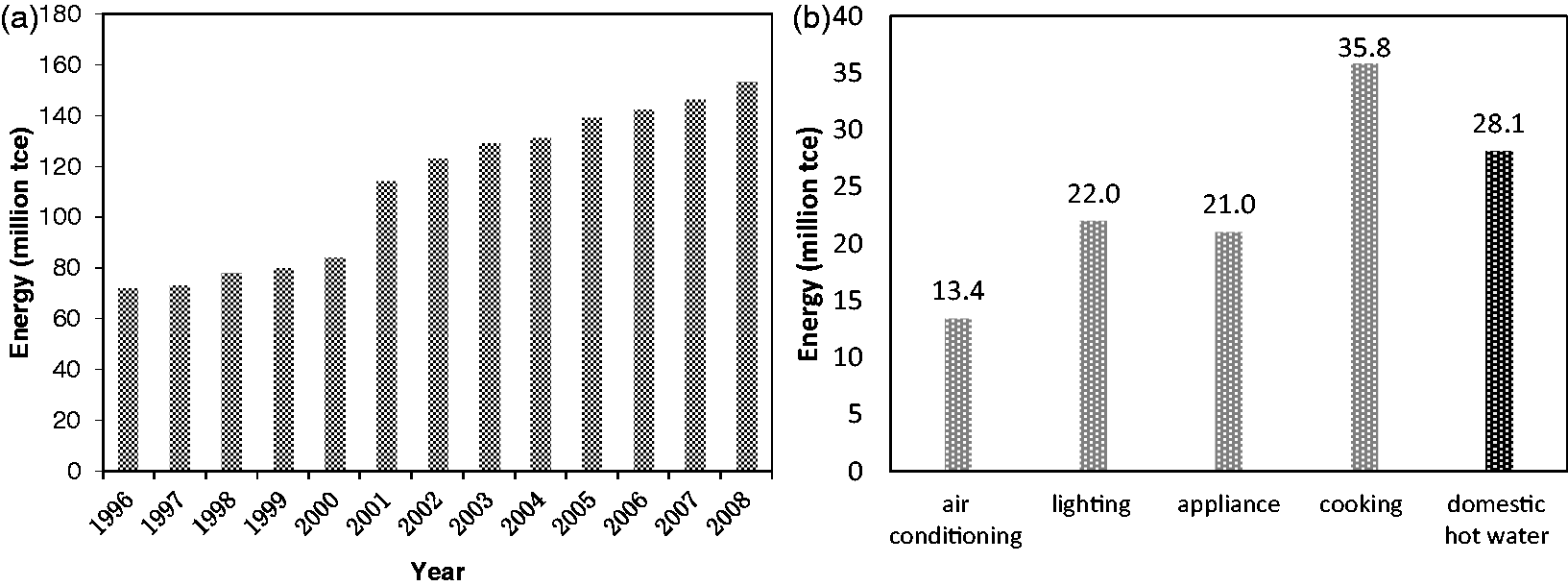
The conventional heating and domestic hot water systems are mainly on the basis of fossil fuel burning, such as boiler system, which is of low energy efficiency as well as high air pollution. 2 To solve this problem, Li et al.3,4 put forward a novel system based on air source absorption heat pump (ASAHP), which was indicated to have great energy saving potential. Absorption cycle is widely applied for cooling and refrigeration nowadays because it uses environmentally friendly working fluids without global warming or ozone depletion, such as water and ammonia.5,6 Besides, it can make use of low-grade heat such as solar energy and waste heat in industry.7,8 But there is not much application of heating and domestic hot water, especially based on the ASAHP in cold climate, which is to be studied in this work. For ASAHP used for heat supply in cold regions, the working fluid should not be the high-efficiency H2O–LiBr because the refrigerant (water) will be in danger of freezing when the evaporation temperature is below 0℃.9,10 Therefore, ammonia-based fluids11–14 such as NH3–H2O, NH3–NaSCN, and NH3–LiNO3 are chosen for ASAHP heating systems in cold regions. The previous study showed that the single-stage ASAHP was of poor performance, or even refused to work, when the outdoor air temperature was very low or the produced hot water temperature was relatively high, especially in severely cold regions. To solve the problem, a double-stage ASAHP was proposed in the previous study. 15
Since the double-stage ASAHP is relatively complicated and expensive, another absorption cycle, which combines the ASAHP with a pressure booster, is put forward in this paper, aiming at improving the performance of ASAHP under lower ambient temperature as well as higher hot water temperatures. A pressure booster located between the evaporator and absorber can enhance the pressure of absorption and improve the absorption ability of the solution. Various researches on this kind of compressor-assisted absorption cycle have been conducted. Xie et al. 16 presented an experimental investigation on a reformed H2O–LiBr absorption chiller with enhancing absorption pressure to explore the way of increasing the refrigeration capacity and the coefficient of performance (COP), saving manufacturing materials and diminishing the volume of the system. Jelinek et al. 17 studied a triple-pressure level absorption cycle with a compressor inserted between the evaporator and absorber, achieving a significant reduction of the required generator temperature and improvement of COP. In addition, the circulation ratio and the actual size of solution heat exchanger had been obviously reduced. Ventas et al.18,19 presented a numerical model and built a setup of NH3–LiNO3 absorption refrigeration cycle hybridized with a compressor located between the evaporator and absorber. Results showed that this cycle allowed for working at lower driving temperatures than the single-effect cycle, with low electricity consumption. Kim et al. 20 carried out simulations on H2O–LiBr cooling cycles to investigate a basic triple-effect cycle and four compressor-assisted cycles, all of which were found to be operable with a significantly lowered generator temperature.
However, these studies mainly focused on increasing the refrigeration capacity and the value of COP, as well as reducing the required driving temperature. There have been few reports on improving the applicability of ASAHP under lower ambient temperature and higher hot water temperature by a pressure booster, making the system supply heat normally in cold and severely cold areas.
System and principle description
There are different kinds of configurations for the hybrid compressor-assisted absorption cycle according to the location of the compressor 18 : (1) parallel configuration: the mechanical compressor is located in parallel with the thermochemical compressor, in which the compression is used either as an extra refrigerant source or for heat production, eliminating the condenser and evaporator;21,22 (2) series configuration: the mechanical compressor is positioned in the vapor circuit, either between the generator and condenser (called high-pressure booster)22,23or between the evaporator and absorber (called low-pressure booster). 24 For the parallel configuration, the electricity consumption of compressor is relatively large due to its high pressure ratio. 18 For the series configuration, the cycle with high-pressure booster will have a problem of very high condensation pressure as NH3-based solutions are used as working fluids in the ASAHP heating systems. Consequently, the series configuration with low-pressure booster is considered to improve the applicability of ASAHP under lower ambient temperature and higher hot water temperature by enhancing the absorption process in the absorber.
Figure 2 is the schematic diagram of hybrid ASAHP–compressor heating system, and the PTX diagram in Figure 3 illustrates the principle of applicability improvement contributed by low-pressure booster. When the outdoor air temperature is very low, the evaporation temperature and evaporation pressure will also become very low. So the absorption ability is weak and the concentration difference between the strong and weak solution is very small (refrigerant circuit: 1–2–3–4; solution circuit: 8–10–5–7), as shown in Figure 3(a). A very small concentration difference leads to very low efficiency or failure of the ASAHP. Upon low-pressure enhancement, the evaporation pressure is increased and the absorption process can be improved, raising the concentration difference from cd1 to cd2 (refrigerant circuit: 1–2–3–4–4c; solution circuit: 8–10c–5c–7c). Thus, the ASAHP can still work normally under very cold weather.
Schematic diagram of ASAHP–compressor hybrid heating system. Principle of applicability improvement for ASAHP–compressor system.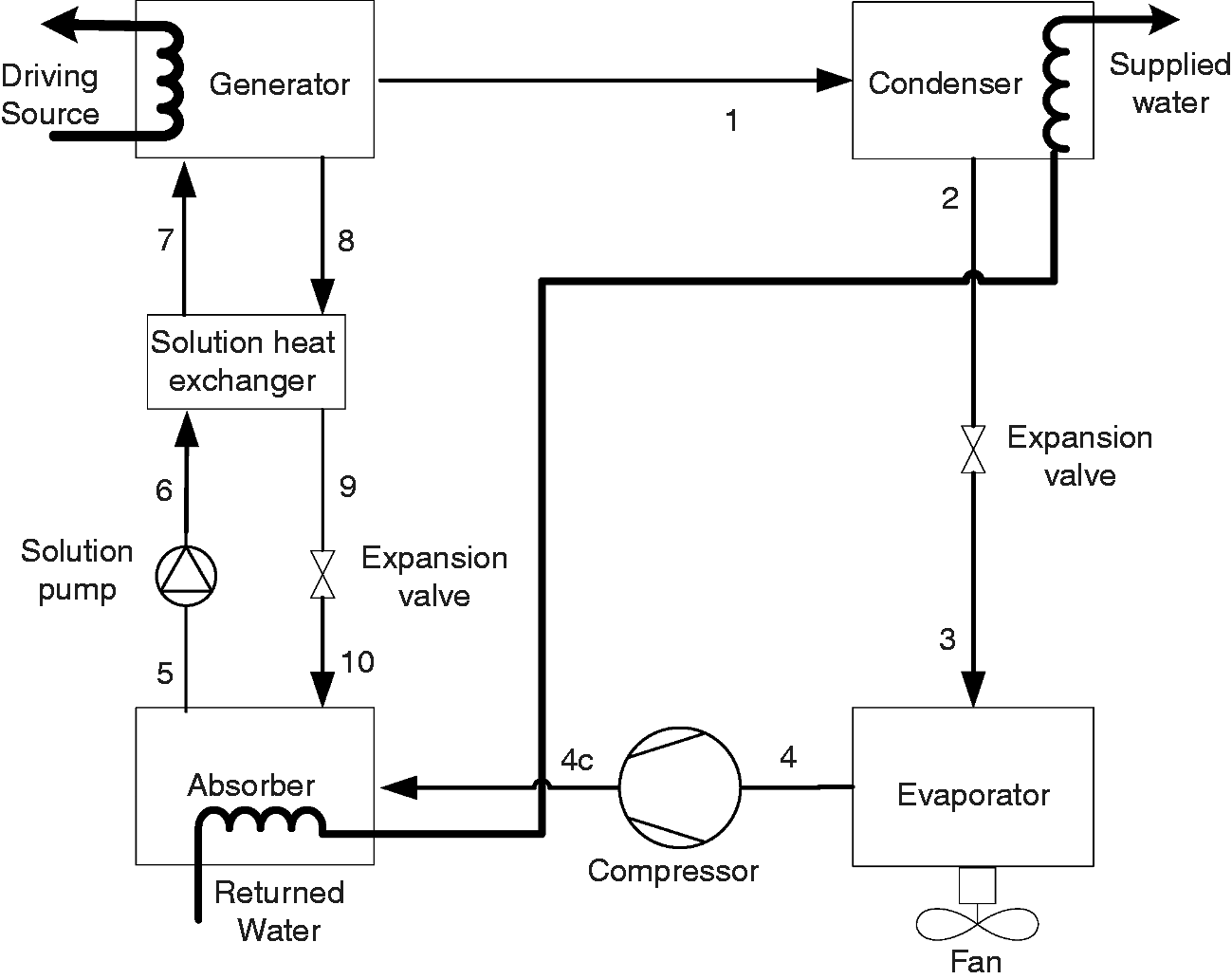
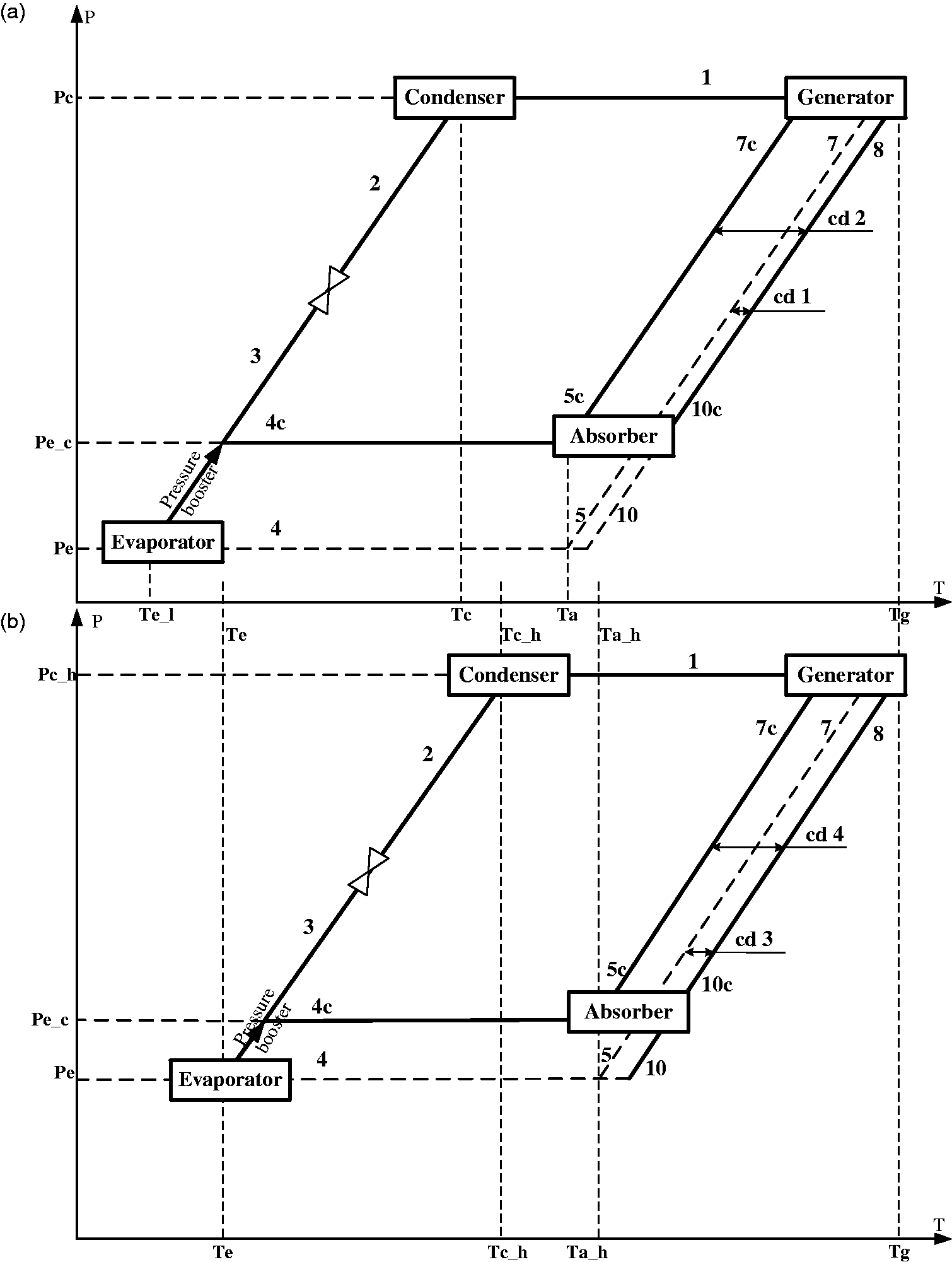
When the required hot water temperature needs to be higher, the condensation and absorption temperature will become higher, so will the condensation pressure. A higher absorption temperature will also lead to weaker absorption ability and smaller concentration difference, as shown in Figure 3(b). Similarly, the absorption can be improved with the assist of pressure boosting, consequently increasing the concentration difference from cd3 to cd4. As a result, the ASAHP can still work normally when the hot water temperature increases.
Modeling and optimization of the hybrid ASAHP
Modeling of hybrid ASAHP–compressor heating system
For simplification, some reasonable assumptions are made as follows:
the system is in steady flow; the refrigerant leaving the evaporator and condenser is saturated vapor and liquid, respectively; the solutions leaving the generator and absorber are both saturated; flow resistance, pressure losses, and heat losses in pipes and components are ignored; the throttling processes in expansion valves are isoenthalpic; and the electricity consumption of solution pump is neglected.
25
The mathematical models of the ASAHP system can be built based on the mass and energy balance of each component, which was validated in the previous work
3



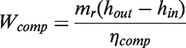
To analyze the performance of the hybrid ASAHP+compressor system, apart from the basic model of ASAHP, the compressor and fan should also be modeled. The electricity consumption of compressor can be calculated as
26
The electricity consumption of fan can be calculated using a simplified calculation method
3

Since different kinds of energy such as electricity and coal are involved, the primary energy efficiency (PEE) of hybrid ASAHP–compressor is defined for comparison

Different compression ratios (CRs) can be chosen for the hybrid ASAHP–compressor heating system.
19
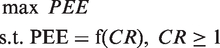
There is a CR value at which the maximum PEE can be obtained. So the CR value should be optimized as follows
The involved parameters and constants for the analysis.
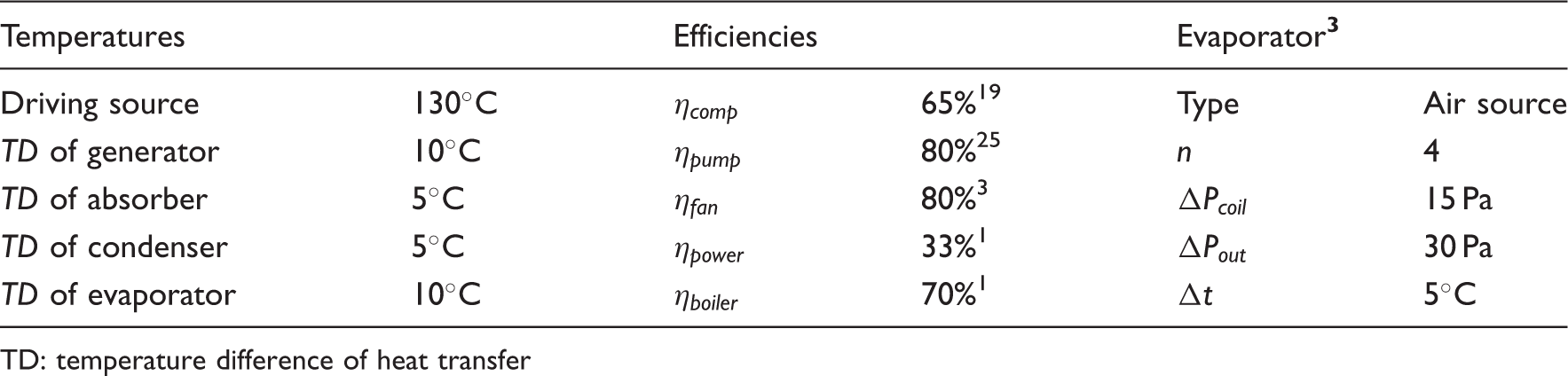
TD: temperature difference of heat transfer
Optimization of CR
The energy consumption is calculated under the design condition: heat capacity Q = 100 kW, driving heat source temperature Th = 130℃, outdoor air temperature Tair = –20℃, and required hot water temperature Tw = 45℃. The ASAHP is driven by pressured water, and the driving heat source temperature Th is the typical hot water temperature for the centralized heating system in China.
1
The heat consumed by generator and the electricity consumed by compressor and fan will be different under different CRs, as shown in Figure 4.
Heat and electricity consumption under different compression ratio.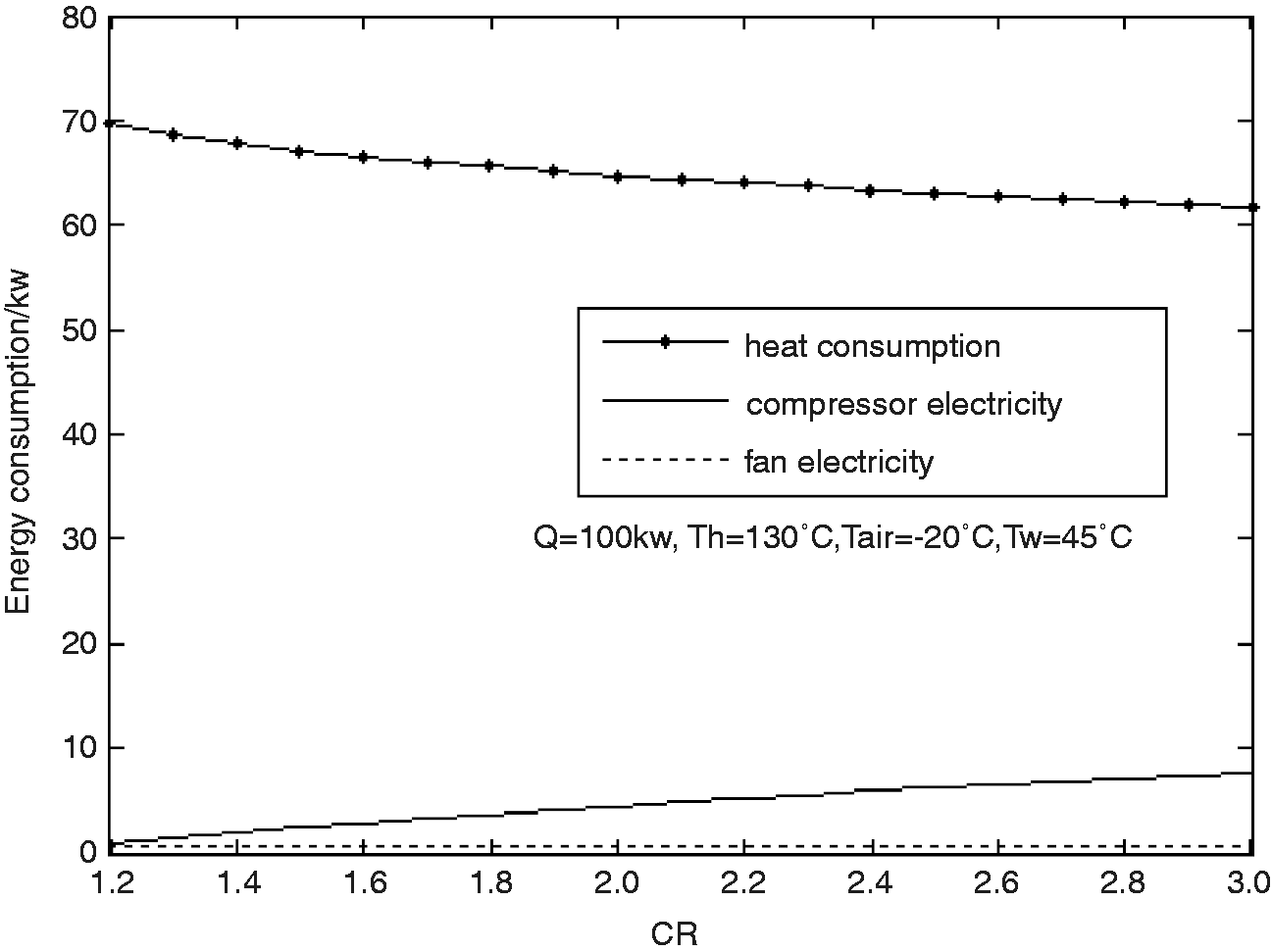
Figure 4 indicates that the heat consumption of generator decreases as CR value increases gradually, while the electricity consumption of the compressor increases and the electricity of fan keeps stable. The fan consumes a very small amount of electricity compared with other energy consumptions. From equation (6), it can be known that there is an optimal CR value at which the PEE of hybrid ASAHP–compressor system gets its peak, and the maximum PEE can be obtained from equation (7).
Figure 5 shows the PEE versus the increasing of CR value under different temperature parameters. It can be found that different working fluids have different optimal CR and different peak PEE values. For all the temperature parameter configurations, NH3–LiNO3 has the lowest CR and the highest PEE values, showing obvious advantages over NH3–H2O and NH3–NaSCN. The optimal CR and peak PEE values of NH3–H2O and NH3–NaSCN system are quite close.
PEE of ASAHP–compressor system under different compression ratio.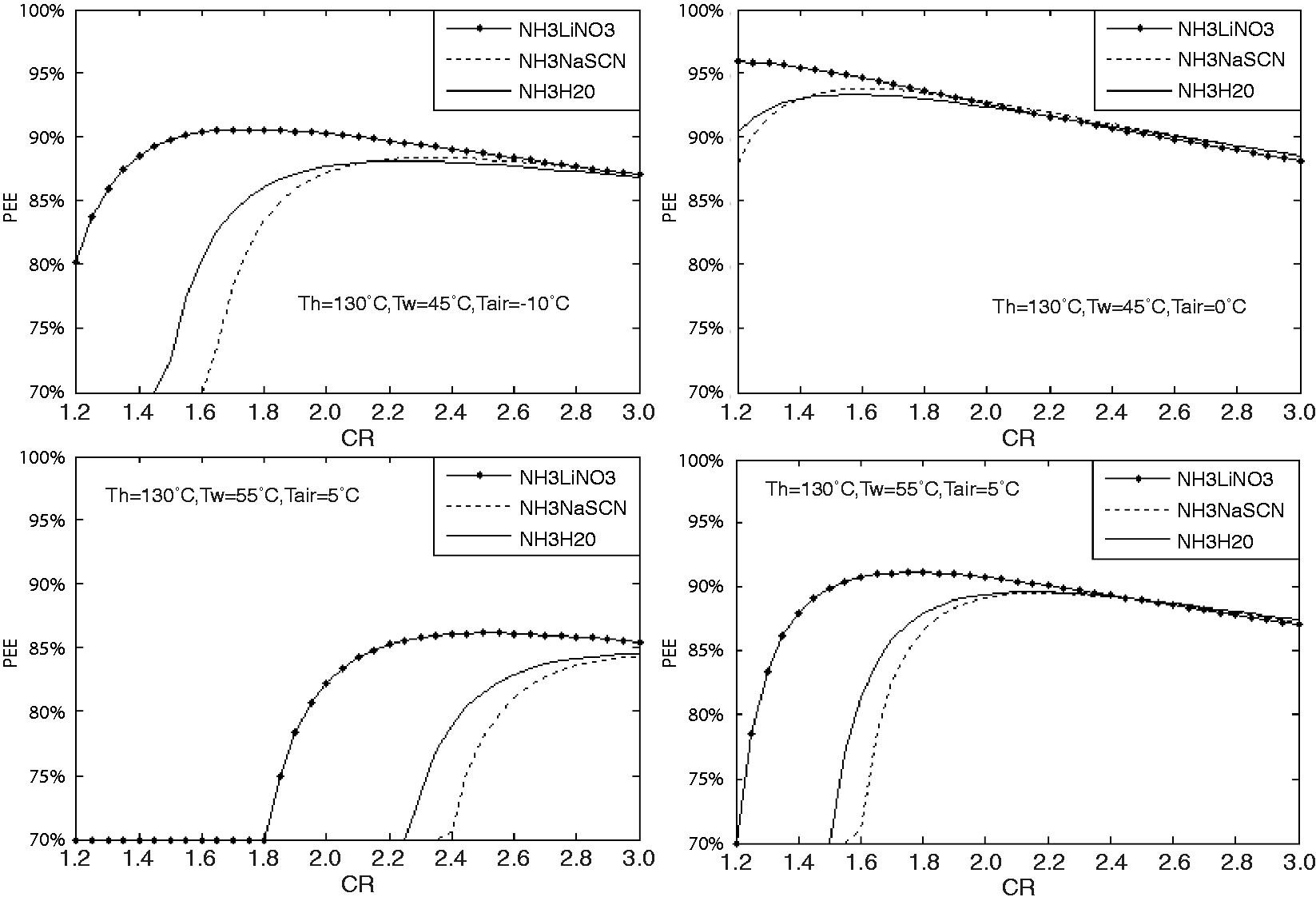
Since the optimal CR value and the corresponding maximum PEE varies when the outdoor air temperature or required hot water temperature changes, the CR value provided by the compressor should always be adjusted so as to keep the hybrid ASAHP–compressor system operating in the most energy-efficiency manner.
Performance improvement effect of hybrid ASAHP–compressor
In order to investigate the potential of performance improvement contributed by low-pressure boosting technology, the hybrid ASAHP–compressor heating system was simulated and compared with the single ASAHP system. All the three ammonia-based working fluids were considered for comparison.
Performance improvement under lower ambient temperature condition
Performance of ASAHP–compressor system for fan coil heating (Q = 100 kW, Th = 130℃, Tw = 45℃, Tair = –10℃).
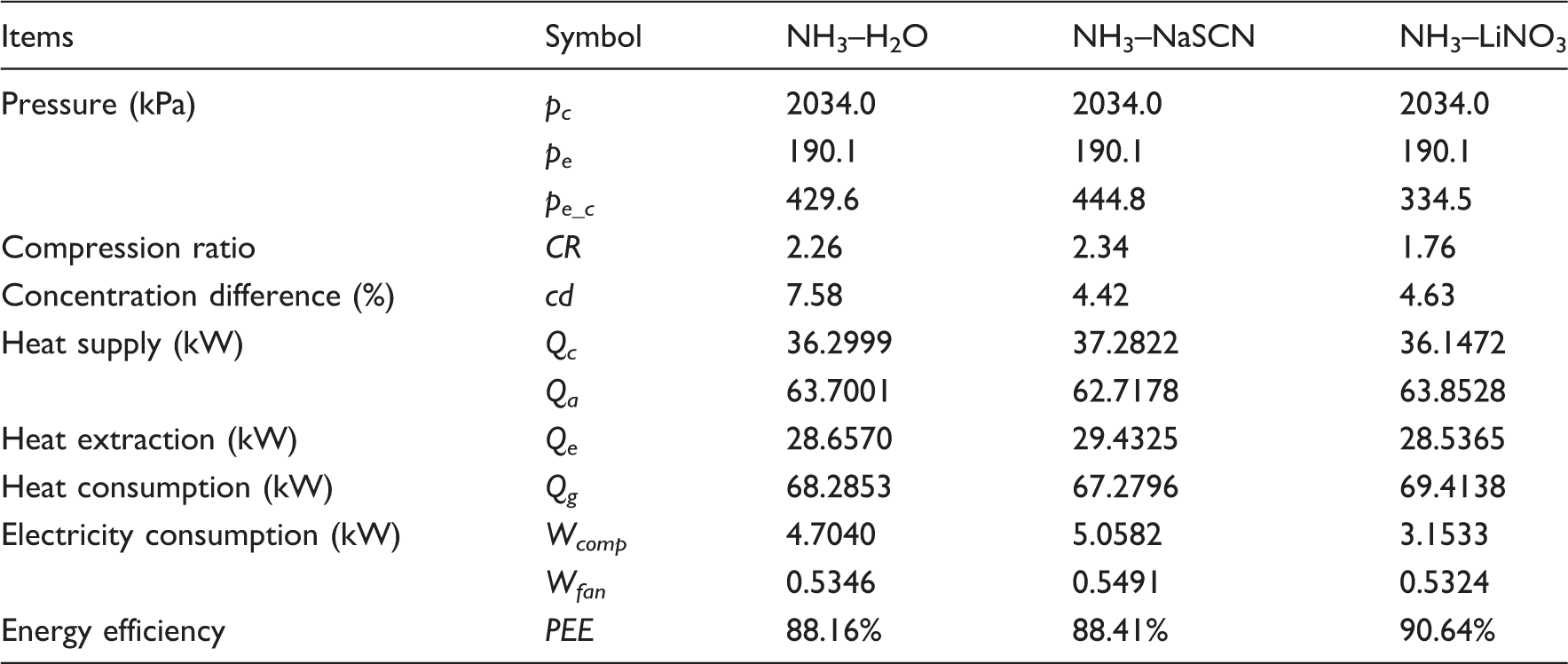
The optimal CR values for NH3–H2O, NH3–NaSCN, and NH3–LiNO3 are 2.26, 2.34, and 1.76, respectively. NH3–LiNO3 system needs the lowest CR, so the electricity consumption of the compressor is lower than NH3–H2O and NH3–NaSCN systems. Besides, the electricity consumed by compressor and fan of all the three systems is very small compared with both the heating supply capacity and the heat consumption of generator. Take the NH3–LiNO3 system with a capacity of 100 kW as an example, the heat consumption of generator is about 69.41 kW while the electricity consumption of compressor and fan is only 3.15 and 0.53 kW, respectively. The PEE of NH3–LiNO3 system can reach 90.64%, which is about 29% higher than the coal boiler system.
Performance of ASAHP–compressor system for radiant floor heating (Q = 100 kW, Th=130℃, Tw=35℃, Tair=–20℃).
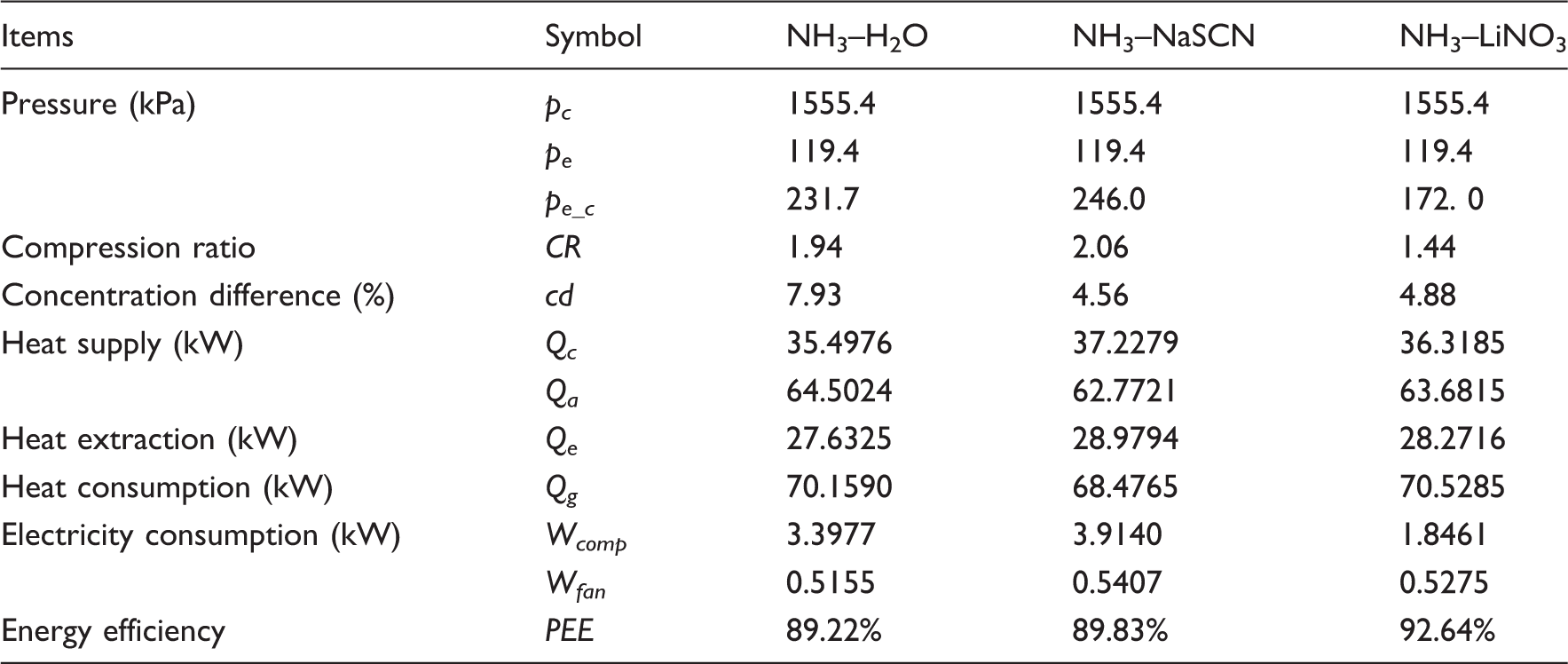
When the outdoor air temperature ranges from −30℃ to 10℃ and the required hot water temperature is, respectively, 45℃ and 35℃, the hybrid ASAHP–compressor systems using NH3–H2O, NH3–NaSCN, and NH3–LiNO3 as working pair are simulated and compared with the single ASAHP system. Additionally, the optimal CRs of hybrid ASAHP–compressor systems are calculated under different design parameters, as illustrated in Figure 6.
PEE and CR versus air temperature for different hot water temperatures. Note: Legends NH3H2O, NH3NaSCN and NH3LiNO3 represent single ASAHP system. Legends NH3H2O-C, NH3NaSCN-C and NH3LiNO3-C represent hybrid ASAHP–compressor.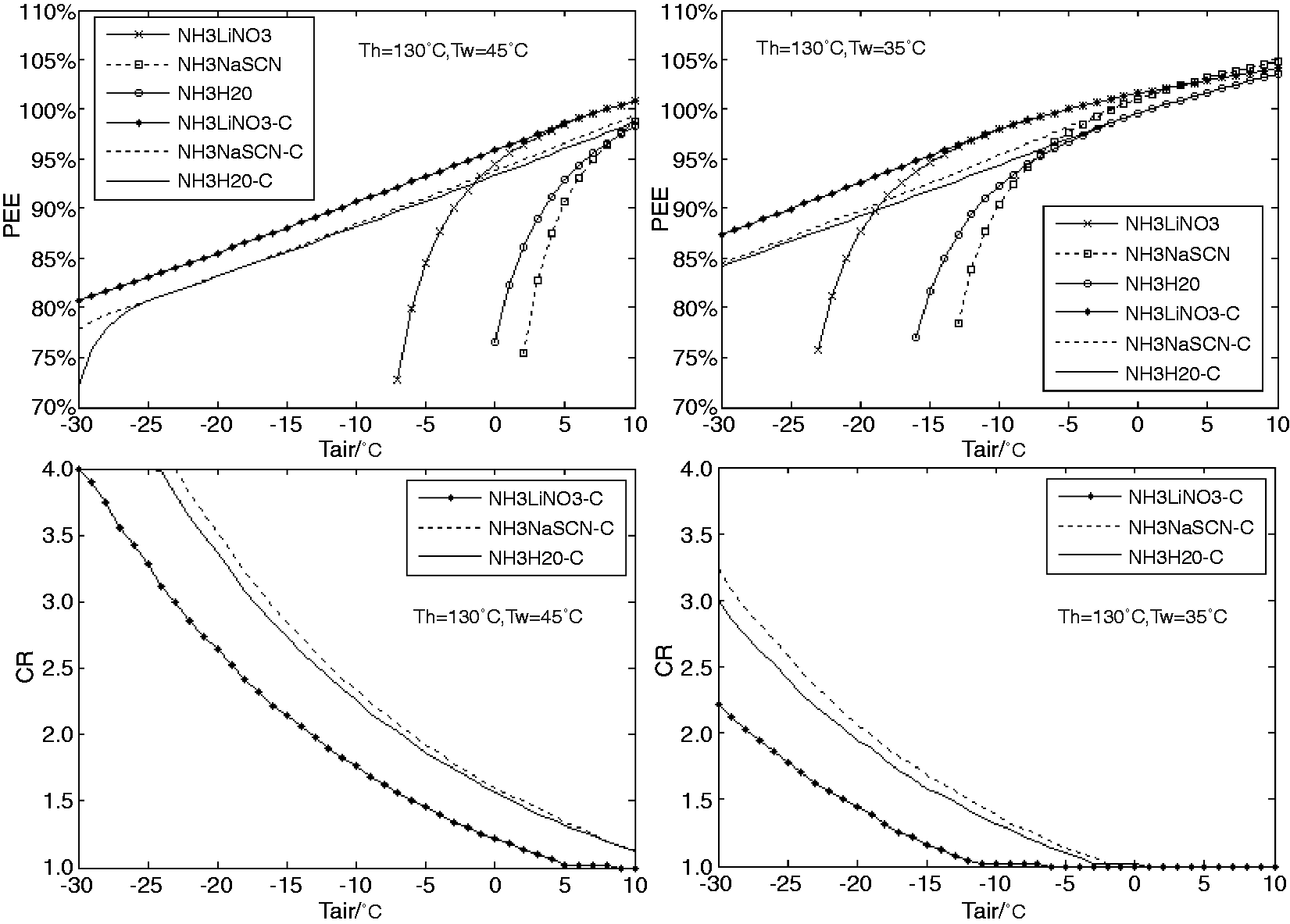
It can be found in Figure 6 that the lower limit of air temperature at which the ASAHP can work normally is greatly lowered by pressure boosting between the evaporator and absorber. For hot water of 45℃ (fan coil heating), the air temperature limits of single ASAHP using NH3–NaSCN, NH3–H2O, and NH3–LiNO3 fluid are about 2℃, 0℃, and −7℃, so ASAHP cannot operate for a long time. However, if the pressure booster is adopted, the hybrid ASAHP+compressor systems using all the fluids can work below −30℃. Besides, the performance of NH3–LiNO3 is much better than that of the other two solutions, with a PEE of about 81 and 91% under an air temperature of −30℃ and −10℃, respectively. The CR of all the three working fluids decreases as the air temperature increases. The CR of NH3–LiNO3 is much lower than that of NH3–H2O and NH3–NaSCN, with the value of NH3–H2O being slightly lower than that of NH3–NaSCN.
Performance improvement by pressure boosting (Q = 100 kW, Th –= 130℃, Tw = 35℃, Tair = –15℃).
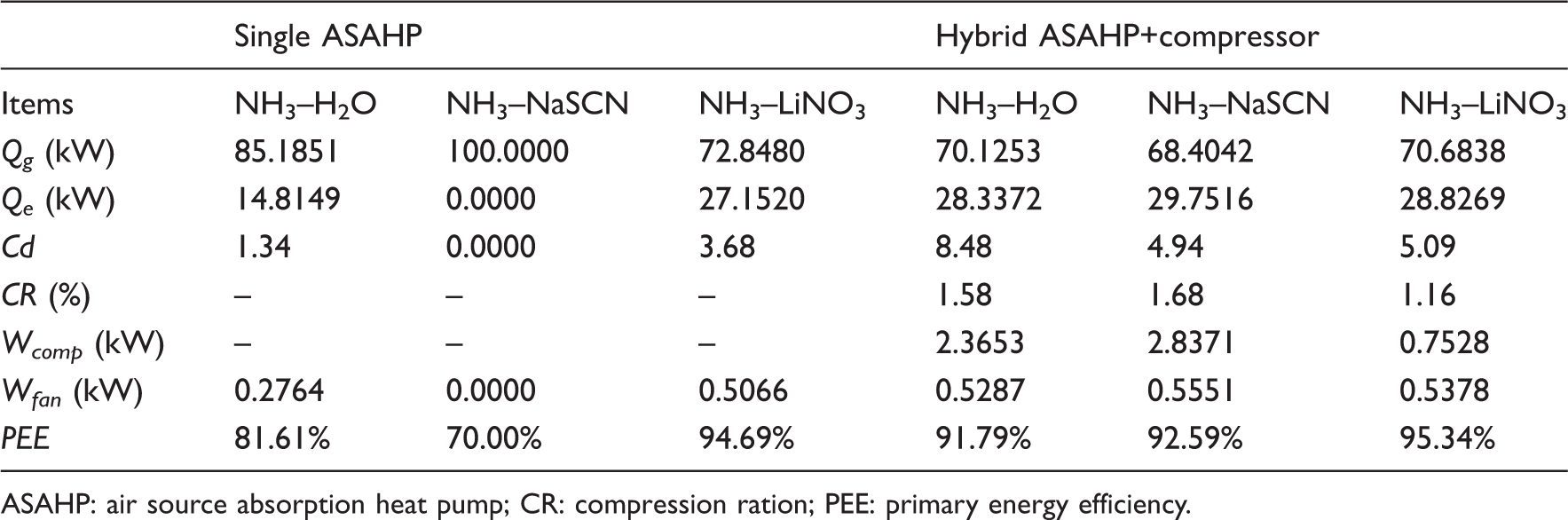
ASAHP: air source absorption heat pump; CR: compression ration; PEE: primary energy efficiency.
Similar to the fan coil system, the CR of NH3–LiNO3 is much lower and is always lower than 2.2. The CR of 1.0 means pressure boosting is not needed. So the compression is not necessary for NH3–LiNO3 if the air temperature is higher than −6℃.
Performance improvement under higher hot water temperature condition
Aiming at exploring the possible hot water temperature produced by ASAHP, the hot water temperature is set from 30℃ to 60℃ and the ambient temperature is, respectively, −5℃ and −15℃ for simulation. The performance of hybrid ASAHP–compressor and single ASAHP system is comparatively illustrated in Figure 7.
PEE and CR versus hot water temperature for different air temperatures.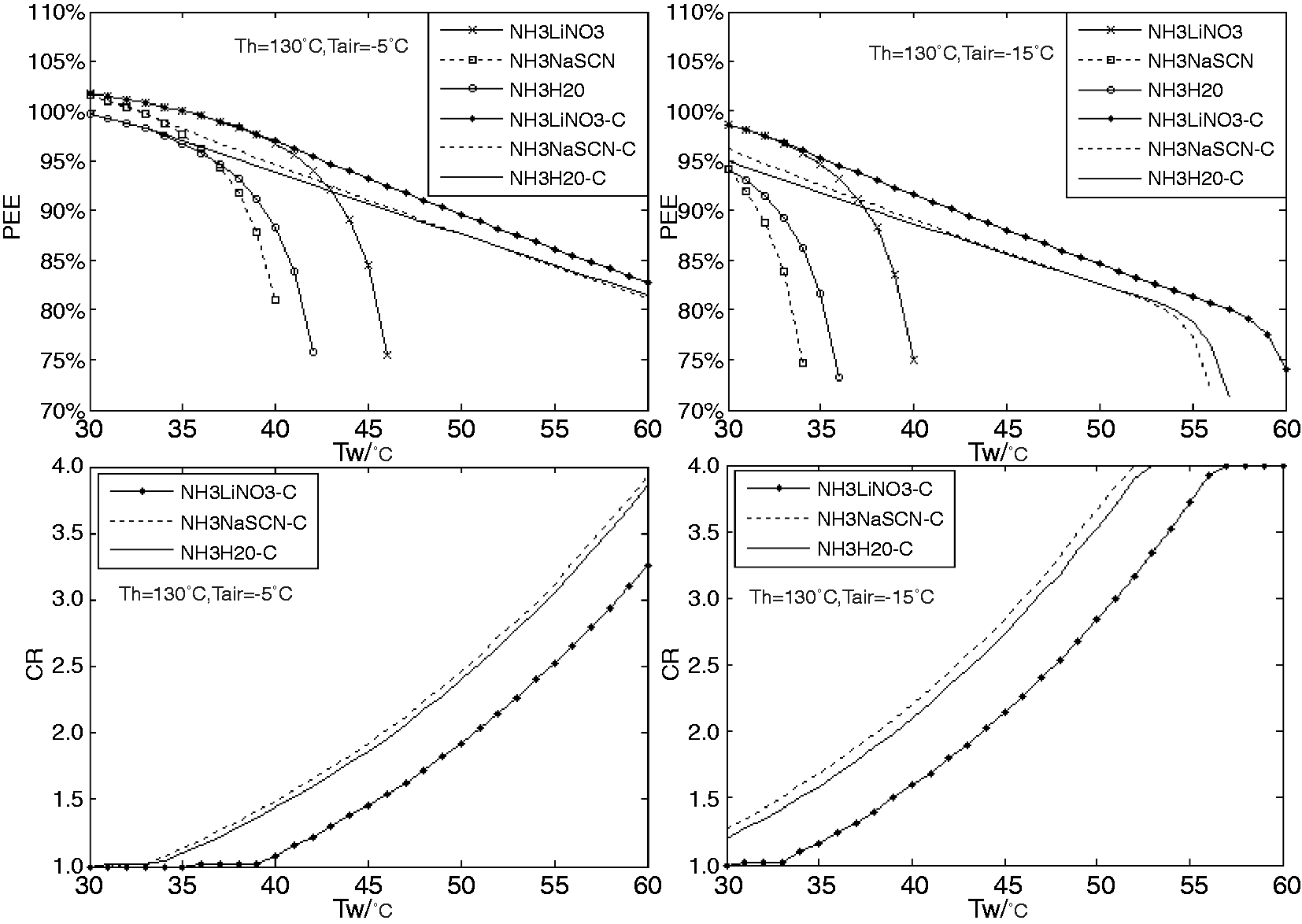
It can be found in Figure 7 that the higher limit of hot water temperature at which the ASAHP can work normally is greatly lifted by pressure booster. For air temperature of −5℃, the hot water temperature limits of single ASAHP using NH3–NaSCN, NH3–H2O, and NH3–LiNO3 fluid are about 40℃, 42℃, and 46℃. However, if the pressure booster is adopted, the hybrid ASAHP+compressor systems using all the fluids can produce hot water above 60℃. And the performance of NH3–LiNO3 is much better than that of the other two solutions, with a PEE of about 83% and 93% when supplying hot water of 60℃ and 45℃, respectively. The CR of all the three working fluids increases as the required hot water temperature rises and it is much lower for NH3–LiNO3.
As for air temperature as low as –15℃, the higher limits of single ASAHP using NH3–NaSCN, NH3–H2O, and NH3–LiNO3 fluid are, respectively, 34℃, 36℃, and 40℃, none of which can meet the demand of fan coil heating. So the pressure booster is especially essential for limit lifting as well as performance improving. Figure 7 indicates that the higher limit of hot water temperature can all be lifted to higher than 55℃, and the PEE can also be improved correspondingly.
Conclusions
The energy consumption of heating and domestic hot water is very high. Heat supply system based on ASAHP is of low energy efficiency or even refuses to work when the outdoor air temperature is very low or the produced hot water temperature is relatively high. A compressor was integrated between the evaporator and absorber to improve the performance of ASAHP under lower ambient temperature and higher hot water temperature by strengthening the absorption process. The hybrid ASAHP+compressor system was modeled to investigate the performance improvement potential. Besides, the PEE was defined to evaluate the hybrid system, and the CR of compressor was optimized to obtain a maximum PEE value. The hybrid ASAHP+compressor and single ASAHP were comparatively analyzed with outdoor air temperature ranging from −30℃ to 10℃ and hot water temperature from 30℃ to 60℃. It can be concluded that:
The electricity consumed by compressor and fan was very small, taking up about 1–5% and 0.5% of the heat supply capacity, respectively. The CR of NH3–LiNO3 was the lowest, and CR of NH3–H2O was slightly lower than that of NH3–NaSCN. For radiant floor heating, the CR of NH3–LiNO3 stayed below 2.2. The lower limit of air temperature of ASAHP was greatly lowered by pressure boosting and could be lower than −30℃. The higher limit of hot water temperature was also effectively lifted, higher than 55℃ at air temperature as low as −15℃. The PEE of the hybrid ASAHP+compressor system was about 15–50% higher than that of coal boiler, showing great potential for heating and domestic hot water in cold and severely cold regions.
In a word, the performance and applicability of ASAHP for lower ambient temperature and higher hot water temperature can be effectively improved by low-pressure boosting between the evaporator and absorber.
Footnotes
Acknowledgement
The authors gratefully acknowledge the financial support from the Natural Science Foundation for Distinguished Young Scholars of China (grant No. 51125030) and the National Basic Research Program of China (grant No. 2010CB227305).