







Abstract
In a closed space, appropriate thermal comfort and proper indoor air quality are extremely important in order to obtain the optimal work performance and to avoid health problems of the occupants. Using advanced personalized ventilation systems, different comfort needs can be locally satisfied even in case of warm environments. Thermal sensation and the subjective evaluation of indoor air quality of young and elderly people, men and women respectively, were studied in warm environment using advanced personalized ventilation system combined with total volume ventilation system. Using an advanced personalized ventilation system, 20 m3 h−1 air flow was alternately introduced by three air terminal devices built-in the desk and placed on a horizontal plane at the head level of the sitting subject. Thermal sensation was significantly cooler in case of young women in comparison with the other groups. Odor intensity was evaluated to be significantly lower in case of elderly women in comparison with the other groups. Evaluation of air freshness is in correlation with the general thermal sensation. Variation of the direction of the air velocity vector has a cooling side-effect, which, in warm environments, might be useful in order to improve the thermal comfort sensation.
Introduction
People have various thermal comfort needs and using traditional ventilation systems with total volume air distribution (TVAD), it is difficult to fulfil in each point of a closed space the comfort requirements established in standards. This challenge is accentuated by the ever-changed solar radiation entering through the transparent surfaces of the building envelope. Personalized ventilation (PV) systems can create a user-specific, “on demand” microenvironment in a certain location of a closed space. PV has the advantage that each occupant is authorized to optimize and control the temperature, flow rate (local air velocity) and direction of the locally supplied air flow.
1
According to Melikov,
2
the focus must be shifted from TVAD to advanced air distribution (AAD) based on the following principles:
– remove/reduce the air pollution and generated heat (when not needed) locally; – provide clean air, also heating and cooling, where, when, and as much as needed; – make possible active control of the air distribution; – involve each occupant in creating his/her own preferred microenvironment.
However, the air terminal devices (ATD) used at PV strongly influences the air distribution efficiency. 3 The perceived air quality is influenced by the ATD type, air flow rate, and the distance between ATD and breathing zone. 4 The PV systems can be used alone or combined with TVAD systems and local heating or cooling solutions. 5
Draught is one of the most important issues, which must be treated carefully in case of PV. There is a strong relation between air turbulence intensity and sensation of draught. 6 Wang et al. 7 involving subjects analyzed the effects of turbulence intensity (15% and 30%) on the subjective response to draught. They proved that the skin temperature drop was significantly larger in case of higher turbulence intensity and the percentage of dissatisfied subjects with draught positively correlated to the local skin temperature drop. Sun et al. 8 analyzed the general thermal sensation and facial thermal sensation under 23.5°C and 26°C ambient conditions at two different turbulence intensities. They have found that at high turbulence intensities associated with low facial velocities range (up to 0.4–0.5 m·s−1) the facial thermal sensation votes are less cool. Depending on the used ventilation method in a closed space, turbulence intensity can have different values in different air layers in the occupational zone. Zhang et al. 9 demonstrated that in highly stratified conditions the negative effects of vertical temperature air temperature differences may be neutralized by the different turbulence intensities in these air layers. Toftum and Nielsen 10 showed that the draught sensitivity is influenced by general thermal sensation. They have established a relation between the relative increase in the percentage of dissatisfied persons due to draught at a cool thermal sensation in proportion to a neutral thermal sensation at equal mean air velocity. Inversely, in warm environment the elevated air velocity and higher turbulence intensity may help in obtaining the appropriate thermal comfort sensation. 11
Experiments carried out in the Human Thermal Environments Laboratory at Loughborough University demonstrated that females tend to be cooler than males in cool conditions. 17 The measurements conducted showed that this observation seems to be true for warm environments too. Furthermore, the increase of air velocity and the changing of air flow direction have a higher impact on the thermal comfort sensation in the case of female subjects. The metabolic heat production is different by gender and age and can have a strong influence in the perceived thermal sensation. The influence of metabolic heat production on the thermal comfort sensation was discussed by Havenith et al. 18 The obtained results correlate with Indraganti’s and Rao’s findings too. 19 Based on the field studies, they found that in hot and dry climate with seasonal variations the thermal acceptance of women, older subjects is higher. Choi et al. 20 carried out a series of measurements in order to analyze the thermal satisfaction of the occupants in the office buildings. They found that females are more dissatisfied with their thermal environments than males especially in the summer. At first sight, this statement seems to be in contradiction with the results of the experiments performed, but Choi et al. specified that “females in the ‘very dissatisfied’ group experienced a mean temperature of 22.79°C compared to 23.70°C in the ‘satisfied’ group” Consequently, the dissatisfaction of female persons was caused by the lower mean temperature.
Air velocity is a vector defined by its magnitude and direction. At a certain operative temperature value, to identify the optimal air velocity-turbulence intensity combination to obtain proper thermal comfort without draught sensation, not only the mean value and the fluctuations of the air velocity have to be measured, but also the vector components should be identified. 12 At University of Debrecen, a new PV method and equipment (ALTAIR) was developed,13,14 which permits the variation of air flow velocity direction around the head. This equipment exploits the fact that the response time to cold stimulus is shorter than the response time to a warm stimulus.15,16 Preventing adaptation in this way, a continuous cooling sensation is obtained, which can improve the thermal sensation in warm environments. Nevertheless, at ALTAIR PV system, at a certain operative temperature value, the identification of air flow velocity and rotational speed of air jet combinations, which lead to useful or harmful draught, is crucial. People are starting to work at the age of 25–30 years and the retirement is expected at 62–65 years. It was assumed that different age groups, men and women respectively, will perceive in a different way the effects of air movements in warm environment, so their thermal sensation will be different. Involving 20 elderly and 20 young persons (10 male and 10 female, respectively) 2 h long measurements have been carried out in order to analyze the subjective thermal comfort sensation in warm environment using the ALTAIR PV system. Measurements have been performed in a test room, where all comfort parameters can be properly controlled. The comparison of subjective responses within and between the groups was done using ANOVA method. This paper summarizes the findings of this research.
Hypothesis
The main goal of this research work was to analyze the thermal sensation by gender and age of a warm indoor environment. Other objective was to see the effects of an advanced PV system on thermal sensation of subjects in the warm environment. It was presumed that the occupants will evaluate the environment warm or hot. Furthermore, by moving the air around the head of occupants it was expected that the responses of subjects will decrease. The air flow direction was changed and it was presumed that at smaller time steps the thermal comfort sensation will be lower. The risk of this “cooling” method is the draught sensation. However, in the analyzed warm environment, it was presumed that few persons will evaluate the draught as a discomfort factor.
Methods
Test room
In the Indoor Environmental Quality laboratory, the University of Debrecen there is an “adiabatic” room, which has its external building elements very well insulated (U =0.19 W m−2 K−1). In this external “adiabatic” room, the test room (2.50 × 3.65 × 2.55 m3) is placed (Figure 1). The space between the walls of these rooms is divided into two temperature zones. There is an “outdoor” temperature zone, where temperatures in the range −20°C to 34°C can be produced. In the other zone are temperatures similar to the set point temperature in the test room. The test room can have one or two “external” walls. The test room also has an “external” window. The internal surface temperatures in the test room can be controlled having built in the heating–cooling pipe loops. The total volume ventilation can be realized either by mixed or displacement air distribution mode. The mass flow and all other parameters of the fresh air can be controlled properly by the installed air handling unit.
Test room (IEQ Laboratory).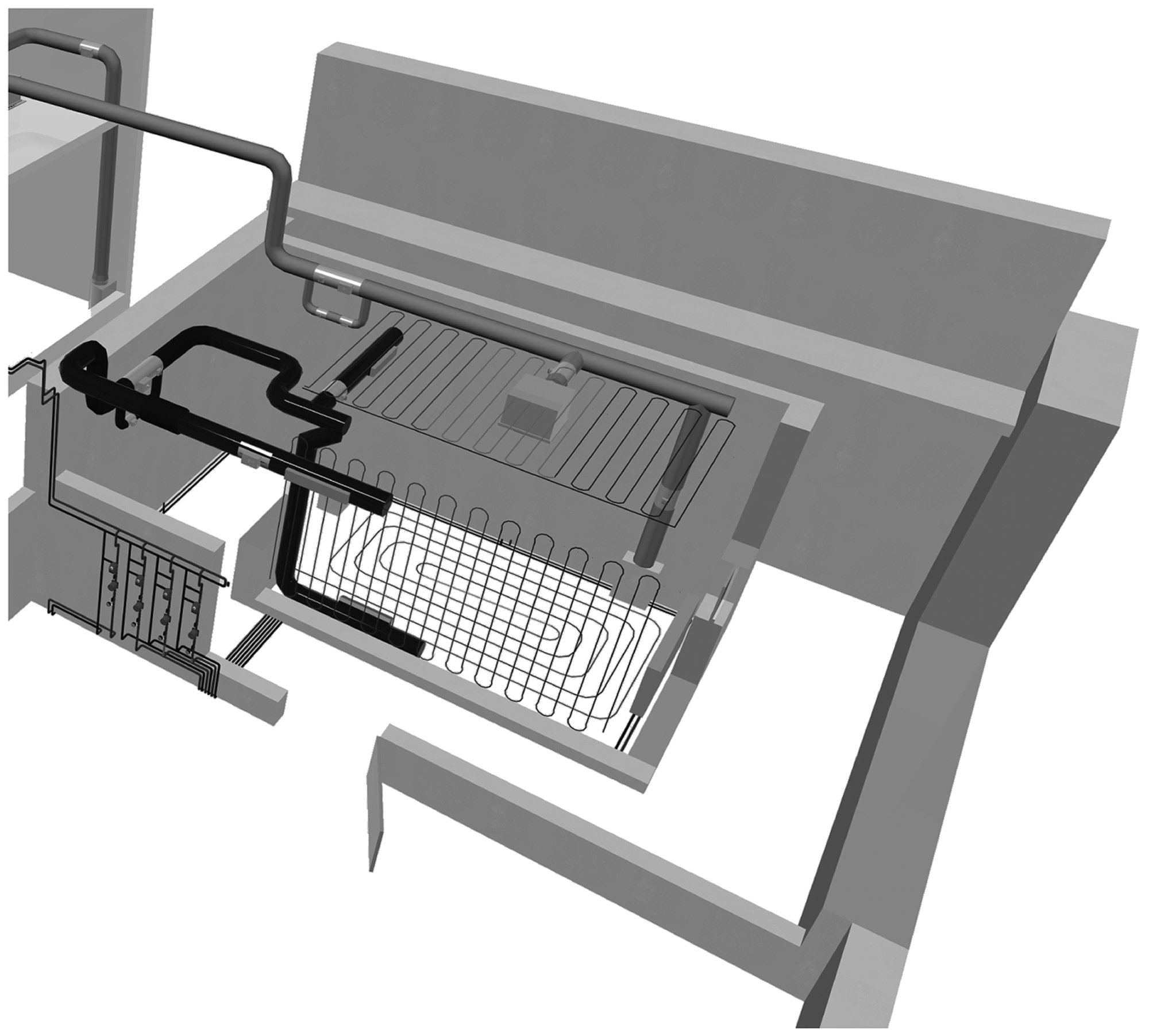
During measurements the surface temperatures of the test room have been controlled in such a way that the mean radiant temperature in the middle of the room was constantly 30°C during measurements. The indoor air temperature and the supplied air temperature were fixed to 30°C. Fresh air was assured continuously during the measurement (50 m3 h−1), by displacement air distribution mode at 30°C temperature. First and foremost, 2 h long measurements have been performed without any subject. The ambient parameters have been registered minute by minute using a TESTO 480 instrument fixed in the middle of the room (the temperature, air velocity and relative humidity probes were measured at 1.1 m height). The mean value of the calculated PMV was 1.44, with a standard deviation SD = 0.0317.
ALTAIR PV system
The principle of the ALTAIR PV system is the variation of air-flow direction. The ventilated air can be introduced from three different directions and the air jet direction is continuously changed setting a certain time step desired by occupant (Figure 2). The air terminal devices are placed on a horizontal plane at 1.1 m height from the floor level. The air flow, which can be outdoor (fresh) air or simply the air from the room, is circulated through desk-built-in air channels and it is blown alternately from the left–front–right direction on the occupant. Consequently, the novelty of ALTAIR is the continuous stimulation of thermal receptors avoiding sensory accommodation.
14
ALTAIR PV system.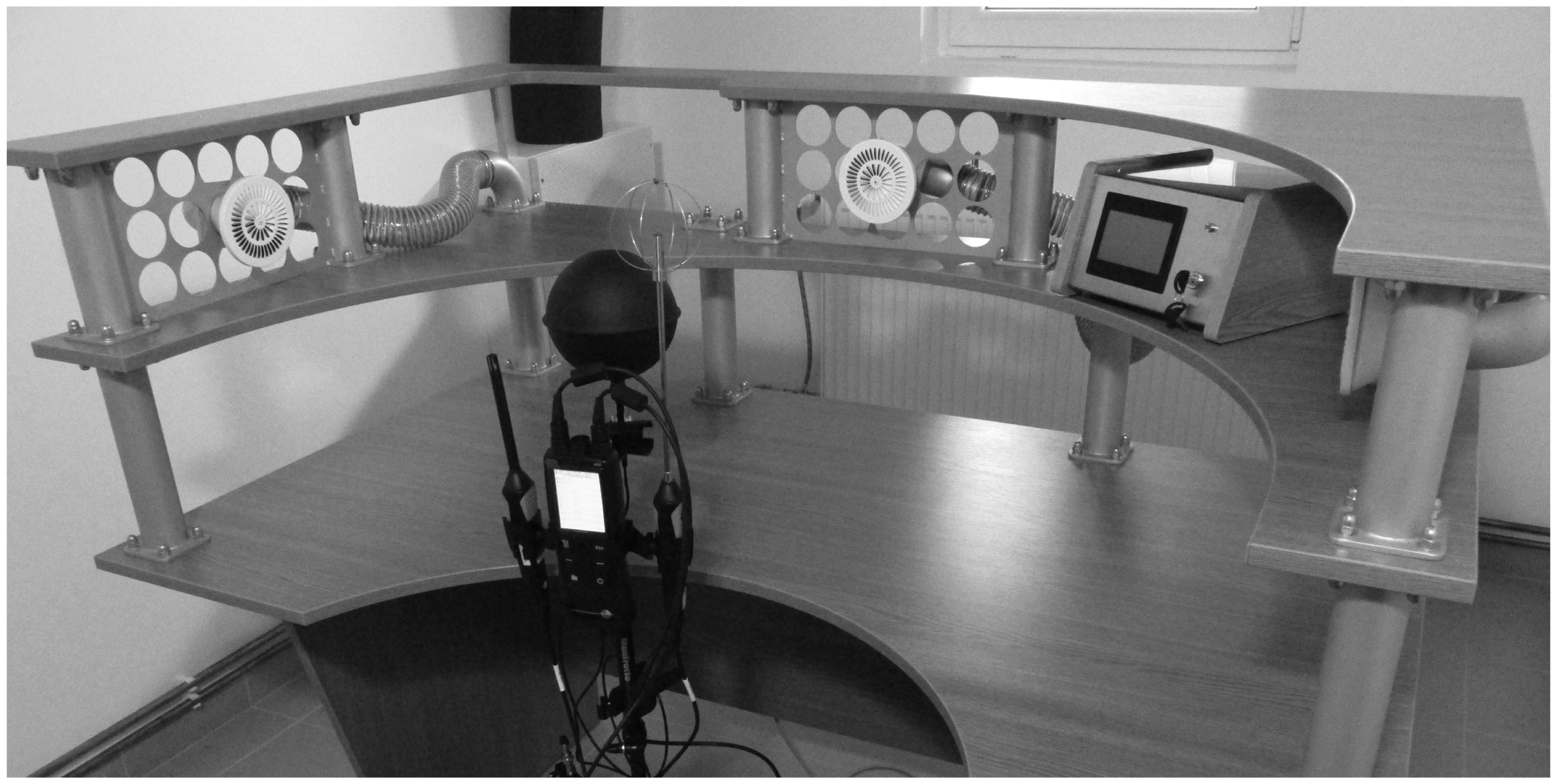
As air terminal devices circular perforated plastic panels were used (D = 75 mm). ALTAIR has its own built-in fan and can be connected to the fresh air ducts or used only for the indoor air circulation. This time, during measurements ALTAIR was used combined with the displacement ventilation, so its role was only to move the air around the head of the subjects. ALTAIR has a built in air distribution box. The air may leave the box either through one, two or three tubular air channels. The opening/closing of air channels is controlled by electromagnetic valves. The operation mode is set on the control box before starting the ventilator. This time the air was blown onto the occupant at the head level sequentially from the left–front–right side. The time step of changing the air flow direction can be set using the touch screen of the control box. The distance between the air terminal devices and subjects’ head is 0.6 m. The circulated air flow by ALTAIR was set to 20 m3 h−1. The air flow was measured by using KIMO AMI 300, with K75 air flow cone. The air flow is fixed by choosing the right rotation speed of the ALTAIR built-in fan. This can be set plainly using the touch screen of the control box of the ALTAIR equipment. The mean air velocity obtained around the subjects head was 0.48 m·s−1. The turbulence intensity varies a little bit with the air flow direction changing time step: at 10 s was Tu10 = 20.6%, at 20 s, Tu20 = 19.1% at 30 s, Tu30 = 18.8%. With ALTAIR PV in operation the PMV value shown by TESTO 480 instrument was 0.84. Nevertheless, the instrument has omnidirectional air velocity probe, so the direction changing of the air flow velocity vector could not be taken into consideration.
Instruments
During experiments the following calibrated instruments were used:
– Globe temperature: TESTO SAVERIS, Globe probe Ø 150 mm, TC Type K, accuracy: ±1°C, placed in the middle of the room at 1.1 m height. – Air temperature: TESTO SAVERIS, probe accuracy: ±0.4°C, placed in the middle of the room at 1.1 m height. – Relative humidity: TESTO 435, probe accuracy: ±2% RH (+2 to +98% RH), (placed in the middle of the room at 1.1 m height). – Air speed was measured in the middle of the room at 1.1 m height: TESTO 435, probe accuracy: (±0.03 m·s−1 +5% of measured value). – Turbulence intensity: TESTO 435, Comfort level probe for degree of turbulence measurement with telescopic handle (max. 820 mm) and stand, meets EN 13779 requirements, accuracy: (±0.03 m·s−1 +4% of measured value), measured in the middle of the room at 1.1 m height. – Air flow in the ventilation system: KIMO AMI 300, with K75 air flow cone, probe accuracy: (±0.03 m·s−1 +3% of measured value) – CO2 concentration: TESTO 435, IAQ probe to assess indoor air quality, accuracy: (±50 ppm CO2 ±2% of mv) (0 to +5000 ppm CO2); – PMV: TESTO 480 instrument.
Subjects
Anthropometric data of the subjects.

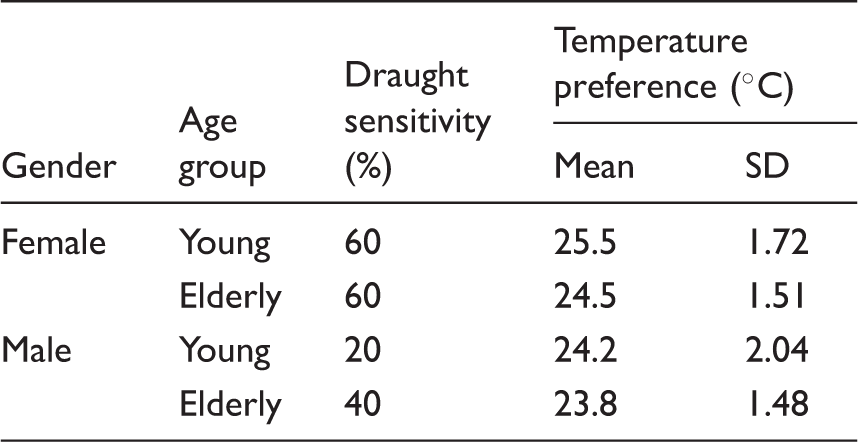
Draught sensitivity and indoor temperature preference of the subjects.
Experimental procedure
Measurements were conducted in June–July 2015. The subjects were asked to arrive 30 min before starting the measurements. These 30 min were considered to be the acclimatization period. Furthermore, in this period of time the subjects were asked about their age, smoking habits, indoor temperature preference in summer period, draught sensitivity. The height, weight, and blood pressure was measured. The questions they had to give responses during the measurements were explained in detail. The subjects were selected of people working or studying at the University of Debrecen, Faculty of Engineering. They were enlightened upon the heat exchange process, temperature scales, draught, and asymmetric radiation.
During the 2 h, individual tests subjects sat at the ALTAIR desk in the middle of the test room. The TVAD system operates continuously during the measurement. The schedule of measurement was: 30 min only the TVAD was in operation. In the following 30 min, the ALTAIR PV operates in combination with the TVAD. The time step of changing the air flow direction was set to 30 s. In the next 30 min, the time step of the ALTAIR was reduced to 20 s. Finally, in the last 30 min the time step was set to 10 s. The air temperature and mean radiant temperature were kept constant during the two hours’ measurements. The subjects were not allowed to change their clothes during measurements. Water drinking was allowed but eating was not allowed. They could read, learn, solve exercises, or play on their tablet. The clothing thermal insulation was 0.5 clo (ISO 9920:2007, Men: underpants, shirt with short sleeves, light trousers, light socks, shoes; Women: bra, panties, shirt with short sleeves, skirt, sandals) while the activity level was 70 W m−2 (sedentary activity; ISO 8996:2004). The subjects undertook the tests randomized. They did not know anything about the previous or the subsequent person. It was not permitted to attend the two tests on the same day. The subjects were not aware about the schedule of the tests and indoor parameters. Between two subsequent measurements at least 2 h break was kept. During the first hour the test room was intensively ventilated (500 m3 h−1) and in the next hour the initial indoor parameters were established in the test room. During measurement sessions, from 10 to 10 min, the subjects were asked to complete a short questionnaire: Q1. Evaluate the indoor environment on the following scales (Figure 3): (a) Mark on the 6-point scale the odor intensity in the room (b) Mark on the 7-point thermal comfort scale your thermal comfort sensation (c) Mark on the 3-point scale the acceptability of the environment
Scales for indoor environment quality evaluation. (a) Odour Intensity, (b) Thermal sensation, (c) acceptability. Q2. Is the air velocity acceptable? Yes No If not, what should do with it? Increase Decrease Q3. Do you feel draught? Yes No If your answer is Yes, please specify the body segment(s) you feel draught head neck arms back legs ankles Q4. Are you content with the freshness of the indoor air? Yes No Q5. Are you content with indoor surface temperatures? Yes No If not, what to do? floor temperature: increase decrease ceiling temperature: increase decrease walls temperature: increase decrease (underline which wall temperature should be changed: front, back, left, right)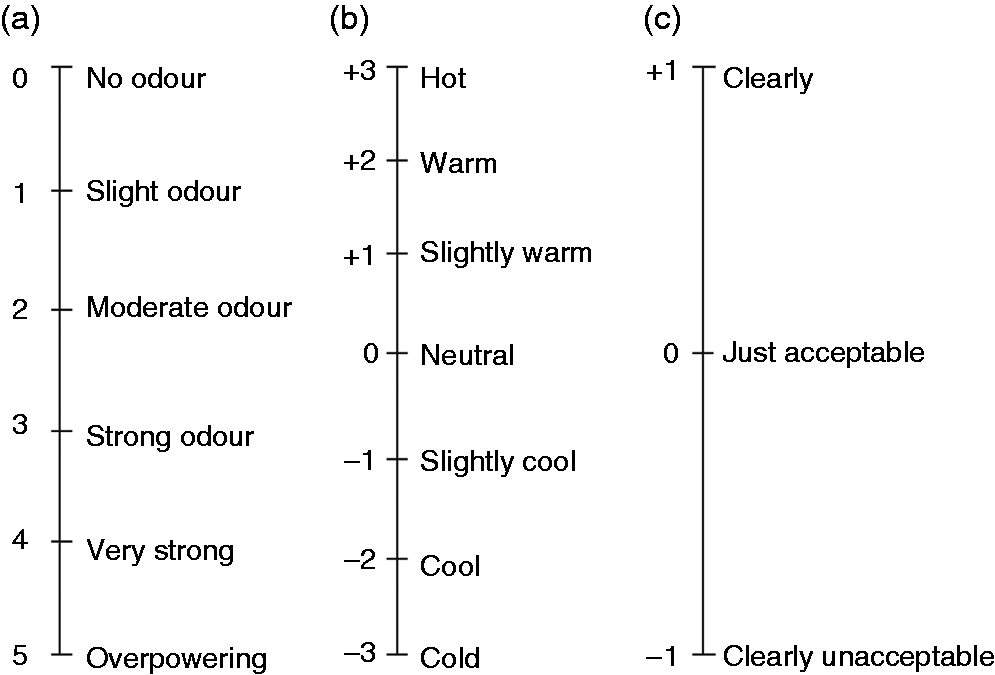
Results and discussion
Thermal comfort sensation
The mean values and the standard error of means (SEM) of the responses related to thermal comfort sensation by age and gender for different operation mode of the ALTAIR PV system (no operation, 30 s, 20 s, 10 s time step of air flow direction changing) are presented in Figure 4.
Subjective thermal comfort sensation by gender and age.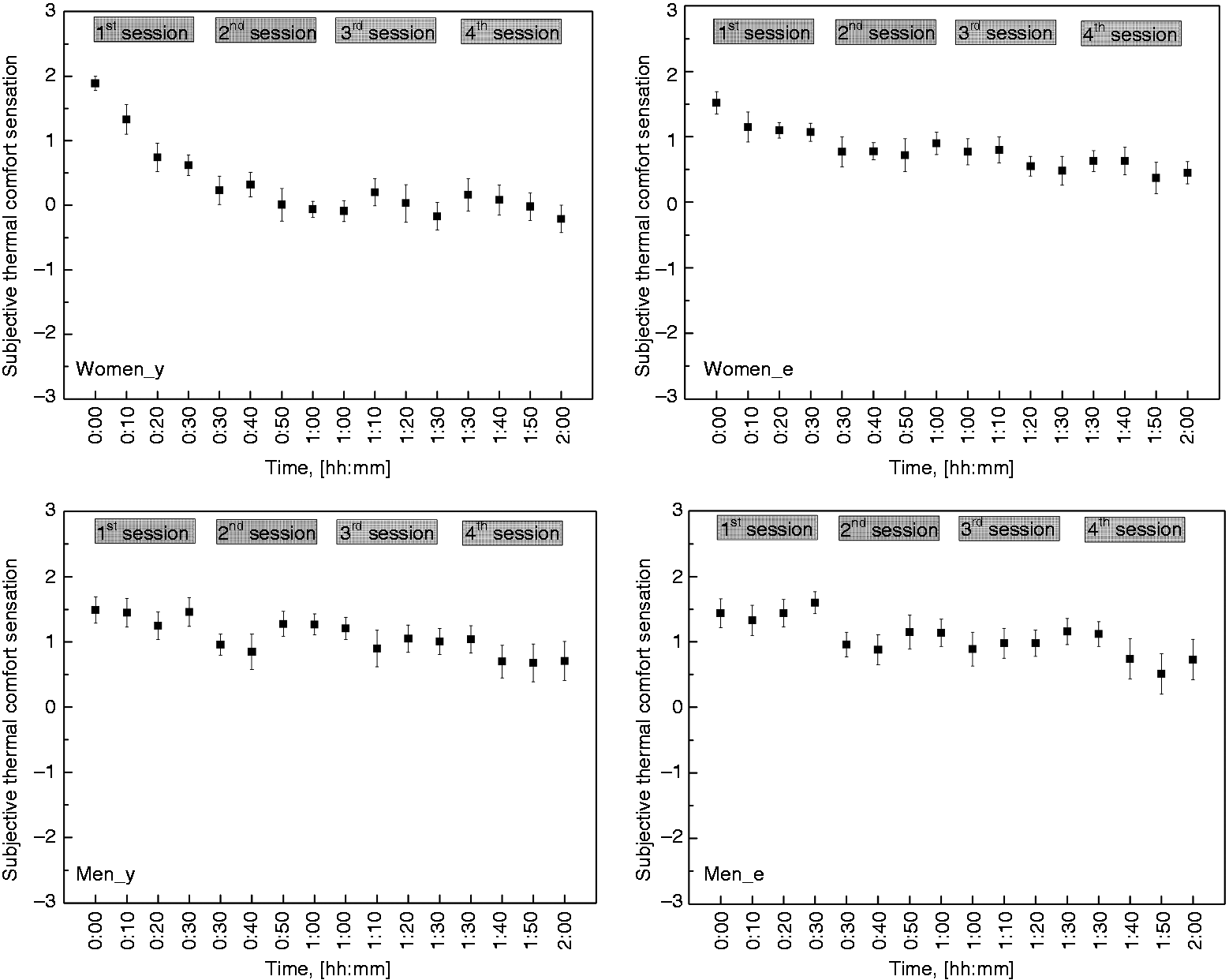
Comparison of analyzed groups at 0.05 significance level.

MeanDiff: difference between means; SEM: standard error of means; q Value: critical value of studentized range distribution; Prob: significance level; Sig = 1 (the means are significantly different); Sig = 0 (the means are not significantly different).
It can be observed that at the beginning, the responses of the young women group are the highest. Moving the air around the head of the occupants leads to significantly lower responses in case of each group in comparison with the first 30 min. However, there is no significant difference between the responses of elderly groups and the young men group. The responses of the young women group are significantly different by the responses of other groups. Hair plays an important role in the subjective thermal comfort sensation. In case of young women group only one person has very short haircut (covering a little bit the ears). All the other subjects have long hair (shoulder length hair). All subjects in the elderly women group have very short hair (a little bit on the ears). One man (elderly group) had long hair (pony tail hair style) and had short beard. One other person (elderly men group) had moustache. All other subjects in the men groups had very short hair; had no beard and had no moustache. It can be seen that young women, having longer hair, evaluated the thermal comfort with the lowest responses. In the case of ALTAIR the air is coming sequentially from left side–front–right side of the head (similarly to a hand held fan). The insulation effect of the hair in this case is reduced (practically the hair cannot protect the face from the air flow).
Mean values of subjective thermal sensation by session and groups.
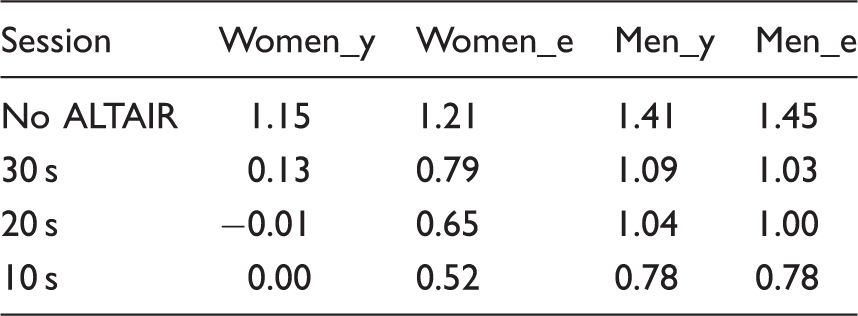
The measured PMV value with the ALTAIR PV in operation was 0.84 and this value was validated by the men groups in the last session. Both elderly and young women groups appreciated the environment colder than it was expected. Practically, using the ALTAIR PV equipment the percent of dissatisfied persons was lower than the calculated PPD (predicted percentage of dissatisfied). It is true, that the draught sensitivity was high in these groups. Furthermore, the preferred temperature in summer was higher in case of women, so it was expectable that these groups tolerates easier higher temperatures and they are more sensitive to air movements, then the male subjects.
It can be stated for all analyzed subject groups, that the thermal sensation decreased at lower time steps of the ALTAIR PV system. This means that, at higher rotational speed of the air flow jet, the cooling sensation increased. It is interesting that, practically, age had no effect on the men’s answers related to thermal sensation. Thermal sensation of young women subjects was significantly lower, in comparison with the answers of the other groups, in all measurement sessions, when ALTAIR PV was in operation. When the time step of changing the air flow direction was 10 s, the thermal sensation was significantly lower in case all groups in comparison with the case when the ALTAIR PV was switched off. In case of 20 s time step, both women groups gave significantly lower answers related to thermal sensation in comparison with case when ALTAIR PV was switched off.
Evaluation of odor intensity
The mean values and the SEM of the odor intensity evaluation on the 6-point scale by age and gender for different operation mode of the ALTAIR PV system (no operation, 30 s, 20 s, 10 s time step of air flow direction changing) are presented in Figure 5.
Odor intensity evaluation.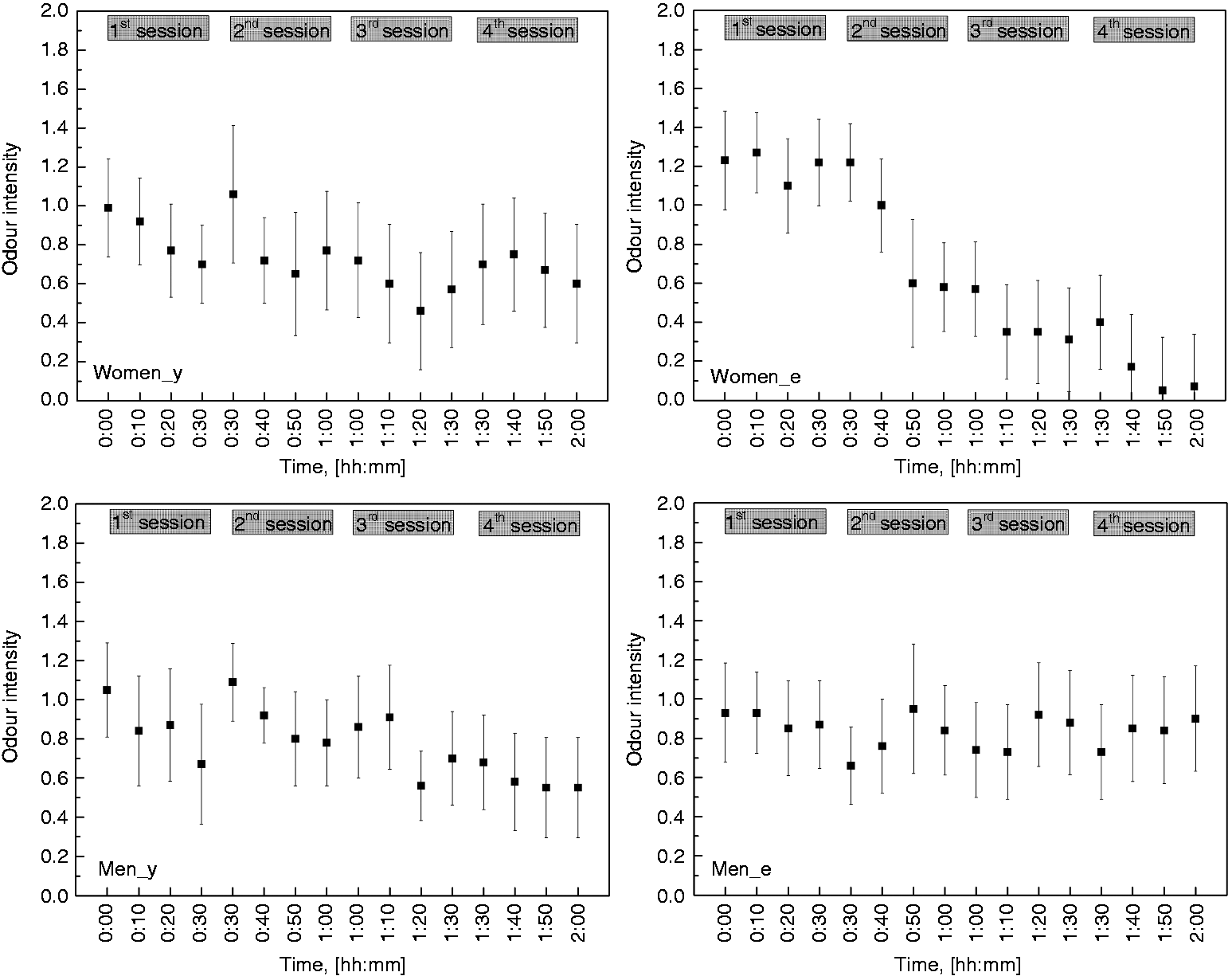
It is interesting that young groups gave almost similar answers, while elderly persons evaluate completely different this IEQ parameter. No special odorant was used. Only the odor of building materials and equipment was evaluated. In case of elderly men group, practically there is no difference between the odor intensity during the whole 2 h measurements (no adaptation, no influence of ALTAIR PV), while the evaluation of the odor intensity by the elderly women group is higher at the beginning but shows a strong decrease in time. The reason of this decrease can be the adaptation on one hand and ALTAIR PV system on the other hand.
Overall acceptance of the environment
The mean values and the SEM of overall acceptance of the indoor environment by age and gender for different operation modes of the ALTAIR PV system (no operation, 30 s, 20 s, 10 s time step of air flow direction changing) are presented in Figure 6.
Acceptance of the indoor environment.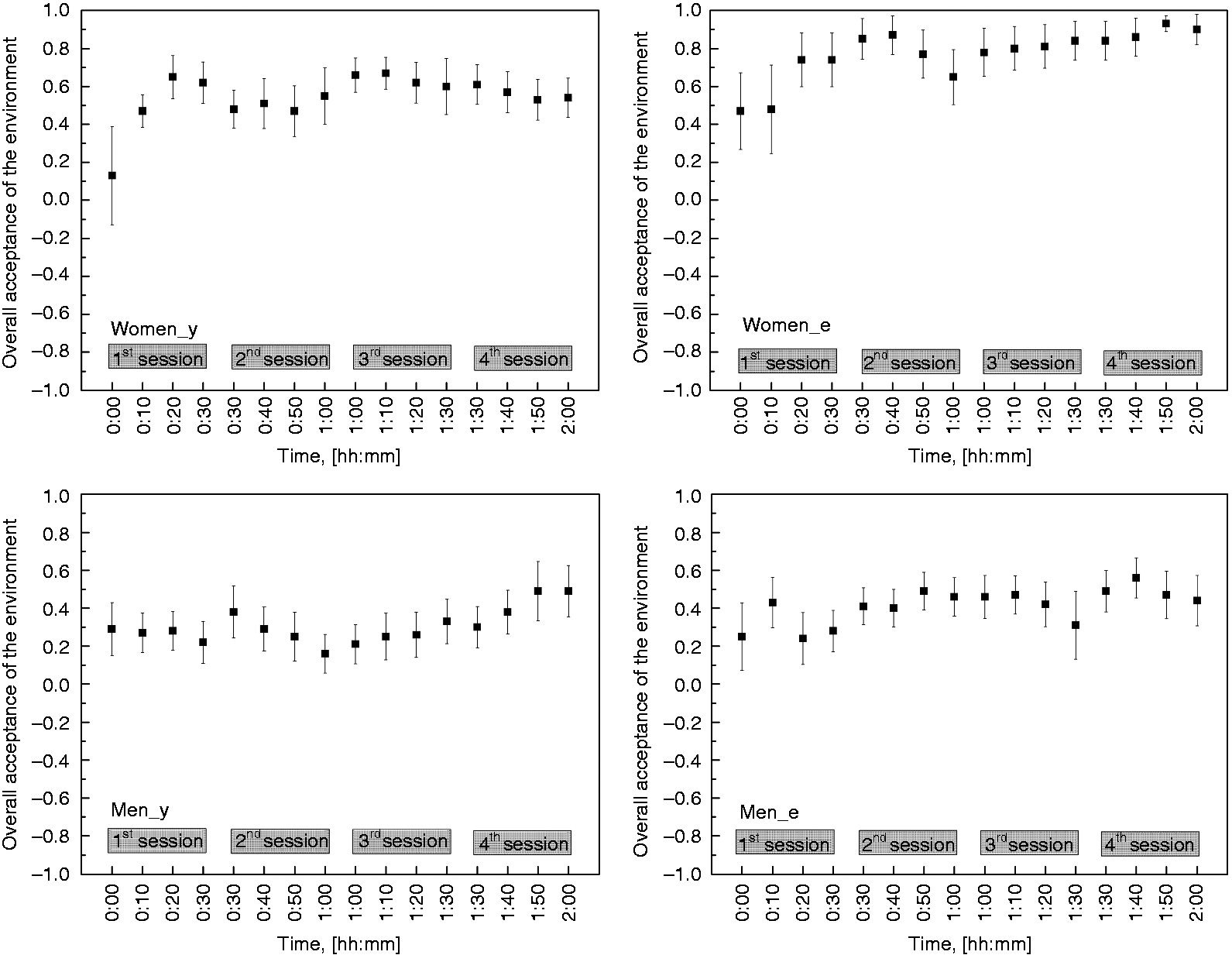
The overall acceptance of the indoor environment increased for all analyzed groups. It is interesting that, in spite of high air- and mean-radiant temperatures, the acceptance is between just acceptable and clearly acceptable for all groups. The lowest acceptance was found in case of elderly men, while elderly women gave the highest acceptance values.
Evaluation of the air velocity and draught
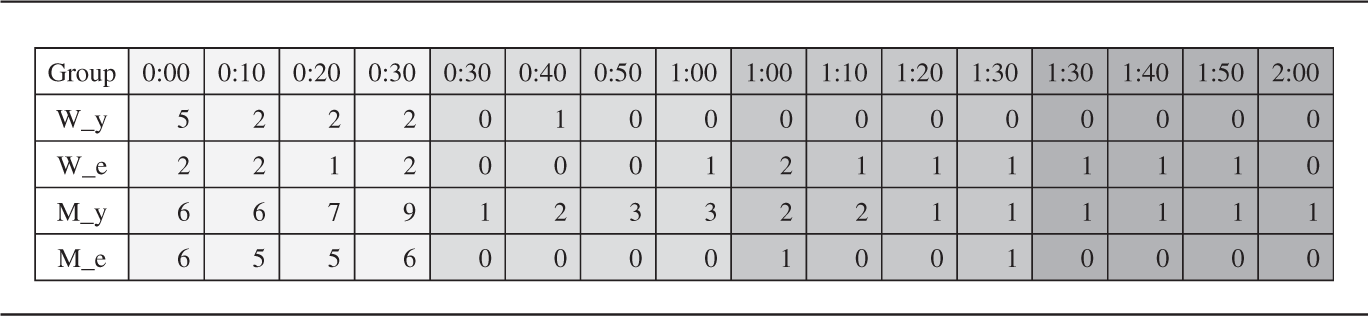
Air velocity was acceptable for 50% of the subjects in the first measurement session. In this session (with ALTAIR PV switched off) all dissatisfied subjects asked to increase the air velocity. With the ALTAIR PV system in operation, 70–80% of the subjects appreciated the air velocity to be adequate. It can be observed that the percent of satisfied persons increased during the measurement in each group. It is interesting that the gradient of the trend lines is almost similar by gender (the gradient is higher in the case of women groups). Young groups were less satisfied with the air velocity (Figure 7).
Percent of subjects satisfied with the air velocity.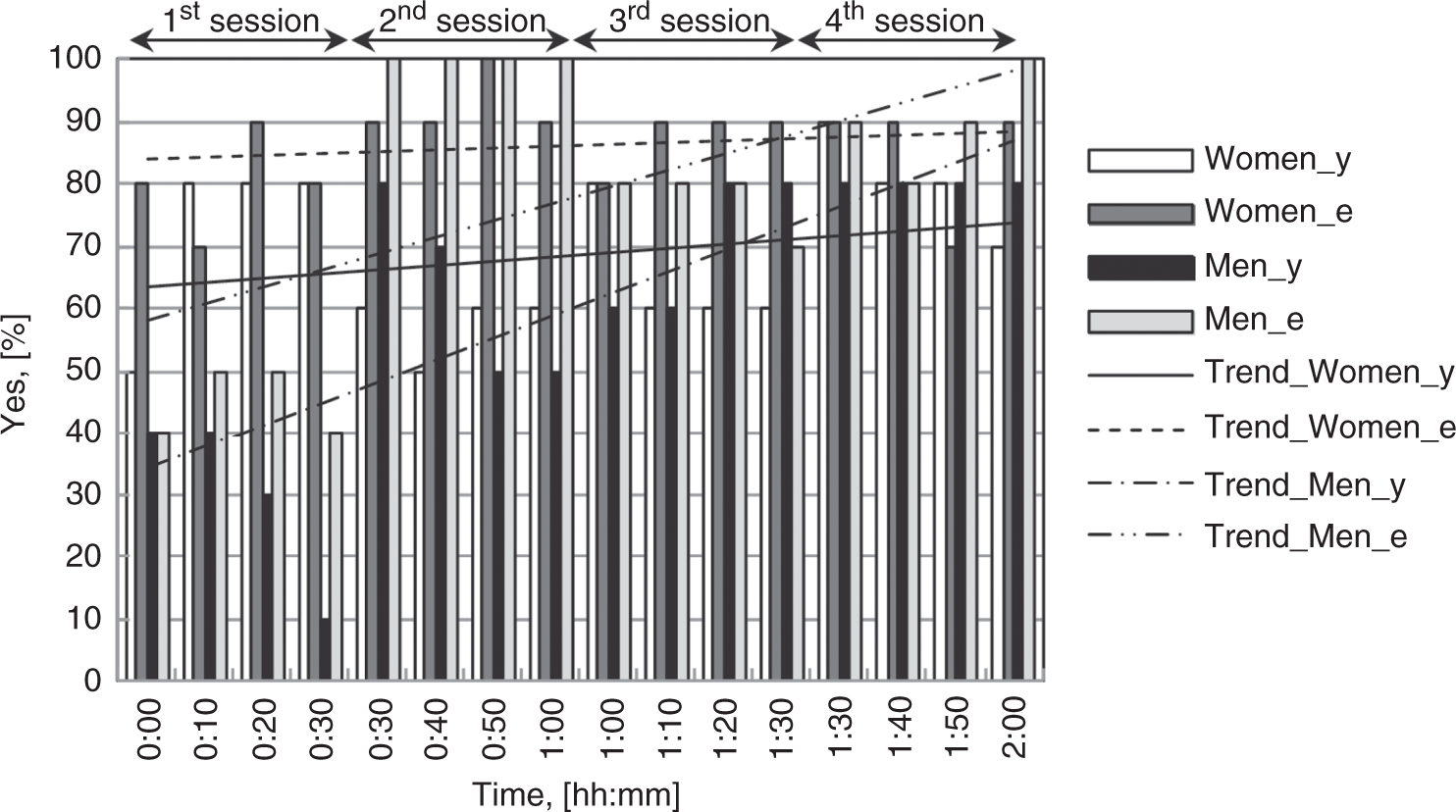
Number of persons who need higher air velocity.
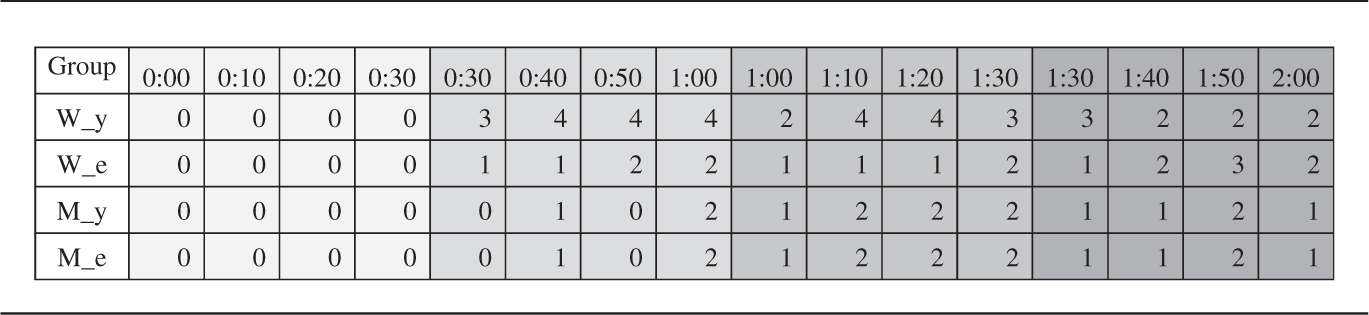
Number of persons for whom the draught sensation was embarrassing.
Evaluation of air freshness (CO2 concentration)
During measurements the CO2 concentration was measured and registered. The logged data have been analyzed statistically. The variation of CO2 concentration during the 2 h measurements is presented in Figure 8 using box chart diagram.
CO2 variation in the test room.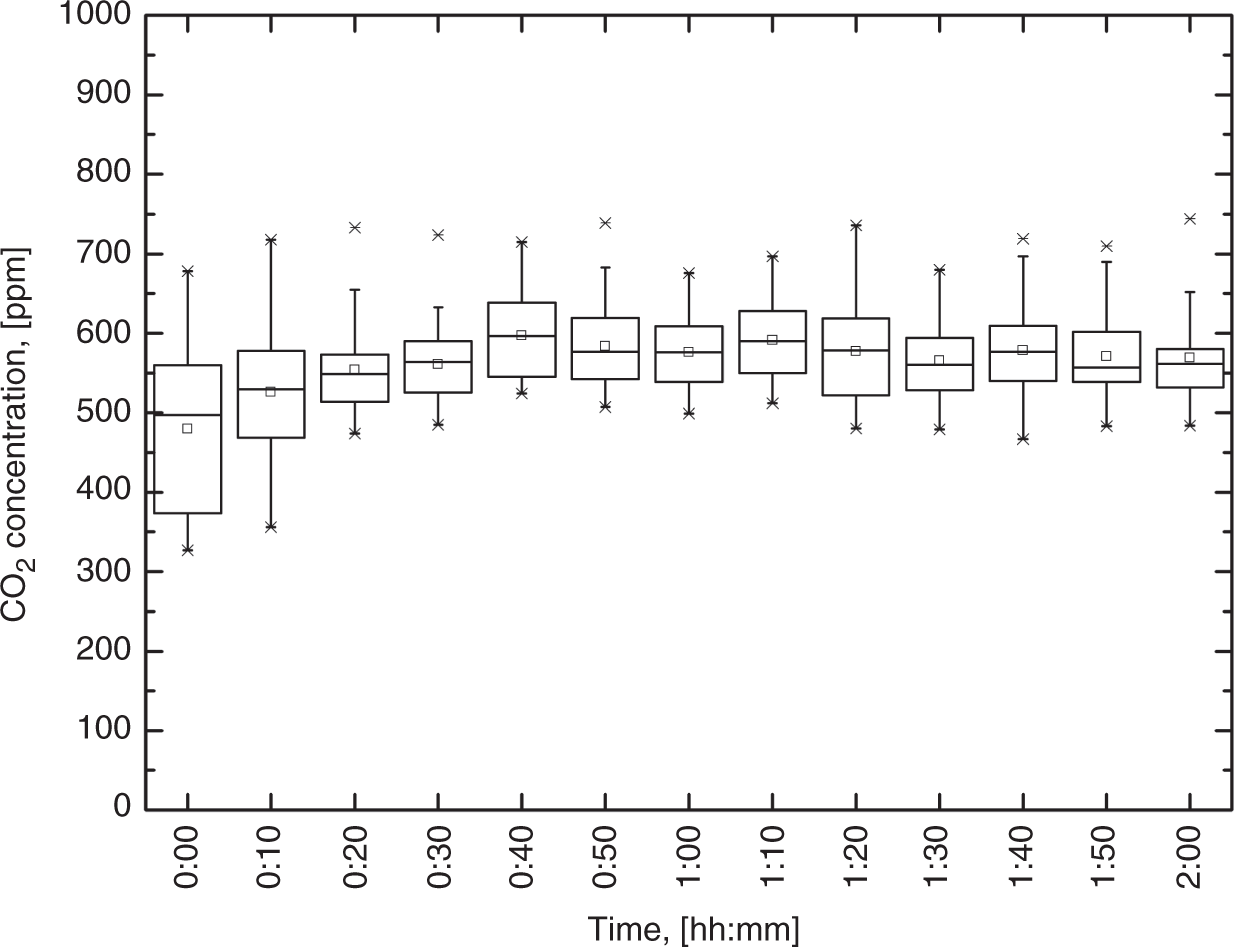
The percent of subjects contented with the air freshness is shown by Figure 9.
Percent of subjects contented with the air freshness.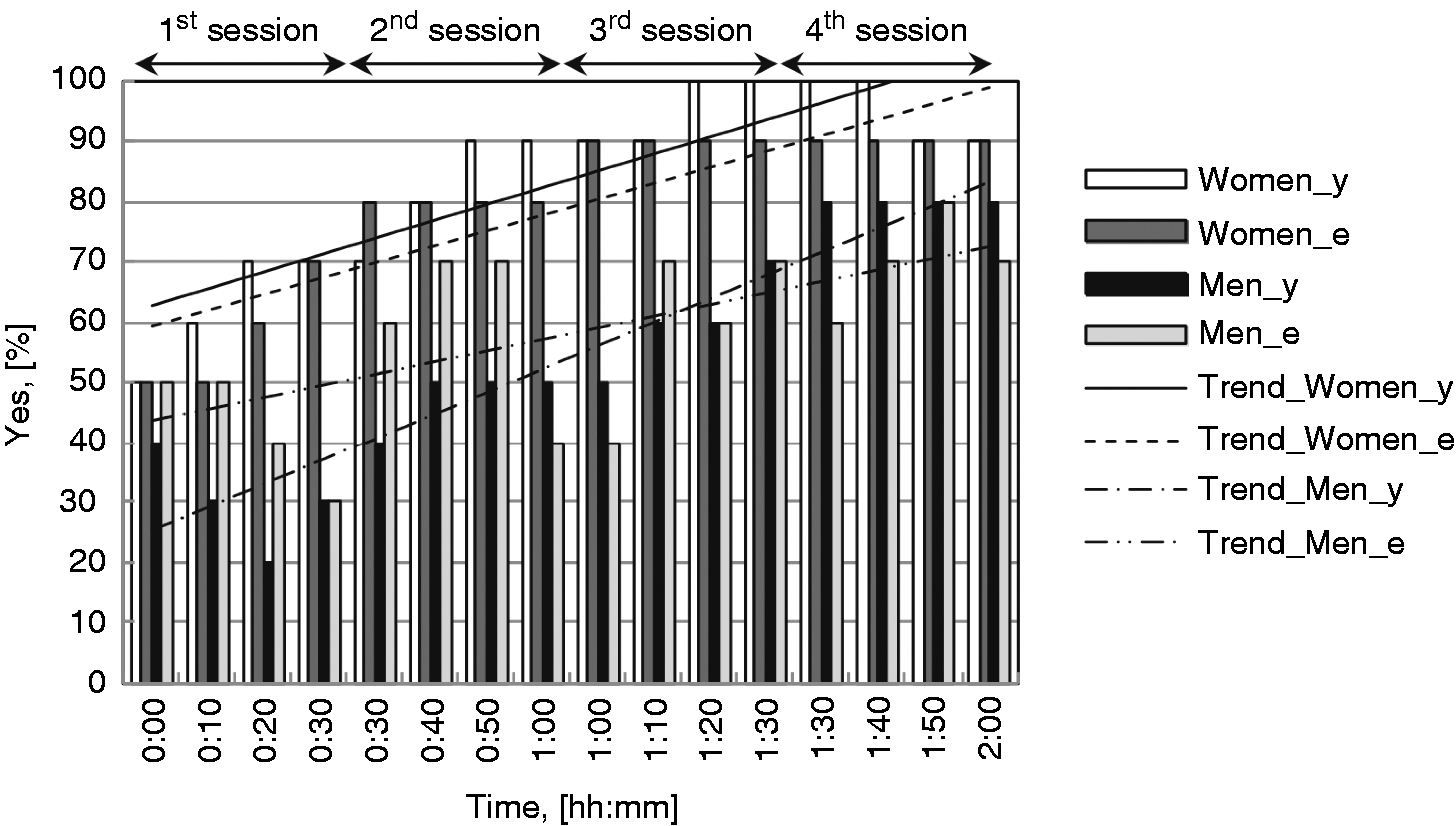
The number of subjects contented with the air freshness was the lowest in the first measurement session, even though the CO2 concentration was the lowest in this period (Figure 7). Analyzing the responses, it can be observed that most subjects correlated the thermal comfort sensation with air freshness: “if the indoor environment is too warm, the air is not fresh enough”.
Evaluation of surface temperatures
The surface temperature was relatively high during measurements. The aim of this question was to see whether the ALTAIR PV system is able to neutralize the effect of high surface temperatures. It can be observed that the trend of the surface temperature acceptability increased when the ALTAIR PV was in operation, and the acceptability of the high mean radiant temperature was higher when the time step of air flow direction changing was lower (Figure 10).
Percent of subjects satisfied with the surface temperatures.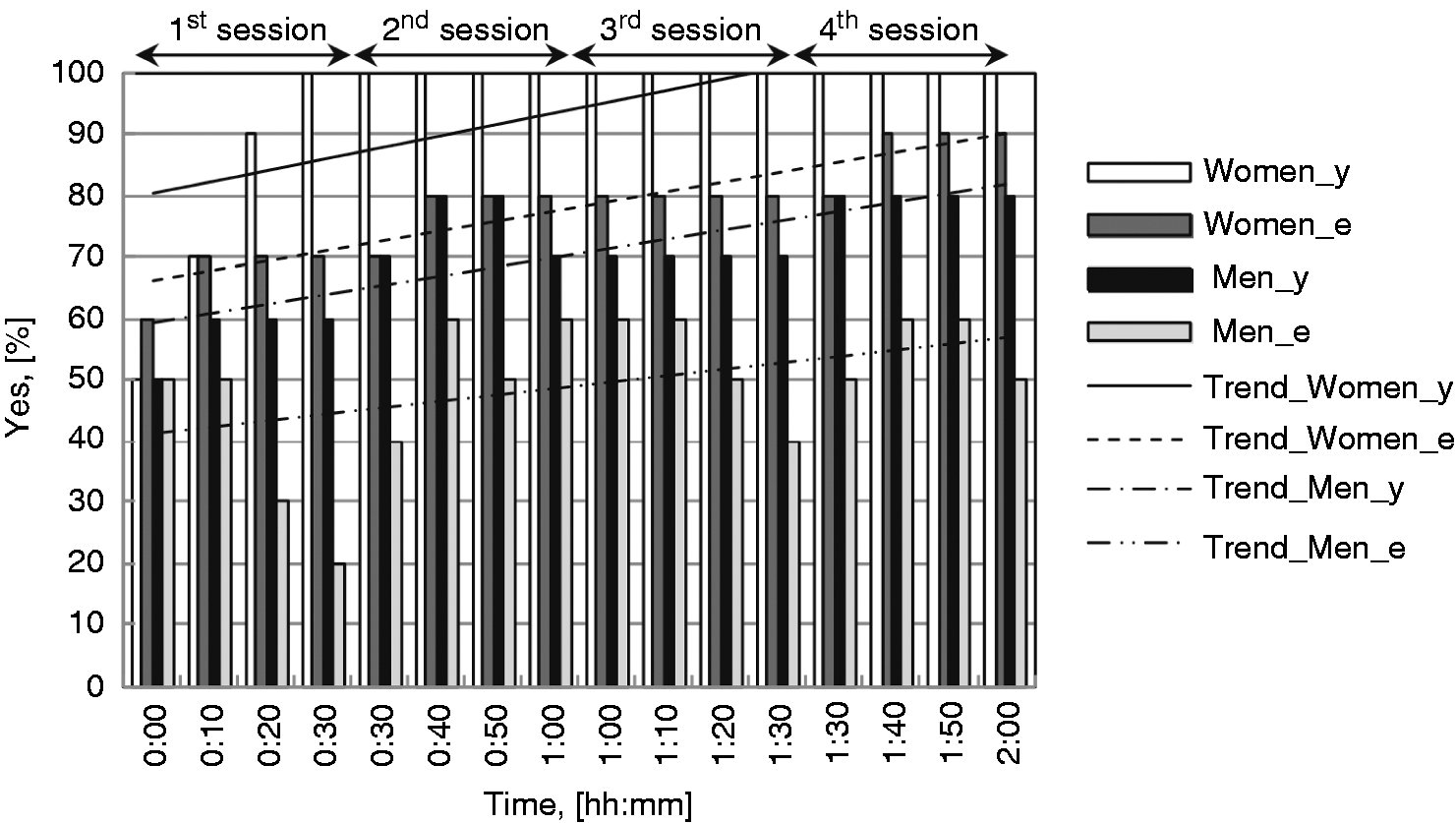
Personalized ventilation systems with advanced air distribution can be successfully used to improve the thermal comfort and indoor air quality in closed spaces, either alone or combined with total volume air distribution systems.
Uncertainties
Uncertainties of measured values.
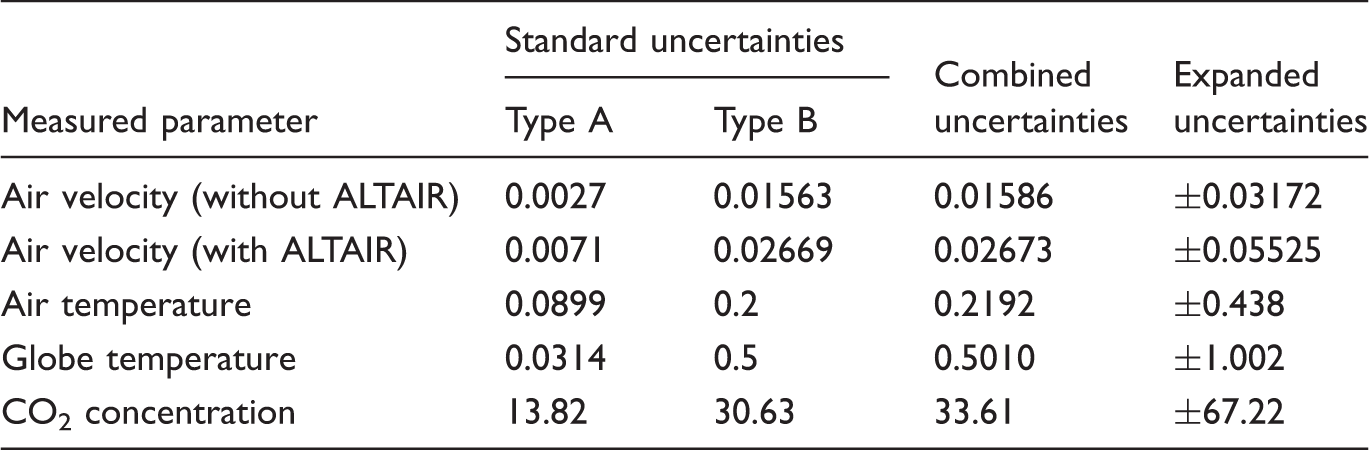
Taking into account the accuracy of used probes and instruments, the PMV during measurements can slightly differ from the initially calculated 1.44 (without ALTAIR) and 0.84 (with ALTAIR) values.
Conclusions
The local comfort needs can be satisfied by using the PV systems. The effects of air flow direction changing on thermal comfort sensation was analyzed by gender and age in a warm environment. It was found that:
in the case of first session of measurements (ALTAIR PV system switched off), the PMV value measured by TESTO 480 instrument (1.44) was validated by the young men, elderly men, elderly women group of subjects; the PMV value with the ALTAIR PV in operation measured by TESTO 480 instrument was 0.84 and this value was validated by the men groups; thermal sensation of young women subjects was significantly cooler, in comparison with the answers of the other groups; the odor intensity was evaluated similarly by young groups; in case of elderly men group practically there is no difference between the odor intensity during the whole two hours measurements; most subjects correlated the thermal comfort sensation with air freshness.
It was shown that advanced PV systems can be successfully used in warm environments to improve the thermal comfort sensation. By changing sequentially the direction of the air flow around the head of occupants a supplementary cooling sensation is obtained (similarly to a handheld fan). Using this method in warm environments, the subjective thermal comfort sensation will be further improved. In the general equation of PMV the variation in time of the air velocity vector is not taken into account, therefore in warm environments the percent of dissatisfied persons will be lower than the calculated PPD. The next step of the research is to analyze the relation between thermal sensation and perception of air freshness in warm environments.
Footnotes
Declaration of conflicting interests
The author(s) declared no potential conflicts of interest with respect to the research, authorship, and/or publication of this article.
Funding
The author(s) received no financial support for the research, authorship, and/or publication of this article.