







Abstract
This paper attempts to investigate the potential of courtyards in optimizing natural ventilation and improving comfort levels in the learning spaces of a naturally ventilated educational institution with courtyards in the warm-humid climatic region of Madurai. Field measurements and experimental studies were carried out to predict the indoor and outdoor environmental conditions. The numerical study was carried out using computational fluid dynamics-based simulations using Ansys Fluent as the solver. The main aim of the simulation is to understand the airflow pattern and air velocity fields inside the classrooms surrounding the courtyards for different wind directions. The computational fluid dynamics results were validated by comparing it with the experimental results obtained in the current study and numerical results from other studies. The major findings of the current study suggest that courtyards with an aspect ratio of 1:2, orientations of openings at an angle of 0–20° to the predominant wind directions and the overall percentage of openings between 15 and 30% in buildings in Madurai region can enhance natural ventilation and thus improve thermal comfort of the occupants.
Introduction
India is a country with diverse geographic conditions and distinct climate zones. Cities have been tremendously increasing in size due to urbanisation. The growing needs for thermal comfort has led to the increased use of electricity generated by fossil fuels for the operation of heating, cooling and ventilation systems in buildings, which makes it responsible for 30%–40% of the global energy demand and 40%–50% of the world carbon emissions. 1
In India, the majority of schools and universities are mechanically ventilated through the usage of fans alone. Unlike natural ventilation, fans only create internal air movement, but they do not bring in fresh air. 2 Before the invention of mechanical ventilation, buildings were designed to utilise the maximum benefits of fresh air and maintain comfort. Natural ventilation is important because it can enhance fresh air movement without fans. Natural cooling strategies can greatly minimize energy costs and negative environmental impacts with improved thermal satisfaction among the occupants.3,4 Apart from cooling of indoor spaces, natural ventilation also plays a vital role in maintaining the indoor air quality. It has been observed that the high-temperature levels and low air supply rates are the main reasons for the increase in carbon dioxide levels in classrooms. 5 High levels of CO2 can have adverse effects on health and learning. 6 Thus, the learning environment requires appropriate planning strategies to provide better indoor air quality through proper ventilation.
For the effective design of natural ventilation in buildings, it is imperative to understand the air flow and heat transfer characteristics in and around buildings. The air flow pattern relies on fluctuations in external and internal climatic conditions, the building geometry and existing site conditions. 7 Many researchers across the world have investigated the air flow pattern, using computational tools and models and proved that ventilation flow rates are influential factors to ensure fresh air supply.1,8–11 Thus, computational fluid dynamics (CFD) is considered as an effective tool that provides a computer-based modelling to predict the performance of natural ventilation and microclimatic characteristics of the wind. This study has therefore used CFD to analyse the behaviour of wind in relation to the building design. The numerical study was carried out to evaluate the airing performance of a naturally ventilated educational building with courtyards by assuming the wind movement at a very low speed of 1 km/h from two predominant wind directions on a hot day in the overheated period to analyse the implication of courtyards and window orientations pertaining to the local microclimatic conditions. The CFD results were validated by comparing it with the experimental results obtained in the current study and numerical results from other studies. The results were helpful in identifying the implication of building design on natural ventilation. The study is very important because finally recommendations on appropriate proportion of courtyards, orientation and percentage of openings to enhance natural ventilation have been suggested to improve the thermal comfort of occupants in buildings located in the warm-humid climatic region of Madurai, thereby reducing the dependency on mechanical ventilation systems for cooling. The innovative aspect of this study is that both the exterior and interior wind environment has been thoroughly investigated to understand the implication of building design and orientation of openings on the airing performance.
Literature review
An extensive literature study shows that courtyards have attracted the present time designers as an effective passive design solution to improve the thermal and ventilation performance of various types of naturally ventilated buildings in hot climatic regions, but its optimum proportions are still under investigation to reach the desired ratios, in terms of energy efficiency and thermal comfort. Rajapaksha et al. conducted an experimental and numerical investigation on courtyards for passive cooling in warm-humid climate and showed that there was a notable reduction in the indoor air temperature during the daytime of the overheating period. 11 The study proved that courtyards can act as efficient modifiers of the indoor climate in warm-humid climatic regions.
Ernest and Ford confirmed that multiple courtyards promoted convective cooling, as well as reduced the cooling energy required. 12 Optimum courtyard proportions can notably reduce the solar heat gain and cooling loads in buildings in hot areas. Courtyards initiate proper air circulation and protect the inhabitants from the unfavourable weather conditions like stormy winds, hot and dusty winds in hot areas.13–17 Nielsen discovered that the courtyards perform thermally better when the width of the courtyards does not exceed three times the height of the building. 18 They also added that the courtyard proportions can have a remarkable effect on reducing the building solar gain and cooling loads. Salameh and Taleb conducted a study to investigate the potentials of different proportions of courtyards as a passive design solution in school buildings in UAE. 19 In their study, it was proved that courtyards with width 2 × performed better than spaces with no courtyards and width 3×. They also concluded that the air change rates were faster, and CO2 concentration was lesser in the case of the 2 × width courtyard school.
Research methodology
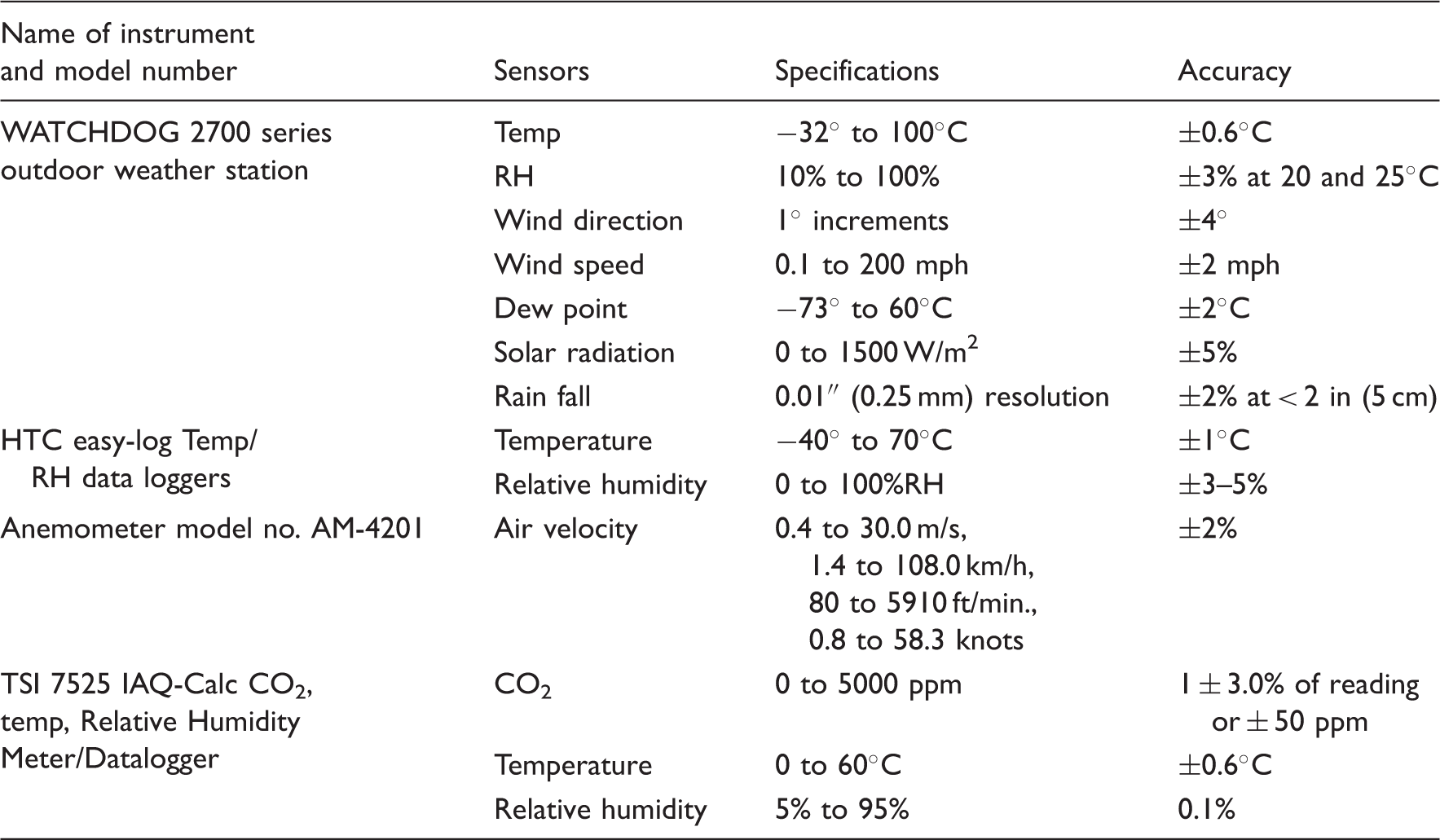
The research carries an experimental and numerical study to investigate the influence of courtyards and window orientations on natural wind movement and thermal comfort inside the learning spaces of an isolated educational building in Madurai. The numerical investigation has been carried out for two different wind directions observed on 25 March 2016 using CFD as the simulation tool. The numerical results are validated with the experimental results of air flow rates and indoor air quality inside the learning spaces of the base case building. The data required for the numerical simulation were obtained from the field measurements of the outdoor and indoor weather conditions recorded during the overheated period (March–September) 2016, using WATCHDOG 2700 series outdoor weather station, HTC easy-log Temp/RH data loggers. Figure 1 shows the temperature and RH graph generated by the outdoor weather station. The indoor air velocities were derived Lutron vane-type anemometer model no. AM-4201.The indoor air quality (CO2 levels) was measured using IAQ-Calc hand device. The specifications and accuracy of the instruments used for the experimental study are given in Table 1.
Recorded data of outdoor temperature and relative humidity ranges in March–April 2016. Detailed specifications of the experimental study instruments.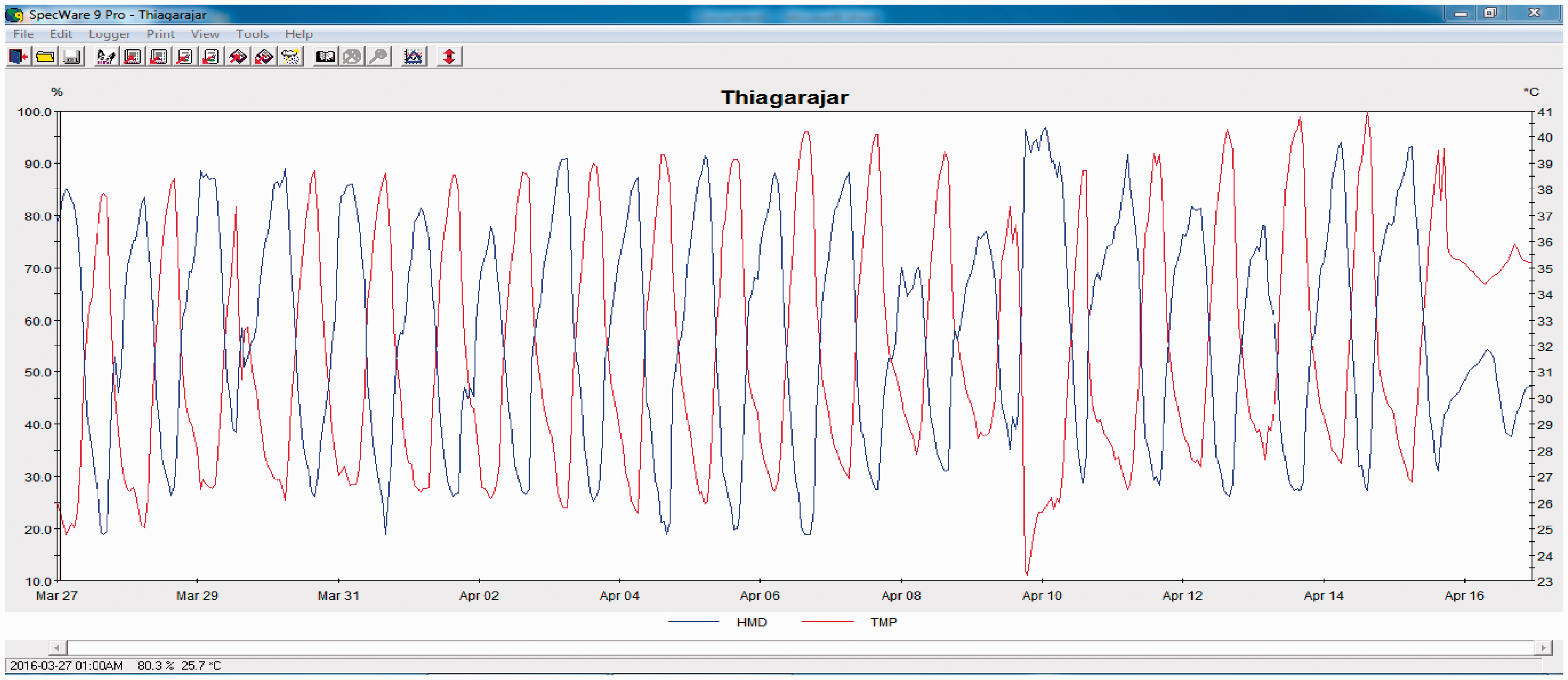
Case study building description
The case study building is an isolated building built in 1994 exclusively for architectural education, within the densely vegetated campus of “Thiagarajar College of Engineering”. The building is rectangular in shape with flat roof and oriented towards the east–west axis. The whole building relies on natural ventilation and fans for mechanical ventilation. Figure 2(a) and (b) represents the ground and first floor plans, respectively. The overall dimensions (Length – L, Breadth – B and Height – H) of the building are 72 m, 44 m and 10 m, respectively. There are two courtyards in the building (Figure 2). Courtyard 1 is smaller in size of 15.5 m × 12 m × 12 m (L × B × H) and located on the north-eastern side. Courtyard 2 is larger in size with dimensions 24 m × 14.9 m × 12 m (L × B × H). The aspect ratio of Courtyard 1 is 1:1 and Courtyard 2 is 1:2. The building is occupied from Monday to Friday and regular working hours are from 9:00 to 17:00.
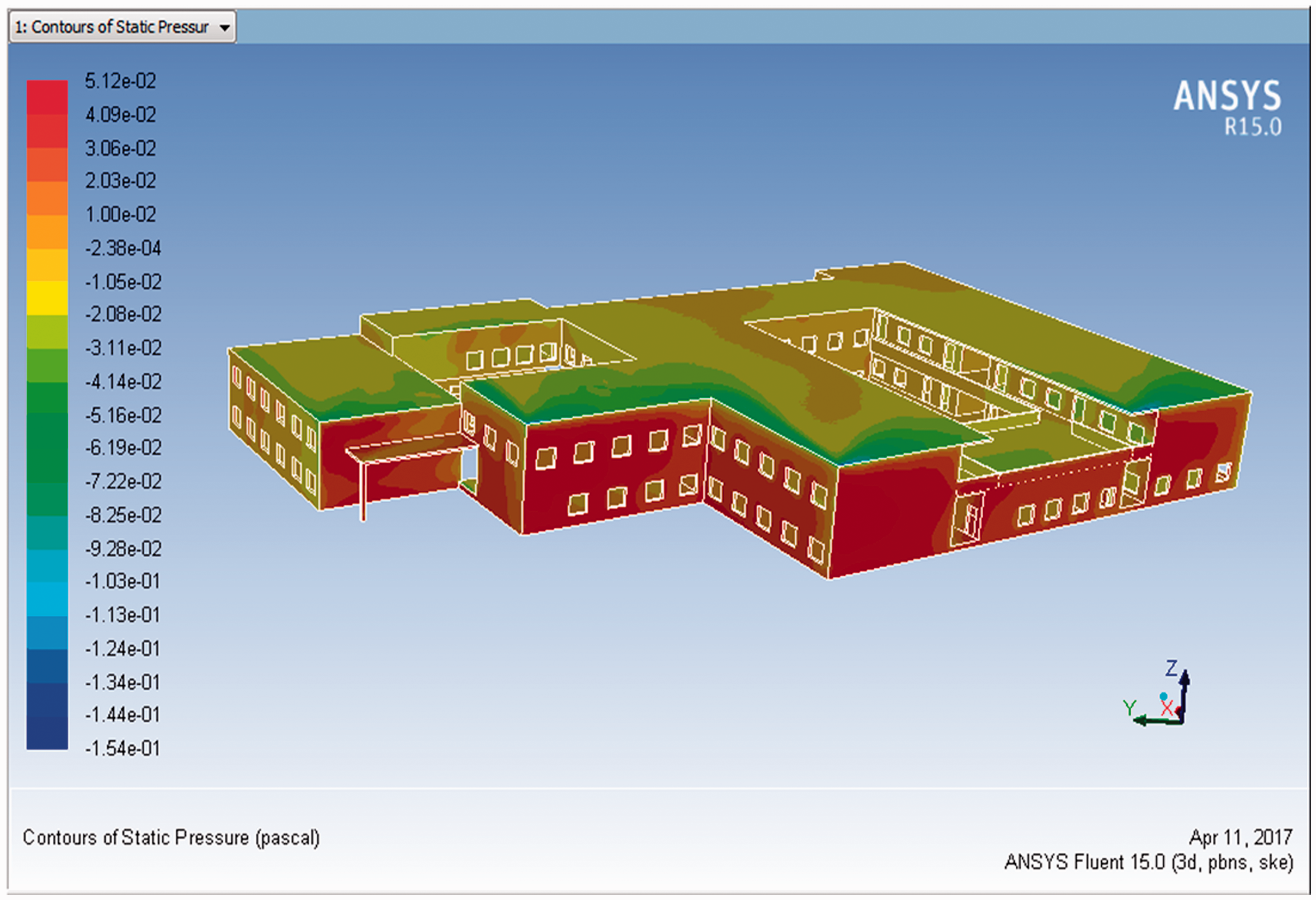
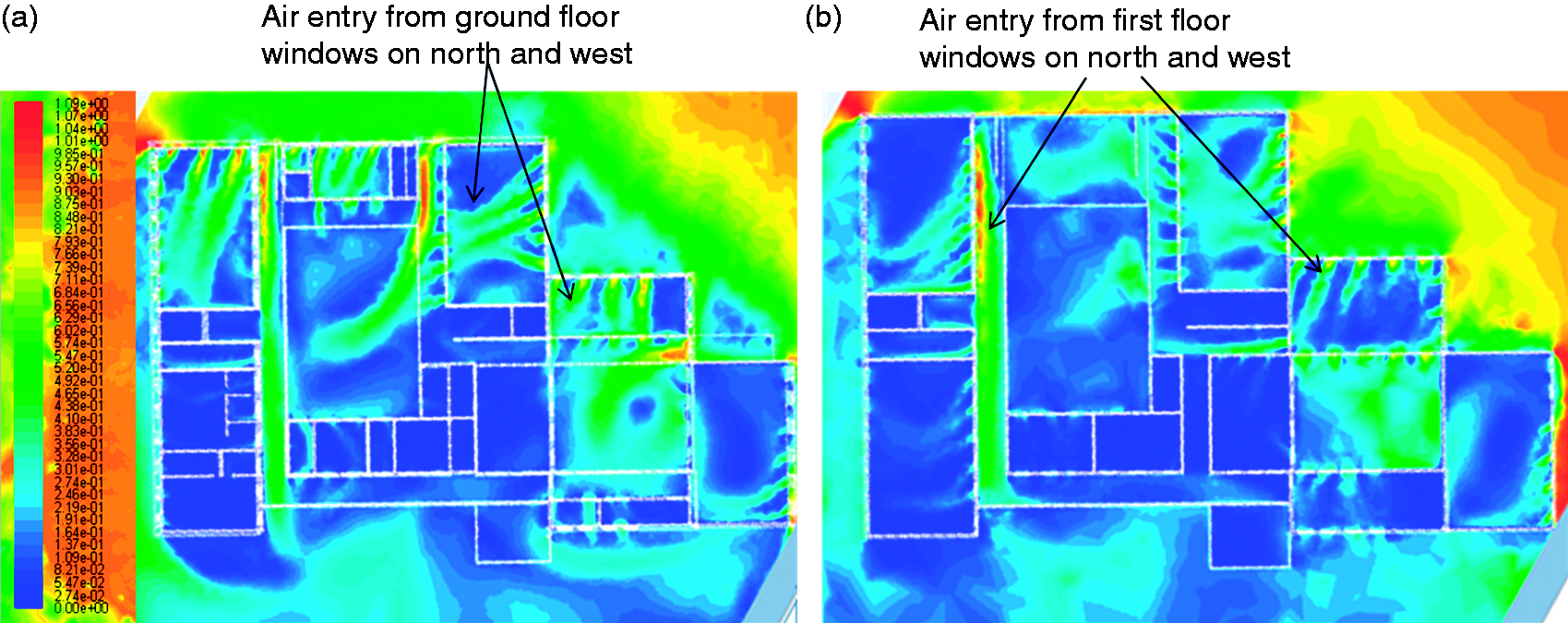
Floor plans of the institutional building. Pressure variation over the institutional building due to airflow from WNW direction. Predicted velocity magnitude contours for wind flow from WNW direction.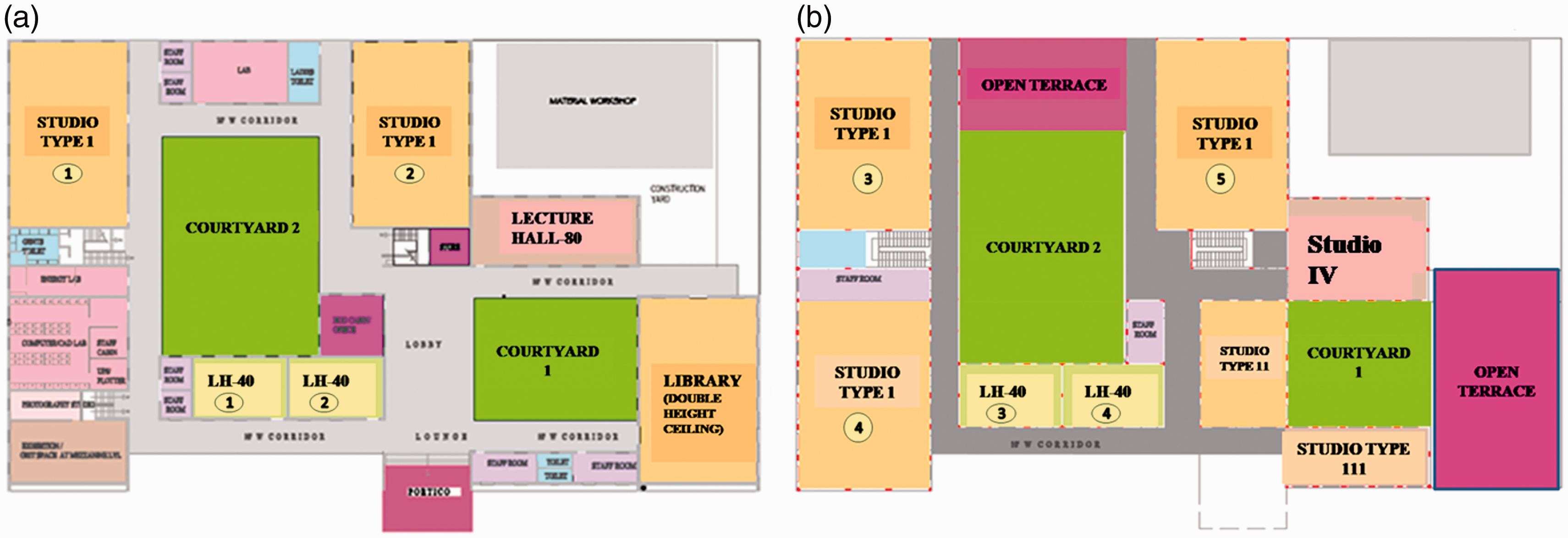
Experimental study methods


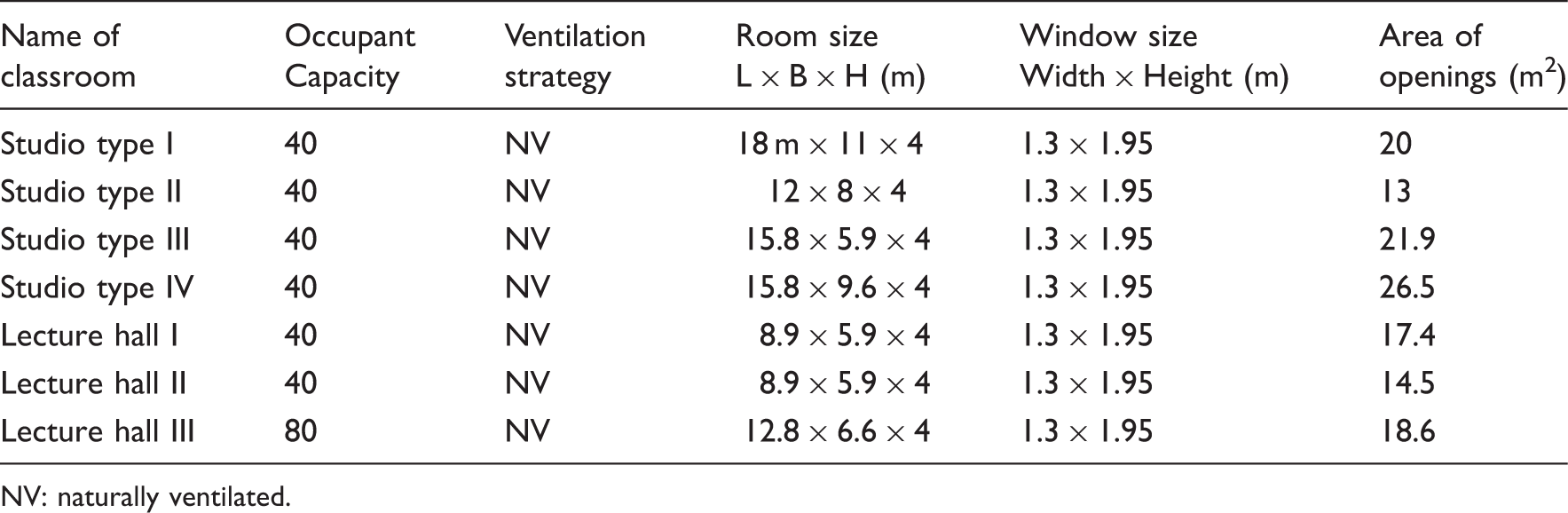
Overview of classroom details in the case study building.
NV: naturally ventilated.
Experimental study results and discussions
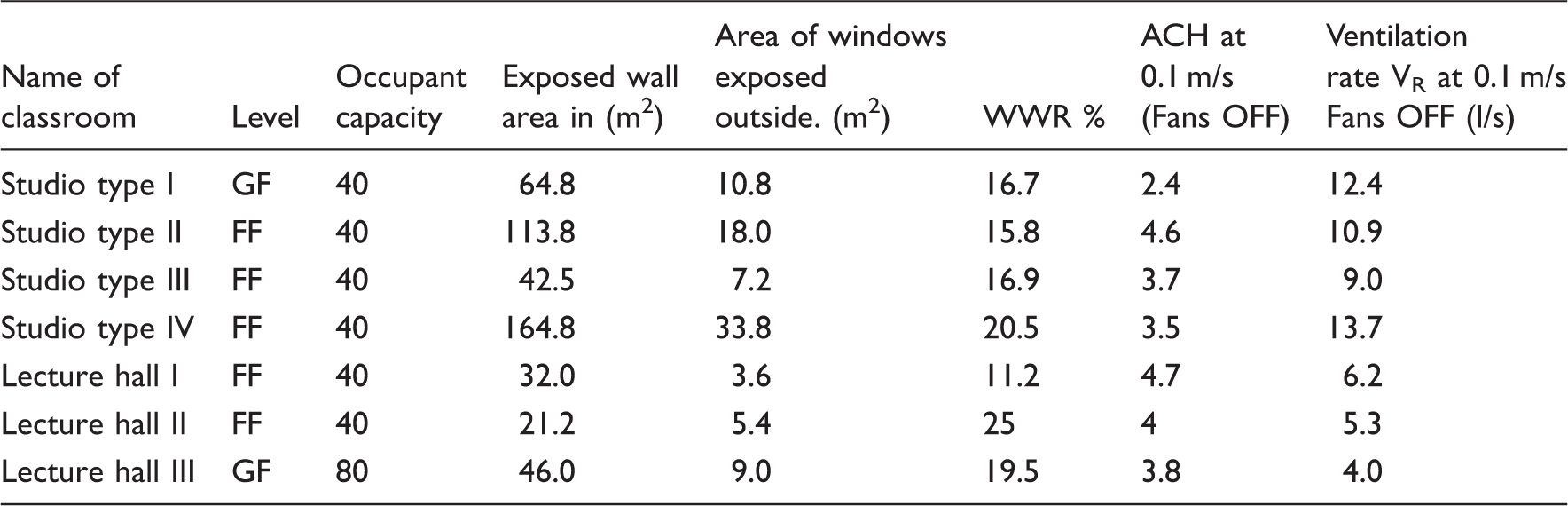
Comparative analysis of indoor variables, ACPH and ventilation rates (VR) in the base case building.
Indoor air quality measurement results and discussions
The CO2 levels were measured with fans ‘ON’ and fans ‘OFF’ in the learning spaces where the occupancy levels ranged from 30 to 40 using IAQ-Calc hand device. The average carbon dioxide (CO2) concentrations in the studios and lecture halls varied between 600 and 1500 ppm. Observations showed that in the morning hours at 9.00–9.30 am when the CO2 level in the outdoor air was 430 ppm, the indoor CO2 levels were higher by 100–150 ppm in all the learning spaces both in GF and FF. But within 15 min, there was an increase up to 1000 ppm inside the learning spaces. In the afternoon hours at 2.30–4.30 pm, the difference in CO2 levels between outdoor and indoor air was more than 1000 ppm. It was also found that when the fans were ‘ON’, the CO2 levels decreased by 100–150 ppm due to movement of air. This shows that usage of fans becomes mandatory in these spaces due to insufficient air movement. Fans offer an important adaptive opportunity for users at high indoor temperatures usually experienced in India. 22 At places with weaker circulation of air, it was noticed that CO2 levels were higher ranging from 1200 ppm to 1500 ppm in the absence of mechanical ventilation through fans. The CO2 levels were greater falling within the ranges of 1000–1500 ppm during teaching hours with full occupancy than the non-teaching hours with ranges between 500 ppm to 800 ppm. During non-teaching hours, the occupant density was lesser, and thus the results indicate that the indoor environment was being mostly affected by indoor sources than the outdoor air. ISHRAE recommends 500–1200 ppm of CO2 in indoors. 23 Higher levels of CO2 may be associated with health problems like dizziness, head ache or tiredness among occupants, and thus should be controlled.
CFD simulation methodology
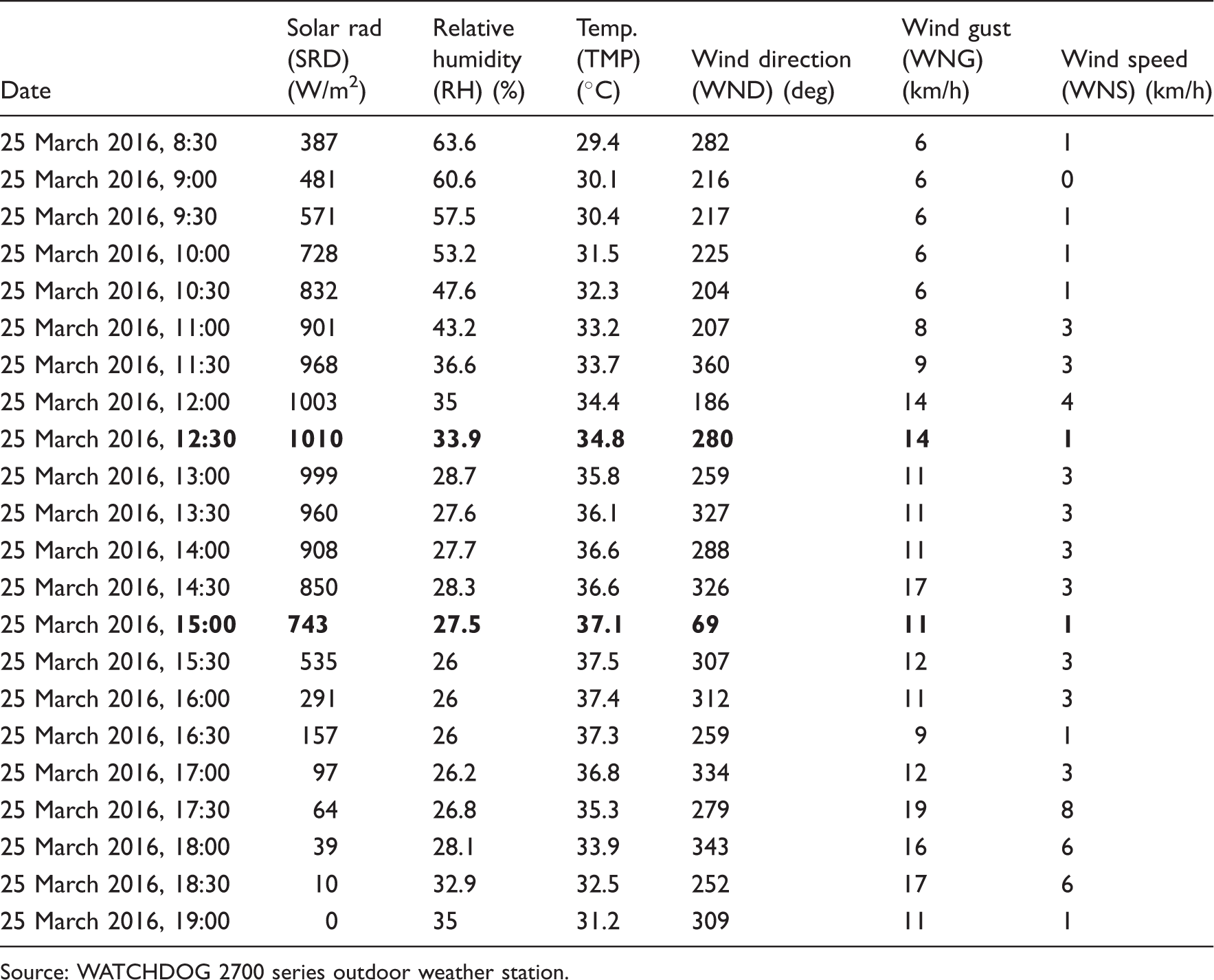
Recorded outdoor environmental data for 25 March 2016.
Source: WATCHDOG 2700 series outdoor weather station.
Validation of the CFD model
The numerical study results were validated with the measurements taken from the field investigation in the current study. Values of' ‘Q' (volumetric air flow rate) derived from the experimental method are decomposed into respective inlet velocities, and they are given as velocity inlet in the CFD domain that matches the domain size. Values of ‘ACH’ are also available from the experiments of Subashini and Thirumaran in Table 3. For the indoor heat source model, an average human body cross-section is given between 0.12 and 0.4 m2.
26
Mannequins of such cross-section are modelled inside the domain. The average temperature of a human body is 37℃.
27
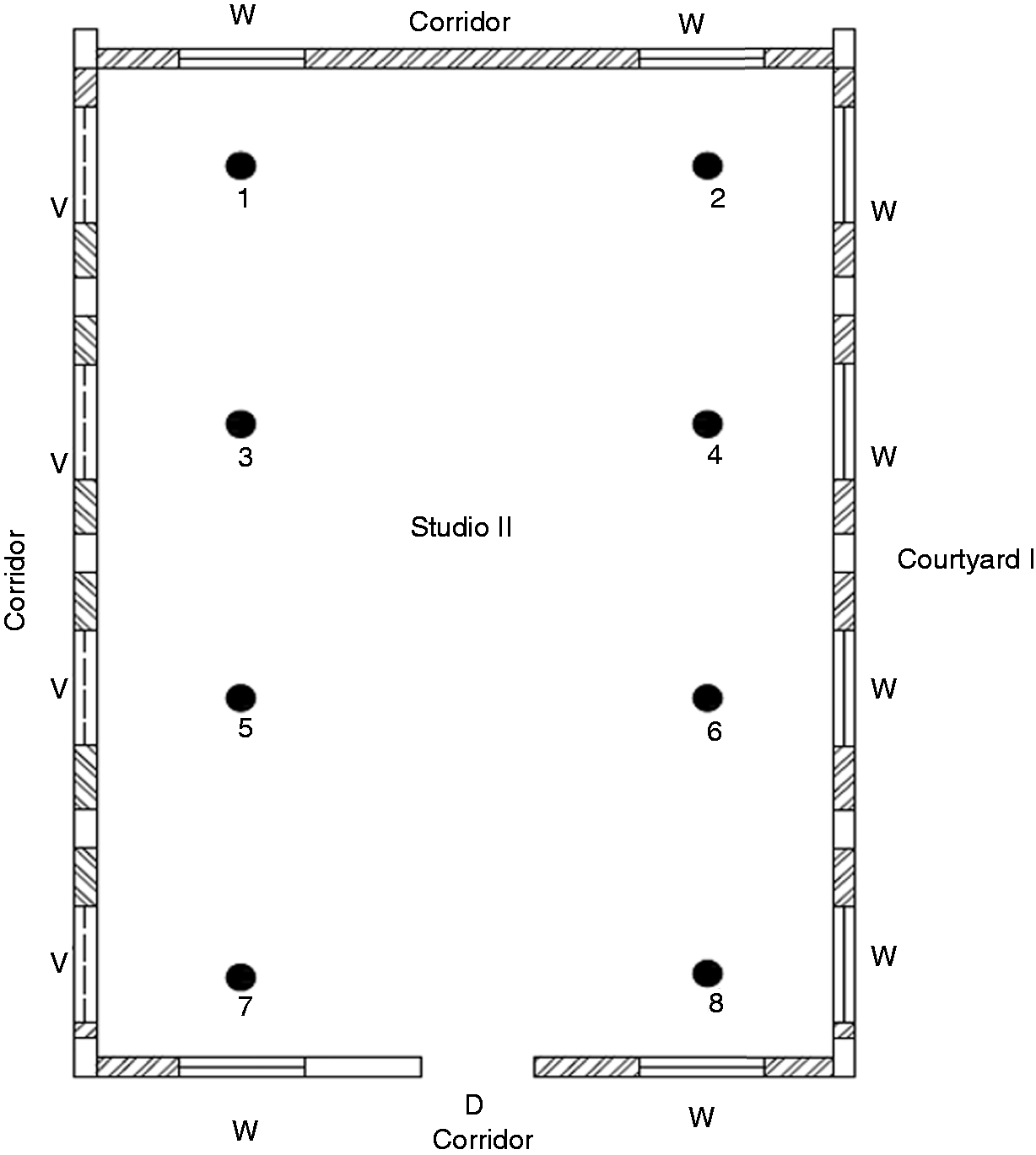
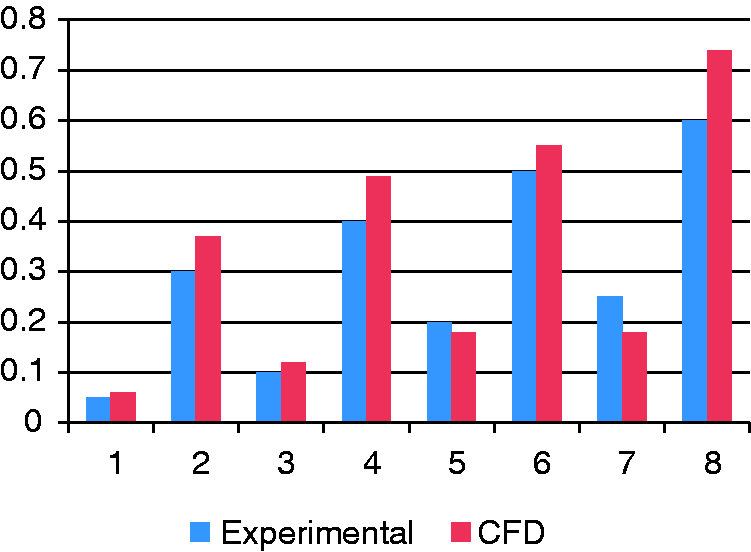
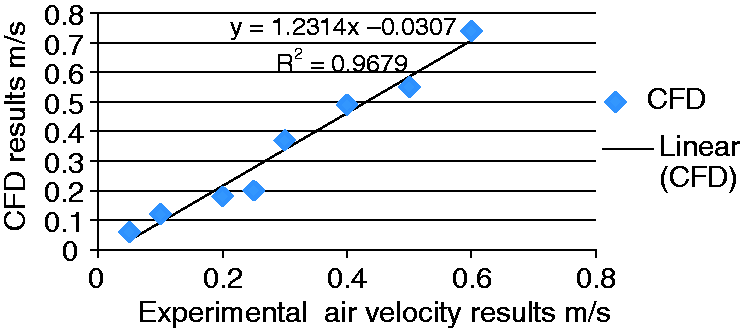
In the solver (Ansys-Fluent), energy equations are invoked, and the surface temperatures of the mannequins are modelled with a temperature of 37℃. The comparison of air velocities predicted by numerical simulation and experimental study showed an error of less than 10% (Figure 8). Further a regression analysis between the predicted and measured air velocity levels also showed a stronger correlation of R2 = 0.967 (Figure 9). Thus, the CFD results were found to be in good agreement with the experimental study results.
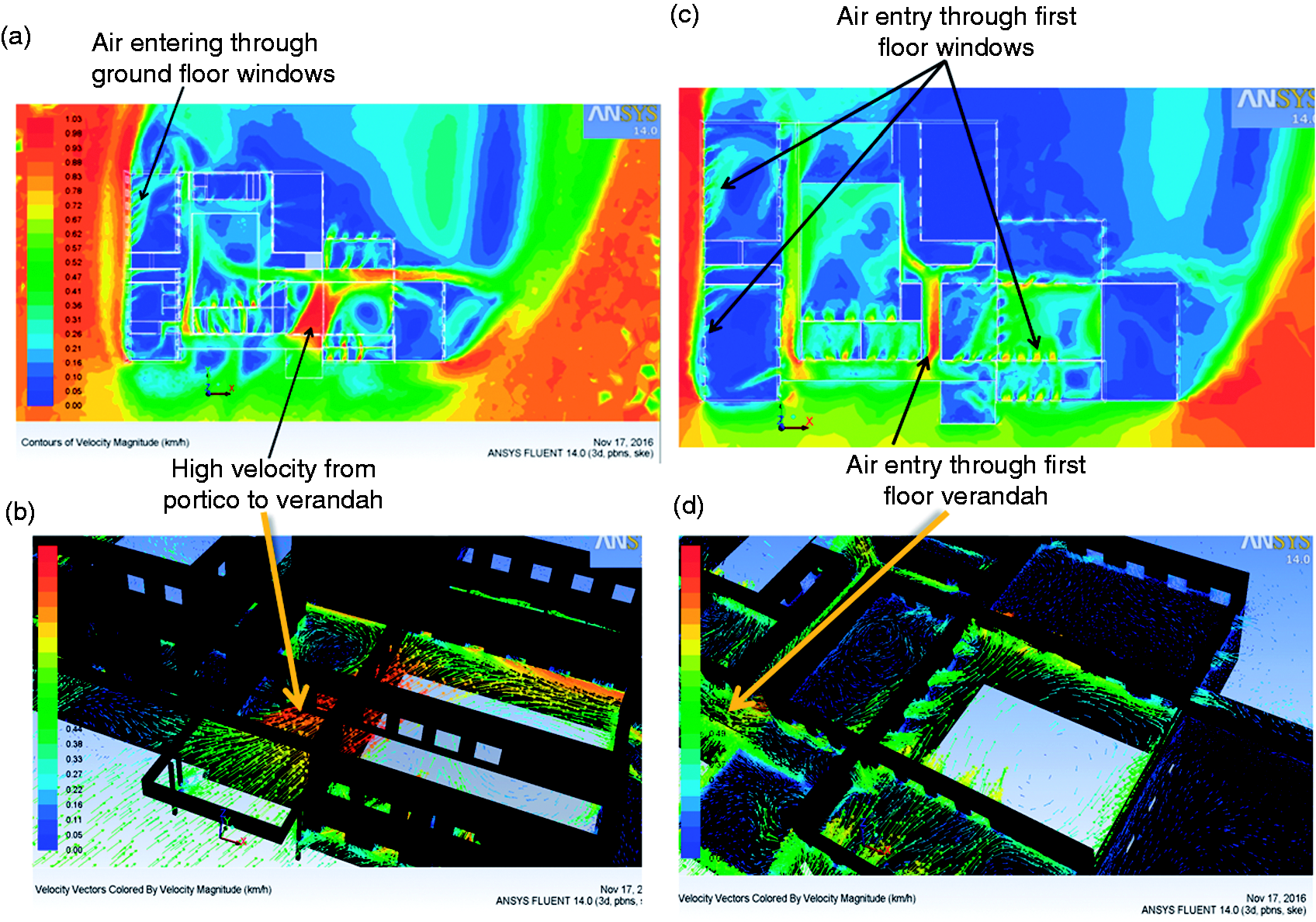
(a) Static pressure distributions over the building due to airflow from NE direction; (b) Wake formation behind the building. Predicted velocity magnitude contours in GF and FF level for wind flow from NE direction. Position of air flow measurement points in Studio type II. Comparison between the experimental and the measured air speed at different points. Regression between the CFD and experimental study results.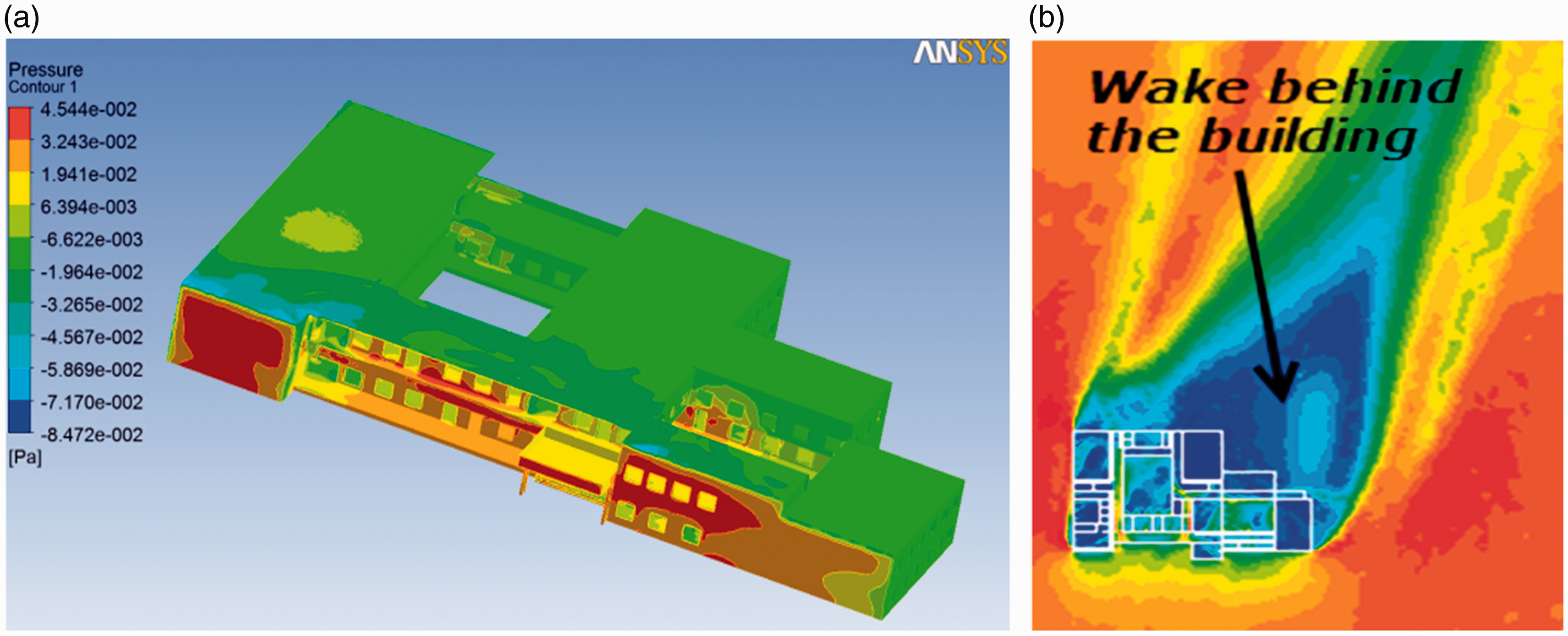
The numerical and experimental study carried by Rajapaksha et al. is used to validate the prediction of wind velocities using CFD. 11 The study proved courtyards as an effective passive design element to promote mass heat exchange and reduce of indoor thermal conditions in hot climate zones. The aspect ratios of the courtyards in the present study are 1:1 and 1:2. A numerical study using CFD for similar conditions and aspect ratios, by Almhafdy et al. shows that the courtyard with aspect ratio 1:2 performs thermally better than the one with aspect ratio 1:1. 14 This proves that the results of both the cases are in fairly good agreement. The numerical investigation performed by Derakhshan and Shaker is used to validate the air flow rates based on wind angles. The air flow rates derived from the experimental study ranged from 0.4 m3/s to 1.3 m3/s for openings with wind angles between 0 and 45°. It was found that maximum volume of air flow rate occurred for wind angles from 0 to 15°, and the volume of air flow rate decreased drastically for wind angles greater than 20°. 28 Thus, the experimental results were also found to be in good agreement with the results of Derakhshan and Shaker.
Computational domain and mesh generation
The three-dimensional (3D) model of the building was generated using Autodesk Rivet software and then converted into IGES file to be used for CFD analysis. The building model is meshed with unstructured triangular elements. A growth rate of 1.9 million with skewness less than 60 has been specified for the triangular mesh generation from building wall surfaces to the domain. Mesh refinement is given at appropriate locations of the building especially at flow entry zones like windows, doors, etc. The overall mesh count created for the present analysis is around 8 millions. Unstructured tetrahedral meshes of 7.4 million elements with Tet collapse < 0.1 are created around the building. The total number of nodes taken for the computations is around 1.7 millions. The numerical analysis is carried out in ‘opened window’ condition to simulate the natural ventilation. The convergence of the solutions is set to 1 × e-04.
Boundary conditions
A boundary domain with appropriate size is selected, and the fluid volume is discretized with tetra elements. The sides of the flow domain are mentioned with ‘symmetry’ boundary condition. The building surfaces and ground are given with ‘standard wall’ boundary conditions. The domain outlet is set with ‘pressure outlet’ boundary condition. The constant static pressure boundary condition was used at the outlet of the calculation region. A boundary domain of 560 m length, 244 m breadth and 60 m height has been selected. 24
CFD simulation results and discussions
The results of both simulations have been demonstrated in the following sections. The optimum directions for placement of windows in naturally ventilated buildings have been analysed and recommended at the end of this study. The influence of courtyard spaces and window orientations has also been analysed and discussed.
Simulation results for outdoor wind movement from west–north–west
The wind flow at a speed of 1 km/h was observed from west–north–west (WNW) direction at 280° on 25 March 2016 at 12.30 pm with a reference temperature of 34.8℃ (Table 4). The central axis of the building is tilted at an angle of 60° from the north. As the wind flow is from WNW, static pressure rise is found on the rear side of the building as shown in Figure 3. The numerical simulations revealed the wake formation in front of the building towards the north-east direction.
Figure 4(a) and (b) demonstrates the air flow pattern in the ground floor and first floor. The simulation results showed variations in the movement of wind in the ground and first floor. It can be visualized that low wind speed areas (low flow velocities under 0.2 m/s) appeared in learning spaces located on the eastern side of the building when the wind flow was from WNW. The CFD results showed notably strong air movement into the spaces in the north-western part of the building, as an effect of staggered plan and openings facing the west (see Figure 4).
Simulation results for outdoor wind movement from the north–east
Numerical simulation for predicting the flow patterns and ventilation is carried out on the same institutional building assuming the same domain and boundary conditions using ANSYS Fluent Solver. The wind flow direction at the speed of 1 km/h is maintained at an angle of strike (69°N) as observed from the recorded data given in Table 4. The reference temperature taken is 37.1℃. In this case, the pressure rise is noticed over the frontal surfaces (Figure 5(a)) and the wake is formed on the north-western side of the institutional building (Figure 5(b)).
Figure 6(a) represents the predicted velocity magnitude contours in the horizontal plane, and Figure 6(b) demonstrates the velocity vectors in 3D in ground floor when the wind flow is from NE (69°N). Figure 6(c) and (d) represents the velocity magnitude contours in 2D and velocity vectors in 3D at first-floor level. Figure 6(a) and (b) shows the high flow velocity vectors entering the building through the portico and reveals the presence of vortex in Courtyard 1 with an aspect ratio of 1:1. There also exists an increase in entrainment velocity through the corridors as the passage is narrow as seen in Figure 6(c). There are also places where weaker recirculation is formed both in ground floor and first floor.
Discussions of CFD results for both wind directions
From the simulation results for both wind directions, it can be deduced that the air circulation inside the building was mainly through the fenestrations and corridors. The study revealed that when the wind movement was from the west, high velocity wind entered the classrooms through the windows facing the west and north. On the other side, very low velocity contours of 0.1 m/s are noticed inside the studios and lecture halls on the eastern side of the building. When the wind flow is from the east, it is observed that there is proper circulation of air in almost all parts of the building (see Figure 6(a) and (c)). This suggests that openings in the eastern side and the northern side are preferred than the openings on the west for Madurai’s climatic condition. It is also noticed that the corridors acts as tunnels for movement of air and help in channelizing the wind across the building. The influence of courtyard in cooling the air can be well noticed in both the cases. The thermal comfort study conducted by Subhashini and Thirumaran shows that spaces around Courtyard 2 showed better thermal performance than spaces around Courtyard 1. 20 The reason for this was investigated with the help of CFD simulation results and perceived that in case of Courtyard 1, the longer side was facing the east and west, so there was direct solar radiation and perpendicular movement of hot air through the window openings, whereas Courtyard 2 was aligned in the east–west axis with the longer side facing the north and south with wind angle less than 45°. Thus, there was a reduction in conductive and convective heat transfer through walls and windows in the spaces surrounding Courtyard 2.
Conclusions
This paper presents the optimisation method of natural ventilation in educational buildings by analysing three design parameters: courtyard proportions, window orientations, percentage of openings. It is inferred from the results of the experimental and numerical study that 15–30% of openings on the exterior walls inclined at an angle of 0–20° to the pertaining wind direction should be given in order to achieve the desirable ACH and ventilation rates in naturally ventilated buildings in Madurai. The CFD simulation results clearly demonstrate the effectiveness of the courtyards in promoting cross-ventilation and circulating cooler air into the surrounding spaces for both wind directions considered in the study. Since the predominant wind directions in Madurai are from the west, WNW and north-eastern sides, it is advisable to give protected openings on the west through large horizontal overhangs, or corridors to prevent hot air movement into the learning spaces. In addition to promoting natural ventilation, courtyards also provide mutual shading, thereby reducing heat gain through walls. The results suggest that the optimum length of the courtyard should be less than 3 × and the longer axis of the courtyard should be oriented in the north–south direction to achieve better thermal comfort. The study proves that courtyards are crucial elements of design for fresh air supply in the naturally ventilated buildings in warm-humid climatic conditions.
Footnotes
Declaration of conflicting interests
The author(s) declared no potential conflicts of interest with respect to the research, authorship, and/or publication of this article.
Funding
The author(s) received no financial support for the research, authorship, and/or publication of this article.