







Abstract
The Early Permian witnessed significant shifts in both the paleogeographic location and paleoclimatic conditions of the North China Craton, leading to the formation of extensive coal deposits. This study investigates the No. 7 and No. 8 coal seams of the Lower Permian Damiaozhuang Formation in the Kaiping Coalfield, located on the northeastern margin of the North China Craton. Through integrated analyses using Gas Chromatography-Mass Spectrometry, X-ray Diffraction, Inductively Coupled Plasma Mass Spectrometry, and Electron Probe Microanalysis, this study elucidates the enrichment mechanisms of rare earth elements (REEs) and reconstructs the paleoenvironmental conditions of coal formation. The results indicate that the No. 7 and No. 8 coal seams exhibit significant concentration in REEs, with average concentrations of 319.38 ppm and 690.27 ppm, respectively. The ratios of (La/Lu)N, (La/Sm)N, and (Gd/Lu)N indicate a light RRE (LREE)-enriched pattern. Monazite, identified as discrete grains disseminated within clay minerals, serves as the host mineral for REEs in coal deposits. The enrichment of REEs in coal is attributed to the combined influence of synsedimentary processes, REE-bearing minerals, organic matter, and clay minerals. Geochemical proxies, including Sr/Ba, Cu/Zn, Ni/Co, and δEu values, together with the ternary diagram of fluorene compounds and cross-plots of alkyl dibenzothiophenes/alkyl dibenzofurans versus Pr/Ph ratios, indicate an oxidizing freshwater depositional environment. Furthermore, Sr/Cu ratios exceeding 5 suggest a warm to hot paleoclimate during the coal formation. The bimodal distribution pattern observed in the mass chromatograms of n-alkanes, combined with parameters such as Pr/C17, Ph/C18, Carbon Preference Index, and Odd-to-Even Predominance, indicates that the organic matter was derived predominantly from higher plants, with a minor contribution from aquatic organisms. The sedimentary provenance is primarily identified as felsic rocks. This study elucidates the enrichment mechanisms of REEs in coal and reconstructs the associated coal-forming environment, providing a theoretical basis for the exploration and identification of REE-enriched coals.
Introduction
Rare earth elements (REEs), due to their unique physicochemical properties, have become indispensable strategic critical minerals for modern technological industries and national security (Banerjee et al., 2024; Chakladar et al., 2024; Kumar et al., 2022; Kumari et al., 2023). They play a core role in fields such as advanced materials, defense industries, and aerospace, directly influencing the competitiveness of high-end manufacturing and the level of national defense modernization. Recognizing the criticality of REEs, China's “National Mineral Resources Planning (2021–2025)” has classified REEs alongside petroleum, natural gas, gallium, copper, and lithium as strategic minerals. Coal seams, characterized by their function as geochemical barriers—particularly reduction and adsorption barriers—can facilitate the enrichment of REEs under favorable geological conditions. Consequently, certain coal deposits exhibit REE concentrations that meet or exceed the economic cutoff grades for independent or associated mineralization, presenting the potential for the development of large- to super-large-scale rare earth deposits (Li et al., 2022; Rajak et al., 2024). REEs are enriched in coals from several localities within the North China Craton, including the Jungar, Ningwu, and Hanxing coalfields (Ding et al., 2009; Zhao, 2015). In some mining areas, the concentration of rare earth element oxides in fly ash exceeds 1000 ppm. Fly ash has potential for industrial exploitation when the total rare earth element (∑La-Lu) oxide (REO) content in coal ash exceeds 1000 ppm (Dai et al., 2024). To date, extensive research has been conducted on REEs in coals from the North China Craton. For instance, trace elements in Early Permian coals from the southern margin of the North China Basin were investigated, and it was proposed that the enrichment of trace elements in coal is influenced by adsorption onto clay minerals (Yuan, 2023). Trace elements in coals from the Huaibei Coalfield were analyzed, and it was suggested that REE enrichment is jointly controlled by marine transgression and volcanic activity (Li and Li, 2023). However, systematic studies on the sources, occurrence modes, enrichment mechanisms, and distribution characteristics of REEs in coals from the northeastern margin of the North China Basin remain to be conducted. During the Permian, the North China Craton gradually drifted northward into the arid climatic belt, a period of extensive coal accumulation. The Carboniferous–Permian transgression in the North China Craton occurred predominantly from the southeastern and northeastern margins (Shen et al., 2022).
The deposition process of coal is influenced by multiple factors, such as paleoclimatic conditions (Zhao et al., 2023), redox conditions (Singh et al., 2020), tectonic setting (Hatem et al., 2023) and organic matter sources (Liu et al., 2024). Biomarker and elemental geochemical parameters and proxies are frequently employed to infer palaeoenvironmental conditions (Hakimi et al., 2026a; Kumar et al., 2024b; Xu et al., 2025). Based on the analysis of Pr/Ph, Pr/C₁₇, Ph/C₁₈, isoprenoid, hopanoid, and steroid biomarker parameters in coals, it can be inferred that the type of organic matter which was deposited in various settings under oxic to suboxic conditions (Hakimi et al., 2026b; Sidik et al., 2024). Analysis of elemental geochemical parameters (e.g. Sr/Ba, Sr/Cu, δY, and Al2O3/TiO2 ratios) could indicate that redox and paleoclimatic conditions, and tectonic setting (Kumar et al., 2020, 2022; Liu et al., 2023).
Whether the Early Permian coal accumulation in the Kaiping Coalfield was influenced by this transgression remains to be further investigated. This study investigates the No. 7 and No. 8 coal seams of the Lvjiatuo Coal Mine in the Kaiping Coalfield. Through trace element analysis, mineralogical characterization, and organic geochemical analyses of coal seams and their roof/floor samples, this research elucidates the enrichment mechanisms of REEs in coal and discusses the associated coal-forming environment.
Geological setting
The Kaiping Coalfield is located in the northeastern part of the North China Craton (Zhang et al., 2017). The Lvjiatuo Mine, which is the study area, is situated in the eastern part of the Kaiping Coalfield (Figure 1). Since the Middle Carboniferous, the study area has developed marine and marine–terrigenous transitional facies deposits; the Early Permian is dominated by continental facies deposits, while the development of fluvial facies in the Late Permian. During the Triassic, crustal activity has been significant, with intense tectonic deformation. The coal-bearing strata in this region include the Upper Carboniferous Kaiping, Tangshan, and Zhaogezhuang Formations, as well as the Lower Permian Damiaozhuang Formation. The Zhaogezhuang Formation consists of marine–terrigenous transitional coal-bearing deposits, with lithologies dominated by gray siltstone, mudstone, and medium-to-coarse grained sandstone. It contains 3–4 coal seams, of which the No. 12 coal seam is the main mineable coal. The Damiaozhuang Formation is a continental coal-bearing deposit, with lithologies mainly of gray sandstone, grayish-green sedimentary tuff, lithic sandstone, etc. interbedded with mudstone and carbonaceous mudstone. It contains 3–9 coal seams, of which the No. 7 and No. 8 coal seams are the main mineable seams in this formation (Figure 1).
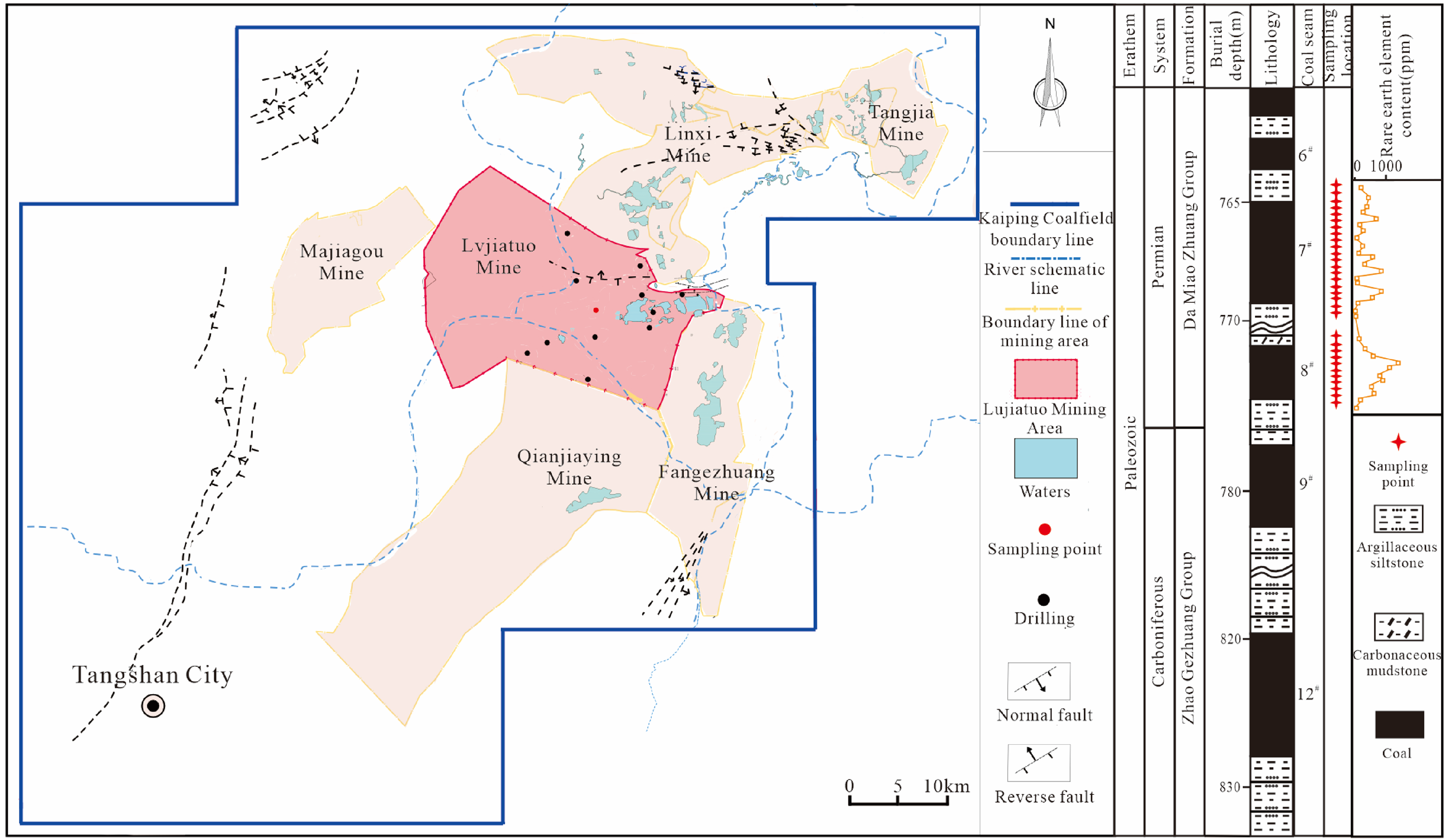
Location and structural simplified map of Kaiping coalfield mining area.
Samples and methods
Samples
The subjects of this study are the No. 7 and No. 8 coal seams of the Lower Permian Damiaozhuang Formation. Samples for this study were collected from the Lvjiatuo Mine, following the Method of Sampling Coal Seams (GB/T 482-2008). A total of 31 samples were obtained, including six roof and floor samples and 25 coal samples strictly (Figure 1).
Methods
Sample preparation was strictly conducted following the Method for Preparation of Coal Samples (GB/T 474-2008). All analyses were performed at the Key Laboratory of Resource Exploration Research in Hebei Province. The mineralogical composition of the low-temperature ash residues from the coal samples was determined using a ZJ207 Bruker D8 Advance X-ray diffractometer operating at a 2θ range of 5° to 70°. Qualitative and quantitative analyses of the minerals were conducted using MDI Jade 5.0 and Xpert HighScore Plus software. Based on these analyses, the occurrence modes of minerals in coal samples were further investigated using a JXA-8230 electron probe microanalyzer. For trace element analysis, samples were first digested, and then analyzed using a high-resolution inductively coupled plasma mass spectrometer (Element I). For organic geochemical analysis, coal samples ground to 200 mesh were continuously Soxhlet-extracted for 72 h. The extracts were concentrated by rotary evaporation, dried to constant weight, and then separated by column chromatography. The separated aromatic and saturated hydrocarbon fractions, spiked with squalane as an internal standard and dissolved in dichloromethane, were analyzed using an Agilent 7290GC-MS5973 gas chromatography-mass spectrometry system.
Results
Coal quality characteristics
According to the proximate analysis of coal, the moisture content ranges from 0.22% to 2.06%, with an average of 0.69%, indicating ultralow moisture coal, according to the Classification of Total Moisture in Coal (MT/T 850-2000). The ash yield (dry basis) varies significantly, with an average of 18.92% for the No. 7 coal seam and 25.32% for the No. 8 coal seam, both classified as medium-ash coal. The volatile matter (dry ash-free basis) ranges from 9.85% to 23.41%, with an average of 17.50% for the No. 7 coal and 16.1% for the No. 8 coal, both classified as medium-volatile coal. The total sulfur content of the coal samples (dry basis) ranges from 0.05% to 0.49%, indicating low-sulfur coal, consistent with previous studies (Xiao, 1990).
Major element geochemical characteristics
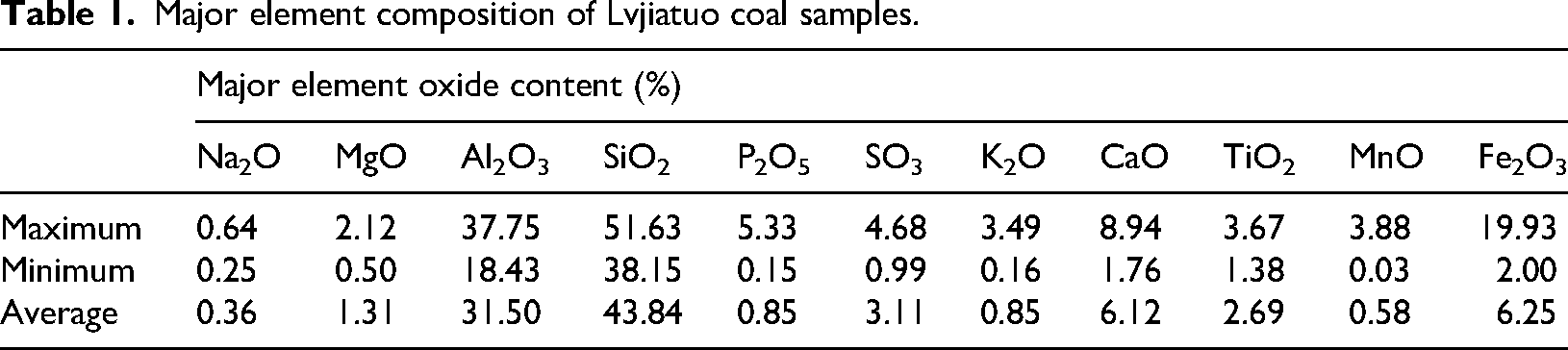
The main oxide elements in the coal are primarily SiO2, Al2O3, and Fe2O3 (Table 1). The SiO2 content ranges from 38.15% to 51.63%, with an average of 43.84%; Al2O3 ranges from 18.43% to 37.75%, with an average of 31.50%; Fe2O3 ranges from 2.00% to 19.93%, with an average of 6.25%.
Major element composition of Lvjiatuo coal samples.
Trace element geochemical characteristics
Rare earth element content and enrichment characteristics
The rare earth element content in the No. 7 coal of the Lvjiatuo Mine ranges from 11.08 to 819.24 ppm, with an average of 319.38 ppm. Among the 31 samples, seven samples have REE content exceeding 300 ppm, and the REE content in the roof samples is significantly higher than that in the floor samples. For the No. 8 coal in Lvjiatuo, the REE content ranges from 133.15 to 1365.71 ppm, with an average of 690.27 ppm, showing significant enrichment in the middle part of the coal seam (Figure 1). The REE content in the roof and floor samples is generally consistent.
The enrichment coefficient (CC) of REEs in the No. 7 and No. 8 coals of the Lvjiatuo Mine was calculated (Seredin and Dai, 2012). For the No. 7 coal, the average CC of Tm is 0.28, indicating depletion; the average CC of Sr and Eu is 3.4 and 2.15, respectively, indicating slight enrichment; the average CC of Ce is 12, indicating significant enrichment. For the No. 8 coal, the average CC of Ho is 0.34, indicating depletion; the average CC of Gd and Eu is 2.1 and 3.05, respectively, indicating slight enrichment; the average CC of Ce is 27.90, indicating significant enrichment. The Eu and Ce elements in the No. 7 and No. 8 coals of the Lvjiatuo Mine show enrichment, while Tm and Ho show depletion (Figure 2).
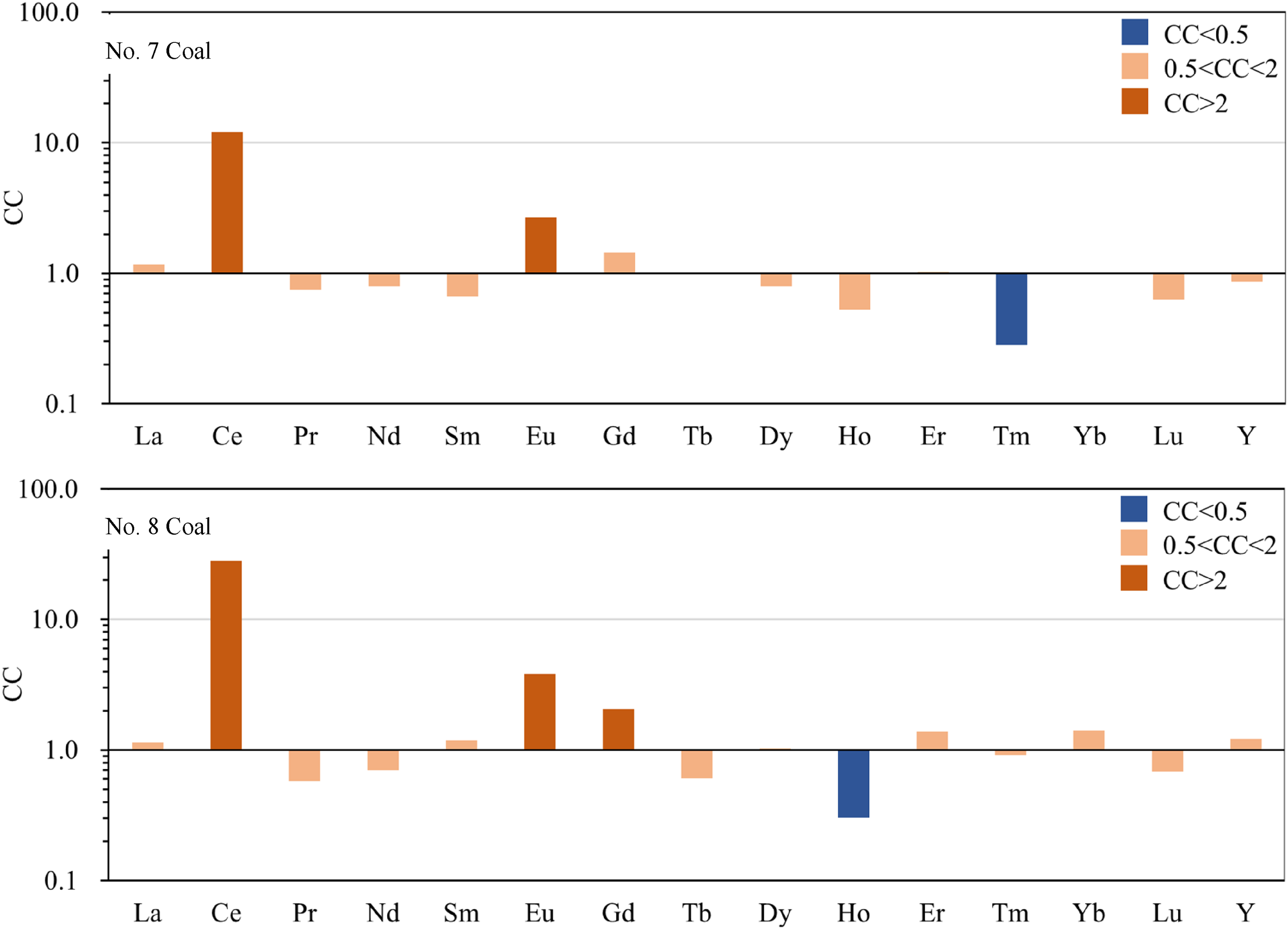
Enrichment coefficient of REEs in coal No. 7 and No. 8 of Lvjiatuo mine.
Geochemical parameters of trace elements
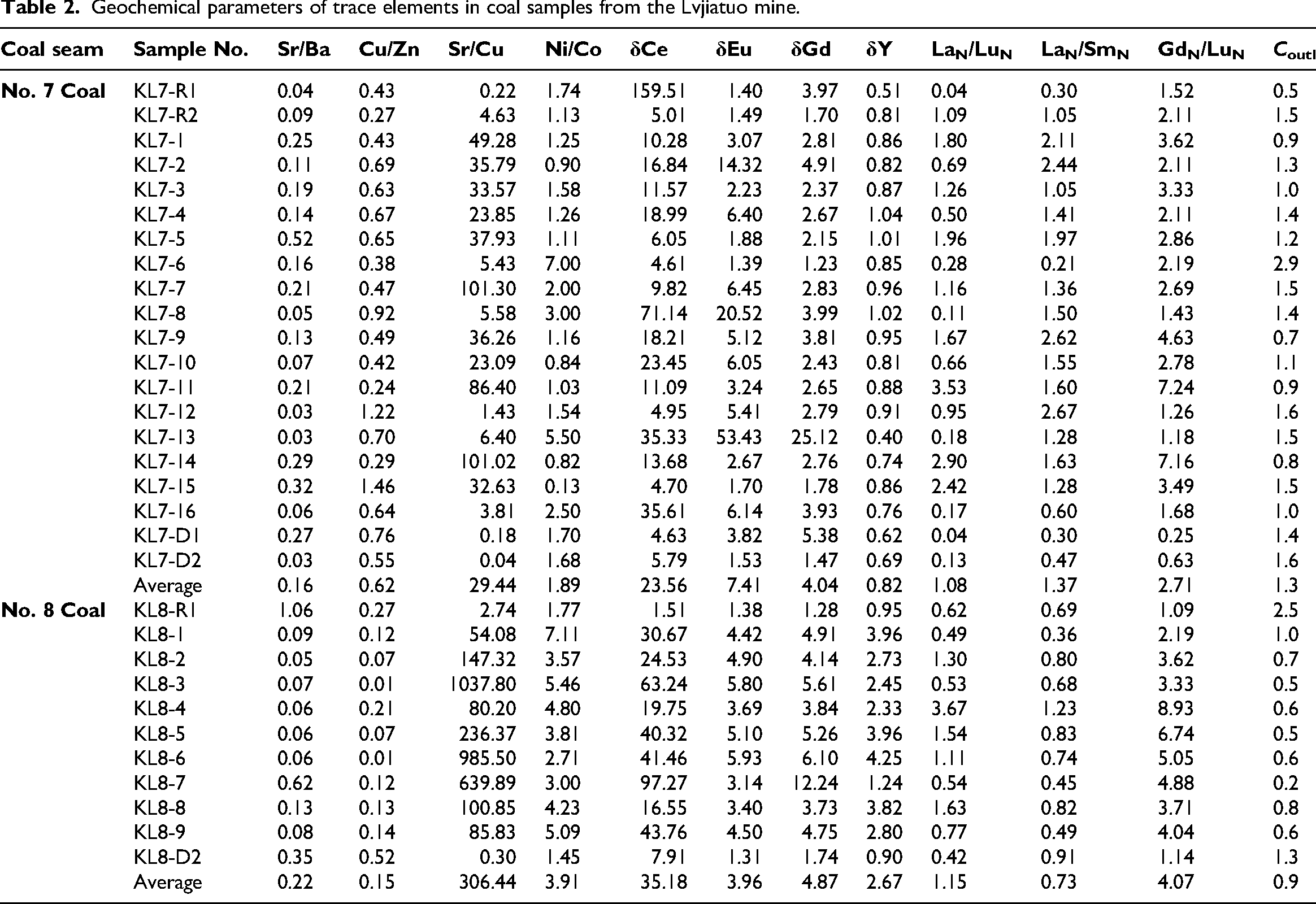
Using UCC normalization for REEs (Lin et al., 2018; Prachiti et al., 2011), we obtained standardized values for SmN, EuN, GdN, LaN, CeN, PrN, LuN and TbN. The parameter ratios LaN/LuN, LaN/SmN and GdN/LuN reflect the enrichment type of REEs. δCe, δEu, δGd and δY are the anomaly values of Ce, Eu, Gd and Y, respectively, which are significant in geochemical research. The calculation formulas are: as follows



The trace element geochemical parameters of the No. 7 and No. 8 coal samples from Lvjiatuo were calculated and are listed in Table 2.
Geochemical parameters of trace elements in coal samples from the Lvjiatuo mine.
Distribution patterns of REEs
After UCC normalization of REE content in coal (Lin et al., 2018), the distribution curves of REEs in the two coal seams are similar. As shown in Figure 3(a), the REE distribution curve of the No. 7 coal exhibits a broad “L” shape with high levels on the left and low levels on the right, consistent with the typical characteristics of Paleozoic medium- to high-rank coals in the North China Craton, indicating higher enrichment of light REEs compared to heavy REEs.
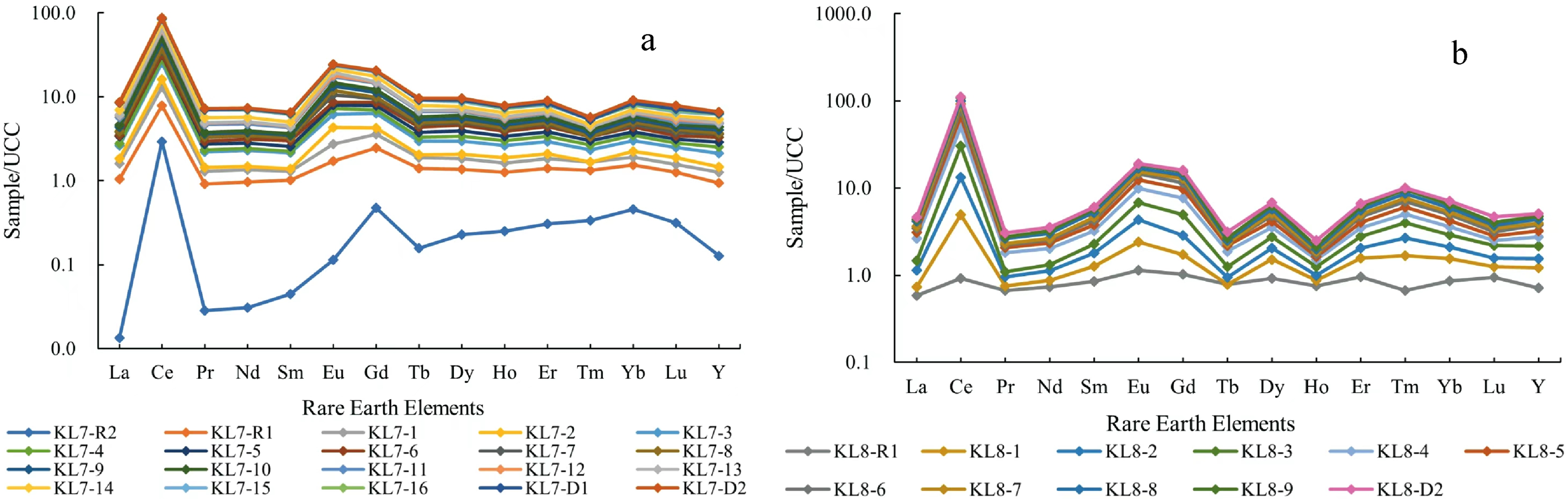
Distribution patterns of REEs in coal No. 7 and No. 8 of Lvjiatuo mine.
As shown in Figure 3(b), the REE distribution curve of the No. 8 coal in the Lvjiatuo Mine generally shows a left-high, right-low L-shaped bimodal pattern. The two peaks are located in the La-Pr segment and the Sm-Tb segment, with a gentle distribution in the Tb-Y segment, showing negative anomalies. Light REEs such as La and Ce exhibit significant positive anomalies, with light REEs being more enriched than heavy REEs.
From Table 2, the (La/Lu)N ratio of the No. 7 coal seam ranges from 0.04 to 3.53, with an average of 1.08; (La/Sm)N ranges from 0.21 to 2.67, with an average of 1.37; (Gd/Lu)N ranges from 0.25 to 7.24, with an average of 2.71, indicating a dominance of light REE enrichment. For the No. 8 coal seam, the (La/Lu)N ratio ranges from 0.42 to 3.67, with an average of 1.15; (La/Sm)N ranges from 0.36 to 1.23, with an average of 0.73; (Gd/Lu)N ranges from 1.09 to 8.93, with an average of 4.06, also indicating a dominance of light REE enrichment, consistent with previous studies (Li et al., 2024; Lin et al., 2018).
Mineralogical characteristics
Through X-ray diffraction and electron probe analysis, the mineral compositions of the No. 7 and No. 8 coals are generally consistent. They mainly consist of kaolinite, dolomite, siderite, and monazite, with minor amounts of pyrite and rutile (Figure 4). In the No. 7 coal seam, the kaolinite content ranges from 61.9% to 95.7%, siderite content from 1.9% to 13.4%, dolomite content from 1.4% to 11%, and pyrite content from 0.2% to 1.1%. In the No. 8 coal seam, the kaolinite content ranges from 83% to 98%, siderite content from 1.6% to 7.5%, dolomite content from 1.4% to 4.9%, and pyrite content from 0.6% to 0.9%.
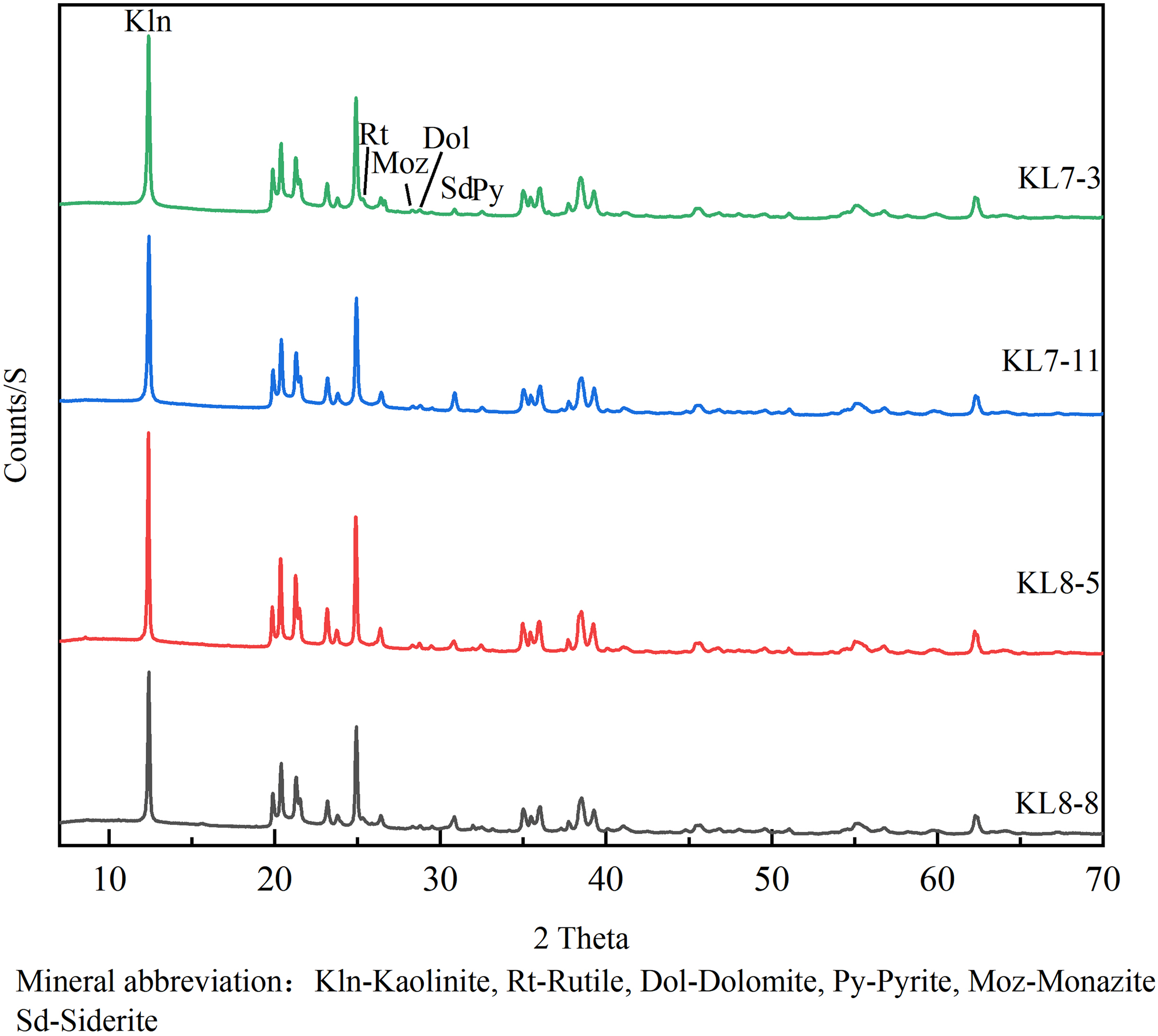
Diffraction analysis spectrum of coal sample from Lvjiatuo coal No. 7 and No. 8.
In sample KL8-3, siderite was found to replace dolomite in a disseminated manner, with dolomite and siderite occurring together (Figure 5(a)). Small amounts of pyrite are present in each coal sample, occurring mostly as granular grains encapsulated by kaolinite (Figure 5(b)). The phosphate mineral monazite was found in the coal, occurring as irregularly granular distributed within kaolinite and commonly surrounded by pyrite (Figure 5(c)–5(e)). The spectra of monazite and pyrite are shown in Figure 5(e)-1, and 5(e)-2, respectively.
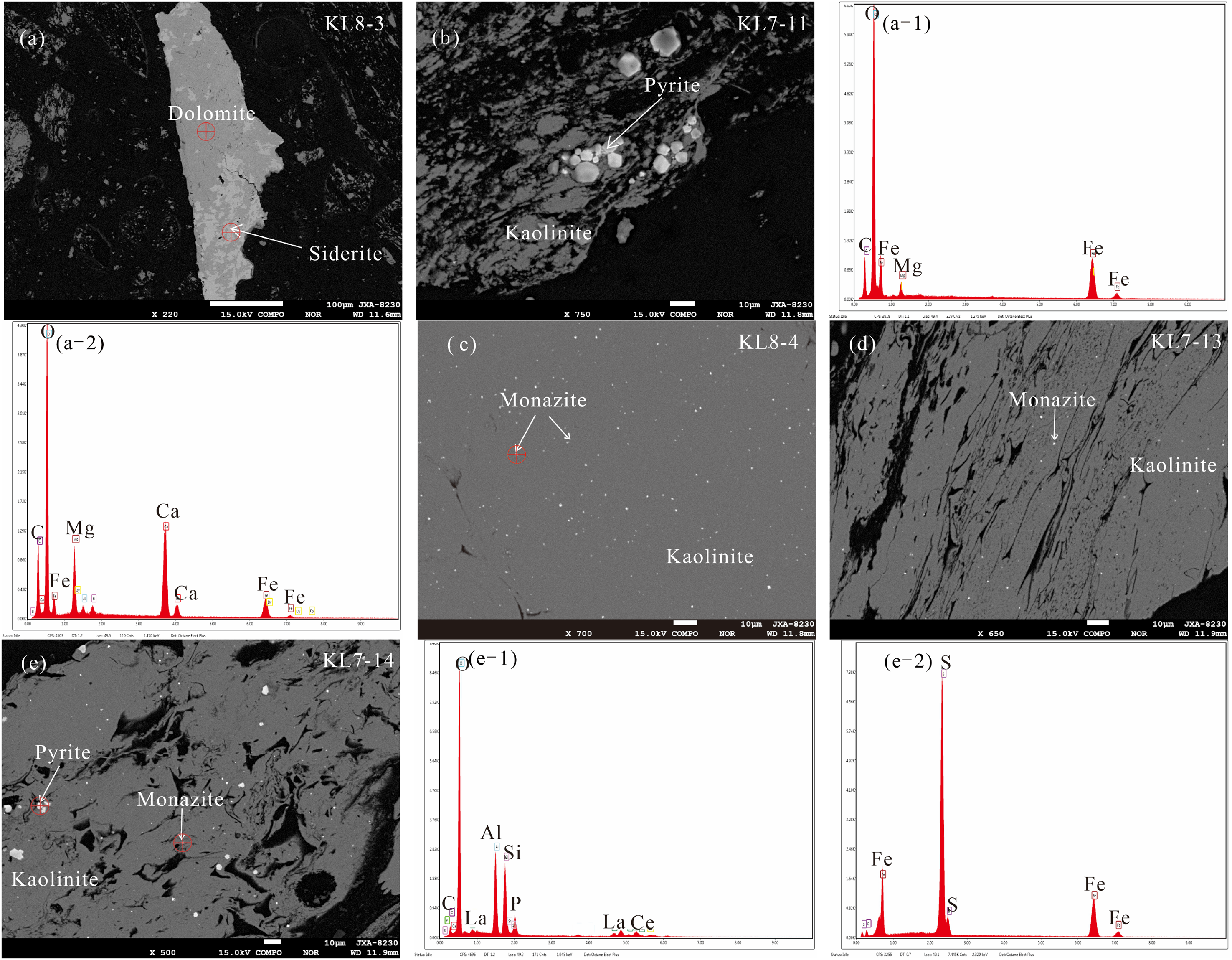
Electron probe microanalyzer images of the No. 7 and No. 8 coal seams. (a) Disseminated siderite replacing dolomite; (b) Granular pyrite encapsulated in kaolinite; (a-1) Siderite energy spectrum; (a-2) Dolomite energy spectrum; (c) Granular monazite dispersed in kaolinite; (d) Star-shaped monazite dispersed in kaolinite; (e) Monazite and pyrite codistributed in kaolinite; (e-1) Monazite energy spectrum; (e-2) Pyrite energy spectrum; ⊕: Energy spectrum spot location.
Organic geochemical characteristics
The coal contains saturated hydrocarbon ranging from 2.90% to 44.28%, and aromatic hydrocarbons ranging from 11.10% to 49.25%. Resulting in a saturated-to-aromatic ratio of 0.09 to 1.04. The aromatic hydrocarbon content is generally higher than the saturated hydrocarbon content.
Geochemical characteristics of saturated hydrocarbons
As shown in Table 3, the carbon number distribution of n-alkanes in the coal ranges from C14 to C33, showing either a bimodal front-peak type or a bimodal rear-peak type (Figure 6). The front-peak type is dominated by C16 as the main peak, while the rear-peak type is dominated by C25 and C26 as the main peaks. The ΣC21−/ΣC22+ ratio ranges from 0.13 to 1.38, with an average of 0.63, indicating an abundance of heavy hydrocarbon components. The Carbon Preference Index (CPI) and Odd-to-Even Predominance (OEP) can indicate the ratio of odd- to even-carbon molecules and reflect the thermal maturity of the sample (Wang et al., 2024; Zhao et al., 2025). For the No. 7 coal seam, OEP ranges from 0.82 to 1.02 (average 0.97), and CPI ranges from 0.89 to 1.12 (average 1.04). For the No. 8 coal seam, OEP ranges from 0.59 to 1.06 (average 0.89), and CPI ranges from 0.77 to 1.11 (average 0.97). The CPI and OEP values for both seams are stable around 1, indicating relatively high coal maturity.
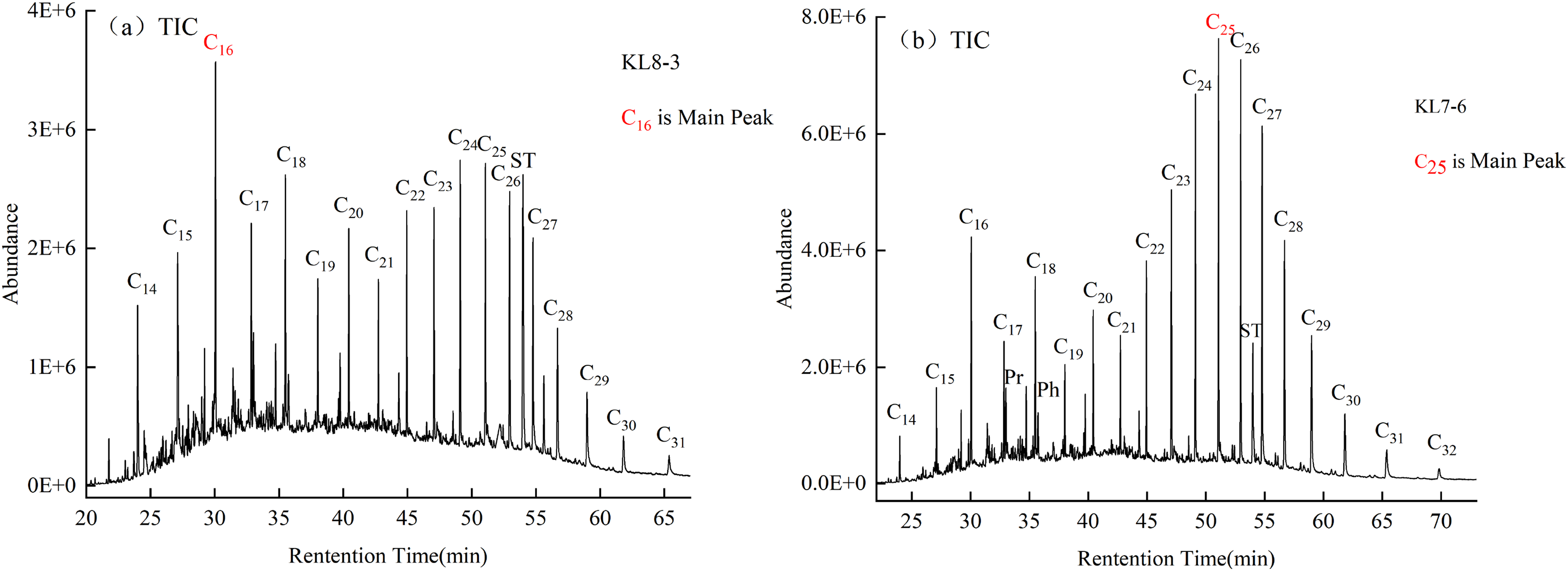
Gas chromatogram of n-alkanes in coal samples No. 7 and No. 8 from Lvjiatuo (a) Chromatogram of front-peak type saturated hydrocarbons (b) Chromatogram of rear-peak type saturated hydrocarbons.
Parameters of saturated hydrocarbons of coal samples from Lvjiatuo mine.
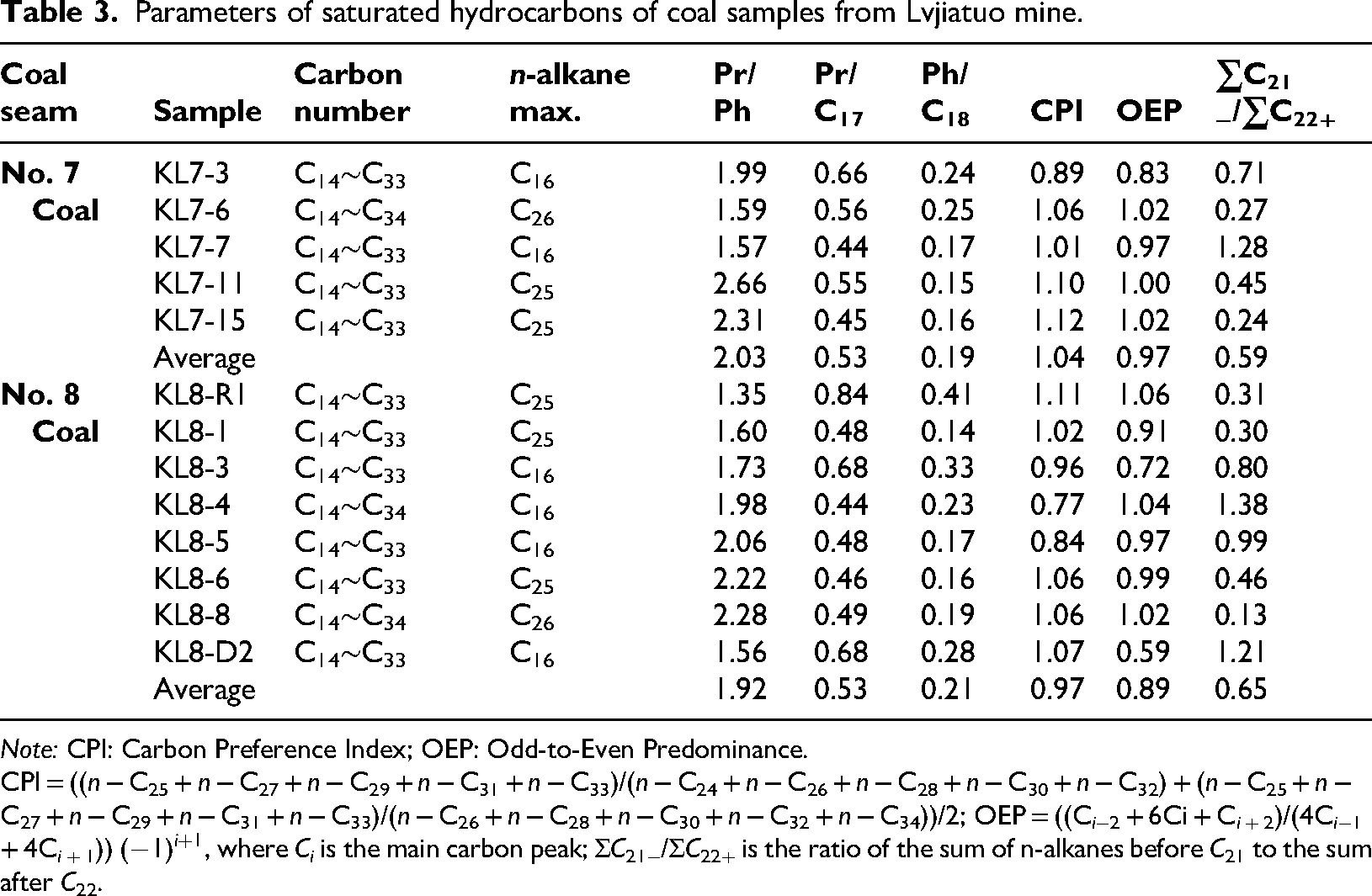
Note: CPI: Carbon Preference Index; OEP: Odd-to-Even Predominance.
CPI = ((n − C25 + n − C27 + n − C29 + n − C31 + n − C33)/(n − C24 + n − C26 + n − C28 + n − C30 + n − C32) + (n − C25 + n − C27 + n − C29 + n − C31 + n − C33)/(n − C26 + n − C28 + n − C30 + n − C32 + n − C34))/2; OEP = ((C
i
−2 + 6Ci + C
i
+ 2)/(4C
i
−1 + 4C
i
+ 1))
Pristane (Pr) and phytane (Ph) are commonly used indicators of the depositional environment, thermal maturity, and organic matter source. In the No. 7 coal seam, the Pr/Ph ratio ranges from 1.57 to 2.66, with an average of 2.02. In the No. 8 coal seam, the Pr/Ph ratio ranges from 1.35 to 2.27, with an average of 1.84. The Pr/C17 and Ph/C18 ratios indicate the degree of biodegradation of organic matter; significant changes in these ratios suggest strong biodegradation (Meng et al., 2004). For the Lvjiatuo No. 7 and No. 8 coal seams, Pr/C17 ranges from 0.44 to 0.84, and Ph/C18 ranges from 0.13 to 0.40, with no significant changes observed, indicating that the samples did not undergo strong biodegradation during deposition.
Geochemical characteristics of aromatic hydrocarbons
The aromatic hydrocarbon compounds detected in the No. 7 and No. 8 coals of Lvjiatuo mainly include naphthalenes, biphenyls, fluorenes, dibenzofurans (DBF), dibenzothiophenes (DBTs), phenanthrenes, anthracenes, pyrenes, benzofluorenes, benzotriphenylenes, benzanthracenes, chrysenes, benzofluoranthenes, benzopyrenes, and benzyls, along with their derivatives. The aromatic hydrocarbons in the Lvjiatuo No. 7 and No. 8 coals are mainly benzene-polycyclic aromatic hydrocarbons (naphthalenes, phenanthrenes, biphenyls, etc.) and sulfur-polycyclic aromatic hydrocarbons (DBTs, naphthothiophenes, etc.), with oxygen-polycyclic aromatic hydrocarbons (DBFs) accounting for a smaller proportion. Among them, naphthalenes, phenanthrenes, trifluorenes, and biphenyls are relatively abundant.
As shown in Figure 7, the naphthalene series compounds detected in the Lvjiatuo No. 7 and No. 8 coals include methylnaphthalenes (MNs), dimethylnaphthalenes (DMNs), trimethylnaphthalenes (TMNs), tetramethylnaphthalenes (TeMNs), phenylnaphthalenes (PhNs), and ethylnaphthalene (ENs). Among these, phenylnaphthalene has the highest relative content with PhNs > TMNs > DMNs > MNs > TeMNs > ENs (Figure 8). The source of phenylnaphthalene is not yet clear; Killops et al. inferred that phenylnaphthalene is a product of gymnosperm combustion (Killops and Massoud, 1992).
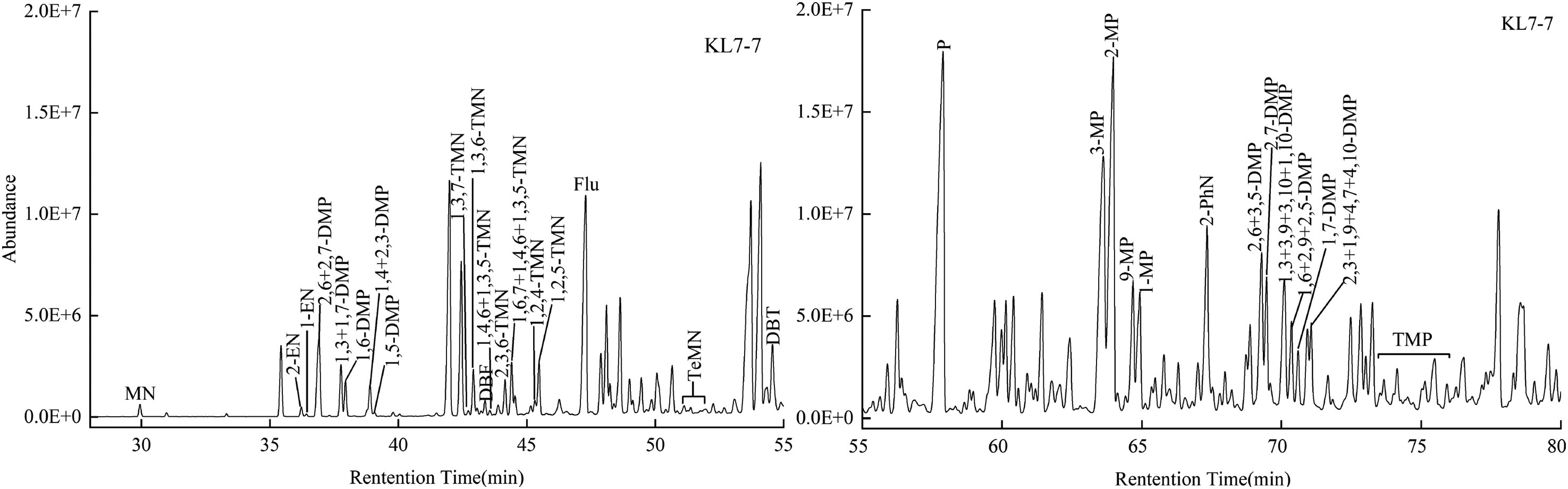
Partial aromatic hydrocarbon chromatogram of Lvjiatuo sample.
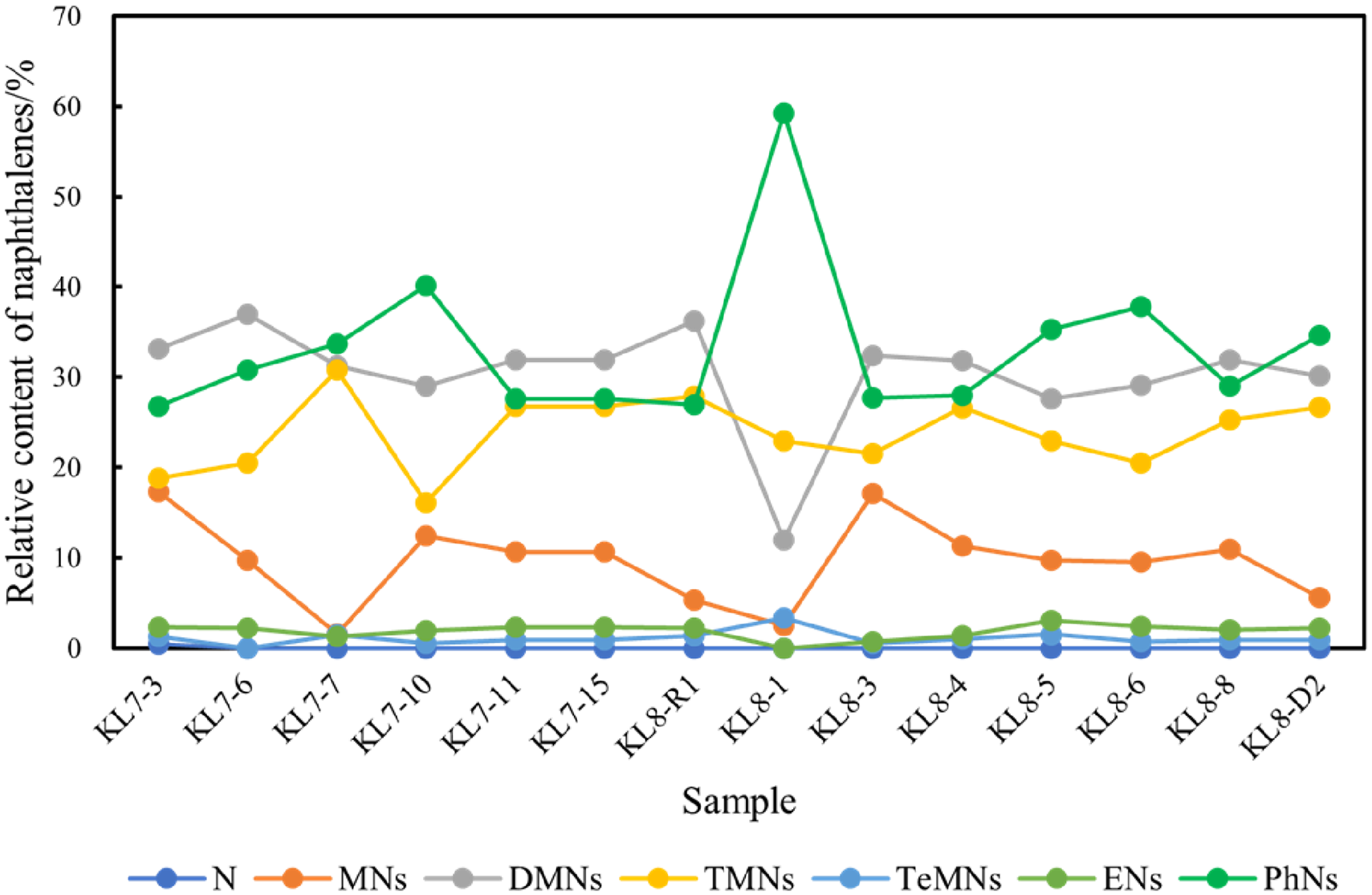
Composition distribution diagram of naphthalene components.
The phenanthrene compounds in coal include phenanthrenes (Ps), methylphenanthrenes (MPs), dimethylphenanthrenes (DMPs), and trimethylphenanthrenes (TMPs), with relative abundance of MPs > Ps > DMPs > TMPs. TMPs tend to demethylate with increasing vitrinite reflectance (Ro), converting to MPs and DMPs. The coal samples have the lowest TMP content among the phenanthrene series, indicating relatively high maturity. The methylphenanthrene content follows the order 2-MP > 3-MP > 1-MP > 9-MP (Figure 9), with 9-MP having the lowest content, ranging from 0.72 to 2.68.
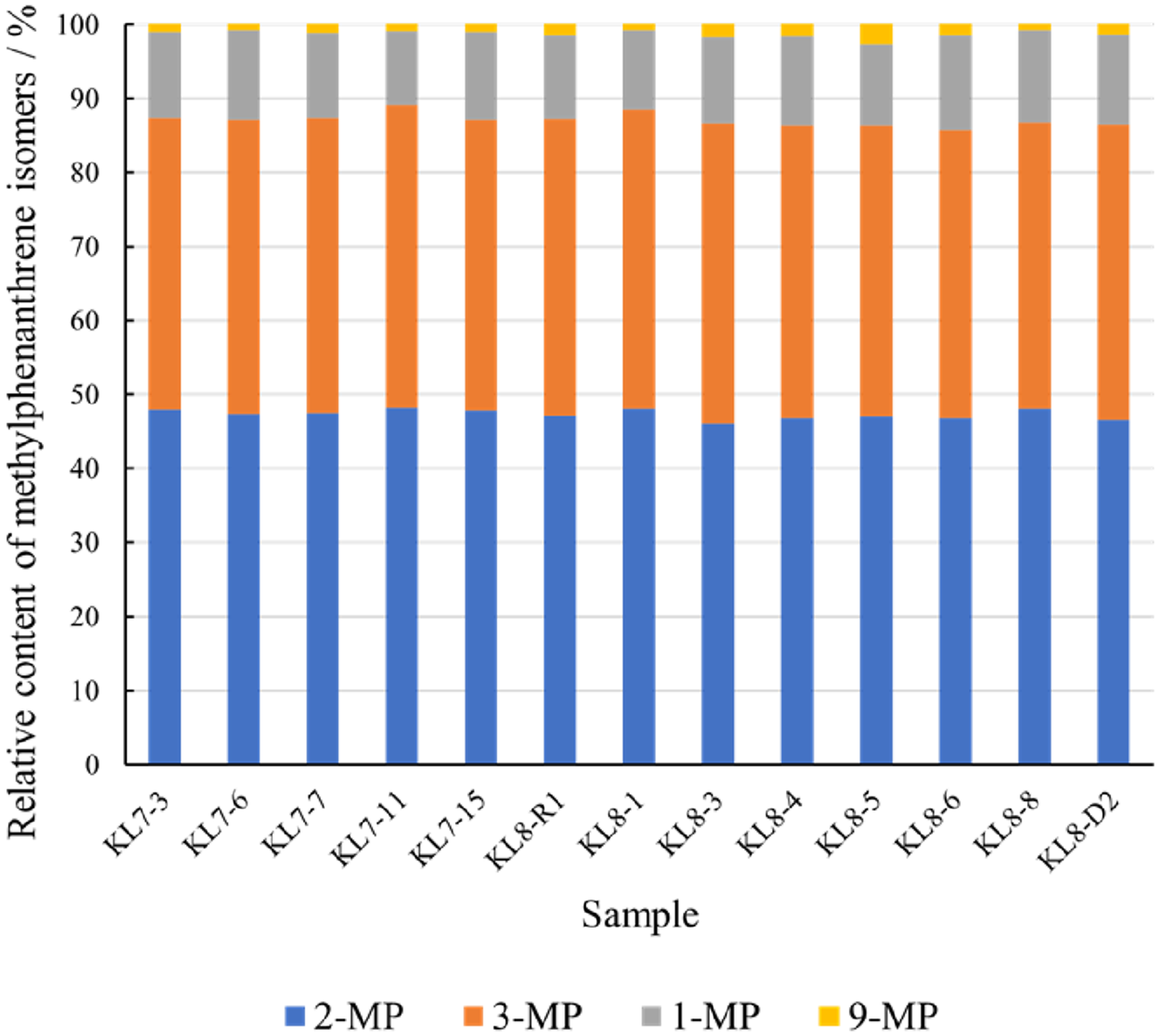
Distribution characteristics of methyl phenanthrene isomers.
In the No. 7 and No. 8 coals, the relative contents of fluorenes, DBTs, and DBFs are in the order of fluorenes > DBTs > DBFs. The relative proportions of fluorenes, DBTs, and DBFs in the total trifluorene compounds range from 45.08% to 71.79%, 26.03% to 46.60%, and 1.36% to 14.56%, respectively.
Discussion
Coal-forming environment and material source
Coal-forming environment
Water salinity
The Sr/Ba ratio and Ce anomaly can be used to assess water salinity. Generally, Sr/Ba < 0.6 indicates freshwater deposition, Sr/Ba > 1 indicates marine deposition, and 0.6 < Sr/Ba < 1.0 indicates brackish water deposition (Yu et al., 2024). The Sr/Ba method is applicable when Sr and Ba are derived from external input rather than endogenous deposition (Zhang et al., 2022). In this study, most samples from the No. 7 and No. 8 coals have Sr/Ba values less than 0.6, with an average of 0.18, indicating a continental depositional environment. Typically, in shallow marine and enclosed sea areas, Ce concentrations are near normal, while in open seas and outer seas, Ce shows significant negative anomalies. Positive Ce anomalies may be related to weak reducing conditions in coal-forming water (Dai et al., 2016). The δCe values of the studied samples show positive anomalies, with an average of 27.67. However, various geochemical parameters, such as Cu/Zn and Ni/Co, indicate an oxidizing to weakly reducing depositional environment, and the Ce anomalies vary significantly among different samples. Therefore, it is inferred that the positive Ce anomaly is not only caused by the redox conditions of the depositional environment but may also be influenced by terrigenous input. There are various factors that cause Y anomalies in coal, including pregeochemical processes within the source rocks, depositional environment, and hydrothermal fluids (Wang et al., 2021). Coal with felsic source rocks usually shows weak or no Y anomalies, while positive Y anomalies in coal may be related to seawater activity or hydrothermal fluids (Dai et al., 2016). The δY of the No. 7 coal ranges from 0.40 to 1.04, with an average of 0.82, indicating that the sediment source for the No. 7 coal is felsic rocks. The δY of the No. 8 coal ranges from 0.90 to 4.25, with an average of 2.67, showing a strong positive Y anomaly. Combined with other geochemical parameters, it is concluded that the No. 8 coal seam was not influenced by marine activity but may have been affected by hydrothermal fluids.
The cross-plot of Pr/C17 and Ph/C18 can reflect the sedimentary environment and kerogen type (Yang et al., 2025). As shown in Figure 10, the kerogen of the Lower Permian Damiaozhuang Formation coal measures in the Kaiping Coalfield is mainly Type III (humic type), with a predominantly continental sedimentary environment. Among them, KL8-R1 falls into the mixed group. The content and distribution of aromatic hydrocarbons such as fluorene (F), DBF, and DBT are significant indicators for distinguishing sedimentary environments. Swamp facies source rocks are dominated by DBF, marine and saline lake facies source rocks by DBT, and freshwater lake and brackish lake facies source rocks by fluorene (Zhang and Philp, 2010). As shown in Figure 11, the trifluorene distribution in the samples is relatively concentrated, with fluorene being dominant, indicating that the sedimentary environments of the two coal seams are similar, belonging to freshwater or brackish lake facies. The alkyl DBTs/alkyl DBFs ratio (ADBTs/ADBFs), combined with Pr/Ph values, can be used to classify sedimentary environments (Radke et al., 2000). As shown in Figure 12, the No. 7 and No. 8 coals are rich in alkyl DBTs, while methyl DBFs are less abundant. The ADBTs/ADBFs values are all above 1.0, ranging from 1.95 to 6.87, and the Pr/Ph values range from 1.35 to 2.66. The coal samples are located in Zone 1C and 1D in the figure, indicating that the No. 7 and No. 8 samples originate from mature mudstones and high-rank coals formed in freshwater lacustrine depositional environments, consistent with the trifluorene diagram.
Redox conditions
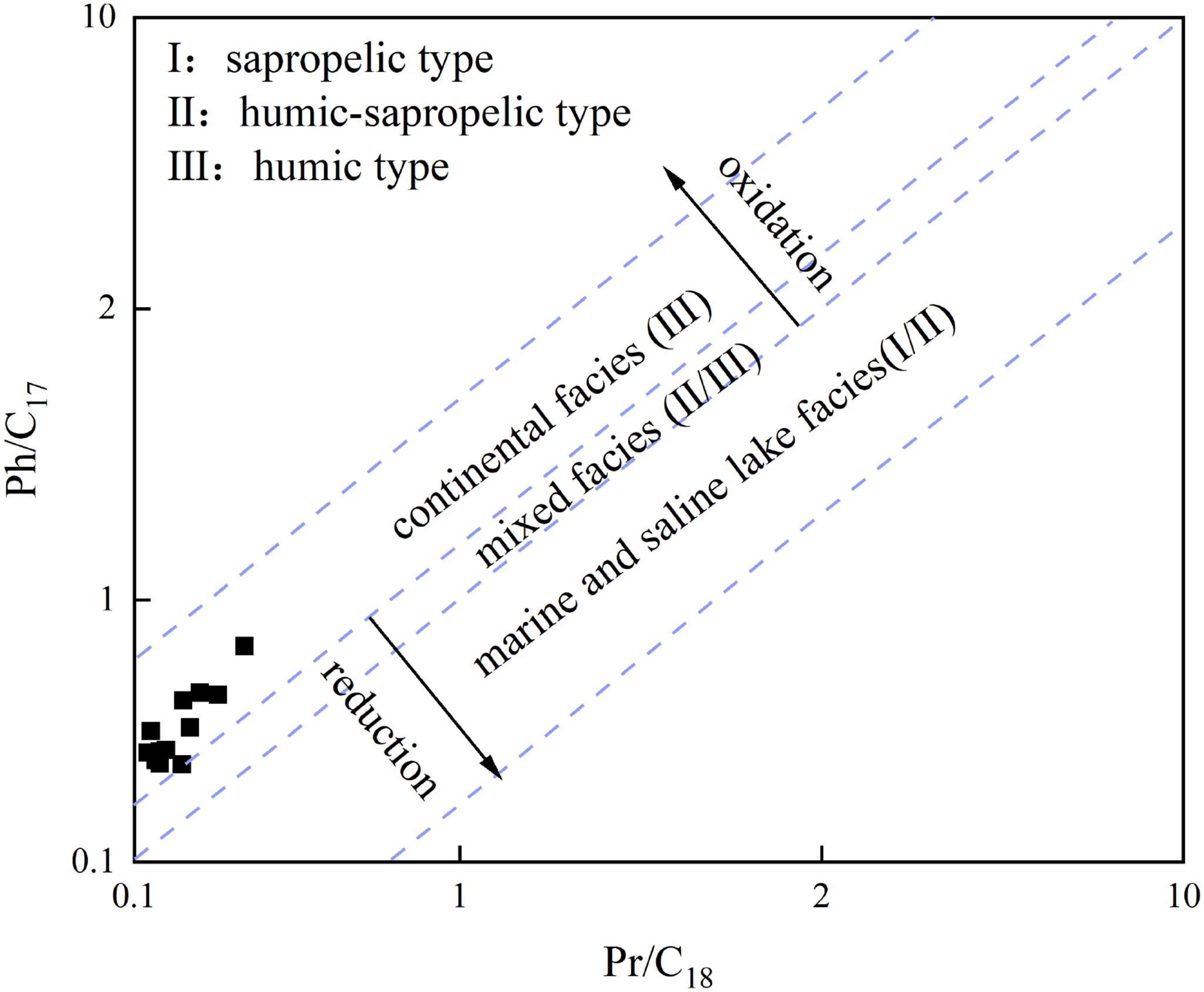
Cross-plot of Ph/C18 versus Pr/C17 of coal samples from the Lvjiatuo mine (Yang et al., 2025).
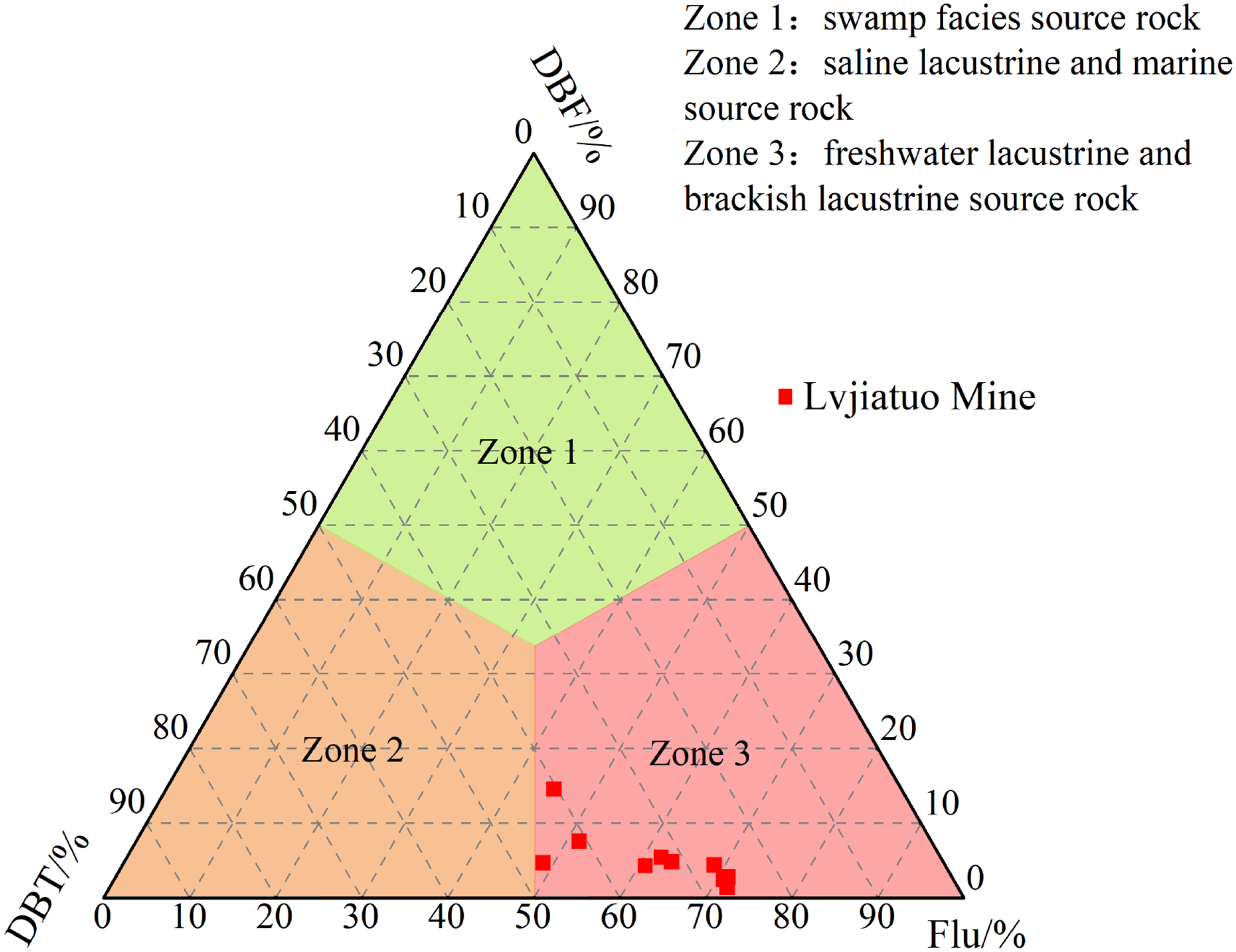
Trifluorene diagram of coal samples from the Lvjiatuo mine (Zhang and Philp, 2010).
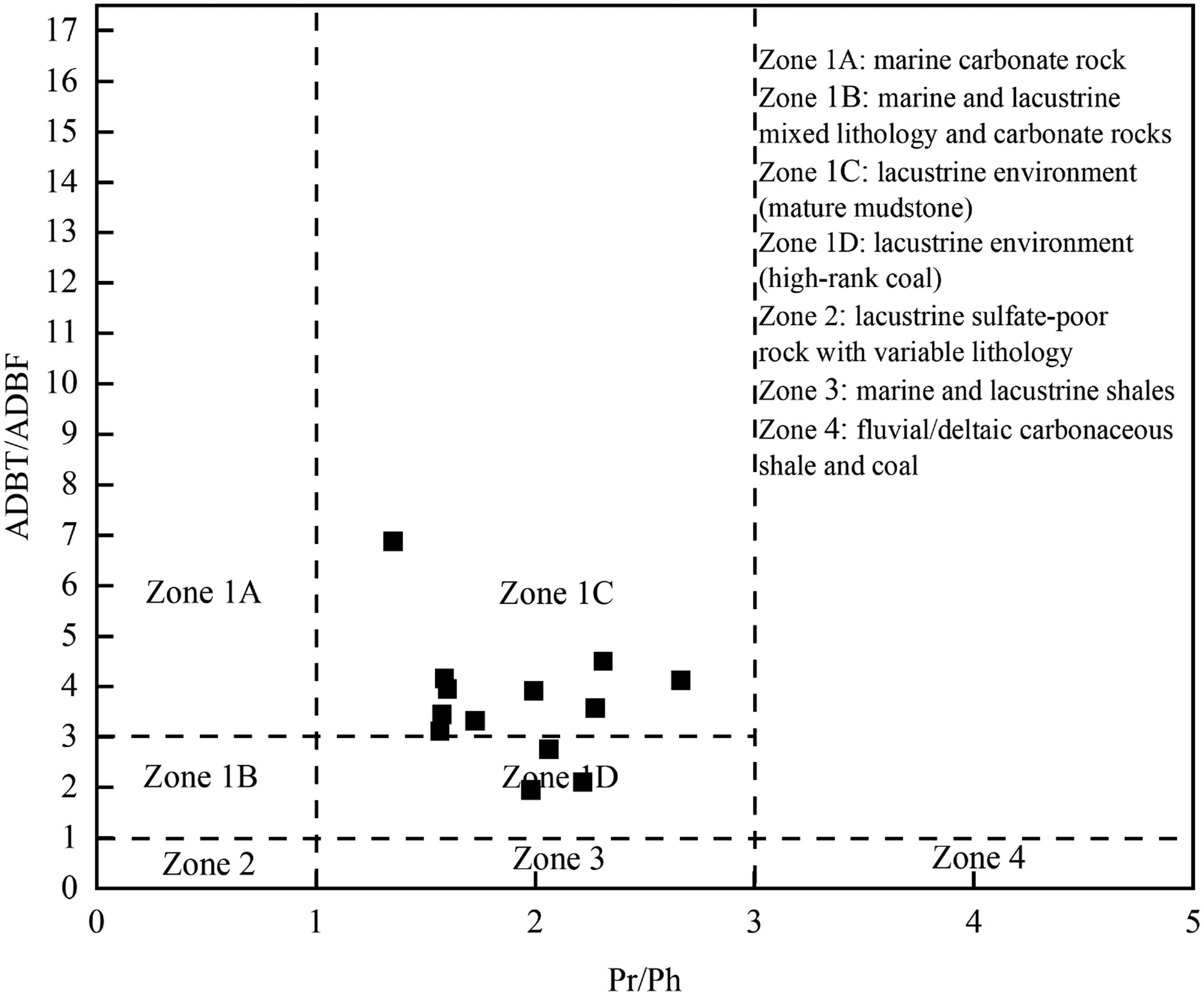
Distribution of ADBTs/ADBFs and Pr/Ph ratio of coal samples from the Lvjiatuo mine (Radke et al., 2000).
During sedimentation, trace elements in sediments can be influenced by the redox conditions of the depositional environment due to their variable valences. Relevant geochemical parameters can indicate the redox characteristics of the sedimentary environment. The Cu/Zn ratio can indicate the redox conditions of the depositional environment. Cu gradually transitions to Zn during sedimentation, and the intensity of this transition is influenced by the oxygen fugacity of the medium, leading to changes in the Cu/Zn value. Typically, Cu/Zn > 0.63 indicates an oxidizing environment, 0.50 < Cu/Zn < 0.63 indicates a weakly oxidizing environment, 0.38 < Cu/Zn < 0.50 indicates a semireducing to semioxidizing environment, 0.21 < Cu/Zn < 0.38 indicates a weakly reducing environment, and Cu/Zn < 0.21 indicates a reducing environment (Ma et al., 2024). For the No. 7 coal, Cu/Zn ranges from 0.24 to 1.46, with an average of 0.61, and most samples have Cu/Zn > 0.63. For the No. 8 coal, Cu/Zn ranges from 0.27 to 0.52, with an average of 0.15, indicating that the depositional environments of the No. 7 and No. 8 coals fluctuated between weakly reducing and oxidizing conditions, with oxidizing conditions being dominant. The Ni/Co ratio can also indicate the depositional environment: Ni/Co > 7 indicates a reducing environment, 5 < Ni/Co < 7 indicates a weakly oxidizing environment, and Ni/Co < 5 indicates an oxidizing environment (Xuying et al., 2023). For the No. 7 coal, Ni/Co ranges from 0.13 to 7, with an average of 1.89. For the No. 8 coal, Ni/Co ranges from 1.45 to 7.11, with an average of 3.91, indicating that the depositional environments of the No. 7 and No. 8 coals were oxidizing. Eu is an important indicator for determining the redox conditions of the depositional environment. In an oxidizing environment, Eu shows a negative anomaly, while in a reducing environment, it shows a positive anomaly (Lin et al., 2023). Strong positive Eu anomalies are related to hydrothermal fluids (Dai et al., 2016). The average δEu of the samples is 6.27, showing a strong positive anomaly, which is inconsistent with the oxidizing depositional environment and may be related to the influence of hydrothermal fluids during sedimentation.
Paleoclimate
Due to differences in elemental geochemical behavior, elements can become enriched under different climatic conditions. This characteristic allows elements to be classified into dry-preferring and wet-preferring types. Sr is a dry-preferring element, while Cu is a wet-preferring element. Sr/Cu can be used as an indicator of climate change, with 1.3 < Sr/Cu < 5 indicating a warm and humid climate, and Sr/Cu > 5 indicating a hot climate (Ma et al., 2025). Most coal samples have Sr/Cu values greater than 5, with only the roof and floor samples having values below 5. The average Sr/Cu is 127, indicating that the climate during the coal deposition period was hot, while the climate during the deposition of the roof and floor strata was warm and humid.
Material source
The Al2O3/TiO2 ratio can be used to determine the type of sediment source. When 3 < Al2O3/TiO2 < 8, the sediment source is mafic rocks; when 8 < Al2O3/TiO2 < 21, the source is intermediate rocks; and when Al2O3/TiO2 > 21, the source is felsic rocks (Hayashi et al., 1997). The Al2O3/TiO2 ratio of the coal samples in the study area ranges from 8.97 to 24.31, with an average of 12.97, indicating that the sediment source is felsic and intermediate rocks (Figure 13).
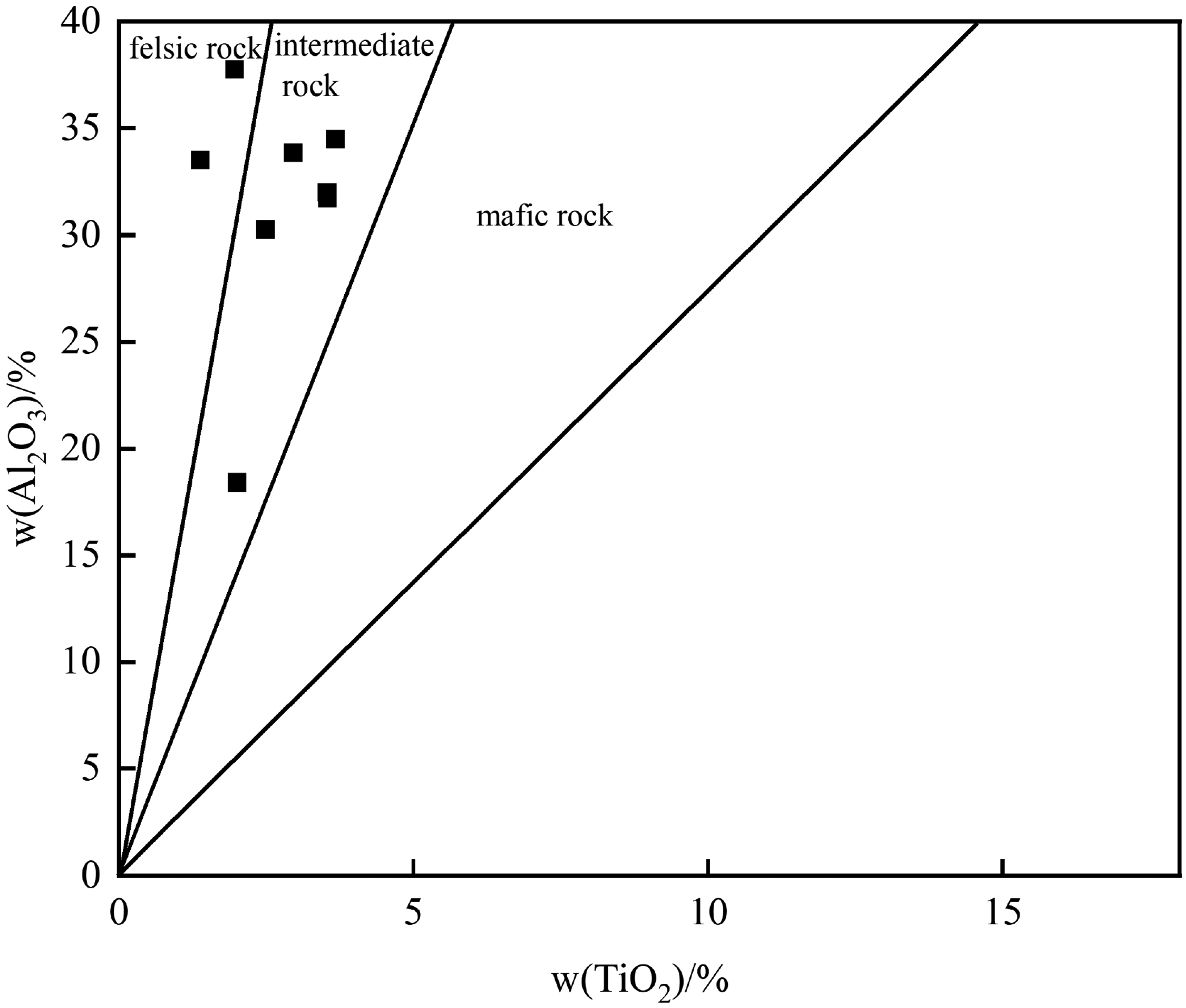
The Al2O3/TiO2 ratio of coal samples from Lvjiatuo mine.
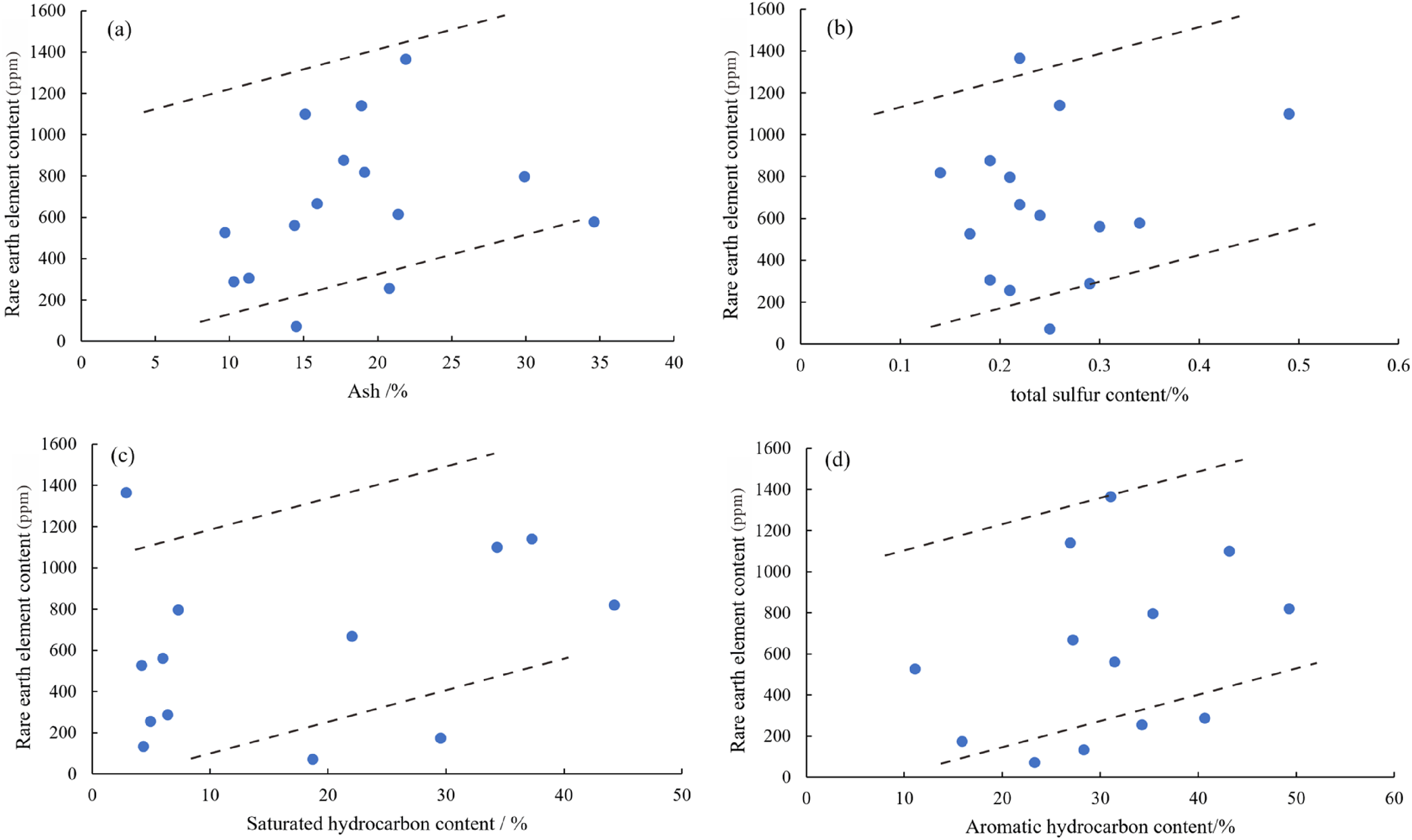
Correlation of parameters in coal from Lvjiatuo mine (a) correlation between rare earth content and ash (b) correlation between rare earth content and total sulfur content (c) correlation between rare earth content and saturated hydrocarbons (d) correlation between rare earth content and aromatic hydrocarbons.
The distribution patterns of saturated hydrocarbons in the Lvjiatuo coal exhibit bimodal front-peak and bimodal rear-peak types. The bimodal front-peak distribution indicates the input of lacustrine aquatic organisms, while the bimodal rear-peak distribution suggests that the organic matter was derived from terrestrial higher plants (Qin et al., 2018), indicating that the coal-forming materials during the Early Permian were derived from both terrestrial higher plants and lacustrine aquatic organisms. Compounds such as 1,2,5-TMN originate from the structural degradation of oleanane-type triterpenoids in gymnosperms, which are considered as markers of gymnosperms (Alexander et al., 1986). In the Lvjiatuo coal, the detected TMNs are predominantly dominated by the stable isomers 1,2,7 + 1,2,6 + 1,6,7-TMN, with relatively low content of 1,2,5-TMN. This is attributed to the fact that with increasing thermal maturity of coal, the α-methyl groups on naphthalene with higher reactivity may be substituted by more stable β-positions, and compounds such as 1,2,5-TMN are converted into more stable 1,2,7 + 1,2,6 + 1,6,7-TMN through structural reorganization (Zhou, 2008). This also indicates that the coal samples have relatively high maturity, and the organic matter is primarily derived from terrestrial higher plants. Among the phenanthrene series, retene was not detected in the No. 7 and No. 8 coals of the Lvjiatuo Mine. As an indicator of terrestrial organic matter, retene is mainly derived from coniferous plants. The absence of retene may suggest that the coal-forming environment of the Lvjiatuo coal was confined (Jing et al., 2021), with limited input from coniferous plants. The methylphenanthrene isomers in the coal samples are of great significance for indicating the sources of sedimentary organic matter. A higher abundance of 1,7-dimethylphenanthrene (1,7-DMP) and a lower abundance of 9-methylphenanthrene (9-MP) were observed in the coal. 1,7-DMP can serve as an indicator of terrigenous organic matter input, while 9-MP can be used as an indicator of marine organic matter or aquatic algae contribution (Radke et al., 1982). This indicates that the No. 7 and No. 8 coals are primarily dominated by terrigenous higher plant input, with a limited contribution from aquatic organisms.
Enrichment mechanisms of REEs
Influenced by coal-forming environments and diagenesis, the occurrence modes of REEs in coal are diverse. Previous studies have shown that REEs in the Pingshuo mining area mainly originate from terrigenous clastics and are enriched in mineral form (Qin et al., 2005). The trace elements in the Jungar coal mainly originate from the Yinshan Old Land and occur in inorganic, organic, and sulfide-bound forms (Liu et al., 2018). The Kaiping Coalfield is located on the northwestern margin of the North China Block. During the Carboniferous–Permian period, the sediment sources were mainly felsic rocks from the Yinshan Old Land in the north (Zhao and Meng, 1987). The correlation coefficient between REE content and ash yield at 0.28, with total sulfur content at 0.17, saturated hydrocarbon components at 0.29, and with aromatic hydrocarbons at 0.20 (Figure 14). The correlation between total REE content and ash yield, total sulfur content, and organic matter components is not significant, but a weak positive correlation still exists. The samples are dominated by light REE enrichment, which is easily adsorbed by organic matter in coal. Monazite and abundant kaolinite clay minerals were found in the coal (Figure 5(c)–(e)). Monazite occurs as star-shaped grains dispersed in kaolinite, with small particle sizes, typically less than 10 µm, and serves as one of the carriers for REE occurrence (Chelgani et al., 2015). This indicates that the occurrence forms of REEs in coal include organic and inorganic forms. Inorganic REEs are mainly hosted in monazite or adsorbed by clay minerals. The organic-bound REEs are more complex; REEs may be adsorbed in organic matter, occur as water-soluble species in organic pores, or be chemically bonded to organic molecules in coal (Yu et al., 2024; Zhang et al., 2022). The mode of organic-bound REEs requires further study.
During the Permian period, the North China region experienced a series of intense tectonic activities influenced by the Variscan tectonic movement, including extension–compression cycles. Surface uplift led to prolonged weathering and erosion of felsic rocks in the Yinshan Old Land, transporting clastic minerals containing REE components into peat swamps (Gao et al., 2024). Based on geochemical parameters such as Sr/Ba, the depositional environment of the coal samples is characterized by low-salinity freshwater. The REEs in the coal of the Kaiping Coalfield originated from clastic minerals in the source area during the syngenetic sedimentation stage. Stable REE-bearing minerals like monazite were preserved during coal formation. In the low-salinity freshwater depositional environment, free REEs were easily adsorbed by kaolinite clay minerals and organic matter in the coal, leading to enrichment (Dai et al., 2014).
The variation in volatile matter content in coal is closely related to organic matter maturity and type. The lower the volatile matter, the higher the metamorphic grade, the tighter the organic matter structure, and the greater the specific surface area and micropore volume, enhancing adsorption capacity. Based on the correlations between ash, volatile matter, δY, δEu, and total REE content, the No. 7 and No. 8 coals were vertically divided into three zones (Figure 15). In Zone 1, REE content shows an overall negative correlation with volatile matter and a weak correlation with ash content, suggesting that REE enrichment was mainly influenced by organic matter adsorption. In Zone 2, REE content shows a positive correlation with ash content. Changes in ash content are related to the degree of terrigenous clastic input, indicating that REE occurrence in this period was mainly influenced by terrigenous input and kaolinite adsorption. In Zone 3, REE content shows a negative correlation with ash content and a positive correlation with volatile matter. During this period, both δY and δEu values are greater than 1, indicating hydrothermal fluid activity. REE occurrence may have been influenced by hydrothermal fluids. The majority of samples from the No. 7 and No. 8 coal seams fall within Zone II (Figure 15), indicating that the concentrations of REEs are mainly related to terrigenous detrital input and adsorption by kaolinite. Meanwhile, the ratio of critical REEs to excessive REEs in a given material is defined as the outlook coefficient (Coutl), calculated as (Kumar et al., 2024a; Seredin and Dai, 2012):
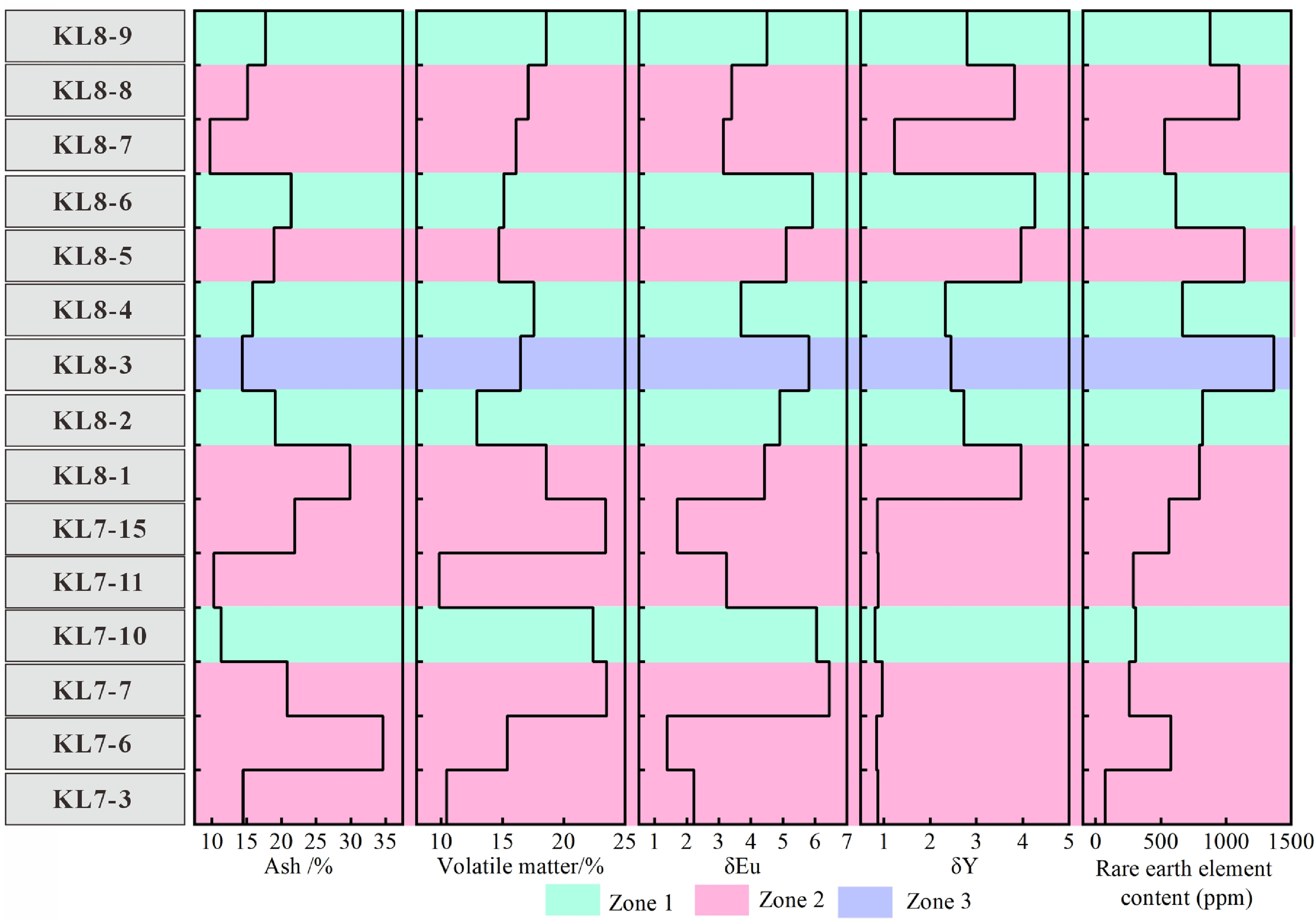
Vertical distribution of ash, volatile matter, δY, δEu, and REEs in coal.
The Coutl values of No. 7 and No. 8 coals range from 0.82 to 2.59, suggesting that they could be a promising source of REEs (Kumar et al., 2024a; Seredin and Dai, 2012). The REEs are primarily hosted in inorganic phases, and they can be extracted synchronously by acid or alkali leaching processes. Monazite, an REE-bearing mineral with relatively high specific gravity, which could be extracted from coal ash by gravity separation.
Conclusions
The average REE contents in the No. 7 and No. 8 coals of the Lvjiatuo Mine are 319.38 ppm and 690.27 ppm, respectively, with a dominance of light rare earth enrichment. The REE distribution curves generally exhibit an L-shape with higher values on the left and lower values on the right. The saturated hydrocarbons in the coal samples show bimodal front-peak and rear-peak distributions, with a clear even-carbon predominance. The aromatic hydrocarbon components are mainly benzene-polycyclic aromatic hydrocarbons and sulfur-polycyclic aromatic hydrocarbons, with the naphthalene, biphenyl, trifluorene, and phenanthrene series being the main types.
The sedimentary source of REEs in the No. 7 and No. 8 coals of the Lvjiatuo Mine is felsic and intermediate rocks. The main mineral components in the coal are kaolinite, siderite, dolomite, pyrite, monazite, and rutile. The relative mineral contents of the No. 7 and No. 8 coal seams are generally consistent. Irregular granular monazite dispersed in kaolinite was found in the coal. The REEs originate from terrigenous clastic input, and the low-salinity freshwater environment in the coal-forming swamp facilitated the adsorption and enrichment of REEs by kaolinite clay minerals and organic matter. This study reveals the enrichment mechanism of REEs in the Early Permian coals of the Kaiping Coalfield, and the REEs are mainly hosted in monazite and kaolinite with inorganic phases. According to the Coutl values, suggesting that the REEs in the coals have great potential for extraction.
The coal-forming environment of the No. 7 and No. 8 coals in the Lvjiatuo Mine is mainly characterized by continental freshwater deposition, with oxidizing to weakly reducing conditions. The overall climate was hot, while the climate during the deposition of the roof and floor strata was warm and humid. The primary sources of the coal-forming materials were terrestrial higher plants, with a limited contribution from aquatic organisms.
Footnotes
Acknowledgments
We sincerely appreciate Lvjiatuo Coal Mine for providing essential data support for this study.

Funding
The authors disclosed receipt of the following financial support for the research, authorship, and/or publication of this article: this work was supported by the Central Guide Local Fund for Scientific and Technological Development of Hebei Province and Natural Science Foundation of Inner Mongolia Autonomous Region (Grant Nos. 246Z4103G and 2024LHMS04003).
Declaration of conflicting interests
The authors declared no potential conflicts of interest with respect to the research, authorship, and/or publication of this article.
Data availability
The datasets supporting the findings of this study are available from the corresponding author on reasonable request.