







Abstract
Based on the coupling coordination theory, this article empirically explores the coordinated development between industrial digitalization and energy conservation and carbon reduction in Zhejiang Province. Against the backdrop of digital economy and dual carbon goals, this article explores the interaction mechanism and development level between industrial digitalization and energy conservation and carbon reduction, so as to provide a reference for regional high-quality green development. This paper establishes a comprehensive evaluation index system composed of two subsystems, namely industrial digitalization development and energy conservation and carbon reduction. An improved coupling coordination degree model is used to measure panel data of 11 prefecture-level cities in Zhejiang Province from 2016 to 2023.
The results show that the coupling coordination degree between industrial digitalization and energy conservation and carbon reduction in Zhejiang Province presents an overall fluctuating upward trend, gradually transitioning from the primary coordination stage to the intermediate coordination stage. However, there are obvious regional and industrial heterogeneities in the coupling coordination level across Zhejiang Province. For instance, leading regions such as Huzhou have achieved high-level coupling coordination through innovative measures including carbon efficiency codes. In contrast, traditional industrial agglomeration areas face greater transformation pressure and exhibit relatively low coordination levels. Empirical analysis reveals three key paths of energy conservation and carbon reduction coordinated with digitalization. These are technology empowerment, structural optimization, and management innovation path.
Introduction
Against the backdrop of global climate change and the digital economy, the industrial sector faces a dual task of green transition and digital upgrading. In 2015, the Paris Agreement established the global temperature control target. Specifically, the rise in global average temperature relative to the preindustrial level should be limited to 2°C, and efforts should be made to constrain warming to 1.5°C. Subsequently, China put forward the “30·60” dual carbon goals and incorporated them into the overall strategy of ecological civilization construction. In June 2017, China Aerospace Science and Industry Corporation launched the first national industrial internet cloud platform, providing intelligent solutions to support the digital transformation of industrial enterprises. This marks a milestone in the practice of industrial digitalization in China (China Aerospace et al., 2018). Meanwhile, the global digital economy continues to expand in scale. Its growth momentum resonates strategically with the carbon-neutral pathway, fostering two-way synergies between digital transformation and green development. Therefore, the coordinated development of industrial digitalization and energy conservation and carbon emission reduction has become a critical pathway for achieving regional high-quality green development.
As a pioneering region for China's digital economy and green development, Zhejiang Province possesses typical representative value for exploring the synergistic relationship between industrial digitalization and energy conservation and carbon emission reduction. Regional disparities across Zhejiang Province further highlight the necessity and significance of exploring the coupling and coordination between industrial digitalization and energy conservation and carbon emission reduction. Industrial digitalization accelerates the achievement of carbon reduction goals by realizing closed-loop management through real-time monitoring, data analysis, and operational optimization.
In Zhejiang's practical exploration, Huzhou has adopted a carbon efficiency code management mechanism to construct a precise carbon emission tracking system based on multisource data. The Hangzhou Bay Shangyu Economic and Technological Development Zone has applied digital twin technology to build a real-time sensing system, realizing intelligent early warning and closed-loop management for pollution control and carbon reduction. These practices demonstrate how digital technology can efficiently allocate energy and material flow through data flow, and form a synergistic effect of digitalization coordinated with green development.
Existing studies on coupling coordination between industrial digitalization and energy conservation and carbon emission reduction predominantly focus on the national (Ding et al., 2022), while lacking in-depth and detailed characterization of regional heterogeneity within individual provinces. These studies primarily concentrate on the overall coupling development level, spatio-temporal evolution characteristics, and macro influencing factors (Su et al., 2025), while paying insufficient attention to the unbalanced internal development across provincial administrative regions. Accordingly, they fail to identify the differentiated features and core driving factors of coupling coordination across intraprovincial level.
As the birthplace of the digital economy and the “Two Mountains” concept, Zhejiang Province has forged a unique coordination mechanism for digital and low-carbon development. As a pioneer in China's digital economy, Zhejiang boasts sound digital infrastructure and a highly concentrated digital industry. Meanwhile, as the origin and key practice region of the “Two Mountains” philosophy, it has formed clear policy guidance and solid practical foundations for green development, energy conservation and carbon reduction.
Zhejiang's integrated development of industrial digitalization and low-carbon transition benefits from its inherent digital economy advantages and shoulders the practical mission of green transformation, forming a distinctive coordination mechanism that differs from those of other provinces. However, most existing coupling theories and empirical studies are constructed based on universal scenarios and fail to fully incorporate Zhejiang's unique resource endowments and practical characteristics. These studies cannot accurately explain the internal logic, core paths, and heterogeneous performance of digitalization and low-carbon coupling coordination in Zhejiang, nor can they provide targeted theoretical support for the differentiated coordinated development of various regions within the province.
Based on coupling coordination theory, this study takes the industrial systems of various prefecture-level regions in Zhejiang Province as the research object and explores the coordinated development mechanism between industrial digitalization and energy conservation and carbon reduction. Originating from the field of physics, coupling theory is applied to characterize the dynamic interactive correlation between two or more interdependent systems. At present, this theory has been widely adopted in academic research on the coordinated development of regional economic and environmental systems.
This article constructs a comprehensive evaluation index system for the two systems, measures their coupling coordination levels, and further analyzes their spatiotemporal evolution characteristics. This study aims to provide a solid theoretical basis and practical reference for the digital and green collaborative transformation of Zhejiang's industrial sector. Additionally, it supports the high-end upgrading of Zhejiang's manufacturing industry and lays a solid foundation for the timely achievement of China's dual carbon goals.
Literature review and research hypotheses
Literature review
The academic research in the field of industrial digitalization is still in the initial exploration stage, and some scholars have conducted relevant research on the measurement and influencing factors of industrial digitalization.
Firstly, there are mainly two types of measurement. The first type is to construct a corresponding indicator system and use decision-making trial and evaluation laboratory-based analytic network process method, to provide a basis for enterprises to allocate digital investment budgets reasonably (Kocaoglu and Kirmizi, 2025; Rizana et al., 2025). The Industrial Digital Transformation Integrated Index is constructed, and the Advantage Doubt Method model with proportional subindex share restriction is adopted to provide a standardized tool for measuring digitalization in specific industries (Yakymova et al., 2022). The entropy weight method, analytic hierarchy process, fuzzy comprehensive evaluation method or equivalent deviation standardization method are used to determine the weight index. The second type is to use qualitative analysis methods, such as the “technology—organization—environment” framework based on emerging technology applications, to construct an integrated analysis framework for driving industrial digitalization (Zhang et al., 2022). Using the event system theory analysis framework, sort out the historical evolution, practice, and theoretical logic of China's industrial digital transformation (Chen et al., 2022).
Secondly, the research on the core influencing factors of digitalization is mainly divided into internal and external factors. Internal factors mainly include complementary and collaborative strategic capabilities (Weritz et al., 2025). The Fuzzy Set Qualitative Comparative Analysis proposes a self-generating capacity model (strategic planning, potential utilization, and endowment superior type) (Chen et al., 2024). External factors, including technological independence and supply chain security, policy guidance and systemic support, industrial ecosystem and collaborative innovation, as well as green finance (Du et al., 2023), all have a positive effect on the digital transformation of the industrial sector.
At present, the research on energy conservation and carbon reduction multidimensional characteristics, mainly including evaluation systems, influencing factors, regional development differences and so on. Existing studies have empirically examined the effects of synergies between energy conservation and emission reduction policy targets and corresponding measures on the carbon emission efficiency of prefecture-level cities in the Yellow River Basin (Ren et al., 2023). Some scholars have further explored the influence of technological innovation on energy conservation and carbon mitigation, as well as the mediating role of energy consumption in this influencing process (Zhang et al., 2020). In terms of research methods, a nonradial DEA model has been adopted to evaluate regional energy efficiency across China, with a supporting approach developed to measure the potential for energy conservation and CO₂ emission reduction driven by efficiency improvement (Bian et al., 2013).
The role of industrial digitalization in promoting energy conservation and carbon reduction has been widely recognized. Empirical evidence has verified the notable carbon mitigation effect brought by digital development (He et al., 2025). Relevant research has also revealed that digital economy development exerts a significant positive impact on the improvement of urban green total factor productivity in China (Liu et al., 2023). In terms of regional difference and spatiotemporal evolution analysis, multiple methodological tools including the Dagum Gini coefficient, convergence model, spatial kernel density estimation, and spatial Markov chain have been applied to investigate the heterogeneous characteristics and dynamic evolutionary trends of the coordinated development between industrial digitalization and green transformation (Peng et al., 2025). The theoretical framework of the coupling and coordination between industrial digitalization and energy conservation and carbon reduction, as shown in Figure 1.
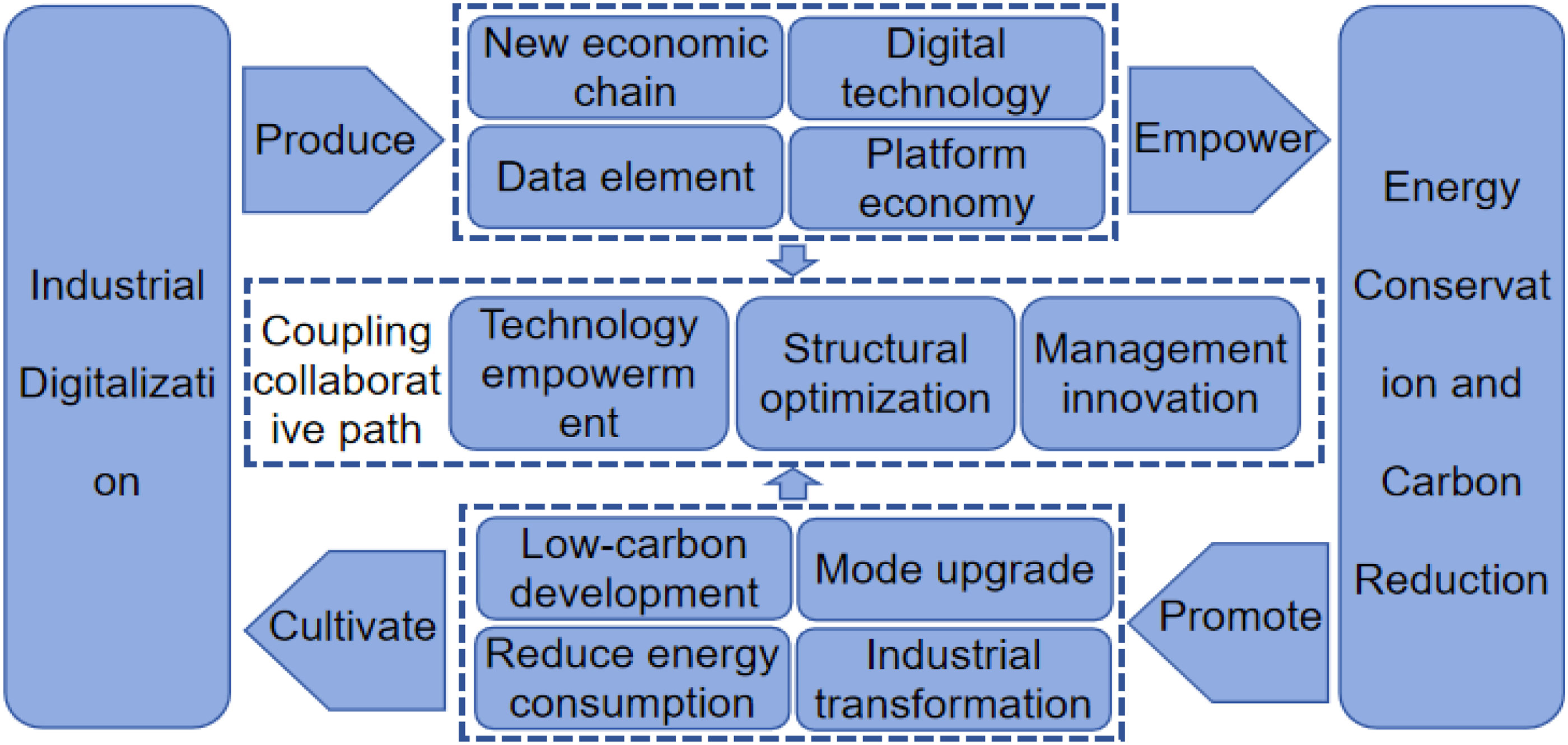
Theoretical framework of coupling and coordination between industrial digitalization and energy conservation and carbon reduction.
Industrial digitalization and energy conservation and carbon reduction form a mutually supportive and mutually empowering coupling and coordination relationship. Centering on the two major subsystems, in-depth integration is realized through three interactive paths. Relying on digital technologies, new economic chains, data elements and platform economy, the industrial digitalization subsystem provides technical and managerial support for energy conservation and carbon reduction. The energy conservation and carbon reduction subsystem guides the green development direction of industrial digitalization through low-carbon development, model upgrading, energy consumption reduction and industrial transformation.
The three pathways function in a coordinated manner. Specifically, the technology empowerment pathway optimizes energy efficiency through the industrial Internet and other digital tools. The structural optimization pathway reduces the proportion of high—energy—consuming industries by virtue of digital technologies. The management innovation pathway achieves precise regulation via carbon efficiency codes and related governance means.
It can be seen that scholars have done a lot of research on industrial digitalization and energy conservation and carbon reduction, and also verified the driving role of industrial digitalization in promoting energy conservation and carbon reduction from different perspectives. That is, industrial digitalization is a means of data conversion and application, which effectively coordinates with energy conservation and carbon reduction. However, A few scholars have studied the coupling and coordination relationship between industrial digitalization and energy conservation and carbon reduction, and found that the level of synergy between the two aspects has been continuously improved.
Therefore, firstly, most existing studies adopt static panel data and focus on measuring static coupling levels. They lack a systematic analysis of the dynamic evolution characteristics and distribution patterns (e.g. multimodal features) of coupling coordination, and thus cannot fully reflect long-term development trends. Secondly, the three transmission mechanisms through which digitalization promotes energy conservation and carbon reduction remain insufficiently tested empirically. Current literature mainly focuses on direct effect analysis, without verifying the functional intensity and effectiveness of each pathway. Thirdly, previous studies have rarely systematically decomposed the sources of intraprovincial regional heterogeneity, nor clarified the respective contributions of interregional and intraregional disparities to the overall coupling gap, making it difficult to accurately identify the key factors leading to unbalanced regional development.
Therefore, this article chooses Zhejiang Province as a typical sample to deeply analyze the internal logical relationship between industrial digitalization and energy conservation and carbon reduction, and explore in detail the characteristics of their coupled and coordinated evolution and what factors are affected.
Research hypotheses
Against the realistic background of green transformation empowered by digitalization, industrial digitalization and energy conservation and carbon reduction exhibit a mutually reinforcing and mutually promoting coupling relationship. Digitalization provides technical support, efficiency improvement and managerial guarantee for energy conservation and carbon reduction, while the demands of green transformation and low-carbon development in turn drive the upgrading of industrial digitalization, forming a dynamic coupling system. Affected by resource endowments, industrial structure and regional development foundations, the level of coupling and coordination within Zhejiang Province presents obvious temporal and spatial differences. And the sources of overall disparities can be identified through spatial decomposition. Accordingly, the following research hypotheses are proposed:
H1: There exists a significant coupling and coordination relationship between industrial digitalization and energy conservation and carbon reduction in Zhejiang Province, and the overall level shows a continuous upward trend year by year. H2: The coupling coordination degree of each prefecture-level city presents significant regional heterogeneity and unbalanced spatial distribution characteristics. H3: Southern Zhejiang, characterized by higher enterprise homogeneity, has smaller internal differences in coupling coordination degree and a lower Gini coefficient. H4: The overall provincial disparities are mainly derived from interregional gaps, with the contribution rate of intergroup differences significantly exceeding 50%.
Indicator system and data sources for the coordinated development of industrial digitalization and energy conservation and carbon reduction
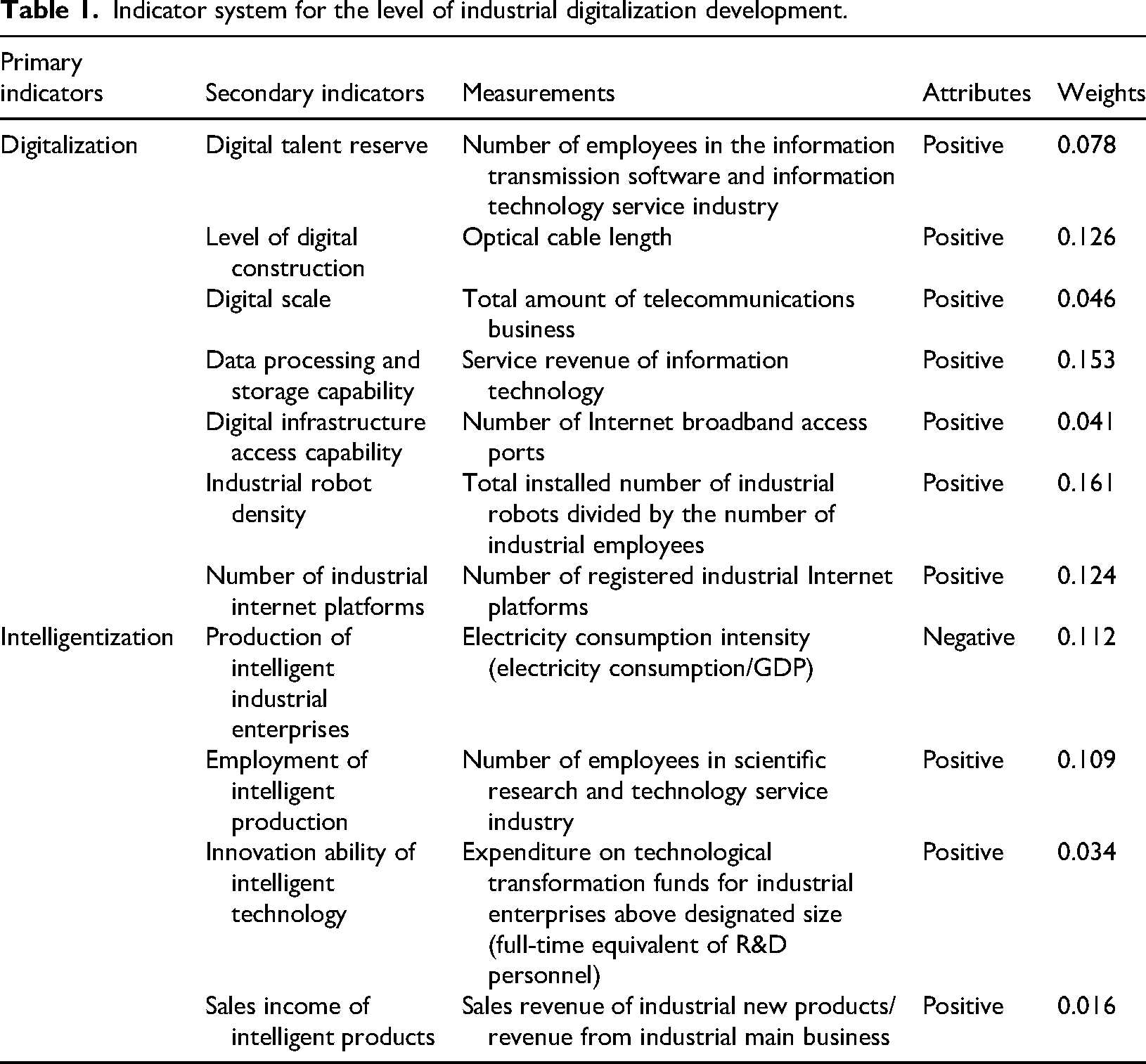
Given that the relevant departments have not yet issued a comprehensive indicator system for the development level of industrial digitalization, this article selects publicly available relevant data to conduct a comprehensive measurement of the development level of industrial digitalization. Based on the research of Tang et al. (2024), this article constructs an indicator system for the development level of industrial digitalization from the two dimensions of digitalization and intelligence, and uses principal component analysis (PCA) to measure.
Among them, digitalization refers to the transformation of information, processes, and operations within industrial enterprises into digital forms that can be calculated, stored, and transmitted through digital technology. It also entails the digitalization, networking, and standardization of production, management, service, and other related processes. As such, it constitutes the foundational stage and underlying support for digital development.
Intelligence is based on digitalization, where industrial enterprises use technologies such as artificial intelligence, big data analysis, machine learning, and the Internet of Things to make digital systems have the ability of perception, decision-making and independent execution. It also realizes the automation, optimization and personalization of production operation, service supply and other aspects. That is the high-level stage and value release link of digital development. Therefore, digitalization and intelligence are interrelated and have their own focuses, which together form the complete framework for the development level of industrial digitalization from infrastructure to advanced applications.
Digitalization is mainly measured by five aspects. These are digital talent reserve, level of digital construction, digital scale, data processing and storage capability, and digital infrastructure access capability. Intelligence is mainly measured through four aspects. These are the production of intelligent industrial enterprises, employment of intelligent production, innovation ability of intelligent technology, and sales income of intelligent products. The indicator content, measurement, attributes, and weights of the index system of industrial digital development level are shown in Table 1.
Indicator system for the level of industrial digitalization development.
In the field of industrial energy conservation and carbon reduction assessment, China has formed a multidimensional measurement framework. The China Development and Reform Commission, the State Administration for Market Regulation and the Ministry of Ecology and Environment jointly issued the “Implementation Plan for Establishing and Improving the Carbon Peak and Carbon Neutrality Standard Measurement System” (October 2022) and the “Guidelines for Building the Carbon Peak and Carbon Neutrality Standard System” (April 2023). They provided important support for China's green, low-carbon, and high-quality development.
A synergy model covering low-carbon, economic and social systems has been developed to conduct empirical analysis on their comprehensive coordinated development (Xing and Yang, 2022). The Total Factor Carbon Productivity index has been applied to quantitatively evaluate the overall level of regional low-carbon economic development (Zhu et al., 2023). In summary, combining the connotations of energy conservation and carbon reduction, this article draws on the research of some scholars on the selection of measurement indicators and system construction for energy conservation and carbon reduction levels (Peng et al., 2025; Xu et al., 2025; Zhou et al., 2024). It also measures the level of energy conservation and carbon reduction development from three aspects. These are resource consumption, low-carbon development and structural optimization. The evaluation index system is shown in Table 2.
Index system for industrial energy conservation and carbon reduction level.
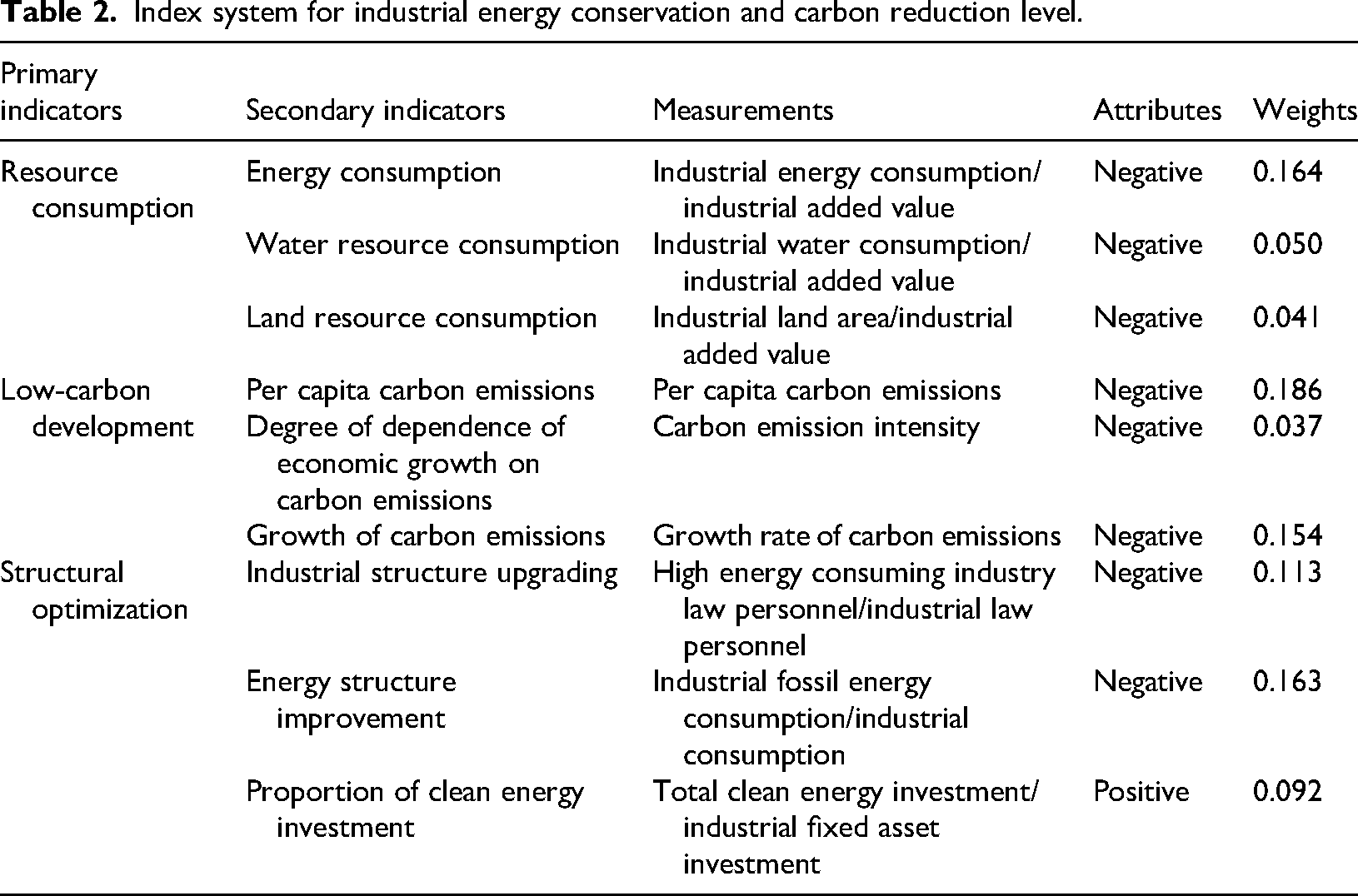
The level of resource consumption is mainly measured through three aspects, energy consumption, water resource consumption, and land resource consumption. The level of low-carbon development is mainly measured from three aspects, per capita carbon emissions, the degree of dependence of economic growth on carbon emissions, and the growth of carbon emissions. Structural optimization is mainly measured from three aspects, industrial structure upgrading, energy structure improvement, and investment structure improvement.
The data mainly comes from the following official institutions/platforms. They are Zhejiang Provincial Bureau of Statistics, Zhejiang Provincial Department of Economy and Information Technology, Zhejiang Provincial Development and Reform Commission, Zhejiang Provincial Energy Bureau, Zhejiang Provincial Department of Ecology and Environment, and Zhejiang Provincial Data Open Platform.
The sample period of this study spans from 2016 to 2023, covering 11 prefecture-level cities in Zhejiang Province, with a total of 1760 observations in the original panel data. Among them, 37 observations contain missing values, accounting for 2.10% of the total sample. Such a low missing ratio does not affect the overall representativeness of the sample or the reliability of the coupling coordination results.
Specifically, a small number of missing values exist in individual years for several indicators of industrial digitalization, including data processing and storage capacity and digital basic access capacity. Indicators such as intelligent technological innovation capacity and intelligent product sales revenue within the industrial digitalization dimension show sporadic missing data. In the resource consumption and low-carbon development dimension, indicators such as energy consumption and per capita carbon emissions have minor missing values in certain years. By contrast, no missing values are observed in the industrial structure optimization dimension. All missing data are randomly scattered and sporadic rather than systematic, and are not concentrated in any specific region or particular year.
In this article, linear interpolation is used to fill in a small amount of missing data, and the price-related data are corrected with 2008 as the base period. There is no serious multicollinearity in the selected indicators. This paper adopts 2008 as the constant price base year to conduct price deflation processing for relevant value-based indicators, mainly based on two considerations. On the one hand, 2008 serves as a reliable base year with relatively stable domestic statistical standards and price index systems, as well as continuous and complete official statistical records. The corresponding price deflators can be directly obtained from official statistical yearbooks, ensuring high data availability and consistency. On the other hand, this base year has been widely adopted in existing studies on regional economy, digital transformation and low-carbon development. Adopting this base year can maintain consistent statistical caliber with previous literature and enhance the comparability and reference value of the research results.
Zhejiang Province is divided into four regions in this article. These are Northern Zhejiang, Eastern Zhejiang, Southern Zhejiang, and Central–Western Zhejiang. Among them, northern Zhejiang refers to Hangzhou, Jiaxing and Huzhou. Eastern Zhejiang refers to Ningbo, Shaoxing and Zhoushan. Southern Zhejiang mainly includes Wenzhou, Taizhou and Lishui. Central–Western Zhejiang mainly includes Jinhua and Quzhou.
According to the above relevant data, the level of industrial digital development and the level of energy conservation and carbon reduction in Zhejiang Province from 2016 to 2023 are shown in Figure 2.
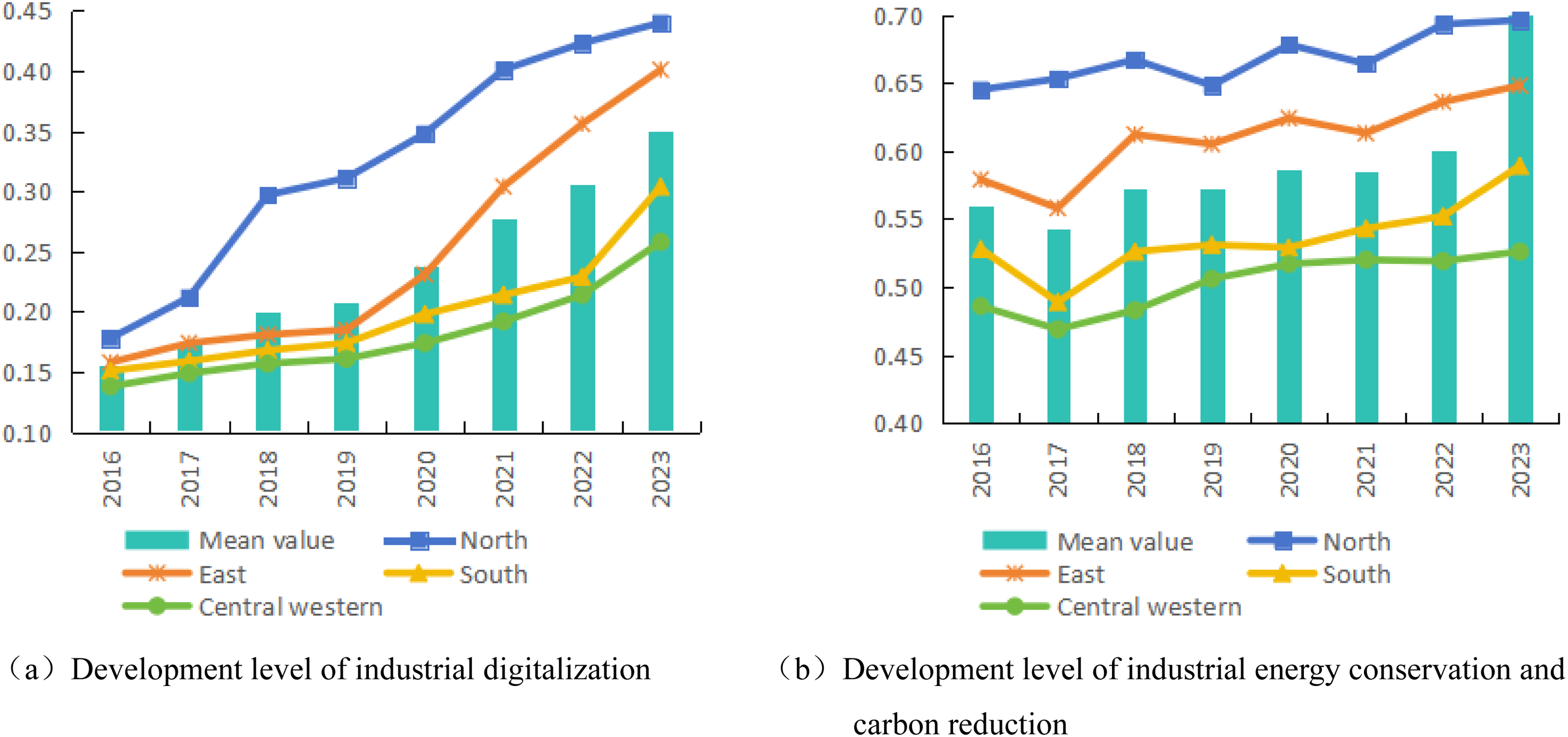
Development level of industrial digitalization and energy conservation and carbon reduction in Zhejiang Province. (a) Development level of industrial digitalization, (b) Development level of industrial energy conservation and carbon reduction.
Research method
Coupling coordination degree model
When measuring the coupling coordination degree between industrial digitalization and energy conservation and carbon reduction development, the primary step is to apply the entropy to measure the comprehensive development level of these two systems. In view of the dimensional differences in each indicator, it is necessary to implement extreme value standardization with equations (1) and (2) for positive and negative indicators. Through transformation, the original indicator value xij can be converted into the standardized values x′ij. Thereby it can effectively eliminate the influence caused by inconsistent dimensions.

The comprehensive scores of each system are calculated by means of the entropy method. The specific calculation process can be referred to equation (3). Where 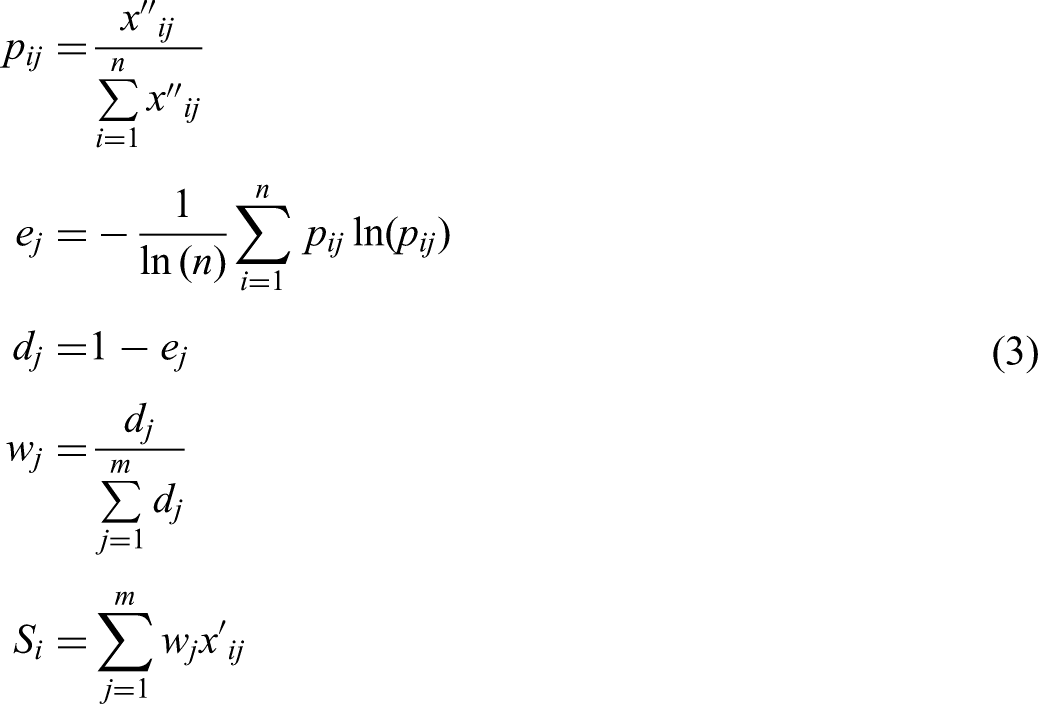
Among them, pij denotes the proportion of the jth indicator in the ith sample. ej represents the entropy value of the corresponding jth indicator. n is the number of samples. dj stands for the difference coefficient of the corresponding jth indicator. wj indicates the weight of the jth indicator. Si represents the comprehensive score of each system.
After calculating the comprehensive evaluation scores of the two systems, the coupling coordination degree of the two systems is further calculated.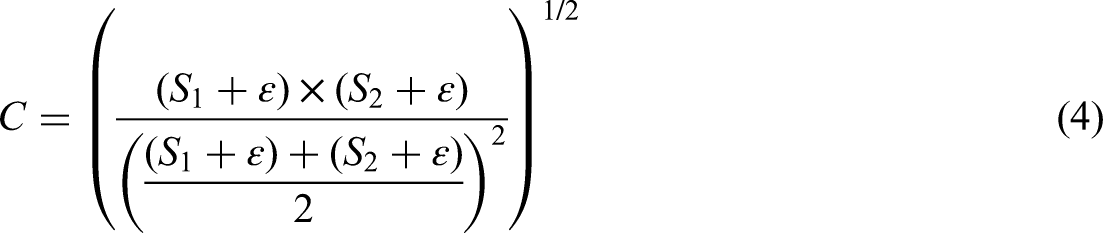


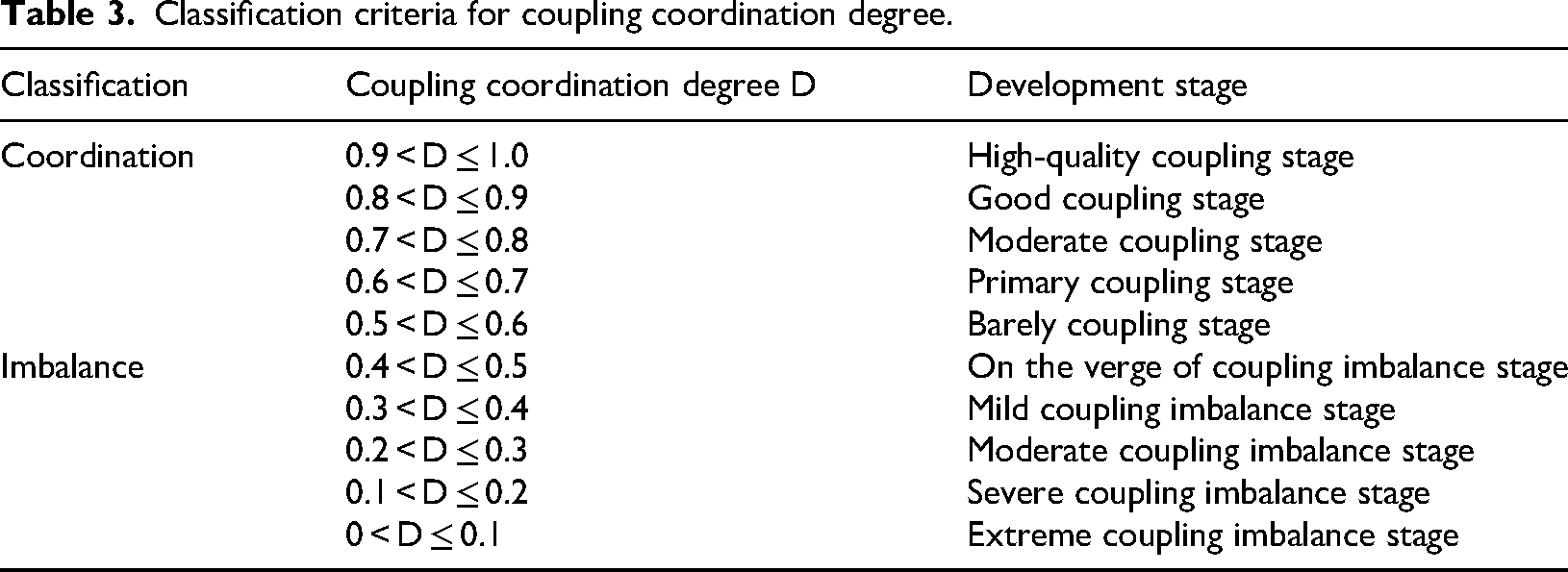
D is the coupling coordination degree, ranging from [0,1]. The larger the D value is, the better the coupling coordination degree is. Based on existing research and the coupling coordination degree D of the two systems, the coupling coordination degree is divided into 10 levels by uniform distribution method, as shown in Table 3.
Classification criteria for coupling coordination degree.
Analysis of the coupling coordination relationship between industrial digitalization and energy conservation and carbon reduction
Spatiotemporal evolution of coupling coordination degree
Based on the theory of technological revolutions and economic long waves, Perez (2010) pointed out that digital technology, as a typical general-purpose technology, is characterized by strong permeability, high coordination, and increasing returns to scale. It can promote the overall transformation of the economic and social system by restructuring production organization modes and reshaping the flow paths of factor resources.
In the field of energy and low-carbon development, digitalization significantly improves energy conservation and emission reduction efficiency by enhancing the accuracy of energy monitoring, optimizing energy consumption scheduling strategies, and reducing the marginal cost of energy management. Meanwhile, it optimizes the allocation efficiency of production factors such as capital, labor and technology across industries, thereby accelerating the low-carbon transformation of high-energy-consuming industries.
From the perspective of regional differences, relying on the innovation agglomeration advantages of core cities and sound digital infrastructure, northern Zhejiang has taken the lead in completing technological penetration and paradigm upgrading, forming a virtuous cycle of digitalization empowering energy conservation and carbon reduction, and thus maintaining a long-term leading level of coupling coordination.
In contrast, restricted by a heavy industrial structure strong traditional path dependence and insufficient coverage of digital facilities, the central and western regions exhibit a relatively slow speed of technology diffusion. The resource endowment constraints and industrial lock-in effects further limit the efficiency of low-carbon transformation, resulting in a low synergistic degree between the digitalization system and the energy conservation and carbon reduction system. This pattern essentially reflects the spatial nonequilibrium of the transformation of the technoeconomic paradigm, and also provides a theoretical basis for adopting targeted differentiated policies to promote coordinated and low-carbon regional development.
The comprehensive scores of the two systems of industrial digitalization and energy conservation and carbon reduction are substituted into the coupling coordination degree model. The coupling coordination degree of industrial digitalization and energy conservation and carbon reduction in 11 prefecture-level cities of Zhejiang Province from 2016 to 2023 is obtained, as shown in Table 4.
Coupling coordination degree of industrial digitalization and energy conservation and carbon reduction development in Zhejiang Province from 2016 to 2023.
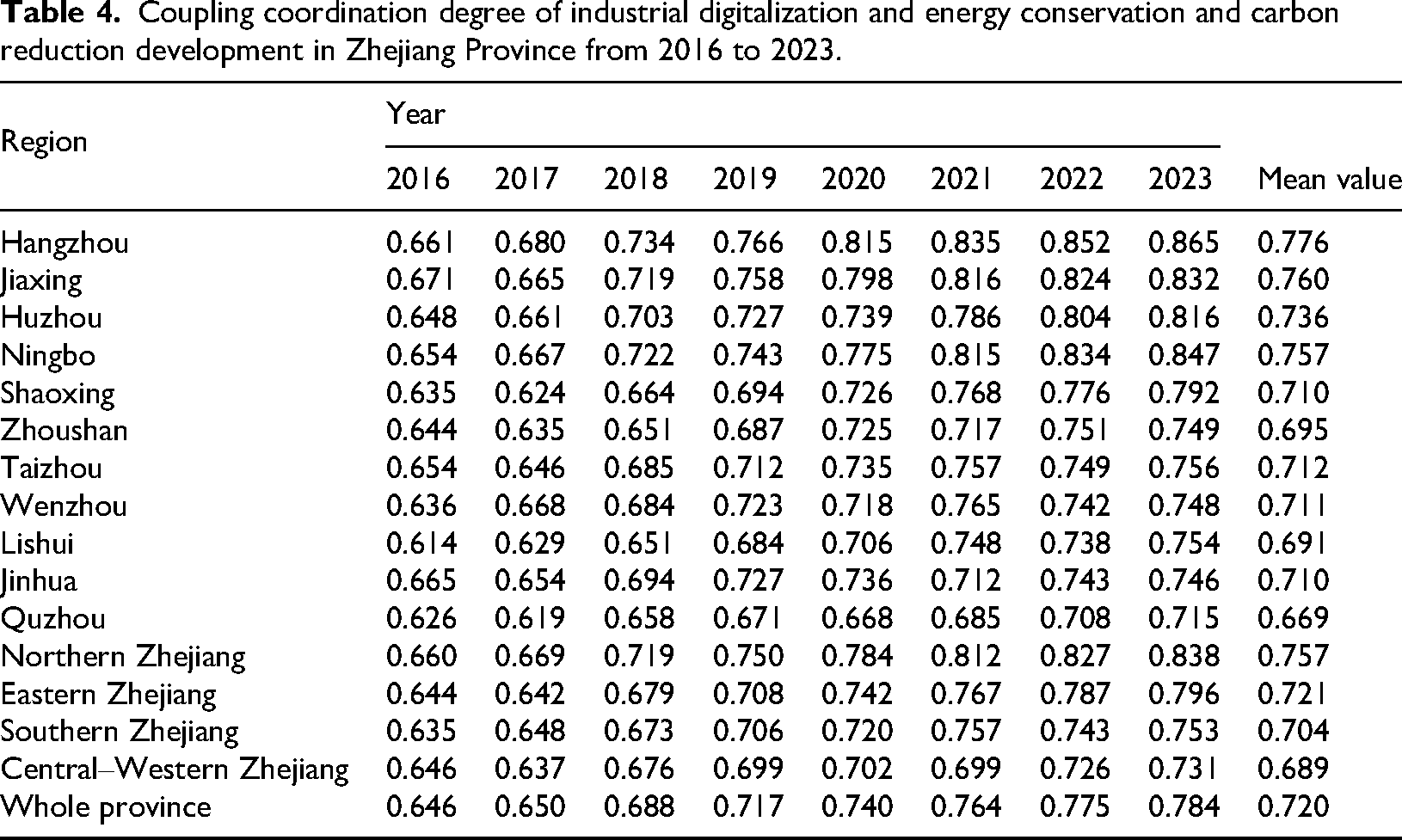
As shown in Table 4, the coupling and coordinated development level of industrial digitalization and energy conservation and carbon reduction development in Zhejiang Province from 2016 to 2023 presented an evolution pattern of occasional fluctuations and gentle upward growth. At the prefecture-level city scale, Zhejiang Province generally showed a positive evolutionary trend in the time dimension. Thus, Hypothesis H1 is statistically supported.
During this period, the four regions have shown similar growth rates, but there were significant differences in the level of coupling coordination. The coupling coordination degree of Northern and Eastern Zhejiang was ahead of the average level, with Eastern Zhejiang close to the provincial mean. In contrast, Southern and Central-Western Zhejiang were below the provincial mean. The coupling coordination degree of Central-Western Zhejiang was lower than that of Southern Zhejiang, while Southern Zhejiang was relatively close to the provincial mean.
As shown in Table 4, the coupling coordination degree of industrial digitalization and energy conservation and carbon reduction in Zhejiang Province showed a steady upward trend year by year, increasing from 0.646 in 2016 to 0.784 in 2023. The coordination grade rose from primary coupling coordination to moderate coupling coordination, with an average coupling coordination degree of 0.720 during this period. This indicates that the interactive relationship between the two systems of industrial digitalization and energy conservation and carbon reduction in Zhejiang Province has reached the moderate coupling stage, showing a positive development trend. But there is still room for optimization.
This article estimates the elastic relationship between the coupling coordination degree D and the energy consumption per unit of industrial added value based on the sample data. The estimation results show that each 0.1 increase in the coupling coordination degree leads to an average reduction of 3.27% in energy consumption per unit of industrial added value (p < .01). In this study, the coupling coordination degree D rises from 0.646 to 0.784, representing an overall increase of 21.4%. According to the above elastic relationship, this growth corresponds to approximately a 7.00% decline in energy consumption per unit of industrial added value, which clarifies the practical energy-saving value of improving the coupling coordination level.
Zhejiang Province has set a core energy-saving target of reducing industrial energy consumption per unit GDP by 13.5% during the 14th Five-Year Plan period. The 7.00% energy consumption reduction driven by the increase in the D value accounts for 51.9% of the provincial 14th Five-Year Plan energy-saving target. This finding further verifies the supporting effect of the coupled and coordinated development of industrial digitalization and energy conservation and carbon reduction on the achievement of the dual carbon goals in Zhejiang Province.
From the regional perspective, the coupling coordination degree of Northern Zhejiang has always been in a leading position, increasing from 0.660 in 2016 to 0.838 in 2023. Its coordination grade rose from primary coordination to good coordination, with an average value of 0.757 in moderate coupling coordination.
Eastern Zhejiang is close to the average level of Zhejiang Province. At this stage, the average value of Eastern Zhejiang was 0.721, which is at the moderate coupling coordination level. The average values of Southern and Central–Western Zhejiang were 0.704 and 0.689 respectively, both lower than the provincial average. But both reached above the primary coupling coordination. Thus, Hypothesis H2 is statistically supported.
In summary, there are obvious regional differences in the coupling coordination degree of Zhejiang Province. But they all show a steady upward trend and reach a state of coordinated development. This further indicates that there is a certain coupling and coordination relationship between industrial digitalization and energy conservation and carbon reduction in Zhejiang Province. At the level of the 11 prefecture-level cities in Zhejiang Province, Hangzhou, Jiaxing, Huzhou and Ningbo all reached the stage of good coupling coordination in 2023. While the other seven prefecture-level cities remained at the stage of moderate coupling coordination. In particular, Quzhou had a coupling coordination degree of 0.715, slightly higher than moderate coordination, and significantly lagged behind other cities.
The above results show that the overall coupling and coordinated development of industrial digitalization and energy conservation and carbon reduction in Zhejiang Province is good, which is in a benign interaction and high matching degree. It is also found that regions with developed economies and industries have a relatively high level of coupling and coordinated development between industrial digitalization and energy conservation and carbon reduction. While regions with less developed economies and industries still have considerable room for improvement in coupling coordination degree.
Meanwhile, the two systems of industrial digitalization and energy conservation and carbon reduction are gradually developing in a positive direction. Industrial digitalization provides support for the development of energy conservation and carbon reduction, while energy conservation and carbon reduction guarantees the development of industrial digitalization. The two systems have initially achieved coupling and coordinated development. However, the gap between prefecture-level cities persists. And the range of coordination degree is 0.251, which reflects the significant spatial heterogeneity in regional coordinated development.
Analysis of regional differences based on Dagum Gini coefficient
As shown in Table 5, the Gini coefficient rose from 0.014 in 2016 to 0.033 in 2023. Although the value was at a low level, it showed a clear upward trend. This also indicated that the gap in the coordinated development of digitalization and energy conservation and carbon reduction among regions in Zhejiang Province has widened over the past eight years. It also shows that the collaborative process of industrial digital transformation and energy conservation and carbon reduction transformation in various regions of Zhejiang Province is not balanced, showing a pattern of unbalanced growth.
Dagum Gini coefficient and its decomposition results from 2016 to 2023.
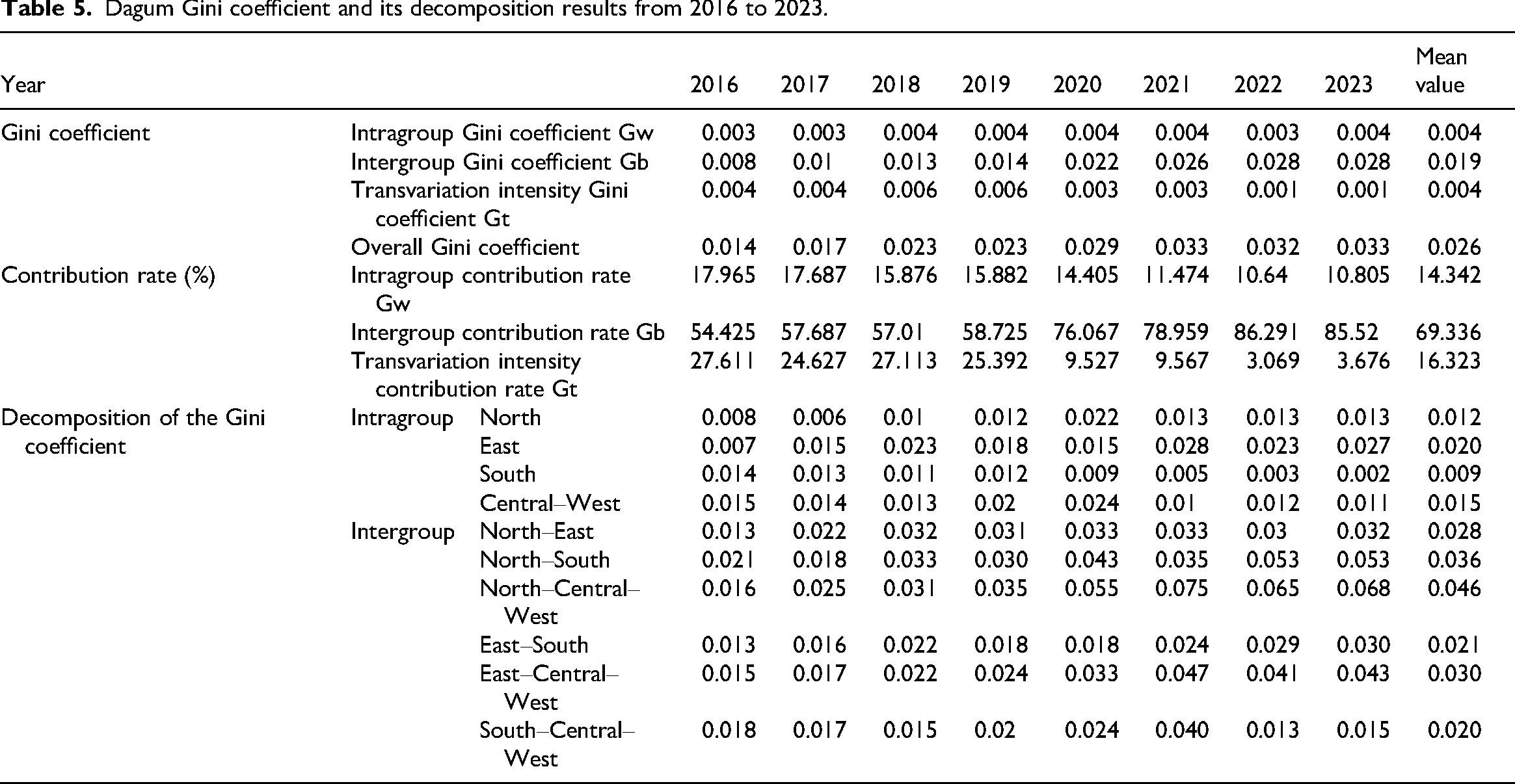
The Bootstrap self-sampling test results show that the 95% confidence interval of the intergroup contribution rate (with an average value of 69.3%) is [62.1%, 76.5%]. The entire confidence interval is well above 50% and does not contain the value of 50%. This indicates that the intergroup contribution rate is significantly higher than 50% at the significance level of α = 0.05, which means that regional differences constitute the main source of the overall Gini coefficient inequality.
This may be due to the fact that advantaged regions (such as Hangzhou, Ningbo and other industrial digitalization hubs) have achieved a benign interaction between industrial digitalization and energy conservation and carbon reduction by virtue of their advantages in technology, capital, talent and industrial foundation, leading to a rapid improvement in the coupling coordination degree. In contrast, less-developed regions (such as Quzhou, Lishui, which are dominated by traditional industries) have a weak foundation in industrial digitalization and face great pressure on energy conservation and carbon reduction from traditional high-energy-consuming industries. As a result, the synergy between industrial digitalization and energy conservation and carbon reduction has progressed slowly, with a slow increase in the coupling coordination degree.
In terms of intragroup differences, the four major regions (Northern Zhejiang, Eastern Zhejiang, Southern Zhejiang, and Central–Western Zhejiang) all show obvious characteristics of gradient distribution and persistent fluctuation. Eastern Zhejiang ranks first with an average intragroup Gini coefficient of 0.020, which remains consistently above the provincial average. Compared with traditional heavy chemical industries, Eastern Zhejiang boasts advanced manufacturing and digital economy. Ningbo's petrochemical base, Zhoushan's green petrochemical, Shaoxing's printing and dyeing cluster, etc. Digital transformation in these sectors requires large investment, long cycles, and complex technologies, which have widened the gap in coupling coordination degrees among different cities and industries, resulting in the highest intragroup Gini coefficient.
The intragroup Gini coefficients in Central–Western Zhejiang and Northern Zhejiang are at moderate level, 0.015 and 0.012, respectively. Regional corporate homogeneity, featured by similar enterprise types and minor scale differences, can effectively narrow the dispersion of regional development gaps, and the Gini coefficient, as a core indicator of regional inequality, generally decreases alongside the improvement of corporate homogeneity (Fan and Zhu, 2002). By contrast, corporate heterogeneity, manifested in distinct disparities in enterprise scale, technical endowments, and production efficiency, has been regarded as a key factor intensifying unbalanced regional development and driving up the Gini coefficient.
The average intragroup Gini coefficient of the Southern Zhejiang region is 0.009, which is significantly lower than the provincial average. Its intragroup differences display a slight downward trend during the sample observation period. This may be due to the fact that the Southern Zhejiang region (Wenzhou, Taizhou) is dominated by private small and medium-sized enterprises, forming a highly discrete industrial cluster. According to the 2023 regional economic data released by the Zhejiang Provincial Bureau of Statistics, small and medium-sized enterprises account for 92.7% of industrial enterprises above designated size in Southern Zhejiang (Wenzhou and Taizhou). Among them, private small and medium-sized enterprises account for 89.3%, which is far higher than the provincial average of 85.1%. These enterprises are mainly concentrated in segmented fields such as light industry manufacturing and small commodity processing, with high industrial concentration and homogeneous industrial development patterns.
That is, the scale of enterprises, the level of technology, the starting point of transformation and the challenges (capital, talent) are highly similar. And this fundamentally determines the small gap in the level of coupling coordination between enterprises, and lowers the overall benchmark of the Gini coefficient. Thus, Hypothesis H3 is statistically supported.
That is, most small and medium-sized enterprises in Southern Zhejiang focus on highly homogeneous segmented industries with a high similarity in industrial structure. The progress and implementation paths of digital transformation, energy conservation and carbon reduction are relatively consistent across the region. As a result, the disparities in the coupling and coordinated development levels among cities within the region are relatively small, leading to the lowest Gini coefficient.
From the perspective of dynamic change, except for the intergroup Gini coefficient between Southern and Central–Western Zhejiang, which shows a fluctuating downward trend. And all other interregional Gini coefficients exhibit an overall upward trend during the sample observation period.
As shown in Figure 3, the contribution rates of intragroup difference Gw, intergroup difference Gb, and transvariation intensity Gt fluctuated with both increases and decreases. Among them, the contribution rate of intergroup difference always dominated, with an average value of 69.336%, significantly higher than the intragroup contribution rate of 14.342% and the transvariation intensity contribution rate of 16.323%. Thus, Hypothesis H4 is statistically supported.
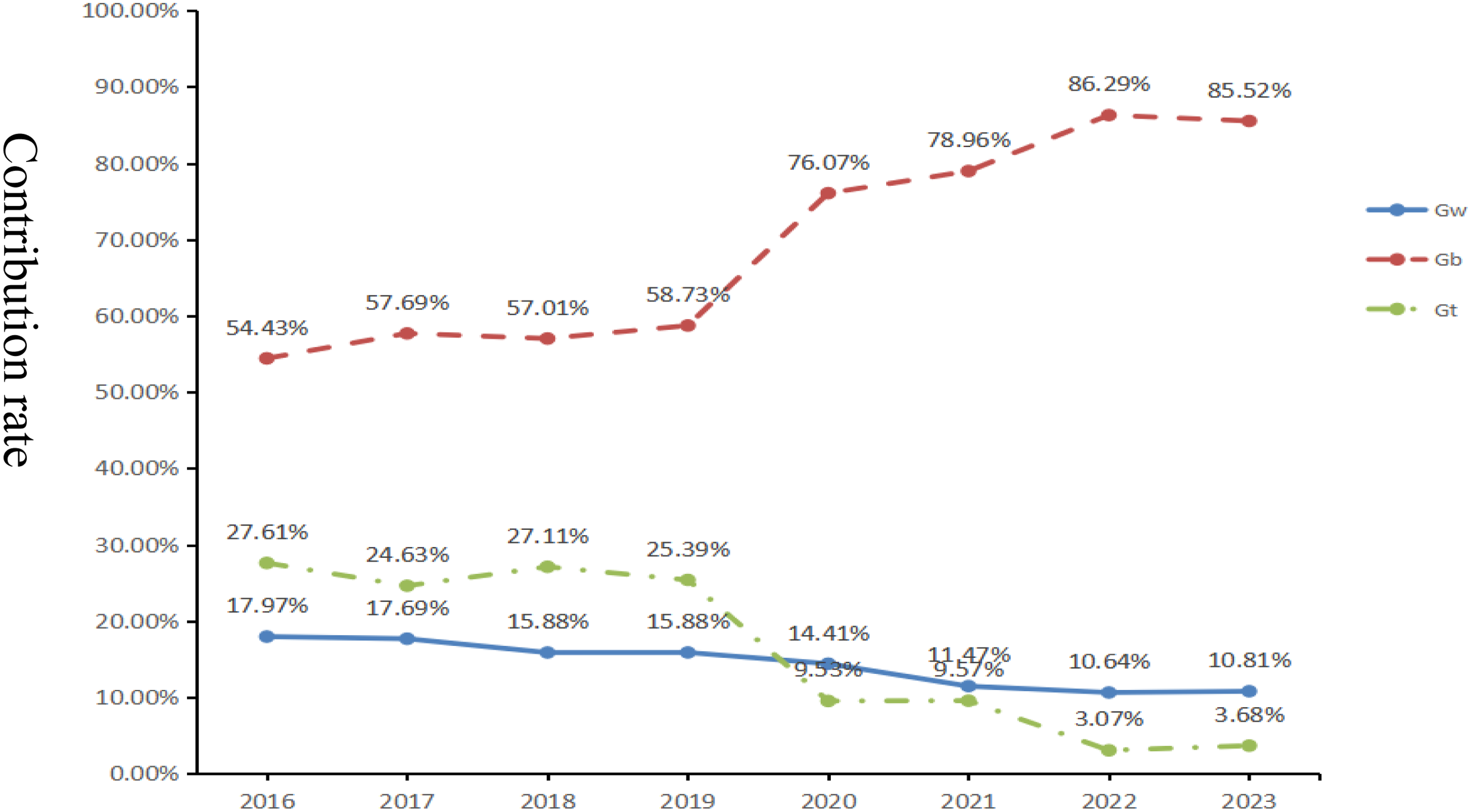
Evolution trend of contribution rate.
This indicates that intergroup development imbalance was the main factor driving the disparity in coupling coordination degree. While the overlapping effect among regional samples had a relatively limited impact on the overall disparity.
Before 2019, the contribution rate of transvariation intensity was higher than that of intragroup difference. However, in 2020, transvariation intensity dropped sharply to 9.53%. And from then to 2023, its value remained below the contribution rate of intragroup difference.
Dynamic evolution analysis based on kernel density estimation
The kernel density estimation method is used to analyze the dynamic evolution of the coupling coordination degree between industrial digitalization and energy conservation and carbon reduction in Zhejiang Province. The results show that 2016–2018 belongs to the preliminary differentiation stage. The main peak position is low and wide. There is a weak tailing on the right side. The synergy between digitalization and energy conservation and carbon reduction is in its infancy. The level of most regions is not high, but a few leading regions (such as Hangzhou and Ningbo) begin to explore and widen the gap.
The period of 2019–2023 belongs to the stage of rapid evolution, with the main peak moving obviously to the right, the height increasing and the width narrowing. Meanwhile, the right side has a new peak at a higher level, the carbon code is promoted, the overall coordination level is improved under the policy drive, and the inter-regional gap is narrowed. But it also shows a two-level differentiation. That is, the coupling coordination degree of some regions has entered a higher level range, but there are still some regions hovering in the middle and low level range.
By 2023, the kernel density curve will gradually shift to the right and the peak value will decrease, showing multipeak characteristics. It shows that some areas in Zhejiang Province have made significant progress in the integration of industrial digitalization and energy conservation and carbon reduction, and gradually develop from low-level coupling to moderate and good horizontal coupling.
This form also reveals the differentiated development path of different regions in Zhejiang Province. For example, some regions attach importance to measures such as digital talent reserve, digital construction, and digital basic access capabilities. These have achieved rapid improvement in coupling coordination. However, due to the limitations of many factors, some areas are still in the initial stage of coupling and coordinated development due to insufficient investment in industrial digital development and intelligent development.
Technology empowerment, structural optimization and management innovation: verification of the strengthening path of system coupling
In terms of the technology empowerment path, industrial robot density is selected as the proxy variable for digital technology empowerment, and energy consumption is adopted as the core indicator to measure the effectiveness of energy conservation and carbon reduction. Correlation analysis is conducted to verify the relationship between the two variables. The empirical results show that industrial robot density has a significant negative correlation with energy consumption (correlation coefficient r = −0.628, p < .01). This indicates that the robot density reflecting industrial digitalization can effectively improve energy utilization efficiency and reduce unit energy consumption, which verifies that technology empowerment plays a positive role through optimizing energy use monitoring and scheduling management.
In terms of the structural optimization path, the comprehensive index of industrial digitalization level is taken as the core explanatory variable, and the proportion of high-energy-consuming industries is set as the explained variable. The panel data correlation test method is adopted for empirical verification. The results reveal a significant negative correlation between industrial digitalization level and the proportion of high-energy-consuming industries (correlation coefficient r = −0.573, p < .01). This demonstrates that digitalization development can promote the low-carbon transformation of industrial structure. By optimizing factor allocation and phasing out backward production capacity, digitalization weakens the constraints of high-energy-consuming industries on energy conservation and carbon reduction, thereby strengthening the coupling and coordination level of the two major systems and echoing the core logic of the structural optimization path.
In terms of the management innovation path, the coverage rate of the carbon efficiency code is selected as the proxy variable for management innovation, and carbon emission intensity is adopted as the core measurement indicator of energy conservation and carbon reduction to verify the correlation between the two variables. The empirical data show that the coverage rate of the carbon efficiency code has a significant negative correlation with carbon emission intensity (correlation coefficient r = −0.496, p < .05). This indicates that management innovation under the digital background can precisely control carbon emissions and improve carbon management efficiency. It provides management-level support for strengthening the coupling relationship between industrial digitalization and energy conservation and carbon reduction, and verifies the practical feasibility of this path.
In summary, the verification results of the three paths demonstrate that technology empowerment, structural optimization, and management innovation can effectively strengthen the coupling and synergistic relationship between industrial digitalization and energy conservation and carbon reduction. The findings provide reliable empirical evidence for the formulation of targeted policies to promote coordinated low-carbon development.
Robustness test
First, this study replaces the original weight determination method. The PCA is adopted to recalculate the comprehensive indexes of industrial digitalization and energy conservation and carbon reduction, based on which the coupling coordination degree is reestimated. The results show that the temporal trend, regional ranking and spatial pattern of the recalculated coupling coordination degree are basically consistent with the benchmark results.
Second, the threshold criteria for coupling coordination classification are adjusted appropriately. By moderately revising the classification boundaries of the coupling coordination degree and redividing the coordination development types of each city, no systematic changes are observed in the coordinated development categories of prefecture-level regions.
Third, the data standardization method is replaced. The original research data are reprocessed using the Z-score standardization approach. The recalculated estimation results are highly consistent with the benchmark conclusions.
Fourth, an outlier elimination test is conducted. After excluding the sample of Hangzhou for reempirical analysis, the results still indicate that regional disparity remains the main source of overall development gaps, and the contribution rate of intergroup differences is still significantly higher than 50%, which is in line with the benchmark regression results.
The above series of robustness tests confirms that the core conclusions of this study are not affected by single measurement methods, subjective threshold settings or extreme sample interference, demonstrating that the research findings are reliable and possess strong robustness.
Conclusion
Based on the coupling theory, this paper makes an empirical analysis of the coordinated development of industrial digitalization and energy conservation and carbon reduction in Zhejiang Province. The main conclusions are as follows.
First, the level of synergy has steadily increased, but there is structural differentiation. The paper found that from 2016 to 2023, the coupling coordination degree of the two major systems in Zhejiang Province showed an overall upward trend, gradually transitioning from the primary stage to the intermediate coordination stage. However, there are significant differences in the coordinated development at the regional level. The coupling coordination degree in Northern Zhejiang is always in a leading position, the Eastern Zhejiang is close to the average level of Zhejiang Province, and the Southern Zhejiang and the Central–Western Zhejiang are lower than the average level of whole Province. Kernel density estimation further reveals the multipeak characteristics of the province. The coupling coordination degree in some areas has entered a high level range, but there are still some areas hovering in the middle and low level range.
Second, industrial digitalization drives energy conservation and carbon reduction through multiple paths. Among them, double coordination is the key. The empirical test confirms that industrial digitalization not only directly coordinates with carbon emission reduction through efficiency improvement effects (such as optimizing energy use), but also indirectly through synergistic effects (such as strengthening upstream and downstream cooperation in the industrial chain and promoting the integration of the two industries). Zhejiang’s industrial brain and future factory model and the full coverage of digital transformation of industrial enterprises are the successful practice of this collaborative path.
Third, facing endogenous bottlenecks, deepening collaboration requires precise implementation. The study points out that further synergy faces core challenges. The decoupling of manufacturing growth and energy consumption is not yet stable. The majority of small and medium-sized enterprises are facing the dilemma of insufficient transformation resources and capabilities. In addition, the lack of a unified carbon footprint database and standard system also restricts the refinement of management.
In summary, industrial digitalization and energy conservation and carbon reduction in Zhejiang Province have formed a significant synergistic relationship. However, its deepening development needs to go beyond inclusive promotion and turn to differentiated and precise intervention strategies. In the future, efforts should be made to break the bottleneck of the transformation of small and medium-sized enterprises and improve the database and standard system. And through the strengthening of benchmarking, it provides a replicable Zhejiang model for the whole country.
Discussion
The study found that the digital drive for carbon reduction goes beyond the simple logic of technical tool substitution. It realizes real-time monitoring, intelligent accounting and closed-loop management of carbon emissions through platforms such as industrial brain and carbon efficiency code. This is essentially a systematic reconstruction of production and management mode.
This study extends the coupling coordination theory from traditional physical and ecological fields to the research domain of dual digital-green transition, making up for the application limitations of existing coupling theories in the field of industrial transformation. Meanwhile, based on the sample differences between Southern Zhejiang and other regions in Zhejiang Province, it reveals the collaborative evolution law of industrial digitalization and energy conservation and carbon reduction under regional heterogeneity. Specifically, in regions with high enterprise homogeneity, the coupling and coordination level of digital and green transition is more balanced, accompanied by narrower regional development gaps with a lower Gini coefficient. The findings enrich the theoretical research on industrial collaborative transformation from the perspective of regional heterogeneity.
This study improves the traditional coupling coordination model. In response to its limitations in neglecting regional heterogeneity and temporal dynamics, dual correction factors of spatial and temporal weights are introduced to enhance the model's adaptability and measurement accuracy. The optimized model effectively addresses the “homogenization processing” defect existing in the traditional model when calculating regional coupling coordination, enabling estimated results to better reflect the actual regional development conditions. It also provides a referable methodological basis for future relevant research.
This study breaks the traditional policy orientation of universal promotion and proposes a policy design principle of targeted intervention and categorized governance. Considering the differences in enterprise homogeneity and coupling coordination levels across regions in Zhejiang Province, it constructs differentiated coordinated transition paths for digital-green integration. For example, in Southern Zhejiang featured by high homogeneity of small and medium-sized enterprises and balanced coupling coordination, it is suggested to strengthen industrial cluster collaboration and prioritize the inclusive application of digital technologies. For other regions with prominent enterprise heterogeneity and large regional disparities, top priorities should be given to bridging the transformation shortcomings of small and medium-sized enterprises in digital and green development, so as to narrow the transition gaps among enterprises.
Digitalization not only improves the efficiency of single point, but also breaks the information island within the enterprise and between the industrial chains through data flow. This has transformed carbon management from back-end statistics to process control, from macro estimation to precise measurement.
This echoes the theoretical point of view that the essence of digital transformation is business process reengineering. And it has injected a clear green low-carbon orientation. The practice in Zhejiang shows that the core coupling point of the synergy between industrial digitalization and energy conservation and carbon reduction lies in the integration and empowerment of data which is a new production factor.
From the perspective of industrial heterogeneity, regions with agglomerated high-energy-consuming and heavy industries face stronger rigid constraints on energy conservation and carbon reduction, while bearing higher investment costs for digital transformation upgrading, which results in greater resistance to the coordinated advancement of the dual digital and low-carbon transition. In contrast, regions dominated by low-carbon and high-tech industries such as electronic information possess superior technological foundations, enabling smoother integration between digitalization and green governance and achieving a faster improvement in coupling coordination levels. In terms of enterprise scale heterogeneity, large enterprises are equipped with sufficient capital, technology and talent reserves, making it easier to carry out systematic digital transformation for carbon reduction.
By comparison, small and medium-sized enterprises are significantly constrained by resource shortages and present prominent fragmented transformation characteristics, leading to weak coordinated and balanced development within the region. From the perspective of policy pilot heterogeneity, low-carbon pilot cities and digital transformation demonstration cities have formed an early development advantage relying on special policies, financial support and institutional innovation. Their overall coupling development level is superior to that of nonpilot cities, reflecting a significant differentiated empowerment effect of policy incentives.
This study also has limitations. First, the construction of the index system is comprehensive. However, there are still deficiencies in measuring digital soft power at the enterprise level. Second, the research focuses on the provincial macro level. In the future, the key factors affecting the collaborative decision-making of enterprises can be further analyzed in combination with micro enterprise data. In addition, the long-term performance of innovative tools such as carbon code and its impact on the market competition structure are also worthy of continuous follow-up research.
Footnotes

Funding
The authors disclosed receipt of the following financial support for the research, authorship, and/or publication of this article: This work was supported in part by the Quzhou Science and Technology Project, P.R. China, under Grant 2024K162. Soft Science Project of the Science Department of Zhejiang Province, P.R. China, under Grant 2025C35033.
Declaration of conflicting interests
The authors declared no potential conflicts of interest with respect to the research, authorship, and/or publication of this article.