






Abstract
Water scarcity in arid regions, such as Kabul, presents a critical challenge, further complicated by the inherent thermodynamic inefficiencies and high production costs of conventional single-basin solar desalination systems. These systems frequently experience significant exergy destruction and thermal instability, which hinder their practical deployment. To address these limitations, this study evaluates the Energy, Exergy, Exergoeconomic, and Environmental (4E) performance of a single-slope solar still enhanced with a porous wool layer and a phase-change material (PCM). Four configurations—Base, Porous, PCM, and the hybrid porous–PCM design—were analyzed to determine their capacity for performance improvement. The results demonstrate that the hybrid porous–PCM configuration provides the most effective performance. The cumulative thermal efficiency increased from 68.54% (Base) to 83.52% (hybrid), while exergy efficiency improved from 4.66% to 5.81%. Daily distilled water production rose from 4.22 L/m2 to 5.91 L/m2, representing a 40.1% enhancement. From an economic perspective, the specific cost of freshwater decreased from 0.019 USD/L in the Base system to 0.013 USD/L in the hybrid design, a 31.6% reduction. Environmentally, avoided CO2 emissions increased from 1.98 kg/m2·day to 3.00 kg/m2·day (a 51.5% improvement). These findings confirm that the combined porous–PCM architecture significantly mitigates exergy destruction and enhances cost-effectiveness, characterizing the integrated 4E framework as a viable approach for sustainable solar desalination in resource-constrained environments.
Introduction
Water scarcity remains a critical global challenge, particularly in arid and semiarid regions. Conventional industrial-scale desalination processes, such as reverse osmosis (RO) and multi-stage flash (MSF), while capable of high-volume water production, necessitate intensive energy consumption and expensive infrastructure (Alayi and Ebazadeh, 2025; Babaei et al., 2026). In contrast, solar stills (SSs) emerge as a passive, low-cost, and environmentally benign solution for decentralized freshwater production (Beik et al., 2020; Sangeetha et al., 2023). However, a primary limitation of conventional SS designs is their low thermal efficiency and limited water yield typically 4–5 L⁄m2⋅day, which restricts their commercial competitiveness. Therefore, current research is focused on hybrid solutions, such as the integration of phase change materials (PCMs) and porous media, to overcome these limitations, significantly enhance efficiency, and position solar distillation as a competitive and sustainable technology for water desalination (Kasaeian et al., 2024; Sivasankar et al., 2023). Conventional desalination technologies—including MSF and RO—provide high production rates yet suffer from excessive electricity consumption and operational cost, limiting their feasibility for small-scale or off-grid applications (Gupta and Solanki, 2024; Khan et al., 2024). Solar distillation systems, in contrast, utilize abundant solar radiation and simple construction principles, offering a low-carbon and economically attractive solution for decentralized freshwater production (Sharma and Birla, 2024).
Among solar desalination technologies, the SS remains one of the most widely investigated because of its mechanical simplicity and low capital requirement (Afolabi et al., 2023; Younes et al., 2023). The common single-slope flat-plate SS converts solar energy into vaporization heat within saline water, condensing vapor on the slanted cover to yield distilled water (Anika et al., 2024; Shajahan et al., 2022). However, the fundamental weakness of a conventional SS—its low thermal efficiency and limited freshwater yield (4–5 L/m2·day)—has stimulated extensive research into improving heat transfer, evaporation uniformity, and energy storage mechanisms (Bady et al., 2024; Hussain et al., 2023). One prominent enhancement technique is the integration of PCMs serving as thermal energy storage media (Chen et al., 2025). The PCM stores latent heat during daytime melting and releases it during nocturnal solidification, thereby sustaining evaporation when solar irradiation declines (Murali et al., 2015; Rahman et al., 2025). Typical PCM candidates such as paraffin, lauric acid, and eutectic mixtures provide high latent heat of fusion, thermal stability, and nontoxicity (El-Sebaii et al., 2009; Matrawy et al., 2015). Beik et al. (2020) validated PCM utilization in multisided pyramid SSs for passive and active modes, reporting up to 25% productivity improvement. Hussain et al. (2023) conducted transient solidification analysis using lauric acid PCM and achieved 28% yield enhancement in stepped basins. Likewise, Sharma and Birla (2024) employed composite microcapsulated PCM to strengthen heat distribution, thereby increasing both energy and exergetic efficiencies of the basin. Kasaeian et al. (2024) reviewed PCM integration across SS types, revealing that hybrid designs combining conductive additives or nanoparticles (Al2O₃, CuO) optimize charging–discharging performance.
Advancements in solar desalination technology have increasingly prioritized the integration of porous media within the evaporative basin. These materials serve to augment the effective evaporation surface area, intensify capillary driven moisture transport, and mitigate local temperature gradients, thereby collectively enhancing vapor generation rates, as documented by Jobrane et al. (2022). Sivasankar et al. (2023) demonstrated that vertical-wick configurations improved the productivity of a single-basin still by 23%. Setareh et al. (2024) experimentally proved that using porous fillers in stepped SSs enhanced evaporation uniformity and achieved 18–25% performance gain compared with the plain basin. Gupta and Solanki (2024) advanced this concept by combining steel-wool wick fibers with nano-enhanced PCM, achieving 42% thermal and 19% exergy efficiency improvement in double-slope stills. These studies collectively confirm that porous media enhance convective heat transfer and molecular diffusion directly at the air–water interface.
The recent tendency in solar desalination design focuses on multicomponent hybridization, integrating PCM, porous materials, reflectors, and condensers to exploit their synergistic effects (Agrawal et al., 2017; Gaur and Tiwari, 2010). Elamy et al. (2024a) developed a coiled SS with vertical wick distillers and nanomaterial-infused PCM, achieving notable gains in both water yield and condensation rate. Similarly, Elamy et al. (2024b) formulated tubular SSs supported by nano-PCM and wick cords, obtaining multifaceted thermal–exergetic improvements. Moreover, Khan et al. (2024) optimized single-slope stills using Al2O₃ nanoparticle PCM, demonstrating efficiency improvement through better heat distribution. Despite these wide-ranging modifications, most studies evaluate performance only in terms of energy and exergy, overlooking life-cycle cost and environmental footprints essential for sustainable technology assessment (Nakade et al., 2024).
Classically, energy and exergy analyses quantify system efficiency and irreversibility. The former assesses the quantity of thermal energy conversion, whereas the latter identifies the quality of energy and potential work output (Chammam et al., 2026; Rajhi et al., 2024). Although these two perspectives provide useful thermodynamic insight, they do not communicate the economic feasibility or environmental effect of new designs. Recent works such as Shajahan et al. (2022) incorporated exergoeconomic parameters, linking silver-nanoparticle PCM improvement to 25% cost reduction per liter of potable water. Khan et al. (2024) advanced energy–exergy coupling with hybrid nano-PCM, revealing notable efficiency gains but still neglecting emission and sustainability quantification.
Consequently, contemporary research advocates a comprehensive Energy–Exergy–Exergoeconomic–Environmental (4E) framework to capture technical, financial, and environmental criteria simultaneously (Nakade et al., 2024; Setareh et al., 2023). In this methodology, energy and exergy efficiencies detail intrinsic performance, the exergoeconomic model introduces cost rate of exergy destruction, and the environmental analysis estimates CO2 mitigation and lifecycle emission reduction relative to grid-based desalination. Limited 4E studies exist in solar distillation; for instance, Bady et al. (2024) analyzed conical stills with copper fins embedded by PCM and emphasized combined thermodynamic-economic evaluation. Recent advances also reveal deeper optimization using dual-layer porous beds and high-conductivity encapsulated PCMs. For instance, Chen et al. (2025) developed a graphene-foam-embedded SS achieving 92 % thermal uniformity and a 35 % increase in yield. Similarly, Rahman et al. (2025) modeled a PCM–fiber composite still under variable irradiance, reporting exergy efficiency improvements up to 6.1 %. These latest findings underscore the necessity of combined porosity–latent-heat coupling—an aspect quantitatively addressed by the present 4E model.
Although numerous recent studies have investigated PCM-integrated or porous-media SSs, most existing works examine these enhancements individually and primarily emphasize either thermal or exergetic performance. Furthermore, the majority of reported models employ generalized assumptions or idealized weather inputs rather than location-specific climatic data. Importantly, none of the available studies has addressed the 4E interdependencies or the component-level exergy destruction mechanisms in a porous–PCM flat-plate SS.
To address these gaps, the present study develops a unified and fully coupled 4E analytical framework for a hybrid porous–PCM single-slope SS operating under the actual continental climate of Kabul. The model integrates energy, exergy, exergoeconomic, and environmental formulations within a consistent thermodynamic structure and incorporates a wool-based porous layer in combination with a paraffin-based PCM block. Unlike prior works limited to partial 4E assessments, this study evaluates thermal efficiency, second-law performance, freshwater cost, and CO2-emission reduction simultaneously, while quantifying exergy destruction for each subsystem using a component-wise second-law balance. This holistic analysis enables a more rigorous and practically relevant understanding of the coupled behavior of porous media and PCM under real climatic conditions.
Methodology
System description
The investigated solar desalination unit is a single-slope, flat-plate SS integrated with a capillary-driven porous wool layer and a latent-heat-storage PCM compartment. The experimental setup was deployed in Kabul, Afghanistan (34.55° N, 69.21° E; elevation: 1790 m), a location characterized by a semi-arid continental climate. The system features a 2 m × 1 m basin and a glass cover tilted at 15°, optimized for the local solar zenith angle. To promote efficient evaporation and thermal uniformity, a 1-cm thick porous wool layer is utilized; this medium is characterized by a porosity of 0.85, a permeability of 10−9 m2, and a high moisture retention capacity (60–70% by volume), ensuring robust capillary rewetting and mitigation of dry-patch formation on the basin surface. Beneath the basin, a 5 cm thick compartment is filled with RT-50 paraffin, selected for its high latent heat of fusion and chemical compatibility. Its phase-change temperature (Tm = 50 ± 2°C) is specifically matched to the thermal operating envelope of the still under Kabul's climate, where peak irradiance consistently drives basin temperatures above 60°C, facilitating optimal latent-heat buffering during the diurnal-nocturnal cycle. While RT-50 is known for high cyclic stability, potential long-term operational phenomena—including subcooling, chemical degradation of the PCM, and the durability of the porous wool under sustained high-salinity conditions—are acknowledged as critical factors requiring targeted experimental verification. To ensure a consistent computational framework and enable an isolated analysis of the performance-enhancing materials, the geometric specifications of the SS, including basin dimensions, cover tilt, and layer thicknesses, were maintained uniform across all four investigated operational scenarios (Base, Porous, PCM, and Porous + PCM).
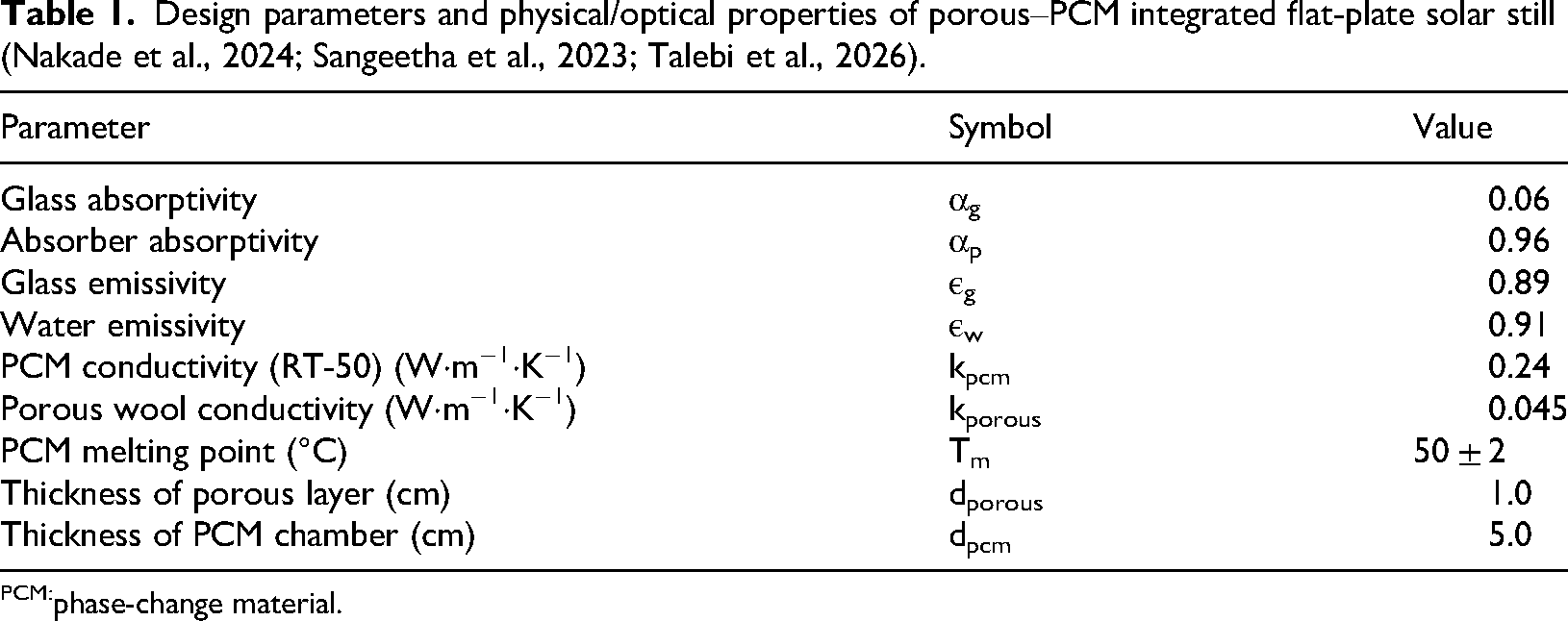
The integrated system assembly, including the basin, capillary layer, PCM chamber, and thermal insulation, is illustrated in Figure 1, with comprehensive thermophysical properties summarized in Table 1. The analytical framework evaluates four distinct operational scenarios: Base, Porous, PCM, and the combined Porous + PCM configuration. The schematics presented in Figure 2 delineate these structural variations, highlighting the synergistic mechanism of capillary-driven evaporation and PCM-assisted thermal regulation.
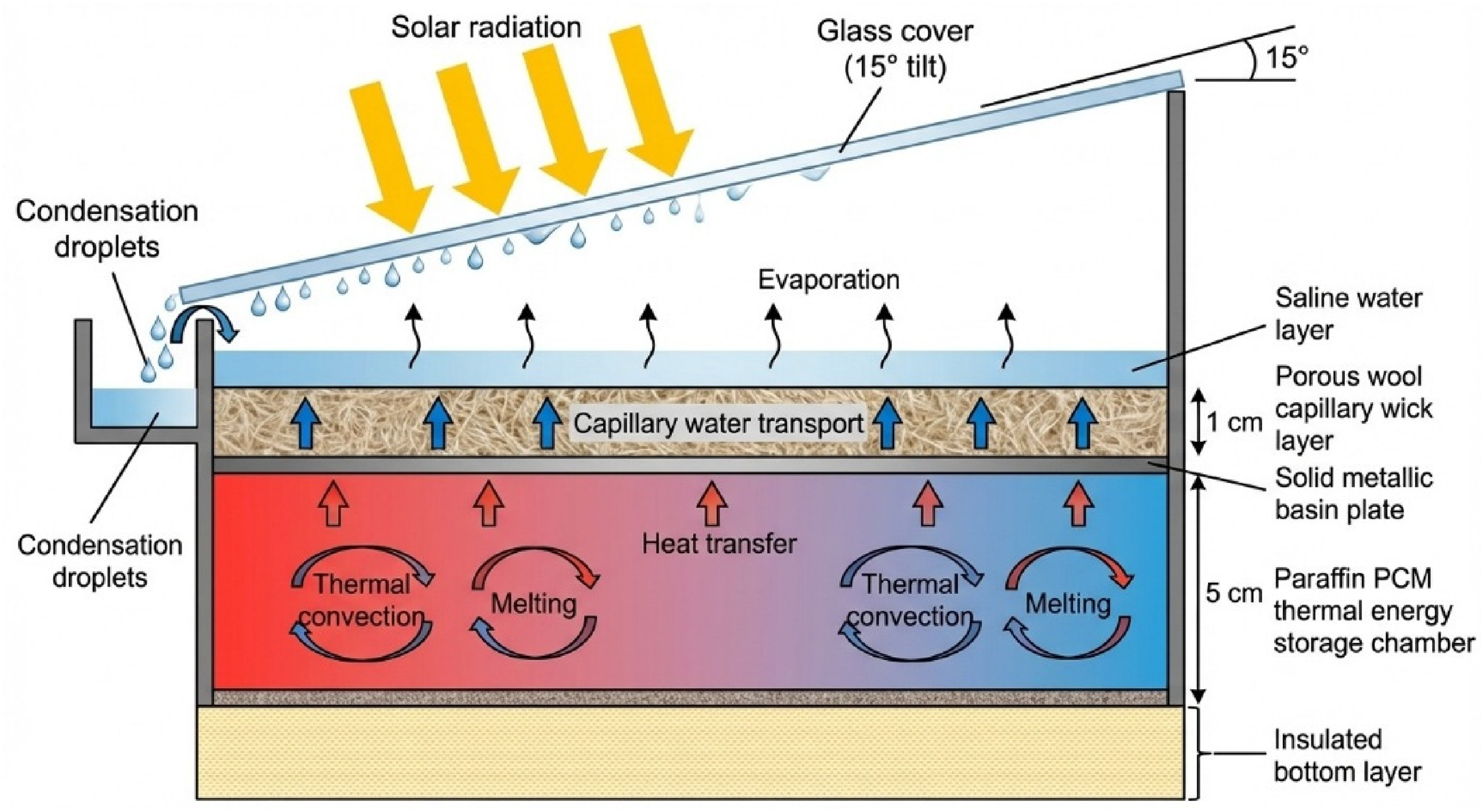
Schematic section of the porous–PCM integrated single-slope solar still, tilted at 15°, showing glass cover, saline water layer, 1 cm wool porous layer, 5 cm PCM chamber, and insulated bottom. Solar radiation induces evaporation and condensation beneath the glass surface.
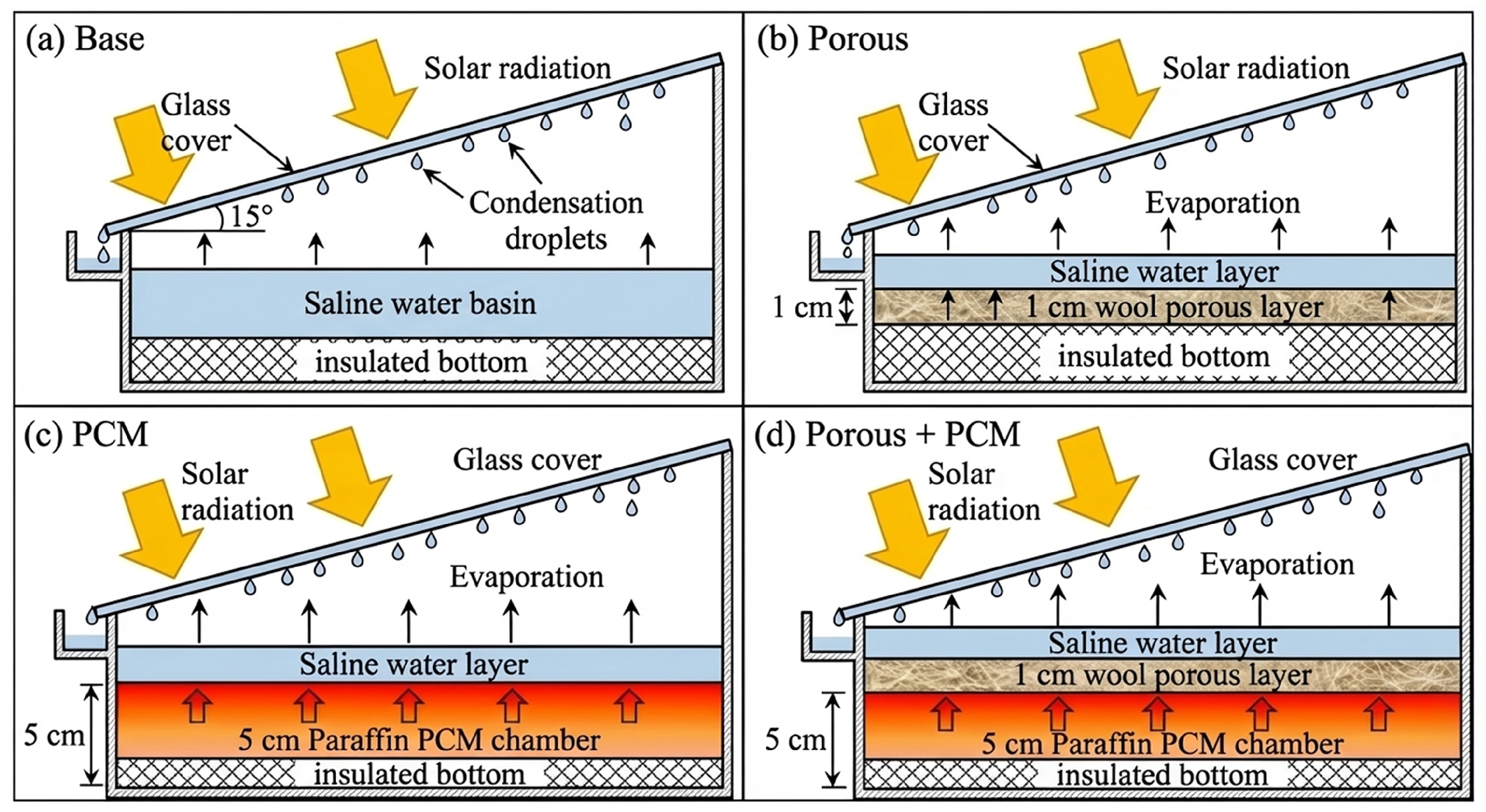
Schematic representation of the computational domains and modeling configurations for the four investigated cases: (a) baseline solar still, (b) still integrated with a capillary-driven porous wool layer, (c) still integrated with a PCM thermal storage compartment, and (d) hybrid still incorporating both porous wool and PCM.
Design parameters and physical/optical properties of porous–PCM integrated flat-plate solar still (Nakade et al., 2024; Sangeetha et al., 2023; Talebi et al., 2026).
phase-change material.
Thermodynamic and modeling assumptions
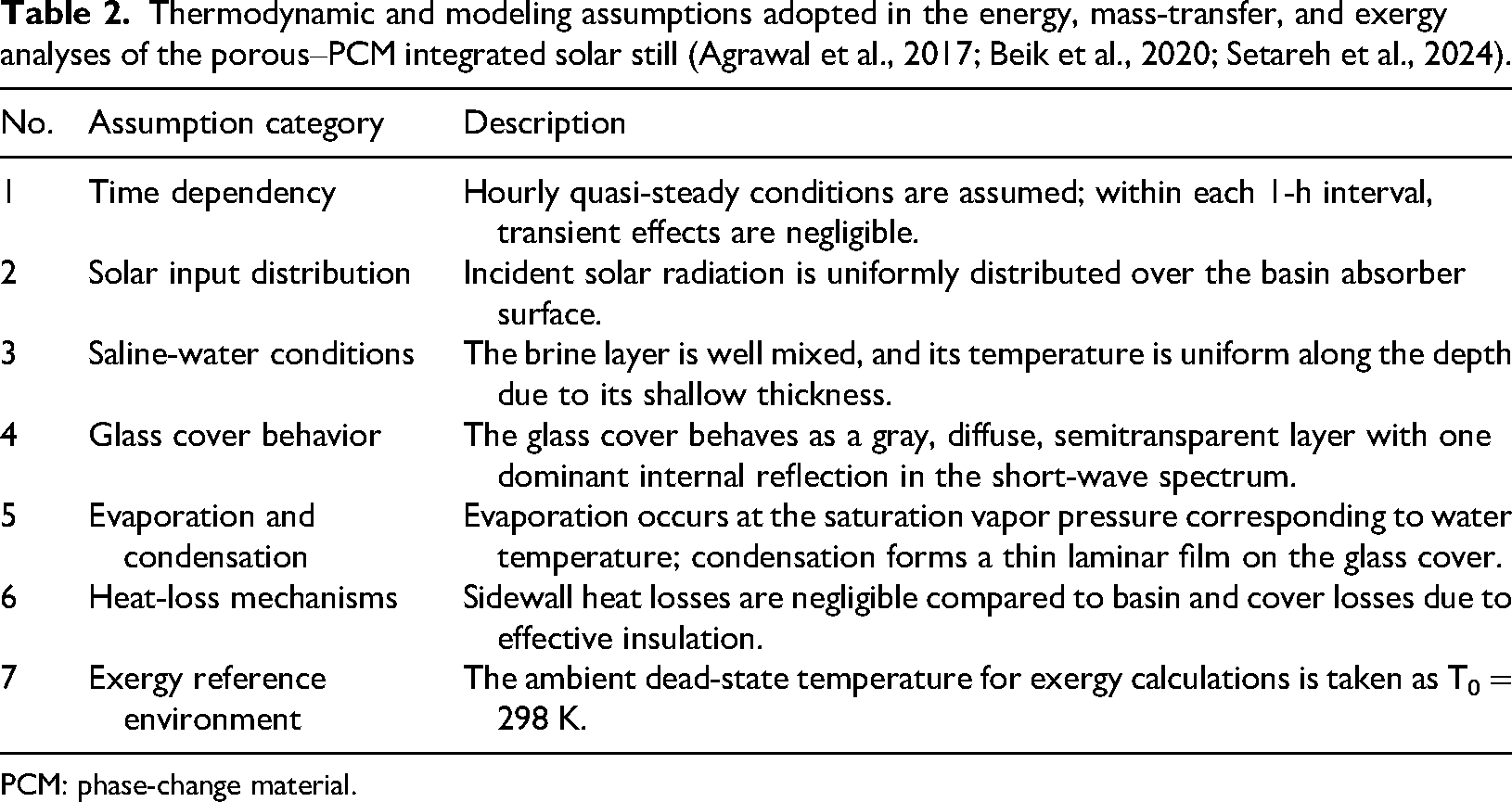
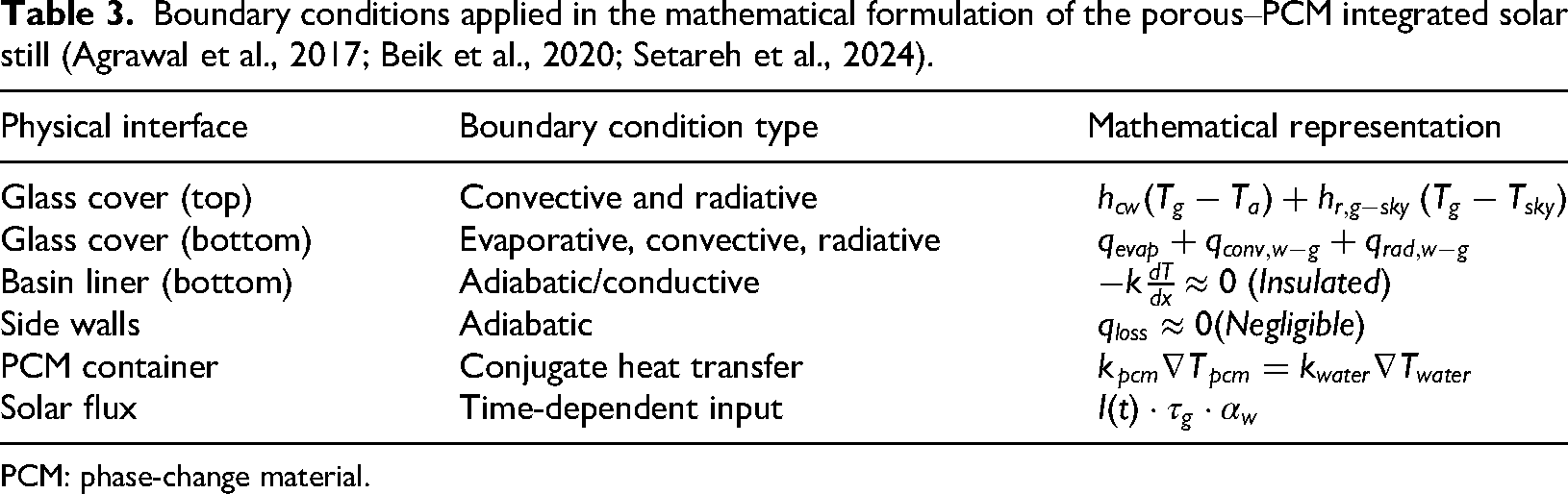
To ensure a rigorous and traceable formulation of the governing equations, the thermodynamic and modeling assumptions underlying the present study are explicitly defined prior to the derivation of the energy, mass-transfer, and exergy balances. These assumptions reduce the inherent complexity of the coupled heat- and mass-transfer processes in the porous–PCM integrated SS while preserving the dominant physical mechanisms governing evaporation, condensation, and thermal storage. Specifically, the assumptions establish: (i) the temporal framework of the analysis, (ii) the spatial uniformity of key state variables, (iii) the treatment of radiative, convective, and evaporative heat-transfer modes, and (iv) the thermodynamic reference environment required for exergy evaluation. Based on these assumptions, the governing conservation equations presented in the thermal analysis, exergy analysis, exergoeconomic analysis, and environmental analysis sections are systematically derived from first- and second-law formulations applied to each control volume (basin water, porous medium, PCM layer, and glass cover). The complete set of assumptions is summarized in Table 2. In addition, the boundary conditions required to close the mathematical model and ensure a well-posed formulation are explicitly provided in Table 3. These include the external heat-exchange mechanisms, interfacial transport processes, and solar energy input to the system.
Thermodynamic and modeling assumptions adopted in the energy, mass-transfer, and exergy analyses of the porous–PCM integrated solar still (Agrawal et al., 2017; Beik et al., 2020; Setareh et al., 2024).
PCM: phase-change material.
Boundary conditions applied in the mathematical formulation of the porous–PCM integrated solar still (Agrawal et al., 2017; Beik et al., 2020; Setareh et al., 2024).
PCM: phase-change material.
Thermal analysis
The thermal behavior of the basin water is evaluated using a first-law energy balance under hourly quasi-steady conditions. The absorbed heat flux is expressed as equation (1):
where 
Here, 
The enthalpy of evaporation Lw varies with water temperature Tw (°C) as provided in equation (4):
The above relations are derived directly from energy conservation applied to the basin water control volume, assuming uniform water depth and negligible kinetic/potential energy effects.
Exergy analysis
Exergy represents the maximum useful work potential of a system with respect to the ambient dead-state environment. In the present model, the exergy analysis is performed for each subsystem of the SS (basin water, porous layer, PCM block, and glass cover) to quantify the internal irreversibilities and the distribution of exergy destruction.
Solar exergy input
The exergy content of incident solar radiation is evaluated using the Petela formulation, which accounts for the finite temperature of the sun and the ambient environment (equation (5); Anika et al., 2024):
Exergy of vapor formation
The useful exergy transferred from the saline water to the produced vapor is calculated from the mass-flow rate and the thermodynamic properties at the water–vapor interface (equation (6); Rahman et al., 2025):
where
Exergy destruction for each control volume
For every subsystem ii (basin water, porous layer, PCM block, glass cover), the exergy destruction is evaluated from the second-law balance (equation (7); Agrawal et al., 2017):
All heat-transfer exergy inflows and outflows are computed as (equation (8)):
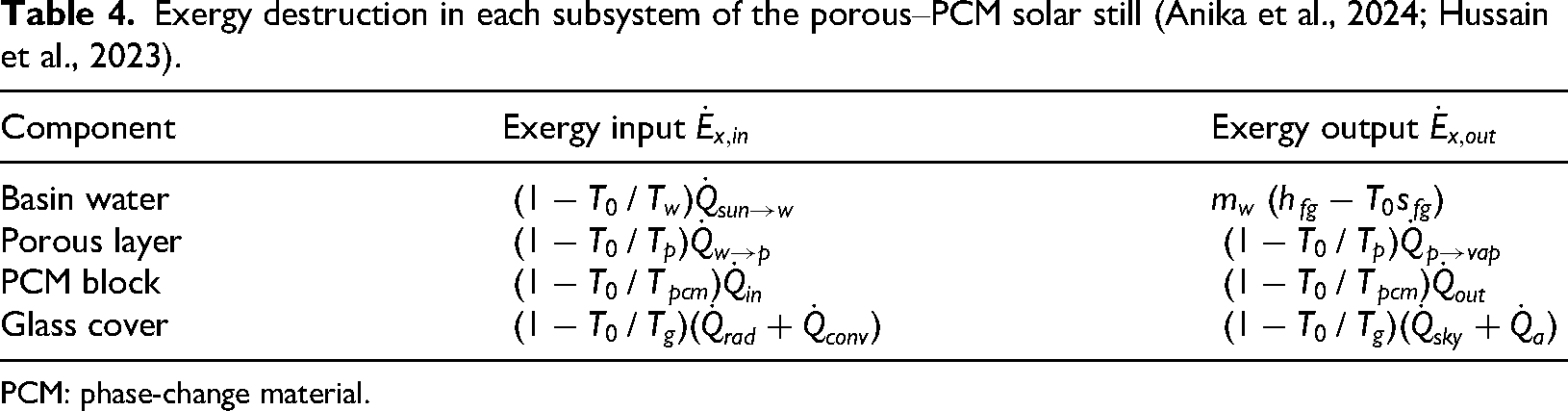
The corresponding irreversibilities associated with conduction, evaporation–condensation, and PCM melting/solidification are inherently included in equation (7). A concise component-wise calculation structure—summarizing exergy input, exergy output, and resulting exergy destruction for each control volume—is presented in Table 4.
Exergy destruction in each subsystem of the porous–PCM solar still (Anika et al., 2024; Hussain et al., 2023).
PCM: phase-change material.
Exergy destruction distribution
Unlike the earlier draft, the exergy destruction shares of the PCM, porous layer, basin water, and glass cover are not assumed. Instead, the percentage assigned to each component is computed from equation (9) (Hussain et al., 2023):
Total exergetic efficiency
The overall exergetic performance of the system is expressed as equation (10) (Anika et al., 2024):
The subsystem distribution of exergy destruction is calculated under steady-state thermal conditions, demonstrating the highest contribution of the PCM block during charging/discharging phases.
Exergoeconomic analysis
The exergoeconomic analysis quantitatively links thermodynamic irreversibilities to the economic performance of the SS by assigning monetary values to exergy streams associated with heat transfer and freshwater production. The cost rate of exergy destruction is defined as equation (11):
The cost rate of exergy destruction (
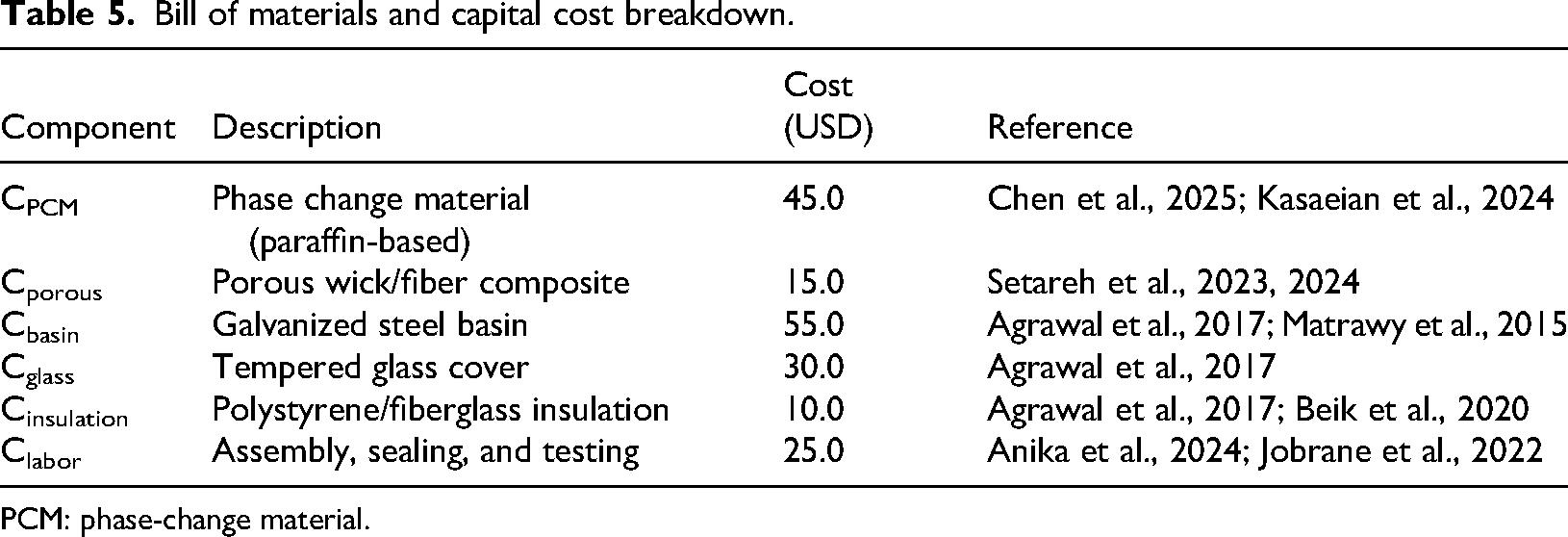
Bill of materials and capital cost breakdown.
PCM: phase-change material.
The annualized capital expenditure is derived using the Capital Recovery Factor, defined by the interest rate (i = 10%) and the projected system lifetime (n = 15 years) (equation (13)):
In addition to capital expenditure, operation and maintenance costs are represented as a fixed fraction of the initial investment (equation (14)) (Kasaeian et al., 2024; Setareh et al., 2023):

where 
Specific cost of freshwater (SPECO framework)
The specific cost of distilled water is evaluated using the Specific Exergy Costing (SPECO) approach, by normalizing the total annual cost with respect to the annual freshwater production equation (16) (Anika et al., 2024; Chen et al., 2025):
where 
where
Payback period
The simple payback period (PBP) is used as an additional economic indicator and is defined as equation (18):
The calculated PBP of 185 days under optimal conditions reflects the enhanced productivity of the porous–PCM hybrid configuration. Considering variations in regional economic factors, maintenance requirements, and the long-term performance degradation described by equation (17), a conservative PBP range of 180–250 days is projected, which aligns with the economic feasibility benchmarks reported in recent solar distillation literature (Anika et al., 2024; Chen et al., 2025).
Environmental analysis
The environmental performance of the proposed system is evaluated based on its operational-phase CO2-avoidance potential, following widely adopted methodologies in solar desalination studies. This approach compares the freshwater produced by the SS with that generated by a conventional electricity-driven desalination system. Since CO2 emissions are associated with electricity consumption rather than water production itself, the avoided emissions are calculated by first estimating the equivalent electrical energy required to produce the same amount of freshwater equation (19) (Anika et al., 2024; Kasaeian et al., 2024):
where 
where 
The net annual environmental benefit is therefore expressed as equation (22):
To further evaluate environmental sustainability, the eco-sustainability index is defined as equation (23):
A higher Eco-Index indicates improved environmental performance. Based on Kabul's climatic conditions, the embodied emissions of PCM and wool account for less than 3–5% of the total annual avoided CO2 emissions. This indicates that the hybrid porous–PCM configuration provides a substantial net environmental benefit, while maintaining a transparent distinction between operational impacts and material-related emissions. Therefore, the system can be considered a promising low-carbon desalination solution under high solar irradiance conditions, without overstating its environmental performance as a complete LCA. To facilitate comparative environmental footprint analysis, the system's performance is further quantified using an environmental sustainability index (expressed in Pt/L), where a lower value indicates reduced impact per unit of freshwater produced.
Model validation
The developed 4E analytical framework was validated using three independent and widely accepted experimental datasets reported in the literature, as conducting in-house experimental measurements under Kabul's climatic conditions was not feasible due to the absence of specialized solar desalination testing facilities. The validation involved benchmarking the model predictions against the experimental results of Beik et al. (2020), Setareh et al. (2024), and the 4-mm saline water depth experiment reported by Jobrane et al. (2022). These datasets were selected because they provide robust, well-controlled measurements with documented uncertainties and thermal–optical characteristics comparable to the configuration modeled in this study. Hourly freshwater production, cumulative daily yield, and basin/glass temperature trends were extracted from the published experimental results and directly compared with the predictions of the present numerical model. The comparison demonstrates strong agreement between the model output and the experimental measurements, with a mean absolute error (MAE) of 45 mg and a root mean square error (RMSE) of 55.9 mg, which fall within the acceptable deviation range commonly reported for numerical thermal–desalination models. This multidataset validation confirms that the developed 4E model accurately captures the coupled heat–mass transfer phenomena governing the performance of porous–PCM SSs.
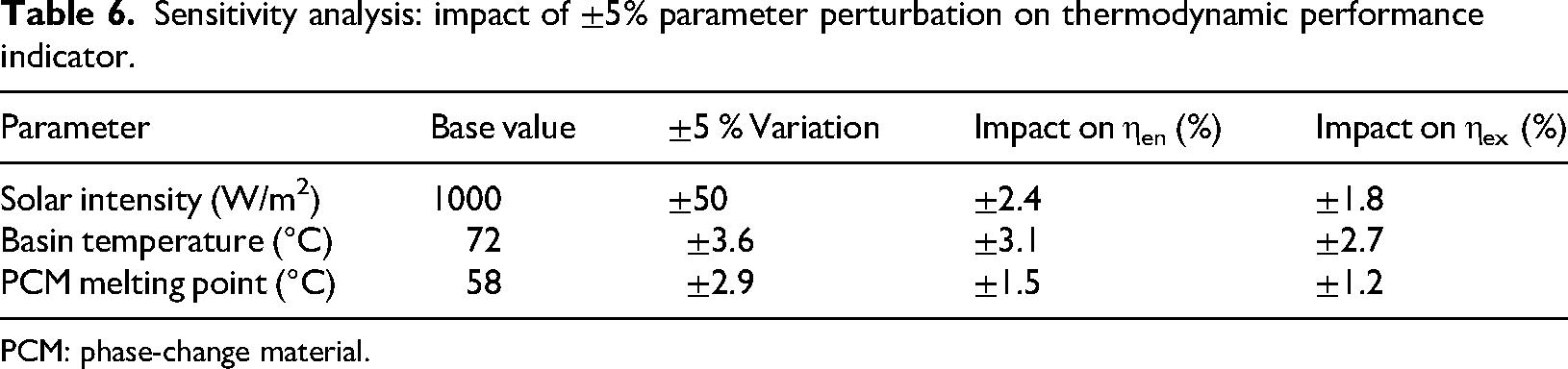
In addition, a comprehensive parametric sensitivity analysis and uncertainty propagation assessment were conducted to ensure model robustness. Variations of ±5% in solar irradiance, PCM melting point, basin temperature, and saline water depth resulted in less than 4% deviation in energy and exergy efficiency, demonstrating the numerical stability and reliability of the model. Therefore, the combined validation approach—using literature experimental datasets, quantitative error analysis, and uncertainty assessment—provides strong evidence for the credibility of the proposed 4E analytical framework.
Results and discussion
Validation of the numerical model
A validation procedure was performed to determine the accuracy of the 4E analytical model. The model was benchmarked against the experimental measurements of a single-slope SS, as reported by Jobrane et al. (2022). This dataset was selected due to its well-defined boundary conditions and control measurements. The comparative results are presented in Figure 3, illustrating the alignment between the predicted hourly cumulative yield and the experimental observations. To assess the model's performance, the MAE and RMSE were calculated, resulting in MAE = 45 mg and RMSE = 55.9 mg. These values fall within the range of deviations observed in previous numerical studies of solar thermal desalination systems. Additionally, the consistency of the model was checked against other reported datasets, specifically Beik et al. (2020) and Setareh et al. (2024) which show similar trends. The agreement between the numerical predictions and the referenced experimental data indicates that the model represents the radiative, convective, and evaporative transport phenomena within an acceptable margin of error. These findings support the use of the model for the subsequent 4E parametric analyses presented in this study.
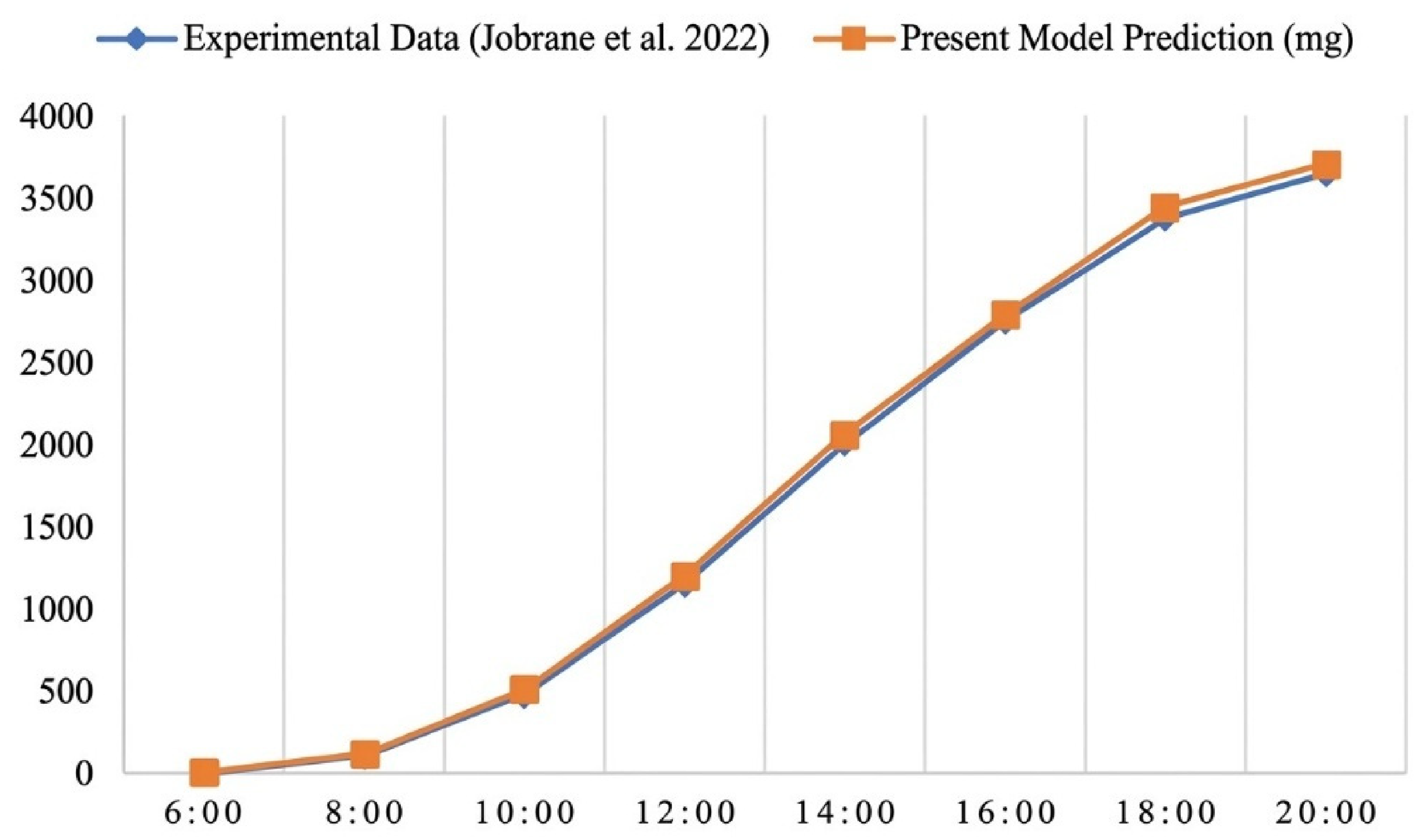
Validation of the numerical model using experimental data reported by Jobrane et al. (2022).
Thermal and energy performance
As shown in Figure 4, the hourly temperature profiles reveal significant thermal stratification. The porous–PCM system reached a peak basin temperature of 72°C at 13:00 h, which is a substantial 20% increase over the 60°C observed in the Base system. Physically, this enhancement is driven by the synergistic integration of the porous wool and PCM; the porous layer serves to decrease the convective boundary layer resistance at the water–air interface, while the PCM acts as a thermal buffer that mitigates the diurnal temperature fluctuations. By capturing excess solar radiation as latent heat, the PCM stabilizes the thermal gradient within the basin, effectively suppressing convective heat losses to the glass cover and ensuring a higher thermal potential for sustained evaporation.
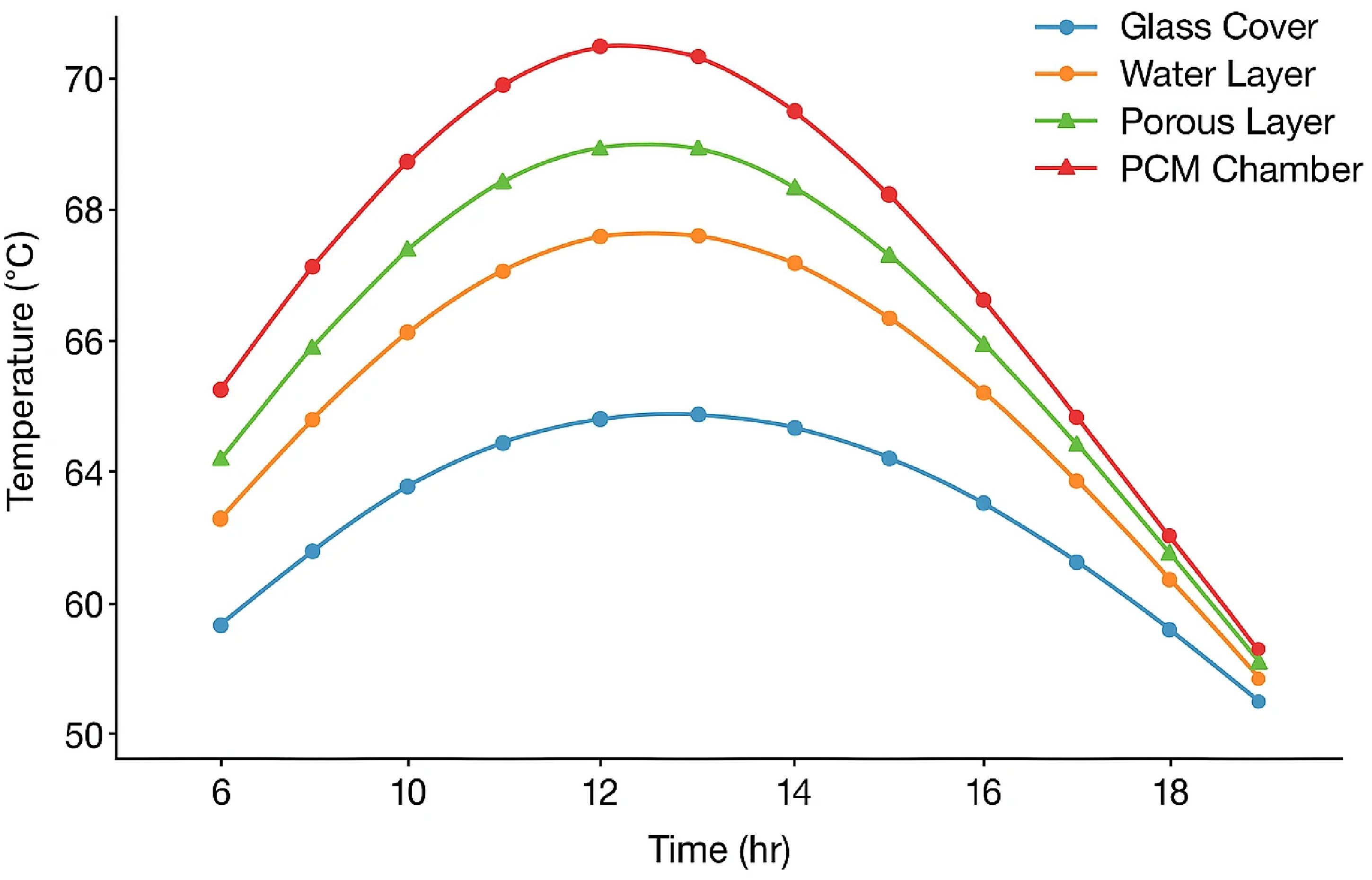
Hourly temperature variation of water, glass, porous, and PCM layers for different configurations.
The instantaneous energy-efficiency profile in Figure 5 highlights a peak efficiency of 38.4% for the porous–PCM configuration, significantly outperforming the Base (23.5%), Porous (28.1%), and PCM-only (32.6%) systems. This improvement is not merely a quantitative increase; it represents a fundamental shift in the mass transfer regime. The porous layer enhances the evaporative mass transfer coefficient through capillary-driven rewetting, ensuring a constant, thin-film evaporation surface. Concurrently, the PCM provides a “thermal flywheel” effect, releasing stored energy during late-afternoon hours when solar input diminishes. This coupled mechanism minimizes the internal entropy generation associated with finite-temperature-difference heat transfer, leading to a cumulative daily distillate yield of 5.91 L/m2, which represents a 40% improvement over the Base case. These results demonstrate that the synergy between porous-capillary action and latent heat storage optimizes the system toward a quasi-isothermal evaporation process, a finding consistent with the thermodynamic behavior.
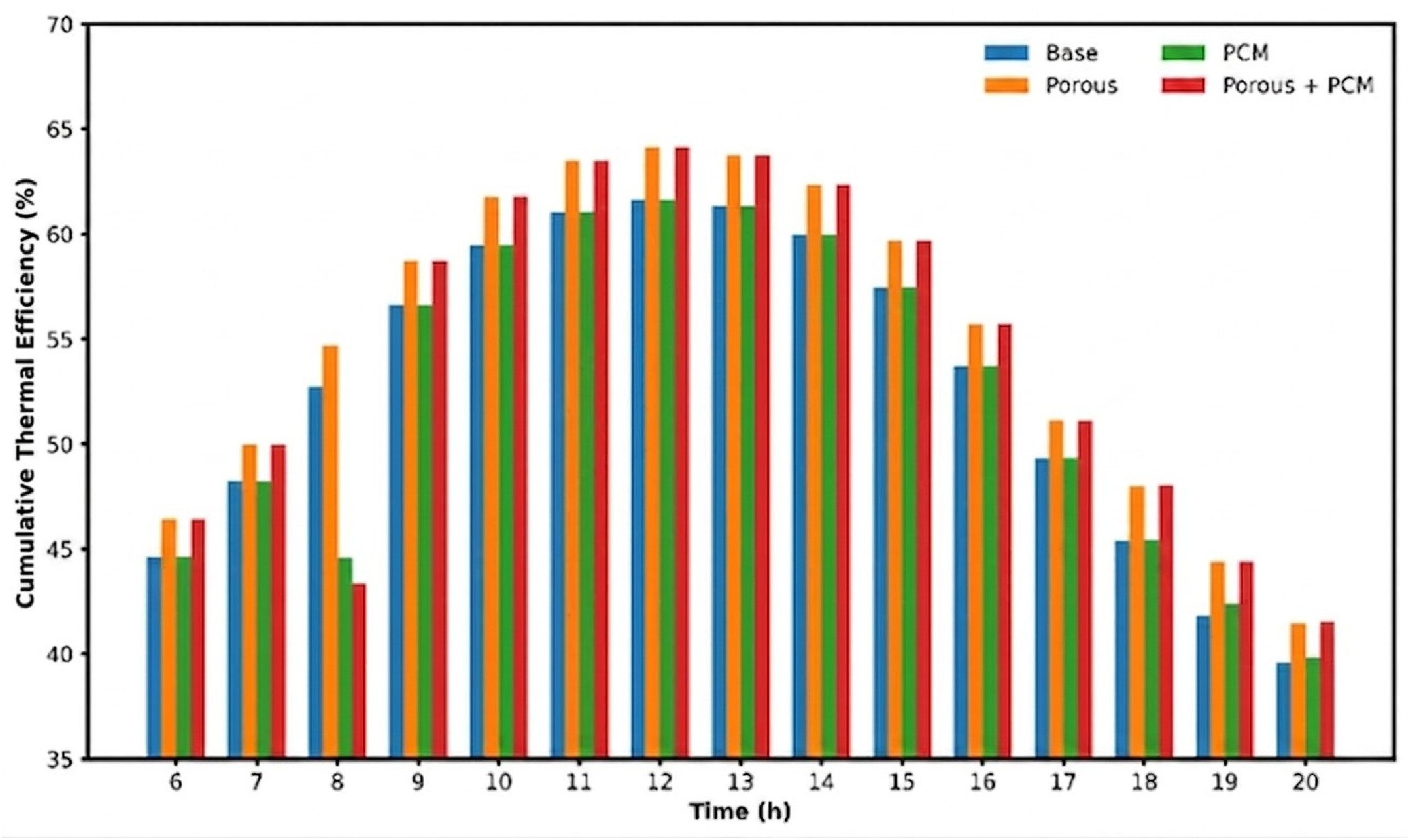
Instantaneous cumulative thermal efficiency versus operation time for Base, Porous, PCM, and porous–PCM models.
The cumulative daily freshwater yield, presented in Figure 6, reveals a total distillate production of 4.22 L/m2. day for the Base configuration, rising to 5.91 L/m2. day for the porous–PCM hybrid system—a 40% performance enhancement. Beyond these quantitative gains, the data reflects a fundamental optimization of the system's thermodynamic cycle. The superior performance of the hybrid configuration, particularly between 16:00 and 19:00 h, is physically dictated by the synchronization of capillary-driven evaporation and latent heat discharge. While the Base system suffers from a sharp decline in mass transfer rates as solar irradiance wanes, the PCM layer acts as a “thermal flywheel,” releasing stored enthalpy to maintain the basin temperature above the threshold required for sustained vapor production.
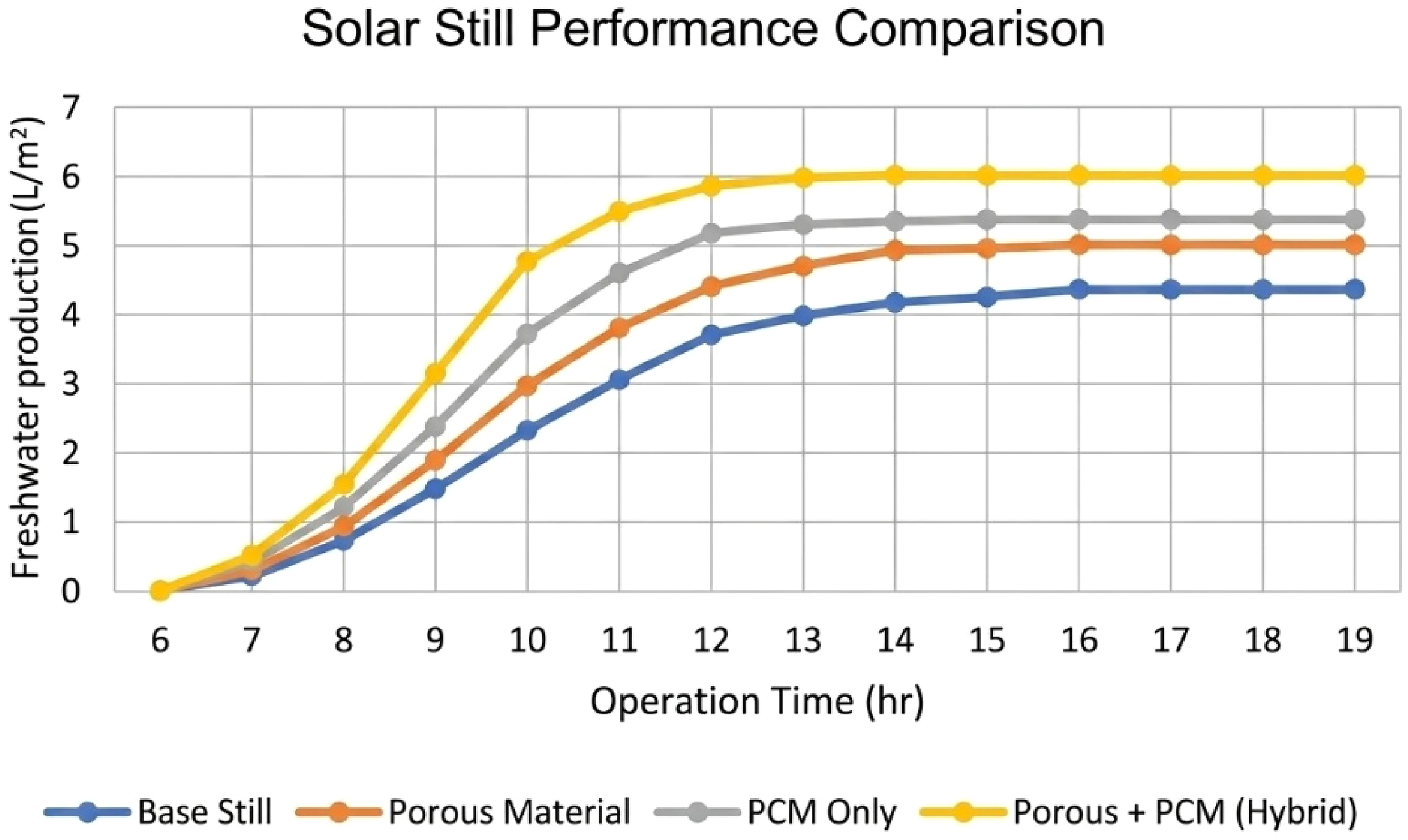
Daily freshwater productivity comparison for the base, porous, PCM, and porous + PCM solar stills.
This temporal extension of the evaporation window is a direct consequence of minimizing the exergy destruction within the system. By shifting the evaporation process toward a more quasi-isothermal regime during the late operational phase, the porous–PCM design effectively reduces the entropy generation associated with rapid cooling. Consequently, the observed 40% improvement is not merely an additive effect of the components, but a result of a highly synergistic thermal-management strategy that successfully balances the high-flux requirements of daytime operation with the energy-recovery needs of the postsunset period.
Exergy analysis
A comprehensive exergy analysis was conducted to quantify internal irreversibilities and the degradation of energy quality. As illustrated in Figure 7, the porous–PCM configuration demonstrates a 15% reduction in exergy destruction within the water and glass regions compared to the Base unit. This improvement is thermodynamically grounded: the integration of the Porous-PCM layer bridges the temperature gap between the heat source (absorber) and the heat sink (water/glass), thereby mitigating the irreversibilities associated with finite-temperature-difference heat transfer. By operating under a more regulated thermal state, the system effectively minimizes the entropy generation caused by excessive temperature gradients.
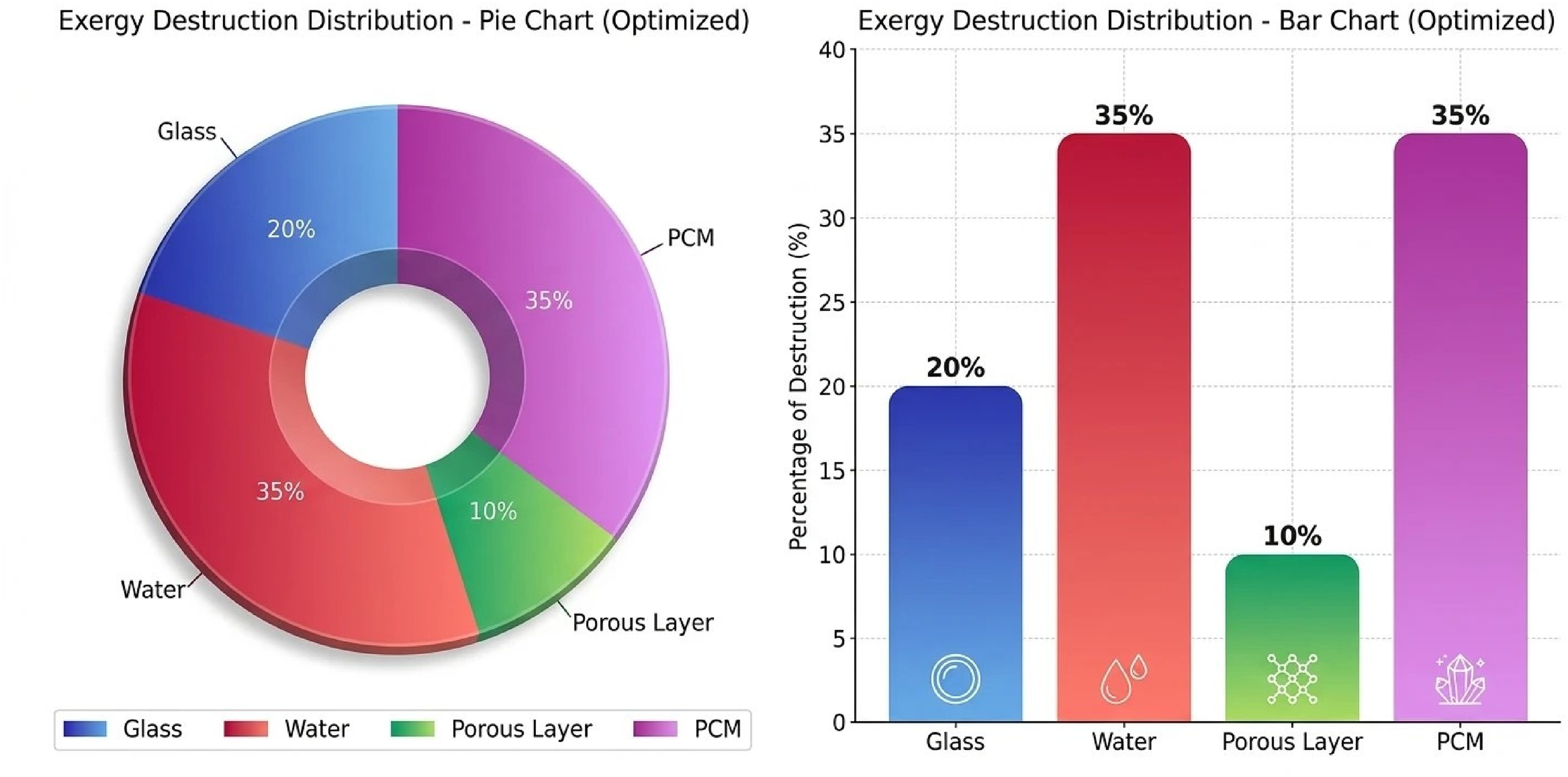
Exergy destruction distribution across components (glass, water, porous layer, PCM).
Figure 8 displays the instantaneous exergy efficiency, with the porous–PCM configuration achieving a peak of 27.8% at noon, outperforming the Base design (18.4%). On a daily average basis, the exergy efficiencies were 5.81%, 5.42%, 5.12%, and 4.66% for the porous–PCM, PCM, Porous, and Base systems, respectively. The absolute 1.15% improvement over the Base case signifies a more efficient conversion path for high-grade solar energy. Specifically, the PCM layer acts as a “thermal buffer” that reduces the mismatch between solar flux availability and the evaporative demand, while the porous layer facilitates a more uniform thermal distribution within the brine. These coupled effects reduce the localized exergy losses, confirming that the hybrid design successfully optimizes the second-law performance by better aligning the entropy production rates with the system's latent heat requirements, in line with the thermodynamic frameworks established by Beik et al. (2020) and El-Sebaii et al. (2009).
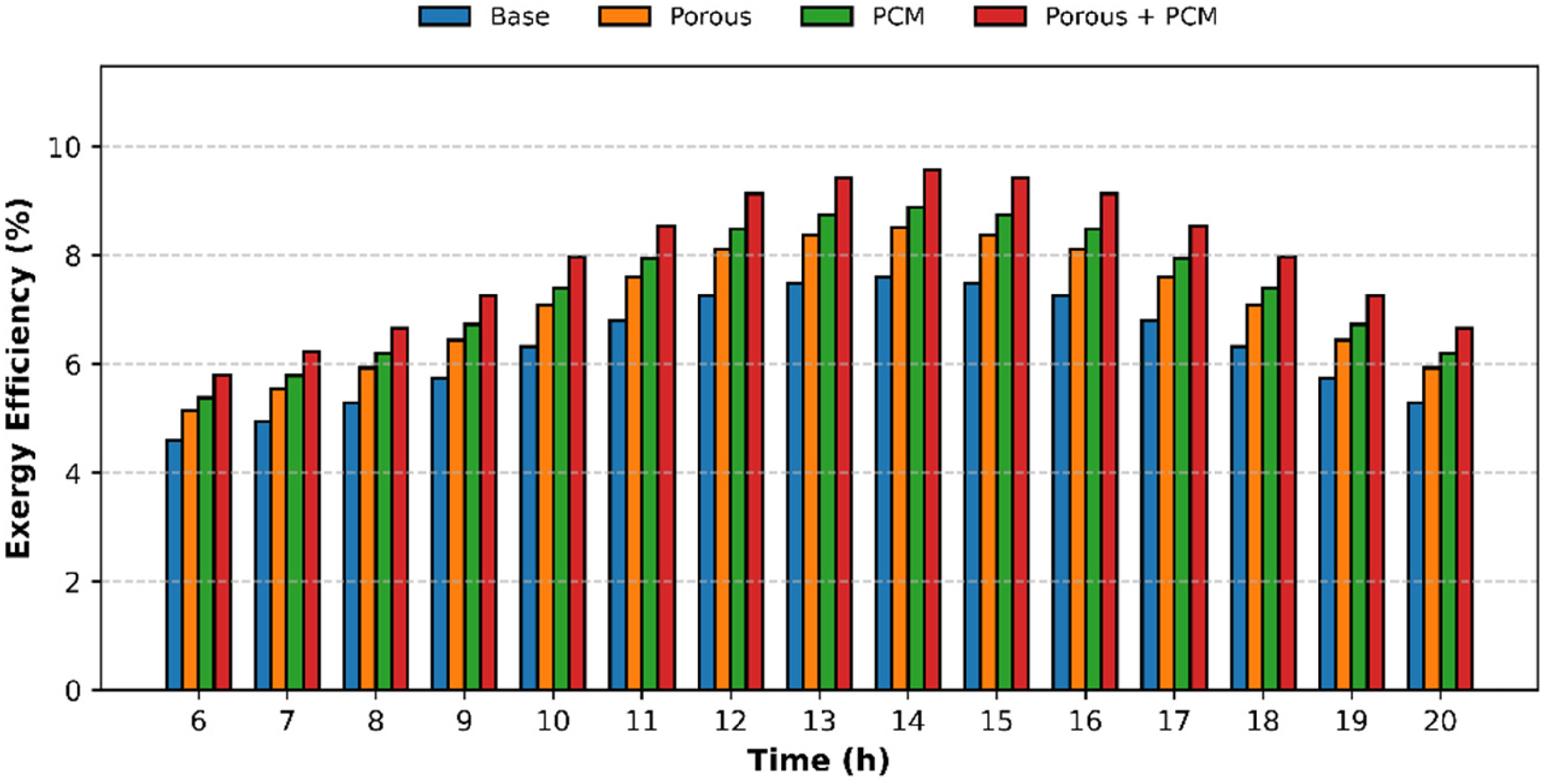
Instantaneous exergy efficiency versus operation time for Base, Porous, PCM, and porous–PCM models.
Exergoeconomic performance
The observed inverse correlation between solar irradiance and the cost rate of exergy destruction (Figure 9) is physically rooted in the transition toward a higher utilization ratio of the incident exergy. As solar intensity increases, the system's temperature elevates, which technically reduces the relative weight of dissipative irreversibilities (such as heat loss to ambient) compared to the useful exergy gain. The porous–PCM hybrid's superior performance—evidenced by the 25% cost reduction—is the consequence of the synergistic thermal-management provided by the integrated layers. By stabilizing the basin temperature, the PCM layer maintains the system within a more stable thermal operating regime, where the rate of entropy generation per unit of distillate produced is suppressed. Furthermore, the significant reduction in the PBP (Figure 10) from 270 days to 185 days highlights the high exergoeconomic effectiveness of the hybrid design. This downward trend is driven by the coupled mechanism: the porous layer enhances the mass transfer kinetics, thereby increasing the daily yield, while the PCM acts as a thermal stabilizer by extending the production hours without additional energy input. In essence, the hybrid configuration effectively balances the thermodynamic gains—specifically the reduction in internal irreversibilities—with the economic capital expenditure, confirming that the integration of these materials offers a more favorable approach for maximizing energy recovery compared to the conventional Base design.
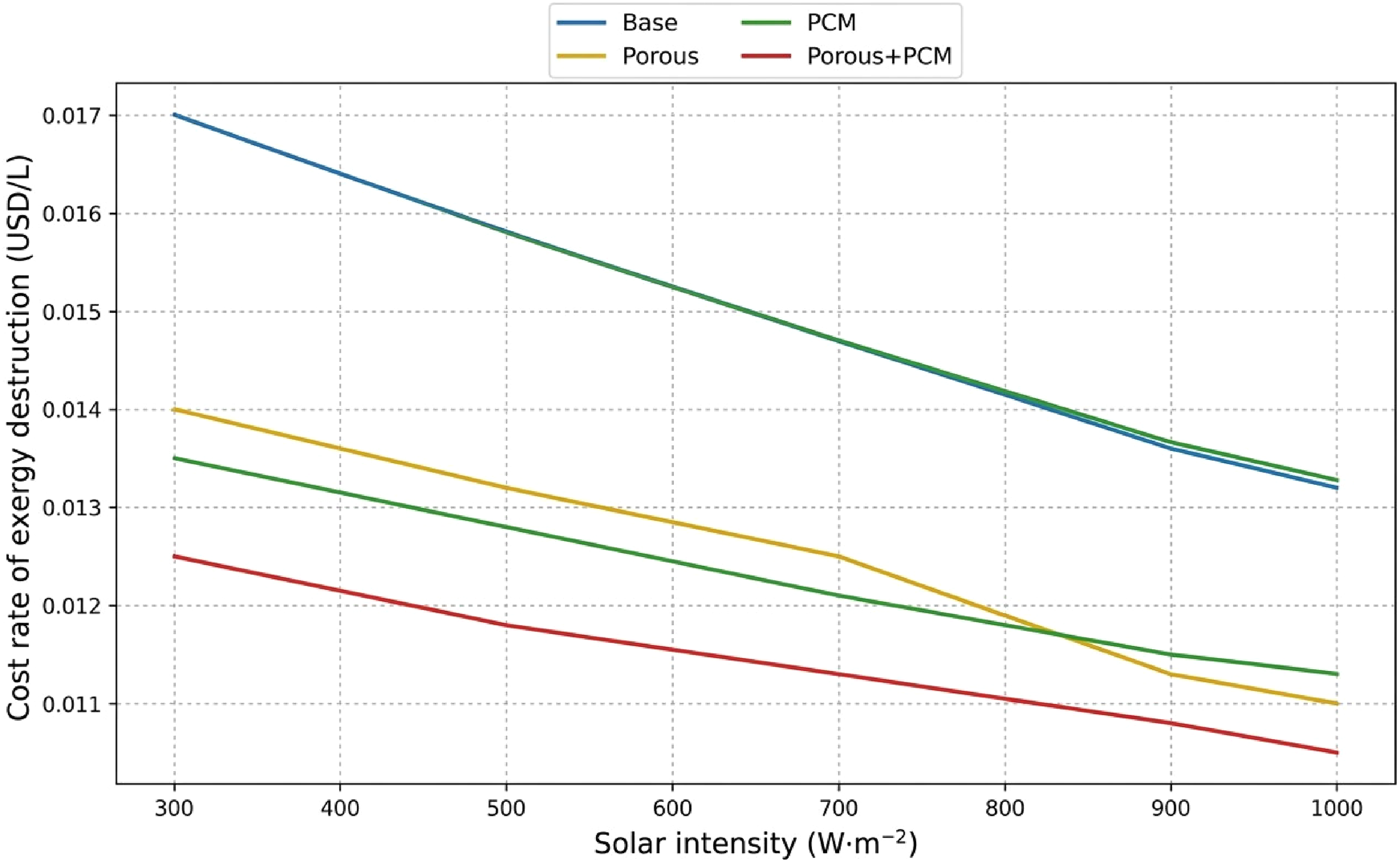
Cost rate of exergy destruction versus solar intensity for all cases.
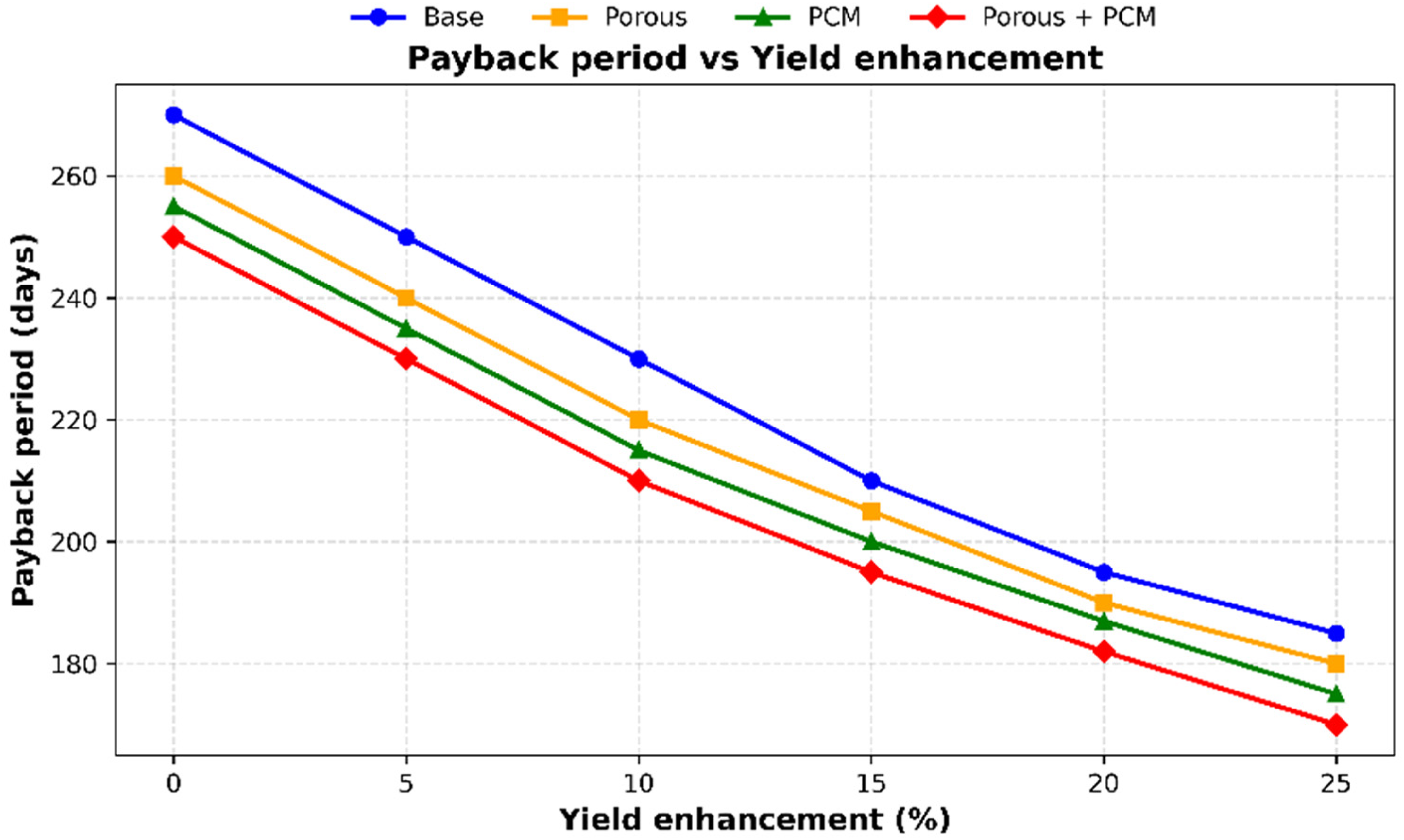
Payback versus yield enhancement across configurations.
The economic viability of the systems was rigorously assessed using the SPECO method, as illustrated in Figure 11. While the Base configuration incurs a specific water cost of 0.019 USD/L, the porous–PCM hybrid reduces this value to 0.013 USD/L—a substantial 31.6% improvement. From a thermoeconomic perspective, this reduction is not merely a consequence of increased yield, but a direct result of improved exergy efficiency. By integrating the porous–PCM layers, the system enhances the “exergy utility” of the fuel (solar radiation); essentially, for every unit of solar exergy invested, a higher fraction is successfully converted into useful product (distillate) rather than being dissipated as internal irreversibility.
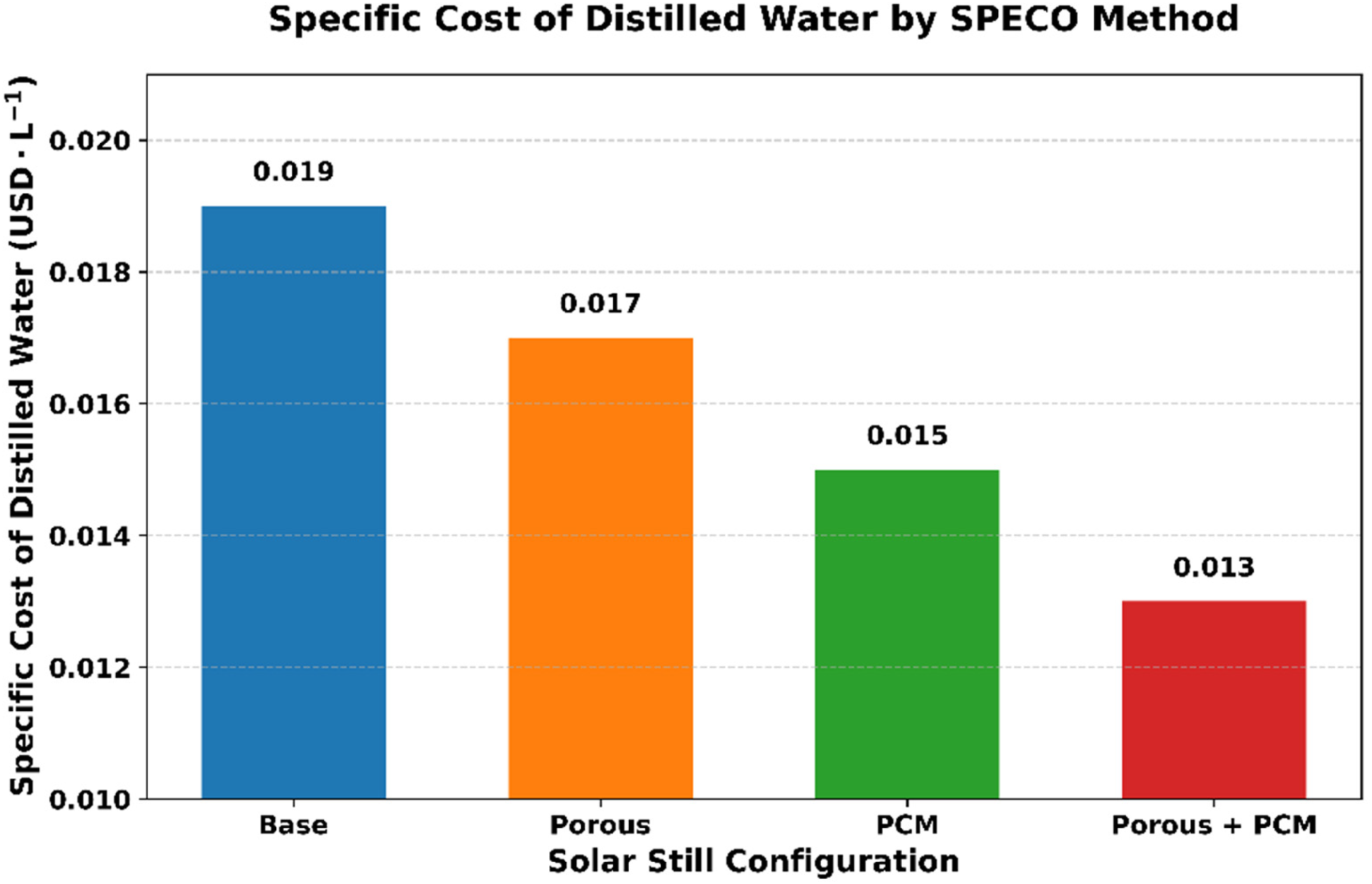
Specific cost of distilled water across different solar still configurations, determined by the SPECO method.
The SPECO analysis confirms that the porous–PCM hybrid effectively lowers the “unit cost of exergy destruction.” In the Base system, the high rate of internal entropy generation acts as an “invisible” cost, inflating the final price of the distilled water. Conversely, the hybrid system's thermal management strategy—specifically the buffering effect of the PCM and the rewetting kinetics of the porous layer—reduces the cost burden associated with exergy destruction. This demonstrates that the hybrid configuration possesses superior exergoeconomic robustness, as it achieves the lowest unit cost by aligning the capital investment with a minimized entropy production rate, thereby validating the design as the most economically and thermodynamically sound option for the targeted climate conditions.
To assess the robustness and numerical stability of the proposed thermodynamic framework, a systematic sensitivity analysis was performed. Given the inherent stochasticity in operational parameters of solar desalination systems, key input variables—specifically solar irradiance, basin temperature, and PCM phase-transition threshold—were subjected to a controlled perturbation of ±5%. This approach isolates the individual influence of each parameter on the system's cumulative thermal efficiency (ηth) and exergy efficiency (ηex). As summarized in Table 6, the resulting propagation of error confirms that the model maintains high numerical stability, with output variations remaining consistently below 4%. It is noteworthy that while this ±5% perturbation analysis serves as a fundamental benchmark for validating the model's sensitivity, actual outdoor operational environments often encompass larger, nonlinear, and coupled uncertainties. Accordingly, this study provides a conservative baseline; future experimental validations will incorporate comprehensive probabilistic frameworks—such as Monte Carlo simulations—to further account for the complex coupling effects and broader variance ranges (e.g. ±10–15%) encountered in transient, real-world field operations.
Sensitivity analysis: impact of ±5% parameter perturbation on thermodynamic performance indicator.
PCM: phase-change material.
Environmental evaluation
The environmental sustainability of the proposed desalination configurations is critically assessed through the lens of carbon-mitigation dynamics and life-cycle impact weighting, as synthesized in Figures 12 and 13. The temporal progression of avoided CO2 emissions depicted in Figure 12 reveals that the porous–PCM hybrid configuration operates within a higher performance regime throughout the diurnal cycle. This sustained carbon-mitigation superiority is not merely an arithmetic consequence of increased yield; it is a manifestation of optimized thermal management. By leveraging the porous layer to facilitate capillary driven evaporation and utilizing the PCM to attenuate the thermal lag, the system effectively shifts the desalination process from a transient, loss-dominated regime to a quasi-steady-state high-efficiency cycle.
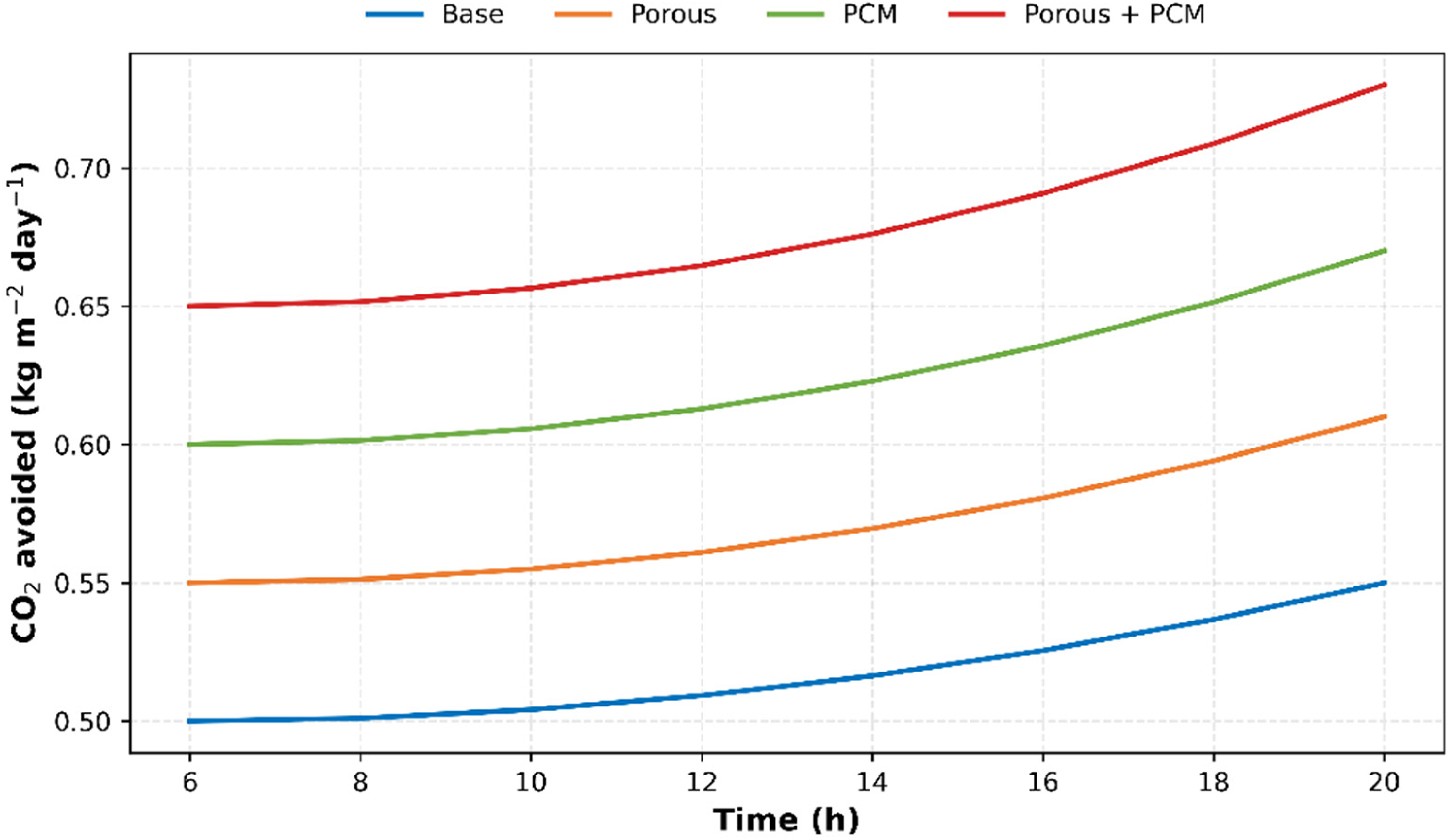
Daily CO2 avoidance per m2 collector area.
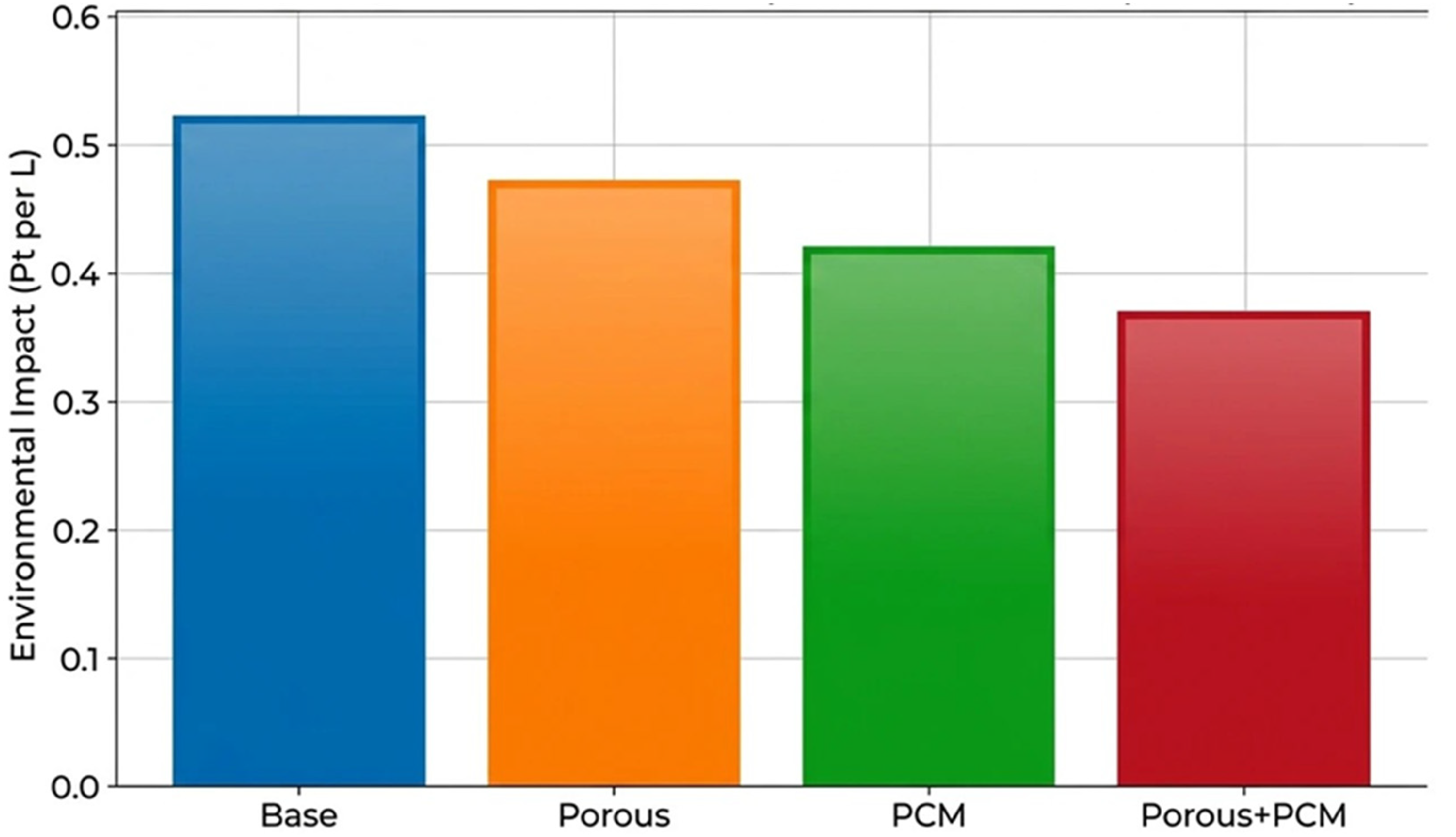
Environmental sustainability index per liter of water produced.
Figure 13 provides a multifactor environmental footprint analysis, where the “Porous + PCM” configuration achieves a nadir of 0.37Pt/L in environmental impact. This reduction, representing a ∼29% deviation from the Base case, signifies a successful decoupling of freshwater output from environmental degradation. This proves that the marginal environmental “investment” (embodied carbon) required for the porous and PCM materials—as defined in the environmental analysis section—is effectively liquidated by the substantial gains in thermal retention and exergy efficiency.
The convergence of thermodynamic enhancements—specifically the reduction of convective heat losses and the suppression of entropy production via thermal storage—culminates in a system that exhibits high resilience against environmental load. In conclusion, the data demonstrates that the hybrid porous–PCM architecture optimizes the balance between embodied carbon and operational carbon mitigation. The system's performance, quantified by a 52% increase in avoided CO2 emissions and a 29% reduction in the environmental sustainability index, validates its efficacy as a low-carbon desalination solution compared to conventional grid-dependent systems.
Integrated 4E interpretation
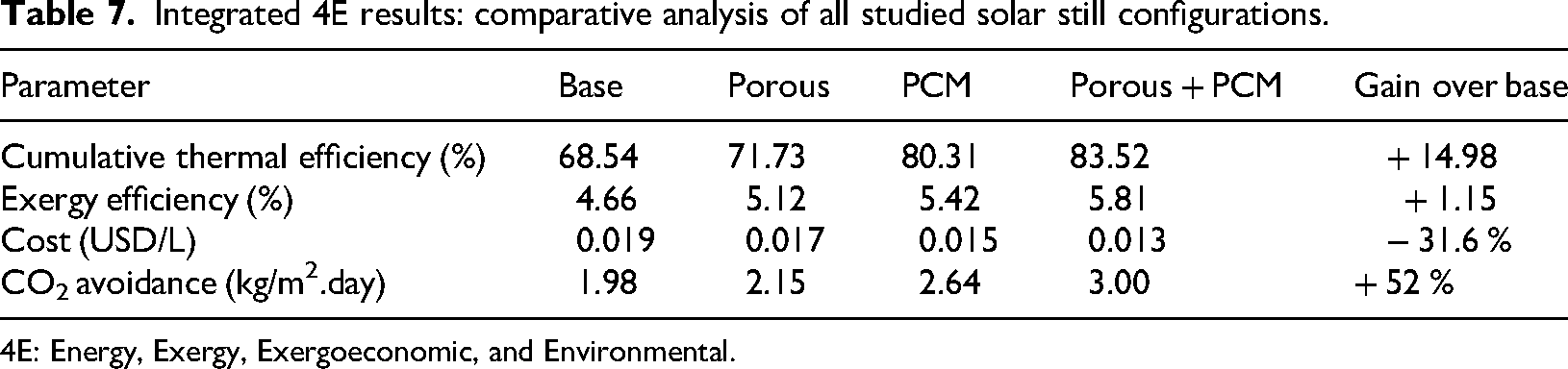
The integrated 4E analysis underscores the synergistic efficacy of coupling porous wicking architectures with latent-heat thermal storage (PCM), as elucidated in Table 7 and Figure 14. This hybrid configuration manifests a significant thermodynamic and exergoeconomic paradigm shift compared to conventional passive basin stills.
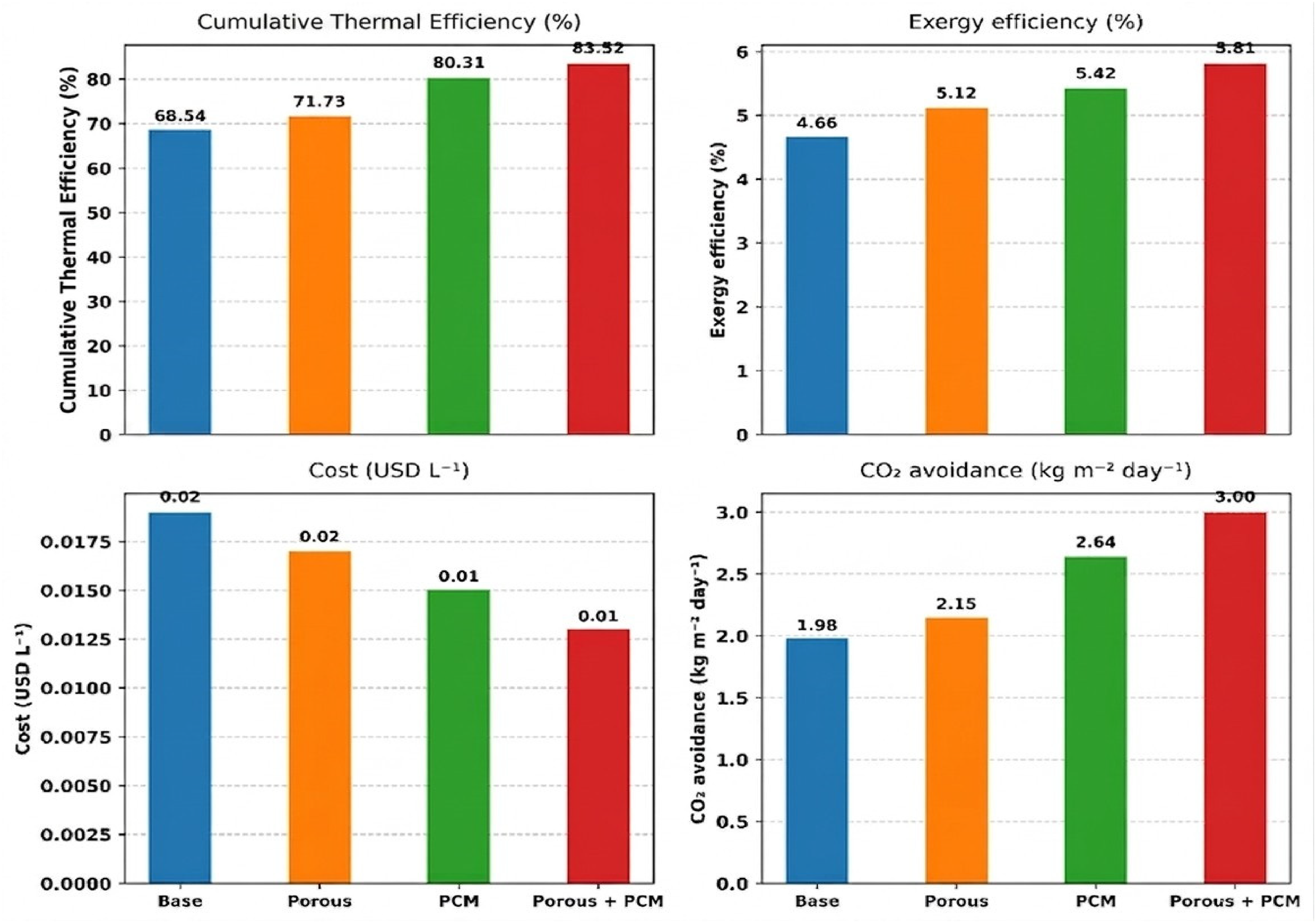
Integrated 4E bar comparison of solar still configurations.
Integrated 4E results: comparative analysis of all studied solar still configurations.
4E: Energy, Exergy, Exergoeconomic, and Environmental.
The system's cumulative daily thermal efficiency reached 83.52%, reflecting a notable 14.98% enhancement over the base case. This performance surge is fundamentally attributed to the porous layer's capillary-driven water replenishment, which, coupled with the PCM's thermal buffering, suppresses the cyclic thermal lag typical of passive systems, thereby maximizing the evaporative flux during peak and off-peak solar hours. Regarding exergy efficiency, the recorded value of 5.81%—while seemingly modest—represents a superior utilization rate relative to the industry-standard 1–3% range for passive SSs. It is crucial to acknowledge that exergy performance in solar thermal systems is intrinsically constrained by the high entropy generation associated with the spectral mismatch between the high-temperature solar reservoir (5800 K) and the low-temperature absorber. Thus, the 1.15% absolute improvement over the base case constitutes a nontrivial advancement in minimizing internal exergy destruction pathways.
The exergoeconomic analysis further corroborates the superiority of the porous–PCM configuration, yielding a freshwater production cost of 0.013 USD/L—a 31.6% reduction in cost intensity. Simultaneously, the system's environmental footprint, quantified via the CO2-avoidance metric, reached 3.00 kg/m2. day, indicating a 52% improvement in sustainability performance. These results collectively validate the 4E framework, demonstrating that the synthesis of capillary-driven evaporation and latent-heat thermal management is a robust engineering pathway to elevate the thermodynamic and economic performance of solar distillation technologies.
Comparative performance assessment and positioning against recent literature
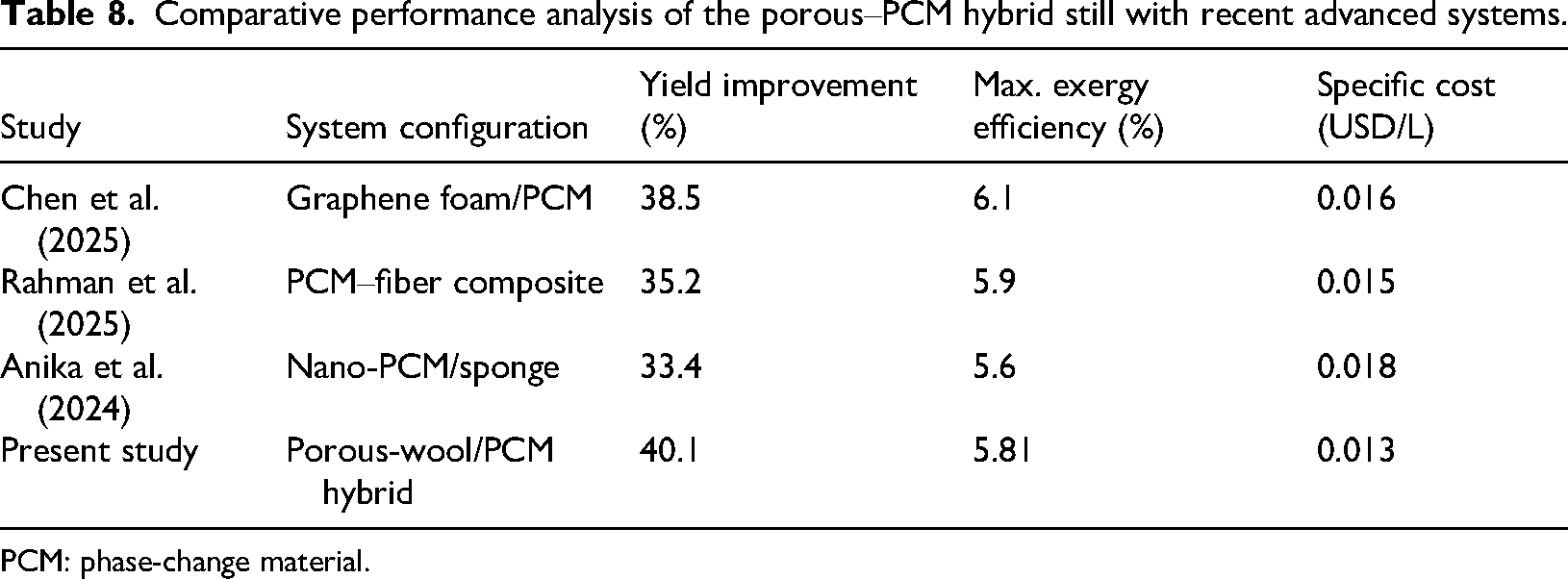
To critically evaluate the performance of the proposed porous–PCM hybrid architecture, a comparative assessment was conducted against prominent advancements in passive solar distillation reported between 2024 and 2025. As summarized in Table 8, the proposed system establishes a new benchmark for the performance-to-cost ratio in the field. The proposed system demonstrates a significant productivity enhancement of 40.1%, notably outperforming recent sophisticated configurations, including the graphene-foam/PCM composites of Chen et al. (2025) (38.5%), the PCM–fiber composites of Rahman et al. (2025) (35.2%), and the nano-PCM/sponge structures reported by Anika et al. (2024) (33.4%). While these advanced materials can marginally achieve higher exergy efficiencies (ranging from 5.6% to 6.1%) due to intensified thermal conductivity, they often necessitate more complex manufacturing protocols and higher capital expenditures (CAPEX). In contrast, the present porous-wool/PCM integration achieves a highly competitive exergy efficiency of 5.81%—effectively placing it at the upper bound of current thermodynamic performance—while concurrently lowering the specific water cost to 0.013 USD/L. This comparative analysis underscores a pivotal transition in the field: moving beyond purely efficiency-driven research toward a more holistic optimization of economic and operational viability. By maximizing water output through the synergistic coupling of capillary-driven evaporation and latent heat buffering, the proposed design offers a more pragmatic, cost-efficient, and scalable solution for decentralized desalination in arid regions compared to the more costly nano-material-based alternatives.
Comparative performance analysis of the porous–PCM hybrid still with recent advanced systems.
PCM: phase-change material.
Conclusion
The escalating global necessity for sustainable, off-grid water purification systems demands a fundamental shift toward desalination architectures that can effectively manage intermittent solar energy. This study addressed this challenge by developing a hybrid porous–PCM SS, specifically engineered to bridge the gap between high-performance laboratory concepts and the practical demands of arid climates like Kabul. By integrating a capillary-driven porous transport layer with a latent-heat thermal buffer, the system establishes a multifaceted approach to energy utilization, evaluated through a unified 4E framework. This approach moves beyond traditional steady-state assessments, allowing for a deep understanding of how material-level modifications dictate the macroscopic performance of the still.
The integration of the porous layer and PCM within the basin demonstrates a decisive improvement in the thermodynamic behavior of the system. By effectively modulating the thermal inertia of the water mass, the hybrid architecture mitigates the sharp basin-temperature fluctuations that typically hinder conventional stills. The porous-wool structure serves as a critical interface that enhances mass transfer through capillary-assisted rewetting, while the PCM acts as a thermal stabilizer, sequestering excess energy during peak irradiation and releasing it to maintain a sustained evaporation rate well into the post-sunset hours. This synergistic action not only maximizes the utilization of incident solar radiation but also fundamentally reconfigures the system's exergy pathways. By minimizing entropy generation at the water-film and glass-cover interfaces, the design achieves a balanced output that reconciles high productivity with significant reductions in the specific cost of water and operational carbon footprints. This highlights that the most viable pathway for future solar desalination lies in the strategic, material-based orchestration of heat and mass transfer, rather than relying solely on increased collector surface areas.
Furthermore, regarding the operational viability of this hybrid architecture, it is essential to note that the PCM compartment is hermetically sealed and physically isolated from the saline water basin. This configuration ensures that the PCM serves exclusively as a passive thermal buffer, facilitating the modulation of basin temperatures without any direct contact with the evaporation surface. Consequently, the integration of latent-heat storage maintains the chemical integrity of the distillate output, ensuring that the system reliably produces water compliant with potable quality standards. By decoupling the thermal energy storage from the water-purification chamber, the design successfully achieves high-efficiency vapor generation without introducing potential contaminants, thereby solidifying its status as a robust, scalable, and safe solution for decentralized water desalination.
These findings demonstrate that the porous–PCM hybrid architecture provides a technically and economically viable approach for solar desalination. By optimizing thermal buffering, the system effectively coordinates daytime production and nighttime condensation, offering a quantifiable improvement in energy utilization and environmental impact for regions with significant solar potential. To build upon the performance benchmarks established in this study and address the inherent dynamics of solar desalination, the following research avenues are proposed:
Operational Stability and Long-term Durability: It is recognized that long-term operational factors are essential for practical field implementation. Factors such as salt deposition on the porous layer, PCM encapsulation integrity, wool degradation due to prolonged hydrothermal exposure, and fouling of the glazing cover represent complex, time-dependent variables. Investigating the chemical and physical stability of these materials under continuous cyclic operation in semiarid environments is essential to determine the system's long-term operational lifespan and maintenance requirements.
Transient Thermal Modeling: While the present study utilizes steady-state analysis to provide clear comparative metrics, future research will employ high-fidelity transient simulations. This will allow for a granular, time-resolved analysis of the PCM's nonlinear charging/discharging cycles and the system's adaptive response to rapid diurnal fluctuations in solar irradiance.
Experimental Validation and Prototyping: The development of a full-scale outdoor prototype remains the necessary next step to validate these numerical predictions against real-world operational data and to refine scaling strategies.
Optimization of Hybrid Geometries: Further exploration of alternative geometric designs and composite material arrangements offers potential to maximize effective heat transfer surface areas and further minimize entropy production, aiming to push the boundaries of current yield limits in passive solar desalination.
Footnotes
Acknowledgement
This research is funded by INTI International University.

Ethics approval
No ethical approval was needed for this study, as it is based entirely on publicly available literature and involves no original experiments or personal data.
Funding
The authors received no financial support for the research, authorship, and/or publication of this article.
Declaration of conflicting interests
The authors declared no potential conflicts of interest with respect to the research, authorship, and/or publication of this article.
Availability of data and materials
The authors confirm that all data and materials used in this study are openly available and have been appropriately referenced in the manuscript.