






Abstract
Integrated energy networks require advanced flexibility solutions to address the variability of demand and renewable generation. Thermal energy storage (TES) is a key technology for enhancing the flexibility and reliability of combined heat and power (CHP)-based multienergy systems. This article presents a unified modeling framework for TES within CHP-based integrated energy networks, incorporating a detailed TES formulation into the coordinated optimal operation of electrical, natural gas, and district heating subnetworks. The proposed framework models its charging and discharging processes, operational coupling with CHP units and district heating temperature regulation. The results show that TES can significantly smooth fluctuations in CHP-generated electrical and heat power, maintaining a more stable supply to the subnetworks. TES units located at strategic nodes enable effective load shifting, improving the operational flexibility of CHPs and mitigating peak demands. A large-scale case study solved with the Teaching–Learning-Based Optimization algorithm demonstrates that these performance improvements are achieved with a marginal increase in total operational cost (from $121,270 to $121,700, ∼0.35%), while it provides substantial benefits in enhancing system flexibility. Beyond the case study, the proposed framework is generalizable across diverse network topologies and the findings demonstrate that TES integration in the CHP-based networks is a strategic investment for improving overall energy network performance while accommodating variable demand and generation conditions.
Introduction
Background and motivation
Global energy consumption is rapidly rising. Integrated energy networks, which seamlessly integrate electricity, natural gas, heating, cooling, and fuels at various scales (e.g. district, city, or regional levels), offer a promising solution to enhance technical, economic, and environmental performance compared to traditional energy systems (Oduro and Taylor, 2023). The increased integration of diverse storage systems within these networks has made storage planning a critical consideration. Moreover, the interconnections between subnetworks necessitate sophisticated operational strategies to optimize both economic efficiency and reliability (Yang et al., 2019). Integrating storage systems into energy systems can help utilities mitigate economic and reliability risks (Cao et al., 2019).
Thermal energy storage (TES) encompasses a variety of technologies that store surplus heat energy in insulated containers through different methods (Sarbu, 2021). A standard TES system typically consists of a storage material housed in a container, a packaged or custom cooling system, and associated piping, pumps, and control mechanisms. Based on the operating temperature range, TES can be classified into two categories: low-temperature TES and high-temperature TES (Behzadi et al., 2022; Cabeza et al., 2015, 2021). For example, Aquifer-based low-temperature TES systems commonly employ water cooling and reheating processes, which are well-suited for peak load reduction and industrial cooling demands. Cryogenic low-temperature TES systems utilize cryogenic fluids, such as liquid nitrogen or liquid air, to facilitate the conversion of electrical and thermal energy (Jouhara et al., 2023). Latent heat TES systems utilize phase change materials to store energy. These systems leverage the ability of phase change materials to absorb or release energy at a constant temperature during their transition between liquid and solid states. Heat energy can be stored using concrete or specifically designed ceramic materials, a technique known as concrete thermal storage. This method often employs synthetic oil to facilitate the transfer of heat. The previously mentioned TES technologies discussed possess distinct characteristics and are suitable for diverse applications. For example, latent heat storage offers a high energy density within a compact storage volume, making it an attractive option for building applications. Furthermore, cryogenic energy storage holds promise for future applications in managing power systems (Zhou et al., 2012).
However, the efficiency of energy conversion cycles in TES systems is not very high but TES systems offer the advantage of safely storing substantial amounts of energy with minimal daily energy loss (Storage, 2016). The daily self-discharge loss of TES is 0.05–1%. Also, the storage reservoir provides high energy density as well as favorable specific energy. In addition, the system is cost-effective, featuring a relatively modest initial investment cost.
Additionally, TES can be employed in various applications, including load shifting and electricity generation for heat engine cycles. For instance, combined heat and power (CHP) units, which are primary energy generation components in integrated energy networks, consume gas to produce power and heat. Excess heat generated by CHPs can be stored in TES during off-peak periods and utilized during peak demand, improving operational flexibility by shifting load peaks from the electrical subnetwork to the district heating subnetwork. Moreover, the stored supplementary heat energy from CHPs in TES can be utilized in critical situations within the district heating subnetwork. In essence, TES serves as an auxiliary heat source in integrated energy networks.
Literature review and research gaps
Recent studies have explored the role of TES in integrated energy systems, highlighting its potential to enhance flexibility and support CHP operation. For example, Xie et al. (2024) investigated CHP–TES coordination for improved flexibility in coupled electricity–heat networks, while Elgamal et al. (2024) analyzed TES-based scheduling strategies to reduce carbon emissions. Sun et al. (2023) further assessed the resilience of integrated systems with TES under operational uncertainty, and Wang et al. (2024) studied TES contributions to peak-shaving in district heating networks. More advanced methods, such as stochastic scheduling (Karimi, 2023) and hybrid evolutionary optimization (Zhang, 2025), have also been proposed to incorporate TES in multienergy system operations.
In addition to the aforementioned studies, recent research has extensively investigated optimal scheduling and operational management of integrated energy systems considering different objectives such as operational cost minimization, emission reduction, uncertainty management, and energy trading mechanisms. For instance, the study in Chamandoust et al. (2019) developed a coordinated optimal scheduling framework for multienergy systems considering economic and environmental objectives. The work presented in Chamandoust et al. (2020a) investigated energy hub management strategies in integrated building energy systems with enhanced operational flexibility. Furthermore, Chamandoust et al. (2020c) analyzed the techno-economic impacts of thermal storage integration in distributed energy systems, while Ucheniya et al. (2024) proposed advanced operational management approaches for integrated electricity and heating networks under varying demand conditions. In addition, Chamandoust et al. (2020b) discussed optimization strategies for interconnected thermal and electrical systems with emphasis on operational reliability and energy efficiency.
Although these studies have significantly advanced the optimal operation and scheduling of integrated energy systems, several important limitations still remain. First, many existing works primarily focus on economic dispatch and scheduling objectives while representing TES systems using simplified storage formulations. In most cases, TES is modeled as an auxiliary buffer unit without adequately capturing its thermodynamic behavior, charging/discharging operational constraints, heat losses, and interactions with CHP operational flexibility. Second, most existing studies mainly investigate either electrical or thermal subsystems independently, whereas the strong operational interdependency among electricity, district heating, and natural gas subnetworks is not comprehensively addressed. In particular, the impacts of TES on district heating temperature regulation, CHP operational stability, and multienergy carrier coordination are often neglected. Third, despite the growing industrial interest in flexible and resilient integrated energy infrastructures, limited attention has been devoted to the strategic placement of TES units within district heating networks and its influence on system-wide operational performance. Consequently, there is still no unified modeling framework that comprehensively incorporates TES operational dynamics, CHP coupling characteristics, district heating constraints, and multinetwork interactions within a coordinated optimization environment.
To clearly position the proposed study with respect to the existing literature, Table 1 presents a taxonomy and comparative analysis of representative studies on integrated energy systems and TES applications.
Taxonomy and comparison of recent studies on integrated energy systems and TES applications.
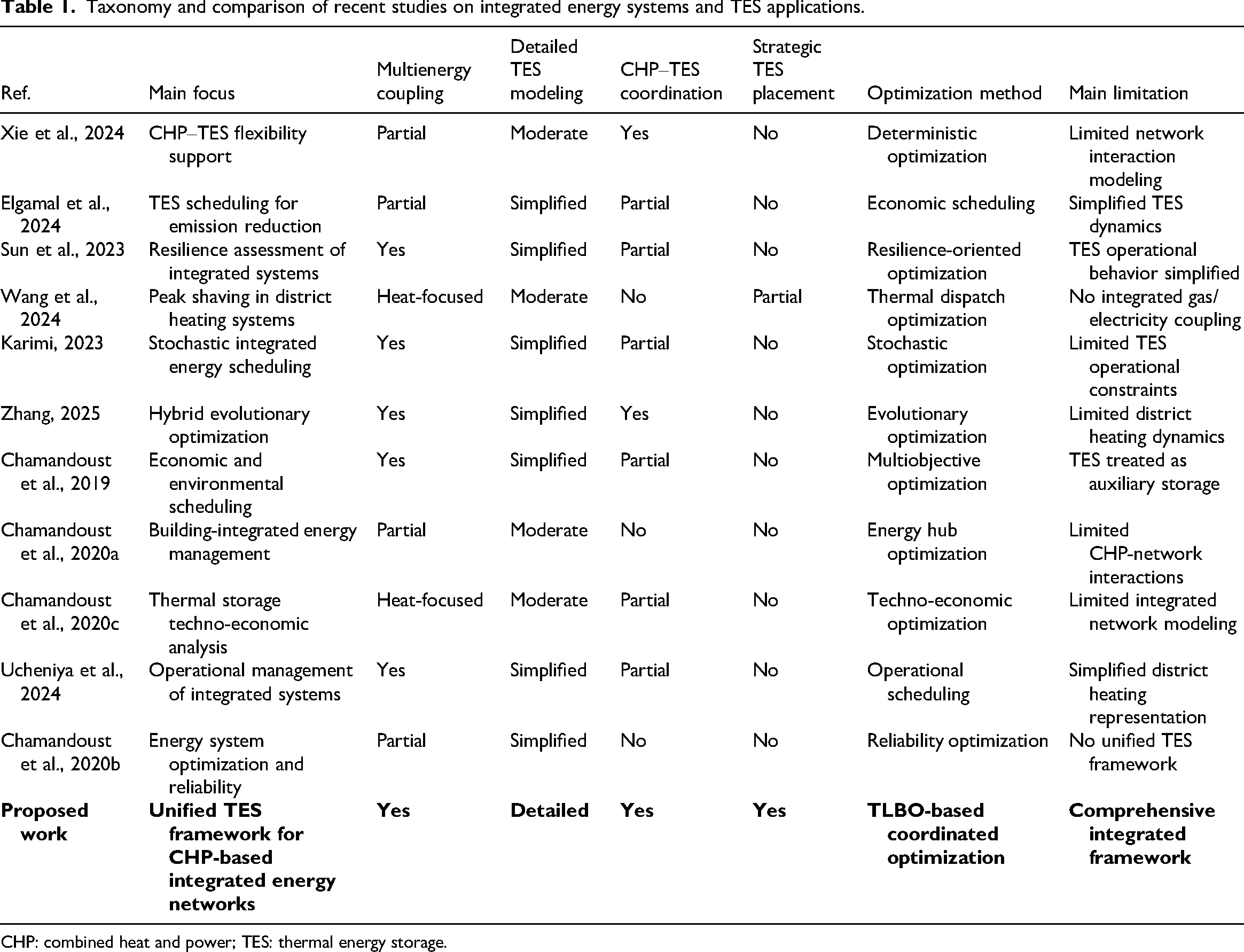
CHP: combined heat and power; TES: thermal energy storage.
Contributions and paper organization
Although significant progress has been made in the coordinated operation of integrated energy systems, TES devices have not yet been modeled with the same level of detail and comprehensiveness as their electrical and gas counterparts. Existing studies often treat TES as a simplified buffer or auxiliary unit, which overlooks its strong coupling with CHP plants and its influence on district heating dynamics, such as supply/return temperature regulation and temporal load-shifting. This simplification has created a clear research gap that there is still no suitable and comprehensive TES modeling framework that fully captures its role in multi-energy interactions and system-wide optimization.
Motivated by these limitations, this study aims to develop a unified and extensible TES modeling framework for CHP-based integrated energy networks capable of simultaneously representing electrical, heating, and natural gas interactions while accurately capturing TES operational behavior and CHP flexibility enhancement. The proposed framework is further validated through a large-scale case study to verify the operational and economic benefits of TES integration, including load-shifting capability, smoother CHP operation, improved network flexibility, and enhanced district heating support with only marginal increases in operational costs.
Based on the above discussion, it can be observed that existing studies mainly focus on optimal scheduling objectives while insufficiently addressing the comprehensive operational role of TES within CHP-based integrated energy networks. In particular, the lack of an integrated modeling framework that simultaneously captures TES operational dynamics, CHP flexibility enhancement, district heating behavior, and multienergy carrier interactions motivates the development of a more detailed and coordinated formulation. Therefore, this study seeks to bridge these gaps through a unified optimization framework capable of accurately representing TES contributions in interconnected electricity, heating, and natural gas systems.
In response to the identified research gaps, this study develops a comprehensive and innovative modeling framework that redefines the role of TES, and subsequently, the proposed framework is applied to the context of CHP-based integrated energy networks. Moving beyond the analyses prevalent in the literature, this work makes the following key contributions:
Collectively, these contributions establish TES as a strategic and transformative element in CHP-based integrated energy networks, advancing both methodological novelty and practical applicability in integrated energy system planning and operation. The effectiveness of the proposed framework is verified through a large-scale CHP-based integrated energy network case study, demonstrating that TES integration improves operational flexibility, smooths CHP output fluctuations, and enhances district heating support with only marginal increases in total operational cost.
The rest of the article is organized as follows: the system description section presents the architecture and modeling of the CHP-based integrated energy network, including the operational characteristics and mathematical formulation of the TES and CHP systems. The operational problem and solution method section describes the optimal operation problem formulation and the applied solution methodology. The test system and simulation setup introduce the case study and simulation setup, including the configurations of the electrical, district heating, and natural gas subnetworks as well as the locations of the CHP and TES units. The results and discussion section presents the results and discussions related to TES operation, CHP performance, network behavior, economic analysis, and optimization performance. The final section concludes the article and summarizes the main findings and future research directions.
System description
CHP-based integrated energy network
In the integrated energy networks, various energy systems, including electricity, district heating, and natural gas, are interconnected. A typical schematic of such a network, incorporating TES systems, is shown in Figure 1. These infrastructures rely on energy conversion processes that facilitate the transfer and regulation of energy between components using an intermediary carrier. A prime example of these energy generation components is the CHP system. The CHP technology is known for its efficiency in producing electricity while capturing and repurposing waste heat, which can then be used for heating, cooling, or industrial purposes. These systems are typically installed where both electrical and thermal energy are required. Moreover, CHP plants integrated into district heating networks represent one of the most cost-effective solutions for heat generation (Chicco and Mancarella, 2009).
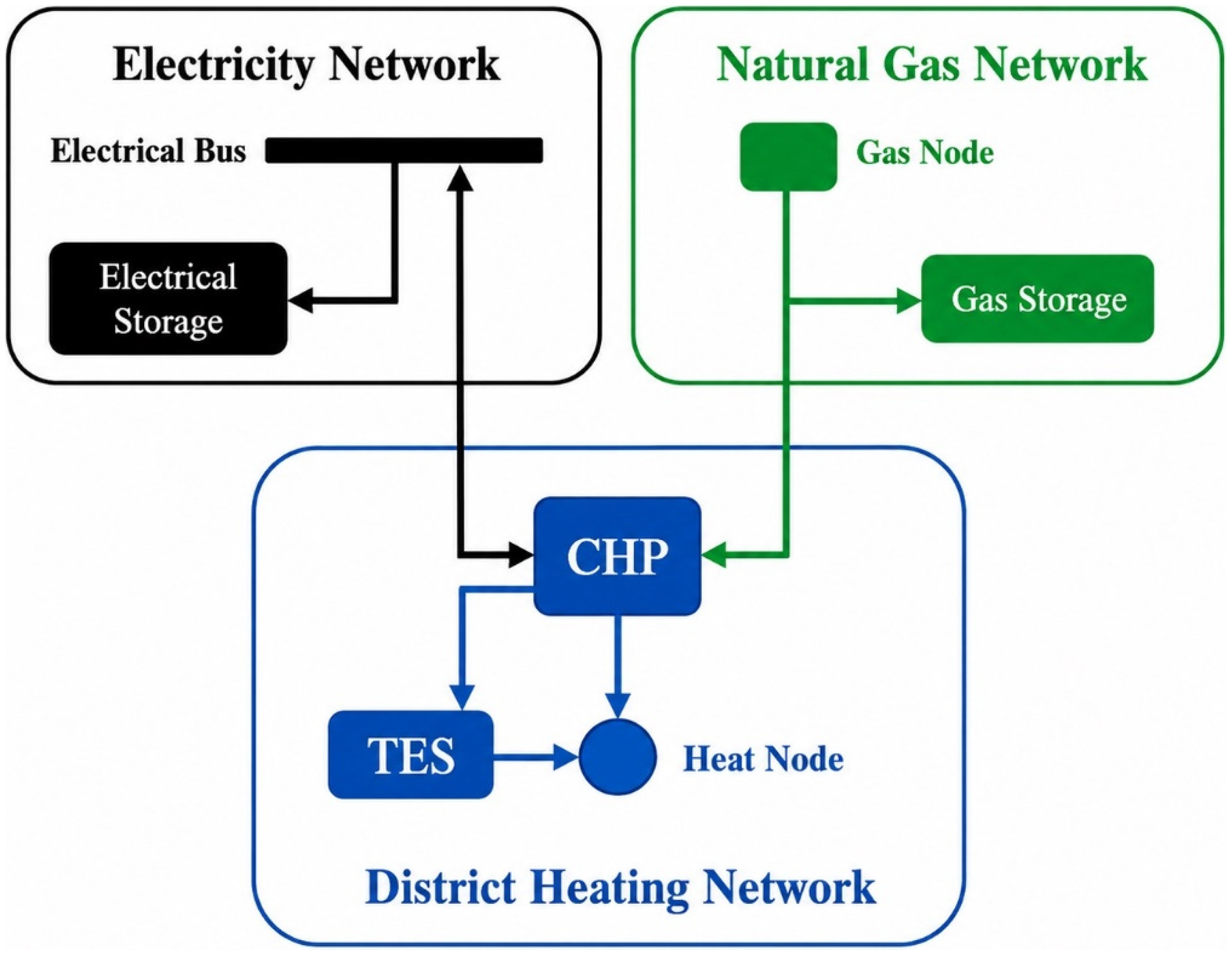
A typical schematic of CHP-based integrated energy networks with the TES model.
The CHP component of the district heating subnetwork utilizes natural gas to simultaneously generate electricity and heat. The produced heat and power are then transferred to the district heating and electrical subnetworks, respectively. Additionally, any surplus heat and power generated by the CHP can be stored in electrical and TES systems.
The effective operation of TES systems relies on several vital parameters such as thermal capacity, temperature range and also the charging and discharging rates. The thermal capacity of a TES system refers to its ability to store and release thermal energy efficiently. A higher thermal capacity allows for more energy storage and a longer discharge duration. The operating temperature range of the TES system is critical. It should align with the temperature requirements of the heating or cooling application it serves. The system's ability to maintain a stable temperature within the desired range is essential for optimal performance. The rates at which the TES system can charge (store energy) and discharge (release energy) are crucial. These rates should match the energy demands of the connected load or application. A well-designed TES system should be able to charge and discharge energy rapidly when needed, ensuring a smooth and efficient energy supply. Therefore, it is essential to model this element precisely.
Electrical subnetwork modeling
The line power flows and power balance in this system are represented by the electrical subsystem's equality constraints. In the electrical system, the reactive and active load flows are controlled by two equality limitations in equations (1) and (2).

Equations (1) and (2) ensure that generation equality is maintained, accounting for both load and losses. The slack generator compensates for the discrepancy between the total power provided by the electrical energy storage systems and generators, and the losses and total demand. Inequality equations (3)–(5) show the limits of voltages, as well as reactive and active powers (Hamedi et al., 2020).


Natural gas subnetwork modeling
The main equality constraint is the gas flow balance within the gas network, as detailed in equation (6). The balance of gas flow at each node within the gas system, considering both input and output, is detailed in equation (7).

In equation (6), 

District heating subnetwork modeling
The energy balance for the heating network is presented in equation (10). The equality constraint for this subsystem indicates that the heat added to a node must match the sum of the node's outgoing power and load demand. Additionally, return temperature 


In equations (10)–(12), 



CHP modeling
CHP modeling involves creating mathematical representations of CHP systems to simulate their performance and optimize their operation. This modeling allows for a detailed analysis of energy generation and efficiency. The CHP modeling often involves integrating the model with other energy system models, such as a district heating network. This allows for holistic optimization of energy systems and identification of synergies. Therefore, to accurately model the CHP system's operation under varying load conditions, equations (17)–(20) incorporate its part-load performance characteristics.



The electrical power output of the CHP system can be derived using equation (17), provided that the heat production and associated temperature are known (Hamedi et al., 2020; Keihan Asl et al., 2020). Equations (18) and (19) introduce constant coefficients (μ₁, μ₂, r₁, r₂), empirically derived and detailed in (Keihan Asl et al., 2020). Also, equation (20) calculates the input gas flow rate for the ith CHP unit, incorporating its overall efficiency, denoted as
TES operational characteristics modeling
The idea of TES modeling and formulation is taken from the model of electrical and natural gas storages in Hamedi et al. (2020). The TES model is mathematically represented by a set of equations as (21)–(25). These equations outline the model's structure and provide a comprehensive framework for analysis and simulation.
The TES balance represented as 




Operational problem and solution method
The optimization problem for the integrated energy network is formulated as a multiperiod model and solved under continuous conditions. The problem can be expressed as follows:
Minimize:
Subject to:
where
The constraints of the energy system and the interconnections between all subnetworks are detailed in Keihan asl et al. (2019).
The total cost of the integrated energy network, denoted as C, is represented by a second-order function:
In this equation, the first term represents the cost associated with the TES, while the subsequent terms account for the cost of all generators. Additionally, the fuel consumption can be either natural gas or coal. The coefficients α, β, and γ correspond to the fuel cost parameters.
The optimization problem is addressed using the well-known Teaching–Learning-Based Optimization (TLBO) algorithm, ensuring that all constraints related to the TES and the integrated energy network are taken into account. The TLBO algorithm is an effective nature-inspired optimization technique that can be applied to the optimal operation problem of integrated energy networks. This algorithm mimics the teaching–learning process in a classroom setting, where a teacher imparts knowledge to students (solutions) and the students, in turn, share their knowledge with each other to improve their performance (Rao et al., 2012). In the context of integrated energy networks, such as systems combining electricity, gas, and heating networks, TLBO can be used to optimize the operational decisions, such as energy generation, storage, and distribution, under varying demand and supply conditions. By balancing the contributions from the teacher (global optimization) and peers (local optimization), TLBO can efficiently find the optimal configuration that minimizes operational costs, enhances energy efficiency, and ensures sustainability. Its simplicity, robustness, and ability to escape local optima make TLBO a promising approach for solving complex, nonlinear, and large-scale optimization problems in integrated energy systems. Consequently, the flowchart of implemented TLBO algorithm is mentioned in Keihan Asl et al. (2020).
Test system and simulation setup
Test system description
To investigate the impact of TES on system operation and generation management, a typical large-scale integrated energy network is considered. This integrated energy network comprises three interconnected subnetworks: The electrical subnetwork is the IEEE 14=bus grid (14 buses, five generators including the slack bus, 11 loads, and 20 transmission lines) (Boudreaux, 2018); the district heating subnetwork is a 14=node radial system with nine heat sources (four CHP units and five boilers) and 13 pipe segments (Shabanpour-Haghighi and Seifi, 2016); and the natural gas subnetwork is the 20=node Belgian benchmark grid (24 pipelines, seven producer nodes, eight consumer nodes, with Zeebrugge as the slack supply) (Shabanpour-Haghighi and Seifi, 2015). The schematic diagrams of these subnetworks are depicted in Figures 2–4.
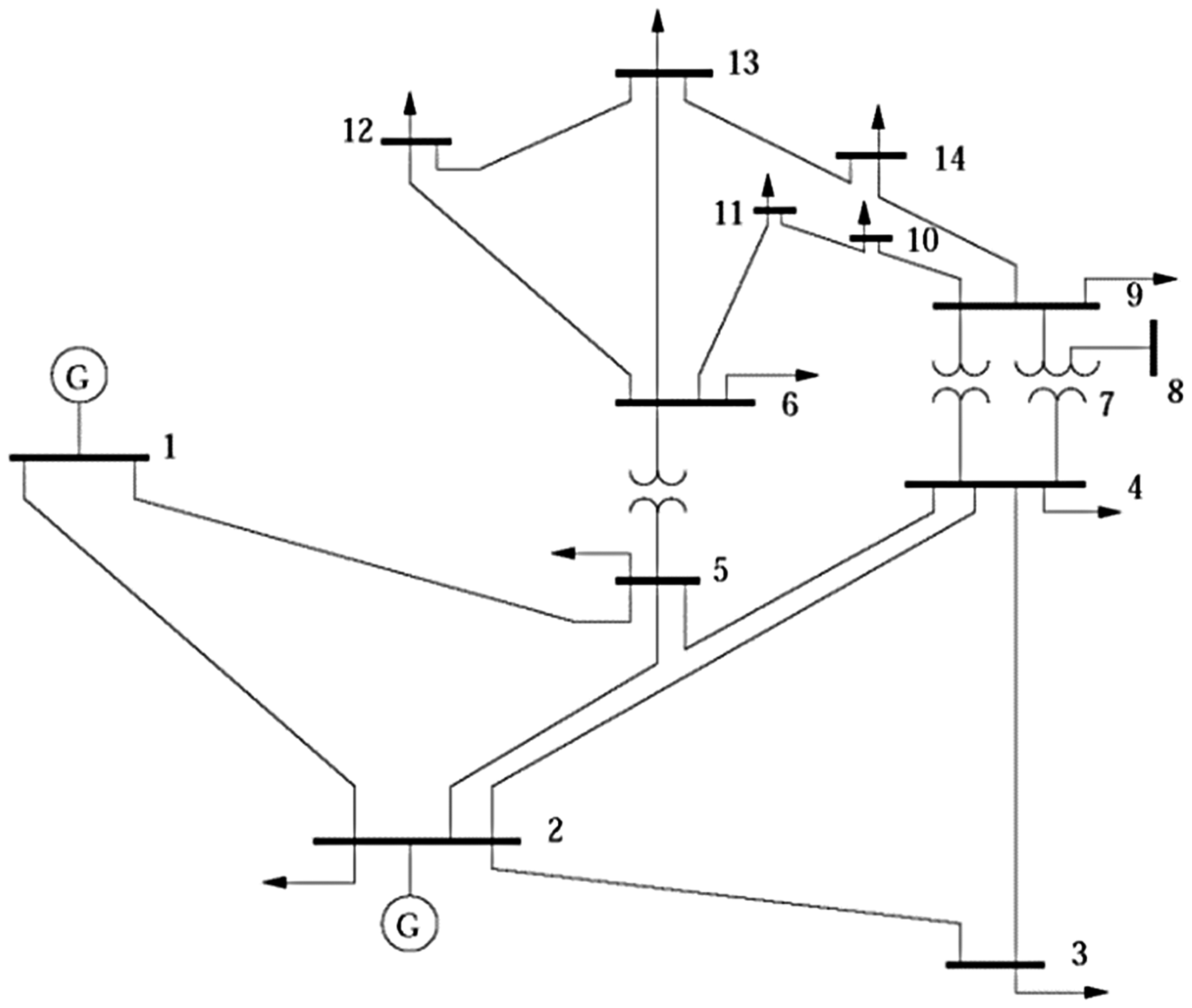
IEEE 14-bus standard electrical subnetwork (Boudreaux, 2018).
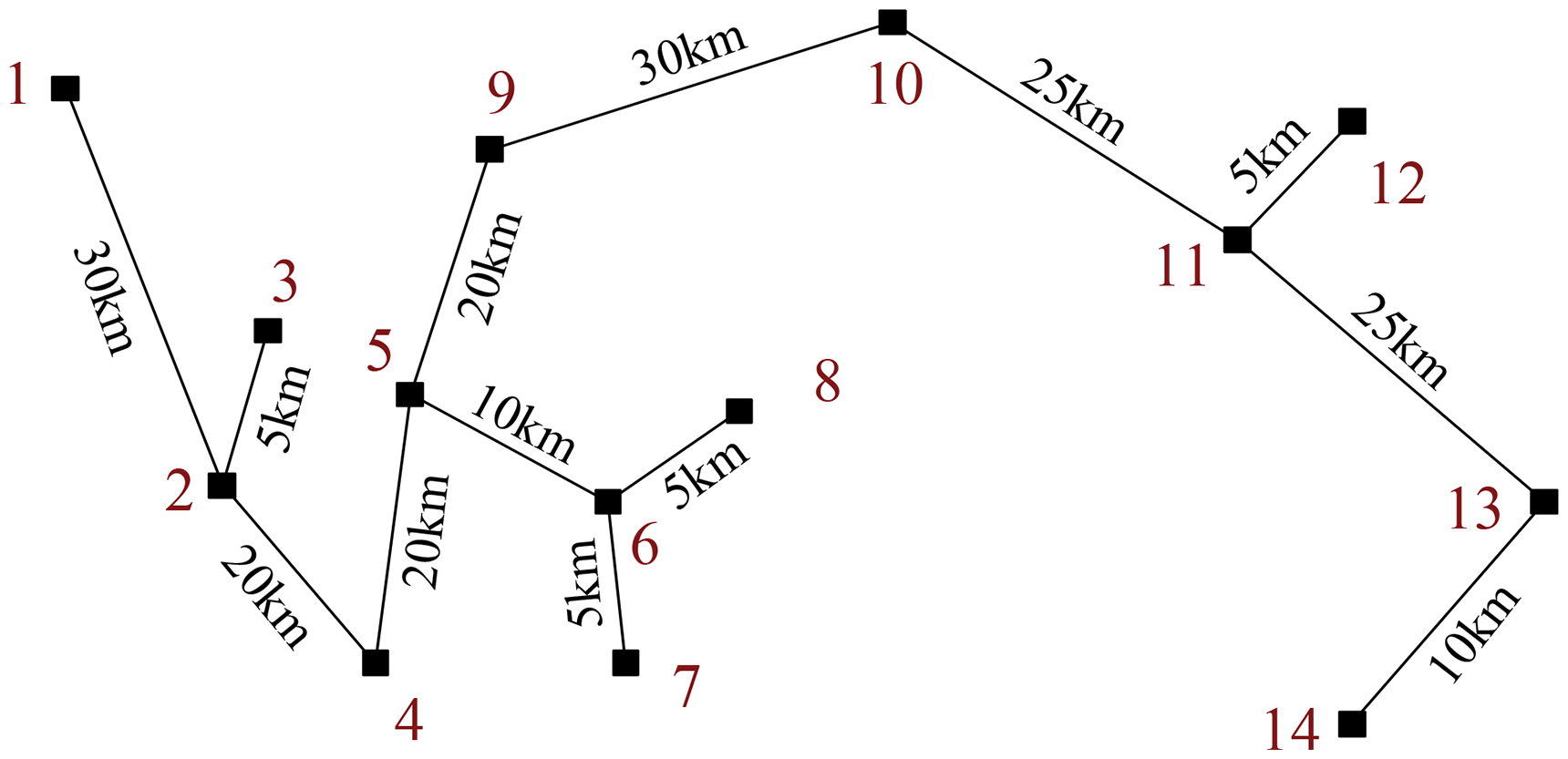
The 14-node district heating subnetwork (Shabanpour-Haghighi and Seifi, 2016).
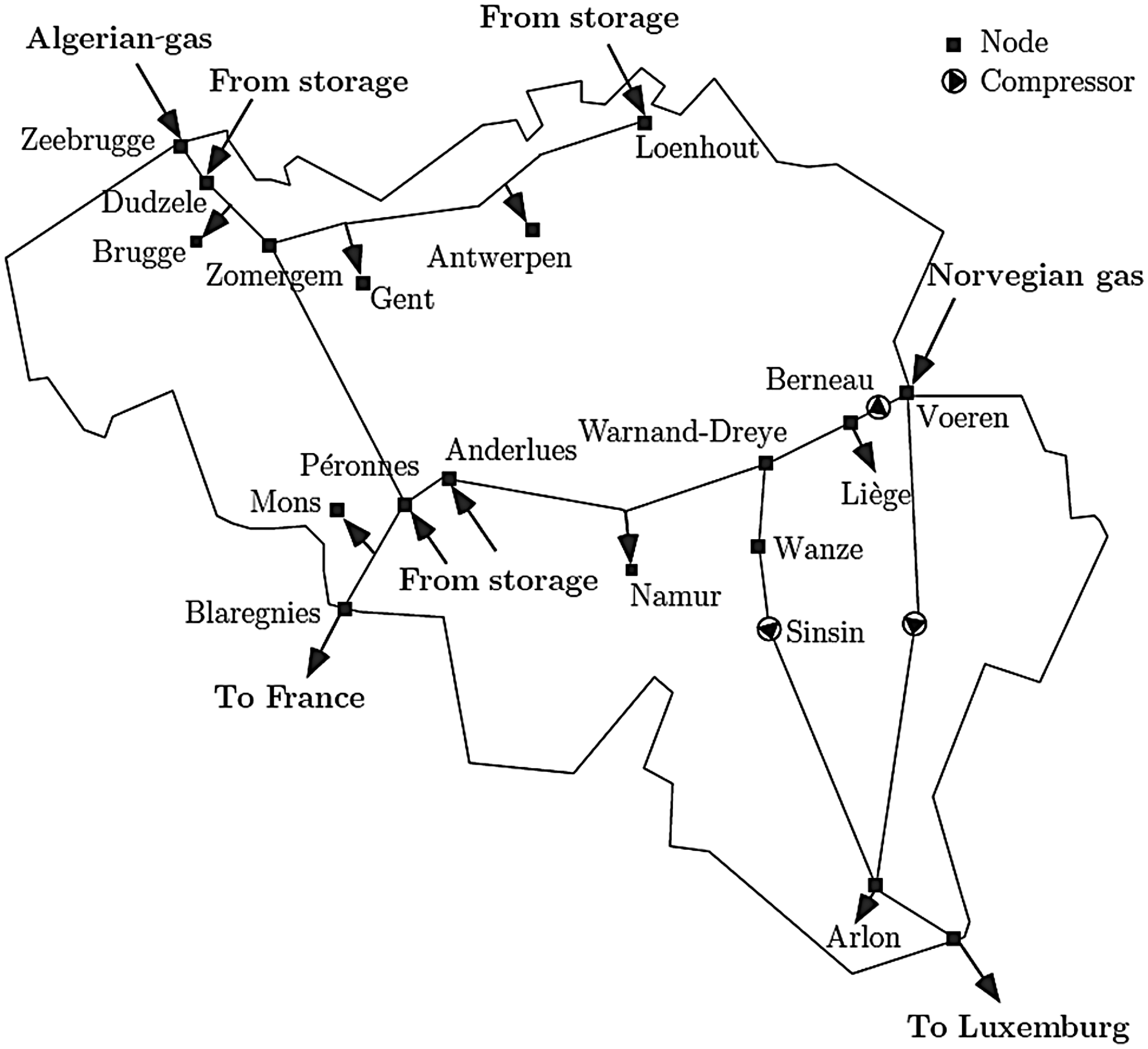
The 20-node Belgian natural gas subnetwork (Shabanpour-Haghighi and Seifi, 2015).
Four CHP plants are colocated with the three networks: specifically, the CHPs are connected at (Elec Bus 6/Gas Node 15/DH Node 4), (Bus 13/Node 7/9), (Bus 14/Node 6/10), and (Bus 8/Node 10/13). The CHPs located within the district heating subnetwork are supplied with the natural gas subnetwork. The heat and electrical power generated by the CHPs are then exchanged with the district heating and electrical subnetworks, respectively. Two thermal storage tanks are placed at DH nodes 9 and 13 to buffer peak heating demand; sized to store on the order of several hours of heat, roughly tens of MWh, which is consistent with published thermal storage implementations (Hamedi et al., 2025). The locations of the two operational TES units and four CHP units within the studied integrated energy network are detailed in Table 2.
The location of TESs and CHPs in the energy network.
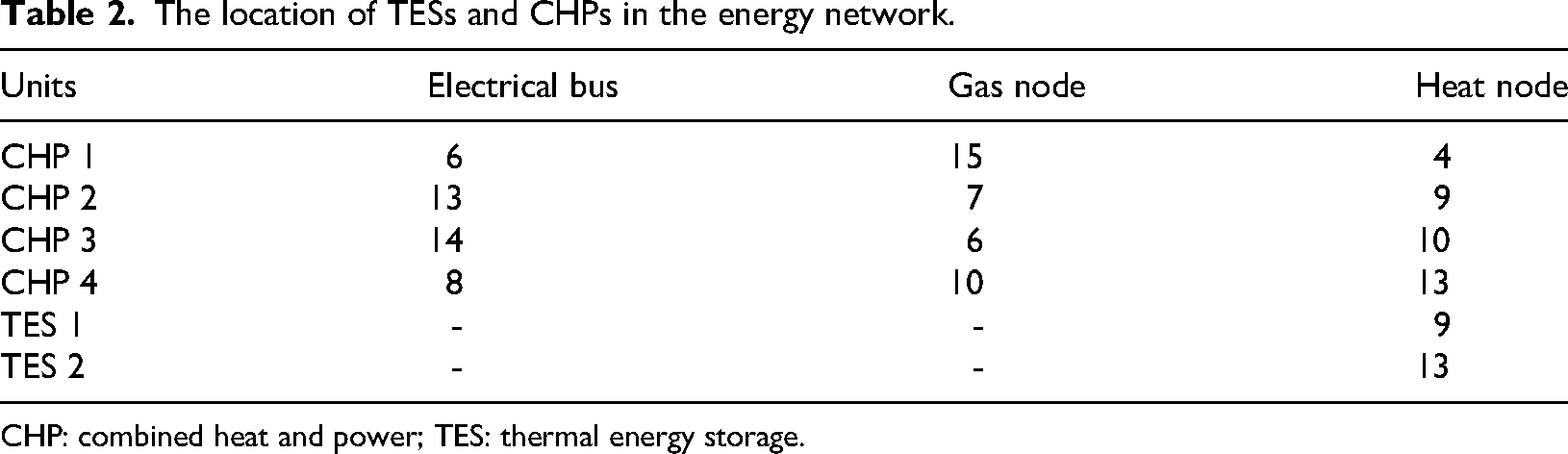
CHP: combined heat and power; TES: thermal energy storage.
The electrical subnetwork is responsible for supplying the electrical demand of the connected buses and includes the transmission lines, electrical loads, and CHP generation units. The district heating subnetwork is designed to distribute thermal energy generated by the CHP units to the heating loads through interconnected pipelines and thermal nodes. In addition, the natural gas subnetwork supplies the required fuel for CHP operation and therefore plays a critical role in supporting the coupled electricity and heating generation processes. The considered integrated structure enables simultaneous interactions among electricity, heating, and gas carriers, thereby providing a suitable platform for evaluating the operational role of TES systems in multienergy environments.
The CHP units act as the main coupling components among the electrical, heating, and natural gas subnetworks by simultaneously converting natural gas into thermal and electrical energy. Therefore, the operational behavior of the CHP units directly affects the energy balance, operational flexibility, and stability of the entire integrated energy system. Variations in electrical and thermal demand levels lead to corresponding changes in CHP operating conditions, fuel consumption, and generated outputs, thereby influencing the interconnected subnetworks. TES can significantly influence various operational and generation parameters of the integrated energy network. For instance, the power output of CHPs, the supply and return temperatures of the district heating subnetwork, and the overall operational cost of the energy network are affected by the presence of thermal storage. Moreover, the optimal placement of TES units is crucial for the efficient and reliable operation of integrated energy networks. Proper TES placement can improve thermal energy management, reduce operational stress on CHP units, and enhance the flexibility of district heating operation during peak-demand periods.
Furthermore, the selected test system represents a realistic and sufficiently large integrated energy framework for investigating the impacts of TES integration on operational flexibility, energy management, load shifting capability, and coordinated network operation. The adopted system configuration also enables comprehensive evaluation of CHP operational behavior, district heating dynamics, and gas consumption variations under different loading conditions.
Simulation setup
In this article, the two TES units are strategically placed at nodes 9 and 13 of the district heating subnetwork. TES 1 is located at node 9, where the first CHP is connected to the electrical subnetwork. Additionally, TES 2 is located at the end point of the radial district heating subnetwork (node 13), where CHP 4 is situated and may experience the most challenging operating conditions. The selected TES locations were intentionally chosen to investigate the operational impacts of thermal storage under different network conditions and thermal demand characteristics. Locating TES 1 near a major CHP connection point enables effective support for CHP operational flexibility and helps smooth fluctuations in generated electrical and thermal power. On the other hand, placing TES 2 at the terminal section of the district heating network allows evaluation of TES performance under comparatively weaker thermal support conditions and larger temperature variations. Furthermore, the coordinated operation of the TES units with the CHP systems enables surplus thermal energy generated during low-demand periods to be stored and later utilized during peak-demand intervals. This operational strategy improves load shifting capability, stabilizes district heating temperatures, reduces rapid CHP output variations, and enhances the overall operational efficiency and reliability of the integrated multienergy network.
The CHPs as impressive power and heat generators are very flexible in supplying the required energy during peak and valley loading hours. It is worthwhile to mention that among all subnetworks of integrated energy networks, the district heating subnetwork is becoming more important during the day hours, because the generation power of CHPs will increase in these times of the day. In this regard and according to Table 1, it is assumed that CHP2 and CHP4 consume a variable amount of gas during the day. The variable gas usage of mentioned CHPs is according to the variable electricity and heat demand of the related subnetworks. The mentioned CHPs supply some part of the subnetwork heat demand and therefore, the generation heat power of related CHPs have many fluctuations. It is assumed that the amount of heat consumption is variable in the day and night hours and it has a specific amount for every six hours of the day. The four ranges of generated heat power of CHPs are shown in Figures 5 and 6, respectively. As a result, the fluctuation in the heat demand of the network will lead to variable produced power of CHPs. Therefore, the presence of TES beside the CHP could result in better conditions of the CHP-based integrated energy network.
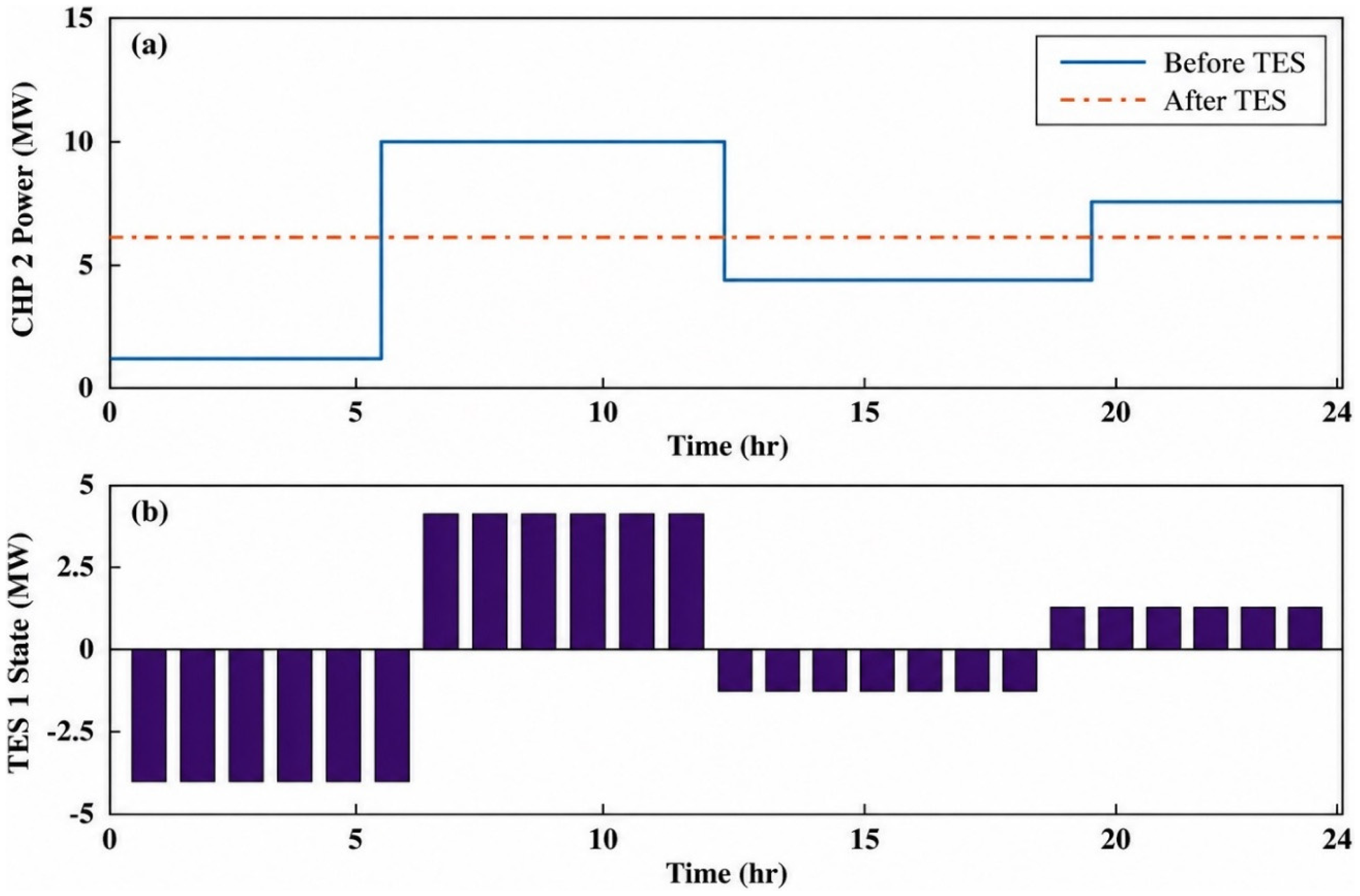
The state of TES 1 and the electrical power of CHP 2.
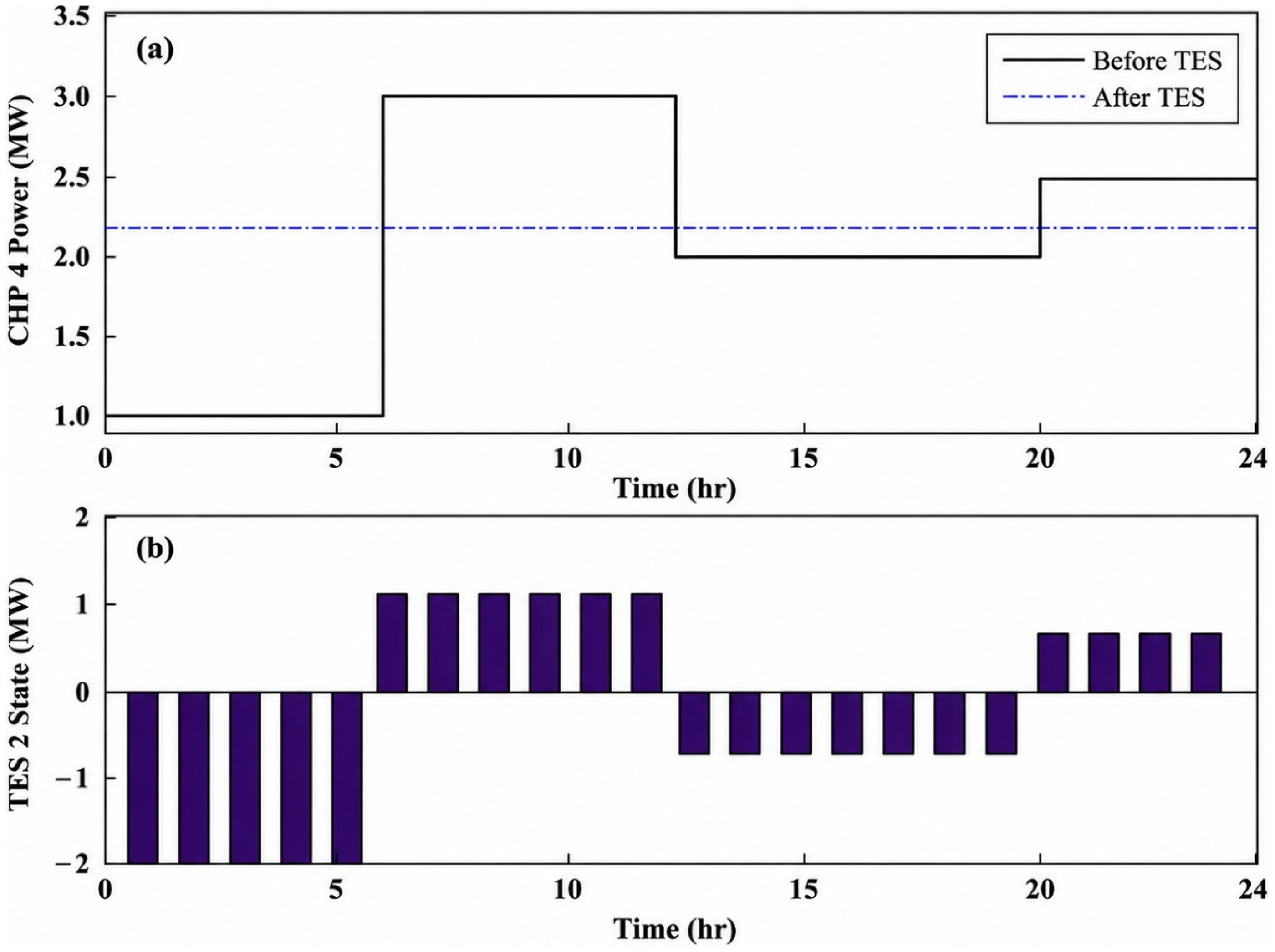
The state of TES 2 and the electrical power of CHP 4.
Moreover, these operational fluctuations not only affect the CHP generation profiles but also influence the operational conditions of the interconnected electrical, natural gas, and district heating subnetworks. During high-demand periods, CHPs are required to increase their heat and electricity production simultaneously, which may impose additional operational stress on the integrated energy network. Conversely, during low-demand periods, excess generated heat may remain underutilized if no storage mechanism is available. Therefore, integrating TES systems alongside CHP units provides an effective solution for balancing thermal demand variations by storing surplus thermal energy during low-demand intervals and releasing it during peak-demand periods.
The coordinated operation of TES with CHP units can significantly improve the operational flexibility of the integrated energy system by smoothing CHP generation fluctuations, reducing rapid ramping requirements, and enhancing the stability of district heating supply temperatures. In addition, TES integration enables more efficient utilization of CHP-generated heat energy, reduces operational uncertainties associated with variable demand conditions, and improves the overall energy management performance of the interconnected multienergy network. Consequently, the presence of TES beside CHP units can create more stable and economically efficient operating conditions for CHP-based integrated energy networks.
Results and discussion
Effect of TES on CHP electrical power smoothing
The utilized TESs in the district heating subnetwork could assist the CHPs to supply constant electrical power for the related bus in the electrical subnetwork. The electrical power of bus 13 (where the CHP 2 is located), before and after the presence of TES 1, and also the charging and discharging state of TES 1 in each time interval, are shown in Figure 5. As it could be seen in Figure 5, the saved power of TES 1 is used during the first time of the day and TES 1 is discharged. In the following times of the day, in which the generated power of the CHP 2 was high enough to supply the demand of bus 13, the TES has charged the surplus produced power of the CHP 2 to be used in the low electrical power situations as well. Accordingly, this process of charging and discharging by the TES 1 resulted in the constant electrical power at bus 13 of the electrical subnetwork. Furthermore, the operation of TES 1 reduces the dependency of CHP 2 on rapid output variations, thereby improving the operational stability of both the CHP unit and the connected electrical bus. This coordinated operation also supports better balancing between the electrical and heating demands during different loading conditions.
Moreover, the electrical power of CHP 4, before and after the presence of TES 2, and also the charging and discharging state of TES 2 is shown in Figure 6. As it could be seen in Figure 6, the stored and released energy by the TES is dependent on the consumption of heat energy at each time of the day. TES 2 is discharged its main stored energy in the first few hours and in the following hours, the TES 2 is saved the surplus inserted heat to be used later. This issue is forced the TES 2 to be more ready during the day hours for discharging. On the other hand, the TES 2 is remained in the standby mode during the middle time of the day and finally it was charged by the surplus heat injection from node 13 of the district heating subnetwork. As a result, it could be said that the TES 2 was utilized more in the early morning times and middle of the day unlike the TES 1. In addition, the operational behavior of TES 2 demonstrates the importance of TES placement within the district heating network, since node 13 represents one of the most critical operating locations due to its radial structure and variable thermal conditions. Therefore, TES 2 contributes not only to thermal energy balancing but also to improving the reliability and flexibility of heat delivery in the downstream section of the heating network.
Generally, it could be concluded that during the night and day hours, while the heat power of the CHPs varies, the stored energy of TES 1 and TES 2 are utilized so that it could compensate for the shortage of power energies of the CHPs in the energy networks as well. The obtained results also confirm that the coordinated utilization of TES units can effectively smooth CHP operational fluctuations, improve energy management among the interconnected subnetworks, and enhance the overall operational flexibility of the integrated energy system without causing significant additional operational costs.
District heating temperature behavior
Figure 7 highlights the specific nodes within the district heating subnetwork where the supply and return temperatures are monitored. These nodes are crucial for the operation of CHP units 1 and 2. It's essential to recognize that the control system has the ability to adjust the supply and return temperatures of these CHP units to optimize overall system performance.
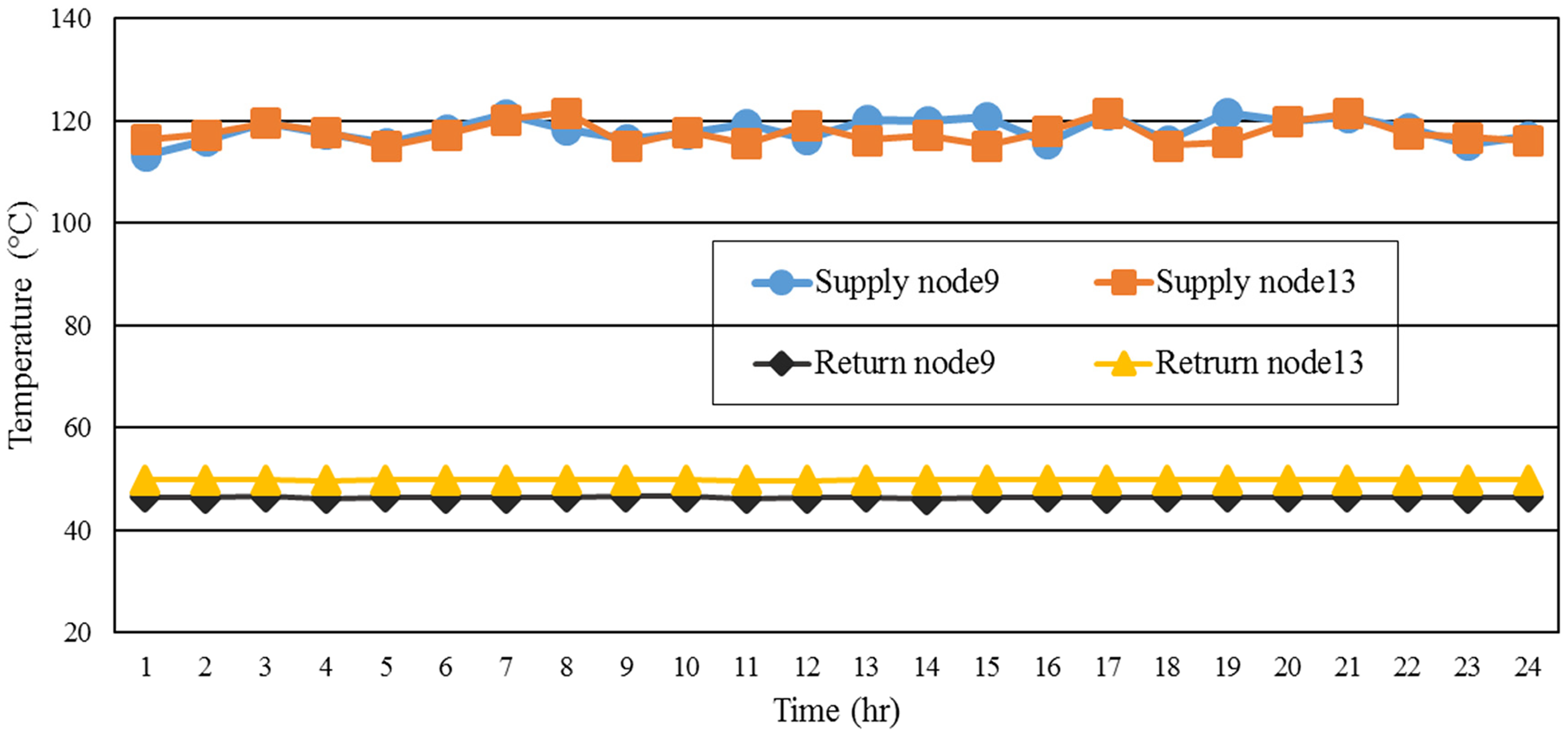
Supply and return temperature profiles at nodes 9 and 13.
However, as illustrated in Figure 7, the actual fluctuations in these temperatures at the reference nodes are quite minimal throughout the day. This is primarily attributed to the high thermal inertia of the district heating network. In other words, the network requires a significant amount of time to respond to temperature changes, resulting in a smoothing effect on temperature fluctuations. While this characteristic can be beneficial for maintaining stable and efficient operations, it can also limit the flexibility to rapidly adjust to sudden changes in demand. The obtained results demonstrate that the integration of TES units assists the district heating network in maintaining more stable thermal conditions during varying load periods. In particular, TES operation helps reduce sudden thermal imbalances by storing surplus heat during low-demand intervals and releasing it during peak-demand periods, thereby supporting smoother CHP operation and more coordinated heat distribution across the network.
The high thermal inertia of the district heating network, while beneficial for stability, can pose challenges during periods of rapidly changing demand, such as during extreme weather conditions or unexpected disruptions. In such cases, the network may not be able to respond quickly enough to meet the fluctuating demands, potentially leading to suboptimal performance or even system failures. Furthermore, the results indicate that TES placement at critical heating nodes improves the operational flexibility of the district heating system and enhances the ability of the network to handle local thermal demand variations more effectively. To mitigate these challenges, strategies such as advanced control algorithms, real-time monitoring, and flexible operation of CHP units can be employed. These approaches can help to improve the responsiveness of the district heating network and enhance its ability to adapt to changing conditions. In addition, the coordinated operation of TES and CHP units can provide an additional operational reserve for the district heating subnetwork, improving overall system reliability and reducing the dependency on rapid CHP output adjustments during transient operating conditions.
Voltage behavior of the electrical subnetwork
The voltage behavior of the electrical subnetwork under the influence of TES-supported CHP operation is illustrated in Figure 8. Since the CHP units are strongly coupled with the district heating network, the operation of TES systems directly affects the electrical power generation behavior of the CHPs and consequently impacts the voltage profiles of the connected electrical buses. Figure 8 presents the 24-h voltage profile of the bus connected to the TES-supported CHP operation together with the voltage profile of Bus 11 as a representative network bus.
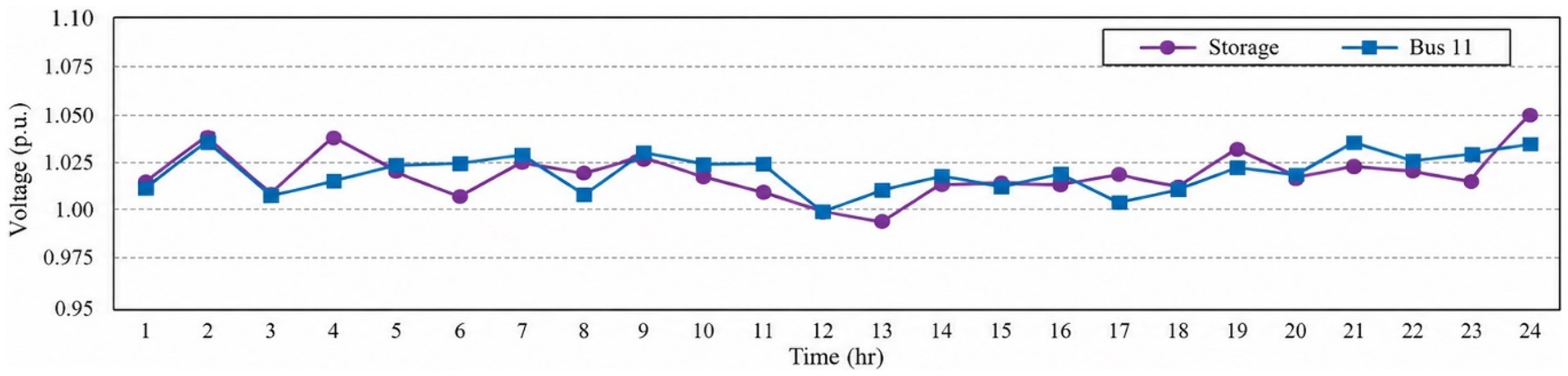
Voltage profile of some important electrical.
As observed, the voltage variations of the monitored buses remain within a stable operating range throughout the day. This behavior demonstrates that the coordinated utilization of TES units assists the CHP systems in supplying smoother and more stable electrical power to the electrical subnetwork. During periods of high thermal demand, TES units discharge stored thermal energy and reduce the operational burden on CHP units, while during lower demand periods, surplus generated heat is stored within the TES systems. As a result, sudden fluctuations in CHP electrical generation are reduced, contributing to improved voltage profiles and better voltage-limit compliance across the electrical network.
Furthermore, the similarity between the voltage trends of the TES-connected bus and the other network buses confirms that TES integration does not negatively affect the operational security of the electrical subnetwork. Instead, TES contributes to improving the coordinated performance of the integrated energy network by supporting more stable CHP operation and reducing operational fluctuations between the electrical and district heating subnetworks.
Pressure profiles of critical gas network nodes
The pressure behavior of important nodes within the natural gas subnetwork is another critical operational parameter in CHP-based integrated energy networks because the CHP units rely directly on natural gas supply for simultaneous heat and electricity generation. Therefore, the pressure profiles of nodes 12, 3, and 20 during the 24-h operating period are presented in Figure 9. These nodes correspond to the gas supply points of the slack generator, the district heating slack boiler, and the terminal node of the gas network, respectively.
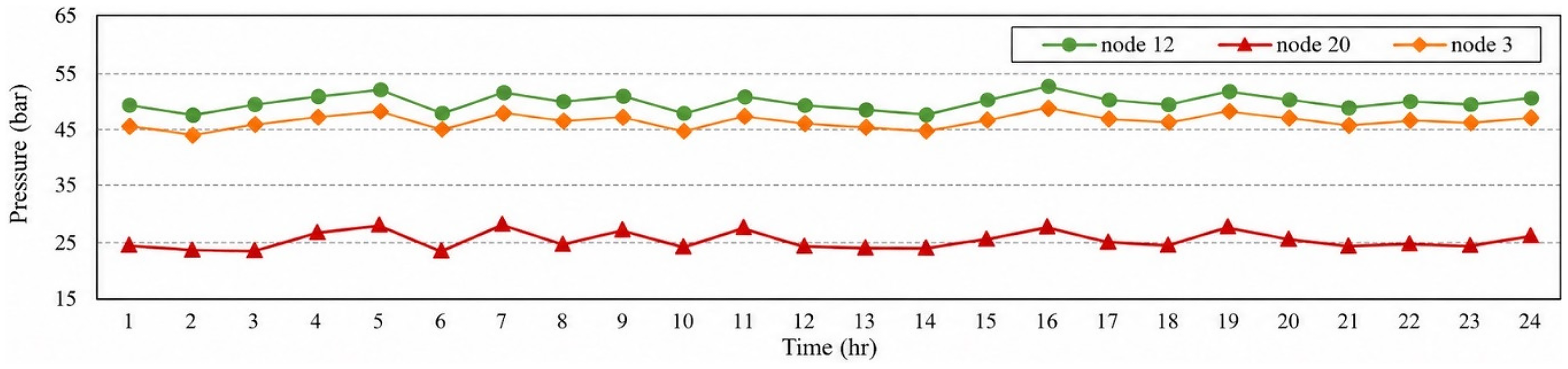
Pressure profile of some gas network nodes.
It should be noted that the gas pressure at critical nodes must remain sufficiently high to ensure secure and continuous fuel supply for CHP operation and district heating support. As shown in Figure 9, pressure reductions occur during several operating intervals, particularly around hours 6, 10, and 14, mainly due to increased gas consumption by CHP units during periods of higher thermal and electrical demand. These pressure variations clearly demonstrate the operational interactions between the natural gas, district heating, and electrical subnetworks.
Moreover, the lower pressure values observed at node 20 are mainly attributed to the radial structure of the gas subnetwork and its location at the end point of the network. Nevertheless, the obtained results indicate that the integration of TES systems contributes indirectly to improving the operational conditions of the gas subnetwork. By storing surplus thermal energy and supporting the heating demand during peak periods, TES units help reduce rapid operational changes in CHP generation and consequently moderate sudden variations in gas consumption. Therefore, TES integration enhances the coordinated and flexible operation of the overall CHP-based integrated energy network while maintaining acceptable gas network operating conditions.
Economic impact of TES integration
Moreover, the operational cost of the studied integrated energy network without TES was calculated to be $121,270. The inclusion of TES increased the total operational cost to $121,700. This represents a marginal increase of approximately 0.35%. This slight increase in cost can be attributed to the current limitations and relatively high cost of heat storage technologies, which in turn elevate the operation and maintenance costs associated with TES. Therefore, while the utilization of TES may lead to increased operational costs for network operators, it offers significant benefits by compensating for potential shortfalls in heat and power generation from CHPs within the integrated energy network. This strategic investment can enhance the system's reliability and flexibility, particularly during periods of peak demand or unexpected disruptions. The obtained results indicate that the operational advantages provided by TES, such as improved CHP flexibility, smoother power and heat generation profiles, and enhanced coordination among the electrical, heating, and gas subnetworks, can justify this marginal increase in operational cost. In particular, TES integration contributes to reducing operational stress on CHP units and improves the overall stability of the integrated energy system during variable loading conditions.
Although the initial investment in TES technology may increase operational costs, it is crucial to consider the long-term benefits. By optimizing energy storage and utilization, TES can contribute to significant energy savings, reduced carbon emissions, and improved overall system efficiency. As TES technology continues to advance and become more cost-effective, it is expected that its adoption will become increasingly attractive for energy network operators. Furthermore, the specific economic benefits of TES will depend on various factors, including the size and complexity of the energy network, the local energy market conditions, and the specific characteristics of the TES technology employed. A comprehensive techno-economic analysis is necessary to accurately assess the potential cost-benefit tradeoffs associated with TES integration. In addition, the relatively small operational cost increase observed in this study demonstrates that TES can provide considerable operational and flexibility benefits without imposing a significant economic burden on the integrated energy network. This finding further highlights the practical potential of TES as a strategic support technology for future multienergy systems.
Optimization algorithm performance
The convergence plot in Figure 10 illustrates the performance of three optimization algorithms, TLBO, Particle Swarm Optimization (PSO), and Genetic Algorithm (GA), in solving the operational optimization problem of the integrated energy system. As seen, the TLBO algorithm demonstrates faster convergence and reaches a lower energy cost compared to PSO and GA. While PSO shows moderate convergence speed, GA converges more slowly and stabilizes at a slightly higher energy cost. This result indicates that TLBO is more efficient in exploring the solution space and avoiding local minima, making it particularly suitable for the complex, multicarrier energy system optimization problem presented in this study. The faster convergence and lower final cost achieved by TLBO confirm its capability to provide reliable and optimal operational strategies for CHP-based integrated energy networks with TES integration. Moreover, these findings support the robustness of the proposed modeling framework, demonstrating that TLBO can effectively handle the non-linear and multiobjective nature of the problem while outperforming widely used metaheuristic algorithms such as PSO and GA. The superior convergence characteristics of TLBO also indicate its strong capability in managing the operational coupling among the electrical, district heating, and natural gas subnetworks while simultaneously considering the charging and discharging behavior of TES systems. In addition, the stable convergence trend observed for TLBO demonstrates that the proposed optimization framework can achieve consistent and reliable solutions for integrated energy management under variable operating conditions. These results further validate the suitability of the proposed approach for large-scale CHP-based multienergy systems with interconnected storage technologies.
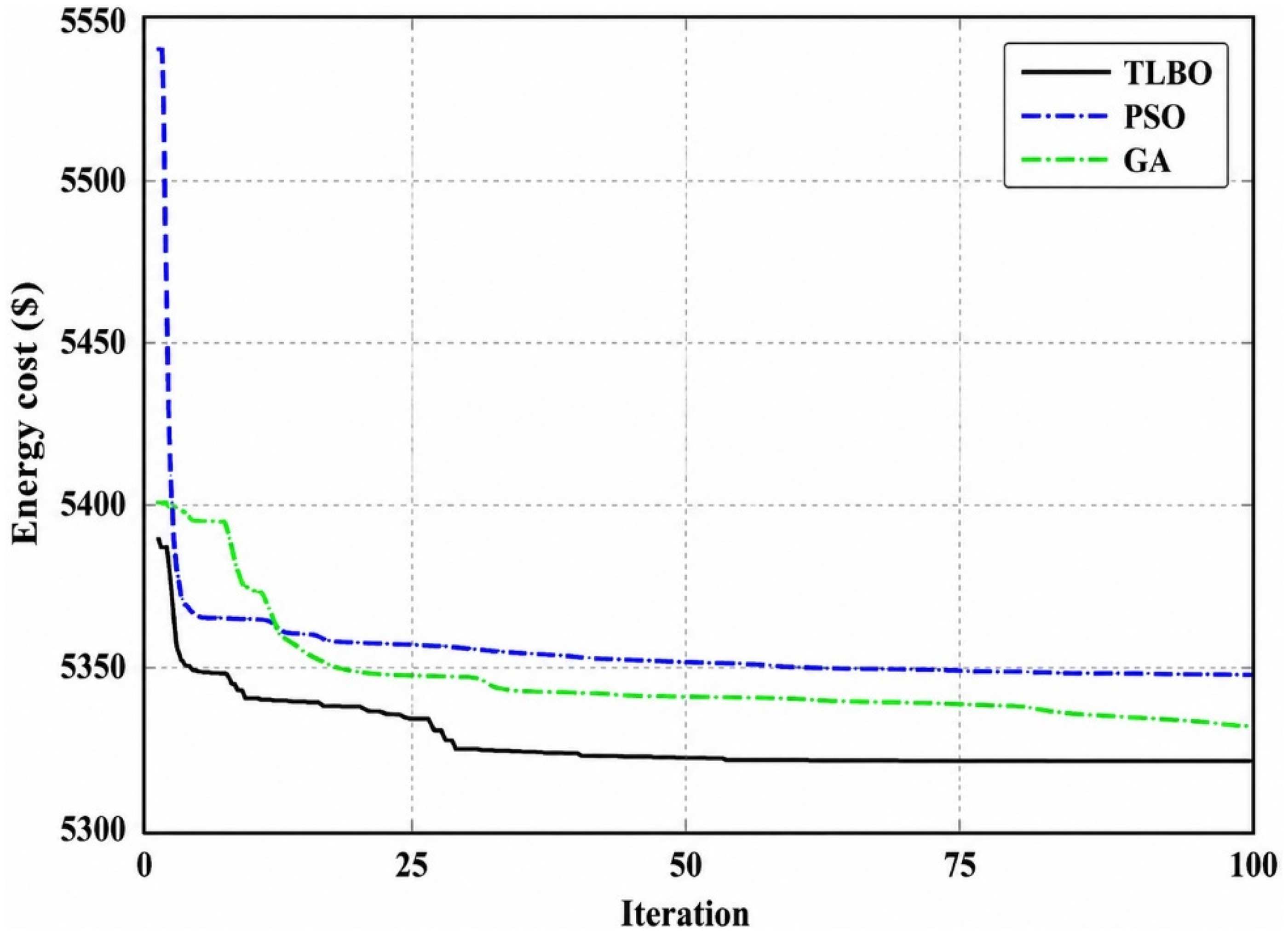
Convergence characteristic of TLBO, PSO, and GA techniques.
Overall discussion and practical implications
In summary, results demonstrated that the inclusion of TES significantly enhances CHP-based operations by smoothing heat and power fluctuations. TES 1 stabilized the electrical output of CHP 2, while TES 2 provided operational flexibility for CHP 4 under variable heat demand, thereby improving system reliability and energy balance. Despite the high thermal inertia of the district heating network limiting rapid temperature adjustments, TES integration proved effective in maintaining stability and supporting continuous CHP operation.
Economically, the integration of TES resulted in a marginal 0.35% increase in total operating costs due to current storage technology expenses. However, the improved flexibility and reliability justify this investment, especially under peak or uncertain conditions. Additionally, comparative optimization analysis confirmed that TLBO outperformed PSO and GA, achieving faster convergence and lower energy costs. These results validated both the robustness of the proposed modeling approach and the strategic role of TES in optimizing multienergy networks. Furthermore, the additional analyses of the electrical and natural gas subnetworks demonstrated that TES integration positively influences the overall operational behavior of the interconnected energy system. The obtained voltage profiles confirmed that TES-assisted CHP operation contributes to maintaining stable voltage conditions across the electrical network by reducing rapid generation fluctuations and supporting smoother power balancing. Similarly, the pressure analysis of the natural gas subnetwork showed that the coordinated operation of TES and CHP units can moderate sudden variations in gas consumption while maintaining acceptable pressure levels at critical gas nodes throughout the operating period. These findings further verify the strong operational interactions among the electrical, heating, and natural gas subnetworks and highlight the important contribution of TES in improving coordinated multienergy system operation.
Finally, it is important to emphasize that the proposed modeling and optimization framework is not limited to the specific test networks employed in this study. Rather, the structure and methodology are designed to be scalable and adaptable to a wide variety of integrated energy systems, regardless of their size, topology, or regional characteristics. This flexibility ensures that the developed approach can be readily applied to other real-world configurations, where interactions between electrical, heating, and gas subnetworks must be coordinated efficiently. By extending beyond the case study presented here, the framework demonstrates broad applicability and universal relevance, offering a practical tool that can support both academic investigations and operational decision-making in complex, multienergy environments. In this way, the results obtained in this work not only validate the technical feasibility of TES integration but also provide general insights that are transferable to diverse energy system contexts, thereby reinforcing the significance of the proposed approach. Overall, the presented results confirm that TES should not be considered merely as an auxiliary thermal component, but rather as a strategic flexibility resource that can enhance the coordinated performance, operational stability, and energy management capability of CHP-based integrated energy networks.
Conclusion
This article presented a comprehensive and innovative framework for modeling and formulating TES within integrated energy networks. Beyond traditional approaches, the study systematically evaluated the operational role of TES across electrical, heating, and gas subnetworks, highlighting its capacity to enhance system efficiency, stability, and optimization. The results demonstrated that TES integration effectively mitigates fluctuations in the power output of CHP units, thereby stabilizing system operation and improving overall network performance. The analysis confirms both the feasibility and strategic value of implementing TES in multienergy systems, with findings strongly suggesting that TES serves as a transformative enabler of higher efficiency, flexibility, and resilience. The successful integration of TES into energy networks offers several key benefits:
Enhanced operational flexibility: TES units can capture surplus energy during off-peak periods and release it during peak demand, thereby improving responsiveness to dynamic load variations. Improved energy efficiency: Optimized storage and dispatch reduce system losses and maximize the utilization of available resources. Lower environmental footprint: By facilitating renewable integration and reducing reliance on conventional backup generation, TES contributes to emissions reduction and sustainable energy transitions. Greater system reliability: TES provides a buffer against disruptions and unexpected demand surges, strengthening security of supply across interconnected subsystems.
Importantly, the proposed modeling and optimization framework is not restricted to the test networks used in this study but is designed to be adaptable to a wide range of integrated energy systems. This generalizability highlights the broader applicability and universal significance of the work, ensuring that the insights gained here can guide both researchers and system operators in diverse energy contexts. To fully realize these benefits, comprehensive techno-economic assessments are needed to determine optimal TES sizing, siting, and operating strategies under varying market and network conditions. Furthermore, continued research and innovation are essential to improve storage technologies, reduce capital costs, and expand the practical applicability of TES in large-scale integrated energy systems.
Footnotes

Funding
The authors received no financial support for the research, authorship, and/or publication of this article.
Declaration of conflicting interests
The authors declared no potential conflicts of interest with respect to the research, authorship, and/or publication of this article.
Data availability statement
This manuscript does not report data generation or analysis.
AI usage statement
During the preparation of this work, the authors used AI tools to assist with editing and take full responsibility for the final content.