






Abstract
High-precision measurement of CO2 flow in carbon capture, utilization, and storage (CCUS) pipelines is difficult because captured CO2 may cross gas, liquid, dense-phase, and supercritical states and is further affected by impurities. This review integrates four issues that have usually been treated separately: CO2 thermophysical-property disturbances, hardware sensing boundaries, intelligent error correction, and engineering calibration in CCUS pipeline networks. Conventional mechanical and differential-pressure flowmeters are reliable under stable single-phase conditions but suffer from gas entrainment, damping shifts, and density-dependent errors near phase boundaries, whereas optical, acoustic, tomographic, and radiation-based methods provide nonintrusive routes for flow-regime visualization and impurity-tolerant monitoring. We further show that data-driven correction methods, including least-squares support vector machine, long short-term memory networks, Transformer models, and physics-informed neural networks, can compensate nonlinear signal drift when coupled with appropriate sensing hardware and calibration data. From the existing research progress, custody-grade CO2 multiphase metering cannot rely on separate component optimization, but necessitates integrated hardware-software codesign, impurity-containing real-flow calibration and digital twin-assisted field verification.
Keywords
Introduction
Under the strategic context of mitigating global climate change and achieving the dual-carbon goals (carbon peak and carbon neutrality), carbon capture, utilization, and storage (CCUS) is widely recognized as an indispensable key technology for realizing large-scale greenhouse gas emission reductions. 1 Within the comprehensive CCUS industrial chain, pipeline transportation serves as the most economical and central hub connecting carbon capture with ultimate storage or utilization. 2 Concurrently, to address the demands of long-distance and cross-sea storage, the conceptual system design of offshore carbon capture and storage (CCS) terminals, as well as CO2 liquefaction processes based on ship transportation, is emerging as a significant research direction to complete the carbon transportation chain.3,4 In particular, the injection of captured CO2 into depleted oil and gas reservoirs for enhanced oil recovery (CO2-EOR) not only achieves long-term geological storage of CO2 but also significantly improves crude oil recovery rates, which is currently considered the most economically viable utilization pathway.5–8
Within complex pipeline networks spanning hundreds of kilometers or even extending thousands of meters underground, accurately comprehending the flow patterns of CO2 and performing high-precision metering of its flow rate and composition are the foundations for ensuring process safety, optimizing operational efficiency, and realizing carbon trading settlements. The field operational experiences from numerous existing large-scale CCUS demonstration projects worldwide (such as the Weyburn and Aquistore projects in Canada, and the CO2-EOR demonstration project in the Jilin Oilfield, China) have demonstrated that the establishment of a rigorous multiphase measurement, monitoring, and verification system is a prerequisite for project success.9–12 To systematically address these challenges, Figure 1 illustrates the conceptual framework of intelligent multiphase flow metering technologies within CCUS pipeline networks.
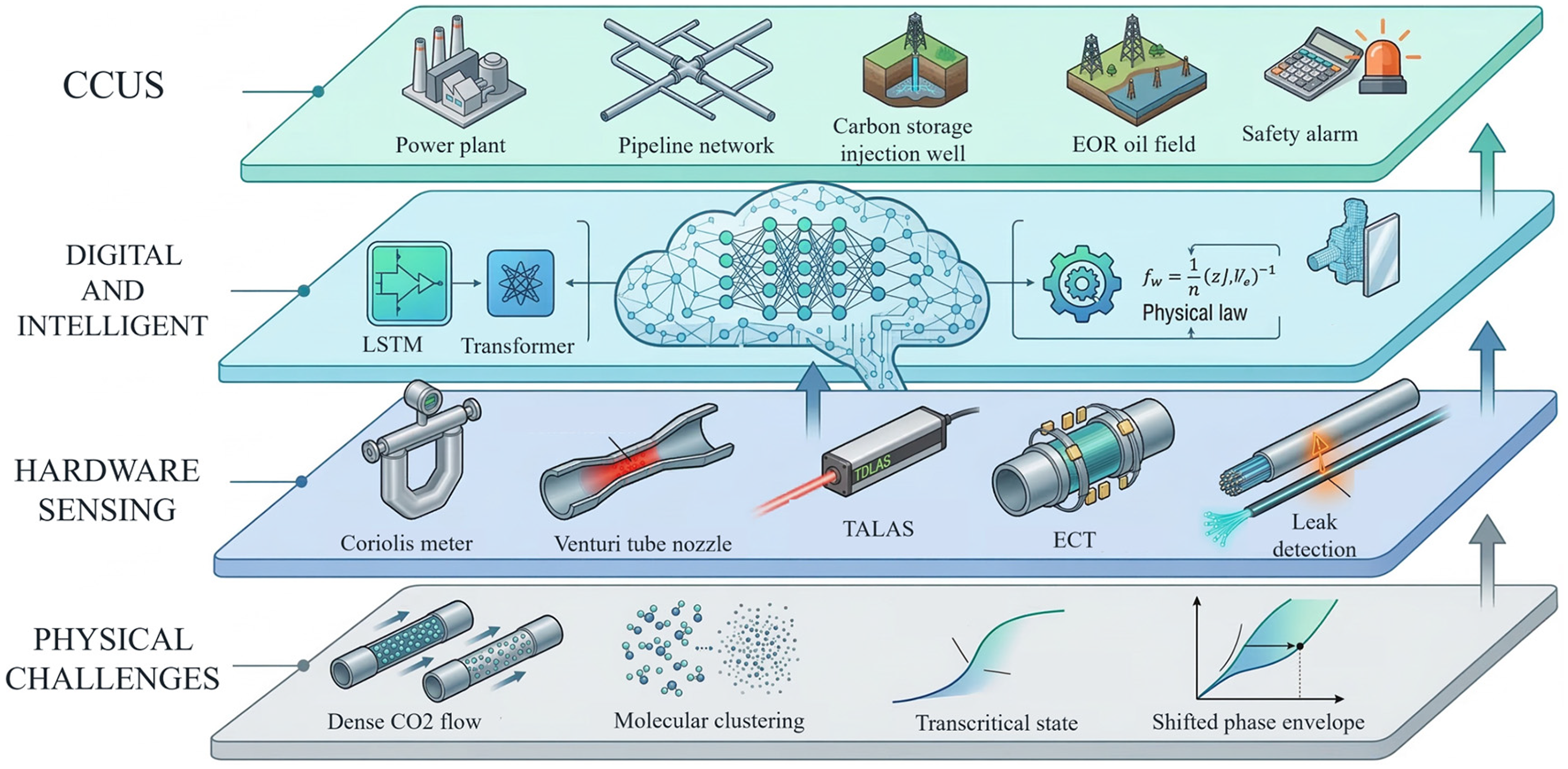
Conceptual framework of intelligent multiphase flow metering technologies in CCUS pipeline networks.
Unlike conventional single-phase natural gas or crude oil pipelines, CO2 pipeline flow faces exceptionally complex fluid dynamic and thermodynamic challenges. Industrially captured CO2 is rarely a pure substance and inevitably contains impurities (e.g. H2O, N2, and SOx). Zhao and Li 13 indicate that these impurities can significantly alter the phase envelope of CO2 mixtures, as depicted in Figure 2. To accurately predict the thermodynamic states of these complex impurity-bearing fluids, Helmholtz energy equations of state specifically designed for CCS gas mixtures, such as EOS-CG, have been developed and subjected to continuous high-precision iterative refinements.15,16 Furthermore, phase equilibrium experiments and modeling studies focused on specific binary systems involving CO2 and hydrocarbons (e.g. hexane) have further elucidated the profound impact of impurity components on the macroscopic phase behavior of the fluid.17,18 These alterations in thermophysical properties cause fluids, which would otherwise exist in the gaseous phase under standard ambient temperature and pressure, to transition into supercritical CO2 (sCO2) states or high-pressure dense phases. In this review, the near-critical region denotes the thermodynamic domain close to the CO2 critical point and the pseudo-critical line where density, heat capacity, sound speed, and transport properties vary sharply. The pseudo-critical region specifically refers to the narrow zone at supercritical pressure around the pseudo-critical temperature, where thermophysical properties exhibit extrema or steep gradients rather than a true first-order phase transition. More importantly, within the pseudo-critical region, even marginal fluctuations in temperature and pressure can precipitate drastic step changes in fluid density. In addition, the presence of impurities not only amplifies this instability but also exacerbates the corrosion threats to sensing probes and pipe walls within the complex flow fields traversing phase boundaries.19–22 However, conventional flowmeters are predominantly designed based on assumptions of single-phase, incompressible fluids or stable thermophysical properties; consequently, when CO2 crosses the critical point or undergoes multiphase evolution, such severe fluctuations in physical properties trigger profound distortions of underlying sensing signals (e.g. acoustic attenuation, optical aberration, and dielectric constant drift), rendering traditional mechanistic compensation models ineffective. Confronted with such intricate nonlinear mapping challenges, traditional single-point hardware improvements have reached a bottleneck, necessitating the urgent introduction of novel sensing paradigms driven by intelligent algorithms and edge computing.
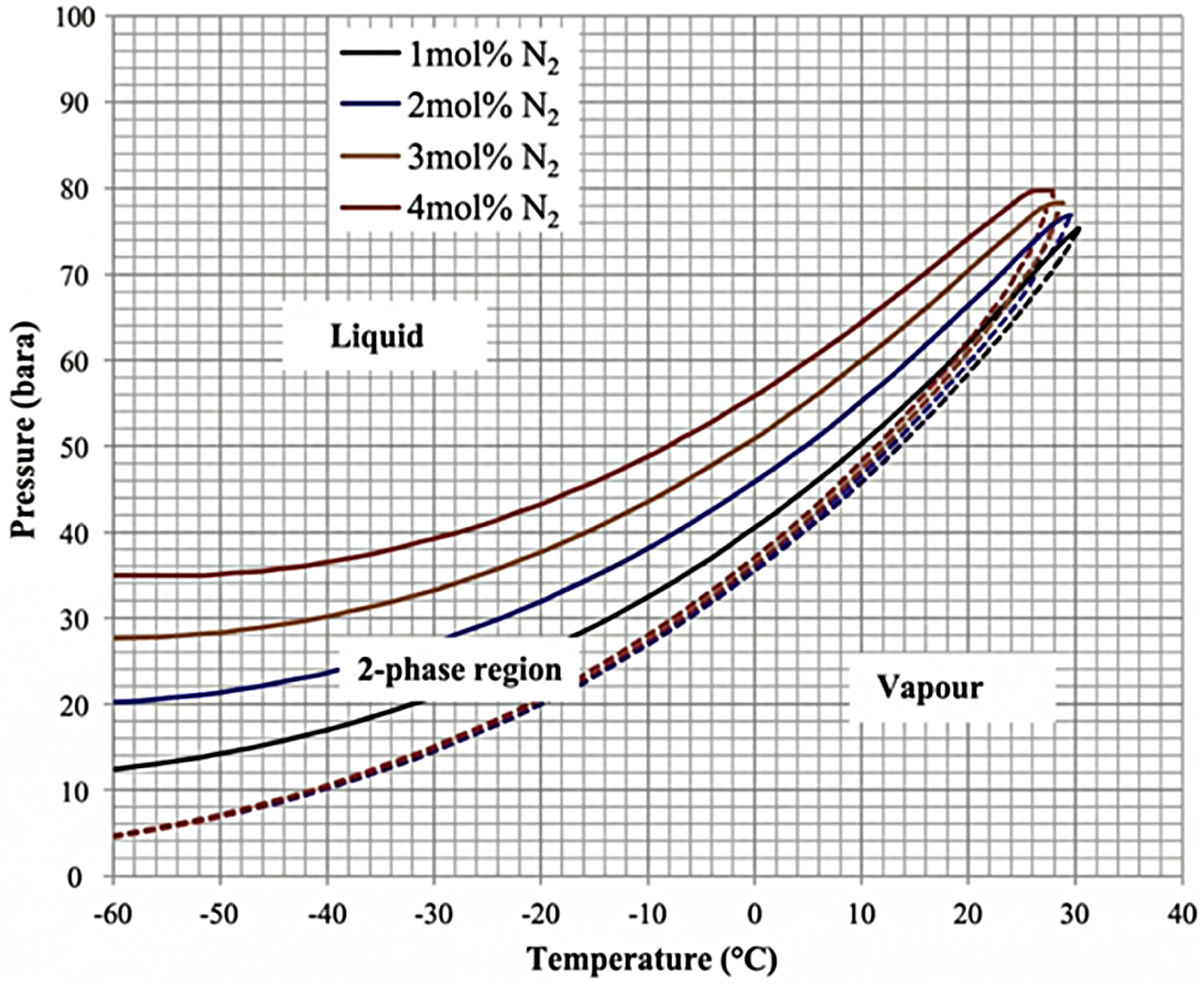
Phase diagrams of CO2-N2 mixtures showing the expansion of the phase envelope. 14
Rather than treating CO2 transportation, metering hardware, corrosion, and artificial intelligence (AI)-based correction as separate topics, this review links phase-behavior-induced signal distortion, hardware limitations, intelligent correction algorithms, calibration requirements, and digital-twin implementation for field operation.
The discussion follows the intrinsic logic of the measurement problem: thermophysical-property disturbances are first clarified, the response boundaries of representative meters are then compared, and data-driven correction strategies together with engineering calibration and digital-twin applications are finally evaluated.
Interference mechanisms of CO2 properties on sensing signals
Accurate CO2 metering depends on how variations in density, dielectric constant, refractive index, and acoustic velocity are converted into primary sensor signals. These properties become strongly nonlinear when impurity-bearing CO2 approaches the critical point, crosses phase boundaries, or passes through the pseudo-critical region; understanding these mechanisms is therefore essential before evaluating individual meters.
Abrupt changes in dielectric constant and electrical sensing signal drift
For instruments operating on capacitance or microwave resonance principles (such as electrical capacitance tomography, ECT), the fluid dielectric constant serves as the core input parameter for phase fraction inversion. For nonpolar CO2 molecules, the relationship between their macroscopic dielectric constant and fluid density obeys the classical Clausius–Mossotti equation. 23 Therefore, any thermodynamic-state alteration that changes density is directly converted into an electrical signal disturbance. During the transition from the gaseous phase to the high-pressure dense phase, or when the fluid crosses the pseudo-critical line, even marginal temperature or pressure fluctuations can induce steep density variations.13,14,23 Under actual pipeline transportation conditions, impurity-induced phase-envelope shifts further broaden the two-phase region and increase the probability of local gas-liquid coexistence, which strengthens the oscillation of the equivalent dielectric constant of the mixture system.13,14,23,24 Figure 3 demonstrates these nonlinear step changes in CO2 density and relative permittivity near the critical isothermal line. Macroscopically, this high-frequency property variation appears as baseline drift in the capacitance values of instruments such as ECT, thereby limiting the validity of traditional linear dielectric-density calculation models.
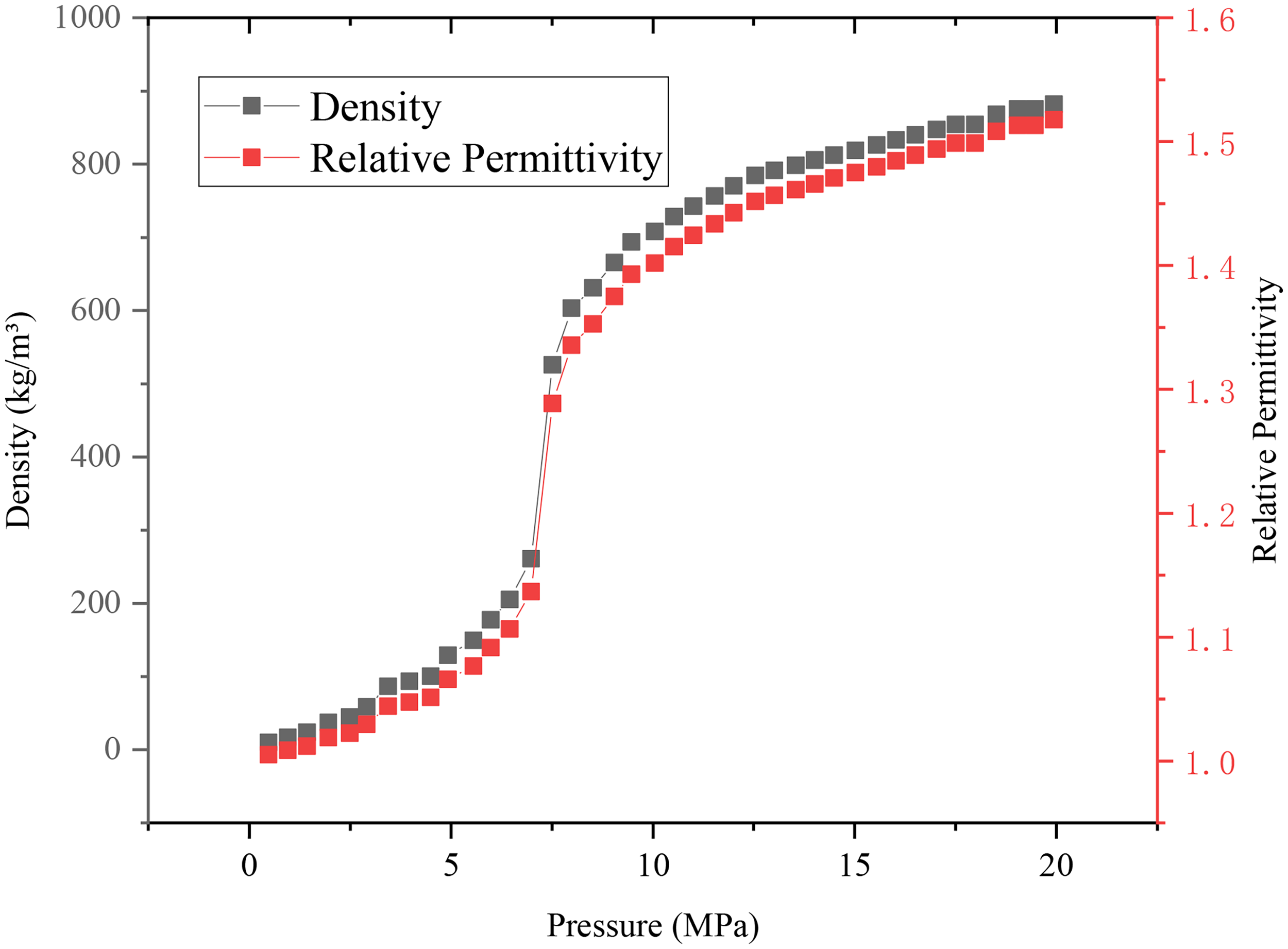
Nonlinear step changes in CO2 density and relative permittivity near the critical isothermal line. The severe oscillation of the dielectric constant is the physical origin of baseline drift in electrical sensors. 23
Density fluctuations, refractive index distortion, and optical sensing interference
Noncontact tunable diode laser absorption spectroscopy (TDLAS) and Raman spectroscopy technologies are confronted with severe optical scattering and refractive interference during the metering of near-critical CO2. From a thermodynamic and molecular perspective, critical opalescence is more rigorously associated with enhanced density fluctuations and an increasing correlation length in the near-critical region; cluster-like molecular aggregation may occur locally, but it should be interpreted as one manifestation of density inhomogeneity rather than the only mechanism.25–27 When the characteristic scale of density fluctuations becomes comparable with optical wavelengths, strong Rayleigh scattering occurs, and the originally transparent fluid can appear sky-blue or milky white (Figure 4). This scattering attenuates the incident laser intensity, reduces the signal-to-noise ratio of optical sensors, and compromises the alignment and accuracy of line-of-sight optical instruments.
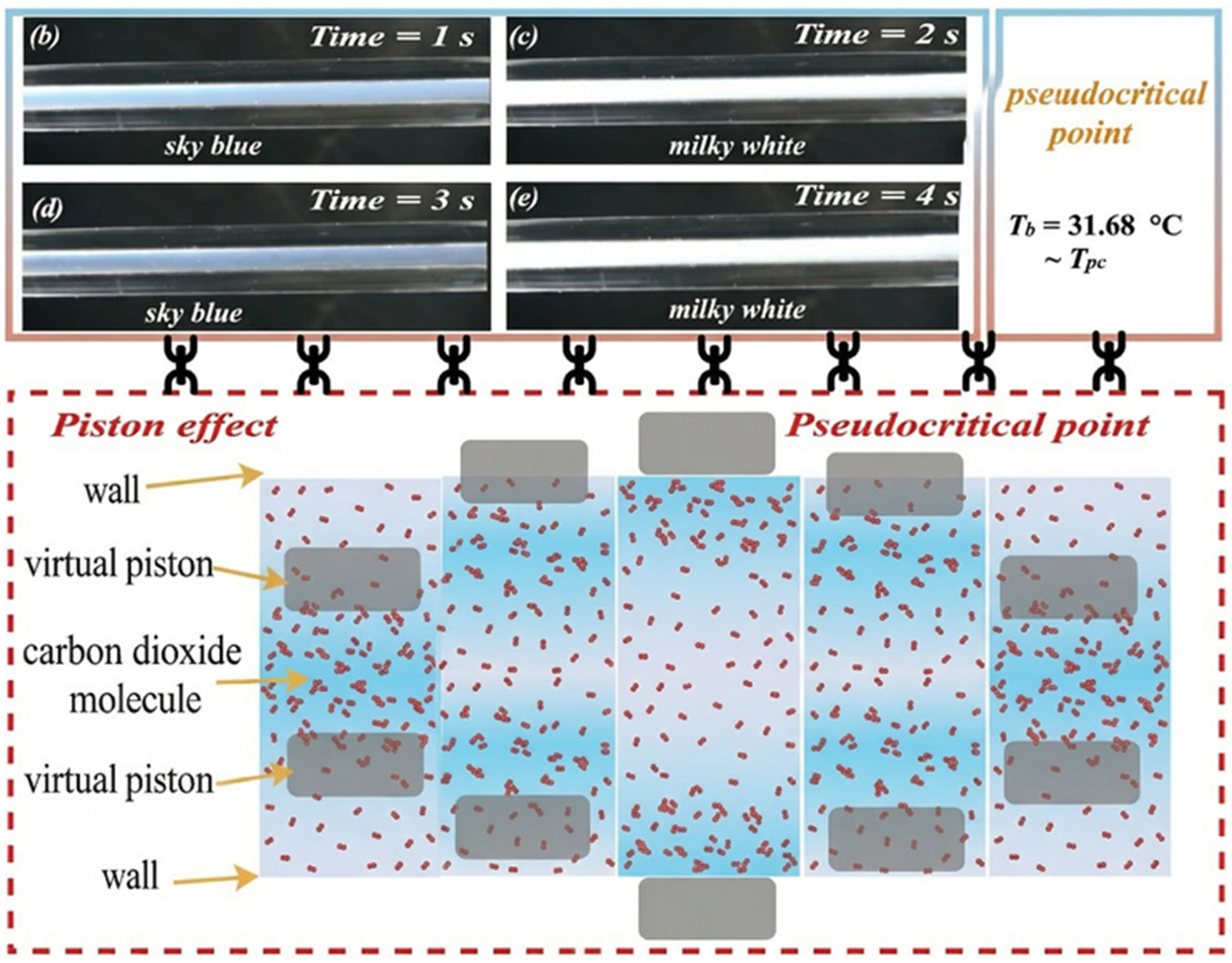
Evolution of critical opalescence associated with near-critical density fluctuations of CO2. Intense volumetric scattering leads to severe attenuation of optical sensing signals. 26
In addition to scattering attenuation, localized density fluctuations directly translate into non-monotonic distortions of the refractive index. Research indicates that in the near-critical region, even minute temperature gradients (e.g. thermal radiation from the laser probe itself or temperature differentials at the pipe wall) cause significant density gradients, which subsequently generate intense refractive index gradients. 28 Such optical aberrations not only alter the intensity of Raman scattering 25 but also cause the laser optical path to bend and deflect, severely interfering with the alignment and measurement accuracy of line-of-sight optical instruments.
Anomalies in the speed of sound and acoustic attenuation mechanisms
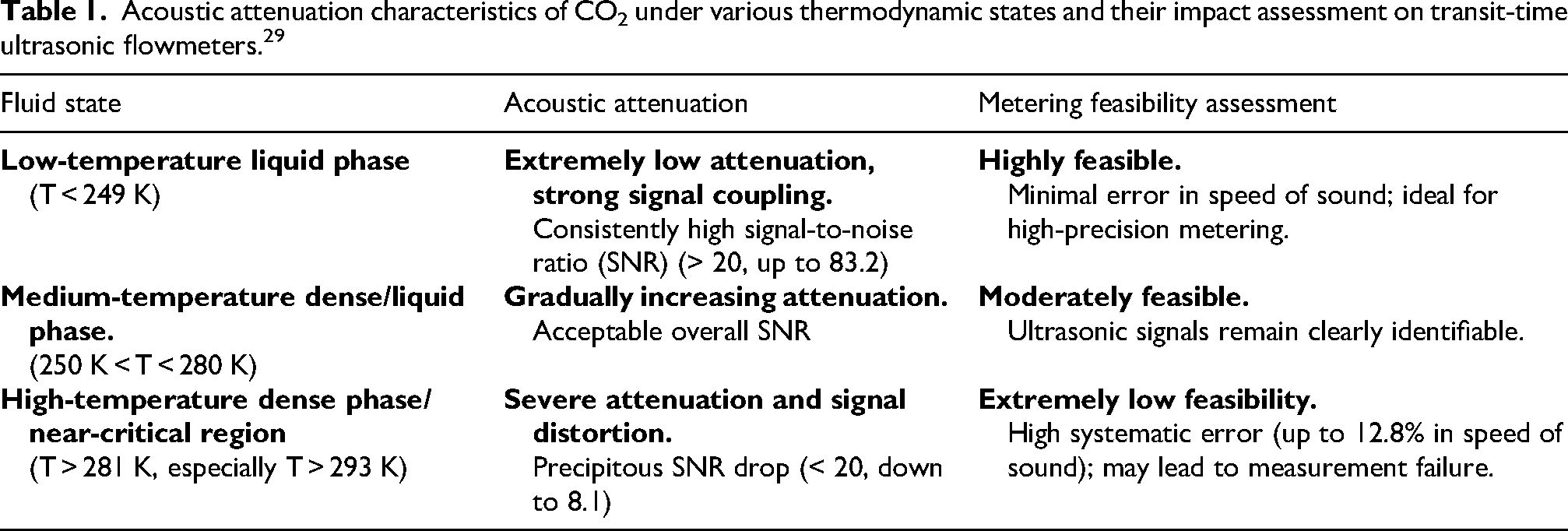
Ultrasonic flowmeters possess significant potential in large-diameter pipeline transportation due to the absence of intrusive elements. However, the propagation characteristics of ultrasonic waves within near-critical and dense-phase CO2 are extremely adverse. On the one hand, high-pressure liquid CO2 exhibits a relatively high density, which provides superior acoustic coupling efficiency, thereby enabling the acoustic waves emitted by the transducers to effectively penetrate the fluid interior. 29 On the other hand, as the fluid temperature rises, CO2 demonstrates an exceptionally high acoustic attenuation coefficient and an anomalous dip in the speed of sound. 30 High-frequency density fluctuations absorb a substantial amount of acoustic energy, which causes the amplitude of the ultrasonic signals at the receiving end to attenuate exponentially; concurrently, the severe nonlinear variations in the speed of sound with respect to temperature and pressure introduce unpredictable systematic errors into the calculation of transit time. 30 Experimental evidence has shown that, although ultrasonic flowmeters perform excellently in low-temperature liquid CO2, their signal quality deteriorates significantly under dense-phase or supercritical transportation conditions at higher ambient temperatures (e.g. above 20 °C) 29 (Table 1).
Acoustic attenuation characteristics of CO2 under various thermodynamic states and their impact assessment on transit-time ultrasonic flowmeters. 29
Compound interference and corrosion mechanisms under the coupled presence of multiple impurities
Industrially captured CO2 frequently carries highly complex impurity components (e.g. H2O, H2S, NOx, and N2). The coupled interaction of multiple impurities has been shown to substantially broaden the gas-liquid two-phase region, causing severe deviations in the critical parameters of the fluid. 2 In addition to broadening the two-phase region, impurity-induced phase envelope shifts can directly trigger localized condensation of water-rich phases in pipelines. This localized condensation leads to severe corrosion in the measurement dead zones of flowmeters or downstream of throttling elements. 20 Furthermore, recent studies indicate that localized depressurization-induced phase transitions of sCO2, occurring at pipeline defects or reduced-diameter meter sections, generate complex transient flow fields and intense vortices. These phenomena significantly exacerbate flow-accelerated corrosion on metal surfaces. 21 At present, the dynamic evolution boundaries of transient multiphase flow patterns under the copresence of multiple impurities, as well as their compound interference mechanisms on acoustic, optical, or electrical metering instruments, remain elusive. This ambiguity severely restricts the application of high-precision flowmeters in deep-sea and ultra-long-distance pipelines. These impurity-driven phases and corrosion effects also alter flowmeter operation by changing local density, damping, pressure drop, probe wettability, and wall roughness.
The above sensing-signal interference mechanisms indicate that single hardware optimization alone cannot solve the problem of CO2 multiphase metering; targeted intelligent correction algorithms and impurity-aware calibration are also required.
Evaluation of mainstream multiphase metering hardware technologies
Current CO2 metering hardware can be grouped into mechanical and differential-pressure meters, optical/acoustic sensors, and tomographic or radiation-based fusion systems. Their applicability is governed not only by nominal accuracy but also by sensitivity to density drift, impurity-induced phase changes, and corrosion.
Mechanical and differential pressure flowmeters
Coriolis mass flowmeters (CMFs) are widely used for high-precision mass flow measurement in CO2 pipelines, as their measurement principle is based on Coriolis force and is less affected by fluid thermophysical properties in single-phase flow. 31 Furthermore, regarding CO2 mixtures containing specific impurities, researchers have extensively evaluated the density and flow measurement accuracy of Coriolis meters and oscillation-type densitometers under various process conditions, thereby further clarifying their performance boundaries under intricate operating conditions.32,33 However, once pressure fluctuations within the pipeline cause the fluid to enter the two-phase region, the vibrating tube of the CMF is confronted with severe two-phase gas-entrapment effects and substantial damping surges, which drastically exacerbate measurement errors.
In comparison, differential pressure (DP) flowmeters (e.g. orifice plates and Venturi tubes) feature simple structures and low costs, yet they are equally susceptible to the interference of two-phase flows. Experimental evidence has shown that the dynamic evolution of gas-liquid two-phase flow patterns within the pipeline drastically disrupts the stability of the pressure drop across the orifice throttling elements. 34 Although orifice flowmeters are mature in application, the main physical limitation is the generation of unrecoverable permanent pressure drops, which are highly prone to triggering localized phase transitions and dry ice formation during CO2 transportation. 30 Such nonequilibrium condensation phenomena, induced by high-speed throttling depressurization, are particularly intense in the core throttling regions of DP instruments (such as the throat of a converging-diverging nozzle). To elucidate this microscopic mechanism, researchers have conducted in-depth analyses of the supersonic condensation and separation processes of high-pressure CO2. 35 Relying on computational fluid dynamics simulations, for instance, by coupling the discrete particle method to track droplet phase-transition trajectories, the dynamic evolution patterns and macroscopic phase distributions of gas mixtures in supersonic flow fields can be characterized. 36 Recent review work on CO2 condensation has further summarized the theory, observed phenomena, and engineering applications of CO2 condensation, indicating that rapid expansion-induced condensation is a key issue in throttling, separation, and metering-related devices. 37 To mitigate the adverse effects brought by such pressure drops, the averaging pitot tube (APT) infers the flow rate by measuring the average dynamic pressure across multiple points on the pipeline cross-section. In gaseous CO2 experiments, the measurement error of the APT can be controlled within ±1.2%, and its induced pressure loss is substantially smaller than that of orifice plates; a typical experimental flow loop for calibrating the APT is illustrated in Figure 5. Nevertheless, its precision remains slightly inferior to that of the CMF. 38 Whether employing orifice plates or APTs, their flow rate calculation is highly dependent on the accurate input of fluid density, which is the intrinsic reason for their restricted application near the critical point.
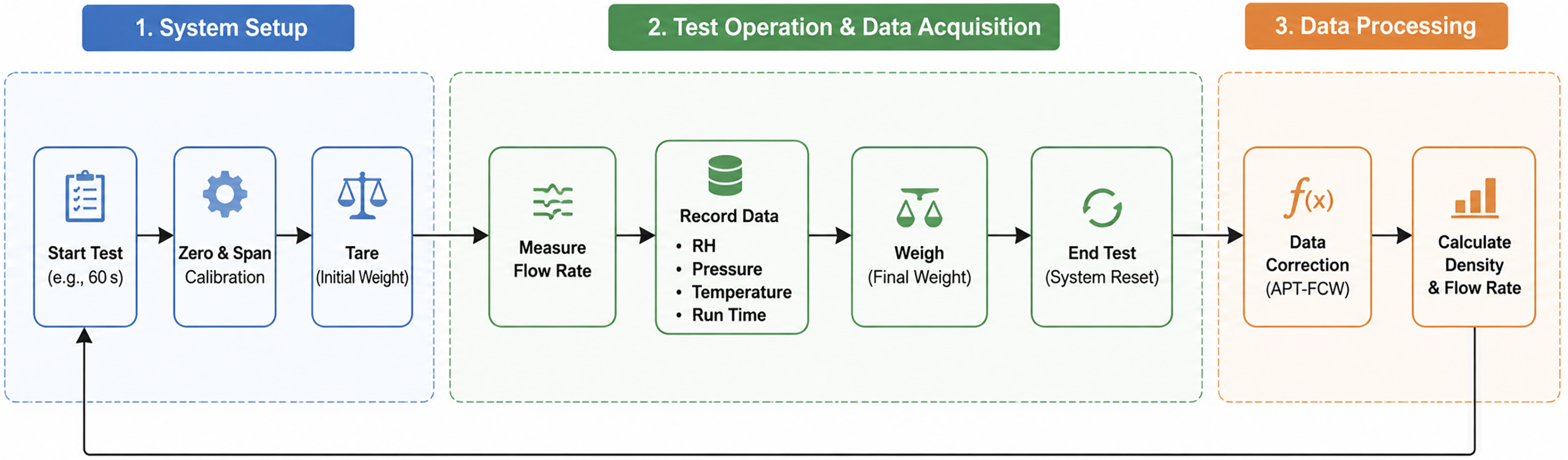
Schematic diagram of the experimental flow loop used for calibrating the APT. The setup employs a CMF as a secondary reference and a weighing scale system as the primary standard to verify the measurement accuracy. 38
In addition to the hydrodynamic interference caused by gas–liquid two-phase flow, impurity-bearing CO2 streams impose additional constraints on mechanical and differential-pressure flowmeters. For CMFs, impurity-induced phase-envelope shifts and local water-rich condensation may intensify density uncertainty and gas entrainment, thereby affecting vibrating-tube damping, apparent density, and zero-point stability.13,30,32,33 Corrosive impurities such as H2O, H2S, NOx, and SOx may further degrade wetted tube surfaces and sensing reliability during long-term operation.19,20 For differential-pressure flowmeters, impurity-driven local condensation and corrosion can alter the effective geometry of throttling elements, disturb the discharge coefficient, and aggravate pressure-drop fluctuations.30,34 Therefore, the applicability of mechanical flowmeters in CCUS pipelines should be evaluated not only from the perspective of two-phase flow dynamics, but also by considering impurity-induced thermodynamic shifts, corrosion risk, and density-input uncertainty.
Advanced optical and acoustic metering
To overcome the unrecoverable pressure drops and the wear of moving parts inherent in mechanical instruments, nonintrusive optical and acoustic technologies have attracted increasing attention. TDLAS technology conducts measurements by leveraging the intrinsic absorption characteristics of specific gas molecules at particular laser wavelengths (i.e. governed by the Beer-Lambert Law). Given that the optical windows of TDLAS can be completely isolated from highly corrosive fluids, the technology is highly suitable for handling industrial CO2 streams containing complex impurities such as H2S and SOx 39 At actual CCUS injection sites, high-resolution optical instruments, such as Cavity Ring-Down Spectroscopy, have been successfully deployed for the high-frequency analysis of trace carbon isotope compositions within CO2 gas flows. This further demonstrates the robust antiinterference capabilities and high-precision monitoring potential of advanced optical technologies in intricate industrial environments. 40 Recent studies have also proposed a triangular laser beam path design, which has achieved synchronous, high-frequency measurement of fluid pressure, temperature, and velocity within supersonic flow fields 41 ; this provides a potential hardware route for metering during transient step changes in sCO2 power cycles.
For the synchronous analysis of multiple components, Raman spectroscopy can be directly applied for the online quantitative analysis of mixtures, as it is capable of identifying the characteristic vibrational peaks of molecules. To address the critical bottleneck of weak gas scattering signals, Coherent Anti-Stokes Raman Scattering (CARS) technology utilizes a single femtosecond beam to excite the Fermi resonance doublets of CO2 (at ≈1285 and ≈1388 cm−1), thereby elevating the signal-to-noise ratio to an exceptionally high level, supporting a 1 kHz sampling rate. 42 The schematic configuration of this single-beam CARS detection system is presented in Figure 6.
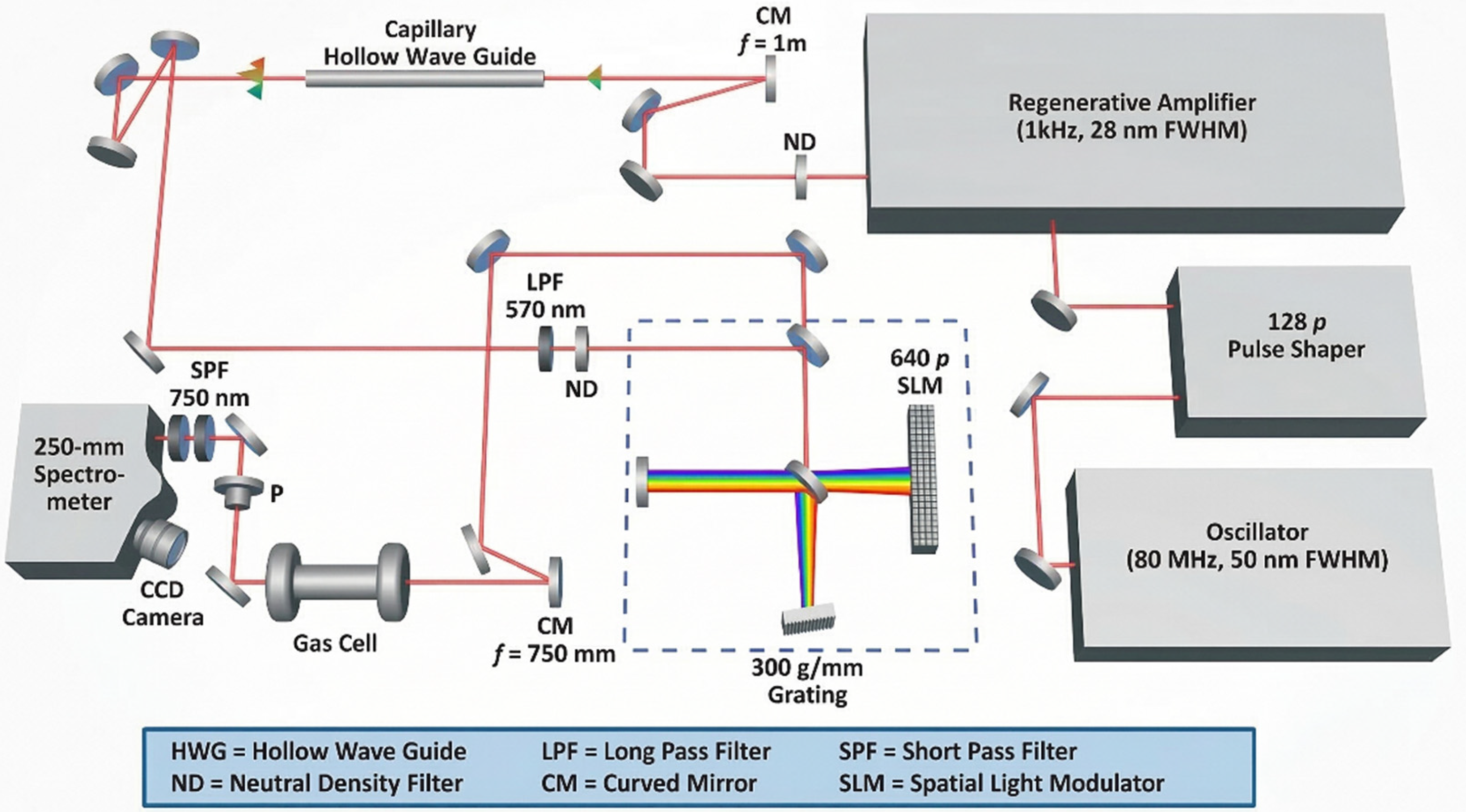
High-frequency nonintrusive optical detection system for CO2 utilizing single-beam CARS. 42
As for ultrasonic flowmeters, although they perform excellently in low-pressure natural gas and cryogenic liquid pipelines, they are confronted with the severe challenge of high acoustic attenuation within the near-critical region of CO2. Microscopic fluctuations in fluid density absorb substantial amounts of acoustic energy, resulting in the inability of transducers to capture effective transit time signals.
Tomography and multisensor fusion
Confronted with intricate gas-liquid two-phase or multiphase transient flow patterns (such as slug flow and annular flow), single-point measurement sensors frequently fail; consequently, acquiring multidimensional information across the pipeline cross-section has become an imperative necessity. ECT measures multipath capacitance values via an array of electrodes arranged on the outer wall of the pipeline, subsequently reconstructing the spatial distribution of the dielectric constant within the pipe. The primary advantages of ECT lie in its nonintrusive nature and exceptionally high imaging frame rates. Existing research has successfully utilized ECT systems to achieve real-time, high-resolution cross-sectional imaging of CO2 multiphase flows under typical CCUS operating conditions, accurately capturing the dynamic evolution patterns of the gas-liquid phase interface. 43 A cross-sectional schematic of a typical 12-electrode ECT sensor is shown in Figure 7. However, in industrial field applications, ECT sensors encounter severe electromagnetic shielding challenges posed by high-pressure metal pipe walls, which necessitate the design of specialized insulating measurement sections. As a robust complement to tomography technologies, wire-mesh sensor technology similarly demonstrates substantial potential in acquiring high-resolution cross-sectional information of gas–liquid two-phase flows under high temperatures and pressures 44 ; in particular, capacitance-based wire-mesh sensors can achieve rapid and dynamic measurement of phase fractions without relying on fluid conductivity, 45 thereby providing more direct internal flow field data for the identification of intricate flow patterns.
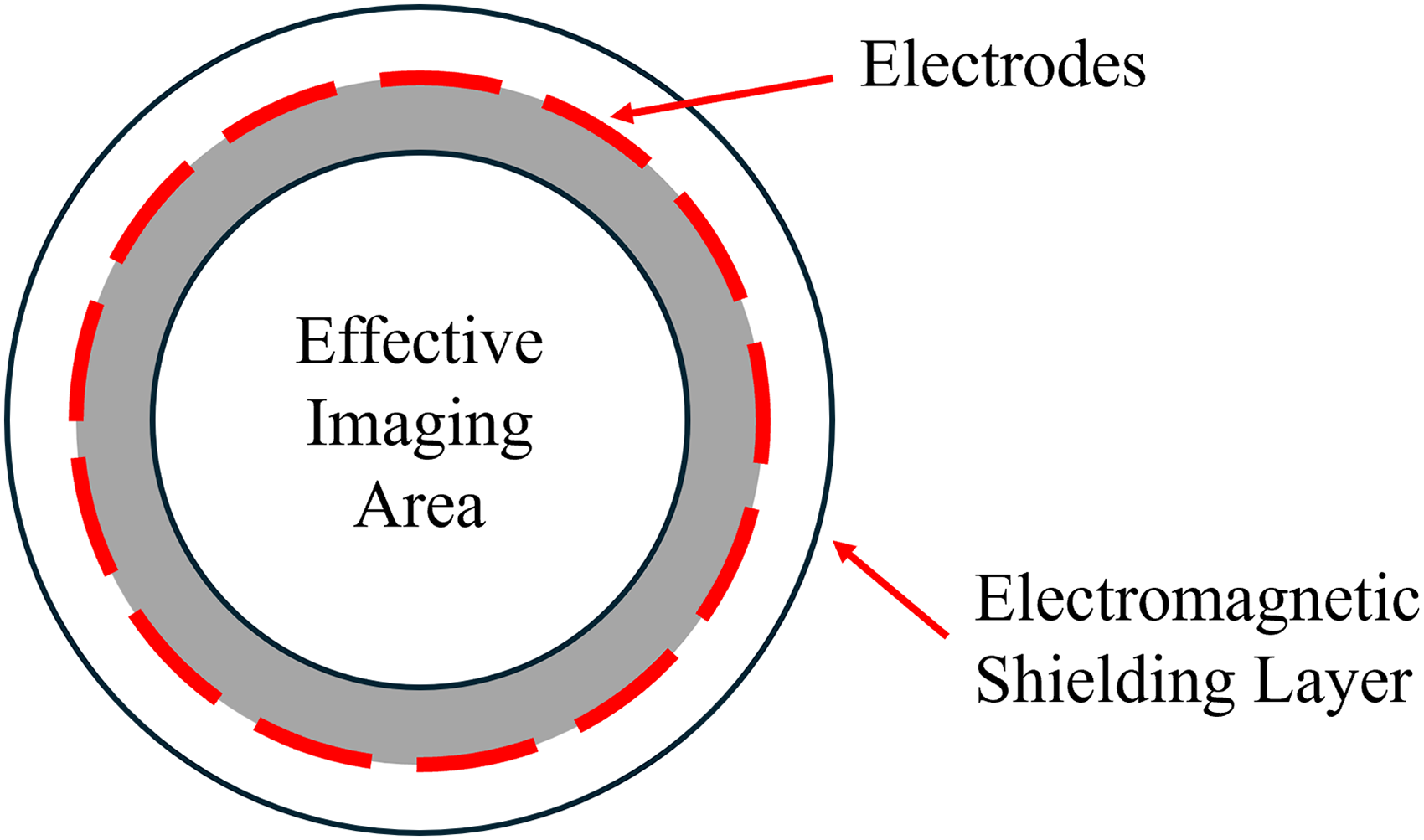
Cross-sectional schematic of a electrode ECT sensor for high-pressure CO2 multiphase flow measurement. 43
Fusion technologies based on high-energy radiation have achieved breakthroughs in eliminating the interference of intrinsic fluid thermophysical properties (e.g. drastic liquid density shifts with temperature and pressure) on cross-sectional gas holdup measurement. By coupling dual-energy gamma-ray attenuation/scattering techniques with artificial neural network (ANN) algorithms, the system can not only accurately identify flow patterns without the need for continuous calibration but also maintain precise estimations of volumetric phase fractions even when the liquid phase density fluctuates severely.46,47 Figure 8 presents the configuration of such a gamma-ray detection system. Such an architecture, which deeply integrates field-level hardware sensors with upper-layer AI algorithms, represents an important development route for intelligent multiphase flowmeters for CO2.
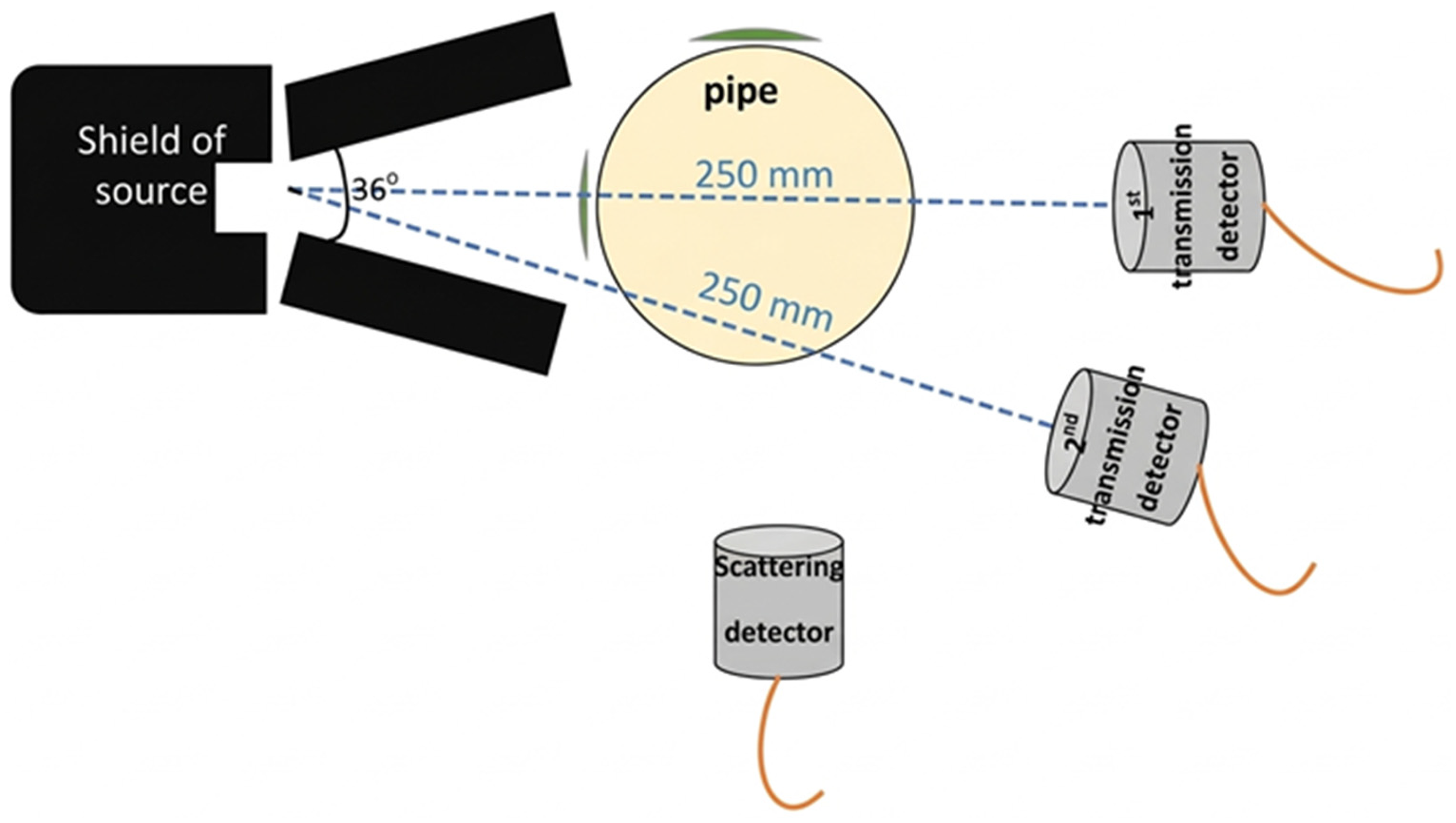
Gamma-ray detection system. 47
Error analysis and AI flow-regime adaptive correction strategies
Limitations of traditional compensation algorithms and mechanistic models
Traditional multiphase flowmeters typically rely on mechanistic models governed by fundamental fluid dynamic equations for error compensation. However, when these models are applied to impurity-bearing CO2 streams within CCUS pipeline networks, they encounter critical bottlenecks. The drastic step changes in density during the fluid's transcritical transition, the intricate interphase mass transfer, and the high propensity for two-phase flows collectively translate into highly nonlinear drifts in the primary physical sensing signals (e.g. drive gain, acoustic attenuation, or DP) captured by instrument sensors. Traditional mathematical models struggle to effectively decouple these multifield coupled nonlinear interferences, rendering conventional flow pattern inference models and linear density compensation algorithms ineffective near the critical region and under multiphase operating conditions of CO2, thereby introducing substantial systematic errors.
Data-driven algorithms and flow-regime adaptive correction strategies
Data-driven algorithms have been increasingly applied to multiphase flow metering, ranging from traditional soft-computing methods to modern deep neural networks.48,49 Their main advantage is that the flowmeter can be treated as a signal-generating system: multidimensional sensor inputs are mapped directly to mass flow rate, phase fraction, or flow regime without requiring a fully explicit mechanistic description of each nonlinear interference source. Although dedicated AI metering for CO2 remains in its early stage, studies on conventional gas–liquid systems demonstrate the potential of these methods for correcting distorted signals under complex flow regimes. 50
Traditional machine learning algorithms
In the measurement of gas–liquid two-phase CO2 utilizing a CMF, traditional single-phase models yield substantial errors. Research has shown that by incorporating multilayer ANNs, utilizing the apparent mass flow rate, apparent density, drive gain, as well as fluid temperature and pressure measured by the CMF as input nodes, the errors induced by two-phase gas entrapment can be effectively corrected, thereby restricting the measurement error to within ±2%. 51 To further enhance the generalization capability of the models under intricate nonlinear conditions, the least squares support vector machine (LSSVM) algorithm has been successfully applied. By substituting the quadratic programming problem of traditional support vector machines with the solving of a set of linear equations in the feature space, LSSVM exhibits superior stability and computational efficiency when processing small-sample CO2 gas–liquid two-phase flow corrections; calibration experiments have demonstrated that the prediction accuracy of the LSSVM model is significantly superior to that of traditional ANNs. 52 The overall architecture of this LSSVM-based intelligent error correction model is depicted in Figure 9. Beyond purely algorithmic optimizations, recent studies have also proposed a hybrid paradigm of hardware preprocessing coupled with software AI correction: by installing a flow conditioner upstream of the CMF to stabilize fluid vortices and coupling this with neural network algorithms for signal compensation, researchers can drastically suppress the unpredictable random errors. 53
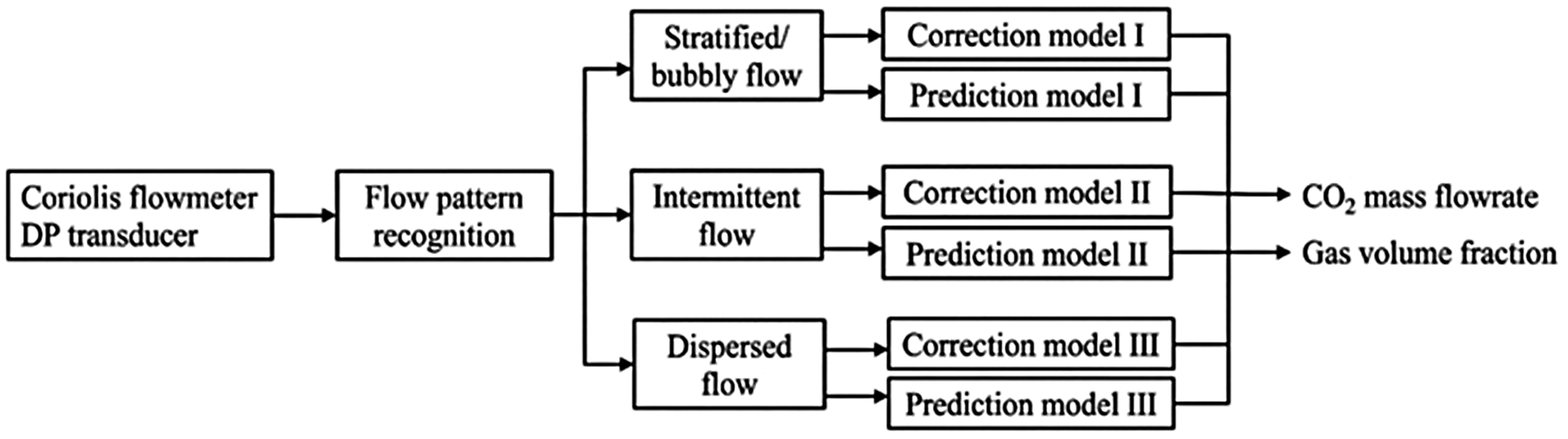
Architecture of the intelligent error correction model for Coriolis mass flowmeters in gas–liquid two-phase CO2 flow based on LSSVM. 52
Beyond mechanical instruments, AI algorithms are equally indispensable in radiation and electricity-based phase distribution measurements. In gamma-ray multiphase metering, minute variations in fluid density (particularly severe fluctuations in liquid phase density) induce substantial interference in ray attenuation. By constructing ANNs centered on Radial Basis Functions (RBFs) or Multilayer Perceptrons (MLP), the system can not only adaptively identify intricate flow patterns (such as slug flow and annular flow) but also accurately predict the gas volumetric phase fraction without requiring any liquid density inputs, thereby achieving immunity to fluid density fluctuations.46,47
Deep learning architectures
When processing high-noise, multidimensional nonlinear sensing signals, the representational capacity of the network architecture is of paramount importance. Deep learning architectures, such as Nonlinear Autoregressive Exogenous Neural Networks, have shown stronger potential than shallow networks for high-dimensional multiphase flow data with dynamic time-series characteristics. 54 Sequential models based on time-series sensing data have also been validated for high-precision inversion of multiphase fluid flow rates. 55 Long short-term memory networks coupled with multifeature extractors can capture dynamic evolution during flow-regime transitions and improve recognition robustness. 56 Attention mechanisms further allow models to assign higher weights to key morphological features of gas–liquid boundaries.57,58 Transformer architectures based on global self-attention have recently shown advantages in two-phase flow-pattern classification tasks with strong nonlinear characteristics. 59 For radiation-based signal mapping and multiphase-flow parameter prediction, comparative studies have also shown that MLP, RBF, fuzzy inference systems, and related fuzzy-wavelet neural networks exhibit different advantages in convergence behavior and robustness. 60 However, most reported applications are still based on conventional oil–gas, water–gas, or oil–water systems. Therefore, these architectures should currently be regarded as promising tools rather than mature field-validated solutions for near-critical CO2 metering. Further validation under controlled pseudo-critical and impurity-bearing CO2 conditions is still required before they can be used for custody-transfer-level error correction.
Multisensor fusion with AI algorithms
To reduce the severe interference imposed on mechanistic models by abrupt thermophysical property changes in the critical region, future multiphase metering is expected to rely on the integration of AI and multidimensional visualization technologies. For example, by coupling ECT or terahertz imaging technologies, which possess high spatiotemporal resolution, with machine-learning or deep-learning algorithms, such as LSSVM or deep convolutional neural networks, 43 and constructing a digital twin of the ECT sensor within a virtual space, the metering system can dynamically learn intricate multiphase flow characteristics and achieve high-precision flow-regime reconstruction in physical systems. 61 Furthermore, with the rapid proliferation of the Industrial Internet of Things (IIoTs), the field-level hardware architecture of multiphase metering is also undergoing evolution. 62 To satisfy the millisecond-level response requirements during abrupt flow-pattern transitions, computationally intensive deep learning models must be directly deployed into the microprocessors or Field-Programmable Gate Arrays of on-site intelligent flow transmitters via techniques such as linear quantization compression. This edge-computing-enabled in-situ inference paradigm can enable high-frequency, low-latency online flow measurement, 63 thereby developing intelligent soft sensors endowed with flow-regime adaptability. Such sensors provide a promising solution for improving CO2 multiphase metering under field conditions without relying solely on prior fluid density information (Table 2).
Comparison of application characteristics of mainstream data-driven algorithms in intelligent soft measurement and flow pattern recognition for CO2 multiphase flow instruments.
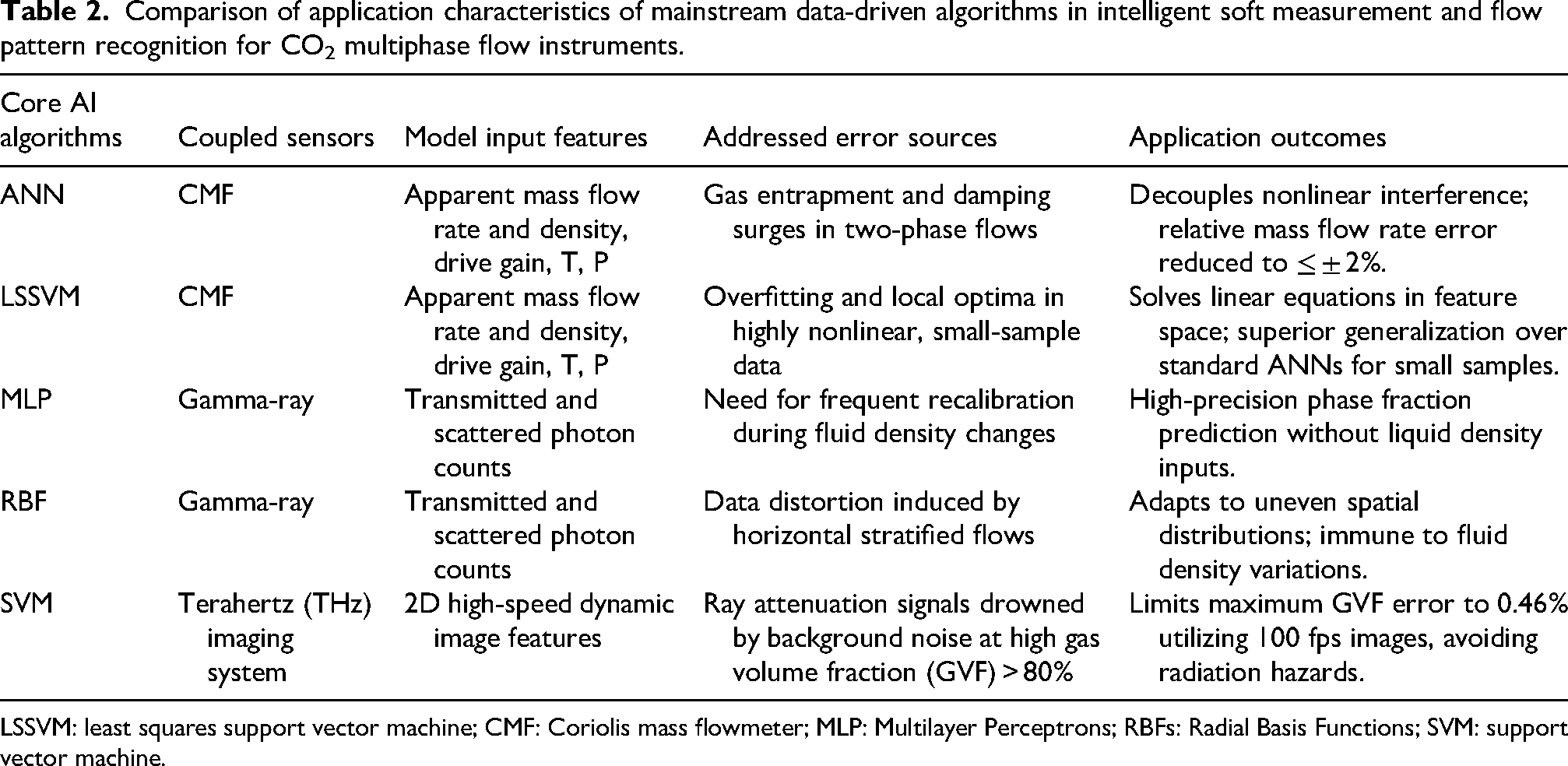
LSSVM: least squares support vector machine; CMF: Coriolis mass flowmeter; MLP: Multilayer Perceptrons; RBFs: Radial Basis Functions; SVM: support vector machine.
Calibration of metering devices and typical engineering applications
Field deployment of multiphase metering technologies in CCUS industrial sites requires rigorous high-pressure real-flow calibration and scenario-specific validation, because laboratory algorithmic accuracy does not directly guarantee traceable performance in underground gas injection, long-distance transportation, or high-frequency power-generation systems.
High-pressure real-flow calibration experimental platforms
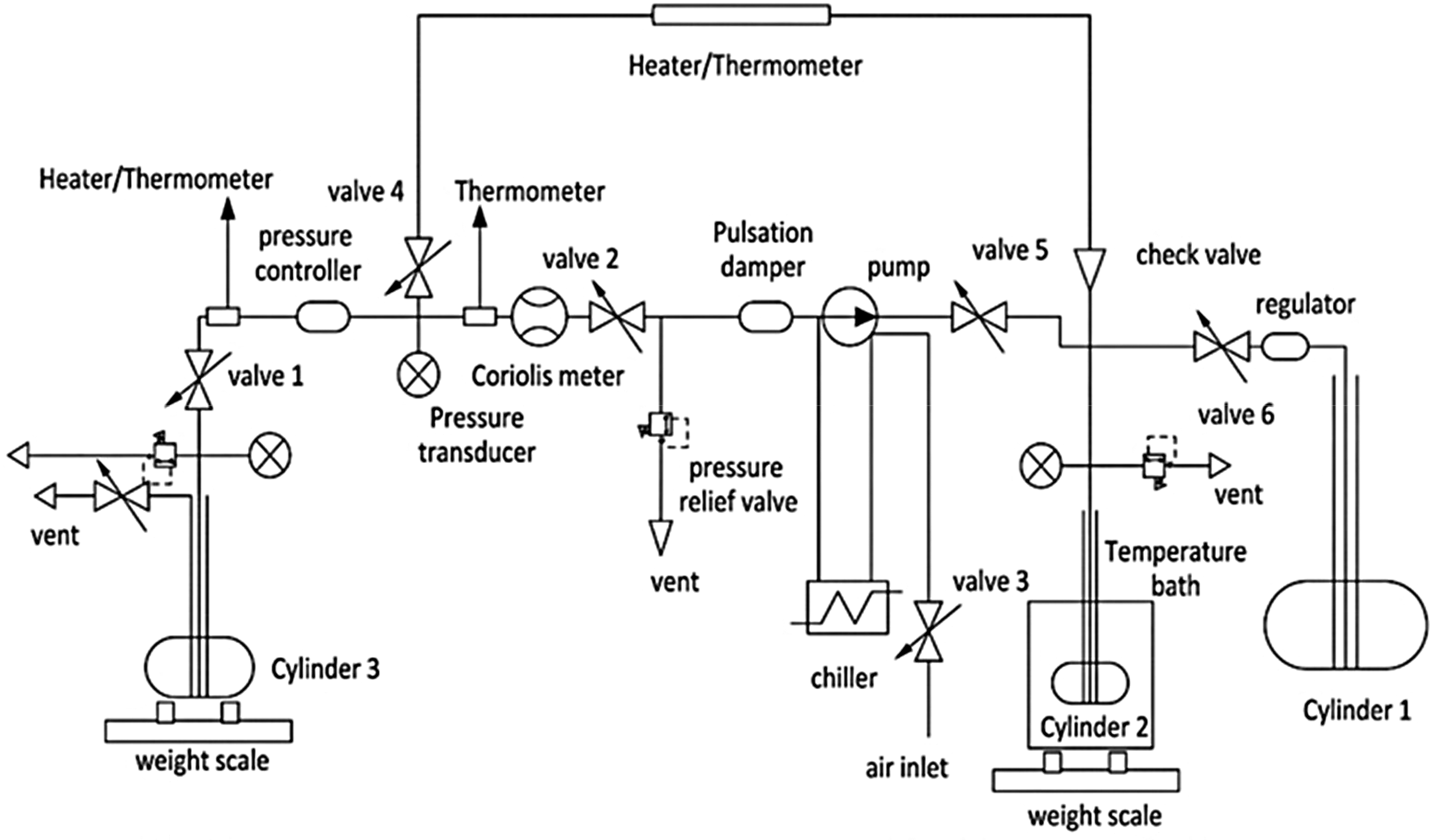
The prerequisite for researching CO2 multiphase pipe flows and metering is the construction of highly reliable experimental testing platforms. Distinct from conventional fluid experiments, CO2 experiments frequently involve high pressures and phase transition processes, which impose exceptionally stringent requirements on the pressure rating, sealing performance, and thermal control of the flow loop. A typical high-pressure dense-phase CO2 real-flow calibration loop generally adopts a closed-loop design, primarily comprising a liquid CO2 storage tank, a high-pressure plunger pump, a CMF, and a test section31,64 as shown in Figure 10. To maintain the test section in a specific supercritical or liquid state, the system must be equipped with high-precision chillers and electrical heaters to ensure that fluid temperature fluctuations are strictly controlled within ±0.1 °C. Such rigorous temperature control is of paramount importance for experiments in the near-critical region, as marginal temperature deviations can induce severe drifts in fluid density and the speed of sound, thereby directly impacting the repeatability and traceability of the calibration data for metering instruments. Concurrently, to mitigate unpredictable random errors introduced by manual operations, expert systems and intelligent monitoring networks are being introduced into high-pressure real-flow calibration platforms. This integration effectively facilitates the comprehensive automation of calibration procedures, online fault diagnosis, and cloud-based data collaboration, thereby substantially enhancing decision-making accuracy and shortening the calibration cycle of instruments. 65
Engineering applications of metering in complex systems
CO2-EOR currently serves as the critical engineering scenario for realizing large-scale geological storage and resource utilization of CO2. Unlike the purely steady-state transportation tasks of long-distance pipelines, EOR gas injection systems encounter more severe operational challenges: the injection pressure typically requires boosting to over 20 MPa via high-pressure pumps to overcome formation pressure, and the fluid must undergo drastic temperature and pressure variations from the surface pipeline network to the depths of the wellbore. In engineering practice, to minimize energy consumption and ensure injection capacity, liquid-phase injection processes are typically adopted.7,66 Surface metering nodes are generally equipped with high-precision mass flowmeters and pressure transmitters to monitor the injection rate and cumulative CO2 injection volume in real time.6,67 However, because the reinjected CO2 is frequently accompanied by circulating gas and formation water, multiphase flow corrosion within the wellbore constitutes one of the primary causes rendering the field-level metering systems ineffective. Under the multiphase fluid environment of CO2-EOR, the mixing of reinjected gas and formation water not only alters localized flow patterns but also creates an exceptionally aggressive corrosive environment. 68 Notably, when confronted with the coupled influence of sCO2 and the presence of specific impurities (e.g. H2O and H2S), the protective passive films of stainless steel components commonly used for internal measuring tubes and sensing probes of flowmeters are highly prone to rupturing under localized high shear forces induced by phase transitions, thereby translating into severe localized pitting or erosion corrosion. 19 To ensure the reliability of long-term monitoring, establishing an integrated well-surface monitoring system is of paramount importance; this requires the application of anticorrosion coatings and gas-tight sealing processes within the injection string, coupled with corrosion coupon monitoring, thereby treating flow metering and pipeline flow assurance holistically as a comprehensive systems engineering project. 7 For instance, in the CO2-EOR demonstration project at the Jilin Oilfield, field engineers not only deployed high-precision flowmeters at the injection wellheads but also integrated comprehensive methods such as gas tracers, spontaneous potential tests, and fluid sampling, thereby forming a complete leakage monitoring and metering early warning system encompassing the reservoir, wellbore, and surface pipeline network.11,12 Alongside advancements in sensing technologies, fiber-optic monitoring technology based on Distributed Acoustic Sensing has been proven to exhibit exceptionally high sensitivity in localizing transient events (e.g. leakages and impacts) that threaten pipeline integrity 69 ; recent experimental studies have further validated the high-frequency dynamic response capability of this technology in detecting minute leaks within long-distance CO2 pipelines. 70 The integration of these novel fiber-optic monitoring methods with traditional high-precision multiphase metering instruments will substantially enhance the overall operational safety and fault localization capabilities of the pipeline network.
Beyond the traditional fossil energy sector, the sCO2 Brayton cycle is regarded as the core power technology for next-generation nuclear and concentrated solar power generation, owing to its high efficiency and equipment compactness. However, its unique closed-loop characteristics impose unprecedented high-frequency dynamic requirements on flow monitoring. To achieve a compact design for the thermodynamic system, the sCO2 cycle extensively employs micro-channel equipment such as printed circuit heat exchangers; in the vicinity of the pseudo-critical temperature (Tpc), the peak effect of the fluid's specific heat capacity generates immense thermal and density gradients within the flow channels. 71 Under off-design operating conditions, such drastic step changes in thermophysical properties are highly prone to inducing flow maldistribution among multiple channels. 72 Furthermore, modern power systems require the sCO2 cycle to possess an extremely rapid load-following capability; when the system triggers bypass regulation, the fluid velocity within the pipeline can undergo transient step changes within milliseconds. 73 Dynamic modeling of the system reveals that the time constant of the sensor itself directly dictates the stability of the entire control system. 74 In such scenarios, conventional DP flowmeters burdened by impulse line delays struggle to satisfy transient control requirements. This indicates a potential application scenario for fast-response CMFs or ultra-high-frequency optical flowmeters.
Response to extreme transient operating conditions and pipeline network digital twin technology
During transient processes such as pipeline network startup and shutdown, rapid peak shaving (e.g. in the sCO2 power cycle), or emergency leakages, the internal temperature and pressure undergo severe fluctuations, translating into intense Joule–Thomson cooling and abrupt phase transitions. Existing instruments frequently encounter issues of response lag or severe precision degradation when processing such extreme thermophysical step changes. More critically, comprehensive international design standards and regulations for the transportation and high-precision custody transfer metering of impurity-bearing sCO2 are still under development. This increases the commercial and legal risks during carbon asset settlement for large-scale, cross-regional CCUS projects. 1
The deep integration of physical pipelines with virtual spaces represents a promising route for addressing metering under extreme operating conditions. Relying on high-performance computing platforms, full-lifecycle digital twin systems can be constructed for CO2 transportation pipeline networks. 1 The conceptual framework of this integrated digital twin system is illustrated in Figure 11. By inputting real-time data acquired from high-precision flowmeters and fiber-optic temperature sensors at surface wellheads or critical pipeline nodes into virtual simulation engines, the system can not only achieve virtual metering of fluid flow rates and phase distributions at unmeasurable nodes (such as deep downhole strings) but also perform forward-looking predictions and online calibrations for potential instrument drifts. Currently, cloud-based virtual flow metering systems have seen preliminary applications in certain offshore gas fields, and their real-time self-calibration capabilities demonstrate practical engineering potential. 75 Future virtual flow metering systems will no longer be restricted to purely data-driven or purely mechanistic model-driven approaches, but will transition toward a physics-informed hybrid machine learning architecture. 76 In this cutting-edge domain, physics-informed neural networks (PINNs), functioning as a deep learning framework that directly embeds physical laws, such as the Navier–Stokes equations and Helmholtz energy equations of state specifically designed for CCS gas mixtures (e.g. EOS-CG), into the loss function of the neural network, provide an effective approach for solving forward prediction and inverse problems in fluid mechanics. 77 Particularly when confronting phase envelope shifts highly prone to occur during the transportation of impurity-bearing CO2, purely data-driven models often face the risk of extrapolation failure; whereas PINNs can ensure that the inversion results strictly adhere to the unique thermodynamic boundaries of CO2. Research has shown that PINNs exhibit good generalization capability in addressing complex flow field reconstructions and unmeasurable node parameter inference, rapidly emerging as a core hotspot at the intersection of fluid mechanics and multiphase flows. 78 Recent frontier explorations further substantiate that introducing such physically constrained deep learning architectures can solve not only conventional pure pipe flow problems but also achieve high-accuracy forward simulations and inverse predictions, even when confronted with complex multiphase flow systems involving dual shocks and severe interphase solubility transitions. 79 Developing high-precision virtual metering and corrosion prediction digital twin systems strictly requires coupling fluid dynamic models targeting phase transition processes with underlying mechanical corrosion mechanistic models within the core algorithms, 22 while conducting dynamic validation relying on real-time data transmitted via the IIoTs. 80 Furthermore, to tackle the computationally intensive nature of high-dimensional multiphase fluid partial differential equations in large-scale pipeline networks, novel surrogate models such as Fourier neural operators have been introduced, significantly accelerating the real-time prediction of complex flow fields. 81
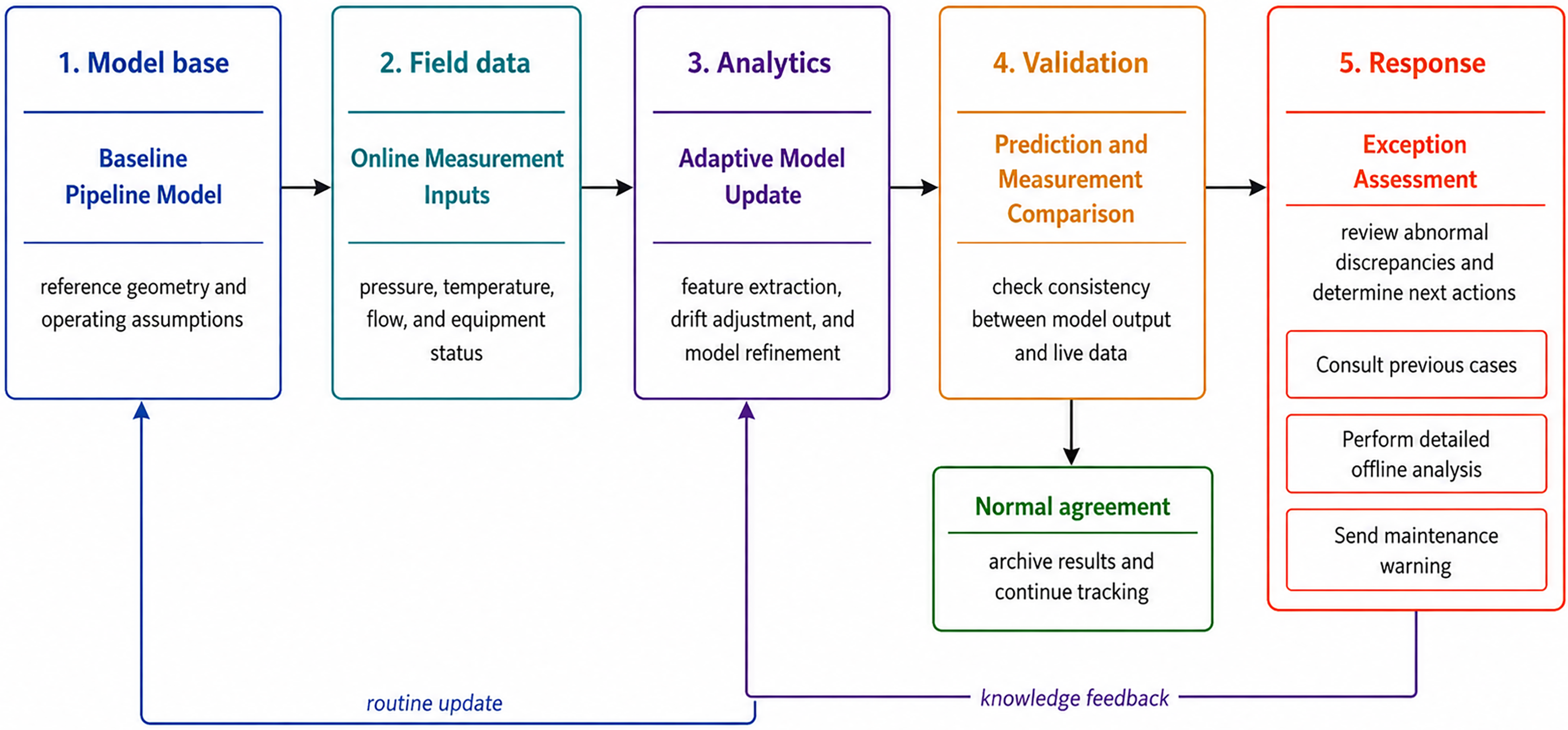
Conceptual framework of a five-component integrated digital twin system applied to CO2 transportation pipeline networks. The system deeply integrates physical pipelines with virtual computational models via real-time data interaction to achieve full-lifecycle online monitoring and virtual metering. 1
Conclusions and future perspectives
Conclusions
This article systematically reviews the current developmental status of high-precision multiphase metering technologies for CO2, yielding the following core conclusions:
The primary source of error is not only multiphase flow itself but the nonlinear thermophysical response of CO2 near phase boundaries. Density jumps, refractive-index fluctuations, and acoustic attenuation directly disturb electrical, optical, and acoustic sensing channels. No single hardware architecture is sufficient for the full CCUS operating envelope. Mechanical and DP meters remain valuable under stable conditions, whereas optical, acoustic, tomographic, and radiation-based approaches are more suitable for non-intrusive visualization and impurity-tolerant monitoring, but each requires calibration against CO2-specific property variations. AI-based correction provides a practical route for compensating nonlinear signal drift, but its current use in near-critical CO2 metering remains insufficiently validated. Future algorithms should incorporate flow-regime information, uncertainty quantification, and physical constraints instead of relying on purely black-box fitting. Engineering deployment depends on traceable high-pressure real-flow calibration, impurity-aware standards, and digital-twin-assisted monitoring. These elements are necessary to move CO2 multiphase metering from laboratory demonstrations toward custody-transfer-level field operation.
Future perspectives
Although substantial progress has been achieved in primary hardware sensing and error correction algorithms, large-scale, continuous, custody-transfer-level CO2 metering in CCUS pipeline networks requires a shift from isolated technical patches to system-level hardware-software codesign. Future research should prioritize the following three directions.
Transitioning from passive compensation to hardware-software codesign. Future multiphase flowmeters should integrate the feature-extraction requirements of AI algorithms into the hardware design from the conceptual stage. Hardware optimization should target CO2-specific property variations, such as critical opalescence, high-frequency acoustic absorption, and throttling-induced phase transitions. In parallel, lightweight AI models should be deployed on edge-computing hardware so that signal correction can be completed locally with low latency. Promoting the construction of international custody-transfer standard systems based on dynamic thermophysical properties of multiple impurities. At present, metering standards for pure CO2 have been preliminarily established globally; however, for the custody transfer of industrially captured, impurity-bearing sCO2 (particularly mixed fluids exhibiting corrosivity and phase sensitivity), internationally unified legal metering standards and allowable uncertainty specifications remain insufficient. Future work should combine high-fidelity thermophysical-property databases, high-pressure real-flow calibration, and uncertainty evaluation under impurity-bearing conditions to support legally binding metering verification regulations. Developing integrated intelligent terminals for pipeline networks that combine flow measurement, transport monitoring, and supervisory control. In future interconnected CCUS pipeline networks, flowmeters should evolve from isolated data-acquisition nodes into intelligent metering terminals with edge-computing capability. These terminals should integrate transcritical multiphase flow metering, localized corrosion monitoring in phase-transition zones, leakage acoustic-signature warning, and valve-control interfaces. By embedding lightweight physics-constrained machine-learning models coupled with CO2 thermodynamic equations of state, future intelligent flowmeters could perform millisecond-level property resolution and self-calibration at the edge side, while transmitting low-dimensional decision information to the supervisory control system of the pipeline network.
Footnotes

Funding
This study was supported by the National Science and Technology Major Project of China (Grants No. 2025ZD1406704 and No. 2025ZD1406703).
Declaration of conflicting interests
The authors declared no potential conflicts of interest with respect to the research, authorship, and/or publication of this article.