






Abstract
Through continuous training, top civil servants acquire up-to-date skills, strategies, and insights necessary for informed decision-making and innovative leadership. However, existing literature, particularly in developing countries, pays limited attention to the training of top civil servants. Using the analytical framework developed by Van Wart and Hondeghem, this study examines how top civil servants in Bangladesh are trained using government policy documents, training institute records, and semi-structured interviews with training providers. The findings show that, although Bangladesh lacks a distinct leadership model, top civil servants are expected to demonstrate transformational leadership behaviors. They are predominantly generalist careerists who undergo grade-specific training throughout their careers, both domestically and abroad. The Bangladesh Public Administration Training Centre (BPATC) delivers core and short-term programs aimed at developing leadership skills for policy processes. This study contributes to the limited literature on top civil servant training in developing countries and identifies key limitations in current training programs to guide the design of more effective programs.
Introduction
Despite Bangladesh’s notable socioeconomic progress, public organizations continue to face challenges related to organizational effectiveness and public service delivery (Bhattacharjee, 2023). Scholars argue that alongside systemic constraints, weak leadership capacity among top bureaucrats contributes to the poor performance of Bangladesh’s public sector (Hasan et al., 2022; Rahman et al., 2025). Although Secretaries and Senior Secretaries—the top civil servants (TCSs) examined in this study—are considered the “main driving force of government” (Hasina, 2017, para. 6), little academic attention has been given to expectations of their leadership or how they are trained. This study examines the training of TCSs, who are the executive heads of ministries and divisions.
Training TCSs is important for several reasons. First, as Allen and Van Der Velden (2002) highlighted, employee skills can deteriorate or become outdated over time, necessitating continuous training, particularly for those in senior roles (Trung, 2026; Van Wart and Hondeghem, 2015). Second, TCSs play a key role in shaping and implementing public policy, which directly affects government effectiveness and efficiency (Van Wart and Hondeghem, 2015). Therefore, reviewing their educational and training backgrounds is essential for assessing their preparedness for top positions. Third, civil servants in different positions require specific competencies aligned with their respective training needs. Accordingly, TCSs training helps them adapt to evolving challenges and supports a more resilient and responsive public administration (Pollitt and Op De Beeck, 2010).
Scholars also argue that effective training improves civil servants’ performance, which may enhance governance, promote government innovation, and improve public service delivery (e.g., Nor, 2025; Papea et al., 2023; Rozskazov et al., 2021). For example, Angaw et al. (2025) found that public administration education significantly improved the analytical, managerial, operational, political, and legal capacities of federal civil servants in Ethiopia.
Although some studies have examined TCSs training, most have focused on developed countries (e.g., Pollitt and Op De Beeck, 2010; Van Wart et al., 2015). Moreover, academic discussions on civil servant training in Bangladesh have primarily focused on entry- and mid-level civil servants, with less attention paid to TCSs training (Islam and Hosen, 2021). To address this gap, this study examines TCSs training in Bangladesh from a developing country perspective. This issue is particularly relevant as Bangladesh’s government is currently implementing several large-scale projects for sustainable economic development, in which TCSs play a leading role.
Against this backdrop, this study addresses the central research question: “How are top civil servants (TCSs) trained in Bangladesh?” through three sub-questions. First, what are the leadership expectations of the country’s TCSs? Second, where do TCSs receive their training? Finally, how is TCSs training designed?
The case of TCSs training in Bangladesh is important for enriching both theoretical and applied literature with empirical evidence from developing countries. It contributes to a broader understanding of global TCSs training practices and offers valuable insights for policymakers and educators. This study also benefits Bangladesh by examining policies and efforts to develop the skills and competencies of its TCSs. Additionally, it highlights the structure and methods of current training practices, supporting more targeted and effective interventions for the continuous professional development of TCSs, ultimately contributing to the country’s socioeconomic development.
Literature review
Training priorities across different levels of civil service
Civil servant education and training systems are generally divided into two types based on when training occurs: pre-entry and post-entry (Kerkhoff and Moschopoulos, 2024). This distinction is important because TCSs training is often shaped by civil servants’ educational and professional backgrounds (Van Wart and Hondeghem, 2015). Pre-entry education includes specialized academic programs, preparation for competitive examinations, and courses that provide essential governance and public policy knowledge (Reichard and Schröter, 2018). These programs strengthen candidates’ performance in entry examinations and support early career development (Van der Meer et al., 2014; Ventriss, 1991).
By contrast, post-entry training emphasizes continuous professional development to enhance civil servants’ skills as they advance in their careers (Van der Wal, 2017). Governments in both developed and developing countries offer various forms of post-entry training throughout civil servants’ careers. Such training is typically structured according to position and responsibilities, resulting in distinct programs for entry-, mid-, and senior-level officials. Training for mid-level civil servants often emphasizes operational and technical skills, discipline, core values, teamwork, and policy implementation (Sharma et al., 2022; Trung, 2026). At the senior level, training shifts toward leadership development, strategic policymaking, complex governance issues, and professional networking (Dror, 1997; Osuagwu, 2022; Sharma et al., 2022).
Earlier scholars argued that senior officials, having already received structured training and reached the highest administrative positions, no longer require additional capacity-building (Borins, 1999). Similarly, Osuagwu (2022) noted that organizations in developing contexts often struggle to engage senior leaders in training, as many perceive it as unnecessary. By contrast, Dror (1997), Ruso et al. (2025), and Van Wart and Hondeghem (2015) argued that training for TCSs is increasingly essential given their significant responsibilities and the rapid changes driven by evolving governance systems and technological advancements. These differing perspectives may explain both the limited academic attention to training at the highest administrative levels and the absence of targeted programs in many countries.
TCS training: International perspectives
Research on TCSs training is limited and unevenly distributed. Some notable comparative studies have mostly focused on developed and Organization for Economic Co-operation and Development (OECD) countries (Pollitt and Op De Beeck, 2010; Van Wart et al., 2015). Pollitt and Op De Beeck (2010) conducted a comparative study of TCSs training across seven Western democracies and identified substantial cross-country variation in training institutions, program structures, and delivery methods. Using desk reviews supplemented by interviews, they examined training and development institutions (TDIs), program content, teaching methods, and assessment practices. Their findings showed that typical TCSs training in 2010 was largely short term and focused on leadership, crisis management, innovation, communication, team building, and networking. They also found significant variations in TDI structures and funding models, with differences in emphasis on international versus domestic candidates.
In some cases, training institutions operate under direct government control, such as École nationale d’administration (ENA) now Institut national du service public (INSP) in France, although institutional arrangements vary, ranging from autonomous bodies to independent public institutions. In contrast, models such as the Australia and New Zealand School of Government (ANZSOG) operate through consortium arrangements involving governments, universities, and the private sector, with governments providing funding and universities contributing academic expertise. Training provision also varies considerably. For example, ANZSOG offers executive fellowships and strategic leadership programs for senior civil servants, while institutions such as Harvard Kennedy School (HKS) provide executive education for top-level bureaucrats and international public sector leaders.
Leadership training for TCSs is common in many contexts. Van Wart et al. (2015) examined leadership training in 19 countries across different continents and found that two-thirds had flagship leadership training programs, with one-third specifically targeting TCSs.
In contrast, TCSs training in developing countries remains underexplored, and identifying structured programs for this group is often challenging because empirical research on TCSs in these contexts are limited. One notable exception is Franks (2015), who examined TCSs training in South Africa. Another example is the Managing at the Top (MATT) program in Bangladesh, where TCSs participated alongside civil servants from other levels; this program has received significant attention in the literature (Jacobs, 2009; Karim et al., 2022).
Training TCSs in South Asia: Research gaps
In most South Asian countries, such as India, Pakistan, and Bangladesh, civil servants enter the public sector through competitive examinations that typically admit fresh graduates with little or no prior knowledge of public administration (Sarker and Zafarullah, 2020). Studies from Pakistan (Ahmad, 2009), Bangladesh (Azizuddin and Hossain, 2021), and India (Mishra, 2017) showed that public administration education plays a minimal role in preparing civil servants, as entry is based on general degrees rather than specific subjects.
Consequently, post-entry training and on-the-job learning are key to strengthening civil servants’ capabilities throughout South Asia (Sarker and Zafarullah, 2020). Most countries in the region have dedicated civil service training institutes, with programs structured by grade and delivered throughout officials’ careers. For example, in India, recruits undergo a 51-week foundation course at the Lal Bahadur Shastri National Academy of Administration (LBSNAA). Similarly, in Pakistan, newly appointed civil servants complete a 27-week joint training program covering all occupational groups, including a specialized segment for the Pakistan Administrative Service (PAS). In Bangladesh, the Bangladesh Public Administration Training Centre (BPATC) is the apex training institute, offering programs for different levels of civil servants, including a four-month foundation course for new entrants.
We observed variations across South Asian countries in terms of TCSs training. For example, in Pakistan, the National School of Public Policy (NSPP) is the apex training institution for civil servants and offers training up to a Basic Salary Grade (BSG) 20, whereas BSG 22 is the highest bureaucratic level (National School of Public Policy of Pakistan, 2026). No training program is specifically designed for TCSs within the NSPP framework. By contrast, in India, LBSNAA is the apex training institution, with programs divided into entry-level and mid-career. Mid-career training includes five phases, with Phase V targeting the highest-level civil servants and focusing on strategic management, policy formulation and implementation, policy analysis, leadership, and negotiation skills (LBSNAA, 2026). In Bangladesh, BPATC offers training up to the second-highest grade (Additional Secretary) and provides various short courses for TCSs. However, empirical research on TCSs training in South Asia remains limited, as in other developing countries.
Moreover, civil servant training in the region faces several limitations, including limited focus on TCSs, a lack of competent trainers, weak alignment between training programs and actual needs, inadequate career development opportunities, reliance on traditional teaching methods, outdated syllabi, weak evaluation systems, and insufficient leadership development initiatives (Jamil et al., 2019; Mohabbat Khan and Shahriar Islam, 2014; Zafarullah and Sarker, 2021).
Top civil servants in Bangladesh, their roles, and positions
The Bangladesh Public Administration (BPA) is rooted in British colonial administrative traditions and is characterized by a centralized structure, a career-based system, and strong hierarchical control (Dwivedi, 2024). The civil service consists of entry, mid, and senior levels, with Top Civil Servants (TCSs) occupying the highest tier. This small group of approximately 80–90 officials lead a public workforce of around 1.5 million (Pay Commission Report, 2026; Suk Kim and Monem, 2009). In the central secretariat, ministries and divisions are headed by political executives and administrative leaders drawn from TCSs.
Promotion to these senior positions generally requires at least 22 years of service, strong performance, and sound academic qualifications, although political considerations are also reported to influence promotion (Rahman, 2023; Rahman et al., 2025). The political–bureaucratic relationship in Bangladesh reflects both a formal separation of roles and an informal political–administrative nexus (Sarker and Zafarullah, 2020). Constitutionally, politicians formulate policy while civil servants implement it. Under the Rules of Business (1996), secretaries are responsible for organizational leadership, discipline, implementation of government decisions, and financial accountability.
However, political instability and regime changes have weakened this separation (Rashid, 2014; Sarker and Zafarullah, 2020). Since the 1990s, increasing interdependence between political leaders and senior bureaucrats has contributed to the politicization of the upper civil service, undermining merit-based advancement and the professional development of TCSs (Jahan and Shahan, 2008; Rahman et al., 2025).
Analytical framework
This study uses Van Wart and Hondeghem (2015) framework on the context and background of senior civil servant training to analyze TCSs’ leadership training (Figure 1). Context and background of top civil servants training. Note. Source: Van Wart and Hondeghem (2015).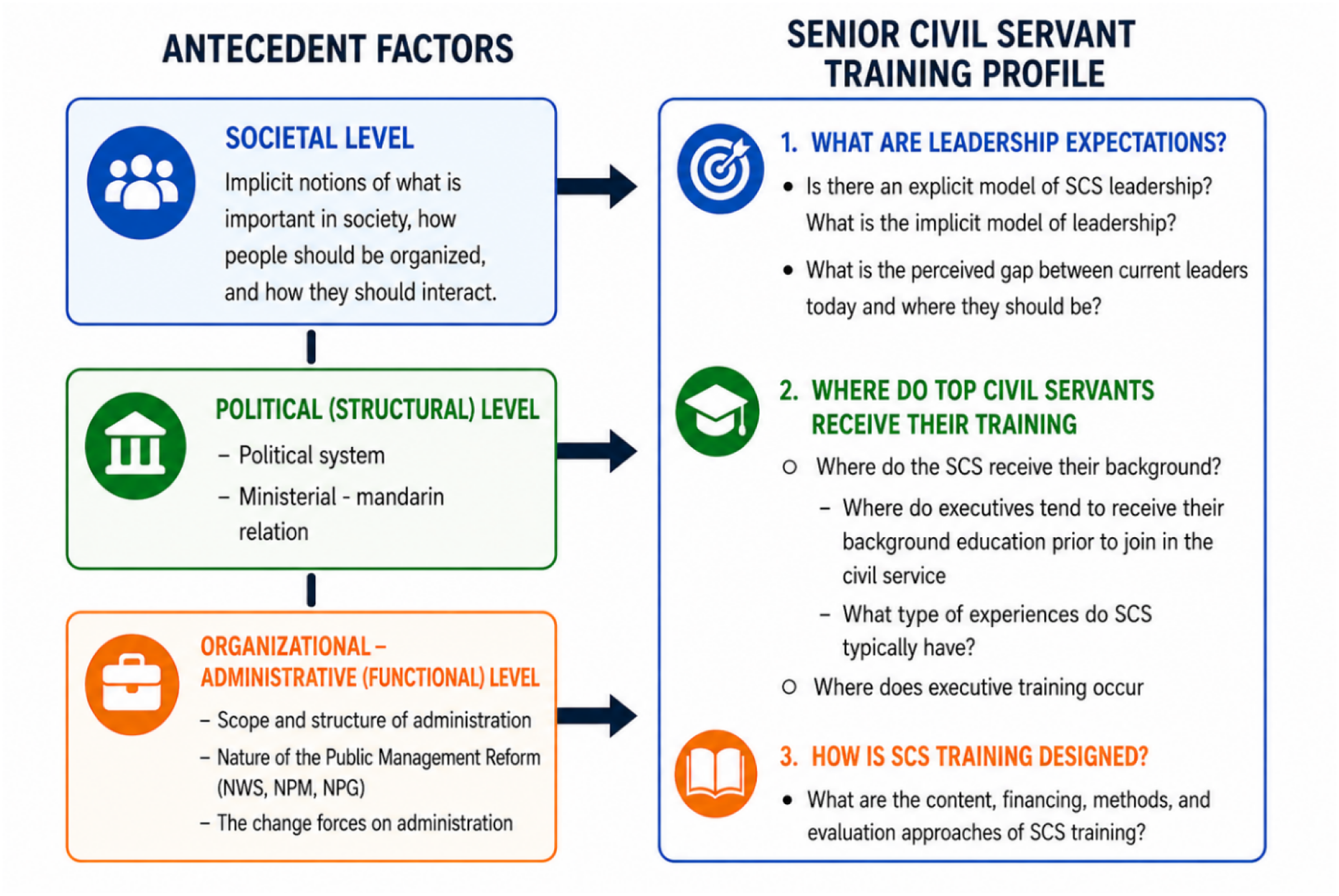
The framework has two components: Antecedent Factors (left) and Senior Civil Servant Training Profile (right). Antecedent factors include societal context, political structures, and administrative frameworks, which are interdependent, with administrative realities are embedded in political realities, which are shaped by broader societal conditions.
The training profile addresses three key questions. The first concerns the ideal leadership profile for TCSs and the extent to which current leaders match these ideals. For instance, bureaucratic or hierarchical leaders may emphasize their roles as bureaucratic experts and guardians of long-term public values. In contrast, market-oriented public sector leaders may prioritize results and entrepreneurial innovation, while network-oriented leaders often focus on building community and consensus through collaboration and shared professional standards.
The second question examines the education, experience, and training of TCSs, recognizing variation across countries. In terms of education, two key considerations are highlighted: whether civil servants are trained as generalists or specialists, and whether the educational model is elitist or egalitarian. Experience is shaped by five factors: length of service, administrative effectiveness, mentoring availability, opportunities for rotational assignments, and performance feedback mechanisms. The training dimension considers how TCSs are prepared for their roles, including key programs undertaken before reaching senior positions and the institutions providing such training.
The third question explores the overall design of senior civil servant training, including content, methods, trainers, financing, and evaluation. A key distinction is whether training is narrow, focusing on agency-specific legal and technical skills, or broad, emphasizing management and policy development.
The framework not only focuses on current training programs at the highest level but also links TCSs’ previous education, training, and experiences in a specific context. However, as this is a preliminary effort to examine TCSs training in Bangladesh, we focus on the three questions under the senior civil service training profile and do not explicitly analyze antecedent factors, as this would require a different research design.
The framework also aligns with established theories of civil servant training. For example, Kirkpatrick and Kirkpatrick (2006) proposed a 10-step training process, from needs assessment to training evaluation. These steps can be grouped into three dimensions: design and planning, implementation and resource allocation, and evaluation. Van Wart and Hondeghem's (2015) framework reflects these dimensions and captures the training cycle of TCSs. It has also been widely applied and validated in studies on TCSs training in different contexts. Therefore, it is theoretically valid and empirically suitable for this study.
Methodology
This qualitative study involved collecting relevant training documents and conducting site visits between January and July 2024. Two types of documents were collected: policy documents detailing the government’s stance on training, administration, and implementation, and BPATC documents providing insights into training practices.
Relevant documents were first identified through official government websites, particularly those of the Ministry of Public Administration (MOPA) and BPATC. BPATC library archives were also searched for regulations and training manuals. While most policy documents were available online, the Promotion Policy of 2002 was obtained during a visit to MOPA. In contrast, documents from BPATC were not available online, requiring five visits to the BPATC campus in Savar, Dhaka, between January and April 2024. During these visits, documents were collected from the library, the Planning, Programming, and Recoding (PPR) department, and BPATC’s digital repository. The full list of documents is provided in Appendix 1.
Document analysis was supplemented by three semi-structured interviews with staff from the PPR, Evaluation, and Research and Development departments of BPATC. Participants were chosen for their expertise and practical knowledge of TCSs training, which was not fully captured by the collected documents.
The documents were divided into two categories: nine policy documents (including recruitment, training, promotion, and performance management policies; the Civil Service Act, the Constitution, and selected developmental policies) and 54 training documents (including annual reports from 1987 to 2023; Policy Planning and Management Course [PPMC] guidelines from 2007 to 2023; and training evaluation policies). Both sets were used to extract information on TCSs training.
Data analysis proceeded in two stages. First, all documents and interview transcripts were read repeatedly to gain a broad understanding of civil servant training in Bangladesh. Second phase, data were organized in an Excel spreadsheet, with each row representing a document and each column capturing categories relevant to the research questions.
For data extraction, policy documents and interview transcripts were analyzed for general information on civil service training and specific references to TCSs training. Training documents were organized by type (e.g., annual reports, curricula, and internal communications), and relevant sections were identified to track changes over time. Compiling these data with specific locations in the documents and transcripts enabled a comprehensive view of the dataset.
Findings were reported descriptively, as the data varied widely. This approach addresses “what” questions—what occurs, for whom, from what resources, and in what manner (Gerring, 2012). Through this method, we incorporated relevant information to strengthen the analysis and provide a thorough and accurate depiction of the subject (Gerring, 2012).
Findings
Leadership expectations of TCSs in Bangladesh
This study’s analytical framework focuses on two key issues regarding leadership expectations for TCSs: whether a strong leadership model exists for senior civil servants and whether gaps exist in the current model. TCSs in Bangladesh are career bureaucrats who, despite diverse academic backgrounds, follow similar career paths, with most belonging to the Bangladesh Civil Service (BCS) Administration cadre of the Bangladesh Civil Service (Mausumi and Van de Walle, 2023). Traditionally, they have held powerful positions and have been influential actors within government (Hasina, 2017). They play critical roles in policy formulation and implementation and are responsible for financially and administratively managing their respective ministries or divisions (Rashid, 2014). As the highest bureaucratic authorities, they serve as a vital link between administration and politics. Due to their key positions and roles, expectations of them are both dynamic and multifaceted.
However, no specific leadership model or competency framework exists for TCSs in Bangladesh. To address leadership expectations for this group, it is therefore important to consider the broader context and relevant policies that define the required competencies and skills. These expectations fall into three main areas: general civil servant skills, skills required for senior positions, and training priorities.
The skills outlined in Bangladeshi policies and plans (e.g., the Constitution, Public Administration Training and Higher Studies Policy of Bangladesh [PATP], and development plans) emphasize efficiency, professionalism, integrity, leadership, and accountability. Civil servants are expected to demonstrate political impartiality, discipline, honesty, and a citizen-centered approach focused on timely and results-oriented public services. They should also be adaptable, innovative, and capable of leading change while upholding professional ethics and transparency (Ministry of Public Administration of Bangladesh [MOPA], 2023).
The second area examines the specific skills required for senior positions. Wahiduzzaman (1989) identified seven key competencies for senior civil servants in Bangladesh: resource management, decision-making, envisioning, policy analysis, problem-solving, leading, and policy implementation. More recently, Chowdhury (2020) examined the training needs of senior policy officials, including Secretaries and Additional Secretaries, through surveys, focus groups, and interviews with 53 senior leaders. The study emphasized the importance of communication, management, innovation, human rights, and e-governance in training programs.
Major training programs for TCSs often focus on skills related to leadership, policymaking, policy implementation, and policy analysis. For example, the MATT program provides practical training in project design, teamwork, leadership, and financial management (Karim et al., 2022), while the PPMC course covers policy analysis, project and financial management, change management, and negotiation. Short-term programs and internal training by MOPA address topics such as Annual Performance Agreements, Sustainable Development Goals (SDGs), and public-sector innovation (Tamanna et al., 2021). These training documents suggest that TCSs are expected to demonstrate transformational leadership, develop broad managerial competencies, and drive public administration reform.
In summary, TCSs are expected to demonstrate transformational leadership characterized by transparency, creativity, visionary, proactiveness, and accountability (BPATC, 2018). However, studies suggest that many remain conservative, authoritarian, and transactional in their leadership approach (Kabir and Mitul, 2017; Sarker et al., 2017). Bangladesh’s bureaucracy largely retains Weberian and patrimonial characteristics and requires a transition toward transformational leadership.
Education, training, and professional background of TCSs in Bangladesh
TCSs’ educational background
TCSs in Bangladesh are highly educated. A bachelor’s degree is the minimum requirement for entry into the BCS, and most secretaries hold at least one master’s degree. Most TCSs are generalists with diverse academic backgrounds, including the arts, social sciences, health, life sciences, and business economics. Among 82 TCSs in 2022, 37 held degrees in arts and social sciences, 19 in health and life sciences, 18 in business and economics, and eight in engineering and physical science. More specifically, six had degrees in public administration, six in social science, five in political science, and seven in English literature, while 14 studied agricultures. Many TCSs also pursued further education: 55% obtained a second master’s degree, and 13% earned a PhD (Mausumi and Van de Walle, 2023). Their advanced studies often focused on business administration and development, indicating that their varied educational backgrounds were complemented by practical experience and on-the-job training (Azizuddin and Hossain, 2021).
Types of training received by TCSs before reaching top positions
Civil servant training in Bangladesh.
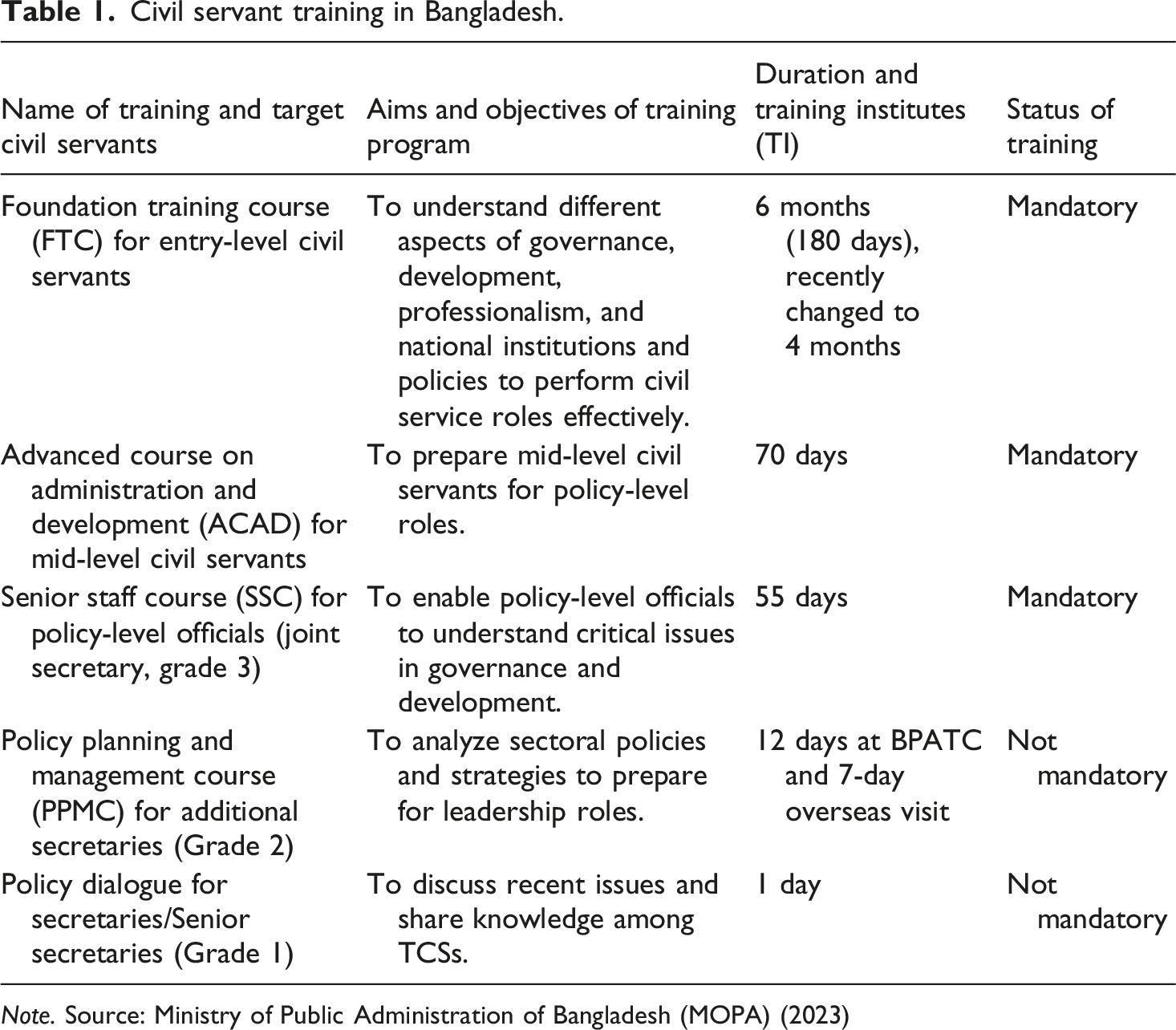
Cadre officials in Bangladesh receive specialized training tailored to their roles. For example, BCS (Administration) officials are trained in areas such as law, administration, public procurement, and communication (Bangladesh Civil Service Administration Academy, 2024). In contrast, BCS (Foreign Affairs) officials participate in specialized diplomatic courses and refresher programs (Foreign Service Academy, Bangladesh, 2024). Additionally, civil servants benefit from overseas training funded by projects and donors. The government has signed memoranda of understanding (MOUs) with various foreign institutions for this purpose, with support from international development partners such as the World Bank, Asian Development Bank (ADB), International Monetary Fund (IMF), The United States Agency for International Development (USAID), and United Nations Development Programms (UNDP) (Khan, 2013). MOPA and BPATC are responsible for planning, designing, and implementing general training programs, with MOPA selecting candidates and BPATC conducting training (Haider and Noor, 2021).
Previous work experience
TCSs typically enter the civil service through a competitive examination administered by the Public Service Commission and advance to senior positions through promotions. Achieving the position of Secretary requires at least 22 years of experience, with most officials having between 25 and 31 years of service before reaching this level (Mausumi and Van de Walle, 2023). A key feature of their careers is extensive job rotation, mobility, and frequent transfers. This includes opportunities to work outside home ministries in various organizations, such as training institutes, autonomous bodies, United Nations (UN) agencies, and embassies. Many TCSs gain diverse experience across multiple organizations before becoming Secretary, although few have prior experience in their current ministry (Karim, 2019; Mausumi and Van de Walle, 2023).
Bangladesh public administration training centre and TCSs training
BPATC is the primary institution responsible for training civil servants, including TCSs. It was established in 1984 through the merger of the Civil Officers Training Academy, the National Institute of Public Administration, and the Bangladesh Administrative Staff College. Its primary objective is to provide effective and coordinated training for civil servants (BPATC, 1988).
BPATC’s Foundation Training Course for entry-level officers has been a cornerstone of its training program since its inception. In 1985, the institute began training senior officers at the Joint Secretary level (BPATC, 1988). However, BPATC only introduced regular training for TCSs through the PPMC in 2007, which was designed to enhance policy analysis skills for Additional Secretaries, the second-highest tier in the civil service (Bangladesh Public Administration Training Centre (BPATC), 2007a).
In 2009, the government introduced a half-day seminar for TCSs (Secretaries and Senior Secretaries), which continued until 2017 (Bangladesh Public Administration Training Centre (BPATC), 2009, 2019). This was followed by a 2-day Policy Dialogue program in 2018 for the same group. It was suspended in 2020 due to the COVID-19 pandemic and has not resumed as of 2024 (Personal interview, April 18, 2024). The main purpose of these seminars and dialogues was to facilitate knowledge sharing among TCSs and to inform them about emerging issues relevant to their positions. In 2022, the Bangladesh government signed a Memorandum of Understanding (MOU) with Harvard University to enhance civil servants’ skills. This agreement allows TCSs to participate in a 6-day executive training course HKS (Bangladesh Sangbad Songstha, 2022). Figure 2 presents the timeline of training for Secretaries and Senior Secretaries. Timeline of TCSs training in BPATC. Note. Source: Bangladesh Public Administration Training Centre (BPATC) (1987, 1988, 2008, 2009, 2015, 2019, 2022a, 2023a, 2024); Zafarullah and Khan (2005).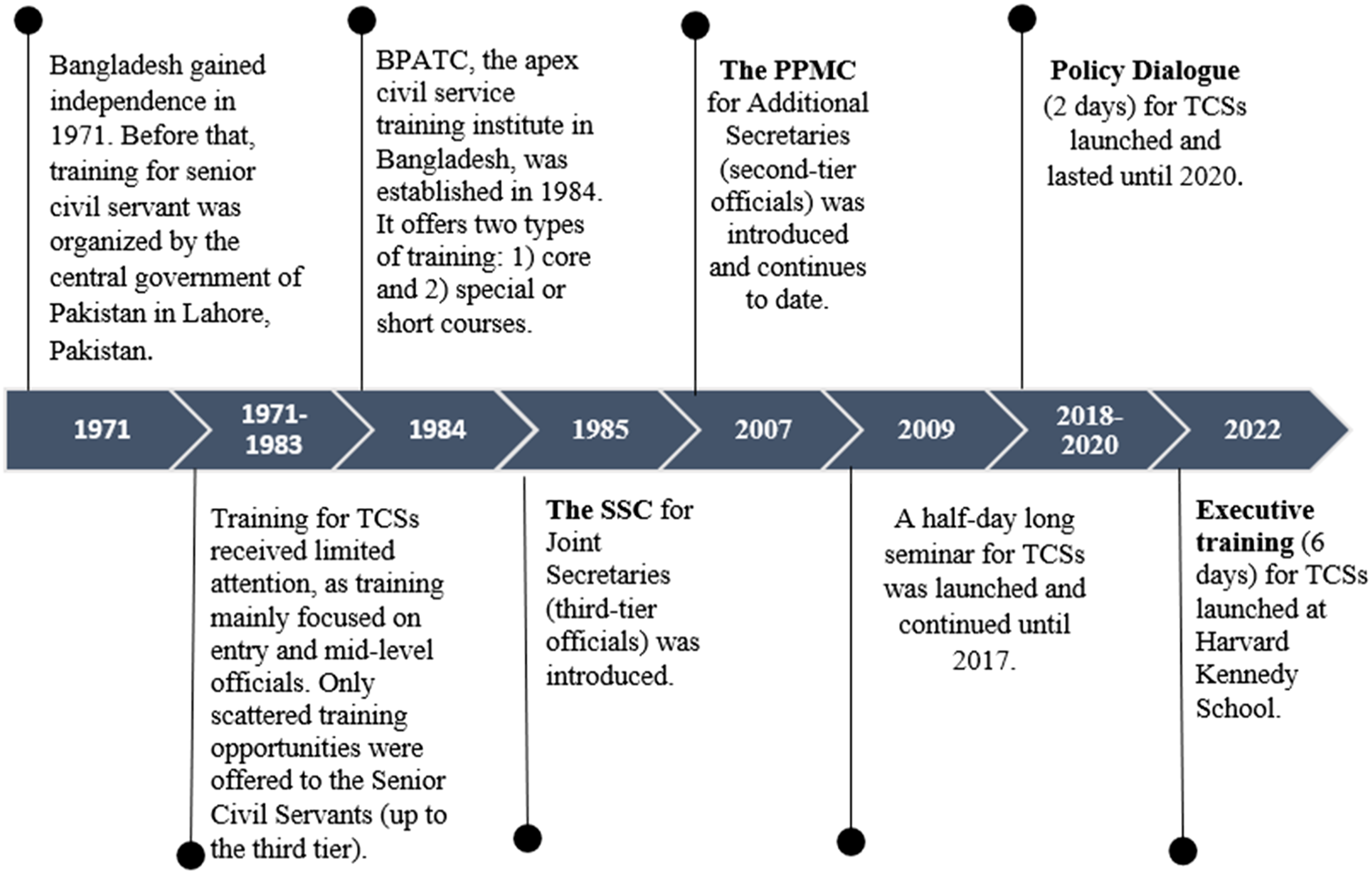
Our analysis primarily focuses on the PPMC. The PPMC is primarily designed for Additional Secretaries, the second-highest tier of the civil service. Typically, after at least a year in this role, they advance to the position of Secretary (Khan, 2024). This suggests that the Additional Secretary role serves as a preparatory phase for the top position. After completing the PPMC, TCSs receive no further formal training, making the PPMC critical for the skills they bring into the highest role. Therefore, our analysis will primarily focus on the PPMC.
Design of TCSs training in Bangladesh
In this sub-section we focus on the bottom-right half of the conceptual framework and describe the main components of the TCSs training in Bangladesh.
The PPMC
The PPMC is a comprehensive 19-day training program. It includes a 7-day international exposure visit and is a key training opportunity for officials preparing to enter the highest levels of the civil service (Bangladesh Public Administration Training Centre (BPATC), 2023b). Typically organized annually by BPATC, the PPMC has been conducted 24 times as of August 2023, with 14 to 26 participants per session. Training is initiated by a government announcement and interested TCSs candidates apply for participation. MOPA finalizes the selection, while BPATC administers the course.
The PPMC’s purpose is to enhance public service delivery through the analysis of sectoral policies, drawing on participants’ prior experience and expertise. The course is designed to develop policy leadership skills among top civil servants, enabling them to effectively implement government development agendas. Its objectives include: (1) expanding the vision of TCSs through intellectual engagement, (2) contributing to evidence-based policy formulation and implementation in the interest of the people, and (3) building capacity for leadership roles in policy analysis and pro-poor development agendas (Bangladesh Public Administration Training Centre (BPATC), 2007b, Bangladesh Public Administration Training Centre (BPATC), 2023b).
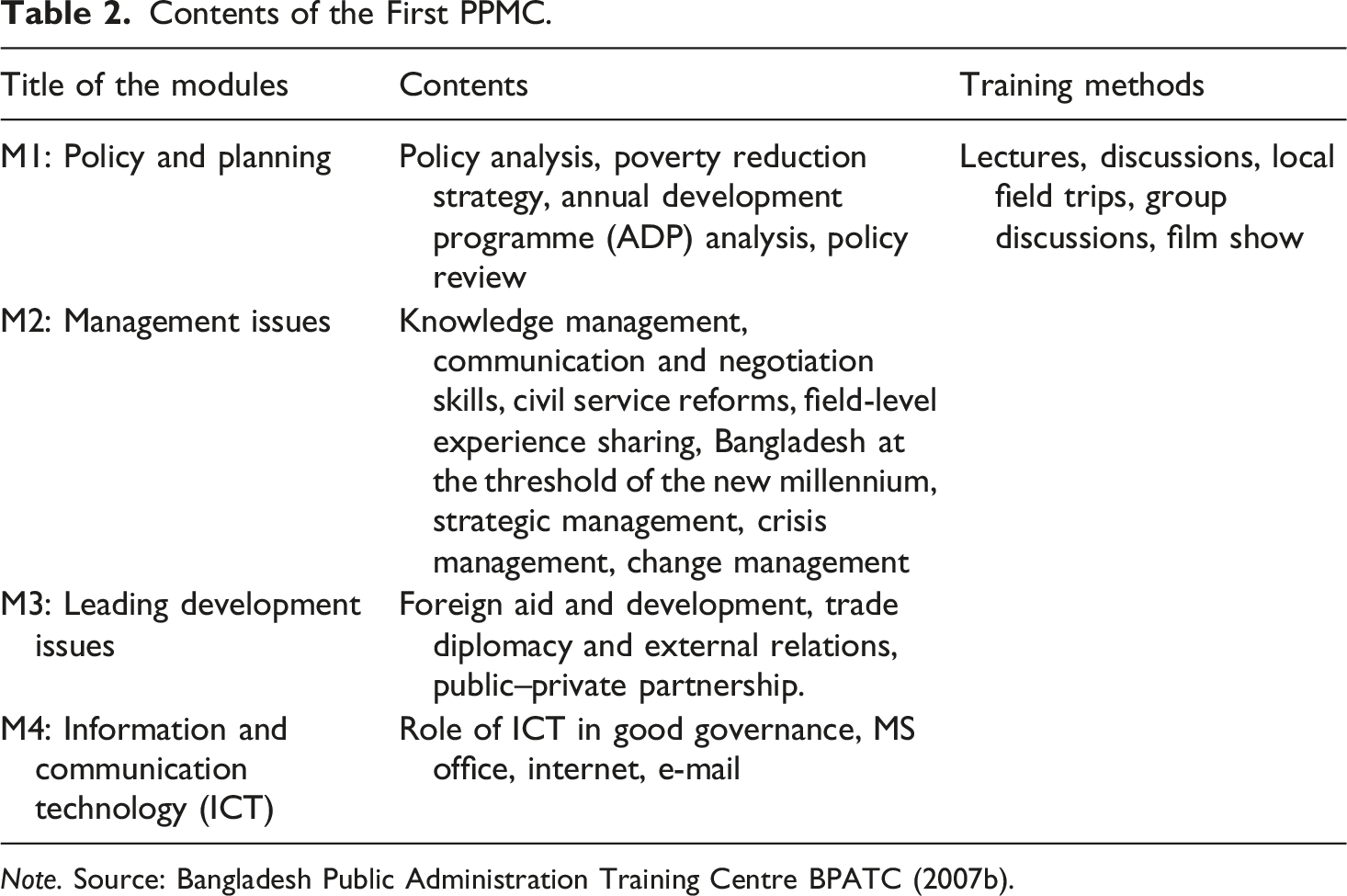
Contents of the First PPMC.
Contents of the 24th PPMC.
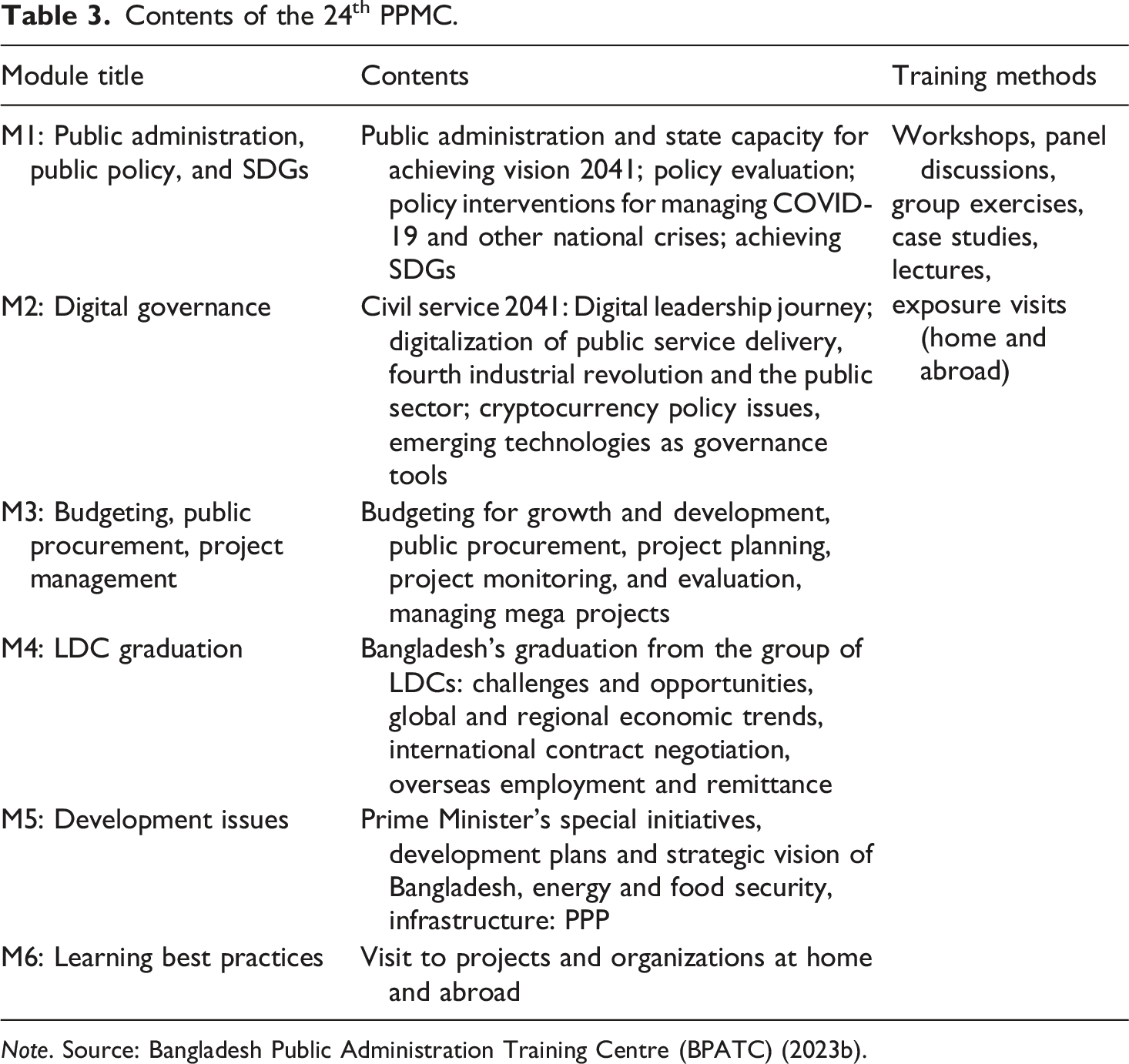
Comparing the course contents of different PPMCs reveals several modifications.
Integration of new technology. The Bangladesh government has prioritized ICT as a key driver of national development, aiming to transform the country into a “Digital Bangladesh” to build an inclusive society (Azizuddin and Hossain, 2021). ICT-related topics in training have evolving from basic concepts during 2007–2013 to more advanced areas such as digital leadership, e-governance, cryptocurrency, the Fourth Industrial Revolution, and digital security in the 23rd PPMC (Bangladesh Public Administration Training Centre (BPATC), 2014, 2023a).
Increased focus on project and procurement management. Since 2014, the TCSs training program has emphasized megaproject management, procurement processes, and financial management skills, reflecting Bangladesh’s transition from a Least Developed Country (LDC) status and its goal of becoming a developed country by 2041. Key projects such as the Padma Bridge, Metro Rail, and Rooppur Nuclear Plant highlight this focus (Jamshed, 2021). Recent PPMCs (2015 onwards) have further emphasized practical experience, field visits, and analysis of challenges in project planning, implementation, and budgeting.
Enhanced emphasis on contemporary policies and events. Contemporary policies and events have been increasingly integrated into the PPMC to prepare public sector employees for current challenges. Initially addressing significant events such as the 2007 judiciary–executive separation, the program later expanded to include a dedicated “Contemporary Issues” module in 2017 (Bangladesh Public Administration Training Centre (BPATC), 2017). It initially included issues such as energy security and private-sector development. It was later expanded to include topics such as the Rohingya crisis (when over 960,000 Rohingya people fled Myanmar in 2017) and, more recently, Bangladesh’s upcoming graduation from LDC status, with a dedicated “LDC Graduation” module introduced in 2022 (Bangladesh Public Administration Training Centre (BPATC), 2022b).
Inclusion of cross-cutting issues. Different cross-cutting issues, including gender and climate change, have been included in the program from the outset. Since 2016, the PPMC has increasingly emphasized SDGs, reflecting Bangladesh’s commitment to these global objectives. A dedicated “SDGs” module was introduced in 2017 and remains integral to the program (Bangladesh Public Administration Training Centre (BPATC), 2017, 2023b).
Considerable attention to negotiation skills. The training program covers various professional skills, with strong emphasis on communication, negotiation, strategic leadership, crisis management, project management, and integrity. Negotiation skills have received sustained attention due to their high demand in the public sector. This priority was highlighted by Islam et al. (2015) and reaffirmed at the National Training Council meeting on April 16, 2023.
Extending opportunities for real-life experience sharing. Since its inception, the PPMC has included study tours and field visits to enable participants to observe and learn from leading organizations. Starting with the eighth PPMC in 2015, a 7-day visit to a foreign country was introduced (Bangladesh Public Administration Training Centre (BPATC), 2015), with participants visiting Vietnam in 2015, Thailand (2016-2019), and Australia (2020 and 2022) to study their development strategies and public service practices. (Ministry of Public Administration of Bangladesh, 2024).
Executive training at HKS
Since 2022, TCSs in Bangladesh have been attending a 6-day executive training at HKS under an MOU (Bangladesh Songbad Sangsths, 2022). In 2022, at least eight secretaries attended, taking courses on women’s leadership, cybersecurity, and infrastructure in a market economy (Personal Communication, February 5, 2024). Training focuses on leadership and public sector management, with participants selecting courses and receiving offer letters from HKS. MOPA handles administrative arrangements, while public expenditure management is covered by government projects.
Training methods and evaluation
BPATC allocates a stable budget for the PPMC. For example, the budget for the 22nd PPMC in 2022 was 719,400 BDT (approximately 6,000 USD), excluding foreign exposure visits, which require additional funding (Bangladesh Public Administration Training Centre (BPATC), 2022a). This financial support reflects the government’s commitment to the sustainable development of training institutions and its programs (Tessema et al., 2007).
Training programs, including the PPMC, are delivered by retired and serving civil servants, BPATC staff, and occasionally private sector experts. Various teaching methods are employed. Early PPMC sessions included lectures and discussions, group discussions and exercises, brainstorming, field visits, film shows, and computer practice (Table 2). From the fourth PPMC in 2010, additional methods such as seminars, workshops, panel discussions, and syndicate sessions were introduced (Bangladesh Public Administration Training Centre (BPATC), 2010). The case study method was added in the eighth PPMC, reflecting a shift toward more interactive approaches (Bangladesh Public Administration Training Centre (BPATC), 2015).
Each module is assessed with specific marks. For example, the 24th PPMC (see Appendix 2) carried a total of 300 marks (Bangladesh Public Administration Training Centre (BPATC), 2023a). Of these, most were allocated to group evaluations, whereas only 50 marks were assigned to individual performance. Assessment was based on group exercises, report writing, and presentations rather than formal examinations.
Results are communicated to participants, the relevant ministry, and MOPA for inclusion in officers’ dossiers (Bangladesh Public Administration Training Centre (BPATC), 2013). Although these grades are not linked promotions or financial benefits, they carry reputational value for TCSs. The assessment follows the quantitative scale presented in Appendix 3.
Contributions of the three sub-questions to the main research question
The three sub-questions posed in the Introduction collectively address the main research question by outlining both the content and structure of TCSs training in Bangladesh. The analysis of leadership expectations identifies the competencies required of TCSs and the intended goals of training. Investigating where TCSs receive training identifies key programs, relevant institutions, and prior work experiences. The final sub-question focuses on training design, including available programs, content, delivery methods, and evaluation.
Discussion
Guided by Van Wart and Hondeghem's (2015) conceptual framework, this study examined how TCSs in Bangladesh are trained by answering three research questions. The findings reveal several strengths in existing TCSs training, while also identifying significant weaknesses in the system. This section outlines these strengths and weaknesses and proposes recommendations to address them.
It is a significant achievement that the Bangladesh government has an active training policy that clearly defines training programs for different levels of civil servants, including TCSs. It is also positive that the training curriculum aligns with national developmental priorities and needs, such as procurement and project management, financial management, knowledge sharing, and SDG implementation challenges. Ruso et al. (2025) noted that senior public administrators prefer training methods such as small-group discussions, study tours, and case-based learning. Similarly, training for TCSs in Bangladesh incorporates interactive methods and teaching aids rather than relying solely on traditional lectures. While short courses, such as policy dialogues and day-long seminars, lack continuity, the PPMC follows a structured and sustained training schedule with clearly defined objectives. Nevertheless, questions remain regarding the effectiveness of these programs and the extent to which their objectives are achieved.
Training is generally considered effective only when it creates demonstrable value for both individuals and organizations. In practice, BPATC relies predominantly on participants’ immediate reactions to assess training effectiveness. However, this is a limited approach, as effectiveness cannot be judged merely by participants’ immediate perceptions; it should be considered a process covering pre-training needs assessment, training implementation, and post-training outcomes (Kirkpatrick and Kirkpatrick, 2006; Papea et al., 2023). Although training policies emphasize needs-based training aligned with national development goals, systematic assessment of TCSs training needs remains limited. Consequently, past efforts have not methodically measured training effectiveness, and relevant outcome data are unavailable.
Observations of TCSs training programs in Bangladesh reveal several weaknesses. First, training lacks a comprehensive strategy and vision and appears more opportunistic, with ongoing uncertainty. One key reason is low interest among TCSs. As one interviewee noted, “TCSs are very busy and have little interest in attending training.”
Second, training content is reactive and shaped by immediate crises rather than long-term planning. While BPATC periodically updates training content, these changes appear inconsistent and influenced by personal observations, government policies, and suggestions from various officials. One interviewee mentioned that “there is a Curriculum Development Committee (CDC) at BPATC whose members meet to analyze the training content.” However, the interviewee questioned the CDC’s effectiveness in updating course content. Consequently, training programs lack clear distinction from other programs targeting different levels of civil servants.
Third, despite the emphasis on leadership roles for TCSs, no comprehensive leadership development program exists. PPMC covers various leadership concepts (e.g., strategic, digital, and transformational leadership) but lacks a unified approach to leadership development. These findings are consistent with previous studies. For example, Mohabbat Khan and Shahriar Islam (2014) noted that political influence, the dominance of generalists, and weak feedback and monitoring mechanisms have hindered progress in Bangladesh’s public sector. They also found that a lack of skilled trainers limits leadership training efforts. These limitations in leadership development are reflected in the broader weaknesses of Bangladesh’s public sector performance (Kabir and Mitul, 2017; Mohabbat Khan and Shahriar Islam, 2014).
Furthermore, increased politicization within human resource management—particularly in the selection of TCSs and trainee nominations—creates a major obstacle to advancing professionalism (Mohabbat Khan and Shahriar Islam, 2014; Rahman et al., 2025). Additionally, frequent changes in political power repeatedly lead to the rearrangement or turnover of TCSs, which undermines the long-term impact of training already received (Abdullah, 2020). Moreover, within Bangladesh’s political culture, new governments tend to reshape civil service training structures and content. This continued political influence disrupts institutional stability, weakens capacity-building systems, and ultimately limits the efficacy and sustainability of TCSs training.
As Bangladesh advances toward upper-middle-income country status by 2030, TCSs will play a crucial role in policymaking and development implementation. To strengthen their capacity, the government should introduce a leadership development program for TCSs and establish a standard competency framework to align training, responsibilities, and career progression. Training institutions should assess participants’ competencies before admission to identify training needs and tailor content accordingly. Given the complexity of senior executive roles, participation in the PPMC should be made mandatory for appointments to top positions, supported by a competitive selection process. Existing curricula focus largely on knowledge acquisition and should place greater emphasis on critical thinking, strategic leadership, and advanced policymaking skills. Training should also address the relationship between TCSs and political leaders, a key aspect of senior governance. Furthermore, institutions should develop a diverse pool of qualified trainers and regularly evaluate training outcomes to assess their impact on individuals, organizations, and public sector governance.
Conclusion
In line with the findings by Kerkhoff and Moschopoulos (2024) and Reichard and Schröter (2018) who analyzed training models and systems employed by countries to prepare their civil servants, this study reveals a strong emphasis on post-entry training in Bangladesh, with limited mechanisms for preparing future civil servants. It addresses how TCSs are trained in Bangladesh through three research questions. The first explored expectations of TCSs. The findings reveal that, although Bangladesh lacks a distinct leadership model, TCSs are expected to demonstrate transformational leadership. They are also expected to be efficient, impartial, transparent, accountable, and innovative, while remaining informed about current issues and continuously developing their skills. Training aims to equip TCSs with leadership capacities for policy formulation, implementation, and public administration reform.
The second research question examined the background of TCSs. Findings show that TCSs in Bangladesh typically hold high educational qualifications, usually at least a master’s degree, and come from diverse academic fields. However, degrees in public administration and law are relatively uncommon. TCSs are generalist career bureaucrats with high job mobility and frequent transfers. Although numerous training opportunities exist throughout their careers, TCSs-specific training is a relatively recent development. Currently, TCSs have access to two main types of training: core PPMC programs and short executive training courses, particularly in the U.S.A.
The third research question focused on training design. BPATC delivers the PPMC and using interactive teaching methods. Classes are taught by retired and serving civil servants, BPATC staff, and occasionally private sector experts.
This study contributes theoretically to the literature on TCSs training by extending existing frameworks to a developing-country context. It identifies clear differences between TCSs training in Bangladesh and in developed countries. While many developed countries provide specialized, competency-based leadership training for TCSs, Bangladesh places less emphasis on leadership development, with training generally conceptualized as general skill acquisition. By demonstrating this divergence, this study contextualizes general training models for TCSs.
Empirically, the study provides policy-relevant insights by identifying strengths and weaknesses in Bangladesh’s training system. We suggest that Bangladesh would benefit from a comprehensive leadership development program for TCSs and that establishing a competency framework would be an important step.
The findings have broad implications for other developing and South Asian countries. These countries may draw on this study to design training programs better aligned with TCSs roles and positions. The findings also help identify strengths and weaknesses in existing systems and inform approaches to address these challenges in training design.
This study may also encourage further research in South Asia to enrich TCSs training across the region. Future studies could also evaluate the effectiveness of TCSs training programs in Bangladesh. Additionally, examining the challenges of implementing competency-based training for TCSs in highly politicized contexts represents an important avenue for further research. Furthermore, comparative analyses between developed and developing countries could provide new insights for refining TCSs training in developing public administration systems.
Footnotes
Acknowledgments
We would like to thank Editage for English language editing.

Ethical considerations
Ethical approval for this study was obtained from the KU Leuven Social and Societal Ethics Committee, approval reference: G-2024-7937-R2 (MAR).
Consent to participate
The involved persons gave their informed consent verbally.
Funding
The authors received no financial support for the research, authorship, and/or publication of this article.
Declaration of conflicting interests
The authors declared no potential conflicts of interest with respect to the research, authorship, and/or publication of this article.
Data Availability Statement
Data for this article is available upon request.
Appendix
Lists of documents analyzed.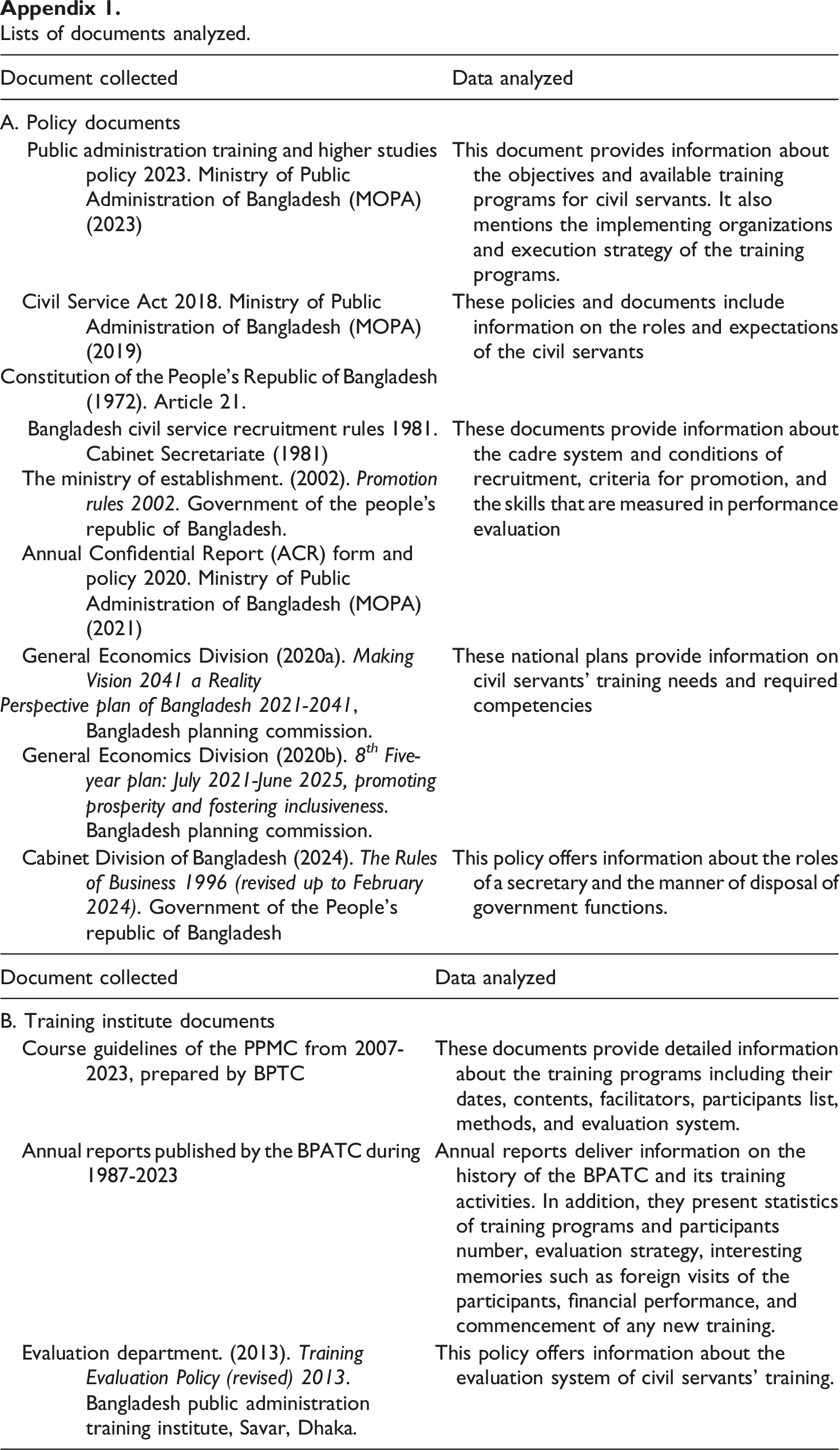
Document collected
Data analyzed
A. Policy documents
Public administration training and higher studies policy 2023. Ministry of Public Administration of Bangladesh (MOPA) (2023)
This document provides information about the objectives and available training programs for civil servants. It also mentions the implementing organizations and execution strategy of the training programs.
Civil Service Act 2018. Ministry of Public Administration of Bangladesh (MOPA) (2019)
Constitution of the People’s Republic of Bangladesh (1972). Article 21.These policies and documents include information on the roles and expectations of the civil servants
Bangladesh civil service recruitment rules 1981. Cabinet Secretariate (1981)
The ministry of establishment. (2002). Promotion rules 2002. Government of the people’s republic of Bangladesh.
Annual Confidential Report (ACR) form and policy 2020. Ministry of Public Administration of Bangladesh (MOPA) (2021)These documents provide information about the cadre system and conditions of recruitment, criteria for promotion, and the skills that are measured in performance evaluation
General Economics Division (2020a). Making Vision 2041 a Reality
Perspective plan of Bangladesh 2021-2041, Bangladesh planning commission.
General Economics Division (2020b). 8
th
Five-year plan: July 2021-June 2025, promoting prosperity and fostering inclusiveness. Bangladesh planning commission.These national plans provide information on civil servants’ training needs and required competencies
Cabinet Division of Bangladesh (2024). The Rules of Business 1996 (revised up to February 2024). Government of the People’s republic of Bangladesh
This policy offers information about the roles of a secretary and the manner of disposal of government functions.
Document collected
Data analyzed
B. Training institute documents
Course guidelines of the PPMC from 2007-2023, prepared by BPTC
These documents provide detailed information about the training programs including their dates, contents, facilitators, participants list, methods, and evaluation system.
Annual reports published by the BPATC during 1987-2023
Annual reports deliver information on the history of the BPATC and its training activities. In addition, they present statistics of training programs and participants number, evaluation strategy, interesting memories such as foreign visits of the participants, financial performance, and commencement of any new training.
Evaluation department. (2013). Training Evaluation Policy (revised) 2013. Bangladesh public administration training institute, Savar, Dhaka.
This policy offers information about the evaluation system of civil servants’ training.
Marks distribution in the 24th PPMC. Note. Source (Bangladesh Public Administration Training Centre BPATC, 2023a).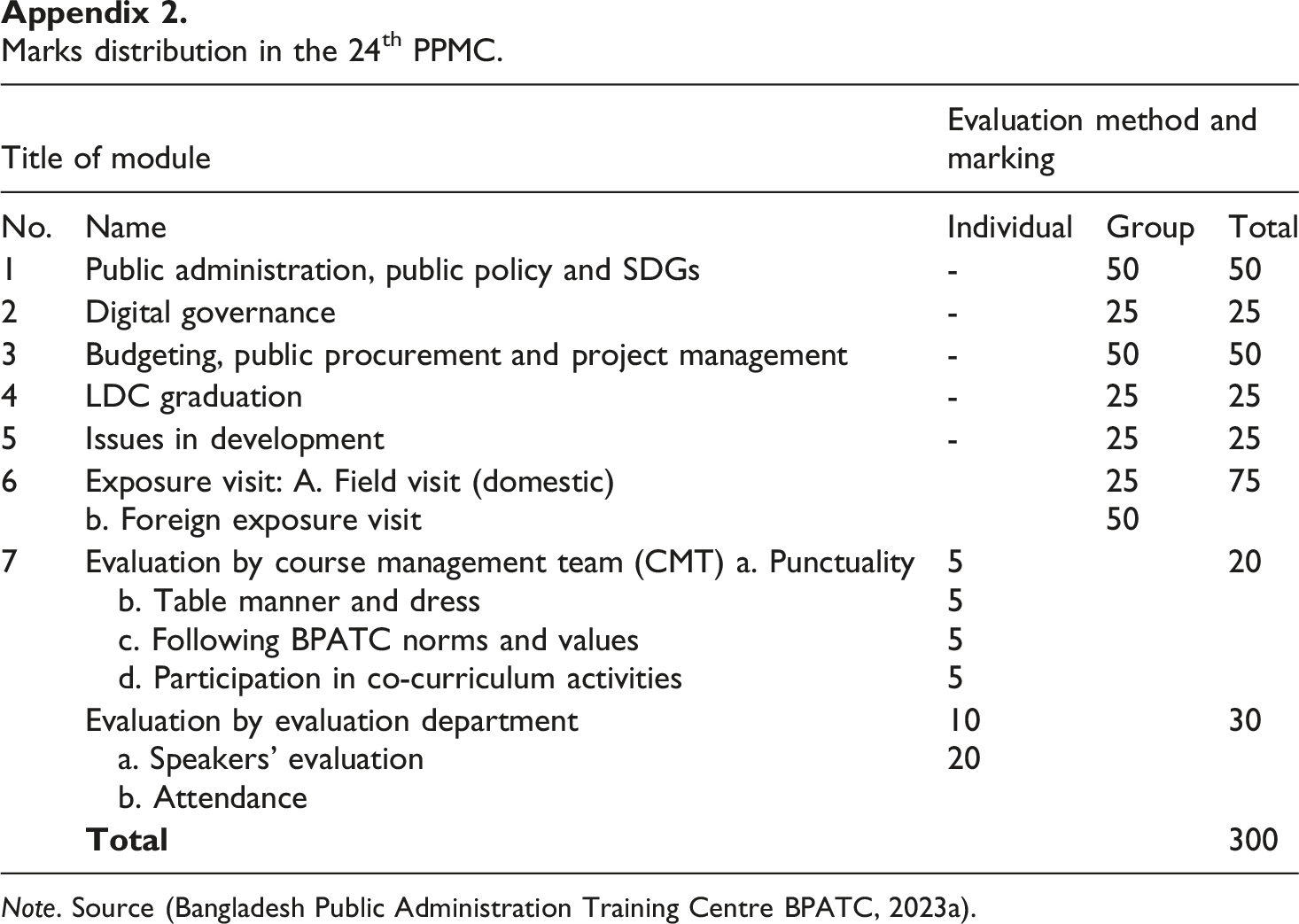
Title of module
Evaluation method and marking
No.
Name
Individual
Group
Total
1
Public administration, public policy and SDGs
-
50
50
2
Digital governance
-
25
25
3
Budgeting, public procurement and project management
-
50
50
4
LDC graduation
-
25
25
5
Issues in development
-
25
25
6
Exposure visit: A. Field visit (domestic)
b. Foreign exposure visit
25
75
7
Evaluation by course management team (CMT) a. Punctuality
5
20
Evaluation by evaluation department
10
30
300
Assessment system in the 24th PPMC. Note. Source (Bangladesh Public Administration Training Centre (BPATC), 2023b).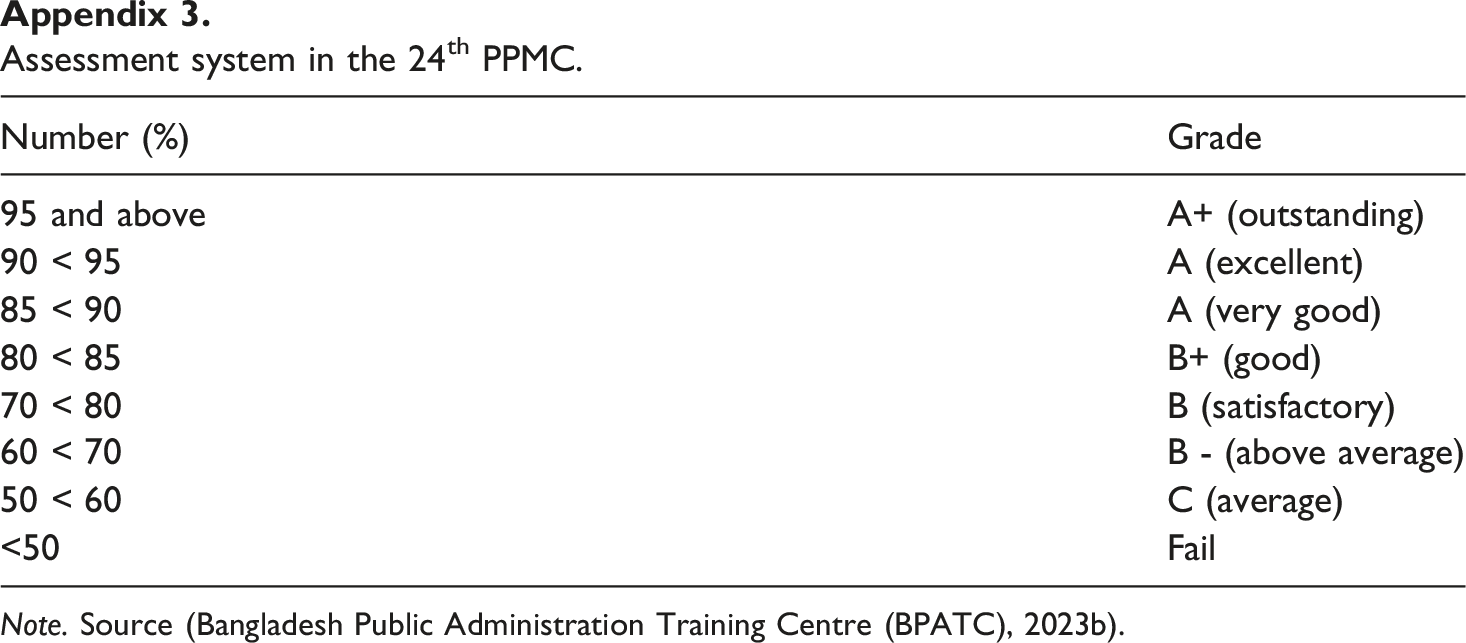
Number (%)
Grade
95 and above
A+ (outstanding)
90 < 95
A (excellent)
85 < 90
A (very good)
80 < 85
B+ (good)
70 < 80
B (satisfactory)
60 < 70
B - (above average)
50 < 60
C (average)
<50
Fail