






Abstract
Public administration has long been marked by a recurring debate over identity, legitimacy, and intellectual coherence. This study argues that such disciplinary tensions are reflected in how students understand their field and prepare for employment, an urgent question in China, where competition for civil service positions has intensified to 97:1 for 38,100 positions in the 2026 recruitment cycle. Using survey data from 544 undergraduate students across seven universities in the Pearl River Delta, the study examines relationships among professional identity, learning self-efficacy, and core competencies. Findings reveal moderate professional identity, with employment identity scoring the lowest (2.98/5). A clear disparity exists between general (3.42) and professional learning self-efficacy (3.00), suggesting that students lack confidence in their discipline-specific knowledge. Value-based competencies (3.72) significantly exceed tool-based competencies (3.31), indicating that programs successfully transmit public service values but lag in developing practical skills. No significant competency differences emerged between students from elite 211 Project universities and those from independent colleges. Most importantly, learning self-efficacy mediated 54.1% of the relationship between professional identity and core competencies. The study contributes to the literature by linking macro-level disciplinary debates to micro-level student outcomes and identifying self-efficacy as a key mechanism in competency formation and employment readiness.
Keywords
Introduction
Public administration (PA) scholarship has long engaged in debates concerning disciplinary identity, legitimacy, intellectual coherence, and practical relevance. From Waldo’s (1968) discussion of an “identity crisis” to Ostrom’s (1973) analysis of an “intellectual crisis,” and more recently to the “entity crisis,” “institutional crisis,” and “theoretical crisis” summarized by Perry (2016), these debates have shaped how scholars understand the field’s development. In PA education, such disciplinary debates are not merely abstract concerns; they may influence how students perceive the field, form professional identities, develop learning self-efficacy, and build core competencies. Therefore, understanding student-level perceptions helps strengthen professional knowledge, support reflective learning, and improve talent cultivation in PA.
Unlike Western countries, where modern PA education has a long history, China continues to refine the field’s scope, objectives, and curriculum orientation. Despite its rapid expansion over the past three decades, China’s PA education continues to face tensions regarding disciplinary positioning, theoretical development, methodological orientation, values, and professional development (Yang, 2019). Critiques highlight the limited integration of international perspectives with locally grounded Chinese governance experiences and policy solutions into programs and the shortage of faculty with international training and comparative research capacity (Qi and Lin, 2020), thus questioning disciplinary coherence and the long-term development of PA education in China (He and Zhang, 2019).
These concerns are reflected more broadly in China’s higher education, particularly in research-oriented universities. Research universities in China generally emphasize research performance, publication output, and graduate training, whereas regular universities emphasize undergraduate teaching and applied instruction. Zhang’s (2007) study of 72 Chinese universities found that students at research universities (69% of students) reported significantly lower satisfaction with teaching quality than those at regular universities (93% of students). In addition, 46% of students at research universities reported dissatisfaction with more than half of their courses, compared to only 22% in non-research universities. These patterns were associated with lower student engagement and weaker integration between research activities and undergraduate education, potentially limiting students’ broader academic and professional development.
Han (2015) further identifies a phenomenon known as “research drift,” where research universities in China, in their pursuit of academic prestige and economic returns, prioritize research activities over undergraduate teaching. This shift in focus has reduced the quality of undergraduate education, as resources and attention are diverted away from teaching and increasingly skewed the balance between research and teaching, thus reducing student satisfaction and potentially weakening the overall educational mission of these institutions.
Many PA students feel that the job market perceives their degree as valueless and easily replaceable, with underdeveloped core competitive advantages. This perception stems from the significant deviation between students’ career outcomes and their original goal to cultivate professional talent (Wu et al., 2012). The educational model in PA oscillates between professionalization and academicization, where acquired knowledge fails to translate into tangible employment advantages. Moreover, the curriculum does not sufficiently or directly enhance students’ core competencies that are critical to career success (Ni and Fu, 2008).
To address these challenges, PA curriculum design should be re-evaluated to focus more on practical skill development, internships, and partnerships with employers. Enhancing employment readiness requires concerted efforts to bridge the gap between academic learning and market expectations. Thus, programs should not only impart knowledge but also equip students with the competencies and confidence required in the competitive job market. This alignment is crucial for improving both the quality of talent cultivation and student employment outcomes, which in turn influence broader discipline construction, including program development, enrollment, and the long-term sustainability of public administration as an academic field.
However, unlike fields such as medicine, education, and social work, there is relatively little empirical research in PA on the professional identity, self-efficacy, and core competencies of PA students. This lack of research is concerning, particularly given the identified gap between graduates’ academic training and their employment readiness. We identified only two studies on professional identity among master’s students and one study on undergraduate PA students (Wei et al., 2020; Yu and Zhang, 2015). The PA field has long struggled with its disciplinary positioning, particularly following the unresolved “East-West” debate, increasingly viewed as a profession rather than a science (Xu, 2017). This debate highlights the ongoing tension between the need for practical vocational training and the discipline’s traditional academic focus.
Considering PA primarily through an employment-oriented or vocational framework may help strengthen practical training and employment readiness; however, an overly instrumental focus could narrow broader professional identity formation and limit students’ engagement with the theoretical, ethical, and public-value dimensions of the field (Sarker, 2019).
In response to these challenges, this study examined how disciplinary-level crises manifest at the individual level, shaping students’ professional identity, self-efficacy, and competency development in China. A theoretical model was validated through empirical research on undergraduate students majoring in PA across seven universities in the Pearl River Delta. Moreover, this study offers strategic recommendations for promoting the development of the discipline and improving the quality of talent cultivation by targeting multiple stakeholders, including the academic community, general public, universities, individual students, and employment sectors.
To address these gaps in the literature, this study posed the following research questions:
Literature review
China’s PA education and civil service context
To contextualize this study for an international audience, it is necessary to understand the structure of China’s PA education and its relationship with civil service recruitment. PA was reintroduced as a formal academic discipline in China in the 1980s, after a three-decade hiatus, and has expanded rapidly (Yang, 2019). Today, PA programs are offered across institutions, including elite “211 Project” and “985 Project” research universities, provincial public universities, and independent colleges. Graduate-level programs, particularly the Master of Public Administration (MPA), have developed significantly since the late 1990s, with elite institutions such as Tsinghua University’s School of Public Policy and Management achieving international accreditation from the Network of Schools of Public Policy, Affairs, and Administration (NASPAA), while adapting curricula to Chinese governance models and development objectives.
The students in this study are primarily undergraduates pursuing potential careers in China’s vast public sector. Entry into the civil service is primarily governed by the national civil service examination (guokao), a merit-based filter that traces its historical roots to the imperial examination (keju) tradition (Ni and Fu, 2008). Contemporary guokao assesses administrative aptitude, logical reasoning, and political theory aligned with national ideology, rather than specialized disciplinary knowledge. While a bachelor’s degree is a basic eligibility requirement, a PA degree is not a formal prerequisite for most entry-level positions (Ni and Fu, 2008).
Recent trends in civil service competition
Competition for civil service positions has intensified dramatically in recent years. For the 2026 recruitment cycle, approximately 3.7 million candidates registered for just 38,100 positions, yielding an average competition ratio of 97:1 (CNBC, 2025; The Guardian, 2025). In extreme cases, the ratios were very high; for example, for an immigration officer’s position in Ruili, Yunnan, the ratio reached 6470:1 (China Daily, 2025). This surge reflects broader labor market pressures, with urban youth unemployment (ages 16–24) remaining above 17% since mid-2025, whereas employment in the top 500 private firms decreased by over 314,000 positions in 2024 (CNBC, 2025). Consequently, the proportion of students preferring public sector jobs rose from 42% in 2020 to 63% in 2024, whereas the preference for private enterprises declined from 25.1% to 12.5% (CNBC, 2025). Notably, registrations for master’s degree admissions fell by approximately one-third between 2023 and 2026, as graduates increasingly favored civil service preparation over postgraduate education (The Economist, 2026).
Policy responses: Age limit reforms
In response to these trends—and to address demographic aging, and longer educational trajectories—China implemented significant reforms in the 2026 examination cycle. The general age limit was raised from 35 to 38 years for candidates and from 40 to 43 years for applicants with postgraduate degrees (China Daily, 2025; The Guardian, 2025). This marks the first national-level break of the long-standing “age 35 threshold” in civil service recruitment, which policy experts describe as recognizing the value of experienced professionals while aligning with planned retirement age increases (China Daily, 2025). Approximately 66.7% of the positions remain reserved for recent college graduates, maintaining pathways for new entrants (China Daily, 2025).
The role of political capital
Despite the meritocratic appearance of the examination system, studies suggest that family political capital significantly influences aspirations and success in securing government positions. Guo’s (2025) analysis of Beijing College Students Panel Survey data found that children of civil servants are more likely to aspire to follow their parents’ career choices, with family political capital, particularly Communist Party of China (CPC) membership, serving as the primary driver, rather than family income, parental education, or individual competencies such as leadership experience or social skills. Similarly, Gao and Kong (2019) demonstrated that parents’ social capital, CPC membership, gender, and personal ability significantly increased the probability of obtaining a government job, while finding no significant wage premium for public sector employment despite its competitiveness. These findings align with Global Times (2013) study, which found that graduates with parents in official positions earned approximately 15% higher starting salaries than those with equivalent academic capabilities.
Post-entry realities and elite disillusionment
While elite university graduates increasingly pursue civil service roles, seeking stability and meaningful contribution, post-entry experiences often reveal a mismatch between expectations and bureaucratic reality. Gao’s (2025) in-depth interviews with young civil servants revealed patterns of adaptation, struggle, and disillusionment. Entrants encounter tedious, repetitive tasks, low autonomy, and environments where “capability isn’t the priority” (Gao, 2025). Some adapt through pragmatic acceptance, whereas others actively plan their departure. This disillusionment is compounded by fiscal pressures: local governments facing revenue shortfalls have implemented pay reductions (up to 30%), delayed wages, and attrition-based staff cuts, eroding the traditional security of the “iron rice bowl” (Chen, 2024). As one governance professor observed, these practices create “stable poverty” and may foster corruption as officials seek supplementary income, yet the state maintains public-sector expansion for social stability (Chen, 2024).
Broader implications
Thus, the relationship between PA education and bureaucratic employment is indirect and supplementary, rather than deterministic. University programs build professional capacity and align with the state goals of governance modernization; however, the dominant recruitment mechanism, the guokao, functions as a meritocratic filter emphasizing general aptitude and political alignment over specialized degrees (The Economist, 2021, 2026). This institutional context was essential for interpreting the professional identity and employment perceptions of the PA students surveyed in this study. Their moderate professional identity, particularly their low employment identity score (2.98), reflects a system in which disciplinary credentials do not guarantee privileged access to public-sector careers, competition is extreme, and political capital often outweighs academic preparation. Simultaneously, the surge in civil service applicants among their peers (CNBC, 2025; The Guardian, 2025) creates paradoxical pressure: heightened competition coexists with eroding job security and post-entry disillusionment, shaping the complex landscape within which PA students form their professional identities and career expectations.
These structural features of Chinese PA education and civil service recruitment provide the institutional backdrop against which students form their professional identities. However, the challenges that students face are not solely products of the Chinese context; they also reflect long-standing tensions within the PA discipline. The “identity crisis” that Waldo (1968) identified—the field’s ongoing struggle to define its purpose, boundaries, and methods—has implications for how students come to understand their chosen profession. Scholarly debates over a discipline’s own legitimacy and direction inevitably shape the educational experiences of those trained for the discipline. Students inherit unresolved questions regarding what PA is, what it should be, and whether it prepares them for meaningful careers. These questions are not merely academic; they influence how students identify with the field, how confident they feel about their professional knowledge, and ultimately, what competencies they develop.
Professional identity theory
Professional identity, a core element of self-identity, encompasses one’s dedication to their chosen field, acknowledgment of its importance, and aspiration to pursue it as a lifelong vocation. It represents a constructive acknowledgment and endorsement of vocational goals and the essence of one’s field, coupled with a tendency to positively evaluate one’s major and harmonize personal interests with academic pursuits. This aspect of identity significantly influences career trajectory (Barbour and Lammers, 2015). Internationally, this concept is often equated with occupational identity, in which factors such as social support are pivotal in shaping work-related identity (Bakker and Demerouti, 2007). During the educational process, students continuously acquire professional theories, knowledge, and cognitive structures related to their fields of study. Based on this professional cognition, they evaluated the degree of alignment between themselves and their chosen profession, leading to either a positive or negative assessment. Positive evaluations foster professional affection and attachment, increasing the level of learning engagement, whereas negative evaluations may have the opposite effect (Yu et al., 2021).
Research on the professional identities of PA students is limited. Focusing on belonging, teaching quality, employment prospects, and professional growth, Yu and Zhang (2015) found that PA undergraduates from prestigious universities typically exhibited moderate identification with their discipline, which varied based on their career intentions and attitudes toward learning. Earlier research has often overlooked the link between field identification and competencies, which remains an important gap in the literature (Cecchini and Harrits, 2021).
Self-efficacy theory
As conceptualized by Bandura (1993, 1997), self-efficacy refers to an individual’s subjective judgment about their ability to successfully perform a particular task or behavior. This judgment shapes attitudes, determines behavioral choices, influences effort, and modulates emotions during activities. It is also an important proximal factor affecting learning engagement (Fredricks et al., 2004). Academic self-efficacy not only has a positive impact on students’ flexibility and initiative in problem-solving but also influences learning motivation, learning behavior, and academic performance, thereby enhancing students’ academic effort (Ferla et al., 2009; Li et al., 2022). As a critical factor in promoting autonomous learning, higher self-efficacy is associated with higher learning goals, stronger self-regulation, and direct and indirect academic improvements (Schunk, 1990).
Research on core professional competencies
With the advent of mass higher education, there is increasing emphasis on the transformation of knowledge into competencies, making professional competencies a crucial measure of the quality of talent produced by universities. Clarifying core professional competencies helps optimize curriculum design, improve teaching methods, and enhance graduates’ market competitiveness. For example, the social work profession emphasizes shaping core competencies in three dimensions: values, knowledge, and skills (Liu, 2013). Focus on competency orientation in PA is increasing. In the face of the “knowledge versus skills debate,” overemphasis on knowledge at the expense of skills can diminish students’ employment advantage, potentially threatening the sustainability of the discipline (Ni and Fu, 2008).
The United Nations Competency Model for the Future includes 99 behavioral indicators that describe various values or competencies, covering three core values, eight core competencies, and six managerial competencies. The United Nations Competencies for the Future report defines competency as “a combination of skills, attributes, and behaviors directly related to successful performance in a given role” (United Nations Careers, 2011). However, studies on the dimensions of core competencies in PA are limited. Existing studies often lack clear articulation of professional competencies within the talent cultivation framework, focusing more on operational and technical skills while insufficiently highlighting the core public nature of the discipline. Clarifying the core competencies and competitive advantages that PA students should possess for employment in government, enterprises, and social organizations, and these competencies should be urgently integrated into professional training to improve talent cultivation and teaching reform in PA.
Relationship between professional identity, learning self-efficacy, and core professional competencies
Studies on the relationship between professional identity and learning self-efficacy are common in other disciplines, but scarce in PA. A connection exists between professional identity and academic self-efficacy (Komarraju and Dial, 2014). A high level of professional identity can enhance learning motivation, develop learning interest, help pre-service special education teachers achieve academic success, and improve academic self-efficacy (Chen et al., 2020). Professional identity is significantly positively correlated with academic self-efficacy (Zhang et al., 2014). Other studies found a significant positive correlation between self-efficacy and autonomous learning ability, with a strong regression effect of autonomous learning ability on academic achievement (Wu and Zhang, 2009). Given the unique characteristics, resources, and employment prospects of different disciplines, it is necessary to investigate the logic behind the development of professional competencies from students’ perspectives.
The above literature provides a rich foundation for understanding the factors that influence professional talent cultivation. However, there remains a significant room for further research. First, there are few studies on the relationships among professional identity, self-efficacy, and professional competencies, although competence development is central to the quality of professional talent cultivation. Therefore, it is important to understand the logic and factors influencing competency development. Second, there are currently very few empirical studies on PA, with most concentrated in the education and medical fields. Therefore, from the perspectives of disciplinary development, professional characteristics, and the practical needs of students, this study holds exploratory value in the PA field. This study constructed the following research model (see Figure 1). Conceptual model illustrating the relationships among professional identity, self-efficacy, and core professional competencies, and their impact on the quality of talent cultivation and development of academic disciplines in PA education.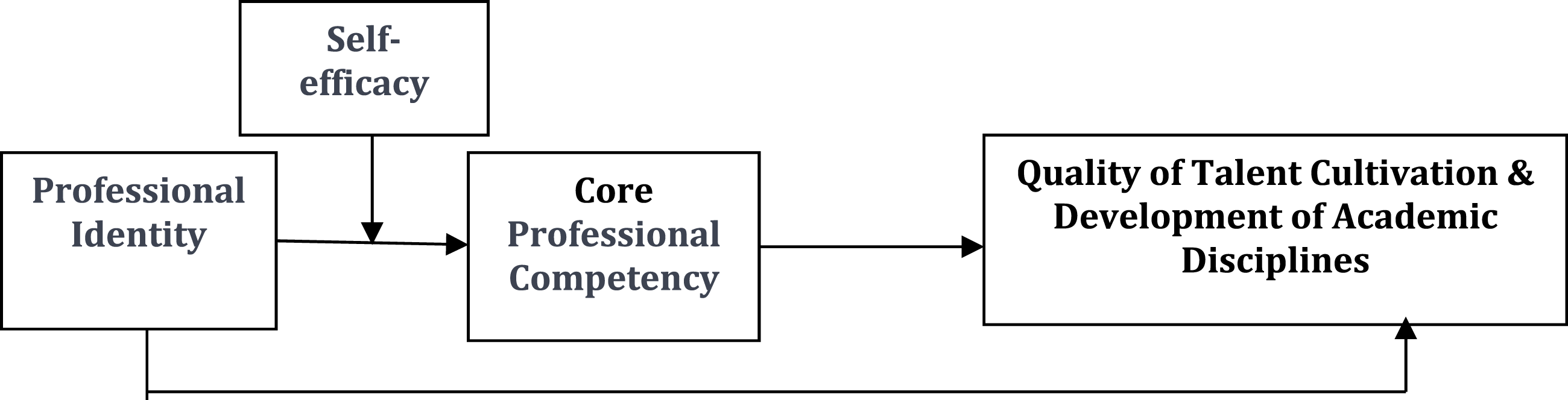
Based on the conceptual model presented in Figure 1, this study tested the following hypotheses.
Professional identity positively predicts core professional competencies.
Learning self-efficacy positively predicts core professional competencies.
Learning self-efficacy mediates the relationship between professional identity and core professional competencies.
Methods
Data sources
This study derived data from a questionnaire administered to PA majors across seven universities in the Pearl River Delta region of China: • One elite “211 Project” research university (Sun Yat-sen University). • Two provincial public universities (Jinan University and South China Normal University). • Two municipal public universities (Guangzhou University and Shenzhen University). • Two independent colleges, formerly affiliated with public universities but privately operated (Beijing Normal University, Zhuhai Campus and Jilin University, Zhuhai College).
These institutions were selected to represent a spectrum of higher education institutions offering PA programs in China and allow for comparisons across institutional types, prestige levels, governance arrangements, and local-regional orientations. 1
Using a network-based distribution approach, the survey was executed in collaboration with academic faculty within the relevant university departments. The endeavor yielded 544 valid responses, comprising 139 males (25.6%) and 405 females (74.4%). Academic representation spanned 133 first-year undergraduates (24.4%) to 41 graduate students (7.5%), ensuring a diverse sample across educational stages.
The surveyed institutions fell into three operational categories 2 : 115 respondents (21.1%) were from 211 Project universities, 136 respondents (25.0%) were from public universities, and 253 respondents (46.5%) were from independent colleges. An additional 40 respondents did not provide their institutions’ names, rendering classification impossible for this subgroup.
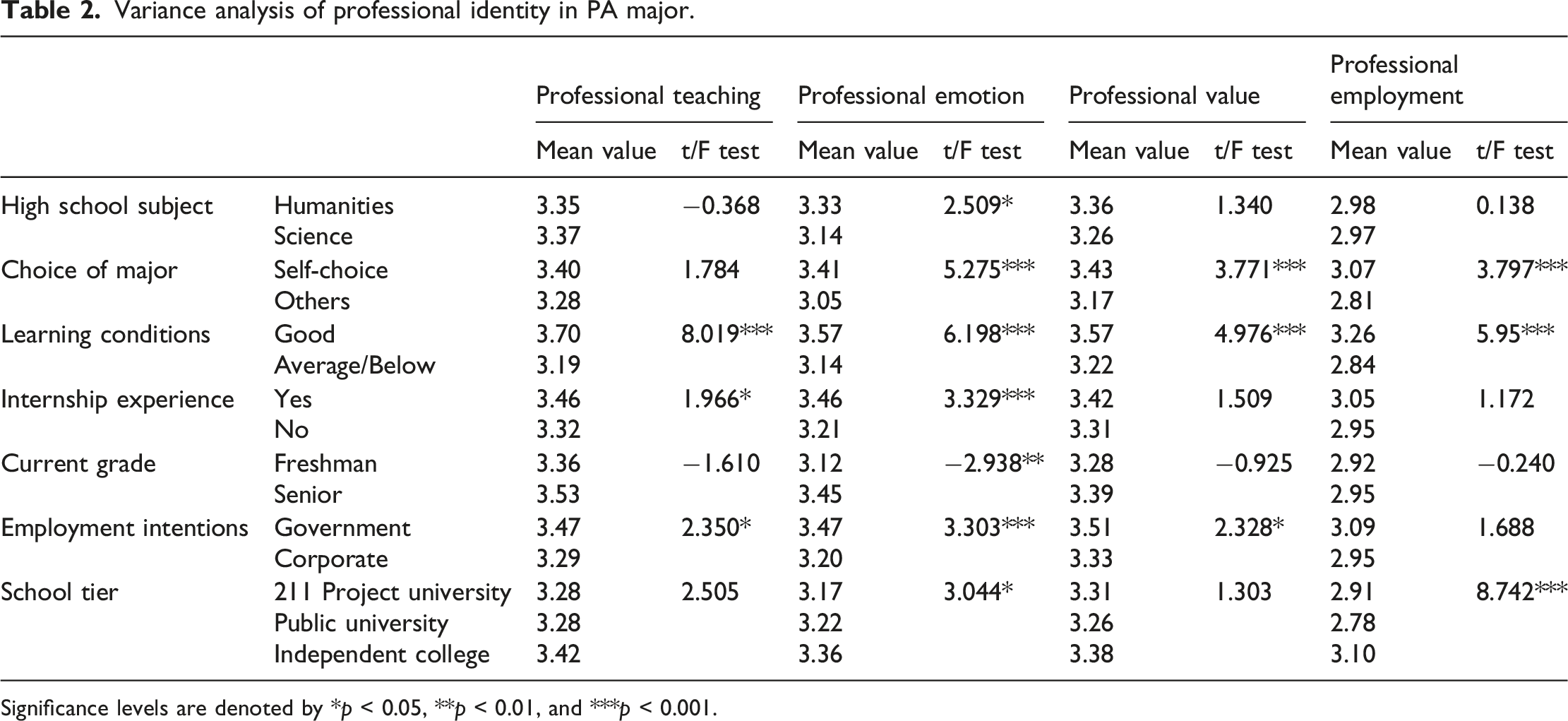
To further explore the differences in professional identity among PA students, this study considered variables for variance analysis, such as t-tests or F-tests, on “academic background of the university,” “college entrance exam preferences,” “learning conditions,” “internship experiences,” “current grade level,” “employment intentions,” and “school tier.”
Development of measurement instruments
The study delineated nine variables to profile the participants’ demographic characteristics, namely gender, academic history, geographical origins, current academic standing, elective course selection process, scholastic performance ranking, practical internship engagements, and anticipated employment opportunities.
Assessing professional identity
Building on Yu and Zhang (2015), this study developed a 24-item scale to evaluate PA undergraduates’ professional identity. Scoring used a 5-point Likert scale, with higher scores indicating stronger professional identity. Validation statistics confirmed the suitability of the scale for factor analysis, with a KMO value of 0.963 and a significant Bartlett’s test result (chi-square = 10,599.261, df = 276, p < 0.001).
Factor analysis extracted four meaningful components: professional teaching, professional emotional, professional value, and professional employment factors, which together explained 71.8% of the variance. Reliability assessments yielded high Cronbach’s α values for each factor and the overall scale, all above 0.9, which were reaffirmed by split-half reliability tests, indicating the scale’s robust internal consistency.
Evaluating academic self-efficacy
To quantify the Sense of Academic Self-Efficacy (SASE), this study adapted Li’s (2008) methodology, originally designed for graduate students, to develop a 10-item scale for PA undergraduates. Each item utilized a 5-point Likert scale, with higher scores indicating greater self-efficacy. The scale’s validation confirmed its suitability for factor analysis, indicated by a KMO value of 0.930 and a significant Bartlett’s test result (chi-square = 3904.932, df = 45, p < 0.001).
Factor analysis revealed two significant components, labeled as “Comprehensive Learning Factor” and “Specialized Learning Factor,” accounting for a combined variance of 73.1%. The scale’s reliability was evidenced by high Cronbach’s α values for both factors and the overall system, exceeding 0.8. Split-half reliability tests reinforced these findings, demonstrating the robustness of the academic self-efficacy measure.
Assessment of professional core competencies
This study’s approach to measuring professional core competencies (PCC) is grounded in the concept of “publicness,” drawing on established competency frameworks in PA (Liu, 2013; United Nations Careers, 2011). Competencies were divided into five distinct dimensions: organizational management, policy analysis, democratic administrative thinking, problem solving, and social responsibility/communication cooperation abilities. A self-reporting method was employed utilizing a 17-item scale based on a 5-point Likert system, with higher scores signifying stronger competencies.
Validation procedures confirmed the scale’s appropriateness for factor analysis (KMO = 0.959; Bartlett’s test of sphericity: chi-square = 8451.331, df = 136, p < 0.001). Factor analysis identified two primary factors (“tool ability factor” and “value ability factor”), which accounted for a combined variance of 70.8%. The scale’s reliability was established through internal consistency tests, yielding Cronbach’s α values above 0.8 for both factors and the overall index system. Furthermore, split-half reliability assessments corroborated these findings, affirming the measure’s high internal consistency.
Findings and analysis
The findings of this study must be understood against the backdrop of ongoing disciplinary crises in PA. When Waldo (1968) identified an “identity crisis” in the field—a struggle over the discipline’s core purpose and self-understanding—, he was describing a problem at the scholarly level. Our findings suggest that this crisis has penetrated individual students. The moderate professional identity scores here, particularly the low employment identity score (2.98), indicate that students are uncertain about the discipline’s value and their place within it. The crisis is both theoretical and experiential. Students inherit unresolved questions about the field’s purpose, methods, and relevance. These questions shape how students relate to their major and envision their future. The long-standing identity, intellectual, and theoretical crises find new expression in the uncertainties of the next generation.
The findings of this study are structured into two segments. The first delineates the prevailing trends and unique attributes of professional identity, academic self-efficacy, and professional core competencies among PA students. The second segment discusses the underlying mechanisms and logical interrelations between these elements. The theoretical model adopted in this study offers a blueprint that can be adapted for parallel studies across various cultural and educational landscapes.
Professional identity among PA students
Summary of factor analysis on professional identity in PA major.
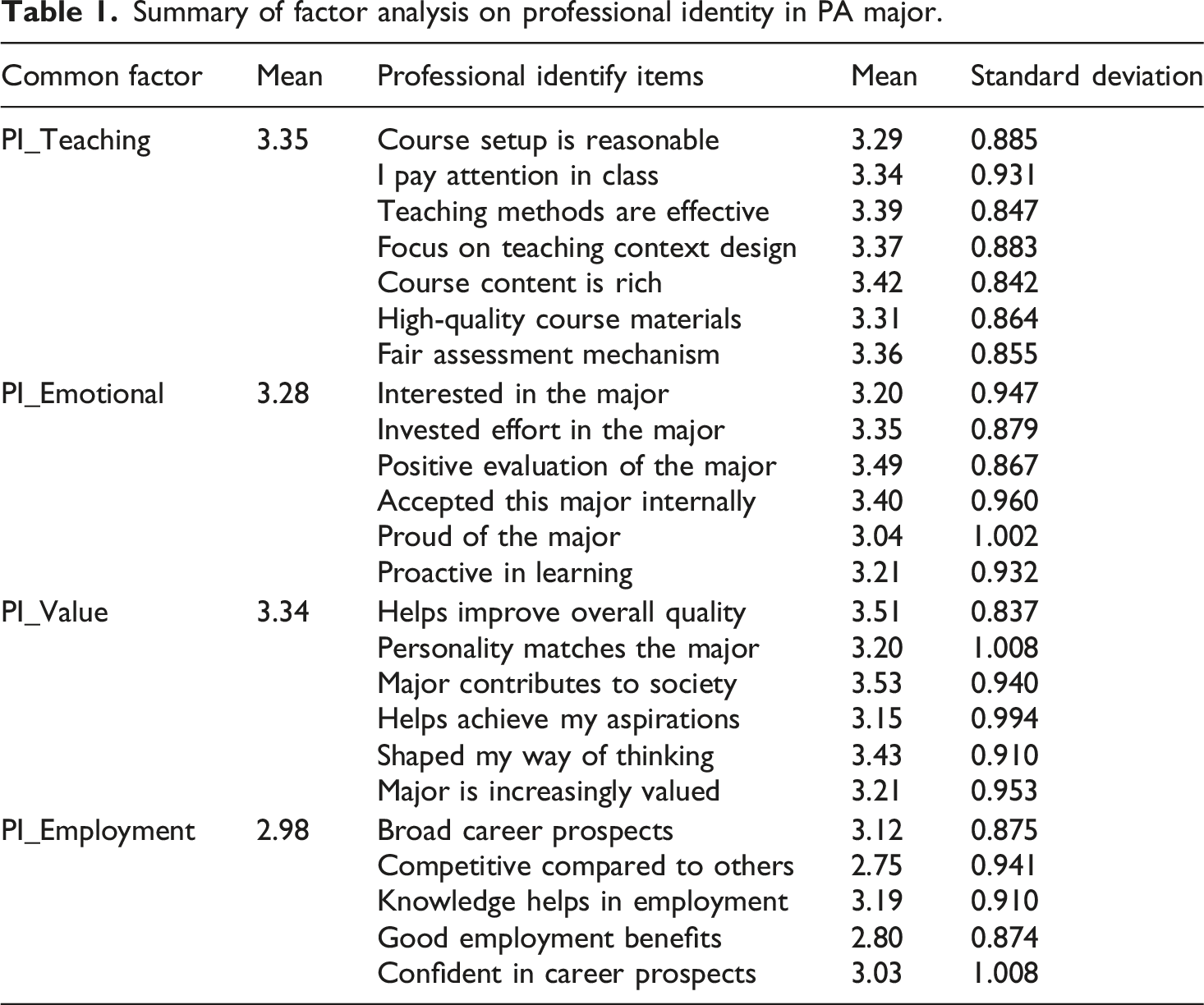
Given that three represents a neutral position between disagreement and agreement, these findings suggest a moderate level of professional identity among students. This is further illustrated by two aspects: First, 67.8% of the respondents do not feel a strong sense of pride in their major, indicating a weaker emotional connection to their field. Second, only 19.7% of respondents perceive their major as offering a competitive edge in employment, while the majority either disagree or remain uncertain about the competitiveness of their field in the job market.
Variance analysis of professional identity in PA major.
Learning self-efficacy in PA education
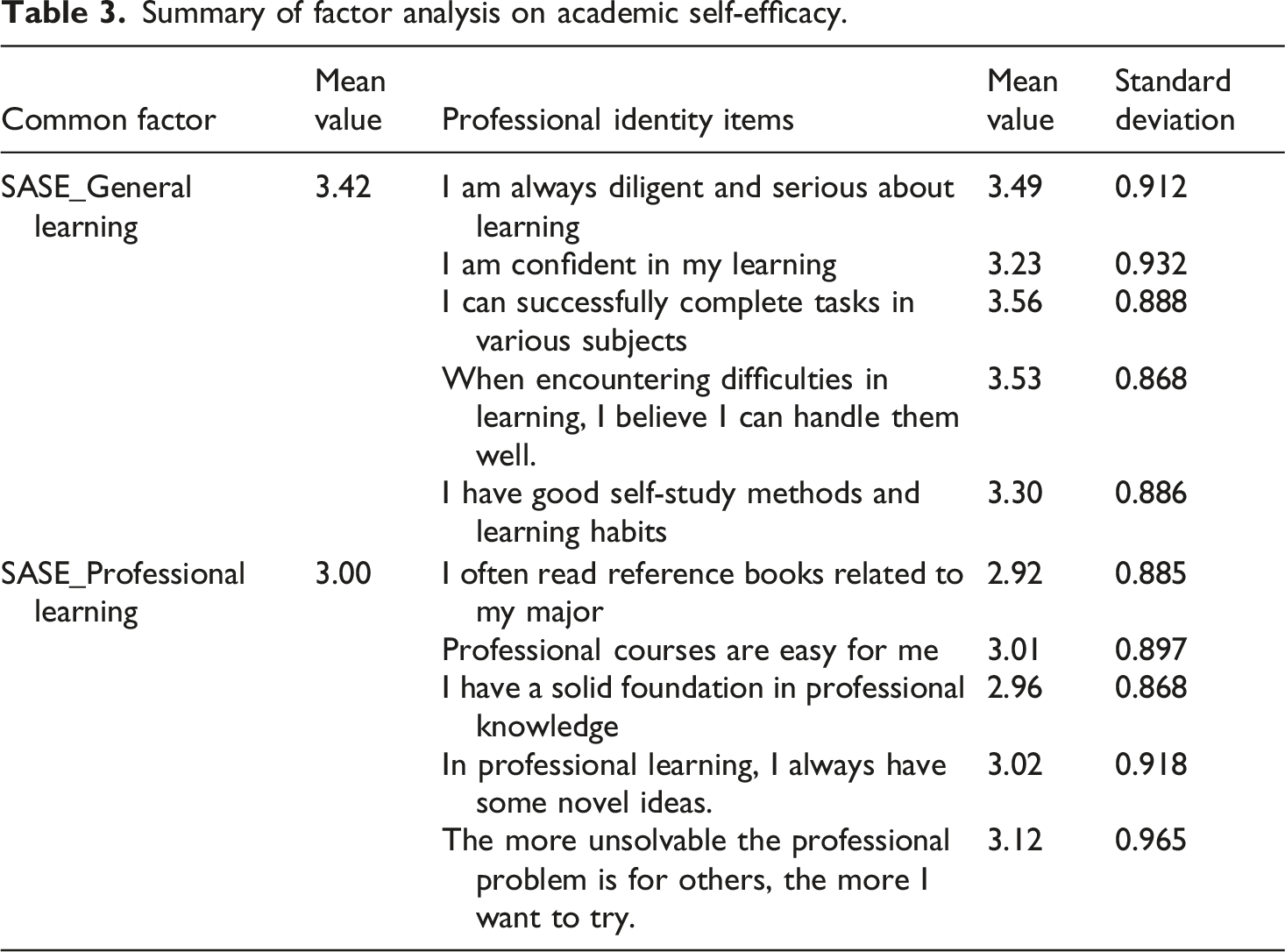
The study reveals that the average learning self-efficacy score among PA students stands at 3.21 ± 0.714, with an average of 3.42 ± 0.781 for general learning and 3.00 ± 0.756 for professional learning. A significant difference between these two areas is evident from paired-sample t-tests (t = 16.959, p < 0.001), indicating higher scores in general learning than in professional learning.
Summary of factor analysis on academic self-efficacy.
Analysis of variability in academic self-efficacy.
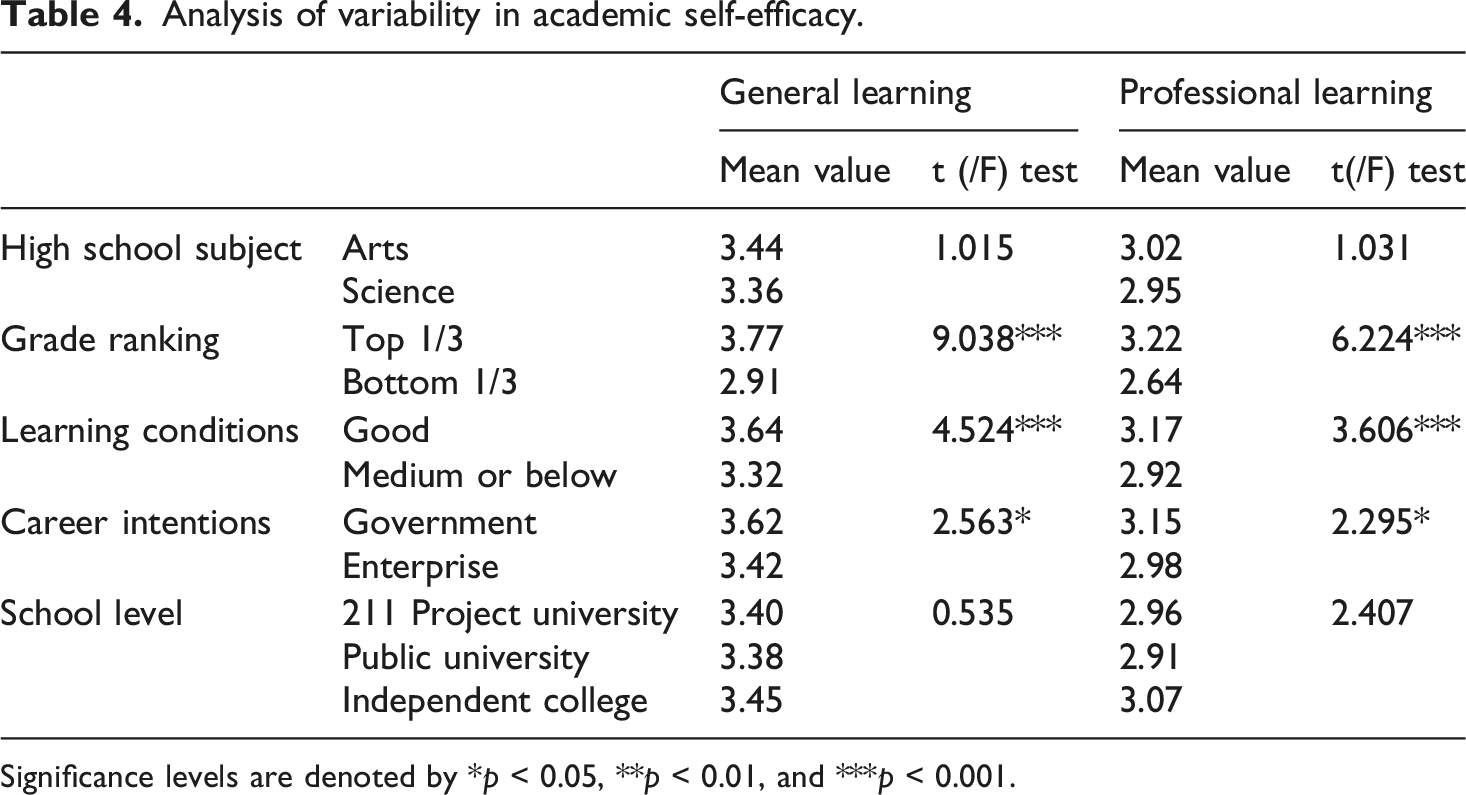
Moreover, students with superior learning conditions show significantly higher self-efficacy than those with average or below-average learning conditions. In terms of employment intention, students aspiring for government roles demonstrate higher self-efficacy than those targeting enterprise sectors. This underscores the influence of career goals on self-efficacy. Interestingly, the study found no notable differences in self-efficacy between students from the 211 Project and public universities, and those from independent colleges.
Core competency self-evaluation in PA
Summary of factor analysis on professional core competencies.
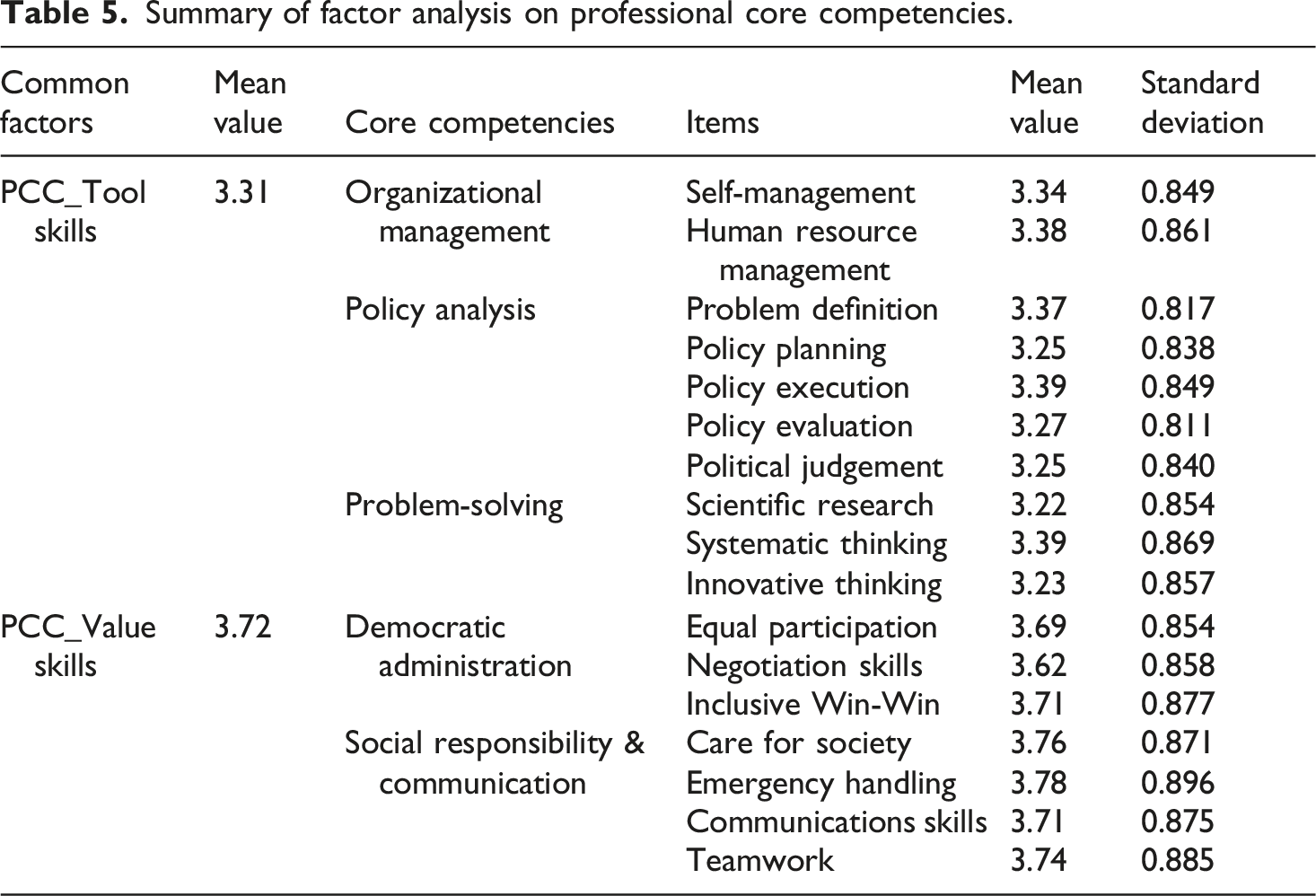
This disparity suggests that PA education effectively instills public values and ethos in students, which is a crucial aspect of talent development within the discipline. However, despite their higher valuation of value-based competencies, the trend of students opting for non-public sector employment raises concern. By contrast, the private sector, which attracts a significant proportion of these students, emphasizes instrumental abilities. Students’ relatively lower confidence in their instrumental skills compared to their value abilities signals a potential area for enhancement to align with competitive disciplines.
Higher scores for value-based competencies suggest that PA programs may be more effective in cultivating public service orientation, civic responsibility, and collaborative value than in developing technical and analytical capacities. This imbalance may contribute to students’ concerns about employment competitiveness and practical preparedness.
To investigate the evolving patterns of core professional competencies over time, this study utilizes grade level as a timeline and scores for tool and value skills as metrics (Figure 2). The graph illustrates steady growth in tool skills corresponding to advancing grade levels, whereas value skills demonstrate a more variable progression, marked by alternating advancements and regressions. Changes in core professional competencies by grade level.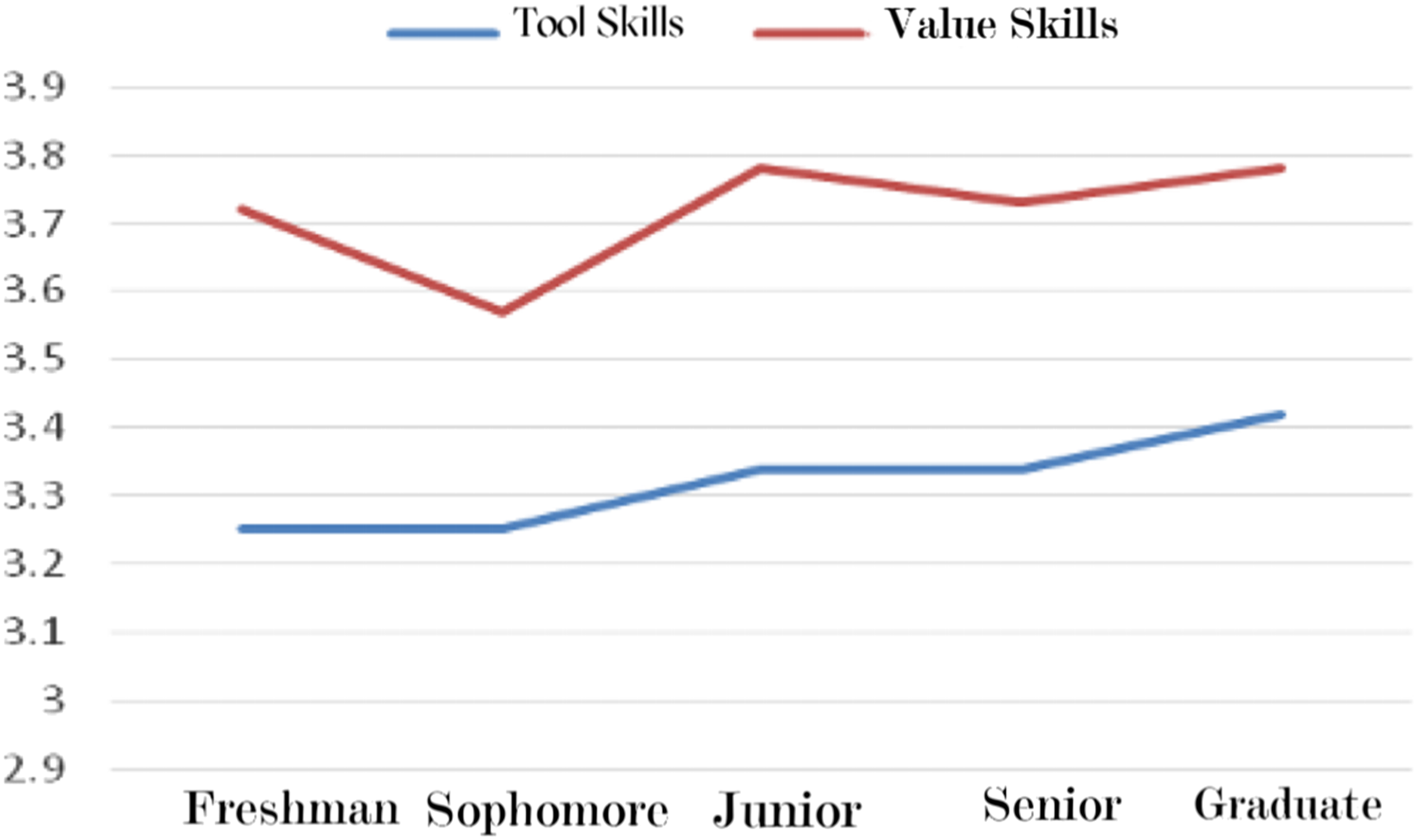
Survey interviews with students revealed an initial decline in major identification among freshmen, attributed to discrepancies between preconceived notions and actual disciplinary content. This phase predominantly focuses on foundational subjects across various disciplines, such as management and political science, with limited emphasis on core values or professional skills specific to PA. Some students even contemplate changing their major during this period.
However, the second year marks a turning point as students engage more deeply with core PA courses, leading to growth in both knowledge and confidence in their professional skills. By their junior year, despite ongoing advanced coursework, students face uncertainties and pressures related to their future career paths. A notable disparity emerges between the skill set fostered by the curriculum and the competencies demanded in their anticipated corporate roles.
Analysis of variability in professional core competencies.
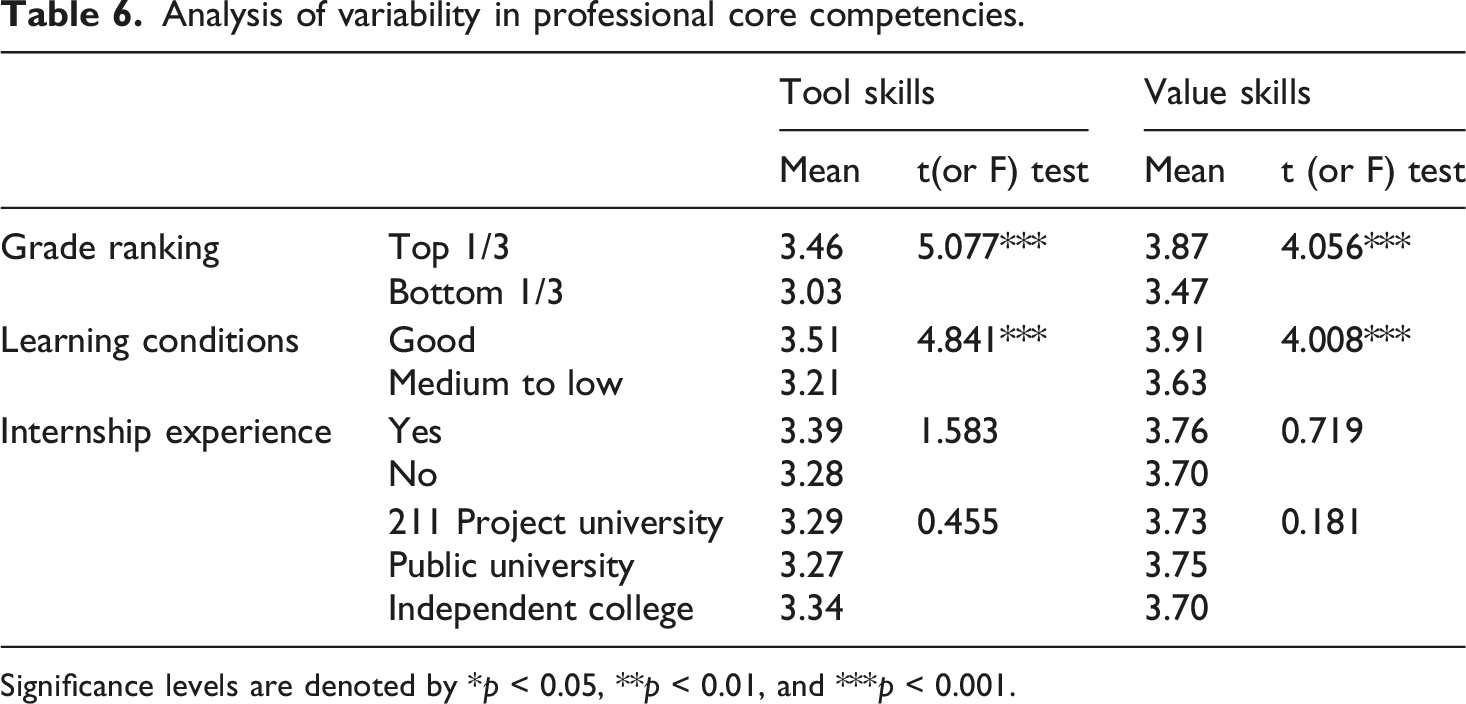
Contrastingly, the study reveals that internship experience does not significantly affect the development of either tool or value competencies among PA students. This finding subtly supports the notion that students perceive value competencies as attitudes or concepts rather than as practical skills. This perception aligns with the idea that a conceptual understanding of values is more readily attainable than mastery of complex technical abilities.
Regarding the institutional tier, the data indicate no discernible advantage in professional core competencies among students from 211 Project universities and public universities compared with those from independent colleges, suggesting that no direct link exists between institutional prestige and competency development in PA.
Interplay of professional identity, learning self-efficacy, and core competencies
Multiple linear regression of professional core competencies.
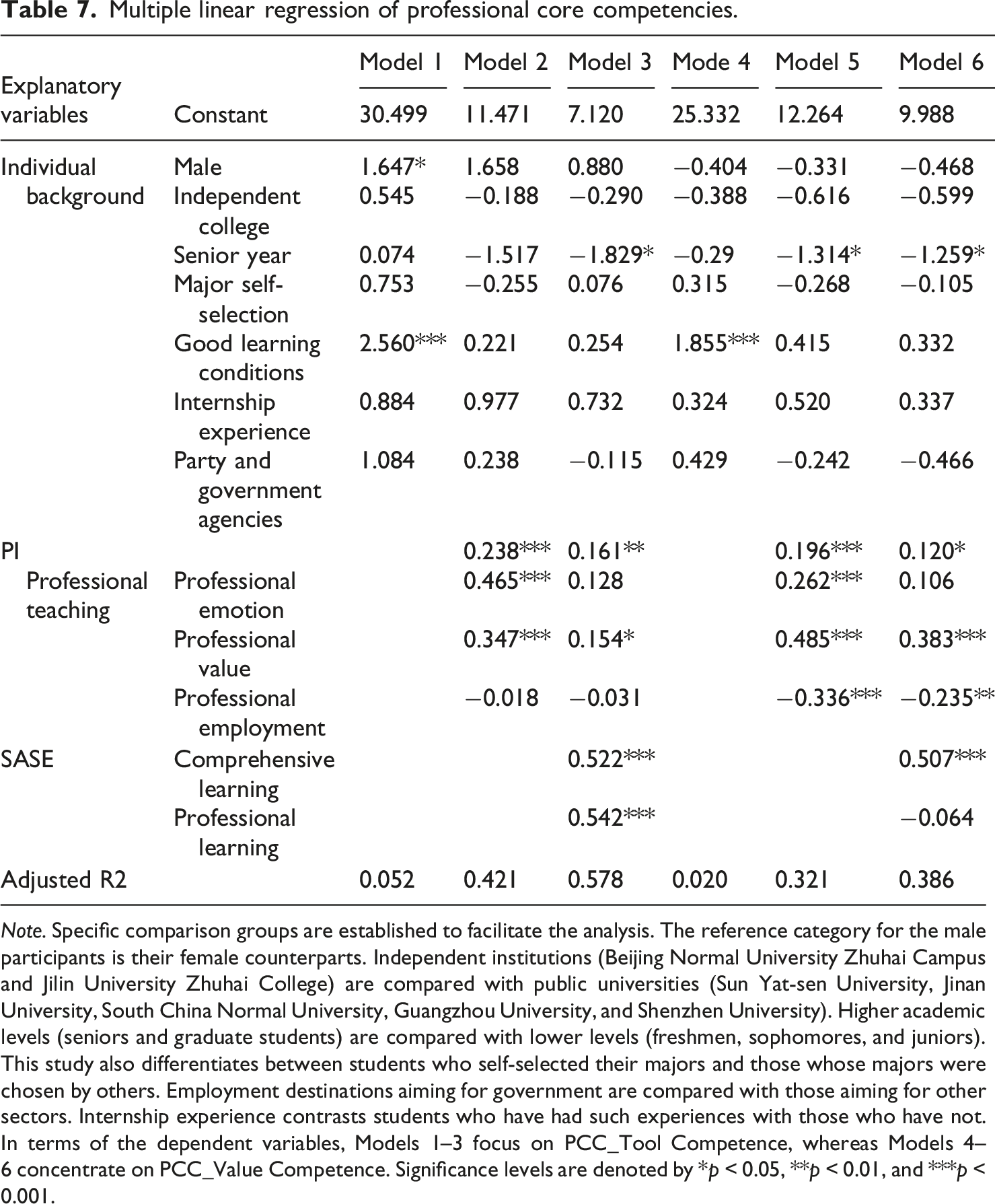
Note. Specific comparison groups are established to facilitate the analysis. The reference category for the male participants is their female counterparts. Independent institutions (Beijing Normal University Zhuhai Campus and Jilin University Zhuhai College) are compared with public universities (Sun Yat-sen University, Jinan University, South China Normal University, Guangzhou University, and Shenzhen University). Higher academic levels (seniors and graduate students) are compared with lower levels (freshmen, sophomores, and juniors). This study also differentiates between students who self-selected their majors and those whose majors were chosen by others. Employment destinations aiming for government are compared with those aiming for other sectors. Internship experience contrasts students who have had such experiences with those who have not.
In terms of the dependent variables, Models 1–3 focus on PCC_Tool Competence, whereas Models 4–6 concentrate on PCC_Value Competence. Significance levels are denoted by *p < 0.05, **p < 0.01, and ***p < 0.001.
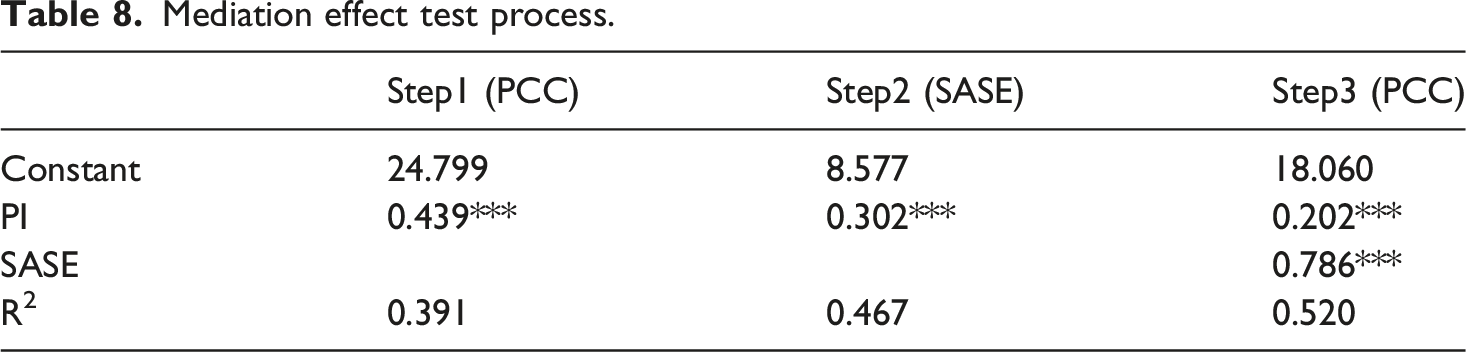
Mediation effect test process.
For Models 1–3, Table 7 reveals several trends: (1) In the context of professional identity, factors such as professional teaching, emotions, and values significantly bolster tool competence. However, professional employment exhibits a negative (albeit non-significant) influence on this competence. Collectively, professional identity accounts for 36.9% of the variance in tool competence (0.421−0.052 = 0.369). (2) With regard to self-efficacy in learning, both general and professional learning positively influence tool competence, explaining 15.7% of the variance.
For Models 4–6, the findings are as follows: (1) In terms of professional identity, again, professional teaching, emotion, and value positively affect value competence. Unlike its effect on tool competence, professional employment has a significant negative effect on value competence. Overall, professional identity explains 30.1% of the variance in value competence. (2) Regarding self-efficacy in learning, general learning positively affected value competence, whereas professional learning shows a negative, though not significant, effect. Self-efficacy in learning accounts for 6.5% of the variance in value competence.
These analyses offer a nuanced understanding of the influence on both tool and value competencies in PA, highlighting the multifaceted nature of professional identity and learning efficacy.
Professional identity contributes to variance in core professional competencies more significantly than learning self-efficacy. This becomes evident when analyzing Models 3 and 6, where the inclusion of self-efficacy in learning alters the regression coefficients and significance of professional identity, indicating an interactive effect between these two variables.
In the mediation effect test, following Baron and Kenny’s (1986) stepwise regression method (Table 8), we first examine the impact of Professional Identity (PI) on PCC, revealing a total effect (c = 0.439). Next, we test the influence of PI on students’ SASE (a = 0.302). The subsequent step assesses the combined effect of PI and SASE on PCC, where PI’s coefficient is c = 0.202 and that of SASE is b = 0.786. The presence of a mediating effect is determined if both a and b are significant, as confirmed in this study. The mediation effect size, computed as ab/c = 0.302*0.786/0.439, is 54.1%, signifying that SASE mediates between PI and PCC.
These findings underscore the pivotal mediating role of SASE in the relationship between professional identity and core professional competencies, thereby providing deeper insights into the dynamics in PA.
Discussion
Professional identity and employment perceptions
The moderate level of professional identity, specifically the low employment identity score (2.98), suggests that students perceive a disconnect between their academic training and job market realities. This perception likely reflects the indirect relationship between PA credentials and civil service access shown in our contextual review. Despite intense competition for government positions, a PA degree is not a formal prerequisite for most entry-level roles (CNBC, 2025; Ni and Fu, 2008). Therefore, students may question the instrumental value of their major, even as they observe many of their peers sitting for the national civil service examination (guokao). This tension between the disciplinary aspirations of PA programs and the actual pathways in public sector careers may contribute to the weak employment identity observed across all institutional types.
The self-efficacy gap
The disparity between general (3.42) and professional learning self-efficacy (3.00) indicates that, while students feel confident in their general academic abilities, they lack confidence in their mastery of PA-specific knowledge and skills. Several factors may have contributed to these findings. First, as Ni and Fu (2008) observed, PA education in China has struggled with unclear disciplinary positioning and curriculum systems, leaving students uncertain about what constitutes core professional knowledge. Second, the “research drift” identified by Han (2015) in Chinese universities—where faculty prioritize research over undergraduate teaching—may diminish the quality of specialized instruction. Third, the dominance of the guokao, which tests general aptitude and political knowledge rather than specialized PA competencies, may inadvertently signal to students that disciplinary mastery is secondary to generic test-taking skills and political alignment (The Economist, 2026).
Value-based versus tool-based competencies
The finding that value-based competencies (3.72) significantly outpace tool-based competencies (3.31) suggests that PA education effectively transmits public service values and ethos—a crucial foundation for professional identity. This aligns with the emphasis on “publicness” in Chinese PA curricula and the broader socialization of students into public service norms. However, the slower development of tool-based skills (policy analysis, organizational management, and problem-solving) may leave graduates feeling underprepared for the practical demands of either public- or private-sector employment. This resonates with students’ employment concerns; if they feel equipped with values but not tools, they may doubt their competitiveness in job markets that demand both.
The gradual, linear growth pattern in tool-based competencies, compared with the more rapid, stage-like development of value-based competencies (Figure 2), further suggests that values may be more readily internalized through coursework and socialization. By contrast, practical skills may require extended application and reinforcement through internships, case-based learning, and opportunities for deliberate practice—experiences that may not be equally available to all students.
Mediating role of self-efficacy
Self-efficacy explains 54.1% of the relationship between professional identity and core competencies (Table 8), underscoring the critical role of confidence in translating professional identification into demonstrated ability. Students who identify strongly with PA but doubt their learning may fail to develop competencies that their identity would otherwise predict. This finding has practical implications. Interventions targeting self-efficacy, such as mastery experiences through well-designed assignments, vicarious learning through exposure to successful alumni, and verbal persuasion from faculty mentors, may be as important as those directly building professional identity.
Institutional prestige and student outcomes
The lack of significant competency differences between students from the elite 211 Project universities and those from independent colleges (Tables 2, 4, and 6) challenges assumptions about institutional prestige and educational quality. This finding invites reflection on where competency development actually occurs. Probably, within-discipline factors—curriculum design, teaching quality, and internship opportunities—matter more than institutional reputation, or students in less prestigious institutions compensate through greater effort and engagement. Alternatively, this finding may reflect the relatively standardized nature of PA curricula across institution types in China, or the fact that the guokao examination system creates common external pressures that shape student learning regardless of the institutional context. Either interpretation warrants further investigation and has implications for program quality evaluation.
Implications for international audiences
While this study is conducted in the Chinese context, several findings are relevant to global PA education.
First, the mediating role of self-efficacy in the relationship between professional identity and competencies (54.1% mediation effect) suggests that fostering students’ confidence in their professional knowledge is as important as building their identity. PA programs worldwide should consider interventions that simultaneously strengthen both; for example, through sequenced curricula that provide early mastery experiences, mentorship programs that model successful practice, and authentic assessments that build confidence through demonstrated competence. This finding transcends national contexts and speaks to the fundamental processes of professional socialization.
Second, the gap between value- and tool-based competencies may reflect a broader tension between PA education’s identity as a social science discipline and as a professional training ground. Countries grappling with similar tensions—including the long-standing “knowledge versus skills” debate (Ni and Fu, 2008) and questions about the balance between academic rigor and vocational relevance—may find value in examining how their programs balance these dimensions. The finding that value competencies develop more rapidly suggests that values may be more readily taught through coursework and discussion, whereas tool competencies require sustained practice-integrated learning that may require more resources.
Third, the complex relationship between PA education and civil service careers—where disciplinary credentials do not guarantee privileged access, competition is extreme, and political capital often matters—raises broader questions about the purpose and value of professional education. In systems where public sector recruitment operates independently of academic preparation, what role should PA programs play? Should they focus on building generic competencies transferable across sectors or stronger linkages between academic credentials and career pathways? These questions are relevant in China and in any context showing an indirect or contested relationship between higher education and public service employment, including many countries where civil service examinations or generalist recruitment models prevail.
Fourth, evidence of elite disillusionment with bureaucratic work (Gao, 2025) raises questions about the relationship between graduate expectations and workplace realities. As more top graduates worldwide turn to public sector employment, seeking stability amid economic uncertainty, PA programs should provide more realistic career previews and prepare students for the potential gap between their ideals and the constraints of bureaucratic environments. This may include honest discussions about the nature of entry-level work, pace of advancement, and skills most valued in different organizational contexts.
Fifth, further research should comparatively examine whether the lack of significant competency differences between elite and non-elite institutions exists in other national contexts. If institutional prestige does not strongly predict student competencies, efforts to assess and improve program quality should examine actual educational processes and outcomes. This has implications for how students choose programs, employers evaluate credentials, and policymakers allocate resources across institution types.
Finally, the findings speak directly to the crisis discourse that has long characterized PA scholarship. The observed moderate professional identity and self-efficacy gaps suggest that disciplinary-level anxiety is reproduced by future practitioners and scholars. This raises important questions for PA programs worldwide: How do we transmit knowledge, skills, and a sense of professional confidence and purpose to our students? How can we prevent disciplinary self-doubt from becoming student self-doubt? If students experience PA’s ongoing identity crisis as uncertainty about their own professional identities, addressing this crisis requires attention not only to theory and research, but also to pedagogy and curriculum. The classroom becomes a site where PA crises are either amplified or resolved.
Conclusion
This study surveyed PA students across seven universities in China’s Pearl River Delta, and constructed and validated a conceptual model examining how professional identity and self-efficacy shape core competency development. The findings revealed moderate professional identity among students, with employment identity scoring the lowest (2.98). A significant gap exists between general learning self-efficacy (3.42) and professional learning self-efficacy (3.00), indicating that students lack confidence in discipline-specific knowledge despite feeling capable as general learners. Value-based competencies (3.72) outpaced tool-based competencies (3.31), suggesting the effective transmission of public service values but a slower development of practical skills. Most notably, self-efficacy mediates 54.1% of the relationship between professional identity and core competencies, underscoring the critical role of confidence in translating identification into demonstrated ability.
Research contributions
This study makes several contributions to PA literature, particularly regarding how professional identity is formed among students.
First, it provides a student-centered perspective on professional identity, self-efficacy, and core competency development. By examining these constructs from the learners’ viewpoint, this study offers insights into talent cultivation that complement existing research on curriculum design or institutional factors.
Second, the study extends professional identity theory to the PA context, a discipline experiencing various crises (Perry, 2016; Waldo, 1968). It illuminates the relationship between how students identify with their field, their confidence in learning it, and the competencies they develop.
Third, this study conceptualizes core professional competencies along two distinct dimensions: value-based abilities (such as democratic administration and social responsibility) and tool-based abilities (such as policy analysis and organizational management). The finding that value-based competencies develop more rapidly than tool-based competencies suggests that different types of competencies require different pedagogical approaches, a distinction with implications for curriculum design.
Finally, while situated in the Chinese context, the findings address broader questions regarding how professional education shapes student outcomes. The mediating role of self-efficacy in the relationship between identity and competence may inform discussions on PA education in other national settings facing similar tensions between academic rigor and professional preparation.
Recommendations
The findings of this study suggest several directions for strengthening PA education both within China and internationally.
For the academic community, these findings underscore the importance of fostering students’ professional identities as a foundation for competency development. Given that self-efficacy substantially mediates this relationship, efforts to build identity should be paired with interventions that build confidence, such as opportunities for students to experience success in professionally relevant tasks. China provides value in developing locally grounded PA theories that draw on the country’s administrative heritage and governance experience, which may strengthen students’ sense of connection with the field.
For universities and programs, the gap between students’ general and professional learning self-efficacy highlights the need for curriculum and pedagogy that more directly address professional knowledge and skills. Integrated teaching models that combine research, case analyses, and practice-based learning may help students translate general academic confidence into domain-specific competence. The finding that tool-based competencies develop more slowly than value-based competencies suggests that programs should intentionally provide repeated, scaffolded opportunities for students to practice policy analysis, organizational management, and other applied skills throughout the curriculum.
For individual students, the results highlight the importance of seeking experiences—internships, research projects, and mentorship relationships—that can build both professional identity and self-efficacy. Students actively engaged in the profession beyond the classroom may be better positioned to develop relevant competencies for their careers.
For employers and policymakers, this study highlights the need for clearer articulation between educational preparation and career pathways. Students who perceive a disconnect between their major and employment prospects have lower motivation and engagement. Dialogues between universities and public-sector employers about relevant competencies could help align curricula with professional expectations and strengthen students’ confidence in the value of their education.
Limitations
This study focused on seven universities in the Pearl River Delta, and the findings may not be generalizable to other regions or institutions. The cross-sectional design highlights student perceptions at a single point in time, limiting causal inferences on how professional identity and competencies develop over the course of student education. Additionally, self-reported measures may not fully capture actual competencies, and this study did not track graduates in the workforce to examine how these factors translate into employment outcomes.
Future research
Future research could use more diverse sampling across different regions and institutions in China. Longitudinal designs that track students from entry through graduation and into early career would provide valuable insights into how professional identity, self-efficacy, and competencies evolve over time and how they predict actual employment outcomes. Comparative studies examining these relationships in different national and institutional contexts would also provide a more comprehensive understanding of professional socialization in PA. Further refinement of the conceptual model, including potential moderators such as internship quality, faculty mentorship, curriculum design, and peer effects, would help identify effective interventions for strengthening professional identity and competency development.
Ultimately, this study suggests that the various “crises” that have long occupied PA scholars—identity, intellectual, and theoretical—are not merely academic concerns; they show how students experience education, form professional identities, and prepare for careers. Moderate professional identity, the gap between general and professional self-efficacy, and the slower development of tool-based competencies reflect, at the individual level, the discipline’s ongoing struggle to define itself and its value. Addressing these crises requires not only theoretical work but also sustained attention to the educational contexts in which future public administrators are formed. If the next generation enters the field uncertain of its value and unprepared for its demands, the crises in PA will remain unresolved.
Footnotes

Funding
The authors received no financial support for the research, authorship, and/or publication of this article.
Declaration of conflicting interests
The authors declared no potential conflicts of interest with respect to the research, authorship, and/or publication of this article.