






Abstract
In the present study, we evaluated the Milwaukee Inventory for Subtypes of Trichotillomania–Adult Version (MIST-A) in a replication sample of clinically characterized hair pullers using exploratory factor analysis (EFA; N = 193). EFA eigenvalues and visual inspection of our scree plot revealed a two-factor solution. Factor structure coefficients and internal consistencies suggested a 13-item scale with an 8-item “Intention” scale and a 5-item “Emotion” scale. Both scales displayed good construct and discriminant validity. These findings indicate the need for a revised scale that provides a more refined assessment of pulling phenomenology that can facilitate future treatment advances.
It is widely accepted that the phenomenology of trichotillomania (TTM) can be heterogeneous both between and within individuals over time. This observation led early researchers to propose the existence of different hair-pulling subtypes or styles (e.g., Christenson & Mackenzie, 1994; Christenson, Mackenzie, & Mitchell, 1991; du Toit, van Kradenburg, Niehaus, & Stein, 2001). This parsing of the TTM phenomenology subsequently led to the suggestion that different clinical presentations may warrant different treatment strategies (e.g., Franklin, Tolin, & Diefenbach, 2006; Woods, Flessner, et al., 2006). Accordingly, assessment instruments that evaluate the extent of severity of different pulling styles may assist with treatment tailoring and the optimization of clinical care.
To date, the most widely endorsed pulling styles are the “automatic” and “focused” types. The “automatic” style involves pulling in the absence of full behavioral awareness and is generally associated with sedentary situations (e.g., reading or watching television). In contrast, the “focused” style involves affect-driven pulling with full behavioral awareness and is often done in response to intense emotions or other uncomfortable internal experiences. It has been suggested that traditional habit reversal treatment may have the greatest benefit for hair pulling that is predominantly “automatic,” while interventions addressing experiential avoidance or emotion dysregulation may be warranted to address “focused” pulling (e.g., Flessner, Conelea, et al., 2008).
Flessner and colleagues (Flessner et al., 2007; Flessner, Woods, et al., 2008) developed reliable and valid self-report scales using data from large-sample Internet studies to assess these hair pulling styles in adult and pediatric populations. The adult version of the scale, the Milwaukee Inventory for Subtypes of Trichotillomania–Adult Version (MIST-A; Flessner, Woods, et al., 2008), was developed using a sample of 1,697 Internet participants who reported pulling their hair frequently but were not assessed via clinical interview. Two factors (“automatic” and “focused”) resulted from exploratory factor analysis (EFA) and were subsequently supported with confirmatory factor analysis (CFA). The final scale consisted of “Focused” and “Automatic” scales, with 10 and 5 items, respectively. Both scales had adequate internal consistency and good construct and discriminant validity.
The original article on the development of the MIST-A highlighted the importance of replicating the scale factor structure and item loadings in a separate sample (Flessner, Woods, et al., 2008). Of additional note, the original EFA yielded several items assessing behavioral intentionality (i.e., “I intentionally start to pull my hair,” “I don’t notice that I have pulled hair until after it’s happened,” and “I am usually not aware of pulling my hair during a pulling episode”) that failed to load onto the same factor as would be expected. Instead, these items loaded onto two factors that were shown to be orthogonal. In addition, the original factor structure of the MIST-A accounted for only 30.1% of the item variance. Finally, the CFA yielded a root mean square error of approximation (RMSEA) of 0.09, exceeding the recommendation of some statisticians to be less than 0.05 (Arbuckle, 2007) or 0.06 (Hu & Bentler, 1999).
Collectively, these factors led us to repeat an EFA on the items of the MIST-A using a separate sample of hair pullers with comprehensive clinical characterization. We sought to examine whether the same factor structure would emerge using the scale with an independent and better-defined sample. Identification of different factors would arguably result in more refined patient-treatment matching and future advances in treatment development. We hypothesized that different factors would be identified given sample differences although we did not have specific predictions regarding factor number and content.
Method
Participants
This study included 193 individuals enrolled in two consecutive TTM studies from 2006 to 2012. Both studies collected comprehensive phenotypic data and blood samples for subsequent DNA analyses. One of the two studies also examined the co-occurrence of TTM and comorbid conditions in the first-degree relatives of probands and matched controls. Enrollment criteria for all studies included a lifetime Diagnostic and Statistical Manual of Mental Disorders (4th ed., text rev.; DSM-IV-TR; American Psychiatric Association [APA], 2000) diagnosis of TTM or chronic hair pulling (CHP; as defined by satisfaction of all DSM-IV-TR criteria with the exception of B and/or C). Participants were excluded for lifetime diagnoses of psychosis, autism, or mental retardation. In this article, we report on data from participants 18 to 65 years of age who completed the MIST-A. The Institutional Review Board approved all study protocols prior to study initiation and individuals completed informed consent prior to study participation.
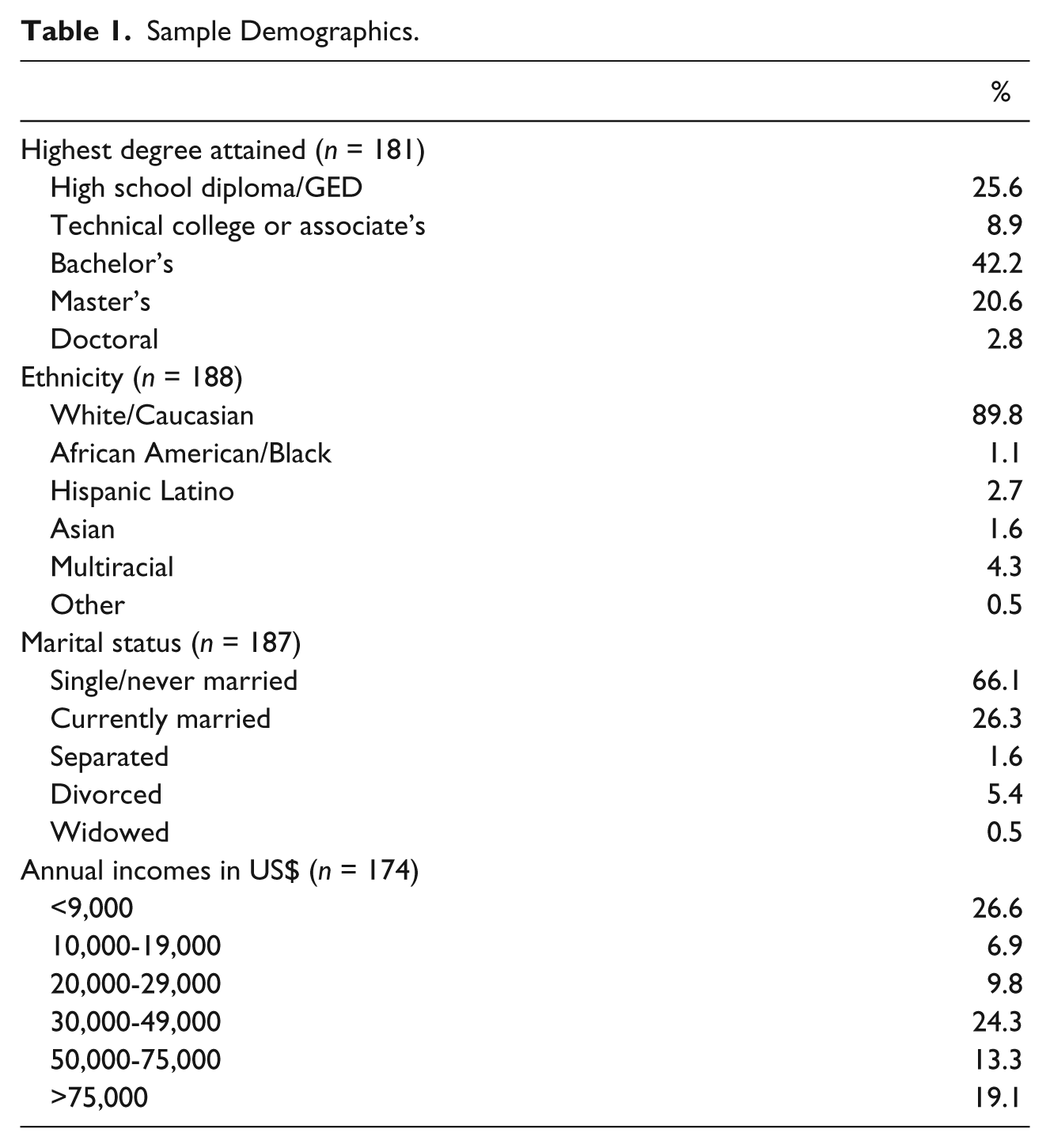
Participants (N = 193 unless otherwise specified) were predominantly female (93.8%) with a mean age of 31.58 years (n = 192, SD = 11.83). See Table 1 for additional demographic information. In all, 93.3% of this group satisfied criteria for Diagnostic and Statistical Manual of Mental Disorders (4th ed. text revision; DSM-IV-TR; APA, 2000) TTM with the remainder satisfying criteria for DSM-IV-TR CHP. Post hoc analyses indicated that all participants met criteria for DSM-5 (5th ed.; APA, 2013) TTM. In addition, 85.8% of respondents (n = 183) had been diagnosed with TTM by a mental health professional prior to study participation. Other comorbidities can be found in Table 2. This comorbidity profile is representative of what is seen in a typical TTM sample (Christenson et al., 1991).
Sample Demographics.
DSM-IV-TR Comorbid Disorders for the Sample.
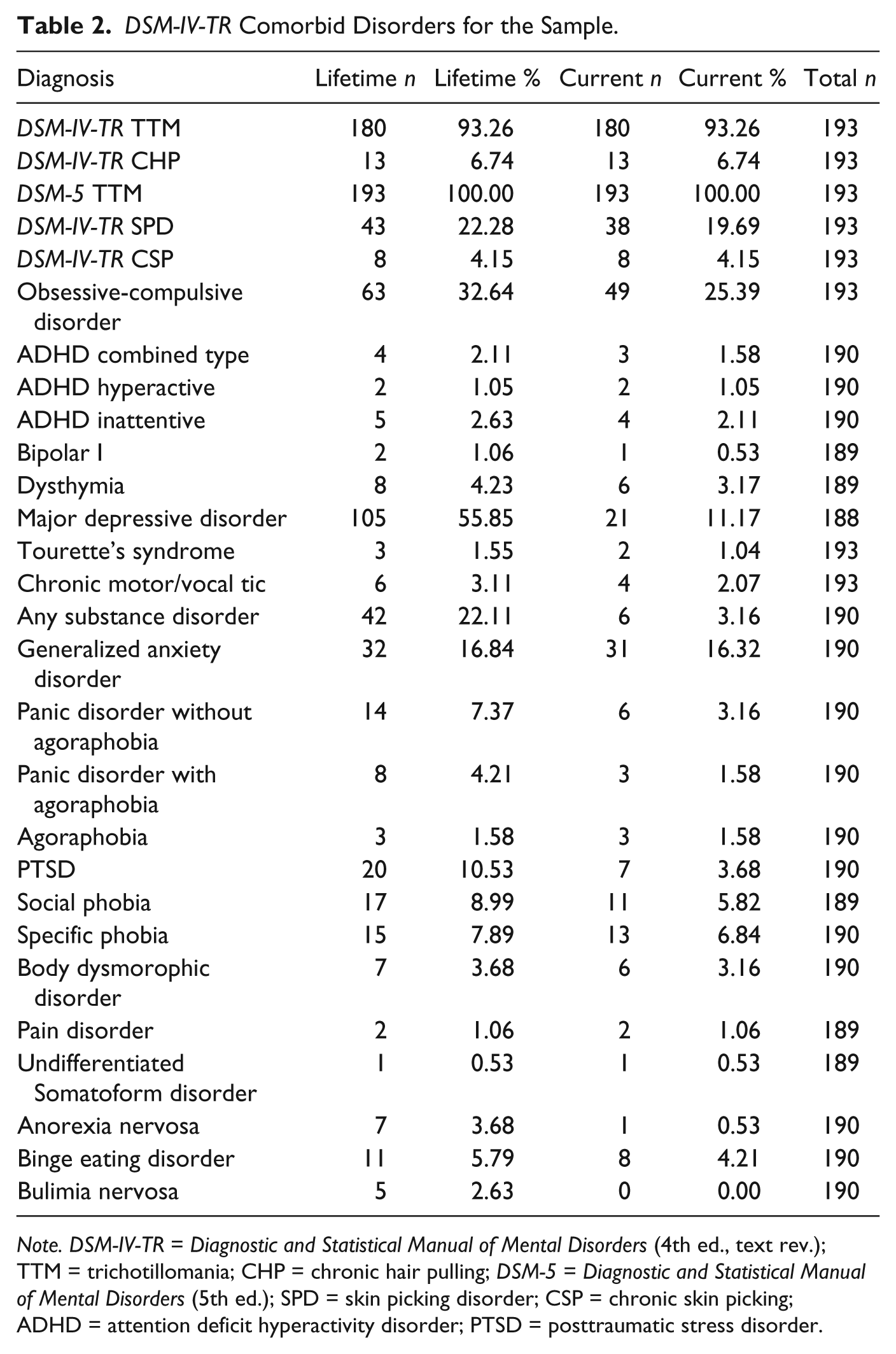
Note. DSM-IV-TR = Diagnostic and Statistical Manual of Mental Disorders (4th ed., text rev.); TTM = trichotillomania; CHP = chronic hair pulling; DSM-5 = Diagnostic and Statistical Manual of Mental Disorders (5th ed.); SPD = skin picking disorder; CSP = chronic skin picking; ADHD = attention deficit hyperactivity disorder; PTSD = posttraumatic stress disorder.
Instruments
Structured Clinical Interview for DSM-IV-TR Axis I Disorders Non-patient Edition (SCID-I/NP)
The SCID-I/NP (First, Spitzer, Gibbon, & Williams, 2007) is a semistructured interview with individual modules corresponding to DSM-IV-TR Axis I diagnoses. It is considered to be the state-of-the-art assessment measure for DSM-IV-TR diagnoses in adults. It was used to assess comorbidity in our sample.
Trichotillomania Diagnostic Interview–Revised (TDI-R)
The TDI-R is a semistructured interview adapted from the TDI (Rothbaum & Ninan, 1994) for consistency with DSM-IV-TR criteria for TTM. It was used to diagnose TTM and CHP.
Keuthen Diagnostic Inventory for Skin Picking (K-DISP)
The K-DISP (Keuthen, unpublished inventory) is a semistructured interview modeled after the TDI-R for use in diagnosing skin picking. Skin picking disorder (SPD) was defined as repetitive skin picking resulting in noticeable skin damage; tension before or when resisting picking; pleasure, gratification, or relief when picking; and significant distress or impairment as a result of picking. Chronic skin picking (CSP) required the same criteria as SPD with the exception of tension prior to picking or pleasure, gratification, or relief when skin picking. It was used to assess skin picking comorbidity.
National Institute of Mental Health–Trichotillomania Symptom Severity Scale (NIMH-TSS)
The NIMH-TSS (Swedo, Rapoport, Leonard, Lenane, & Cheslow, 1989) is a semistructured interview containing items assessing average time spent pulling hairs, time spent pulling on previous day, thoughts or feelings preceding pulling episodes (anxious, compelled to pull, or a troublesome thought), amount of success resisting pulling, degree to which the participant is bothered by hair pulling, and amount of life interference caused by hair pulling. Most questions are answered for both current and past pulling. This scale has good concurrent validity with self-reported measures of TTM severity (Diefenbach, Tolin, Crocetto, Maltby, & Hannan, 2005). Good interrater reliability has been reported, ranging from 0.88 (Franklin, Edson, Ledley, & Cahill, 2011) to 0.92 (Diefenbach et al., 2005). Test–retest reliability (between intake and baseline 2 weeks later) in a randomized controlled trial was also acceptable (r = .70; Franklin et al., 2011). For construct validity analyses, we used two questions from the scale, rated yes (1) or no (0), about the presence of certain thoughts and feelings preceding pulling.
The MIST-A
The MIST-A (Flessner, Woods, et al., 2008) is a 15-item self-report scale measuring “automatic” and “focused” styles of hair pulling. The Automatic and Focused scales consist of 5 and 10 items, respectively. All items are rated from 0 (not true for any of the participant’s pulling) to 9 (true for all of the pulling). Automatic and Focused scale scores are calculated by summing the responses to all items on that scale. Higher scores on either scale indicate that the pulling was better characterized by that respective style. The Automatic and Focused scales have adequate internal consistency (α = .73 and .77, respectively) plus good construct and discriminant validity.
Depression Anxiety Stress Scale (DASS-21)
The DASS-21 (Lovibond & Lovibond, 1995) is a 21-item measure with three subscales: Depression, Anxiety, and Stress. Each subscale consists of seven statements rated by participants based on how much they applied to them over the past week. Item ratings range from 0 (did not apply to me at all) to 3 (applied to me very much or most of the time). All item scores are summed to create Depression, Anxiety, and Stress subscale scores. These subscale scores are then multiplied by two to calculate the final score for each subscale. Good internal consistencies (α > .80) have been consistently reported for all three subscales (Antony, Bieling, Cox, Enns, & Swinson, 1998; Osman et al., 2012), as well as good (r = .65) concurrent validity (Antony et al., 1998). It was used to characterize our sample and for construct and discriminant validity analyses.
Trichotillomania Impact Survey (TIS)
The TIS (Woods, Flessner, et al., 2006) is a self-report measure containing multiple-choice and open-ended questions that assess demographic characteristics (e.g., age, marital status), hair-pulling severity (e.g., amount of hair loss), phenomenology (e.g., sites pulled from, percent of pulling done to achieve a specific sensation), psychological distress (e.g., has pulling led to developing other disorders), functional impact and interference (e.g., how much money has been spent on disguising hair loss, how often school or work has been avoided because of pulling), styles of pulling (e.g., more habit-like or more compulsive), and treatment history (e.g., medication or behavioral treatment for hair pulling and treatment outcome). We utilized four questions from the TIS (rated 0-4) for construct validity analyses. These included, “What percent of pulling is done to achieve a specific bodily sensation?” “How often do you feel a sense of physical anxiety (e.g., increased heart rate, sweating, etc.) before pulling or if you try to prevent or delay yourself from pulling?” “How often do you experience mental anxiety, such as a sense of worry or fear that something bad will happen if you do not pull promptly or correctly?” and “How aware are you of your hair pulling?”
Procedure
All participants were initially phone screened for satisfaction of specific study criteria. They subsequently attended one study visit that included administration of structured interviews for diagnosis and completion of self-report scales. Reliability training and best estimation procedures (Leckman, Sholomskas, Thompson, Belanger, & Weissman, 1982) were used to ensure validity of diagnoses.
Data Analyses
EFA was performed on the MIST-A scores for our sample. Scree plot inspection was done to identify the number of scale factors. Factor coefficients for each item of the MIST-A were used to determine item loading on factors. Internal consistency coefficients (Cronbach’s αs) were computed to determine item inclusion for the two different pulling scales. Construct and discriminant validity analyses were conducted by computing Spearman rank order and Pearson product–moment correlations between pulling scale scores and independent measures of the purported constructs. Finally, correlations between total scores on the separate scales were computed to determine whether the pulling scales measured independent aspects of hair pulling.
Results
EFA
A principal component factor analysis with oblique rotation was first performed to confirm that resulting factors were not highly correlated with each other (r < .32; Tabachnick & Fidell, 2007). Analysis with varimax rotation and no restriction on number of factors was then conducted on the 15 MIST-A item scores. The Kaiser–Meyer–Olkin (KMO) statistic was 0.727 indicating that the sample size was adequate for factor analysis (Hutcheson & Sofroniou, 1999).
Visual inspection of the scree plot revealed a two-factor solution (see Figure 1). The factor analysis was then run again constraining for only two factors. Factor 1 had an eigenvalue of 3.39 and accounted for 22.57% of the variance. Items loading significantly on Factor 1 included the following: “I intentionally start pulling my hair” and “I don’t notice that I have pulled my hair until after it’s happened.” Item content on Factor 1 suggests that these items measure intention to pull (hereafter will be called the “Intention” pulling scale). Factor 2 had an eigenvalue of 3.22 and accounted for an additional 21.44% of the variance. Items loading significantly on Factor 2 included the following: “I pull my hair when I am experiencing a negative emotion, such as stress, anger, frustration or sadness” and “I pull my hair to get rid of an unpleasant urge, feeling, or thought.” Item content suggests that Factor 2 measures pulling related to the experience of uncomfortable emotions or sensations (hereafter will be called the “Emotion” pulling scale).
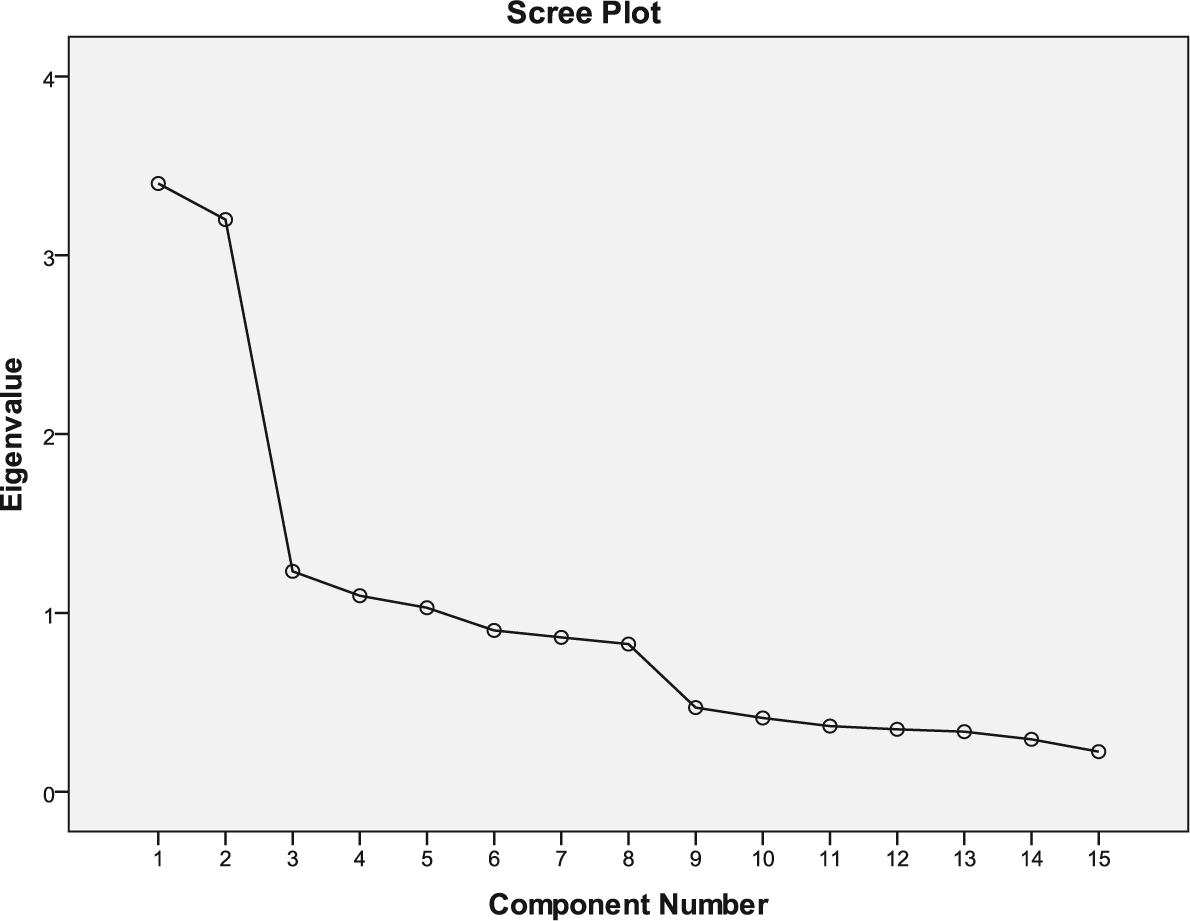
Scree plot for EFA participants.
We used a coefficient cutoff of 0.4 (Stevens, 1992) for inclusion of items in the Intention and Emotion scales. MIST-A Item 3: “I am in an almost ‘trance-like’ state when I pull my hair” had a subthreshold loading on both factors and was thus removed. Table 3 contains all factor structure coefficients.
Factor Structure Coefficients From the EFA Conducted on MIST-A Item Scores.
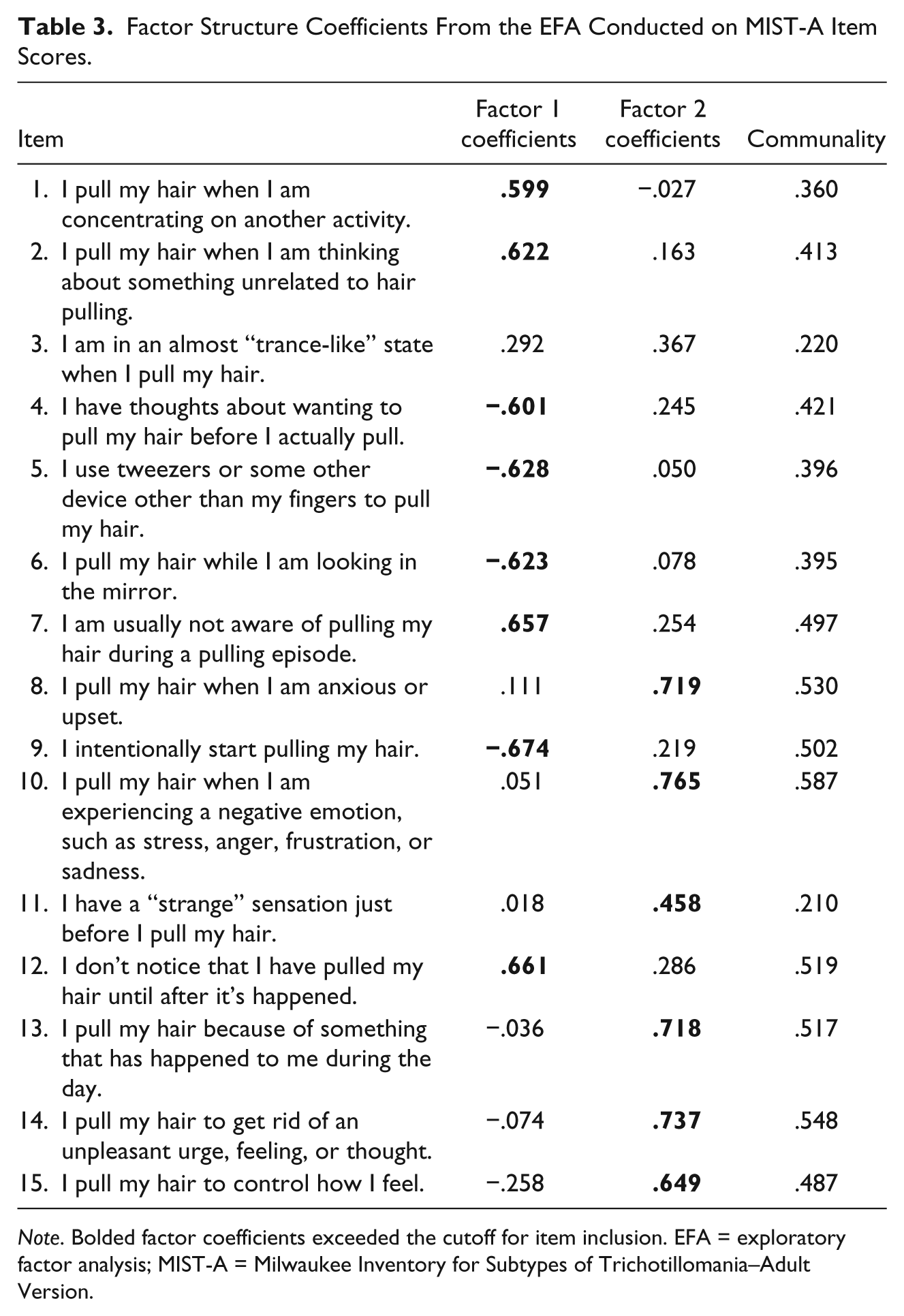
Note. Bolded factor coefficients exceeded the cutoff for item inclusion. EFA = exploratory factor analysis; MIST-A = Milwaukee Inventory for Subtypes of Trichotillomania–Adult Version.
Internal consistency for the EFA sample
Internal consistencies were computed separately for the Intention and Emotion scales (see Table 4). Cronbach’s alpha on the Intention (α = .789) and Emotion pulling scales (α = .759) demonstrated acceptable internal consistencies (Nunnally & Bernstein, 1994). However, alpha for the Emotion scale would increase to .788 without MIST-A Item 11: “I have a strange sensation just before I pull my hair.” This item was thus removed.
Internal Consistency Coefficients (Cronbach’s α) for the Intention and Emotion Scales.
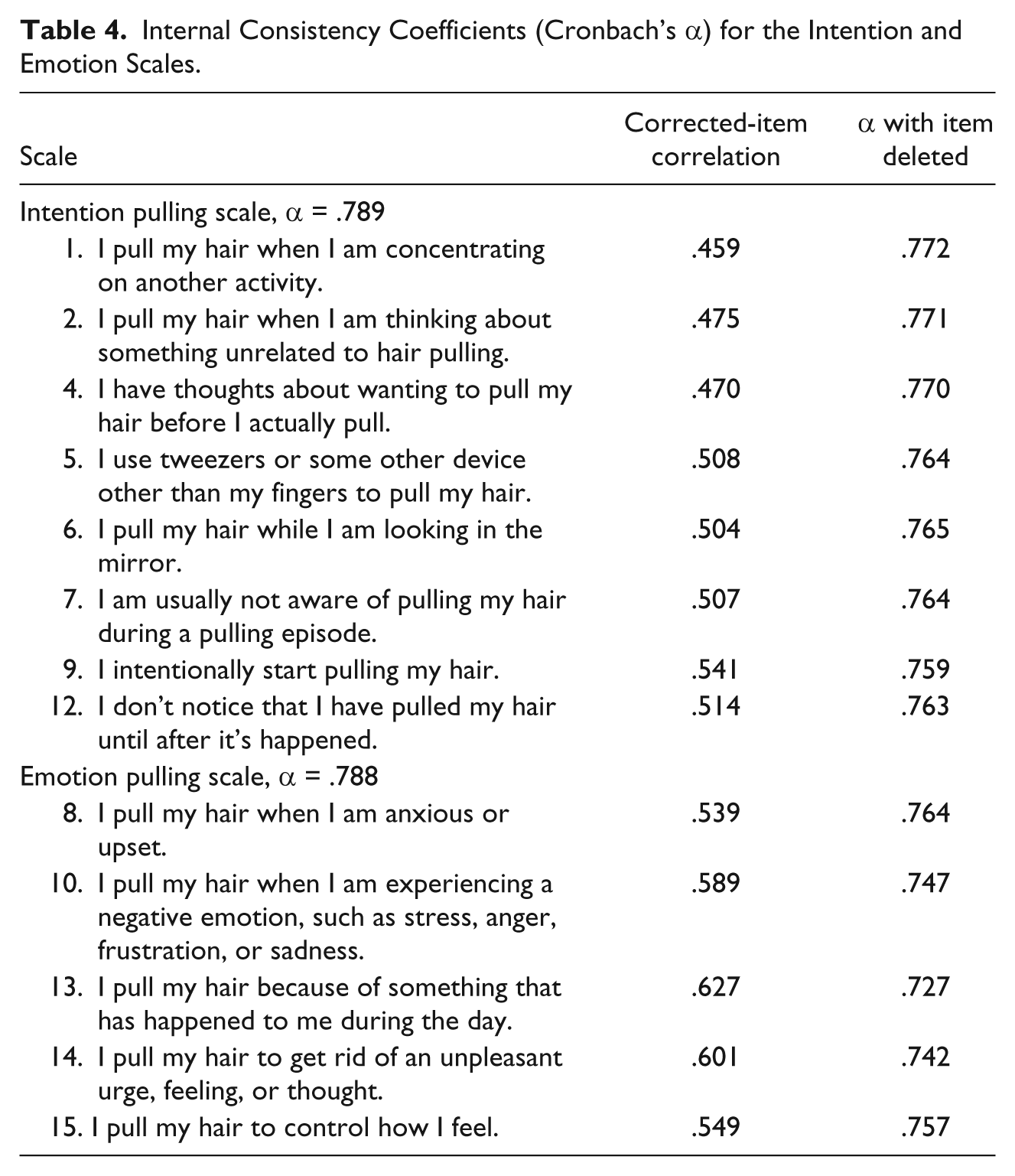
The factor structure coefficients, coupled with the internal consistencies, indicate a 13-item scale with 8 items on the Intention scale and 5 items on the Emotion scale. Each scale item was rated from 0 to 9. Items 1, 2, 7, and 12 assess “unintentional” pulling and were reverse scored. Total scores range from 0 to 72 for the Intention scale and 0 to 45 for the Emotion scale with higher scores reflecting greater pulling intention or more emotion-driven pulling.
Construct validity for scales
Construct validity was examined by exploring relationships between scale scores on the Emotion and Intention scales with individual items from the TIS (n = 158), NIMH-TSS (n = 189), and DASS-21 (N = 193). Pearson product–moment correlations were used for most correlations. Spearman rank order correlations were performed when using TIS items given the ordinal nature of the data. Table 5 summarizes the means and standard deviations for study measures and scale items used for construct validity. We hypothesized that Intention scale scores would significantly correlate with specific instrument items or instrument subscales measuring awareness of urges or the decision to pull hair but not with those assessing affective states. In addition, we anticipated that Emotion scale scores would significantly correlate with items or subscales measuring affective states and not with the items and subscale scores assessing awareness of urges or the decision to pull hair. These analyses mirrored those conducted for the development of the original scale (Flessner, Woods, et al., 2008). A Bonferroni-corrected p value of .004 was utilized as our threshold for significance given 12 correlations assessing construct validity. See Table 6 for a summary of our construct validity analyses.
Means and Standard Deviations for Items and Scales Used in Construct Validity.
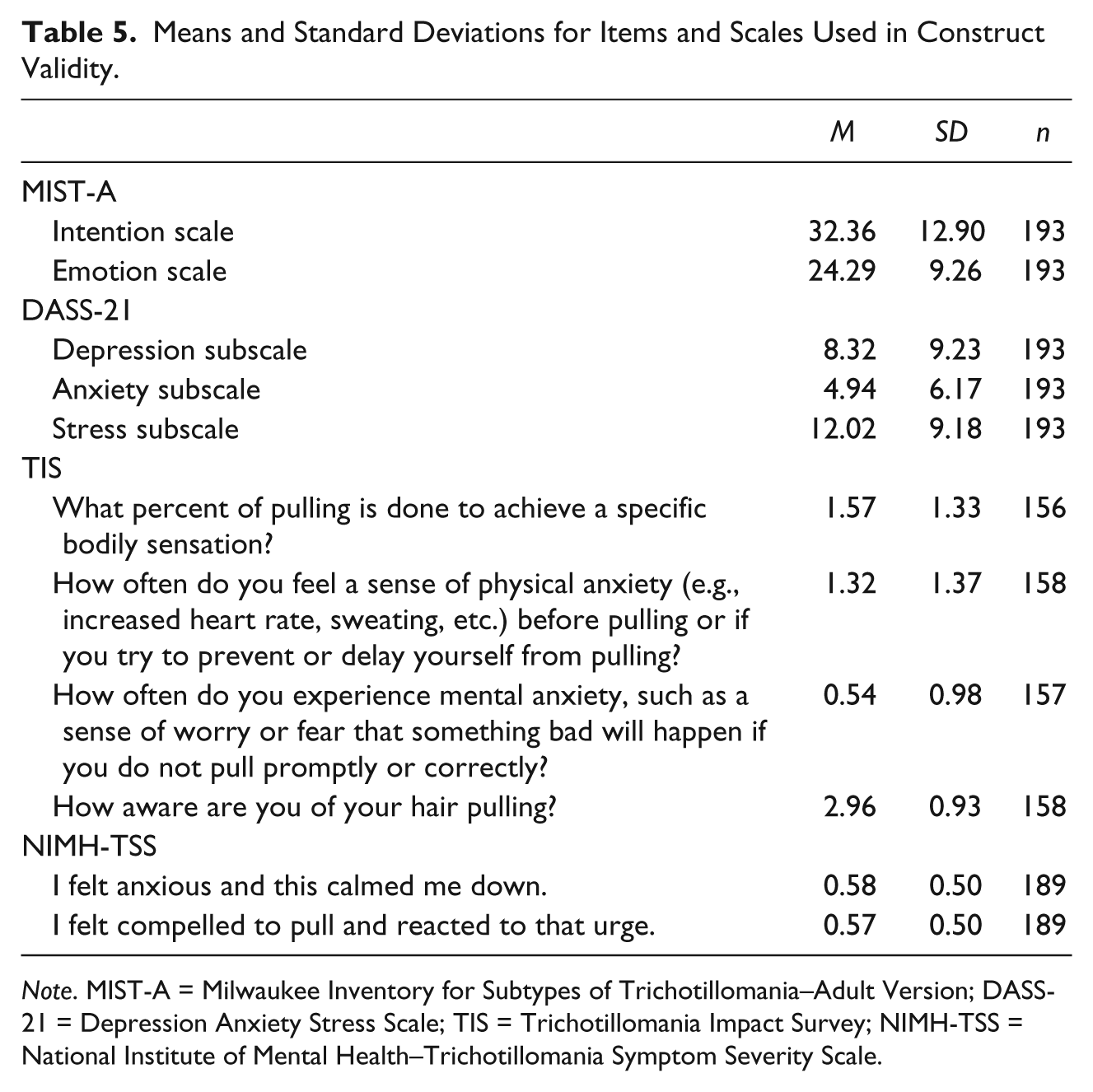
Note. MIST-A = Milwaukee Inventory for Subtypes of Trichotillomania–Adult Version; DASS-21 = Depression Anxiety Stress Scale; TIS = Trichotillomania Impact Survey; NIMH-TSS = National Institute of Mental Health–Trichotillomania Symptom Severity Scale.
Construct Validity for MIST-A Intention and Emotion Scales.
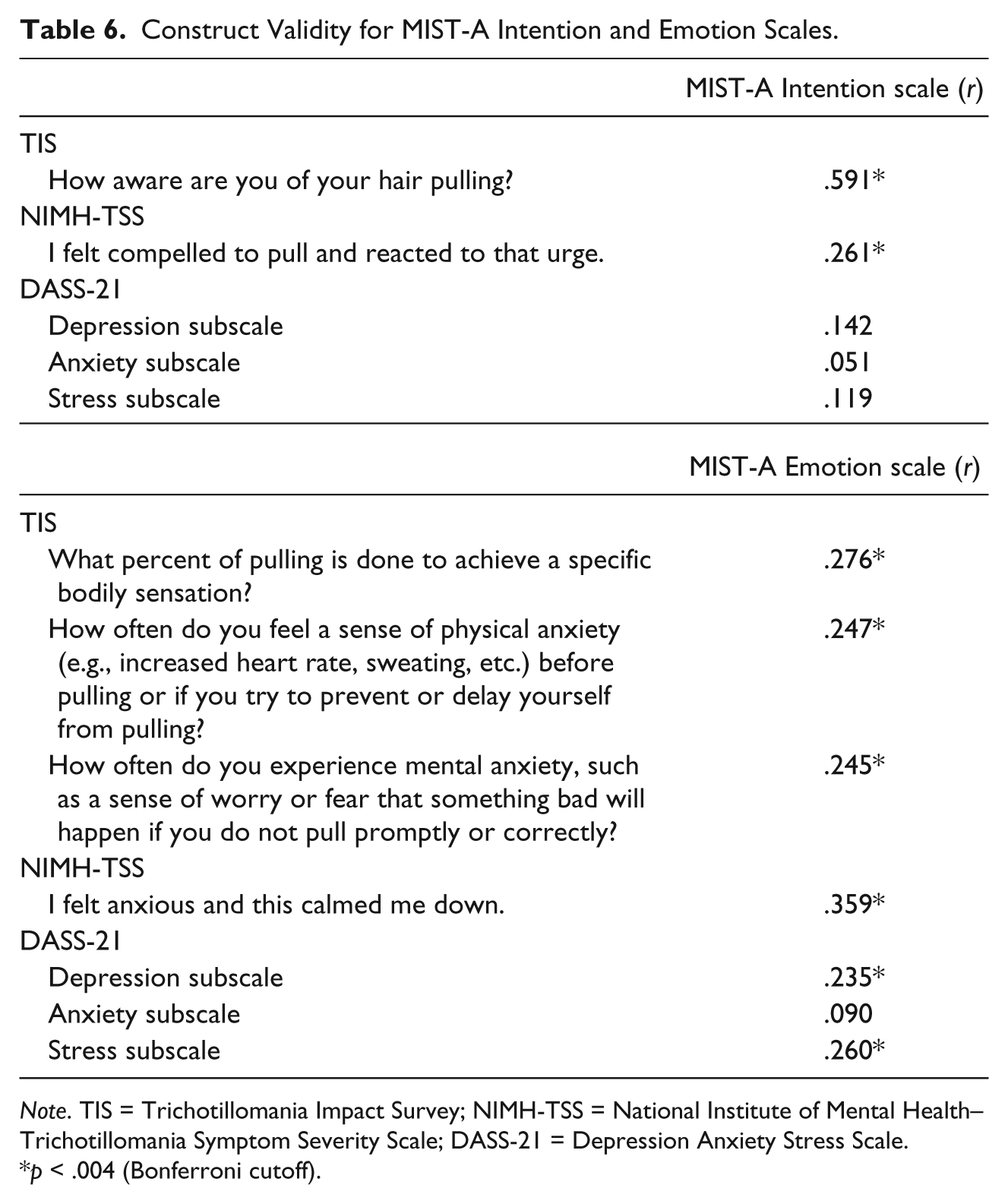
Note. TIS = Trichotillomania Impact Survey; NIMH-TSS = National Institute of Mental Health–Trichotillomania Symptom Severity Scale; DASS-21 = Depression Anxiety Stress Scale.
p < .004 (Bonferroni cutoff).
For the Emotion scale, significant correlations were reported between scale scores and scores on the TIS items “What percent of pulling is done to achieve a specific bodily sensation?” r(156) = .276, p < .001; “How often do you feel a sense of physical anxiety before pulling or if you prevent or delay yourself from pulling?” r(158) = .247, p = .002; and “How often do you experience mental anxiety, such as a sense of worry or fear that something bad will happen if you do not pull promptly or correctly?” r(157) = .245, p = .002. Significant correlations were also reported between Emotion scale scores and scores on the NIMH-TSS item “I felt anxious and this calmed me down,” r(189) = .359, p < .001; the DASS-21 Depression, r(193) = .235, p < .001; and Stress, r(193) = .260, p < .001 subscales. The correlation found between Emotion scale scores and scores on the DASS-21 Anxiety subscale was not significant.
For the Intention scale, significant correlations were reported between scale scores and the TIS item “How aware are you of your hair pulling?” r(158) = .591, p < .001, and the NIMH-TSS item “I felt compelled to pull and reacted to that urge” r(189) = .261, p < .001. As expected, correlations between Intention scale scores and the DASS-21 Anxiety, Stress, and Depression subscale scores were all nonsignificant (p ≥ .004).
To assess whether our two factors measure orthogonal dimensions of hair pulling as predicted, we conducted a correlation between the Intention and Emotion scale scores. Our finding, r(193) = .054, p = .457, confirmed that these two scales measure independent dimensions of hair pulling.
Discussion
This study explored the factor and item structure of the MIST-A scale in a separate cohort of hair pullers with face-to-face diagnostic ascertainment. The original scale was developed on a large sample of Internet responders; thus, independent replication of earlier findings in a clinically well-characterized sample represents a methodological advance.
Our EFA provided support for a two-factor model, accounting for 44% of the item variance, whereas the original model accounted for only 30% of the variance. Two items from the original scale were removed; one did not meet the factor coefficient cutoff and removal of the other improved our internal consistency. Our item factor loadings, coupled with our internal consistency coefficients, supported an eight-item Intention scale and a five-item Emotion scale.
Construct validity was largely supported by expected correlations between scale scores and specific items from the TIS, NIMH-TSS, and DASS-21. Significant correlations between Intention scale scores and TIS and NIMH-TSS items assessing the same construct were reported. Intention scale scores did not correlate with DASS-21 subscale scores, as predicted. We failed to find a predicted correlation between Emotion scale scores and the DASS-21 Anxiety subscale scores. Inspection of DASS-21 Anxiety subscale scores reveals a predominance of items emphasizing physical manifestations of anxiety (e.g., “I was aware of dryness of my mouth,” “I experienced breathing difficulty,” “I experienced trembling,” and “I was aware of the action of my heart in the absence of physical exertion”). The low mean anxiety score on the DASS indicates generally few physical manifestations of anxiety among respondents. This limited range and limited measure of anxiety symptoms may contribute to the lack of significant correlation with Emotion scale scores. All other expected relationships between scores on the Emotion scale and other instrument items were supported.
While correlations for our construct validity analyses were not particularly strong, this was not surprising given mixed pulling patterns in many individuals and the different nature of items within each pulling scale. For example, items on the Intention pulling scale include “I use tweezers or some other device other than my fingers to pull my hair” and “I pull my hair while I am looking in the mirror.” There is considerable variability among hair pullers as to whether instruments are used to pull and whether the behavior is visually triggered, thus yielding varying scores on this scale across individuals. Scores on the Emotion and Intention scales were not correlated, providing evidence that these two scales capture different dimensions of hair pulling.
The results of our EFA differ in several ways from that of the EFA conducted previously by Flessner, Woods, et al. (2008) on an Internet sample. As stated earlier, two items (“I have a ‘strange’ sensation just before I pull hair” and “I am in an almost ‘trance-like’ state when I pull my hair”) were not included in our revision of the scale. All five items of the final Emotion scale had previously been on the Focused scale of the original MIST-A. Four items previously on the Focused scale of the original MIST-A now loaded significantly onto the Intention scale along with four items previously on the Automatic scale.
These analyses suggest a 13-item self-report instrument with two separate scales capturing behavioral intentionality and emotional triggers to pulling. This instrument requires further empirical investigation and analyses such as CFA with a separate sample. These constructs differ from the constructs of “focused” and “automatic” pulling suggested from the factor analysis on the original Internet sample. The earlier construct of “automatic” pulling represented the lack of behavioral awareness while “focused” pulling captured both emotional cueing for pulling and awareness. The elimination of two scale items, plus placement of several items previously on the Focused scale now on the Intention scale, will result in different pulling scale profiles than those obtained with the original version of the scale. Importantly, high scores on the Focused scale of the earlier version may not map onto high scores on the Emotion scale of the revised scale depending on the items endorsed by the individual puller.
Identification of a factor capturing the construct of emotion parallels recent treatment advances utilizing Acceptance and Commitment Therapy (ACT) (Woods, Wetterneck, & Flessner, 2006) and Dialectical Behavior Therapy (DBT) augmentation strategies (Keuthen et al., 2012; Keuthen et al., 2010) specifically to address affect and uncomfortable internal sensations involved in hair pulling. Previously, items assessing awareness were on both the “focused” and “automatic” factors but now load exclusively onto the “intention” factor. Thus, strategies likely to enhance awareness (e.g., stimulus control and habit reversal) would now be primarily appropriate for those with high scores on the Intention scale. In summary, pullers with high scores on the Emotion scale and low scores on the Intention scale would likely benefit most with ACT or DBT. Pullers with high scores on the Intention scale but low scores on the Emotion scale would likely profit most from treatment beginning with stimulus control and habit reversal.
Identification of unitary and disparate factors to this disorder will arguably facilitate further refinements in treatment design and hopefully improve treatment outcomes and enhance maintenance of treatment gains. Future research needs to examine treatment outcomes for large samples of pullers with different Cognitive Behavioral Therapy (CBT) interventions as a function of scores on the new Emotion and Intention scales to better guide clinicians in choice of treatment strategies and sequencing of interventions. This revised instrument could also be utilized to longitudinally track changes in pulling phenomenology as a function of developmental stage, as previously investigated by Flessner, Woods, Franklin, Keuthen, and Piacentini (2009) and to assess correlates of different pulling styles (Flessner, Conelea, et al., 2008).
It is important to note that while the variance accounted for by our two-factor model represents an improvement over the original version of the scale, it still only accounts for slightly less than half of the total variance. One explanation is that there remain other variables impacting how participants respond to the MIST-A, such as additional subtypes not captured by the MIST-A items or environmental and personality variables. One may conjecture that some pullers have personality profiles similar to those of individuals with OCD, whereas others may exhibit personality traits similar to individuals with impulse control disorders. Similarly, some pullers may have home environments characterized by more conflict or control while other pullers do not. Additional research on these variables is needed.
It is also important to acknowledge our modest sample size. Although the KMO statistic did indicate a sufficient sample size for factor analysis, a higher subject-to-variable ratio in future investigations would be prudent. Given the results of our factor analysis and the clinically characterized cohort, this scale represents an improvement over the original instrument and requires further confirmation.
Footnotes
Acknowledgements
We are grateful for statistical consultation received from our Massachusetts General Hospital (MGH) colleagues Drs. Lara Traeger and Conall O’Cleirigh. In addition, this work was conducted with consultation support from Harvard Catalyst | The Harvard Clinical and Translational Science Center (National Center for Research Resources and the National Center for Advancing Translational Sciences, National Institutes of Health Award UL1 TR001102) and financial contributions from Harvard University and its affiliated academic health care centers. The content is solely the responsibility of the authors and does not necessarily represent the official views of Harvard Catalyst, Harvard University, and its affiliated academic health care centers, or the National Institutes of Health.
Notes
Declaration of Conflicting Interests
The author(s) declared the following potential conflicts of interest with respect to the research, authorship, and/or publication of this article: Authors Keuthen, Woods, Franklin, Pauls, and Flessner are current or past members of the Trichotillomania Learning Center Scientific Advisory Board. Authors Keuthen, Franklin, and Pauls are members of the International Obsessive-Compulsive Disorder Foundation Scientific Advisory Board. Author Franklin is also a member of the Medical Advisory Board of the Tourette Syndrome Association. Author Keuthen receives book royalties from New Harbinger Publications. Author Woods currently receives book royalties from Oxford University Press and American Psychiatric Press. Authors Tung and Altenburger have no financial or conflicts of interest to report.
Funding
The author(s) disclosed receipt of the following financial support for the research, authorship, and/or publication of this article: This research was supported by grants from the Greater Kansas City Foundation and the Trichotillomania Learning Center and its Body-Focused Repetitive Behaviors Precision Medicine Initiative.