







Abstract
Peers play a central role in supporting college access for students with intellectual and developmental disabilities (IDD). This review examines available research addressing the perspectives of college student peers on the inclusive postsecondary education (IPSE) movement and their involvement in it. Approximately 2,670 peers—most of whom were female and undergraduates—participated in these 37 studies. We review findings addressing the views of peers on the following topics: (a) motivations for volunteering, (b) effectiveness as a peer support, (c) challenges they encountered, (d) impact of involvement on themselves, (e) impact of IPSE on their campus, (f) recommendations for IPSE programs, and (g) attitudes regarding disability. This research collectively highlights the multiple factors that draw peers to become involved, the experiences peers have within their campus’ programs, the myriad ways in which they and their campus may benefit from this movement, and their views regarding inclusion and disability. We offer recommendations for research and practice aimed soliciting the views and involvement of peers within the inclusive postsecondary education movement.
Peers have long played a prominent role in supporting the education of students with intellectual and developmental disabilities (IDD). From the early pursuit of integration to the growing adoption of inclusion, peer-mediated strategies have comprised a powerful approach for supporting the social and learning outcomes of elementary and secondary students with disabilities (Odom, 2019; Voeltz, 1982). Indeed, peers without disabilities have had a consistent role in supporting their schoolmates with IDD within classrooms, cafeterias, playgrounds, extracurricular activities, and community-based activities. Multiple systematic reviews of the K-12 literature all conclude that peers can be an effective, versatile, and natural source of support for students with IDD (e.g., Brock & Huber, 2017; Carter et al., 2010; Steinbrenner et al., 2020).
The burgeoning inclusive postsecondary education (IPSE) movement has introduced an intriguing new context for adopting peer-mediated supports. Nearly 300 colleges and universities across the United States now offer formal programs that enable students with IDD to participate in everyday aspects of collegiate life (Grigal & Papay, 2018). For example, college students with IDD attend classes, participate in student organizations, attend campus activities, work part-time jobs, live in the dorms, and enjoy time with friends. The Higher Education Opportunity Act of 2008 accelerated this expansion in the United States by establishing a new category of higher education program (i.e., a Comprehensive Transition Program), allocating monies to support model demonstration programs, and expanding access to federal financial aid. Most of these programs admit students with IDD who require additional support and would not otherwise meet traditional admissions requirements. This postsecondary pathway is a welcome opportunity for the nearly 75,000 young people with IDD who exit public school each year (U.S. Department of Education, 2018).
Peers without IDD have served as a common source of support for students enrolled through these IPSE programs (Carter et al., 2019; Grigal et al., 2019). The nature of their involvement, however, varies widely within and across campuses. For example, many programs invite peers to serve as academic tutors, job coaches, residential assistants, or social supports. These formal experiences can differ with regard to their time commitment (e.g., daily, weekly, occasionally), structure (e.g., individually, groups), and payment (e.g., paid, credit, volunteer). Likewise, peers can also accrue informal experiences as classmates, teammates, dormmates, coworkers, and clubmates of students with IDD who attend their same college. Regardless, the active engagement of peers is advocated as a best practice within IPSE (Christopher-Allen et al., 2017) and is listed among prevailing quality indicators (Grigal et al., 2012)
An increasing number of studies have examined the perspectives of peers who are formally or informally involved in the education of college students with IDD. These peers have a unique “insider” vantage point from which to address multiple aspects of this growing movement. First, peers can speak first-hand to the factors that motivated their involvement, the nature of the relationships they form with students, the ways in which they benefit from their experiences, and the impact they see on the broader campus. Each of these areas would be difficult to discern in the absence of this personal perspective. Second, peers can inform the design and delivery of IPSE programs by reporting on the challenges they encounter, addressing the effectiveness of their support, and offering recommendations to staff. Although individual studies speak in part to these important issues, there has yet to be a systematic review of all available empirical research in this area.
Recent reviews of the peer-mediated literature within elementary and secondary schools indicate that (a) insufficient attention has been paid to peer outcomes and (b) peers have valuable insights to share concerning their experiences (e.g., Shaefer et al., 2016; Travers & Carter, 2020). The purpose of this review is to synthesize available research addressing the perspectives of peers on their formal and informal experiences within IPSE at the postsecondary school level. We reviewed study findings in relation to each of the following questions:
What motivates peers to become involved with IPSE programs?
How do peers evaluate their own effectiveness in providing support?
How do peers describe their relationship with students with IDD?
What challenges do peers report encountering in their roles?
How are peers affected personally by their experiences with IPSE?
How do peers describe the impact of IPSE on their campus community?
What attitudes do peers hold toward inclusion and disability?
What recommendations do peers have related to IPSE?
To situate these findings, we also summarize (a) the demographics of participating peers, (b) the campuses they attended, (c) their formal roles within IPSE programs, and (d) the approaches used to solicit their perspectives on these multiple issues.
Methods
Inclusion Criteria
Our focus was on inclusive college programs for students with intellectual and developmental disabilities (IDD). Therefore, we included studies meeting three criteria. First, studies reported data collected from typically matriculating undergraduate or graduate students (referred to as peers throughout this paper). Second, those data addressed the perspectives of peers on some aspect of IPSE programming or their own experiences with fellow students with IDD. Their experiences with students with IDD could be formal (e.g., they served in a specific support role through the IPSE program) or informal (e.g., they were a fellow classmate, dormmate, or teammate without begin assigned a support role). We excluded studies in which peers interacted only with individuals with IDD who were not themselves affiliated with the college’s IPSE program. For example, we omitted studies in which peers participated in social-focused experiences with community members or high school students with disabilities, as well as with individuals in postsecondary programs that were not college based (e.g., Athamanah et al., 2020; Hardman & Clark, 2006). We also excluded studies in which peers had experiences with college programs focused on students with autism spectrum disorder (without a cognitive impairment), learning disabilities, physical disabilities, and other health impairments (e.g., McCallister et al., 2018). We also excluded studies in which peers provided their perspectives on IPSE, but lacked any first-hand experience (e.g., Gibbons et al., 2015; Gilson et al., 2020). Third, peer perspective data must have been reported within the context of a formal study or program evaluation. We excluded anecdotal mention of peer perspectives that were incorporated into discussion articles or program descriptions (e.g., Detlefsen, 2018).
Search Procedures
We used three approaches to identify all relevant studies. First, we searched for studies published in print or available online any time before February 2020 using five electronic databases (i.e., APA PsycInfo, ProQuest Central, ERIC, ProQuest Dissertations & Theses Global, ProQuest Education Collection). Our parameters included both peer-reviewed studies and masters or doctoral theses. We combined search terms describing (a) intellectual disability, (b) higher education, (c) peers, and (d) perspectives. Specifically, our search string was: [“cognitive impairment” OR “cognitive impairments” OR “mental retardation” OR “intellectual disabilities” OR “intellectual disability” OR “intellectually disabled” OR “developmental disabilities” OR “developmental disability” “developmentally disabled” OR “Down syndrome”] AND [college OR university OR universities OR university’s OR postsecondary OR “higher education” OR campus OR undergraduate) AND (mentoring OR mentor OR mentors OR intern OR “typically enrolled” OR “college student” OR “college students” OR “peer mentor” OR “peer mentors” OR campus OR peers] AND [impact OR attitude OR perception OR perspective OR motivation OR expectation OR expectations OR reflection OR reflections OR questionnaire OR interviews OR survey]). Second, we used forward and backward searches to identify additional articles meeting our inclusion criteria. Third, we consulted Think College’s online database of articles and other IPSE publications (https://thinkcollege.net/resource-search).
Our initial search produced 691 results. The first round involved analyzing articles by title and abstract alone to eliminate any studies that did not clearly address the perspectives of peers on the inclusion of college students with IDD (n = 624). Studies with abstracts too vague to allow for elimination received a full text review in the next round. We reviewed the full-text of the remaining 67 studies against our three inclusion criteria. Another 38 studies were excluded, resulting in 29 eligible studies. We identified an additional six studies using backward and forward searching. Finally, two additional articles published at the start of 2020 were suggested during the peer-review process for this article, bringing the total to 37 studies focused on peer perspectives within college-based programs for students with IDD.
Article Coding
We coded information on the demographics and roles of peers, the colleges they attended, the methodology used to solicit perspectives, and findings related to our eight research questions.
Peer demographics
For participating peers, we coded their age, sex, and race/ethnicity. We also recorded any available academic information, including their academic major and year in school (e.g., undergraduate, graduate, freshman, juniors). We coded whether peers were identified as having other disabilities (e.g., learning disabilities, ADD/ADHD).
Peer roles
We categorized peers based on two types of experiences: formal (e.g., they served in a specific support role to students with IDD through the IPSE program) or informal (e.g., they were a fellow classmate, dormmate, or teammate to a student with IDD, without begin assigned a support role). Some studies included peers who adopted each of the roles. For peers involved in formal experiences, we coded any roles they were reported to have assumed: academics, daily planning, eating meals together, residential life, work or internships, social inclusion, in-class support, exercise, or other.
Institutional information
For each article, we coded available information about the postsecondary institution the peers attended. We noted the name, type (i.e., private, public), geographic region, and total campus enrollment. We also noted available information about the IPSE program, including total enrollment, length, and whether campus-sponsored housing options (i.e., residential) were available.
Methodology
We characterized each study as qualitative, quantitative, or mixed method. We coded each of the data collection approaches used to capture the perspectives of peers: individual interviews, focus group interviews, researcher-created questionnaires/surveys, formal established scales, class assignments, other written reflections (e.g., journals), observations, or document analyses.
Peer perspectives
We were interested in synthesizing the full range of issues peers addressed within available research. We began by reading each article and identifying all aspects of the results that featured peer perspectives. We used a constant comparative method to develop categories reflecting distinct areas of emphasis reflected in these perspectives (Corbin & Strauss, 2008). These eight areas included: (a) the factors that motivated peer to become involved, (b) how peers evaluate their own effectiveness in providing support, (c) the nature of their relationships with students with IDD, (d) the challenges peers report experiencing, (e) the ways peers were personally affected, (f) their descriptions of the impact of IPSE on their campus, (g) the attitudes they held toward inclusion and disability, and (h) their recommendations related to IPSE. We organized the results from all studies into these eight areas.
Interrater Reliability
To determine interrater reliability on coding the articles, a second coder independently examined 100% of the studies. Reliability averaged 96.7% for peer demographics, 93.8% for peer roles, 97.6% for institutional information, 89.8% for data collection methods, and 97.3% for peer perspectives across the eight areas. Discrepancies were discussed to consensus.
Results and Discussion
For each of the eight primary research questions, we combine our summary of the findings with a brief discussion. We begin with an overview of these 37 studies. Table 1 provides a summary of peer and institution demographics. Table 2 summarizes which studies addressed each of our eight research questions.
Demographics of Participating Peers and Institutions.
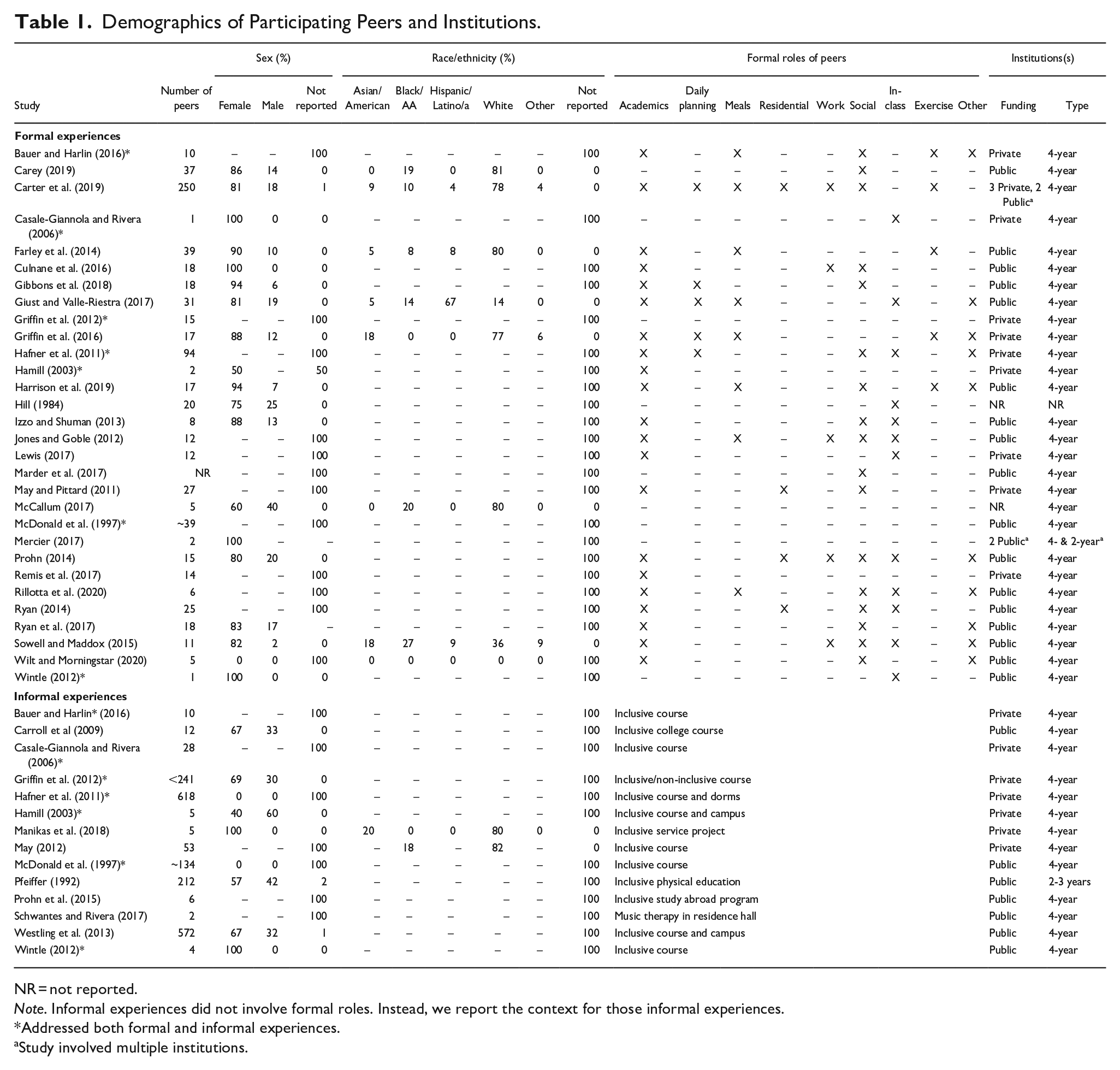
NR = not reported.
Note. Informal experiences did not involve formal roles. Instead, we report the context for those informal experiences.
Addressed both formal and informal experiences.
Study involved multiple institutions.
Study Focus Areas.
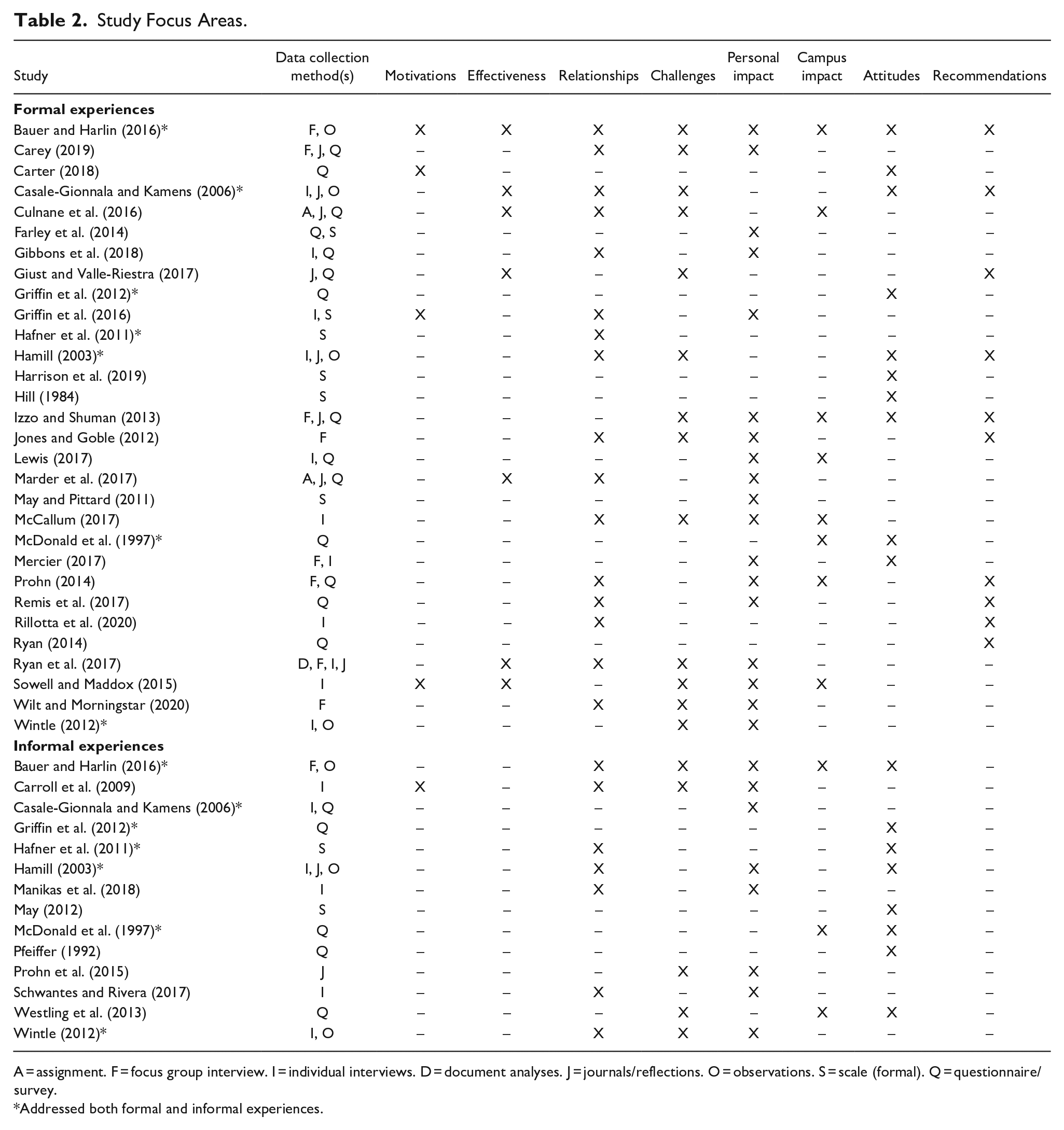
A = assignment. F = focus group interview. I = individual interviews. D = document analyses. J = journals/reflections. O = observations. S = scale (formal). Q = questionnaire/survey.
Addressed both formal and informal experiences.
Overview of the Studies
Participating peers
Within the 30 studies in which at least some peers adopted formal support roles, at least 769 peers participated (range: 1–250 across studies; M = 27; see Table 1). Among the 18 studies that reported the sex of peers, the majority was always female. The percentage of females averaged 85.9% (range: 50% to 100% across studies). Among the seven studies that reported the race/ethnicity of peers, the average percentage of students who were White was 63.7% (range: 14% to 81% across studies), African American/Black was 14.0% (range: 0% to 27% across studies), Asian American was 7.9% (range: 0% to 18% across studies), Latino/a/Hispanic was 12.6% (range: 0% to 67% across studies), and other race/ethnicities was 2.7% (range: 0% to 9% across studies). Most studies did not report this information. Most studies reported either the age (n = 15 studies) and/or academic year (n = 18 studies) of these peers; nine studies reported neither. Only two studies (Carter et al., 2019; Farley et al., 2014) made reference to whether any peers themselves had disabilities. Most studies (n = 21) provided some summary of the different areas of study peers were pursuing (e.g., majors, minors, colleges). Although these disciplines varied widely, common areas included psychology, special education, other education, biology, social work, and therapeutic recreation.
Within the 14 studies in which at least some peers had informal experiences with college students with IDD, demographic information was more sporadic. At least 1,902 peers participated in these studies (range: 2–618 across studies; M = 135). Information about the sex or race/ethnicity of peers was presented in only Manikas et al. (2018) and May (2012) studies, respectively. Most peers were White and female. Half of these reported on the areas of study (n = 7 studies) and none reported on the disability status of these peers.
Areas of support
Nearly all of the studies (n = 26) made some reference to the formal roles peers held within each IPSE program (see Table 1); however, the level of detail each provided varied widely. Across these studies, one or more peers were reported to support academics (70.0% of studies), social inclusion (56.7% of studies), in-class support (40.0% of studies), other (33.3% of studies), eating meals together (26.7% of studies), daily planning/organization (16.7% of studies), work/internships (16.7% of studies), exercise (16.7% of studies), or residential life (13.3% of studies). Only five of these studies delineated exactly how many peers within their sample provided support in various areas.
Institutions
All but two studies took place at a single institution; Carter et al. (2019) surveyed peers at five different institutions and Mercier (2017) spanned two. As shown in Table 1, the majority of these institutions were four-year programs; two studies took place at community colleges or two-year programs. The majority of institutions in these studies were public institutions. The institutions were in the United States, Australia, and Canada. Information about each IPSE program was rarely and inconsistently provided across studies.
Data collection methods
A range of data collection approaches were used to explore peer perspectives. Specifically, 17 used researcher-created questionnaires/surveys, 13 studies used individual interviews, 9 used other written reflections (e.g., personal journals, volunteer logs), 9 used focus group interviews, 7 used established scales (e.g., Volunteer Functions Inventory, Attitudes Toward Intellectual Disability Questionnaire), 3 used observations, 2 used class assignments (e.g., oral presentations, papers), and 1 used document analysis.
What Motivates Peers to Become Involved With IPSE Programs?
Five studies addressed the motivations of peers who pursued formal or informal involvement with college students with IDD (see Table 2). Across these studies, 20 distinct motivations were expressed through individual interviews or surveys. Motivations often emerged from prior experiences and relationships, such as personal ties with individuals with IDD (Bauer & Harlin, 2016; Carroll et al., 2009; Carter et al., 2019), prior involvement as a peer mentor (Carter et al., 2019), family connections to disability (Carroll et al., 2009; Griffin et al., 2016), personal relationships with students enrolled in the IPSE program (Carter et al., 2019; Griffin et al., 2016), encouragement from other peer mentors (Bauer & Harlin, 2016), or recommendations from IPSE staff or university faculty (Carter et al., 2019). Some peers were motivated by having a disability themselves (Carter et al., 2019). Some students described the influence of their values, noting that the opportunity aligned with their religious beliefs (Bauer & Harlin, 2016; Carter et al., 2019), their personal values (Carter et al., 2019), their interest in serving others (e.g., the community in general or people with disabilities specifically; Bauer & Harlin, 2016; Carter et al., 2019; Griffin et al., 2016), a desire to advance inclusion on their campus (Griffin et al., 2016), or a personal commitment to the disability community (Bauer & Harlin, 2016; Carter et al., 2019). Peers were also motivated by what they might gain from the experience, such as new friendships (Bauer & Harlin, 2016), greater knowledge about disability (Carter et al., 2019; Griffin et al., 2016), a fun experience (Carter et al., 2019), or extra income (Carter et al., 2019). Finally, some students were motivated by career pursuits, such as their professional aspirations related to special education or another disability field (Bauer & Harlin, 2016; Carroll et al., 2009; Griffin et al., 2016; Sowell & Maddox, 2015), the enhancement of their resume (Carter et al., 2019), fulfillment of a program requirement (Bauer et al., 2016; Carter et al., 2019), or course credit (Carter et al., 2019).
Discussion
Several findings regarding peers’ motivations emerge from these studies. First, nearly every study found more than one motivation reflected across the peer samples; there was no single factor that drew peers to these experiences. Second, many peers themselves had multiple motivations for becoming involved. For example, Carter et al. (2019) found that almost every peer affirmed a combination of reasons for becoming involved on their campus; the average was eight reasons. Third, no single motivation emerged as the most prominent. However, Carter et al. (2019) did find that external factors (e.g., credit, requirements) were mentioned less often than internal factors or prior experiences or relationships. Fourth, context appeared to influence motivations. One example is the difference in the motivations of peers enrolled at faith-based universities compared to students on secular campuses (Carter et al., 2019).
How Do Peers Evaluate Their Own Effectiveness in Providing Support?
Seven studies addressed the extent to which peers reported feeling effective in supporting college students with IDD within formal experiences in the classroom or elsewhere on campus (see Table 2). Most studies indicated peers reported they were successful or impactful. Peers reported feeling like they were effective in supporting the growth of their partner with IDD in reaching goals (Bauer & Harlin, 2016; Culnane et al., 2016; Ryan et al., 2017), especially with students’ study habits (Bauer & Harlin, 2016). In a survey of academic and peer mentors conducted by Giust and Valle-Riestra (2017), several peers wrote of the success they had in helping students with IDD meet homework completion and healthy eating goals. Learning specific instructional and support strategies had equipped them to have such an impact. Skills like collaboration, communication, and mutual support helped an in-class peer support in Casale-Giannola and Kamens (2006) support her peer with IDD. Likewise, some peer supports (Culnane et al., 2016; Giust & Valle-Riestra, 2017) addressed the ways in which they served as catalysts for expanding the social networks of students with IDD. Other statements about effectiveness were more general. One peer companion interviewed within Marder et al. (2017) described how his advocacy and knowledge led the student he supported to become more involved in the broader community. In their interviews with peer mentors, Sowell and Maddox (2015) referenced the sense of fulfillment a peer expressed at “doing something to better somebody else’s life” (p. 5).
Discussion
Two points emerge from these studies on how peers evaluated their own effectiveness. First, perspectives regarding effectiveness usually were provided incidentally, rather than sought explicitly. In other words, none of the studies addressed peer effectiveness as a primary research question. Thus, it is unclear how representative these perspectives might be. Second, none of these studies addressed effectiveness objectively or experimentally. The extent to which peers are actually successful in supporting students with IDD across their campus should be examined more closely.
How Do Peers Describe Their Relationship With Students With IDD?
Twenty studies addressed how peers described their relationships with students enrolled in IPSE programs. Most studies focused on formal experiences (see Table 2). In many of these studies, peers characterized their relationships using particular descriptors. Thirteen studies included peers who described their relationships with students in the IPSE as a “friend” or a “friendship” (Bauer & Harlin, 2016; Carey, 2019; Carroll et al., 2009; Casale-Giannola & Kamens, 2006; Gibbons et al., 2018; Griffin et al., 2016; Hamill, 2003; Manikas et al., 2018; Marder et al., 2017; Prohn, 2014; Remis et al., 2017; Rillotta et al., 2020; Wilt & Morningstar, 2020). Among peers involved in formal experiences, several studies included peers who reported their mentor roles grew into friendships over time (Griffin et al., 2016; Remis et al., 2017; Wilt & Morningstar, 2020). One peer in Griffin et al. discussed this when noting, “Starting out it might be like a mentor role, but evolving more into a friendship because it’s more about those connections and those relationships and not at all about what I’m doing” (p. 80). Other peers simply used the term “friendship” when describing the nature of their relationships (Gibbons et al., 2018; Ryan et al., 2017). A peer mentor in Griffin et al. (2016) noted being “very conscious to call them ‘my friend’” (p. 80) when speaking to others about the student. Similarly, a study partner in Hamill (2003) shared, “I can actually say we are friends” (p. 346).
Peers with more informal experiences within IPSE also described fellow students with IDD as friends (Bauer & Harlin, 2016; Carroll et al., 2009; Hafner et al., 2011; Hamill, 2003; Manikas et al., 2018). A classmate in Bauer and Harlin (2016) elaborated, “there are definitely some of them who I see them, and it totally brightens my day to see them. It is not another person to me anymore. It is a friend. I like it” (p. 110). Similarly, Carroll et al. (2009) described a classmate who developed a connection with a fellow student with IDD, becoming “friendly” even outside of class. Hafner et al. (2011) surveyed peers who lived in the same residence hall as students with IDD about whether they considered themselves to be friends with the students. Two fifths (40%) agreed or strongly agreed, 31% felt neutral, and 29% disagreed or strongly disagreed. A peer in Hamill (2003) became friends with the student with IDD and emailed back and forth.
Although the language of “friendship” appeared in many studies, there was some nuance to its use. Some peers described their friendships with college students with IDD as typical of their other friendships. For example, a peer mentor interviewed in Griffin et al. (2016) described the role as “no different than any other relationship or friendship” (p. 80). Other peers suggested some differentiation. One peer interviewed in Bauer and Harlin (2016) noted: I know it is supposed to be a friendship. It is most of the time. It is also a lot of social skills that I am trying to help them learn. So things that I would not normally say to a friend I would say to an [IPSE program] student so just things like. ‘Ok I don’t need a hug right now. We already hugged two minutes ago. I am hurrying on my way to class. I do not want to talk’. . .but in nicer terms. Other people would pick up on that. So that is kind of the difference. (p. 61)
Likewise, the language of “peer” was used with variations. One classmate in Wintle (2012) said that the way she “treated Laura [the student with IDD] was the way she would treat any of her peers in the drama curriculum class” (p. 49). She did not view her as “an outsider who you’re helping because of the special need that she has.”
Peer mentors also discussed feeling confident serving as a role model or advocate for students with IDD (Culnane et al., 2016). Several peers described being a model to students with IDD, even if they were not assigned a formal support role. In a study addressing an inclusive service project, one peer described how they “just wanted to be sort of a model of what they [students with IDD] should be doing” (Manikas et al., 2018, p. 32). A peer in McCallum (2017) who served in a more formal role referenced wanting to be a model of “appropriate behavior” for them (p. 119). Other peers used the word “support” when describing their relationships (Jones & Goble, 2012; McCallum, 2017; Schwantes & Rivera, 2017).
Some peers, however, also realized their relationships were sometimes overly supportive. They recognized the need to empower students with IDD to be more independent (Bauer & Harlin, 2016). One peer described this shift noting: Early on it was definitely different. I think before I really knew how to work with students with disabilities, you kind of want to baby them and like do everything for them. Now I am to the point that I understand that there is difference between empowering student and helping a student. I think it is a very fine line. (pp. 59–60)
Peers in several studies spoke about the blurring of lines between being a formal support and friend. For example, a peer mentor in Ryan et al. (2017) described this challenge: I’ve been working on establishing boundaries with two mentees. Trying to set boundaries between my role as a professional mentor and tutor and between the friendship role and peer role. For example, Gary really likes to give hugs, and sometimes it is appropriate to do so, and other times I have to say that there have to be limitations to physical contact with him and you know, simple polite verbal reminders of that really work. (p. 286)
Other peers also felt that this balance was fluid based on the student and the context (Bauer & Harlin, 2016; Ryan et al. 2017).
Discussion
Several conclusions can be drawn from these studies. First, there is wide variation in the ways peers described their relationships with college students with IDD. Such relationships seem to be shaped by the nature of their experiences (e.g., formal versus informal) and the contexts in which they spent time together. However, those relationships were almost always described in positive terms. Second, the roles of peers did not automatically dictate the relationships students with and without IDD formed with each other. Friendships sometimes formed with academic tutors and sometimes failed to develop among social supports. Moreover, the nature of these relationships evolved over time. Third, few studies also sought the perspectives of students with IDD on these same relationships. Because friendships should be reciprocal, future studies should also ask students with IDD how they would characterize the relationships they develop.
What Did Peers Find Challenging About the IPSE Experience?
Sixteen studies addressed challenges peers reported within both formal and informal experiences (see Table 2). Challenges fell in six main areas. As with benefits, most challenges were highlighted in individual quotes by a single peer.
Social relationships
Eleven studies referenced various social-related challenges. Peers mentioned the challenges of facilitating “authentic friendships” (p. 290) among students with and without intellectual disability (Ryan et al., 2017), the tendency to a priori group students with IDD together (Prohn, 2014), the expectation that peers socialize with students outside of the time they were paid (Prohn, 2014), the social exclusion students encountered in cafeterias (Prohn, 2014), and the difficulties students had forming friendship within inclusive courses (Casale-Giannola & Kamens, 2006; Wintle, 2012). There were also concerns with confronting difficulties communicating with students with IDD (Carey, 2019; Carroll et al., 2009; Culnane et al., 2016; Jones & Goble, 2012). Peers in Westling et al. (2013) also had concerns on whether students would be taken advantage of by other students on campus. The most prominent challenge in this area occurred when students with IDD expressed romantic interests in peers. One peer mentor described this as “really hard to swing” and a contributor to some “thorny moments” (Carey, 2019, p. 47). A classmate of another student with IDD discussed difficulties responding to a student who developed a crush. “I didn’t know what to say. It is not like you can just be like so straightforward with him . . . But that really stood out for me because it was a different situation where I didn’t really know how to talk to him about it” (Bauer & Harlin, 2016, p. 97). Other peers described discomfort when students were overly “flirtatious” (Bauer & Harlin, 2016, p. 63), commented on people’s looks (Giust & Valle-Riestra, 2017), or proposed marriage (Ryan et al., 2017).
Behavioral challenges
Four studies mentioned behavioral challenges exhibited by a subset of students. Peers discussed the sense of “awkwardness” associated with addressing inappropriate student behaviors during unstructured times (Bauer & Harlin, 2016). A peer in Ryan et al. (2017) described these behaviors as “embarrassing” (p. 289). Some peers reported having to redirect students toward more appropriate behaviors (Giust & Valle-Riestra, 2017). Peers also described students who they perceived to be distracted, unmotivated, or unwilling to work during individual mentoring sessions (Bauer & Harlin, 2016; Culnane et al., 2016; Ryan et al., 2017), and students who struggled with executive functioning (Giust & Valle-Riestra, 2017).
Personal challenges
Eleven studies referenced personal challenges faced by particular peers (e.g., Carroll et al., 2009; Casale-Giannola & Kamens, 2006; Sowell & Maddox, 2015). These included feeling daunted by a lack of prior disability experience (Bauer & Harlin, 2016), not knowing enough about a student’s disabilities and expectations for participation (Wintle, 2012), feeling awkward about supporting students who were older than oneself (Bauer & Harlin, 2016), being uncertain about how best to help a specific student (Wintle, 2012), not knowing what to do as a formal support and therefore a feeling of “letting him [peer with IDD] down” (Jones & Goble, 2012, p. 272), experiencing role ambiguity (Wilt & Morningstar, 2020), not understanding the academic content you are being asked to teach (Hamill, 2003; Ryan et al., 2017), working with a student has more limited abilities (Giust & Valle-Riestra, 2017), the complexities of balancing so many responsibilities as a mentor (Izzo & Shuman, 2013), feeling uncomfortable because of the questions students asked in class (Carey, 2019), and having difficult conversations with parents of students (Ryan et al., 2017). Some peers also referenced their struggle to navigate issues related to encouraging independence and the dignity of risk (Bauer & Harlin, 2016; Izzo & Shuman, 2013; Wintle, 2012). Finally, peers in two studies mentioned the tension they felt around not knowing more about the disabilities of the students they supported (Bauer & Harlin, 2016; Wintle, 2012).
Differential expectations
Four studies addressed differential expectations within inclusive classrooms as challenges. In one class, peer mentors reported that faculty were sometimes “too lenient” with the students (Ryan et al., 2017, p. 291). In another class, teacher candidates indicated that not having the student with IDD do practica made it hard for him to be engaged in class discussion and connect with other classmates (Wintle, 2012). As one classmate described it, “I feel like Laura [IPSE student] is not being treated like a person . . . I feel like she is the student in our class with an intellectual disability and she’s just supposed to sit there and look pretty and I’m very upset by it” (p. 46). Despite being pre-service teachers, many peers interviewed in Jones and Goble, (2012) discussed feeling unprepared to provide basic classroom accommodations, “I didn’t know what to do, so I felt I was letting him down.” (p. 272). Study buddies in Hamill (2003) described their concern with the confusion the student with IDD had being included in a college course. Peers in Westling et al. (2013) perceived disruptive behaviors in a classroom environment, and also were unsure of the students’ overall success in college.
Structural issues
Five studies referenced a variety of structural challenges. These included the special student status that kept students with intellectual disability from participating in some aspects of campus life, such as living on-campus, certain campus activities, or commencement (Ryan et al., 2017). Peer mentors in Culnane et al. (2016) also said that the university environment might not be prepared to provide the accommodations, specifically natural supports, necessary for students with IDD. Peers in two studies discussed the heavily scheduled nature of interactions with students, which stood in contrast to the more spontaneous ways college students typically get together (McCallum, 2017; Prohn, 2014). Matching their own availability with students’ schedules sometimes became difficult to manage. Peers involved in an inclusive study abroad program commented on the limited accessibility students with disabilities experienced when traveling out of the country (Prohn et al., 2015). Finally, peer supports in McCallum had trouble finding space to meeting individually with students for work sessions.
Discussion
Several key findings emerge from these studies about the challenges perceived by peers. First, inclusive higher education is not without challenges. Peers within these studies highlighted difficulties that ranged from minor to major and emerged in multiple areas (e.g., academics, behaviors, social relationships). Such challenges are not unexpected and have been raised in studies involving program staff and university faculty (e.g., Gilson et al., 2020). Second, challenges were usually described as episodic rather than pervasive. In other words, they emerged with a particular student, at a particular time, or in a particular place and were not widespread. Third, the guidance provided by IPSE program staff is a critical pathway for helping peers to navigate these challenges well. For peers in formal support roles, the initial training and ongoing assistance from staff can ensure appropriate responses are directed toward emerging challenges.
How Were Peers Affected by Their Experiences With IPSE?
Twenty-four studies addressed the ways in which peers said they were impacted by both formal and informal experiences (see Table 2). These benefits fell within six areas.
Professional impact
The impact on peers’ future careers was highlighted in 13 studies (e.g., Bauer & Harlin, 2016; Izzo & Shuman, 2013; Lewis, 2017; Remis et al., 2017; Sowell & Maddox, 2015; Wilt & Morningstar, 2020). In several studies, peers were pursuing a career in education and the preparation they received was identified as influential. For peers who were also pre-service teachers, enrollment in a course alongside students with IDD helped them observe what teaching an inclusive classroom with was like (Carroll et al., 2009). Likewise, a teacher candidate said her classroom experiences helped her to see “inclusion in action” (Wintle, 2012; p. 37). One of these peers contrasted this hands-on experience to the hypothetical scenarios presented in other courses. Moreover, it upended preconceived notions about the abilities of students with disabilities. For peers who were already certain they would work in the disability field, the IPSE program gave them more experience (Gibbons et al., 2018), enhanced their resumes, and prepared them professionally for their future workplace (Ryan et al., 2017). The experience affirmed peer choices to pursue careers that expand opportunities for individuals with IDD (Prohn et al., 2015). For peers in other fields—like occupational therapy—their formal IPSE experiences built on their interests in working within these fields (Farley et al., 2014). Peers generally gained job experiences from providing formal supports to students with IDD (McCallum, 2017).
For other peers, the experience shifted their career trajectories or academic majors in some way (e.g., Remis et al., 2017). More than three quarters (77.8%) of academic coaches surveyed by Lewis (2017) agreed or strongly agreed that their formal experience made them “rethink their future career interests” (p. 27). The experiences made one peer partner in Remis et al. (2017) want to pursue a career assisting individuals with intellectual disability. Likewise, a peer in Sowell and Maddox (2015) shared, “I mean [being a mentor] completely changed my direction. It’s, I don’t know, it’s like inspired me and it’s what I want to do. I want to work with this population as career now” (p. 6). Nearly all the peers in Bauer and Harlin (2016) noted that their formal roles supporting students across the campus affected the “trajectory of their future vocation” (p. 86). Some of these general education teacher candidates considered adding special education licensure or further committed to differentiated and inclusive learning. Ryan et al. (2017) described how one peer mentor added a minor in special education to his neuroscience major as a result of the formal experience. Other peer mentors in this study discussed how they would have quit college if not for the opportunity to find belonging within the IPSE programs. A peer mentor in Farley et al. (2014) described a newfound “perspective” (p. 657) on special education majors. Similarly, there were peers who discussed their desire to combine public sector and legal work in the area of disability (Izzo & Shuman, 2013), to work within IPSE programs (Gibbons et al., 2018), or to now enter the field of teaching (Bauer & Harlin, 2016). Even when a career path would not be changing, multiple peers described their desire to work alongside or eventually hire individuals with disabilities in the future (Bauer & Harlin, 2016; Sowell & Maddox, 2015). One peer interviewed in Sowell and Maddox stated, “I feel more prepared to go out into my work. My career will be in the end better because of this job. . . to be so like focused on a certain number of things really helps you like hone in and be a better student and worker” (p. 5). Finally, peers who served both as peer mentors and as classmates also discussed how they decided to pursue graduate degrees in special education after their undergraduate IPSE program experiences (Bauer & Harlin, 2016; Sowell & Maddox, 2015).
Disability attitudes
Peers in 15 studies reported changes in their awareness of or attitudes toward disability as a result of their experiences. Most often, this involved positive shifts in the ways they viewed the capabilities of students with disabilities. One academic support in Sowell and Maddox (2015) illustrated this: I guess we all have, you know, preconceived notions [about individuals with IDD]. I wouldn’t say I was judgmental, but just I didn’t really know what my expectations. . .just being part of this experience, you know, working with them closely on their assignments and it’s just blew me away. (p. 5)
Another peer grew in a commitment to inclusion after observing the capabilities of a classmate with IDD (Carroll et al., 2009). An in-class support in Marder et al. (2017) indicated she “was impressed with how capable they are. I had preconceived notions formed from the media, etc., and being a part of this program eliminated a lot of those notions” (p. 59). Such changes were also evident outside of the classroom. Peers involved in an inclusive service experience described first realizing that students with IDD were “capable of serving” and not just “are not always like the population that should be served” (Manikas et al., 2018, p. 231). A peer mentor in Griffin et al. (2016) described an impactful shift noting that previous low expectations were “obviously completely misguided and untrue,” and that IPSE students were “just like all my other peers on campus” (p. 81). Participants also expected that changes in their perceptions will affect their interactions in the future. Similarly, a formal peer mentor in Jones and Goble (2012) expressed, “I went into it thinking I’m going to have to teach this student a lot, but I learned a lot more than I taught my student. It was a learning experience for everyone” (p. 274). Views of students’ capabilities to be independent were also affected positively (Bauer & Harlin, 2016; Carey, 2019; Remis et al., 2017; Wilt & Morningstar, 2020).
Peers also described changes in their attitudes toward disability. For example, a peer mentor in Farley et al. (2014) shared, “I have seen the importance of truly treating and seeing all people as equals and not ‘feeling sorry’ for them but rather knowing and understanding their abilities” (p. 656). Peers in Manikas et al. (2018) described how participation in an inclusive service project with, rather than for, students with IDD helped shift their views: …they’re the ones who like are usually seeking help and who need to be helped. . .and so perhaps they would think that they can’t be the ones that’re helping. . .so I think that it’s so important for them to see that that’s not true. (p. 229)
A peer mentor in Remis et al. (2017) described changing views of her partner with IDD, “I learned that having a disability absolutely does not define who a person is” (p. 358).
Some peers also reported feeling more comfortable around people with disabilities (Bauer & Harlin, 2016; Prohn, 2014; Prohn et al., 2015) or reducing their initial fear surrounding working with this population of students (Remis et al., 2017; Sowell & Maddox, 2015). For example, one peer mentor in Remis et al. (2017) said, “I definitely grew out of my fear of approaching and interacting with people with disabilities” (p. 358). Similarly, a peer involved in an inclusive study abroad program shared her own change in mindset when saying, “people need to get out of their discomfort and jump into the pool that is inclusion” (Prohn et al., 2015, p. 347).
Finally, some peers described increased awareness or knowledge about different disabilities (Prohn, 2014; Sowell & Maddox, 2015; Wintle, 2012). A peer mentor in Carey (2019) learned that “not all disabilities are apparent” (p. 38), while other peer mentors gained greater awareness for students with IDD who utilize different communication styles. Other studies referenced how peers gained more understanding of disability discrimination (Lewis, 2017), accessibility issues (Marder et al., 2017; Prohn et al., 2015), and disability laws (Marder et al., 2017). For example, all of the academic coaches surveyed in Lewis said they strongly agreed that their experience made them more aware of disability discrimination both on and off campus. Therapeutic recreation students described how they learned to adapt the environment in new ways (Marder et al., 2017).
Social impact
Ten studies addressed social gains emerging from their experiences. This area was most often framed within the context of new friendships they formed with students with IDD, as also described in our second research question. Studies by Bauer and Harlin (2016), Farley et al. (2014), May and Pittard (2011), McCallum (2017), Prohn (2014), and Remis et al. (2017) all made some reference to the new friendship or social growth peers experienced, without much elaboration. As a peer mentor in McCallum mentioned, “We’re not just assistants to the students [mentees] we are also form a friendship too” (p. 111). Other studies addressed features of these friendships that punctuated their importance. For example, a peer mentor in Jones and Goble (2012) described their friendships with students with IDD as “probably the most genuine, best bond I’ve had with anyone on campus” (p. 275). A residential assistant attending an inclusive music therapy program in her dormitory mentioned how her participation in this experience helped her be a “better friend” (Schwantes & Rivera, 2017, p. 7). A peer mentor indicated the experience provided “the most diverse group of friends I’ve ever had” (Ryan et al., 2017, p. 291). Some peers also described new friendships, close relationships, or belonging among other formal peer supports (Carey, 2019; Ryan et al., 2017).
Personal growth
Nine studies referenced personal qualities peers developed through their formal experiences. These were most often reflected within individual quotes shared by one or more peers during interviews. Specifically, peers mentioned strengthening their communication abilities (Sowell & Maddox, 2015), become more collaborative (Ryan et al., 2017), developing leadership (Sowell & Maddox, 2015), improving their organizational skills (McCallum, 2017; Sowell & Maddox, 2015), developing patience (Carey, 2019; Farely et al., 2014; Ryan et al., 2017; Sowell & Maddox, 2015), increasing in confidence (Carey, 2019), gaining life skills (Ryan et al., 2017), becoming more compassionate (Farley et al., 2014; Ryan et al., 2017), become more persistent (Carey, 2019), increasing their sensitivity (Carey, 2019; Casale-Giannola & Kamens, 2006), becoming more tolerant (Carey, 2019), being given perspective on different types of people (McCallum, 2017), diminishing their stress (Mercier, 2017), increased spiritual growth (May & Pittard, 2011), and being an overall better person (Schwantes & Rivera, 2017).
Academic impact
The impact of IPSE on the academic experiences of peers was also addressed, but somewhat less often. A peer in Ryan et al. (2017) said formal involvement helped the peer become a better student; “I thought if students with intellectual disabilities could work so hard and accomplish so much, so could I!” (p. 291). Other peers addressed how being an academic coach within inclusive classrooms enhanced their own learning. Indeed, 75% of the peers surveyed by Lewis (2017) agreed or strongly agreed that “being in class with their mentee has impacted the way they think about how they learn best” (p. 27). Similarly, peers who were informal classmates described their communication studies class as more personally enriching with the inclusion of the student with intellectual disability (Hamill, 2003).
Remuneration
Some peers were compensated for supporting students in the IPSE program, whether by receiving course credit or monetary payment, and mentioned this as a benefit (McCallum, 2017). It is important to note, however, that peers in a number of the studies we reviewed also received some type of remuneration for their formal involvement. Yet this was not mentioned explicitly as a personal benefit.
Discussion
Several conclusions can be drawn from these studies. First, peers are clearly affected by their involvement in IPSE and their interactions with college students with IDD. Second, the personal impact was almost always described positively and spanned multiple areas—including professional trajectories, personal perspectives, attitudes toward others, and interpersonal relationships. This portrait of mutuality is consistent with the reciprocal benefits identified for peers involved in elementary and secondary interventions (Schaefer et al., 2016). Third, it is unclear what particular aspects of their experiences contributed to the changes peers described. Peers varied widely in the training and support they received, the activities they experienced, the students whom they supported, and the duration of their involvement. Fourth, most studies included only subjective reports of impact. More objective or triangulated measures should be sought. For example, incorporating the perspectives of IPSE program staff, faculty, family, and friends could shed additional light on the difference these experiences make.
What Are Peers Perceptions of the Impact of IPSE on Campuses?
Nine studies addressed the ways in which peers felt their campus community was affected by the IPSE program (see Table 2). Across every study, this impact was framed positively. Some peers offered more general statements about the benefits. For example, an academic coach noted, “Inclusive higher education doesn’t just benefit people with disabilities, or even just the people directly involved, it benefits the whole community” (Lewis, 2017, p. 25). Similarly, a peer mentor shared, “I feel like it is a valuable asset for traditional students in a community” (Bauer & Harlin, 2016, p. 80). Other peers pointed to the ways in which the IPSE program shifted attitudes and awareness within their community. For example, peers described how the program “breaks the stigma” around disability, particularly for their schoolmates who “have never seen that before in their life” (Sowell & Maddox, 2015, p. 7). Another peer noted that encountering students with IDD “forces you to encounter the reality of a student who is different than you” (Bauer & Harlin, 2016, p. 80). Recognizing that many undergraduates may not be aware of the IPSE program, some peers in Prohn (2014) anticipated that negative interactions would decrease and respect would increase. As one peer interviewed in McCallum (2017) explained, “people with disabilities are kind of outcasts sometimes and I think it’s really important for everyone to work with them and be able to really see that they’re just normal” (p. 119). Finally, several peers described their IPSE program as helping their faith-based university embody its core values (Bauer & Harlin, 2016). As one peer described it, “At [University] in general you try to put God first. It is based on our Christian values. It really shows you are putting God first by helping other people out who have disabilities” (p. 80).
Discussion
A few findings about peers’ perception of impact emerge from these studies. First, the impact of IPSE programs may extend beyond those students and without disabilities who are directly involved. Indeed, peers in a half dozen studies speculated that the broader campus community benefitted from the presence of students with IDD. Future efforts to evaluate the impact of inclusive higher education must consider the entire community as the proper unit of analysis. Second, as with peer impact, it is important to examine the perspectives of other campus stakeholders to characterize the extent of this campus impact. Future studies should incorporate interviews or surveys of university administration, faculty, staff, alumni, and the broader student body. Third, this area of impact is understudied. Continued expansion of the IPSE movement may be facilitated by a stronger articulation of how colleges and universities are different (and better) because of the steps they are taking in this area of expanding access, diversity, and inclusive excellence (Carter, 2018).
What Attitudes About Disability Do Peers Hold?
The fourteen studies that addressed attitudes primarily focused on peers’ (a) comfort around individuals with IDD, (b) views on the inclusion of students with IDD in college, and (c) perceptions of the abilities of individuals with IDD (see Table 2).
Comfort level
Six studies addressed the extent to which peers felt comfortable interacting with individuals with disabilities. Izzo and Shuman (2013) found that all peers serving as formal mentors in a Disability Studies Internship class felt “very comfortable interacting with students with intellectual disability” (p. 326). Specifically, the peers they surveyed indicated their willingness to assist students in classes, to invite them to dinner, and to introduce them to other friends. Harrison et al. (2019) found that peers who had formal mentoring experiences with students with IDD reported significantly less discomfort, higher willingness to interact, and higher sensitivity scores than fellow college students who had no direct experience with these students. However, peer mentors in Bauer and Harlin (2016) did express anxiety over supporting students who in some cases were older than them. In their survey of peers who did and did not attend classes with students with IDD, Griffin et al. (2012) found that most reported feeling very (25%), somewhat (38%), or fairly (23%) comfortable interacting with people with intellectual disability; only 10% were not very or not at all comfortable. Most also indicated they were willing to interact with students on campus. Likewise, Hafner et al. (2011) found that most peers they surveyed reported that they very comfortable (37%) or comfortable (37%) learning alongside students with IDD. Nearly all (97%) of peers in Carter et al. (2019) anticipated becoming more comfortable interacting with students with IDD. In contrast, only a few peers with informal experiences interviewed by Bauer and Harlin (2016) expressed some embarrassment at the behavior of students with IDD during chapel or other contexts.
Views of inclusion
Six studies addressed how peers viewed the inclusion of students with IDD in college. Within survey studies, support for IPSE was fairly strong. In the two oldest studies, McDonald et al. (1997) found that more than 80% of peers supported integration in college and Hill (1984) found that all peers involved in teaching individuals with IDD would accept students in their social and fraternal clubs. Average survey ratings of peers in Griffin et al. (2012) indicated they predominantly agreed that students with IDD would benefit from college classes and that inclusion would bring more diversity to campus. Finally, peers in Westling et al. (2013) indicated they were strongly supportive of postsecondary inclusion, with only a very small percentage (1-2%) indicating disagreement. In qualitative studies, support for postsecondary inclusion was expressed in selected quotes from peers who served as an in-class support (Casale-Giannola & Rivera, 2006) and study partners (Hamill, 2003).
Views of disability
Eight studies explored peer attitudes related to capacities of individuals with IDD. Older studies present a positive picture of these abilities. For example, nearly all of the peers with formal experiences in Hill (1984) held positive views related to the right to citizenship, attending school, employment, voting, and getting married. Likewise, Pfeiffer (1992) found that peers in an inclusive physical education class reported neutral to positive perceptions of students with IDD in the areas of social interactions, social acceptance, self-concept, motor performance, and peer performance. Westling at al. (2013) found that 96% of peers they surveyed agreed or strongly agreed individuals with IDD could benefit from attending college if given some support. Harrison et al. (2019) found that the overall attitudes of peer mentors toward individuals with IDD were both positive and higher than peers who lacked any direct experience. Carter et al. (2019) found that most peers held high expectations for how peers could successful participate in campus activities and in post-graduation experiences. Average ratings of peers in Griffin et al. (2012) indicate they largely agreed that students with IDD could participate in campus activities like attending classes, eating meals, participating in clubs, living in dorms, using libraries, and playing intermural sports. Classmates in Hamill (2003) noted that it was “wonderful” (p. 346) that a classmate with IDD was able to be on her own and do everything she does. Finally, May (2012) found that peers attending an inclusive course had fairly positive attitudes toward diversity (including toward people with disabilities).
Discussion
Several findings emerge from these studies. First, the portrait across these three areas of attitude were quite positive. When asked, college students tend to say they feel comfortable around students with IDD, are strongly supportive of IPSE, and express positive attitudes related to disability. Second, it is unclear whether peers entered their experiences with these positive attitudes already in place or whether they became positive as a result of the experience. Among the few studies with a comparison group of peers who were not involved in the IPSE program, peers who volunteer tend to have different attitudes than those who do not (e.g., Harrison et al., 2019; Hill, 1984; May, 2012). Likewise, studies using pre-post designs indicate that already positive attitudes tend to become even more positive (e.g., Harrison et al., 2019; May, 2012). Third, the correspondence between the expressed views and actual behavior of peers should be studied more closely. Given the strong potential for social desirability in responding, future studies should also examine the extent to which the interactions and behaviors of peers align with the positive attitudes they espouse.
What Recommendations Do Peers Have for Inclusive Postsecondary Education?
Ten studies addressed the recommendations of peers involved in formal experiences on their campuses (see Table 2). These recommendations clustered in three areas.
Academics
Most academic recommendations came from peers who were classmates of students with IDD or whose roles involved assisting students in the area of academics. One peer in Bauer and Harlin (2016) wanted more information about the learning contracts that defined the expectations for students with IDD within inclusive college courses. A peer interviewed in Casale-Giannola and Kamens (2006) suggested having two peers support a particular student in an inclusive college class would be more appropriate than her working alone. In multiple studies, recommendations for additional information and training on providing academic supports was common. Peers surveyed by Ryan (2014) wanted to learn effective practices to support academic success for students with IDD. More specifically, Jones and Goble (2012) found that peers in their focus groups wanted more information on classroom accommodations so that faculty could draw upon them as a resource. A study partner in Hamill (2003) suggested further accommodation in inclusive classes for the student with IDD he supported: “I think they should have a special test for people like Megan [student with intellectual disability] so they can have the same opportunities and they can really take classes” (p. 346).
Social inclusion
Peers recommended that more information be provided on the interests of students and strategies for interacting with them socially. For example, a peer interviewed in Bauer and Harlin (2016) wished she had known more specifics about students—such as one student’s love for music—so that she could “plan more stuff together” (p. 72). Peers surveyed by Ryan (2014) also requested strategies on forming authentic friendships with students in the IPSE program. Peers interviewed in Prohn (2014) recommended that students with IDD be taught how to start conversations, to invite other college students to hang out with them, and to remain resilient in difficult social situations. Finally, peers in Izzo and Shuman (2013) as well as several peers in Giust and Valle-Riestra (2017) suggested that students with IDD could get more involved socially on campus, such as through service work or student clubs.
Program design
Bauer and Harlin (2016) found that peer mentors specifically wanted more training on the abilities, disabilities, and interests of the students they supported. Giust and Valle-Riestra (2017) discussed peer mentors who wanted to meet with students more frequently and echoed more trainings through orientation. Formal peer supports in Remis et al. (2017) suggested a more thorough orientation to support working with the students with IDD.
Discussion
Several key findings emerge from these studies. First, peers have been underutilized as a source of feedback on program design, growth, and refinement. Most studies only touched on the recommendations of peers and none had this as a primary focus. Second, peers who have formal involvement in supporting students with IDD have practical recommendations that emerge directly from their first-hand experiences. Third, their recommendations tend to be focused more narrowly on those personal experiences rather than on large issues like the overall design of IPSE programs.
Implications
In addition to the research and practice recommendations addressed in relation to each of our research questions, we now highlight broader implications that cut across these areas.
For Research
Although these studies provide important insights into the perspectives of peers, future research should be strengthened in several areas. First, the experiences of peers shape their perspectives. Yet the nature of their formal and informal experiences received limited description within most studies. Future studies should address more fully the roles and responsibilities peers assumed throughout the semester or school year and explore the ways in which variations in those experiences might be influential. Even within the same IPSE program, no two peers are likely to have the same constellation of formal and informal experiences. Second, nearly every study in this review focused on a single college campus. IPSE programs vary widely, as do the institutions that host them. Cross-campus studies would provide a much-needed opportunity to examine how programmatic and institutional factors might shape the experiences and perspectives of students. Third, all of these studies collected data from peers in the midst of the experience or shortly after its conclusion. Although this timing is appropriate, it leaves unaddressed the longer-term impact of these formative experiences. Longitudinal or follow-up studies are needed to explore whether and how the future career trajectories, relationships, and attitudes of peers might be affected by the time they spent in the company of fellow students with IDD. Fourth, the quality with which peer perspectives were captured was quite variable. Some studies reported brief examples while others provided thick descriptions, some obtained convenience samples while others sought representative samples, and some used inadequate measures while others adopted rigorous approaches. The next generation of studies should ensure they incorporate quality indicators for their chosen methodology. Fifth, experimental studies are needed to more definitively speak to the ways in which peers are affected by their involvement in IPSE. The impact on peers’ social relationships, academic growth, skill acquisition, and advocacy could all be examined using single-case or group experimental studies that incorporate more objective outcomes. Likewise, although peer-mediated interventions are considered an evidence-based practice in K-12 schools, there is insufficient research to date to extend this claim to the postsecondary level. Future studies with this evaluation focus are needed.
For Practice
Findings from these studies have important implications for practice. First, these studies highlight a wide range of formal and informal avenues through which peers can be involved in supporting the full inclusion of students with IDD in college life. For IPSE programs that only tangentially engaged peers, these studies suggest that peers may be ubiquitous, effective, and beneficial sources of support—within and beyond the classroom. Second, peers indicated they were drawn to these inclusive experiences for a host of reasons. Knowing these multiple motivations could guide IPSE staff in their recruitment efforts. At the same time, program staff may need to be more intentional about recruiting peers from a broader range of backgrounds (e.g., more males), majors (e.g., beyond education and disability fields), and experiences (e.g., without prior experiences with disability or inclusion). Third, the impact of IPSE on peers and their campus was said to be substantial. Much of the inclusive higher education movement has emphasized the benefits that accrue to students with IDD. However, it may be prudent to accentuate the reciprocity of this movement with institutional leadership when advocating the launch of new programs. Fourth, peers have important insights to share about the design and delivery of IPSE. Program staff should identify appropriate avenues for soliciting their feedback and recommendations throughout the academic year. Indeed, the peers in these studies noted a number of areas in which they experienced challenges, as well as areas in which they benefitted from the informal and formal supports of the IPSE program. Likewise, peer perspectives should also be combined with those of students with IDD to guide overall program evaluation and improvement. A small number of studies have illustrated the important insights participating students with disabilities also bring (e.g., Love & Mock, 2019; Wilt & Morningstar, 2020). Fifth, the nature of the relationships that develop among students with and without disabilities as part of formal experiences warrants careful consideration. Within the K-12 peer-mediated literature, concerns have long been raised about whether such relationships are more hierarchical than reciprocal (Rossetti & Kennan, 2018; Van der Klift & Kunc, 2002), as well as whether true friendships can emerge when peers receive some form of remuneration (e.g., pay, credit). Programs should consider whether the experiences they are fostering align with the relationships they expecting.
Summary
Peers play a vital role in the implementation and success of inclusive postsecondary education programs. Whether through formal arrangements or informal encounters, the place of peers is prominent in the learning and campus lives of college students with IDD. The perspectives they share can provide the field with important insights into what spurs their involvement, the successes and struggles they experience, the impact they observe, the attitudes they hold, and the recommendations they have to offer to IPSE program leaders. Engaging these critical stakeholders more fully in both research and practice could contribute to the growth and success of this burgeoning inclusive higher education movement.
Footnotes
Declaration of Conflicting Interests
The author(s) declared no potential conflicts of interest with respect to the research, authorship, and/or publication of this article.
Funding
The author(s) disclosed receipt of the following financial support for the research, authorship, and/or publication of this article: Partial support for this work came from a Transition and Postsecondary Programs for Students with Intellectual Disabilities (TPSID) grant from the Office of Postsecondary Education, U.S. Department of Education.
