






Abstract
Although function-based interventions (FBIs) are effective for individuals with intellectual and developmental disabilities, less is known about FBIs for students with extensive support needs (ESN) and school personnel involvement in FBI development and implementation. As such, we conducted a systematic literature review of 14 single-case research studies involving FBI implementation in K-12 U.S. school settings to address challenging behavior among 18 students with ESN. To identify relevant peer-reviewed articles, dissertations, and theses published between 2006 and March 2025, we searched 10 online databases, reference lists of 10 published reviews, and 19 peer-reviewed journals. Descriptive analyses revealed school personnel involvement varied widely, with school personnel often assuming FBI implementer roles and researchers primarily leading functional behavior assessments. Findings may be limited due to the small number of studies and eligible students with ESN included in the analyses and the limited descriptions of student and study characteristics.
Keywords
Introduction
Students with extensive support needs (ESN) require intensive and ongoing support across a range of domains; commonly receive special education and related services under the categories of intellectual disability, autism, or multiple disabilities; and qualify for participation in the state alternate assessment (Taub et al., 2017). Although support needs vary across domains, students with ESN may require additional support to address behavioral needs (Shogren et al., 2017; Simó-Pinatella et al., 2019). A number of factors might contribute to the higher prevalence of challenging behavior among students with ESN, including inadequate instruction (Kurth et al., 2019; Zagona et al., 2022), low expectations for student learning (Giangreco, 2019; Kurth et al., 2025; Zagona et al., 2022), undertrained general and special education teachers (Zagona et al., 2017), overreliance on paraeducators (Giangreco & Broer, 2005), limited communication supports (Kleinert et al., 2015; Zagona et al., 2022), and poorly developed behavior intervention plans (BIPs; Hirsch et al., 2023; Zagona et al., 2024). As a result, students with ESN are at an increased risk of exclusion from inclusive, general education environments (Kurth et al., 2019; Walker, Loman, et al., 2018), which is problematic given the established benefits of inclusive education for this student population (Mansouri et al., 2022).
For school-based teams to effectively meet the behavioral needs of students with ESN, they must work in collaboration with various school personnel (e.g., general education teachers, special education teachers, related services providers, paraeducators) to ensure BIPs are well coordinated, technically sound, and contextually relevant (U.S. Department of Education, 2024). Contextual relevance is critically important, as BIP quality improves when there is alignment between the BIP and the values, needs, skills, and resources of the school personnel responsible for BIP implementation and students who are the recipients of BIPs (Horner, 2014; Monzalve & Horner, 2020). School-based teams also must develop supports that are individualized to reflect the student’s unique support needs and strengths, while taking into consideration the legal requirements guiding BIP development and the research evidence supporting interventions included in the BIP.
The Individuals with Disabilities Education Act (IDEA, 2004) requires school-based teams to consider the use of positive behavioral interventions and supports (PBIS) when a child’s behavior impedes their learning or that of others. Importantly, these interventions can be individualized through formal BIPs while also embedded within broader school-wide behavior support systems, allowing students to receive both intensive and tiered interventions simultaneously (Center on PBIS, 2022). IDEA also establishes a minimal standard for addressing challenging behavior in disciplinary contexts through functional behavior assessment (FBA) and individualized BIPs, but it does not prescribe the extent of individualization, BIP quality, or involvement of school personnel (Collins & Zirkel, 2017). As a result, states, districts, and school-based teams operate within their own discretion to conduct FBAs and develop and implement BIPs.
In the absence of clear legal guidelines, school-based teams often rely on professional guidance concerning best practices in behavioral supports planning. FBAs and BIPs that include function-based interventions (FBIs) are widely recognized as highly effective and socially valid approaches for addressing challenging behavior (Carpenter et al., 2026; Collins & Zirkel, 2017). Through indirect assessment (i.e., record review, interview, survey, questionnaire/rating scale), descriptive assessment (i.e., direct observation of individuals in natural environments), and/or experimental functional analysis (FA), an FBA is conducted to identify the function of challenging behavior (i.e., access/avoid sensory, escape, attention, tangible). Although researchers often assume responsibility for FBA implementation within research contexts, school personnel, including special and general education teachers, have successfully implemented a range of assessment approaches (Lloyd et al., 2015; Nesselrode et al., 2022). Emphasizing the important role school personnel play in planning behavioral supports, the U.S. Department of Education (2024) suggested effective FBAs and BIPs must be developed through collaborative partnerships among educators, related services providers, families, students, and other stakeholders.
The ultimate goal of conducting an FBA is to develop individualized BIPs that include supports with direct alignment to the function of challenging behavior (i.e., FBIs), including modifications to antecedent conditions, adjustments to consequences to reinforce alternative behaviors, and procedures to extinguish challenging behavior (Center on PBIS, n.d.). Because intervention strategies are directly aligned with the behavioral function identified through an FBA, FBIs yield more effective and sustainable outcomes than non-function-based approaches (Goh & Bambara, 2012; Jeong & Copeland, 2020). For example, in their meta-analysis of 83 school-based studies, Goh and Bambara (2012) found FBIs were highly effective in reducing challenging behavior and increasing replacement skills across grade bands, student populations, and settings, including inclusive environments. Interventions planned through team decision-making processes yielded significantly stronger effects, emphasizing the role of both collaborative and individualized planning in FBI development. Similarly, in a systematic review of 24 single-case research (SCR) studies, Jeong and Copeland (2020) found FBIs produced stronger and more consistent reductions in challenging behavior than non-FBIs (e.g., universal or class-wide strategies). These results were consistent across behavioral topographies and function.
Given the strong evidence supporting FBIs (Goh & Bambara, 2012; Jeong & Copeland, 2020), several research teams have conducted systematic literature reviews to explore FBI implementation in schools for students with intellectual and developmental disabilities (IDD; Chezan et al., 2024; Lory et al., 2020; Lory et al., 2024; Masud et al., 2022). For example, Walker, Chung, et al. (2018) reviewed 27 FBI studies conducted in inclusive school settings across 45 students with disabilities, over 50% of whom had IDD. They found students experienced positive behavioral outcomes, particularly when FBI was based on teacher-administered FBA and delivered within whole group instructional contexts. Walker et al. also reported teachers and paraeducators largely were responsible for FBI implementation, although these school personnel were less involved in the FBA process. These findings are consistent with other recent reviews of interventions implemented in schools to address challenging behavior among students with IDD (e.g., Lory et al., 2020; Lory et al., 2024). In a more recent example, Lory et al. (2024) conducted a review of 12 intervention studies addressing challenging behavior in inclusive school settings for students with autism. Most studies involved FBI implementation, which consistently produced positive behavioral outcomes across students, although Lory et al. noted limitations concerning the limited involvement of school personnel in intervention planning.
Although these reviews provide compelling evidence supporting FBI implementation in school settings for students with IDD, information about FBI development and implementation for students with ESN remains limited, as the ESN status of student participants was not reported in these reviews. Given the heterogeneity of support needs among students with ESN (Shogren et al., 2017) and the legal and professional considerations for FBI development and implementation (Collins & Zirkel, 2017), it is critically important to explore the extant FBI research for this student population to identify potential implications for practice and priorities for future research, particularly in relation to supporting students with ESN in inclusive school environments where challenging behavior may play a role in placement decisions (Kurth et al., 2019; Walker, Loman, et al., 2018).
It also is noteworthy that reports of school personnel involvement varied across the aforementioned reviews. Given the responsibilities of school personnel in developing and implementing behavioral supports (Council for Exceptional Children, 2020; U.S. Department of Education, 2024) and the critical role collaborative teaming plays in these processes (Carpenter et al., 2024; Courson et al., 2025; Scott et al., 2004), there is a need to understand whether and how school personnel have been involved in supporting the behavioral needs of students with ESN through administering or contributing to FBA, planning FBIs, and implementing FBIs. This is particularly important as involvement of natural change agents in school environments may improve the contextual fit of BIPs (Monzalve & Horner, 2020), promote sustained implementation, and ultimately result in better student outcomes (Lory et al., 2020).
To address these gaps in the literature, we conducted a systematic literature review of SCR studies in which students with ESN received FBI in K-12 school environments. We focused on SCR studies to permit treating each student participant as the unit of analysis. Our research questions were as follows: (a) What are the characteristics of student participants with ESN, FBAs conducted to inform FBIs, and FBIs implemented in the included studies? (b) How were school personnel involved in the FBA process in the included studies? and (c) How were school personnel involved in developing, implementing, and evaluating FBIs in the included studies?
Method
We followed a multi-phase process to conduct this systematic literature review. These phases included conducting a comprehensive literature search, screening, applying inclusion/exclusion criteria, coding across each eligible student participant, and analyzing codes to summarize various characteristics related to the aforementioned research questions. Figure 1 depicts the outcomes of the first three phases of the review.
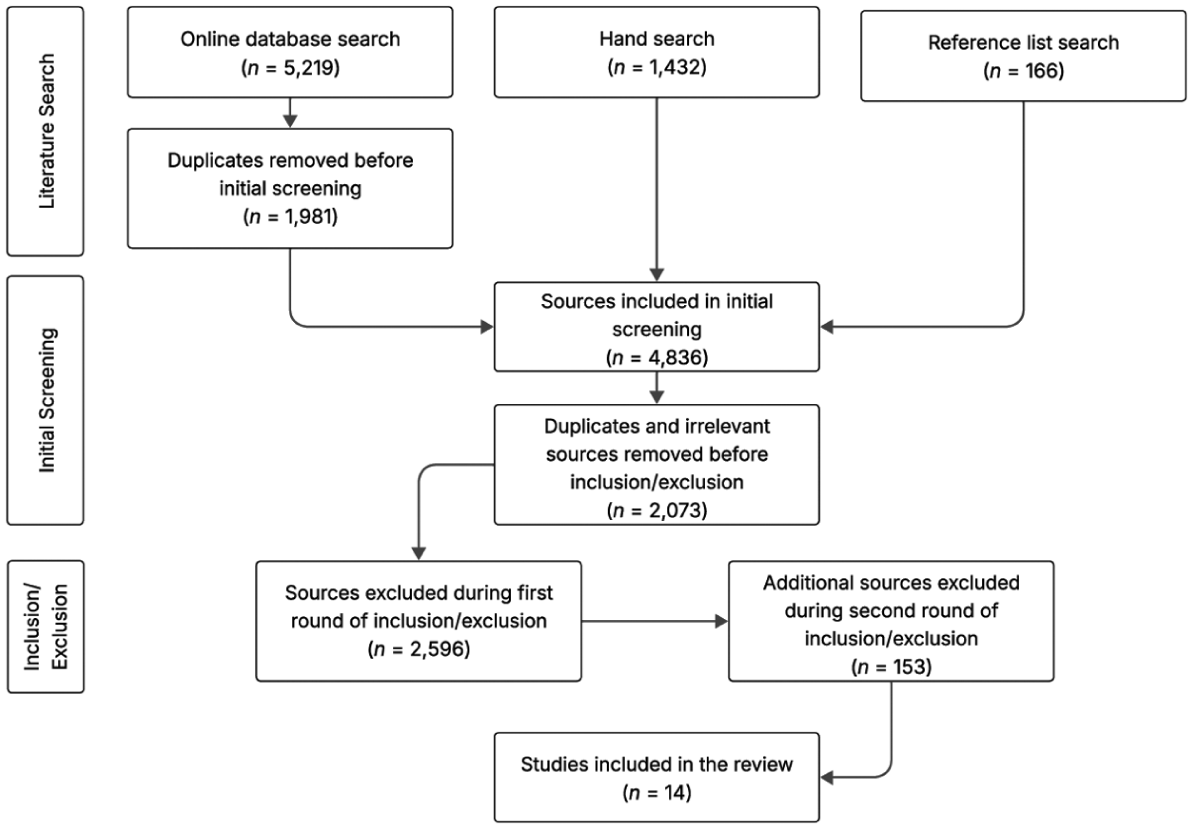
Literature search, initial screening, and inclusion/exclusion outcomes.
Literature Search
We conducted a comprehensive literature search to identify potentially relevant studies. A librarian with expertise in systematic literature reviews (seventh author) conducted an initial online database search in April 2022 and an updated search in March 2025 across the following databases: APA PsycInfo (EBSCO), ERIC (EBSCO), Education Research Complete (EBSCO), Educational Administration Abstracts (EBSCO), Linguistics and Language Behavior Abstracts (EBSCO), Web of Science Complete (EBSCO), CINAHL Complete (EBSCO), Social Services Abstracts (EBSCO), Dissertations and Theses Global (ProQuest), and PubMed (NNLM). Table S1 provides a detailed description of the online database search process for each database. We limited the online database search to literature published in English during the 2006 to March 2025 time period to capture studies conducted after the 2004 IDEA reauthorization that included considerations for FBA and behavioral supports planning. To minimize publication bias (Gage et al., 2017), we included theses and dissertations in addition to peer-reviewed articles in the database searches. After deduplication, the online database search yielded a total of 3,238 potentially relevant sources.
We also conducted a hand search of 19 journals that have published research focused on students with ESN or FBI (see Table S2 for a complete list of journals and hand search outcomes). We applied the same search teams from the database search to search each journal’s digital archive. The hand search resulted in 1,432 potentially relevant sources. Last, we conducted a reference list search of 10 relevant published literature reviews (see Table S3 for a complete list of literature reviews and reference list search outcomes). We examined the title and abstract of each reference in the reference lists for search terms to determine potential eligibility. We identified an additional 166 potentially relevant sources.
Initial Screening
During the initial screening process, we examined the 4,836 sources to identify those that were clearly irrelevant or duplicates. The first, second, fourth, and sixth authors reviewed the title and abstract of each source to determine those that were clearly irrelevant. Irrelevant sources included those that were related to non-human participants, medical research, and additional duplicate sources. After eliminating additional duplicates and clearly irrelevant sources, 2,763 remained.
Inclusion/Exclusion
The data set for this project was a subset of a larger data set. Initially, we applied the following inclusion criteria for the larger data set to the 2,763 remaining sources: study must have (a) utilized an experimental (e.g., multiple baseline/probe, A-B-A-B, alternating treatments) or non-experimental (e.g., A-B) SCR design, (b) included an FBI planned or implemented in a PK-12 U.S. school setting (i.e., any setting physically on school grounds or in the community where student received special education services) for at least one student with IDD (i.e., medical diagnosis or educational eligibility of autism, intellectual disability, developmental delay, multiple disabilities), and (c) included data from FBA (i.e., descriptive assessments such as interviews, observations, and/or rating scales and experimental FAs) that subsequently informed the FBI as reported by the authors (see Carpenter et al., 2026). A total of 167 studies met the initial set of inclusion criteria.
Next, we applied the following additional inclusion criteria for the present review: study must have (a) included at least one participant with ESN and (b) been conducted in a K-12 U.S. school setting. We used Walker et al.’s (2021) definition to determine ESN status: (a) student’s reported IQ score fell below 55 and adaptive scores were three or more standard deviations below the mean, (b) student participated or was eligible to participate in the alternate assessment, and/or (c) student description included terms commonly used in published research to describe students with ESN (e.g., severe disability, significant support needs, severe intellectual disability, multiple disabilities). Based on this second review, a total of 14 studies met the inclusion criteria.
To determine whether an article met the inclusion criteria, the first, second, fourth, and sixth authors reviewed the title, abstract, and, when necessary, full text of each article. Two of the authors reviewed each article, meaning inter-coder reliability (ICR) was conducted for 100% of articles. ICR was 98.18% for the initial round of inclusion criteria application and 98.87% for the second round of application. The authors met in pairs to resolve any disagreements until 100% ICR was obtained.
Coding
During the coding phase, the first, second, and third authors used a researcher-developed coding instrument to extract information across each eligible student participant, as we treated the student with ESN as the unit of analysis. The first and second authors served as primary coders for 33.3% and 66.7% of eligible students, respectively, and all three coders (first, second, and third authors) served as secondary coders across 100% of students, meaning each coding instrument was double coded. ICR across the three coders was acceptable at 88.4% (range = 81.8%–100.0%). Common areas of disagreement included FBI dosage, likely due to the inconsistent reporting across studies, and category of challenging behavior. To address the latter, coders extracted the exact description of challenging behavior to support discussion around disagreements. The three coders regularly met to discuss disagreements and reach consensus, resulting in 100% ICR.
The coding instrument was organized across the following seven categories: student characteristics, FBI characteristics, FBA administrators, FBA contributors, FBI developers, FBI implementers, and social validity evaluation. We provide a detailed description of each coding instrument category including the coding items and response options in the sections that follow.
Student Characteristics
We coded each student’s age in years, grade level based on reported age or grade level (Grades K–5 [5–11 years], Grades 6–8 [12–14 years], Grades 9–12 [15–21 years]), and a description of their educational placement and/or school. We also noted the student’s reported gender (boy, girl, other), disability label based on the IDEA (2004) eligibility categories, race (White, Black or African American, American Indian or Alaska Native, Asian, Native Hawaiian or Other Pacific Islander), and ethnicity (Hispanic, not Hispanic). We coded expressive communication level (multiword [non-rote combination of two or more words/symbols], emerging [single words/symbols or rote-word/symbol combination], prelinguistic [no real words/symbol]; Snell et al., 2010) and communication mode (aided AAC [non-electronic, electronic], unaided AAC [sign language, gestures, facial expressions], speech) prior to FBI. The final coding item addressed challenging behavior prior to FBI: destructive (physical aggression toward others, property damage, self-injury, elopement), disruptive (verbal aggression, disruptive verbal behavior, disruptive physical behavior), and distracting (nonparticipation/noncompliance, stereotypy; Janney & Snell, 2008).
FBI Characteristics
We coded the type of FBA conducted for each student with ESN (experimental FA including reported FA approach, descriptive FBA [record review, questionnaire/rating scale, interview, direct observation]), the challenging behavior addressed through FBI using the same categories previously described, and the reported function(s) of challenging behavior (escape, attention, tangible, sensory). We also provided a description of the FBI, indicated whether the FBI was conducted in an inclusive or non-inclusive setting, and determined whether FBI implementation was contextualized or decontextualized (i.e., whether FBI implementation took place in the natural environment where challenging behavior occurred and conditions were manipulated based on time, setting, or individuals; Snell et al., 2010). Finally, we coded whether aspects of FBI dosage (number of sessions per day, number of trials per session, number of days per week, duration, number of intervention sessions, other dosage aspects) were reported and recorded a description.
FBA Administrators and Contributors
We coded who administered or conducted the FBA (teacher [special education, general education], researcher, other) and specified which aspects of the assessment process these individuals conducted (experimental FA, descriptive FBA [record review, questionnaire/rating scale, interview, direct observation]). Likewise, we coded who contributed information about the student with ESN and challenging behavior through interviews and/or questionnaires/rating scales during the FBA process using the same roles described previously and specified to which aspects of the assessment process these individuals contributed.
FBI Developers and Implementers
We coded who was involved in FBI development and implementation (teacher [special education, general education], researcher, other). For each of these items, we also provided a description of how the individual participated in development or implementation.
Social Validity Evaluation
To determine whether and how school personnel were involved in FBI evaluation, we coded whether social validity from school personnel were reported (yes, no) and who participated in social validity assessment (teacher [special education, general education], researcher, other). We also identified how social validity data were collected (survey or scale [validated tool, researcher developed], interview, focus group, other) and the focus of the social validity assessment in relation to FBI (goals, procedures, outcomes; Wolf, 1978).
Data Analysis
We imported all extracted information into a spreadsheet where we entered descriptive information for open-ended coding items (e.g., age, educational placement/school description, FBI description) and binary codes across all response options (1 = code applied, 0 = code not applied) for closed-ended coding items (e.g., race, challenging behavior). We then calculated descriptive statistics for closed-ended coding items and developed and reached consensus on descriptive summaries for open-ended items. Importantly, some coding items had multiple response options that might have been applicable to any given student participant, thus some percentages may exceed 100%.
Results
In this section, we present a summary of findings. Table 1 provides an overview of select student and FBI characteristics across the included studies, and Table 2 offers an overview of how school personnel in varying roles and others participated in the FBA process.
Select Student and Intervention Characteristics Across Included Studies.
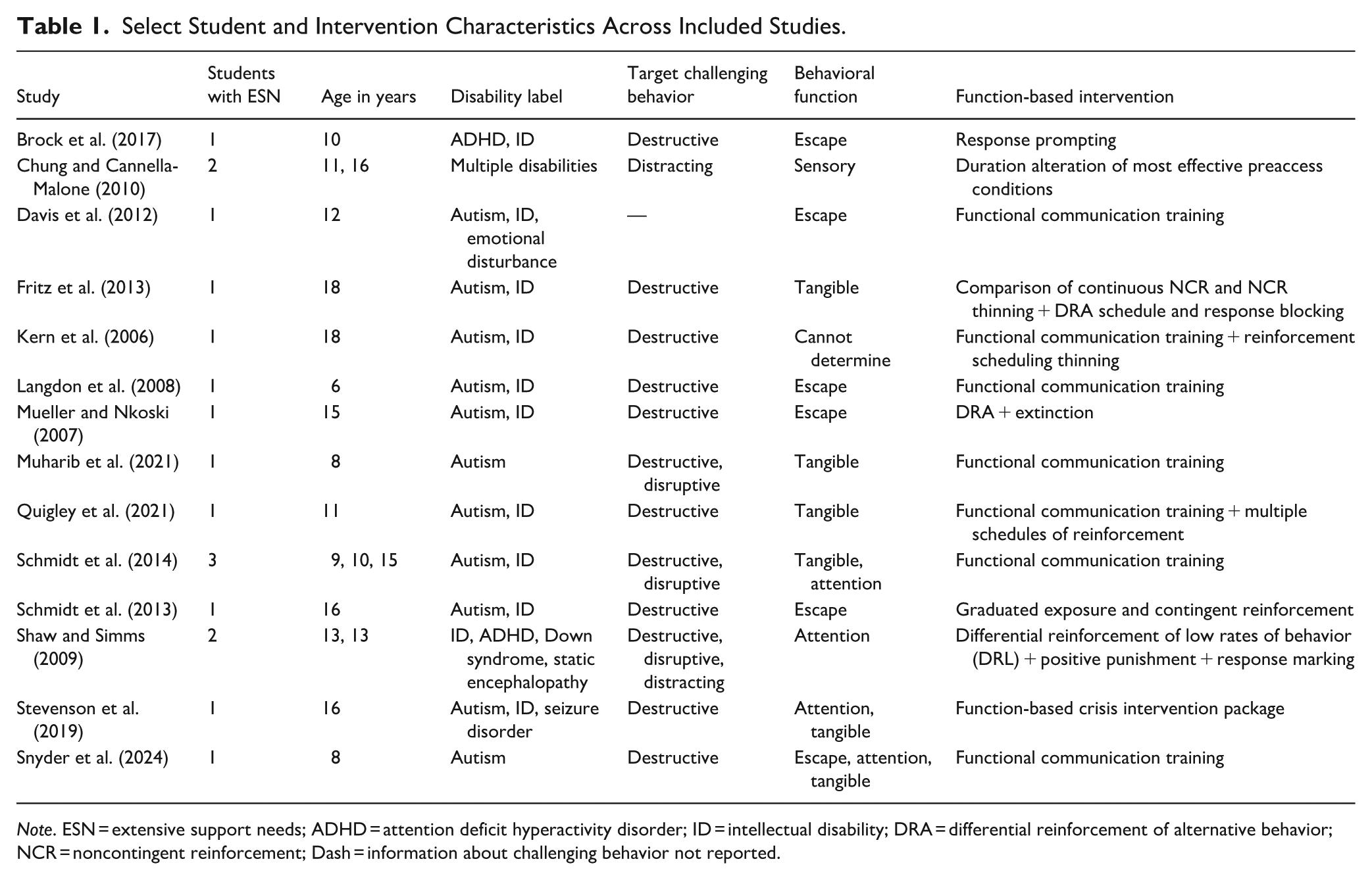
Note. ESN = extensive support needs; ADHD = attention deficit hyperactivity disorder; ID = intellectual disability; DRA = differential reinforcement of alternative behavior; NCR = noncontingent reinforcement; Dash = information about challenging behavior not reported.
Roles of Individuals Involved in the Functional Behavior Assessment Process.
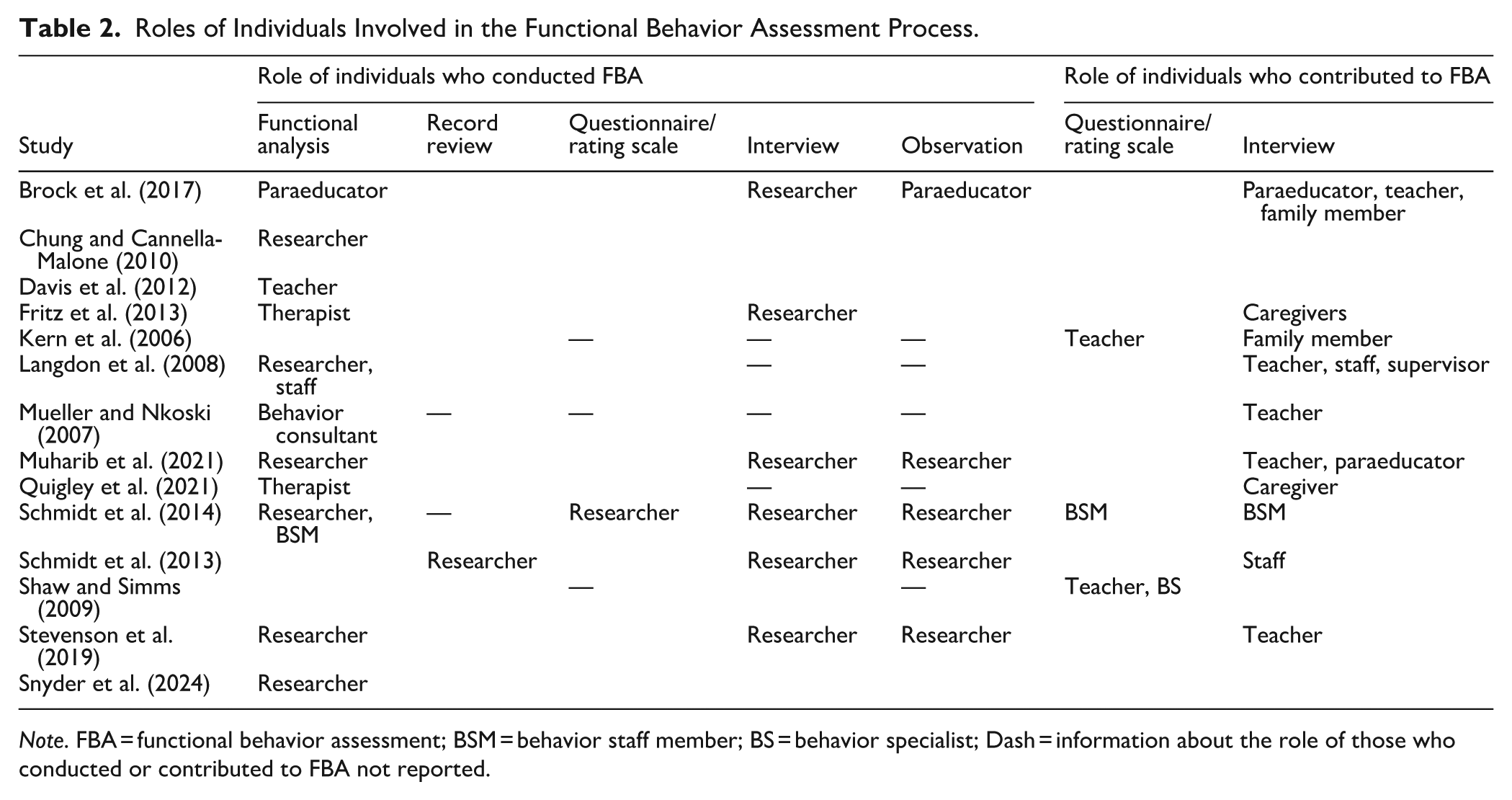
Note. FBA = functional behavior assessment; BSM = behavior staff member; BS = behavior specialist; Dash = information about the role of those who conducted or contributed to FBA not reported.
Student Participant Characteristics
Across the 14 included studies, 18 students with ESN received FBIs in a school setting. Most students (81.8%) received services in separate schools for individuals with disabilities, with fewer (13.6%) receiving services in self-contained classrooms in their neighborhood school. We were unable to determine educational placement and/or type of school for one student (4.6%). On average, students were 12.5 years of age (range = 6–18 years). Grade levels were as follows: K–Grade 5 (44.4%), Grades 9–12 (38.9%), and Grades 6–8 (16.7%). A majority of students (72.2%) were described as boys, with fewer described as girls (27.8%). Student disability descriptions included intellectual disability (77.8%), autism (72.2%), other disability and diagnostic labels (e.g., Down syndrome, seizure disorder; 22.2%), multiple disabilities (11.1%), visual impairment (11.1%), emotional disturbance (5.6%), and hearing impairment (5.6%). Some students had more than one disability label. Race and ethnicity information was unavailable for 66.7% and 94.4% of student participants, respectively. Among those whose race and ethnicity were reported, 83.3% of students were described as White, 16.7% Black, and 100.0% Hispanic.
For a majority of students (88.9%), expressive communication level prior to intervention was not reported, and for the other two students (11.1%), communication level was described as prelinguistic. Communication modes were reported for 72.2% of students. Among those whose communication modes were reported, 76.9% used unaided AAC (e.g., gestures, sign language), 61.5% used speech, and 38.5% used aided AAC (e.g., picture exchange, speech generating device). We were unable to determine communication mode for 27.8% of students.
Finally, students’ reported challenging behavior prior to intervention fell into one or more of the following categories: destructive (83.3%), disruptive (38.9%), and distracting (22.2%). For destructive challenging behavior, students engaged in physical aggression (73.3%), self-injury (66.7%), elopement (33.3%), and property destruction (20.0%); for one student (13.3%), we were unable to determine the form of destructive behavior. Disruptive challenging behavior included disruptive verbal (71.43%) and physical behavior (42.9%); for one student (14.3%), we were unable to determine the form of disruptive behavior. For distracting challenging behavior, students engaged in nonparticipation (50.0%) and stereotypy (50.0%).
FBA and FBI Characteristics
All student participants received FBIs aligned with FBA outcomes. Both experimental FA (77.8%) and descriptive FBA (77.8%) approaches were used to identify behavioral function to inform FBI development. Experimental FAs included standard analog FAs (57.1%), discrete trial FAs (21.4%), a trial-based FA (7.1%), a brief FA (7.1%), and an analog precursor analysis (7.1%). Descriptive FBA approaches included direct observations (92.9%), interviews (85.7%), questionnaires/rating scales (50.5%), and record reviews (35.7%). Based on FBA outcomes, a range of challenging behaviors were addressed through FBIs that fell into one or more of the following categories: destructive (77.8%), disruptive (27.8%), and distracting (16.7%). Targeted destructive challenging behavior included physical aggression (64.3%), self-injury (57.1%), elopement (21.4%), and property destruction (21.4%); for one student (7.1%), we were unable to determine the form of destructive behavior. Disruptive challenging behavior included disruptive verbal (60.0%) and physical behavior (60.0%). Finally, distracting challenging behavior included stereotypy (66.7%) and nonparticipation (33.3%). Behavioral functions identified through FBA included tangible (44.4%), escape (33.3%), and attention (33.3%). For fewer students, a sensory function (11.1%) was reported or the function could not be determined (5.6%).
The type of FBIs varied across students with ESN (e.g., functional communication training, differential reinforcement of low rates of behavior; see Table 1). All students (100.0%) received FBIs in a separate, non-inclusive setting (e.g., treatment rooms, empty office, self-contained classroom) and half (50.0%) received interventions that were decontextualized, meaning interventions were not delivered within natural school-based contexts. For some students, the contextual nature of the FBI was not clear (38.9%) or was considered contextualized (11.1%). For almost all students (88.9%), at least one aspect of intervention dosage was reported, including the total number of sessions (66.7%), other dosage aspects (e.g., length of trials, duration of school day during which trials were administered; 44.4%), number of sessions per day (16.7%), number of trials per session (16.7%), number of days per week (16.7%), and total duration (11.1%).
School Personnel Involvement in the FBA Process
Researchers (66.7%) largely were responsible for conducting FBAs for students with ESN, with other school personnel (e.g., behavior staff member or consultant, paraeducator, therapist; 38.9%) and a teacher whose role as a general or special educator was not specified (5.6%) conducting FBAs in other cases. For six students (33.3%), we were unable to determine those involved in conducting FBAs. Table 2 provides details about the role of these individuals in conducting different FBA approaches. Some school personnel contributed to questionnaires/rating scales or interviews to share knowledge about student participants and challenging behavior as follows: teachers whose role was not specified (16.7%) and school personnel in other roles (e.g., behavior staff member or specialist, paraeducator, 50.0%). Caregivers and family members (22.2%) also contributed to these assessments. Table 2 provides details about the role of these individuals in contributing to questionnaires/rating scales and interviews as part of the FBA process.
School Personnel Involvement in FBI Development, Implementation, and Evaluation
For a majority of students (88.9%), we were unable to determine those involved in FBI development. For the other two students, a researcher (50.0%) and a speech therapist who supported the team in identifying an appropriate communicative response (50.0%) were involved in development. A range of school personnel implemented FBIs to support students with ESN as follows: school personnel in other roles (e.g., paraeducator, behavior staff member or consultant, therapist; 61.1%) and teachers whose roles as general or special educators were not specified (44.4%). For fewer students, researchers (33.3%) were responsible for FBI implementation and, for one student (11.1%), we were unable to determine those responsible for implementation.
Social validity assessment was reported for 44.4% of students. Assessments were completed by school personnel in other roles (i.e., paraeducator, behavior staff member; 87.5%) and teachers whose role was not specified (50.0%). All social validity data were gathered through surveys or scales (100.0%) that either were developed by the researcher (25.0%) or previously validated and published (i.e., IRP-15; Martens et al., 1985; 12.5%); for five students (62.5%), the origin of the social validity survey or scale was unclear. Social validity assessment tended to address the procedures (87.5%) and outcomes (87.5%) associated with the FBI, with only one assessment (12.5%) addressing the goals of the FBI. Social validity data were gathered at the conclusion of the study for a majority of students (75.0%), although we were unable to determine the timeline for two (25.0%).
Discussion
Although researchers have established FBIs as effective for students with IDD (Goh & Bambara, 2012; Jeong & Copeland, 2020), less is known about their application in school settings for students with ESN and school personnel’s involvement in the FBA and FBI processes. Given the critical role of collaborative teaming in behavioral supports planning (Council for Exceptional Children, 2020; U.S. Department of Education, 2024) and the need to consider contextual fit when developing individualized BIPs (Monzalve & Horner, 2020), we conducted a systematic literature review to examine SCR studies involving FBIs for students with ESN with an emphasis on school personnel involvement in the FBA and FBI processes. In this section, we describe key findings that offer important implications for practitioners who are responsible for addressing the behavioral needs of students with ESN and researchers engaged in this critical work.
FBA and FBI in Segregated Settings
Our findings revealed only 14 SCR studies in which students with ESN received FBIs in K-12 U.S. schools. Although other reviews have explored FBIs for students with IDD (Chezan et al., 2024; Lory et al., 2020; Lory et al., 2024; Masud et al., 2022), it is particularly important to examine FBI research for the subset of students with ESN who may experience higher rates of challenging behavior (Shogren et al., 2017; Simó-Pinatella et al., 2019) and are at greater risk of restraint and seclusion (Westling et al., 2010) and placement in segregated environments on the basis of challenging behavior (Kurth et al., 2019; Walker, Loman, et al., 2018). Notably, all 18 students with ESN in the current review received FBI in segregated environments, including separate schools and self-contained classrooms for students with disabilities. The limited scope of settings represented in this body of research is concerning, as it suggests researchers have prioritized or been restricted to these settings over inclusive environments where students with ESN often experience more pronounced positive outcomes compared to peers in separate settings (Mansouri et al., 2022).
Despite the well-documented benefits of inclusive education for students with ESN, most students with ESN spend a majority of their school day in segregated settings, with exclusion even greater for students with complex communication needs who use AAC (Kleinert et al., 2015). Although researchers might conduct studies in segregated environments as a result of the ongoing exclusionary educational placement trends for students with ESN (e.g., recruitment in response to the reported needs of school personnel in segregated settings), research exploring effective strategies for supporting the behavioral needs of students with ESN in inclusive school settings (e.g., Walker et al., 2025) is necessary to inform FBI development, implementation, and social validity for inclusive environments that present unique contextual considerations, including the training needs of general education teachers and paraeducators who often are underprepared in this area (Flower et al., 2017; Wiggs et al., 2021).
Student Characteristics
There were several noteworthy patterns concerning participant characteristics. First, most participants were boys and attended elementary and high schools, thus limiting knowledge claims about FBI for girls with ESN and those attending middle schools and the school personnel supporting students with these characteristics. Second, similar to other related reviews (e.g., Chezan et al., 2024; Lory et al., 2024; Walker, Chung, et al., 2018), race, ethnicity, and expressive communication levels were rarely reported in the included studies and communication mode was reported for just over 25% of students. Without this information, implications specific to students from certain racial and ethnic backgrounds and who have specific communication needs cannot be established. Finally, most students engaged in destructive challenging behavior prior to FBI, with challenging behavior primarily serving tangible, escape, and attention functions. As reported in other reviews (e.g., Lory et al., 2024; Walker, Chung, et al., 2018), students with IDD engage in a wide range of challenging behavior, thus intervention studies involving students with ESN who engage in the full spectrum of challenging behavior topographies serving different functions, including access/avoid sensory, is critically important to advancing the field’s understanding of FBI and how school personnel participate in the FBA and FBI processes for this student population.
Limited School Personnel Involvement in FBA
Our findings revealed variability in how school personnel were involved in the FBA process. Hirsch et al. (2023) documented similar variability in school-based FBA record reviews, noting that half of FBA records did not meet expectations for involving others, suggesting inconsistent collaborative practices may persist across school settings. Perhaps not surprisingly, researchers assumed primary responsibility for conducting FBAs in the current review, although school personnel (e.g., paraeducators, teachers, behavior support personnel) conducted FBAs in some cases or were otherwise involved in contributing critical information via questionnaires/rating scales or interviews. Although limited, the involvement of school personnel in FBAs is promising, as research suggests FBIs can lead to more substantial outcomes when interventions are informed by teacher-conducted FBAs (Walker, Chung, et al., 2018). This highlights the important role school personnel play in assessment and development of contextually relevant, socially valid interventions due to their in-depth knowledge of student characteristics and the conditions under which challenging behavior occurs (Carpenter et al., 2024).
Use of Experimental and Descriptive FBA Approaches
Both experimental FA and descriptive FBA approaches were reported across a majority of students. Interestingly, this finding is inconsistent with Walker, Chung, et al.’s (2018) review of FBIs implemented in inclusive school settings that largely were informed by descriptive FBA approaches. This difference may be attributed to the characteristics of challenging behavior (e.g., destructive, disruptive, distracting) addressed in the included studies, as FBA complexity often reflects the priority level or intensity of challenging behavior (Center on PBIS, 2022). These conflicting findings also point to potential contextual factors unique to inclusive and segregated settings that might influence how FBA approaches are selected. For example, because descriptive FBA approaches generally are considered less intrusive and complex than experimental FA procedures (Center on PBIS, 2022), descriptive approaches may be more feasible for general education teachers and other school personnel, such as paraeducators, who are typically present in inclusive environments.
In the current review, we found school personnel participated in conducting experimental FAs for six students, including a trial-based FA (paraeducator), a standard FA excluding the alone condition (teacher), an analog analysis of precursor behavior with escape conditions only (school staff in partnership with the researcher), and discrete-trial FAs (behavior support personnel in partnership with the researcher). These findings are consistent with related research, indicating that FAs implemented in school-based settings often involve adapted procedures such as trial-based FAs or discrete-trial FAs (Nesselrode et al., 2022). This also suggests the potential value and feasibility of experimental FA (or variations thereof) to inform FBI planning, although the training needs, ethical implications, and support offered to those conducting FAs in school contexts is an important factor that must be considered (Lloyd et al., 2015).
Role of School Personnel in FBI Development and Implementation
We also found variability in how school personnel were involved in FBI development and implementation. Notably, we were unable to determine whether school personnel contributed to FBI development in all but one case that involved a speech therapist identifying an appropriate communicative response. Lory et al. (2024) reported similar limitations in their review of interventions to address challenging behavior among students with autism in inclusive school settings and hypothesized school personnel may face challenges designing individualized behavioral supports. Although involvement in FBI development was unclear, school personnel, including paraeducators, behavior support personnel, staff, therapists, and teachers, were heavily involved in FBI implementation, a promising outcome also documented in prior reviews (Lory et al., 2020; Lory et al., 2024; Walker, Chung, et al., 2018). In fact, both Lory et al. (2020) and Marquis et al. (2000) reported statistically significant better outcomes for students when natural change agents, such as school personnel, delivered interventions.
Limited Assessment of Social Validity
It also is important to note school personnel evaluated FBIs via social validity assessment for less than half of the student participants. Social validity assessments are one way of capturing perceptions of the feasibility and acceptability of an intervention from those most directly affected by the intervention. In the absence of robust social validity assessment of FBI in schools and with high levels of researcher involvement in most of the included studies, little can be understood about how school personnel perceived the experience and whether they would continue to use the FBI and/or develop FBIs for other students with ESN in the absence of the researcher. Both increased participation of school personnel in the FBI process and more robust social validity information from them are critical to improving the behavioral supports available to students with ESN in public schools.
Implications for Practice
Although school personnel in the current review were involved in contributing to FBA through questionnaires/rating scales and interviews and in FBI implementation, their involvement in conducting FBAs and developing FBIs was significantly limited or not reported, with school personnel involvement in conducting experimental FAs using adapted procedures (i.e., trial-based FAs, discrete-trial FAs, precursor analyses) limited to a small number of students. School personnel’s limited involvement in these aspects may be particularly problematic in practice, as school-based teams must work in collaboration with various school personnel to effectively engage in socially valid behavioral supports planning for students with ESN (Goh & Bambara, 2012; U.S. Department of Education, 2024), and overreliance on researchers to lead these processes may leave school personnel ill equipped to effectively conduct FBAs and develop FBIs in the absence of researchers.
Findings related to experimental FA implementation might also suggest school-based involvement in the FA process is most feasible when assessment responsibilities are intentionally distributed among school team members and paired with role-specific training and expert oversight. Reliance on adapted FA formats (e.g., trial-based FAs) in school-based contexts may offer a practical balance between the procedural rigor of a standard FA and implementation feasibility for school personnel given clear training protocols, quick implementation time, and reduced interruption of the analysis when school personnel serve as assessors (Bloom et al., 2013). It will be important to prioritize effective professional development or training programs to support teachers’ implementation of adapted FA procedures (Samudre et al., 2019). Likewise, there is a need to more intentionally embed applied opportunities for preservice teachers to learn and practice functional assessment procedures within teacher preparation programs, thereby increasing preparedness to conduct assessments, collaborate with teams, and interpret data to design effective behavior supports (Folkerts & Meadan, 2025).
School personnel in varying roles (e.g., special education teachers, general education teachers, behavior support personnel, related services providers) offer unique perspectives and expertise that add value to the FBA and FBI processes (Carpenter et al., 2024; Courson et al., 2025). For example, because many students with ESN also have complex communication needs (Snell et al., 2010), a speech therapist’s participation on the team is critical to offer guidance about evidence-based instructional practices and appropriate AAC modalities to teach communication skills. Likewise, behavior analysts play an important role in assisting teams to conduct FBAs and develop FBIs, training team members, and facilitating data-based decision making (Giangreco et al., 2023). However, given that many districts rely on behavior analysts through contracted or short-term agreements rather than sustained staffing models (Giangreco et al., 2023), reserving behavior analyst expertise for ethical decision making, training, and oversight of school teams may be a sustainable consideration for scalable FA implementation in school-based contexts. Special and general education teachers also offer expertise in evidence-based instructional practices and content areas and important contextual information about the student and school environments in which the student receives special education and related services (Carpenter et al., 2024).
Once team members are identified, establishing clear roles and responsibilities based on their individual knowledge and skills is an essential first step, as role ambiguity can be a barrier to the FBA and FBI processes (Scott et al., 2004) and add to team stress (Courson et al., 2025). As such, teams should designate an expert in developing BIPs for students with ESN to lead the team, define team roles, and assign team responsibilities (Courson et al., 2025). School personnel should commit to learning about the student with ESN, the school context, and the roles of other team members to create a shared framework with common goals, rather than focusing on discipline-specific objectives. This shared framework encourages teams to use a consensus approach that considers all school personnel’s perspectives when making decisions (Giangreco et al., 2023). To support multidisciplinary team collaboration, teams can utilize structured tools such as the one developed by Courson et al. (2025). This five-phase tool guides teams in planning FBIs while encouraging effective teaming practices with regular opportunities for feedback, data monitoring, and planning for generalization and maintenance. Implementing these collaborative practices can help reduce team stress and facilitate high-quality behavioral supports planning, leading to more socially valid practices for the team.
Relatedly, the training needs of school personnel must be considered in developing contextually relevant FBIs. Contextual relevance refers to “the match between the strategies, procedures, or elements of an intervention and the values, needs, skills, and resources available in a setting” that contribute to successful implementation (Horner, 2014). Even when all team members are part of designing FBIs, training is often needed to ensure everyone has the skills to implement the plan with fidelity. Key implementers, such as special education teachers, general education teachers, and paraeducators may not have the skills necessary to develop and implement FBIs without training and support (Brock et al., 2014; Flower et al., 2017; Hirsch et al., 2023; Wiggs et al., 2021). Teams should consider (a) who has the skills and expertise to train others in the FBI (e.g., behavior specialists, special educator coordinator) and (b) which strategies and resources to use to effectively support implementation. Using high-impact training strategies, such as a combination of modeling and performance feedback (Brock et al., 2017), and well-established training resources (e.g., https://basicfba.com/) can improve implementation fidelity and social validity.
Limitations and Future Research
There are several limitations of this review that should be considered when interpreting the findings, with many of these limitations offering important next steps for future research. As previously noted, the review process resulted in a small number of studies and student participants meeting the inclusion criteria. It is possible that we excluded potentially eligible studies and students due the limited participant descriptions that made it challenging to determine ESN status. Consistent with other reviews (Lory et al., 2020; Lory et al., 2024; Walker, Chung, et al., 2018), other student characteristics often were absent from student descriptions, including student race, ethnicity, and communication characteristics, which significantly limits interpretation of our findings in relation to students with ESN who have specific demographic characteristics. We encourage additional research focused on FBI in school settings for students with ESN that includes clear and comprehensive participant descriptions, as this will allow other researchers to determine ESN status and meet guidelines for SCR reporting standards, improving our understanding of for whom practices are effective (Ledford et al., 2022). Beyond these student characteristics, descriptions of other study characteristics (e.g., contextual nature of FBI, roles of individuals conducting FBAs and developing FBIs) often were limited or missing, which significantly limited our analyses. Again, to ensure transparent and comprehensive reporting, future research will need to include clear descriptions of these variables to permit analyses focused on the conditions under which FBIs have been implemented and are effective.
Another limitation relates to our narrow focus on intervention studies to explore school personnel involvement in FBA and FBI processes. Research is needed to determine how school personnel participate in conducting FBAs and developing FBIs in schools outside of intervention research, as this information will provide insight into the skills and potential training needed to support those assuming these roles. For example, general and special education teachers likely will benefit from pre-service training in their teacher preparation programs (Folkerts & Meadan, 2024) and in-service training from qualified behavior support personnel to implement various FBA approaches (Lloyd et al., 2015; Nesselrode et al., 2022) and develop technically adequate and contextually relevant BIPs. We suggest future reviews on this topic incorporate findings from studies guided by other methodologies, including survey, interview, and focus group research whereby school personnel’s experiences, training needs, and dispositions related to FBA and FBI outside of the research context have been documented.
Although we gathered information about the roles of school personnel in the FBA and FBI processes, we did not capture whether and how collaborative teaming processes were reported across the studies (e.g., whether and how training was provided to support school personnel’s FBI development and implementation and effectiveness of various training methods; Lory et al., 2024). This will be an important next step, as guidance on best practices in collaboration specific to students with ESN will aid school personnel in supporting the varying needs of students with ESN while also addressing the specific needs of team members, including their needs for training and support in FBA and FBI processes (Courson et al., 2025; Giangreco et al., 2023; Scott et al., 2004). A final limitation is that all students with ESN received FBIs in segregated school settings, which significantly limits the generalizability of findings to the full spectrum of school settings where students with ESN receive special education and related services (IDEA, 2004). There is a clear need for future research addressing FBIs in inclusive settings to establish practical guidelines for school personnel who support students with ESN within these environments.
Supplemental Material
sj-docx-1-bmo-10.1177_01454455261449774 – Supplemental material for A Systematic Review of School Personnel’s Involvement in Function-Based Intervention for Students With Extensive Support Needs
Supplemental material, sj-docx-1-bmo-10.1177_01454455261449774 for A Systematic Review of School Personnel’s Involvement in Function-Based Intervention for Students With Extensive Support Needs by Virginia L. Walker, Megan E. Carpenter, Meghan Edwards-Bowyer, Monique Pinczynski, Lyndsey Aiono-Conradi, Melinda R. Snodgrass and Ryan Harris in Behavior Modification
Footnotes
ORCID iDs

Funding
The authors received no financial support for the research, authorship, and/or publication of this article.
Declaration of Conflicting Interests
The authors declared no potential conflicts of interest with respect to the research, authorship, and/or publication of this article.
Supplemental Material
Supplemental material for this article is available online.
Author Biographies
References
Supplementary Material
Please find the following supplemental material available below.
For Open Access articles published under a Creative Commons License, all supplemental material carries the same license as the article it is associated with.
For non-Open Access articles published, all supplemental material carries a non-exclusive license, and permission requests for re-use of supplemental material or any part of supplemental material shall be sent directly to the copyright owner as specified in the copyright notice associated with the article.
