






Abstract
Introduction
This explanatory sequential study explored the relationship between self-esteem, family satisfaction, and cognitive distortion, and how it was experienced by young people with visual impairments in the Philippines.
Keywords
Young people with visual impairments navigate daily lives in much the same way as their sighted peers do, despite the challenges they face due to their condition. They adapt to their surroundings and use various strategies to maintain independence, such as confidently navigating different environments and transportation systems with their white safety cane, sometimes with the help of guides. In addition, they make use of advanced technology designed for individuals with visual impairments, as well as their knowledge of orientation and mobility techniques. In the Philippines, R.A. No. 7277, (the Magna Carta for Disabled Persons) was enacted in 1992 to emphasize that individuals with visual impairments have the same rights as others to take their rightful place in society and develop their potential for a more meaningful, productive, and fulfilling life.
However, despite the legal recognition of their rights and the resilience that young people with visual impairments demonstrate, a study by Valconcha et al. (2022) revealed that Filipino children with visual impairments experience a significantly lower quality of life than their sighted peers. Losing vision can strip individuals of important self-defining characteristics beyond vision-related abilities, such as self-worth, their ability to contribute to their families, and their perceived value in society (Mullins, 2019). This loss resonates on a global scale, with an estimated 2.2 billion individuals worldwide affected by visual impairments (World Health Organization, 2019). Furthermore, studies show that individuals with visual impairments often experience functional and psychological challenges, such as low self-esteem, rejection, anger, anxiety, depression, and other conditions like an inferiority complex (Ishtiaq et al., 2016; Moon & Kim, 2021; Mullins, 2019).
These emotional and psychological struggles are closely linked to self-esteem, a key factor in personal well-being and development. (Papadopoulos et al., 2013) suggests that individuals make decisions based not on their true nature, but on their personal beliefs about who they are. Self-esteem is defined as the perceived amount of value that individuals place on themselves (Yuan et al., 2023), and it is crucial in the holistic development of young people with visual impairments, since self-esteem affects emotional well-being, standard of living, adaptive functioning skills, interpersonal interactions, academic performance, and how people accommodate their own disabilities (Hess & Reiter, 2017). Individuals with high self-esteem were found to be more resistant to life's challenges and difficulties than those with low self-esteem, giving people with high self-esteem a better chance of success (Kazemi et al., 2017), which can be fostered through independence, and strong social support (Augestad, 2017). Despite this potential for improvement, young people with visual impairments often associate negative experiences with their abilities, compare themselves to their sighted peers, and experience a loss of identity when considering their futures and societal expectations (Robertson et al., 2021).
Such negative perceptions can contribute to a higher risk of mental health issues, such as depression, since individuals struggle with low self-evaluations, disappointment, and helplessness (Moon & Kim, 2021). If a person with a visual impairment interprets failure to complete tasks as their own general inability, it can lead to overgeneralization and reinforce functional limitations. Cognitive distortions—such as overgeneralization, catastrophizing, personalizing, and selective abstraction—are often linked to lower quality of life following a disability (Mullins, 2019). These distorted patterns of thinking, stemming from insecurities and low self-esteem, can lead to negative emotions and perceptions (Neukrug, 2016). Although Kazemi et al. (2017) found associations between self-esteem and cognitive distortion, with low levels of self-handicapping thoughts linked to higher self-esteem, this evidence has not yet been explored among young people with visual impairments.
Therefore, it is critical to examine the relationship between cognitive distortion and self-esteem, since negative thinking can lead to feelings of hopelessness about the future (Zamani et al., 2018). If these patterns persist, they may contribute to the onset and continuation of psychopathological issues such as anxiety and depression (Maheshwari & Chadha, 2021). However, there is a notable lack of research investigating the relationship between these variables, particularly concerning on how it affects Filipino young people with visual impairments based on their own experiences.
Conversely, self-esteem can flourish within a supportive and positive environment (Morowati Sharifabad et al., 2020). For individuals with visual impairments, strong family support is linked to enhanced psychological well-being, higher life satisfaction, fewer depressive symptoms, and a smoother adaptation to life's challenges (Alshehri, 2016). Family satisfaction, particularly within cohesive, flexible, and communicative relationships, is a crucial factor in fostering relational well-being (Olson, 1995). This sense of satisfaction spans individual perspectives, dyadic relationships, and the broader family system, all of which contribute to the overall health and harmony within the family unit (Soliz & Kellas, 2014). Feeney and Collins (2015) highlight that strong family relationships are crucial for both coping with adversity and fostering growth and fulfillment in the absence of challenges. Alshehri (2016) supports this idea by demonstrating that positive family support leads to greater life satisfaction, fewer depressive symptoms, and smoother adaptation to circumstances among those with visual impairments.
Despite these positive findings, individuals with disabilities are sometimes viewed as inferior, even by their own families, which can negatively affect their self-concept as they develop (Ongtangco et al., 2018). Much research has already emphasized the importance of social support for individuals with visual impairments (Imhonde et al., 2017; Manitsa & Doikou, 2022; Morowati Sharifabad et al., 2020), but there is a notable gap in studies specifically examining the direct relationship between family satisfaction and self-esteem among Filipino young people with visual impairments and how these dynamics affect their overall well-being.
This study presented here explored the relationships between self-esteem, cognitive distortion, and family satisfaction, focusing on how Filipino young people with visual impairments experience these interconnected factors. The study took place at the Philippines’ only public integrated-residential school for the blind, which serves 152 students aged 5 to 27 years, with 89 residing in dormitories on weekdays. Visual impairment was classified as total blindness (no light perception) or low vision (20/70 to 20/200 with correction) (American Foundation for the Blind, n.d.). Some students with low vision used assistive tools, while others relied on Braille.
The researchers hypothesized that family satisfaction and cognitive distortion were significantly associated with the self-esteem of young people with visual impairments. It aimed to deepen understanding of the unique challenges and experiences of this population.
Method
This study employed an explanatory sequential mixed-methods approach, starting with quantitative data collection through surveys, and assessed the findings through correlational analysis. The quantitative findings informed participant selection and question formulation for the qualitative phase. Integrating both data types is essential for fully explaining the initial quantitative results (Cresswell & Cresswell, 2018).
Participants
We established inclusion criteria for both study phases to identify participants who had used the school's mental health services in the past three years. Using purposive sampling (Etikan et al., 2016), we selected individuals with relevant experiences. For the qualitative phase, five respondents met specific criteria: enrollment in the school for blind students, prior use of its mental health services, total blindness or low vision without comorbid disabilities, completion of Phase 1 (quantitative data collection), low self-esteem, low family satisfaction, and high cognitive distortion scores.
A sensitivity power analysis conducted using G*Power version 3.1.9.4 (Faul et al., 2007) indicated that with a sample size of 62 participants, the study could detect correlations of r = .43 at 95% power (alpha = .05, two-tailed), meaning it would not reliably identify smaller correlations. Additionally, five participants were purposively selected for the qualitative phase, meeting criteria of low self-esteem and family satisfaction, alongside high cognitive distortion from quantitative phase.
Before data collection, the study received ethics clearance, school approval, and a memorandum of agreement. Parental consent was obtained, and participants were informed of their rights, confidentiality, and data protection under the Data Privacy Act of 2012. The study followed American Psychological Association ethical standards to ensure participants’ well-being. The data collection was conducted over a period of 24 weeks.
Measures
The quantitative phase of this research utilized three survey questionnaires to measure the variables being studied. Participants chose their preferred mode of responding to the questionnaires: braille (contracted or uncontracted), large print, or audio. Moreover, the primary research tool for the qualitative phase is semi-structured interview questions designed to gather in-depth perceptions and experiences of young people with visual impairments based on the quantitative results from the Rosenberg Self-Esteem Scale (RSE), Family Satisfaction Scale (FSS), and the Cognitive Distortions Questionnaire (CD-Quest).
Rosenberg Self-Esteem Scale
The 10-item RSE assesses overall self-worth using a four-point Likert scale. Scores range from 10 to 40, classifying self-esteem as low (10–25), medium (26–29), or high (30–40). The RSE has high internal consistency (0.92), strong test-retest reliability (0.85–0.88), and good validity, correlating with the Coopersmith Self-Esteem Inventory and measures of anxiety and depression (Rosenberg, 1965).
Family Satisfaction Scale
Olson's FSS measures satisfaction with family cohesion, flexibility, and communication. The 10-item scale uses a 5-point Likert rating (1 = very dissatisfied to 5 = extremely satisfied), with scores interpreted as very low (10–29), low (30–35), moderate (36–39), high (40–44), and very high (45–50). The FSS has strong reliability (α = .92, test-retest = 0.85) and validity, correlating with marital satisfaction and quality of life (Olson, 1995).
Cognitive Distortion Questionnaire (de Oliveira et al., 2015)
de Oliveira et al.'s (2015) 15-item CD-Quest measures cognitive distortions on a 1 to 5 scale, assessing various cognitive distortion types. For qualitative phase, scores classify cognitive distortions as no occurrence (0–0.99), very low (1.00–1.79), low (1.80–2.59), average (2.60–3.39), high (3.40–4.19), or very high (4.20–5.00). The CD-Quest shows strong validity, correlating with the Beck Depression Inventory (r = .65, p < .001) and Beck Anxiety Inventory (r = .52, p < .001), with high internal consistency (α = .85) (de Oliveira et al., 2015).
Semi-Structured Interview Questions
To obtain in-depth perspectives and experiences of young people with visual impairments based on the quantitative findings from the RSE, FSS, and CD-Quest, semi-structured interview questions were used as the main research tool for the qualitative phase (see Appendix A). These questions were tailored based on the quantitative results and received empirical support through content validation from professionals in psychology and special education focused among learners with visual impairments.
Data Analysis
For qualitative data analysis, a deductive thematic analysis was conducted based on Braun and Clarke's (2006) six phases: familiarization, coding, theme searching, theme reviewing, theme defining, and reporting. To ensure validity and reliability, transcriptions and results were shared with participants (N = 5) for clarification, confirming the accuracy of the emerged themes. We also engaged in rigorous discussions and reviews of the themes through consultations with professionals in psychology and special education focused on learners with visual impairments.
Results and Findings
Quantitative Results
Table 1 showed most participants in the study were male (58.06%), with half aged between 16 and 18 years (50%). Most hailed from average socioeconomic backgrounds (46.77%) and were totally blind (46.78%). Notably, a significant portion of the sample was at the junior high school level (54.84%), and nearly 89% were unemployed at the time of data collection due to their schooling commitments.
Demographic Profile of the Respondents
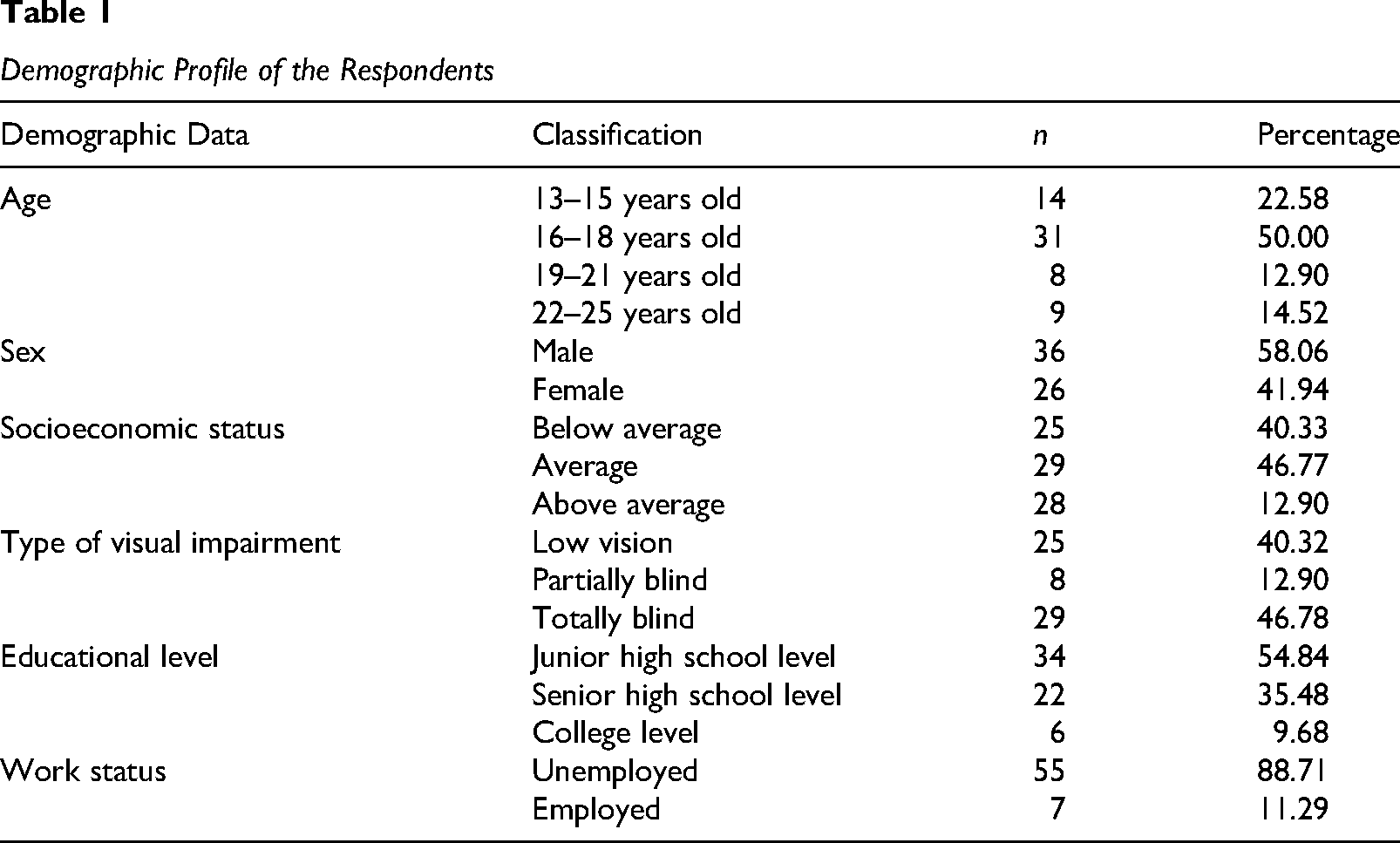
Figure 1 presents the average RSE, FSS, and CD-Quest scores of male and female respondents with congenital or adventitious blindness. The sample included 26 adventitiously blind (14 males, 12 females) and 36 congenitally blind (22 males, 14 females). Adventitious blindness affects adaptation due to prior visual experience, while congenital blindness shapes cognitive development without prior sight (American Psychological Association, n.d., n.d.a, n.d.b.). Self-esteem scores are similar across groups, with minor variations. Family satisfaction is slightly higher, while cognitive distortion is notably higher in adventitiously blind individuals, suggesting adjustment challenges (Catama et al., 2017).
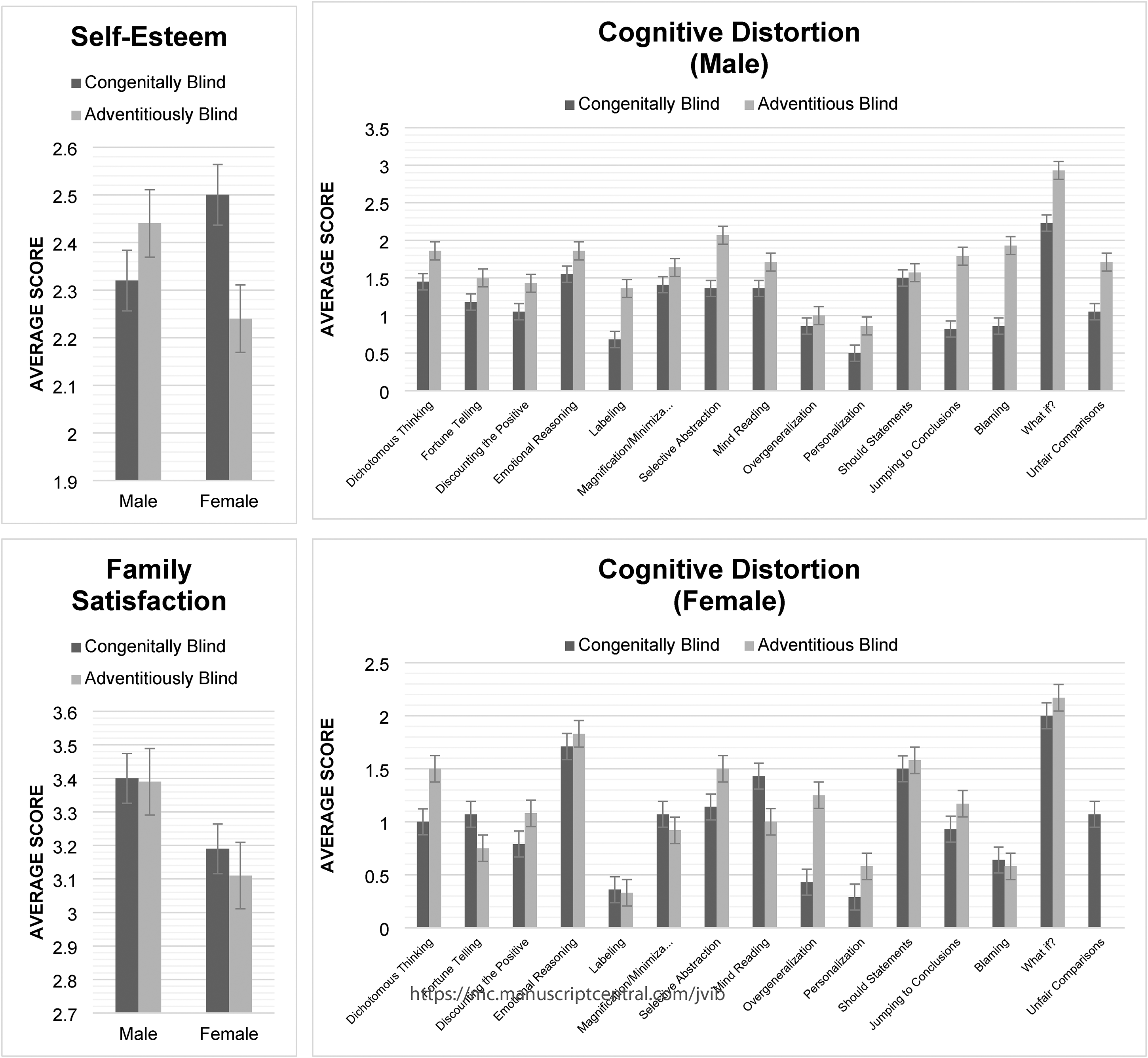
Average Scores for Male and Female Participants, Categorized As Congenitally Blind and Adventitiously Blind, on the Rosenberg Self-Esteem Scale (RSE), Family Satisfaction Scale (FSS), and the Cognitive Distortions Questionnaire (CD-Quest) Measures
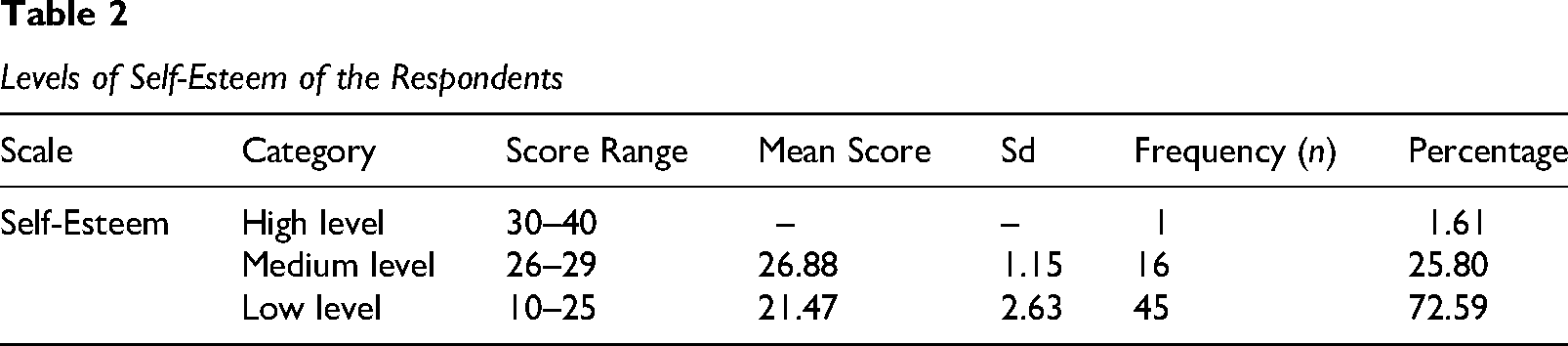
Table 2 showed the levels of self-esteem among the 62 participants. A mere 1.61% (1 respondent) reported having a high level of self-esteem, while a substantial 72.59% (45 participants) indicated low self-esteem, resulting in a mean score of 21.47 and a standard deviation of 2.63. The prevalence of low self-esteem among respondents suggests a correlation with low confidence, hypersensitivity, and feelings of inadequacy (Firestone, 2017).
Levels of Self-Esteem of the Respondents
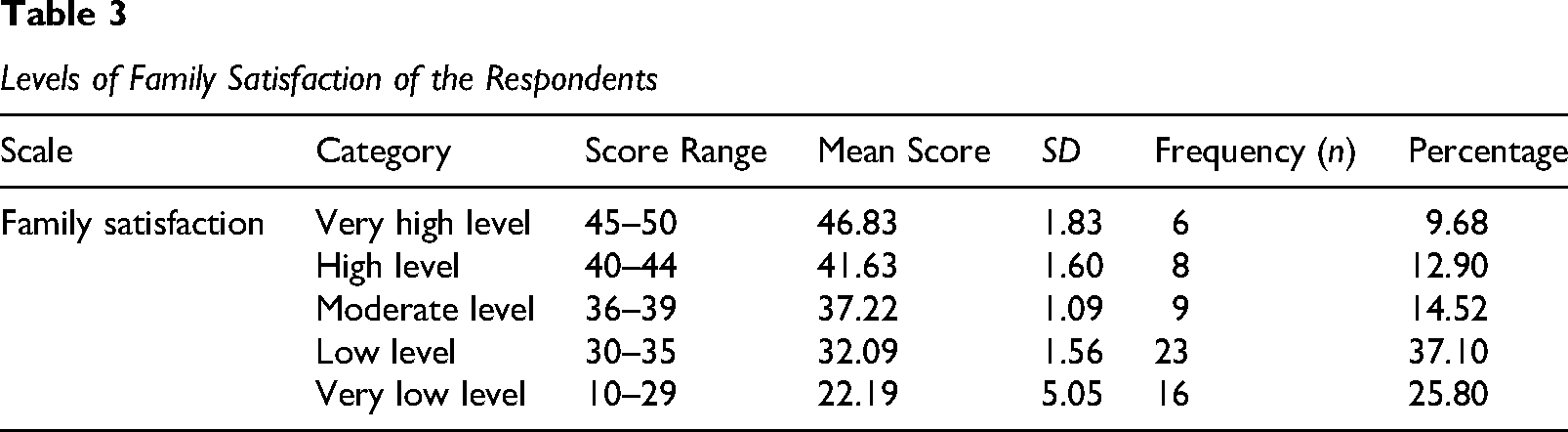
In terms of family satisfaction, 9.68% (6 respondents) reported very high levels, with a mean score of 46.83 and a standard deviation of 1.83 as shown in Table 3. Conversely, 37.10% (23 participants) indicated low family satisfaction, achieving a mean score of 32.09 and a standard deviation of 1.56. Very high family satisfaction suggests that family members are generally content with their family life (Olson, 1995). However, the predominance of low family satisfaction among respondents points to dissatisfaction with family dynamics, including issues related to cohesion, flexibility, and communication. Families facing unbalanced dynamics often struggle with pressures and poor communication, though improvements can be made through enhanced communication skills (Sanders & Bell, 2011).
Levels of Family Satisfaction of the Respondents
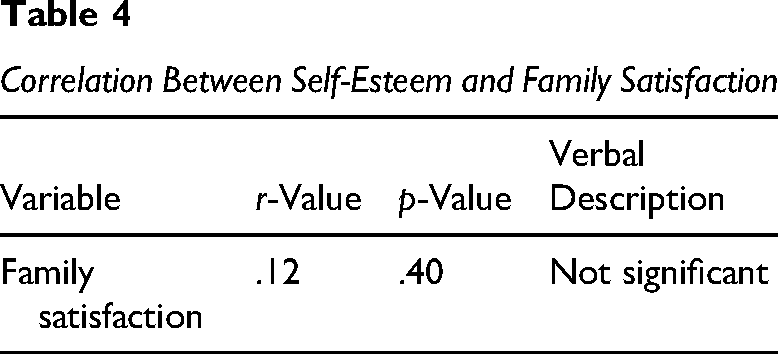
Interestingly, as presented in Table 4, the relationship between self-esteem and family satisfaction was not significant (r = .12, p = .40), contradicting the study's hypothesis. This finding indicates that there is no significant association between self-esteem and family satisfaction among young people with visual impairments, suggesting that self-esteem may be influenced by factors beyond family satisfaction, since perceptions of it can vary widely among individuals in this demographic.
Correlation Between Self-Esteem and Family Satisfaction
Regarding cognitive distortions, the analysis of mean scores for each type reveals in Table 5 that respondents exhibited very low levels of cognitive distortion, with an overall mean average of 1.25 and a standard deviation of 1.36. Pimentel's (2019) suggested intervals for a 5-point Likert scale were employed to determine the inclusion criteria for the qualitative phase. Notably, the statement, “I assume that others’ behaviors and external events concern (or are directed to) myself without considering other plausible explanations,” received the lowest mean score of 0.55 (standard deviation = 0.94), indicating no occurrence of cognitive distortion. In contrast, the statement, “I keep asking myself questions such as ‘what if something happens?’” had the highest mean score of 2.32 (standard deviation = 1.56), reflecting a low occurrence of cognitive distortion. These findings suggest that young people with visual impairments generally have low levels of cognitive distortion. However, it is important to recognize that even very low to low levels of cognitive distortion indicate the existence of cognitive distortions in respondents’ thought patterns, albeit at minimal or manageable levels.
Levels of Cognitive Distortions of the Respondents
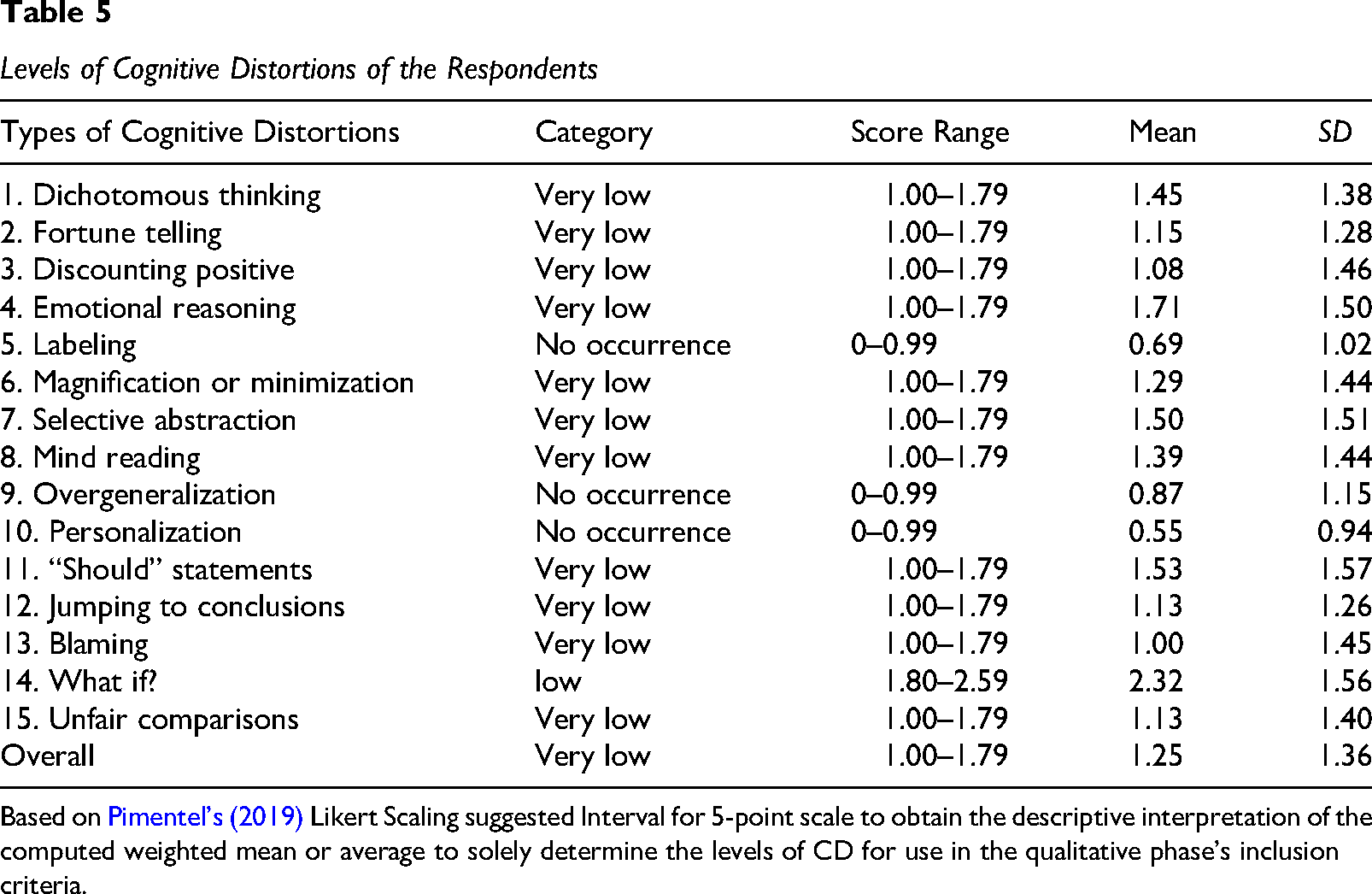
Based on Pimentel's (2019) Likert Scaling suggested Interval for 5-point scale to obtain the descriptive interpretation of the computed weighted mean or average to solely determine the levels of CD for use in the qualitative phase's inclusion criteria.
Table 6 presents the relationship between respondents’ self-esteem and cognitive distortion, showing a significant negative correlation at the 0.05 level (r = -.40, p = .01). The moderate negative correlation indicates that higher self-esteem is linked to lower cognitive distortion among young people with visual impairments, supporting the study's hypothesis (Piter et al., 2018).
Correlation Between Self-Esteem and Cognitive Distortion
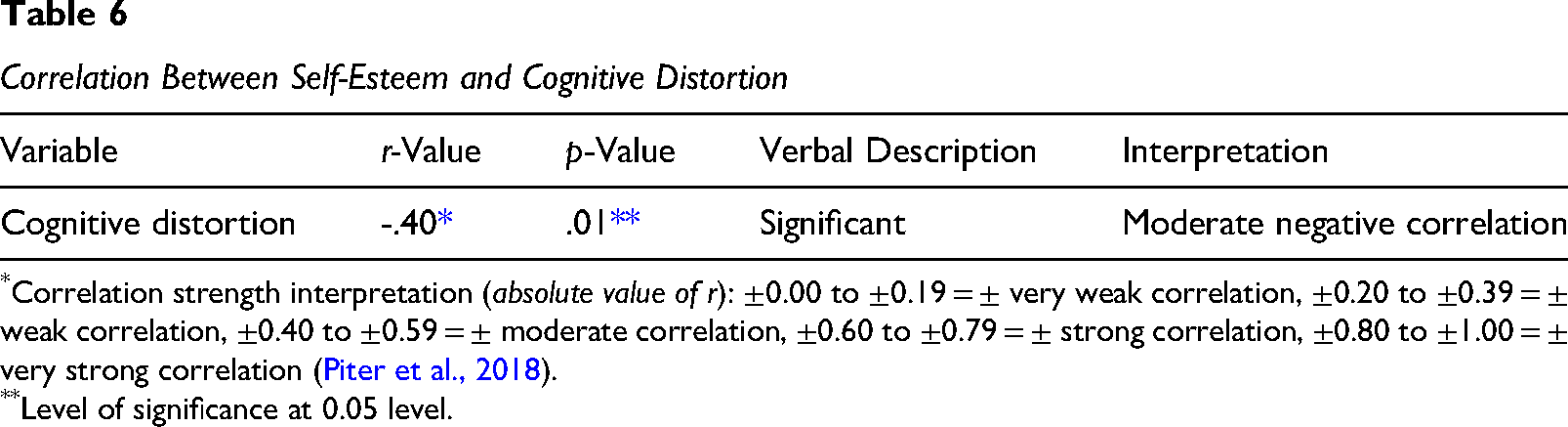
Correlation strength interpretation (absolute value of r): ±0.00 to ±0.19 = ± very weak correlation, ±0.20 to ±0.39 = ± weak correlation, ±0.40 to ±0.59 = ± moderate correlation, ±0.60 to ±0.79 = ± strong correlation, ±0.80 to ±1.00 = ± very strong correlation (Piter et al., 2018).
Level of significance at 0.05 level.
Qualitative Findings
This section presents key demographics and qualitative findings. Among five participants, three were from single-parent households, two from two-parent households, and only one was the only individual with visual impairment in their family.
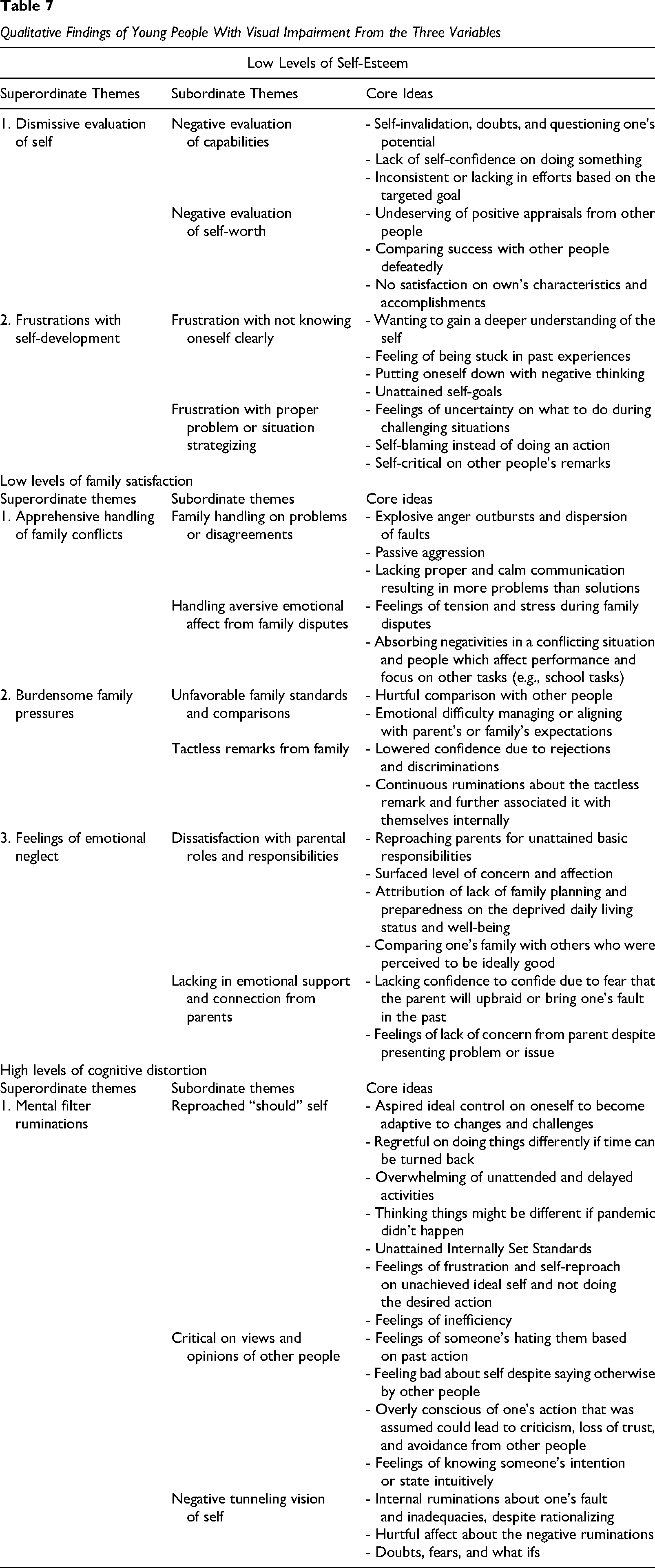
Table 7 presents comprehensive findings based on the thematic analysis, which explored the experiences of individuals with low self-esteem, low family satisfaction, and high cognitive distortion. This analysis was systematically organized into superordinate themes, capturing overarching patterns; subordinate themes, reflecting more specific aspects within each superordinate theme; and core ideas, providing detailed insights into the nuanced experiences of the participants.
Qualitative Findings of Young People With Visual Impairment From the Three Variables
Low Self-Esteem
Superordinate Theme 1: Dismissive Evaluation of Self
All five respondents described their negative assessments of their own abilities such as self-invalidation, doubting their own potential, and a lack of confidence in doing something important. They also felt that their efforts were not “sufficient enough” and were inconsistent with self-targeted goals and standards in daily life functioning. As one participant put it: “I know that I’m still not satisfied with myself, with who I am and the characteristics I have. I invalidate myself so much, but I feel like I haven't done anything because I’m not satisfied with what I’ve done” (R1).
Self-worth was also being negatively evaluated by comparing one's own progress of success with other people. Some participants said that they felt no satisfaction with their current characteristics and accomplishments they have; and even if they get praised by others, they will feel undeserving of positive appraisals and will think that others can do it better than them or that they weren't really doing enough.
A respondent notably verbalized: I’m doing something, but why does it feel like there are so many things I want to do? Then I can't accomplish them, and at that time, I feel like there's so much I can't do. I don't know how to improve. There are so many doubts and questions in myself, which is why I’m not satisfied. (R2)
Superordinate Theme 2: Frustrations with Self-Development
All five respondents shared that they have experienced frustrations on not knowing or realizing themselves clearly in achieving goals. They oftentimes have feelings of being stuck in the past and they tend to put themselves down with unhelpful thinking, thus, if only they knew who they really are and what they can actually do, unattained self-goals can be avoided. Consequently, frustrations with proper problem-solving or strategizing emerged through the statements. They often have feelings of uncertainty about what to do during challenging or difficult situations and tend to blame themselves rather than act or think of a solution that could help them. They are also very critical of what other people will say to them.
One respondent particularly described: I want to know, I mean, to get to know myself more deeply. It seems like I don't really know how to do that. So, that's also causing a drop in my self-esteem. It's like, how can I boost my self-confidence if I don't even know what my strengths are? (R2)
Low Family Satisfaction
Superordinate Theme 1: Apprehensive Handling of Family Conflicts
Four out of five respondents shared that handling family problems or disagreements is difficult whenever it was dealt with explosive anger outbursts, dispersion of faults, passive aggression, and upbraiding or bringing one's fault from the past. Lacking proper and calm communication during these hard times can result in more problems than solutions.
One respondent emphasized: It's also bad how they (parents) handle problems by not addressing them; they just get angry or irritated, or something like that. It's like, you know how some other families really talk things out, but with us, it's not like that, not at all. (R5)
Moreover, it can also create an aversive emotional effect on an individual by absorbing negativities in conflicting situations. Some of the participants also noted that they experienced rejection and discrimination among family members.
One respondent notably articulated: I absorb the “negative vibes” from their stories, and I feel drained from all of it because they don't solve their problems. I start to wonder, “How do I solve this?” and I feel depleted from thinking about it. Then I don't know how to solve the issues I'm dealing with myself. (R2)
Superordinate Theme 2: Burdensome Family Pressures
All five respondents shared that they had emotional difficulty managing and aligning themselves with their family's expectations, especially when being compared to others. One participant elaborated: “Because their expectations of me are so high, it feels like pressure. Because I feel pressured, the more I feel that I can't meet those expectations. Their expectations always come with comparisons; I’m always being compared” (R4).
The respondents also noted that they experienced tactless remarks from their family, which affected their confidence due to perceived rejection and discrimination. One female respondent further shared experiencing continuous rumination about these remarks, internalizing them over time:
One respondent shared: Because in the family, they should also be the source of your confidence. But they say all sorts of things to me, like, “You're a young woman … and yet” or “You would be beautiful if only …” There's always a “but.” I don't always think about it, but I can't forget it either. (R1)
Superordinate Theme 3: Feelings of Emotional Neglect
Some of the respondents shared that their feelings of emotional neglect were rooted in dissatisfaction with parents performing their roles and responsibilities below par, such as providing basic needs and displaying a surface level of concern and affection. The attribution was made from a lack of family planning and preparedness in the past to the current deprived living status and well-being, thus comparing one's family to others who were perceived to be ideal.
One participant's notable response was: I blame my mom for it, because we have nothing to eat, and I sometimes feel like crying when I sometimes think about it. When I think about our basic needs, I wonder why they even had me, it was as if they brought me here (in the world) without plans, that's why I’m struggling now. For example, if I say I’m sick, they just react with, “ahhh …” like that. It's really hurtful. I don't know if they’re pretending not to know because we don't have money or something, but it feels like they don't care. (R5)
High Cognitive Distortion
Superordinate Theme 1: Mental Filter Ruminations
All of the respondents shared that they are self-reproaching on the power of control about themselves and on what they can do. They have feelings of frustration about the unachieved ideal self and goals, and tend to be regretful about doing things differently if time or a specific situation can be turned back. They also aspired to ideal control on oneself to become adaptive to changes most especially when the pandemic entered the story almost six years ago (in the year 2020), wherein, some participants thought that things (e.g., overwhelming unattended and delayed activities) might be different if the pandemic had not happened. As one expressed: “If only I were like this, if only I were more controlled, or if my peace of mind were more balanced, then I would be able to accept the changes each day more calmly or more easily” (R1).
Respondents also shared that they have experienced being self-critical about the views and opinions of other people, like feelings of someone hating them or knowing someone's intention through intuition—lacking the evidence to prove so. Furthermore, they tend to feel bad about themselves despite saying otherwise by other people (e.g., praises), and are more inclined to be overly self-consciousness about their actions which they thought could lead to criticism, loss of trust, and avoidance from other people.
One respondent shared: I feel like they are really angry with me, because I really don't want people to be mad at me. It makes me question if I did something wrong. I feel I am so bad. I don't know, it seems like others see me as a very nice person, but when it comes to myself, I wonder why I am like this and how I can change myself. (R3)
Discussion
The current research represents the first comprehensive investigation into the associations between self-esteem, family satisfaction, and cognitive distortion among young people with visual impairments. Its in-depth mixed methods approach illuminated how it was experienced by young people with visual impairments in the Philippines.
The low self-esteem among young people with visual impairments in this study reflects disparities with their sighted peers, emphasizing unique challenges like societal pressures and future-related anxiety (Robertson et al., 2021). These challenges underscore the importance of comprehensive social support to help young people with visual impairments navigate their unique experiences (Imhonde et al., 2017). For young people with visual impairments, cultivating an internal locus of control and independence can enhance self-esteem, thus fostering optimism and confidence in decision-making and future planning (Papadopoulos et al., 2013).
Moreover, research shows that self-esteem of young people with visual impairments can also be positively shaped by social support (Manitsa & Doikou, 2022), personal hobbies and skills (Feeney & Collins, 2015), and supportive interactions with teachers and school staff members (Lupón et al., 2018).
Qualitative findings suggest that adolescents seek to form stable identities by exploring their values, beliefs, and aspirations. However, an inability to do so may result in role confusion and uncertainty about their capabilities (Feist et al., 2018). Personal growth for young people with visual impairments relies on their ability to self-evaluate and trust their own assessments, while self-doubt, negative emotions such as shame and anger, and dependence on external validation can impede their self-awareness, goal-setting, and agency (Koivisto et al., 2022).
The presence of cognitive distortions among young Filipinos with visual impairments in this study underscores their heightened susceptibility to maladaptive thought patterns compared to other age groups (Mohamad et al., 2021). Cognitive distortions, characterized by automatic and often self-defeating thoughts, can lead to feelings of hopelessness about the future and diminished self-efficacy (Zamani et al., 2018). Individual differences, such as personality traits (Maheshwari & Chadha, 2021), high self-esteem, and optimistic attributional styles (Kazemi et al., 2017), play crucial roles in mitigating these unhelpful cognitive patterns among young people with visual impairments.
This study also reveals a significant negative correlation between cognitive distortion and self-esteem in young people with visual impairments. Cognitive distortions can lead individuals to attribute negative experiences to internal factors, fostering feelings of hopelessness and low self-esteem. Such internalized thinking contributes to helplessness and further diminishes self-efficacy (Zamani et al., 2018). Conversely, fluctuations in self-esteem can affect emotional responses, motivation, and behavior, potentially transforming adaptive behaviors into maladaptive ones or precipitating psychopathological symptoms (Beck & Brittany, 2021). Thus, cognitive distortion restricts positive outlooks, which are essential for effective self-regulation (Rnic et al., 2016).
Qualitative findings further illuminate that individuals often strive to align their current selves with their ideal selves, seeking information that bolsters their self-concept while avoiding contradictions (Ueda, 2018). Although this alignment can be beneficial, reliance on “should” statements may intensify negative experiences, amplify feelings of shame, inhibit creativity, and impose unrealistic expectations, potentially leading to burnout and mental health issues (Burns, 1989). Additionally, the mental filter phenomenon compels individuals to focus more on their flaws than their strengths, creating a habit of emphasizing the negative over the positive. This persistent focus on negative aspects can rapidly cultivate a pessimistic outlook on life (Arocho, 2021).
For Filipinos adolescents, including those with visual impairments, family support is considered essential for achieving a sense of joy and fulfillment (Dullas et al., 2021). Strong social support (Imhonde et al., 2017; Manitsa & Doikou, 2022), positive family interactions, and adaptive parenting have been found to enhance coping skills, psychological well-being, and the socioemotional and academic development of students with visual impairments (Alshehri, 2016). However, families may face socioeconomic challenges, including the financial cost of supporting a child with a visual impairment, which can affect family dynamics and the ability to meet daily needs (Berryman, 2002). Such financial strains may contribute to neglect in family bonding and cohesion, as observed in some Filipino households (Roche, 2017), which was reflected in the low family satisfaction scores reported by the majority of young people with visual impairments. Nevertheless, despite these challenges, this group often focuses on the resilience and adaptability of their families, valuing their capacity to share positive experiences even amidst difficulties (Lupón et al., 2018).
Qualitative findings of this study further indicate that family conflicts, especially poor communication and parental disputes, are perceived by young people with visual impairments as among the most challenging issues within family dynamics (Faustino, 2019). Filipino family structures are characterized by strong respect for parental authority, family cohesion, and an emphasis on fulfilling familial obligations (Bartolome et al., 2017). Nonetheless, high levels of family-induced stress can severely impact adolescent mental health, with parental pressure emerging as a particularly detrimental stressor (Hosseinkhani et al., 2020). Daily socioeconomic struggles faced by Filipino parents often lead to prioritizing basic needs over other family dynamics, which, in turn, can sometimes result in neglect of family bonding (Bartolome et al., 2017; Roche, 2017).
Interestingly, family satisfaction did not show a significant association with self-esteem in this study. This may imply that self-esteem in young people with visual impairments is influenced more by specific aspects of family dynamics, such as the early contributions of affection (Roberts & Bengtson, 1993), a supportive family environment (Morowati Sharifabad et al., 2020), and a sense of safety within the family (Feeney & Collins, 2015).
Limitations
This study's limitations include a small, single-site sample in the Philippines, limiting generalizability. Expanding to multiple institutions and diverse psychological profiles would enhance understanding. Self-reported data may introduce bias, so future research could use observational methods. Adventitiously blind individuals show lower self-esteem and family satisfaction but higher cognitive distortion, indicating adjustment challenges, warranting further study on coping, support, interventions, and educational influences on well-being among young people with visual impairments.
Conclusions
This study examined the relationship between self-esteem, family satisfaction, and cognitive distortion among Filipino young people with visual impairments. Findings showed a moderate negative correlation between self-esteem and cognitive distortion, indicating that higher self-esteem is linked to lower cognitive distortion. Qualitative data revealed that low self-esteem stemmed from self-dismissal and frustration with self-development, tied to the mental filter ruminations of cognitive distortion. Family satisfaction had no significant correlation with self-esteem, suggesting other family dynamics and social support influence self-esteem. Themes indicated low family satisfaction arose from family conflicts, pressures, and emotional neglect, yet young people with visual impairments still valued their families’ resilience and support, reflecting Filipino cultural values.
These findings highlight the effect of cognitive distortion on self-esteem, emphasizing the need for interventions to help young people with visual impairments challenge negative thinking. Strengthening family communication and conflict-resolution skills can foster healthier dynamics. Expanding social support and tailored developmental opportunities can empower this group to reach their full potential.
Supplemental Material
sj-docx-1-jvb-10.1177_0145482X261447297 - Supplemental material for Self-Esteem, Family Satisfaction, and Cognitive Distortion of Young People With Visual Impairments in the Philippines: A Mixed-Methods Study
Supplemental material, sj-docx-1-jvb-10.1177_0145482X261447297 for Self-Esteem, Family Satisfaction, and Cognitive Distortion of Young People With Visual Impairments in the Philippines: A Mixed-Methods Study by Sheina T. Cadavos and Ian I. Llenares in Journal of Visual Impairment & Blindness
Footnotes
Authors’ Note
We hereby declare that there are no known conflicts of interest associated with this research. Additionally, the research was entirely self-funded, with no external financial support.

Funding
The authors received no financial support for the research, authorship, and/or publication of this article.
Declaration of Conflicting Interests
The authors declared no potential conflicts of interest with respect to the research, authorship, and/or publication of this article.
Supplemental Material
Supplemental material for this article is available online.
References
Supplementary Material
Please find the following supplemental material available below.
For Open Access articles published under a Creative Commons License, all supplemental material carries the same license as the article it is associated with.
For non-Open Access articles published, all supplemental material carries a non-exclusive license, and permission requests for re-use of supplemental material or any part of supplemental material shall be sent directly to the copyright owner as specified in the copyright notice associated with the article.
