







Abstract
In a four-wave longitudinal study with N = 1,321 adolescents in Germany, we examined the impact of class-level normative beliefs about aggression on aggressive norms and behavior at the individual level over the course of 3 years. At each data wave, participants indicated their normative acceptance of aggressive behavior and provided self-reports of physical and relational aggression. Multilevel analyses revealed significant cross-level interactions between class-level and individual-level normative beliefs at T1 on individual differences in physical aggression at T2, and the indirect interactive effects were significant up to T4. Normative approval of aggression at the class level, especially girls’ normative beliefs, defined the boundary conditions for the expression of individual differences in aggressive norms and their impact on physically and relationally aggressive behavior for both girls and boys. The findings demonstrate the moderating effect of social norms on the pathways from individual normative beliefs to aggressive behavior in adolescence.
Adolescents spend a large part of the day at school, and their classmates are probably the peers with whom they spend most time, suggesting that this peer group may have a large influence on their attitudes and behavior. An important process by which groups influence the attitudes and behavior of individual members is the establishment of group norms (Cialdini, Reno, & Kallgren, 1990), and adolescents are especially keen to meet the normative expectations of their peers (Coley, Lombardi, Lynch, Mahalik, & Sims, 2013; Mrug & McCay, 2013). As aggression is a problem with long-term detrimental consequences (Hahn et al., 2007; Krahé, 2013), it is important to investigate the influence of peer-group normative beliefs about aggression on the development of individual normative beliefs and aggressive behavior in adolescents. Normative beliefs have both a descriptive component in terms of conveying how common a behavior is and an injunctive component referring to the evaluation and approval of the behavior (Cialdini et al., 1990). The focus of the present study lies on the injunctive facets of aggression-related normative beliefs, reflecting the extent to which aggression is considered acceptable by both individuals and class communities.
Understanding the normative influence of classmates on individual normative beliefs and behavior is also relevant for evaluating theoretical models of aggressive behavior. In many contexts, adolescents can actively select peers, and they commonly choose to affiliate with peers who are similar to themselves (Low, Polanin, & Espelage, 2013). This process favors the formation of groups with similar normative beliefs, making it difficult to decide whether the similarity is the result of a selection process through the affiliation with like-minded peers or a socialization process in which individuals’ normative beliefs are influenced by their fellow group members. Studying the role of peer-group normative beliefs in a class context provides an opportunity for demonstrating the socialization effects of peer-group norms about aggression in a more conclusive fashion. Typically, students cannot choose their classmates, which means that in their class, adolescents encounter students with different normative beliefs about aggression. In addition to spending time with these peers on a daily basis, they stay together as a group over substantial periods of time in many school systems, providing an excellent opportunity for studying the impact of peer norms on individual normative beliefs and aggressive behavior from a longitudinal perspective. The present study used multilevel analysis to examine the influence of class norms on individual normative beliefs about aggression as well as aggressive behavior by following adolescents in Germany over four data waves spanning 3 years, during which they remained in stable class groups.
Numerous studies have reported an increase in aggression in adolescents who join more aggressive peer groups (e.g., Benson & Buehler, 2012; Paternoster, McGloin, Nguyen, & Thomas, 2013). Although this research was mostly performed in contexts in which adolescents could actively select their peers (see Vitaro, Boivin, & Tremblay, 2007, for a review), some studies conducted in a school context have shown that in classes with a high level of aggressive behavior, individuals tend to behave more aggressively (Mercer, McMillen, & DeRosier, 2009; Warren, Schoppelrey, Moberg, & McDonald, 2005). A pertinent variable which may explain the influence of peers on aggressive behavior are group-level normative beliefs that condone or support aggression.
The Influence of Normative Beliefs on Aggressive Behavior
Social-cognitive models of aggression assign a key role to the normative evaluation of aggression as a cognitive antecedent of aggressive behavior. One influential model that explains the influence of normative beliefs on aggression is Huesmann’s Script Theory (Huesmann, 1988). Aggressive scripts consist of stored knowledge about the handling of conflict situations that is acquired through learning processes. Individuals experience the consequences of aggressive behavior in particular situations both through direct reinforcement or punishment and through the vicarious reinforcement and punishment observed in response to the behavior of others. The more positive consequences experienced and observed for aggressive behavior, the more likely it is that aggressive scripts are developed in which these experiences are stored and retrieved when similar situations are encountered in the future. The evaluation of aggressive scripts and their translation into behavior depend on the normative beliefs about the appropriateness of the particular scripts or scripted actions. Normative beliefs do not develop in a social vacuum but are shaped significantly through interactions with others. Huesmann and Guerra (1997) defined normative beliefs “as individualistic cognitive standards” (p. 409) and distinguished them from social norms. Social norms contain beliefs about aggression shared by peers or other relevant social groups. These social norms should also affect individuals’ decisions for or against implementing a particular script (Cialdini et al., 1990). Accordingly, aggressive behavior should be more likely to occur if both the individual normative beliefs and the norms of a pertinent social group point to aggression as an acceptable behavioral choice.
A second influential conceptualization of developmental pathways of aggression is the Social Information Processing (SIP) theory by Dodge and colleagues (Crick & Dodge, 1994; Fontaine & Dodge, 2009). The central tenet of their theory is that aggressive behavior results from a sequence of cognitive processes in which incoming social information is interpreted and used to evaluate behavioral options and implement decisions for or against an aggressive response. Learning processes shape the processing of incoming information, particularly at the response evaluation stage. Individuals develop outcome expectancies, that is beliefs about whether aggressive behavior will lead to positive or negative outcomes, that are based on past experience and observational learning. The perception of the degree to which aggressive behavior is endorsed by relevant social groups also affects response evaluation and decision making. To the extent that the peers approve of aggressive behavior, it becomes more likely that an aggressive response will be selected.
Several studies have demonstrated that normative beliefs about the acceptability of aggressive behavior are linked to the likelihood of engaging in aggression, both cross-sectionally and over time. In a sample of Estonian adolescents, normative beliefs about aggression were significantly related to physical, indirect, and verbal aggression in seventh and ninth graders (Kikas, Peets, Tropp, & Hinn, 2009). Werner and Nixon (2005) showed that normative beliefs about physical and relational aggression were uniquely related to reports of physically and relationally aggressive behavior, respectively. Longitudinal studies in different countries have shown that normative beliefs that condone aggression predict increases in aggression over time (Huesmann & Guerra, 1997; Möller & Krahé, 2009).
Studies considering the class context and individual norms and behavior in conjunction have often used aggregate scores of aggressive behavior as a proxy measure for group-level normative beliefs. In a longitudinal study with more than 5,000 participants, it was shown that pro-aggression class norms, measured by aggregating individual normative beliefs, predicted an increase in aggressive behavior in individual class members (Farrell, Henry, Mays, & Schoeny, 2011; Henry, Farrell, Schoeny, Tolan, & Dymnicki, 2011). In a cross-sectional study, Bernburg and Thorlindsson (2005) showed that boys’ aggressive behavior could be predicted by individual-level as well as school-level normative beliefs. However, the aggressive behavior of girls was only predicted by school norms and not by individual normative beliefs. Focusing on relational aggression, Werner and Hill (2010) showed that class norms longitudinally predicted individual-level relational aggression, whereas individual-level normative beliefs had no significant effect.
However, all these studies included the individual-level score as well as the class-level mean in the model at the same time. This can lead to slightly biased parameters representing the influence of normative beliefs because each participant’s individual score is used in the estimation of both the individual-level and the class-level effects. One possible way to avoid this problem is to calculate the class mean by aggregating across all individual scores and subtract the class mean from the individual score to use the resulting difference score to represent individual-level effects (Raudenbush & Bryk, 2002). In addition, most previous studies did not report interactions between class-level variables and individual-level variables (Bernburg & Thorlindsson, 2005; Henry et al., 2011; Henry et al., 2000) or did not find significant cross-level interactions (Werner & Hill, 2010). An exception is the study by Brendgen, Girard, Vitaro, Dionne, and Boivin (2015), who found that students with a higher genetic risk for aggressive behavior showed more physically aggressive behavior than those with a lower risk, particularly in classes with aggression-supporting normative beliefs. No moderation between genetic risk and class-level normative beliefs was found for relational aggression in this study.
Gender Differences in the Influence of Group-Level Normative Beliefs on Aggressive Behavior
Research regarding the role of gender in understanding the effects of group-level norms on individual normative beliefs and aggressive behavior has mainly focused on the question of whether boys and girls differ in their susceptibility to peer group influences. Salmivalli and Voeten (2004) showed that anti-bullying norms predicted action-taking in defense of victims only for girls. However, they found the opposite gender difference for bullying behavior: Boys in classes with lower anti-bullying norms showed more bullying behavior compared with boys in classes with higher anti-bullying norms. For girls, no relationship between anti-bullying norms in the class and bullying behavior was found.
In a further bullying study, Isaacs, Voeten, and Salmivalli (2013) created separate class means of attitudes toward bullying for boys and girls to predict the association between social rejection and bullying victimization. They found a cross-level interaction between the normative beliefs of same-sex peers in a classroom and individual-level peer rejection only for girls: In classes in which attitudes condoning bullying were pronounced among girls, a closer link between peer rejection and victimization was found for girls. Attitudes condoning bullying by male peers had no predictive effect on the link between peer rejection and victimization in boys. However, these authors did not test whether girls’ attitudes toward bullying also predicted victimization of the boys or vice versa.
To explain the processes underlying the impact of group norms on individual beliefs and behavior, Dishion and colleagues have proposed a process of peer contagion by which aggression is promoted in adolescent friendship groups through the reinforcement of deviant attitudes and norm-violating behavior (see Dishion & Tipsord, 2011, for a review). Peer groups in which pro-aggression norms are shared provide learning opportunities for the acquisition of deviant attitudes and behaviors, referred to as “deviancy training,” that may root aggression more firmly in individual group members’ attitudinal and behavioral repertoires.
A second theoretical perspective on peer group influence refers to the social multiplier effect (Fletcher, 2007). This approach stipulates that influential members of a social network have the potential to change the beliefs and behavior of the network members as a whole, implying that interventions targeting these influential others may bring about the intended effects in the group as a whole. With regard to aggression, Yarnell, Pasch, Brown, Perry, and Komro (2014) found in a cross-sectional analysis that in schools where the girls showed a particularly low level of violent behavior, the boys also showed lower violent behavior. While these authors did not examine the mechanisms underlying the social multiplier effect of girls, one possibility for explaining this effect is the influence of normative beliefs held by the girls as a group.
Analyzing Group-Level Effects Through Multilevel Structural Equation Modelling
To investigate group-level effects and their interaction with individual-level variables in data sets in which persons are nested in groups, such as students attending the same class, multilevel models are the appropriate statistical approach (Muthén & Asparouhov, 2009; Raudenbush & Bryk, 2002). In these models, one level is designated as the individual level where each participant may have a different score, while the other level is designated as the group or contextual level (e.g., the class). At this level, each member of a group has the same score but the groups may differ from each other. The scores on the class level can either be variables that are only meaningful at the group level (e.g., school type or class climate) or the mean of variables measured at the individual level (e.g., aggressive behavior; Lüdtke et al., 2008). The mean of the individual-level scores can be used to represent the group level. In this approach, the individual-level scores should be adjusted for the fact that each score is already included in the class mean. There are two ways of making this adjustment: (a) to center the individual scores on the overall mean (“grand mean centering”) or (b) to subtract the class mean from the individual scores (“group mean centering”). With grand mean centering, the Level 1 coefficients reflect both individual-level and class-level variation, the accompanying random components are biased (Raudenbush & Bryk, 2002), and cross-level interactions may be found to be significant although only interactions within a level are present. To avoid these problems, we followed the recommendation to use group mean centering (Enders & Tofighi, 2007; Paccagnella, 2006; Raudenbush & Bryk, 2002), especially because analyzing cross-level interactions was the main focus of our study.
Class-level effects that influence individual norms and behavior can arise in two ways: One possibility is that the coefficients differ between the individual and the class level, indicating that a risk factor operates differently at each level. For example, Henry et al. (2011) showed that in classes with aggression-promoting normative beliefs, all students showed an increase in aggressive behavior over time irrespective of their individual normative belief scores. Thus, normative beliefs were predictive of aggression at the group level, but not at the individual level. However, to conclude that the class-level processes are different from the individual-level processes, it is necessary to directly compare the regression coefficients for the two levels, as the coefficients at the class level often have very large confidence intervals (Preacher, Zyphur, & Zhang, 2010). None of the studies presented above has compared the strengths of individual- and class-level effects using significance tests.
A second possibility of how the context may influence individual behavior would be evidenced in a cross-level interaction, indicating that a variable on the class level moderates the influence of variables on the individual level. This approach is exemplified by the study by Brendgen et al. (2015) mentioned above, who showed that the impact of genetic risk factors on aggressive behavior depended on the class context. Cross-level interactions can also be studied with regard to measures of the same constructs calculated at the two levels. For example, Chang (2004) found a negative association between aggression and peer acceptance at the individual level. However, when class-level aggression was taken into account, they found that in classes with a high level of aggression, individual members’ aggressive behavior was positively linked to acceptance by their classmates.
The Current Study
The current research is based on the general proposition that the extent to which aggressive behavior is tolerated or even approved by relevant peer groups defines the scope within which individual normative beliefs can operate. Whereas the main effects hypothesis tested in most previous studies assumes that group-level norms affect individual members in a uniform way, we propose a more complex relationship between individual and group norms. As suggested by the studies by Brendgen et al. (2015) and Chang (2004), the interplay of individual-level and group-level variables may be more adequately conceptualized as an interactive effect. Individual differences in normative beliefs on aggression may be differentially linked to aggressive behavior depending on the prevailing group norms, reflecting a moderating role of group-level norms on the path from individual norms to behavior. Specifically, we propose that social groups in which tolerance for aggressive behavior is low constrain the possibility of individual members to act in accordance with their aggression-promoting normative beliefs, resulting in an attenuation of the link between individual normative beliefs and behavior. By contrast, social groups in which tolerance for aggressive behavior is high provide scope for individual differences in normative beliefs to translate into aggressive behavior, which should result in a stronger link between individual-level normative beliefs and behavior.
Our study was designed to test this line of reasoning by following a large sample of adolescents in Germany over four data waves 12 months apart. This long-term analysis was facilitated by the organizational structure of the local school system in which students remain in stable class communities from the start of secondary school in seventh grade up to tenth grade. Individual normative beliefs at T1 were separated into class-level normative beliefs and individual-level normative beliefs and used to predict normative beliefs as well as self-reported physical and relational aggression at T2, T3, and T4. Scores of physical and relational aggression were divided into individual-level and class-level scores in a parallel fashion.
Three research questions were addressed in our study. The first referred to the influence of class-level normative beliefs about aggression on the development of individual normative beliefs over time. While prior research has mainly focused on class-level main effects and tested whether class-level normative beliefs prospectively predicted individual normative beliefs at subsequent points in time, the current study focused on the role of cross-level interactions in predicting the development of aggressive norms. Specifically, we assumed that individual differences in aggressive norms at T1 would be more likely to become apparent at T2 and be sustained over time at T3 and T4 in a class context generally approving of aggression than in a class context where acceptance of aggression is low, because the latter constrains the possibility of acting in accordance with strong normative beliefs about the acceptability of aggression. In a class with low acceptance of aggression, students who initially consider aggression to be acceptable should decrease their acceptance over time to avoid social sanctions by their peers.
The second research question addressed the impact of class-level normative beliefs on the paths from individuals’ normative beliefs to physically and relationally aggressive behavior over time. We assumed an interactive effect of T1 class-level and individual-level normative beliefs on individual aggressive behavior at T2 that would be sustained at T3 and T4. In line with our proposition that class normative beliefs act to define the scope for the effects of individual normative beliefs, we predicted that individual differences in normative beliefs would show closer links with aggressive behavior in classes with a high compared to low normative acceptance of aggression. To test this proposition, class norms assessed at T1 were related to individual norms and aggressive behavior at T2 and followed in their indirect effects on aggressive behavior at T3 and T4, covering a total period of 3 years.
The third research question focused on the role of gender in shaping the influence of class-level norms on individual normative beliefs and aggressive behavior. Social comparison theory (Festinger, 1954) suggests that similar others are more influential in affecting normative beliefs and behavior, which would suggest within-gender effects of class-level norms on individual normative beliefs and aggressive behavior to be stronger than cross-gender effects. By contrast, research based on the social multiplier model suggests that girls may be particularly influential in shaping the normative beliefs and aggressive behavior in a class community, including those of the boys. The present study examined the two theoretical possibilities by investigating whether normative beliefs of the boys and girls in a class would differentially affect the paths from aggressive norms to individual behavior in both gender groups.
Method
Participants
The sample consisted of N = 1,321 secondary school students (675 male, 646 female) from 72 classes in 14 schools representing all types of secondary schools in Berlin, Germany. There were four data waves (T1-T4) separated by 1-year intervals, and participants were in Grades 7 or 8 at T1. All participants who participated at T1 and at least one additional measurement were included in the analyses (T2: n = 1,234 participants, T3: n = 1,069 participants, T4 n = 699 participants). 1 The mean age of the sample at T1 was 13.35 years (SD = .87). Half of the sample was in Grade 7 and the other half in Grade 8 at the first data wave. Grade 7 was chosen as the starting point because it is the first year of secondary school in Berlin and therefore the class groups could be expected to remain largely stable across the data collection period. In fact, 84% of the participants stayed in their respective classroom across the four data waves. In terms of ethnicity, 57% of the students were German, the remaining had a migration background, defined by meeting at least one of three criteria (non-German passport, non-German mother tongue, or language other than German spoken at home).
Measures
Normative acceptance of aggression
The normative approval of aggression was assessed by a vignette based on Möller and Krahé (2009) that described a confrontation with a peer who had provoked the protagonist. Participants were instructed to imagine being the protagonist in the scenario and evaluate the appropriateness of two physically aggressive reactions (e.g., to kick and push him or her), and three relationally aggressive responses (e.g., to spread rumors about him or her), using a 4-point scale from 0 (not at all ok) to 3 (totally ok). The internal consistency of the five-item measure was high at all four measurement points (T1: α = .80; T2: α = .79; T3: α = .80; T4: α = .73).
Aggressive behavior
To assess physical aggression, participants were asked to indicate how often they had (a) pushed, (b) kicked, (c) hit another person, (d) pulled another person’s hair, scratched or bitten him or her, and (e) broken things on purpose during the last 6 months. Two of these items were taken from Björkqvist, Österman, and Kaukiainen (1992), the remaining three were taken from Möller and Krahé (2009). Responses were made on a 5-point scale from 0 (never) to 4 (very often). The internal consistency was high at all time points (T1: α = .82; T2: α = .82; T3: α = .83; T4: α = .87).
To measure relational aggression, participants indicated how often they had (a) said nasty things about another person behind his/her back, (b) spread gossip, (c) played one person off against another, (d) dissed someone in front of others, and (e) excluded someone from their group during the last 6 months. Three relational aggression items came from Archer and Coyne (2005) and two items came from Möller and Krahé (2009). Again, a response scale from 0 (never) to 4 (very often) was used. The internal consistency was good at all time points (T1: α = .78; T2: α = .76; T3: α = .75; T4: α = .77).
Procedure
The study was approved by the ethics committee of the University of Potsdam and the local school authorities. All participants had to give active consent for participation, and active parental consent was required for participants below the age of 14. Nearly all parents and students gave their consent, ensuring a high sampling rate. Data collection took place during regular school hours, and the questionnaires were distributed in a paper-and-pencil format by trained project staff.
Data Analysis Plan
All continuous variables were z-standardized, based on the means and standard deviations presented in Table 1. Class-level scores were computed as the means of the individual scores on the measures of physical and relational aggression and normative acceptance, following the recommendation by Lüdtke et al. (2008). The class mean was used at the second level. This approach is supported by Lüdtke et al.’s recommendation that “for formative L2 constructs (as in Study 5), the MMC approach can comfortably be used when the sampling ratio approaches 1.0” (p. 224). At the individual level, scores on the measures of physical and relational aggression as well as normative acceptance were separated into two parts: the class mean score and the individual deviation from the class mean. For the analyses addressing the impact of gendered class norms, separate class-level means were computed for boys and girls, and each individual score was computed as the deviation of the participant’s score from his or her gender group.
Means, Standard Deviations, and ICC.
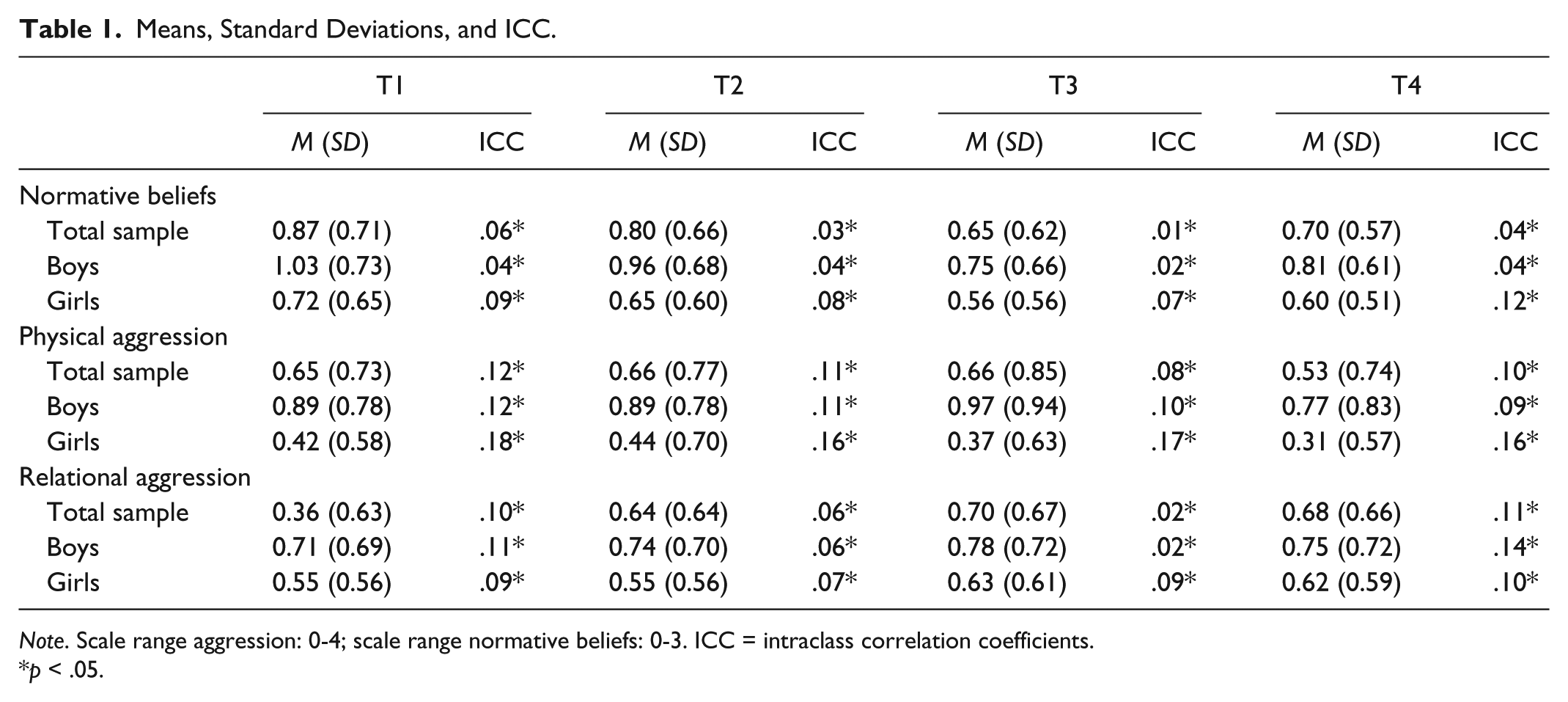
Note. Scale range aggression: 0-4; scale range normative beliefs: 0-3. ICC = intraclass correlation coefficients.
p < .05.
The data were analyzed with the two-level modelling feature of Mplus 7.2 using a Bayes estimator. Monte Carlo studies have shown that especially in settings with a limited number of Level 2 clusters, such as the number of classes in our study, this approach leads to improved estimates compared with conventional approaches (Hox, Van De Schoot, & Matthijsse, 2012). All priors were chosen to be non-informative, which is the Mplus default setting.
To compare coefficients, the model constraint option of Mplus was used. Because Mplus does not estimate a model fit for multilevel models including a cross-level interaction, no model fit indices are presented in the result section. Following best practice recommendations by Aguinis, Gottfredson, and Culpepper (2013), intraclass correlations for all variables as well as the unstandardized fixed effects and the number of estimated parameters are reported. The Credibility Interval is reported instead of standard errors, because this parameter was used to assess significance.
Results
Analysis of Attrition and Descriptive Statistics
Logistic regression was used to test whether attrition across the study was random or systematic. In these models, participation at T2, T3, and T4 was predicted by T1 individual normative beliefs, individual physical, and relational aggression, class-level normative beliefs, class-level physical and relation aggression, gender, migration status, cohort, and school type. At T2, none of the predictors was significant; at T3, a higher attrition was found for participants in the lower academic track, and at T4, participants in the older cohort were less likely to have remained in the sample because those attending less academically oriented schools had come to the end of their school career (see Note 1). However, no special procedure for handling missing data was necessary because the chosen statistical approach allowed missing values in the data and did not require all participants to have attended the same number of measurement occasions.
The means, standard deviations, and intraclass correlation coefficients (ICC) are displayed in Table 1. Latent intercept-slope models with linear as well quadratic trends were used to examine changes in the normative beliefs and aggression scores in the course of the study as well as gender differences. For the normative beliefs, neither the linear trend, b = −0.11, 95% credibility intervals (CI) = [−0.25, 0.04], nor the quadratic trend, b = 0.04, 95% CI = [−0.01, 0.08], were significant. In terms of gender differences, boys reported a higher normative acceptance of aggression compared with girls, b = 0.32, 95% CI = [0.23, 0.39], p < .05. Neither the linear nor the quadratic trend of the normative beliefs interacted with gender, indicating a stable gender difference over the course of the study.
Similarly, for physical aggression, neither the linear, b = −0.11, 95% CI = [−0.26, 0.05], nor the quadratic, b = −0.02, 95% CI = [−.03, 0.07], trends were significant. Boys scored higher than girls on physical aggression at T1, b = 0.41, 95% CI = [0.34, 0.48], p < .05. In addition, the interactions between gender and the linear trend, b = 0.12, 95% CI = [0.02, 0.21], p < .05, as well as the quadratic trend, b = −0.04, 95% CI = [−0.06 −0.01], p < .05, were significant. While girls stayed at a low level, boys showed an increase in aggression from the second to the third data wave, followed by a decrease at T4. For relational aggression, neither the linear, b = 0.01, 95% CI = [−0.14, 0.14], nor the quadratic trend, b = 0.01, 95% CI = [−0.03, 0.06], were significant. Again, there was a significant gender main effect, b = 0.16, 95% CI = [0.09, 0.22], p < .05, indicating a higher level of relational aggression for boys, but no interaction between gender and the linear as well as the quadratic slopes could be found.
The ICC, also presented in Table 1, indicate the extent to which the variance of a score is explained by the class level. For example, the intraclass correlation of physical aggression at T1 of .12 indicates that 12% of the variance is explained at the class level, while 88% is explained at the individual level. 2 Although the ICCs in Table 1 are lower than ICCs typically encountered in school contexts (Hedges & Hedberg, 2007), all of them are significant, indicating that the class level provides relevant information. Of particular interest are the gender differences of the intraclass correlations. Girls showed a higher agreement of normative beliefs within a class compared with boys. The ICC for physical aggression was also higher for girls, indicating that girls in the same class were more similar in their reports of physical aggression compared with boys. For relational aggression, evidence of gender differences was inconsistent: The ICCs were higher for girls at T2 and T3, whereas they were higher for boys at T1 and T4.
The correlation matrix of the variables at the individual level as well as the class level is presented in Table 2. While the direction of the coefficients is similar at both levels in most cases, their magnitude is smaller at the class level. This can be explained by the smaller number of classes compared with the number of participants as well as the smaller amount of variance at the class level, as indicated by the relatively low intraclass correlations. Another noteworthy finding is the moderate correlation between normative beliefs of the female and the male class members (r = .28; p < .05), which indicates that boys and girls hold distinct normative beliefs about aggression.
Correlations at the Individual Level (Above the Diagonal) and the Class Level (Below the Diagonal).
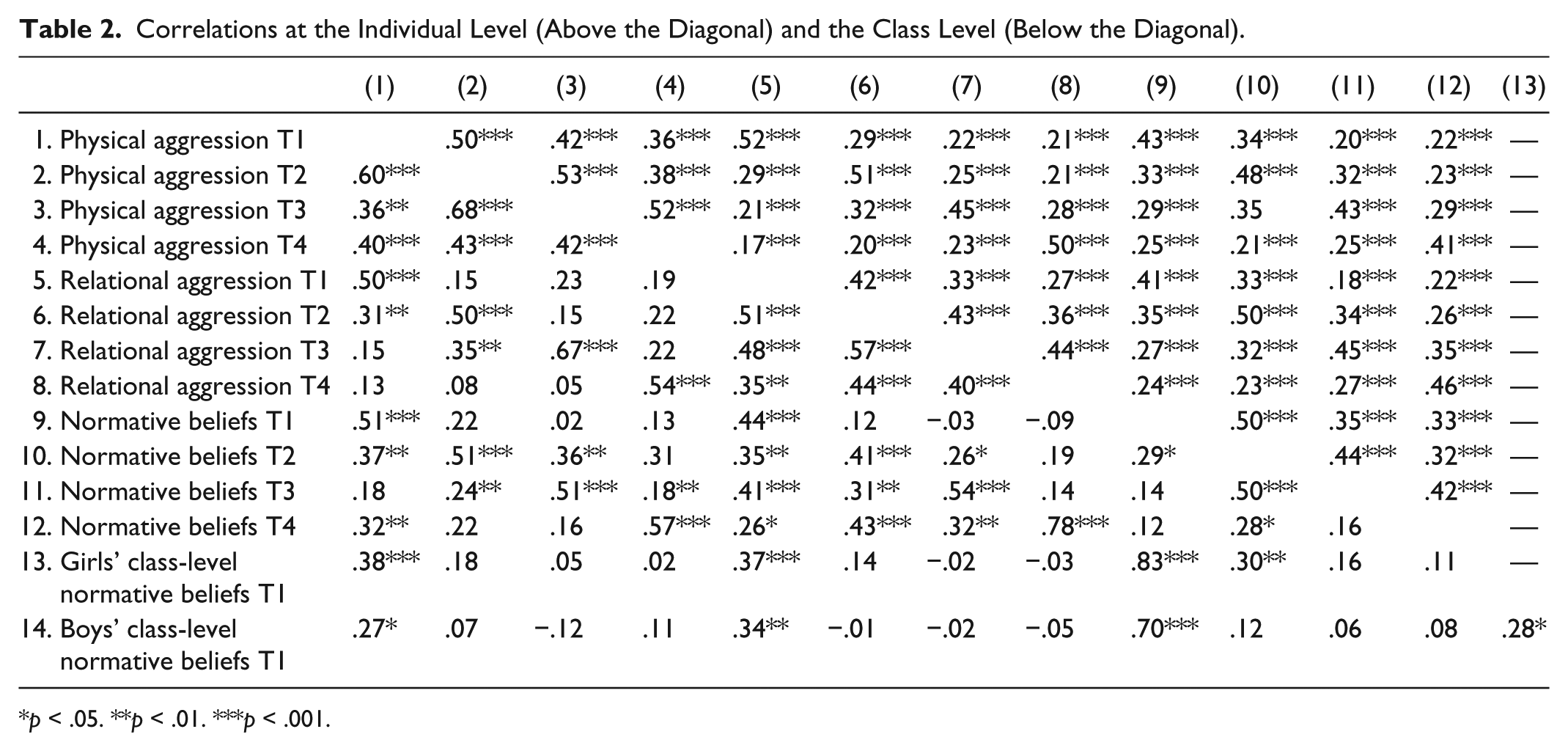
p < .05. **p < .01. ***p < .001.
Effects of Class Norms on Individual Normative Beliefs
To address the first research question concerning the influence of class-level normative beliefs at T1 on participants’ normative beliefs at the subsequent data waves, a multilevel structural equation model was calculated. The individual-level predictor was T1 normative beliefs, with gender, and ethnicity included as covariates. The predictor at the class-level was also T1 normative beliefs, with year cohort and school type included as covariates. The critical outcome variables were individual-level normative belief scores at T2, T3, and T4. Parallel path coefficients at the two levels were constrained to be equal, as preliminary analysis had shown that they did not differ significantly (T1 Norm → T2 Norm Δb = 0.07, 95% CI = [−0.13, 0.26], T2 Norm → T3 Norm Δb = −0.17, 95% CI = [−0.55, 0.22], T3 Norm → T4 Norm Δb = 0.37, 95% CI = [−0.71, 1.55]).
The model resulting from this analysis is shown in Figure 1. At both levels, normative beliefs at T1 predicted normative beliefs 1 year later at T2, b = 0.48, 95% CI = [0.41, 0.54], p < .05. The more accepting participants were of aggression individually at T1, the higher their normative acceptance at the subsequent data waves. Similarly, the higher the overall acceptance of aggression in a class at T1, the higher the class-level scores at the subsequent data waves. T1 individual as well as class-level scores indirectly predicted normative beliefs at their respective levels at T3, bindirect = 0.22, 95% CI = [0.18, 0.27], p < .05, and T4, bindirect = 0.10, 95% CI = [0.09, 0.13], p < .05. However, no significant cross-level interactions were found. Thus, there was no evidence that class-level normative beliefs moderated the effects of T1 individual-level normative beliefs, b = 0.02, 95% CI = [−0.16, 0.21], or gender, b = −0.07, 95% CI = [−0.31, 0.18], on individual normative beliefs at T2, T3, or T4.
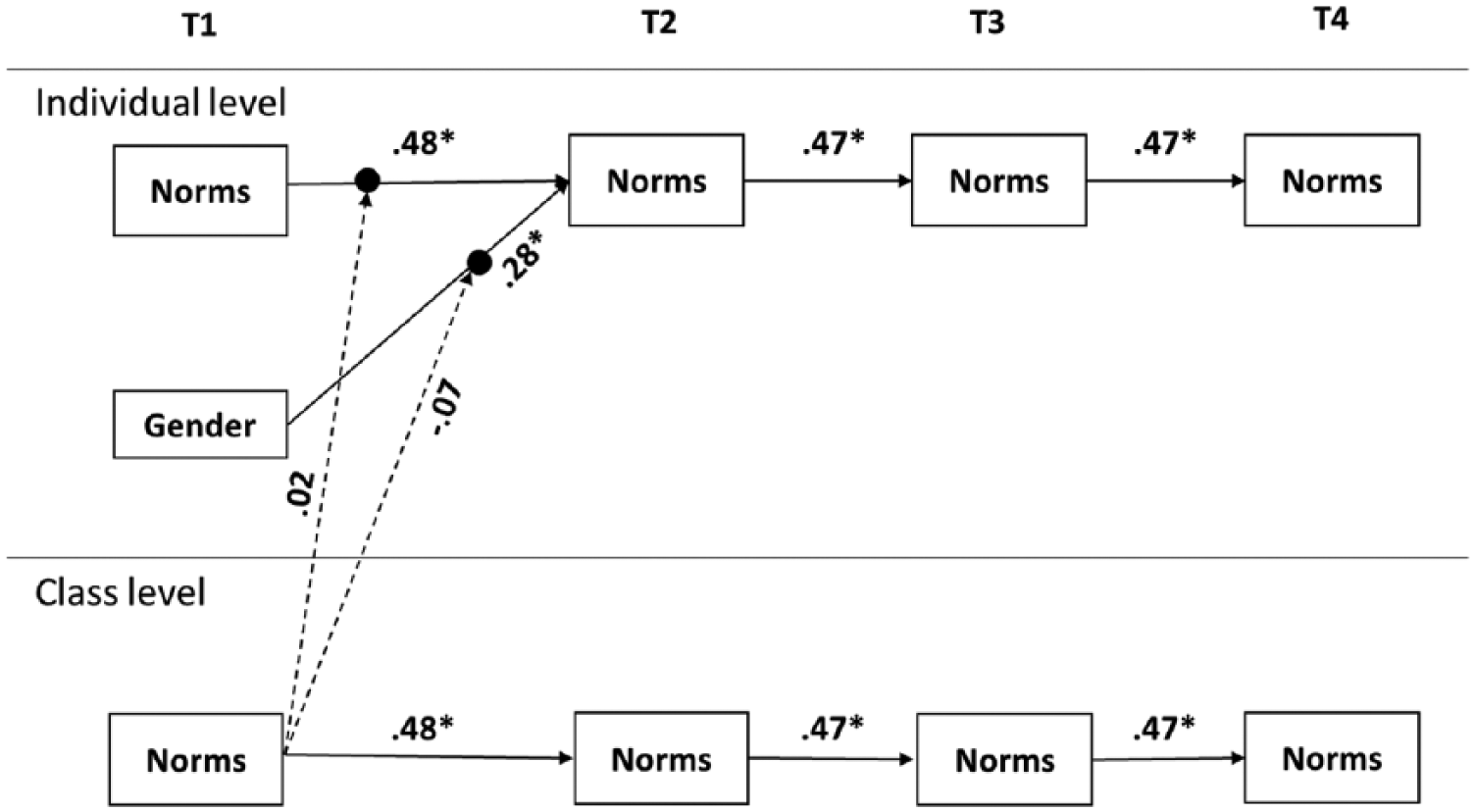
Multilevel structural equation model showing the influence of class normative beliefs on individual normative beliefs.
Effects of Class Norms on Individual Aggressive Behavior
The second set of analyses addressed the link between individual-level and class-level normative beliefs on aggression over time. Again, cross-level interactions were included to examine the interactive effect of class-level normative beliefs and individual-level variables on aggressive behavior at T2, T3, and T4. The individual-level predictors were T1 normative beliefs and T1 aggression (physical or relational), with gender and ethnic background included as covariates. The class-level predictors were T1 normative beliefs and aggression (physical or relational), with school type and age cohort as covariates. The sustained impact of the cross-level interactions was tested by examining their indirect effects on aggression at T3 and T4. Separate models were run for physical and relational aggression.
For physical aggression, we first tested whether path coefficients differed between the levels. As in the model for normative beliefs, none of the parallel effects differed between the individual and the class level, and they were therefore constrained to be equal (T1 → T2 AggP, Δb = − 0.06, 95% CI = [−0.27, 0.14]; T2 AggP → T3 AggP Δb = − 0.25, 95% CI = [−0.54, 0.02]; T3 AggP → T4 AggP, Δb = −0.21, 95% CI = [−0.84, 0.34]; T1 Norms → T2 AggP, Δb = − .08, 95% CI = [−0.16, 0.31]). The final model is shown in Figure 2.
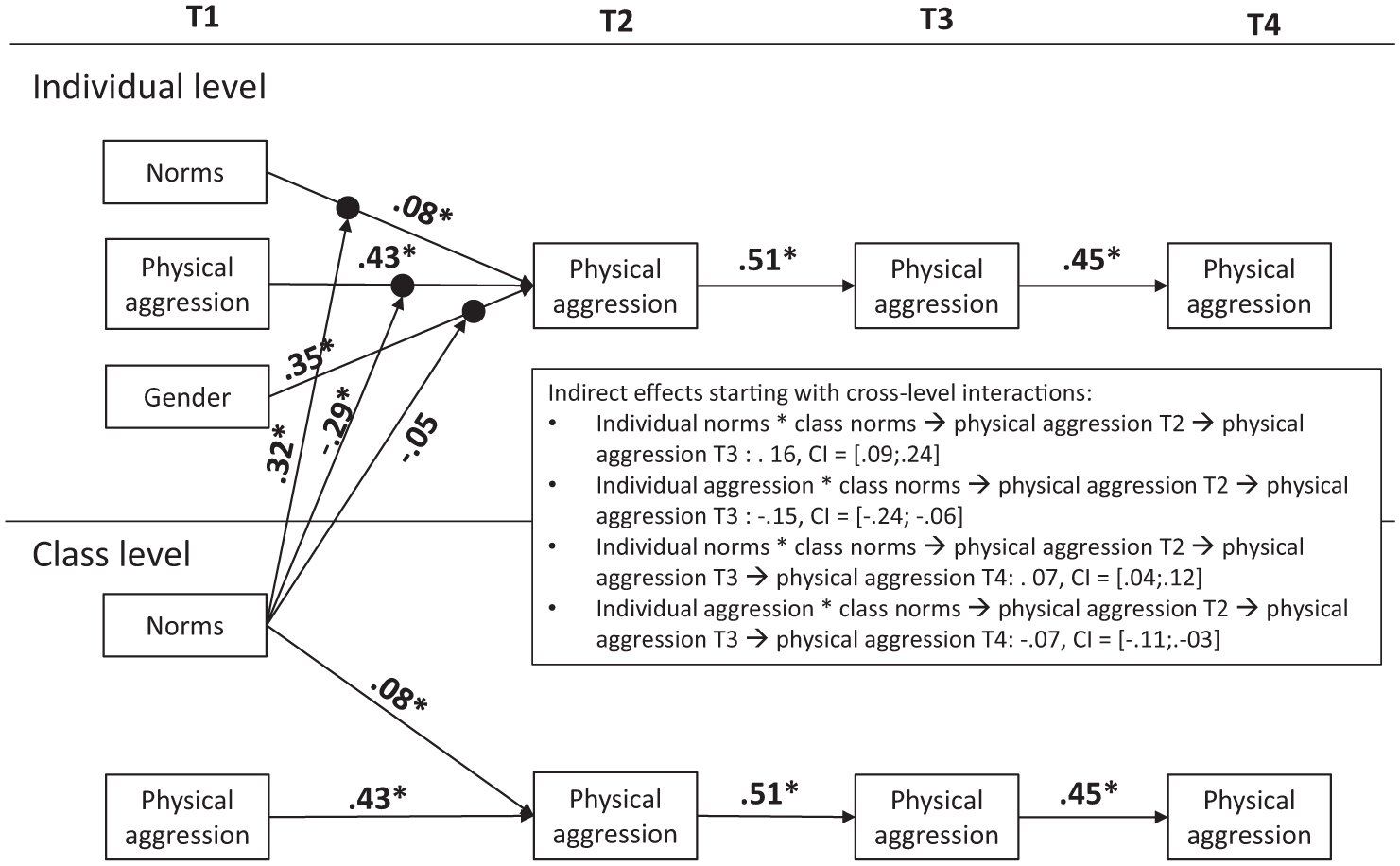
Multilevel structural equation model of the interactive effects of individual-level and class-level normative beliefs on physical aggression.
Significant positive paths were found from T1 physical aggression, b = 0.43, 95% CI = [0.36, 0.49], p < .05, and T1 normative beliefs, b = 0.08, 95% CI = [0.02, 0.14], p < .05, to T2 physical aggression at both levels, In addition, a significant main effect of gender was found, with males scoring higher than females, b = 0.35, 95% CI = [0.25, 0.46], p < .05. More importantly, a significant cross-level interaction was found between T1 individual-level and class-level normative beliefs on individual physical aggression at T2, b = 0.32, 95% CI = [0.18, 0.47], p < .05. This interaction is plotted for the top and bottom quartiles of the class-level norm scores in the left part of Figure 3. It shows that in classes where the approval of aggression at T1 was generally low, low levels of physical aggression were observed at T2, even by those students holding normative beliefs that were highly accepting of aggression. In classes where the acceptance of aggression was high at T1, however, individual differences in the normative approval were significantly linked to T2 physical aggression, with higher individual approval predicting higher aggression.
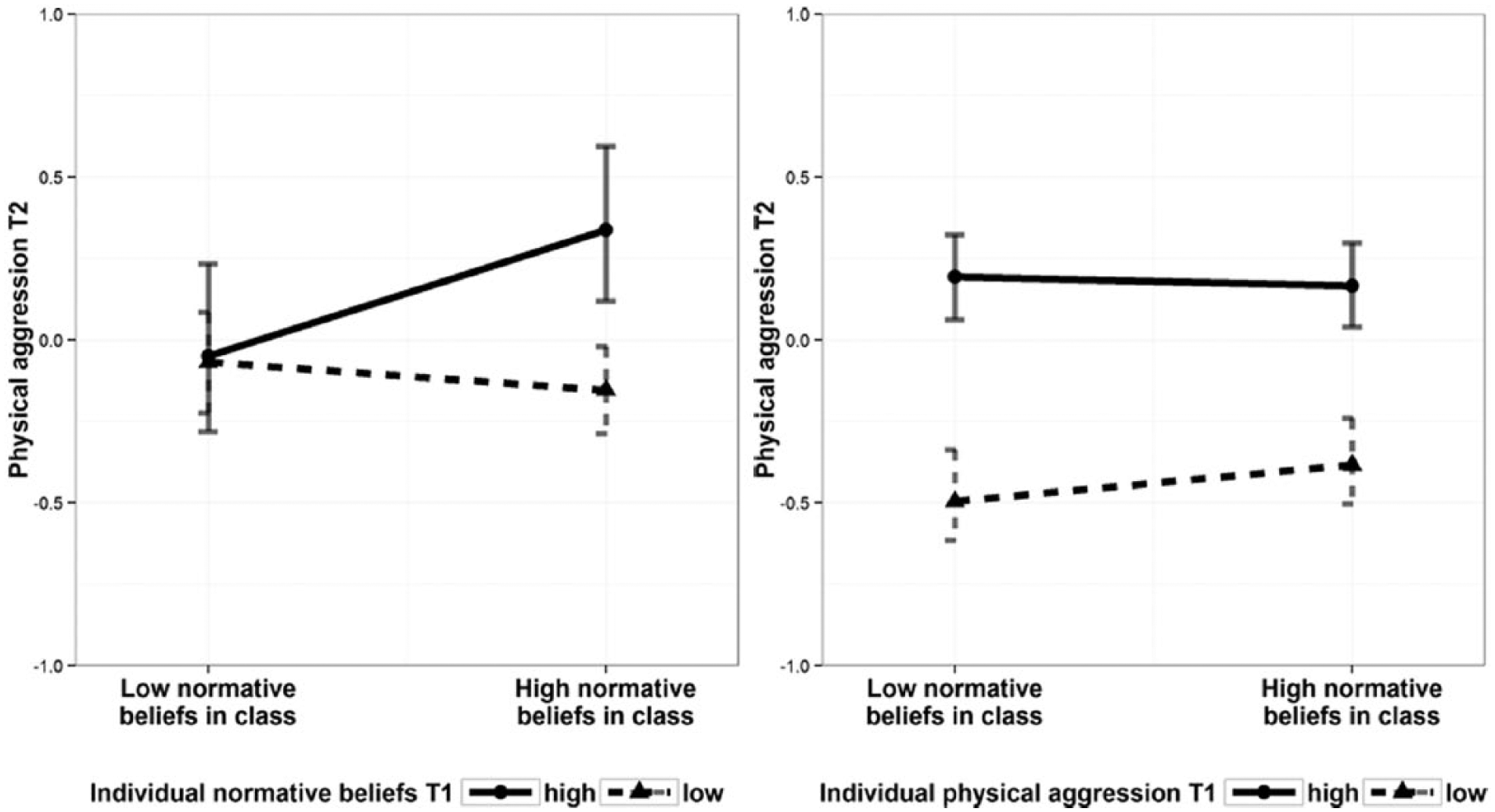
Plot of the significant cross-level interactions between T1 class normative beliefs and individual normative beliefs (left) and between T1 class normative beliefs and individual physical aggression (right) on T2 physical aggression.
The cross-level interaction between T1 individual aggression scores and class-level normative beliefs on T2 physical aggression was also significant, b = −0.29, 95% CI = [−0.47, −0.10], p < .05. This interaction is plotted on the right side of Figure 3 for the top and bottom quartile of the class-level normative belief scores. It indicates that individuals with initially low levels of aggression were more affected in their aggressive behavior by class-level norms about aggression than individuals with relatively high initial levels of aggression: Among non-aggressive participants at T1, those who were in a class where the approval of aggression was high were significantly more aggressive at T2 than those who were in a class where the normative acceptance of physical aggression was low. This finding suggests that class norms approving of aggression create an environment that is conducive to the acquisition and expression of normative beliefs that promote aggressive behavior. Highly aggressive individuals at T1 scored higher in physical aggression at T2 regardless of differences in class-level norms.
To test whether these cross-level effects persisted beyond T2, indirect effects were calculated. Normative beliefs at both levels significantly predicted T3 and T4 physical aggression (T1 → T2 → T3 bindirect = 0.04, 95% CI = [0.01, 0.07], p < .05, T1 → T2 → T3 → T4 bindirect = 0.02, 95% CI = [0.01, 0.13], p < .05). There was a significant indirect path from the interaction between individual normative beliefs and class normative beliefs at T1 via physical aggression at T2 to physical aggression at T3, bindirect = 0.16, 95% CI = [0.09, 0.24], p < .05, and T4, bindirect = 0.07, 95% CI = [0.04, 0.11], p < .05. Similarly, we found an indirect effect from the interaction between individual aggression and class normative beliefs at T1 on physical aggression at T3, bindirect = −0.15, 95% CI = [−0.24, −0.06], p < .05, and T4, bindirect = −0.07, 95% CI = [−0.11, −0.03], p < .05.
Parallel models were run for relational aggression. Unlike the models for normative beliefs and physical aggression, two of the four parallel paths differed significantly between the individual and the class level. The paths from T2 relational aggression to T3 relational aggression, Δb = −0.55, 95% CI = [−0.96, −0.23], p < .05, as well as from T3 to T4 relational aggression, Δb = −1.01, 95% CI = [−1.97, −0.35], p < .05, were significantly stronger at the class level compared with the individual level and were therefore not constrained to be equal at both levels. However, the paths between normative beliefs and relational aggression at T2, Δb = 0.17, 95% CI = [−0.01, 0.33], as well as relational aggression at T1 and relational aggression at T2, Δb = −0.09, 95% CI = [−0.25, 0.06], did not differ significantly and were constrained to be equal at the two levels. The final model is presented in Figure 4.
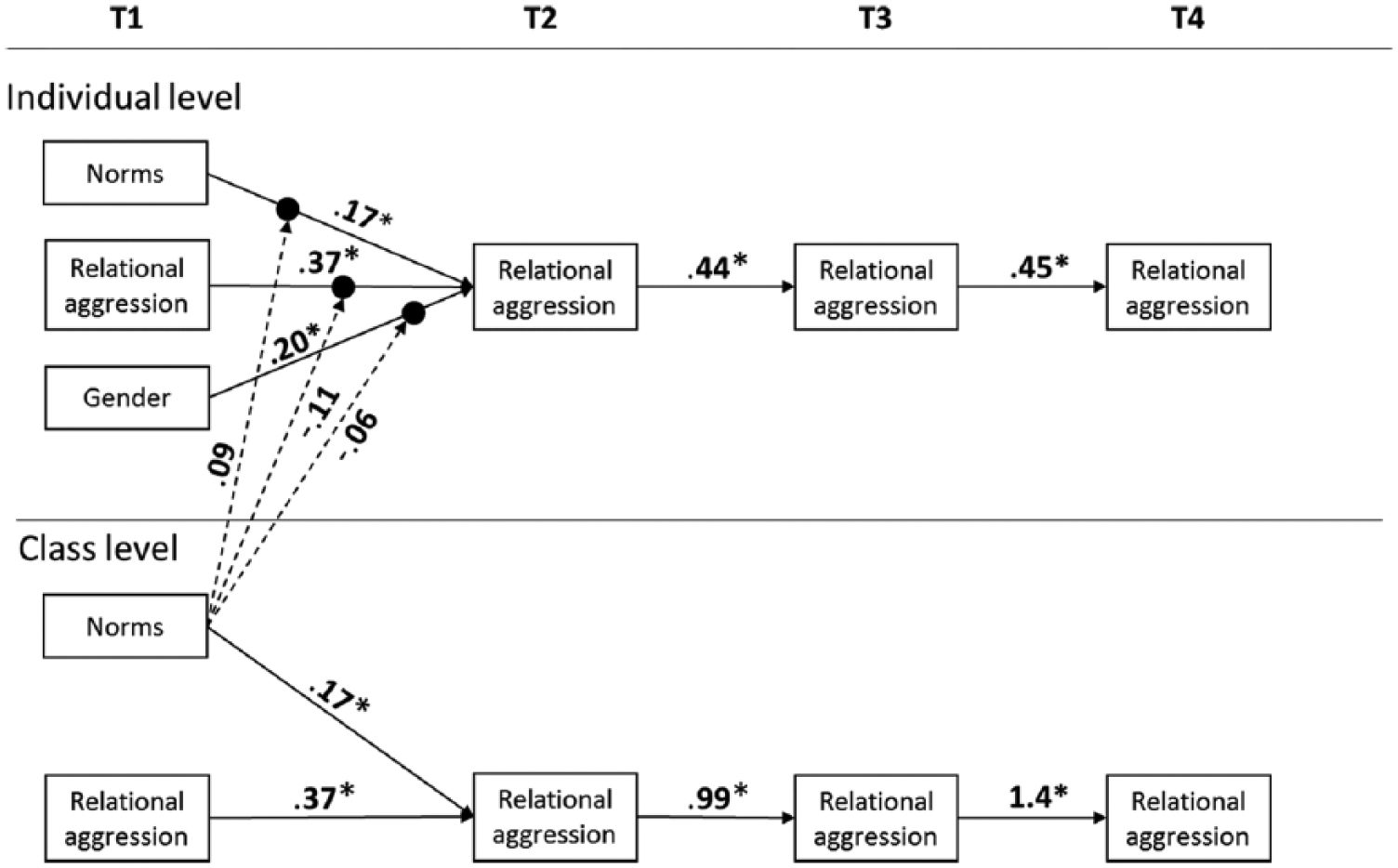
Multilevel structural equation model of the interactive effects of T1 individual-level and class-level normative beliefs on relational aggression.
Normative beliefs, b = 0.17, 95% CI = [0.10, 0.24], p < .05, and relational aggression, b = 0.37, 95% CI = [0.31, 0.44], p < .05, at T1 predicted relational aggression on both levels at T2. The stability was higher on the class level compared with the individual level from T2 to T3 (bindividual = 0.44, 95% CI = [0.38, 0.50], p < .05; bclass = 0.99, 95% CI = [0.68, 1.34], p < .05) and from T3 to T4 (bindividual = 0.45, 95% CI = [0.38, 0.54], p < .05, bclass = 1.41, 95% CI = [0.68, 2.30], p < .05). 3 In addition, a significant main effect of gender was found, with males reporting more relational aggression than females, b = 0.20, 95% CI = [0.11, 0.30]. No significant cross-level interactions were found for relational aggression over time.
Effects of Gendered Class Norms
A further set of analyses investigated whether the gender difference observed at the class level for both normative beliefs and aggression at T1 would differentially impact the normative beliefs and aggressive behavior at the individual level. The paths that were not significantly different between the individual and the class level according to the preceding analyses were again constraint to be equal. We first examined whether the gendered class means at T1 predicted individual normative beliefs at T2, T3, and T4. In two further analyses, the gender group means were used to predict individual differences in physical and relational aggression at the three subsequent data waves.
As shown in Figure 5, the normative beliefs on the individual level at T2 were predicted by normative beliefs on the individual level at T1, b = 0.51, 95% CI = [0.42, 0.60], p < .05. Moreover, gender was a significant predictor of T2 normative beliefs, with boys being more approving of aggression than girls, b = 0.27, 95% CI = [0.13, 0.40], p < .05. On the class level, boys’ normative beliefs at T1 did not predict normative beliefs over time, b = 0.01, 95% CI = [−0.17, 0.19], whereas girls’ normative beliefs significantly predicted later scores, b = .49, 95% CI = [0.30, 0.67]. This difference between boys and girls was significant, Δb = .48, 95% CI = [0.19, 0.76], p < .05, and indicates that the normative beliefs of the female class members had a larger effect on the development of the class-level normative beliefs than those of the male class members.
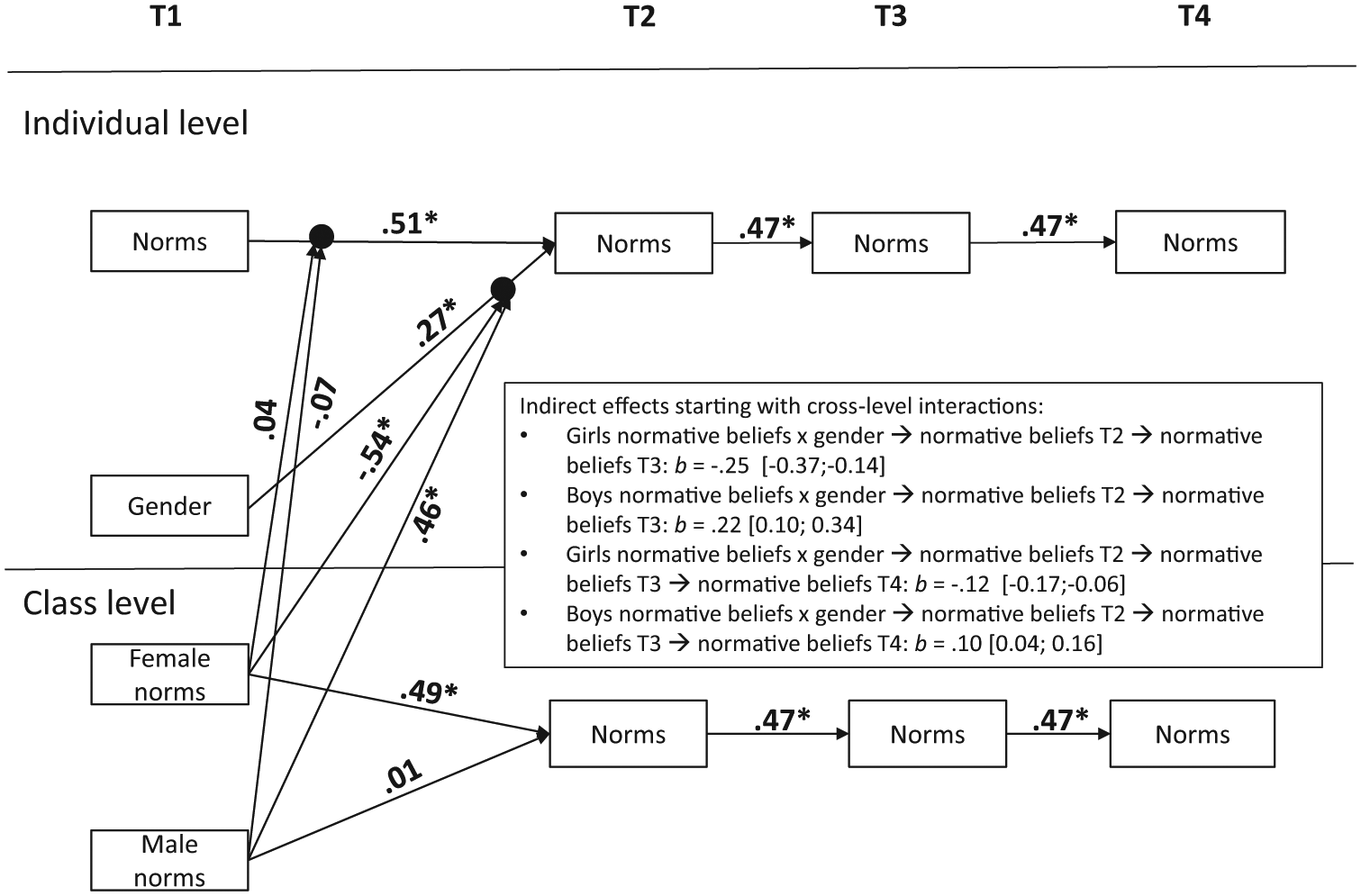
Relationship between gendered class norms at T1 and normative beliefs over time.
The model also revealed two significant cross-level interactions. One was the interaction of participant gender and the girls’ class-level beliefs, b = −0.54, 95% CI = [−0.76, −0.31], p < .05, the other was the interaction between participant gender and the boys’ class-level beliefs, b = 0.46, 95% CI = [0.20, 0.71], p < .05. Both interactions, depicted in Figure 6, show that participants were more affected by the collective normative approval of aggression in their own as compared with the opposite gender group. The indirect effect from the cross-level interaction between normative beliefs and gender to T4 via normative beliefs at T2 and T3 was significant for both male, bindirect = 0.10, 95% CI = [0.04, 0.16], p < .05, and female, bindirect = −0.12, 95% CI = [−0.17, −0.06], p < .05, class-level beliefs.
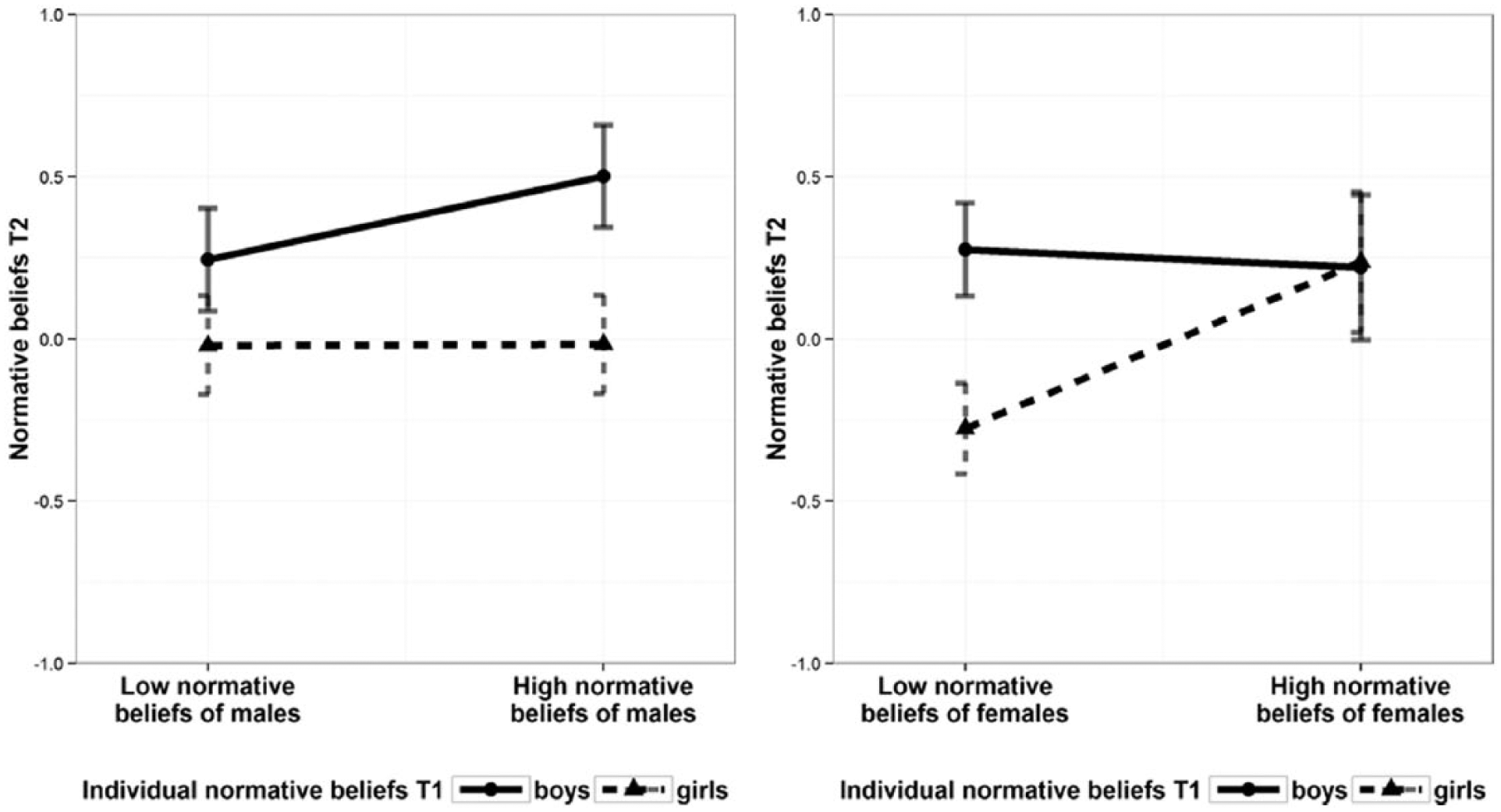
Plot of the cross-level interactions between T1 class normative beliefs (male/female) and gender (boys/girls) on T2 individual normative beliefs.
Parallel models investigated the effect of gendered class norms on physical and relational aggression. The model for physical aggression is displayed in Figure 7. On the class level, neither the male, b = −0.18, 95% CI = [−0.56, 0.18], nor the female, b = 0.11, 95% CI = [−0.25, 0.45], p < .05, normative beliefs predicted physical aggression at T2. Individual-level physical aggression at T2 was predicted by gender, b = 0.31, 95% CI = [0.19, 0.43], p < .05; T1 physical aggression, b = 0.40, 95% CI = [0.32, 0.48], p < .05; and T1 normative beliefs, b = 0.12, 95% CI = [0.05, 0.20], p < .05.
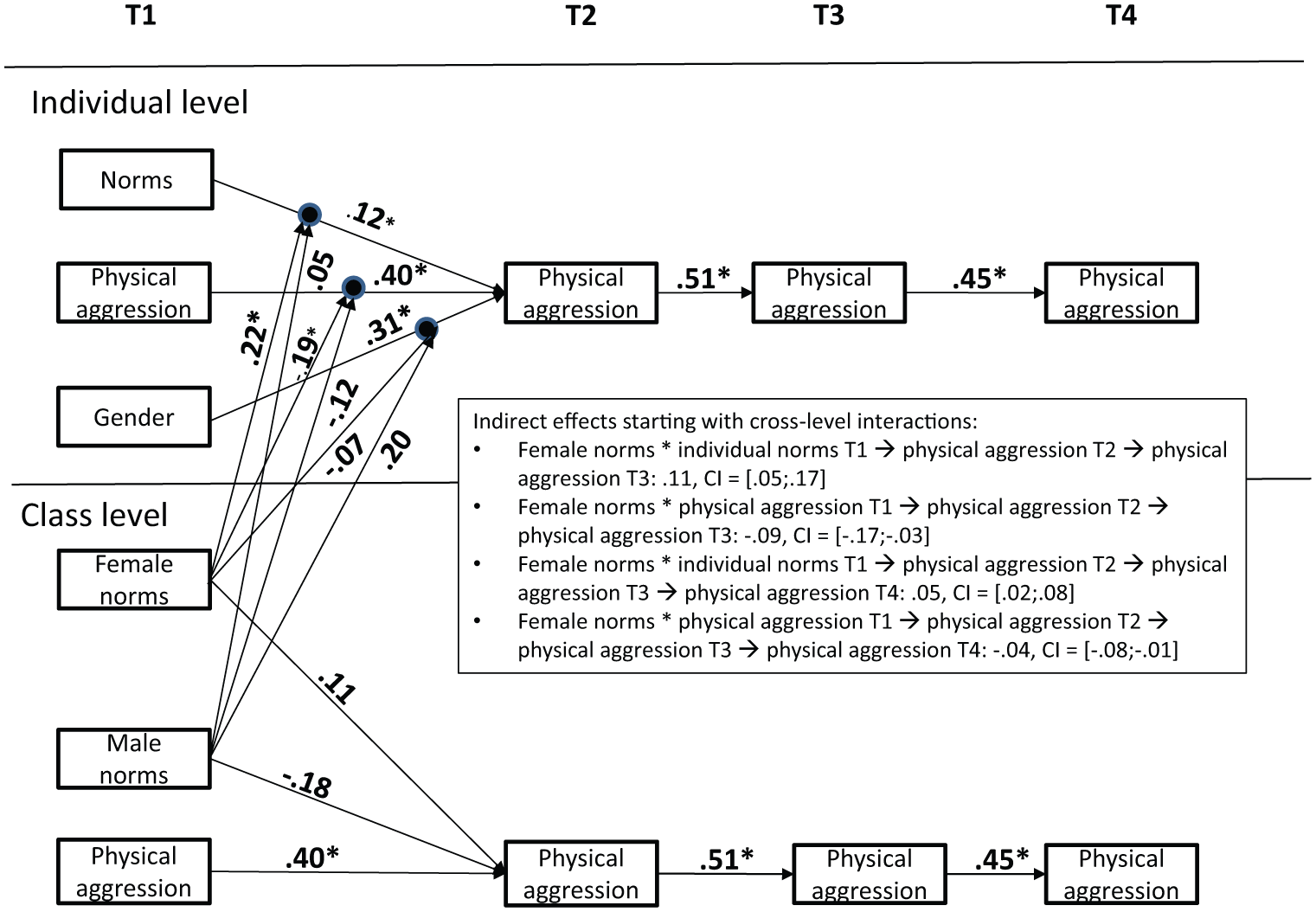
Multilevel structural equation model of the interactive effects of individual-level and gendered class-level normative beliefs on physical aggression.
However, the main effects of T1 normative beliefs and physical aggression were qualified by significant cross-level interactions. The male class-level normative beliefs did not have an effect on individual-level aggressive behavior, whereas the female normative beliefs moderated the relationship between individual normative beliefs and physical aggression at T2, b = 0.22, 95% CI = [0.10, 0.34], p < .05, as well as the relationship between physical aggression at T1 and physical aggression at T2, b = −0.19, 95% CI = [−0.32, −0.05], p < .05. These interactions are plotted in Figure 8. 4 The plots for the impact of female class norms are very similar to those in Figure 3 showing the overall effect of classroom normative beliefs irrespective of gender and suggests that the overall effect of class-level normative beliefs was mainly driven by the girls. If girls in a class were collectively approving of physical aggression, individual differences in normative beliefs as well as aggression at T1 played out as predictors of aggression at T2. The indirect effects showed that both of these cross-level interactions had a sustained effect at the two subsequent data waves. The indirect effect of the interaction between female class norms and individual normative beliefs on individual beliefs was significant at T3, bindirect = 0.11, 95% CI = [0.05, 0.17], as well as T4, bindirect = 0.05, 95% CI = [0.02,.08], as was the interactive effect of female class norms and individual aggression at T3, bindirect = −0.09, 95% CI = [−0.17, −0.03], p < .05, as well as T4, bindirect = −0.04, 95% CI = [−0.08,−0.01], p < .05.
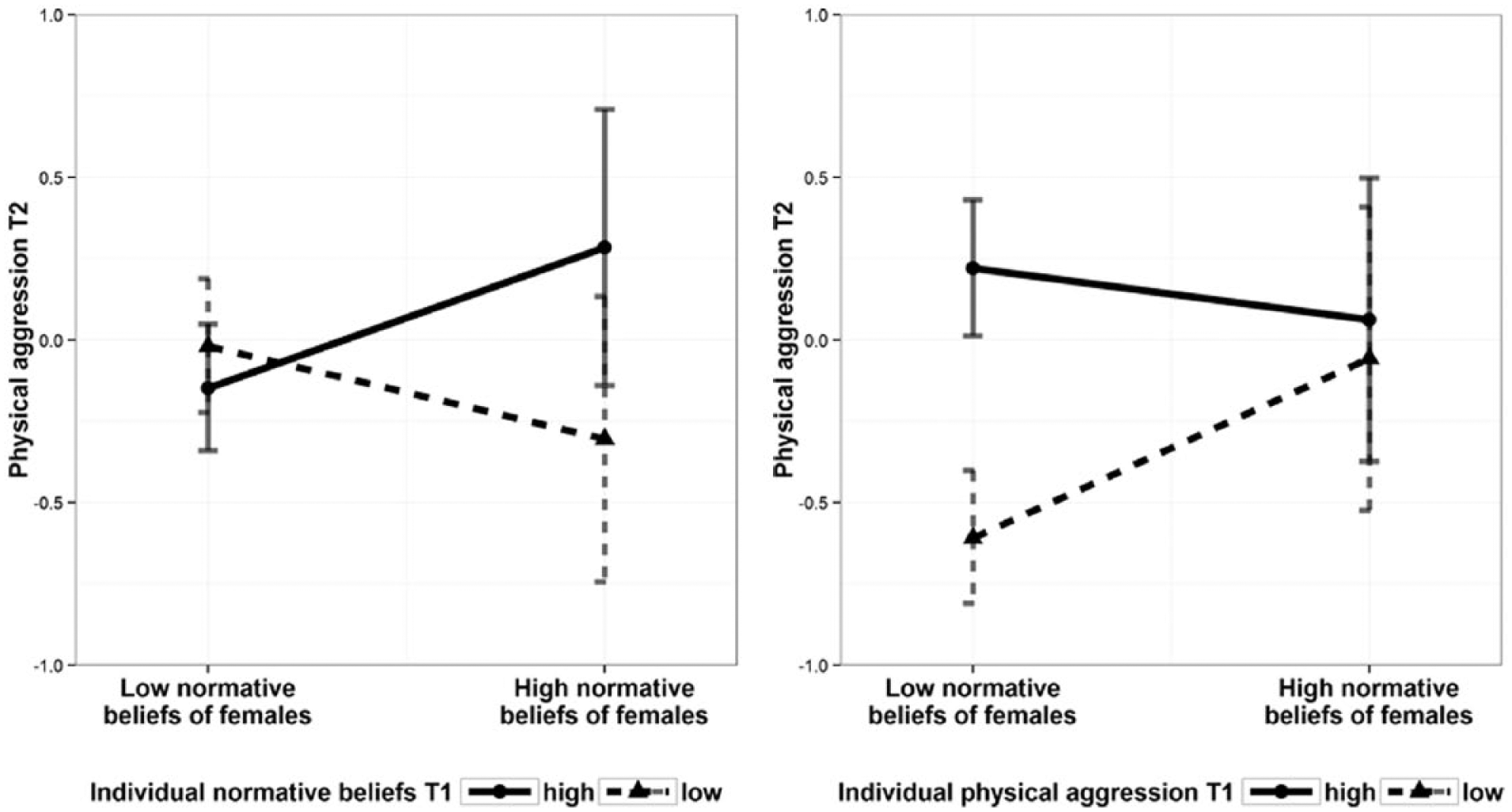
Plot of the significant cross-level interactions of T1 female class-level beliefs with individual-level normative beliefs (left) and individual-level physical aggression (right) on T2 physical aggression.
In the final analysis, a parallel model was run to test whether gendered normative beliefs predicted relational aggression. The paths from relational aggression at T2 to T3 as well as from T3 to T4 were not constrained to be equal because prior analyses, reported above, had shown that they differed significantly between the levels. The model is presented in Figure 9. The individual relational aggression scores at T2 were predicted by individual normative beliefs at T1, b = 0.25, 95% CI = [0.15, 0.34], p < .05; gender, b = 0.19, 95% CI = [0.07, 0.34], p < .05; and relational aggression at T1, b = 0.38, 95% CI = [0.29, 0.46] p < .05. At the class level, only relational aggression at T1 predicted later relational aggression, b = 0.38, 95% CI = [0.29, 0.46] p < .05.
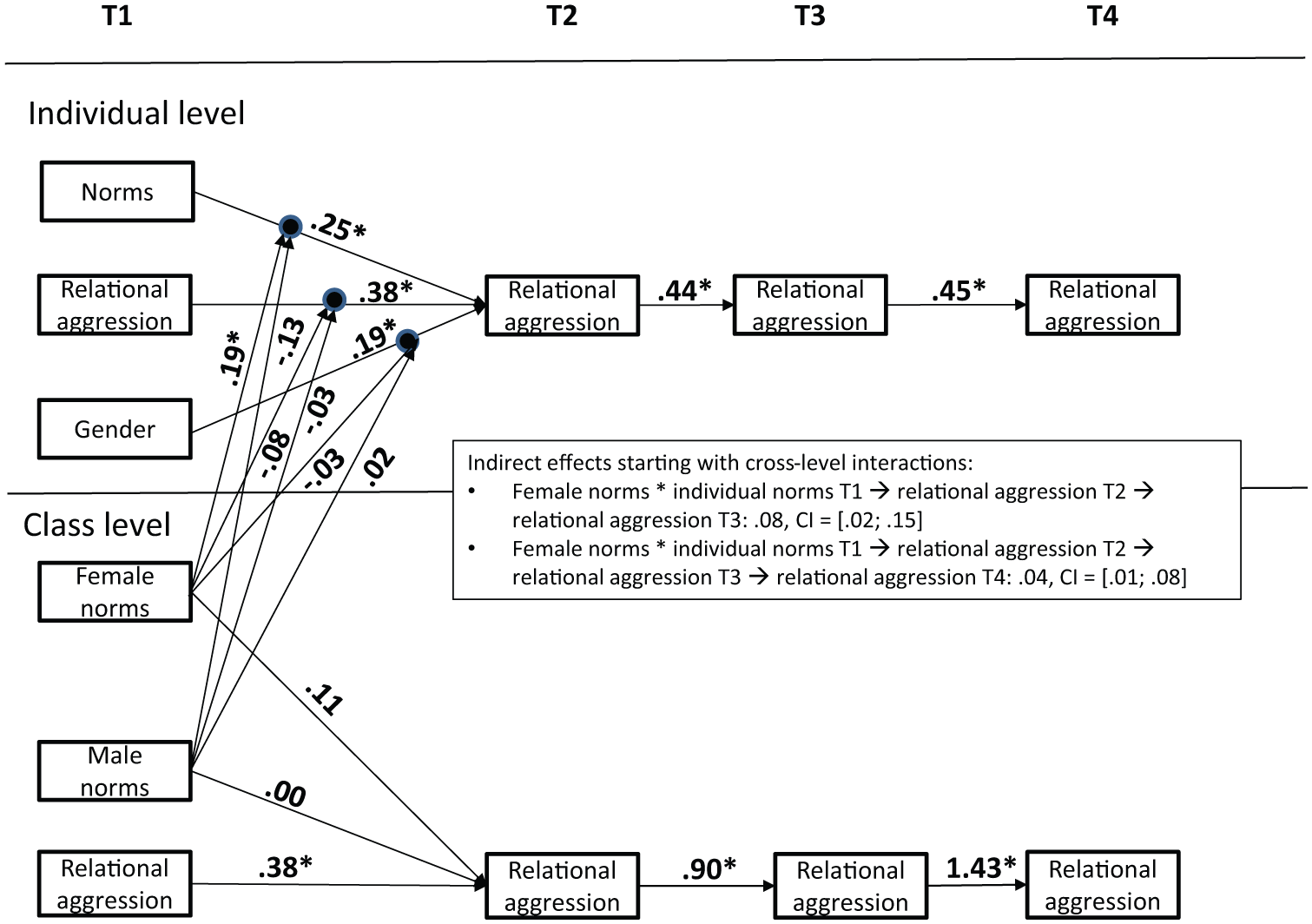
Multilevel structural equation model of the interactive effects of individual-level and gendered class-level normative beliefs on relational aggression.
The relationship between T1 individual-level normative beliefs and T2 relational aggression was moderated by the female class-level norms, b = 0.19, 95% CI = [0.05, 0.24], p < .05. As depicted in Figure 10 (see Note 4), individual differences in relational aggression were greater in classes where girls were more accepting of aggression, again suggesting that high class-level normative acceptance of aggression provides the context in which individual differences in normative beliefs may be observed. This effect was sustained over time, as reflected in a significant indirect effect from the cross-level interaction to individual relational aggression at T3, bindirect = 0.08, 95% CI = [0.02, 0.15], p < .05, and T4, bindirect = 0.04, 95% CI = [0.01, 0.08], p < .05. No other cross-level interactions were significant.
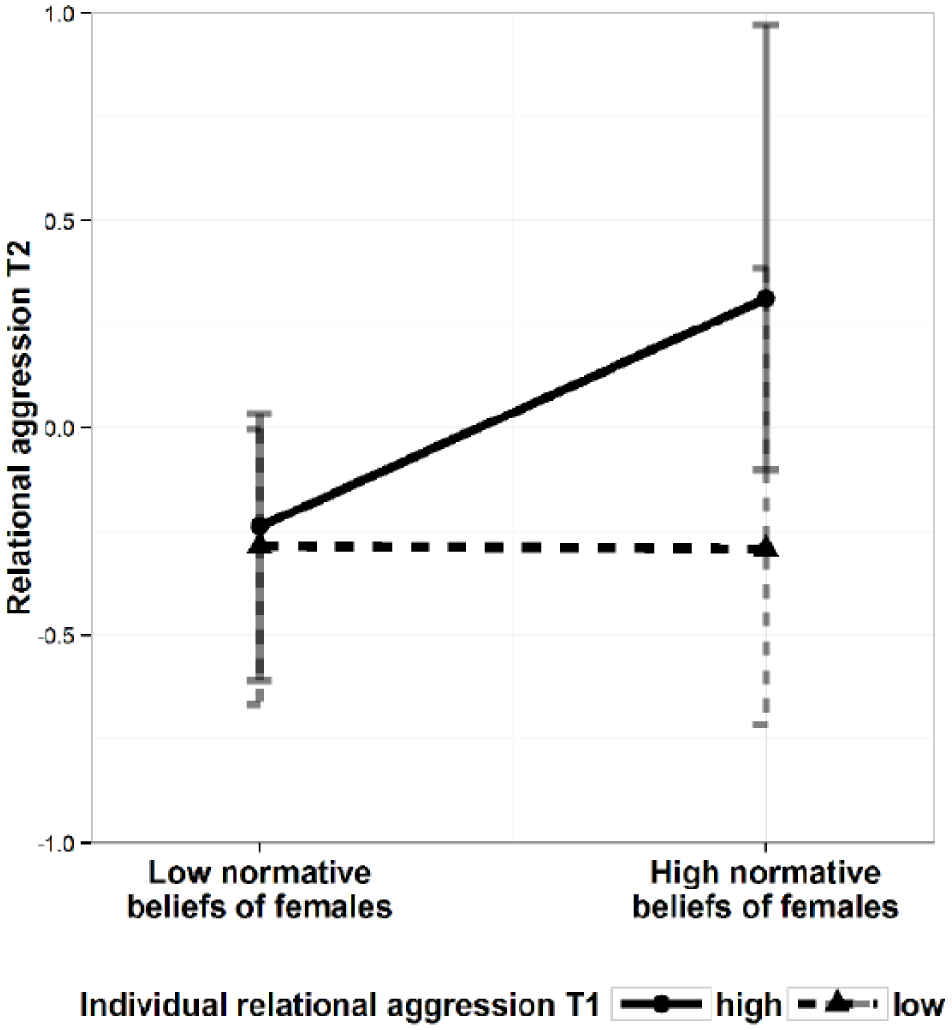
Plot of the significant cross-level interactions between female class-level beliefs and individual-level normative beliefs at T1 on T2 relational aggression.
Discussion
The present study was designed to demonstrate that adolescents’ normative acceptance of aggression and, importantly, its link with aggressive behavior are influenced by the normative beliefs of their classmates. By focusing on a group context beyond the participants’ choice, we were able to minimize possible selection effects that might have led to the formation of like-minded groups to begin with. Instead, our findings may be interpreted as reflecting socialization effects of class norms on individual beliefs and behavior concerning aggression, which are postulated in social-cognitive models of the development of aggressive behavior. We proposed that the normative beliefs prevailing in a class define the boundaries in which individual differences in normative beliefs may play out in their effects on aggressive behavior over time: Classes in which the normative acceptance of aggression is generally high create space for individual differences in aggressive beliefs and behavioral tendencies to take effect, whereas classes in which the normative acceptance of aggression is low attenuate the expression of individual differences. This general proposition was broken down into three research questions.
The first research question concerned the extent to which the normative approval of aggression at the class level would influence individual normative beliefs over time. A significant class by individual-level interaction would indicate that classroom normative beliefs only influence a subgroup of students in a class. The results did not support this effect because we did not find a significant cross-level interaction. However, this lack of a significant interaction when considering normative beliefs of the class as a whole needs to be seen against the interaction effects found for the gendered class-level norms discussed below. They suggest that treating the class as a homogeneous entity may be too broad a measure to detect the class-level influences at work.
The second research question concerned the influence of normative beliefs on individual aggression scores over time. Here, a significant cross-level interaction between individual normative beliefs and class-level normative beliefs at T1 was found for physical aggression at T2, and the moderating effect of class norms had an indirect effect on physical aggression reported at T3 and T4. In classes with a high acceptance of aggression, students who were more accepting of aggression at T1 showed more physical aggression 1 year later than students who were less accepting of aggression, whereas no difference between students high or low in the normative acceptance of aggression was found in classes where the overall acceptance of aggression was low. This finding suggests that classes with a high tolerance for aggression may create a normative climate in which individual differences in beliefs about aggression can have an effect. Individuals who hold pro-aggression normative beliefs meet with a context in which aggression is approved in principle and where they can therefore act in accordance with their beliefs without the risk of social sanctions from their peers (Wright, Giammarino, & Parad, 1986).
The impact of the class context on the development of aggression is further demonstrated by a second significant cross-level interaction, namely between class-level normative beliefs and individual-level physical aggression at T2. In classes where the normative approval of aggression was high, students with low initial physical aggression scores showed an increase 1 year later. This finding may be explained with reference to the role of outcome expectancies linked to aggressive behavior (Fontaine & Dodge, 2009; Huesmann, 1988). In classes with aggression-endorsing normative beliefs, negative social consequences for aggressive behavior are less likely and aggressive behavior may be reinforced by social approval. However, it is worth noting that the cross-level interactions were only found for physical aggression, not for relational aggression in these analyses. This pattern of results is in line with the Brendgen et al. (2015) study in which an interactive effect of peer-group norms and genetic risk on aggressive behavior was found for physical, but not for relational aggression. Again, the lack of a significant cross-level interaction effect on relational aggression in the total sample is qualified by the analyses of gendered class-level beliefs, as discussed below.
In the third research question, we investigated the distinct contributions of the aggregated normative beliefs held by male and female class members and discovered significant cross-level interactions that supported our predictions. First, we found significant cross-level interaction effects between the gendered class-level norms and individual normative beliefs at T1 on individual normative beliefs at T2, and indirectly at T3 and T4. These interactions indicated that students’ normative beliefs were mainly influenced by the collective beliefs of their same-sex classmates, which may explain why no cross-level interaction was found for the normative beliefs of the class as a whole.
Significant cross-level interactions were also found for gendered classroom norms and the two forms of physical and relational aggression. These interactions point to a more influential role of female compared with male class-level beliefs. Only the females’ normative beliefs moderated the relationship between normative beliefs at T1 and physical and relational aggression at T2 at the individual level and had sustained indirect effects at T3 and T4. In classes where girls as a group supported aggression, individual normative beliefs influenced subsequent aggressive behavior by both girls and boys to a greater extent than in classes where girls were less supportive of aggression. Thus, it appears that the girls’ aggression-related normative beliefs define the scope for showing aggressive behavior for their classmates of either sex. This finding supports the notion of the social multiplier theory (Fletcher, 2007) that during adolescence girls influence the behavior of boys as well as girls, which was confirmed by a recent study with a similar age group (Yarnell et al., 2014). Our results suggest that normative beliefs of the girls play a central role as a process underlying this effect.
The stronger influence of the girls’ normative beliefs can be explained both as a social psychological phenomenon and a developmental phenomenon. Social psychological research has repeatedly shown that subgroups have an influence on the superordinate group if they act consistently within their subgroup (Moscovici, Lage, & Naffrechoux, 1969). In the present study, the intraclass correlations were higher for girls than for boys, indicating a higher agreement about the normative beliefs among the girls than among the boys in a class. This suggests that the girls may be more influential because as a group they are more consistent in their normative beliefs. From a developmental perspective, it may be argued that in the course of adolescence, boys become increasingly interested in interactions with girls. They are more likely to interact with girls and be exposed to their normative beliefs, and they may also be more willing to adapt their behavior to the girls’ normative expectations to gain social approval. To the extent that girls become a valued peer group, boys should be more willing to conform to their normative beliefs (Brechwald & Prinstein, 2011). In romantic relationships, traditional gender roles prescribe that boys are the initiators and girls are the gatekeepers of closeness and intimacy (Jozkowski & Peterson, 2013), which may explain why boys are more willing to attune to the normative beliefs of girls than girls are concerned with gaining the approval of boys.
In addition to the theoretical implications for understanding the development of normative beliefs and aggressive behavior, our findings also have applied implications. Other research has shown that interventions addressed only at highly aggressive students often have negative effects, as these participants are “teaching” each other new ways of acting aggressively (Dishion & Tipsord, 2011; Warren et al., 2005). Our results suggest that the collective normative beliefs of a class as a whole, with particular attention to those of the girls in a class, should be included in interventions for reducing aggression implemented in school settings. This conclusion is supported by evaluations of school-based interventions which have shown that it is fruitful to include the peer context to successfully reduce aggressive behavior (Bonell et al., 2013; Henry, 2013).
This study has both strengths and limitations. It has used state-of-the-art Bayesian multilevel modelling to analyze a large longitudinal data set which spans four data waves over 3 years. Using these methods, we were able to provide a more rigorous test of the proposed effects of the peer context on the development of aggressive norms and behaviors by studying groups to which participants were assigned rather than being able to actively select them. One limitation of our study is that only self-reports were available. Because aggression is a socially unacceptable behavior, both its frequency and its normative acceptance tend to be underreported, resulting in an underestimation of the “true” scores. However, as our concern is not with the level of each construct but with the relationship between them, this would only be a problem if aggression but not normative beliefs were affected by social desirability concerns, which is not likely. Nonetheless, it is important to replicate the findings using aggression measures that are less susceptible to social desirability concerns, such as parent or teacher ratings.
A further limitation refers to the focus of our analysis on class-level influences on individual pathways from norms to behavior, not addressing the possibility of individual-level influences on processes occurring at the class level. Conceptually, we would argue that individual normative beliefs very quickly coalesce into collectively shared norms that then feed back into the individual belief system. Thus, it is important to understand not only how class-level norms affect the path from norms to behavior at the individual level, which is what we addressed in our analyses, but also how class-level norms are shaped by the beliefs of the individual members of a class. Unfortunately, there are currently no statistical tools available to our knowledge that would enable us to examine these paths from Level 1 to Level 2 processes, using class means as social context information. Multilevel social network analysis that models social networks over time provides an important approach for teasing apart processes of selection of aggressive behavior and being influenced by aggressive peer groups (Dishion & Tipsord, 2011).
In conclusion, the present findings have demonstrated the impact of socially shared norms about aggression on the development of individuals’ normative beliefs and aggressive behavior in the course of the critical developmental period of adolescence. Our multilevel analysis has shown that the extent to which a class community as a whole considers aggression as normative and acceptable defines the boundary conditions for the manifestation and development of individual differences in aggressive behavior over time. Individuals with low levels of aggression at the first data wave became more physically aggressive over time at the next three data waves when they were in a class with a high tolerance for aggression, just as those with a higher acceptance of aggression at the beginning of the study became more aggressive if the class norm supported aggressive behavior. By contrast, classes with a low tolerance for aggression attenuated aggressive behavior in students with a high normative acceptance of aggression. Moreover, the female members of a class in particular were found to hold the clue to creating the space in which their classmates’ normative beliefs about aggression were shaped and translated into aggressive behavior. In combination, these findings shed light on the processes by which social groups, such as class communities, interact with individual dispositions to contribute to the development of aggression. They further highlight the need to pay attention to the prevailing classroom norms in interventions designed to challenge individuals’ normative acceptance of aggression and reduce aggressive behavior.
Footnotes
Declaration of Conflicting Interests
The authors declared no potential conflicts of interest with respect to the research, authorship, and/or publication of this article.
Funding
The authors disclosed receipt of the following financial support for the research reported in this article: Grant Kr 972-9 awarded by the German Research Foundation to the second author. The authors gratefully acknowledge the contribution of Ingrid Möller to the present study.

Notes
References
Supplementary Material
Please find the following supplemental material available below.
For Open Access articles published under a Creative Commons License, all supplemental material carries the same license as the article it is associated with.
For non-Open Access articles published, all supplemental material carries a non-exclusive license, and permission requests for re-use of supplemental material or any part of supplemental material shall be sent directly to the copyright owner as specified in the copyright notice associated with the article.
