







Abstract
The current research sought to answer three questions regarding the decision to be childfree using a multi-national sample of over 18,000 people, over 2,000 of whom were childfree. First, we explored the diverse reasons people may have for deciding to be childfree and the rates at which those reasons are endorsed. Next, we investigated the association between attachment orientations and the decision to be childfree. Greater attachment avoidance toward parents was the strongest predictor of being childfree. Attachment anxiety tended to be related to choosing to be childfree due to concerns about health and safety, whereas attachment avoidance tended to be related to choosing to be childfree for personal lifestyle reasons. Overall, these data suggest that people have multiple reasons for choosing childfree lifestyles and that some of these reasons may be grounded in the security of their attachment relationships.
Introduction
People are having fewer children than they used to, and more people are forgoing having children altogether (Dye, 2008; Martin et al., 2021; Neal & Neal, 2023; Osborne, 2003). Although many reasons lead people to not have children (e.g., infertility), a prominent one is that some people deliberately choose to not have them. These people are childfree. Childfree people are defined as those who do not have children—whether biological, adopted, or step-children—and do not want to have them in the future. 1 It is estimated that about 5% to 26% of adults in the United States are childfree (Gallup, 2013; Martinez et al., 2012; Neal & Neal, 2021, 2023) and that the population of childfree people is increasing over time (Neal & Neal, 2023). In recent decades, popular media has also taken interest in childfree people; often discussing the individual lives of the childfree, and serving to make the idea of choice and the growing childfree demographic more salient to the public (Hintz & Haywood, 2021).
Why Some People Choose to be Childfree
Following this trend, research has also begun investigating the characteristics and motivations of childfree people. Qualitative researchers have especially taken an interest in exploring the reasons people choose to be childfree. Some of the most common reasons identified by this research include health concerns, financial worries, the uncertain state of the world, and a desire to maintain personal freedom (Blackstone & Stewart, 2016; Durham & Brathwaite, 2009; Rowland, 1982). However, these studies often have small sample sizes (n = 10–32) and focus primarily on discussing the decision-making process or the childfree lifestyle in depth, rather than exploring the breadth of reasons that childfree people have for making that decision or the popularity of each reason (Blackstone & Stewart, 2016; Doyle et al., 2013; Durham & Brathwaite, 2009; Laurent-Simpson, 2017). To explore this issue quantitatively, the Pew Research Center sought to investigate the reasons that people believe they are unlikely to have children in the future. Common reasons identified by this study were focusing on one’s career or other interests, concerns about the state of the world, and financial struggles (Pew Research Center, 2024). However, it should be noted that this study was not limited to childfree people, with about half of the participants indicating that, although unlikely, they may have children in the future. Therefore, it is still not yet known which reasons are most commonly held by the childfree population, and more research is needed to understand the full range of reasons that people have for being childfree.
The question of why some people choose to not have children is worth further exploration because emerging debates on the implication of the growing childfree population have become increasingly visible in popular media and political discourse. For example, some discuss childfree people in a positive light: The focus is on the unique challenges childfree people face and the joy that they feel while pursuing a childfree life. Overall, childfree people are portrayed as having their own unique and valid goals (Handley, 2023; Sandler, 2013; Sloss, 2023). Terms such as DINK (double income, no kids) and SINK (single income, no kids) have also risen in popularity (Kelly, 2024), highlighting the financial considerations and benefits of remaining childfree. However, others have expressed concern for the impact of an increasing childfree population, suggesting that choosing to not have children is a selfish act that “diminishes us” and “takes away our humanity” (Sherwood, 2022), and that childfree people have “less of an investment in the future of [the United States]” and should have a less impactful vote during elections (Marley, 2024). In light of this ongoing discourse, it is becoming increasingly critical to better understand the motivations people have for choosing to be childfree. The current study aims to address this need.
Differences Between Childfree and Non-Childfree People
Another question explored by previous research is how childfree people differ from their non-childfree counterparts (people who have, want, or are undecided about having children, as well as people who want, but cannot have, children). Overall, childfree people are more liberal, more educated, less religious, and less likely to adhere to traditional gender roles than non-childfree people (Neal & Neal, 2021). However, there are no major differences between childfree and non-childfree people for any of the Big-Five personality dimensions, suggesting that, despite their differences in demographic characteristics, childfree and non-childfree people do not differ in terms of personality (Neal & Neal, 2021).
Most people who have and raise children do so with another person, and doing so often involves mutual discussions regarding when to have children, how many to have, and how to raise them (Miller et al., 2010). Likewise, the decision to not have children also involves a series of interpersonal discussions (Durham & Brathwaite, 2009). Because of the interpersonal nature of this decision, another model of individual differences that may provide insight into the lives of childfree people is adult attachment theory.
Attachment Theory and Research
Attachment theory proposes that children develop mental representations of themselves and others in response to interactions with close others, such as parents (Ainsworth et al., 1978; Bowlby, 1969/1982, 1988). If a child’s parents are consistently responsive to their needs, they are likely to develop a secure attachment and proceed to use their parents as a secure base that allows them to feel safe exploring the world around them and will go to their parents in times of need. However, if parents are not consistently responsive to their child’s needs, the child is likely to develop an insecure attachment that leads them to be anxious that their parents will not be there for them or reject their parents outright in times when secure children would turn to them for support (Bowlby, 1982).
These attachment orientations continue to develop into adulthood where they are thought to shape the ways people approach and think about their relationships with close others, such as family, friends, and romantic partners (Hazan & Shaver, 1987; Mikulincer & Shaver, 2017). Moreover, as people develop, those mental representations are updated, and new representations develop that are specific to individual relationships, including romantic partners and friends. These may be grounded in preexisting representations, but are assumed to evolve in ways that make them unique to the relationships in question (Overall et al., 2003).
In adulthood, individual differences in attachment are typically assessed with respect to two continuous dimensions: anxiety and avoidance (Fraley et al., 2011). Attachment anxiety reflects the extent to which a person feels that their attachment needs are not met, typically leading to a fear of abandonment (Brennan et al., 1998; Fraley & Shaver, 2000). Attachment avoidance is characterized by an unwillingness to use others as a secure base and hesitancy to open up to and depend on others (Bowlby, 1973; Brennan et al., 1998; Fraley & Shaver, 2000).
Although attachment research in adulthood tends to focus on adults’ attachments to other adults, some research has begun to explore the ways that attachment relates to people’s beliefs about the relationships they may have with their future children and the idea of parenthood more broadly. Having a more distant and avoidant relationship with one’s parents may carry over into the way people view their future relationships with potential future children. More avoidant people are more likely to see those potential future relationships with their children as also likely to be distant (Scharf & Mayseless, 2011) and are less likely to view themselves as warm future parents (Rholes et al., 1997). People high in attachment avoidance also find children generally more aggravating, feel less able to relate to them, and are more likely to have an overall negative view of them (Rholes et al., 1995, 1997).
Attachment also appears to be related to the extent to which people desire to have children someday. People high in attachment avoidance are less interested in having children of their own and are more likely to have a generally negative view of parenting (Rholes et al., 1995; Shenkman, 2019). These studies suggest that avoidance is unique in its association with negative views of parenthood and the desire to have children. However, other research has suggested that both attachment avoidance and anxiety predict a lower interest in having children and a more negative view of parenthood (Rholes et al., 1997; Scharf & Mayseless, 2011). People without children who are low in attachment insecurity (avoidance and anxiety) also have a greater desire to spend time with young children than their more insecure counterparts (Cheng et al., 2015).
Taken together, it appears that attachment is associated with feelings about having children and parent-child relationships in some capacity, but it remains unclear whether only the avoidance dimension is predictive of these negative feelings or if both dimensions of insecurity (both anxiety and avoidance) can predict a decreased desire to become a parent. Research investigating this subject has also not differentiated between people who are unsure about having children, people who still plan or desire to have children despite their negative perceptions of parenthood, and people who are sure that they will not have children, and instead have focused on looking at the opinions of people without children altogether. That is to say, having a lower desire to become a parent is not necessarily indicative of being childfree, it could just as easily indicate uncertainty about having children.
The Current Research
The current research aims to address three questions raised by gaps in the literature. First, we sought to identify the primary reasons childfree people provide for not wanting to have children. Previously, research on this subject has primarily examined the decision-making process itself (e.g., Blackstone & Stewart, 2016). We aim to quantitatively examine the diversity of reasons and the frequency with which they are held within the childfree population.
Second, we examined the association between being childfree and attachment orientations. Previous research has presented conflicted results on whether only attachment avoidance or attachment insecurity broadly (both anxiety and avoidance) is associated with a lower desire to become a parent, leaving it unclear whether attachment anxiety also serves as a meaningful predictor of parenthood intentions. This research has also failed to distinguish childfree participants from their non-childfree counterparts. Previous research also does not distinguish between attachments to different close others. Although all attachment bonds serve a similar role in people’s lives, people’s relationships with different individuals, such as parents, friends, and partners, change over the course of life, such that adults are less likely to rely on their parents and more likely to rely on peers such as friends and parents (Hazan & Shaver, 1987). However, the relationships adults have with their parents are still crucial to examine when looking to understand attachment, as parents typically serve as a person’s first and primary attachment bond for much of childhood and adolescence (Ainsworth et al., 1978; Bowlby, 1969/1982, 1988). Furthermore, attachment toward parents may be especially important when considering people’s feelings toward having children of their own, as these relationships may serve as a mental model for what it could be like to act as a parent and the kinds of relationships that they may form with their children. We seek to address these gaps in the literature using attachment to predict the likelihood of being childfree, specifically attachment toward a range of close relationships that a person may have (mother, father, partner, and friend).
There are alternative hypotheses that can be derived from attachment theory concerning this association. One possibility is that people who are more insecure (high in anxiety, avoidance, or both) in their close relationships may be more likely to be childfree compared to less insecure people. If, for example, avoidantly attached people are less committed to their relationships (Birnie et al., 2009), they may be less likely to want to have children with their partners. Or, for example, if anxiously attached people have a heightened fear of abandonment (Brennan et al., 1998; Hazan & Shaver, 1987), they may be more worried that their partner could leave them after having children, thus putting the full responsibility of caring for children on them alone.
An alternative hypothesis is that people who are more securely attached to close others may be less likely to want children in the future. In some respects, being childfree, although increasingly common, is counter-normative, and there is some evidence that secure people are more likely to successfully adopt counter-normative stances compared to insecure people (Moors et al., 2015). Moreover, people in secure relationships might feel less compelled to have children as a means to solidify their relationships or increase the commitment of their partners.
Of course, it is always possible that attachment is unrelated to being childfree. It could be the case that, even if the decision to be childfree is a complex and multidetermined one, attachment insecurity is not one of the factors that contribute to it. However, all previous research investigating the associations between attachment and attitudes toward parenthood has found that some form of insecurity predicts a lower interest in having children and more negative views of parenthood (Rholes et al., 1995, 1997; Scharf & Mayseless, 2011; Shenkman et al., 2019).
Third, we examined the association between attachment orientations and the reasons that people choose not to have children. Specifically, we sought to understand whether childfree people with different attachment styles have different reasons for being childfree. Although we do not have specific hypotheses about how this could play out, there are a few possibilities that would seem plausible based on existing theory and research. For example, studies have shown that people who are more insecure in their close relationships are more likely to worry about their interpersonal relationships (Brennan et al., 1998) and, therefore, may be more likely to nominate interpersonal-related issues as reasons for being childfree, such as “Worried about children negatively impacting my relationship with my partner.”
Methods
Data, measures, and analysis scripts for this study are available at https://osf.io/jr72a/?view_only=c80d4d11d01248818cadc44ba5b349be. Participants were 18,404 adults recruited globally as part of an ongoing online survey on adult attachment. Participants were able to access the study through internet searches related to learning more about their personality or attachment styles. After completing the study, participants received feedback showing them how their attachment orientations compare to other participants to allow them to better understand and reflect on their attachments. People from all countries were eligible to participate except those located in China, in accordance with China’s Personal Information Protection Law. A total of 140 countries were represented, with most participants being from the United States (53.59%, n = 9,862). Ages ranged from 18 to 81 (M = 31.64, SD = 10.73). Although participants had to be 18 years old or older to participate, no maximum age limit was imposed on participants. The decision to be childfree is a continuous, ongoing process that occurs across the lifespan and must be continuously reinforced with the active decision to remain childfree (Blackstone & Stewart, 2016). Furthermore, although biological reproduction may be limited to a specific window of life, particularly for people who are no longer able to become pregnant after menopause, adoption, surrogacy, and step-parenting are possible at any point in adulthood. It is therefore important to consider the traits of all demographics of childfree people, rather than just those in the age range typical of new parents.
Most participants were female (66.76%, n = 12,286), 28.75% were male (n = 5,292), and 2.50% were non-binary or third gender (n = 460). Most participants were in a relationship (56.47%, n = 10,393), and the average relationship length was 7.07 years (MDN = 2.74 years, SD = 10.74 years).
Reproductive Status and Childfree Participants
A series of up to three questions was used to place participants into one of six reproductive status categories (Neal & Neal, 2023). Participants were first asked, “Do you have, or have you ever had, any biological, step, or adopted children?” If they answered “yes,” they were classified as parents. If they answered “no,” they were asked, “Do you plan to have any biological or adopted children in the future?” If they answered “yes,” they were classified as not yet parents. If they answered, “don’t know,” they were classified as undecided. If they answered “no,” they were asked, “Do you wish you had or could have biological or adopted children?” If they answered “yes,” they were classified as childless. If they answered, “don’t know,” they were classified as ambivalent. If they answered “no,” they were classified as childfree.
The largest portion of the sample was not yet parents (33.04%, n = 6,081), followed by parents (26.42%, n = 4,862), undecided (24.51%, n = 4,511), childfree (12.33%, n = 2,269), ambivalent (1.98%, n = 364), and childless (1.65%, n = 303). Most of the childfree subsample was from the United States (50.99%, n = 1,157), with the remaining 49.01% coming from 90 other countries. The age of childfree participants ranged from 18 to 81 (M = 30.67, SD = 10.07). The majority of participants were female (65.18%, n = 1,479), 24.02% were male (n = 545), and 6.88% were non-binary or third gender (n = 156). Almost half of the participants indicated being in a relationship (48.48%, n = 1,100), and the average relationship length was 5.78 years (MDN = 2.20 years, SD = 9.64 years).
Similarly, the non-childfree subsample (all participants who were not childfree) was largely from the United States (55.01%, n = 8,705), with the remaining 44.99% coming from 137 other countries. The age of non-childfree participants ranged from 18 to 81 (M = 31.77, SD = 10.81). The majority of non-childfree participants were female (66.98%, n = 10,807), 29.42% were male (n = 4,747), and 1.88% were non-binary or third gender (n = 304). Over half indicated being in a relationship (57.60%, n = 9.293), and the average relationship length was years (MDN = 2.81 years, SD = 10.86 years).
Childfree participants were presented with a list of 18 reasons why they may not want children and were asked to select all that apply to them. This list was compiled in part from previous research on the topic (Blackstone & Stewart, 2016; Durham & Brathwaite, 2009; Pew Research Center, 2024; Rowland, 1982). We also examined online childfree discourse, and additional reasons were added when we believed that they were prominent within the community but unrepresented by the literature. Although there are certainly many more reasons to not have children beyond those that were included in the list, we sought to create a list of reasons that was robust enough to cover the major areas that arose in the literature and online childfree discourse, but not so long as to overburden participants. Participants were also able to write their reasons if they had one that was not on the list.
Attachment
The Relationship Structures Questionnaire (ECR-RS; Fraley et al., 2011) was used to measure general attachment as well as attachment in four specific relationships (i.e., with mother, father, partner, and friend). The ECR-RS is a well-validated and highly reliable measure of adult attachment, with reliability coefficients ranging from .85 to .92 for both anxiety and avoidance across each of the five attachment domains (Fraley et al., 2011). The ECR-RS uses nine items to measure attachment anxiety (e.g., “I often worry that this person doesn’t really care for me.”) and avoidance (e.g., “It helps to turn to this person in times of need.”) in each of these domains on two-dimensional scales. Before taking the ECR-RS, participants were asked if each of their parents was alive and if they were currently in a romantic relationship. If they indicated that they were in a romantic relationship they were also asked to provide the current length of that relationship. If they indicated that they were not in a relationship or that either parent was not alive, the ECR-RS items for that person were not used.
Results
Analytic Plan
Logistic regression was used to examine the association between attachment orientations and the decision to be childfree, as well as the associations between attachment orientations and the reasons for being childfree. Attachment anxiety and avoidance scores were standardized, and the likelihood of being childfree was modeled as a function of those standardized scores. We modeled the likelihood of being childfree separately for each of the five attachment domains (i.e., general, mother, father, partner, and friend). All analyses used RStudio version 2022.12.0+353 (RStudio Team, 2020) and were preregistered on the Open Science Framework (osf.io/jr72a/?view_only=c80d4d11d01248818cadc44ba5b349be).
Reasons for Being Childfree
We first examined the reasons people endorsed being childfree. The most selected reason was keeping freedom (66.33%, n = 1,505), followed by children being incompatible with lifestyle or goals (58.22%, n = 1,321). Being worried about the state of the world (49.45%, n = 1,122), only liking children on occasion (46.28%, n = 1,050), mental health reasons (46.01%, n = 1,044), and financial reasons (42.62%, n = 967) were also frequently selected, with each being selected by over 40% of childfree participants.
Pressure from others not to have children (2.12%, n = 48), partners not wanting children (7.98%, n = 181), and health reasons related to the potential child (9.43%, n = 214) were the least selected reasons for not wanting children, with each being selected by less than 10% of childfree participants. Other reasons were selected by 6.61% (n = 150) of the sample. Some examples of responses were “I’m too old,” “fear of pregnancy,” “just don’t want to,” “I would be a bad parent,” and “don’t want the responsibility.” There were no obvious patterns within this category, however (Table 1).
Percentage of Childfree Participants that Selected Each Reason for Not Wanting Children.

Note. The table is sorted from most frequently to least frequently selected reasons.
Attachment Orientations and Being Childfree
Next, we examined the association between attachment orientations and childfree status. To do so, we used logistic regression to model childfree status as a function of attachment orientations. We performed these analyses separately for each relational domain. Attachment toward mothers and fathers both significantly predicted being childfree. People who were higher in attachment anxiety with their mothers (β = −.056, p = .026) and fathers (β = −.063, p < .016) were less likely to be childfree. Attachment avoidance was also related to childfree status, but in the other direction. That is, people who were more avoidant with mothers (β = .293, p < .001) or fathers (β = .309, p < .001) were more likely to be childfree.
Attachment toward partners did not significantly predict being childfree for either anxiety (β = −.035, p = .312) or avoidance (β = .053, p = .122).
Attachment toward friends also predicted being childfree for both attachment anxiety and avoidance such that greater anxiety toward friends (β = .073, p = .003) and greater avoidance toward friends (β = .048, p = .050) predicted a greater likelihood of being childfree. General attachment avoidance also positively predicted being childfree (β = .200, p < .001), but general anxiety did not (β = .019, p = .419) (Table 2; Figure 1).
Associations Between Attachment Orientations and Being Childfree.

Indicates the difference in likelihood of being childfree from −1 to 1 standard deviations around the mean in each attachment domain.
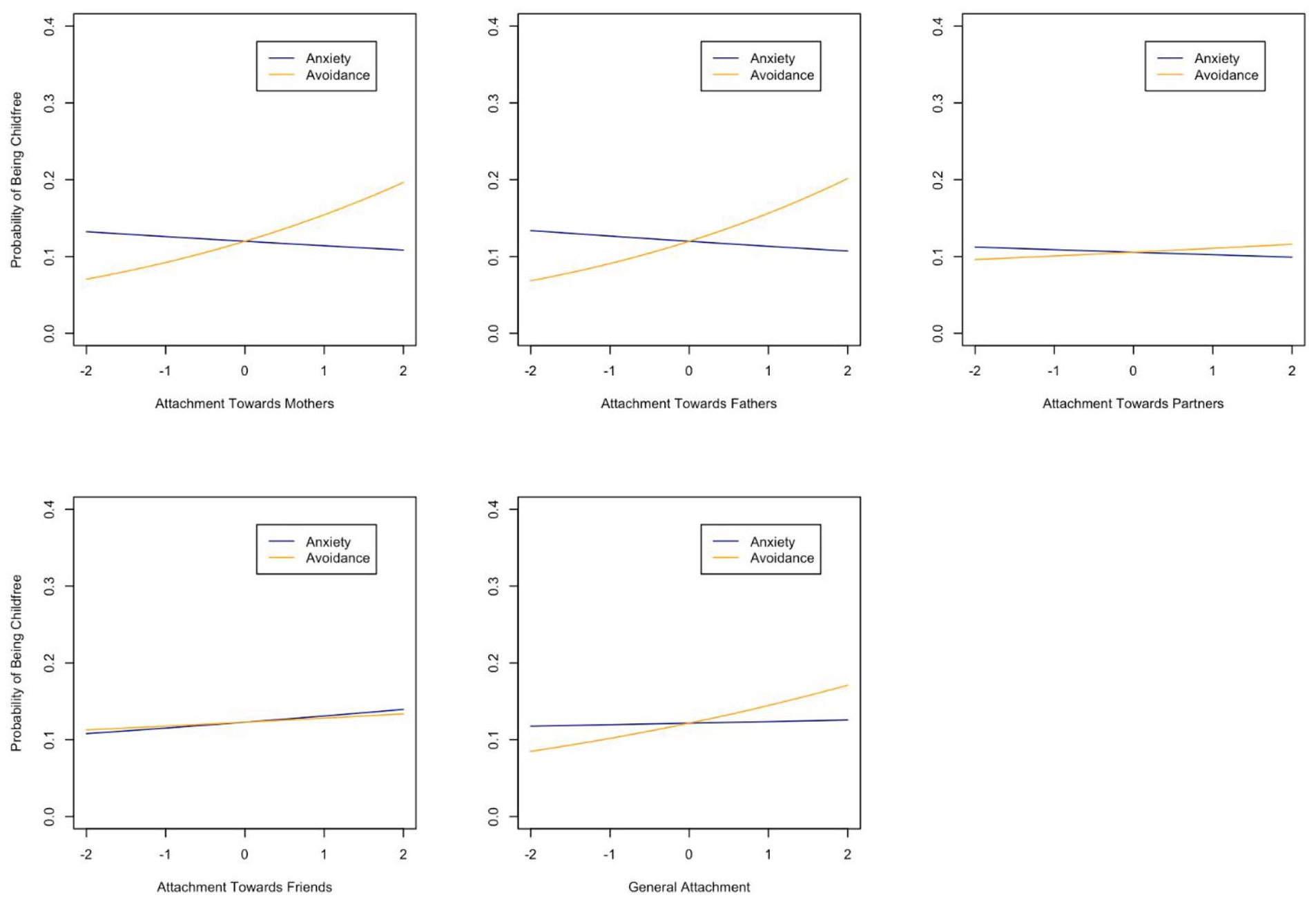
Associations between attachment orientations and being childfree.
Attachment Orientation and the Reasons for Being Childfree
Next, we examined the associations between attachment orientation and the reasons people have for being childfree. We used logistic regression to model each reason as a function of attachment orientations. Analyses were performed separately for each reason and relational domain, resulting in 95 individual regressions. Due to the large number of analyses, we focus on results from three of the most highly endorsed reasons. Complete tables for all the reasons we studied can be found in the Supplemental Materials on the OSF project page.
Mental Health Reasons
The likelihood of selecting mental health reasons was significantly positively related to both attachment anxiety and avoidance to mothers (β = .203, p < .001; β = .114, p = .017), fathers (β = .208, p < .001; β = .154, p = .002), and general attachment (β = .448, p < .001; β = .136, p = .002) such that those with greater insecurity toward their parents and relationships generally were more likely to select this reason. Selecting this reason was also significantly positively related to attachment anxiety to partners (β = .271, p < .001) and friends (β = .425, p < .001).
Overall, people were more likely to not want children for mental health reasons if they were high on attachment insecurity in general or toward their parents but were only more likely to select this reason if they are more anxiously (but not avoidantly) attached to partners or friends (Table 3; Figure 2).
Associations Between Attachment Orientation and Choosing “Mental Health Reasons.”

Indicates the difference in likelihood of choosing the reason from −1 to 1 standard deviations around the mean in each attachment domain.
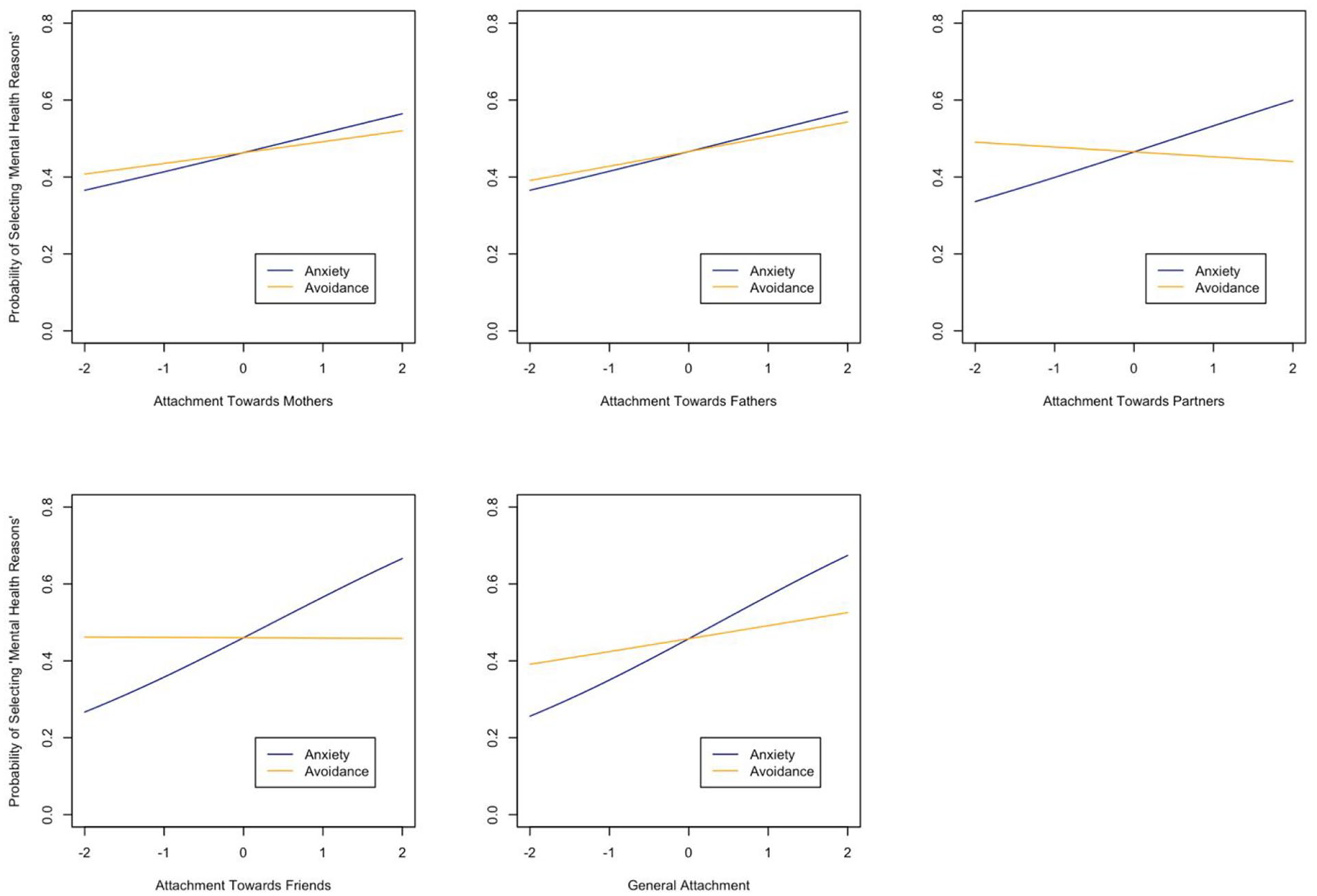
Associations between attachment orientations and selecting “mental health reasons.”
State of the World
The likelihood of selecting state of the world was significantly positively predicted by attachment anxiety to mothers (β = .104, p = .028), fathers (β = .236, p < .001), friends (β = .235, p < .001), and general attachment anxiety (β = .333, p < .001) such that those with greater anxiety toward their parents, friends, and relationships generally were more likely to select this reason. Selecting this reason was also significantly negatively predicted by attachment avoidance to partners (β = −.173, p = .007) and friends (β = −.157, p = .001). However, avoidance toward mother and father was not a significant predictor, and anxiety toward partner was not a significant predictor.
Taken together, people were more likely to not want children due to the state of the world if they have greater attachment anxiety generally or toward their parents or friends. However, they are less likely to endorse this reason if they have greater attachment avoidance toward partners or friends (Table 4; Figure 3).
Associations Between Attachment Orientation and Choosing “Worried About the State of the World.”

Indicates the difference in likelihood of choosing the reason from −1 to 1 standard deviations around the mean in each attachment domain.
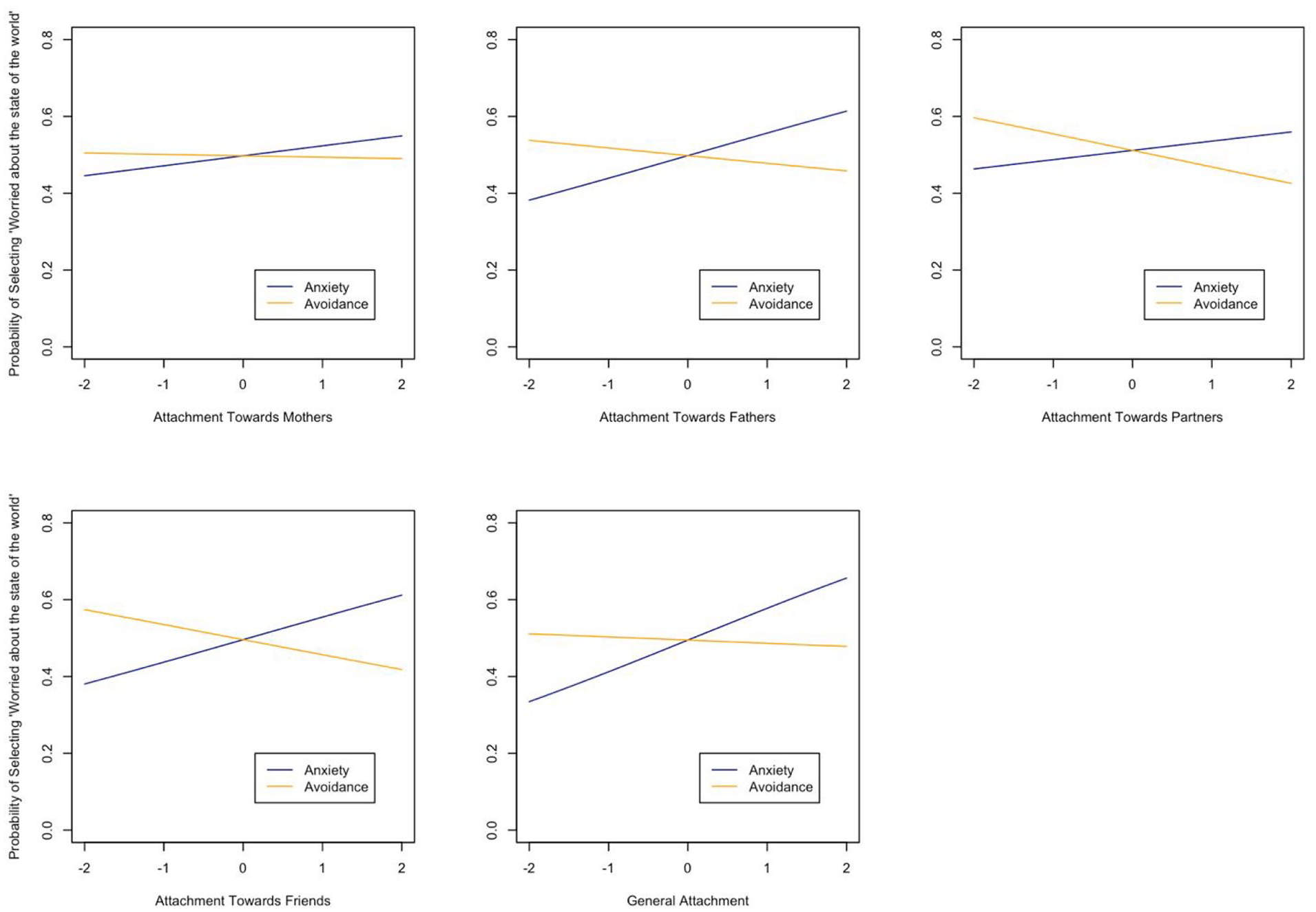
Associations between attachment orientations and selecting “worried about the state of the world.”
Keeping Freedom
Keeping freedom was the most frequently selected reason, with over 66% of childfree participants selecting it as a reason why they do not want children. The likelihood of selecting this reason was significantly positively predicted by attachment avoidance to both mothers (β = .178, p < .001) and fathers (β = .149, p = .004). Selecting this reason was also significantly negatively predicted by attachment anxiety in mothers (β = −.120, p = .028). However, anxiety toward fathers was not a significant predictor (β = −.068, p = .200). Attachment to partners and friends also did not significantly predict selecting this reason. General attachment anxiety significantly positively predicted this reason (β = .103, p = .022), but general avoidance did not (β = −.013, p = .772).
Overall, people were more likely to not want children to keep their freedom if they were high in attachment avoidance toward their parents, or low in their attachment anxiety toward their mothers. Interestingly, although lower attachment anxiety toward their mothers predicted endorsing this reason, greater general attachment anxiety also predicted endorsing this reason. Not wanting children to keep freedom was unrelated to attachment toward partners and friends (Table 5; Figure 4).
Associations Between Attachment Orientation and Choosing “To Keep My Freedom.”
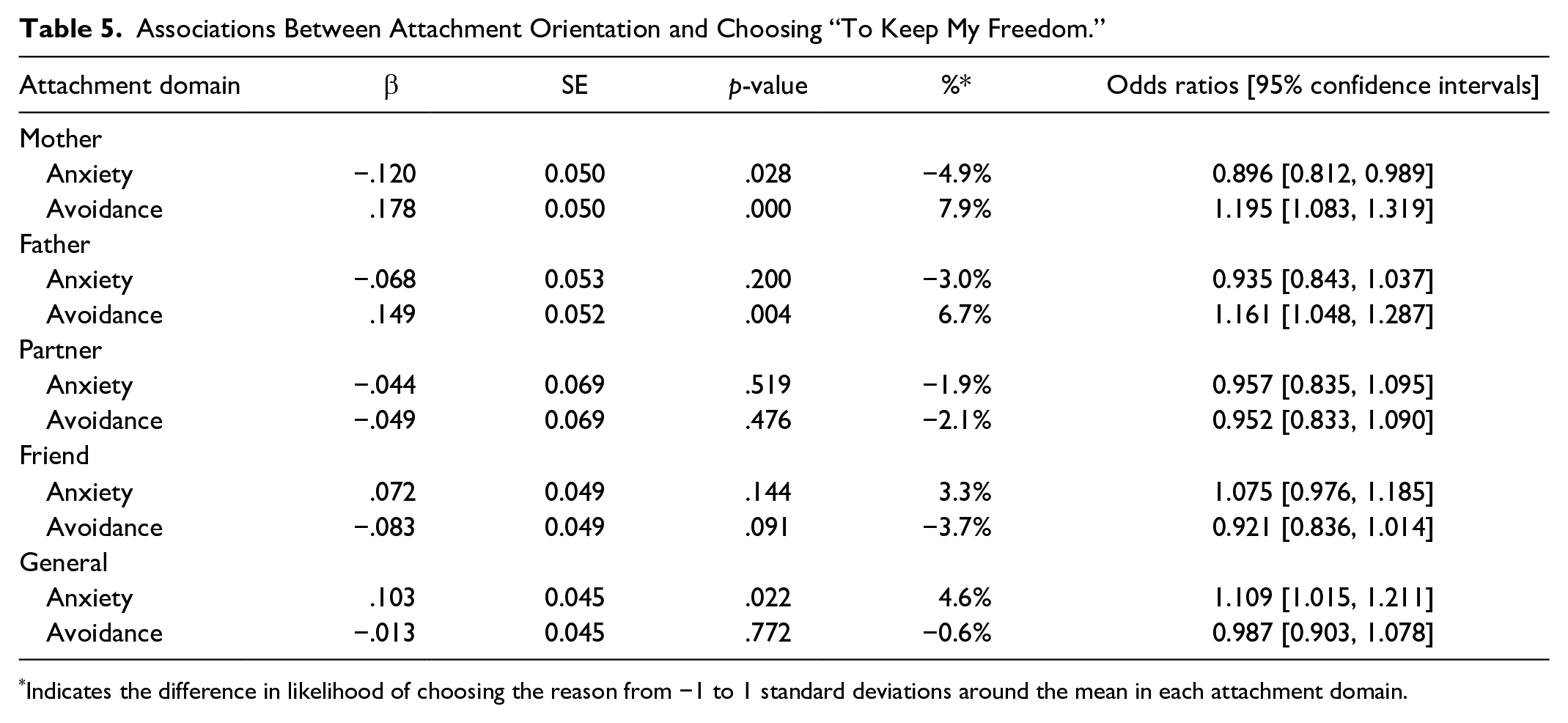
Indicates the difference in likelihood of choosing the reason from −1 to 1 standard deviations around the mean in each attachment domain.
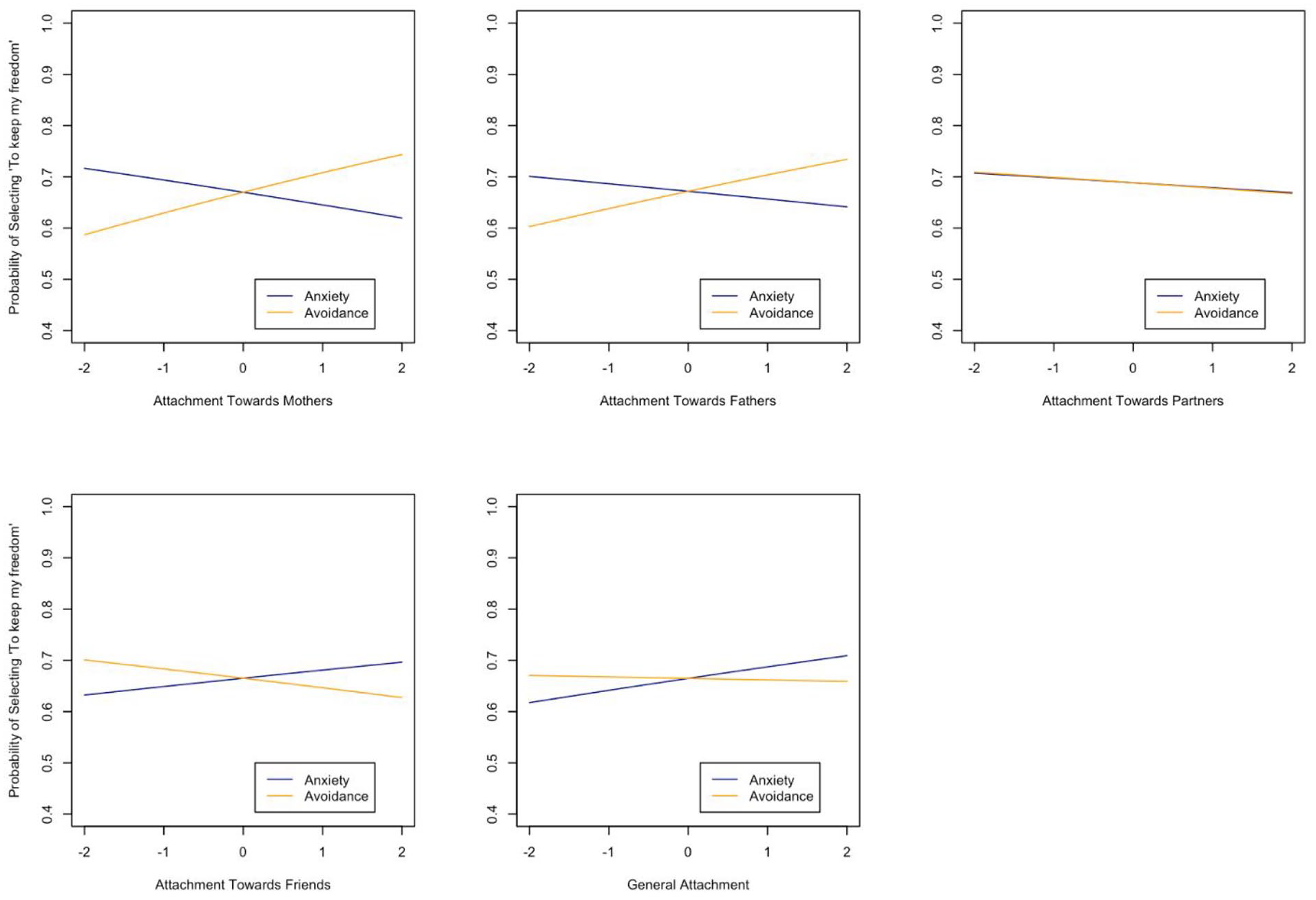
Associations between attachment orientations and selecting “to keep my freedom.”
Discussion
There are many reasons that a person may choose to not have children. One of the major goals of this study was to better understand the diversity of these reasons, using a large and broad sample of childfree adults. We also sought to understand how attachment orientations are related to childfree status and the reasons that people choose to be childfree.
Reasons for Being Childfree
Keeping freedom was the most commonly chosen reason for not wanting children, with over 66% of childfree participants selecting it. Other highly selected reasons included children being incompatible with lifestyle or goals, being worried about the state of the world, only liking children on occasion or in “small doses,” mental health reasons, financial reasons, and to avoid losing personal identity, with each being selected by more than a third of childfree participants. Overall, this suggests that many childfree people believe that having children would be detrimental to their happiness, and they are motivated to pursue a childfree lifestyle to preserve their sense of self, comfort, and well-being. But they may also be motivated to remain childfree because of external reasons that may be harmful to a potential child such as a poor environment (state of the world) or inadequate resources (financial reasons).
Although a number of common reasons may suggest that childfree people are simply hoping to avoid responsibility, such as keeping freedom, or lack the drive to provide nurturance, such as not liking children, it is important to clarify that this is not necessarily the case. There are certainly some individuals who choose to be childfree to avoid additional responsibilities and others who feel no drive or desire to care for a dependent of any kind; however, many childfree people choose to adopt pets that require significant care commitments. In fact, many childfree people express a desire to nurture and can fulfill that desire by caring for their pets rather than children (Laurent-Simpson, 2017). Although they recognize that their pets are not human children (Volsche, 2018), some childfree people even take on a parent-like role and identity in relation to their pets (Laurent-Simpson, 2017), which suggests that for some, they may fill the role that children otherwise would and that they are motivated to remain childfree for reasons other than a lack of drive to care for others or to avoid responsibility. Interestingly, although they recognize that their pets are not human children, people without children are more likely than their parent counterparts to draw parallels between the role of parent and the role of the pet owner and adopt a parent-child-like relationship with their pets (Owens & Liz, 2019).
Attachment Orientations and Being Childfree
Being childfree was significantly associated with attachment toward a variety of close others. People who were more anxiously attached to their parents were less likely to be childfree, and people who were more avoidantly attached to their parents were more likely to be childfree. However, people were more likely to be childfree when they had greater attachment insecurity in either form (either anxiety or avoidance) to a best friend. Interestingly, attachment toward one’s partner was not significantly associated with being childfree for either attachment dimension; people who were more insecurely attached to their partners were no more or less likely to be childfree.
Specifically, attachment avoidance toward parents was a particularly strong predictor of choosing to be childfree. So, although other domains of attachment may in some ways relate to the decision to be childfree, our results suggest that it is attachment toward parents, especially attachment avoidance toward parents, that best predicts the decision. This finding is in line with previous research that suggests avoidant attachment predicts less interest in having children (Rholes et al., 1995; Shenkman et al., 2019); however, the current research expands on these findings by demonstrating that it is the attachment relationship with parents specifically that has the greatest association with being childfree.
One reason why this particular attachment domain may be so strongly associated with being childfree is that the decision to have or not have children is actively influenced by the nature of people’s relationships with their parents. This particular relationship serves as a model for how people think about what it’s like to have and raise children (Rholes et al., 1997; Scharf & Mayseless, 2011), and so a parental relationship characterized by insecurity may undermine the desire to have children of one’s own.
One possible way that attachment avoidance toward parents specifically might motivate being childfree is through resentment. It is estimated that 5% to 14% of parents regret having children (Gallup, 2013; Piotrowski, 2021), and it is possible that a portion of these parents have a relationship with their children that is marked by avoidance as a result. That is, if they regret having them, they may not provide adequate love or support to their children, which could give rise to the child forming an avoidant attachment bond (Bowlby, 1982). These children may then foster some resentment toward their parents, which may cause them to not want children of their own. Another possibility is that people who are avoidantly attached to their parents may worry about their parents not being there for them in times of need while raising a child of their own. Believing that they will not have their parents to help with the transition to parenthood or the idea that their children would not be involved and responsive grandparents may be enough of a motivator to not have children at all. Alternatively, because avoidantly attached people are generally less likely to seek out new attachment bonds (Bowlby, 1973), people who have more avoidant attachments with their parents may just want to avoid having any additional and new parent-child relationships in their lives.
Another possibility is that being childfree causes an increase in avoidance. It may be the case that attachment to parents is not driving the decision to not have children, but that this decision drives a shift in the relationships that people have with their parents. If older parents want or expect to have grandchildren, learning that their adult children do not want children of their own may cause them to push back and retaliate in some way. This retaliation could cause active fighting and tension, but it could also simply cause emotional distance to grow between people and their parents.
Our findings also show that although a person’s attachment toward various important figures in their lives is associated with their decision to be childfree, attachment toward romantic partners is not. This finding is particularly interesting considering previous research on the childfree decision-making process. This research suggests that the decision to be childfree is often interpersonal, involving a series of ongoing conversations with romantic partners that lead to a mutual sharing of perspectives to come to a consensual stance (Durham & Brathwaite, 2009). This research also suggests that the decision to not have children can emerge over time because of these conversations with romantic partners. However, our findings suggest that it might actually be people’s relationships with their parents, rather than their partners, that drive this decision.
Although it is not surprising that attachment toward parents is related to the decision to be childfree in light of research that suggests that this attachment bond serves as a model for how people view parent-child relationships (Rholes et al., 1997; Scharf & Mayseless, 2011), our finding that attachment to partner is not associated with the decision to be childfree is quite surprising in light of previous research on the childfree decision-making process (Durham & Brathwaite, 2009). It may simply be that other aspects of the relationships, such as commitment or satisfaction, are what drive this interpersonal decision-making process. For example, people may be motivated to have children in a highly committed relationship or one with few desirable alternatives despite their attachment to their partner. Alternatively, people may feel that their partners’ responsiveness and their ability to rely on them in times of need are secondary to things such as shared life goals, financial stability, and personal desire to have or not have children. This potential explanation seems especially likely in light of our current finding regarding the reasons that childfree people have for not wanting children. Reasons relating to partners were all selected much less than reasons related to personal desire, freedom, financial stability, the state of the world, and personal mental health.
The personal desire to have or not have children serves as an interesting explanation and would suggest that the decision to not have children is less of a dyadic process than previously assumed. It may be, then, that previous research on the decision-making process reflects the practical reality of having children in a romantic relationship; that is, to have and care for a child within the relationship, both parties need to agree to participate, but each person’s personal feelings are derived from sources other than the attachment bond within that relationship. Existing research suggests that some people enter a relationship already having decided on their family planning intentions and hope to convince the other person to agree with them (Durham & Brathwaite, 2009). So, it may be that having a pre-established position is the normative path and that most couples do not actually typically make the decision about what they want together; instead, the dyadic decision-making process could be related to deciding what to actually do together.
Attachment Orientation and the Reasons for Being Childfree
We also examined how attachment orientations predicted the reasons people had for not wanting children. Due to the large number of analyses run, we chose to discuss results from three commonly selected but distinct reasons; mental health, state of the world, and keeping freedom.
Selecting mental health reasons was broadly predicted by high attachment insecurity, and especially anxiety. It has been well established that attachment anxiety is associated with a variety of mental health concerns, including depression (e.g., Schachner et al., 2008). Thus, it could be the case that people who tend to have more anxious attachment relationships are opting to be childfree as a way of breaking the cycle of mental health problems. It is unclear, however, whether they are choosing to do so because they are concerned about their ability to foster a positive relationship with their potential children or concerns about propagating mental health issues. Given that “breaking the cycle of abuse” was a salient reason associated with anxiety (see Supplemental Materials), it could be a bit of both.
The association between insecurity and selecting the state of the world may lend some support to the possibility that more anxiously attached people are prone to endorse worry-related reasons for not wanting children as a whole. Broadly, people who were more anxiously attached to close others were more likely to select this reason, and people who were more avoidant toward chosen close others (partners and friends) were less likely to select this reason.
It may be that people who experience more attachment anxiety are more inclined to worry about the state of the world and an uncertain future broadly, or, similarly to mental health reasons, they may just generally be more inclined to worry about the well-being of themselves and others. This reason is distinct from mental health reasons, though, in that the worry is directed at another person (the potential child) rather than the self.
This distinction may explain the unique associations that endorsing this reason has with attachment avoidance. People high in attachment avoidance are characterized by a lack of interest or comfort with relying on and being emotionally close to others (Brennan et al., 1998), and so it may be that these people are also generally less interested in the lives and well-being of others overall. Attachment avoidance toward chosen close others specifically predicted selecting this reason, however. Given that a child is also a close other that is often chosen (especially in the context of the current study, where participants are asked to reflect on whether they want to have children), it is possible that people who are avoidantly attached to chosen close others “transfer” that avoidant orientation when thinking about a potential child, making them less inclined to worry about the potential negative life circumstances that the child may face. In summary, if people conceptualize a child in a similar way to other chosen close others, and if people high in attachment avoidance to close others are less inclined to consider their well-being, then people who are high in attachment avoidance toward chosen close others would also be less likely to worry about the potential negative life circumstances of their potential child, and would be more inclined to endorse reasons related to the child’s well-being, such as state of the world.
The associations between attachment and selecting keeping freedom do not follow the aforementioned pattern with attachment anxiety. However, this reason is not worry-focused, and is instead reflective of a desire to maintain a certain lifestyle; it is indicative of a preference, rather than a reflection of fear for health or safety. Selecting keeping freedom was primarily predicted by attachment avoidance, rather than anxiety. Only attachment anxiety toward mothers predicted selecting this reason; however, attachment avoidance to both parents and friends predicted its endorsement. Interestingly, and not keeping with previously described patterns, greater avoidance toward parents, and lower avoidance toward friends predicted selecting this reason.
This pattern suggests that this reason is distinctly different from mental health reasons and the state of the world in some way. Worry may be an important distinction; the other two reasons discussed are focused on fears about safety and well-being, but keeping freedom instead reflects a preference for a certain lifestyle. It may be that attachment anxiety is simply less influential when considering one’s own goals and interests in this context. Given that avoidantly attached people are less interested in getting close to others (Bowlby, 1973; Brennan et al., 1998), these people may just be more inclined to focus on their preferences, rather than worrying about the “what ifs.”
However, attachment avoidance toward friends negatively predicted selecting this reason, suggesting that parents and friends function differently when considering how children may impact freedom. It may just be that people who are avoidantly attached to peers in their social circle are less concerned with the impact that children may have on their outward social lives, such as the amount of time or freedom they have to pursue outside activities. However, given their desire to avoid intimacy (Brennan et al., 1998), people who are more avoidantly attached to their family may have a heightened desire to pursue activities outside of that domain, and so may prioritize their personal freedom to pursue those activities.
Limitations
Although the current study allows us to better understand the associations between attachment and the decision to be childfree, there are several limitations of this research. First, we cannot draw causal inferences from these data. Furthermore, the reasons were presented in a binary fashion, so we can only gauge the relevance of each reason in a discrete way rather than the extent to which each reason motivates people to be childfree.
It should also be mentioned that although the present study samples from 140 countries, limitations to generalizability should still be acknowledged. Because participants were recruited online, participation was limited to those with the time and resources necessary to access the website. Participants are also limited to those who were willing to take a survey to learn more about their personality and attachment styles. The study was also only made available in English, which limited participation to people who can read English. However, recruitment information did not explicitly mention childfreeness, which significantly reduces the risk of introducing a selection bias for those who may be especially interested in taking studies about childfree people. Therefore, generalization of results should be limited to people with the resources, and desire to participate in online studies about personality.
Finally, research suggests that being childfree is an active, continuous process rather than a single decision (Blackstone & Stewart, 2016). Because being childfree is an ongoing process, not all currently childfree people will remain childfree, and not all currently non-childfree people will remain non-childfree. It is also reasonable to assume that people of all childfree statuses recognize the benefits and drawbacks of having children, and so it may be valuable for future research to investigate how non-childfree people evaluate reasons to not have children, and whether childfree and non-childfree people report different patterns of reasons why they might not want children.
Conclusions
Both the decision to be childfree itself and the reasons for making that decision were associated with attachment orientations. Results indicate that people’s relationships with their parents predict being childfree more so than their relationships with their partners (c.f., Durham & Brathwaite, 2009). Regarding the associations between attachment and the reasons for being childfree, one broad trend emerges: Reasons focusing on worry and fear were primarily predicted by attachment anxiety, and reasons primarily focusing on personal preferences were primarily predicted by attachment avoidance. One possible explanation for this trend is that anxiously attached people simply worry more about the potential for harm or threats to health and safety, which causes them to nominate related reasons as the reasons why they do not want children. Avoidantly attached people, however, are not as concerned with these fears, and instead endorse reasons related to personal preference, suggesting that they prioritize maintaining their ideal lifestyle for their benefit.
Supplemental Material
sj-docx-1-psp-10.1177_01461672251322842 – Supplemental material for Attachment Orientations Predict the Likelihood of Choosing to be Childfree and the Reasons for Not Wanting Children
Supplemental material, sj-docx-1-psp-10.1177_01461672251322842 for Attachment Orientations Predict the Likelihood of Choosing to be Childfree and the Reasons for Not Wanting Children by Sara Glass and R. Chris Fraley in Personality and Social Psychology Bulletin
Footnotes
Author’s Note
A reviewer recommended examining whether the associations between attachment and being childfree are moderated by age. We did not find any consistent moderation by age. Results are reported in Supplemental Tables 11 and 12. A reviewer also recommended reconducting models predicting being childfree and models predicting the likelihood of selecting each reason to include being in the United States as a moderator, as well as the quadratic effects of anxiety, avoidance, a multiplicative attachment term, the interactions between the United States and each attachment dimension, the interaction between the United States and each quadratic attachment term, and the three-way interaction between the United States and both attachment dimensions. We did not find any notable patterns of results for any of these additional predictors. Results are reported in the Supplemental Tables 13 to  .
.
Declaration of Conflicting Interests
The author(s) declared no potential conflicts of interest with respect to the research, authorship, and/or publication of this article.
Funding
The author(s) received no financial support for the research, authorship, and/or publication of this article.
Supplemental Material
Supplemental material is available online with this article.
Notes
References
Supplementary Material
Please find the following supplemental material available below.
For Open Access articles published under a Creative Commons License, all supplemental material carries the same license as the article it is associated with.
For non-Open Access articles published, all supplemental material carries a non-exclusive license, and permission requests for re-use of supplemental material or any part of supplemental material shall be sent directly to the copyright owner as specified in the copyright notice associated with the article.
