







Abstract
The adaptation account suggests that the persistence of some traditional values in modern society is due to their enduring adaptive utility. We tested this hypothesis by examining the change of filial piety in two Confucian societies, China and Japan. By analyzing natural language data, Study 1 found that Chinese people’s concern about and liking for filial piety have increased since 1979, with falling birth rate and rising elderly population as the Granger causes. By analyzing survey data from 2006 to 2017 (N = 7,283) in China, Study 2 found that reciprocal filial piety was adaptive (i.e., conducive to well-being) and increasing, whereas authoritarian filial piety was maladaptive (i.e., detrimental to well-being) and decreasing. By analyzing both Japanese language data from 1989 to 2023 (Study 3a) and survey data from 2006 to 2018 (Study 3b: N = 4,763), Study 3 replicated the main findings from China. These findings support the adaptation account of cultural persistence.
Introduction
In past decades, research about culture changes has established that, while individualism was on the rise around the world, some traditional cultural values were still persisting (Bao et al., 2022; Cai et al., 2019; Greenfield, 2013; Grossmann & Varnum, 2015; Hamamura, 2012; Inglehart & Baker, 2000; Santos et al., 2017; Twenge et al., 2013; Yu et al., 2016). Further research has linked economic growth to the rising individualism (Bianchi, 2016; Grossmann & Varnum, 2015; Ogihara, 2018; Santos et al., 2017). No research, however, has investigated why some cultural values persist. Our goal is to tackle this issue.
Theoretically, there are two main accounts for cultural persistence. The inertia account suggests that culture is inertia itself and therefore can persist (Cohen, 2001; Cohen & Nisbett, 1994; Moore, 1966). The adaptation account suggests that cultural persistence arises from its enduring adaptive utility in the changing world because culture is adaptations to the environment (Chen et al., 2005; Cobb et al., 2025; Inglehart & Baker, 2000; Jackson et al., 2023; Yang & Bond, 1996). The adaptive utility could manifest as satisfying diverse human needs, such as needs for coordination, dignity, identity, and continuity, or as promoting human well-being. For instance, it has been assumed that religious beliefs could satisfy people’s needs for security and meaning, and therefore remained popular in many modernized societies today (Inglehart & Baker, 2000), and that shyness was no longer adaptive in China and therefore declined (Chen et al., 2005). According to the adaptation account, if a traditional value persists or rises in a changing society, there should be some environments or environmental changes that make the value still necessary; and the value should still be adaptive.
In this research, we empirically tested the adaptation account. To do this, we chose to study filial piety, a core traditional value in Confucian or East Asian cultures, such as China and Japan. Traditionally, filial piety has played important roles in satisfying personal and societal needs and maintaining familial and societal harmony in East Asian societies. In modern society, some research suggested that filial piety was still alive and even beneficial to psychological well-being (e.g., Chen, 2014; Lu et al., 2019; Zhang & Weng, 2019). However, no research has directly linked the persistence of filial piety to its adaptive utility.
According to Confucius, filial piety “starts with serving one’s parents, progresses with serving one’s lord, and ends with establishing oneself.” 1 However, for most common people, filial piety denotes a virtue of showing the proper love and respect for one’s parents, elders, and ancestors (e.g., Zhao et al., 2023). Modern research about filial piety has mainly focused on its function of “serving parents” and treated it as a construct with multiple dimensions or components (Bedford & Yeh, 2019; Ge, 2021; Lum et al., 2016).
Two types of filial piety have been identified, namely, reciprocal filial piety (RFP) and authoritarian filial piety (AFP; Yeh & Bedford, 2003). This dual-factor model provides a foundation for most modern studies on filial piety, including our current research. RFP emphasizes caring about parents emotionally and spiritually and bearing gratitude for parents’ roles and efforts. High level of RFP implies more mutual support between parents and children. AFP underscores caring about parents by suppressing one’s own needs to fulfill parents’ wishes. High level of AFP suggests more unilateral obedience and compliance from children to their parents. Existing research has provided evidence for the distinction between RFP and AFP (for a review, see Bedford & Yeh, 2019). Relevant to our current research, in modern society, psychological well-being has been found to be positively associated with RFP but negatively associated with AFP (Jen et al., 2019; Leung et al., 2010; Li et al., 2021; Liu et al., 2020); and at the meantime, the emphasis on filial piety was increasing for RFP but decreasing for AFP (Dong et al., 2012; Hwang, 1977; Mehta & Ko, 2004; Thomas, 1990).
In this research, we proposed that filial piety still has important adaptive utility in some Confucian societies and therefore would persist and even flourish. To empirically test this, we primarily focused on China, a typical Confucian society, and used Japan for replication. China has experienced unprecedented rapid modernization since the 1980s. As a result, many traditional values have been declining, while some have been persisting (Cai et al., 2020). This makes China an ideal site for examining why the rising individualism has not led to the decline in some traditional cultural values and why some traditional cultural values still persist in modern society.
Since filial piety mainly involves children and parents, we argued that the enduring adaptive utility of filial piety in modern Confucian societies may arise from two relevant societal changes: The declining birth rate and rising aging population. In China, the birth rate has dropped from 17.82‰ in 1979 to 8.52‰ in 2020 (National Bureau of Statistics of China, 2021) and the proportion of the elderly population (i.e., aged above 60 in China) has risen from 6.79% in 1979 to 18.56% in 2020 (DataBank, 2020). These changes imply that, for both young children and elderly parents, sources of family support have decreased, and mutual support has become increasingly important (Zhan, 2002). Given these changes and the fact that, in most Chinese families, it is still children who provide primary care to their elderly parents (Krings et al., 2022), we reasoned that filial piety, at least RFP, would be increasingly valued as a means to strengthen parent–child bond and promote family harmony. In turn, the augmented family harmony would further promote social harmony because family is the basic unit of a society. Ultimately, filial piety, particularly RFP, could still satisfy some personal and social needs, thereby contributing to people’s well-being in China.
Therefore, we posit that the declining birth rate and the rising aging population would promote the adaptive utility of filial piety, particularly RFP, and ultimately boost its popularity. We tested this possibility by analyzing both natural language texts and large-scale survey data. Three studies were conducted.
Study 1 focused on natural language corpora from China. In this study, we investigated the change in social concern about filial piety by examining historical trends of the frequency of filial piety-related words; we investigated the change in social attitude toward filial piety by examining the change in associations between filial piety-related words and positive (vs. negative) words over the last four decades. We expected that, at the societal level, both social concern about filial piety (Hypothesis 1) and liking for filial piety (Hypothesis 2) would increase due to the continuing adaptive utility of filial piety; and the falling birth rate and the rising aging population would be the Granger causes of the change in concern (Hypotheses 3 and 4) and attitude (Hypotheses 5 and 6).
Study 2 focused on large-scale survey data in China. In this study, we directly tested the adaptive utility of filial piety and explored its level change. Previous studies have used diverse outcomes in studying the adaptive utility of traditional cultures, such as psychosocial health, adjustment, and well-being (for a review, see Cobb et al., 2025). In the present research, we chose to use subjective well-being due to data availability. While a positive link between filial piety and subjective well-being suggests that filial piety is adaptive, a negative one suggests that filial piety is maladaptive. We used self-report data from Chinese General Social Survey (CGSS, http://cgss.ruc.edu.cn/index.htm). The CGSS included measures of RFP and AFP in 2006 and 2017 surveys, which enabled us to assess the level change of filial piety. The CGSS also assessed subjective well-being in Survey 2017, which allowed us to directly examine the adaptive significance of filial piety in modern China by analyzing its association with subjective well-being.
We proposed distinct hypotheses for RFP and AFP. For RFP, since it emphasizes mutual emotional support for both elderly parents and young children, we expected that RFP would be beneficial for people’s subjective well-being (Hypothesis 7) and thus increase from 2006 to 2017 (Hypothesis 8). As to AFP, however, since practicing it requires sacrificing individual autonomy and freedom, two modern values important for both modern society (Inglehart & Welzel, 2005) and individual well-being (Ryan & Deci, 2001), we expected that AFP would be harmful for people’s subjective well-being (Hypothesis 9) and thus decrease from 2006 to 2017 (Hypothesis 10).
Study 3, including Study 3a and Study 3b, aimed to test whether the findings from Study 1 and Study 2 can be replicated in Japan. Japan is another society heavily influenced by Confucianism, in which filial piety is also traditionally cherished and still persisting today (Hashimoto & Ikels, 2005). In addition, like China, Japan has also been experiencing a sharp drop in birth rate, from 10.2 ‰ in 1989 to 6.0‰ in 2023, and a sharp increase in the proportion of the elderly population (i.e., aged above 65), from 11.61% in 1989 to 29.10% in 2023 (Ministry of Health, Labour and Welfare, 2023). We expected that main findings from China would be replicated in Japan.
In summary, by analyzing natural language texts and large-scale survey data, we tested a series of specific hypotheses as listed above. We believe that confirmations of these hypotheses would provide evidence for the adaptation account. Study materials, data, and analysis scripts used in this research are available at the Open Science Framework (https://osf.io/yk4ba). All studies were pre-registered (https://osf.io/yk4ba). All data analyses were performed using R software (R core team, 2024).
Study 1—The Change in Concern About and Social Attitude Toward Filial Piety in China: Trends and Causes
Method
Corpuses and Dictionary
We used yearly frequency of filial piety-related words as an index of social concern about filial piety. We constructed an indicator about attitude toward filial piety by using word embeddings.
For word frequency, we used two corpora: People’s Daily and simplified Chinese corpus in Google Books Ngram dataset. People’s Daily (http://data.people.com.cn/rmrb/) is one of the most authoritative media outlets in China, mostly reflecting mainstream values (more likely top-down) in China. In contrast, simplified Chinese corpus in Google Books Ngram dataset (books.google.com/ngrams) is a collection of Chinese books that can be found in Western library, mostly reflecting opinions of ordinary Chinese people (more likely bottom-up). To some extent, these two corpora are complementary to each other. We used People’s Daily from 1979 to 2020 and Version 3 Chinese corpus contained in the Google Books Ngram dataset from 1979 to 2019.
For word embeddings, we pretrained the same corpus of People’s Daily. Then, we used word embeddings of three types of words: filial piety-related words, positive words, and negative words. Filial piety-related words were selected from Chinese dictionary as exemplars of filial piety, including “孝 (Xiao)、孝道 (Xiaodao)、孝顺 (Xiaoshun)、孝敬 (Xiaojing)、孝廉 (Xiaolian)、孝心 (Xiaoxin)、孝子 (Xiaozi).” The positive (e.g., “praise” or “表扬” and “satisfaction” or “满意”) and negative (e.g., “danger” or 危险 and “betrayal” or “背叛”) words were adopted from Chinese Affective Words System (Wang et al., 2008). Details can be seen in Supplemental Materials.
Societal Data
We obtained birth rate for each year from the National Bureau of Statistics in China (stats.gov.cn), and proportion of population aged above 60 from DataBank (databank.worldbank.org).
Analyses
First, we calculated frequency of filial piety-related words for each year by dividing the total count of these seven filial piety-related words in the corpus by the corpus size for each year. With this yearly index, we examined how it changed with time and further the potential causes of the change by conducting time-series analyses.
Second, we used the relative norm distance (RND) as an index of attitude toward filial piety. RND is a measure of relative distance between filial piety-related words and positive (vs. negative) words (Garg et al., 2018). The closer the distance between filial piety words and positive (vs. negative) words, the more positive the attitude toward filial piety. To obtain this index, we first calculated the filial piety-positive distance between filial piety and positive words, and the filial piety-negative distance between filial piety and negative words. We then computed the RND score by subtracting the filial piety-positive distance from the filial piety-negative distance. A positive RND score denotes relatively positive attitude toward filial piety, whereas a negative one denotes relatively negative attitude toward filial piety. And a higher RND score indicates a more positive attitude toward filial piety.
Third, we used Granger causality tests to assess the predictive temporal relationships between societal changes and the change of filial piety. This test examines whether one exogenous variable can predict future changes in an endogenous variable, and thereby to identify the Granger cause of the endogenous variable (Granger, 1969). Compared with other causal inferential tests, such as Structural Causal Models, Granger causality test is particularly suitable for time-series data (Shojaie & Fox, 2022) and has been widely used in cultural change research (e.g., Grossmann & Varnum, 2015; Jackson et al., 2019).
Results
The Trends in Concern About Filial Piety
Figure 1A and 1B display changes in the frequency of filial piety-related words from People’s Daily and Google Books Ngram, respectively. In both corpuses, the frequency of filial piety-related words has been increasing since 1979. Simple regression analyses with year as a predictor showed that these rising tendencies were significant, both bs = 0.05, SEs = 0.01, ps < .001, 95% confidence interval (CI)s = [0.03, 0.07]. Overall, there has been a rising tendency of the frequency of filial piety-related words, 2 suggesting that social concern about filial piety have been increasing over the past decades. Hypothesis 1 was supported.
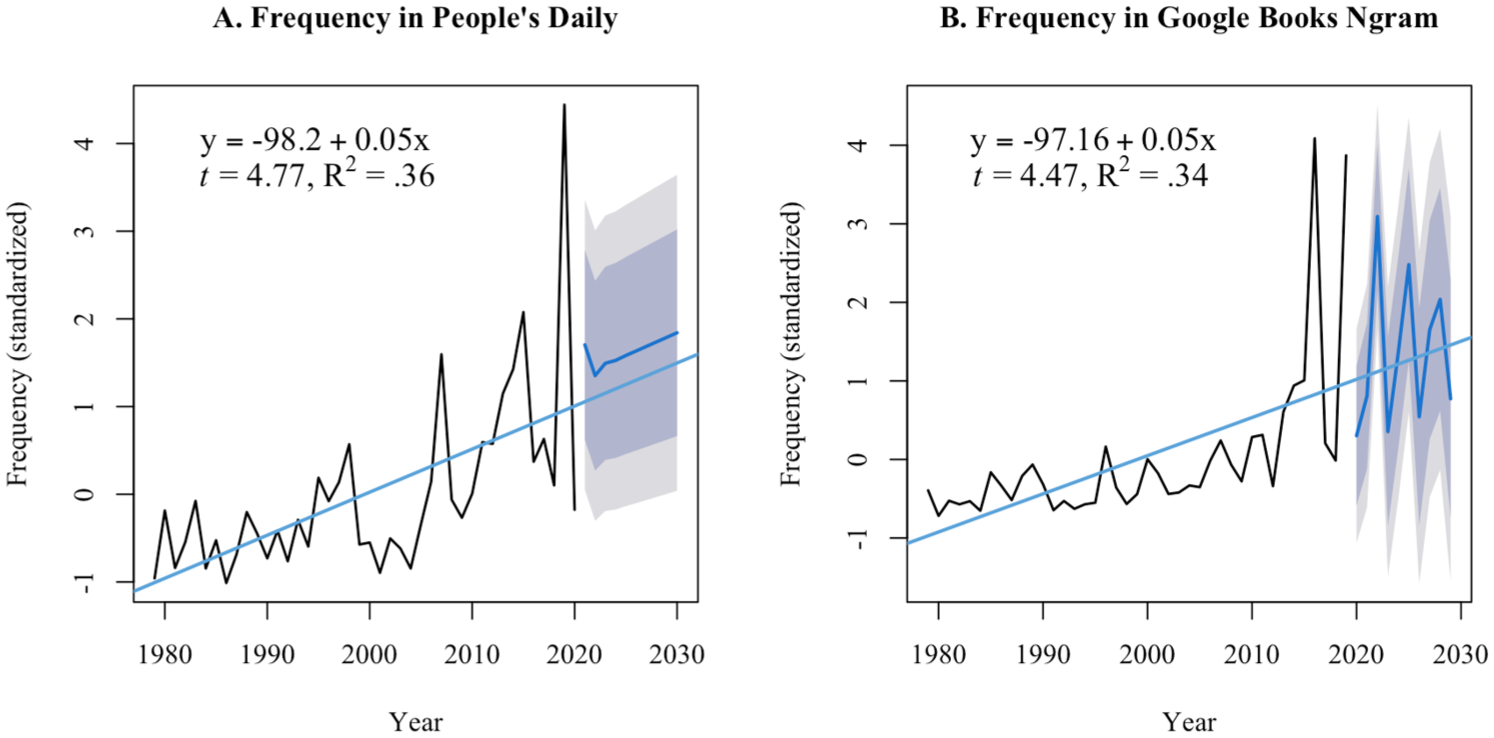
The Trends of the Frequency of Filial Piety-Related Words From 1979 to 2019/2020 in Study 1.
Societal Causes for the Change in Concern About Filial Piety
Simple regression analyses showed that the birth rate in China has been declining over the last 40 years (b = –0.29, SE = 0.02, p < .001, 95% CI = [–0.34, –0.24]) but the proportion of the elderly population has been rising (b = 0.26, SE = 0.01, p < .001, 95% CI = [0.24, 0.28]). To examine the cross-temporal covariation between concern about filial piety and two societal changes, we conducted concurrent correlation analyses first and then Granger causality tests.
Concurrent Correlation Analyses
Kendall correlations showed that, for both People’s Daily and Chinese books in Google Book Ngram, the frequency of filial piety words was significantly and positively correlated with the proportion of the elderly population (τs = .48, .55, ps < .001, respectively), but negatively correlated with the birth rate (τs = –.37, –.40, ps < .001). These findings suggested that the change of concern about filial piety could be predicted by concurrent demographic changes.
Granger Causality Tests
The results of Granger tests are displayed in Table 1. As can be seen, both birth rate and the proportion of the elderly population were Granger causes of changes in the frequency of filial piety-related words. Word frequency in a certain year could be causally predicted by birth rate at 4 to 9 years ago when People’s Daily was considered, and 1, 3 to 6 years ago when Google Books Ngram was considered. It could also be causally predicted by the proportion of the elderly population at 7 years ago when People’s Daily was considered, and 4 to 9 years ago when Google Books Ngram was considered. Most of the reverse directionalities were not significant, though there were a few exceptions in Google Books Ngram. Overall results suggested that birth rate and proportion of the elderly population could causally predict the change of people’s concern about filial piety. These results supported Hypotheses 3 and 4.
F-Statistics From the Granger Tests on Word Frequency in Study 1.
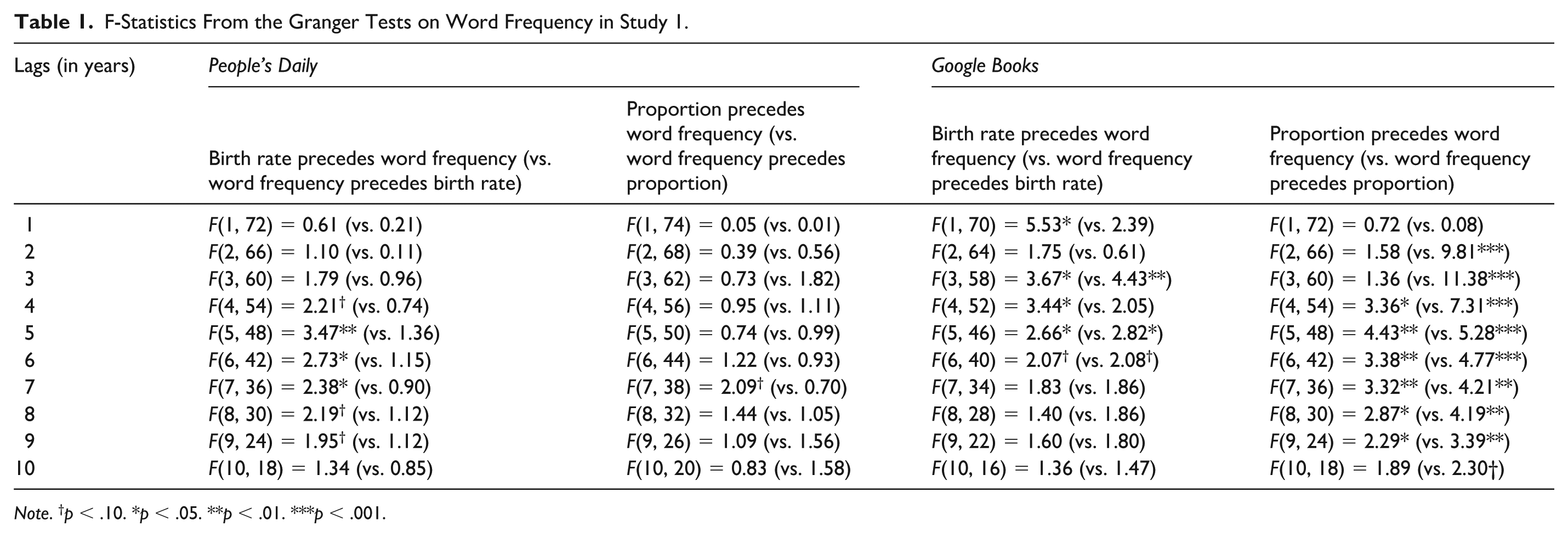
Note. †p < .10. *p < .05. **p < .01. ***p < .001.
The Trend of Attitude Toward Filial Piety
Figure 2 displays the change in RND from 1979 to 2020. Overall, the RND score (M = 1.18, SD = 0.36) was significantly greater than 0, t(41) = 21.20, p < .001, d = 3.27, 95% CI = [2.96, 3.58], suggesting that, generally, people possessed positive attitude toward filial piety. Moreover, the RND score has been increasing since 1979, b = 0.02, SE = 0.003, p < .001, 95% CI = [0.02, 0.03], suggesting that attitude toward filial piety in China has become increasingly positive over the past 40 years. 3 These results supported Hypothesis 2.
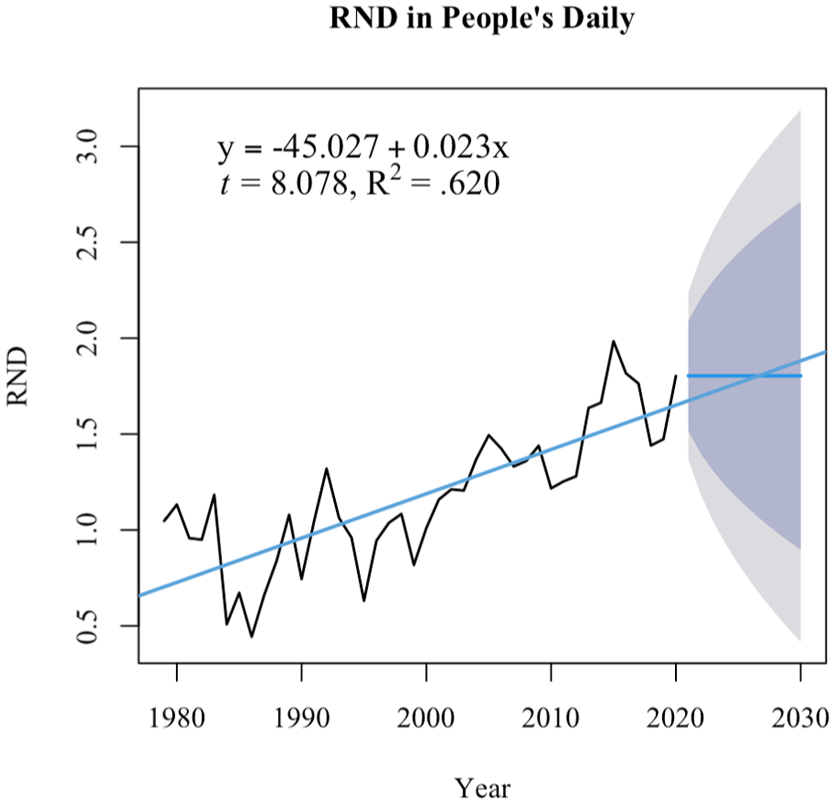
The Trend of Attitude Toward Filial Piety From 1979 to 2020 in Study 1.
Societal Causes for Changing Attitude Toward Filial Piety
Concurrent Correlation Analyses
Kendall correlations showed that the RND was positively correlated with the proportion of the elderly population (τ = .62, p < .001), but negatively correlated with the birth rate (τ = –.58, p < .001). These findings suggested that the change of attitude toward filial piety could be predicted by concurrent birth rate and proportion of the elderly population.
Granger Causality Tests
As can be seen in Table 2, both birth rate and proportion of the elderly population were the Granger causes of the change in attitude toward filial piety: RND was causally predicted by birth rate at 10 years ago, or by proportion of the elderly population at 8 to 10 years ago. But the reverse directionalities were not significant in both circumstances. Hypotheses 5 and 6 were supported.
F-Statistics From the Granger Tests on Attitude Toward Filial Piety in Study 1.
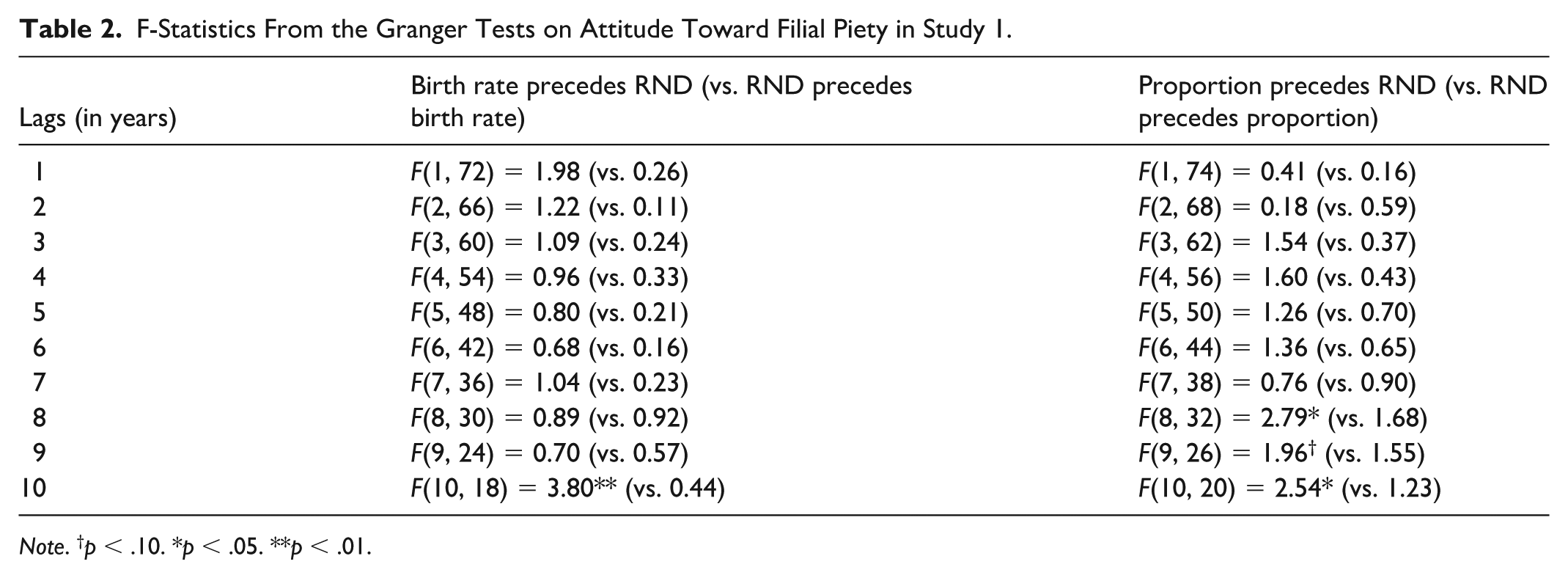
Note. †p < .10. *p < .05. **p < .01.
In summary, data extracted from two complementary corpora consistently revealed the persistence of filial piety, as indicated by the increasing societal concern about filial piety and positive attitude toward filial piety since 1979. Besides, both declining birth rate and rising aging population were the Granger causes. Notably, we also ruled out the alternative causal role of economic growth (i.e., GDP per capita, see detailed results in Supplemental Table S1). Additional analyses based on available data also suggested that rising individualism could not explain the rise of filial piety (see Supplemental Materials). Overall, these findings provided support for our Hypotheses 1 to 6.
Study 2—The Level of Filial Piety: Changes and Associations With Well-Being
Method
Data and Samples
We used data from the family section of CGSS 2006 and 2017. In CGSS 2006 and 2017, 3,207 (Mage = 42.35, SD = 13.43, 55% females) and 4,076 participants (Mage = 50.87, SD = 16.90, 54% females) completed measures of RFP and AFP, respectively (see detailed demographic information in Supplemental Table S4).
Variables of Interest
Filial Piety
Six items were adapted from the filial piety scale (Yeh et al., 2013) to assess RFP and AFP in CGSS. Three of them are related to RFP (e.g., “Be grateful to my parents for their raising me”;
Subjective Well-Being
CGSS 2017 assessed subjective well-being with 21 items (
Demographics
In our analyses, we controlled for relevant demographic information, including age (18–96), gender (1 = male, 2 = female), education level (1 = primary school, 2 = junior high school, 3 = high school/technical secondary school, 4 = junior college, 5 = undergraduate, 6 = graduate and above), family economic status (1 = well below average, 2 = below average, 3 = average, 4 = above average, 5 = well above average), marital status (0 = married, 1 = unmarried), and children in family (0 = only child, 1 = non-only child).
Analytic Strategy
To examine trends in levels of RFP and AFP, we first conducted t-tests to test the period differences between 2006 and 2017 in a preliminary analysis. Then, we performed Age-Period-Cohort analyses by using a specific APC model: Hierarchical Age-Period-Cohort Cross Classified Random Effects Model (Yang, 2008; Yang & Land, 2013). This APC analysis allows us to distinguish among age, period and cohort effects and to estimate them separately.
In the APC model, age was Level 1 individual predictor, and period and cohort were Level 2 predictors. Period was defined as the year of the survey (i.e., 2006 and 2017). Based on respondents’ birth year and social developmental stage of China, we divided participants into five cohorts (Lu & Treiman, 2008): Cohort 1 (1949 and before), Cohort 2 (1950–1965), Cohort 3 (1966–1976), Cohort 4 (1977–1989, and Cohort 5 (1990 and after). The respondents in each cohort accounted for 17.6%, 34.1%, 22.5%, 19.9%, 5.9% of the total sample, respectively. Below is the specific model for each level:
Level 1 model: Filial piety (RFP/AFP) is the outcome variable, age (AGE), sex (SEX), marriage (MARRIAGE), education (EDUCATION), family economic status (FEC), and only-child (CHILD) were predictors. Since some previous studies suggested that a nonlinear (i.e., U-shape) relationship might exist between age and filial piety (Cao & Yeh, 2014), we also included squared age (AGE2) in the model. Level 1 model is as follows:
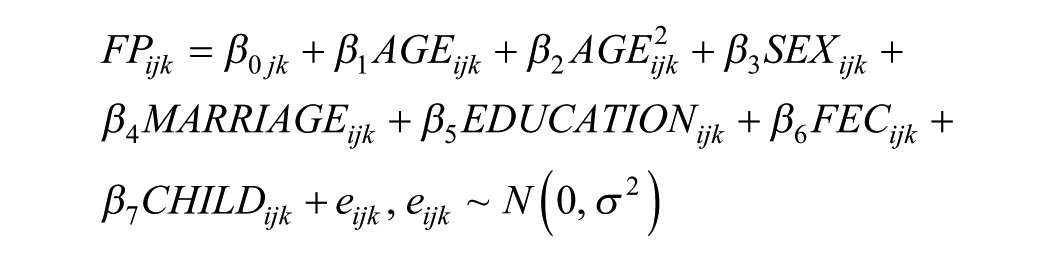
Level 2 model: Period and cohort were main predictors in Level 2 model. The specific model is as follows:

Finally, we got a combined model as follows:
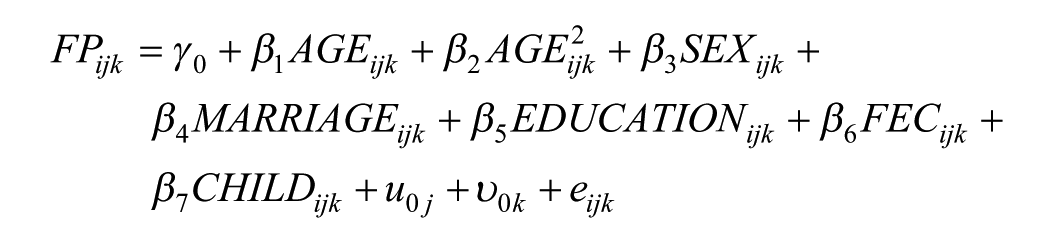
In the models,
Following previous research (Cao & Yeh, 2014), while analyzing RFP (or AFP), we controlled for AFP (or RFP).
Results
Filial Piety and Subjective Well-Being
In CGSS 2017, subjective well-being (M = 4.16, SD = 0.56) was positively correlated with RFP (M = 6.09, SD = 0.80, r = .23, p < .001, 95% CI = [.21, .26]) but negatively correlated with AFP (M = 4.67, SD = 1.10, r = –.13, p < .001, 95% CI = [–.16, –.10]), suggesting that for subjective well-being, RFP was beneficial, but AFP was harmful. Multiple regression analyses with demographic information controlled revealed similar findings (see Supplemental Table S5). These findings suggested that RFP showed adaptive values in modern China, but AFP did not, confirming our Hypotheses 7 and 9.
Shifting Trends of Filial Piety Level
A series of independent t-tests showed that the level of RFP has significantly increased from 2006 (M = 5.86, SD = .78) to 2017 (M = 6.09, SD = .80), t = 12.56, p < .001, d = .30, 95% CI = [.25, .34]; the level of AFP, however, has significantly decreased from 2006 (M = 4.82, SD = 0.93) to 2017 (M = 4.67, SD = 1.10), t = –6.20, p < .001, d = –.14, 95% CI = [–.19, –.10]. These findings provided preliminary evidence for Hypotheses 8 and 10.
To obtain more accurate estimates, we further employed the aforementioned APC model to analyze the data. Results are displayed in Table 3. As can be seen, for RFP and AFP, none of the age effect and cohort effect was significant; in contrast, the period effects were significant for both of them (τu =.04, .03, respectively, ps < .001). These findings suggest that after controlling for potential confounds, while RFP was on the rise, AFP was declining (Figure 3), consistent with Hypotheses 8 and 10.
Results of APC Analyses on RFP and AFP in Study 2.
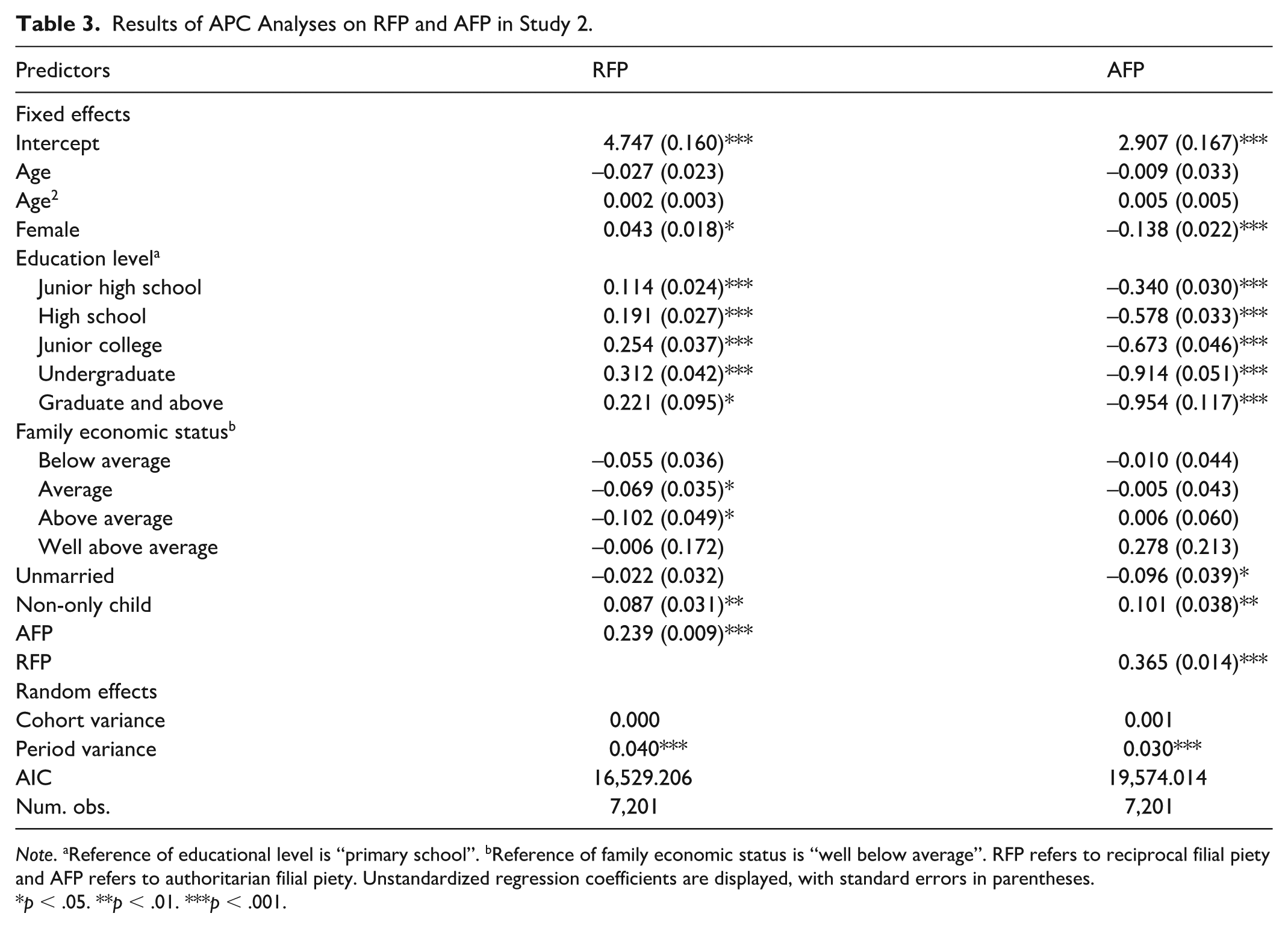
Note. aReference of educational level is “primary school”. bReference of family economic status is “well below average”. RFP refers to reciprocal filial piety and AFP refers to authoritarian filial piety. Unstandardized regression coefficients are displayed, with standard errors in parentheses.
p < .05. **p < .01. ***p < .001.
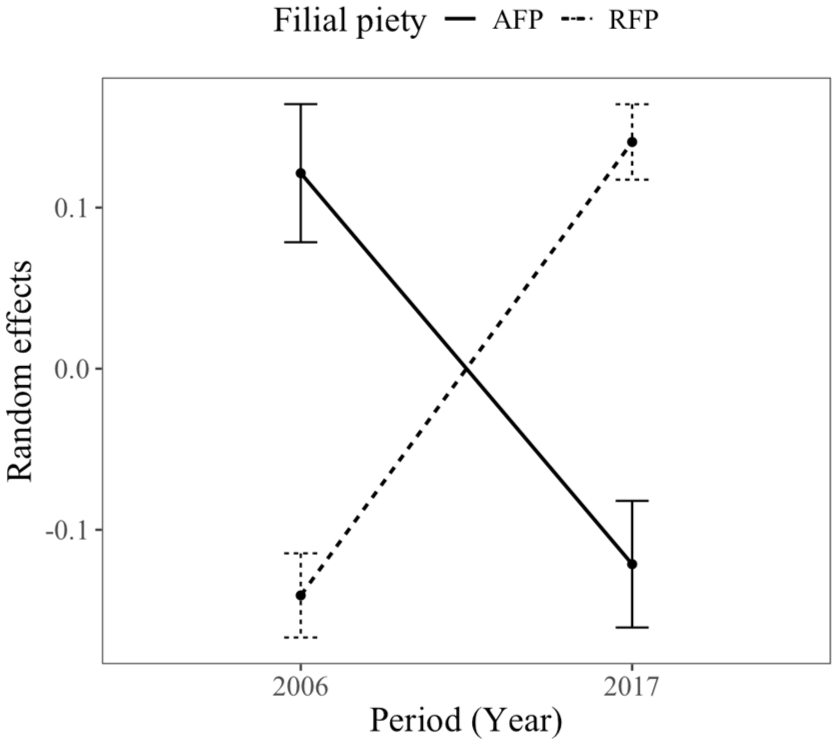
The Period Effects of RFP and AFP in Study 2.
In summary, findings from survey data showed that RFP was adaptive and increasing; AFP, however, was maladaptive and decreasing. Importantly, these findings were robust after controlling for many potential confounds such as age and cohort effects.
Study 3—Replications With Data From Japan
Two relevant datasets were available from Japan: A language database of Asahi Shimbun Cross-Search and a large-scale survey data from Japanese General Social Surveys (JGSS) in 2006, 2017, and 2018. Study 3a focused on natural language data, in which we examined the change of concern about filial piety (indicated by the frequency of related words) as well as the causal roles of declining birth rate and rising aging population. Study 3b focused on the survey data, in which we examined the level change of AFP from 2006 to 2018 as well as its association with subjective well-being. In Study 3a, we performed analyses on natural language data as we did in Study 1. In Study 3b, we analyzed survey data as we did in Study 2.
Study 3A—The Change in Concern About Filial Piety in Japan: Trend and Causes
Method
Corpus and Dictionary
We obtained the frequency of filial piety-related words by years through Asahi Shimbun Cross-Search for Library from 1989 to 2023 in Japan. Asahi Shimbun Cross-Search for Library in Japanese is an online database that allows investigation of past events. By referring to the Balanced Corpus of Contemporary Written Japanese (BCCWJ), we selected three filial piety-related words as exemplars of filial piety, including “親孝行(oyakoukou), 孝養(kouyou), 不孝(fukou).”
Societal Data
We obtained data of birth rate and proportion of population aged above 65 for each year from the Vital Statistics Survey of Ministry of Health, Labour and Welfare in Japan (http://www.mhlw.go.jp/toukei/list/81-1.html). We obtained GDP data from the Annual Report on National Accounts of Cabinet Office in Japan (https://www.esri.cao.go.jp/jp/sna/menu.html).
Results
Figure 4 displays changes in the frequency of filial piety-related words in Japanese corpus. The frequency of filial piety-related words in Japan has been increasing over the last 30 years, b = .04, SE = .02, p = .008, 95% CI = [.01, .07]. The rising tendency suggested that social concern about filial piety have been increasing in Japan. 4 Hypothesis 1 was supported.
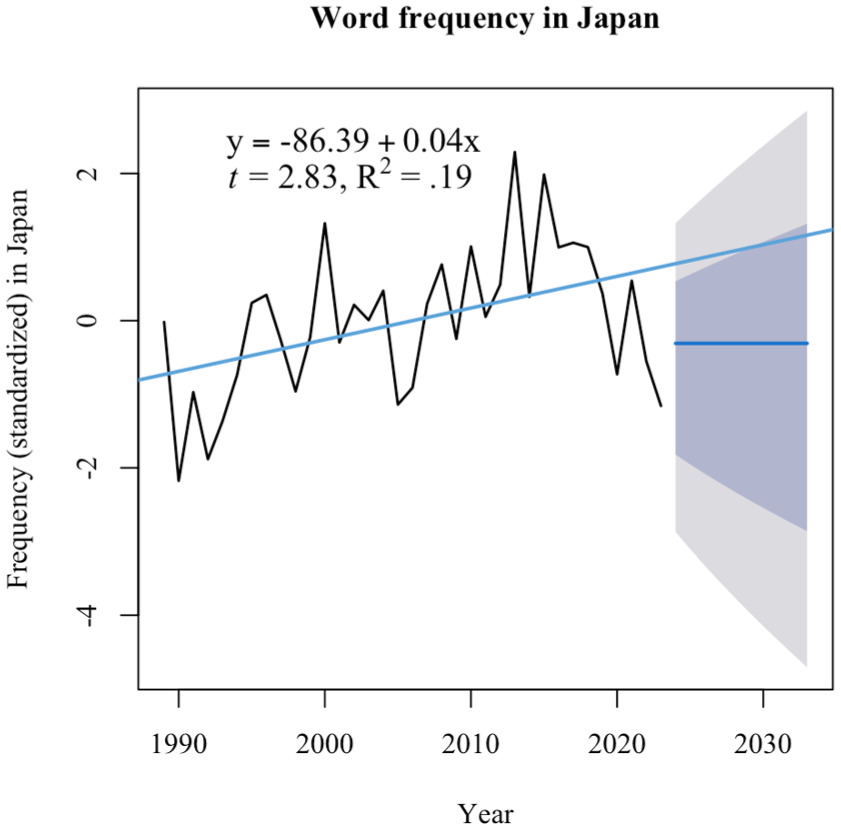
Changes in Frequency of Filial Piety-Related Words From 1989 to 2023 in Japan.
Simple regression analyses showed that the birth rate in Japan has been declining over the last 30 years (b = –0.11, SE = 0.01, p < .001, 95% CI = [–0.12, –0.10]), but the proportion of the elderly population has been rising (b = 0.56, SE = 0.01, p < .001, 95% CI = [0.54, 0.57]). Kendall correlations showed that word frequency in Japan was positively correlated with its proportion of the elderly population (τ = .33, p = .005), but negatively correlated with the birth rate (τ = –.29, p = .02). Table 4 shows the results of Granger causal tests on word frequency. As can be seen, both birth rate and proportion of the elderly population were the Granger causes. Specifically, frequency of filial piety-related words in a certain year could be causally predicted by birth rate at 4 and 8 to 9 years ago. It could also be causally predicted by proportion of the elderly population at 1 to 4 years ago. Most of the reverse directionalities were not significant. These results supported Hypotheses 3 and 4. Consistent with analyses in China, GDP in Japan was not the Granger cause of the word frequency change (see Table S1).
F-Statistics From the Granger Tests on Word Frequency in Japan.
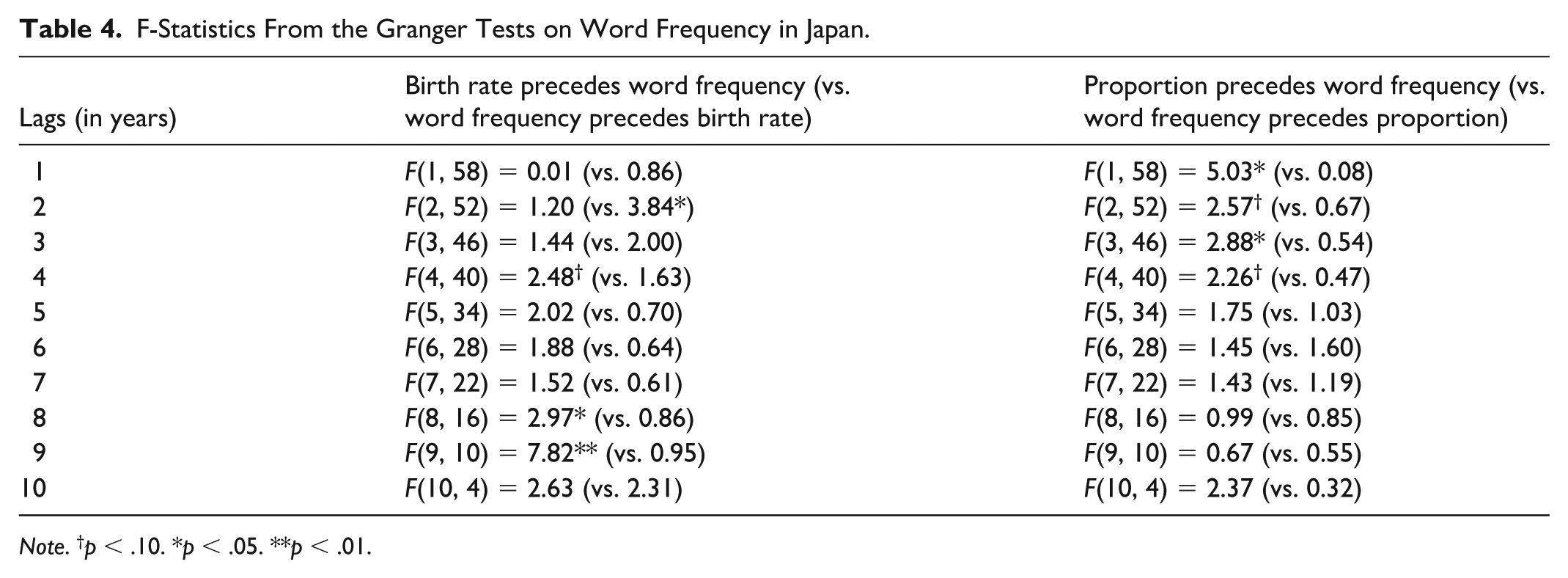
Note. †p < .10. *p < .05. **p < .01.
Study 3B—The Level of Filial Piety: Trend and Association With Well-Being
Method
Data and Samples
We used data from the family section of JGSS in 2006, 2017, and 2018. In JGSS 2006, 2,130 participants completed the filial piety measure (Mage = 52.73, SD = 16.71, 54.7% females); in JGSS 2017, 733 completed it (Mage = 54.79, SD = 17.68, 55.5% females); in JGSS 2018, 1,900 completed it (Mage = 56.22, SD = 17.23, 51.5% females). The sample size in total is 4,763. Detailed demographic information can be found in Supplemental Materials (Table S6).
Variables of Interest
Filial Piety
In JGSS, only two items about filial piety related to AFP were included (i.e., “Children must make efforts to do something that would bring honor to their parents” and “To continue the family line, one must have at least one son,” α = .68).
Subjective Well-Being
In JGSS 2017 and 2018, participants’ subjective well-being was measured by one item: “Considering your life these days, how happy or unhappy do you feel overall” (1 = unhappy, 5 = happy).
Demographics
Similar to analyses of data from China, we controlled for relevant demographic information, including age, gender, education level, family economic status, marital status, and children in family as we did in Study 2.
Analytic Strategy
We conducted APC analysis as we did in Study 2. Periods were defined as the year of the survey (i.e., 2006, 2017, 2018). Japanese participants were divided into Cohort 1 (1940 and before, 17.8%), Cohort 2 (1941–1950, 20.8%), Cohort 3 (1951–1960, 17.2%), Cohort 4 (1961–1970, 16.3%), Cohort 5 (1971–1980, 15.9%), and Cohort 6 (1981 and after, 12.0%).
Results
In Japan, subject well-being (M = 3.77, SD = 0.93) was negatively correlated with AFP (M = 4.10, SD = 1.15, r = –.04, p = .045, 95% CI = [–.08, –.00]), supporting our Hypothesis 9 that AFP was maladaptive in modern society. The level of AFP has significantly decreased from 2006 (M = 4.38, SD = 1.17) to 2017 (M = 4.12, SD = 1.13) and 2018 (M = 4.09, SD = 1.16), F(2, 4760) = 35.92, p < .001,
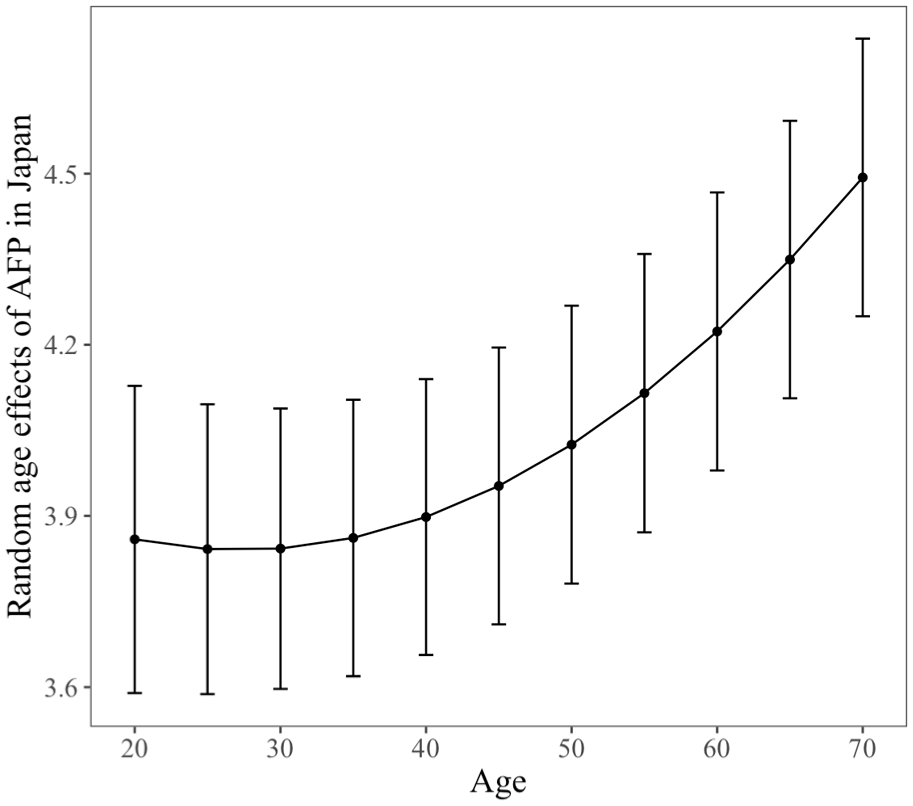
The Age Effects of AFP in Japan.
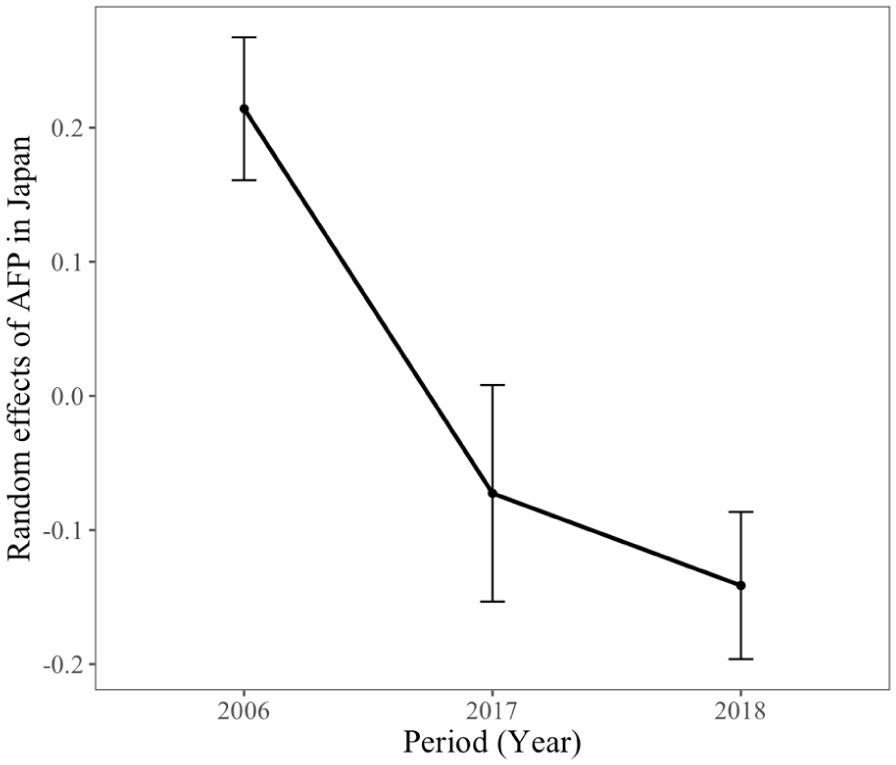
The Period Effects of AFP in Japan.
Results of HAPC Analysis on AFP in JGSS 2006–2018.
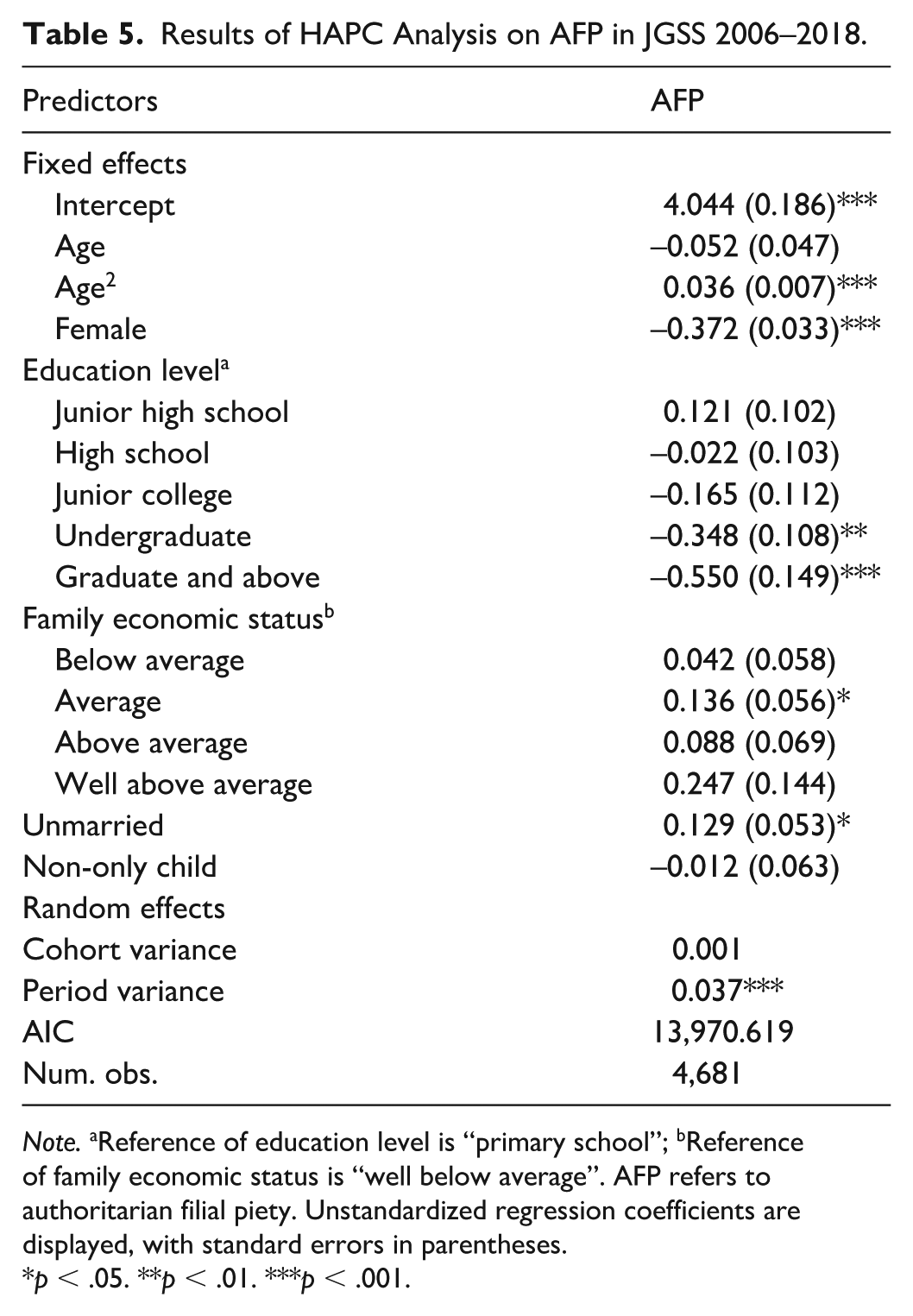
Note. aReference of education level is “primary school”; bReference of family economic status is “well below average”. AFP refers to authoritarian filial piety. Unstandardized regression coefficients are displayed, with standard errors in parentheses.
p < .05. **p < .01. ***p < .001.
In summary, in modern Japan, filial piety, as a traditional cultural value, is still persisting, as indicated by the rising frequency of filial piety-related words; both declining birth rate and rising aging population were the Granger causes. Besides, AFP was also maladaptive and declining. These findings were consistent with corresponding results from China, providing additional supports for Hypotheses 1, 3, 4, 9, and 10.
It is notable that the JGSS used only two items to measure AFP and one item to measure subjective well-being. These brief measures might have not fully captured the complexity and variation of either construct, potentially leading to the low correlation between AFP and well-being. Future research may use more items or full scales to replicate the current findings.
Some people might have noticed that non-linear effect of age was significant for Japanese in Study 3 but not for Chinese in Study 2. This was possible for diverse reasons. First, although both Japan and China are characterized by collectivism or Confucianism, they differ from each other in many ways such as economic development levels and political systems (Hsu, 1971). Second, filial piety was measured with different items in China (Study 2) and Japan (Study 3), which has the potential to lead to some different results. Third, although samples from both Japan and China are supposed to be representative, they still differ from each other in some demographic characteristics such as age, which might also introduce some differences in results. Nevertheless, the results about period and cohort effects were consistent across Japan and China, which were our main concerns.
General Discussion
In this research, we tested the account that culture persistence is due to its enduring adaptive utility. We did this by studying the change of filial piety in two Confucius societies (i.e., China and Japan). We made use of both natural language data and survey data. By analyzing natural language analyses, we found that social concern about and positive attitude toward filial piety have increased, and both decreasing birth rate and rising aging population were the Granger causes. Through survey data analyses, we found that RFP was beneficial for subjective well-being and increasing, while AFP was harmful for subjective well-being and decreasing. The data from China and Japan provided support for all of our hypotheses. Overall, our findings suggest that a possible reason for the persistence of some traditional values is that these values still have adaptive utility in modern society.
It is notable that we found some discrepant results across age, cohort and period in the APC analyses. For age, the linear effect is not significant in both China and Japan, whereas the quadratic effect is significant in Japan but not in Mainland China. The visual display of age effects on AFP in Figure 5 suggest that, in Japan, older people may value filial piety more than younger people. A previous study found a similar quadratic effect of age on AFP in Taiwan China (Cao & Yeh, 2014). For the period effect and cohort effect, in both China and Japan, the former is significant, but the latter is not. These findings suggest that the change of filial piety is caused by some major social changes occurring during the surveyed period (e.g., decreasing birth rate and rising aging population) rather than by any specific events happening to a specific cohort.
It is also notable that the change-related effect sizes in our studies are small. These small effect sizes may suggest that the changes in filial piety are slow, and the influences of societal changes are limited in a limited period. Given these, we may be cautious in understanding the nonsignificant change-related effects in our research. Those nonsignificant effects may suggest null changes or null social influences. But they may also suggest that our observations have not covered long enough period so that the changes or social influences are invisible or nonsignificant.
Implications
Our research has important implications. First, our research extends the existing understanding about the change of filial piety in Confucian societies in modern time. Previous studies have mainly examined the level change of personally endorsed filial piety by analyzing the survey data (e.g., Yeh et al., 2013). In contrast, by using natural language processing techniques, we have also investigated the changes in social concern about and attitude toward filial piety, thus broadening the scope of filial piety change research. Besides, previous studies on the level change of filial piety did not adequately distinguish between age, cohort, and period effects, rendering their findings questionable (e.g., Fu et al., 2020; Xu, 2022; Yuan & Liu, 2022). In contrast, our analyses employed APC model to enhance the credibility of our findings. Finally, no previous research examined the potential drives of filial piety change. We are the first to find that declining birth rate and increasing aging population have contributed to the rising popularity of filial piety.
Most importantly, our research provides insights into understanding about cultural persistence. For the first time, we empirically demonstrate the adaption account of cultural persistence, which is consistent with past speculations (Chen et al., 2005; Cohen, 2001; Greenfield, 2009, 2013), including the cultural evolutionary perspective (Varnum & Grossmann, 2017), functional approach (Fischer et al., 2011; Loulanski, 2006), and cultural continuity theory (Cobb et al., 2025). According to this account, culture is adaptions to environments and dynamic, suggesting that the rise of filial piety in China and Japan should be caused by some specific environmental changes. Indeed, we found that both declining birth rate and rising aging population are the Granger causes. Notably, these changes in filial piety do not arise from economic growth, one main drive of modernization, but from some ensuing consequences of modernization such as decreasing birth rate and increasing aging population.
The adaptation account also suggests that, for traditional values, only those that still have adaptive utility in modern society can survive modernization. In contrast, those that are not adaptive anymore would decline. The distinct adaptive utilities and shifting trajectories of RFP and AFP provide supportive evidence for these possibilities. Our studies showed that, in some modern Confucian societies, RFP was beneficial for subjective well-being but AFP was harmful, and moreover, RFP has increased but AFP has decreased. These findings suggest that the level of adaptive component of filial piety has increased, whereas the level of maladaptive component of filial piety has lost its appeal, thus providing evidence for the positive association between adaptive utility and cultural persistence.
Limitations
Our research has some limitations. First, our natural language studies did not distinguish between different components of filial piety (e.g., RFP and AFP), so we do not know if the relevant findings are equally applicable to corresponding components of filial piety. Second, our survey data analyses have only examined the change of a relatively short-term period (i.e., from 2006 to 2017 in China, from 2006 to 2018 in Japan), so we do not know if the findings can be generalized to longer time periods. Third, we have only examined how filial piety is related to one adaptive outcome of subjective well-being. Future study may consider more outcomes such as mental health and life meaning. Fourth, we only examined one traditional value (i.e., filial piety) in two Confucian societies. Future study needs to examine whether the adaptation account can be used to explain the persistence of other traditional values in other countries such as emphasis on family and friendship in the United States. Finally, future study may examine the impacts of some emergent societal changes such as the COVID-19 pandemic on the persistence of traditional values.
Conclusion
The findings from our studies provide a first demonstration for the adaptation account of cultural persistence. Given that both decreasing birth rate and increasing aging population are outcomes of modernization, our studies also suggest that not all societal changes are detrimental for all traditional values, and some changes may entail some traditional culture values to persist. Of course, only those adaptive components of a traditional value would persist. Overall, the adaptive utility of a traditional value is critical for its persistence.
Supplemental Material
sj-docx-1-psp-10.1177_01461672251393559 – Supplemental material for Understanding the Persistence of Traditional Values in Modern Society: Adaptive Utility Matters
Supplemental material, sj-docx-1-psp-10.1177_01461672251393559 for Understanding the Persistence of Traditional Values in Modern Society: Adaptive Utility Matters by Menglin He, Huajian Cai, Cai Xing and Yiming Zhu in Personality and Social Psychology Bulletin
Footnotes
Acknowledgements
The authors thank Zhan Su and Zixi Wang for their help on data pre-processing.
Author Contributions
M.H. played a lead role in data curation, methodology, formal analysis and writing original draft, and an equal role in conceptualization. H.C. played a lead role in conceptualization, methodology, editing and supervision, and an equal role in data analysis. C.X. played an equal role in conceptualization, supervision and editing. Y.Z. collected data in Japan.
Funding
The authors disclosed receipt of the following financial support for the research, authorship, and/or publication of this article: This research was partly supported by the startup fund from University of Oklahoma awarded to Huajian Cai.
Declaration of Conflicting Interests
The authors declared no potential conflicts of interest with respect to the research, authorship, and/or publication of this article.
Data Availability Statement
De-identified data and the data analysis scripts have been made publicly available via OSF ( ). All studies were pre-registered (https://osf.io/yk4ba).
Supplemental Material
Supplemental material is available online with this article.
Notes
References
Supplementary Material
Please find the following supplemental material available below.
For Open Access articles published under a Creative Commons License, all supplemental material carries the same license as the article it is associated with.
For non-Open Access articles published, all supplemental material carries a non-exclusive license, and permission requests for re-use of supplemental material or any part of supplemental material shall be sent directly to the copyright owner as specified in the copyright notice associated with the article.
