






Abstract
Situational and individual differences shape how and why people regulate emotions, but whether emotion regulation is initiated remains understudied. We hypothesize that, for example, less familiar situations might be associated with more regulation initiation, and people who believe emotions are controllable initiate regulation more frequently. Using experience sampling (N = 216; 7x/14 days), we found that participants initiated regulation 60% of the time over the past 2 hr. As predicted, people initiated regulation in less familiar, less pleasant contexts, and with more dominant, less warm social partners. Unexpectedly, individuals who believe emotions are uncontrollable were more likely to initiate regulation, even after accounting for affect. These findings highlight that while attention has mostly focused on strategy selection or efficacy, meaningful situational and individual differences also exist at the emotion regulation initiation stage when individuals determine whether to expend regulatory resources to maintain well-being.
Keywords
Introduction
Engaging in emotion regulation has widely been considered essential to important life outcomes such as maintaining mental health (Aldao et al., 2010; T. Hu et al., 2014), physical health (Cloitre et al., 2019; DeSteno et al., 2013; Low et al., 2021), and positive relationships (Chervonsky & Hunt, 2017). Over the past decades, a rapidly growing field has investigated which strategies people choose to effectively regulate their emotions (Kraft et al., 2023; Livingstone & Isaacowitz, 2021), how the effectiveness of these strategies depends on situations people are in (Kalokerinos et al., 2014; Matthews et al., 2021), and how emotion regulation strategy use or effectiveness contributes to the incidence or maintenance of mental health difficulties (Daniel et al., 2019). The rise of naturalistic assessment methods such as experience sampling (Boemo et al., 2022; Kuppens et al., 2022) provides the opportunity to study both individual differences and situational differences in emotion regulation as it occurs in people’s day-to-day environment. However, when focusing on the most beneficial ways of regulating one’s emotions, researchers have tended to overlook key basic questions about when and by whom emotion regulation might or might not be initiated. Despite increased interest in supporting people in selecting effective strategies for their daily emotion regulation needs through interventions (Bettis et al., 2022), researchers have yet to build a comprehensive understanding of when people are more or less likely to engage in emotion regulation more broadly, or who might be more or less likely to engage in emotion regulation in daily life.
The Initiation of Emotion Regulation
Throughout the course of daily life, people encounter a variety of emotional situations. When confronted with these situations, they may engage in emotion regulation, a multifaceted process involving deliberate efforts to manage emotional responses (Gross, 1998). The extended process model of emotion regulation, as outlined by Gross (2015), provides a structured framework of three stages for understanding how individuals modulate their emotions: (1) identification is where individuals identify a goal to regulate their emotions and decide whether to initiate regulation, (2) selection involves selecting a strategy from one’s repertoire, and (3) implementation encompasses the application of the chosen strategy toward a regulatory goal.
In laboratory contexts, most research has focused on how successfully specific strategies are implemented (implementation; McRae, 2013) or on which strategies people select based on aspects of the situational context, such as intensity of emotional stimuli (selection; Sheppes et al., 2011). Building on this laboratory work, studies in daily life have tested which strategies are effective at, for example, down-regulating negative affect across individuals (Matthews et al., 2021). Researchers have also investigated which strategies people choose more or less frequently based on individual differences such as age, personality, or depressive symptoms (Hughes et al., 2020; Liu & Thompson, 2017; Livingstone & Isaacowitz, 2021) or situational features such as stressor intensity or who is present (Blanke et al., 2022; English et al., 2017).
In addition to the initial focus on strategy selection and effectiveness, research in daily life has begun to highlight the role of motivation and goals in emotion regulation (part of identification; Gross, 2015). The identification stage of the process model includes two parts: initiation of regulation, and motivation/goals, with the majority of the current literature focusing on the latter. People can be motivated to influence their emotions based purely on wanting or not wanting to experience certain emotions (i.e., hedonic motives) or by superordinate, instrumental reasons, such as wanting to feel and express certain emotions to help social interactions or perform well on a task (Tamir, 2016). Research has highlighted that the types of motivation and goals people endorse for regulating their emotions vary both from person to person (Eldesouky & English, 2019) and based on the situations that people encounter in daily life (Kalokerinos et al., 2017). Some recent work even highlights that the situation-dependent activation of certain regulation goals varies between people: People experiencing depression may activate goals to downregulate negative emotions more consistently and be less responsive to the negative affect they are experiencing (Liu et al., 2023). This work on emotion regulation motivation and goals highlights that, in their naturalistic environments, people vary in when and how frequently they endorse specific goals to regulate their emotions; however, how these findings generalize to the other part of the identification stage of the emotion regulation process, namely initiation of emotion regulation, remains uncertain. Importantly, although the identification of a discrepancy between one’s current and desired emotional state is thought to be a prerequisite for initiating emotion regulation (Gross, 2015; Tamir, 2021), identifying a need to regulate one’s emotions does not always result in the actual initiation of emotion regulation. That is, one can hold emotion regulation goals without putting effort toward pursing those goals or engaging in any emotion regulation behavior. Recent theorizing has pointed out that the initiation of emotion regulation is not simply a result of detecting a discrepancy between a current emotional state and a desired emotional state (i.e., the activation of a goal) but also depends on whether people decide to invest effort and mobilize resources for regulation (Tamir, 2021). Given the effortful and complex nature of regulation processes, it is crucial to continue building on initial work within the identification stage that has focused on the presence and quality of goals by focusing on the initiation of emotion regulation in daily contexts.
Three recent studies have explicitly focused on the initiation of emotion regulation as a primary outcome, independent of a specific regulatory goal. Petrova et al. (2024), Daniel et al. (2024), and Lai et al. (2025) found that a lack of emotion regulation initiation was associated with momentary differences in perceptions of the situation and beliefs about one’s emotions (e.g., controllability of one’s emotions). Adding to this emerging line of research, our study aims to examine how stable individual differences in addition to situational and social features may predict the likelihood of engaging in emotion regulation.
When Might Emotion Regulation be Initiated?
There are some situations in which emotion regulation might be more frequently initiated. We expect that situational differences are based on how likely people are to experience unwanted emotions in that situation or how much they might benefit from regulating their emotions as opposed to letting them play out naturally. While there are many possible characteristics that describe situations, we focus this initial work on a select set of theoretically derived predictors relevant to emotion regulation initiation: pleasantness, familiarity, and controllability of situations, as well as characteristics of social interaction partners. To our knowledge, thus far only pleasantness of the situations and the presence versus absence of social interaction partners have been investigated (Lai et al., 2025).
People usually prefer to feel positively over feeling negatively (Larsen, 2000; Ochsner & Gross, 2005; Quoidbach et al., 2010), and when asking people how they feel about their emotions in daily life (i.e., their meta-emotions), people most frequently report feeling negatively about negative emotions (Bailen et al., 2019). Therefore, when evaluating one’s situation as less pleasant, we predict that people would be more likely to want to intervene on their resulting emotional state. Consistent with this idea, recent studies found that people were more likely to initiate intrapersonal (Lai et al., 2025) and intrinsic interpersonal (i.e., regulating one’s emotions through other people; Thompson et al., 2024) emotion regulation when situations were less pleasant.
Appraisal theories of emotions have also highlighted the role of novelty versus familiarity in shaping the emotional experiences of individuals (Ellsworth & Scherer, 2003). In situations that have previously been encountered (i.e., are more familiar), people might be less likely to want to manage their emotions because the emotions that are experienced might be more expected or desired and potentially less intense. For example, research has shown that in unexpected situations, people are more likely to feel negative emotions such as anger, shame, or guilt (Siemer et al., 2007). To illustrate, when someone is given a new, challenging responsibility at work relative to a challenging responsibility they have handled in the past, they might be more likely to engage in emotion regulation as they navigate this transition due to uncertainty of how this task might go and which emotions might be appropriate to help them navigate this situation. In addition, literature focused on selection and implementation of strategies has highlighted the role of controllability of one’s situation as shaping emotion regulation behavior. Namely, there is evidence suggesting that people might benefit from controlling their emotions using reappraisal when they cannot control their environment (Haines et al., 2016; Troy et al., 2013). This logic may apply more broadly, such that people are more likely to intervene on their emotions through any regulation means when they perceive the situation that evokes their emotions to be less controllable. To illustrate, when someone notices that they are upset due to world events that they perceive to be outside of their control they might be more likely to initiate emotion regulation (e.g., distract themselves) rather than use the emotions they are feeling (e.g., anger) to engage in action to change these situations.
Emotion regulation often occurs in and is shaped by social context (English & Eldesouky, 2020; Lindsey, 2020). For example, individuals are more likely to engage in expressive suppression—where they inhibit the outward expression of emotions—when they are around non-close others (English et al., 2017). To understand how specific features of the social context might shape decisions to regulate one’s emotions, we can draw from literature using an interpersonal circumplex approach (Wiggins, 1979), in which the dominance and warmth of social partners are evaluated. Previous literature on emotion regulation strategy use has shown that expressive suppression is used more frequently when people perceive themselves to be in a lower-hierarchy position than their interaction partner (Catterson et al., 2017), and people who are less powerful on average are more likely to endorse that they should control their emotions (Zerwas et al., 2023). Drawing from this research and its theorizing on the need to control emotions for people who have less power, people may be more likely to endorse engaging in emotion regulation when they interact with others who are more dominant. To illustrate, when interacting with a supervisor versus a peer at work, someone might be more likely to initiate emotion regulation to not express any emotions that might be inappropriate for the situation (e.g., frustration). Meanwhile, given that people are less likely to experience distress in response to conflict when interacting with warmer partners (Silva et al., 2020), they might experience less need to regulate their emotions in these types of social situations. To illustrate, when interacting with a friend who is very warm, someone might be able to just let their emotions play out naturally, assuming that said friend will react kindly and empathetically to whichever emotion is expressed. Thus, we expect that being around interaction partners who are warmer will decrease the likelihood of engaging in emotion regulation.
To summarize, we expect that being in situations that are more pleasant, more controllable, and more familiar than usual, and interacting with people who are less dominant and warmer predicts less frequent emotion regulation.
Who Initiates Emotion Regulation?
Prior research on the role of individual differences in predicting whether emotion regulation is initiated has mostly focused on psychopathology. For instance, individuals with greater depressive symptoms tend to regulate their emotions more often, perhaps even surpassing their regulatory needs (D. Hu et al., 2024; Liu et al., 2023). Studies focusing on borderline personality disorder, social anxiety, schizophrenia, and bipolar disorder have revealed heightened levels of emotion regulation frequency and a propensity for these individuals to cycle through various emotion regulation strategies to find an effective method (Chapman et al., 2011; Daniel et al., 2024; Fitzpatrick et al., 2018; Hay et al., 2015). Taking these findings into account but noting that direct connections between clinical and non-clinical populations have to be drawn with caution, we focus on a set of theoretically derived factors that might aid understanding of individual differences in emotion regulation initiation among the general population.
Certain personality patterns could result in more frequent need to regulate one’s emotions, which could translate in greater likelihood of initiating emotion regulation. For example, people higher in the personality trait neuroticism tend to be more emotionally reactive (Hisler et al., 2020), experience greater intensity of negative emotions (Trnka et al., 2012), and are less effective at regulating emotions (Bolger & Zuckerman, 1995; Yang et al., 2020). This personality trait could, therefore, be associated with being more likely to regulate one’s emotions. Relatedly, individuals with high levels of distress intolerance (DI), characterized by an inability to tolerate negative emotional or physical states, are more prone to resort to disengagement strategies during periods of heightened negative affect (McHugh et al., 2013; Sandel-Fernandez et al., 2023). This tendency might translate to people higher in DI being more likely to regulate their emotions to eliminate the experience of negative emotions rather than letting them play out naturally.
Researchers in personality psychology have emphasized the need to expand beyond personality traits (which represent the ways people tend to think, feel, and behave) to also assess socioemotional skills (or the ways of thinking, feeling, and behaving that people are generally capable of; Soto et al., 2022). One central type of socioemotional skill is emotional resilience, which represents one’s ability to regulate emotions and moods (Soto et al., 2022). The ability of people higher in emotional resilience to regulate emotions effectively should result in less need to continue investing effort in emotion regulation. Thus, we expect that people higher in emotional resilience regulate their emotions less frequently in daily life.
The beliefs that people hold about emotions and emotion regulation also play an important role in emotion regulation outcomes (Ford & Gross, 2019). For example, people who believe their emotions are not controllable tend to rely less on putatively adaptive strategies like positive reappraisal to manage their emotions (Ford, Lwi, et al., 2018). People who believe emotions are less controllable might also regulate their emotions less frequently overall because they have less access to strategies that would make them feel better (Preece et al., 2022).
Finally, gender differences may emerge in emotion regulation behaviors given societal norms about the emotions men and women should feel and express in their daily lives. Gender has been shown to play a role in emotion regulation strategy selection, with men more inclined toward distraction and reappraisal, and women more inclined toward support seeking or rumination (Ando’ et al., 2020; Fombouchet et al., 2023), yet research has not investigated gender differences in the initiation of emotion regulation independent of the strategies used. There are distinct expectations placed on men and women regarding emotional awareness, suggesting that women should be more attuned to and expressive of their emotional states (Bridges-Curry et al., 2021; Cabello et al., 2016; Cummings et al., 2022), and these internalized beliefs may influence individuals’ propensity to engage in emotion regulation. Women also score higher than men in emotional intelligence, which encompasses the ability to be open to feelings and to modulate them (Cabello et al., 2016). Accordingly, men may be less likely than women to regulate their emotions.
To summarize, we expect that neuroticism and DI predict more emotion regulation initiation, whereas emotional resilience, believing that emotions are uncontrollable, and identifying as a man will predict less emotion regulation initiation.
Present Study
The present study seeks to investigate when individuals engage in emotion regulation in their day-to-day lives. We investigate these research questions using experience sampling to capture emotion regulation as it naturally occurs, or does not occur, over 2 weeks in people’s everyday lives. First, we describe the percent of time people on average report having engaged in any regulation and average endorsement of reasons not to regulate. Second, we examine two types of predictors of engaging in emotion regulation: person-level variables (neuroticism, DI, emotional resilience, emotion uncontrollability beliefs, and gender) and situation-level variables (pleasantness, controllability, familiarity, and dominance and warmth of interaction partners).
We preregistered the following hypotheses:
In terms of situation-level predictors, we hypothesize that emotion regulation will be more frequently initiated in less familiar situations (H2a), in less controllable situations (H2b), in less pleasant situations (H2c), when interacting with more dominant people (H2d), and when interacting with people who are less warm (H2e).
In terms of trait-level predictors, emotion regulation will be more frequently initiated by individuals higher in neuroticism (H1a), lower in emotional resilience (H1b), higher in distress intolerance (H1c), who have stronger beliefs that emotions can be changed (H1d), and who do not identify as cis-man (H1e).
We controlled all analyses for positive and negative affect to test the robustness of effects beyond emotion experience or hedonic regulation. Given the importance of person × situation interactions in explaining behavior (Kuper et al., 2024), we explored individual differences in how situational appraisals relate to emotion regulation initiation (i.e., interactions between person- and situation-level predictors) to inform future research. No hypotheses were preregistered for these exploratory analyses.
Method
Participants
Our sample included 216 students enrolled at Washington University in St. Louis, recruited from the undergraduate psychology subject pool. The average age of participants was 19.73 years (SD = 1.42). The sample predominantly identified as cisgender women (75.35%), followed by cisgender men (21.86%), with smaller proportions identifying as non-binary (0.93%) or transgender (0.47%). Regarding ethnicity, the majority identified as European-American/White (43.26%), followed by East-Asian (34.42%), Hispanic/Latin-American (14.42%), African American/Black (10.7%), South Asian (5.58%), South-East Asian (5.12%), Middle Eastern (2.33%), and Native American (0.47%). Participants were able to select multiple ethnicity categories, and 14.4% identified with more than one ethnicity.
One participant did not complete any experience sampling prompts, resulting in a final sample size of 215 participants for analyses. On average, participants completed 70% of surveys (SD = 24%, Range = 1%–97%). 1 No missing data were imputed, and no participants were excluded based on compliance, as research suggests that compliance to experience sampling protocols reflects meaningful individual differences, and excluding participants could introduce bias (Jacobson, 2020).
Procedure
The study was conducted from February 2023 to October 2023. Participants came into the lab to complete trait questionnaires and undergo a tutorial to ensure understanding of the experience sampling survey. On the following day, participants began receiving experience sampling surveys on their personal device.
Using the experience sampling app SEMA3 (O’Brien et al., 2024), participants were prompted seven times a day every 2 hr using a fixed schedule within their preferred 12-hr window (starting at 8, 9, 10, or 11 AM) for 14 days. In these surveys, participants were asked to report first on their current emotions; then, they reported on their emotion regulation and situational context since the last prompt. Participants were rewarded with three course credits and received an additional $5 bonus payment if they completed at least 75% of the prompts, as financial incentives can increase participant compliance in experience sampling studies (Vachon et al., 2019).
The sampling design and sample size were chosen to maximize both within- and between-person power with the given financial resources. This is, it allowed for enough within-person prompts to capture emotion regulation across 2 typical weeks while also having enough participants (>200) to detect medium-sized (~r = .2) individual differences.
Measures
Emotion Regulation Initiation
To assess emotion regulation initiation over the past 2 hr, participants were presented with the following question: “How often did you try to regulate or manage your emotions?” after being told, “Now we will ask you some questions about your experiences since the last prompt (or since you woke up, if this is the first prompt of the day).” They provided their rating using a Likert scale of 1 (Never) through 7 (All the Time). If participants responded 1 (Never), they were asked follow-up questions about their reasons for not regulating (see Table 1 and Supplemental Materials). Regarding this question, prior to beginning the experience sampling portion, participants were instructed that “You might have regulated your emotions in response to stressful events, in response to something positive that happened, because you needed to or just because you wanted to manage or influence your mood. Emotion regulation is both influencing how you are feeling and how you are expressing your feelings.”
Endorsement of Reasons for Not Initiating Regulation.
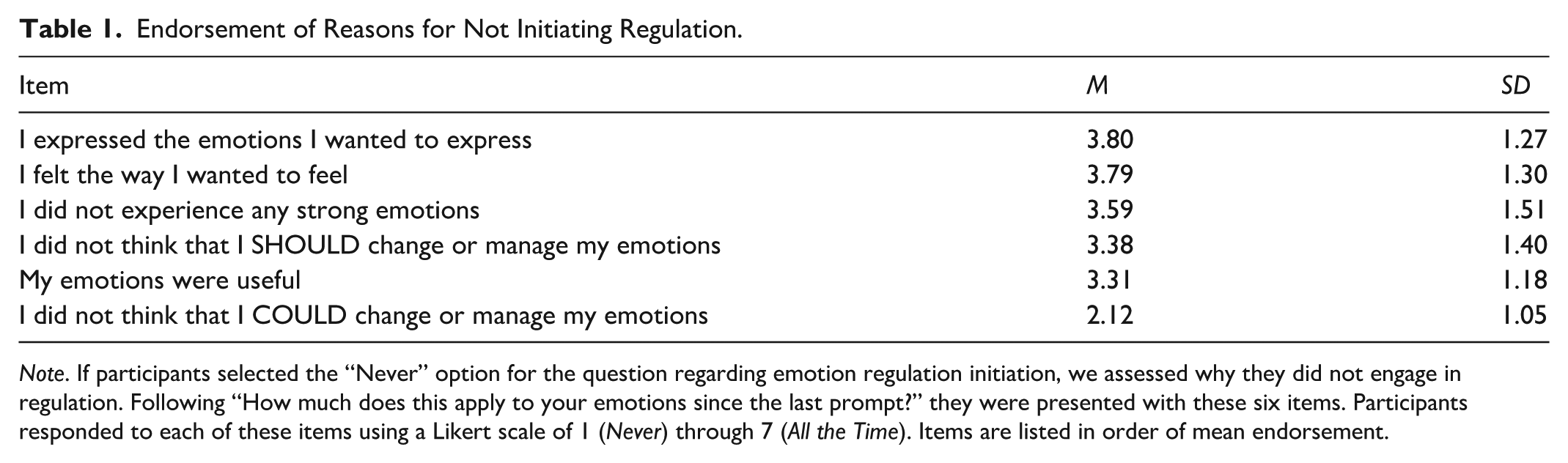
Note. If participants selected the “Never” option for the question regarding emotion regulation initiation, we assessed why they did not engage in regulation. Following “How much does this apply to your emotions since the last prompt?” they were presented with these six items. Participants responded to each of these items using a Likert scale of 1 (Never) through 7 (All the Time). Items are listed in order of mean endorsement.
Situations
Using face valid items, we asked individuals to describe the situations that they were in over the past 2 hr following the instructions: “How often did the following characteristics apply to the situations you’ve been in since the last prompt?” Specifically, they reported on the pleasantness (“The situations were pleasant”), familiarity (“The situations were familiar”), and controllability (“The situations were controllable”) of the situations on a Likert scale from 1 (Never) through 7 (All the Time).
Participants were also asked if they had a social interaction since the last prompt. Social interactions were defined as interactions that were in-person or virtual but contained a back and forth. If they answered “yes,” they were asked to rate the dominance and warmth of their interaction partner(s) following the interpersonal circumplex approach (Gurtman, 1993; Wiggins, 1979). Participants rated the items, “The person/people I interacted with were assertive/dominant/controlling” and “The person/people I interacted with was/were warm/friendly/caring” using Likert scales from 1 (Never) through 7 (All the Time).
Affect
At each prompt, participants were asked how much negative affect (angry, nervous, sad;
Individual Difference Measures
Neuroticism
To assess Neuroticism, participants completed the Big Five Inventory-2 (BFI-2; Soto & John, 2017). Participants rated whether various characteristics apply to them (“I am someone who is emotionally stable, not easily upset.”) using a Likert scale from 1 (Disagree Strongly) through 5 (Agree Strongly). Only Neuroticism was included in the preregistered hypotheses, but we conducted exploratory analyses involving other Big Five personality traits which can be found in the Supplemental Materials.
Emotional Resilience
To assess Emotional Resilience, participants completed the 9-item Emotional Resilience scale of the Behavioral, Emotional, and Social Skills Inventory 45-item Short Form (BESSI-45; Soto et al., 2022). Participants were shown fragments such as “stay positive when something bad happens” and asked to indicate how well they can do each, using a Likert scale from 1 (Not At All Well) through 5 (Extremely Well).
Distress Intolerance
Participants completed the 10-item Distress Intolerance Index (DII; McHugh & Otto, 2012), which assesses an individual’s perceived inability to tolerate negative emotional states. Items are statements such as “It scares me when I am nervous.” Participants rated each item on a Likert scale from 0 (Very Little) through 4 (Very Much). Higher sum score indicates greater DI.
Emotion Controllability Beliefs
Participants completed the 16-item Emotion Beliefs Questionnaire (Becerra et al., 2020), which assesses beliefs about controllability and usefulness of emotions. Items were written as statements such as “Once people are experiencing negative emotions, there is nothing they can do about modifying them.” Participants indicated their agreement with each item on a Likert scale from 1 (Strongly Disagree) through 5 (Strongly Agree). The general-controllability subscale (combining beliefs about positive and negative emotions) was used. We reverse coded this measure so a higher score on the controllability scale indicates higher perceived control of emotions. Usefulness was not included in study hypotheses, but additional models including usefulness will be reported in the Supplemental Materials.
Transparency and Openness
We report how we determined our sample size, all data exclusions (if any), and all measures in the study. Hypotheses were preregistered. The preregistration is available at https://osf.io/zd27c/ . Analyses and research materials are available at https://osf.io/jv58h/. We do not have IRB permission to share data publicly but are able to share data with researchers upon request.
Data Analytic Plan
All analyses were conducted using R (R Core Team, 2021). Because emotion regulation initiation was skewed (see Figure S1 in the Supplemental Materials), we ran multi-level zero-inflated gamma models through the GLMMTMB package (Brooks et al., 2017) to accurately predict both the occurrence of regulation since the last prompt (zero part of the model with probability of no regulation as the outcome) and the frequency of emotion regulation initiation over the last 2 hr if it occurred more than Never (conditional part of the model). 2 Across models, prompts were nested within-person. Random intercepts and slopes were included for any time-varying variables. Time in study (i.e., continuous time since the first prompt was received) was included across models as fixed and random effects to control for time trends in regulation initiation.
To test our hypotheses about situation-level variables (i.e., pleasantness, familiarity, controllability), we added all between- and within-person components of situation-level variables as predictors of both the zero and conditional part of our model. Between- and within-person components were separated through person-mean centering, and between-person components were grand-mean centered. Random effects were included for all within-person components.
To test our hypotheses about social situation-level variables (i.e., dominance and warmth of interaction partners), we added all between- and within-person components of social situation-level variables as predictors of both the zero and conditional part of our model. Between and within-person components were separated through person-mean centering, and between-person components were grand-mean centered. Random effects were included for all within-person components. Social situation variables were included in their own models as these items were only responded to when a social interaction had occurred.
To test our hypotheses about person-level variables (i.e., neuroticism, emotional resilience, DI, control beliefs, and gender coded as cis-man vs. not), we added all person-level variables as predictors of both the zero and conditional part of our model. 3 Person-level variables were grand-mean centered.
To test the robustness of our findings, we included lagged person-centered negative affect and positive affect in models testing situation predictors and included grand-mean centered person mean negative affect and positive affect in models testing individual difference predictors These robustness checks were not preregistered but are useful to determine the relevance of differences in regulation initiation beyond hedonic concerns (i.e., regulation to maximize positive and minimize negative emotions).
To explore the interaction of person and situation level predictors, we ran five separate models in which emotion regulation initiation likelihood and frequency (both zero-inflated and conditional parts of the model) were predicted by interactions between all within-person situation variable components and (a) Neuroticism, (b) Emotion Resilience, (c) DI, (d) Emotion Beliefs, and (e) Gender while controlling for the between-person components of situation variables. These analyses can be found in the Supplemental Materials.
Results
How Often and Why Is Emotion Regulation Initiated?
Across the sample, on 60% (SD = 0.32) of occasions, participants indicated that they had regulated their emotions at least some of the time since the last prompt. In our sample, two people never reported any emotion regulation at all, and 14 people reported always having regulated their emotions at least some of the time. The longer participants were in the study, the more likely they were to report initiating emotion regulation (likelihood of no regulation with increased time: B = −0.08, SE = 0.02, p < .001). While participants were not more likely to regulate their emotions on a weekend versus weekday (B = 0.09, SE = 0.05, p = .063), they regulated their emotions less frequently in between prompts on the weekend (B = −0.02, SE = 0.01, p = .040). This means that regulation was equally likely on weekdays or the weekend, but if someone initiated regulation at any point in the last 2 hr, they regulated more frequently if it was a weekday. The most endorsed reasons for not regulating one’s emotions were having expressed and experienced the emotions one wanted. For more descriptive information on reasons for not regulating, see Table 1 and the Supplemental Materials. For correlations between all variables of interest, see Table 2. For a summary of main results see Figure 1.
Correlations Between Variables of Interest.
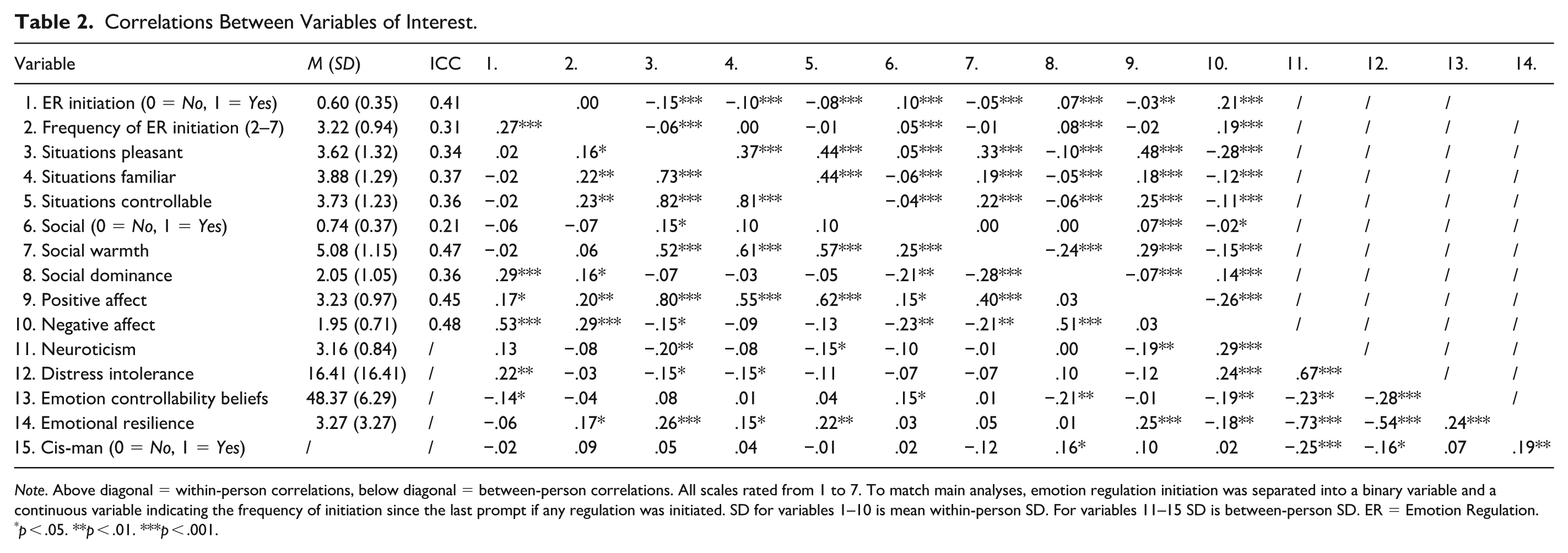
Note. Above diagonal = within-person correlations, below diagonal = between-person correlations. All scales rated from 1 to 7. To match main analyses, emotion regulation initiation was separated into a binary variable and a continuous variable indicating the frequency of initiation since the last prompt if any regulation was initiated. SD for variables 1–10 is mean within-person SD. For variables 11–15 SD is between-person SD. ER = Emotion Regulation.
p < .05. **p < .01. ***p < .001.
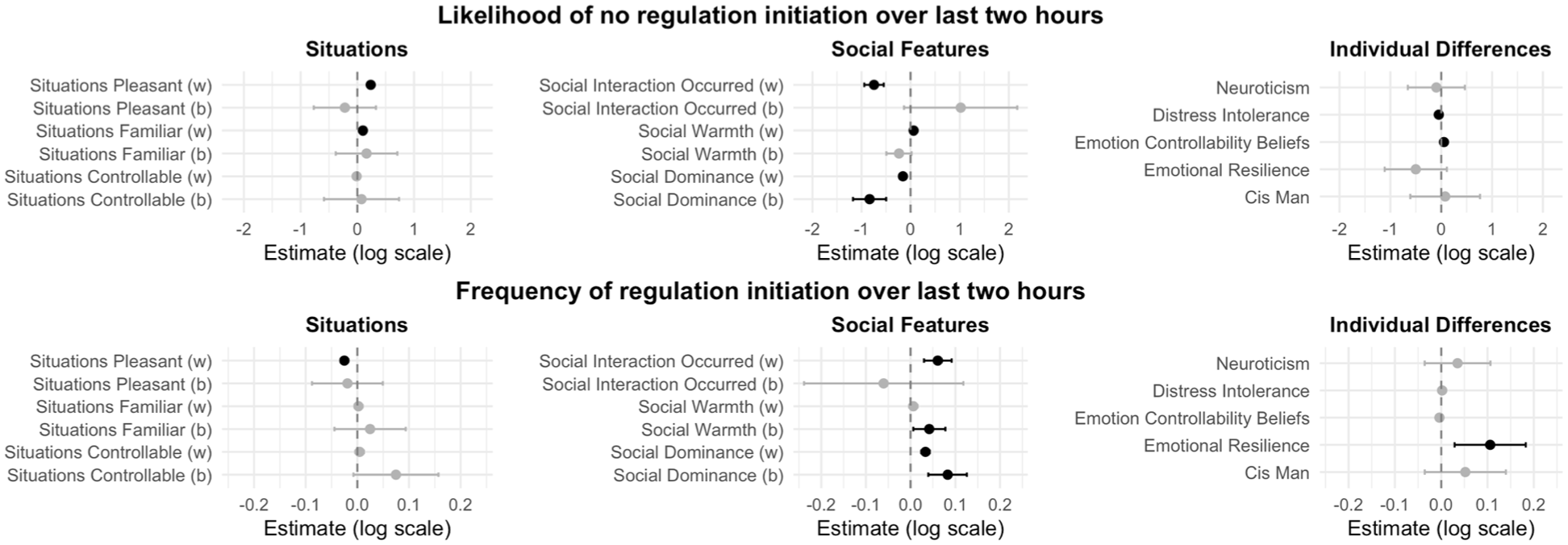
Summary of effects predicting likelihood and frequency of regulation initiation over last 2 hr.
When Is Emotion Regulation Initiated?
We first tested whether being in situations that are less pleasant, less familiar, and less controllable is associated with a higher likelihood of initiating emotion regulation. We investigated both within-person and between-person effects for all situational variables in the same model. Within-person results show, for example, whether being in a situation that is less pleasant than the situations one is usually in is associated with a higher likelihood of regulating one’s emotions. Between-person results show, for example, whether there are individual differences in how likely regulation is to occur based on how pleasant the situations people are in are on average over the course of the study. We focus here on within-person effects; between-person results are presented in Table 3 and the Supplemental Materials.
Appraisal Situational Differences in No Regulation and Frequency of Regulation Initiation.
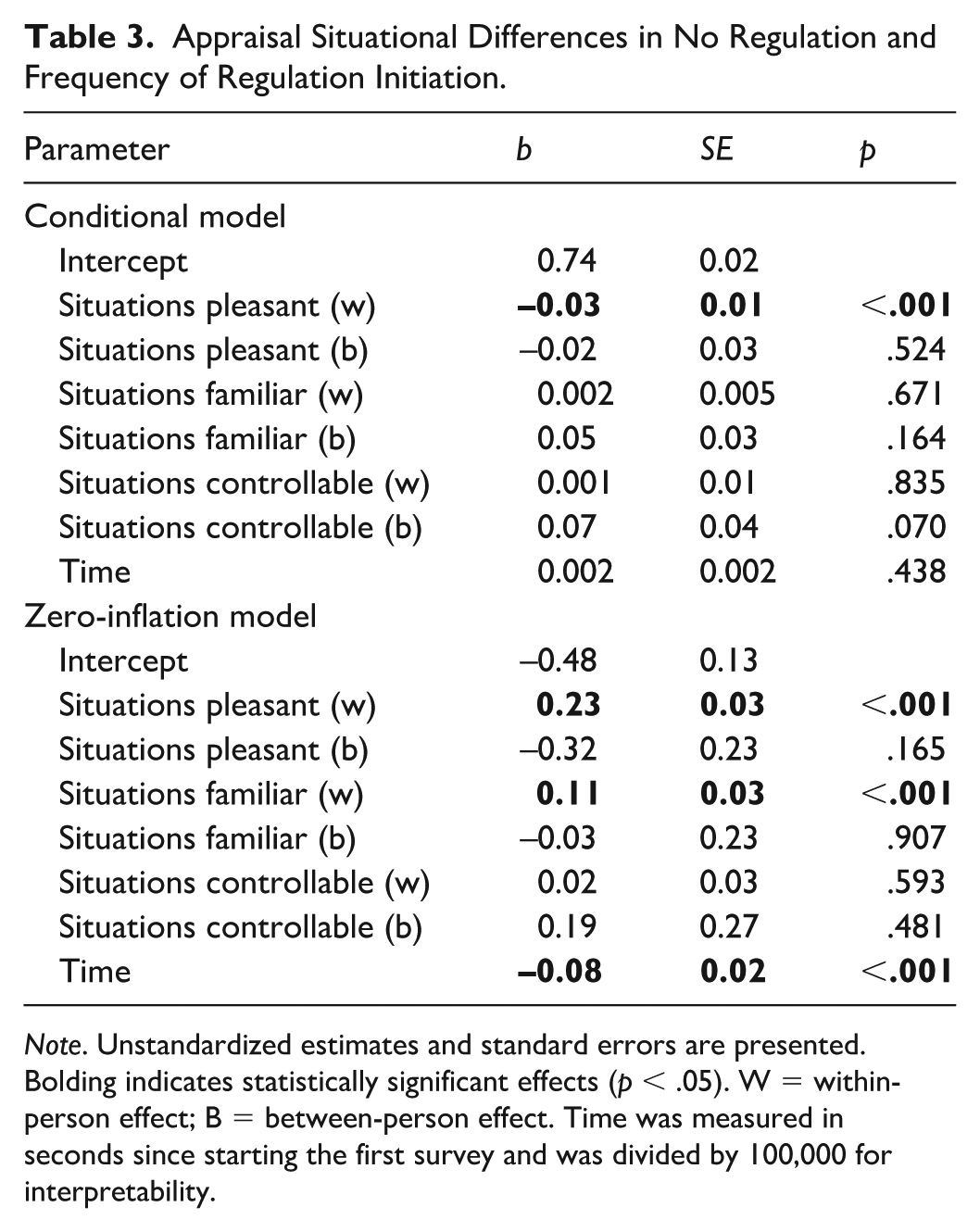
Note. Unstandardized estimates and standard errors are presented. Bolding indicates statistically significant effects (p < .05). W = within-person effect; B = between-person effect. Time was measured in seconds since starting the first survey and was divided by 100,000 for interpretability.
On the within-person level, as expected, situations that were less pleasant (b = 0.23, SE = 0.03, p < .001) and less familiar (b = 0.11, SE = 0.03, p < .001) than usual were associated with a higher likelihood of emotion regulation (positive sign indicates increased likelihood of zero/ no regulation in zero-inflated models). When accounting for pleasantness and familiarity, controllability of situations was not a significant predictor of whether emotion regulation was initiated (b = 0.02, SE = 0.03, p = .593). For details, see the Zero-Inflated Model in Table 3. All results were robust to controlling for lagged affect (see Supplemental Table S6).
In terms of within-person effects for emotion regulation initiation frequency, situations that were less pleasant were associated with more frequent initiation of emotion regulation (b = -0.03, SE = 0.01, p < .001). Neither familiarity (b = 0.002, SE = 0.005, p = .671) nor controllability (b = 0.001, SE = 0.01, p = .835) of the situations were associated with emotion regulation initiation frequency. These findings suggest that when people reported having been in situations that were more pleasant than usual, they regulated less frequently, but the familiarity and controllability of situations did not predict how often people had engaged in emotion regulation. For details, see the Conditional Model in Table 3. All results were robust to controlling for lagged affect (see Supplemental Table S6).
Next, we examined the role of social features of the context. Replicating a previous finding (Lai et al., 2025), emotion regulation was more likely to be initiated (B = −0.75, SE = 0.10, p < .001; negative sign indicates decreased likelihood of zero/no regulation in zero-inflated models) and more frequently initiated (B = 0.06, SE = 0.02, p < .001) when people reported that a social interaction had occurred. Building on this finding, we tested whether warmth and dominance of interaction partners also predicted initiating emotion regulation. As expected, the within-person effects show that there was a higher likelihood of emotion regulation initiation when individuals reported being around social partners perceived to be less warm (b = 0.11, SE = 0.04, p = .002) and more dominant (b = −0.16, SE = 0.04, p < .001). That is, when individuals had interactions where people were perceived as being less warm or more dominant compared to their other interactions, they were more likely to initiate emotion regulation. For details, see the Zero-Inflated Model in Table 4. All results were robust to controlling for lagged affect (see Supplemental Table S7).
Social Situation Differences in No Regulation and Frequency of Regulation Initiation.
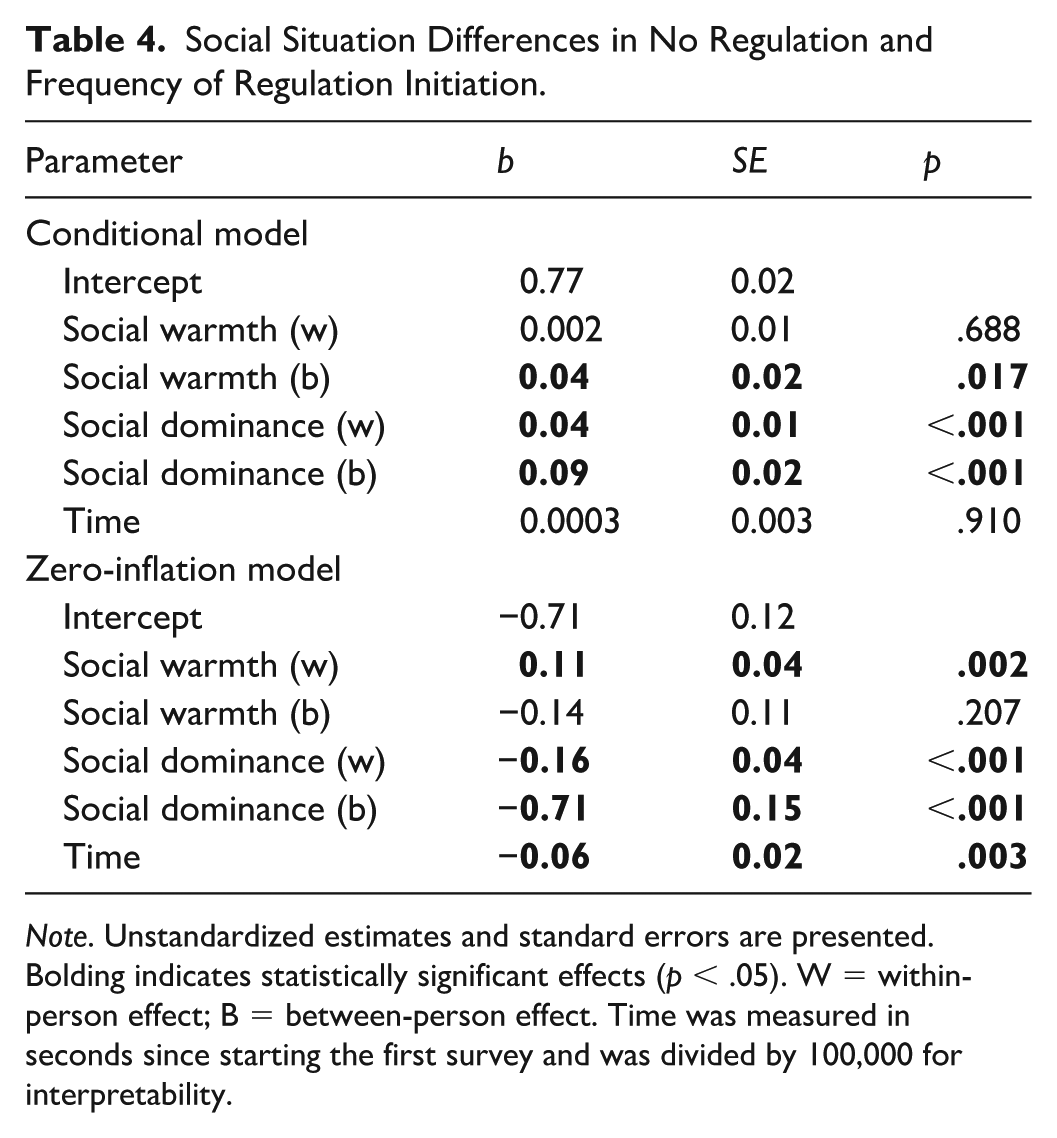
Note. Unstandardized estimates and standard errors are presented. Bolding indicates statistically significant effects (p < .05). W = within-person effect; B = between-person effect. Time was measured in seconds since starting the first survey and was divided by 100,000 for interpretability.
In terms of frequency of emotion regulation initiation, the within-person effects show that interacting with social partners that were perceived to be more dominant was associated with more frequent regulation since the last prompt (b = 0.04, SE = 0.01, p < .001). However, interaction partner warmth was not associated with emotion regulation initiation frequency (b = 0.002, SE = 0.01, p = .688). That is, when individuals had interactions where people were more dominant compared to their other interactions, they were more likely to regulate their emotions, but whether interaction partners were warmer or less warm than usual was not associated with the frequency of regulation initiation since the last prompt. For details, see the Conditional Model in Table 4. All results were robust to controlling for lagged affect (see Supplemental Table S7).
Who Initiates Emotion Regulation More Often?
We tested whether people who are more neurotic, less emotionally resilient, less tolerant of distress, who endorse that emotions are controllable more strongly, and who do not identify as cis-men were more likely to have initiated emotion regulation. Contrary to our hypotheses, people had a higher likelihood of having regulated their emotions since the last prompt if they were more emotional resilient (b = −0.56, SE = 0.23, p = .018; in zero-inflated models, negative signs indicate that endorsing “Never” in response to how often emotions were regulated is less likely) or believed emotions are less controllable (b = 0.06, SE = 0.02, p = .003). Only the effect for controllability beliefs remained robust to controlling for mean affect (see Supplemental Table S5). No significant effects emerged for neuroticism, DI, and gender. For details, see the Zero-Inflated Model in Table 5.
Individual Differences in No Regulation and Frequency of Regulation Initiation.
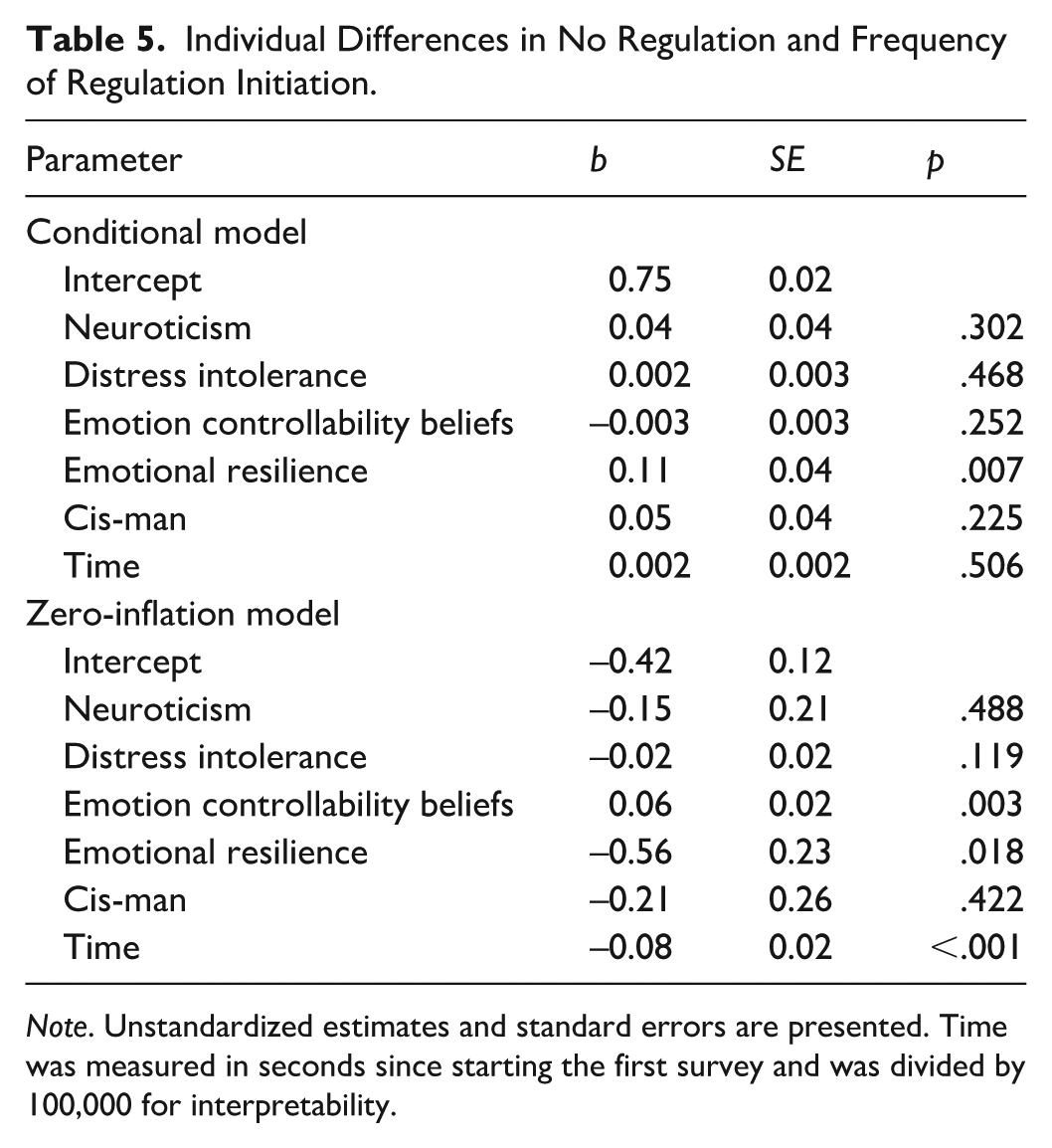
Note. Unstandardized estimates and standard errors are presented. Time was measured in seconds since starting the first survey and was divided by 100,000 for interpretability.
We then tested whether people who are more neurotic, less emotionally resilient, less tolerant of distress, who endorse that emotions are controllable more strongly, and who do not identify as cis-men initiated regulation less frequently. Contrary to our predictions, emotional resilience (b = 0.11, SE = 0.04, p = .007) was associated with more frequent emotion regulation prior to being prompted. This effect was not robust to controlling for mean affect (see Supplemental Table S5). No significant effects emerged for neuroticism, controllability beliefs, DI, and gender. For details, see the Conditional Model in Table 5.
Exploratory Analyses
We explored whether there are individual differences in how within-person situations relate to the likelihood and frequency of emotion regulation initiation by running separate models in which situation variables predicted emotion regulation initiation from interactions with each individual difference variable as a moderator. Interactions emerged for Neuroticism × Situational Control, Emotional Resilience × Situational Control and Gender × Pleasantness. Details can be found in Supplemental Tables S11 and S12. In addition, we explored individual differences in regulation initiation based on additional Big Five Personality Traits (Openness, Conscientiousness, Extraversion, and Agreeableness), Beliefs about the Usefulness of Emotions, and Ethnicity. All these results can be found in the Supplemental Materials.
Discussion
The current study leveraged experience sampling to investigate how individual differences and situational factors predict initiation of emotion regulation in daily life. Overall, our findings support the notion that both person-level and situation-level variables relate to the likelihood an individual will engage in emotion regulation, although situational factors were most predictive.
Likelihood and Frequency of Emotion Regulation Initiation
In our sample of college students, we found that about 60% of the time participants reported having engaged in emotion regulation in the past 2 hr. A prior study of participants with elevated social anxiety found that emotion regulation occurred prior to 40% of prompts (Daniel et al., 2024), though this study used a 30-min instead of a 2-hr time frame. Some individuals in our sample reported regulating all the time, whereas others never reported regulating across the 2 week period. This substantial variation highlights the importance of investigating person-level predictors of emotion regulation initiation.
Importantly, our study was only focused on emotion regulation that was consciously initiated when people had a goal to influence their emotional state (Gross, 2015). However, people can also influence their emotions unconsciously (also referred to as automatic regulation; Mauss et al., 2007). Future work is needed to assess whether in periods of not intervening actively on one’s emotions, individuals might be engaged in automatic regulation processes. In addition, participants might not have been aware that certain behaviors they engage in can serve regulatory functions. In the present study, the likelihood of reporting the initiation of emotion regulation increased as participants remained enrolled in the study for longer periods. This finding might suggest that participants become more aware of times they intervene on their emotions as they continue to complete surveys about their emotion regulation. It is also possible that participants become more aware of their emotions through the experience sampling protocol (Widdershoven et al., 2019) and then consciously increase their attempts to regulate those emotions.
Situational and Individual Differences in Regulation Initiation
In terms of situation-level variables, we found support for the hypotheses that people are more likely to regulate their emotions when situations are less pleasant and less familiar than usual and when interacting with social partners, especially those that were perceived to be less warm and more dominant. Our findings on pleasantness align with previous work (Lai et al., 2025). We also show that the effect of familiarity holds above and beyond the effects of being in an (un-)pleasant situation, perhaps because unfamiliar situations evoke specific undesirable emotions (Siemer et al., 2007) that people might want to reduce. Previous work has documented that people are more likely to regulate their emotions when they are with others (Lai et al., 2025). We replicated and added to this finding, showing that whether emotion regulation occurs depends on perceived characteristics of the interaction partner (i.e., warmth and dominance). These results fit with work on how perceived power in social interactions predicts aspects of emotion regulation, namely the strategy people select to regulate their emotions (e.g., expressive suppression; Catterson et al., 2017) and whether people feel like they should control their emotions (Zerwas et al., 2023). Taken together, findings on situational predictors of emotion regulation initiation highlight the importance of time-varying situations that individuals are in as guiding whether emotion regulation occurs in daily life, adding to a growing body of literature on ways in which context impacts the regulation of emotions (Greenaway et al., 2018).
With rising interest in providing well-being and emotion regulation interventions in daily life (Bettis et al., 2022), our results can be useful in informing how to administer these supports in situations where they are most needed, for example, when people are in unfamiliar contexts. With the rise of passive sensing technologies, there are possibilities to use participants’ phones to track their daily lives (e.g., their location and/or calendar events) and deliver interventions on emotion regulation when they are in situations that are more likely to warrant emotion regulation (e.g., in locations that they have not previously been in, which are likely less familiar situations). Building on our work, researchers and practitioners could also assess whether initiating emotion regulation is adaptive in particular situations (e.g., more unfamiliar ones) and when not engaging in regulation might be more helpful for the individual, either in the short-term or long-term.
In terms of person-level predictors, we did not find support for our hypotheses that neuroticism and DI predict more frequent emotion regulation initiation, nor that emotional resilience, believing emotions can be controlled, and not identifying as a cis-man predict more frequent emotion regulation. On the contrary, we found that people who were more emotionally resilient and people who believed emotions cannot be controlled were more likely to initiate emotion regulation.
Based on findings that people with affective disorders, who typically show ineffective emotion regulation, engage in frequent regulation attempts (Chapman et al., 2011; Daniel et al., 2024; Fitzpatrick et al., 2018; Hay et al., 2015), we had reasoned that people who are more emotionally resilient might engage in fewer regulation attempts. That is, people who are more successful at regulating their emotions should not require as much sustained effort. Our findings suggest that the story is more complicated, as being emotionally resilient seems to instead manifest in more frequent emotion regulation, perhaps due to higher regulation self-efficacy (Ramos-Cejudo et al., 2024). People may also develop emotional resilience through engaging in more emotion regulation episodes. Longitudinal studies such as measurement burst designs could disentangle the direction of these effects and further probe why the relationship was not robust to controlling for affect.
We also unexpectedly found that people who believe that emotions are not controllable attempt to regulate their emotions more frequently than people who believe that emotions are controllable. This finding mirrors a previous finding by Petrova et al. (2024) using momentary emotion beliefs as opposed to our global emotion beliefs assessment where, also contrary to their prediction, people were less likely to attempt regulation in daily life when their emotions seemed more controllable than usual. Paradoxically, it seems that perceiving emotions as controllable might not lead people to attempt to control their emotions but instead might facilitate comfort with letting emotions play out naturally and experiencing them. It is possible that letting emotions play out naturally allows people to only invest effort in emotion regulation (Tamir, 2021) when it is absolutely necessary, highlighting another way in which controllability beliefs could serve as a protective factor for mental health difficulties such as depression (Ford, Lwi, et al., 2018). Importantly, it is possible that underlying effects are reversed, with people who try to regulate more often experiencing more situations in which they are unable to successfully regulate, therefore forming the belief that emotions are not controllable.
We did not find support for the prediction that people who do not identify as cis-men initiate emotion regulation more often. A recent paper found that gender differences in emotion regulation initiation were only present in older adults, not in younger adults, with older women regulating more frequently than older men (Springstein & English, 2025). This finding highlights that potential changes in gender roles and social norms over time could have made previously present gender differences in emotion regulation initiation less pronounced in current generations like the college students in our sample. However, due to low presence of men in our sample, we were not able to detect a potentially small gender effect.
Our exploratory findings highlight potential person by situation interactions in emotion regulation initiation (see Supplemental Materials). These interactions suggest that the contexts in which emotion regulation are initiated could depend on the person, in line with previous research suggesting that emotion regulation goals, strategies, or success might depend on person-specific contexts (Springstein & English, 2023).
Limitations and Future Directions
The use of experience sampling was valuable in obtaining an externally valid assessment of emotion regulation initiation frequency in day-to-day life. Our protocol improved on some prior work by directly asking participants to report on their initiation of emotion regulation, rather than indirectly indexing initiation through endorsement of strategies from a limited set. However, participant responses could still be subject to response or memory biases. For example, people might have been more inclined to recall regulation experiences close to the prompt, rather than considering their experiences during the entire 2-hr window since the previous prompt. Completing experience sampling surveys could also increase attention to one’s emotional state throughout the day, potentially leading participants to report more emotion regulation later in the sampling period, as shown by a significant increase in initiation throughout the study. Though time in study was controlled in all models to ensure that time trends would not influence our results, it is worthwhile for future studies to examine how initiation of emotion regulation might change based on the frequency with which people are asked about their emotions and emotion regulation.
Importantly, people can recognize a need for regulation or set an emotion regulation goal without putting effort toward emotion regulation (Tamir, 2021). When researching decisions about whether to regulate, it may be fruitful to investigate distinctions between (a) not feeling the need to regulate (Growney et al., 2023) and therefore not initiating regulation and (b) recognizing the need for regulation but not initiating regulation regardless. For example, in the first scenario (when need to regulate is not perceived), people may be more likely to non-judgmentally accept their emotions (Ford, Lam et al., 2018). In contrast, during the second scenario (when people perceive the need for regulation), people might not have the appropriate strategies to regulate their emotions in their toolbox or do not perceive they have the cognitive resources available (Tamir, 2021) and therefore might fail to regulate their emotions (Baldwin et al., 2025). While initiation has typically been located within the identification phase of the emotion regulation process model (Gross, 2015), these nuances highlight that the differentiated assessment of initiation as located within identification, selection, and implementation could provide more clarity on how exactly emotion regulation initiation goes awry.
Additionally, we did not investigate whether initiating emotion regulation is adaptive. It has been suggested that the excessive use of emotional resources may lead to maladaptive outcomes (Chow et al., 2013). This point underscores the importance of discerning when to invest regulatory effort (Tamir, 2021; Tran et al., 2023). Particularly when experiencing intense stressors or demands, initiating emotion regulation less frequently could be beneficial for conserving resources. However, whether initiation of regulation is beneficial or detrimental could depend on the reasons why people do not regulate their emotions. Our descriptive findings indicate that often people do not regulate their emotions because they are already feeling the emotions that they want to feel, aligning with previous work that reported the most frequent reason for not regulating are that emotions were appropriate or helpful (Lai et al., 2025). However, we also found that there were times when people felt that they should not or could not regulate their emotions. Importantly, these reasons suggest that when not initiating emotion regulation, several distinct psychological processes could be unfolding (e.g., effort valuation, beliefs about resources, learned habits, or emotion-related self-efficacy). Future research is necessary to assess the role these different reasons for not regulating might play in categorizing (lack of) initiation of emotion regulation as adaptive or maladaptive.
Finally, our sample was comprised predominantly of undergraduate students from the United States, which may limit the applicability of our findings to other populations or cultural contexts. Older adults report a lower need for emotion regulation (Growney et al., 2023) and less emotion regulation initiation (Springstein & English, 2025) and differ in how effortful they perceive emotion regulation strategies to be (Growney & English, 2025). Individuals socialized in cultures where emotional expression is less appropriate may initiate emotion regulation more often, particularly in certain social situations (Bebko et al., 2019). More work is needed to replicate our findings across broader developmental and cultural context.
Conclusions
This study contributes to an emerging body of research investigating a previously neglected part of the emotion regulation process, namely emotion regulation initiation. By utilizing experience sampling, we were able to get a more comprehensive understanding of when emotion regulation is initiated in day-to-day life for younger adults. Our findings suggest that whether people regulate their emotions is contingent upon individual dispositions (e.g., beliefs about the controllability of emotions) as well as situational factors (e.g., familiarity, characteristics of social interaction partner). These findings highlight that to understand when emotion regulation is necessary, it is not enough to just consider whether someone is in an unpleasant or pleasant situation but to also consider their dispositions and other features of the situation (e.g., familiarity). By advancing understanding of why emotion regulation might or might not be initiated, and by whom, this study offers insight for future research aimed at investigating the adaptiveness of mobilizing resources for regulation and highlights the need for just-in-time interventions to consider baseline differences in when regulation occurs in daily life.
Supplemental Material
sj-docx-1-psp-10.1177_01461672261461318 – Supplemental material for To Regulate or Not to Regulate? Situational and Individual Differences in Emotion Regulation Initiation in Daily Life
Supplemental material, sj-docx-1-psp-10.1177_01461672261461318 for To Regulate or Not to Regulate? Situational and Individual Differences in Emotion Regulation Initiation in Daily Life by Tabea Springstein, Anna C. Bankston and Tammy English in Personality and Social Psychology Bulletin
Footnotes

Funding
The authors disclosed receipt of the following financial support for the research, authorship, and/or publication of this article: This research was funded by a Small Research Grant by the Society for Personality Assessment awarded to T. Springstein.
Declaration of Conflicting Interests
The authors declared no potential conflicts of interest with respect to the research, authorship, and/or publication of this article.
Supplemental Material
Supplemental material is available online with this article.
Notes
References
Supplementary Material
Please find the following supplemental material available below.
For Open Access articles published under a Creative Commons License, all supplemental material carries the same license as the article it is associated with.
For non-Open Access articles published, all supplemental material carries a non-exclusive license, and permission requests for re-use of supplemental material or any part of supplemental material shall be sent directly to the copyright owner as specified in the copyright notice associated with the article.
