






Abstract
The accident at the Fukushima Daiichi Nuclear Power Station (FDNPS) in March 2011 resulted in an increase in air dose rate throughout the premises and a significant change in the work environment. The main radiation source was Cs-137, which was contaminated by fallout spreading throughout the premises, and direct and scattered radiation from the reactor buildings (R/B) contributed significantly. To ensure the steady progress of decommissioning work, dose reduction measures have been implemented through facing and removal of high-dose debris. The planned dose is calculated after consideration of engineering and administrative dose reduction measures taken, such as reducing the work time, using remotely operable robots, and installing shielding. This information is set out in a radiation work admission (RWA), which is checked by the radiation control department before work is started. The effectiveness of the dose reduction measures confirmed by the results of the work is developed in the work plan for similar work to be carried out in the future, and the decommissioning work is carried out with further dose reduction.
FDNPS CURRENT STATUS
Change of air dose rate
Figure 1 shows the changes in air dose rate in the Fukushima Daiichi Nuclear Power Station (FDNPS) in 2014 and 2022. At the time of the accident, a maximum dose rate of 130 mSv h−1 was recorded around the R/B, but currently most of the premises are below 5 µSv h−1, and the maximum has been reduced to 0.7 mSv h−1 even around the R/B.
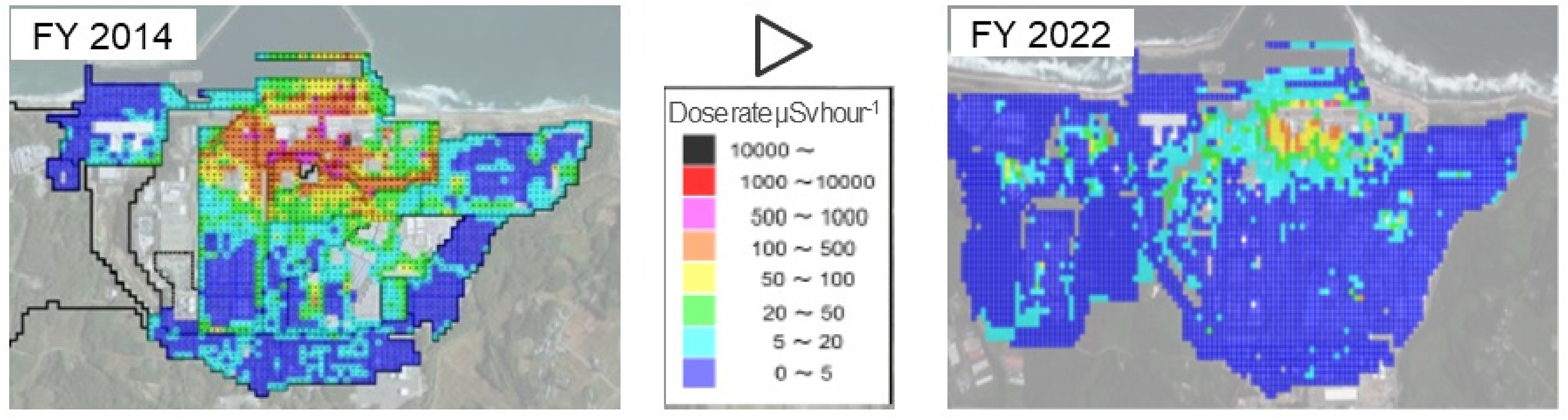
Change of air dose rate on FDNPS premises (from view point of under 5 μSv h−1 region).
Figure 2 shows the changes in collective dose and the total number of workers entering the controlled area from 2014 to 2022. Compared to 2014, the collective dose has decreased by a quarter and the total number of workers entering the controlled area by 60%. A possible reason for the decrease in collective dose despite the increase in the total number of workers entering the area from 2021 to 2022 is the increase in the number of workers engaged in construction work on facilities related to the oceanic release of treated water from the multinuclear removal system, where the air dose rate is low. Figure 3 shows a comparison of the cumulative dose distribution for 2014 and 2022. The number of workers below 1 mSv increased from 39.5% to 62.7%, while the number of workers over 20 mSv decreased from 4.9% to 0%. The cumulative dose distribution has shifted towards the low-dose side due to the working environment and the implementation of dose reduction measures for each operation, although this is partly due to the different nature of the construction work.
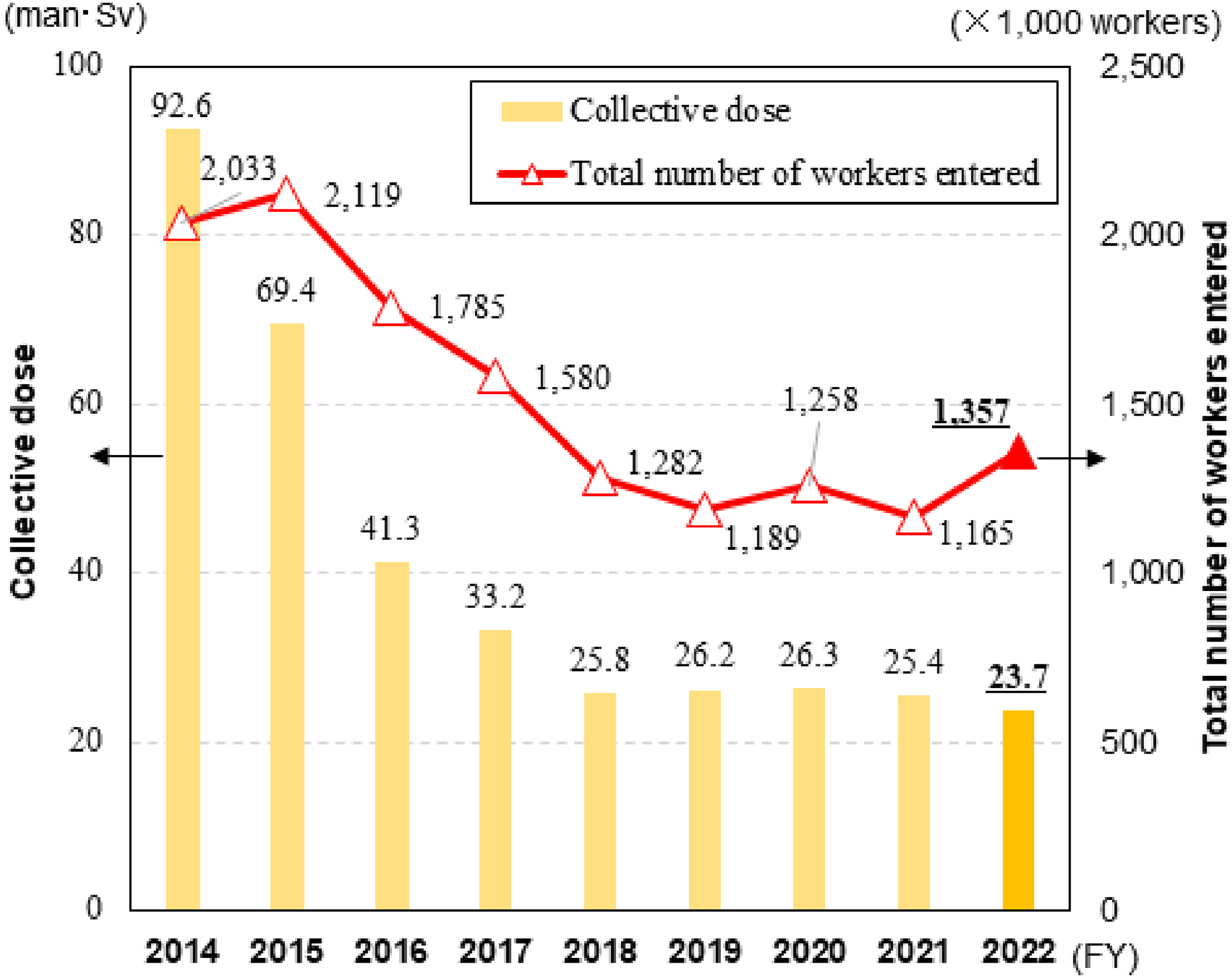
Annual changes in collective dose and total number of workers entered.
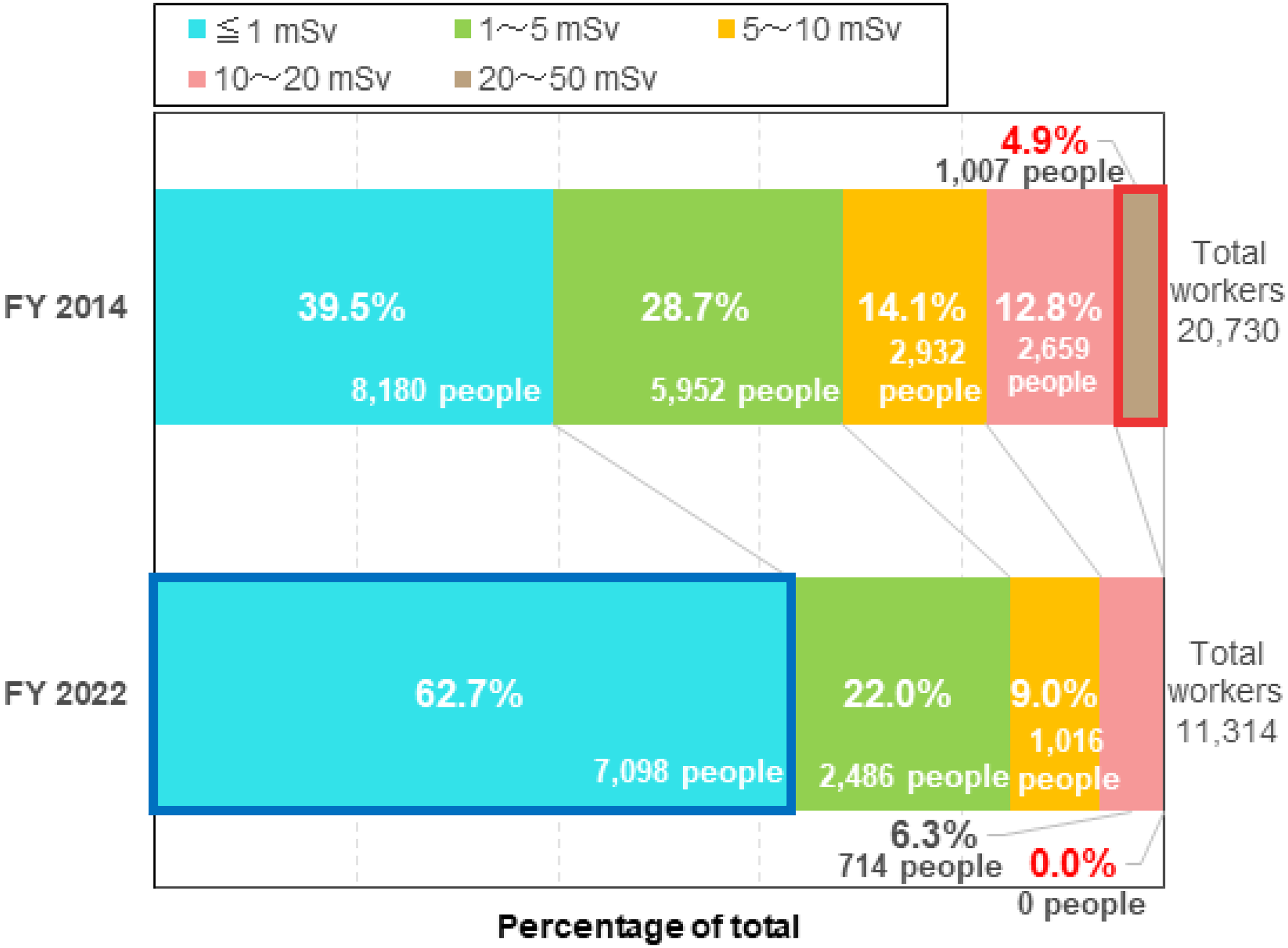
Distribution of cumulative dose.
The entire premises were contaminated by the radioactive fallout, and dose reduction measures were implemented by high-dose debris removal, topsoil removal, and facing, as shown in Fig. 4. Table 1 shows the transition of average air dose rate at 1-m height and on the ground surface before and after the implementation of topsoil removal and facing in 2014, which resulted in a reduction of 85% and 98%, respectively. As shown in the dose distribution (2014) in Fig. 5, topsoil removal and facing significantly reduced the impact from sources on the ground surface, but the dose contribution from Units 1 to 3 is observed in the dose rate at the 1-m height.
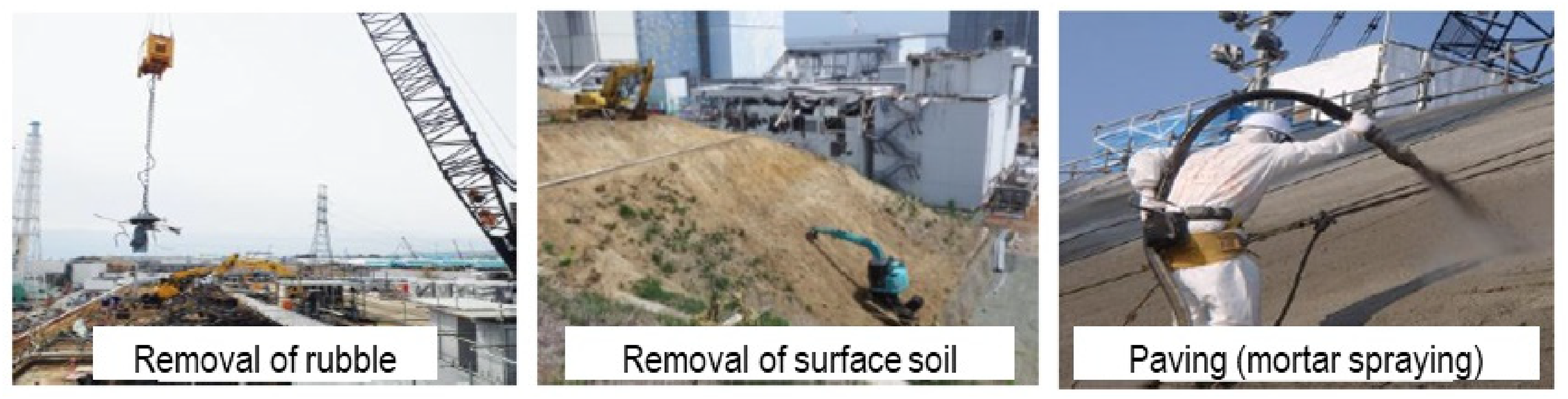
Improvement of work environment.
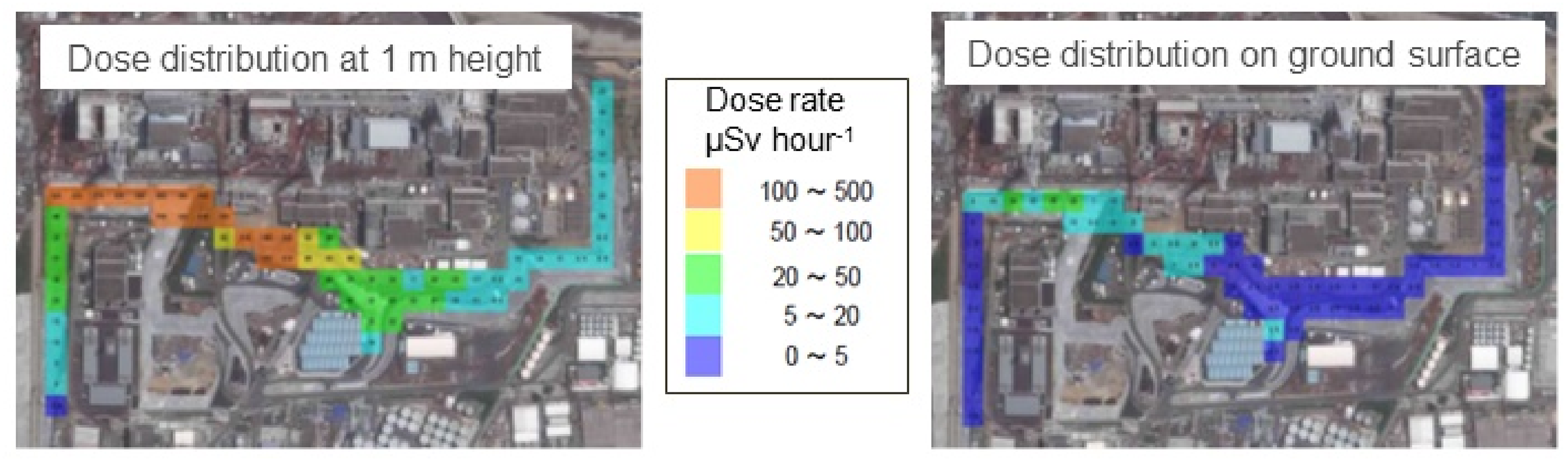
Measurements of the slope on the mountainside of Units 1–4 after improvement.
Average air dose rate before and after environmental improvement in Fig. 5.

Engineering measures and administration measures are considered for dose reduction. Air dose rate, surface contamination density, and airborne radioactive concentration are measured before the individual planning of the operation, and the planned dose is calculated in consideration of dose reduction measures which will have been taken, such as reducing the work time, using remotely operable robots, and installing shielding. This chapter provides specific examples of engineering and administrative measures.
Engineering measures
Figure 6 and Table 2 show the dose reduction achieved by the installation of shields and the dose reduction effect. The air dose rate was reduced to 97% from 150 to 5.0 mSv h−1. The collective dose was also reduced to 92% from 1.3 to 0.1 man・Sv.
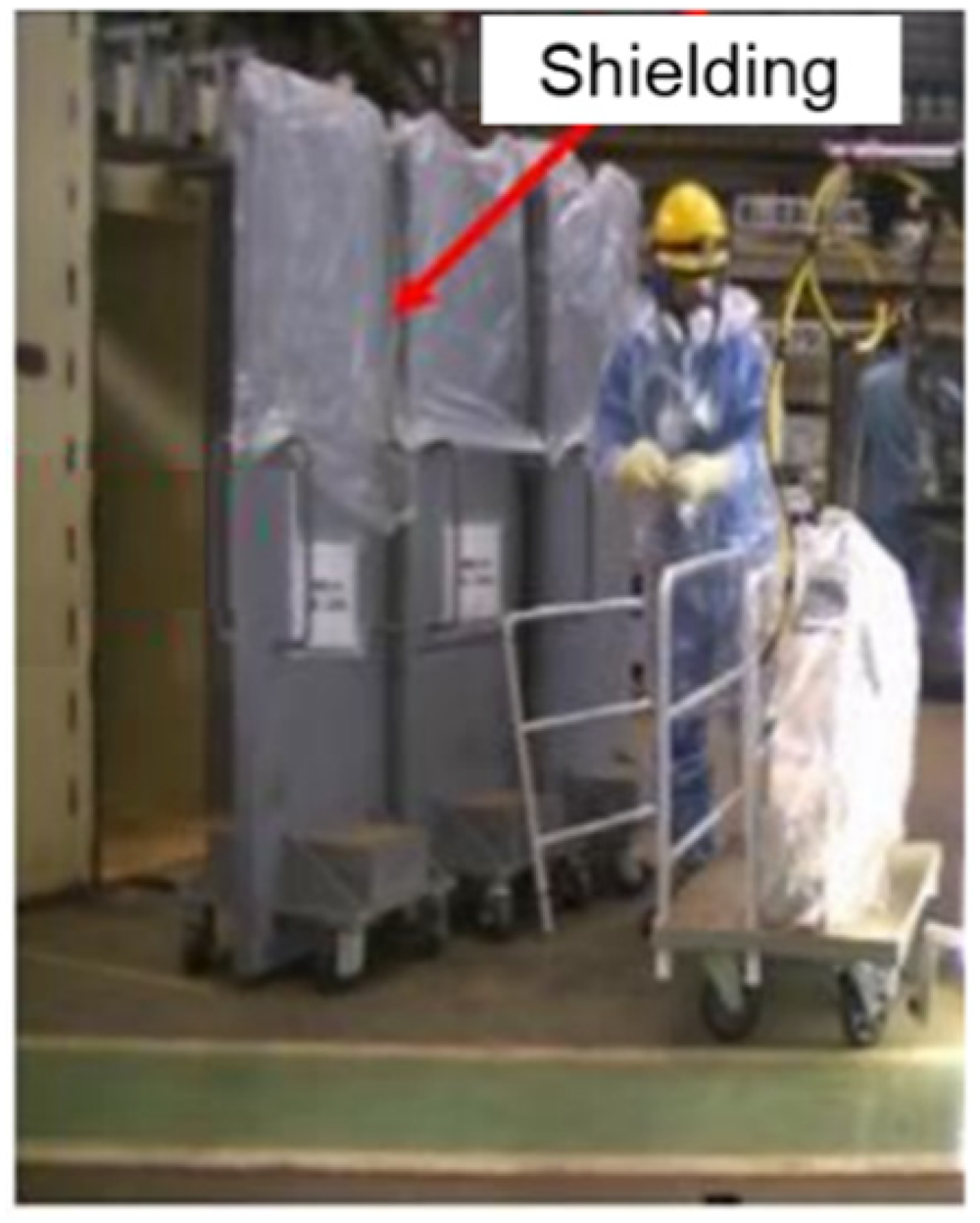
Installation of the special shielding.
Results of exposure reduction due to shielding (work title: Development of detailed investigation techniques for the inside of a reactor containment vessel).

Figure 7 and Table 3 show the situation of dose reduction by remote operation of unmanned heavy equipment and the dose reduction effect. The air dose rate was reduced to 99% from 1.59 to 0.01 mSv h−1. The collective dose was also reduced to 83% from 6.5 to 1.1 man・Sv.
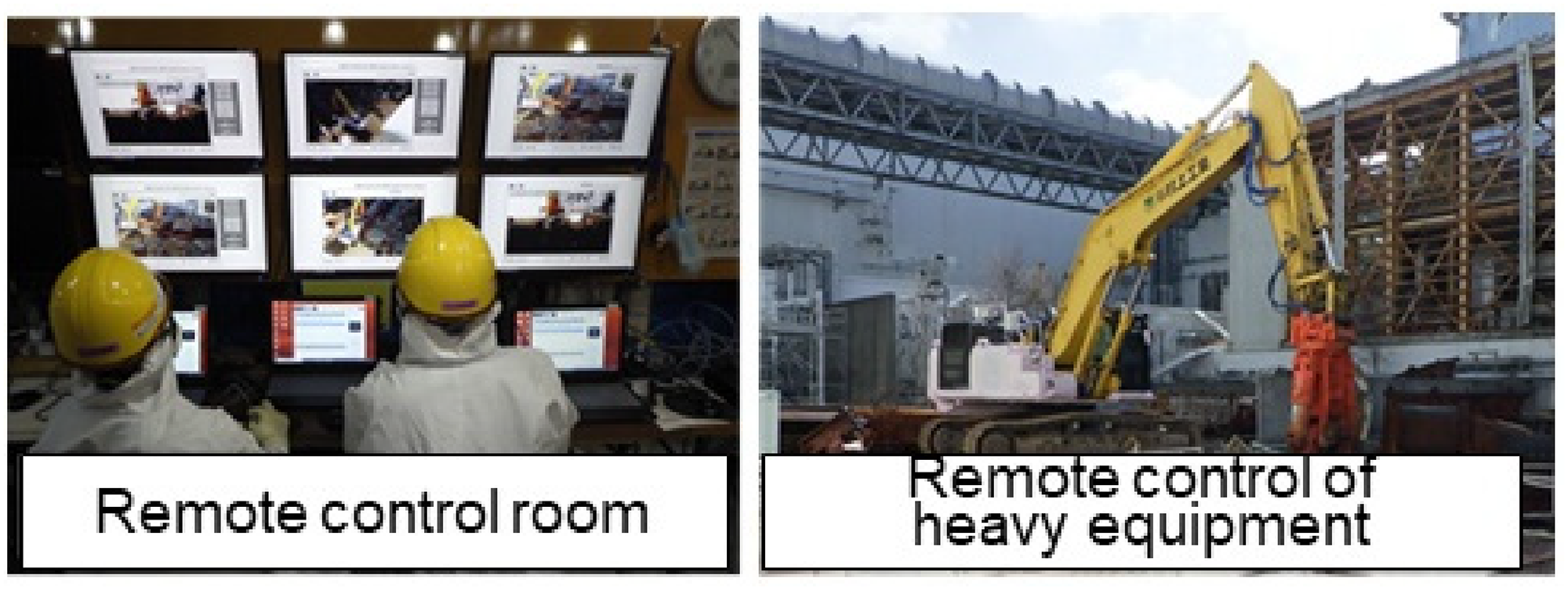
Remote control of heavy equipment.
Results of dose reduction due to introduction of remote control (work title: Removal of high-dose debris on the south side of Unit 3 R/B).

Figure 8 shows the dose reduction measures taken by the remote monitoring system. The individual dose measured by the dosimeters worn by the workers and the air dose rate in the area where the workers are located are transmitted to the monitoring room in real time, so that the radiation environment in which each worker is exposed and the level of exposure can be determined. Furthermore, it is possible to check the movements and positions of the workers using an IP camera and a talking device and to work by talking to them in both directions. For example, it is possible to instruct workers to leave the area because the air dose rate is high or to take turns because they are approaching the planned individual dose level.
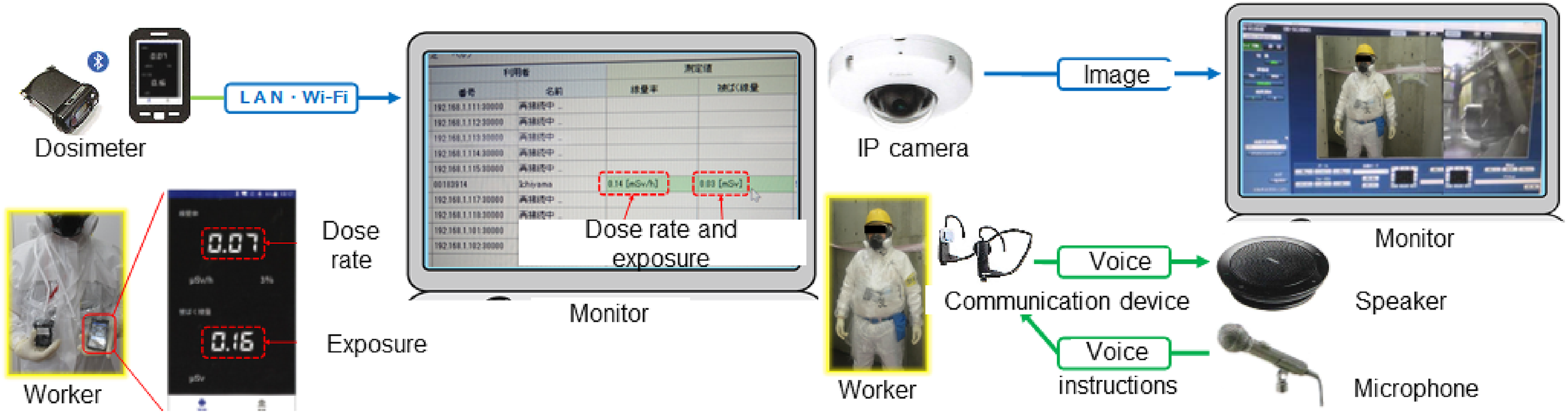
Administrative measures using remote monitoring.
PDCA cycle with operational flowchart
Work in the FDNPS is carried out based on the flowchart in Fig. 9, optimising radiation protection. A risk assessment is carried out for each individual operation for all operations carried out in the controlled area. This considers effective and implementable dose reduction measures (engineering and administrative measures) for the exposure risks identified based on the results of work environment measurements, work position, and time stayed in the work area. If an excessive dose or possibility of alpha contamination is assumed in the assessment, the matter is referred to the ALARA conference, which discusses whether the dose reduction measures are appropriate based on the nature of the work and the exposure risks extracted. An radiation work admission (RWA) is then prepared for each individual work, specifying the results of the work environment measurements, dose reduction measures, protective equipment, planned dose, etc. If there is a discrepancy of more than ±20% between planned and actual doses, the RWA is reviewed. Effective dose reduction measures are deployed in similar operations, and the PDCA cycle is used to optimise radiation protection.
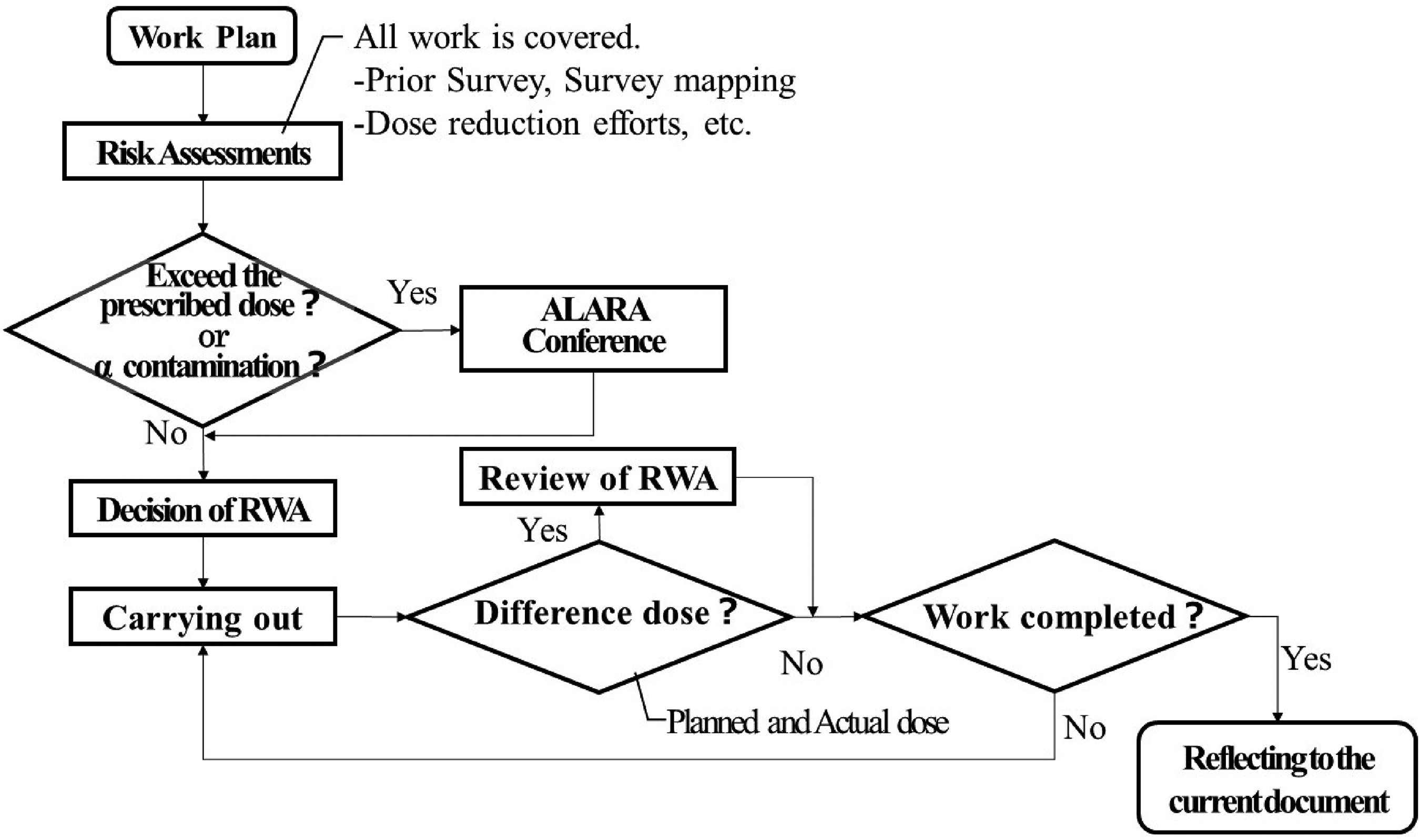
Operational flowchart for optimising dose.
As shown in Table 4, the total exposure dose and daily exposure dose for each operation in the FDNPS are planned and optimised by RWA, and step-by-step dose control such as control dose, dose target, and dose limit are implemented to prevent deviation from the annual cumulative dose specified by TEPCO, which is smaller than the legal requirement. In Section 1.2., the cumulative dose distribution of workers exceeding 20 mSv is managed to be zero because the dose control by dose target and dose limit is functioning.
Stepwise dose control value according to individual dose.
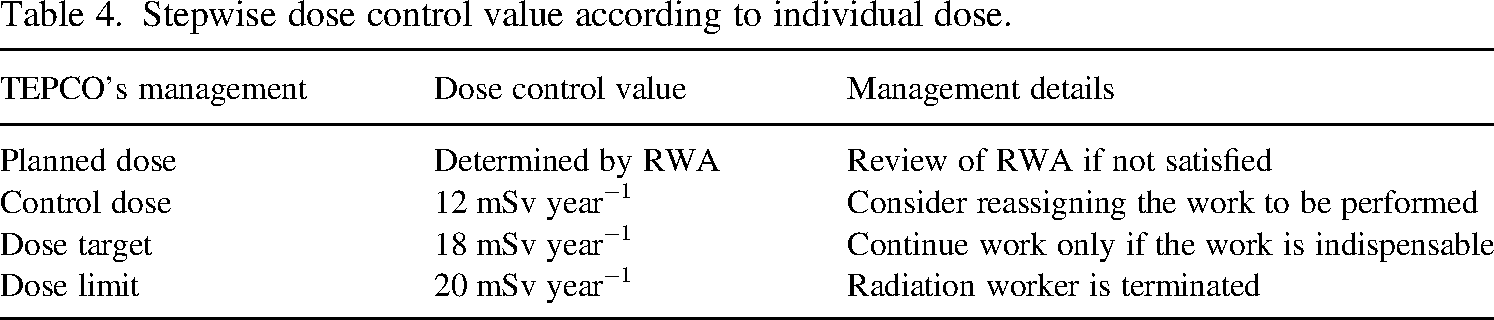
Stepwise dose control value according to individual dose.
The main work area for the removal of nuclear fuel debris is the R/B, but there is also a process for removing high-dose radioactive materials from the reactor, and there are areas with high air dose rate where workers cannot enter or work for long periods of time. To carry out work in such areas, it is essential to develop remote control technology using robots and unmanned work methods, and it is important to take measures to reduce radiation dose by installing shields and to reduce the number of workers and the time they stay in high-dose areas as much as possible, in combination with administrative measures.
CONCLUSION
For all work carried out in the controlled area, RWA is prepared for each work, which defines dose reduction measures, planned dose, protective equipment, etc., based on the results of prior environmental measurements, and the work is checked by the radiation control department before it is started. As for the annual cumulative dose, no one has exceeded 20 mSv since 2015, and it is considered that the dose reduction measures for individual tasks and the dose control for cumulative dose are functioning. As work with high radiation risks will continue in the future, decommissioning work will be carried out while optimising radiation protection, making use of the knowledge and technology on dose reduction measures obtained so far.