







Abstract
Historical and contemporary accounts suggest that natural elements can facilitate creativity in one's work. Despite this potential connection, researchers have largely overlooked how nature may enhance employees’ creativity, an oversight that takes on additional meaningfulness in light of increasing investments by organizations in work designs that bring employees in contact with nature. In this paper, we draw from attention restoration theory (ART) to develop a model explaining how contact with nature at work may affect employee creativity—via broader cognitive processing. In addition, we follow the guidance of ART to deepen our understanding of for whom the creativity-generating effects of nature will be most impactful. Specifically, we describe how employees with high levels of openness to experience are particularly primed to experience expanded cognitive processing due to contact with nature at work. We test this model using a mixed-method research approach: two online experiments in the United States (Studies 1 and 2); two multiwave, multisource field studies in Taiwan and Indonesia (Studies 3 and 4), and an experience-sampling field study in Canada (Study 5).
Contact with the natural world has stimulated the creative work output of people past and present, across different mediums (Atchley, Strayer, & Atchley, 2012; Ferraro, 2015; Plambech & Konijnendijk van den Bosch, 2015). Celebrated architect Frank Lloyd Wright felt that spending time in nature gave him additional perspectives on his work, and he cited closeness with nature as an inspirational force behind his creations (Twombly, 1973). Andy Goldsworthy, a British photographer and sculptor, similarly commented that contact with nature mentally connects him with the broader universe, which helps him embrace new perspectives and consequently facilitates creativity in his artistic process (Sooke, 2007). Meanwhile, KLARA, a Swedish-born musician, explained how contact with nature is a psychologically expanding experience that provides new perspectives when creating her music (Wonderland, 2019).
These examples from the arts hint at a link between nature and creativity in humans that, if present in the work domain, would have meaningful implications for organizations, given that employee creativity helps firms build and sustain competitive advantage (Zhou & Hoever, 2014). That said, beyond these accounts being anecdotal and therefore potentially not generalizable, they do not offer robust evidence as to the psychological process via which contact with nature may drive employees’ creativity. Fortunately, however, the descriptions of nature as something that potentially allows people to see new perspectives aligns with the theoretical tenets of attention restoration theory (ART; Kaplan, 1995, 2001; Kaplan, Kaplan, & Ryan, 1998), which environmental psychologists have long used to understand how people respond to the nature-based stimuli that they encounter in their daily lives. Specifically, ART suggests that contact with nature can foster a cognitive shift toward the broader natural environment and immediately give individuals “a sense of being connected . . . to a larger world” (Kaplan, 1995: 174). Combined with research showing that creativity at work is a manifestation of employees’ broadened minds (e.g., Shalley, Gilson, & Blum, 2009), ART would seem to offer a robust explanation for how, by placing individuals in a mentally expanded state (Crossan & Salmoni, 2021; Kaplan et al., 1998), contact with nature at work enhances the cognitive processes that drive employee creativity.
ART goes on to hint that individual differences can influence the extent to which contact with nature resonates with people and subsequently affects their cognitive processing. Specifically, in developing ART, Kaplan (1995) proposed that people differ in terms of their innate ability and desire to experience contact with nature as fascinating, with some individuals being particularly drawn toward the fascinating elements of nature (e.g., clouds, sunsets, leaves). Building on these insights, Klotz and Bolino (2021: 246) proposed that in the workplace, “employees with strong aesthetic sensibilities (i.e., openness to experience)” may be especially affected by contact with nature at work. Together, these theoretical insights point to openness to experience as a potential activator or amplifier of the cognition-expanding effects of contact with nature at work. Combined, employees more open to experience may be particularly likely to access the broader mental landscapes that contact with nature can evoke (i.e., broader cognitive processing), leading to increased creative behavior.
In this paper, we leverage ART to develop a model explaining the effects of contact with nature at work on employee creativity via broadened cognitive processing and shaped by openness to experience (see Figure 1). We then test this model using a “full cycle research approach” (Chatman & Flynn, 2005: 774)—examining a phenomenon in field and experimental settings to enhance the internal and external validity of the findings. Specifically, we conducted five studies that employ different research methodologies (i.e., field and experimental studies across both within- and between-person levels), using participants from different jobs and industries across multiple countries and cultures (i.e., United States, Taiwan, Indonesia, and Canada). In developing and testing our theoretical model, our research makes important contributions to our understanding of how contact with nature affects individuals, the boundaries of these effects, and the sources of creativity within organizations.
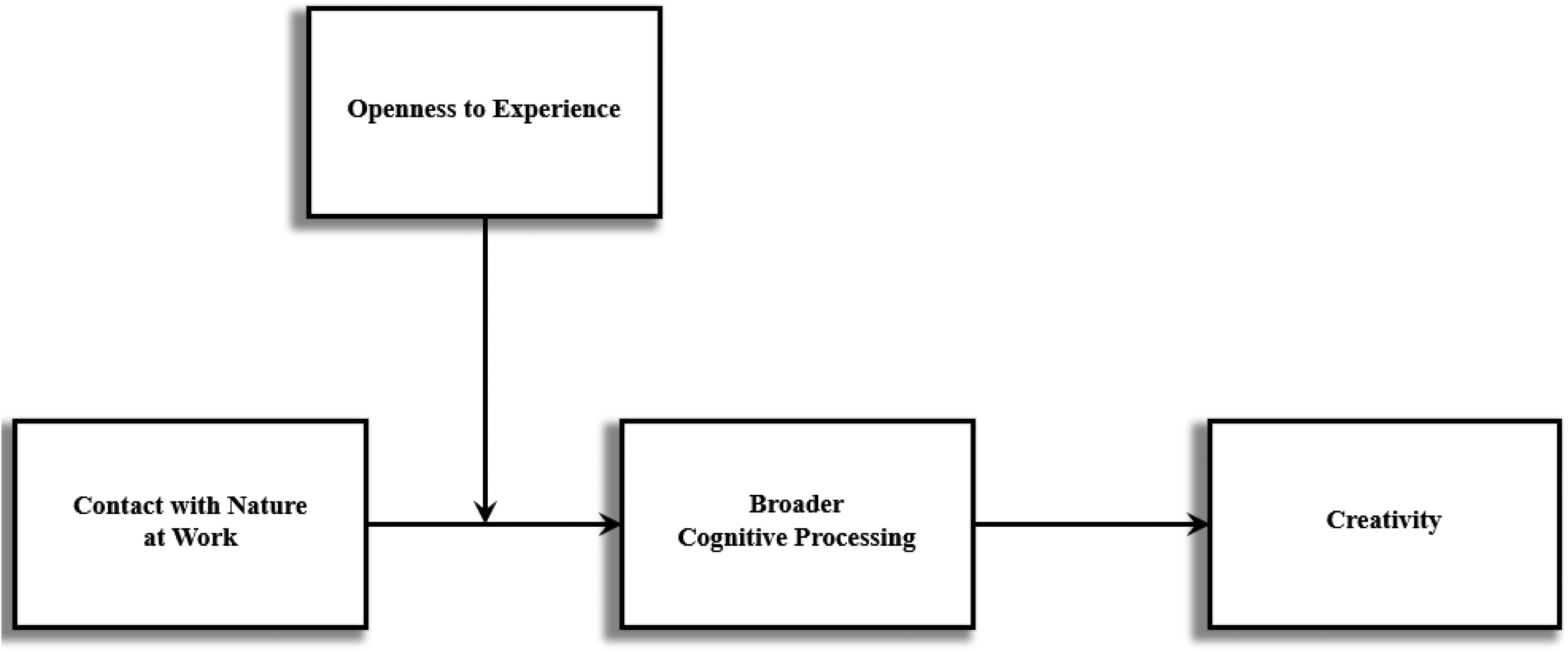
Theoretical Model
First, despite being one of the key tenets of ART, its prediction that contact with nature can cognitively transport individuals “beyond the immediate setting” (Kaplan, 2001: 511) to a broader mental plane has rarely been given scholarly attention and when it has, it has mainly been linked to feelings of restoration (Ohly et al., 2016; Stevenson, Schilhab, & Bentsen, 2018). In this paper, we extend ART's theorizing by highlighting that the broadened cognitive processing spurred by contact with nature (Crossan & Salmoni, 2021; Felsten, 2009; Kaplan, 2001) has more meaningful implications than currently recognized. Specifically, by explaining why the widened cognitive functioning driven by nature exposure is particularly conducive to creativity, our research extends the usefulness and applicability of ART to explain the effects of contact with nature beyond restoration in the organizational literature.
Second, by examining how openness to experience influences the effects of contact with nature on employees’ cognitive processing, our research contributes simultaneously to two literatures by testing extant theory (Colquitt & Zapata-Phelan, 2007). ART proposes that there is “special resonance between the natural settings and human inclinations” (Kaplan, 1995: 174), and Klotz and Bolino (2021) argued that openness to experience should shape how employees experience contact with nature at work. Thus, our work contributes to the environmental psychology literature by empirically examining how openness may shape contact with nature's effects, thereby testing one of ART's general tenets. Meanwhile, we also contribute to the work design literature by examining a recently developed theoretical proposition related to nature's effects at work (Klotz & Bolino, 2021). Finally, our work extends our understanding of antecedents of work creativity (e.g., Dul, Ceylan, & Jaspers, 2011; McCoy & Evans, 2002). By examining the role of contact with nature at work on employees’ broader cognitive processing and creativity, we extend understanding of the effects of the physical work environment on employee creativity. As a result, we address observations by scholars that “very little attention is paid to the impact of the physical work environment on creativity” (Dul et al., 2011: 720).
Theoretical Development and Hypotheses
Contact With Nature at Work
Organizations are increasingly incorporating natural elements into the design of physical workspaces, thereby bringing employees into closer and more frequent contact with the natural world (Klotz, 2020). Although such contact encompasses all direct interactions between employees and elements of nature (e.g., Korpela, De Bloom, Sianoja, Pasanen, & Kinnunen, 2017; Mcsweeney, Rainham, Johnson, Sherry, & Singleton, 2015; Sadick & Kamardeen, 2020), in the workplace, contact with nature can be categorized into several forms based on the directness of the experience (Klotz & Bolino, 2021). At its most direct, employee contact with nature involves working outdoors in natural settings. Meanwhile, within indoor workspaces, employees can also have very direct contact with nature via natural elements brought indoors such as plant walls and water features. Less direct but still meaningful, employees can have contact with nature through a barrier, most commonly by having a view to a natural setting through one's window. In its least direct form, contact with nature at work involves experiencing representations of nature, such as through artwork depicting or mimicking nature (Kaplan, 1993; Klotz & Bolino, 2021).
As highlighted by this taxonomy, natural elements often surround employees at work (e.g., seeing flowers and plants in the office; hearing birds and feeling the breeze during an outdoor break; Dul et al., 2011; Klotz & Bolino, 2021). But beyond merely being physically present, natural elements can also engage employees’ senses in multiple ways (Roszak, Gomes, & Kanner, 1995; Watts, 2012). This aligns with how environmental psychologists have conceptualized contact with nature, as something that is typically experienced directly—often visually, but also in multisensory combinations (e.g., Grinde & Patil, 2009; Kaplan, 1992, 1993; Ulrich, 1979). Importantly, although this contact is conceptualized as direct because it involves detection by one or more senses, such detection is often processed nonconsciously, thereby shaping employees’ cognitions or mental experiences without the use of directed attention (Francis, 1987; James, 1892; Kaplan, 1992).
We conceptualize contact with nature at work in alignment with environmental psychologists, viewing it as an employee's degree of direct exposure to nature, ranging from being immersed in nature outdoors (e.g., during a work break or offsite meeting) to viewing depictions of nature within the built environment (e.g., a landscape mural on a meeting room wall). 1 As such, attending offsite meetings, seeing sunlight or trees outside one's office windows, or working alongside office plants all represent forms of contact with nature at work that fall under the conceptual boundaries of direct contact with nature (Klotz & Bolino, 2021).
The Cognition-Broadening Effects of Contact With Nature at Work
ART is a theoretical perspective that explicates the cognitive influence of contact with nature on individuals (Kaplan, 1995, 2001). Specifically, ART proposes that direct contact with nature can provide “cognitive benefits” (Schertz & Berman, 2019: 496), wherein people experience broadened cognitive capacity as a result of such contact (Bratman, Hamilton, & Daily, 2012). Building further from this theoretical premise of ART, Klotz and Bolino (2021: 238) theorized that to the extent that work settings are suffused with natural elements, they will leave employees with “ample cognitive bandwidth” for their work tasks. In other words, contact with nature is theorized to heighten the cognitive (and mental) capacities among individuals in the course of work (Basu, Duvall, & Kaplan, 2019; Kaplan, 2001; Meuwese et al., 2021).
Zooming more closely into ART, the cognitive benefits associated with contact with nature have been proposed to manifest in the form of a “momentary conceptual shift” among individuals (Klotz & Bolino, 2021: 241). Contact with nature can call to mind the larger world beyond the current context (Kaplan, 1993, 1995) and give individuals the sense of being away from their typical environment or setting (Crossan & Salmoni, 2021). In doing so, contact with nature enables individuals to “explore beyond the immediate setting” (Kaplan, 2001: 511; Kellert, 2008), thereby psychologically connecting employees to the broader world (Kaplan, 1995). Thus, when employees come into direct contact with natural elements at work, such as by looking out office windows and seeing sunlight, green spaces, or animals, it should cause their thinking to shift and broaden toward the new and expanded mental spaces that nature evokes.
We propose that the expansion of individuals’ perspectives resulting from contact with nature will manifest as broader cognitive processing—specifically, as an increase in one's awareness of the existence of new and different perspectives and access to them. This can be contrasted with narrower forms of cognition, such as the focused, directed attention elicited by goal setting (Locke & Latham, 2002). This conceptualization shares some similarity to the cognitive expansion processes regarding oneself described in the social psychology literature, wherein individuals acquire the broader perspectives of others as a result of close relationships with them (Mattingly & Lewandowski, 2014). Similarly, we argue that the momentary shift that contact with nature induces will widen individuals’ thinking, such that their cognitive processing accommodates a broader array of perspectives. In the context of work, this means that after employees experience contact with nature, the way they think should be altered in that, at least temporarily, they are attuned to a broader array of information.
Hypothesis 1: Contact with nature at work relates to broader cognitive processing.
From Broader Cognitive Processing to Creativity
As we have described, per ART, contact with nature can spur a mental shift that manifests in broader cognitive processing. When employees are in this state of expanded cognitive processing due to being exposed to nature at work, they should approach their job with an enhanced ability to see and adopt different ways of carrying out their tasks. This process was described by Plambech and Konijnendijk van den Bosch (2015: 259), who explained that contact with nature can mentally shift one's mind “out of its customary groove” and toward “novel and attractive patterns.” Likewise, when employees’ cognitive processing has been expanded to include perspectives from beyond their current setting, they should be more able to generate novel ideas and suggestions pertaining to their work tasks. Support for this notion comes from relevant work in social psychology, suggesting that broadened cognitive processes related to the self should facilitate the emergence of creative ideas in employees, enabling them “to develop new ideas that are valuable to the organization” (McIntyre, Mattingly, Lewandowski, & Simpson, 2014: 76).
Beyond ART, the notion that broadened cognitive processing should facilitate higher creative output is supported by theory and research, indicating that mental states that enhance individuals’ ability to make connections between disparate ideas will drive creativity (Fong, 2006; Kapadia & Melwani, 2021; Mednick, 1962). Specifically, broader cognitive processing puts individuals into a psychological state where they have greater mental capacity to relate and synthesize different pieces of ordinary information and in turn generate novel output (e.g., Smith, Ward, & Finke, 1995). Relatedly, individuals with heightened cognitive processing not only process information efficiently, but they are more readily able to make meaningful interconnections between, and structures around, different pieces of information and ideas (e.g., Mumford, Mobley, Reiter-Palmon, Uhlman, & Doares, 1991). In empirical support of the link between expanded cognitive processing and creativity at work, Gu and colleagues (2022) recently demonstrated that training that targets cognitive expansion is beneficial for employees’ creative output. Thus, when workers are in a state of heightened cognitive processing as a result of the new and wider perspectives that contact with nature has called to mind, they should be primed to see new ways of completing their job tasks (Williams et al., 2018). Together, the tenets of ART combined with research indicating that broadened mental states should enhance individuals’ abilities to associate ideas in novel ways suggest that when employees experience broader cognitive processing as a result of contact with nature at work, it should cultivate their creativity.
Hypothesis 2: Broader cognitive processing mediates the positive indirect relationship between contact with nature at work and employee creativity.
The Moderating Effect of Openness to Experience
Drawing upon ART as an overarching theoretical framework, we have thus far elucidated why direct contact with nature may fuel employees’ creativity. ART goes on to provide guidance regarding for whom that effect may be stronger (or weaker), suggesting that nature's effects may be stronger when “special resonance between the natural settings and human inclinations” exists (Kaplan, 1995: 174). Taking up this notion, Klotz and Bolino (2021) proposed that individuals with high levels of openness to experience may be particularly prone to have positive and strong reactions to contact with nature. When it comes to the effects of contact with nature on broader cognitive processing, we submit that Klotz and Bolino's (2021) guidance will be especially apt, given that employees who have a higher level of openness to experience are broad-minded, imaginative, and curious (McCrae, 1993; McCrae & Sutin, 2009), which should make the expanded mental spaces that contact with nature can stimulate especially accessible to these individuals. Indeed, because the cognitive benefits of nature exposure depend to some extent on the innate ability of individuals to imagine places beyond their current setting (e.g., Kaplan, 1993, 2001), those who are imaginative (i.e., high openness) should be particularly likely to access those benefits when they come into contact with nature.
Openness to experience, as an individual difference that reflects the tendency or predisposition to approach experiences in an imaginative and intellectual manner (McCrae & Costa, 1997), should affect the width of individuals’ cognitive processing following contact with nature. In particular, because employees that rate higher on openness to experience tend to have greater imaginative ability (Costa & McCrae, 1992), they should be able to translate even limited exposure to nature at work into a relatively in-depth cognitive experience. This can be contrasted with those who rate low in openness to experience, who are more resistant to letting their thoughts wander to new and unfamiliar cognitive spaces (Christensen, Kenett, Cotter, Beaty, & Silvia, 2018). Thus, when workers who rate lower on openness to experience come into contact with nature, it is relatively less likely that their mindsets will allow them to momentarily mentally transport themselves to a broader and more novel place and experience the broader state of cognitive processing that accompanies it.
In addition, openness to experience makes individuals more receptive to new insights and stimuli in the external environment (Digman, 1990; McCrae & Sutin, 2009). Specifically, people who rate higher in openness should find experiences with nature at work as more mind-broadening given that these individuals have greater capacity to reflect on the different kinds of stimuli (McCrae & Costa, 1997) captured in momentary experiences with nature. To this end, consistent with research in the personality and creativity literature (e.g., Leung & Chiu, 2008; McCrae & Costa, 1997), people who rate high in openness indeed are inherently more motivated to translate the (novel) stimulus found in their contact with nature to meaningful signals, which is conducive to fostering a more broadened cognition or mindset. Put differently, contact with nature at work should elicit broader cognitive processing in employees with higher levels of openness to experience because these employees tend to psychologically immerse themselves more deeply in their direct contact with nature, which enables them to more readily think beyond the immediate work context (e.g., Kaplan, 1993).
Hypothesis 3: The effect of contact with nature at work on employee broader cognitive processing will be moderated by openness to experience, such that the relationship will be stronger when openness to experience is high.
Hypothesis 4: The indirect effect of contact with nature at work on employee creativity via broader cognitive processing will be moderated by openness to experience, such that the relationship will be stronger when openness to experience is high.
Overview of Studies
To test our theoretical model, we employed a full-cycle research approach. Recognizing that every study design has its shortcomings, this approach involves conducting multiple studies with different designs to test theory in a way that is both internally valid and generalizable. The full cycle research approach in this paper involved five studies that test our theoretical model across multiple research methodologies and using participants from different countries and industries (Tang et al., 2022, 2023; Yam et al., 2023). As an overview, Studies 1 and 2 focus on the internal validity of our model and test it with between-person experiments of working adults in the United States, with Study 2 using an alternative, objective measure of creativity. In Studies 3 and 4, we extend our focus to external validity and test our model using between-person, multisource, and multiwave field study designs with employees of a marketing services company in Taiwan and a food trading company in Indonesia. Finally, Study 5 tests our model using a within-person, daily study of contact with nature, among a sample of business consultants in Canada.
Study 1 Experiment: Method
Participants and Procedures
We recruited 160 participants in the United States through Prolific—an online crowdsourcing survey platform. On Prolific, we added a selection criterion related to employment status, such that only full-time working adults were eligible to participate in this experiment. After reading a consent form and agreeing to participate, participants completed a measure of openness to experience. They were then randomly assigned to either a nature condition or a control condition. In both conditions, participants were asked to advance through five pictures depicting the physical environment of the workplace. To increase participants’ engagement during the experiment, before each image they were instructed to imagine themselves working in the environment shown in the image. Following this task, participants completed a measure of our mechanism (i.e., broader cognitive processing) and a manipulation check. The average age of participants was 31.96 years (SD = 11.03), 65% were female, and 73% were Caucasian.
Study Materials and Measures
Unless otherwise stated, all measures used a seven-point Likert scale (1 = strongly disagree; 7 = strongly agree).
Study 1 Experiment: Results
Manipulation Check
Means, standard deviations, and correlations among all variables are presented in Table 1. A one-way analysis of variance (ANOVA) on participants’ state connection to nature revealed that participants in the nature condition (Mnature = 4.97, SDnature = 1.23) experienced significantly higher levels of connection to nature than participants in the control condition (Mcontrol = 2.18, SDcontrol = 1.12), F(1, 158) = 223.90, p < .001, η² = .59, indicating the manipulation was effective.
Descriptive Statistics, Correlations, and Reliabilities for Study 1
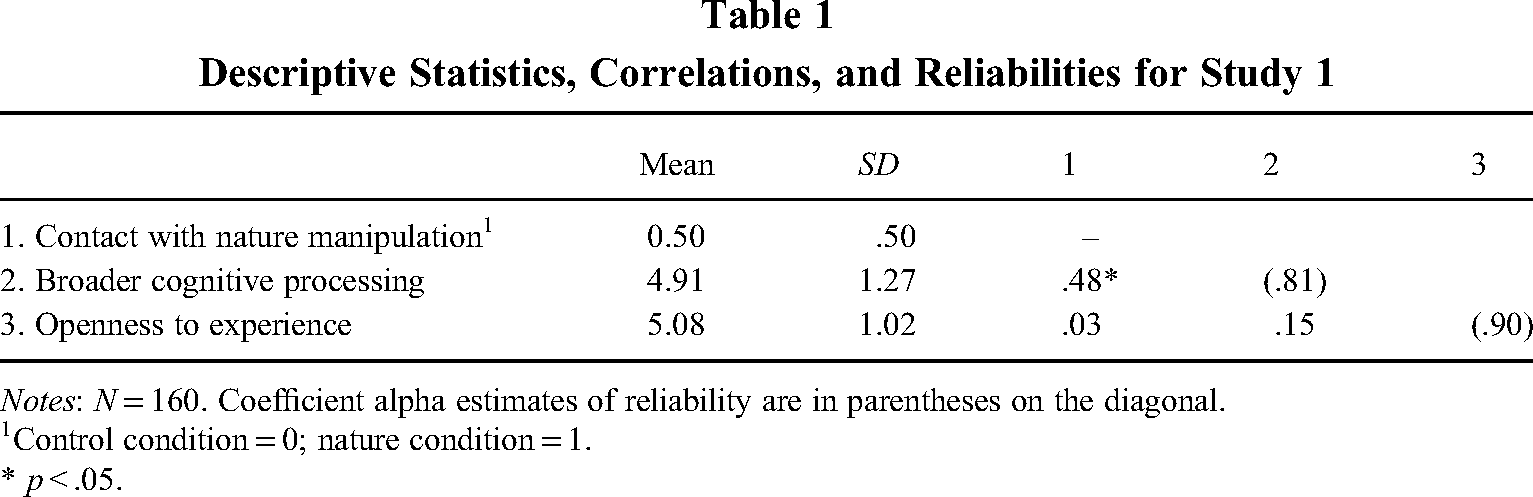
Notes: N = 160. Coefficient alpha estimates of reliability are in parentheses on the diagonal.
Control condition = 0; nature condition = 1. * p < .05.
Hypothesis Testing
Hypothesis 1 predicted that contact with nature at work has a positive effect on employees’ broader cognitive processing. A one-way ANOVA on participants’ ratings of broader cognitive processing revealed that participants in the nature condition felt significantly broader cognitive processing (Mnature = 5.51, SDnature = .88) than those in the control condition (Mcontrol = 4.30, SDcontrol = 1.31), F(1, 158) = 46.48, p < .001, η² = .23. These results supported Hypothesis 1.
Hypothesis 3 predicted that openness to experience moderates the relationship between contact with nature at work and broader cognitive processing, such that the positive effect of contact with nature is stronger at higher levels of openness to experience. To test this prediction, we used the PROCESS macro (Model 1) developed by Hayes (2013). Results revealed a significant interaction between contact with nature and openness to experience on broader cognitive processing, B = .40, SE = .17, p = .019 (see Table 2). Following the recommendation of Cohen, Cohen, West, and Aiken (2003), we plotted this relationship at high (+1 SD) and low (−1 SD) levels of openness to experience (see Figure 2). Next, we used the tool developed by Preacher, Curran, and Bauer (2006) to conduct a simple slope analysis and found that while the relationship between the contact with nature manipulation and broader cognitive processing was positive and significant when openness to experience was lower (−1 SD) (B = .78, SE = .24, t = 3.20, p = .002), this effect was significantly stronger when openness to experience was higher (+1 SD) (B = 1.61, SE = .24, t = 6.57, p < .001), further supporting Hypothesis 3.
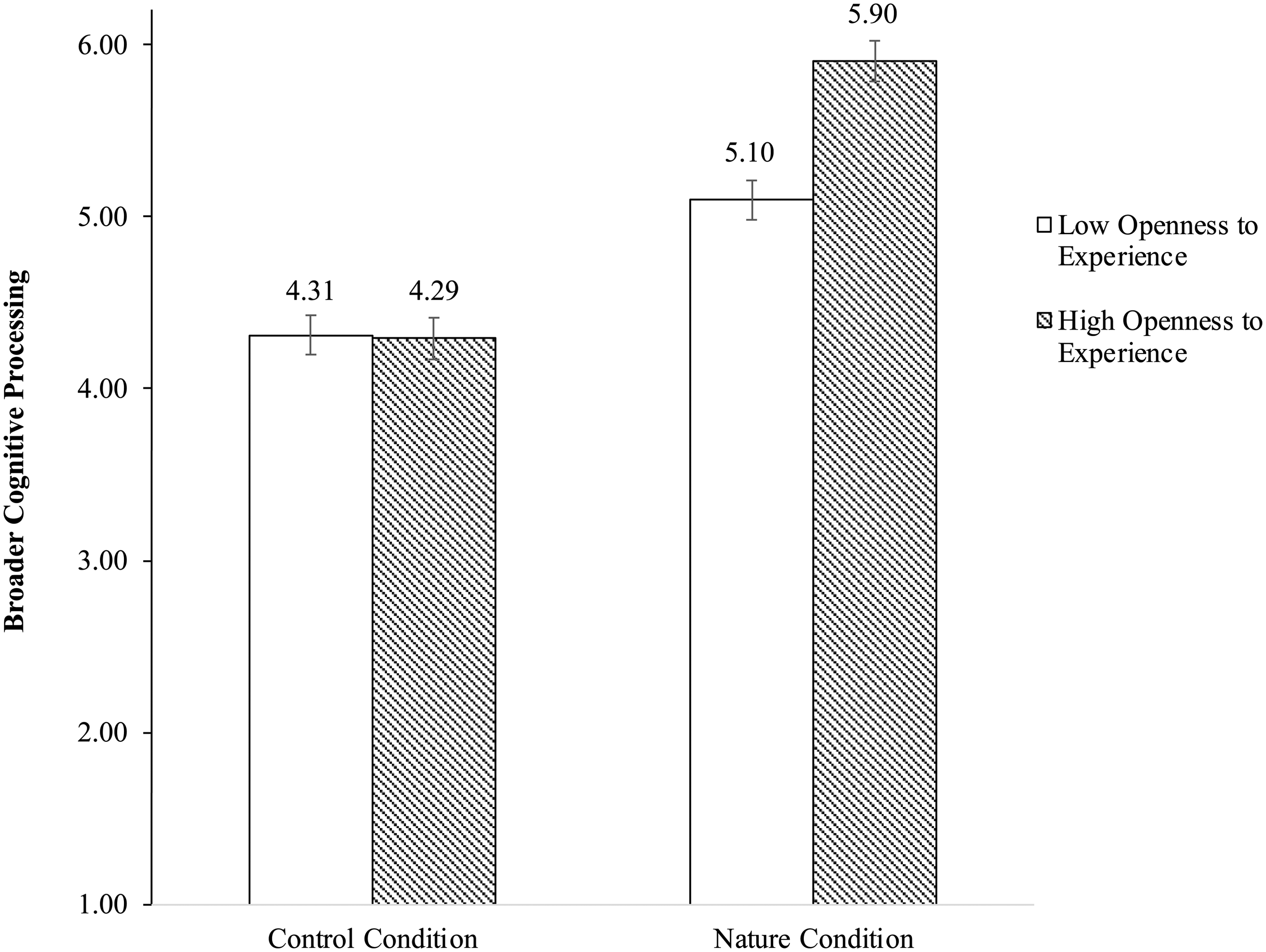
Moderating Effect of Openness to Experience on the Relationship Between Contact With Nature and Broader Cognitive Processing for Study 1
Regression Results for Study 1
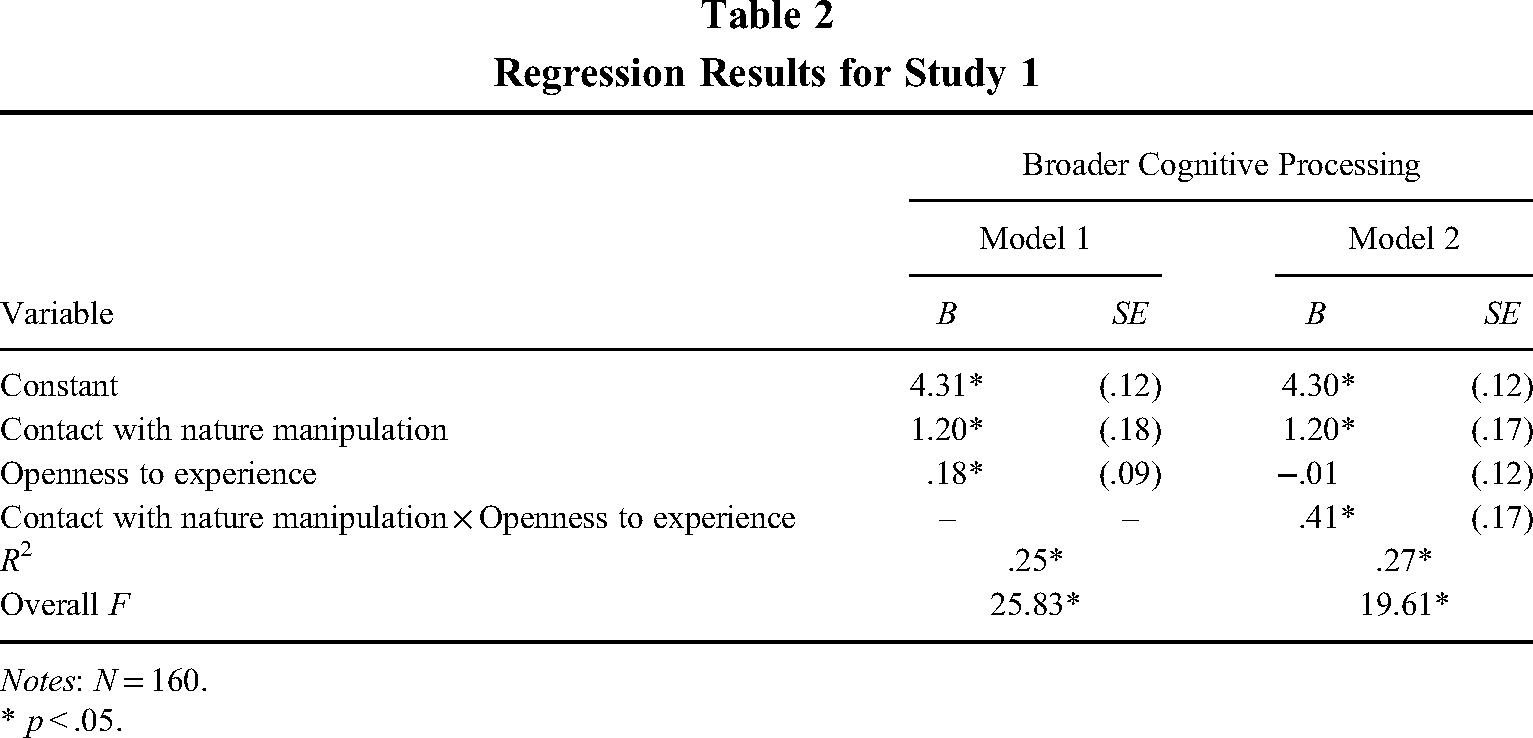
Notes: N = 160. * p < .05.
Study 1 Experiment: Discussion
Study 1 provides initial evidence for the positive effect of contact with nature on broader cognitive processing and for the moderating effect of openness to experience on the relationship between contact with nature and the mediator. By experimentally manipulating contact with nature, Study 1 was designed to provide initial evidence for the first stage of our model in a way that maximized internal validity. Besides not examining our full model, all of the measures of the study variables were self-reported; thus, our findings may be influenced by common-method biases. To mitigate these issues, we conducted an experiment paired with an objective creativity task in Study 2 before turning our attention to external validity concerns in Study 3.
Study 2 Experiment: Method
Participants and Procedures
We recruited 258 participants in the United States through Prolific. Similar to Study 1, only full-time working adults were eligible to participate. After indicating their consent, participants reported their openness to experience, were randomly assigned to either a nature or control condition, and then advanced through four pictures. Next, participants rated their level of cognitive processing (and affective states, as control variables). Participants then performed a brainstorming task designed to assess creativity. Finally, participants reported demographic information and completed a manipulation check. The average age of participants was 24.03 years (SD = 7.82), 61% were female, and 66% were Caucasian.
Study Materials and Measures
Unless otherwise stated, all measures used a seven-point Likert scale (1 = strongly disagree; 7 = strongly agree).
Consistent with recent creativity research (Bledow et al., 2021), we recruited two independent raters (doctoral students from a research university in the Midwestern United States who were blind to the study hypotheses) to evaluate participants’ responses based on three facets of creativity: idea fluency, originality, and cognitive flexibility (Guilford, 1967). For idea fluency, the raters counted the number of unique ideas that participants had generated (M = 4.51, SD = 1.50). For originality, the raters rated how original each idea was on a seven-point scale (M = 4.41, SD = 1.47). For cognitive flexibility, the raters followed the same procedure used in De Dreu, Baas, and Nijstad (2008); for each participant, raters assigned each idea to a content category (e.g., workplace events, social activities, coworkers, policy, etc.). The greater the number of categories used by a participant in generating ideas, the higher the level of cognitive flexibility (M = 4.44, SD = 1.50). Interrater reliability was acceptable (for idea fluency, ICC[C,k] = .71; for originality, ICC[C,k] = .75; for cognitive flexibility, ICC[C,k] = .72). To compute a composite measure of creativity, we followed the procedure in Bledow et al. (2021) by standardizing and averaging the three measures of idea fluency, originality, and cognitive flexibility before adding a constant to the scores so that the creativity scores ranged from 0 to 3.35 (M = 1.53, SD = .97).
Study 2 Experiment: Results
Manipulation Check
Means, standard deviations, and correlations are presented in Table 3. A one-way ANOVA on participants’ state connection to nature revealed that participants in the nature condition (Mnature = 6.31, SDnature = .88) experienced significantly higher levels of connection to nature than participants in the control condition (Mcontrol = 4.54, SDcontrol = 1.94), F(1, 256) = 89.39, p < .001, η² = .26, indicating the manipulation was effective.
Descriptive Statistics, Correlations, and Reliabilities for Study 2
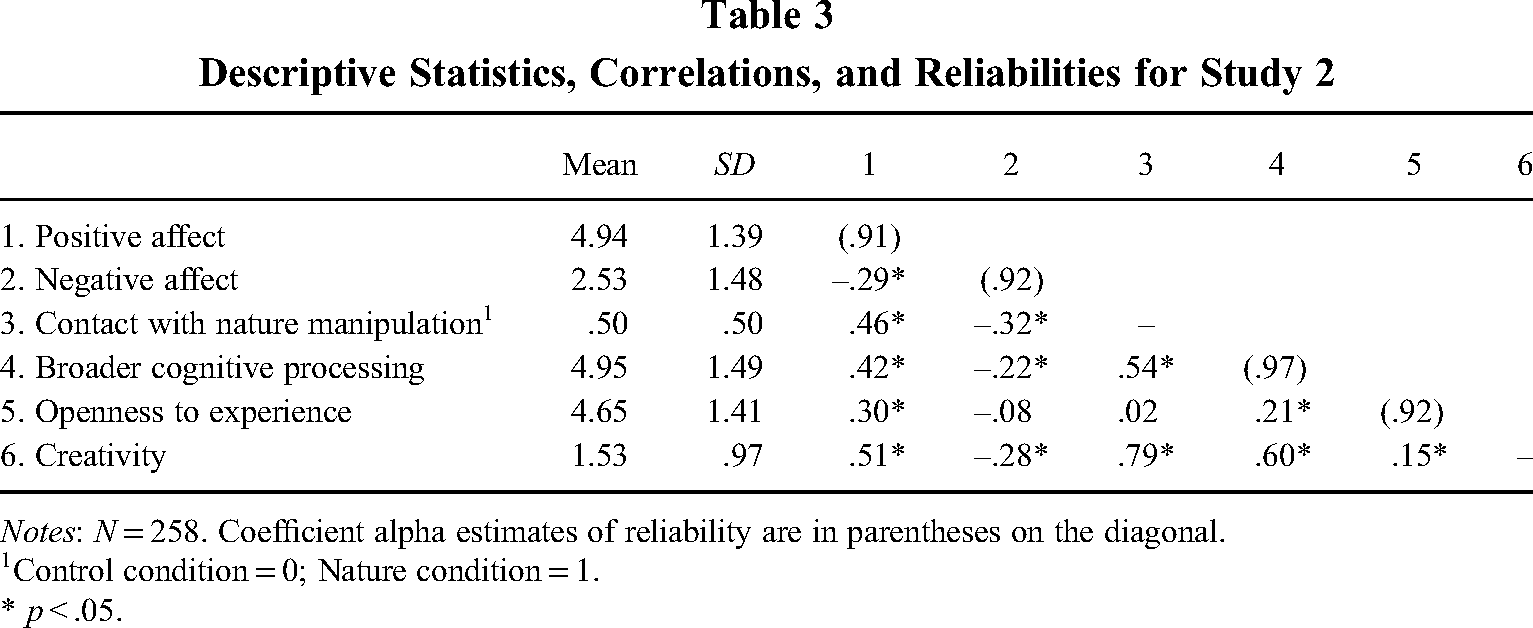
Notes: N = 258. Coefficient alpha estimates of reliability are in parentheses on the diagonal.
Control condition = 0; Nature condition = 1. * p < .05.
Hypothesis Testing
Hypothesis 1 predicted that contact with nature at work has a positive effect on employee broader cognitive processing. A one-way ANOVA on participants’ ratings of cognitive processing revealed that participants in the nature condition felt significantly broader cognitive processing (Mnature = 5.75, SDnature = 1.15) than those in the control condition (Mcontrol = 4.13, SDcontrol = 1.34), F(1, 256) = 107.49, p < .001, η² = .30. Thus, Hypothesis 1 was supported. As a supplement, we ran a one-way ANOVA on participants’ creativity and found that participants in the nature condition were rated as more creative (Mnature = 2.29, SDnature = .71) than those in the control condition (Mcontrol = .76, SDcontrol = .45), F(1, 256) = 417.75, p < .001, η² = .62.
Hypothesis 2 predicted that broader cognitive processing will mediate the indirect relationship between contact with nature at work and employee creativity. First, results revealed broader cognitive processing was positively associated with employee creativity (B = .13, SE = .03, p < .001). Next, we conducted a bias-corrected bootstrapping analysis with 20,000 iterations. Results revealed that the confidence interval for the indirect effect excluded zero (indirect effect = .18, SE = .05, 95% CI [.09, .29]). Thus, Hypothesis 2 was supported.
Hypothesis 3 predicted that openness to experience would moderate the positive relationship between contact with nature at work and broader cognitive processing. Hypothesis 4 predicted that openness to experience will moderate the indirect relationship between contact with nature at work and employee creativity through broader cognitive processing. To test both hypotheses, we used the PROCESS macro (Model 7) developed by Hayes (2013) and bootstrapping with 20,000 iterations. Results revealed a significant interaction between contact with nature and openness to experience on cognitive processing (B = .26, SE = .11, p = .016; see Table 4). Following Cohen et al. (2003), we plotted this relationship at high (+1 SD) and low (−1 SD) levels of openness to experience (see Figure 3). Simple slope analyses showed that while the slope was positive and significant when openness to experience was lower (B = 1.00, SE = .23, t = 4.28, p < .001), it was significantly stronger when openness to experience was higher (B = 1.72, SE = .22, t = 7.66, p < .001). Thus, Hypothesis 3 was supported.
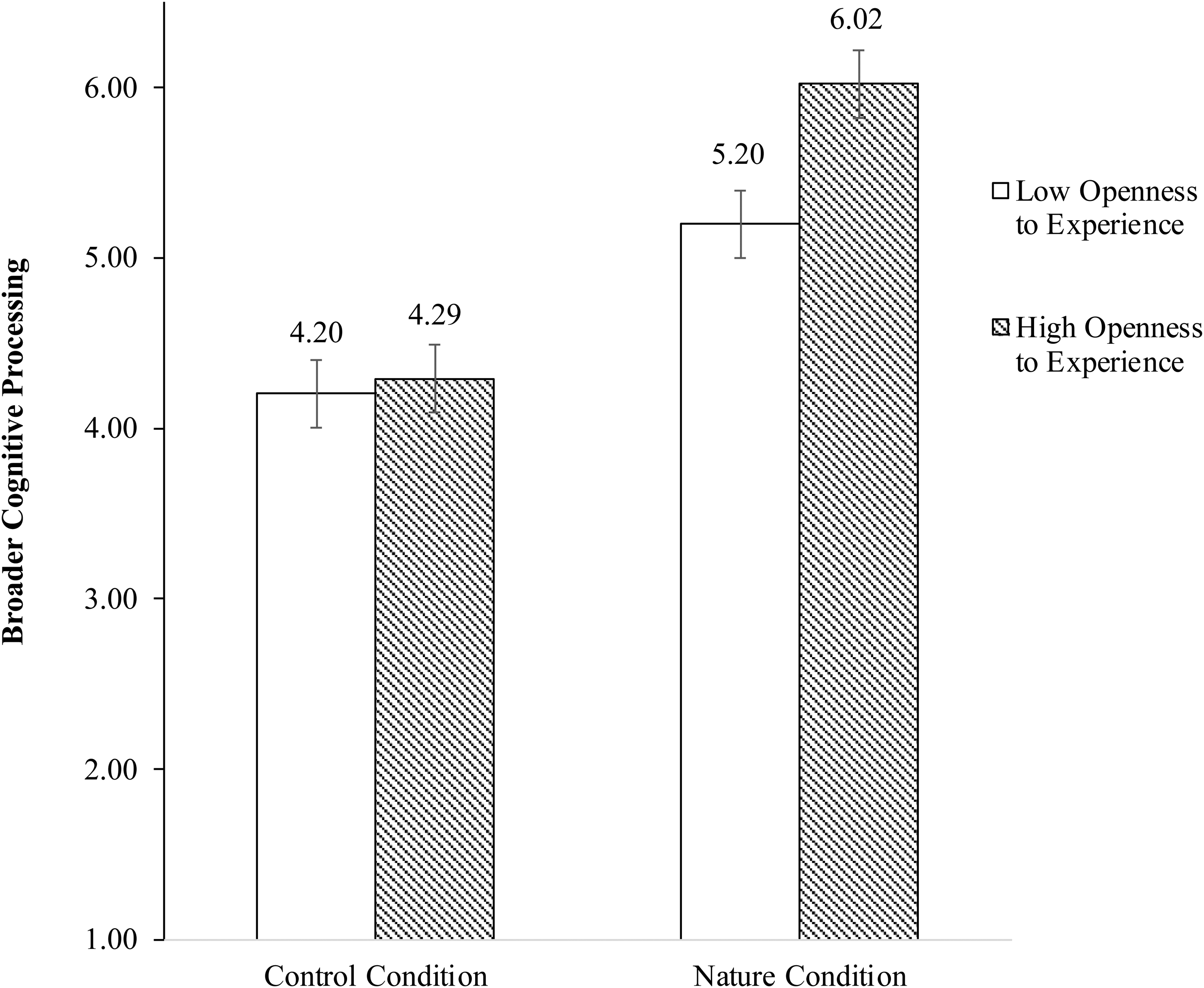
Moderating Effect of Openness to Experience on the Relationship Between Contact With Nature and Broader Cognitive Processing for Study 2
Regression Results for Study 2
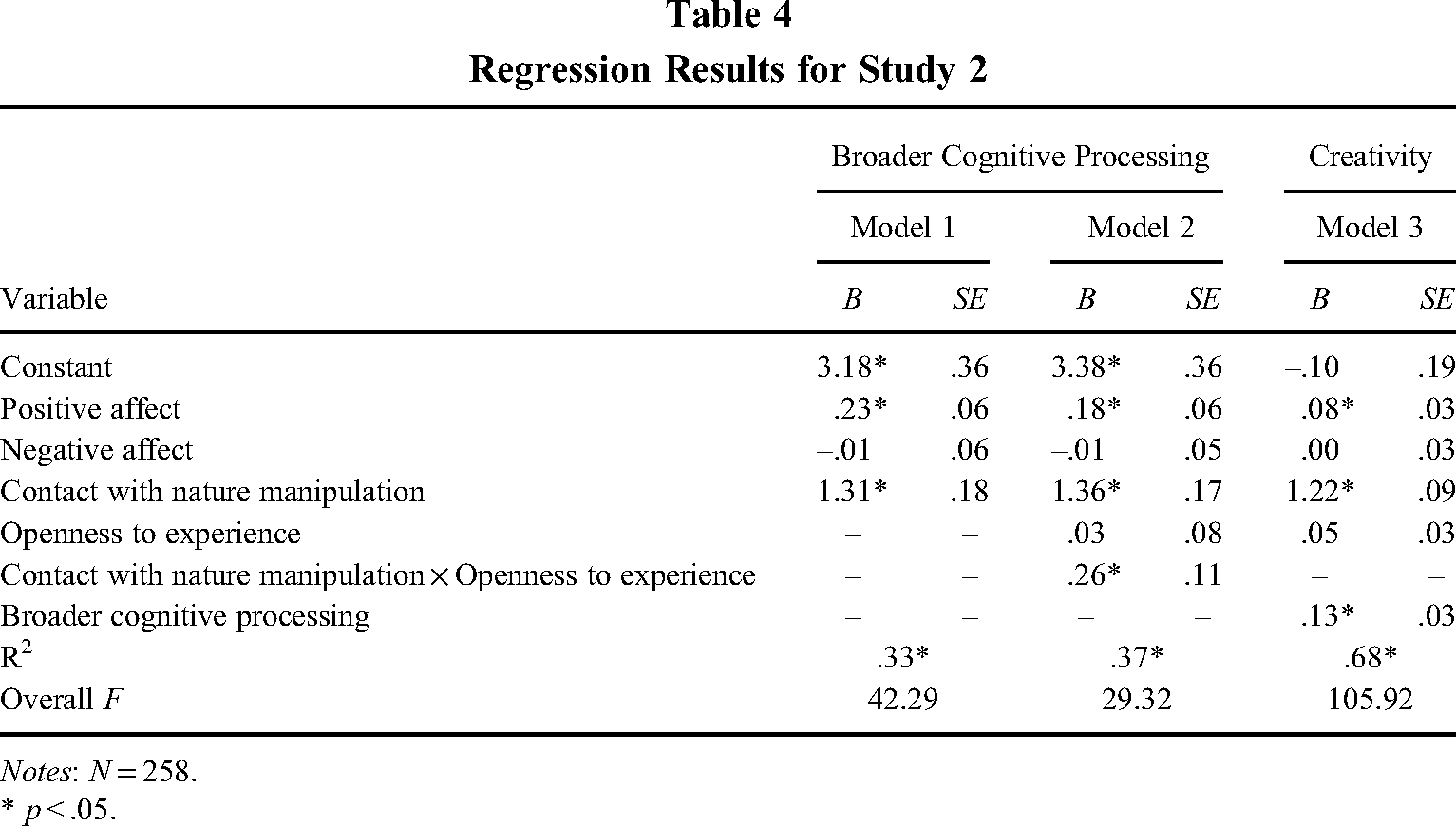
Notes: N = 258. * p < .05.
To test if openness to experience moderated the indirect relationship between contact with nature at work and employee creativity through broader cognitive processing, we examined the index of moderated mediation (index = .03, SE = .02); the 95% bias-corrected confidence interval excluded zero (.00, .08). We then probed the conditional indirect effects at both higher (+1 SD) and lower levels of (−1 SD) of openness to experience. Although the indirect effect was positive and significant when openness to experience was lower (effect = .13, SE = .04, 95% CI [.06, .23]), the indirect effect was significantly stronger when openness to experience was higher (effect = .23, SE = .07, 95% CI [.11, .39]). Thus, Hypothesis 4 was supported.
Study 2 Experiment: Discussion
Study 2 builds on Study 1 by testing our theoretical model using an objective measure of participants’ creativity. In doing so, Study 2 constructively replicates and extends the findings of Study 1. Combined, Studies 1 and 2 offer strong evidence regarding the internal validity of our model. Thus, we proceeded to examine the external validity and generalizability of our model by conducting a multiwave and multisource field study with employees in Taiwan (Study 3).
Study 3 Field Study: Method
Participants and Procedures
We conducted a field study in a marketing services company in Taiwan. With the approval of the general manager, we emailed study details to all full-time employees (N = 202) and their immediate supervisors. The responsibilities of these employees included responding to client requests, handling complaints, making cold calls, and providing after-sales service.
We collected data at three time points, with one week between each survey. At Time 1, employees reported their openness to experience; their contact with nature over the prior week at work; and as controls, their interaction with coworkers and micro-break activities over the prior week at work, as well as their physical activities in general. At Time 2, employees reported broader cognitive processing and, as controls, their positive and negative affect over the prior week at work. At Time 3, immediate supervisors rated the focal employees’ creativity over the prior week. From the initial 202 employees, 182 completed both the Time 1 and 2 surveys (response rate = 90.1%). At Time 3, all the immediate supervisors (i.e., N = 25) of the 182 employees provided ratings of the employees’ creativity over the prior week. In the final sample of 182 employees, 50.5% were male, and the average age was 32.59 (SD = 6.74).
Measures
Unless otherwise stated, all measures used a seven-point Likert scale (1 = strongly disagree; 7 = strongly agree). We translated the measures from English to Chinese following Brislin (1980) back-translation procedures.
Time 1 Survey (Employee-Rated)
We conducted a content validation study to test the content validity of these items, following Colquitt et al. (2019) and using the same pool of participants (N = 122) in one of our earlier validation studies. Participants read a definition of contact with nature at work (following our conceptualization on page 6; “an employee's degree of direct exposure to nature, ranging from being immersed in nature outdoors [e.g., during a work break or offsite meeting] to viewing depictions of nature within the built environment [e.g., a landscape mural on a meeting room wall]”), and then rated the definitional correspondence of the items on a response scale of “1 = item is an extremely bad match to the definition and 7 = item is an extremely good match to the definition.” Mean definitional correspondence for our items was 6.27, and the three-item scale showed strong definitional correspondence (htc = .90; Colquitt et al., 2019). 4
Time 2 Survey (Employee-Rated)
Time 3 Survey (Supervisor-Rated)
Analytic Strategy
Because our data have a nested structure (i.e., each supervisor provided ratings for more than one focal employee), we used the “TYPE = COMPLEX” function in Mplus 8 (Muthén & Muthen, 2017) to account for such statistical non-independence. This approach allows intercepts to vary across clusters (Hofmann, 1997) and uses a sandwich estimator (Muthén & Satorra, 1995) to calculate robust standard errors (for examples, see Frieder, Wang, & Oh, 2018). We followed Preacher et al. (2010) to test mediation and moderated mediation hypotheses with a parametric bootstrap (using 20,000 replications to construct 95% bias-corrected confidence intervals; Selig & Preacher, 2008).
Study 3 Field Study: Results
Table 5 presents descriptive statistics, correlations, and reliabilities. We first conducted a multilevel confirmatory factor analysis (CFA) to test the distinctiveness of our four study variables (i.e., contact with nature, broader cognitive processing, creativity, and openness to experience). This model fit the data adequately (χ2 = 125.85, df = 71, RMSEA = .07, CFI = .94, TLI = .92, SRMR = .05).
Descriptive Statistics, Correlations, and Reliabilities for Study 3
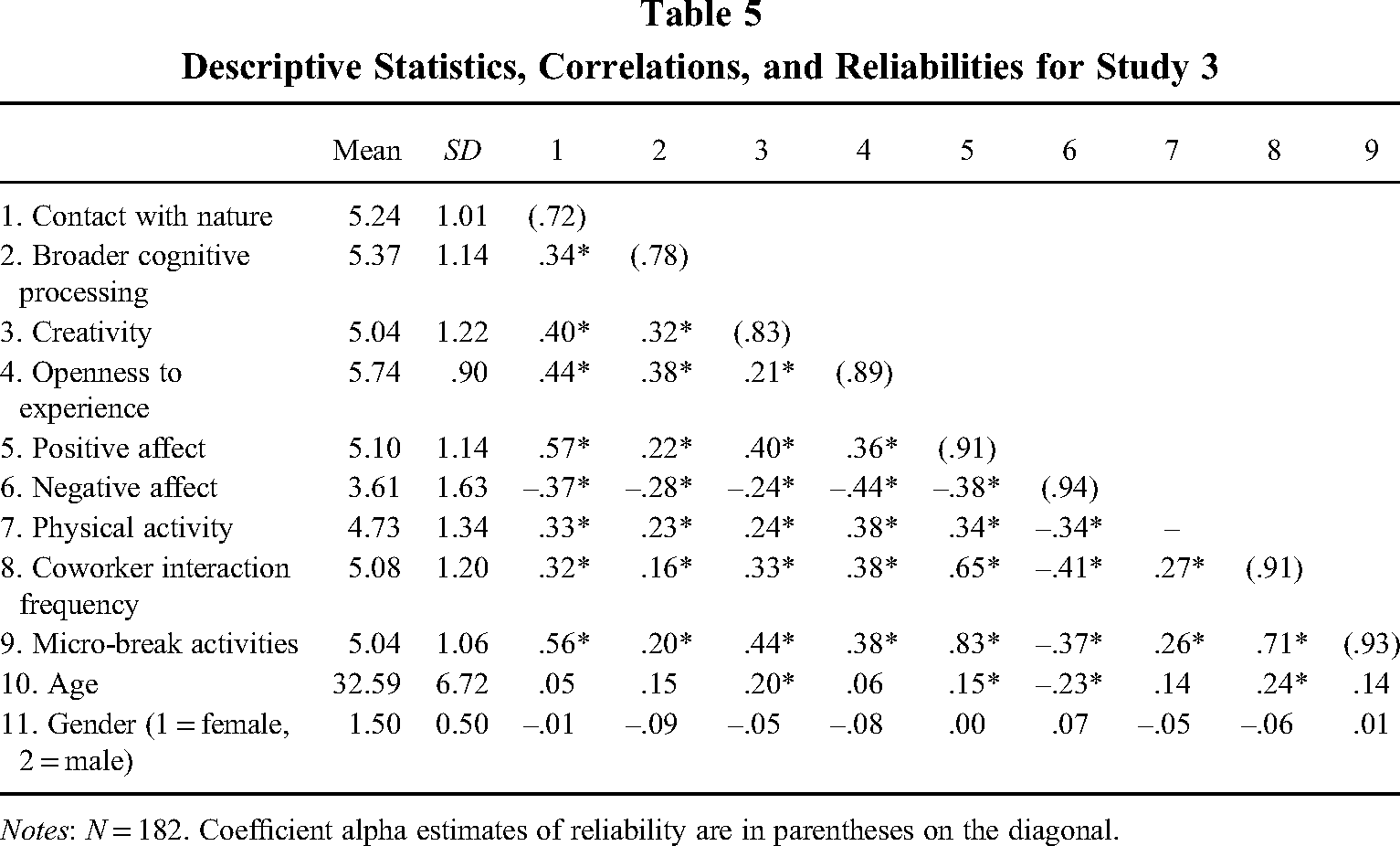
Notes: N = 182. Coefficient alpha estimates of reliability are in parentheses on the diagonal.
Hypothesis 1, which posited a positive effect of contact with nature at work on broader cognitive processing, was supported (B = .30, SE = .13, p = .02). As shown in Table 6, the indirect effect of contact with nature at work on employee creativity, through broader cognitive processing, was also positive and significant (indirect effect = .06, 95% CI [.01, .18]). This supported Hypothesis 2. Hypothesis 3 predicted that openness to experience moderates the positive effect of contact with nature at work on broader cognitive processing. The interactive effect of contact with nature at work and openness to experience on broader cognitive processing was significant (B = .20, SE = .05, p < .001). Moreover, as shown in Figure 4, the effect of contact with nature on broader cognitive processing was positive and significant at higher (+1 SD) levels of openness to experience (B = .48, p < .01); at lower (−1 SD) levels of openness to experience, this slope was not significant (B = .12, p = .31). Thus, Hypothesis 3 was supported. Finally, the indirect effect of contact with nature at work on employee creativity, through broader cognitive processing, was positive and significant at higher levels of openness to experience (conditional indirect effect = .11, 95% CI [.02, .26]). However, this indirect effect was not significant at lower levels of openness to experience (conditional indirect effect = .03, 95% CI [−.16, .12]). The difference between these two indirect effects was significant (indirect effect difference = .08, 95% CI [.01, .17]). Thus, Hypothesis 4 was supported.
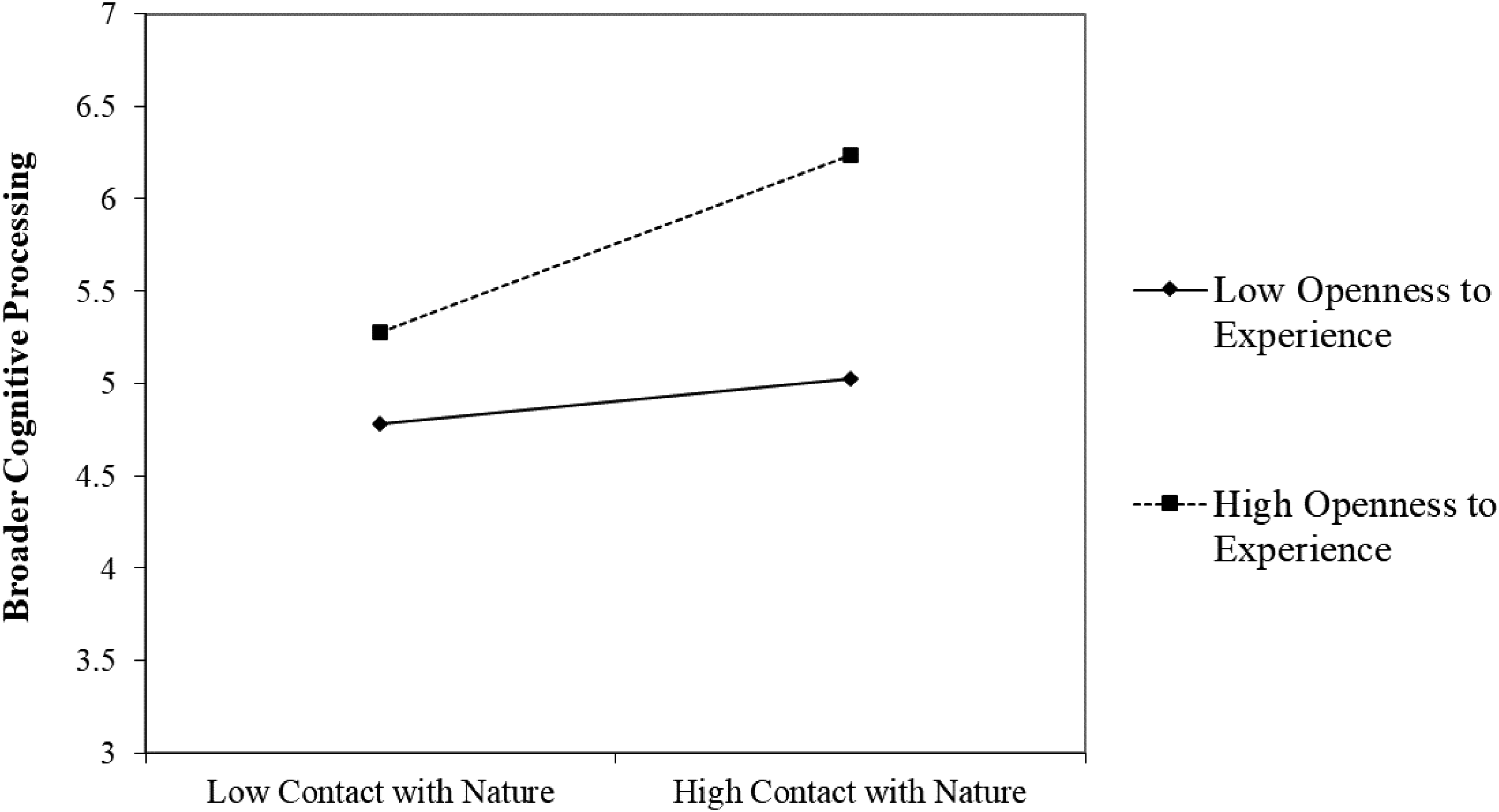
Moderating Effect of Openness to Experience on the Relationship Between Contact With Nature and Broader Cognitive Processing for Study 3
Path Analysis and Indirect Effects for Study 3.
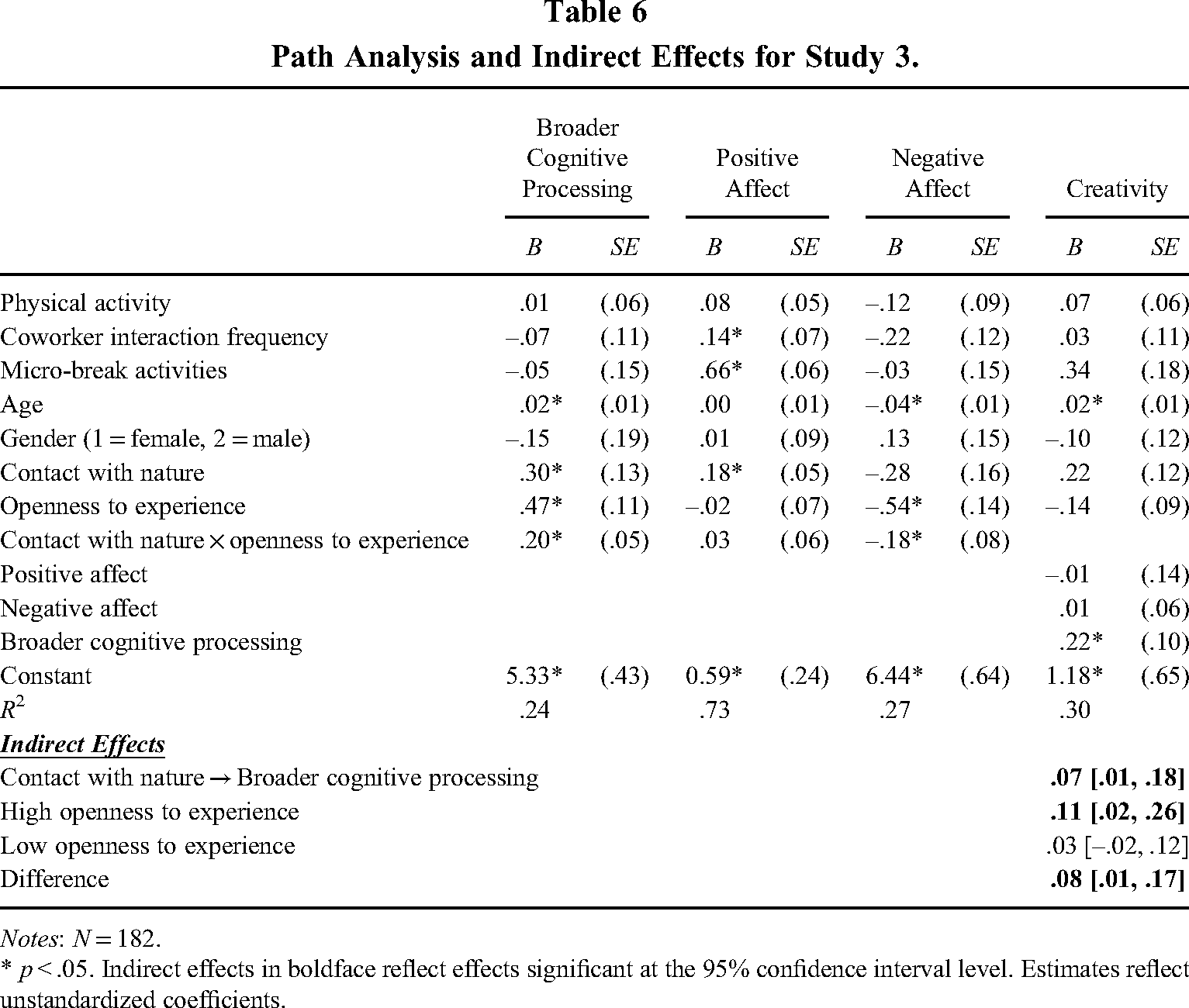
Notes: N = 182. * p < .05. Indirect effects in boldface reflect effects significant at the 95% confidence interval level. Estimates reflect unstandardized coefficients.
Study 3 Field Study: Discussion
Study 3 provided broad support for our theorizing that contact with nature at work positively relates to employee broader cognitive processing, which in turn cultivates creativity at work, and that openness to experience strengthens the relationship between contact with nature and broader cognitive processing. This study thus provides evidence of the external validity of our model, which—in combination with the prior two studies—provides robust empirical support for the theoretical model we develop in this paper. That said, we acknowledge that there is a potential limitation associated with our three-item measurement of broader cognitive processing. Specifically, we adapted these three items from the original six-item scale that Muise et al. (2019) used in their study. Yet, these authors measured this construct with a different item format. Because of the context of their study (i.e., interaction with romantic partner), their items referenced a partner (e.g., “Did you feel a greater awareness of things because of your partner?” and “How much did being with your partner expand your sense of the kind of person you are?”). Of note, although we conducted a content validation study to provide evidence for the validity of the three items that we used in Studies 1–3, we wanted to test the robustness of our findings by using a similarly formatted measurement (as in Muise et al., 2019) to capture broader cognitive processing. Therefore, we conducted Study 4 to not only replicate our empirical findings from Studies 1 to 3 (providing additional evidence of external validity) but also to test the consistency of our results across the two measurements of our mediator (i.e., our validated three-item scale versus the six-item scale from Muise and colleagues [2019] with a different format).
Study 4 Field Study: Method
Participants and Procedures
We conducted a field study in a food-trading company in Indonesia. With the approval of the director, we emailed the study details to all full-time employees (N = 306) and their immediate supervisors. The responsibilities of these employees included handling administrative work pertaining to food and safety practices, updating company protocols about food-trading policies, and managing relationships with external customers.
Similar to Study 3, we collected data at three time points, with one week between each survey. At Time 1, employees reported their openness to experience, their contact with nature over the prior week at work, as well as a series of controls (i.e., their interaction frequency with coworkers and micro-break activities over the prior week at work, as well as their physical activity). At Time 2, employees reported their broader cognitive processing and their positive and negative affect (control) over the prior week at work. At Time 3, immediate supervisors rated the focal employees’ creativity over the prior week. Of note, all the participating supervisors were working in person with the followers, and thus they had ample opportunities to observe the creative behaviors from the focal employees. From the initial 306 employees, 268 completed both the Time 1 and 2 surveys (response rate = 87.6%). At Time 3, all the immediate supervisors of these 268 employees provided ratings of the employees’ creativity over the prior week. In the final sample of 268 employees, 48.5% were male and the average age was 38.48 (SD = 8.41).
Measures
Unless otherwise stated, all measures used a seven-point Likert scale (1 = strongly disagree; 7 = strongly agree). We translated the measures from English to Indonesian following Brislin (1980) back-translation procedures.
Time 1 Survey (Employee-Rated)
Time 2 Survey (Employee-Rated)
Time 3 Survey (Supervisor-Rated)
Analytic Strategy
For the path analysis, we again followed Preacher et al. (2010) to test mediation and moderated mediation hypotheses with a parametric bootstrap (using 20,000 replications to construct 95% bias-corrected confidence intervals; Selig & Preacher, 2008).
Study 4 Field Study: Results
Table 7 presents descriptive statistics, correlations, and reliabilities. We first conducted a CFA to test the distinctiveness of our four study variables (i.e., contact with nature, cognitive processing, creativity, and openness to experience). This four-factor model demonstrated adequate fit with the data (χ2 = 298.97, df = 71, CFI = .91, RMSEA = .11, SRMR = .07).
Descriptive Statistics, Correlations, and Reliabilities for Study 4
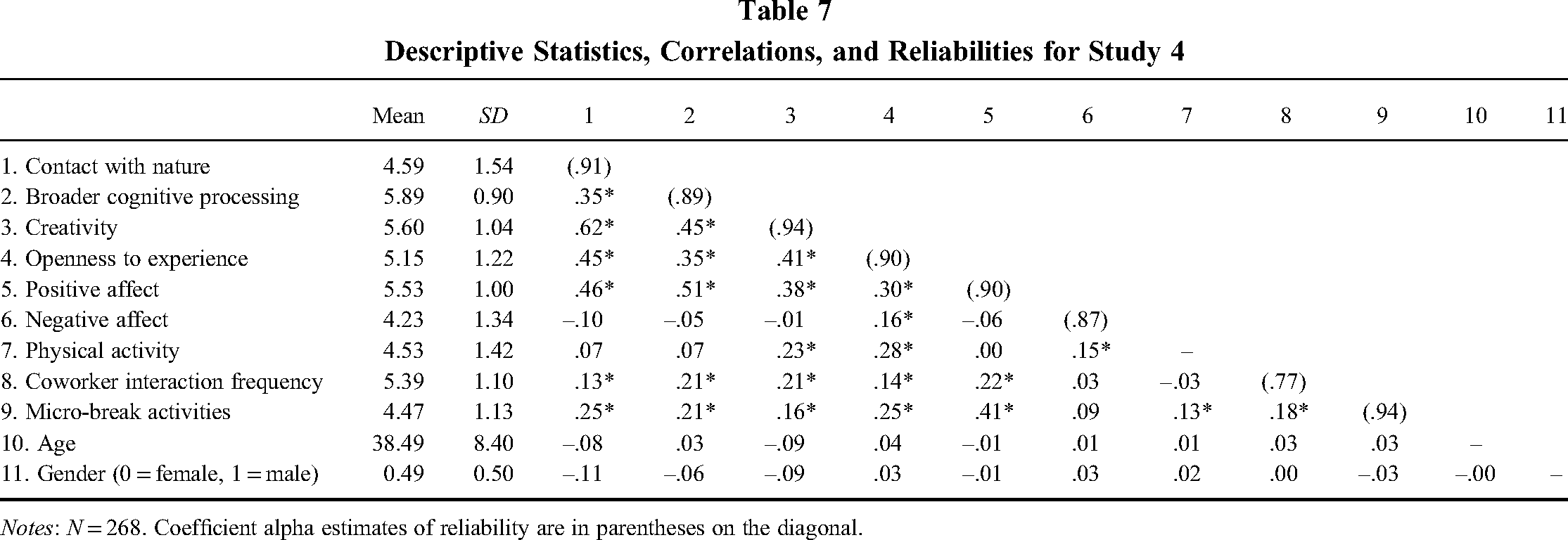
Notes: N = 268. Coefficient alpha estimates of reliability are in parentheses on the diagonal.
Hypothesis 1, which posited a positive effect of nature at work on broader cognitive processing, was supported (B = .12, SE = .04, p < .01). As Table 8 shows, the indirect effect of contact with nature at work on employee creativity, through broader cognitive processing, was positive and significant (indirect effect = .03, 95% CI [.01, .06]). This supported Hypothesis 2.
Path Analysis and Indirect Effects for Study 4
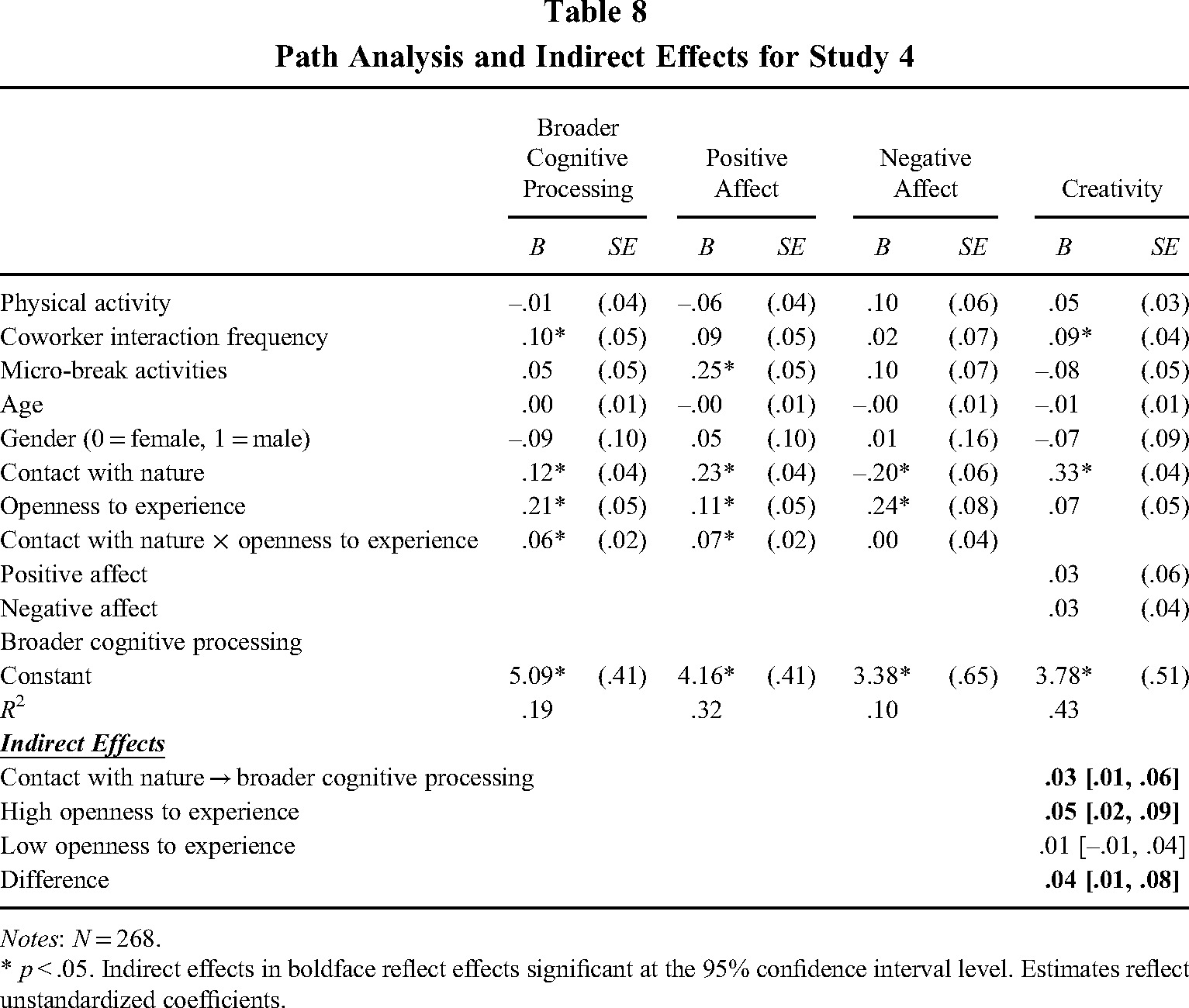
Notes: N = 268. * p < .05. Indirect effects in boldface reflect effects significant at the 95% confidence interval level. Estimates reflect unstandardized coefficients.
Descriptive Statistics, Correlations, and Reliabilities for Study 5
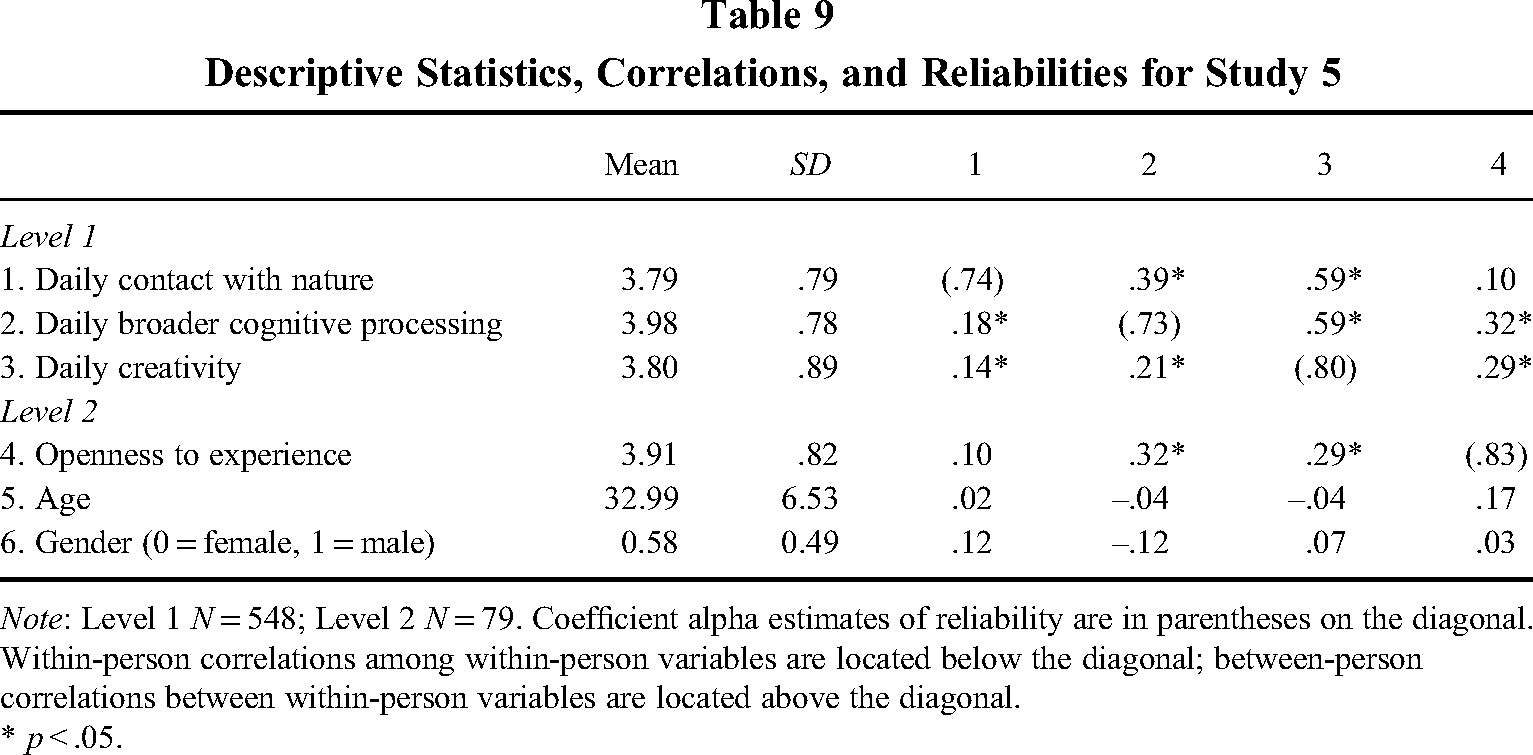
Note: Level 1 N = 548; Level 2 N = 79. Coefficient alpha estimates of reliability are in parentheses on the diagonal. Within-person correlations among within-person variables are located below the diagonal; between-person correlations between within-person variables are located above the diagonal.
* p < .05.
Multilevel Path Analysis and Indirect Effects for Study 5
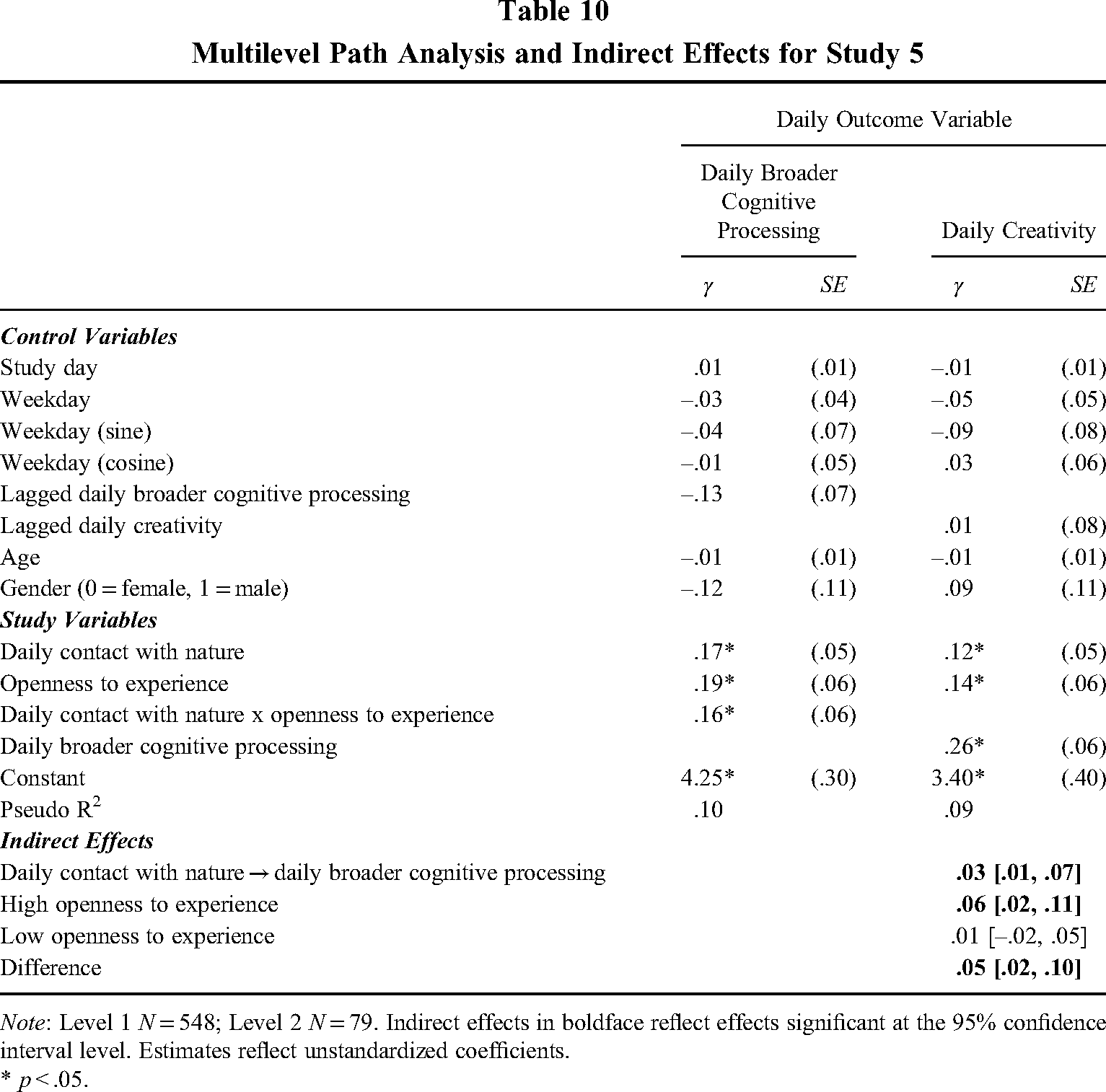
Note: Level 1 N = 548; Level 2 N = 79. Indirect effects in boldface reflect effects significant at the 95% confidence interval level. Estimates reflect unstandardized coefficients. * p < .05.
Hypothesis 3 predicted that openness to experience moderates the positive effect of contact with nature at work on broader cognitive processing. The interactive effect of contact with nature at work and openness to experience on broader cognitive processing was significant (B = .06, SE = .02, p < .01). Moreover, as shown in Figure 5, the effect of contact with nature on broader cognitive processing was positive and significant at higher levels of openness to experience (B = .20, p < .01); at lower levels of openness to experience, this slope was not significant (B = .05, p = .31). Thus, Hypothesis 3 was supported.
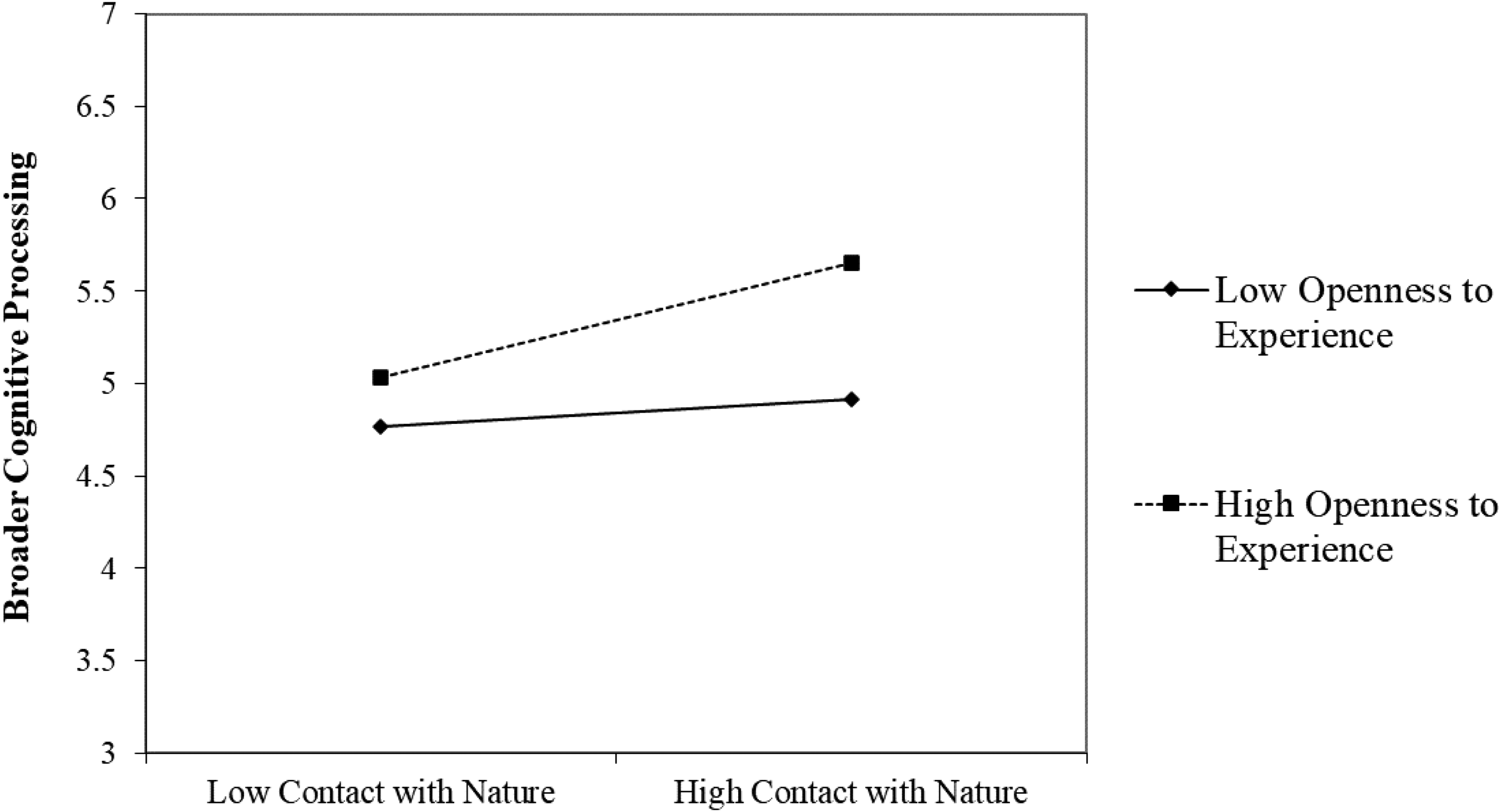
Moderating Effect of Openness to Experience on the Relationship Between Contact With Nature and Broader Cognitive Processing for Study 4
Finally, the indirect effect of contact with nature at work on employee creativity, through broader cognitive processing, was positive and significant at higher levels of openness to experience (conditional indirect effect = .05, 95% CI [.02, .09]). However, this indirect effect was not significant at lower levels of openness to experience (conditional indirect effect = .01, 95% CI [−.01, .04]). The difference between these two indirect effects was significant (indirect effect difference = .04, 95% CI [.01, .08]). Thus, Hypothesis 4 was supported.
Supplementary Analysis
As noted earlier, a goal of this study was to further test the validity and robustness of our findings by measuring our mechanism with the same format as with the six-item scale used in Muise et al. (2019). Results from this test largely align with those reported previously. That is, when utilizing Muise et al.’s (2019) six-item scale, contact with nature at work exhibited a similar, significant effect on broader cognitive processing (B = .31, SE = .04, p < .01). In addition, the moderating effect of openness to experience on the relationship between contact with nature at work and broader cognitive processing was likewise significant and in the expected direction (B = .10, SE = .02, p < .01). Finally, this broader cognitive processing scale was positively associated with creativity (B = .32, SE = .06, p < .01). See Figure 6 for the moderating effect in this supplementary analysis.
Study 4 Field Study: Discussion
The results of our hypothesis tests using a six-item scale that more closely replicates that from Muise et al. (2019) substantively aligned with those found when using a shortened three-item scale used in this study and the preceding studies. Although we report the results from the shortened scale to remain consistent with Studies 1 through 3, these supplemental findings provide evidence that our results are not unduly influenced by our modification of Muise et al.’s (2019) original scale. In addition, the findings of Study 4 replicate those in Studies 1–3, using employees from different jobs, industries, and national cultures. Together, Studies 1 to 4 provide strong evidence regarding the internal and external validity of our findings (Chatman & Flynn, 2005). That said, given that prior research has suggested that contact with nature can vary across days (e.g., Jiang, Larsen, & Sullivan, 2020; Li, Deal, Zhou, Slavenas, & Sullivan, 2018), we proceed to conduct a within-person field study (Study 5) to test our model on a daily basis.
Study 5 Daily Field Study: Method
Participants and Procedures
We conducted a daily experience sampling (ESM) study, which allowed us to assess the effect of daily (within-person) contact with nature on employees’ subsequent creativity. This design aligns with our conceptualization of contact with nature; as an episodic occurrence that could vary daily, a daily ESM study is suited to capturing employees’ “lived experiences” as they relate to nature exposure (Gabriel, Koopman, Rosen, & Johnson, 2018: 92). With the endorsement of the firm's chief executive officer, we emailed 84 corporate sales agents of a large technology and strategy-consulting company in Western Canada, which provides bespoke consultancy services to improve corporate clients’ strategic planning and technological infrastructure. The sales agents’ primary job responsibilities require daily travel (mainly by car) to meet with customers (e.g., providing after-sales customer service and coordinating with customers on business planning). We specifically selected this sample to test our theory because these agents are regularly exposed to a variety of natural environments when travelling between their office and their clients’ sites. Of the 84 agents we invited to participate in this study, 79 agreed to do so.
The study had two phases (e.g., Foulk, Lanaj, Tu, Erez, & Archambeau, 2018; Lanaj, Johnson, & Wang, 2016). In phase 1, participants completed a survey that assessed their demographic information and openness to experience. One week later, the second phase of the study began, wherein participants were emailed links to two surveys per day. These surveys arrived at the midpoint (i.e., between 1 PM and 2 PM) and end of their workday (i.e., between 5 PM and 6 PM), for 10 consecutive workdays (i.e., Monday to Friday for two working weeks). We retained data from participants who completed at least three complete days of surveys (i.e., both surveys in a given day for three study days) 5 to provide sufficient coverage of employees’ daily lives (Gabriel et al., 2019; Koopman, Lanaj, & Scott, 2016). Our final sample consisted of 79 participants and 548 day-level observations (69.4% response rate). This sample was 42% female, with an average age of 32.99 years (SD = 6.57).
Measures
Unless otherwise stated, all measures used a seven-point Likert scale (1 = strongly disagree; 7 = strongly agree).
Analytic Strategy
Given that our study design generates daily observations nested within employees, we used multilevel path analysis with Mplus 8 (Muthén & Muthen, 2017) to test our model. We group-mean centered all exogenous Level 1 variables (Hofmann & Gavin, 1998), grand-mean centered our between-person moderator (Cohen et al., 2003), and utilized random slopes for all relationships among hypothesized study variables and fixed slopes for within-person control variables (McClean et al., 2021). We used parametric bootstrapping to test the significance of each hypothesized indirect and conditional indirect effect (Preacher et al., 2010). Specifically, we performed a Monte Carlo simulation with 20,000 replications (Selig & Preacher, 2008) to construct bias-corrected 95% confidence intervals around each indirect effect. For conditional indirect effects, we calculated the value of each indirect effect at low (−1 SD) and high (+1 SD) values of the moderator (i.e., openness to experience).
Study 5 Daily Field Study: Results
Prior to testing our hypothesized model, we examined the proportion of variance at both the within- and between-person levels of analysis. Daily, within-person variance represented 82%, 67%, and 71% of the overall variance on contact with nature, broader cognitive processing, and creativity, respectively, supporting the use of multilevel modeling (Podsakoff, Spoelma, Chawla, & Gabriel, 2019). We examined the distinctiveness of our study variables using multilevel CFA in Mplus 8. Our model contains three within-person variables (i.e., contact with nature, broader cognitive processing, and creativity) and one between-person variable (i.e., openness to experience); however, to examine the distinctiveness of these constructs at both levels of analysis, we modeled each within-person factor at both the within- and between-person level of analysis. This model demonstrated adequate fit with the data (χ2 = 166.82, df = 95, CFI = .94, RMSEA = .04, SRMRWithin = .04, SRMRBetween = .09), so we proceeded to test hypotheses.
Table 9 presents the descriptive statistics, correlations, and reliabilities for all study variables. Table 10 displays the results from our multilevel path model. Hypothesis 1 predicted that contact with nature at work positively relates to broader cognitive processing. Supporting this hypothesis, daily contact with nature was positively associated with daily broader cognitive processing (γ = .17, p < .01). Hypothesis 2 predicted that broader cognitive processing mediates the indirect relationship between contact with nature at work and employee creativity. Supporting Hypothesis 2, daily broader cognitive processing was positively associated with daily creativity (γ = .19, p < .01), and the confidence interval for the indirect effect excluded zero (indirect effect = .03, 95% CI [.01, .07]). Hypothesis 3 posited that openness to experience moderates the relationship between contact with nature at work and broader cognitive processing, such that the positive effect of contact with nature is stronger for employees with high levels of openness to experience. This interaction was significant (γ = .16, p = .01). As Figure 7 shows, in further support of Hypothesis 3, the effect of daily contact with nature on daily broader cognitive processing was positive and significant at higher (slope = .30, p < .01), but not at lower (slope = .04, p = .64), levels of openness to experience. Hypothesis 4 predicted that openness to experience moderates the indirect effect of contact with nature at work on creativity, through broader cognitive processing. As Table 8 shows, at higher levels of openness, daily contact with nature was positively and significantly associated with creativity, through broader cognitive processing (indirect effect = .06; 95% CI [.02, .11]). At lower levels of openness, this effect was not significant (indirect effect = .01; 95% CI [−.02, .05]). Moreover, the confidence interval for the difference between these two indirect effects excluded zero (indirect effect difference = .05; 95% CI [.02, .10]). Therefore, Hypothesis 4 was supported.
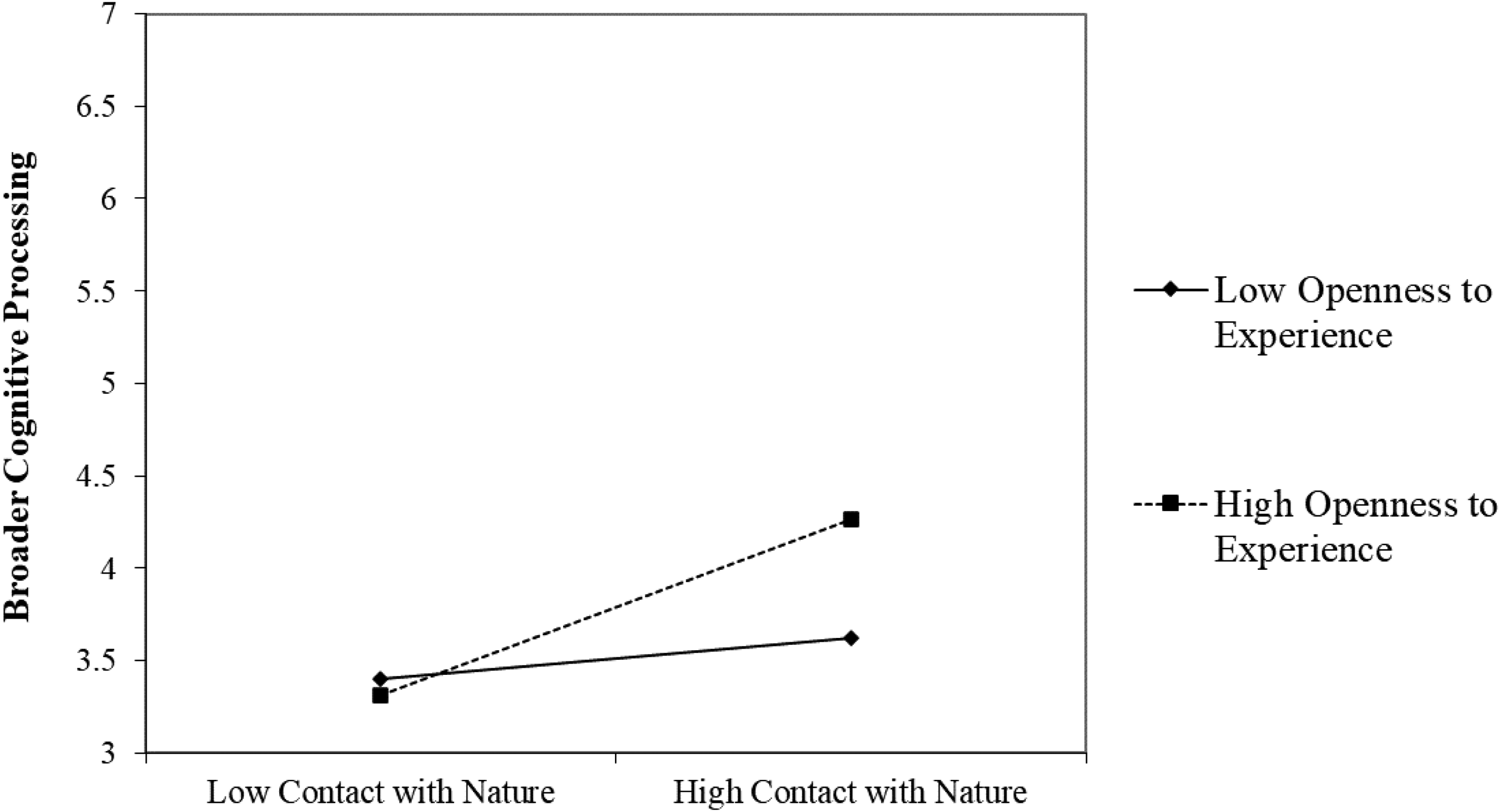
Moderating Effect of Openness to Experience on the Relationship Between Contact With Nature and Broader Cognitive Processing for Study 4 (Supplementary Analyses)
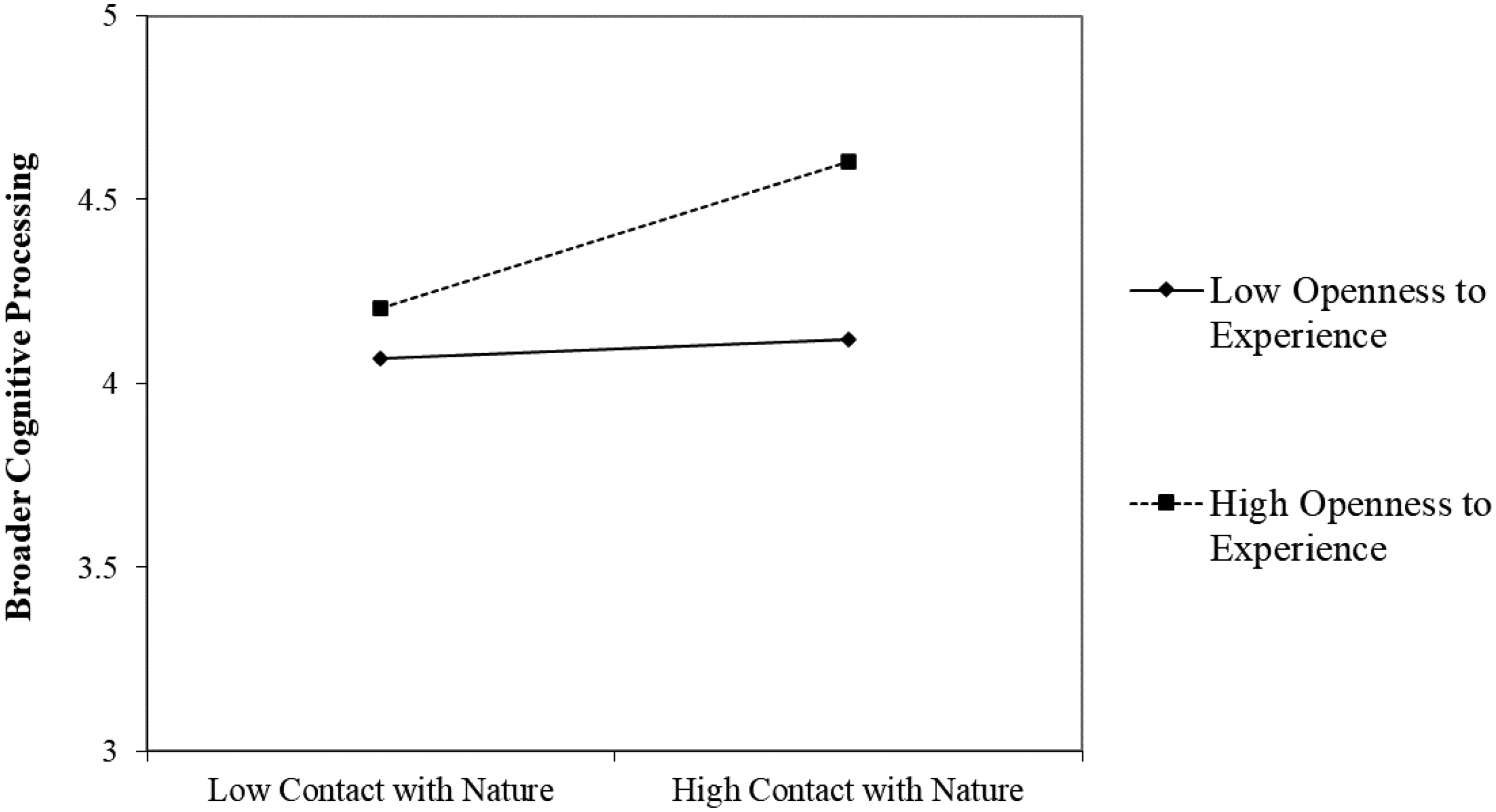
Moderating Effect of Openness to Experience on the Relationship Between Daily Contact With Nature and Daily Broader Cognitive Processing for Study 5
Study 5 Daily Field Study: Discussion
Study 5 was designed to extend the prior studies by adopting a within-person ESM design in another organizational context, the results from which supported our theorized model. Specifically, daily contact with nature at work positively associated with daily broader cognitive processing, which, in turn, positively associated with daily creativity at work. Building on the prior studies, this indirect effect was conditional on openness to experience; the positive effect of contact with nature on broader cognitive processing was stronger for employees with higher levels of openness to experience. These findings, along with those reported in Studies 1 to 4, provide strong evidence regarding the internal and external validity of our findings. In addition, we have strived our best to provide different degrees of support to the robustness of our findings by using different operationalizations of the constructs via different studies. To this end, these findings should provide strong confidence in the hypothesized model that we develop.
General Discussion
Drawing from ART, we developed and tested a theoretical model that explains how and for whom contact with nature at work leads to higher creativity. Employing a mixed-method approach (i.e., five studies with different methodologies and samples in different cultures), we found that contact with nature positively associates with broader cognitive processing, which, in turn, cultivates employee creativity at work. Our findings further revealed that employees with higher levels of openness to experience are particularly likely to experience the cognition-broadening effects of contact with nature, with corresponding positive effects on creativity. These findings have meaningful theoretical and practical implications.
Theoretical Implications
In developing and testing our theoretical model of contact with nature at work and broader cognitive processing and enhanced creativity in employees, our research specifically contributes to the development and advancement of ART in the organizational literature. To this point, although prior research has identified a series of resource-based (e.g., recovery; Ulrich et al., 1991) and affect-based (e.g., positive affect; Klotz et al., 2023; Ohly et al., 2016) consequences of contact with nature, scholars have recently drawn on ART to theorize that such contact is likely to evoke the “feeling of being connected to something larger” (Klotz & Bolino, 2021; Stevenson et al., 2018: 231). To extend the applicability and nomological network of ART, our research illuminates a core tenet of this theory by empirically examining the crucial role of broader cognitive processing in transmitting the cognitive benefits of contact with nature at work. In doing so, we further enrich ART and its relevant stream of research by shedding light on the cognitive underpinnings of the effects of contact with nature at work on employees’ creativity.
Second, by examining the role that individual differences play in influencing employees’ psychological and behavioral responses to biophilic work design, our research provides robust empirical support for the theoretical notion of the importance of “compatibility” (Kaplan, 1995: 173) in activating and amplifying the effects of contact with nature on individuals. Moreover, the consistent findings across five studies regarding the role of openness to experience as the crucial moderator of our model supports the validity of Klotz and Bolino’s (2021) prediction that openness to experience, in particular, will strengthen the effects of contact with nature on employees. More broadly speaking, our research rekindles a focus on the interplay between personality and physical work environment (e.g., Campion, 1988; Campion & Thayer, 1985). At a finer-grained level, our research helps bridge the conversation about biophilic work design (Klotz & Bolino, 2021) with broader research on how configurations of personality and work environment impact the workplace (e.g., Kohn & Schooler, 1982; Spenner, 1988).
Lastly, our findings have implications for the workplace design literature. According to meta-analytic evidence, motivational (e.g., job significance and autonomy) and social (e.g., social support) work design factors are apparently more impactful than physical work design (e.g., ergonomics) on crucial employee outcomes (Humphrey, Nahrgang, & Morgeson, 2007). While not contradicting this established finding, our results add nuance to it by hinting that incorporating natural elements into employees’ physical work domain may be more impactful than expected in cultivating positive work outcomes among employees. Overall, by showing how something as simple as the degree to which employees come into contact with nature can affect their subsequent creativity, we preview the promise that the physical work environment holds for extending our understanding of employee behavior.
Practical Implications
Beyond the aforementioned theoretical contributions, our paper has important implications for organizations. First and perhaps most importantly, our findings provide timely insights for organizational decision makers and managers regarding ways to cultivate broader cognitive processing among employees. Although prior research tends to suggest a more interpersonal approach in cultivating broadened thinking among employees (e.g., Dansereau, Seitz, Chiu, Shaughnessy, & Yammarino, 2013), our research provides further practical insights by showing that workplace designs or changes to the physical work context can achieve similar ends. This is especially important in an era where physical and social contact among employees is reduced as a result of the global shift to more remote and hybrid work designs (DePass, 2020; Molla, 2020).
Second, our findings provide a new means via which leaders can foster employee creativity. Prior research has shown that leaders can promote employee creativity through cultivating a positive organizational climate, such as one suffused with psychological safety (Hu, Erdogan, Jiang, Bauer, & Liu, 2018; Zhou & Pan, 2015) or support for innovation (Wang, Rode, Shi, Luo, & Chen, 2013). However, it often takes substantial time and resources for managers to craft such positive climates within workgroups (James et al., 2008). The findings from our studies demonstrate that increasing employees’ contact with natural elements at work can have relatively immediate effects on the cognitive processing of employees, and ultimately their creativity. Our paper, therefore, provides initial evidence of how managers can boost employee creativity while under time constraints, such as when faced with an unexpected threat to their business or when trying to imagine new ways of doing business during strategic planning.
Third and finally, our paper has implications for HR managers, especially in creative industries. We demonstrated that employees higher on openness to experience are more likely to reap the cognition broadening and creative benefits of contact with nature, which implies that for jobs in which employee creativity is needed, selecting for openness to experience may lead to better selection outcomes. Indeed, in creative industries, firms often invest in building work settings that are conducive to creativity (e.g., Mikkelsen, 2020; Obholzer & Miller, 2018), but our findings indicate that these investments will garner higher creative returns in employees who are especially prone to experiencing broader cognitive processing as a result of such work design elements. As such, by answering the question of for whom the cognition-broadening effect of biophilic work design is stronger, we offer practical insights for those designing recruitment and selection processes for jobs that require creativity.
Limitations and Future Directions
In this research, we employed a mixed-method approach by conducting five studies to examine our hypothesized model. Although this approach has notable strengths (e.g., providing robust internal and external validity of our findings), it is not without limitations, some of which reveal opportunities for future research. First, we relied on three items from Muise et al. (2019) to capture broader cognitive processing, and these three items do not fully capture the original scale. Although our supplemental analyses in Study 4 aimed to demonstrate that our shortened version of this scale converged with the full scale, we nonetheless encourage additional research that uses the full, six-item scale, along with other operationalizations of broader cognitive processing, when further examining the relationship between contact with nature and creativity. Furthermore, Muise et al. (2019) anchored their scale to their study context (e.g., romantic relationships); our items were devoid of any such anchoring. Given that our research was focused on the effects of contact with nature, including a reference to nature in the items for broader cognitive processing may conflate constructs in our model. As such, we kept our scale at a relatively general level. However, we see an opportunity for future research to more closely adopt Muise et al.’s (2019) scale if the research question allows.
At the core of our theorizing is the notion that contact with nature can enhance employee creativity. This central tenet—that more nature leads to more creativity—could be viewed as somewhat at odds with observations that more innovation is generated in cities than in rural areas, with the former lacking natural elements relative to the latter (e.g., Cohendet, Grandadam, & Simon, 2011; Power & Scott, 2010). However, we believe that these perspectives are complementary rather than contradictory. That is, although urban areas may provide less contact with nature for employees than those working in rural settings, other contextual elements may make up for the relative absence of nature in cities by providing other creativity-enhancing elements. For example, urban areas provide greater accessibility to information and knowledge through interpersonal relationships (e.g., Perry-Smith & Shalley, 2003; Ziebro & Northcraft, 2009). Our findings suggest that contact with nature can be a creativity amplifier, as opposed to the key driver of creativity. Given that urban areas and organizations already provide other ingredients that foster creativity, our findings suggest that when nature is added to the urban recipe, creativity will be enhanced even further. Likewise, it stands to reason that when the city-based forces that generate creativity are ported into rural settings, creativity will also be enhanced. Of course, these propositions lie beyond the scope of our paper but represent fecund opportunities for researchers seeking to extend our findings.
Klotz and Bolino (2021) proposed that jobs can be divided into high and low levels of exposure to nature via the context in which the job takes place and the tasks that comprise the job. They further posited that the effects of biophilic work design are strongest for employees working in jobs that offer low contact with nature on both dimensions (e.g., office settings). Although our findings somewhat resonate with their assertion that workers whose jobs are low in natural elements will experience the effects of nature on their behavior, these results stop short of acknowledging the reality that high levels of natural elements in the workplace could actually detract from creative work. In reality, trade-offs likely exist between tasks where nature will enhance creativity versus thwart it. It is not difficult to imagine that the view of the ocean through an office window could provide a source of broadened cognition, but at times, this dynamic view could also be so alluring as to distract from cognitively demanding tasks. As this example illustrates, there is a need for additional research that searches for the upper bounds of nature's effects on employees’ creativity.
Along similar lines, while the primary focus of our paper was about contact with nature in its most direct form, employees can also experience exposure to nature in more indirect ways at work (Klotz & Bolino, 2021). One promising opportunity for future research, then, lies in studying how these indirect forms of contact with nature (e.g., natural patterns in carpet, archways. or pillars that mimic nature) may influence employees’ creativity. Given that such indirect contact with natural elements has lower potential to activate employees’ sensory systems relative to direct contact (Klotz & Bolino, 2021), the effects of indirect contact on employees may manifest through more subtle psychological processes (e.g., automatic cognitive processing; Neumann, 1984; Shiffrin & Schneider, 1977). Although such a prediction is beyond the scope of this paper, we encourage researchers to study the impact (if any) of indirect contact of nature on employee behavior via different perspectives in their future work.
In addition, we would like to acknowledge that there are potential limitations associated with the measurement of contact with nature used throughout the field studies reported in this research (i.e., Studies 4 and 5). Of note, and despite our efforts to provide additional empirical evidence for the content validity of our three-item scale (see page 22), these items may have some overlap with other constructs (e.g., some stress-coping activities at work). It is also possible that these items might not be specific enough to capture a wide breadth of experiences pertaining to contact with nature at work. To this end, we encourage future research to devote additional attention and effort to validate more comprehensive measures of contact with nature at work.
As a final remark, we would like to emphasize that this study serves as an initial examination of how employees react toward their contact with nature in the course of work. There are indeed ambiguities around the specific psychological reactions toward a specific set of natural elements. For example, as Klotz and Bolino (2021) note, contact with nature can manifest in multiple forms. It is possible that the audio form of nature (e.g., bird sounds) might be more stimulating for employees in cultivating their creativity at work (e.g., Goncalves et al., 2017), whereas the visual form of nature (e.g., a painting about nature or seeing plants at work) might be more effective in enhancing employees’ work engagement via replenishing their cognitive resources (Klotz & Bolino, 2021). To this end, we encourage future research to look into these possibilities and provide a more fine-grained approach in examining the impact of nature exposure at work.
Conclusion
Drawing upon ART, we developed a model that examines why and for whom contact with nature at work leads to employee creativity. Across five studies employing different methodologies; utilizing different samples; and conducted in the United States, Taiwan, Indonesia, and Canada, we found that contact with nature at work broadens employees’ cognitive processing, a momentary cognitive shift that enhances employees’ creativity at work. These effects were influenced by employees’ openness to experience, such that those higher on this trait were most able to access the cognition-broadening effects of contact with nature and the subsequent creativity driven by them. We hope our research motivates additional studies that further broaden the application of ART as well as the impact of biophilic work design on employees and organizations.
Footnotes

Notes
APPENDIX A1
Experimental Materials 6 for Nature and Control Conditions in Studies 1 and 2
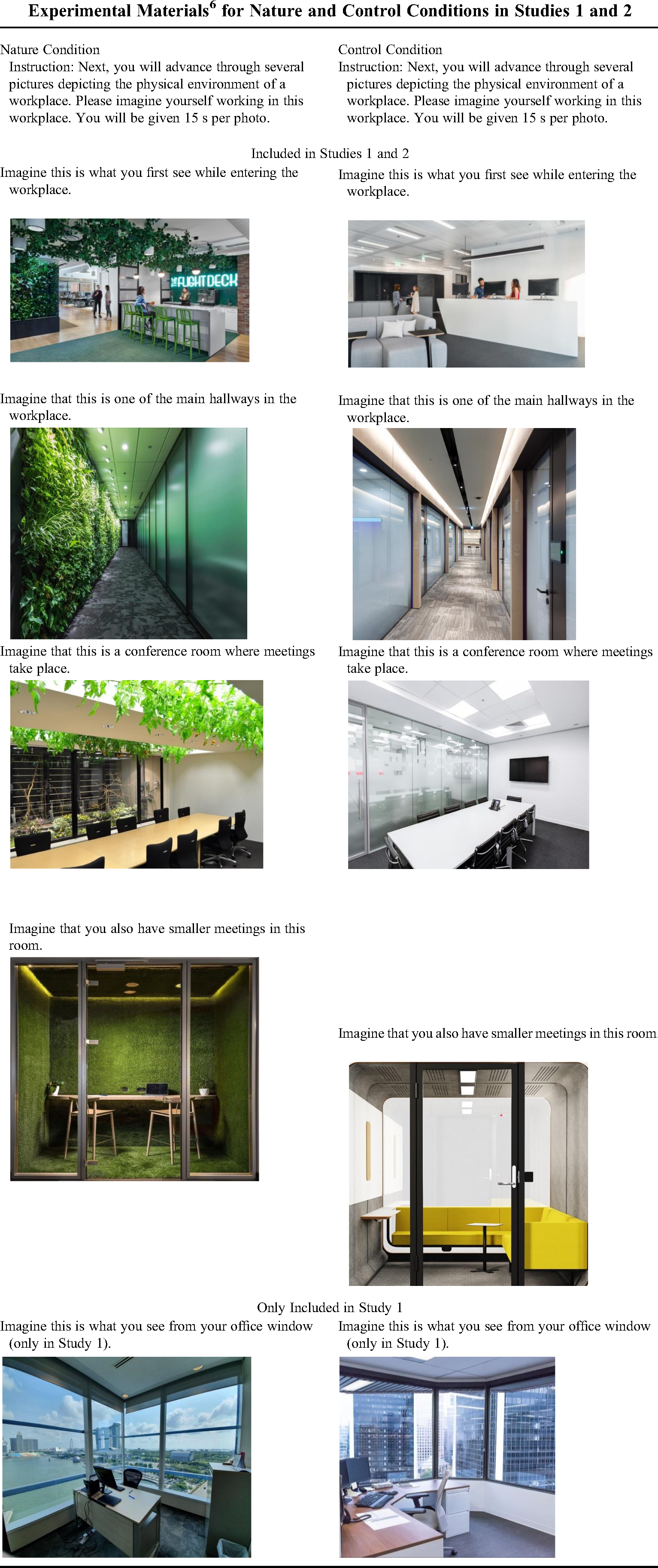
| Nature Condition Instruction: Next, you will advance through several pictures depicting the physical environment of a workplace. Please imagine yourself working in this workplace. You will be given 15 s per photo. | Control Condition Instruction: Next, you will advance through several pictures depicting the physical environment of a workplace. Please imagine yourself working in this workplace. You will be given 15 s per photo. |
| Included in Studies 1 and 2 | |
| Imagine this is what you first see while entering the workplace. | Imagine this is what you first see while entering the workplace. |
| Imagine that this is one of the main hallways in the workplace. | Imagine that this is one of the main hallways in the workplace. |
| Imagine that this is a conference room where meetings take place. | Imagine that this is a conference room where meetings take place. |
| Imagine that you also have smaller meetings in this room. | Imagine that you also have smaller meetings in this room. |
| Only Included in Study 1 | |
| Imagine this is what you see from your office window (only in Study 1). | Imagine this is what you see from your office window (only in Study 1). |
APPENDIX A2
APPENDIX B
Daily Path Analytic Results Without Control Variables (Study 5)
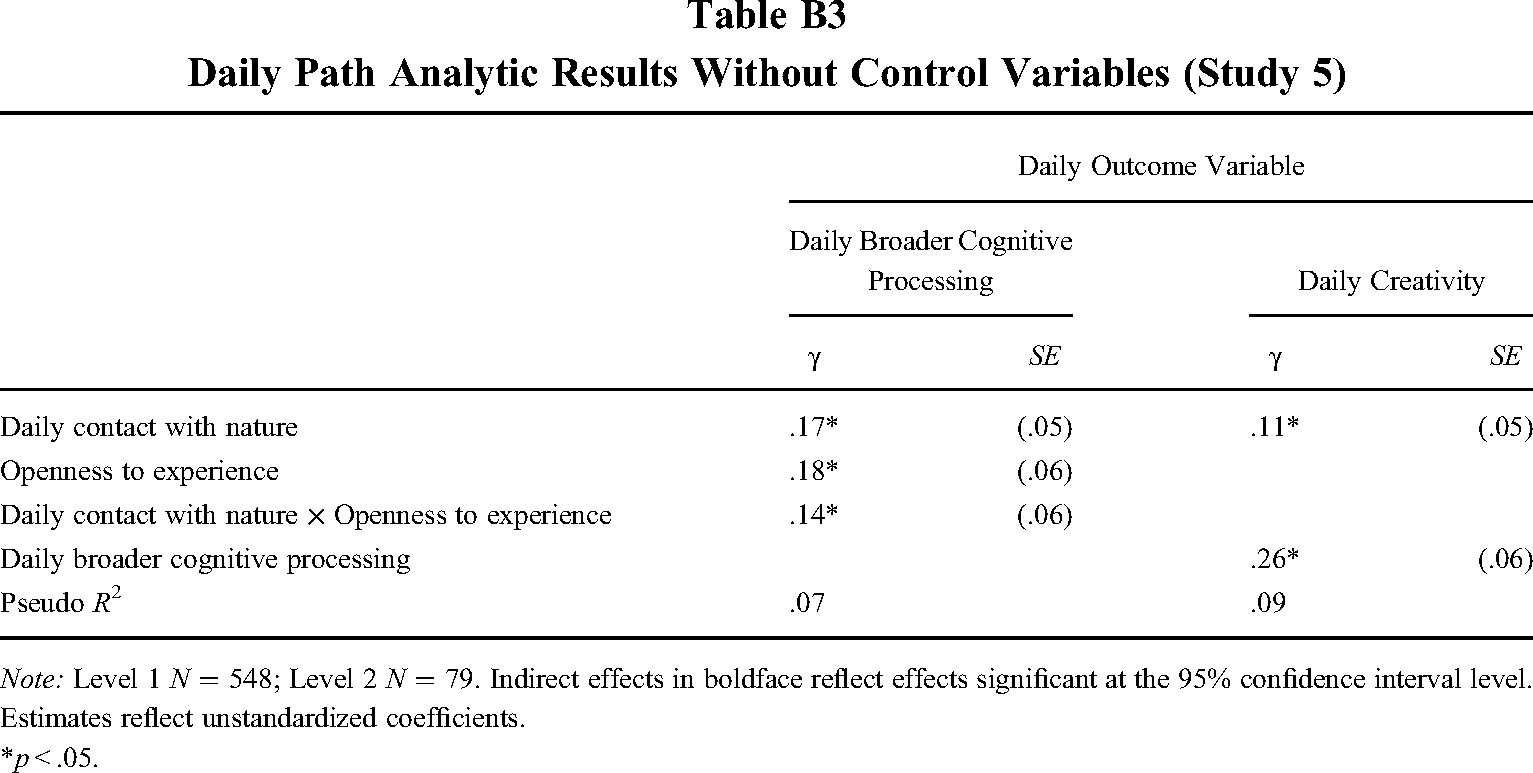
| Daily Outcome Variable | ||||
|---|---|---|---|---|
| Daily Broader Cognitive Processing | Daily Creativity | |||
| γ | SE | γ | SE | |
| Daily contact with nature | .17* | (.05) | .11* | (.05) |
| Openness to experience | .18* | (.06) | ||
| Daily contact with nature × Openness to experience | .14* | (.06) | ||
| Daily broader cognitive processing | .26* | (.06) | ||
| Pseudo R2 | .07 | .09 | ||
Note: Level 1 N = 548; Level 2 N = 79. Indirect effects in boldface reflect effects significant at the 95% confidence interval level. Estimates reflect unstandardized coefficients. *p < .05.