






Abstract
The uniformed personnel who deploy around the world provide a key service to their country and often do so by putting themselves in dangerous situations to defend peace and security for others. After serving, military veterans face a challenging transition into civilian life and workplaces. In this review, we describe the importance of understanding the extreme context of veterans’ transitions and then integrate multidisciplinary research on veterans to identify the conditions under which the transition is successful (or not). Specifically, our review identifies how and under what conditions the knowledge, skills, and abilities of veterans translate to the civilian workforce, the employment outcomes (successes or failures) seen during the transition to the civilian workforce, and how employment opportunities increase the wellness of veterans. Throughout the review, we illustrate how incorporating the experiences of veterans can advance management theory on social identity, stigma, unemployment, intersectionality, and careers. In parallel, we highlight how management theory can help contextualize and enrich the study of veterans. We also distill insights from research into tools and practices that can improve civilian employment outcomes for veterans. Finally, we discuss an agenda for management research that enhances the experience of veterans and management theory by complicating the process of stigmatization and its resolution, positively reframing social identity, learning from veteran employment programs, exploring intersectional identities of veterans, and including veterans in the study of careers.
A “veteran” is defined as “a person who served in the active military, naval, or air service, and who was discharged or released therefrom under conditions other than dishonorable” (United States Department of Veterans Affairs, 2019: 151). There are currently over 18 million veterans in the United States, which accounts for about 6% of the population (Schaeffer, 2023). Worldwide, there are veterans in every country as well as a United Nations Peacekeeping force consisting of over 60,000 uniformed personnel (United Nations Peacekeeping, 2025). Uniformed personnel who deploy around the world provide a key service to their country, often at great personal cost, while serving in uniform (Derefinko, Hallsell, Isaacs, Colvin, Salgado Garcia, & Bursac et al., 2019; McNally & Frueh, 2013). When veterans leave the armed forces and return to civilian life, they must transition to some portion of the civilian workforce. To date, research on the workplace experiences of veterans is scattered and remains on the periphery of management and organization theory. This presents a social and conceptual problem: Military veterans have unique and valuable skills yet frequently struggle with their social transition into civilian life and workplaces (Gonzalez & Simpson, 2021). It is a conceptual problem because we lack a coherent understanding of why this occurs and what might be done about it. This review utilizes management theories that are relevant to the study of veterans’ transitions to the civilian workforce to understand this process. In doing so, we work to synthesize the disparate research on veteran experiences in the workplace to identify the conditions that enable or impede successful transitions to the civilian workforce and its workplaces.
Specifically, we draw upon social identity theory, which describes how people derive their personal identity from the social groups of which they are a part (e.g., veteran status, race, sex; Hogg & Abrams, 1988), to help understand how veterans experience transitioning to civilian employment and the ease with which they do so. Research on veterans also helps advance social identity theory by illustrating how the “extreme case” of military service reveals complex dynamics that are not as readily evident in more prosaic settings (Hällgren, Rouleau, & De Rond, 2018). For example, the simultaneous positive and negative stereotypes regarding veterans illustrate novel dynamics that affect stigma (an attribute that is discrediting; Goffman, 1963) and social identity in ways that impact veterans’ employment outcomes and wellness (National Veterans Foundation, 2016). As such, we examine how negative stereotypes can lead to stigma (Goffman, 1963) and positive stereotypes may act as a resource that aids career change into the civilian workforce (Cha & Roberts, 2019). We also explore prior research that reveals less common processes when veterans reject positive stereotypes, which also affect workplace outcomes and wellbeing.
We use social identity and stigma theories to guide our review and enrich our understanding of extant veteran research. This allows us to better conceptualize why and under what conditions veterans make successful transitions to civilian work, or fail to do so. We further our conceptual contribution by incorporating additional theory on identity-based resources (e.g., positive stereotypes; Cha & Roberts, 2019; Hobfoll, 1989). Applying these theories provides greater insight to advance management theory. Four major themes emerged from our review. First, we detail research that has examined the (unique) individual knowledge, skills, and abilities (KSAs) of veterans (e.g., leadership, resilience during challenges, ethics) along with the sources of personal struggle (e.g., loss of identity, stigmatization). Prior research has demonstrated the importance of skill and occupation match between military and civilian roles for successful transitions from military life to the civilian workforce (Gonzalez & Simpson, 2021). We further elaborate upon this research by showing how veterans’ work duties correspond to the underlying skills required of civilian work, and explain conceptually how veterans can make use of and articulate these skills (e.g., mobilize their identity resources). We then discuss how organizations can create conditions more conducive to eliciting these skills (e.g., selection). Next, this review identifies the factors that facilitate employment success for veterans as well as barriers which lead to employment failure for veterans. We illuminate career transition interventions, training programs for veterans, and veteran-friendly human resource (HR) practices that facilitate employment success. This review also identifies barriers, such as negative stereotypes, stigma, traumatic experiences resulting in post-traumatic stress disorder (PTSD), and perceptions of misfit. We detail research that illustrates how veterans overcome stigma and identity threat by emphasizing the veteran identity as a resource along with the unique KSAs of veterans that will be valued in the civilian workforce (Cha & Roberts, 2019). We specifically point to how veterans may differ from non-veterans in managing complex identities and stigma (Caza, Moss, & Vough, 2018). Managing stigma and (negative) stereotypes are especially important in interactions with civilian human resource professionals during interviews and hiring processes (Ford, 2017; Sakib et al., 2024). Last, we summarize and expand upon research on employment and its relationship to veteran wellness. We contextualize PTSD in terms of disrupted social identity and stigma. We show how veterans process these circumstances to provide insights for other job seekers and high stress careers.
We first review management theories that inform veterans’ identity and transition to civilian employment, describe why general management researchers (and management theory) may benefit from studying veterans, then review the research on veteran transitions to date, and close with a forward-looking agenda for management research and practice. Given the inherently multi-disciplinary nature of the topic, we followed Cronin and George’s (2023) approach to integrative reviews that includes a structured keyword search, searching for other disciplines studying the topic, identifying the most current and significant conclusions, and evaluating the importance of the findings. Our objective was to synthesize the current state of knowledge and bring together the different conversations on veterans and transitions into civilian employment. We first searched top management and medical/health services journals for veteran-related research (see Appendix A in the online supplemental material for a list of journals) and then, given the nature of research on veterans, turned to the ABI/Inform, ProQuest, PubMed, and PsycInfo databases. To conduct the search, we used Boolean logic and simple operators to search for terms related to veterans (i.e., veteran OR veteran*) and employment (i.e., work*, employ*, or job*) or transition. Our search criteria and journal lists were also shaped by consulting with veteran organizations and Veterans Health Administration physician researchers. These searches were restricted to peer-reviewed journal articles written in English. Two members of the research team then went through with initial exclusion criteria, namely that the article was focused on veterans in the workplace. We also supplemented our search of peer-reviewed research with relevant reports from the Department of Labor and the Department of Veterans Affairs (VA). This yielded an initial set of 1,550 articles. We screened these for relevance and only included articles that were related to veterans in the workplace as an integral part of their scope. This resulted in 145 articles comprising our review (see Appendix B in the online supplemental material for the articles included in our review). There is evidence that interest in veterans and their career transition is growing, as the number of articles on this topic has increased in the most recent decade. See Figure A1 in the online supplemental material for the number of articles published over the past decade overall, and broken down by the four main themes from our review of the literature.
Management research routinely samples and presumes a civilian workforce. Overlooking veterans means that our theories may lack the sophistication and nuance to address the complexity of identity and stigma in extreme contexts like the military. In doing so, our existing research on careers, intersectionality, and both unemployment and underemployment may fail to capitalize on the novel dynamics veterans present. We also examine how (research on) veterans can benefit from insights from management theory. Thus, we hope our review of veteran literature will stimulate the expansion of theory and research pertaining to social identity, stigma, careers, intersectionality, unemployment, and underemployment.
Management Theories Informing Military to Civilian Transitions
According to social identity theory, people derive their identity and sense of self from the groups to which they belong (Hogg & Abrams, 1988). However, research on veterans shows that the process of identity varies greatly from one veteran to another. In this section, we demonstrate how studying veterans enriches social identity theory by highlighting identity complexity and illuminating how an identity can simultaneously generate both positive and negative consequences (Ben-Zeev, Corrigan, Britt, & Langford, 2012; Corrigan et al., 2002; Dickstein, Vogt, Handa, & Litz, 2010; Kleykamp, Schwam, & Wenig, 2023; Tanielian & Jaycox, 2008). Figure 1 depicts the key themes from our review and the ways in which management theory can be fruitfully applied to veteran transitions (e.g., insights from human resource management on how to signal a veteran-friendly workplace or otherwise create conditions that enable veterans to translate their KSAs) as well as ways in which studying veterans advances management theory. Effectively translating KSAs makes it more likely that veterans successfully transition to the civilian workforce, promoting meaningful employment and wellness. The wellness experienced through employment should lead to increasing veteran confidence in their ability to translate their KSAs into continued career success over time.
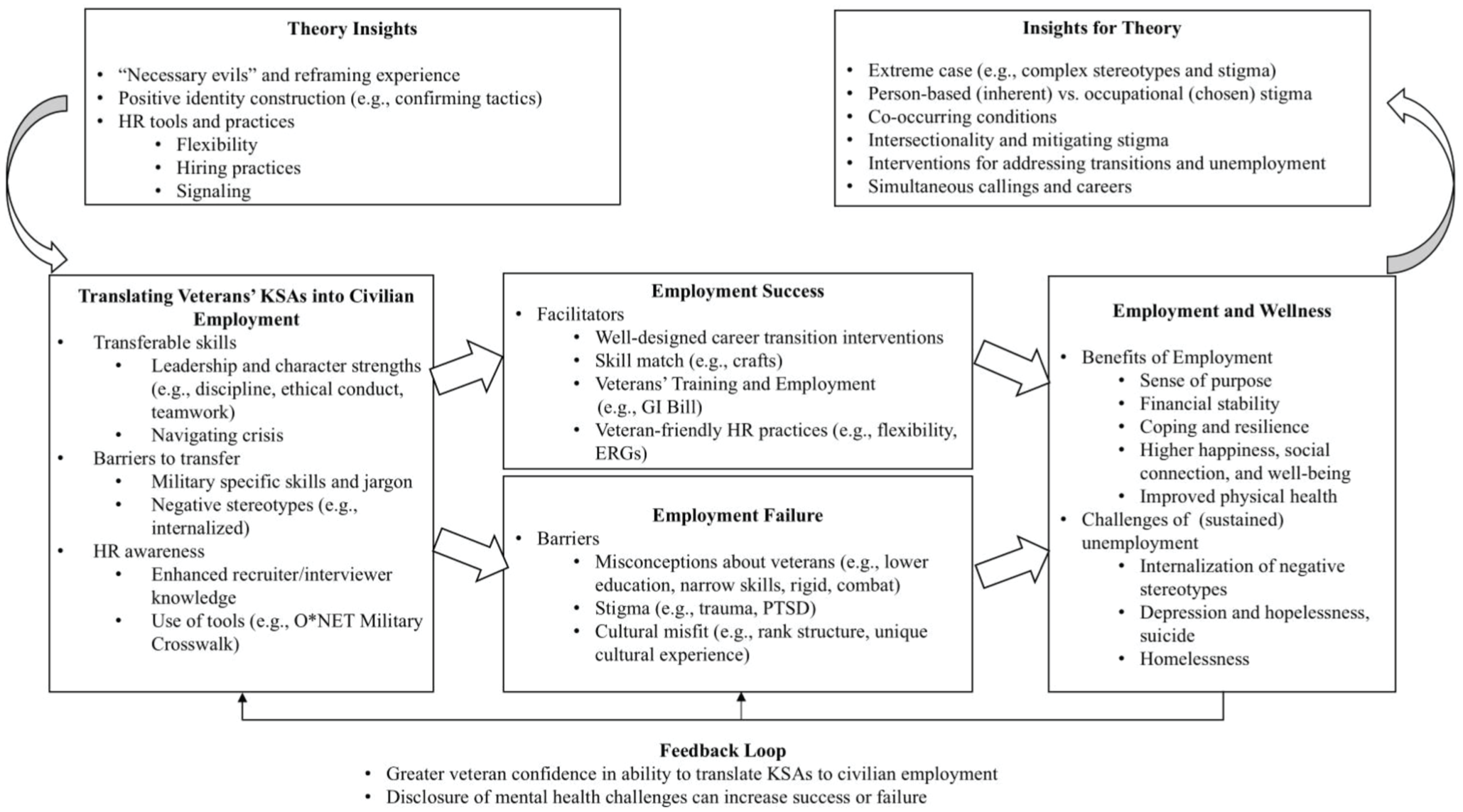
How Management Theory Both Informs (and Is Informed by) the Study of Veterans’ Transitions to a Civilian Workforce
Military identity often fosters pride, camaraderie, and resilience, but it can also contribute to isolation, stigma, or difficulty transitioning into civilian life. This is a duality that demonstrates social identities as not uniformly beneficial or harmful but rather complexly context dependent. Veterans’ experiences therefore extend social identity theory by showing how identity strength and salience can both protect wellbeing and/or exacerbate challenges, offering a nuanced understanding of the ambivalent nature of group membership. Dolan, McCauley, and Murphy (2022) studied military veterans’ identity post discharge and identified key factors that affect the salience and prominence of an individual’s military/veteran identity. We briefly summarize these factors because they are critical to understanding identity formation for veterans, and shape their transition to the civilian workforce.
The Formation of Post-Discharge Identity for Veterans
Dolan et al. (2022) identify key factors related to military experiences and continuing connection to the military infrastructure, along with personal characteristics and stereotypes that influence veterans’ identification with the military. First, specific aspects of an individual’s service, especially a combat or strategic role (e.g., infantry, pilots, tank crews) strengthen identification relative to support roles (e.g., medical, legal; Binks & Cambridge, 2018). The differential strength of identification is, perhaps, in part due to moral injuries from combat, such as being forced to do things they would normally find immoral—what Molinsky and Margolis (2005) refer to as “necessary evils.” These experiences also reinforce self-perceptions of veterans as different from civilians and military values as distinct and superior (Hammond, 2016; Libin et al., 2017; Ozarem et al., 2017). These perceptions can lessen respect for civilians (Grimell, 2020) and reinforce military identification. Those most attached to the military are also most likely to experience depression or PTSD, although trauma severity itself is not directly linked to identity (Lancaster & Hart, 2015). Veterans receiving health care services through the VA report stronger identification (Harada et al., 2002), as do veterans who stay connected through organizations, whereas those who do not often see the military as “just a job” (Albertson, 2019). Similarly, civilian roles resembling military work (e.g., first responders) support stronger continuing identification with the military (Brunger, Serrato, & Ogden, 2013). Personal characteristics and responsibilities also shape military identity. Men may initially retain stronger identities due to masculine stereotypes, but women who worked harder for acceptance also maintain strong military identification (Grimell & van den Berg, 2020). Veterans with less education identify with military identities more strongly than college graduates (Burdett, Woodhead, Iversen, Wessely, Dandeker, & Fear, 2013). Low self-esteem reinforces military identity, while higher self-esteem eases transition (Zarecky, 2014). Clear purpose in the form of caregiving roles can weaken military identity (Smith & True, 2014). Last, positive service memories (e.g., relationships with peers) strengthen post-service military identity, while negative ones weaken it (Hart & Lancaster, 2019). Understanding the sources of continued identification with the military as well as the barriers and facilitators to adopting new identities can lead to enhanced understanding of the interplay involving identity and stigma.
Identity and Stigma and How They Work Together for Veterans
Organizations are contexts in which individuals categorize themselves and others into social groups. Therefore, they have an impact on individuals’ social identity and self-concept (Ashforth & Mael, 1989). Such organizational identification can be beneficial or detrimental. Positive identification is grounded in positive self-regard, a sense of virtuousness, an integrated view of a multifaceted self, and personal growth (Roberts & Caza, 2025). A sense of positive identification is challenged by social identity threat—a psychological process whereby an individual anticipates devaluation and social rejection based on their group membership (Petriglieri, 2011). This can trigger negative mental and emotional consequences for those whose identity is threatened (Emerson & Murphy, 2014; Kahn, Lee, Renauer, Henning, & Stewart, 2017; Steele, 1997). One way that identity can be threatened is through stereotypes and resulting stigma. As applied to veterans Kleykamp et al. (2023: 5) note, Stereotypes do not merely shape the perceptions and behaviors of those who hold them; they can also affect the stereotyped themselves, culminating most problematically in self-stigmatization (Corrigan et al., 2002; Dickstein et al., 2010). Among veterans, the internalization of stereotypes can lead to alienation, mistrust, and suspicion (Ben-Zeev et al., 2012; Tanielian & Jaycox, 2008).
What is also distinctive about veterans is that even positive stereotypes (e.g., hero) can be viewed with unease and result in distancing and stigmatization of outgroup members (Demers, 2013).
The identity of military veterans is complex and often consists of positive and negative elements. The public similarly holds positive and negative stereotypes. The RAND Corporation (Kleykamp et al., 2023) published a report based on a nationally representative survey of over 6,000 Americans who answered questions regarding what they think about veterans. They reported the positive stereotypes of veterans as: “self-disciplined, loyal, self-reliant, responsible, practical, effective communicator, and bold” (Kleykamp et al., 2023: 6). The negative stereotypes of veterans included: “aggressive, volatile, cold, uncompassionate, unsociable, and unethical” (Kleykamp et al., 2023: 6).
Cha and Roberts (2019) note that individuals can internalize positive identity traits (and positive stereotypes) by incorporating them into their authentic personal image, and can build strong relationships, and generate innovative work. This ultimately benefits their organizations and themselves. In other words, veterans can mobilize their (positive) identity resources (e.g., positive stereotypes and identity-related insights) to confirm and elaborate the positive elements of their identities, to craft insights informed by their unique experiences, as well as challenge the negative stereotypes attributed to veterans (Cha & Roberts, 2019). Managers and organizations can concomitantly create conditions that enable and value the mobilization of identity resources.
In contrast, when veterans internalize the stigma of the negative stereotypes that are applied to their group, that can lead to a host of problems (Dolan et al., 2022). For example, it could stimulate difficulty finding and keeping civilian employment, reduce self-esteem, exacerbate negative feelings about civilians, and make establishing relationships more difficult (increasing isolation). All of these factors would make it more difficult for a veteran to obtain and thrive in high quality work after leaving the military, which makes veterans vulnerable to mental health issues (e.g., depression, suicidal ideation) as well as prolonged unemployment and even homelessness (Ravindran, Morley, Stephens, Stanley, & Reger, 2020). To this end, we turn our attention to HR and personal practices that may facilitate affirmation (self and relational practices that buffer against identity threat; Roberts & Caza, 2025) and confirmation (claiming and enacting positive identity elements; Cha & Roberts, 2019) of positive elements of a veteran’s identity, while minimizing co-occurring negative elements. Specifically, we frame the positive elements of a veteran’s identity as transferable skills (e.g., discipline, ethical conduct, teamwork) from which a company can benefit while the negative elements of a veteran’s identity present personal and interpersonal barriers to this skill transfer. Our review highlights implications for HR managers, including understanding veteran-unique identity elements, using hiring practices that allow veterans to showcase their strengths, and signaling to veterans that they are welcome.
Veterans in Organizations: A Review of the Research
Translating Knowledge, Skills, and Abilities (KSAs) of Veterans to Civilian Employment
In this section we detail the benefits of HR practitioners and veterans themselves understanding the unique KSAs of veterans to facilitate smoother and more sustainable transitions into civilian employment. In parallel, we note how veterans internalizing negative stereotypes affects their ability to translate their unique KSAs to HR practitioners to obtain employment (Gonzalez & Simpson, 2021). We apply Cha and Roberts’ (2019) work on positive identity resources and identity mobilization to help conceptualize how and under what conditions veterans make use of their identity to aid successful transitions to civilian work or fail to do so. We also integrate a conservation of resources perspective (COR; Hobfoll, 1989; Hobfoll, Halbesleben, Neveu, & Westman, 2018) to elaborate how veterans use their personal and energy resources to foster, protect, and retain resources like well-being. At the same time, COR also highlights how veterans can counteract resource losses like identity threat that are externally (i.e., by others) or internally imposed.
Recognizing veterans’ transferable KSAs not only helps align veterans with roles where they can thrive, but also supports more effective recruitment, onboarding, and retention strategies benefiting HR practitioners and their organizations. Moreover, mobilizing veterans’ identity resources grounded in their distinct experiences and strengths (e.g., leadership, teamwork, navigating crisis) can enhance organizational performance, increase diversity of thought, and build a resilient workforce capable of handling uncertainty and change. For example, military backgrounds provide leaders with political skill, the ability to quickly learn in their new leadership role’s context, and to understand how to manage impressions and adapt to new circumstances (Blass & Ferris, 2007). All of these skills can help them achieve greater job and leadership performance in corporate settings. Consistent with Roberts and Caza’s (2025) conceptual work on positive identity construction, these military experiences can provide sources of virtuousness and growth, which instill the ability to engage in self and relational affirmation to adapt to changing circumstances. Campbell, McCloy, Oppler, and Sager’s (1993) foundational and subsequent (2015) work found that military experience translates positively into a wide array of roles with a strong relational component including leadership, customer-facing work, and corporate liaison roles. Moreover, there is a significant overlap between military training and team-based training (both within- and between-team collaboration; Colegrove & Bennett, 2006) which finds that veterans perform well in team-based work. In addition, given the stressors present in the military that are not present in civilian work (Campbell & Nobel, 2009), employers can also benefit from the crisis navigation skills developed in military contexts.
To better understand how veterans can successfully integrate into the civilian workforce, research suggests that connecting to and invoking positive stereotypes can help veterans recognize and articulate their KSAs. In turn, the KSAs of veterans can activate a sense of positive identity that can aid the flexible thinking needed to translate experiences from one (extreme) context to a different context (Hogg & Abrams, 1988). As a result, positive stereotypes are more likely to be internalized to the benefit of veterans seeking civilian employment when they realize successful outcomes from them. To that end, we reviewed 44 articles with a primary focus on the beneficial attributes that are learned or developed during military service and have relevance for civilian employment. Several articles in our review presented ways to facilitate the transition from military to civilian employment by highlighting veterans’ strengths and transferable skills.
Several articles found veterans being perceived as more ethical than the general population. For example, Matthews, Eid, Kelly, Bailey, Peterson, and Laurence (2006) compared 103 West Point cadets, 141 Norwegian Naval Academy cadets, and 838 US civilians aged 18 to 21 on character strengths associated with leadership (drawing upon Peterson & Seligman, 2004). Results showed that the West Point cadets’ absolute scores were higher than either of the other two samples. Character strengths were then rank ordered and compared, and the researchers found that the military groups were more highly correlated with each other than with the U.S. civilian sample, especially in terms of honesty, hope, bravery, industry, and teamwork. Given that people associate veterans with these favorable attributes, management research on combatting stigma at work suggests that veterans could utilize the identity mobilization tactic of confirming, or behaving in ways that are consistent with positive stereotypes to show how their skills benefit organizations (Cha & Roberts, 2019).
Because veterans have been linked to virtuousness (i.e., ethical) as an aspect of their positive identity, there is further evidence that ethicality can create opportunities for veterans in specific settings including corporate governance (i.e., on the board of directors). Simpson and Sariol (2019) used a social identity theory lens to study the appointment of veterans to boards of directors. One common positive stereotype of veterans is that they are highly disciplined (Kleykamp et al., 2023). In a study of publicly traded U.S. firms that had experienced a securities class action lawsuit, Simpson and Sariol (2019) found that companies which had experienced such a crisis were more likely to appoint directors with military experience. Specifically, the study measured a successful military background as defined by being a senior grade officer (Colonel or above) or what they called “militariness” (i.e., years of military service, having graduated from a military academy, and the total number of awards visible on the officer’s most recent military uniform or as stated in their biography). That is, potential employers who observe someone with a background of a high-ranking military officer will presume the veteran’s social identity is one of high ethics due to their successful military career (Benmelech & Frydman, 2015; Grönqvist & Lindqvist, 2016; Simpson & Sariol, 2019). In other words, positive stereotypes and perceptions of veterans point to generalizable veteran KSAs (e.g., ethics, leadership skills) that apply to many forms of civilian employment.
There is also evidence that veterans can successfully highlight and gain an advantage from their specific technical job skills when pursuing positions in science, technology, engineering, and mathematics (STEM). Makridis and Hirsch (2021) found that veterans licensed in STEM fields experienced a 10% earnings advantage relative to their licensed non-veteran peers. This likely captures that STEM fields have more effective means to assess job skills and competencies (Kirkeboen, Leuven, & Mogstad, 2016). Therefore, in applying for jobs where the link between veterans’ KSAs and the civilian job’s KSAs is clear, veterans may excel and earn pay premiums (Keita, Diaz, Miller, Olenick, & Simon, 2015). Due to the clear focus on specific and valuable KSAs, veterans are more likely to see how a veteran identity may be advantageous for STEM work. This situation makes the internalization and affirmation of positive stereotypes more likely, while mitigating negative stereotypes and workplace stigma (Cha & Roberts, 2019).
Despite being viewed as possessing character strengths, leadership qualities, or specific technical skills, many veterans struggle with demonstrating how their military training aligns with civilian roles (Hardison et al., 2017; Kirchner, 2018; Kirchner & Akdere, 2017; Kirchner & O’Connor, 2018; Wenger et al., 2017). Thus, a key employment challenge veterans experience is difficulty effectively describing their KSAs on a resume or during an interview in terms that a civilian employer understands and values (Kirchner & Adkere, 2019). These challenges are exacerbated because many enlisted members of the U.S. military join right after high school and have little experience preparing a civilian resume. HR professionals also struggle to match veteran skills to civilian job requirements, creating ineffective veteran hiring and retention processes (Ford, 2017). In sum, we identify two barriers to KSA transfer: (1) using military jargon rather than civilian vernacular to describe their skills and experiences that may alienate recruiters, resulting in both lower performance ratings on job interviews (Sakib et al., 2024), and (2) these translation difficulties foreground negative stereotypes by employers or those internalized by the veterans themselves, further hindering the transition to civilian work.
Research by Sakib et al. (2024) specifically examined HR interviewers’ perceptions of veterans and provided suggestions for ameliorating veterans’ struggles in civilian interviews. Specifically, Sakib et al. (2024) provided four important suggestions to aid veterans in navigating the barriers to a successful transfer to civilian employment. First, veterans should prepare for interviews by clearly and concisely conveying how their skills are pertinent to the KSAs required for the job without over-explaining the specifics of their technical skills. Second, veterans should avoid the use of military jargon and find alternative civilian-friendly wording to explain their military work experience to civilian recruiters. Articulating their experiences in a more intelligible way to a civilian audience affirms both positive stereotypes and the value of the veteran identity. Third, veterans can capitalize on positive stereotypes that HR hiring personnel value (e.g., communication, soft skills, confidence, and professionalism) by highlighting strengths in teamwork, leadership, and adaptability—all skills that are valued in the civilian workforce (Sakib et al., 2024). This is consistent with research by Cha and Roberts (2019) which suggests that stigma can be mitigated when minorities confirm the positive stereotypes that others have about them, allowing them to display their authentic internalized identity to outsiders. In the context of civilian employment, that entails highlighting professionalism through displaying poise, respect, and self-confidence without tipping into being overly formal or arrogant (Sakib et al., 2024). Fourth, to reduce nervousness and behave consistently with positive stereotypes during the interview, veterans should practice interview questions with others to gain confidence and use mindfulness techniques to relax prior to the interview (Sakib et al., 2024). This is especially important if veterans have internalized any negative stereotypes about veterans or become discouraged during the job search process. Directly combating these negative aspects of identity with mindfulness and by recalling the positive aspects of identity (e.g., self-affirmation; Roberts & Caza, 2025) can help veterans make a more favorable impression (Cha & Roberts, 2019) during interviews.
Moreover, to aid their transition to the civilian workforce, veterans can make use of specific tools like the U.S. government’s O*NET military crosswalk to help translate their skills and experiences. The crosswalk matches veterans’ skills described in the Military Occupational Specialty (MOS) database with civilian jobs described in the O*NET database. Figure A2 in the online supplement provides representative examples of military jobs where the KSAs can be readily mapped on to civilian jobs. Tools such as the O*NET military crosswalk can help veterans illuminate the positive and relevant aspects of their military experiences and identity for civilian employment by providing realistic previews of what a job entails and their ability to meet its challenges (Roberts & Caza, 2025). Consequently, these tools are more likely to affirm positive stereotypes and reinforce positive identity for veterans (Cha & Roberts, 2019). It should also help HR practitioners recognize the transferable skills of veterans to civilian jobs through the selection process. The use of tools that aid translation of veteran KSAs should be associated with better employment prospects and enhance veterans’ abilities to effectively manage the complexity of veteran identity during interviews. HR professionals and organizations that understand the KSAs of veterans, per COR theory, provide a more welcoming environment in which veterans can more effectively navigate the stresses of an interview (Hobfoll, 1989). In other words, organizations that create conditions for veterans to foreground the positive elements of their identity when pursuing employment provide a resource for veterans that enables them to exercise their personal (e.g., positive identity) and energy (e.g., knowledge) resources to help them self-regulate, articulate their fit with the organization, and demonstrate how they will work effectively (Bakker & Demerouti, 2017; Bakker, Demerouti, & Sanz-Vergel, 2023; Halbesleben, Neveu, Paustian-Underdahl, & Westman, 2014).
Organizations can more effectively access these relevant skills and resources and minimize barriers, in part, by using structured interviews when interviewing veterans rather than unstructured interviews to ensure their validity and reliability. Structured interviews have been shown to have high predictive validity with future job performance along with maintaining fair and consistent scoring across the candidates being rated (Sakib et al., 2024).
Employment Success
In this section, we highlight the conditions under which veterans are more likely to successfully transition to civilian employment once they have secured a civilian job. Our review reveals that a combination of organizational and personal practices make transitions more likely to be successful. Specifically, HR practices that are sufficiently flexible to signal a welcoming environment and provide multiple pathways to demonstrate relevant competence and capitalize on unique skills, aid successful employment outcomes (e.g., work performance). We also highlight programs already in place that have resulted in successful transitions by military veterans into the civilian workforce.
These conclusions are grounded in 73 articles we reviewed that focused on the process of transitioning from military service to civilian employment and the conditions under which veterans are able to successfully do so. The articles reviewed assessed the initial and short-term transition from service to civilian work rather than over the life course. Prior research has attempted to measure the efficacy of governmental and other transition programs in facilitating job transitions.
Over 40,000 public and privately funded programs are designed to assist veterans by providing a range of services upon exiting the military including legal counsel, housing, finances, health care, and social networks, but employment services are the most utilized of all services during the first few months after separation from the military (Vogt et al., 2020). A large national survey found that 54% of veterans received assistance from a vocational program (Perkins et al., 2020). The survey also found that these vocational programs typically provided low-intensity services, such as the job banks utilized by 47% of respondents. However, only 12% of veterans received job placement services and 6% used career counseling. The U.S. federal government also invests heavily in employment programs for veterans, but they rarely undergo rigorous evaluation (Collins, Dilger, Dortch, Kapp, Lowry, & Perl, 2014). For example, Collins et al. (2014) describe that federal programs designed to help veterans develop job skills and find employment in the civilian workforce can be categorized as (a) general veterans’ programs, (b) programs targeting veterans with service-related disabilities, and (c) grant programs that offer supplemental assistance but may not be available to veterans in all areas. The focus of these programs is placing veterans in jobs in the civilian workforce, but they tend to lack long-term tracking of the efficacy of their placements (Collins et al., 2014). For example, the Department of Defense SkillBridge program allows service members to complete an apprenticeship with a civilian employer before their separation from the military. This allows them to acclimate to a civilian work environment while gaining new KSAs, but it does not guarantee stable long-term employment (Davenport, Morgan, Balotti, Aronson, & Perkins, 2024). These programs may provide fertile ground for studies assessing what works and what does not in major career transitions. Specifically, more work is needed on how varying programs and interventions help veterans mobilize positive elements of their identities and confirm them by finding positions that are well-suited to those elements or crafting their work around those elements. In addition, further research exploring the programs supporting veterans could provide insights into the underexplored domain of unemployment research (re-employment) with an understudied population (Wanberg, 2012). Moreover, veterans benefit from skill transfer differently in various industries. For example, the Military Bearing and Fitness job criteria identified by Campbell et al. (1993) associated with military jobs are highly relevant to (and desirable in) customer-facing (e.g., sales) and corporate liaison (e.g., corporate recruiter) roles in the civilian sector.
When assessing employment success for veterans leaving the military, research has clearly shown that programs supporting veterans training, such as the GI Bill, have led to more employment success. Having access to the GI Bill, which provides veterans with funding to attend college, made a substantial difference in the educational attainment of those veterans who used their educational benefits post-military versus those who did not. The era of service also mattered because the GI Bill funding was available from the end of World War II forward, except for the years from 1955 to 1965 (Kofoed, 2020). The data show that the GI Bill has made education attainable, and this has resulted in higher earnings over the life course for veterans who used their GI Bill to earn degrees compared to veterans who did not (MacLean & Elder, 2007). Furthermore, veterans who had achieved officer status in the military also had significantly greater mobility and achievement in the civilian workforce compared to those who did not (MacLean & Elder, 2007).
Prior research also suggests how organizations can signal that they are friendly to transitioning veterans, especially those who might be multiply stigmatized. Kalev and Dobbin (2022) describe how signaling workplace flexibility can make it more welcoming of (intersectional) diversity by addressing non-traditional needs for scheduling and remote work that allow employees to address their personal needs (e.g., health care). Future work examining flexible workplace practices consistent with personal identity mobilization strategies like job crafting (Cha & Roberts, 2019) can help illuminate how organizational and individual practices interact to affect veteran employment success in the civilian workplace.
The findings from Kalev and Dobbin (2022) are also consistent with work conducted by Ford (2017) which assessed the role of human resource development practitioners in helping veterans successfully transition to the civilian workforce. Ford (2017) suggests a strategic talent management approach to attract, develop, and retain veteran talent. For example, attracting talent includes having employee resource groups and mentoring programs for veterans to help them succeed once they have a civilian job. Developing talent includes onboarding practices, feedback mechanisms, leadership development initiatives, and using analytics and metrics to track progress. Finally, retaining talent involves assessing the effectiveness of programs using metrics, setting goals, providing feedback and performance assessments (Ford, 2017) as well as other support, such as training (Hammer, Brady, & Perry, 2020).
Moreover, veterans are likely to thrive in civilian workplaces that focus on competencies. The theory of performance developed by Campbell et al. (1993) describes eight factors that encompass the key competencies in all jobs. These factors include job specific task proficiency pertaining to the technical tasks of a job, non-job-specific task proficiency which includes tasks that one must perform but are not specific to their job, written and oral communication proficiency, demonstrating effort, maintaining personal discipline, facilitating peer and team performance, supervision/leadership, and management/administration. A broader framing of competencies creates space for military experiences and skills to “fit.” Focusing on competencies can also reduce identity threat (e.g., activate negative stereotypes held about and by veterans) and create identity safety (Emerson & Murphy, 2014) that affirms positive identity elements and enables a growth mindset and sense of efficacy (Roberts & Caza, 2025). This will make it more likely that veterans will thrive in civilian jobs. In sum, the research shows that with some thoughtful effort on both the part of the veterans making the workforce transition and the employers in the civilian workforce, it is possible to unlock the many benefits of veterans in the civilian workforce.
Employment Failure
In this section, we offer a contrast to the section above by capturing instances where the negative associations and stereotypes of a veteran identity held by HR practitioners (and colleagues) can impede a successful transition into the civilian workforce (based on 41 articles reviewed). To do this, we draw upon identity theory. We highlight the multifaceted nature of a veteran’s identity and describe how non-veteran attitudes along with organizational practices can shift the balance of perception and transition from positive (highlighting the skills and competencies of veterans identified in the prior section) to negative (reinforcing negative stereotypes and stigma against veterans).
Veterans leaving the military commonly experience stereotyping from non-veterans and these stereotypes can be stigmatizing (Goffman, 1963). Survey respondents saw post 9/11 veterans as valuable assets, but also believed they had lower education levels than non-veterans (Jordan, 2012). In addition to these perceptions, veterans experience similar levels of stigma and bias in line with marginalized identities such as individuals with disabilities (Stone & Stone, 2015) or ethnic minorities (Daley, 1999). Non-veterans tend to focus on the veteran in positive terms as a moral agent. However, this also causes non-veterans to simultaneously view veterans as unfeeling (Shepherd, Kay, & Gray, 2019). Barriers to veteran transition include other forms of discrimination and stereotyping (Ward, 2020), specifically the tendency of non-military civilians to interpret military veterans’ training as consisting of only combat-related skills. This gap in understanding is widened by fewer Americans serving in the armed forces, along with differentiation between each of the United States’ branches of service (Davis & Minnis, 2017).
The persistent association between military service and combat is a barrier to successful transition to civilian employment. This can be stigmatizing for combat and non-combat veterans alike. For non-combat veterans, such as financial managers, paralegals, or HR specialists, it creates stigma among civilians that discredits these veterans’ work experience. Stigma aside, these veterans very closely match the experience and skills of their non-veteran counterparts in the civilian workforce (Goffman, 1963). For combat veterans, it is also stigmatizing as veterans are associated with PTSD which many civilians fear will be associated with suicidal or violent behavior (National Veterans Foundation, 2016) in the workplace.
It is important to note that only one third of military jobs are associated with combat. McGrath (2007: 79) specifically documents “At the operational level, a third of the Army is found in units designed to fight the enemy.” This leaves 67% of the military workforce in support roles including medicine, logistics, and administrative units that provide the resources for completing combat missions (McGrath, 2007: 79).
When studying reasons for employment failure among veterans, Sakib et al. (2024) alluded to cultural misfit as a challenge for veterans. More specifically, HR managers identified the weaknesses of veterans in interviews as ineffective communication and translation of the technical skills they acquired in the military. If veterans carry that forward into a civilian job and use military jargon that civilians do not understand, their colleagues may think of them as being a poor fit for that work setting because of the breakdown of communication.
Research on the transferability of skills between military service and civilian employment has attempted to address the stereotypes and stigma that inhibit employment transitions and lead to failed transfers. To that end, Mangum and Ball (1989) conducted foundational work on skill transfers from different forms of military service to civilian work post-Vietnam War. Male veterans who served in skilled crafts and repair roles had the highest levels of skill transfer, while combat arms roles had the lowest. However, women saw the lowest transfer percentage in the skilled crafts and repairs while they saw the highest in administrative and medical roles (Mangum & Ball, 1989). In their previous study, Mangum and Ball (1987) observed that the probability of skill transfer between military training and civilian employment is on par with proprietary business colleges and vocational institutes. Subsequent work also found that military training was beneficial and increased civilian wages depending on education and race. Black and Hispanic veterans, as well as high school dropouts, experienced a wage benefit, but White college graduates suffered a wage penalty (Bryant, Samaranayake, & Wilhite, 1993).
Assisting the veteran transition process also serves to benefit other marginalized identities due to the diverse backgrounds of veterans (Bryant et al., 1993). In fact, intersectionality research suggests that veterans, including those with disabilities, are sometimes preferred over non-veterans for employment (Ameri, Kurtzberg, Schur, Adya, Colella, & Kruse, 2025). This shows how positive reactions to some identities (e.g., the positive elements of veteran identity) can mitigate the stigma that is associated with other identities (e.g., disability; Ameri et al., 2025). Although the intersectionality research including veterans is in its infancy, these findings suggest that it would be promising for intersectionality research to examine veteran status as a means of mitigating other forms of stigma (e.g., race, sex, sexual orientation) in employment (Cooney, Segal, Segal, & Falk, 2003). More research is also needed on specific organizational practices (e.g., pre-veteran messaging, employee resource groups) that can create the conditions for more positive interpretation of veteran identity to overcome stigma in a civilian workplace. Next, we revisit the value of specific interventions on veteran employment and wellness.
The Relationship Between Employment Opportunities and Wellness of Veterans
In this section, we explore how both military experiences and subsequent civilian employment successes and failures (e.g., unemployment, underemployment) ameliorate or reinforce negative stereotypes and stigma of veterans. These outcomes can affect the overall wellness of transitioning veterans. The research reviewed further suggests that these dynamics can become self-reinforcing in ways that strengthen or weaken positive veteran identity.
The wellness of veterans in the workplace is often precarious yet essential to long-term career success. The extreme context of their military experience heightens the tenuous nature of wellness and points to necessary supports and interventions to ensure mental and physical health. By calling attention to these dynamics out of necessity, it benefits management research on mental health and wellbeing along with interventions to promote it. Stable employment provides veterans with income, daily structure, sense of purpose, social connectedness, and improved mental health outcomes (Drake & Wallach, 2020; Wanberg, 2012). A lack of stable employment undercuts veterans’ wellness driven from their sense of self-esteem and worth, in part because it amplifies the internalization of negative aspects of their veteran identity (Corrigan et al., 2002; Demers, 2013; Dickstein et al., 2010). From a conservation of resources perspective (Hobfoll, 1989), unstable employment means veterans have fewer conditional resources and must exert personal and energy resources to combat negative elements of their identity. This leaves them with fewer resources to successfully pursue or succeed in employment. The prevalence, persistence, and impact of poor wellness for veterans moving to civilian work was the focus of 28 of the 145 articles in our review and spans multiple eras of service (from World War II onward). The focus on veteran wellness at work is primarily, although not exclusively, represented by descriptive empirical work in medical and health services journals. This work contains promising insights regarding interventions that can shape identity, reduce stigma, and aid employment transitions (like those needed by the unemployed; Wanberg, 2012).
Bond, Al-Abdulmunem, Ressler, Drake, Davis, Meyer, et al. (2022) evaluated an employment intervention (a National Career Coach Program, with a 4-day skills seminar and up to 18 months of job coaching by phone or other remote means) for veterans transitioning from the military. They found that participants experienced a greater likelihood of sustained civilian employment, greater earnings, and greater improvements in physical and mental health than participants assigned to standard employment services. This is an encouraging intervention as management research on (un)employment both lacks rigorous studies of interventions to reduce unemployment yet finds that employment is positively related to physical and mental health (Wanberg, 2012). As we show next, this is especially true for people who are chronically unemployed due to health conditions and substance abuse.
The Individual Placement and Support model (an educational intervention and ongoing access to an employment specialist) has been demonstrated to be effective (e.g., higher rates of full-time employment, higher earnings) in studies of otherwise persistently unemployed veterans with various health conditions including PTSD and substance abuse disorder (Davis et al., 2018; LePage et al., 2020; Ottomanelli, Barnett, & Goetz, 2014; Resnick & Rosenheck, 2007). Abraham, Chang, Van, Resnick, and Zivin (2021) found that among veterans with mental health and substance use disorders, employment predicted lower health care utilization over time (at 1- and 5-years post-discharge). In contrast, other approaches offered by the Veterans Health Administration have primarily focused on transitional employment opportunities designed to improve veteran resumes for full-time civilian employment. These programs are typically reserved for veterans located within a specific community or veteran medical center and focused on veterans without college degrees. These roles primarily pay minimum wage and present limited success in assisting veterans to obtain permanent community jobs once they have progressed past the transitional employment phase (Abraham, Yosef, Resnick, & Zivin, 2017; Davis et al., 2019; Penk et al., 2010). However, the Veterans Readiness and Employment (VR&E) Program has had greater success, with a 73% employment rate, 78% rate of jobs that match or somewhat match their VR&E training plan, a median annual individual income of $81,000, and a 96% satisfaction rate (Keenan, 2024). The Veterans Health Administration has also used career counselors who interact with a veteran on a regular basis. These programs are designed to produce civilian employment and, in turn, wellness. However, the longer a veteran is in makeshift and transitional roles, the more likely they become stigmatized in the labor market, begin to self-stigmatize, and become discouraged (Goffman, 1963; Trzebiatowski, Wanberg, & Dossinger, 2020).
Effective interventions to make civilian employment more attainable and sustainable are critical because veterans experience higher unemployment rates than their civilian counterparts when they first transition out of the military. For instance, Castro and Kintzle (2017) found that over 80% of post-9/11 and 67% of pre-9/11 veterans reported that they did not possess a job when they left the military with nearly one-third of post-9/11 veterans remaining unemployed for more than 6 months before starting a civilian job. Interventions that limit the amount of time a veteran spends unemployed are essential, because longer periods of unemployment are associated with greater stigma, internalization of negative stereotypes, and worsening wellness. The longer unemployment lasts and the more job searches fail, the more likely veterans are to become discouraged (Wanberg, 2012). Veterans also face underemployment. Underemployment for veterans occurs when their civilian job after exiting the military does not require the skills, education, or leadership experience they have acquired during their service. In essence, a veteran can end up in a position that underutilizes their skills (McKee-Ryan & Harvey, 2011). Veterans experiencing underemployment commonly report lower earnings compared to peers whose jobs better match their qualifications (Auman-Gooding, 2024), and they also show elevated risks of job turnover, lower job commitment, and worse mental health outcomes such as depression or anxiety in addition to lower wellbeing (Davenport et al., 2024). Consistent with research on underemployment, veterans face challenges integrating into the workplace even when a job matches their skills and experience. HR may provide support and job crafting (i.e., tailoring programs to their unique skills) for the employment to be lasting and meaningful (McKee-Ryan & Harvey, 2011).
In addition to threats to wellness via lack of employment opportunities, veterans who have been exposed to combat experience higher threats to their overall wellness than their civilian counterparts. These include high rates of mental health disorders (e.g., traumatic brain injury [TBI], PTSD), physical health comorbidities, and difficulties with community integration (Merritt, Jurick, Crocker, Keller, Hoffman, & Jak, 2020). In a 2-year study of transitioning veterans, employment was positively correlated with improved health outcomes—improved mental health and reduced depression—as well as improved financial wellness (Bond, Al-Abdulmunem, Ressler, Gade, & Drake, 2022). Although typically not incorporated into management research on unemployment, the findings on veterans suggest that it is especially important to utilize well-designed, timely, and effective interventions. These interventions aid swift and durable transitions to civilian employment and avoid especially damaging effects on wellness. Given the complexity of their experiences and the often co-occurring health conditions, veterans represent a different population relative to most people experiencing unemployment.
Due to the nature of military service, especially combat experiences, many acquire mental and physical health complications which persist after they depart the military (Blore, Sim, Forbes, Creamer, & Kelsall, 2015; Chandrasekaran, 2014; McNally & Frueh, 2013; Oster, Morello, Venning, Redpath, & Lawn, 2017; Stern & Minnis, 2017). One study of 9,000 recently separated veterans found that 53% reported chronic physical health conditions and 33% reported chronic mental health conditions (Vogt et al., 2020). Tsai and Rosenheck (2016) found that the severity of observed disabilities has increased over time. These represent substantial concerns given that 4.7 million veterans receive compensation from the Department of Veterans Affairs (VA) for at least one service-connected disability and that the unemployment rate is especially high among veterans with service-connected disabilities, an amplifying effect of multiple stigmatized identities (Goffman, 1963). Across veterans of all conflict eras, Prokos and Cabage (2017) found that the percentage of labor force participation decreased as VA disability ratings increased. Similarly, research has documented that forms of intersectionality (i.e., having multiple stigmatizing identities at the same time; Crenshaw, 1989) are associated with experiences of social exclusion and harassment (Clomax et al., 2024).
Difficulty securing employment is associated not only with worse mental health and wellness, but greater risk of suicide (Wanberg, 2012). When unemployment is long-term, it is more stressful and stigmatizing, which makes it less likely that subsequent job applications will yield call-backs (McAllister, Mackey, Hackney, & Perrewé, 2015; Trzebiatowski et al., 2020). Specifically, veterans recently leaving military service had a higher likelihood of suicide death, especially those with less education (Ravindran et al., 2020). Ravindran et al. (2020) identify difficulty finding employment along with the associated psychological and financial stressors as playing a key role in higher suicide rates for veterans with lower education (Ravindran et al., 2020). Veterans die by suicide at a higher rate than non-veterans, with the age- and sex-adjusted suicide rate among veterans 57.3% higher than the same rates among non-veteran U.S. adults (Office of Mental Health & Suicide Prevention, 2022). When veterans have difficulty obtaining stable employment, they are at risk of hopelessness, internalizing the negative aspects of their identity including stigma (Corrigan et al., 2002; Dickstein et al., 2010), and possibly even homelessness (Ravindran et al., 2020).
Prior research establishes that interventions which produce civilian employment can enhance veteran wellness whereas factors inhibiting employment produce ill-being and co-occurring conditions. There is a small set of studies that also suggest that wellness (or lack thereof) can have mixed effects on employment. Pu, Roth, Thatcher, and Nittrouer (2023) found that when veterans disclose or provide cues regarding their PTSD on social media, it affects their employability. These social media cues are stigmatizing in terms of lowering task and contextual (e.g., organizational citizenship behavior) performance expectations and increasing suspicion due to perceptions of peril. However, disclosure of some forms of ill-being (e.g., disability) is not always negative for veterans. A recent study by Ameri et al. (2025) found that the veteran identity enhanced the employability of disabled people (e.g., PTSD) as opposed to non-veterans in customer service roles. Ameri et al. (2025) found through an experiment that interviewers felt veterans were more employable and trustworthy which resulted in higher ratings in interviews. Qualitatively, participants said companies should hire veterans because veterans take their work seriously, are good for the company image, and because “we owe them for their service” (Ameri et al., 2025: 21). These examples illustrate how positive stereotypes regarding veterans can overcome stigma. We now turn our attention to future research directions for veterans.
Future Directions for Research
In our review we have proposed the benefits to management theory from studying veterans and their transition from the military to the civilian workforce. We believe veterans are conceptually valuable as examples of an extreme case that can test the limits of extant theory; in this case, the extreme aspects of military service, military organizations, the complexity of identification, and contradictory stereotypes and stigma. We further elaborated the antecedents of the strength and intensity of veterans’ identification with the military. This review yielded four interrelated themes regarding transitions from the military to civilian employment: translating KSAs of veterans to civilian employment, employment success and employment failure of veterans transitioning to the civilian workforce, and the resulting relationship between employment opportunities and veteran wellness. The relationships between each of these themes are summarized in Figure 1.
The social identity and stigma informed lens we used to contextualize research on veterans in the civilian workforce helped make sense of the findings on how to translate the KSAs of veterans to the civilian workforce, harnessing the potential of veterans in the civilian workplace, and the wellness of veterans. In the next section we turn to how research on veterans and veteran transitions to civilian employment advance theory on stigma, social identity, unemployment, intersectionality, and careers.
Complicating the Process of Stigmatization and its Resolution
Theory on stigma captures the processes through which stereotypes are primed and influence thoughts about and actions toward others (Goffman, 1963). Beyond a single stigma, Goffman (1963) notes double stigmas, but it has been relatively underexplored. The complexity of veterans who experience multiple stigmas holds promise for advancing theory on stigma. For example, Ameri and colleagues’ (2025) recent work suggests that the complexity of stereotypes surrounding veterans (i.e., positive and negative) can help offset or counteract other stigmatized identities (e.g., disabilities). Past research involving mixed stereotypes has focused on race, age, dialect, and gender prejudice (Fiske, Cuddy, Glick, & Xu, 2002). Fiske et al. (2002) proposed four categories of out-groups as functions of warmth and competence (low warmth and low competence, low warmth and high competence, high warmth and low competence, high warmth and high competence) with each having different implications for in-group prejudice and stigmatization. For example, Fiske et al. (2002) suggest that for noncompetitive groups (e.g., elderly people) the positive stereotype of warmth acts jointly with the negative stereotype of low competence to mitigate prejudice. In contrast, for competitive out-groups (e.g., Asian Americans) the positive stereotype of their competence justifies their work status but acts jointly with the negative stereotype of low warmth to justify the in-group’s prejudice against them. Veterans represent an interesting extension of this framework because they can be viewed as high or low competence and high or low warmth depending on their role and the perceivers’ prior experiences. The complexity of perceptions presents opportunities for research on how stigma manifests and can be mitigated.
While some stigmas are about groups of people, there are also stigmas about occupations. Stigmas about people (e.g., disability, gender, race, religion, and sexual orientation) are characteristics of the person, while veteran status is something the person chooses to associate with (i.e., joining the military). Exploring the differential effects of chosen versus ascribed stigma presents an opportunity to advance stigma theory and identify a broader range of stigmatizing occupational features along with how they differ from (or resemble) stigma from personal characteristics. Occupational stigma research looks at “dirty work,” but those roles typically do not have a co-occurring glorified stereotype to them (Ashforth & Kreiner, 1999). For dirty work, positive perceptions are usually generated by the people doing the work through a process of reframing, recalibrating, and refocusing (Ashforth & Kreiner, 1999), or through managerial interventions to remove the negative taint from the work (Ashforth, Kreiner, Clark, & Fugate, 2007). The military is not considered a traditional dirty job, but it does have elements of dirty work, in addition to the potential for admiration. Research on veterans could help enlarge theories of dirty work to encompass circumstances where external evaluations of an occupation are conflicting or ambivalent, and how members of the occupation make sense of the complexity.
Transitioning from military to civilian work can also activate a sense of identity threat as veterans attempt to assimilate to a new organizational environment. Identity salience and identity threat (Petriglieri, 2011) occur when individuals experience problems and stereotypes pertaining to one or more stigmatized identities, such as being a war veteran (Hogg & Abrams, 1988). National Veterans Homeless Support states that it is important to mitigate the stereotypes about mental health with (a) education discussing the realities of living with mental health conditions, (b) open conversation to allow veterans to share stories and hosting mental health awareness events, and (c) compassion and empathy because such a culture will allow people to feel understood and not judged (Taylor, 2023). Future research should explore whether these tactics of stereotype mitigation change civilian attitudes, reduce or re-channel conflict, and enhance veteran wellness. Relatedly, future research could also examine whether creating an organizational culture that is inclusive and sets a tone for identity safety (which allows people from minority groups to fulfill their potential without being derailed by identity threats; Emerson & Murphy, 2014), will allow veterans to mitigate the harmful effects of identity threat and make interactions more open and respectful. For example, future research should test whether creating contexts for sharing differences increases perspective-taking and reduces conflict and stigma in ways that advance theory on destigmatization.
Positive Reframing of Social Identity
Veterans and civilians share the perceptions of in-groups and out-groups and how individuals derive their sense of self and esteem from the groups to which they belong (Tajfel & Turner, 1986). Veterans are especially worthy of attention because conceptually they represent an extreme case of identity construction (e.g., through “basic training”) and a high intensity of identification (e.g., due to the intensity of the work including saving a colleague’s life; Redmond et al., 2015). This suggests the importance of research to explore which identity work strategies—such as cognitive (in thoughts), discursive (in talk), physical (in symbols), and behavioral (in actions)—are useful for navigating transitions (Caza, Vough, & Puranik, 2018). Given the complex stereotypes and stigma attributed to veterans (especially for those who have been harmed in the course of their work), it would advance our understanding of complex and multiple work identities to examine the strategies veterans use to move on from their prior strong attachments. Specifically, research should unpack whether previously documented strategies of synchronizing and harmonizing identities are effective (Caza, Moss, & Vough, 2018), or if novel approaches would better enable veterans to successfully transition.
Future research should also examine how veterans can strategically position themselves at work to minimize the problems that stigma can cause them and maximize their chances of success. Cha and Roberts (2019) describe four strategies for people with minority stigmatized identities to engage with the positive aspects of their stigmatized identity and avoid traps associated with the negative aspects of their stigmatized identity. More precisely, employees (e.g., veterans) can engage in identity crafting that emphasizes the quality of their work, bridging by building relationships with people in their workplace to enhance communication and coordination, or constructing a positive image of themselves at work to challenge stereotypes that could stigmatize veterans. For the latter (constructing a positive image), when situations arise that stigmatize veterans (such as being strict or aggressive or lacking empathy), they could challenge stigma by providing counter stereotypical examples or by reminding people of the positive stereotypes about veterans, such as being agentic, proactive, clear communicators, and good leaders. Finally, veterans could actively prime positive identity by confirming and perpetuating some of the more positive stereotypes about their group membership. For example, if a veteran is applying for work that requires clear communication, management of others, leadership skills, coordination, efficiency, and assertiveness, those roles are congruent with the stereotypes people have about veterans and could give them employment advantages when applying for positions requiring these agentic skills (Cha & Roberts, 2019). Future research should assess whether the strategies identified by Cha and Roberts (2019) apply to workers transitioning into a (radically) new context, under what conditions they are most likely to be effective, and when they are likely to not hold (e.g., do they work for someone with multiple stigmatized identities or ambivalent identities?).
In considering how to emphasize the positive aspects of veteran identity, it is necessary to consider both positive and negative stereotypes about veterans and how that shapes identity. Fiske et al. (2002) posit that across out-groups, stereotypes include a mix of traits that are more and less socially desirable. They add that high status out-groups (e.g., Asian Americans and businesswomen) may experience simultaneous admiration and dislike because they are seen as a threat due to their competence. This phenomenon is exacerbated when paired with negative stereotypes of a group’s lack of warmth that can fuel stigma and prejudice. Veterans should seek to mitigate these same perceptions by signaling the high competence based on their military background while signaling higher warmth grounded in selfless service. These positive and negative aspects of veterans’ identity can interact simultaneously within the veterans themselves (i.e., their own awareness) as well as among others perceiving the veterans (i.e., how recruiters and colleagues view them). By juxtaposing identity theory with stigma theory, our current review and conceptual figure advance a dynamic view of identity that is dependent upon perception. Our figure highlights a unique element of veteran actions and identity (e.g., use of technical jargon) that primes negative stereotypes and activates identity threats for veterans (Petriglieri, 2011). Simultaneously, the figure accentuates conditions wherein veterans’ identities are supported (e.g., HR policies that are veteran friendly to create identity safety, emphasizing positive stereotypes), which allows veterans to positively transfer their KSAs into civilian organizations (Emerson & Murphy, 2014). Drawing on work by Makapela, Triana, Simmons, and Richard (2026), we integrate COR theory to offer greater insights into the mechanism by which HR policies serve as conditional resources and a veteran’s identity can serve as a helpful personal resource that protects against identity threat. Alternatively, in the absence of such conditional resources, and when negative elements of veteran identity are accentuated, identity threat causes further resource loss. Specifically, there are forces in organizations that activate identity threat by priming negative aspects of identity (e.g., jargon, necessary evils, PTSD), and these forces cause resource loss for veterans if they create distress. However, there are also positive forces in organizations that prime identity safety if they recall positive aspects of veterans’ identities (e.g., discipline, teamwork, leadership). These positive forces would serve as a resource to counteract the resource loss from identity threat, thereby allowing veterans to use those feelings of support to thrive at work (Makapela et al., 2026). Future research should further unpack how veterans and organizations can navigate the positive and negative aspects of veterans’ identities that can interact simultaneously.
Learning From Unemployment Programs That Support Veterans’ Job Transition
Although veterans often struggle to make the transition between military and civilian work, they have not received much attention in the management literature on unemployment. For example, Wanberg’s (2012) review of unemployment does not mention veterans. Research on chronic unemployment for civilians suggests there is a paucity of sources of support for the long-term unemployed. According to the review by Wanberg (2012), from 1994 until 1998 there were only four interventions described in the unemployment literature. After the year 2000, the literature described governmental programs aimed at increasing the speed of reemployment for individuals. This research was done across several countries examining unemployment benefits including Denmark, Australia, and Switzerland (Wanberg, 2012). The review by Wanberg concludes that “peer reviewed research on interventions to enhance reemployment speed and quality is relatively sparse” (2012: 388). Short term unemployment benefits are limited for civilians. By contrast, over 40,000 organizations provide services, programs, and support with the intent to assist veterans with their military-to-civilian transition (Vogt et al., 2020). The Veterans Administration itself also provides short term jobs to help veterans avoid unemployment for too long during transition (Davis et al., 2020). However, the quality of these programs and the reliability of the experience is inconsistent (Collins et al., 2014). Nevertheless, the volume of programs would make a fertile ground to study what works and what does not when veterans are transitioning out of the military to the civilian workforce. This could be applied to other major job changes among civilians (e.g., stay-at-home parents returning to the workforce, career switchers, people convicted of crimes released from prison and seeking employment). These types of programs point to the importance of exploring the many interventions to rigorously and systematically explore their promise to address unemployment, especially chronic unemployment where civilians may hold multiple stigmatized identities.
Intersectional (Stigmatized) Identities of Veterans
The literature on intersectionality is nascent, and the study of veterans in this research is in its infancy. We identified two papers in our review that address intersectionality and veterans (Ameri et al., 2025; Clomax et al., 2024), but there is considerable work to be done in this domain. Exploring intersectionality also further builds on the complex array of positive and negative stereotypes veterans experience due to their array of individual and occupational identities. However, little theory and research examine complex (and even ambivalent) stereotypes and their effects on hiring (Stone & Stone, 2015; Stone, Lengnick-Hall, & Muldoon, 2018). The little work that has been done reveals that the complexity of the stereotypes surrounding veterans can help counteract the negative effects of other stigmatized identities. Specifically, Ameri et al. (2025) found that veteran status increases the likelihood of a callback of applicants with a disability compared to their civilian peers, perhaps because it provides a way to reinterpret disability status. Moreover, Clomax et al. (2024) studied the intersectional experience of women veterans’ perceptions of inclusion in the U.S. Army and found three themes: social exclusion due to gender, updated policies to include women, and sexism along with gender harassment. The complex implications of intersectionality in the form of multiple marginalized identities suggests a fruitful area of research to explore if, when, and how (through what mechanisms) veteran status interacts with other identities in terms of employment outcomes and wellness.
The relationship between race and the strength of military identity needs to be further unpacked, because the evidence to date is mixed. On the one hand, research shows that being a veteran allows members of minority racial groups to obtain greater pay and social mobility than their non-veteran counterparts (MacLean & Elder, 2007). Minority veterans are also more likely to utilize health care through the Veterans Administration than their White counterparts (Harada et al., 2002). On the other hand, the anecdotal and historical reports of racial segregation and discrimination in the military suggest continuing stigmatization (Goffman, 1963), and even more recently, active backlash based on race. For example, in February 2025, Secretary of Defense, Pete Hegseth, questioned whether decorated Air Force General, CQ Brown Jr., got his job as chair of the joint chiefs of staff because he is Black (The Guardian, 2025). General Brown was recently accused of promoting diversity in the Air Force and fired from that position (The Guardian, 2025). Future research should unpack this complex relationship between race and military identity and its long-term impact on wellness.
Likewise, more research is needed on the identity of women veterans amidst continuing policy debate and stigmatizing rhetoric. In 2016, all combat arms positions in the U.S. military were opened to women for the first time (Secretary of Defense, 2015). However, debate regarding whether women should be allowed in combat roles, and whether standards are being lowered when that happens, persist (Stein, Leingang, Lowe, & Mackay, 2025). This presents two research implications regarding women’s identification with their military identity despite their ambivalent treatment. That is, does ambivalent treatment yield ambivalent identification? Moreover, there is an opportunity to understand the career and wellness outcomes for the first generation of female combat arms veterans. How do these new experiences differ from career and wellness outcomes of prior non-combat female veterans (Fontana, Rosenheck, & Desai, 2010)?
Future research should also examine the experience of members of the LGBTQ+ community in the military and how it shapes their identity both during and after military service. For years, gay members of the military in the United States could not disclose their sexual orientation due to “Don’t Ask, Don’t Tell” policies. A veteran we talked to during the course of this research indicated that he is a gay man who served nearly a decade in the military and, despite the 2016 Supreme Court ruling upholding gay marriage in all 50 U.S. states, his husband was classified in the military database as “female” and addressed as “Mrs.” in all correspondence. In January 2025, President Donald Trump signed an executive order stating that the federal government recognizes only two genders (male and female), and transgender people were subsequently banned from serving openly in the military (Simmons-Duffin, 2025). Future research should examine what impact this has on transgender soldiers who served openly, namely their identification with the military and ability to transition to civilian work after being forced out. It also raises the question of how stigmatizing policy change affects identity, wellness, and careers.
Including Veterans in Research on Careers
The careers of veterans have largely been ignored in the management research on careers. 1 For example, in two recent reviews of careers (Kossek, Perrigino, & Rock, 2021; Wang & Wanberg, 2017), there was no mention of veterans. Exploring the careers of veterans has the potential to make a significant contribution to the literature on callings, especially the transition from work that provides great meaning and is often viewed as a calling (i.e., fulfilling and socially useful work) and a career (with the attendant focus on advancement and goal achievement) to work that may be less likely to yield a similar sense of meaning (Schabram, Nielses, & Thompson, 2023; Wrzesniewski, McCauley, Rozin, & Schwartz, 1997). Examining multiple relations to one’s work (as calling and career simultaneously), and the experience of transitioning from calling to career or job, merits further investigation, and veterans seem to be an ideal population for systematically studying these dynamics. In other words, an important contribution of veterans to research on careers and work orientations is that veterans can be characterized as high in calling (with its emphasis on work as an indication of character and a source of meaningfulness) as well as career orientation (a focus on professional achievement and advancement). This raises questions about how veterans manage the simultaneous desire for meaning and achievement when searching for civilian work, and how a workplace’s ability to deliver both affects their wellness and work performance over time. These are also generalizable issues for any employee seeking meaning and career advancement from their work. How do these factors interact and how does theory on callings, careers, and jobs need to be revised as a result?
Moreover, through conversations with veterans during the course of this research, the author team also identified a factor that leads people to a military career and generates a strong identification with the military: legacy veterans. In other words, these are veterans who seek out military service because they come from a line of veterans in their families (e.g., great grandfather, grandfather, a parent, a spouse, a child, or some combination of these relationships). Studying them may provide insights for careers research in terms of career selection, persistence, and viewing work as a calling. Future research should examine how veterans conceptualize career success, how that impacts their transition to the civilian workforce, and how current theorizing on careers may or may not generalize to veterans. More generally, how would our theories of careers look different if we accounted for familial factors and their correspondingly strong orientation (e.g., legacies)?
Conclusion
Research on veteran transitions to the civilian workforce is siloed in a way that largely results in a scattered set of findings that have failed to coalesce and be integrated into management theory. We apply social identity and stigma theories to help make sense of this literature and organize themes that emerged from the research regarding translating military KSAs to civilian contexts, employment success as well as employment failure of veterans transitioning to the civilian workforce, and veteran wellness. We also put forward a research agenda that attempts to take the specifics of the experiences of veterans to serve as an extreme case to advance research and management theory on stigma, social identity, unemployment, intersectionality, and careers. In doing so, we hope our review integrates scattered research in ways that help aid the transitions of veterans into meaningful civilian work.
Supplemental Material
sj-docx-1-jom-10.1177_01492063261456641 – Supplemental material for Bridging the Gap: An Integrative Review of Research on Veterans’ Transition to the Civilian Workforce
Supplemental material, sj-docx-1-jom-10.1177_01492063261456641 for Bridging the Gap: An Integrative Review of Research on Veterans’ Transition to the Civilian Workforce by John P. Jasionowicz IV, María del Carmen Triana, Timothy J. Vogus and Jorge Delgado in Journal of Management
Footnotes
Acknowledgements
The authors would like to acknowledge the service members around the world who did not have the chance to return home and transition to civilian employment. We are very appreciative of Patrick McKay and our two anonymous reviewers for their insightful comments during the review process that significantly strengthened the paper. We are also grateful to David Hill for his contributions to earlier versions of the manuscript. The initial review was shaped by many conversations with veterans, current service members, leaders of veteran service organizations, and providers from the U.S. Department of Veterans Affairs.
Supplemental material for this article is available with the manuscript on the JOM website.

Notes
References
Supplementary Material
Please find the following supplemental material available below.
For Open Access articles published under a Creative Commons License, all supplemental material carries the same license as the article it is associated with.
For non-Open Access articles published, all supplemental material carries a non-exclusive license, and permission requests for re-use of supplemental material or any part of supplemental material shall be sent directly to the copyright owner as specified in the copyright notice associated with the article.
