






Abstract
In this study, we examine the relationships between perceived experience and newcomer adjustment outcomes. Drawing from Feedback Seeking Behavior theory, we challenge the assumption that greater perceived experience is universally beneficial during organizational entry. We propose that greater perceived experience could impair adjustment outcomes (i.e., job performance, work stress, and social disconnectedness) through two mechanisms: increased self-reliance beliefs and perceived risk of information seeking. In a field study of 243 new hires, we found evidence consistent with several of our predictions. Additionally, we found that openness to experience significantly weakened the relationships between perceived experience and self-reliance beliefs and risk of information seeking, as well as to subsequent adjustment outcomes (i.e., moderated mediation). Our research highlights the potential liabilities of starting a new job with greater perceived experience, turning attention to the factors that might inhibit proactive socialization efforts, while also examining openness as a key moderator of these effects.
Keywords
Foundational socialization models share an underlying theme: Newcomers enter organizations with a limited understanding of their role or a lack of confidence in how to perform job tasks (Bauer, Bodner, Erdogan, Truxillo, & Tucker, 2007; Feldman, 1981; Fisher, 1986; Louis, 1980). Recognizing the need to reduce this attendant uncertainty has directed scholarly efforts to focus on how newcomers manage the stress of uncertainty and seek resources to reduce it (Ashford & Cummings, 1983; Louis, 1980; Miller & Jablin, 1991). Most of this work has concentrated on individuals early in their careers who are still learning about their occupations. But what about those who have already accrued considerable know-how about their job?
For example, a teacher with 13 years of tenure may transition to a new school to remain in the public system after her current school becomes a charter. Or a home realtor starts a new job near their current territory but with a different profile of customers. It is unlikely that these newcomers think of themselves as tabula rasa; rather, they perceive that their experience from previous employment can be applied to a new job (Adkins, 1995; Beyer & Hannah, 2002; Carr, Pearson, Vest, & Boyar, 2006; Ladge, Sala, & Holm, in press; Van Iddekinge, Arnold, Frieder, & Roth, 2019). Data suggest that experienced newcomers compose a sizable—and increasing—proportion of workers. Those born in the United States between 1957 and 1964 held an average of 12.7 jobs during their workforce participation (Bureau of Labor Statistics, 2024), up from approximately 8 jobs roughly 30 years prior (Wegmann, 1991). Rarely do such job changes also reflect occupational changes.
Experience is typically seen as an asset for prospective newcomers, as evidenced by its prominence among employee selection methods (Cappelli & Keller, 2014; DeOrtentiis, Van Iddekinge, Ployhart, & Heetderks, 2018; Dwivedi, Basuthakur, Devers, & Karri, in press). Prior research emphasizes that because experience signals familiarity with job-relevant scenarios, skill in applying knowledge in the “real world,” and practice collaborating at work, it should contribute to better performance, lower stress, and greater social connectedness (Bauer & Green, 1994; Quiñones, Ford, & Teachout, 1995; Takeuchi, Li, & Wang, 2019). We challenge this assumption by arguing that research has neglected the potential downsides of experience. We develop a model showing why perceived job experience may carry liabilities that offset some ostensible advantages of quantitative pre-hire experience (DeOrtentiis et al., 2018; Dokko, Wilk, & Rothbard, 2009; Houston, Neely, Kundro, & Traylor, in press; Van Iddekinge et al., 2019). Perceived job experience (hereafter, perceived experience) refers to a newcomer’s belief that prior exposure to work situations across their professional life has instilled an understanding of how to perform job tasks, behave within a work group, and fulfill role expectations. In this way, it facilitates a psychological mindset about whether their existing know-how constitutes sufficient resources for succeeding in a new role.
Feedback Seeking Behavior (FSB) theory provides a unifying conceptual framework for understanding how perceived experience might negatively affect newcomer adaptation. This theory posits that individuals enact a resource calculus when adjusting to new roles, weighing anticipated gains of seeking against anticipated resource losses (Ashford & Cummings, 1983; Ashford, De Stobbeleir, & Nujella, 2016). Our study’s thesis is that newcomers with greater perceived experience anticipate that information seeking will bring them few gains and incur meaningful losses, and that this distorted evaluation will ultimately impede their adjustment.
In terms of anticipated gains, perceived experience may hamper adjustment by fostering self-reliance beliefs, defined as a preference for doing work independently rather than obtaining help (Thompson & Bolino, 2018). Such beliefs may lead some newcomers to conclude that insiders offer little additional insight beyond their own existing knowledge base, reducing the perceived utility of information seeking, as suggested by FSB theory (Ashford & Cummings, 1983; Ashford et al., 2016; Bauer & Erdogan, 2014; Gardner, Huang, Pierce, Niu, & Lee, 2022).
In terms of anticipated losses, perceived experience may also heighten concerns about information seeking risk, “the possibility that others will see the act as a sign of weakness or uncertainty” (Ashford, 1986: 471). Certain newcomers perceiving themselves as experienced may believe that others expect them to already possess requisite job know-how (Dokko et al., 2009; Van Iddekinge et al., 2019). Seeking information—which signals a need for assistance—may be viewed as excessively costly to their image, undermining the expertise for which they were hired (Ashford & Cummings, 1983; Sherf, Croitoru, & McElroy, 2024). These appraisals can also hamper adjustment as they lead newcomers to reduce adaptation-relevant behaviors.
Furthermore, although prior work has examined the main effects of individual differences on adjustment (Bauer, Erdogan, Ellis, Truxillo, Brady, & Bodner, 2025; Pang, Song, Liang, & Wang, in press), we propose that dispositions shape how newcomers evaluate this resource calculus. We contend that the gain-loss estimation process is likely to be especially influenced by openness to experience—a trait reflecting receptivity to learning and enjoyment in considering new and diverse perspectives (Digman, 1990; McCrae, 1996). More experienced newcomers higher in openness may anticipate greater resource gains and fewer losses from seeking, given their inquisitiveness, cognitive flexibility, and reduced expectations of negative evaluation (Lim, Tai, Bamberger, & Morrison, 2020; Sherf et al., 2024). Accordingly, we expect that higher openness will function as a moderator that weakens the adverse effects of perceived experience on adjustment through both self-reliance beliefs and information seeking risks.
Taken together, we address why, how, and for whom perceived experience affects adjustment. In doing so, we offer three contributions. First, we extend existing research that has primarily focused on quantitative pre-hire experience (i.e., occupational tenure; Adkins, 1995; Bauer & Green, 1994; Beus, Jarrett, Taylor, & Wiese, 2014; Dilchert, Mercado, & Ones, in press). In contrast, studies have not examined a holistic measure of perceived experience that incorporates a newcomer’s belief in their current state of job-relevant resources. Although Ashforth and Saks (1995) investigated how perceived changes in discretion relate to role development, prior tenure or autonomy do not fully capture whether newcomers feel equipped with the specific know-how required for a new role (Tesluk & Jacobs, 1998; Van Iddekinge et al., 2019). To be sure, objective experience provides the raw material for expertise, but its influence on behavior is filtered through one’s appraisals of their current mastery and of others’ expectations of them. As Louis (1980) noted, the encounter stage is where anticipations are tested against reality; a newcomer with higher perceived experience may enter this stage with a stronger sense of expert identity that makes uncertainty-reducing information seem less valuable and the expected social costs of seeking it seem higher.
Second, we advance socialization theory by explaining how and why perceived experience can inadvertently hinder adjustment. Whereas the literature predominantly focuses on how newcomers uniformly appraise information acquisition as valuable and proactively seek it to facilitate learning (Ashford & Black, 1996; Bauer et al., 2025; Morrison, 1993b), we redirect attention toward the psychological mechanisms that may lead some newcomers to resist adjustment. We enhance understanding by demonstrating how self-reliance beliefs and information seeking risk can lead newcomers to disengage from the very resource-generating activities required for their success.
Third, we examine openness to experience as a critical boundary condition of these effects. This joint analysis of mediators and moderators is theoretically significant because it reveals that the adjustment liabilities of perceived experience are not universal. Rather, a newcomer’s dispositional openness fundamentally changes their resource appraisals. Higher levels of openness may increase experienced newcomers’ expected gains, enhancing receptivity to learning and information seeking despite potential costs. Practically, this insight informs both selection and onboarding by highlighting that the risks associated with hiring experienced personnel can potentially be mitigated by accounting for their dispositional willingness to remain a “learner” versus being “tethered to their past.”
Theory and Hypotheses
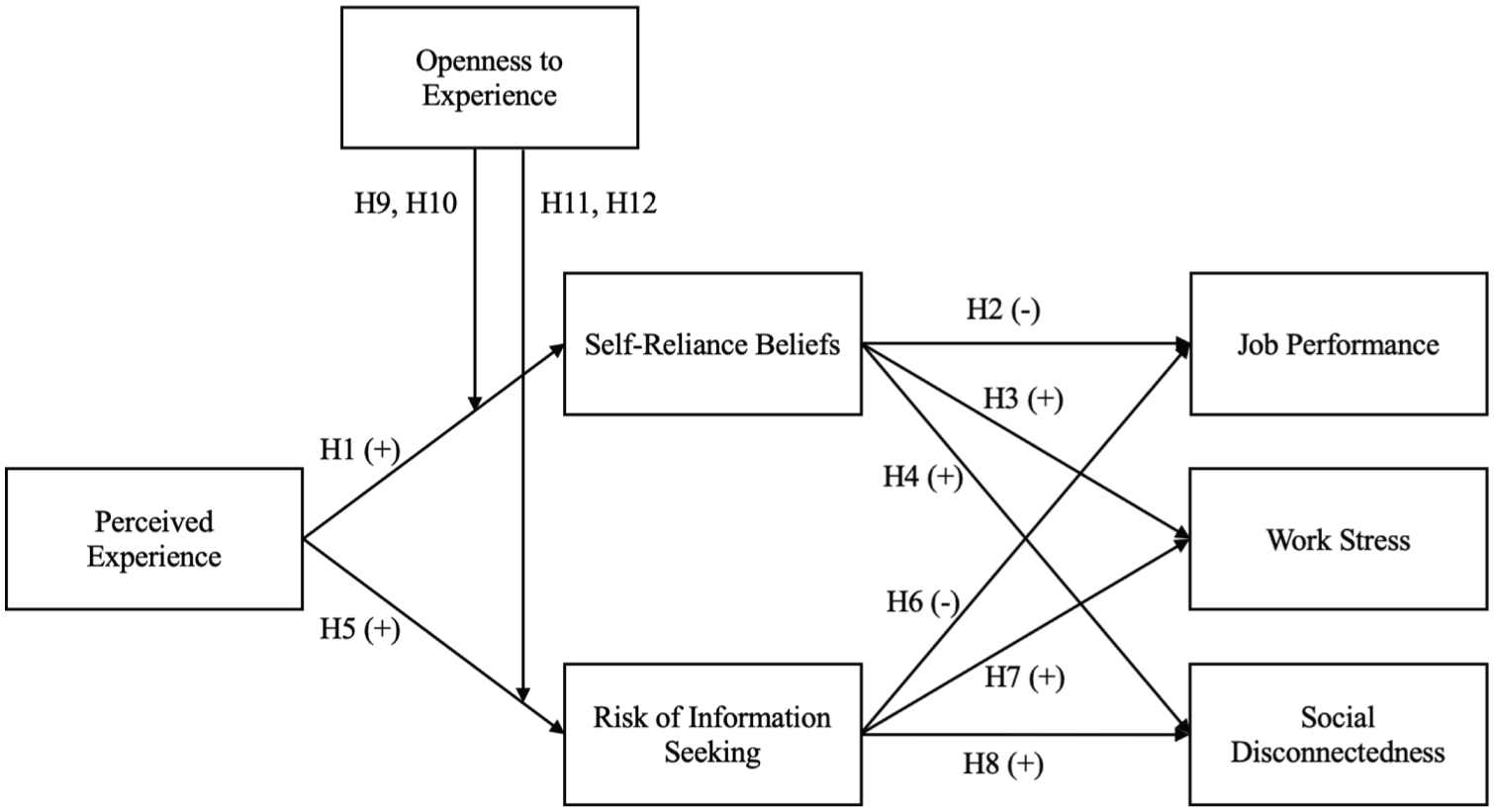
Our research model is shown in Figure 1. We conceptually anchor our model in Ashford and Cummings’s (1983) FSB theory and its extensions (Ashford, 1986; Ashford et al., 2016). There are three core tenets of FSB theory relevant to the role of perceived experience in newcomer adjustment: The first tenet is that information is a resource with subjective utility for personal goal achievement. In novel environments, individuals are motivated to reduce felt uncertainty through information acquisition. Information serves a critical uncertainty-reduction function by helping individuals make sense of ambiguous or unfamiliar aspects of their role and organization. Newcomers navigating an unfamiliar workplace typically face substantial uncertainty and therefore stand to gain considerably from information that clarifies key aspects of their work context (Ashford & Cummings, 1983; Callister, Kramer, & Turban, 1999; Kammeyer-Mueller & Wanberg, 2003; Louis, 1980; Morrison, 1993a). Indeed, organizational socialization has been described as an information transmission process by which newcomers reduce uncertainty by learning role expectations, task requirements, and social dynamics (Bauer et al., 2007, 2025; Wang, Kammeyer-Mueller, Liu, & Li, 2015).
Theoretical Model
The second tenet of FSB theory is that seeking is a calculative act in which individuals weigh anticipated resource gains against anticipated resource losses (Ashford & Cummings, 1983; Cooper-Thomas & Stadler, 2015; Cooper-Thomas & Wilson, 2011; Miller & Jablin, 1991; Morrison & Bies, 1991; Morrison & Vancouver, 2000). The chief resource gain of seeking is uncertainty reduction (Berger & Calabrese, 1975; Louis, 1980), such that greater understanding of the workplace and one’s role in it should foster a smoother transition into becoming an insider (Bauer et al., 2007, 2025; Zhou, Chen, Li, & Liu, in press). Resource losses include the effort and time involved in seeking information and notably, social costs such as threats to one’s face or status (Ashford & Cummings, 1983; Ashford et al., 2016). When newcomers approach others with information requests, they risk damaging their professional image. For instance, asking how to complete a task may prompt coworkers to infer that the newcomer is incompetent, unconfident, or overly dependent (Ashford, 1986; Morrison & Vancouver, 2000; Roberson, Deitch, Brief, & Block, 2003). The desire to manage impressions and avoid embarrassment may overshadow the information’s instrumental value, reducing the likelihood of inquiry. FSB theory argues that individuals will seek information when anticipated gains outweigh potential losses.
The third tenet is that dispositional factors can influence how individuals interpret anticipated resource gains and losses. Openness to experience, in particular, may color how one assesses the relative value of acquiring information versus possible social repercussions (Anseel, Beatty, Shen, Lievens, & Sackett, 2015; Ashford & Black, 1996; Ashford et al., 2016). Openness is especially relevant in the context of work adjustment because it represents a promotive, exploratory orientation (Lanaj, Chang, & Johnson, 2012; Lim et al., 2020). Newcomers with greater perceived experience and higher openness should be more likely to value available information. Conversely, those lower in openness tend to be rigid and dogmatic, preferring the familiar and rejecting information inconsistent with their preexisting beliefs (McCrae, 1996). More experienced newcomers lower in openness may rely more heavily on their accrued know-how while simultaneously viewing seeking as carrying greater social costs.
Extending FSB theory to explain how perceived experience influences adjustment, we focus on information seeking (rather than on feedback seeking) because the newcomer behaviors associated with uncertainty reduction, as well as the anticipated costs of such behaviors, extend beyond diagnostic performance evaluation. Experienced newcomers may refrain not only from requesting feedback on how well they are doing, but also from asking questions about tasks, their role, norms, and procedures—domains where they may already feel capable and where asking for help may similarly undermine their professional image of competence. An information seeking lens thus allows us to capture the broader range of newcomer uncertainty reduction activities and the corresponding face, status, and reputational risks implicated in early adjustment. Importantly, this shift does not depart from FSB theory’s core logic. Both feedback and information seeking are governed by the same underlying resource calculus: Individuals weigh the anticipated uncertainty-reducing gains of acquiring information against potential social and self-presentational losses (Ashford, 1986). Indeed, research has shown substantial overlap in their antecedents and consequences, and in several cases has combined them into broader proactivity or resource seeking constructs (Anseel et al., 2015; Lim et al., 2020; Morrison, 1993a; Morrison & Vancouver, 2000; Sherf et al., 2024).
Perceived Experience, Self-Reliance Beliefs, and Adjustment Outcomes
Early models presumed that successful adjustment depended on the amount and quality of resources newcomers receive from the organization and from insiders. The extent to which these socialization agents impart information to newcomers that does not overlap with their extant know-how reduces uncertainty and, in turn, expedites adjustment (Bauer et al., 2025; Deng, Lin, Song, Wang, Cai, & Liu, 2025; Lim et al., 2020). Unfortunately, newcomers frequently report receiving insufficient, inaccurate, unhelpful, or conflicting information (Ashford, 1986; Jablin, 1984; Kahn, Wolfe, Quinn, Snoek, & Rosenthal, 1964). The volume and complexity of information relating to one’s role, task, and social environment often exceed what is volunteered by others. As a result, scholars now recognize the necessity of newcomer proactivity (Ashford & Cummings, 1983; Deng et al., 2025; Gross, Debus, Liu, Wang, & Kleinmann, 2021; Miller & Jablin, 1991; Pang et al., in press; Reichers, 1987).
FSB theory posits that information seeking is motivated by uncertainty-reduction needs (Ashford, 1986; Ashford & Cummings, 1983). Whereas many newcomers report high uncertainty-reduction needs upon entry, those with greater perceived experience may infer that their need is lower, trusting that their established resource base will enable them to navigate the new environment without relying on guidance from others. This reduced need demotivates information seeking by lowering the anticipated resource gains associated with acquiring additional information (Anseel et al., 2015; Callister et al., 1999). Jones (1983: 466) explains how experienced newcomers would be more oriented toward self-sufficiency and less influenced by external socialization efforts because they “have built up a repertoire of responses to threat or ambiguity based on their past experiences and learning.” Believing that they have performed similar tasks and faced comparable challenges, newcomers who perceive themselves as experienced are likely to rely more heavily on their prior know-how and view additional learning as unnecessary (Thompson & Bolino, 2018). Consequently, we hypothesize that perceived experience positively relates to self-reliance beliefs, as such newcomers discount the value of new information concerning workplace expectations and effective performance methods (Ashford & Cummings, 1983; Beyer & Hannah, 2002; Dokko et al., 2009; Miller, 1996; Morrison & Vancouver, 2000; Sherf et al., 2024).
Hypothesis 1: Perceived experience is positively related to self-reliance beliefs.
Our next three hypotheses address how perceived experience relates to newcomer performance, stress, and social disconnectedness via self-reliance beliefs. Specifically, in line with FSB theory, to gain perspective on work tasks, newcomers must obtain information from their local environment, and failing to acquire these resources can impair adaptation (Ashford & Cummings, 1983; Ashford et al., 2016). Although newcomers with higher perceived experience may believe that their expertise alone will ensure task success, this mindset can foster “rigidities in behavior or thinking” (Dokko et al., 2009: 4). When newcomers conclude that additional input offers little incremental gain, they are less likely to recalibrate their approaches in response to new contextual demands. Yet performance expectations rarely mirror those of previous jobs (Beyer & Hannah, 2002; DeOrtentiis et al., 2018; Huckman & Pisano, 2006), rendering entrenched habits potentially maladaptive. For example, Huckman and Pisano (2006) found that even in highly technical roles such as heart surgery, performance variance is largely organization-specific. Successful adjustment therefore requires newcomers to “unlearn” old habits and actively seek information about how their knowledge and skills uniquely apply in the new environment (Ashford & Cummings, 1983; Chao, O’Leary-Kelly, Wolf, Klein, & Gardner, 1994; Feldman, 1981).
Hypothesis 2: There is a negative indirect effect of perceived experience on job performance through self-reliance beliefs.
Theory and research suggest that role ambiguity is inherently stressful (Bakker & Demerouti, 2007; Berger & Calabrese, 1975; Louis, 1980), and socialization processes function in part to mitigate stress by helping newcomers acquire work-relevant information (Ellis, Bauer, Mansfield, Erdogan, Truxillo, & Simon, 2015). In their stress-focused model of socialization, Ellis et al. (2015: 206) note how “uncertainty reduction is an important means by which stress is reduced for newcomers.” Paralleling FSB theory, newcomers evaluate available resources when appraising their ability to cope with job demands (Ashford & Cummings, 1983). Those with stronger self-reliance beliefs may initially report lower stress because they see themselves as possessing sufficient personal resources and therefore will appraise role demands more favorably. However, we propose a temporal shift in this relationship. By discounting anticipated information seeking gains, self-reliant newcomers are less likely to reduce uncertainty through active learning. Over time, as discrepancies between prior experience and current expectations become more salient, these individuals may experience a reality shock (Louis, 1980). Consequently, we hypothesize that self-reliance beliefs will be associated with higher stress as insufficient information acquisition leaves newcomers ill-equipped to meet contextual demands.
Hypothesis 3: There is a positive indirect effect of perceived experience on work stress through self-reliance beliefs.
Adjustment also requires newcomers to adapt to organizational norms, politics, and other social nuances (Chao et al., 1994; DeOrtentiis et al., 2018), which requires obtaining unwritten informational resources (Ashford & Cummings, 1983; Ashford et al., 2016; Berger & Calabrese, 1975). Per FSB theory’s gain–loss calculus, experienced newcomers who believe that they can rely on their own knowledge tend to hold lower opinions of others in their work environment and are less likely to accept help (Thompson & Bolino, 2018). This reluctance reduces opportunities to build connections, undermining the development of productive professional relationships and integration into the broader organizational network (Bauer et al., 2007; Kammeyer-Mueller, Wanberg, Rubenstein, & Song, 2013; Rubenstein, Kammeyer-Mueller, & Thundiyil, 2020).
Hypothesis 4: There is a positive indirect effect of perceived experience on social disconnectedness through self-reliance beliefs.
Perceived Experience, Risk of Information Seeking, and Adjustment Outcomes
Alongside gains, FSB theory also highlights the potential resource losses newcomers may anticipate from seeking information, as doing so can expose them to image and status costs (Ashford & Cummings, 1983; Ashford et al., 2016). Speaking of one’s experience within the same organization, Ashford (1986: 469) argues that “tenured employees may also respond to social expectations that, as old-timers, they should know the ropes and not depend on guidance from others. They respond to those expectations by infrequently seeking feedback in public ways to maintain a confident, assured self-presentation.” In our context, greater perceived experience should amplify anticipated face loss costs.
Although information seeking can yield instrumental support, it also carries the potential for negative evaluation, embarrassment, and self-doubt, representing potential social and self-presentational resource losses associated with admitting the need for help (Ashford, 1986; Ashford & Cummings, 1983; Miller & Jablin, 1991; Morrison & Vancouver, 2000). Morrison (1993b) found that newcomers prefer monitoring over direct inquiry due to “strong social risks in asking for [information] directly” (583) and the desire to “protect their image” (560; see also Miller, 1996). Experimental studies (Ashford & Northcraft, 1992; Northcraft & Ashford, 1990) similarly show that information requests decline markedly when others are made aware of the request, and meta-analytic evidence indicates that perceived image costs are negatively related to explicit information seeking (Sherf et al., 2024; ρ = −.27). Taken together, theory and evidence suggest that individuals judge seeking as riskier when they anticipate greater resource losses.
Although prior research has focused on new occupational entrants being conscious of the costs associated with information seeking, we expect that these perceptions will be especially salient among more experienced newcomers. Ceteris paribus, inexperienced newcomers recognize that they know less than insiders, and so should be less worried than their more experienced peers about the social repercussions of asking questions (Ashford, 1986; Dokko et al., 2009; Gross et al., 2021). Inexperienced newcomers may also receive more unprompted support from colleagues, fostering psychological safety regarding the acceptability of seeking and reducing its expected social risk (Kammeyer-Mueller et al., 2013).
By contrast, organizational assumptions regarding experienced newcomers’ expertise should heighten anticipated resource losses associated with information seeking. When individuals perceive themselves as possessing substantial knowledge and skill, the fear of said costs increases if asking questions would contradict this projected competence (Ashford & Cummings, 1983; Miller & Jablin, 1991; Morrison & Vancouver, 2000). Indeed, they likely touted their expertise during the hiring process as an asset aiding their employability (Fugate, Van der Heijden, De Vos, Forrier, & De Cuyper, 2021; Levashina, Hartwell, Morgeson, & Campion, 2014). We therefore predict that more experienced newcomers will report higher anticipated risk of information seeking.
Hypothesis 5: Perceived experience is positively related to perceived risk of information seeking.
When individuals anticipate greater resource losses, they are less likely to request information (Ashford & Cummings, 1983; Lim et al., 2020; Morrison & Bies, 1991; Sherf et al., 2024). This reluctance poses a significant liability, as it reduces access to task-relevant knowledge (Ashford et al., 2016; Bauer et al., 2007, 2025). Lacking information can lead to greater misunderstandings, errors, and inefficiencies in work, impairing performance (Ashford & Cummings, 1983; Sherf et al., 2024). We hypothesize that the expected risk of information seeking is a second mechanism through which perceived experience affects job performance.
Hypothesis 6: Perceived experience has a negative indirect effect on job performance through risk of information seeking.
A similar logic applies to stress. When employees deem information seeking to be risky, they refrain from inquiry and consequently face increased uncertainty (Ashford & Cummings, 1983; Miller & Jablin, 1991; Morrison & Bies, 1991; Sherf et al., 2024). Such uncertainty has been consistently linked to greater role ambiguity, stress, and strain (Bauer & Green, 1998; Bauer et al., 2007; LePine, Podsakoff, & LePine, 2005; Morrison, 1993a). In a second respect, feeling unable to ask others about job-related information due to image threats is aversive because it constrains freedom of choice and weakens one’s sense of environmental control (Skaff, 2007). Such constraints are likely to be bothersome, irritating, and discomforting, core indicators of felt stress (Stanton, Balzer, Smith, Parra, & Ironson, 2001).
Hypothesis 7: Perceived experience has a positive indirect effect on work stress through risk of information seeking.
Higher risk of information seeking should positively relate to social disconnectedness. By extension, newcomers with higher perceived experience should report greater disconnectedness, mediated by risk perceptions. Information seeking is an interpersonal activity, requiring contact with others to satisfy requests. It is also a central proactive behavior through which new hires build relationships and learn social norms (Ashford & Black, 1996; Morrison, 1993a). Kammeyer-Mueller et al. (2013: 1110) note how “proactive newcomers will feel they are part of their organization as a whole because they understand more about their environment. . .efforts to proactively build relationships and seek out information should also alleviate feelings of social separation.” Meta-analytically, Bauer et al. (2007) show that both referent and appraisal information seeking are positively associated with social acceptance. Believing that information seeking entails excessive costs should impede the formation of interpersonal ties.
Hypothesis 8: There is a positive indirect effect of perceived experience on social disconnectedness through risk of information seeking.
Openness to Experience as a Boundary Condition
Our theorizing thus far has focused on how perceived experience can generate stronger self-reliance beliefs and increase anticipated risks of information seeking, as well as how these mechanisms may subsequently hinder adjustment. Yet, FSB theory also predicts that dispositional factors may influence gain-loss resource appraisals, such that some entrants may rely more heavily on their previous experience than others (Ashford & Black, 1996; Ashford & Cummings, 1983). Openness to experience is especially relevant in our study context of newcomers with background know-how; people high in openness are curious, seek new experiences, and value learning new and diverse perspectives that may differ from their existing beliefs. Conversely, those less open are stubborn and risk-averse, prefer familiar approaches, and tend to anticipate greater losses from resource seeking (DeYoung, Quilty, & Peterson, 2007; Digman, 1990; Lanaj et al., 2012; Lim et al., 2020; McCrae, 1996).
Based on the above description, openness should shape how strongly newcomers rely on their previous experience during the socialization process. Specifically, we propose that greater openness should weaken the extent to which perceived experience translates into self-reliance beliefs and expected information-seeking risks. Openness is characterized by qualities that increase receptivity to new input while reducing overreliance on prior knowledge. More open newcomers should continue to anticipate resource gains from acquiring information—even if they perceive themselves as experienced—approaching it as an opportunity to refine and expand on their current competence (Barrick & Mount, 1991; Cellar, Miller, Doverspike, & Klawsky, 1996). In addition, research has linked openness to adaptability (LePine, Colquitt, & Erez, 2000), which should significantly benefit experienced newcomers as they transition into new roles (Thoresen, Bradley, Bliese, & Thoresen, 2004). In contrast, newcomers higher in perceived experience but lower in openness are apt to resist information and learning opportunities, placing greater weight on their previously acquired resources and showing less receptivity to new input. We thus expect that greater openness will weaken the relationship between perceived experience and self-reliance beliefs, thereby attenuating the indirect effects on adjustment outcomes.
Hypothesis 9: The positive relationship between perceived experience and self-reliance beliefs is moderated by openness to experience, such that higher levels of openness are associated with a weaker relationship.
Hypothesis 10: The indirect effect of perceived experience on job performance (H10a), work stress (H10b), and social disconnectedness (H10c) through self-reliance beliefs is moderated by openness to experience, such that higher levels of openness are associated with a weaker relationship.
Whereas FSB theory suggests that newcomers with greater perceived experience will view seeking information as riskier due to anticipated resource losses outweighing gains, this tendency should be also tempered among those higher in openness. Such individuals are apt to interpret information seeking not as a threat to their current competence but as a means of enhancing effectiveness and strengthening relationships (Wanberg & Kammeyer-Mueller, 2000). In this way, they are less likely to see knowledge derived from experience as diminishing the incremental resource value of what they can learn or imposing excessive costs (LePine et al., 2000; Lim et al., 2020). Moreover, open newcomers with perceived experience are likely to assume that others will interpret their adaptive efforts favorably (Ross, Greene, & House, 1977), further reducing anticipated losses. In contrast, those lower in openness are more rigid and dogmatic, rejecting information that is inconsistent with their preexisting beliefs (McCrae, 1996); such experienced newcomers should view seeking information as more costly.
Hypothesis 11: The positive relationship between perceived experience and risk of information seeking is moderated by openness to experience, such that higher levels of openness are associated with a weaker relationship.
Hypothesis 12: The indirect effect of perceived experience on job performance (H12a), work stress (H12b), and social disconnectedness (H12c) through risk of information seeking is moderated by openness to experience, such that higher levels of openness are associated with a weaker relationship.
Method
Below, we describe our sampling plan, data collection and management, study measures, and analytical strategy. All data, code, and measures are available on OSF (https://osf.io/5e8sp). Data were analyzed using R version 3.6.0 (R Core Team, 2022) and the package Rmarkdown, as well as Mplus version 8.4 (Muthén & Muthén, 1998-2017). The study was not preregistered.
Sample and Procedure
We collected survey data from new hires at a large food delivery company in southeast China. Each month, the company recruits 60 to 100 new hires. Upon entry, but before starting work, employees complete a standardized onboarding program through the company’s mobile app. This socialization encompasses transportation and safety regulations, delivery procedures, customer communication strategies, and contingency handling (e.g., handling delayed orders and customer complaints). The app also includes opportunities to perform simulated deliveries and provides real-time guidance during use. With company support, we recruited 245 employees to participate, constraining our sampling to those who had joined the organization within the previous four months (mean tenure = 61.9 days; range = 12–109 days). We assured employees that their participation was voluntary and that only the research team would have access to the data. Using phone numbers, we sent text messages with online survey links directly to potential participants, who received 16.8 RMB (approximately $2.32 USD) for each completed survey.
We surveyed new hires at three time points, with one month in between waves, to reduce method variance concerns (Podsakoff, MacKenzie, Lee, & Podsakoff, 2003) and to allow our phenomena to unfold, such as enabling sufficient time for self-reliance beliefs to manifest into behaviors that would affect study outcomes (Rubenstein, Simon, Kammeyer-Mueller, Corwin, Morrison, & Whiting, 2025). At Time 1, newcomers rated their perceived experience, openness to experience, and control variables (i.e., socialization tactics and demographics). One month later (Time 2), we assessed self-reliance beliefs and risk of information seeking. One month later (Time 3), we assessed adjustment outcomes.
Of the 245 invited new hires, 236 completed the Time 1 survey (96% response rate), 228 completed the Time 2 survey (93% response rate), and 215 completed the Time 3 survey (88% response rate). We obtained performance data for 226 employees (92% response rate). Following data collection, we removed identifiable participant information and replaced it with a unique code to match responses across survey waves. Following Newman’s (2014) recommendations, we handled missing data using full information maximum likelihood estimation to ensure that all available data were utilized. Among the final sample, 92% were male, with a mean age of 29.8 years. Thirty-nine percent reported having a secondary school degree, 47% held a high school or vocational school degree, and 11% had a college degree or higher. To test for potential systematic sample attrition, we conducted two logistic regression analyses, one with all Time 1 variables predicting Time 2 attrition (i.e., yes/no completed Time 2 survey), and a second with all Time 1 and Time 2 variables predicting Time 3 attrition. None of the variables in either model was significant, supporting the notion that attrition was randomly distributed.
Measures
Two authors fluent in English and Mandarin Chinese translated and back-translated all surveys (Brislin, 1986), resulting in minor adaptations to some items (see OSF materials for the exact phrasing used in each scale at https://osf.io/5e8sp). A third author, whose native language was English, verified the translations. One translation disagreement was resolved by the native English speaker serving as arbiter. Unless otherwise mentioned, all items were rated on a 5-point Likert-type scale ranging from 1 = strongly disagree to 5 = strongly agree.
Perceived Experience (Time 1)
We measured perceived experience using a five-item scale developed by Morrison and Vancouver (2000; α = .95), which captures expertise across different informational domains (i.e., task, role, social, organization, and performance) in relation to one’s new job. Before the items was the prompt, “I possess a good deal of experience about . . .” The items are “the tasks I will perform in my job,” “the expectations for and responsibilities of my job,” “how I should behave within my work group,” “organizational policies, procedures, structures, and objectives,” and “how to perform well in my job.”
Openness to Experience (Time 1)
We measured openness to experience using a four-item scale from Cooper, Smillie, and Corr (2010; α = .59). 1 A sample item is “I do not have a vivid imagination” (reverse-coded). Given the sub-optimal α reliability, we also calculated McDonald’s (1985) ω coefficient. Unlike α, which assumes that all items contribute equally to the underlying construct (i.e., tau-equivalence), ω uses factor loadings and item-specific error variances to produce more accurate reliability estimates (Cortina et al., 2020). The ω for the openness measure was .77, which is consistent with accepted conventions.
Self-Reliance Beliefs (Time 2)
Newcomers responded to the four-item Self-Reliance Beliefs subscale of Thompson and Bolino’s (2018) Negative Beliefs about Accepting Coworker Help measure (α = .86). A sample item is “Regardless of how much assistance is needed, I can be successful in this job by myself.”
Risk of Information Seeking (Time 2)
Newcomers rated risk of information seeking using a modified five-item scale from Ashford (1986), focusing on information- rather than feedback-seeking (α = .94). A sample item is “I think people would think worse of me if I asked them for information about doing my job.”
Performance (Between Times 2 and 3)
As employees’ primary job task was food delivery, the organization evaluated performance based on the objective number of orders completed in a month, which we natural log-transformed for purposes of interpretation. Monthly completed orders are a valid performance indicator in this organization in that they influence (1) employee compensation decisions, (2) organizational rank determinations, and (3) promotion opportunities (i.e., to team or station leader). Furthermore, this operationalization is consistent with prior research (e.g., Kim, Cho, & Chung, 2023; Lam, Huang, & Chan, 2014) that has similarly used production quantity or sales revenue as objective performance indicators. The data were automatically recorded by the food delivery platform and were subsequently double-checked for accuracy by the organization’s human resource manager.
Work Stress (Time 3)
Newcomers rated felt work stress over the past month using Stanton et al.’s (2001) eight-item scale, ranging from 1 = never to 5 = all the time (α = .79). Sample items include “nerve-wracking” and “hassled.”
Social Disconnectedness (Time 3)
We assessed newcomer social disconnectedness using Lee and Robbins’ (1995) eight-item scale (α = .97). A sample item is “I feel disconnected from employees around me at this company.”
Covariates (Time 1)
We included several covariates in our analyses to eliminate potential alternative explanations. In terms of demographics, we controlled for age and education to avoid spuriously attributing perceived experience effects to either of these variables, as both greater age and education levels may commensurately relate to greater perceived expertise (Kanfer & Ackerman, 2004; Ng & Feldman, 2009). We controlled for participant gender given that food delivery jobs are predominantly held by men, and such a work context may affect female workers’ socialization outcomes (Chen & Klimoski, 2003). Although all participants were new, we controlled for organizational tenure since there was some slight variability.
Additionally, to demonstrate the unique influence of perceived experience, we controlled for quantitative pre-hire experience (i.e., total length of previous time spent working in jobs similar to those of one’s current organization). Beyond demographics, we controlled for organizational socialization tactics because the organization’s efforts may contribute to perceived experience as well as to other study variables (Bauer et al., 2007). Participants responded to 12 items from Jones (1986; α = .67). The original scale has 30 items spanning six dimensions. We selected the two items with the highest factor loadings on each dimension to mitigate survey fatigue. Notably, this scale also includes items relating to available colleague support (e.g., “Almost all of my colleagues have been supportive of me personally”). We then examined whether the covariates affected the results. Specifically, when covariates were excluded from the model, the moderated indirect effect of experience-by-openness on social disconnectedness via self-reliance beliefs became non-significant at p < .05 (when included, it was significant). All other conclusions were unchanged. In the Results, we report our findings with covariates (results without covariates are provided in our additional online OSF material at https://osf.io/5e8sp).
Analyses
To assess the construct validity of our subjective measures (i.e., perceived experience, self-reliance beliefs, risk of information seeking, work stress, social disconnectedness, and openness), we conducted a confirmatory factor analysis in Mplus. To reach an acceptable indicator-to-sample size ratio (Little, Cunningham, Shahar, & Widaman, 2002), we created item parcels (randomly selected) and specified six first-order factors: perceived experience (five items into two parcels, with three and two items each), self-reliance beliefs (two two-item parcels), risk of information seeking (five items into two parcels, with three and two items each), work stress (two four-item parcels), social disconnectedness (two four-item parcels), and openness (two two-item parcels). This model fit the data well: χ2 = 99.06 (df = 39), p < .001, comparative fit index = .97, Tucker-Lewis index = .95, root-mean-square error of approximation = .08. Chi-square difference tests also showed this model fit better than alternatives combining any two first-order factors (Δχ2 = 24.95 to 619.42 higher in alternative models, p < .05 in all cases).
We estimated a moderated mediation path model in Mplus. Consistent with Figure 1, we estimated relationships from perceived experience to self-reliance beliefs and to risk of information seeking, as well as directly to the outcomes (i.e., job performance, work stress, and social disconnectedness). We also examined the relationships between mediators and outcomes, as well as among covariates and main study variables. We allowed self-reliance beliefs and risk of information seeking to covary, though without specifying causality. We created an interaction between perceived experience and openness by first mean-centering both variables to facilitate interpretation and to reduce non-essential multicollinearity (Cohen, Cohen, West, & Aiken, 2013). We then computed the product of these centered values. We simultaneously regressed the mediators on the main effects and the interaction term. To derive indirect effects and test for significance, we used non-parametric percentile bias-corrected (BC) bootstrap resampling. We resampled 5,000 times to obtain lower and upper bounds for the 95% confidence interval (CI) of the BC indirect effects.
Results
Table 1 shows the means, standard deviations, and correlations among study variables. As shown in the table, perceived experience correlated significantly and positively with quantitative pre-hire experience (r = .23, p < .01), suggesting that newcomers with greater years of prior job experience also perceived themselves as more experienced. We present the path analysis results in Table 2, and the indirect and moderated indirect effects results in Table 3. As shown in Table 2, after accounting for covariates, perceived experience was positively associated with self-reliance beliefs (b = .32, SE = .07, p < .01), supporting Hypothesis 1. Self-reliance beliefs were unrelated to job performance (b = −.02, SE = .05, p = .70) or work stress (b = −.02, SE = .06, p = .75), and the indirect effects were also not significant (job performance indirect effect = −.01, 95% CI = [−.05, .03]; work stress indirect effect = −.01, 95% CI = [−.06, .04]). Therefore, Hypotheses 2 and 3 were not supported. However, supporting Hypothesis 4, self-reliance beliefs were positively associated with social disconnectedness (b = .17, SE = .08, p = .03), and the indirect effect was also significant (indirect effect = .05, 95% CI = [.003, .15]).
Descriptive Statistics and Intercorrelations
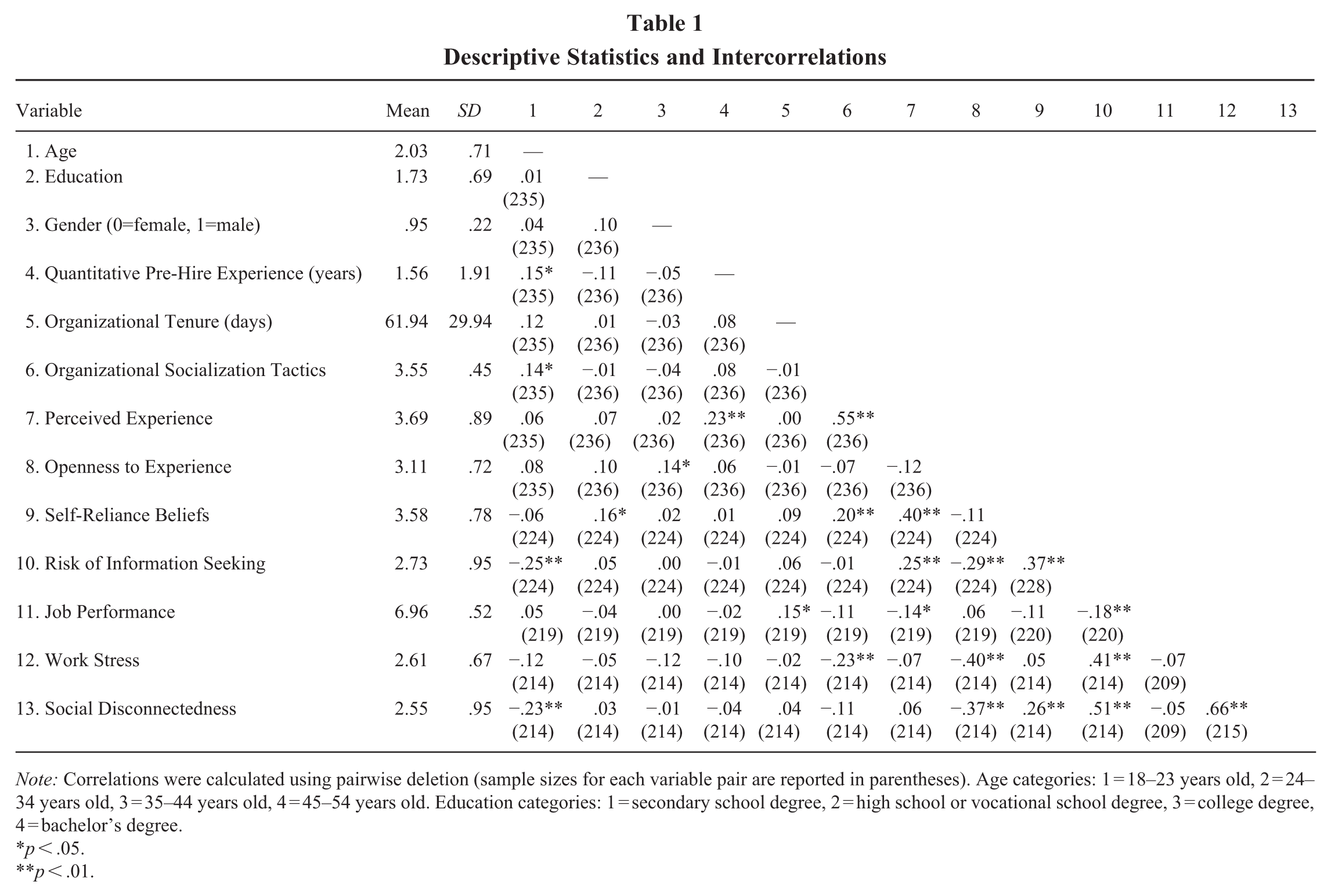
Note: Correlations were calculated using pairwise deletion (sample sizes for each variable pair are reported in parentheses). Age categories: 1 = 18–23 years old, 2 = 24–34 years old, 3 = 35–44 years old, 4 = 45–54 years old. Education categories: 1 = secondary school degree, 2 = high school or vocational school degree, 3 = college degree, 4 = bachelor’s degree.
p < .05.
p < .01.
Path Analysis Results
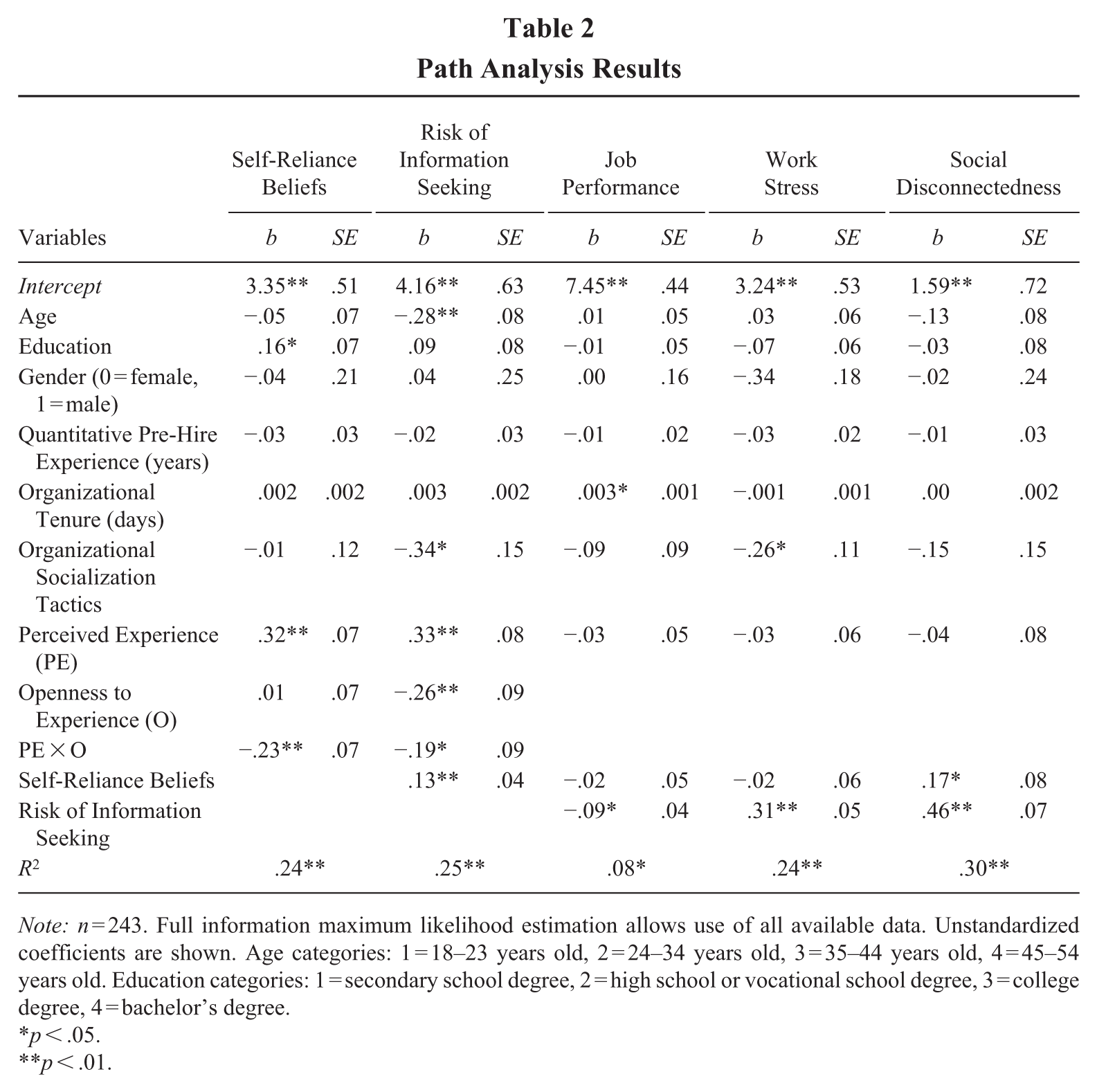
Note: n = 243. Full information maximum likelihood estimation allows use of all available data. Unstandardized coefficients are shown. Age categories: 1 = 18–23 years old, 2 = 24–34 years old, 3 = 35–44 years old, 4 = 45–54 years old. Education categories: 1 = secondary school degree, 2 = high school or vocational school degree, 3 = college degree, 4 = bachelor’s degree.
p < .05.
p < .01.
Indirect Effects and Moderated Indirect Effect Indices
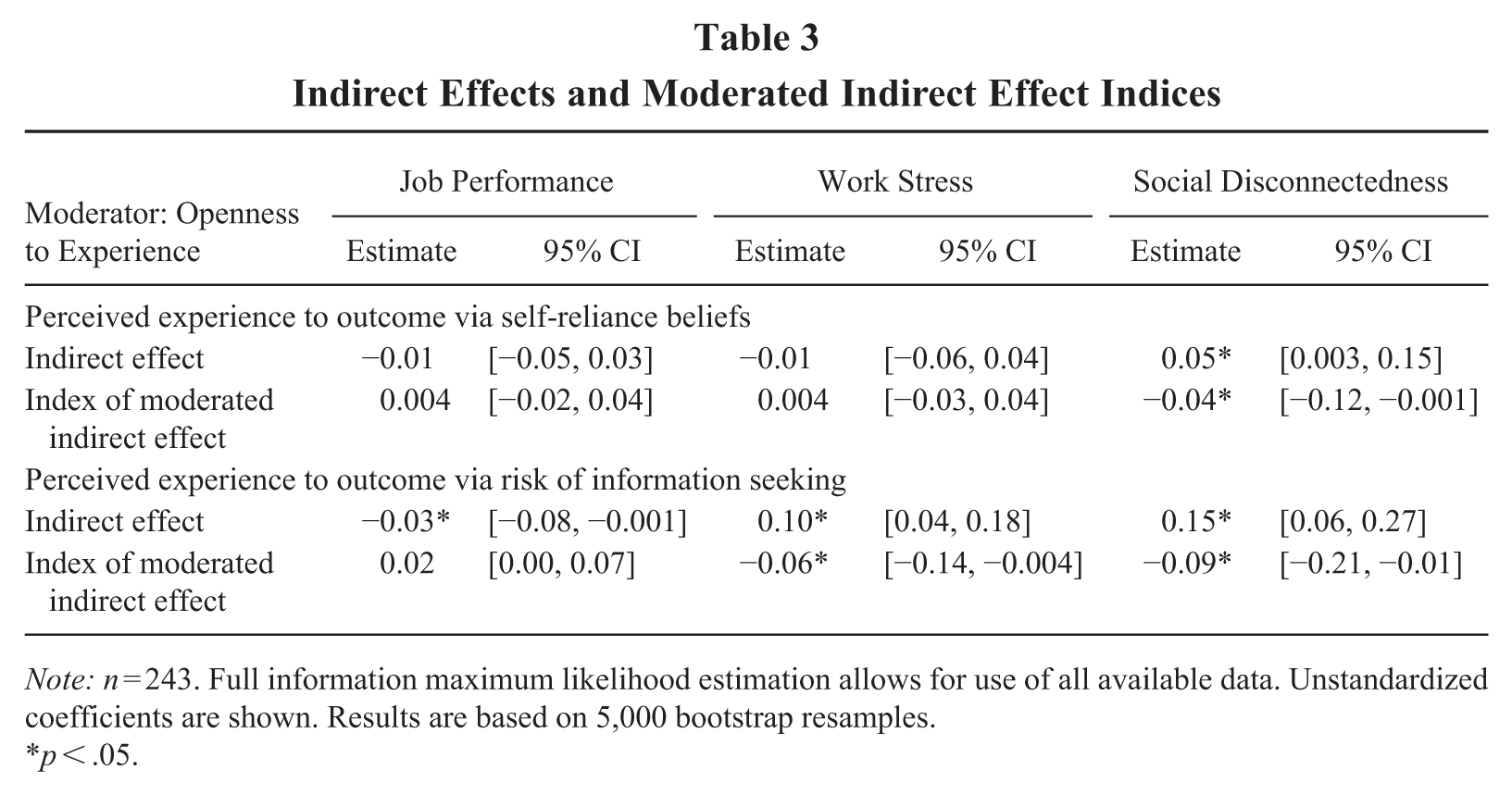
Note: n = 243. Full information maximum likelihood estimation allows for use of all available data. Unstandardized coefficients are shown. Results are based on 5,000 bootstrap resamples.
p < .05.
Supporting Hypothesis 5, perceived experience was positively associated with risk of information seeking (b = .33, SE = .08, p < .01). Risk of information seeking was significantly and negatively associated with job performance (b = −.09, SE = .04, p = .03) and was positively associated with work stress (b = .31, SE = .05, p < .01) and social disconnectedness (b = .46, SE = .07, p < .01). Examining the BC bootstrapped indirect effects in Table 3 indicated that perceived experience had a significant negative indirect effect on performance (indirect effect = −.03, 95% CI = [−.08, −.001]) and significant positive indirect effects on work stress (indirect effect = .10, 95% CI = [.04, .18]) and social disconnectedness (indirect effect = .15, 95% CI = [.06, .27]) via risk of information seeking. These results support Hypotheses 6, 7, and 8.
We then examined the moderation effects (i.e., Hypotheses 9 and 11). Shown in Table 2, the perceived experience-by-openness interaction was significantly related to both self-reliance beliefs (b = −.23, SE = .07, p = .002) and risk of information seeking (b = −.19, SE = .09, p = .03). To probe the interaction, we applied the Johnson-Neyman (J-N) technique (Gardner, Harris, Li, Kirkman, & Mathieu, 2017; Preacher, Curran, & Bauer, 2006) to identify regions of significance for the simple slopes of the moderation effects. As shown in Figure 2, when openness was below 3.75 (i.e., a grand-mean centered value of 0.64), the positive relationship between perceived experience and self-reliance beliefs was significant. When openness exceeded 3.75, the relationship became less positive and non-significant. This pattern supports Hypothesis 9. We observed similar effects for risk of information seeking (Figure 3): Among new hires lower in openness, the simple slope for perceived experience and risk of information seeking was significant and positive; however, it became non-significant among those with openness higher than 3.73 (i.e., a grand mean-centered value of 0.62). Thus, Hypothesis 11 was also supported.
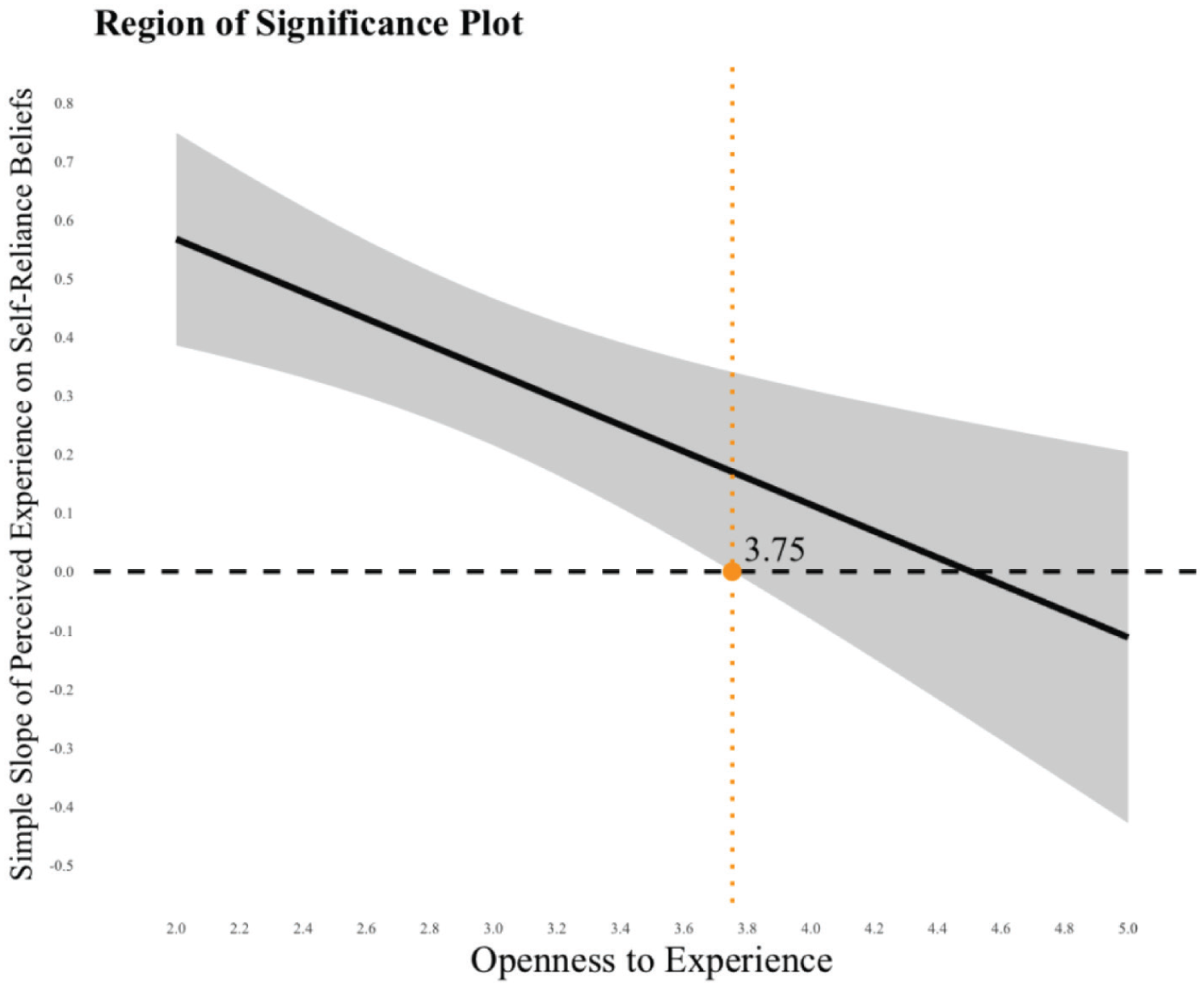
Region of Significance for the Moderating Effect of Openness to Experience on the Relationship Between Perceived Experience and Self-Reliance Beliefs
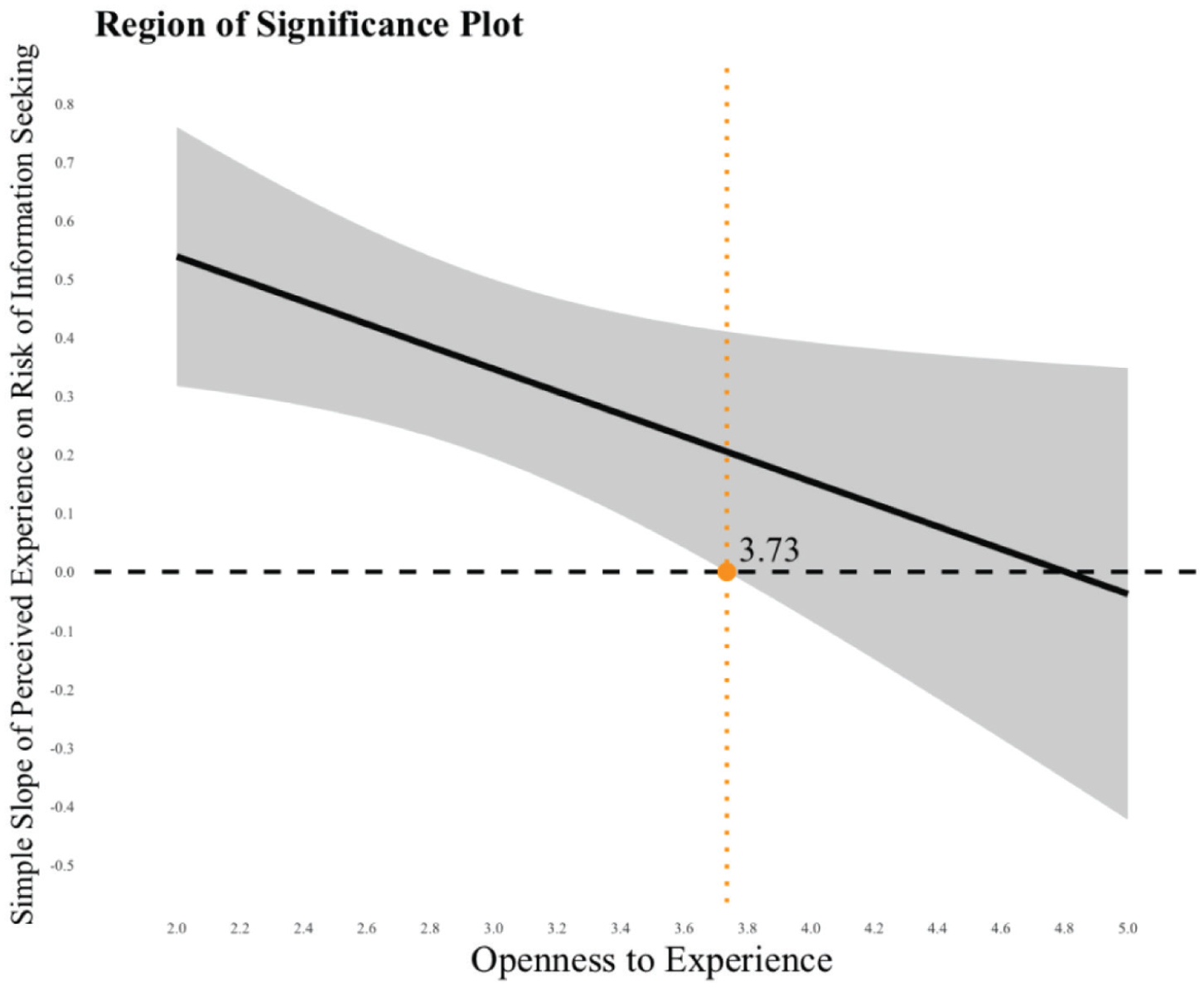
Region of Significance for the Moderating Effect of Openness to Experience on the Relationship Between Perceived Experience and Risk of Information Seeking
Finally, we tested for moderated mediation effects (i.e., Hypotheses 10 and 12). First, as shown in Table 3, openness did not significantly moderate the indirect effects of perceived experience on job performance (moderated indirect effect index = .004, 95% CI [−.02, .04]) or work stress (moderated indirect effect index = .004, 95% CI [−.03, .04]) via newcomer self-reliance beliefs. Thus, Hypotheses 10a and 10b were not supported. However, openness significantly moderated the indirect effect of perceived experience on social disconnectedness via self-reliance beliefs (moderated indirect effect index = −.04, 95% CI [−.12, −.001]). We again applied the J-N technique to identify the region of significance for the moderated indirect effect of perceived experience on social disconnectedness via self-reliance beliefs (see Figure 4). Results showed that when openness to experience exceeded 3.56 (i.e., a grand mean-centered value of 0.45), the conditional indirect effect was non-significant. However, when openness to experience was below 3.56, perceived experience was positively related to social disconnectedness via self-reliance beliefs. This finding pattern supports Hypothesis 10c.
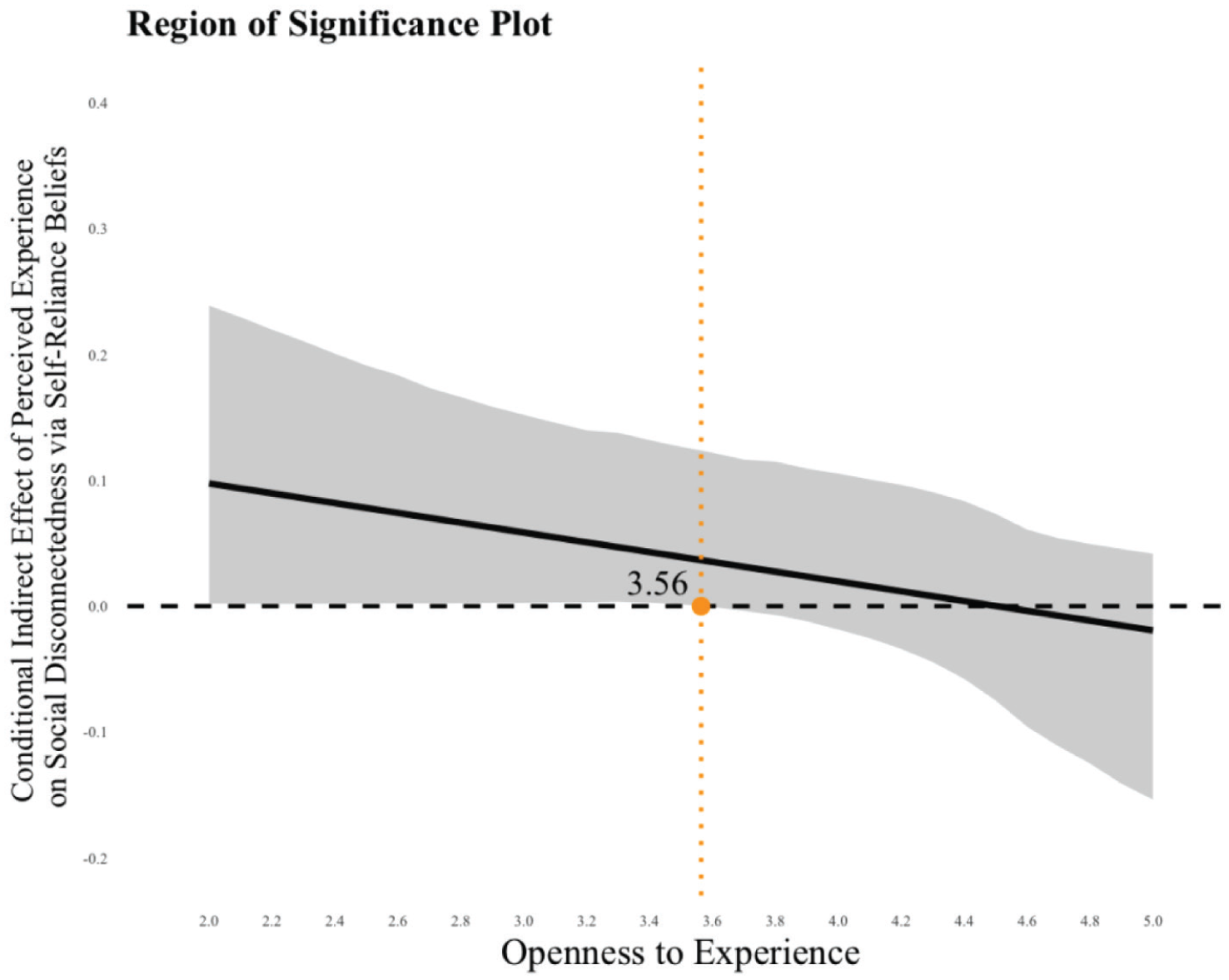
Region of Significance for Moderating Effect of Openness to Experience on the Relation Between Perceived Experience and Social Disconnectedness via Self-Reliance Beliefs
Considering the other moderated mediation effects, the indirect effect of perceived experience on job performance via risk of information seeking as a function of openness was marginally significant (moderated indirect effect index = .02, 95% CI [.00, .07]). To probe this effect, the J-N technique results showed that when openness was below 3.78 (i.e., a grand mean-centered value of 0.67), the indirect effect was significant and negative (see Figure 5). As the level of openness increased beyond 3.78, this indirect effect became non-significant. Taken together, we find mixed support for Hypothesis 12a.
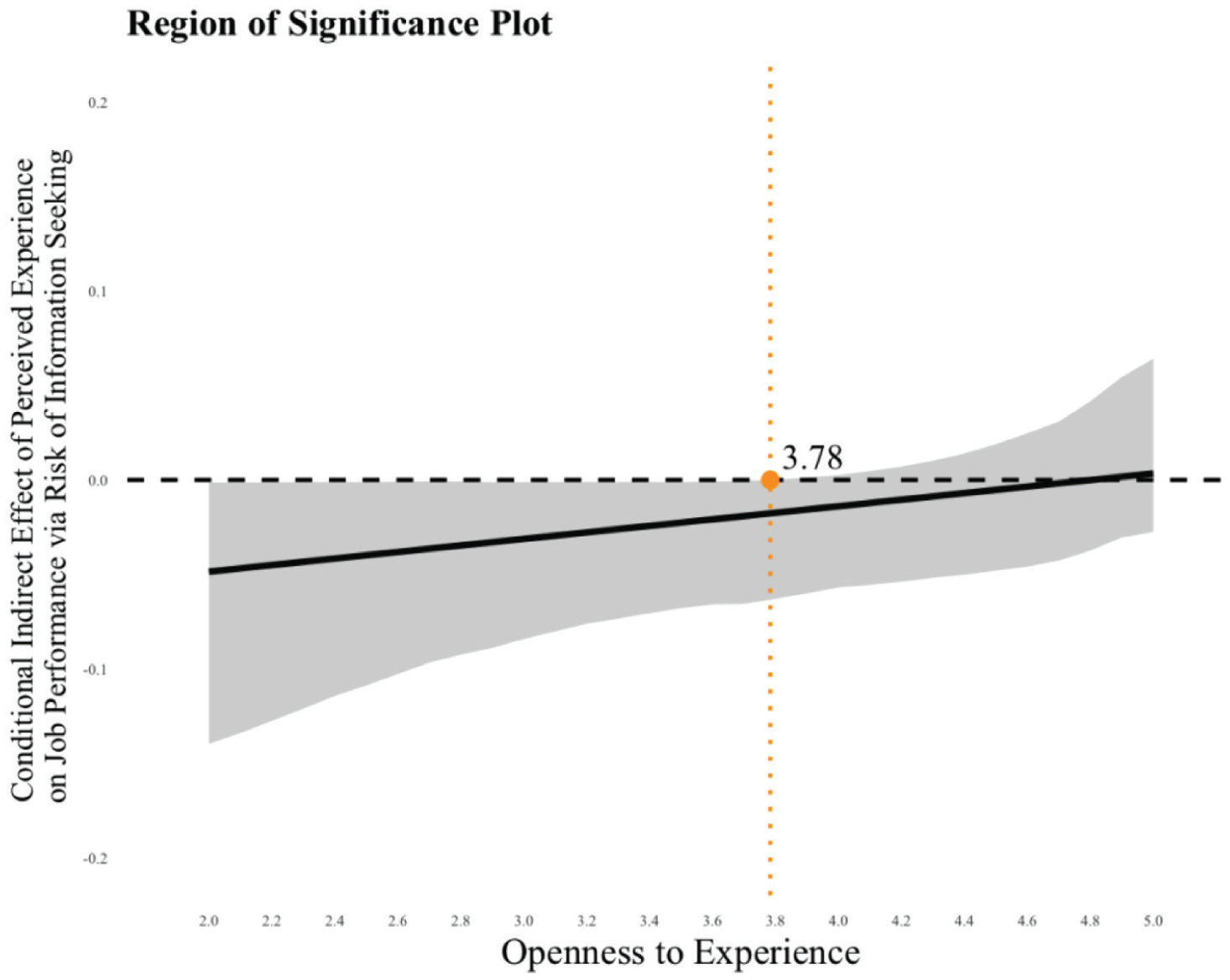
Region of Significance for Moderating Effect of Openness to Experience on the Relation Between Perceived Experience and Job Performance via Risk of Information Seeking
For work stress, the moderated indirect effect was significant (index = −.06, 95% CI [−.14, −.004]). The J-N results (see Figure 6) revealed that the moderated indirect effect was significant and positive when openness to experience was below 3.73 (i.e., a grand mean-centered value of 0.62) and became non-significant when openness exceeded this value. This result pattern supports Hypothesis 12b. We observed a similar pattern for social disconnectedness (moderated indirect effect index = −.09, 95% CI [−.21, −.01]) that supports Hypothesis 12c: At lower levels of openness (i.e., below 3.75; a grand mean-centered value of 0.64), the indirect effect of perceived experience on social disconnectedness via risk of information seeking was positive and significant, whereas above 3.75, the indirect effect became non-significant (see Figure 7).
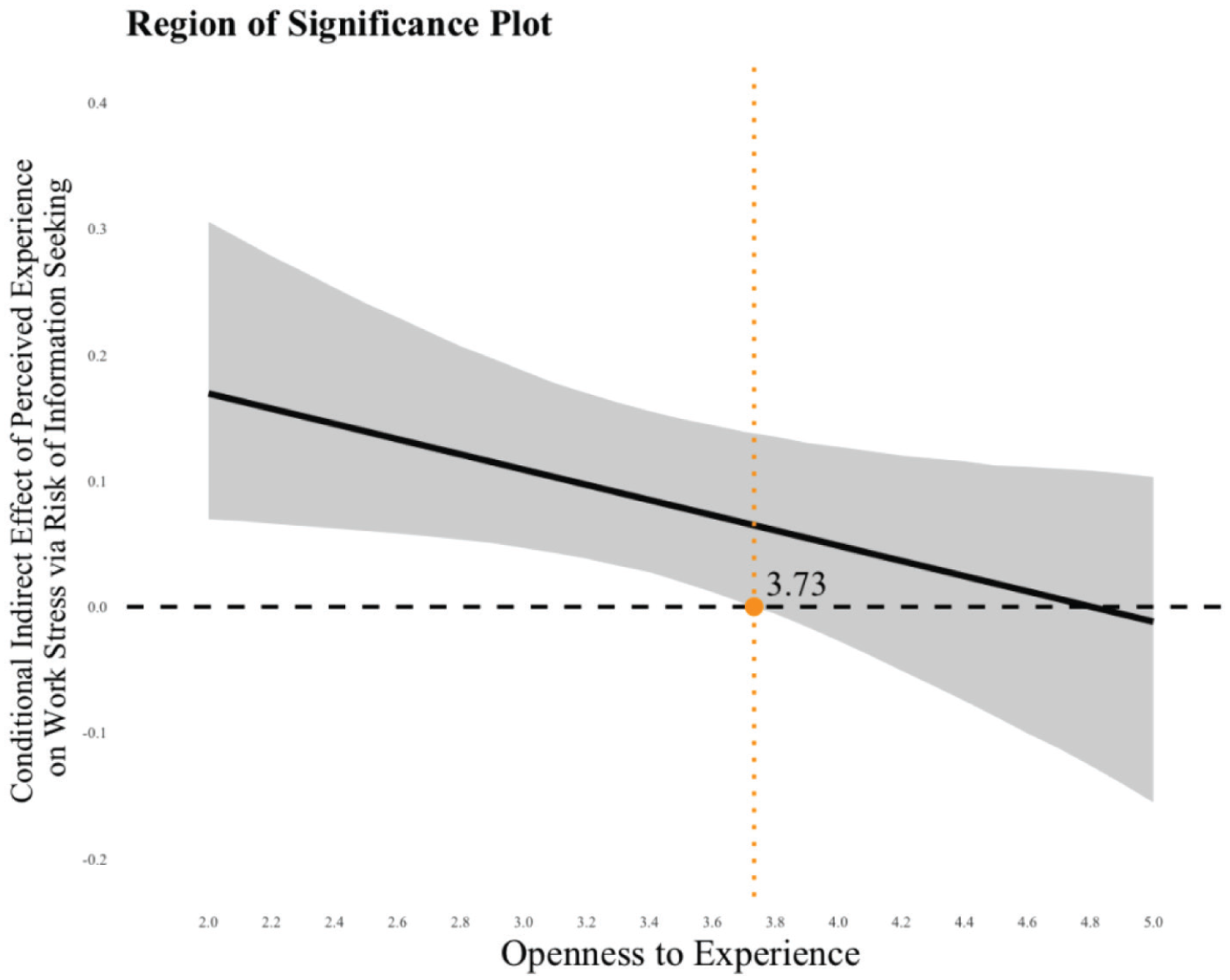
Region of Significance for Moderating Effect of Openness to Experience on the Relation Between Perceived Experience and Work Stress via Risk of Information Seeking
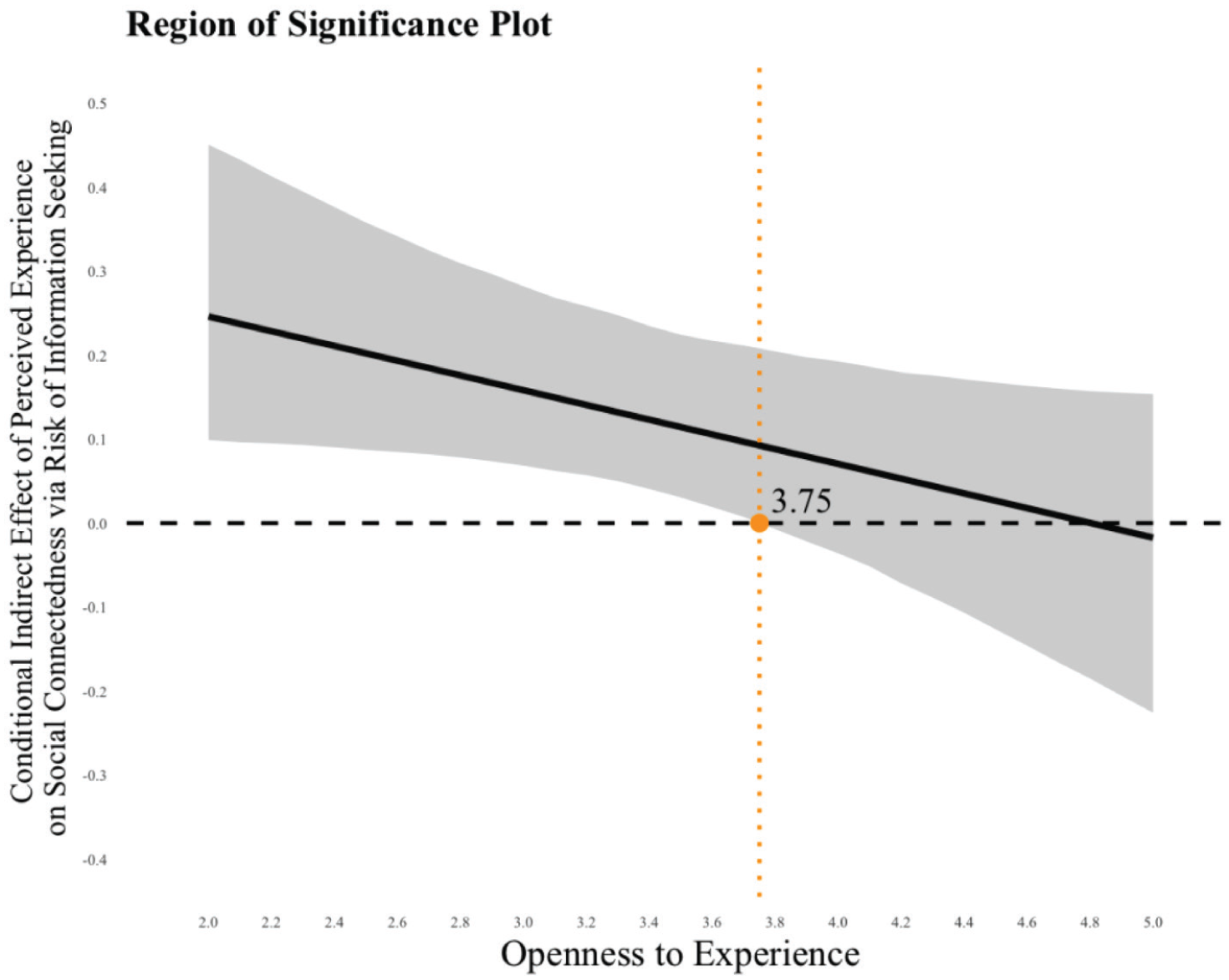
Region of Significance for Moderating Effect of Openness to Experience on the Relation Between Perceived Experience and Social Disconnectedness via Risk of Information Seeking
Supplementary Analyses
First, it is possible that some study variables exhibit nonlinear relationships. Specifically, we considered whether self-reliance beliefs may be beneficial up to a certain point, after which they exhibit detrimental effects on adjustment. To test this possibility, we estimated a model that included a quadratic term for self-reliance beliefs in addition to its main effect. However, these effects were not significant in relation to any of the outcomes.
Second, to establish the key mediating roles of self-reliance beliefs and risk of information seeking, we examined whether openness to experience moderated the direct relationship between perceived experience and the three adjustment outcomes. None of these moderation effects were significant, providing evidence that our observed interaction effects are best explained through our hypothesized mediators.
Third, rather than being parallel mediating mechanisms, self-reliance beliefs and risk of information seeking could also exhibit a causal relationship. 2 We therefore tested a serial mediation model from perceived experience to self-reliance beliefs to risk of information seeking to adjustment outcomes. The structural coefficient from self-reliance to risk of information seeking was positive and significant (γ = .29, p < .01), as were the serial indirect and conditional indirect effects predicting work stress and social disconnectedness (i.e., the indirect relationships were positive and significant among newcomers lower in openness but were not significant among newcomers higher in openness). 3 We elaborate more on this finding in the Discussion.
Discussion
A combination of skill shortages, labor market turbulence, and increases in career durations has pushed organizations to take the prospect of hiring experienced workers more seriously (Pew Research Center, 2023; U.S. Department of Labor, 2021). Such individuals are seen as desirable because they ostensibly possess more practical skills and are more loyal (Cappelli & Keller, 2014). Nonetheless, practitioners also believe that it is more challenging to develop workers who have well-established habits for performing work effectively (American Management Association, 2013; Society for Human Resource Management, 2023).
Whereas traditional models suggest that newcomers unequivocally seek information to reduce uncertainty, our results show that those who perceive themselves as more experienced may intentionally disengage from the resource-generating process because their internal “math” shifts the gain–loss balance toward consolidating existing competence rather than exploring new ways of working. Extending anecdotal evidence reported in the practitioner press (Maurer, 2023), we found that new hires with greater perceived experience do less to proactively adjust when they believe they have little to gain due to high self-reliance. They likewise refrain from seeking when they deem it sufficiently risky that anticipated losses to their self-view and reputation outweigh potential benefits. These results correspond to the proposition that new hires follow the resource calculus proposed in FSB theory to navigate their transition into a new work environment. Importantly, we also show that higher openness to experience can mitigate these effects. Experienced newcomers high in openness are more likely to adapt because they construe the transition as an opportunity for growth rather than as a threat to their established self-view.
Theoretical Implications
Our results bring greater attention to the preexisting differences (e.g., past job or task experience) that are often present among organizational newcomers. We encourage future studies to further account for these differences to better understand socialization processes (Pang et al., in press). Our findings demonstrate that the barriers to successful adaptation stem largely from anticipated resource gain–loss appraisals (Ashford & Cummings, 1983): Newcomers with higher perceived experience tend to devalue and see greater costs in asking for information, despite its availability. Whereas prior research focused on new hires’ mindsets based on recruiting (e.g., Griffeth, Hom, Fink, & Cohen, 1997), our findings underscore how expectations formed by said mindsets affect adjustment well before recruiting starts. Along these lines, to advance understanding, we also advise researchers to clearly theoretically delineate the qualitative differences that exist in newcomers’ pre-hire experience (e.g., Takeuchi et al., 2019).
Our study is also one of the first to demonstrate the psychological processes that tie newcomer perceived experience to adjustment. Although research has considered self-efficacy (i.e., confidence about future performance) as benefiting adjustment (Bauer et al., 2007, 2025), we extend FSB theory by evaluating how perceived experience—in the sense of enactive mastery (i.e., know-how acquired in the past)—shapes newcomers’ resource seeking calculus in ways that can inhibit adjustment. FSB theory posits that information is a resource whose subjective utility varies based on individual gain-loss appraisals. Regarding our self-reliance mechanism, our findings suggest that researchers should move beyond proactive adjustment theory to consider newcomer information receptivity, which is important given the recognized value of help and support (Kammeyer-Mueller et al., 2013; Rubenstein et al., 2020). A complementary interpretation is that the self-reliance pathway may be capturing aspects of state narcissism, insofar as newcomers with higher perceived experience hold inflated self-views (i.e., overconfidence) regarding competence-relevant personal qualities that subsequently hinder their adjustment (Campbell, Rudich, & Sedikides, 2002; Giacomin & Jordan, 2016).
We also extend research on newcomer beliefs concerning the risk of information seeking, which emerged as the stronger of our two mediators. On the loss side of the equation, FSB theory highlights the social costs of seeking. Our findings indicate that perceived experience amplifies these anticipated losses. To date, few studies have considered how new hires might differ in their beliefs about the face loss costs associated with asking for help. Our findings reveal a critical challenge facing newcomers with greater perceived experience: If they appraise information seeking as especially costly, their prior knowledge may fail to translate into effective adjustment into their new role. Put differently, although newcomers with higher perceived experience may believe they possess valuable human capital (Bauer & Erdogan, 2014), fear of social repercussions could prevent both them and their employers from realizing its benefits (Ashford & Cummings, 1983). The significance of this risk is underscored by its negative relationship with job performance and its positive relationships with work stress and social disconnectedness. Additionally, our supplementary serial mediation analyses suggest that stronger self-reliance beliefs may increase sensitivity to information-seeking risks or might otherwise increase their perceived severity, as seeking information threatens their self-concept (“If I think I can do this job myself, asking for information would signal that I am incompetent”).
Following the third tenet of FSB theory relevant to our investigation—that dispositional factors shape how employees evaluate gains and losses—we identified openness to experience as a critical boundary condition influencing how newcomers with greater perceived experience interpret the potential resource gains and losses of seeking information. Rather than being inevitable, then, the “liabilities” of experience appear to be filtered through newcomers’ personality. Openness has been linked to adaptation in changing contexts (LePine et al., 2000), including among employees undergoing upward job changes within the same organization (Nieß & Zacher, 2015), as well as among new hires (Wanberg & Kammeyer-Mueller, 2000). Our study demonstrates that openness affects whether perceived experience translates into effective knowledge and skill transfer across jobs, particularly by influencing whether employees believe they can effectively integrate their existing personal resources into a new environment.
In one respect, openness weakened the positive relationship between perceived experience and self-reliance: Whereas employees lower in openness tended to believe that they had less to learn as perceived experience increased, those higher in openness did not exhibit this tendency. This pattern suggests more open newcomers are less likely to adopt a “know-it-all” mindset, even when they see themselves as experienced. Openness similarly attenuated the effect of perceived experience on risk of information seeking, as well as the negative indirect effects on adjustment outcomes. Although prior research indicates that open individuals tend to be less risk-averse (Lim et al., 2020), our findings extend this work by showing that openness can buffer against experience-based appraisals that exacerbate wariness and impede adjustment. Taken together, our results suggest that lower openness leads newcomers with higher perceived experience to anticipate fewer resource gains and greater losses from information seeking.
Yet, in terms of downstream outcomes, openness to experience only moderated the indirect effects of perceived experience on work stress and social disconnectedness. One possibility is that job performance may be less immediately contingent on how newcomers evaluate gains and losses associated with seeking information and more dependent on a broader array of influences that extend beyond information acquisition alone, such as the gradual development of job-specific skills, access to organizational resources, customer dynamics, or situational constraints (e.g., transportation, geographical vicinity of orders). In contrast, the pathways linking perceived experience to work stress and social disconnectedness appear more directly tied to newcomers’ appraisals of the psychosocial resource implications of inquiry. Consistent with Ashford and Cummings’ (1983) theorizing that information seeking serves important instrumental and relational functions, newcomers who are higher in openness may be better positioned to perceive inquiry as yielding gains that alleviate stress and social isolation shortly after entry. We encourage future research to examine factors that may facilitate efficient skill acquisition or task execution (e.g., cognitive ability, feedback quantity/quality) even when perceived experience constrains newcomers’ willingness to seek.
Practical Implications
Our study provides preliminary evidence that organizations may need to intervene in ways specifically catered to more experienced newcomers. First, organizations should work to reduce self-reliance beliefs by helping individuals understand how their new jobs differ from their past. Since these differences typically stem from each person’s idiosyncratic work history, supervisors are best positioned to manage these distinctions. However, such intervention requires careful handling to avoid giving the impression that one’s existing know-how lacks value. Research has repeatedly demonstrated that divestiture socialization—telling new hires that their previous work habits are unhelpful—undermines work attitudes (Ashforth & Saks, 1996; Montani, Maoret, & Dufour, 2019). Instead, supervisors should focus on highlighting learning opportunities. One technique involves reducing overconfidence by asking individuals to list what they can learn about a context before approaching a task (Walters, Fernbach, Fox, & Sloman, 2017). This strategy may be especially beneficial for those low in openness, who may struggle to creatively repurpose knowledge across contexts.
A second practical implication is the importance of demonstrating that newcomers’ proactive adjustment efforts will not be held against them. Research has shown that supervisors can increase newcomer proactivity to thereby facilitate adjustment (Kammeyer-Mueller et al., 2013). Moreover, those who are more proactive are more likely to receive advice and support because others see them as worthy of the time investment (Allen, Poteet, & Burroughs, 1997). To foster this virtuous cycle—where support encourages proactive learning, which in turn builds further support and development—supervisors should pay particular attention to new hires’ needs and explicitly reassure them that their curiosity and desire to learn will be rewarded.
Limitations and Directions for Future Research
This study does not come without limitations. First, our reliance on self-report measures for several constructs raises potential concerns about common method variance (Podsakoff et al., 2003). However, these concerns are significantly mitigated through our use of temporal separation between perceived experience and our mediators, and between the mediators and outcomes, using an objective performance index, and ensuring response anonymity. Additionally, self-reports are arguably most appropriate for capturing subjective experiences such as perceptions of transferable skills, beliefs about learning needs, appraisals of information-seeking risks, and stress or social disconnectedness—constructs that external observers would likely assess less accurately than the focal individual (Rubenstein et al., 2025).
Second, our data came from an occupationally homogeneous sample of employees who were, on average, somewhat younger than the general workforce. For instance, the strong positive correlation observed between perceived experience and self-reliance beliefs may reflect both our proposed theoretical relationship and the inherently independent nature of food delivery work, which could amplify self-reliance beliefs among newcomers who see themselves as well-prepared for the job. Although sampling from a single job within an organization allows us to eliminate contextual confounds, this may raise generalizability concerns. Future research should examine these relationships across organizations with varying norms, politics, histories, and languages, enabling investigation of sample-level moderators (Chao et al., 1994; DeOrtentiis et al., 2018). Of particular interest would be how social factors like interdependence and task complexity might result in different effect patterns, given their relationship to both knowledge requirements and colleagues’ expected roles in facilitating experienced newcomers’ adjustment.
In addition, we encourage future research to consider other potential theoretical mechanisms linking perceived experience to adjustment outcomes, as well as boundary conditions. In terms of mediators, future studies might examine how perceived experience generates unmet expectations that increase the likelihood of early turnover (Rubenstein, Eberly, Lee, & Mitchell, 2018). We have discussed how employees often develop strong mental models about “how things should work” in a job based on their prior roles. When organizational life does not align with these expectations, experienced newcomers may report greater impatience, decreased engagement, and other frictions compared to less-experienced employees who approach their role with fewer preconceptions (Major, Kozlowski, Chao, & Gardner, 1995). Moreover, while our work mainly focuses on the process of newcomers seeking information from others, their personal self-disclosure, which has been found to have mixed outcomes for employees (Yang, Song, Koopmann, Wang, Mo, & Tang, in press), represents a different direction of information flow. Future research could further investigate how perceived experience influences newcomers’ adaptation through affecting their personal self-disclosure.
In terms of moderators, we focused on openness, a relatively stable disposition. It would also be useful to show if mutable characteristics, such as a growth mindset, help newcomers with greater perceived experience maintain a learning orientation and thereby continue to see resource value in seeking help (Dweck & Yeager, 2019). Other factors, such as future time perspective and learning goal orientation, could also serve as potential moderators, as they have been shown to influence how individuals perceive learning opportunities (Van den Hee, Van Hooft, Van Hoye, & Nevicka, in press). Conversely, workplace sociocultural dynamics could potentially exacerbate adjustment difficulties. If knowledge sharing is limited to those who belong to established networks, or if incumbents see experienced newcomers as a competitive threat, they may withhold information (Deng et al., 2025; Kammeyer-Mueller et al., 2013). Additionally, it would be helpful to consider the entry mode of newcomers. For instance, referred employees may encounter greater skepticism regarding their merit from incumbents (Tomova Shakur & Derfler-Rozin, in press), and thus referred experienced newcomers may perceive higher risk of information seeking during the socialization process.
Age may represent another important boundary condition. Although we initially included age as a covariate, exploratory analyses revealed that perceived experience was associated with greater information seeking risk among younger newcomers, whereas this relationship was flat and non-significant among older newcomers, who reported uniformly lower levels of perceived risk. Younger experienced newcomers may therefore be more sensitive to or anxious about potential resource losses, leading them to avoid behaviors that could undermine their credibility or elicit embarrassment. In contrast, older newcomers may feel less need to “prove themselves” and be less concerned about others’ evaluations, rendering seeking comparatively less costly regardless of their perceived experience (Ng & Feldman, 2012; Sheldon & Kasser, 2001).
Additional moderators worth exploring relate to newcomers’ self-imposed constraints, such as impression management motives and implicit role theories. Regarding impression management, experienced newcomers may be particularly motivated to appear competent and knowledgeable to colleagues. This desire could intensify their expected risk of information seeking, as doing so might contradict the capable image they seek to project and protect (Bolino, Kacmar, Turnley, & Gilstrap, 2008). Similarly, implicit theories that newcomers hold regarding what it means to be “experienced” may create internal pressure to behave in ways that ultimately impede adjustment. For instance, if a newcomer holds the schema “Think experienced, think decisive,” they may feel compelled to act more assertively and not second-guess choices, while endorsing stronger self-reliance beliefs (Epitropaki & Martin, 2004). Better understanding of these dynamics will help organizations effectively leverage these entrants’ experience to better facilitate their onboarding.
