







Abstract
This paper investigates the economic impact of the three tiers risk framework implemented in Italy against the COVID-19 pandemic during the Autumn of 2020. Exploiting a large-scale dataset encompassing daily credit card transactions mediated by a large Italian bank, we estimate a set of panel event study models to disentangle the impact of restrictions with low, medium and high stringency levels in terms of consumption reduction. We show that space-time differentiated policies tend to produce stronger welfare losses for progressively more stringent restrictions in specific sectors targeted by these policies such as Retail and Restaurants. However, when we compare provinces implementing the same level of policy stringency, we show that territories with higher income per capita and larger concentration of manufacturing and service activities experience both significantly worse economic and epidemiological performances. Overall, our results suggest that policy makers should properly account for local socio-economic characteristics when designing tailored restrictions entailing an equal and homogeneous impact across territories.
Keywords
Introduction
Full national lockdowns have been widely implemented as main strategies to shrink the transmission of the first wave of COVID-19 pandemic. These restrictions represent a necessary immediate response to an unprecedented global health emergency (Chinazzi et al. 2020; Kraemer et al. 2020; Bourdin et al. 2021; Galeazzi et al. 2021). However, the adoption of such generalized policy packages disrupts local socio-economic systems, sparking a vivid debate on the trade-off between the containment of virus contagion and economic repercussions (Guan et al. 2020; Mitja et al. 2020; Saltelli et al. 2020; Verschuur, Koks, and Hall 2021). Indeed, restrictions can contribute to saving human lives, but at the same time, they generate significant detrimental effects on the aggregate demand and supply, with individuals reducing consumption and workers decreasing their labour offer. Current estimates highlight how stringent restrictions have decreased aggregate GDP by 4.3% at the world level in 2020, forcing national governments to significantly raise public debt by 20% in advanced economies to face an unprecedented financial crisis. Moreover, restrictions have generated employment losses for 114 million full time equivalents (FTEs), with a reduction of worked hours by 5.2 and 16.7% during the first and second term of 2020 (ILO 2020; IMF 2020; World Bank 2021). The economic inefficiency connected with non optimal levels of production and consumption thus represents a negative externality of restrictions implemented against the pandemic, leading to relevant welfare losses.
As horizontal full lockdowns are not economically sustainable in a long term perspective, several studies at the intersection of epidemiology and economics analyse the impact of alternative restrictions on contagion and welfare loss, aiming to identify an adequate balance between saved lives and forgone consumption (Thunstrom et al. 2020; Farboodi, Jarosch, and Shimer 2021; Iwamoto 2021). Although a strong trade-off between the epidemiological and economic dimensions emerges, such contributions highlight that uniform restrictions do not represent the optimal policy. Better results both in terms of contagion and consumption reduction can be in fact achieved through targeted restrictions by people age (Acemoglu et al. 2020), and through a massive usage of available technologies such as antibody tests, test-tracing apps and vaccines (Chernozhukov, Kasahara, and Schrimpf 2021b; Alvarez, Argente, and Lippi 2021; Droste and Stock 2021; Eichenbaum, Rebelo, and Trabandt 2021; Guimaraes 2021).
Based on such empirical evidence and lessons learned from earlier national lockdowns, alternative health risk management approaches have been adopted worldwide to face new waves of contagion, and differentiated policies have been applied in Australia (Moloney and Moloney 2020), Canada (Long et al. 2021), France (Allain-Dupre et al. 2020), Germany (Hattke and Martin 2020), Italy (Guaitoli and Pancrazi 2021), Spain (Greer et al. 2021) and United Kingdom (Morrissey et al. 2021).
Differentiated policies represent the main attempt of national governments to take decisions based on evidence related to the analysis of almost real-time data, strengthening the “science-policy” nexus (Warren, Lofstedt, and Wardman 2021). Nonetheless, several limitations affect extant evidence on the impact of these tailored restrictions. First, available analyses studying the impact of alternative policies tend to focus on restrictions differentiating according to the age or the infectious status of the population (Acemoglu et al., 2020; Fabbri, Gozzi, and Zanco 2021; Makris 2021), completely neglecting targeted restrictions towards business sectors that may constitute heterogeneous channels of virus transmission and consumption reduction (Ascani, Faggian, and Montresor 2020, 2021; Ferraresi et al. 2021). Second, extant literature mainly analyses the effects generated by differentiated policies on the epidemiological dimension, showing their capability to shrink the contagion, but disregarding their economic impact (Guaitoli and Pancrazi 2021; Bonfiglio, Coderoni, and Esposti 2022). Third, despite the effort to demonstrate the spatially uneven socio-economic effects of lockdowns (Adams-Prassl et al. 2020; Blundell et al. 2020; Bonaccorsi et al. 2020; Tisdell 2020; Hacıoglu-Hoke, Kanzig, and Surico 2021), only limited empirical research investigates whether differentiated policies still generate heterogeneous impacts in terms of contagion and economic contraction, depending on local socio-economic characteristics of territories, or if, alternatively, restriction policies entail equal effects among areas implementing them with similar levels of stringency (Guaitoli and Pancrazi 2021).
Against this background, our paper first investigates the economic impact of space-time differentiated policies in Italy implemented in the last term of 2020. We evaluate the extent to which such differentiated policies were able to limit human activities consistently with the intensity of the pandemic, avoiding generating disproportionate welfare losses in terms of consumption reduction. Then, we compare epidemiological and economic performances of territories adopting restrictions with similar stringency levels to understand whether local socio-economic characteristics may have driven the effects produced by these policies in terms of contagion and consumption reduction.
We focus on the Italian case, as it constitutes an ideal candidate to study the impact of space-time differentiated policies, since starting from the 6th of November 2020, Italy implemented a three tiers risk framework, according to which Italian regions were classified as “low”, “medium” or “high” risk territories, depending on the local severity of the contagion. We build on a panel event study approach to investigate the local impact of restrictions with different levels of stringency at the province level, exploiting a large-scale novel and unique dataset encompassing daily transactions performed through credit and debit cards mediated by a major Italian bank.
Our analysis reveals that high risk provinces experienced a significant reduction of economic consumption in the Accommodation, Restaurants and Retail sectors and when we consider the full sample of sectors, consistent with the higher stringency level of restrictions introduced in these territories with respect to low risk provinces. Similarly, in medium risk areas significant economic contraction is observed in the Restaurants and Retail sectors and when we consider the full sample of sectors.
However, when we compare the epidemiological and economic performances of territories adopting restrictions with similar stringency levels, we still find evidence of significantly different patterns based on local socio-economic characteristics. In particular, we show that territories displaying higher income per capita, and larger concentration of manufacturing and service activities were characterized at the same time by a stronger reduction in economic consumption and more severe contagion.
We mainly contribute to the debate on the impact of differentiated policies by quantifying the welfare loss associated with different stringency levels of restrictions. In this way, we highlight the capability of such tailored restrictions to diversify their effects according to the local intensity of infections, avoiding disproportionately generating welfare losses in terms of consumption reduction in territories characterized by lower contagion. Furthermore, we provide some preliminary evidence that space-time differentiated policies were not entirely able to produce equal and homogeneous epidemiological and economic performances across territories implementing restrictions with similar intensity. In this way, our analysis may support policy makers to progressively refine the design of differentiated restrictions to produce better results along both the economic and epidemiological dimensions.
This paper is structured as follows: section Theoretical Background provides an overview of the impact associated with tailored restrictions. Section Data and Methodology introduces the policy framework adopted in Italy during the Autumn of 2020 and describes data and methods employed in the analysis. Section Results displays results and policy implications, while the paper concludes by showing the main contributions of this research.
Theoretical Background
The pressing need to resume economic activities, keeping under control the contagion, has stimulated a careful assessment of the economic and health impact associated with lockdown and reopening policies (Gatto et al. 2020; Inoue and Todo 2020; Dall Schmidt and Mitze 2022; Roe et al. 2022). Since long term horizontal lockdowns generate major economic disruption, milder restrictions, which allow to partially resume economic activities with a limited rebound of contagion, are instead suggested as alternative more sustainable solutions that may be applied to manage new waves of the pandemic (Bertuzzo et al. 2020). Indeed, empirical evidence suggests that horizontal lockdowns represent sub-optimal restriction strategies, as they abstract from specific characteristics of the local labour and economic structure, and do not equally balance healthcare risks and potential economic losses (Ferraresi et al. 2021; Guaitoli and Pancrazi 2021).
For instance, territories characterized by higher specialization of economic activities and a higher concentration of labour force employed in essential sectors may experience higher contagion and mortality rates (Ascani, Faggian, and Montresor 2020, 2021). Territories whose production systems are more embedded in investment and export related supply chains may be subject to more severe economic losses during lockdown rather than regions specialized in essential sectors (Ferraresi et al. 2021). Furthermore, the magnitude of the reduction of the economic activity is affected also by the level of integration and the intensity of business linkages across sectors, with firms whose downstream sectors are more constrained by social distancing subject to more negative economic results (Inoue and Todo 2020; Laeven 2022).
Moreover, additional local factors such as temperature, income per capita and concentration of transportation infrastructures may significantly affect the spread of the contagion and economic losses (Guaitoli and Pancrazi 2021). However, limited empirical evidence has been produced on the capability of policy makers to design specific regulations taking into account the local economic structure and other factors that may drive contagion and economic consequences of restrictions.
The main reason for this shortage of structured ex-post evaluations of the impact of differentiated policies, especially under the economic dimension, may be associated with the lack of precise and high frequency data, allowing to assess almost in real time the variation in consumption patterns of individuals. Indeed, while epidemiological information on the number of new infections and deaths is updated on a daily frequency, with an adequate level of spatial granularity, official data on the economic response of consumers are not released in real time, and are usually characterized by insufficient geographical detail. As a consequence, a common approach in the literature has been the adoption of simulation models in order to estimate the expected cost of social restrictions (Bonet-Moron et al. 2020; Spelta et al. 2020; Capello and Caragliu 2021; Bekkers and Koopman 2022).
Nonetheless, a growing stream of research is relying on transaction data to assess the contemporary effect of natural disasters, since they may provide an accurate representation of slow-moving national accounts and they are collected at high time frequency, although they are not gathered through traditional, carefully designed, structured surveys (Carvalho et al. 2020). Consequently, some works based on this type of information are emerging to provide almost immediate evidence of the impact of restrictions and support regulators in taking timely corrective actions (Baker et al. 2020; Sheridan et al. 2020; Chen, Qian, and Wen 2021).
A large amount of evidence from these works shows that economic consumption data are able to properly capture the fast reaction of economic activities to restrictions, with expenditures from high-income households experiencing a stronger decline (Carvalho et al. 2020; Chetty et al. 2020; Chronopoulos, Lukas, and Wilson 2020; Cox et al. 2020). Entertaining, large Retail chains, Restaurants and Travel are the most negatively impacted sectors, with economic losses that are only partially compensated by a growth in online purchases (Bounie, Camara, and Galbraith 2020; Alexander and Karger 2020; Chen, Qian, and Wen 2021). Moreover, the economic reaction following these restrictions has been heterogeneous with respect to the age cohorts of the population and with respect to the different socio-economic characteristics of territories (Baker et al. 2020; Martin et al. 2020; Sheridan et al. 2020). Furthermore, high frequency transactions data in sectors directly related to transportation are employed as a proxy for human mobility in epidemiological models, thus constituting an alternative to the most widely used mobility data (Carvalho et al. 2020; Persson, Parie, and Feuerriegel 2021; Xiong et al. 2020).
All these contributions show the high potential of transaction data in explaining the economic impact of restrictions during the lockdown and the evolution of infections. However, the vast majority of extant studies focuses on the first wave of contagion, analysing the effects produced by generalized policy packages. On the other hand, Warren, Lofstedt, and Wardman (2021) highlights the need to assess how policy responses to new waves of COVID-19 pandemic benefit from past lessons.
Indeed, strategies adopted to control the contagion are still often designed according to preliminary, partial and limited analyses and tend to slowly evolve based on new emerging empirical evidence (Halperin et al. 2021). Many countries have implemented sub-optimal policies, disproportionately affecting local territories, even though tailored restrictions limit the contraction of economic activities and are more effective in controlling the pandemic (Escandon et al. 2021). Therefore, there is an explicit need to demonstrate how carefully designed restrictions, targeting specific sectors which require close human interactions, are at the same time more sustainable and effective strategies than broad stay-at-home orders (Haug et al. 2020; Lai, Wang, and Hsueh 2020).
In the next sections, we show how high frequency credit card payment data can be employed to analyse the impact of space-time differentiated policies over the economic and epidemiological dimensions. In this way, we aim to contribute to the literature on the usage of real time transaction data to investigate the impact of restrictions during COVID-19 pandemic. Furthermore, we discuss the effectiveness of such differentiated regional policies to reduce economic activities consistently with the local intensity of the contagion. Overall, we strengthen the science-policy relationship, providing robust empirical evidence that might support more carefully designed restrictions to deal with the COVID-19 pandemic.
Data and Methodology
Policy Description
This section aims to synthesize the strategy adopted by the Italian government to face the COVID-19 pandemic, providing an overview of the as before, keep the expression space-time differentiated restrictions adopted during the Autumn of 2020. 1
During the first wave of infections, the Italian government imposed generalized and strict restrictions at the national level, from March 2020 to May 2020. After a summer period with almost no restrictions, new stringent policies were implemented in the Autumn of 2020 due to the resurgence of the contagion. Since the 6th of November, a new framework with three tiers of progressively more stringent restrictions was applied in order to impose more carefully targeted limitations on human activities, according to the severity of the contagion at the regional level. The risk status associated with each Italian region was based on a specific algorithm designed by the Italian national healthcare institute (Istituto Superiore Sanità (ISS)), taking into account different epidemiological variables observed during the two previous weeks (e.g., the basic reproduction number and the saturation level of local healthcare infrastructures). Based on such a framework, Italian regions were divided into three different categories of risk (“low”, “medium” and “high”), and their risk status was updated on a weekly frequency. This risk management framework was held until the end of 2020 and also during 2021. In Appendix A, Tables A1 – A6 provide detailed information about the set of sectors closed in low, medium and high risk regions. 2
Overall, we observe that in low risk regions the majority of restrictions applied to the Arts, Entertainment and Recreation sector, while Retail activities were closed only during the weekend with the exception of essential sectors. Cinemas and theatres were closed and online education was implemented in high schools and universities. More stringent restrictions in medium risk regions concerned mobility with individuals required to move only within the municipality. Moreover, restaurants were closed 7 days per week with food delivery allowed only until 10 pm. Finally, in high risk provinces non essential business activities in the Wholesale and Trade sector were fully closed. Furthermore, mobility was forbidden at any hour with the exception of work and health reasons, while online education was implemented also in secondary schools. All three risk tiers were subject to a 50% reduction of public transport capacity, while no explicit restriction involved the Accommodation and Human Health sectors.
Data
Our data come from a major Italian bank whose clients are distributed across the entire national territory. The average market share of the bank is around 22% both at province and regional level. 3 Furthermore, excluding Trentino Alto Adige, where the bank presence is around 8%, in all other regions the market share is at least 14% with values above 30% for Aosta Valley, Lombardy, Piedmont, and Veneto (see Appendix B for more details on the geographical presence across Italian regions and provinces).
We use aggregate daily records of the monetary value of transactions from cardholders making purchases in physical (offline) and digital (online) point-of-sales (POS). In our empirical analysis, we refer to transactions at the level of Italian provinces on the vendor side. Since the location of the vendor is available only for physical transactions and not for vendors in online transactions, we use only offline transactions aggregated at the province level from the vendor side for the rest of the empirical analysis. 4 However, due to the significant restrictions on human mobility, excluding online transactions could represent a limitation of our analysis. Appendix D provides additional details on the incidence of online consumption, showing different reasons why relying on physical transactions should still provide an accurate representation of the consumption behaviour of Italian territories during the COVID-19 pandemic. The main motivations are related to the limited penetration rate of online spending with respect to physical transactions and a high homogeneity in terms of the incidence of online transactions across territories.
Finally, vendor information also contains details regarding its business classification, which we use to characterize transactions occurring in specific sectors of the economy.
The Variation of Economic Consumption
Daily Y-o-Y consumption variation is represented by the percentage variation of a rolling average of daily economic consumption over a time window of 7 days between 2020 and 2019. In formula

Figure 1 shows the daily Y-o-Y consumption variation for a pool of sectors
6
in provinces implementing restrictions with different stringency levels. Overall, we observe similar trends in the Y-o-Y consumption variation of provinces exposed to restrictions with low, medium and high stringency levels in the weeks before the implementation of the three tiers risk framework (16th October - 6th November 2020) across the analysed sectors. In particular, all sectors display decreasing patterns, suggesting a reduction in consumption connected with a progressive resurgence of the contagion. The only exception is represented by the Human Health sector, where the raise in consumption in the period 23rd October - 6th November 2020 can be explained by a growth in the purchase of private protection equipment such as masks and detergents and other expenditures strongly connected with the severity of the healthcare emergency.
7
Daily Y-o-Y variation of economic consumption across different sectors over the period 16th of October - 7th of December 2020. The yellow line represents the average daily Y-o-Y variation of economic consumption of all provinces classified as low risk since the 6th of November until the end of our analysed period (7th of December). The orange and red lines represent the average daily Y-o-Y variation of economic consumption of all provinces classified as medium and high risk, after having previously been classified as low risk. Grey areas refer to 95% confidence intervals. The set of provinces classified in low, medium and high risk level is shown in Figures 2 and 3. Further details about the approach we use to classify provinces as low, medium and high risk are provided in section The Econometric Specification. Consumption data are sourced from a major Italian bank dataset.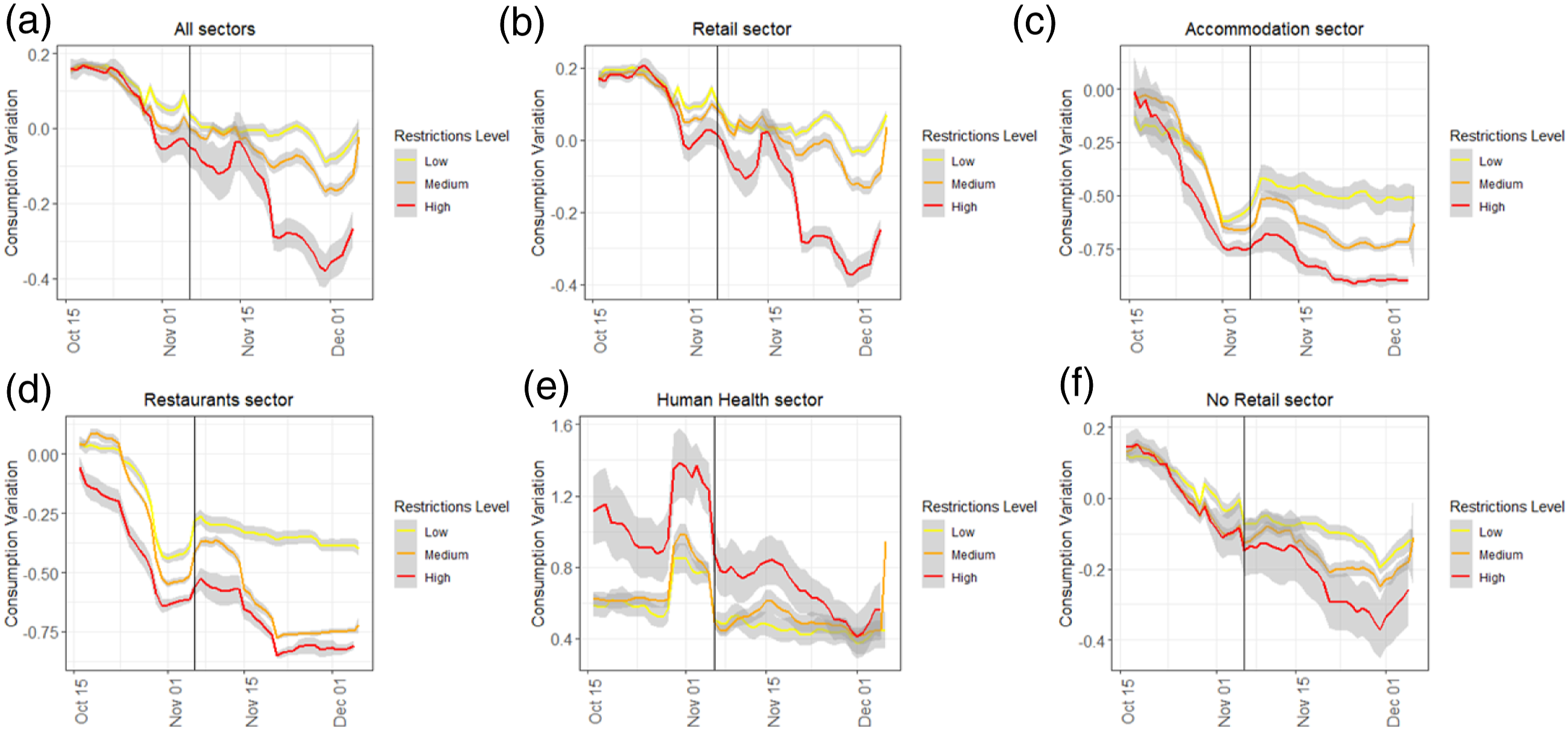
Descriptive Statistics for the Daily Y-o-Y Variation of Economic Consumption Across Different Sectors and for Different Levels of Policy Stringency Over the Period 16th of October – 7th of December 2020. The Set of Provinces Classified in Low, Medium and High Risk Level is Shown in Figures 2 and 3. Consumption Data are Sourced From the Major Italian Bank Dataset.
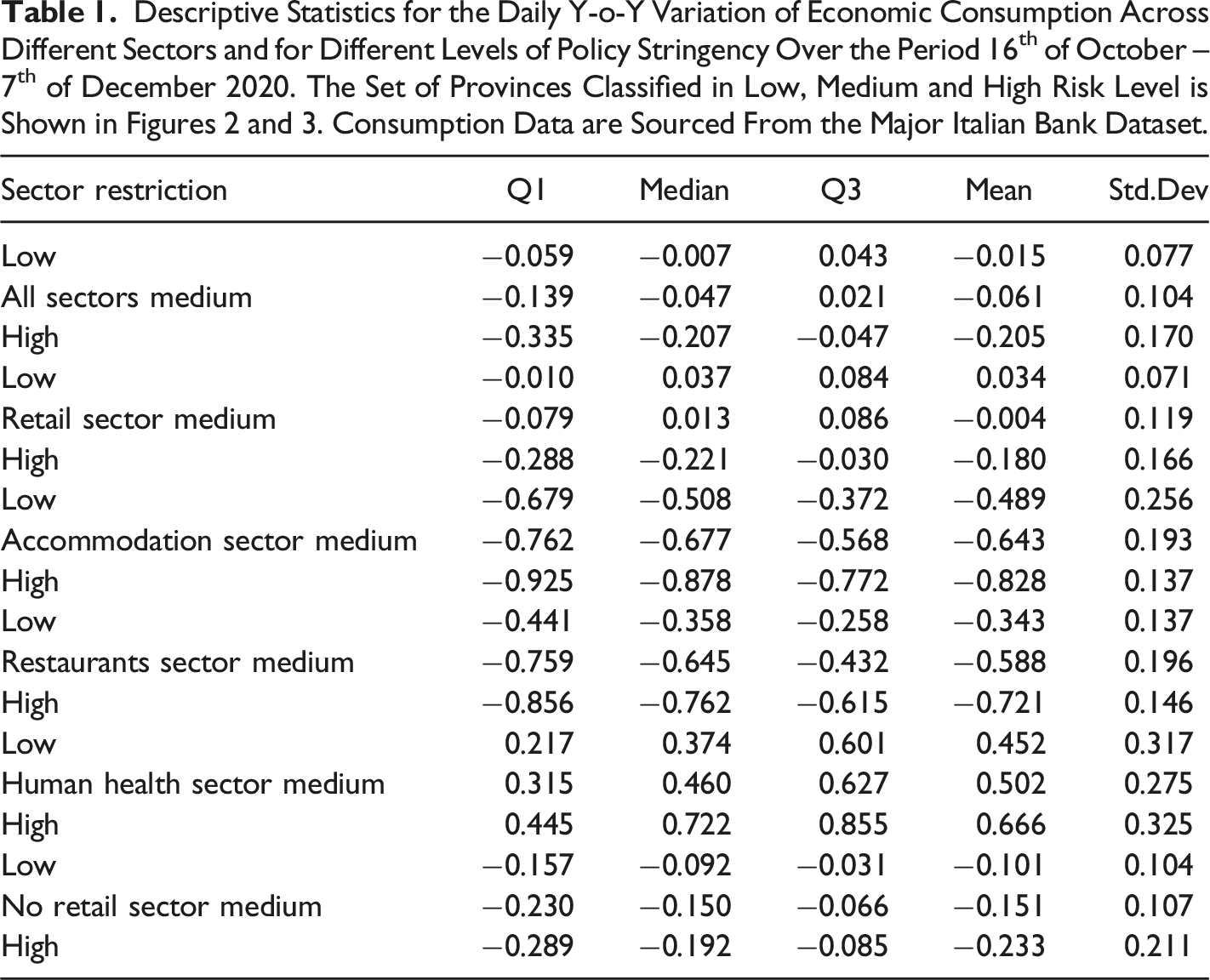
Human Health represents the only sector displaying consumption growth during the analysed period, with provinces adopting restrictions with a high stringency level subject to higher economic variation. Note how these two patterns suggest that expenditures in this sector are strongly related to the pandemic intensity. Finally, when the Retail sector is excluded, high risk provinces feature the largest average drop in consumption (−23.3%).
The Econometric Specification
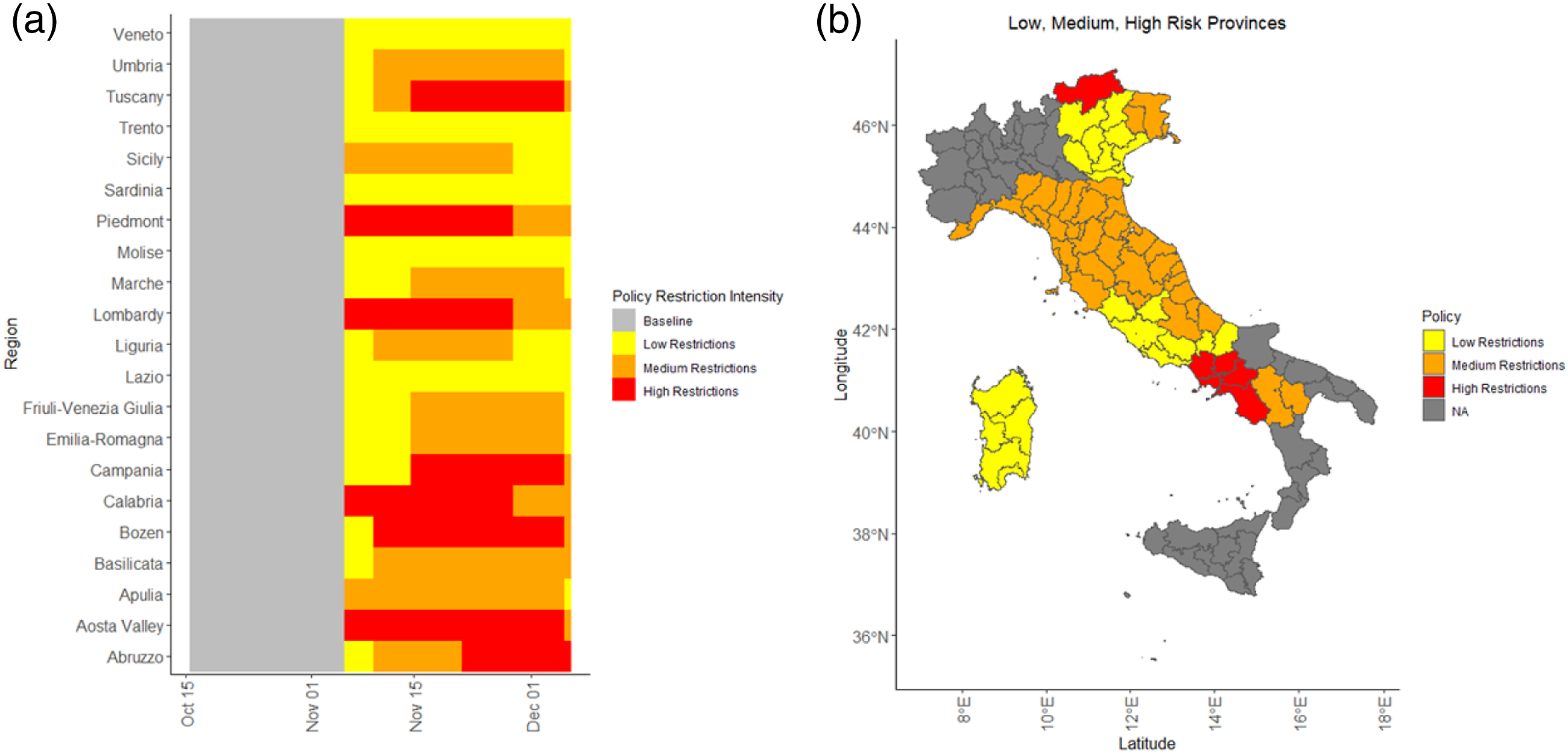
Our analysis aims to estimate the impact of the three tiers risk framework implemented in Italy since the 6th of November 2020 (see Panel A in Figure 2 for the risk classification of Italian regions over the analysed time frame). To disentangle the economic impact generated by restrictions with increasing stringency levels (low, medium, high), we rely on a standard two ways fixed effects (TWFE) panel event study with a dynamic specification, as described by Borusyak and Jaravel (2017) and de Chaisemartin and D’Haultfœuille (2022) in recent reviews of panel event study approaches. Similar statistical models have been recently applied also by Askitas, Tatsiramos, and Verheyden (2021), Chernozhukov, Kasahara, and Schrimpf (2021a) and Isphording, Lipfert, and Pestel (2021) to investigate the impact of alternative non pharmaceutical interventions on the spread of COVID-19. In formula Panel A shows the time evolution of differentiated policies in Italy over the period 16th October - 7th December 2020 at regional level. Panel B shows the geographical distribution of provinces classified as “low”, “medium” and “high” risk territories in our empirical analysis. In panel B, the grey colour refers to regions that are excluded from this analysis as they were immediately classified as medium or high risk areas on the 6th of November 2020.
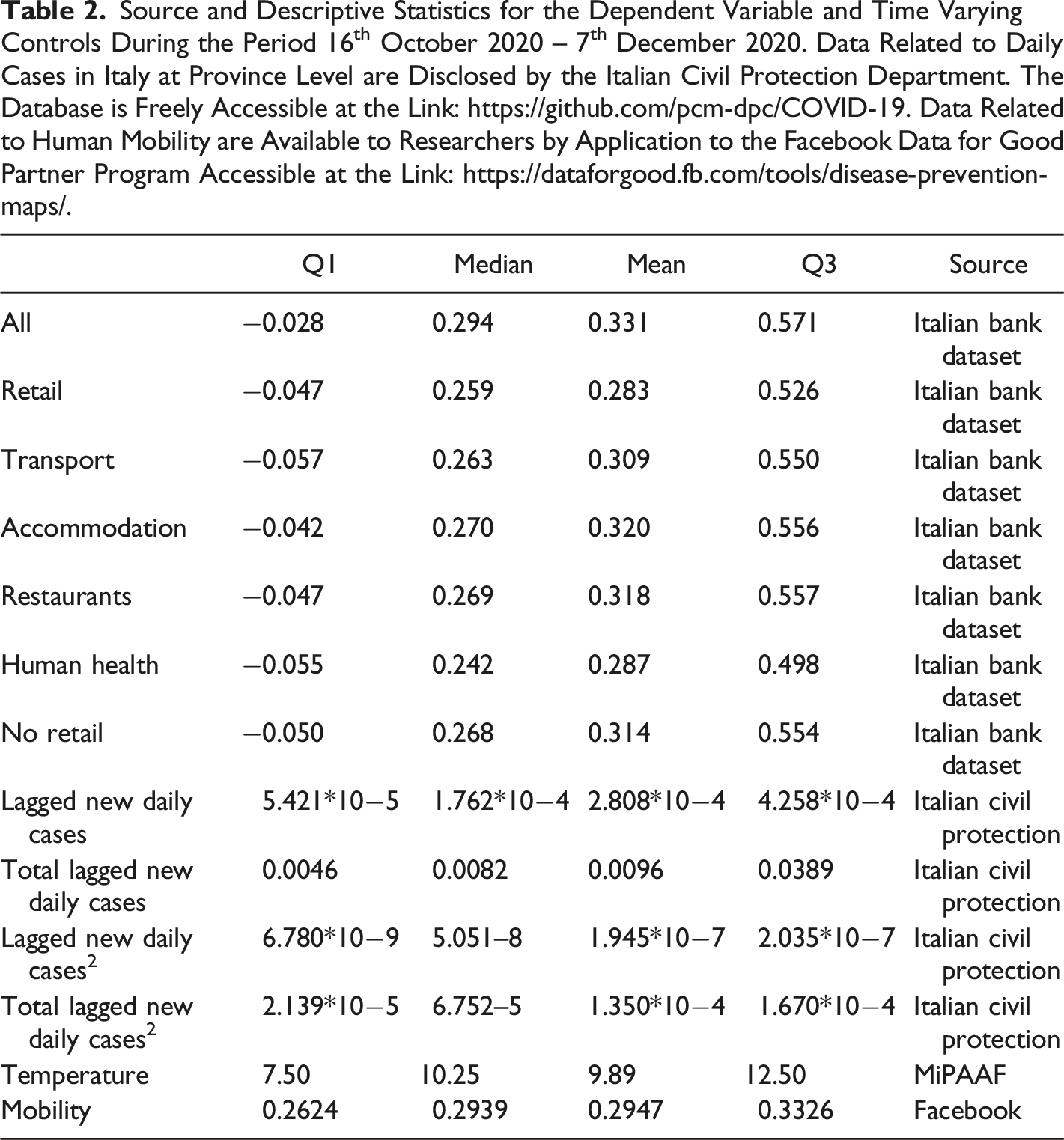
Source and Descriptive Statistics for the Dependent Variable and Time Varying Controls During the Period 16th October 2020 – 7th December 2020. Data Related to Daily Cases in Italy at Province Level are Disclosed by the Italian Civil Protection Department. The Database is Freely Accessible at the Link: https://github.com/pcm-dpc/COVID-19. Data Related to Human Mobility are Available to Researchers by Application to the Facebook Data for Good Partner Program Accessible at the Link: https://dataforgood.fb.com/tools/disease-prevention-maps/.
Under this specification the coefficients
Consistent with panel event study applications shown by Callaway and Sant’Anna (2021) and Sun and Abraham (2021), we consider a setting where our control group is constituted by never treated units, represented by all provinces classified as low risk since the 6th of November until the end of our analysed period (7th of December).
10
Units under medium treatment are all provinces classified as medium risk, after having previously been classified as low risk. Units under high treatment are all provinces classified as high risk, after having previously been classified as low risk (see Panel B in Figure 2 for the geographical distribution of provinces classified as low, medium and high risk areas for our empirical analysis). For both provinces under medium and high treatment, we exclude weeks in which such provinces may have changed again risk level after having been classified as medium or high risk (see panel A in Figure 3 for further details). In this way, we ensure that all provinces included into the analysis are subject to the same pre-treatment period (a baseline without differentiated policies between the 16th of October 2020 and the 6th of November 2020 and a period in which they were classified as low risk areas), thus avoiding that the impact of medium and high restrictions might be affected by different policies implemented before the start of the treatment. Panel A shows the time evolution of differentiated policies in Italy over the period 16th October - 7th December 2020 at province level. In panel A the white color refers to time periods that are excluded from our analysis due to a change in the risk status of the underlying province. Panel B shows the time evolution of our 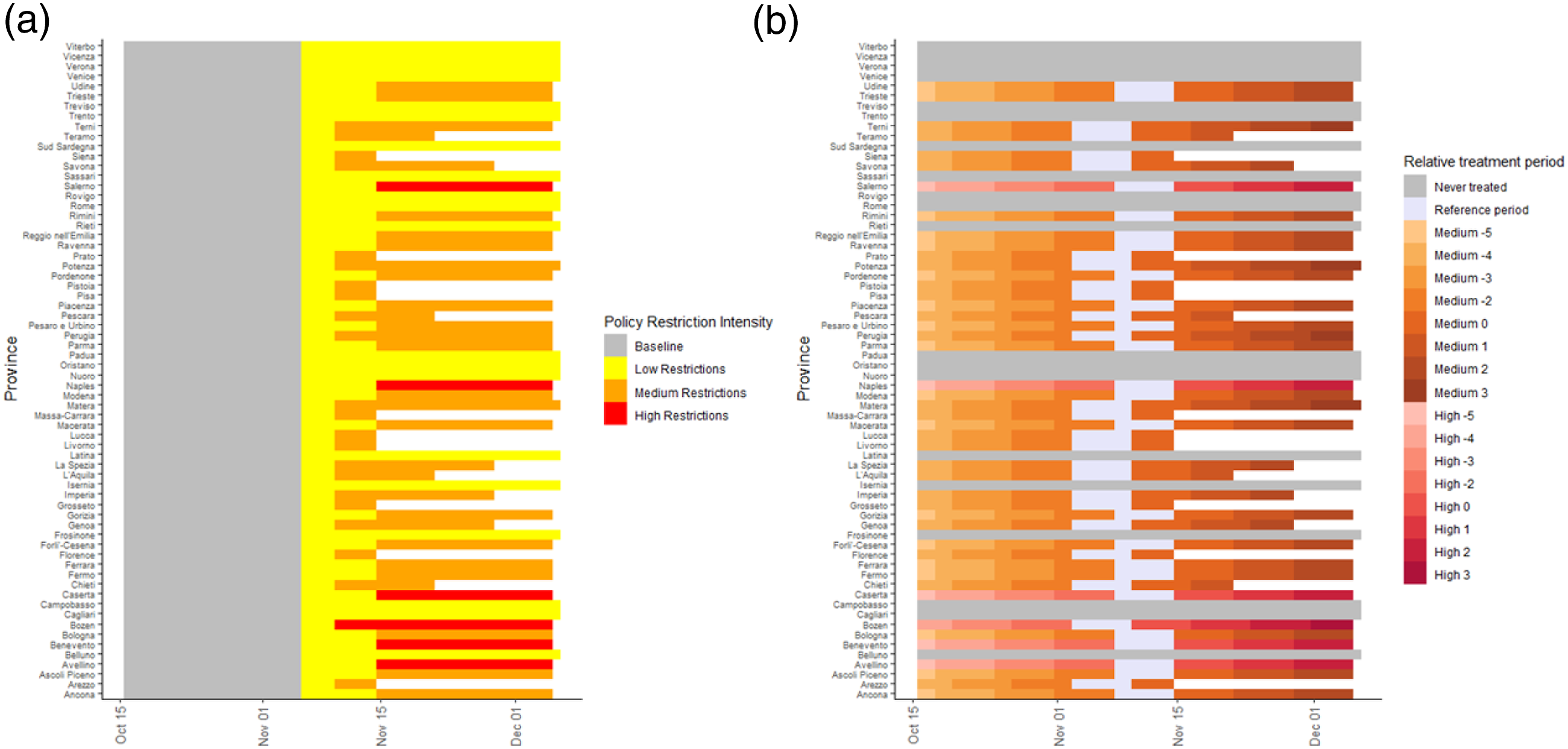
Consistent with a broad literature on panel event studies (Gallagher 2014; Ujhelyi 2014; Bailey and Goodman-Bacon 2015; Deryugina 2017; Sun and Abraham 2021), we omit the event week −1, corresponding to 1 week prior to the start of medium or high treatment, as it represents the closest lag from the treatment. Overall, Panel B in Figure 3 clarifies our empirical setting showing our control group and the time variation of the
Although differentiated policies in Italy started on the 6th of November, we analyse Italian provinces from the 16th of October in order to have 3 weeks of observations before the start of tailored containment restrictions. Furthermore, we stop our period of observation on the 7th of December, thus excluding from our analysis the time frame 8th December 2020 to 31st December 2020 for two main reasons. First, the government implemented on the 8th of December 2020 a policy package providing cash-back for household consumption to stimulate private demand, thus significantly affecting the purchasing behaviour of individuals with respect to the analysed period. Second, during weekends and holiday days of Christmas period, stricter uniform restrictions were implemented across territories, regardless the local severity of the pandemic.
We start estimating the model described in equation (2) separately for a set of economic sectors that were significantly affected by restrictions with different stringency levels. In particular, we focus on the Retail, Restaurants, Accommodation and Human Health sectors. Furthermore, we consider the case where we account for total consumption across all economic sectors and the case where we exclude only the Retail sector. In Appendix E we also estimate a model with a combined full sample of sectors (rather than split the sample by sectors), including as further controls also interaction effects composed of sector-time dummies (relative to a baseline sector). This gives us the opportunity to statistically test for differences in effect size across sectors.
Assessing the Relevance of Province Specific Socio-economic Variables
In a second step, we investigate whether local socio-economic characteristics, measured before the start of the pandemic, affect economic and epidemiological performances of Italian territories implementing the same level of policy stringency. We first identify three sets of comparable provinces adopting the same level of policy stringency. We do this based on our main dimension of analysis, constituted by the risk tier associated with Italian provinces based on the three tiers risk framework (e.g. low, medium and high risk areas). Low risk provinces are composed by territories adopting restrictions with a low stringency level over the whole analysed period of differentiated policies (6th of November - 7th of December). Medium (high) risk provinces are territories either immediately classified as medium (high) risk provinces, or provinces implementing restrictions with medium (high) stringency level after having been classified as low risk areas on the 6th of November 2020. Moreover, we exclude the baseline period before the 6th of November and other following weeks where such provinces may have switched to a different risk status with respect to the one employed in our analysis. In this way, we ensure to compare territories implementing the same level of policy stringency over a period in which they are subject to the same treatment. Figure 4 shows the set of provinces classified as low, medium and high risk areas for the analysis described in this section.
11
Geographical distribution of provinces classified as “low”, “medium” and “high” risk territories in our empirical analysis to assess the relevance of province specific socio-economic variables based on the methodology described in section Assessing the Relevance of Province Specific Socio-economic Variables.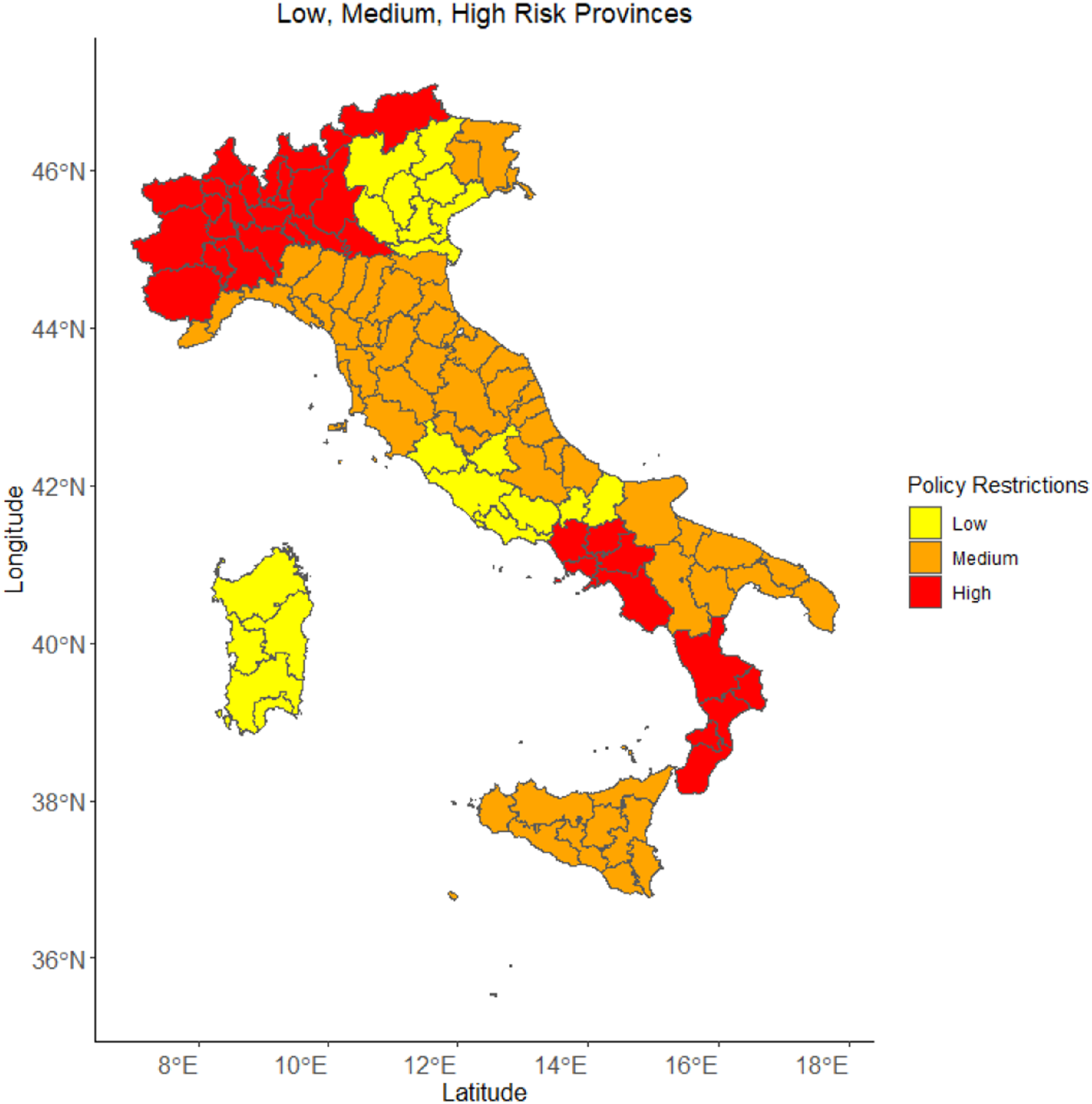
Then, within each risk tier r (low, medium, high) we define two different categories of territories (

We define 

Finally, through a set of t-tests we check whether within each tier of provinces with the same level of policy stringency, the two categories exhibit statistically different socio-economic characteristics. In this way, we study whether factors underlying the two categories may represent relevant drivers of the impact of restrictions over the economic and epidemiological dimensions.
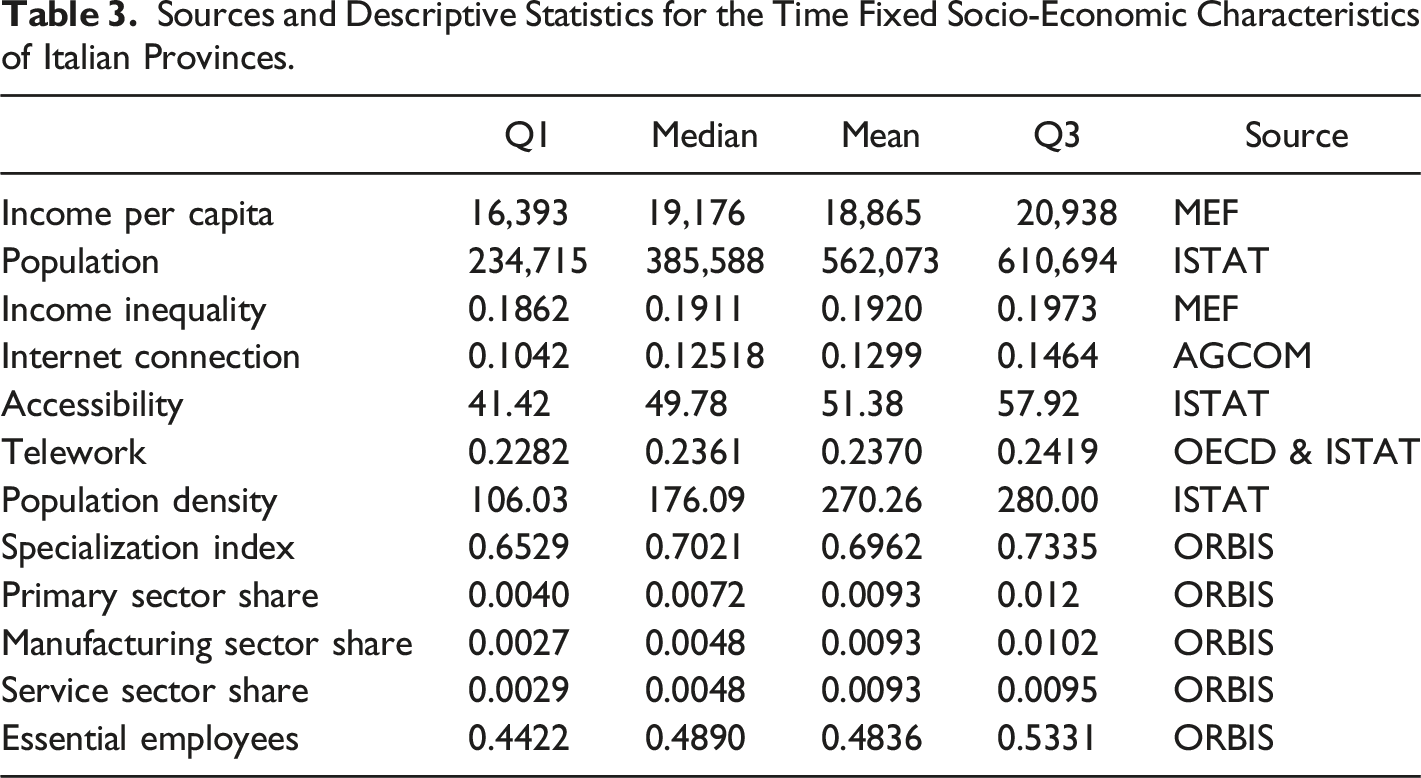
In the following, we motivate the set of province specific socio-economic characteristics that we consider in our analysis as potential drivers of the heterogeneous epidemiological and economic behaviour of territories implementing the same level of policy stringency. Specifically, since restrictions might have been associated with the exacerbation of socio-economic disparities (Bonaccorsi et al. 2020, 2021; Polyakova et al. 2020), we consider Income per capita and Inequality 12 in the distribution of income as drivers potentially affecting the outcome of the policy. Moreover, as the severity of the pandemic might have been influenced by demographic characteristics, we include in the analysis Population and Population Density (Sheridan et al. 2020).
We consider also a Telework index representing for each province a proxy of the portion of individuals that could work from remote, since the level of contagion and economic consumption might have been affected by the extent to which employees could work remotely limiting contacts with other individuals. 13
In addition, we consider the percentage of citizens with fast Internet Connection 14 and Accessibility 15 as two additional factors representing the capability of each province to be connected with other territories from a digital and physical perspective.
Furthermore, the geographical concentration of specific economic sectors may require stronger face-to-face interactions and direct contacts among people. As a consequence, in line with Ascani, Faggian, and Montresor (2020), we consider an indicator of economic specialization to understand whether the level of concentration of economic activities may have significantly affected contagion and consumption variation of provinces even in presence of restrictions with the same stringency level. 16
Nonetheless, even territories characterized by similar specialization profiles, may hide significant differences in terms of the local economic structure, depending on the economic sector mix. For this reason, we consider in our analysis the share of workers employed in the Primary, Manufacturing and Service sectors in each province. 17
Finally, since the Italian government defined a set of essential sectors that may stay open during the lockdown, while freezing all other economic activities, we consider the portion of individuals employed in essential sectors with respect to the total number of employees at province level. 18
Sources and Descriptive Statistics for the Time Fixed Socio-Economic Characteristics of Italian Provinces.
Results
The Economic Impact of Restrictions
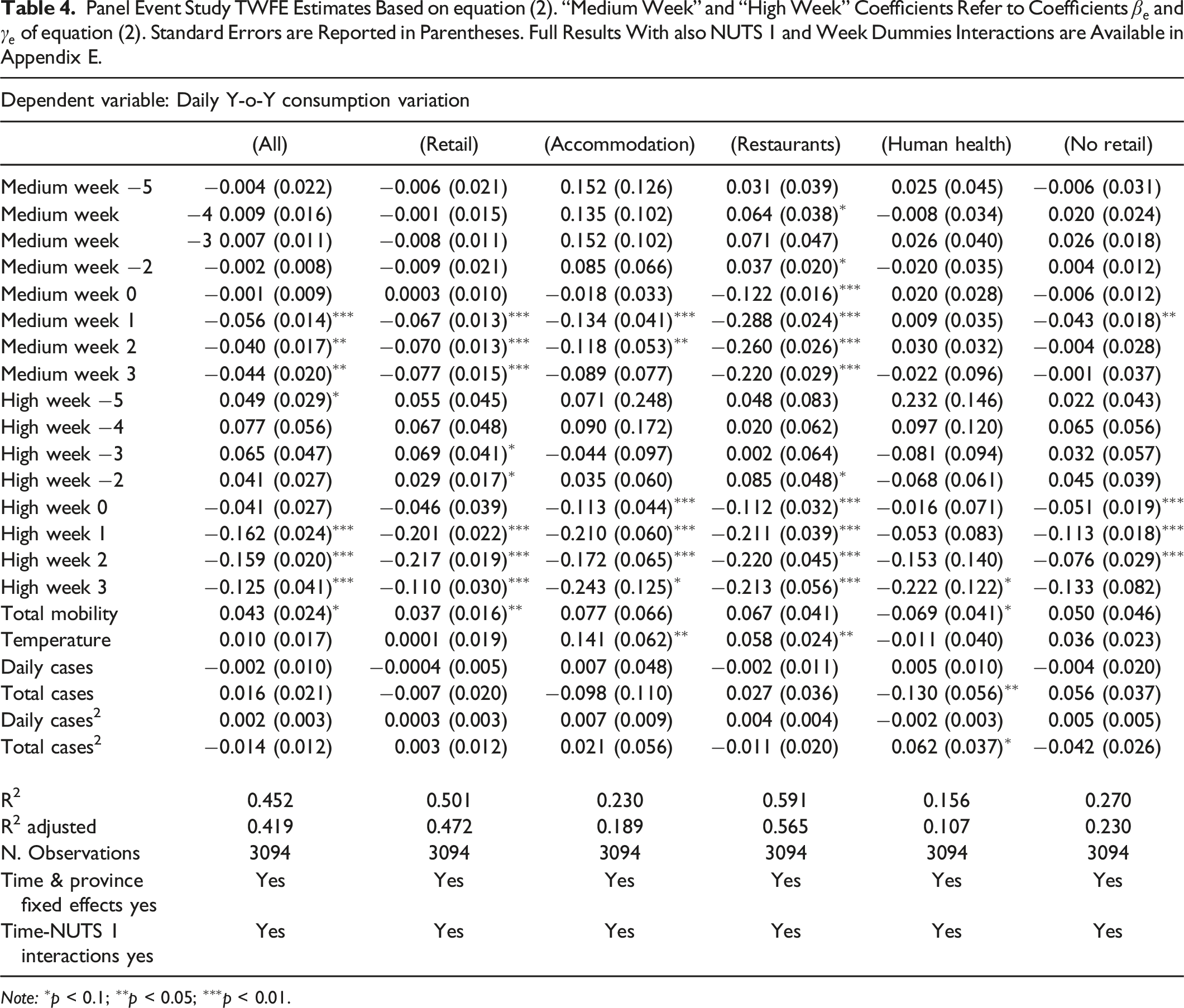
Panel Event Study TWFE Estimates Based on equation (2). “Medium Week” and “High Week” Coefficients Refer to Coefficients
Note: ∗p < 0.1; ∗∗p < 0.05; ∗∗∗p < 0.01.
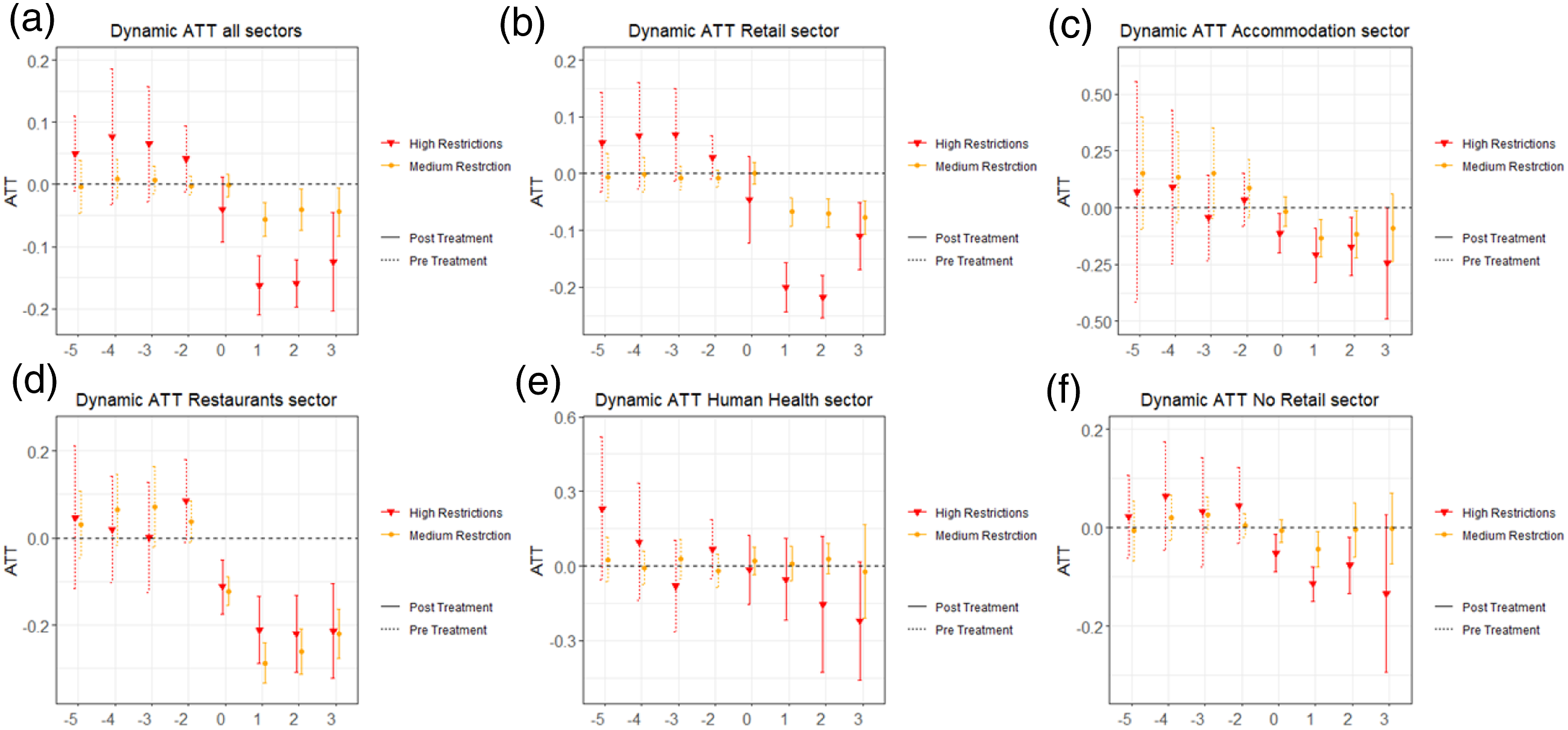
This figure shows the values of coefficients
Overall, we obtain heterogeneous impacts of alternative containment restrictions across sectors. When we take into account all sectors of local economy, we find evidence of a significant welfare loss in terms of reduction of economic consumption in high risk provinces with respect to territories implementing restrictions with a low stringency level, with an average treatment effect on treated (ATT) ranging between −16.2% and −12.5%. This means that on average, in a day belonging to week 1, a high risk province experiences a variation of economic consumption (computed considering consumption across all sectors) that is 16.2% lower with respect to a low risk province. Such effect is smaller after the immediate implementation of the high stringency policy (week 0), while it is higher over weeks 1–3.
Conversely, we find lower welfare losses from spending decrease for areas implementing restrictions with a medium stringency level, with an ATT between −5.6 and −4.0%. The absence of significant coefficients in the weeks before the start of differentiated policies (the only exception is week −5 for high risk provinces) highlights that the parallel trend assumption holds, suggesting that consumption patterns of analysed provinces do not tend to display statistically significant differences before the start of the treatment.
Such evidence is confirmed when we focus only on the Retail sector. This result highlights the relevance of this sector for local economy. Indeed, we obtain still negative and significant ATTs for provinces adopting high stringency level restrictions, with a contraction of economic consumption between −21.7 and −11.0%. We confirm a lower immediate effect of the policy in week 0, with the magnitude of the consumption reduction that is higher during week 1 and 2. We find that also territories implementing restrictions with a medium stringency level are characterized by an economic loss between −7.7 and −6.7% (excluding week 0 for which we do not find a significant contraction of economic consumption). Notice how the magnitude of the reduction of economic activity is statistically different also between medium and high risk areas. This result is coherent with the stringency of restrictions adopted in these provinces. Indeed, the former were forced to close not essential sectors only in the weekend, while the latter had to close such business activities for 7 days per week.
When we take into account the Accommodation sector, we find evidence of a significant reduction of economic activities in areas characterized by high stringency level restrictions with welfare losses between −24.3 and −11.3%. Interestingly, notice how the effect of restrictions is immediately significant even at week 0. On the other hand, we show that territories adopting restrictions with a medium stringency level experience a significant reduction of economic consumption only one and 2 weeks after the start of the treatment (week 1 and week 2). Such evidence may be explained by the heterogeneity of mobility restrictions across territories with different levels of policy stringency. Indeed, high risk areas forbid intra-municipality movements with the exception of work and health reasons, medium risk provinces allowed individuals only to flow within the local administrative unit, while low risk territories permitted even mobility across regions.
Significant welfare losses in all weeks of treatment are displayed by the Restaurants sector with an ATT between −28.8 and −12.2% for medium risk areas and between −22.0 and −11.2% for high risk provinces. This evidence is consistent with the fact that both in medium and high risk provinces, restaurants and bars were closed 7 days per week and food delivery was allowed until 10 pm, whereas low risk provinces kept bars and restaurants open until 6 pm. In addition, notice how restrictions with the same stringency level produced a similar contraction of the economic activity in medium and high risk territories, with ATT coefficients that are not statistically different for the two groups of provinces. We provide also evidence of a lower immediate impact with restrictions that display a stronger magnitude of economic consumption reduction in the following periods with effects that tend to remain stable over weeks 1–3 since the start of the treatment, thus suggesting that the regulation is not reducing its effectiveness over time.
The Human Health sector is subject to a weakly significant contraction of consumption in areas with a high stringency level only at week 3 (−22.2%), while we do not find evidence of welfare losses in medium risk areas. This finding is in line with the absence of restrictions directly targeting this sector in all low, medium and high risk provinces.
Finally, when we exclude the Retail sector, we confirm a significant welfare loss in high risk provinces, with a contraction of consumption between −11.3 and – 5.1% (with the exception of week 3). However, as strong differences between high and low risk areas were related to the Retail sector, notice how the magnitude of the consumption reduction is lower when we exclude the Retail sector with respect to the case in which we consider all sectors or we just focus on the Retail sector. On the other hand, we show relevant welfare losses for medium risk territories only at week 1 with a small magnitude (−4.3%). Considering that low and medium risk provinces mainly differ for restrictions concerning restaurants, local mobility and retail activities, it is reasonable to obtain significant ATT coefficients for medium risk provinces in the Accommodation, Restaurants and Retail sectors, with lower evidence of welfare loss when consumption aggregates across larger groups of sectors are considered.
Since ATT coefficients do not tend to be statistically significant in the weeks before the start of the treatment, we confirm that our results do not suffer from different behaviours of treated and control territories in the period before the implementation of the three tiers risk framework. These results suggest that restrictions with a high stringency level tend to generate welfare losses that are significant with respect to provinces characterized by restrictions with a low stringency level. Similarly, we find evidence of significant consumption reduction in medium risk areas in those sectors where the level of policy stringency is different with respect to low risk provinces. Furthermore, we show that differentiated policies tend to display a lower immediate impact, with an increase in the reduction of economic consumption over the following weeks, suggesting persistency of the effects.
To check the robustness of our results, we estimate equation (2) by combining the full sample of sectors (results are reported in Appendix E). In particular, by including within the same model the economic variation of the Retail, Restaurants, Accommodation and Human Health sectors, we have the possibility to study the significance of the different economic behaviours of the underlying sectors. Overall, we confirm that a stronger welfare loss is achieved by provinces subject to restrictions with a high policy stringency with a contraction of consumption between −16.5 and −7.6% (see Table E3 and Figure E1). Notice how the reduction of economic activities tends to be persistent over the whole period of restrictions with a high stringency level. Furthermore, a negative and significant consumption reduction is experienced also by medium risk territories, with an ATT between −10.0% and −2.6%. Sectoral dummy variables suggest that welfare losses in the Restaurants and Accommodation sectors are significantly higher than in the Retail sector (−15.0 and −23.6%, respectively), while the Human Health sector experiences larger consumption variation (46.9%), corroborating that the pandemic contributed to extra consumption in this sector. Such result tends to be confirmed also over time for the different analysed weeks, with interactions between weeks and sectors remaining significant and confirming a persistent contraction of economic activities in the Restaurants and Accommodation sectors with respect to the Retail sector.
The Heterogeneous Epidemiological and Economic Performances of Provinces with Similar Policy Stringency
In this section, we analyse whether the differentiated policies adopted by the Italian government during the Autumn of 2020 were able to produce homogeneous results in terms of contagion containment and consumption variation across provinces implementing restrictions with the same stringency level. Following the methodology described in section Assessing the Relevance of Province Specific Socio-economic Variables, we divide Italian provinces with respect to our main dimension of analysis represented by the three risk tiers (e.g. low, medium and high risk provinces).
Based on Equations (5) and (6), within each risk tier, we identify provinces (
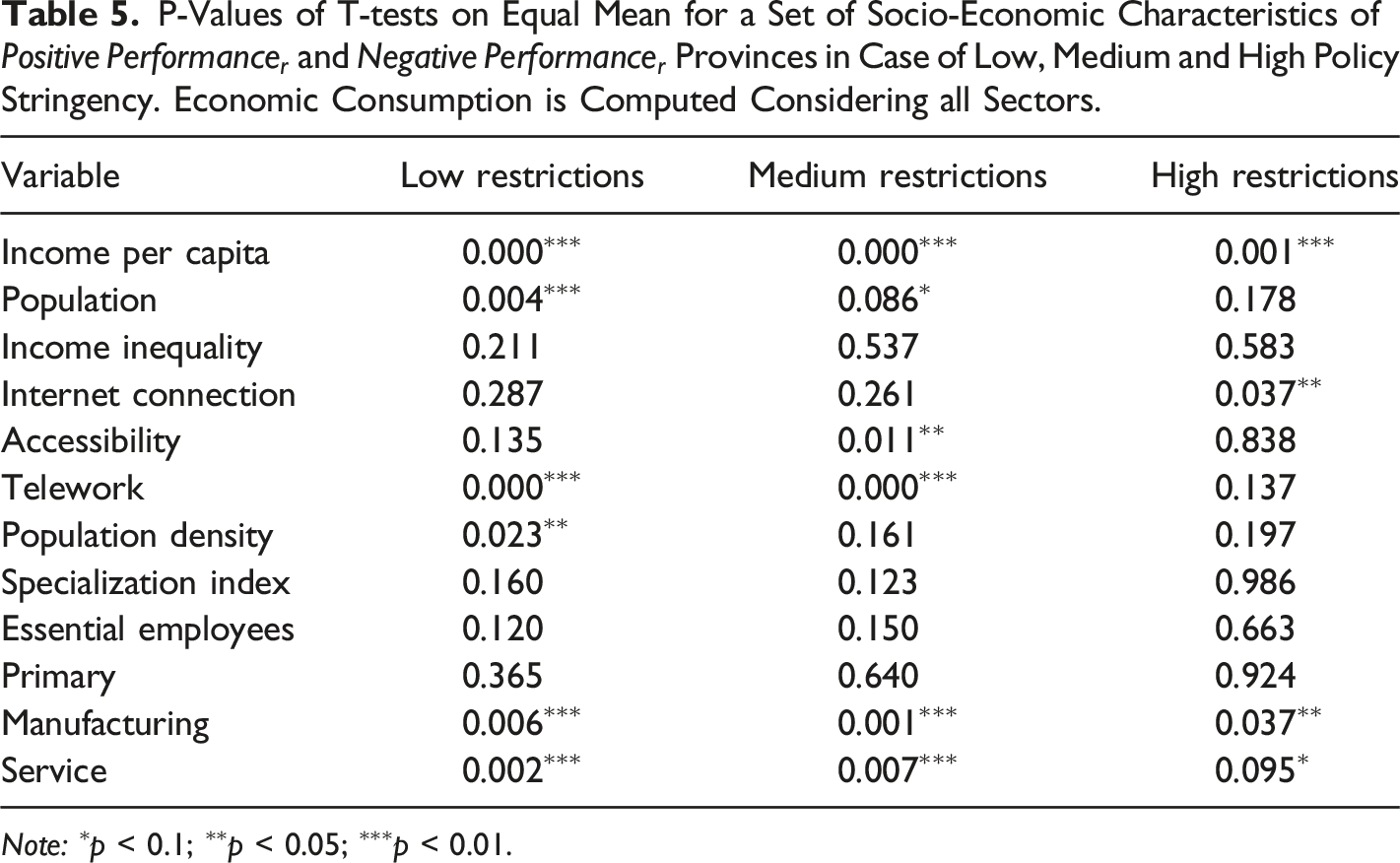
Figure 6 shows the geographical distribution of these two categories of territories for low, medium and high risk provinces when we consider economic consumption across all sectors. In low risk territories, we identify a strong concentration of provinces with negative healthcare and economic performances in Veneto, while areas with positive results are spread in Sardinia and the Centre of Italy (Panel A). These territories tend to display significantly different socio-economic features, with provinces characterized by negative economic and epidemiological performances experiencing significantly higher levels of income per capita, population, population density, opportunity to implement a telework approach and larger concentration of manufacturing and service activities (see Table 5). Such result suggests that specific local socio-economic factors still drive contagion and economic patterns, even in case of tailored restrictions. Furthermore, it highlights the key role of the local labour market structure in explaining the epidemiological and economic behaviour of territories. P-Values of T-tests on Equal Mean for a Set of Socio-Economic Characteristics of Note: ∗p < 0.1; ∗∗p < 0.05; ∗∗∗p < 0.01.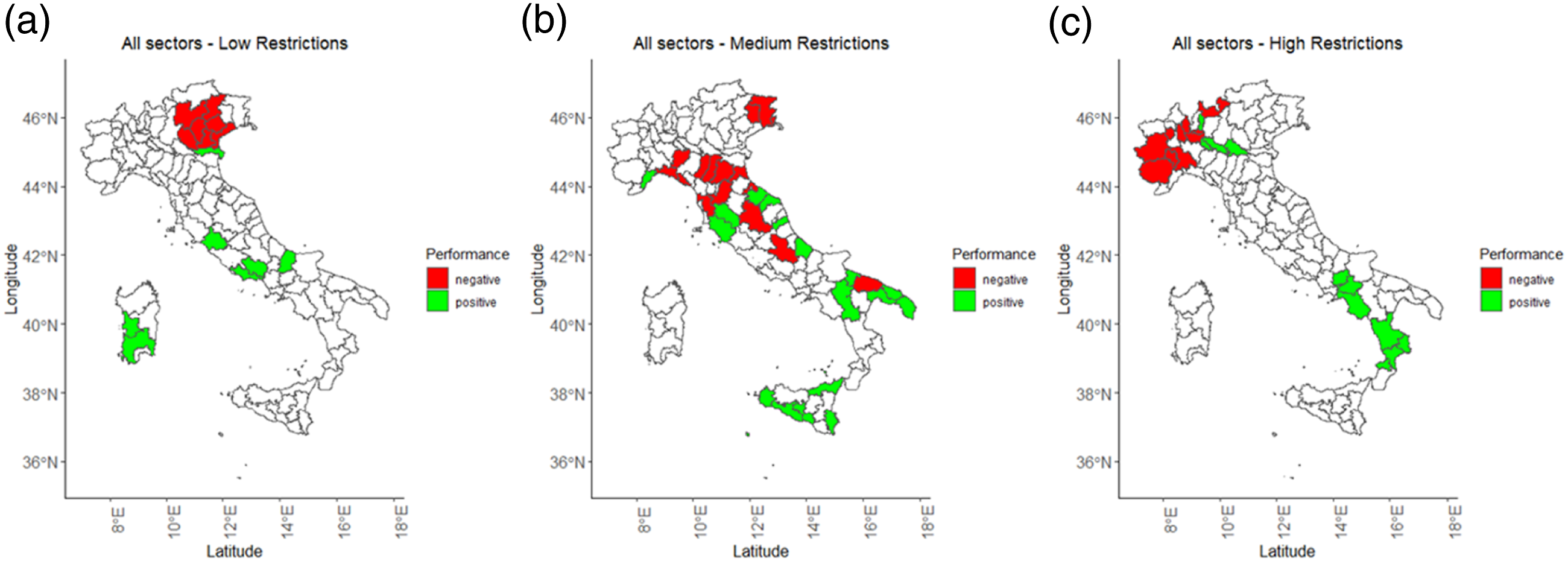
Focusing on the concentration of manufacturing activities, our result is coherent with Ascani et al. (2021) who show how industrial districts may experience higher excess mortality rates due to systematic interdependencies, direct face-to-face contacts and coordinated interactions among workers. Furthermore, given that manufacturing firms are usually characterized by business linkages that cross local administrative boundaries (Boschma and Iammarino 2009; Cainelli, Maria, and Ganau 2014; Kemeny and Storper 2015), such evidence is consistent with Ferraresi et al. (2021) who highlight that export and investment oriented value chains may be more penalized by restrictions during the pandemic.
As for the service sector, we find results in line with Guaitoli and Pancrazi (2021) who show that in Italy during Autumn 2020 restrictions with the same level of stringency generated significantly higher contagion in provinces with a larger share of population employed in service sectors. This might be justified by physical vicinity of workers with a large number of customers. Furthermore, our empirical evidence corroborates findings from a rich stream of literature highlighting the vulnerability and low resilience of service sectors to the pandemic (Alexander and Karger 2020; Bounie, Camara, and Galbraith 2020; Carvalho et al. 2020; Chetty et al. 2020; Hacıoglu-Hoke, Kanzig, and Surico 2021).
Differently from Ascani et al. (2020), who show how, during the lockdown period, territories with higher concentration of essential sectors were subject to a stronger pandemic intensity, we do not find significant evidence of stronger contribution of essential sectors to the resurgence of the contagion. Indeed, areas characterized by higher levels of essential sectors tend to experience higher economic consumption, but better performances also in terms of pandemic intensity. Our finding is more in line with Ferraresi et al. (2021) who show the absence of a significant trade-off between contagion and economic losses in the re-opening of essential sectors. Furthermore, this result might be explained by the fact that differently from the lockdown period, the resumption of economic activities was not limited to essential sectors in low restriction areas, thus reducing the relevance of such sectors in explaining infections dynamics, since also other business activities may have significantly contributed to the severity of the contagion.
Although differentiated policies should define a trade-off between healthcare and contagion performances, we find even a higher number of provinces in the two categories of territories characterized at the same time by both positive or negative healthcare and economic performances for the case of medium risk provinces (Panel B). Territories characterized by negative results in both the two dimensions are widespread across the Centre and North of Italy, with some exceptions in the South with the provinces of Bari and L’Aquila. Areas with positive performances are localized in Abruzzo, Apulia, Basilicata, Liguria, Marche, Sicily and Tuscany. Although in this case socio-economic differences across the two categories are slightly less marked, we confirm that areas with better performances display significantly lower income per capita, population, accessibility, opportunity to telework, and concentration of manufacturing and service sectors (see Table 5).
We finally show the results for the tier adopting restrictions with a high stringency level. Interestingly, we still find a strong geographical separation of provinces with negative and positive performances in terms of contagion and consumption variation (see Panel C). The former are concentrated in the North of Italy, especially in Lombardy, Piedmont and Trentino Alto Adige. The latter are mainly localized in the South of Italy in Calabria and Campania, with some exceptions in Lombardy. Again, the two categories display significantly different socio-economic characteristics, corroborating the idea that across all stringency levels, territories with negative economic and epidemiological performances feature higher income per capita (see Table 5). Furthermore, the two categories are characterized by different levels of internet connection, with better performing territories experiencing wider access to a fast broadband. Finally, also the concentration of manufacturing and service activities are relevant drivers of epidemiological and economic patterns, consistent with the evidence shown for low and medium risk provinces.
Overall, these results suggest that space-time differentiated policies continue to produce heterogeneous results in terms of infections and economic contraction, with results mainly driven by the local economic structure.
Conclusions
This paper analyses the economic impact of differentiated policies, constituting the main strategy adopted to tackle new waves of contagion during the Autumn of 2020 in Italy. In this way, we contribute to studying to what extent new policies implement lessons learned from past experience supported by real evidence. In particular, we investigate the capability of alternative restrictions to impose carefully tailored stringency levels that avoid disproportionately affecting territories characterized by lower pandemic intensity.
We show that economic consumption is reactive to restrictions with different stringency levels. Specifically, we observe that high risk territories exhibit a stronger welfare loss in terms of economic consumption across almost all sectors of local economy with respect to low risk territories. In particular, we estimate that the economic contraction induced by restrictions with a high stringency level ranges between −16.2 and −12.5% when we consider consumption across all sectors, while it reaches even larger drops in the Accommodation (between −24.3 and −11.3%) and Restaurants (between −22.0 and −11.2%) sectors.
Conversely, medium risk territories experience a significant contraction of economic consumption, only in those sectors where they introduce more stringent restrictions, with respect to low risk territories. More in detail, a significant economic impact is generated in the Accommodation, Restaurants and Retail sectors, with welfare losses ranging between −28.8 and −6.7% across the different sectors.
Furthermore, we show that space-time differentiated policies tend to have a lower immediate impact, with a stronger magnitude of consumption reduction over the following weeks, providing evidence of persistency of policy effects. These results point out that such differentiated policies diversify the magnitude of contraction of economic activities in coherence with the local pandemic severity and with the stringency level of restrictions imposed by the three tiers risk framework, avoiding producing an indiscriminate and generalized reduction of business activities. The main implication is that space-time differentiated policies can thus be a valid alternative to national lockdowns, with one-size fits all approaches risking disrupting local socio-economic systems.
In a second step, we provide some preliminary evidence on the capability of such differentiated policies to produce equal and homogeneous effects in terms of epidemiological and economic results across territories adopting restrictions with similar levels of stringency. Based on the comparison of epidemiological and economic performances of such provinces, we still find that results are driven by local socio-economic characteristics. In this direction, we demonstrate that within sets of provinces adopting restrictions with the same stringency level, it is possible to identify two categories of territories displaying at the same time positive or negative performances in terms of contagion and economic consumption. These areas feature significantly different socio-economic characteristics, with provinces characterized by negative results, showing higher income per capita, and larger concentration of manufacturing and service sectors.
The significant spatial dimension of COVID-19 pandemic, producing uneven contagion and contraction of economic activities across territories adopting restrictions with the same stringency level, suggests how the local epidemiological and economic resilience and vulnerability of territories is still heterogeneous despite the implementation of space-time differentiated policies. As a consequence, specific socio-economic factors related to the local economic structure such as the concentration of business activities across different sectors should be properly accounted in the design of containment restrictions to increase the homogeneity of healthcare and economic performances of Italian territories and avoid the exacerbation of differences across areas.
These findings can be useful also for other countries implementing similar differentiated policies against the pandemic to understand the potential impact of their restrictions in terms of welfare loss. Indeed, in Europe restrictions with different stringency levels represented a common approach to face the resurgence of the contagion during the Autumn of 2020, avoiding a horizontal national lockdown. However, still relevant differences exist among these countries and should be carefully considered before generalizing the results to a broader context.
In fact, European countries exhibit different profiles both regarding the epidemic dimension (e.g. the severity of COVID-19 contagion (Clark et al. 2020) and the dynamics of social interactions (Mossong et al. 2008)), and the socio-economic dimension (e.g., territorial divides (Rodrıguez-Pose 2018), levels of penetration of online sales (Bounie, Camara, and Galbraith 2020), and the propensity to implement telework solutions (Espinoza and Reznikova 2020)). Even stronger attention should be provided to extend such findings to Asian countries, since their policy approach made larger use of available technologies such as contact tracing apps that contributed to designing alternative restrictions with respect to the European context (Akinbi, Forshaw, and Blinkhorn 2021; Zhou et al. 2021).
Overall, we acknowledge that our analysis presents some limitations. First, due to restrictions to human mobility, online expenditures may constitute a relevant source of information to study consumption dynamics during the COVID-19 pandemic. Although physical consumption significantly correlates with consumption data disclosed by the national statistical office, and despite the limited penetration rate and high homogeneity of online transactions across territories, we believe that future research works might try to include online transactions in the empirical analysis to further refine the precision of results. Such studies may be particularly useful, especially in specific sectors such as Accommodation, Retail or Human Health, where the portion of physical transactions is lower and probably less representative of consumption behaviour.
Furthermore, our time frame is short, focusing on a narrow time window (16th of October - 7th of December 2020), where the Italian government started to implement differentiated policies across territories. Additional relevant insights for policy makers may come from similar analyses taking into account additional instruments to tackle the pandemic such as the vaccine, which has been available since the first term of 2021. This type of studies may complement our findings, providing evidence on the effectiveness of combined and integrated policy packages against the COVID-19 pandemic.
Supplemental Material
Supplemental Material - Do We Learn From Errors? The Economic Impact of Differentiated Policy Restrictions in Italy
Supplemental Material for Do We Learn From Errors? The Economic Impact of Differentiated Policy Restrictions in Italy by Francesco Scotti, Andrea Flori, Giovanni Bonaccorsi, and Fabio Pammolli in International Regional Science Review.
Footnotes
Declaration of Conflicting Interests
The author(s) declared no potential conflicts of interest with respect to the research, authorship, and/or publication of this article.
Funding
The author(s) received no financial support for the research, authorship, and/or publication of this article.

Supplemental Material
Supplemental material for this article is available online.
Notes
References
Supplementary Material
Please find the following supplemental material available below.
For Open Access articles published under a Creative Commons License, all supplemental material carries the same license as the article it is associated with.
For non-Open Access articles published, all supplemental material carries a non-exclusive license, and permission requests for re-use of supplemental material or any part of supplemental material shall be sent directly to the copyright owner as specified in the copyright notice associated with the article.
