







Abstract
On April 4, 2023, the U.S. federal government ended its emergency response to the COVID-19 pandemic. Four years into the pandemic, what experiences do local governments in South Texas have? What lessons have they learned? Through an inductive inquiry of local governments in South Texas and leveraging public values governance theory, this study utilized a qualitative approach to analyze interview data gathered from local government leaders in South Texas. We present a retrospective analysis to capture the policy experiences and extract lessons learned from the responses of these localities. Findings show that, in this crisis, these localities adopted participatory and collaborative governance, enabling them to share knowledge and optimize the use of scarce resources. We found that, to take effective and legitimate action, managers adopted pragmatic approaches that helped them address problems and learn from their experiences. The implications of the findings for theory, research, and practice are discussed.
Introduction
Within the U.S. constitutional framework, the federal and state governments have power over local governments (hereafter referred to as localities). In fact, state governments determine what localities can do (Fowler and Witt 2019). Gerber and Hopkins (2011) demonstrate that localities have limited control over policy outcomes due to constitutional and statutory constraints. Ironically, in the fight against the deadly COVID-19 disease, the question being asked of the federal and state governments is the same question being asked of localities: Is the protection of life efficient, effective, and equitable? The irony is that localities with the least political power and institutional capacity are being held to the same standards as those with concentrated power. However, as COVID-19 receded, and this analysis shows, a sense of community and collaboration are the central driving forces framing the responses of local leaders and public managers to the pandemic. What are the lessons of localities in South Texas?
Several pre-pandemic studies have examined how theories and concepts can be applied to assess inequities and inequalities embedded in the “structural root causes” of local governance (e.g., Blessett et al. 2017). During the pandemic, scholars analyzed the effectiveness of local leaders in navigating the crisis. Studies assessed preparedness for the continued delivery of services and future pandemics (Deslatte et al. 2020; McDonald et al. 2020; Willoughby et al. 2020). McDonald et al. (2020) found that localities faced resource and legal constraints in implementing effective policy measures. Localities also needed federal financial assistance, fewer regulations and restrictions (Deslatte et al. 2020). Morrill (2021) argues that in times of crisis, localities require community support, which is where local capacity is critical for performance. However, despite the disruptions caused by budget cuts, localities successfully confronted the challenges posed by the COVID-19 pandemic.
Beyond anecdotal evidence, there is a notable lack of research on the performance of local governments in South Texas during the COVID-19 pandemic. Studies indicate that during the pandemic, local government leaders provided leadership, guidance, and strategic vision in their continued efforts to deliver services to citizens (e.g., Connelly 2020). Others demonstrate that local governments have provided financial support to mitigate the impact on vulnerable communities (e.g., City of Dallas 2020). Leveraging public values governance, we address a research gap by exploring how (1) South Texas localities responded to COVID-19; (2) the roles local leaders and managers played; (3) the successes and failures; and (4) the lessons learned. The study examines local governance and public values that drive leadership and management, aiming to enhance understanding of how localities along the US-Mexico border manage crises.
The study is divided into five sections. First, the literature is synthesized, emphasizing conflicting national and state policy responses (Bergquist et al. 2020; Maltese et al. 2021), cooperation and conflict between state and localities (Hanson and Zeemering, 2021; Kettl 2020; Mallinson 2020), local government response and health disparities (e.g., Gaynor and Wilson 2020), and interjurisdictional or intergovernmental collaboration (Dzigbede et al. 2020; ICMA 2012). Secondly, the methods are described before presenting the findings. We conclude by discussing the implications of research, theory, and practice.
Theoretical Framework
Public Values Governance
The literature review suggests that a robust theoretical framework is necessary to analyze state and local responses during the pandemic, one that can help illuminate avenues for scholarly inquiry into the local dynamics of the landscape that are not well understood. As the fight against the pandemic marked its fourth anniversary in 2023, public values governance theory has gained attention as an analytical approach to public administration and management. Bryson et al. (2014) assert that this is an emerging theoretical view with four key elements, distinguishing it from bureaucratic public administration and new public management: (1) a focus on public value and public values, (2) a recognition of government as a guarantor of public values, (3) a belief in public management and public service, and (4) a focus on citizenship, democratic governance, and collaborative governance. They observe that while these elements do not yet constitute a coherent paradigm, they align with the concepts of new public service (Denhardt and Denhardt 2015) and public governance (Osborne 2010), which are widely cited. They state that the concerns of the theory include “market, government, nonprofit, and civic failures; wicked problems; deepening inequality; hollowed or thinned state; ‘downsized’ citizenship; networked and collaborative governance; advanced information and communication technologies” (p. 446).
While the values-based approach to public administration and management is not new, its application in analyzing responses in the pandemic literature is limited. However, the questions that need more research attention are values-based, that is, whether the fight against the pandemic is effective and equitable (Tai et al. 2021). Such values-based concerns are essential for understanding pandemic responses in “unequal societies.” This research uses the four key elements of public values governance, as outlined by Bryson et al. (2014) to frame the analysis of local responses in a region facing socioeconomic challenges. Applying this theoretical framework enables us to track how localities develop intergovernmental partnerships, community relations, and collaborative governance practices to achieve the public values of saving lives and preserving livelihoods. By examining local practices alongside public values governance, we identify points of adaptation that make this theory useful for generating new knowledge and enhancing a better understanding of local pandemic responses.
Literature Review
While the scholarly literature on COVID-19 and governmental responses ranges widely, two key themes stand out regarding the effectiveness of governance in emergency preparedness, response, and recovery. On the one hand, research and scholarship examine the effectiveness of collaboration and cooperation mechanisms involving engagement and networks between governments and stakeholders to optimize response outcomes (Dzigbede et al. 2020; Hanson and Zeemering 2021; Mallinson 2020; Willoughby et al. 2020). For example, Mallinson (2020) asserts that states collaborate and adopt best practices from each other, citing the Western States Pact as well as the New York-New Jersey-Connecticut-Pennsylvania collaboration. In this regard, the research and scholarship on state-local relations is important because it is critical for understanding “the consequences for the quality of policy outcomes” affecting real lives (Hanson and Zeemering 2021). In Hanson and Zeemering’s edited book volume, contributing authors illustrate both cooperation and conflict in addressing policy problems, including responses to the COVID-19 pandemic and other cross-cutting issues such as environmental regulation and government management capacity.
On the other hand, research and scholarship highlight the intensity of intergovernmental conflicts due to differences about policy goals and “uncooperative federalism” with negative effects on COVID-19 response outcomes. For example, Kincaid and Leckrone (2020) argue that interactions between “state-led dual federalism” and political polarization tend to trigger tension, disagreement, and conflict. They note that political polarization of the kind the U.S. is experiencing, creates policy vacuums that result in politicized policies and sub-optimal policy outcomes. Thus, scholars regard the COVID-19 pandemic as “a challenge for workable U.S. federalism” (Cigler 2021). Goelhauser and Konisky (2020) apply the “intergovernmental paradox of emergency management” to enhance the understanding of state and local responses. In this paradox, state and local governments bear the bulk of the responsibilities but lack the resources, while the national government has the authority and resources to be able to coordinate prevention and preparedness nationwide but does not act.
In addition to these themes, research and scholarship on the fight against the COVID-19 pandemic reveals that it disproportionately affects racial and ethnic groups in the U.S., making it hard to achieve and sustain effective local governance. Tai et al. (2021, 2335) show that “Black, Latinx, and American Indian persons have been hospitalized and died at a higher rate than White persons consistently since the start of the pandemic.” They indicate that Latinx persons comprise 27 percent of all COVID-19 cases, which is approximately 10 percent higher than their representation in the general U.S. population. Likewise, Gaynor and Wilson (2020) use the Centers for Disease Control and Prevention’s Social Vulnerability Index data to demonstrate disproportionate infection and death rates of Blacks. In both cases, the researchers argue that socially vulnerable communities lack the dynamic resilience necessary to recover from emergencies. Thus, collaboration, cooperation, conflict, and the disproportionate effects of COVID-19 governmental responses are relevant to the current research, helping to shed light on the experiences of localities in South Texas.
Study Setting
To address the research objectives, we gathered data from three Texas planning regions to scrutinize local governance: the South Texas Development Council (Region 19), the Lower Rio Grande Development Council (Region 21), and the Middle Rio Grande Development Council (Region 24). As depicted in Figure 1, these regions encompass 16 small, mid-sized, and a few large counties, spanning an area of 24,037 square miles with a population of almost 2 million (https://www.texascounties.net/statistics/regions.htm). Current research on their experiences with and efforts to mitigate COVID-19 is scarce, but it is sorely needed. These regions are of research interest for three reasons. First, they initially took a severe hit from COVID-19 but rebounded with some of the highest vaccination rates in Texas as vaccines became available. Every county surpassed the state average for the percentage of residents fully vaccinated against COVID-19 (Laredo Morning Times, June 3, 2021, 1). Moreover, over a third of the thirty-nine Texas counties reporting vaccination rates above the state average are located on the border. Therefore, investigating their preparedness, response, and recovery would provide insight into how they advance public values governance theory by safeguarding lives and preserving livelihoods.
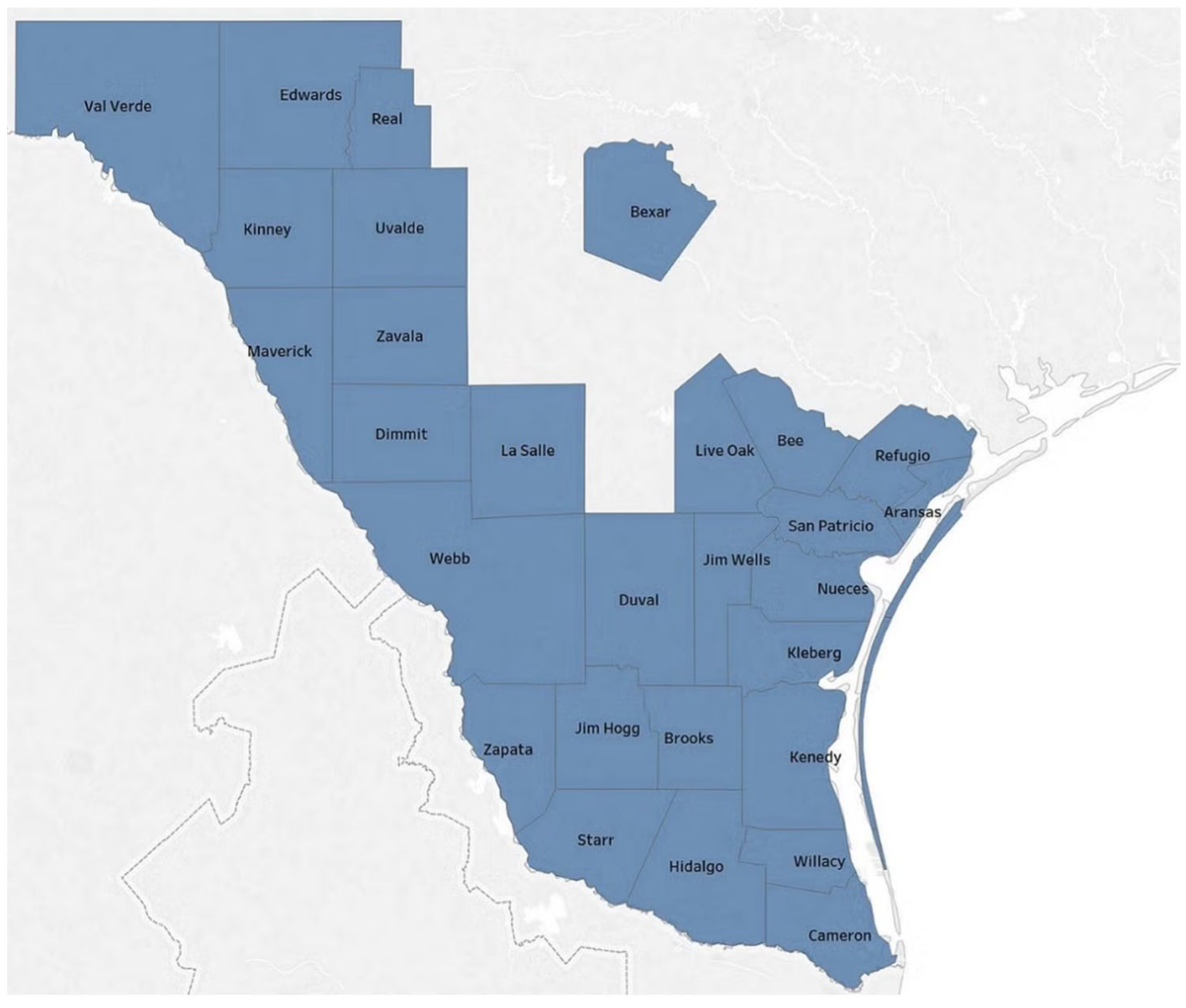
Locator map of South Texas counties under study.
Second, the unique geographic and demographic profile of South Texas makes it an interesting case study from the perspective of pandemic preparedness, response, and recovery. This includes a focus on social determinants of health, such as environment, education, economy, community resilience, employment, and working conditions, among others (Marmot and Allen 2014). Economically, while the region’s proximity to the U.S.–Mexico border makes it a vibrant international trade hub, COVID-19 and other emergencies necessitate travel bans. For example, in June 2020, local economies were severely impacted by travel restrictions due to the COVID-19 pandemic. Thus, their location is both an advantage and a disadvantage, requiring research attention to illuminate how they fought the pandemic and what the outcomes were.
Finally, the region has a unique demographic composition that predisposes it to health vulnerabilities. With the state’s highest Hispanic population concentration estimated at 84% (American Community Survey 2018), the region has a lower median age than the rest of the state. In fact, the Laredo MSA has a median working age of approximately 26, which is significantly younger than the state’s median age. The young age means that they are likely to be healthier, but it also means lower incomes and increased pressure to pursue education and training in order to climb the social ladder. Pre-pandemic estimates indicate that Hispanics earned $26,000 less than non-Hispanic Whites and $39,000 less than Asians. The estimated median household income of $42,246 is below the state’s median, indicating that the region faces social and health vulnerabilities or risks due to pandemics such as COVID-19.
Methodology
This research employs a qualitative research methodology to explore social phenomena, people’s experiences, and opinions, using thematic analysis to make sense of the rich descriptive data. Elliott (2018) states that this method is used in qualitative research to identify and interpret patterns or themes within a dataset, helping to uncover new insights and understanding. The thematic analysis process (Naeem and Ozuem 2022), which involves coding the data, identifying and refining themes, and reporting the findings, is carefully adapted for this research.
We utilize two sources of primary data: personal interviews and secondary contact data gathered from websites. The primary data were collected through oral narratives with policymakers, public managers, and practitioners from diverse professional and disciplinary backgrounds across municipalities and counties during the spring, summer, and fall of 2023. While municipalities and counties are political and legal jurisdictions, they are also social and cultural institutions endowed with resources, meaning, norms, and values that impact behavior. As is well known, behavior is contextual and experiential. Interviews are commonly used to conduct research on local governance (e.g., Willoughby et al. 2020), and the data are enriched by the experiences of local leaders and the intersectionality of their disciplines and professions. This enables us to integrate insights and knowledge from fields such as public administration, organizational theory, policy analysis, political science, and sociology to analyze the complexities of local responses. We also gather secondary data by accessing information from the U.S. Census Bureau website. But the goal is not to triangulate the data.
As ethical issues are closely intertwined with all research, we carefully considered and addressed these concerns at the outset of the study. To address the question of informed consent, we completed and submitted the university’s IRB Protocol Application Form. As a part of the Texas A&M University System, our university supports research in a manner consistent with the highest standards of integrity and ethics. We go beyond the IRB process by observing the principles of defensible and credible research. To recruit participants, we intentionally targeted leaders and public managers who were engaged in managing routine operations at the municipal and county levels and were intimately involved in emergency pandemic operations.
The four-item eligibility criteria for recruiting potential participants from the three Texas planning regions specified earlier focus on their roles, availability, willingness, and involvement in managing the COVID-19 crisis. Ideal participants from the municipalities were mayors, chiefs of police/deputies, health directors/deputies, and Emergency Management Coordinators. The ideal participants from county government included county judges/commissioners, county sheriffs/deputies, county clerks/deputies, emergency management coordinators, and health directors/deputies. Individuals in managerial positions include city managers/deputies and county managers. Using data from city and county public websites, we created a password-protected database that specified names, positions, email addresses, and telephone numbers. Based on the database listing, we sent email invitations that explained the scope and purpose of the research, as well as the process for conducting the interviews. Follow-up phone calls were made prior to scheduling the interviews.
The officials and public managers that we targeted tend to be the busiest in the work setting. As a result, out of twenty-five eligible invited participants, we interviewed only twenty-three individuals, all of whom consented to being interviewed, taking enough care to avoid interruptions and intrusions. Out of the total number of participants, 15 (65%) self-identified as male, and 8 (35%) self-identified as female (Table 1). We conducted the interviews on Zoom from our offices, using a locally developed six-item interview guide (Supplemental Appendix 1). The protocol included a self-introduction, an explanation of the purpose, and the procedure. We took turns asking questions about the interviewees’ roles in developing and implementing COVID-19 preparedness, response, and recovery plans, as well as partnership and collaboration strategies, and the challenges and lessons learned. While we followed the interview guide for consistency, we also asked follow-up questions when necessary. Each interview session lasted between forty and forty-five minutes, and it was recorded and saved in a password-protected file. We concluded by expressing our gratitude to the interviewees for their willingness to share their knowledge. Supplemental Appendix 2 contains samples of their responses.
Distribution of Research Participants by City/County, Region, Level, and Gender.
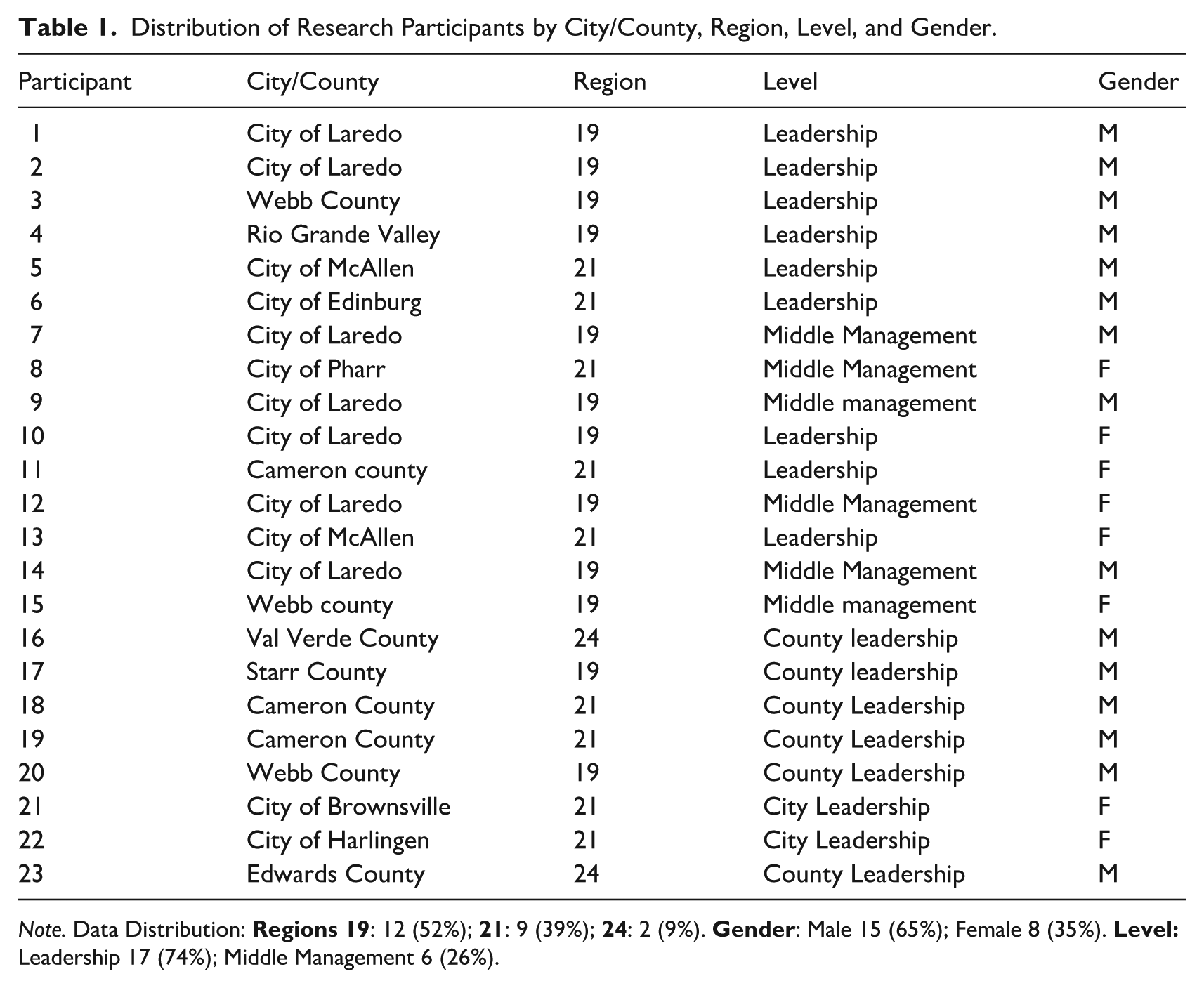
Note. Data Distribution:
Data Analysis
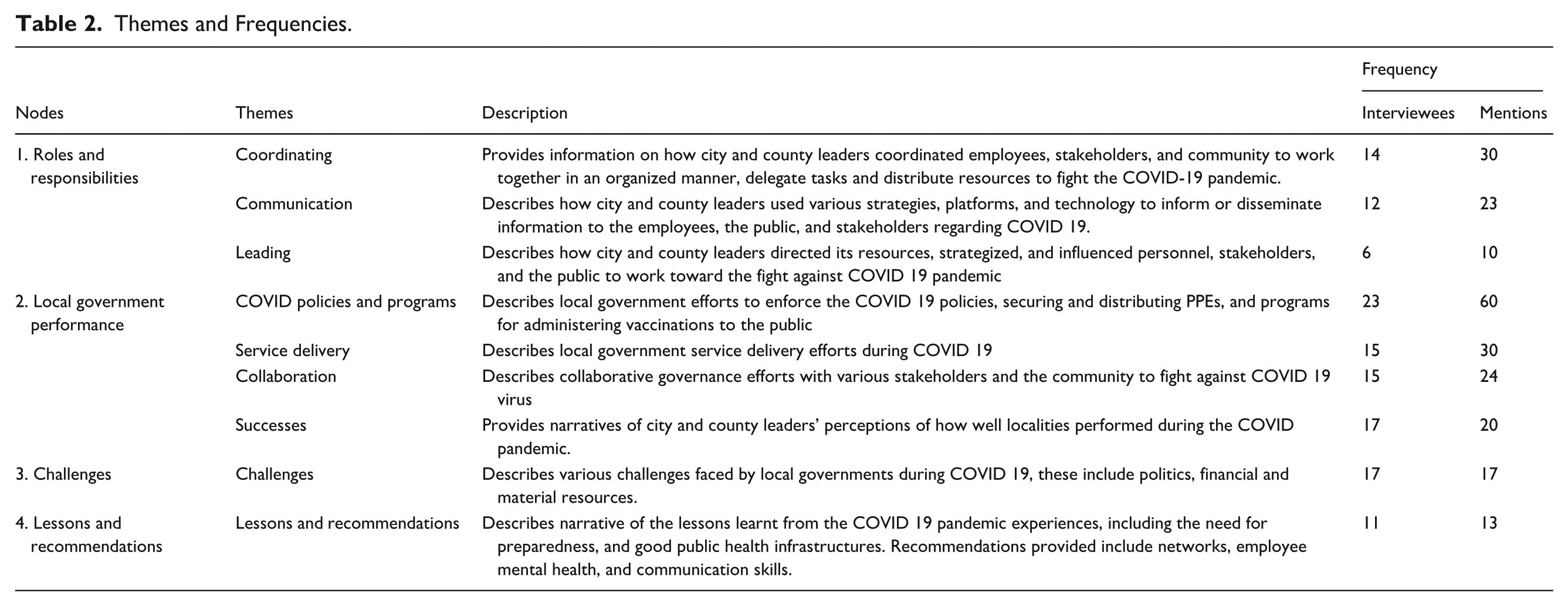
The data organization and analysis followed established procedures for thematic analysis of qualitative data (Corbin and Strauss 2008). In the preliminary phase, the data were downloaded and transcribed (verbatim) following each interview. In the second phase, we utilized NVivo 9 and Excel software to support coding and theme identification. Each co-author engaged in open coding, allowing themes to emerge inductively (Charmaz 2014). To ensure intercoder reliability, the co-authors compared the coded transcripts to verify consistencies and reach agreement on emergent thematic categories. As we reviewed the data, we were struck by the consistent responses from city mayors, county judges, sheriffs, and police chiefs regarding their roles and responsibilities in controlling the pandemic. The key insight was that as participants narrated their stories, they expressed concerns for the safety of their communities. In the process, we observed (Table 2) that they played leadership/managerial roles, interacting with others, sharing information, and making decisions consistent with Mintzberg’s (1973) theory of management.
Themes and Frequencies.
Findings and Discussion
In our findings, we describe the intertwining roles of coordination, communication, collaboration, and leadership as tools that local leaders and managers used to build inter-jurisdictional trust and galvanize the collective action necessary to activate emergency preparedness. Second, we report on the perceptions of local performance and lessons learned. Finally, we demonstrate how these experiences shape the leadership approach of local leaders and public managers, allowing us to link practices to public values and governance theories.
Managerial Roles and Responsibilities
Coordination and the Unique Role of Government as Guarantor of Public Values
Coordination, an established administrative principle, emerges as one of the managerial tools with which local leaders and public managers implemented cross-cutting policies during the pandemic. These leaders and managers perceived the familiar top-down governing mechanisms as ineffective in achieving coordination, as they sought to motivate organizations to contribute to complex emergency operations and demonstrate the government’s unique role as a guarantor of public values. Without the necessary tools, they improvised adaptive arrangements through consultation, deliberation, and involvement when designing coordination to achieve inter-organizational and inter-sectoral collaboration. Under pressure to save lives, they minimized conflicts and optimized outcomes by sharing resources, exchanging information, and engaging in what Molenveld et al. (2019, 9) see as a “whole-of-government” approach. They worked across jurisdictions and multiple policy domains to distribute supplies/equipment and host vaccine clinics, addressing resource inadequacies as the literature suggests: We coordinated with health officials from Laredo and Mexico, and got the job done, which was very efficient. We administered over 300,000 vaccines, and we were able to bring down this treacherous infection. We initiated an international inoculation program. We helped Nuevo Laredo and Mexico do their inoculations. “We worked with our partners in Mexico to start vaccinations for maquiladora workers so that they could continue working to produce. We opened stuff right on the other side of the border, still within the United States jurisdiction. But working with Mexico, we would bring them by buses. They come through working with our CBP and our Border Patrol agents”. We coordinated with county, state, and federal officials, for clinics.
Based on this finding, it is evident that the coordination and integration of efforts in local governance during the pandemic involved both minimizing policy conflicts and optimizing the achievement of public value by focusing on co-creating public values, such as protecting the most vulnerable communities, saving lives, and preserving livelihoods. However, coordination in both principle and practice is more complex and challenging. In the literature, several obstacles impede coordination, preventing the government from delivering on behalf of the “public good” due in part to “trained incapacity,” which refers to the inability to adapt. For example, Peters (2018, 4–5) catalogs coordination challenges, including the perceived loss of power, as well as conflicts related to accountability and performance. Key questions include how to design effective performance evaluation systems and what accountability mechanisms should look like. In fact, Molenveld et al. (2019) demonstrate that practitioners within the same organizations perceive and understand coordination differently, not to mention practitioners from different agencies. Nonetheless, as coordination during the pandemic involves a forced alignment of tasks by state and federal authorities, there is more convergence than divergence in participants’ perceptions of ideas and efforts. To facilitate coordination, scholars focus on “robustness” and dynamic “resilience” that enhance stability and functionality, allowing organizational processes to remain focused while enabling organizations to adapt to change (Ansell et al. 2024).
Communication and Promotion of Participatory, Democratic, and Collaborative Governance
One assumption within administrative and organizational theory that sound communication leads to sound performance is front and center in the fight against the pandemic. Health communities reinforce this principle by stating the two main goals of public communication during a pandemic: maintaining public trust and minimizing panic and fear. In this study, we examined the role of communication in promoting participatory, democratic, and collaborative governance. Aware that ineffective communication could result in public distrust, local leaders and public managers created open two-way channels of communication through traditional outlets, social media platforms, and their 311/911 systems. Their experience shows that the constraints of red tape on communication performance can be overcome, and broader public input sought. They did so by prioritizing the goal of saving lives and streamlining internal and external communication systems in their response and recovery strategies. Their approach aligns with literature that emphasizes the need for goal clarification, positing that a participatory and collaborative culture hinges on clear communication channels.
Nonetheless, communication, as both a policy and managerial tool, continues to pose challenges for government entities. In analyzing U.S. communications during COVID-19, Kim and Kreps (2020, 407–408) point to “inconsistent and misleading messages from governmental authorities.” From their perspective, this results in misinformation, insensitivity, confusion, and frustration among the public. They provide policy recommendations that align with the experiences of local leaders and public managers. For instance, they suggest that leaders and managers should: (1) use English and Spanish to convey information on quarantine and isolation orders; (2) issue culturally and linguistically appropriate updates about risks; and (3) share infection-related information with and seek cooperation from their counterparts across the US-Mexico border, among others. As participants noted, As a health authority, my role was to inform the public and set parameters, guide local medical boards during the pandemic, and guide the public and give information on what we’re doing. A municipal leader commented, “We had to report any presence of contagious, infectious, and dangerous epidemic diseases such as COVID to local and state authorities . . . and any vital statistics collected in this case, deaths of COVID patients.”
Their communication strategy reflects the interdisciplinary nature of emergency communication but also advances the public value of involvement and empowerment.
Leading and the Importance of Public Management and Public Service
Leadership stands out as a crucial element in determining outcomes among the multiple roles and responsibilities involved in fighting the COVID-19 crisis (Bhaduri 2019). According to public management and public service literature, transactional leadership focuses on rewards and punishments, while transformational leadership emphasizes vision and values. The perceptions of the local leaders and public managers reflect a commitment to public service that inspires a vision of safe and resilient communities, as well as leadership for the common good. They designed participatory processes to seek input, coordinate decision-making, foster a trusting relationship between the government and communities, and nurture a culture of public service focused on the well-being of the communities. However, the leadership model is complex and integrated, comprising a combination of personal skills intertwined with transactional relationships, and leveraged by a reliance on preserving the public service ethos. Their perceptions align with literature suggesting that “public sector leaders should behave mainly as transformational leaders, moderately leveraging transactional relationships with their followers, and heavily leveraging the importance of preserving integrity and ethics in the fulfillment of tasks” (Orazi et al. 2013, 487).
However, while local leaders and public managers exhibit high public service and prosocial behavior, they must still contend with (1) formal rules, state preemption, and high levels of red tape within their organizations, (2) the challenge of the distinctiveness of public leadership with a focus on “public” (Crosby and Bryson 2018), and (3) technological revolutions such as AI and large language modeling reshaping public service. Recent legislation has made it easier for stakeholders to exert control over public sector leaders and managers (Van Slyke and Alexander 2006). However, the local leaders and managers in this study believed that “Our response was to take the lead in everything that we had to do. We had to run an office, we had to run a jail, we had to run patrols in response to COVID-19 hitting us.” In fact, one local leader emphatically stated that, “my role involved a lot of thinking, strategizing, and knowing our existing resources, and what we could use to combat the infection rate, determine policy, and make policy.” The approach of local leaders and managers to the fight against the pandemic reflects the elements of public values governance theory, focusing on the processes of participatory decision-making and the promotion of values such as openness, transparency, accountability, and responsiveness. These values are necessary requirements for democracy, and they must be incorporated into different aspects of government and public administration.
Collaboration and Citizenship
Local leaders and public managers view the fight against the COVID-19 pandemic as a collaborative effort that involves their communities, agencies, businesses, and civic organizations. They described the systemic, strategic, and operational factors that contribute to the co-production of services, supplies, and equipment. For instance, one participant emphasized the importance of interpersonal connections and the community’s willingness to set aside personal interests to collaborate: “There was a lot of the community stepping up to assist us with homemade masks; we received a lot of help from all sources, such as EMS, the ambulance, giving us extra gloves, and letting us share information.”
The connections and trust between local leaders and stakeholders make collaboration and the implementation of response and recovery policies and programs possible. They used the existing regional councils of government structures to formulate policies regarding business closures and mask mandates. This occurred across Texas. As noted by some participants, It was a huge collaboration, not only within departments here with our county, but also with various departments. We also coordinated with region 11, the State and then TDM, Texas Emergency Management Division, Texas Military Department. We had a lot of local community providers, Mercy Ministries. Um, you know, it was just a huge partnership, collaboration. We’re a border community, so we border Mexico. Now, the reason we included Mexico in the vaccinations was because we have to think of a regional immunity because we are one community and we are very intertwined by family, by business, by workforce. There was like a binational agreement between the two countries because it flows over so easily. They did that as a team effort per se.
In sum, the proposed solution to COVID-19 is collaborative governance (Ansell and Gash 2018) and citizenship (Denhardt and Denhardt 2015). This involves bringing multiple stakeholders to engage in planning, analysis, decision-making, policy, and program implementation. By doing so, they contribute to redefining top-down governance norms and practices in public administration and management that have persisted despite decades of reforms and are now recognized as ineffective (Pollitt and Bouckaert 2017). They also contribute to improving engagement with citizens, neighborhoods, and communities, as well as strengthening citizenship and collective action. As Norris-Tirrell and Clay (2010) assert, the value of citizen engagement lies in building relationships and trust with individuals and organizations, which strengthens the legitimacy of policy choices. However, collaboration is complex in practice. And yet, differences in personalities, experiences, skills, interests, expectations, and organizational structures can lead to creative solutions that leverage opportunities arising from a society. This is the basis of agility theory, which entails having an ever-present ability to adapt to change (Ansell et al. 2024).
Performance of Local Governance and Lessons Learned
This section evaluates the performance of local governance based on the perceptions and perspectives of local leaders and public managers. The question we posed to local leaders and public managers was: How well did they perform in the fight against the pandemic? From the perspective of local leaders and public managers, localities were most successful in the areas of prevention and treatment. They attribute their success to recovery resilience, as well as the support and cooperation of federal and state agencies in Texas. But to what extent does their perceived success impact the goals and objectives of the COVID-19 response and recovery? What have they learned to be better prepared for the next emergency?
As part of their recovery and resilience, they have implemented preventive practices that involve contact tracing schemes, house-to-house visits, testing, and vaccination clinics. One interviewee noted that, “I would say one of the biggest successes was the contact tracing program that we set up within the city.” Furthermore, they implemented outreach programs that provided vaccines to the elderly and homebound populations. One participant asserted, “I think our county performed extremely well for the people who were bedridden. We went out and serviced them and gave them vaccinations in their homes. We never billed insurance.” This confident assertion is corroborated by another interviewee who emphasizes the importance of their food drive programs: “so, we also started a food drive, um, with the food bank, we were doing those once a week at least. There were a little while we were doing them twice a week.”
However, local leaders and public managers also utilized the support services provided by several state agencies through vertical federalism, including the Texas Emergency Management Division, the Texas National Guard, and the Texas Department of Health as part of “precursor resilience.” This type of state-local relationship is common, as states maintain power and authority based on the U.S. federal principles. For instance, they collaborate with state agencies to obtain sufficient vaccinations, nurses, and technicians. As noted by one participant, “We solicited through the EMC Emergency Management Coordinator and the state team to get U.S. State nurses to assist in the hospital.” Likewise, another mentioned that “I communicated with the Texas Department of Emergency Management on a daily basis, you know, 2 or 3 times a day and advising that we were going to be needing funding.”
Such collaboration highlights the significance of state-local relations, which are a critical aspect of policy implementation in the federal system. However, it is important to acknowledge that, despite the cooperation between state and local authorities, there were still instances of conflicts that arose during the fight against the COVID-19 pandemic. As indicated in the literature review section, conflicts were a prominent aspect of the pandemic policy response. One of the issues regarding this study was the Texas governor’s executive order banning localities from issuing mask requirements, an order that the Texas Supreme Court subsequently upheld in 2021. These issues were subjects of criticism from local government officials, with a focus on state preemption. Although local leaders and public managers did not address how state pre-emption impacted their performance, they referenced the challenges they faced during the fight against the pandemic. They identified the lack of proper health infrastructure, politics, financial and human resources, inequity, inequality, and misinformation. The term “politics” in this instance can be interpreted to mean state pre-emption. One participant explained that “Financial resources were a challenge, as you know, the state doesn’t give upfront money regularly, you must submit a reimbursement. So that was a little bit of a challenge for us. I communicated with the Texas Department of Emergency Management daily and advised that we were going to need funding. We needed funding, we were not the only jurisdiction requesting it.”
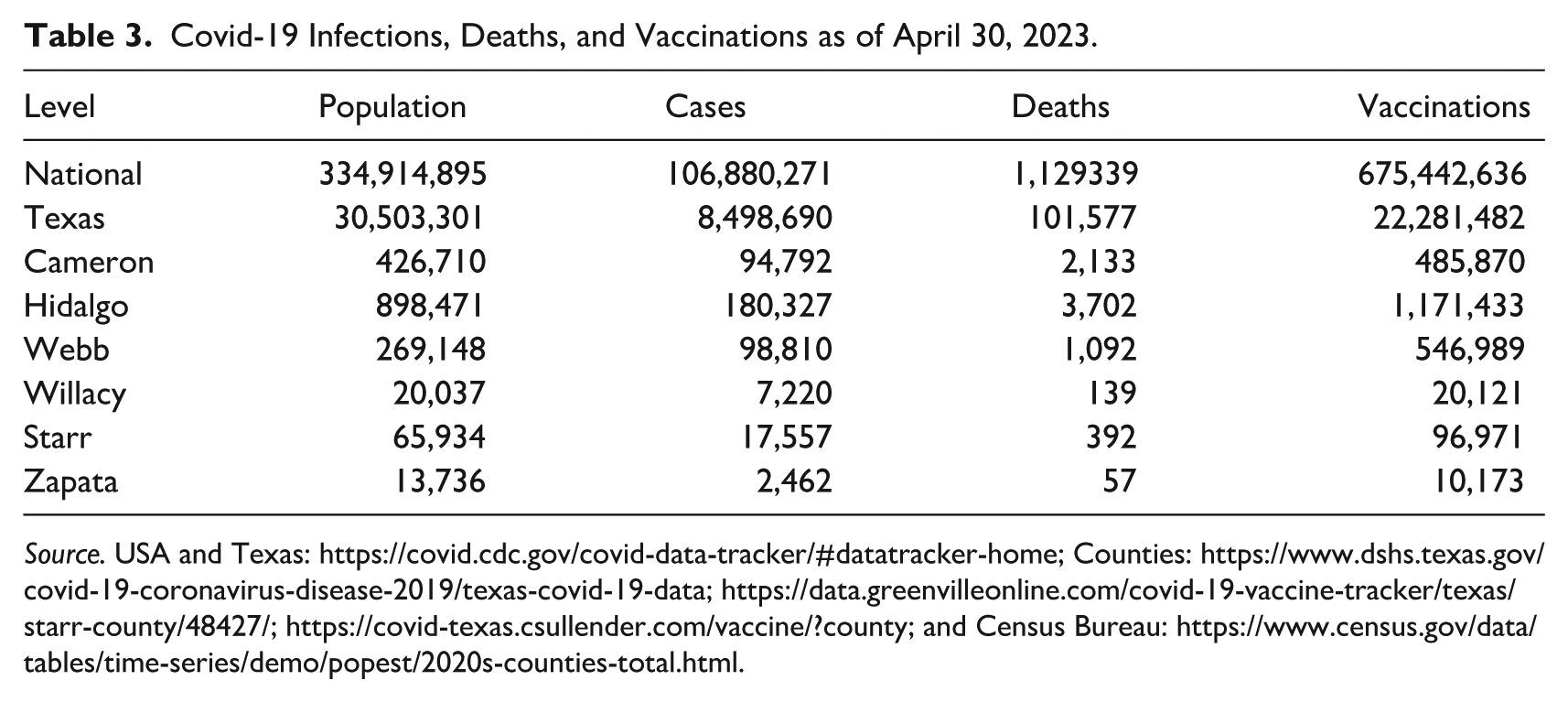
However, local leaders and public managers evaluate performance as resilient, with a focus on the willingness of the community and various stakeholders to collaborate. They identified high vaccination rates and other preventive measures that resulted in reducing infection rates. In some jurisdictions, they vaccinated up to 6,000 people a day without requiring insurance. Furthermore, localities that share borders with Mexico expressed pride in collaborating to initiate vaccination programs that enhanced prevention. One participant said, “Well, I feel like we did very well because there were a lot of things that we initiated. We even initiated and helped with international inoculations. We helped Nuevo Laredo and Mexico with their inoculations. We inoculated as many people as we could. We were the only ones to do so out of the whole state of Texas.” Although exploring collaboration with Mexican authorities is important for assessing the quality of performance, this is beyond the scope of this study because of language limitations. By April 2023, when the U.S. government ended the state of emergency, localities had recorded infections, deaths, and vaccinations, as indicated in Table 3.
Covid-19 Infections, Deaths, and Vaccinations as of April 30, 2023.
Source. USA and Texas: https://covid.cdc.gov/covid-data-tracker/#datatracker-home; Counties: https://www.dshs.texas.gov/covid-19-coronavirus-disease-2019/texas-covid-19-data; https://data.greenvilleonline.com/covid-19-vaccine-tracker/texas/starr-county/48427/; https://covid-texas.csullender.com/vaccine/?county; and Census Bureau: https://www.census.gov/data/tables/time-series/demo/popest/2020s-counties-total.html.
From Table 3, the total number of deaths due to COVID-19 in 6 counties is as high as 7,515 (7% of total Texas deaths). Given the available resources and constraints, it is pertinent to inquire whether a different outcome would have been realized if different strategies had been pursued. How many more lives could have been saved if different actions had been taken? Although these questions cannot be answered definitively, local leaders and public managers seem cautiously pleased with their performance. However, the question of what to measure in public performance and how to measure it remains at the center of public management. Even so, assessing the performance of localities helps shed light on what works and what doesn’t. In the final section, we discuss the implications for research, theory, and practice.
Theoretical Implications
This section considers the theoretical implications of our research, emphasizing how public management reforms construing the roles of the government and citizens narrowly is unhelpful. Such an approach contributes to the weakening of the public realm and “the loss of an active, vibrant public space in which ordinary citizens engage with the issues of the day” (Stivers 2008, 3). However, by evaluating and exploring local performance through the lens of public values governance theory, this study contributes to research seeking to broaden the role of government as a guarantor of public value and public values, while nurturing active citizenship (Bryson et al. 2014; Denhardt and Denhardt 2015). The study conceptualized saving lives and livelihoods as desirable public values that can be achieved through intergovernmental relations, community engagement, and inter-jurisdictional collaboration. Thus, the public values governance approach helps shift the discourse beyond the concepts of vague terms such as the “public interest” and “the common good.”
However, Osborne et al. (2022) show that “public value creation” should not be limited to public organizations and public service agencies. Neither should it be restricted to “internal value chains.” This study implies that local governance encompasses shifting the focus toward “external value creation,” as well, emphasizing both internal cooperation and external collaboration. In the fight against the pandemic, localities had no choice but to focus on saving lives and livelihoods, around which communities were willing to rally. But even so, some empirical questions remain: (1) Are localities willing and able to make the paradigmatic shift toward more inclusive values-based governance in the post-COVID-19 era? (2) What trade-offs are necessary to make such a transition possible in intergovernmental administration and management? (3) How can local performance measurement be conducted in public values governance? Bryson et al. (2014) suggest that research should focus more on “conceptual refinement” and the development of metrics to clarify subjective and objective public values. While this suggestion has merit, it will require debate on scholarly platforms to build a consensus on what constitutes public value, as it is challenging to discuss politics-free public administration.
Practical Implications
In this section, we consider the practical implications of our research, especially as it is one of the first case studies to examine the response of local governments to COVID-19 in South Texas. The findings offer valuable lessons for public servants in general and those working in local governments, particularly in the US-Mexico border counties. First, improved communication, coordination, and collaboration beyond hierarchies enhances governing through “a culture of joint problem-solving” required in times of crisis and turbulence. In a complex and changing environment, collaboration rather than individual action is emerging as a key strategy for public management and administration (Norris-Tirrell and Clay 2010). Second, while they struggle to find meaning in their work, COVID-19 presents an opportunity for public servants to adopt humane behavior, which can strengthen the connection with and trust of citizens. Third, for local leaders and public managers working in under-resourced and growing counties such as those along the US-Mexico border, COVID-19 highlights the need to invest more resources in disaster management systems and enhance preparedness, response, and recovery capacities. Within the leadership and management domains, the key issue to consider is striking a balance between change and stability in local governance practices. But care should be taken to integrate short-term responses into the long-term strengthening of local governance and management.
Conclusion
Our research is based on an evaluation of the performance of South Texas localities in response to COVID-19, utilizing interview data that has both limitations and strengths. On limitations, our interviews are retrospective and may also reflect biases. The study’s participants who expressed concern for their community’s safety as an authentic choice shaped by prosocial motives may be downplaying self-serving motives. However, the questionnaire is designed such that the data are suitable for answering questions about preparedness, response, and recovery based on post-COVID-19 self-evaluations. As Lamont and Swidler (2014) argue, interview data are useful for probing interviewees’ perceptions. Our theoretical contribution focuses on how local leaders and public managers in the US-Mexico border counties relied on values, including collaboration and a sense of community, to galvanize collective action in the fight against COVID-19. This finding suggests that public values research would benefit from further “conceptual refinement” by inquiring more into how context and culture help define public values that local leaders and public managers care about and that tend to shape their leadership and management styles.
Supplemental Material
sj-docx-1-slg-10.1177_0160323X261423240 – Supplemental material for Evaluating South Texas Local Government Responses and Managerial Roles During the COVID-19 Pandemic
Supplemental material, sj-docx-1-slg-10.1177_0160323X261423240 for Evaluating South Texas Local Government Responses and Managerial Roles During the COVID-19 Pandemic by Peter F. Haruna and Varaidzo Zvobgo in State and Local Government Review
Supplemental Material
sj-docx-2-slg-10.1177_0160323X261423240 – Supplemental material for Evaluating South Texas Local Government Responses and Managerial Roles During the COVID-19 Pandemic
Supplemental material, sj-docx-2-slg-10.1177_0160323X261423240 for Evaluating South Texas Local Government Responses and Managerial Roles During the COVID-19 Pandemic by Peter F. Haruna and Varaidzo Zvobgo in State and Local Government Review
Footnotes

Funding
The authors disclosed receipt of the following financial support for the research, authorship, and/or publication of this article: The research was partially funded by the Texas A&M International University College of Arts and Sciences.
Declaration of Conflicting Interests
The authors declared no potential conflicts of interest with respect to the research, authorship, and/or publication of this article.
Data Availability Statement
The data generated during and/or analyzed for the current study are not publicly available due to anonymity and data sharing conditions under the ethical guidelines on which this study was conducted. They are available from the corresponding author on reasonable request.*
Supplemental Material
Supplemental material for this article is available online.