







Abstract
Background and Purpose:
The unprecedented shift to distance learning during the COVID-19 pandemic intensified educational inequities for students with disabilities, a historically marginalized population in terms of access to quality instruction. Caregivers assumed an integral role in access to education during distance learning, making it critical for school teams to understand caregiver experiences and priorities. The purpose of this study was to explore the experiences, needs, and desires of caregivers of students with extensive support needs (ESN; i.e., intellectual disability, autism, or multiple disabilities) related to distance learning in order to support educators in program design during the COVID-19 pandemic and beyond through the following research question: In what ways has mandated distance learning during the COVID-19 pandemic maintained and/or transformed education for students with ESN and their families?
Methods:
We combine qualitative (interview) and quantitative (survey) data analyses to jointly explore caregiver experiences. A total of 92 caregivers completed the survey, and 11 were interviewed. Survey results provided frequencies of factors that have impacted families during the COVID-19 pandemic: for example, access to educational technology, types of educational supports received, and frequencies of social, emotional, and physical family experiences (e.g., increased anxiety, increased physical strain), as well as differences in experiences across subgroups of caregivers (e.g., single- and multiple-caregiver homes, different ethnicities), challenges, and silver linings. Interviews allowed us to contextualize and more deeply explore patterns that emerged from the survey data.
Findings:
Four themes were identified: (1) the intense physical, mental, and emotional impact of distance learning; (2) transformed access to instruction; (3) transformed access to social connections; and (4) transformed family–school interactions. Caregivers struggled to meet their own needs and those of their children during distance learning. Most reported that their children needed consistent support throughout the day to access their education and maintain health and safety. Despite struggling to meet their own needs, caregivers frequently maintained high expectations for academic learning and social connection, and they demonstrated agency in the development of educational programs. Caregivers appreciated increased collaboration with teachers, increased knowledge of their child’s skills, and ways to work on those skills at home.
Conclusion:
Access to instruction became synonymous with the complex relationship between the availability of in-person support, the meaningfulness of instruction, and accessibility of the educational program. Findings highlight the importance of increased and sustained collaboration between school teams and families to maximize student access and success within distance learning and in-person schooling.
The COVID-19 pandemic resulted in rapid and dramatic shifts to school structures, beginning in March 2020 in the United States (Averett, 2020) and across the globe, including Saudi Arabia (Alnefaie & Bagadood, 2021) and the United Kingdom (Asbury et al., 2021). These shifts included school closures and the widespread expansion of distance learning, which most frequently drew on synchronous and asynchronous online learning platforms for instruction (Hall et al., 2020; Peterson et al., 2020). As students and their families learned to navigate new schedules, platforms, and roles, students with disabilities and their caregivers had unique experiences with schooling, with implications that extend beyond the specific contexts of COVID-19, school closures, and distance learning.
Students with extensive support needs (ESN) represent a diverse population of individuals with a wide range of cultural and linguistic identities, strengths, diagnoses, and support needs. Whereas these students have historically been described in terms of their deficits or special education eligibility, researchers are increasingly following the lead of the disability community by emphasizing the significant role that accessibility plays in understandings of disability. These researchers (e.g., Barnes, 2012; Linton, 1998; Thompson et al., 2009; Wehmeyer, 2020) describe students in terms of the supports needed to access curriculum, settings, and daily activities. As such, students with ESN are those who benefit from high levels of support across multiple domains. Historically, students with ESN have been consistently marginalized and highly segregated (Kurth et al., 2015). Despite a wealth of evidence-based instructional practices, students with ESN are often taught by unqualified teachers (Billingsley & Bettini, 2019) and/or are frequently supported by paraprofessionals with insufficient training (Giangreco et al., 2013).
During mandated school closures, students with disabilities experienced discontinued educational services, were less likely to engage in distance learning than their peers without disabilities, and needed more support to access distance learning platforms and instruction than their nondisabled peers (The Hunt Institute, 2020; Kamenetz, 2020). Although caregivers have always played an important role in the education of their children with ESN (Kyzar et al., 2019), their role in promoting physical and academic access to educational experiences during distance learning became critical (Falt & Manikandan, 2020). For this study, the term “caregiver” is used to refer generally to the individuals who care for and support students with ESN at home. While these are often parents or other immediate family members, “caregiver” recognizes the variety of family and caregiving structures that might be in place for a young person with ESN.
Theoretical Framework
Disability studies in education (DSE) draws on the social model of disability to examine how disability is constructed in education, how ableism is enacted within school environments, and how a disability-centered lens provides new perspectives on schooling and education (Slee et al., 2021). We draw on this framework to examine educational practices that emerged during the coronavirus pandemic through a critical lens. Specifically, DSE is a tool that helps us to unravel whether and how the schooling structures used during distance learning might reinforce or transform entrenched systems that have historically marginalized and excluded students with ESN and their families from meaningful participation in schooling.
By centering the voices of caregivers of students with disabilities, we strive to honor the knowledge and experience that come from loving and caring for an individual with ESN. Historically, school professionals have positioned themselves as experts on the education of students and in turn have marginalized and de-emphasized caregiver knowledge of their child and their support needs (Ong-Dean, 2009; Skrtic, 1995). This trend of separating family input from program design has persisted in schools in current years (Kurth et al., 2019; Love et al., 2017). Despite often being relegated to the periphery of program design and implementation for their children, caregiving family members bring unique and culturally specific understandings of parenting, schooling, and disability that are rarely considered in program planning (Carey et al., 2020). Further, a strong body of evidence supports the critical role of caregiver partnership in promoting student success, particularly involving families of students with ESN (e.g., Flippin & Watson, 2015; Ivy et al., 2021; Smith et al., 2020). School closures in 2020 placed caregivers of students with ESN in a central role related to access to schooling for their children; this often required significant shifts in employment, home life, and parenting roles (e.g., Asbury et al., 2021; Averett, 2021). This article seeks to learn from the experiences of these caregivers, and in particular, how the shift in the role of caregivers during distance learning might inform the future of family–school partnerships.
This study draws on phenomenological traditions in interpretive research, with a study design built on the premise that knowledge is generated through individual perceptions and ways of knowing (Merleau-Ponty & Edie, 1964). Given the central aim of amplifying marginalized voices in this mixed-methods study, we sought to better understand the meanings that caregivers assigned to their experiences in distance learning and how the shared experience of navigating education for their children within a pandemic might shed light on broader caregiver understandings of schooling for their children with ESN. Further, our framework positioned caregivers as experts on their children’s teaching and learning. As such, our approach assumed that caregivers possessed a nuanced understanding of their child’s assets and support needs, as well as the relative strengths and weaknesses of their school program.
Purpose and Research Question
Although various forms of distance learning were in practice before the COVID-19 pandemic in the forms of teletherapy, solutions to rural education, and online schooling, use of this approach dramatically increased in 2020 in response to school closures nationwide (Allison & Levac, 2022). Although most schooling in the United States had returned to in-person instruction by fall 2021, distance learning persists as an option for students to access their education, and its use has dramatically increased despite the availability of in-person learning. Further, in response to increased demand, some school districts, charter organizations, and private programs have expanded online educational offerings compared with those available pre-COVID, including programs geared toward students with disabilities (e.g., Los Angeles Unified School District; Sequeria, 2022). We contend that the unprecedented shift to distance learning during the COVID-19 pandemic intensified educational inequities for students with disabilities, a historically marginalized population in terms of access to quality instruction. For students with ESN, the shifts that took place during distance learning in 2020–2021 not only involved a change in format, but may also illuminate deeper understandings of education and family–school interactions for students with extensive needs. Caregivers assumed an integral role regarding access to education during distance learning, making it critical for school teams to understand caregiver experiences and priorities. This shift has the potential to create a lasting impact on caregivers’ role(s) in their child’s education and on how teaching and learning are framed for students with ESN. The purpose of this study was to support educators in program design beyond the school closures of the COVID-19 pandemic through the following research question: In what ways has mandated distance learning during the COVID-19 pandemic maintained or transformed education for students with ESN and their families? We approach this question through an exploration of the experiences, needs, and desires of caregivers of students with ESN—that is, intellectual disability, autism, or multiple disabilities—related to distance learning.
Method
Positionality
We approach this topic as former teachers who relied heavily on family partnerships in our practice. We are now two university-based teacher-educators and a district program specialist/doctoral candidate. The first two authors identify as White and English-speaking, and the third identifies as a bilingual (Spanish and English languages) Indigenous Mexican American woman. Although two authors are parents, and one is a sibling to an individual with ESN, none is the parent of a child with ESN. The third author is a parent to two boys who received special education services for speech/language impairments, and thus brings a parent’s perspective on special education to our work. Throughout the project, we have leveraged both our collective experiences and our unfamiliarity with the day-to-day lives of families with ESN by adopting a stance of curiosity and humility both in interactions with caregivers and in our interpretation of their experiences. Our positionality impacted our research design in our efforts to leverage family expertise through interviews and open-ended questions, in addition to quantitative survey responses. In developing the initial survey draft, questions were pilot-tested by families with children with extensive needs who provided critical input, and some questions were added as a result. A “member check” of survey results was embedded within the interview format to provide families with additional voice regarding the findings. In addition, the third author’s bilingual Indigenous Mexican American identity supported our ability to create culturally and linguistically responsive interview formats for Spanish-speaking caregivers (led in Spanish by the third author and conducted in a familiar, rather than professional, style of interaction) and to carefully select vocabulary and adjust wording on the Spanish survey to ensure cultural reliability.
Participants
In October 2020, wide recruitment of participants occurred in English and Spanish via social media, professional and community organizations, and directly through one public school district and three public charter schools in the western United States. Inclusion criteria required participants to be at least 18 years of age, reside in the United States, and be a primary caregiver for a child with ESN between ages 3 and 22 years of age. Caregivers were asked to identify the level of support of their child or children on a scale from seldom (support needed once a month or less) to extensive (support needed 5 or more times per day) in the domains of engaging in academic tasks, communication, behavior and safety, and healthcare. Caregivers who responded that their child needed frequent or extensive support in at least two domains were eligible.
A total of 92 caregiver participants completed the survey and met the inclusion criteria. Because of heavy recruitment in the western United States, 57 participants (62%) indicated that they were from that region. The remaining 35 (38%) participants were distributed throughout all other regions of the continental United States. Table 1 displays further participant demographics. The majority of participants were White (68.5%) or Hispanic (21.7%); 25–54 years old (91.1%); female (94.6%); from two-caregiver households (77.2%); and earned a total family income of $75,000 or more (73.9%). Qualitative data were collected via optional open-ended survey questions and interviews. A total of 37 participants (40%) responded to at least one open-ended question. Twelve caregivers were interviewed, and six of the 12 volunteered to be interviewed via the study survey. Because of the low response rate of interview volunteers, targeted recruitment of interview participants occurred outside the study survey. Targeted interview recruitment was focused on Hispanic participants to ensure that demographics were similar to the survey participants.
Demographics Table.
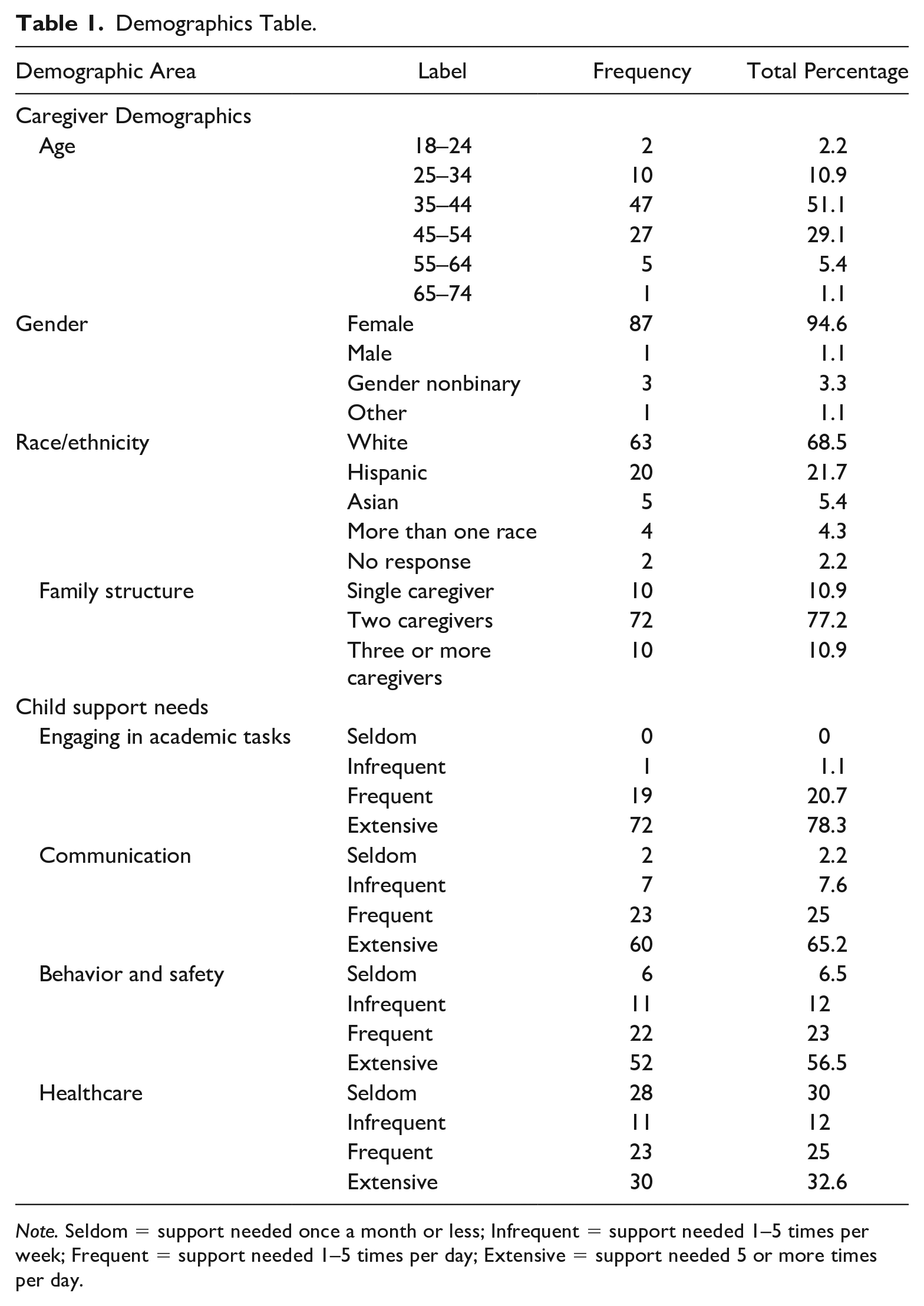
Note. Seldom = support needed once a month or less; Infrequent = support needed 1–5 times per week; Frequent = support needed 1–5 times per day; Extensive = support needed 5 or more times per day.
Instruments
The data collection instruments used in this study were an online survey and phone or video interview. The survey comprised four sections: (a) adult demographics, including impact of COVID-19; (b) student demographics; (c) distance learning questions; and (d) optional interview volunteer form. 1 The 24 survey items on the impact of COVID-19 on caregivers’ work, home life, and physical and emotional well-being were adapted from the Epidemic-Pandemic Impacts Inventory (Grasso et al., 2020). The section of the survey related to parent perspectives on distance learning consisted of 15 questions. Questions investigated caregiver hopes, successes, and challenges related to distance learning for their child with ESN. Several questions investigated which instructional and collaborative structures were perceived as most useful during distance learning.
A semi-structured interview guide consisting of eight open-ended questions was developed to encourage elaboration on caregiver perspectives, needs, and desires related to distance learning for their children. Survey and interview items were developed through extensive discussion with caregivers, teachers, and administrators, as well as two rounds of pilot testing with caregivers in spring 2020, resulting in revisions to the study materials. A sample of questions includes, “What challenges have you or your child experienced since distance learning began?” and “What, if anything, do you think should change to address the challenges you described?” All interview questions can be found on OSF (https://bit.ly/3AChk3J).
Procedure
Survey
The survey was created using the SurveyMonkey online survey platform. A link to the survey with an accompanying informational flier was posted to social media platforms, online caregiver support groups, and disability advocacy organization websites in mid-October 2020. Simultaneously, administrators from one public school district and three charter schools in the western United States sent the survey link and flier to all caregivers of students who qualified to take their state alternate assessment. A follow-up was posted or emailed two weeks later. Survey participants were given an opportunity to volunteer for an interview at the end of the survey.
Interview
Caregivers who volunteered were contacted via email to schedule a phone or video interview. Survey flyers were reposted in Spanish language advocacy group pages to recruit interview participants who matched the language demographics of the survey completers. Quantitative data from the survey were analyzed and summarized in a PowerPoint presentation before the first interview was conducted. This presentation, which was 3–5 minutes, was shared with caregivers at the start of their interview; they were then asked if their experience differed from or was similar to specific findings from the survey. For example, we shared that 66% of caregivers identified increasing literacy or communication skills as their top goal for student learning during distance learning, and then asked if that was consistent with their perspective. Discussion of the survey data served as a form of member checking. Interviews lasted 30–60 minutes and were audio-recorded then transcribed.
Data Analysis
This mixed-methods data analysis used an iterative practice in which the quantitative data were used in dialogue with the collection and analysis of qualitative data. Quantitative survey data impacted how qualitative data were viewed, and qualitative data provided deeper insight into trends in the quantitative data. Quantitative survey data were imported into SPSS. Most data were categorical in nature (e.g., Yes/No, selection of response given a list of options). SPSS was used to identify counts and frequencies in categorical data. Counts and frequencies were also calculated for ordinal data, such as child’s level of support need (seldom, infrequent, frequent, extensive). The mean was calculated and presented for quantitative scale data, such as Likert-style questions, for example: Rate the utility of common instructional supports provided during distance learning on a scale from 1 (not useful at all) to 5 (very useful).
Qualitative analysis occurred in Atlas.ti and involved an iterative practice that drew on both qualitative sources and quantitative results to support a more global understanding of the research question studied. Using an interpretivist phenomenologist approach, researchers sought to understand the meanings that caregivers assigned to their own experiences during school closures. Researchers emphasized authenticity (Manning, 2016) through open dialogue with participants regarding the goals of the study and by inviting participants to respond to initial quantitative findings in interviews, thus collaboratively building understanding of common themes.
Initially, an inductive open-coding strategy was used to code open-ended survey responses and interview transcripts. Open coding allowed researchers to “listen” to the data rather than rely on presumptions or biases by assigning codes at the sentence and paragraph level. One research team member completed initial open coding for all documents, and a second researcher reviewed coding completed for each document, checking consistency and suggesting changes, new codes, and collapsed codes throughout. Next, axial coding was conducted collaboratively among the research team to group initial codes into categories. Although these categories were generally aligned with the research questions (e.g., services and supports during distance learning, and school reopening), several additional categories emerged as well (e.g., the impact of supports on students and caregivers). As axial coding progressed through all data collected, researchers dialogued regarding connections between quantitative and qualitative data. Through this conversation between data sources, some codes and categories were abandoned, while others emerged as salient themes across multiple sources and participants. These themes and exemplars are shared in the findings. The framework used for data collection and analysis is depicted in Figure 1.
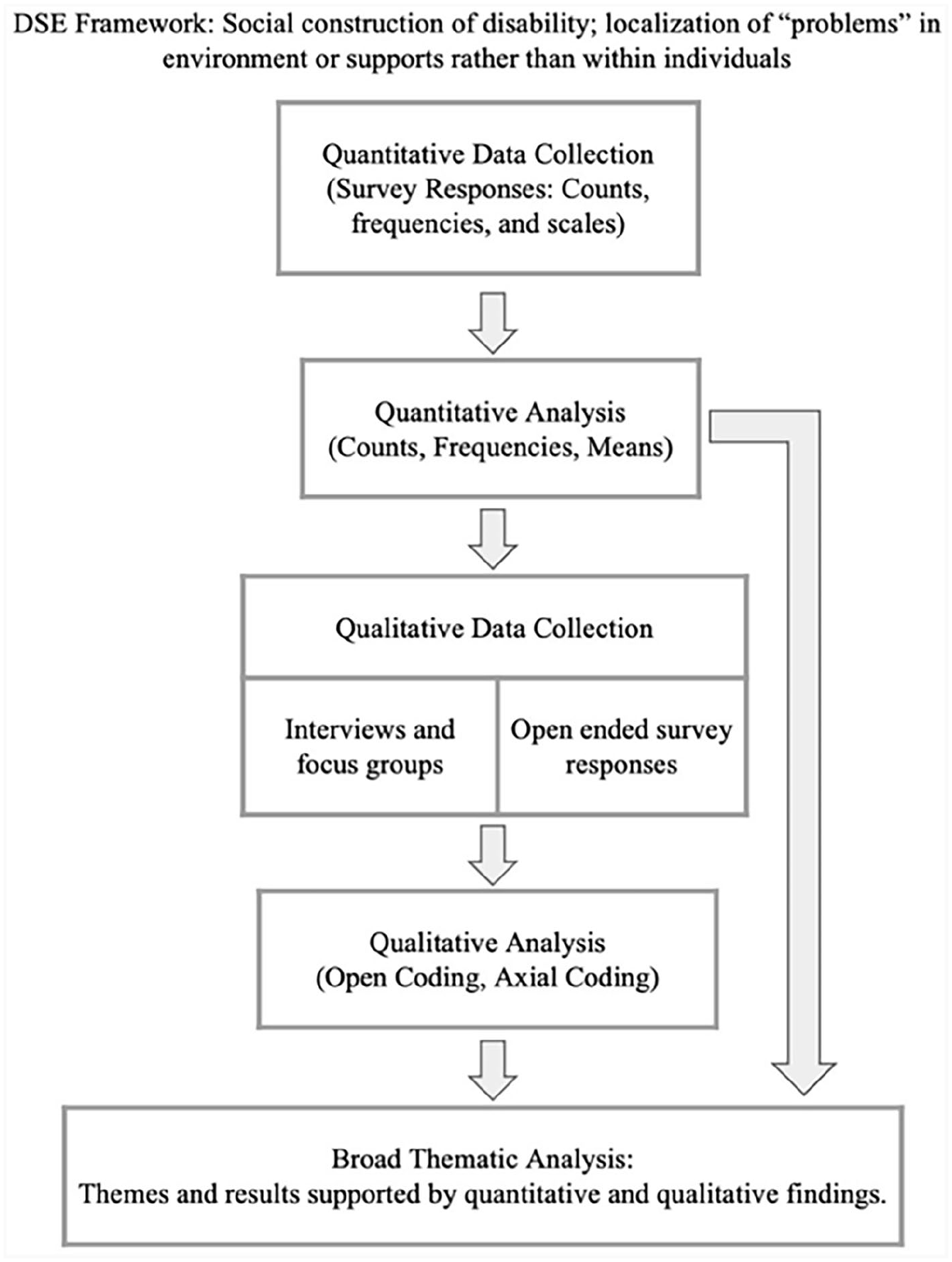
Framework for Data Collection and Analysis.
Findings
Throughout the analysis of qualitative data, codes, categories, and themes were considered together and separately from quantitative survey results to answer the question: In what ways has mandated distance learning during the COVID-19 pandemic maintained and/or transformed education for students with ESN and their families? Four main themes were identified through analysis of all data sources: (1) the intense physical, mental, and emotional impact of distance learning; (2) transformed access to instruction; (3) transformed access to social connections; and (4) transformed family–school interactions. This article explores Themes 2–4, while the rich data from Theme 1, intense impact of distance learning on caregivers, are addressed in a separate article (Hanreddy et al., 2023).
Transforming Access to Instruction
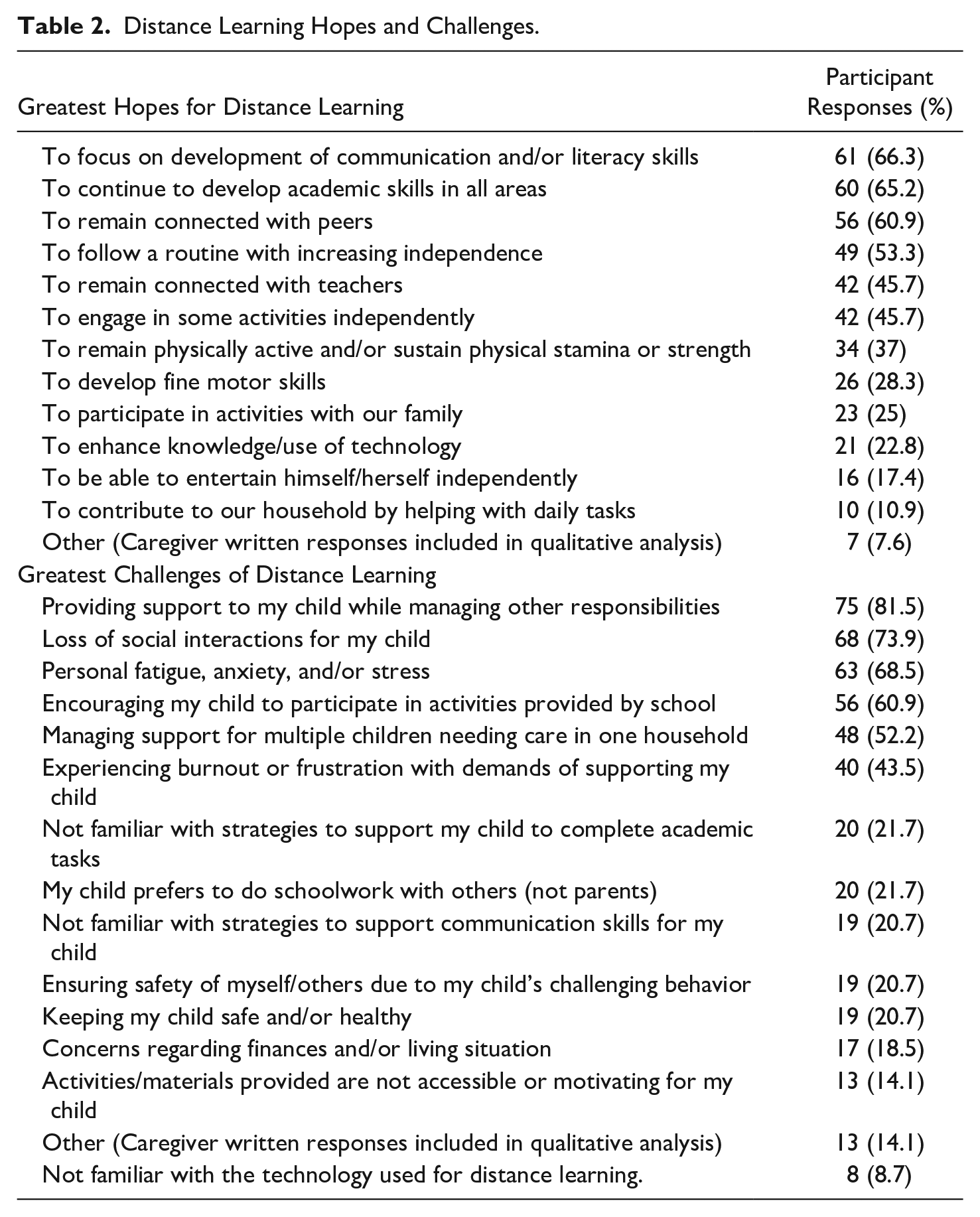
Participants were provided with the list of hopes and challenges displayed in Table 2 and asked to select their top five. The top three most selected hopes for distance learning were development of communication and/or literacy skills (66%), development of academic skills in all areas (65%), and remaining connected with peers (61%). Given that literacy, communication, and academic growth in all areas were the top desires of families during distance learning, the accessibility and meaningfulness of academic instruction were some of the most common topics that emerged from the survey and interviews. Caregivers described ways in which the distance learning format transformed academic instruction with respect to two key considerations: (1) accessibility of the educational program and (2) perceived meaningfulness of the instruction provided.
Distance Learning Hopes and Challenges.
Accessibility of the Educational Program
The expanded role of caregivers in supporting and/or delivering instruction played a large role in caregiver descriptions of the accessibility of their child’s educational program. One survey respondent found herself “feeling helpless, sad, angry, and defeated” and feeling that she was “nowhere near qualified enough in any of [her daughter’s] areas of need to help her continue her development and prevent regression.” While some caregivers struggled to support their child’s access to instruction, others reported that the format of online instruction “results in needing 1:1 support from a parent at all times, which is not possible because parents work full time, and [the] student goes to sleep soon after parents are off work.”
Families frequently cited difficulties that their children experienced either with the platform itself or with the ways that educators designed online instruction. Nathan described how his son loves computers for recreational purposes, but getting him on a video call is “an absolute nightmare.” Multiple survey participants wrote that instruction and instructional materials were often presented only via text, which their children were not able to access independently.
Several survey respondents indicated that online platforms, materials, and instruction did not meet the needs of their children with visual impairment. One survey respondent noted, “[The] majority of online formats are not accessible for children with multiple disabilities and vision impairment. If a program is switch accessible, it often is not compatible with screen readers or vice versa.” Another caregiver of a child with a visual impairment highlighted, “Because [he] also has complex communication needs and is an emerging AAC [augmentative and alternative communication] user . . . it is hard to know what he is getting out of the digital content we've been provided so far.” These examples highlight ways in which access to instruction during distance learning was transformed to include access to in-person adult support, in addition to the relation between content delivery and student support needs.
Meaningfulness of Instruction
Some caregivers described accessibility in terms of the degree to which they found material to be meaningful for their child. For example, despite her emphasis on access to the general education curriculum, Karen felt that without more individualized supports, “none of it applied” to her son because “he's not at second- or third-grade level,” and he was struggling to follow along with teacher-led whole-class online instruction. Tanya, an interview participant, placed emphasis on the accessibility of her son’s middle school classes, saying he was “not getting anything out of it.” Further, she stated, “I'm not going to make him just sit here staring at the computer, to not participate anyway and not have something that’s meaningful for him.”
While the challenges associated with access to general education classes during distance learning were most often cited by interview and survey participants whose children spent most or all of their time in general education classrooms before distance learning, concern about the degree to which instruction was meaningful was shared by families of children educated in self-contained placements as well. In relation to her son’s self-contained class, Barbara shared, “I think it's pointless. Like, it's just babysitting and treating them like they're too young.” Therefore, for instruction to be considered meaningful, it had to be physically accessible, and the content needed to be perceived as relevant to student individual growth.
Common Forms of Service Delivery and Utility to Caregivers
Part of understanding how distance learning has maintained or transformed education is understanding what supports students have received and how useful caregivers perceive those supports to be. Survey participants were asked to indicate if they had received various common instructional supports during distance learning and to what extent those supports were useful on a scale from 1 (not useful at all) to 5 (very useful). Table 3 displays the list of common supports, the number of families reporting receipt of each support, and the mean utility score given to each support by caregivers who had received that type of support. Similarly, interview participants were asked to describe supports from their child’s school that were most and least helpful.
Utility of Common Instructional Supports Provided During Distance Learning.
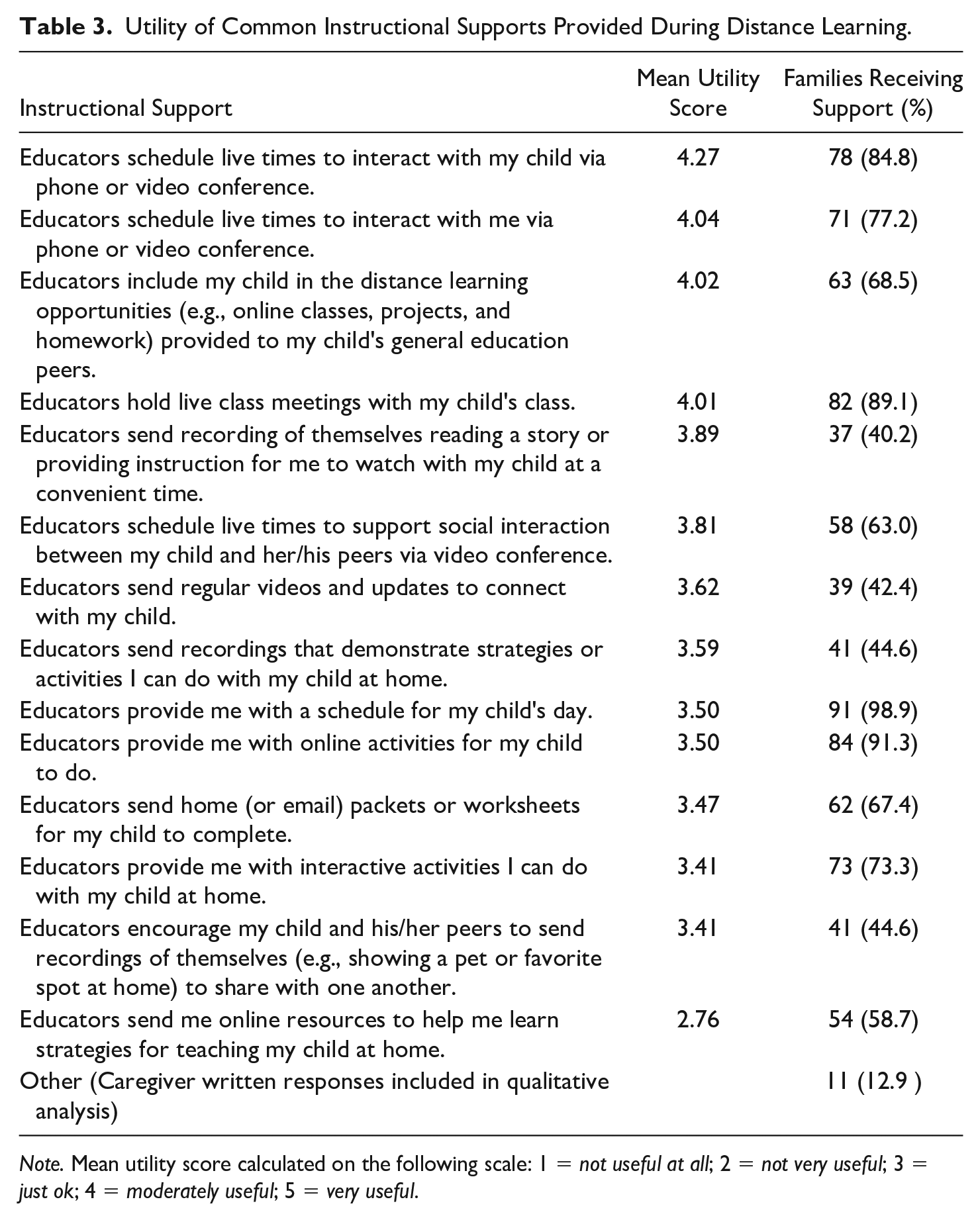
Note. Mean utility score calculated on the following scale: 1 = not useful at all; 2 = not very useful; 3 = just ok; 4 = moderately useful; 5 = very useful.
Survey results indicated that the six highest rated instructional supports were live instruction via video conference (individual rather than group instruction) (M = 4.72); educator support to caregiver via video conference (M = 4.04); inclusion of student with ESN in general education distance learning opportunities (M = 4.02); live class meetings (M = 4.01); pre-recorded instruction sent home (M = 3.89); and live support of social interactions (M = 3.81). Eleven survey respondents included comments in the open-ended “other” category. These responses were varied, but several described dissatisfaction with distance learning in general. Of those that described the utility of specific supports, modifications to core curriculum, support from a school aide at home, and close communication with teachers were emphasized. Although the survey did not require caregivers to provide specific examples of supports that were useful, these top six supports were shared with interview participants as a form of member checking. Interviewees often agreed with the list and provided several specific examples or stated other supports that were of high utility.
Live time for instruction—whether individual, whole group, or within general education distance learning environments—was identified as one of the most useful distance learning supports. Several caregivers reported that live online class meetings covered specific academic content and supported them in understanding how they could support their child’s access to content from home. Emily described the ways in which live instruction provided her with strategies to implement with her son, which led her to create her own subject-specific pages on her son’s communication device. She noted that watching him participate in class helped her refine supports to increase his access to online learning. Caregivers whose children were included in general education distance learning (69% of the sample) saw inclusion in live general education instruction as a useful support. One survey participant shared the ways in which her daughter’s teacher used repetition of curricular concepts to support all student learning and took “painstaking care to make sure every kid in the class gets called on and gets to share on a regular basis. She shows so much excitement and interest in my child.” Curricular adaptations, such as modified assignments to meet students’ unique learning needs, were identified as highly useful for supporting access and participation in online distance learning.
Caregivers often described ways in which they collaborated with educators to make live instruction accessible. A total of 79% of caregivers reported receiving one-on-one support from an educator to facilitate improvement in caregiver support to their child, rating this as the second most useful support on the survey. For instance, one survey participant explained the advantages of being able to “pop in to ask [special education teacher] questions” about how to provide support, and what activities or modifications to the general education curriculum were coming up in class. Thus, access to teacher support helped caregivers prepare to support their child to engage more meaningfully with the content.
Caregivers also valued live times to receive support from their child’s teacher via video conference to identify how to work toward learning outcomes asynchronously. These families described their challenges in supporting their child to engage in live distance learning. For example, Nathan, a caregiver of a student who struggled to engage with teachers over Zoom, shared that his son’s teacher suggested that they “measure goals kind of by what he usually would do during the day, and we just incorporated his individualized education plan (IEP) goals into that, and that's just been really lovely.” Nathan went on to explain that the teacher would create a list of ways his son could work on academic IEP goals during typical home activities such as cooking or watching videos.
Transformation in Access to Social Connections
While experiences of social isolation became increasingly common throughout the COVID-19 pandemic (Hwang et al., 2020), school closures resulted in unique social impacts for school-age students, and for students with ESN in particular (Alnefaie & Bagadood, 2021). The importance of social interaction—in particular, the loss of social opportunities—was a recurrent theme among interview participants. For example, Leslie shared her disappointment over the loss of social interaction for her daughter because she had “worked so hard on these relationships with girls who have been in [her] class . . . and that's gone. . . . It's frustrating.”
Caregivers repeatedly expressed concerns regarding the loss of opportunities for interactions and friendships with peers. This was particularly notable among parents whose children were educated in inclusive settings. Emily described how, while general education peers were often connecting through social media and online platforms, these modes were less accessible for her son with complex communication needs. As she shared, “All the friends he made and the relationships he made and all that stuff. We're never going to get that back.” Nathan shared,
We try to not be like, “Oh poor,” but I'm like, you know, it does suck. I mean, there were adults at the school that just absolutely loved him. There were kids that were just so amazing with him, and they and he did a lot of cool things for them too and I think all kids are missing out, right? But I but I think [student name], that was his biggest social thing other than us, was school.
Given the practical difficulties of fostering social relationships offline during school closures, caregivers described a desire for teachers to dedicate more class time to fostering these connections. Survey respondents identified live facilitated social interactions during distance learning as a useful and desirable support. However, only 63% of families reported receiving this support. Emily shared that her school had structured social interaction time with planned questions for students, but she hoped for more “unscripted social times, more [breakout] groups.” Several caregivers echoed this desire for more organic social interaction, similar to “simulated recess” (Barbara) during distance learning.
Transforming Family–School Interactions
Reciprocal Communication With School Teams
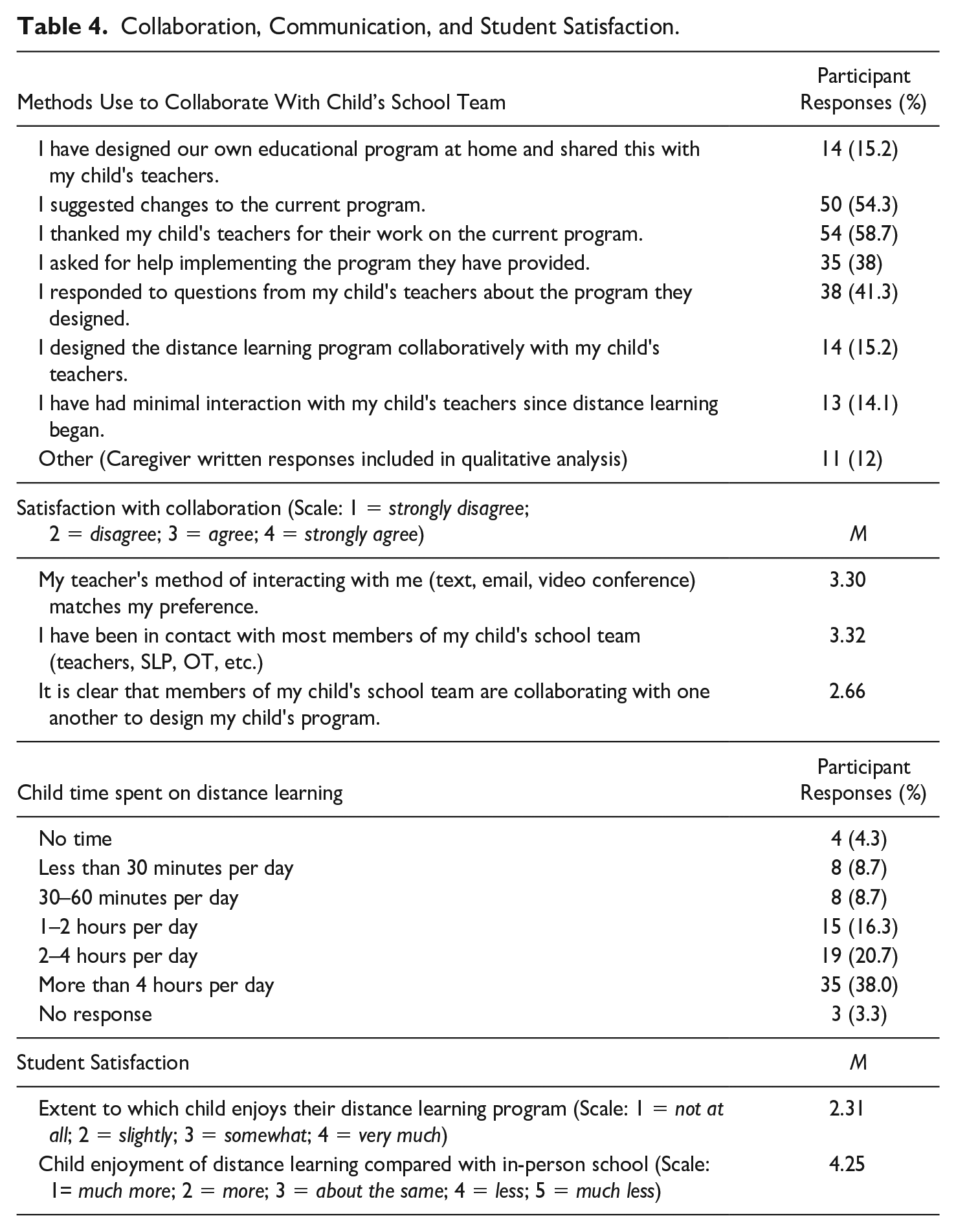
Whereas family–school partnerships have always been an essential element of strong education programs, during distance learning, caregivers became essential team members in supporting both the design and the delivery of instruction for their children with ESN. In interviews and open-ended responses, families discussed the importance of collaboration with members of their child’s school team. In several instances, collaboration took on a reciprocal quality not often associated with traditional in-person instruction. As one parent shared on the survey, “This has been wholly collaborative with the entire team. I feel like an actual participant whose ideas and concerns are valued and genuinely considered.” Survey data (see Table 4) also indicate that caregivers generally agreed that their educator communicated with them in their preferred manner, whether text, phone, email, or video conference. Only 14% of caregivers reported having minimal communication with their school team.
Collaboration, Communication, and Student Satisfaction.
At times, families described the ways in which they educated school staff on their child's support needs. As Tanya shared,
In a way, because of virtual learning and because I'm so involved in what's happening in the classroom, it feels like this perfect opportunity to actually shape how people engage with him or what kind of learning is done and really give that feedback.
In other instances, families described themselves as recipients of communication from school teams, often expressing gratitude for teachers' efforts to keep them informed. Xitlali was quite pleased with the degree to which her son’s teacher helped her prepare for Zoom classes, stating, “Por teléfono, mensaje o email, igual, ya me manda lo que se necesita” [By phone, text, or email, she always sends me what is needed.]
Insight Into School Programs
As parents provided support to their children and communicated with school teams to a greater extent than in the past, many families also described gaining increased knowledge of their child’s educational program. For some, this resulted in greater appreciation for the work invested by teachers and a broader understanding of how their child accessed instruction. Some caregivers, however, described disappointment in the quality of their child’s program. Much of this dissatisfaction was related to low expectations, passive involvement, and/or teachers’ lack of knowledge regarding specific student needs. For example, Emily shared frustration about times when her son with a physical disability was passively watching during a class on Zoom: “They're doing videos of exercises, and he's sitting there watching people exercise—it was like, this is ridiculous, what is happening?”
Several caregivers described disappointment with the overall manner in which teachers interacted with their child and designed instruction, with an assumption that their online interactions were also representative of their interactions in person prior to distance learning. An anonymous survey respondent described this phenomenon, and its potential impact on student learning, quite clearly:
For many parents who are finding out that “distance learning doesn't work” for their student with extensive learning needs, I suspect they are simply finding how much of their student's day was simply spent in behavior modification loops, not engaging with any teaching in the first place.
The insight that families gained into school programs influenced their decisions about their child’s program moving forward. Based on her observations, Barbara shared that her first-grade son watched the same preschool alphabet video daily while completing alphabet activities. She expressed frustration that “he doesn't care about this . . . they're treating them like babies because they have a learning disability or some, you know, some other diagnosis. I gave strong feedback on that.” Barbara went on to explain that she would be increasing her advocacy efforts to ensure her child’s access to age-appropriate content. Lucille expressed a new confidence in her ability to support her child’s learning and request changes to his school program; she stated, “I feel like I have a bit more agency over how my child is educated going forward because there is this new form [distance learning], and I know we can do it.” Lucille’s feeling of increased agency emerged as a theme across many caregivers.
Increased Caregiver Agency
With families assuming a more active role on the education team and increasing knowledge of their child’s school program, an additional theme of increased caregiver agency emerged. Caregivers frequently described both subtle and dramatic shifts in their roles related to their child’s need for support throughout the time when the child normally would have been at school. As Xitlali shared, “Tuve que cambiar mi role de vida” [I had to change my role in life]. Across the board, these shifts resulted in increased voice and participation in decision-making regarding their child’s educational program. Caregivers consistently described engaging in advocacy on behalf of their children related to services, formats, quality, and content of distance learning instruction. In fact, several caregivers interviewed took drastic steps related to distance learning, such as pulling their child out of school completely or moving to be closer to extended family who could help support their child. Each of the caregivers interviewed provided specific examples of the ways in which they advocated for their child, initiating interactions and taking on ownership of their child’s program. This emphasis on various forms of agency is consistent with survey data. Fourteen caregivers (15.5%) reported that they took the lead in designing their child’s distance learning program and then shared that with the educational team. Many caregivers (54.3%) suggested changes to improve their child’s program, and 38% asked for help implementing distance learning supports. Fourteen caregivers (15.5%) reported that they designed their child’s distance learning program collaboratively with their teacher. Despite many frustrations, most caregivers expressed a deep gratitude for the work that educators were doing to support access to education for their child during distance learning. Fifty-four (58.7%) reported thanking their teacher for their educational efforts.
Some specific examples of advocacy by caregivers include one survey participant who planned to “start writing [their] own goals” before IEP meetings, and another who “requested 1:1 zoom meetings with his SAI [specialized academic instruction] teacher for math and reading.” Emily, who was frustrated with the lack of accessibility of online physical education, “finally said something, and now [they] have like a little workout session that they do modified exercises.” She expressed gratitude that the school team was willing to collaborate with her to make distance learning more accessible for her child. Many caregivers were pleased with the outcomes of their advocacy; however, others, including Leslie, felt that it was “really depressing” that they could be “fighting for rights and all of the advocacy that we do, and it's like, and this is what is happening.” During her interview, Leslie referred to advocating for school team members to have high academic expectations for her daughter and to present challenging work, but she continually found it upsetting that people talked to her daughter in an age-inappropriate manner and presented the same content that her daughter had received “year after year since kindergarten.” Leslie’s sentiment that her advocacy did not result in more challenging or engaging work for her child was echoed by multiple participants.
Discussion
Quantitative survey data, qualitative open-ended survey questions, and interview responses from caregivers of students with ESN were collected to gain a better understanding of how distance learning maintained and/or transformed access to education. Findings indicate that distance learning maintained some aspects of educational access while transforming others. While the caregiver participants in this study sustained their own high expectations for access to and progress in academic instruction for their children with ESN (e.g., identification of literacy, and academic skill development as the top goals for distance learning), they gained insight into school programs that, contrary to their own high expectations, seemed to maintain and perpetuate low expectations for student learning.
Caregivers viewed some educational practices in distance learning as evidence of instruction in the classroom prepandemic, describing instruction as similar to “babysitting” or use of constant “behavior modification loops” rather than academic instruction. Similarly, Averett’s 2021 study, which included interview data from 112 parents of students with disabilities, shared a report from a concerned parent of a student who was removed from entire days of class instructional video conference at least once per week to reflect on their behavior rather than receive instruction. Although instructional formats may have changed, many approaches to educating students with ESN may have remained the same, and caregivers viewed these as problematic. This is consistent with research in the field indicating the persistence of low academic expectations (Petersen, 2016; Ruppar et al., 2014), low delivery of academic instruction, and high occurrence of unstructured time in which teaching does not occur within instruction for students with ESN (Kurth et al., 2016; Shurr & Bouck, 2013).
Notably, caregivers also identified several ways in which distance learning transformed education. Their discussion of transformation revolved around three main themes: access to instruction, social connection, and family–school collaboration. In relation to education and school environments, accessibility is often described in terms of the interaction between an individual’s needs and their environment (Barnes, 2012; Linton, 1998; Thompson et al., 2009, 2020; Wehmeyer, 2020). Without the availability of a traditional school environment, distance learning most often involved use of computer and video conferencing platforms to support interactions between teachers, therapists, and students. When discussing access to both learning and peers for their children, caregivers consistently emphasized the need for direct, in-person support for their child to benefit from school-provided instruction or social experiences. Many supports and teaching approaches were viewed in terms of both the responsibility placed on caregivers for implementation, and the degree to which parents felt their child benefitted from these efforts—in other words, whether families found instruction to be meaningful. For example, Barbara described her son watching the same alphabet video daily while completing online alphabet activities; she shared that although the activities were accessible for her child to complete with minimal assistance, she did not think they were meaningful, signifying that her child was not accessing a quality education. Thus, access became synonymous with the complex relationship between the availability of in-person support, the meaningfulness of instruction, and accessibility of the educational program.

The concept of accessibility being dependent on availability of adult and individualized supports is echoed in other research on distance learning for students with disabilities in the United States (Averett, 2021), the United Kingdom (Asbury et al., 2021), and Saudi Arabia (Alnefaie & Bagadood, 2021). Asbury et al. (2021) found that families felt distance learning decreased student access to instruction when teachers did not provide tailored supports that had been available in person. Although individualized supports were seen as key factors in access across this and other research, Averett (2021) noted that many students who typically received additional special educator or paraprofessional support in school struggled to access distance learning if they did not have consistent access to an adult support in the home. These findings have implications for practice and policy during distance learning and beyond. Given widespread emphases on accessible curriculum and instruction via models such as universal design for learning (CAST, 2018) and differentiated instruction (Tomlinson, 2014), findings from this study indicate that caregivers of students with ESN might extend notions of access to include the notion of “meaningfulness” while also appreciating the interdependence of the learning process for their children, whether learning occurs in person or online.
Limitations
Limitations must be considered when reviewing the results of this study. First, although recruitment was conducted widely through national organizations and social media groups, the majority of respondents were located in the western United States. This is in part due to the local connections of the research team members and direct recruitment that occurred through western state schools. The relatively small sample represents primarily female respondents from two-caregiver homes, with 76% of household incomes over the national median in 2020 (i.e., $67,572; U.S. Census Bureau, 2020). The sample does not represent many caregivers who are the sole caregiver and provider for their children, caregivers with low household incomes, or male perspectives. This limited sample indicates that the data shared may not represent the experiences and opinions of many U.S. families.
Implications for Practice
Caregivers generally expressed gratitude for the efforts of their children’s teachers. Many shared that they felt they were brought in as part of the education planning team for the first time. Although caregivers are legally required to be given the opportunity to provide input on their child’s IEP, professionals often either explicitly or implicitly request that families agree with strategies and supports they have designed (Love et al., 2017). Caregivers in this sample shared joy in their ability to provide meaningful contribution and instructionally relevant expertise based on their knowledge of how their child learns in the home to improve the distance learning program. Collaboration with the teacher to support learning at home was consistently selected as, and discussed as, one of the most beneficial supports during distance learning. This desire to collaborate, paired with increased caregiver comfort in advocating for changes to school programs, supports the need for teachers and administrators to ensure that they continue, or initiate, methods to include substantive caregiver input in the educational programming process. Additionally, with the knowledge that large districts have decided to maintain a distance learning option for students (Gomez, 2022), it is essential that schools identify, utilize, and refine strategies for collaborating with families of students with ESN to maximize their access and progress in school.
Data indicated that communication, literacy, and general academic skills topped the list of desired instructional content for students with ESN during distance learning. Further, though live instruction was seen as useful, many caregivers explained that it was only useful when the material and instruction were made accessible to their child or were relevant to their growth of desired skills. This is consistent with current curricular philosophy that situates academic and communication skills as functional because they are used to access everyday life, desired relationships, and community roles (Kurth et al., 2021; National Center and State Collaborative, 2013). The assumption underlying many self-contained programs—that caregivers are seeking an education for their child focused on skills traditionally identified as “life skills” (e.g., food preparation, laundry folding, teeth brushing)—is flawed. This is exemplified in our data, where “increased ability to help with daily tasks at home” was the least selected goal for distance learning in the caregiver survey. Building on these findings, we call on educators to redefine “life skills” to include some of the most commonly used skills in our society: communication and literacy skills. Further, these findings serve as a reminder to teachers of students with ESN to ensure that their IEPs focus on academic and communication skills that will enhance student access to valued life outcomes.
In terms of policy, collaboration with families and access to the core curriculum are already critical components of key legislation (Individuals with Disabilities Education Improvement Act, 2004). Nonetheless, these findings highlight the urgent need for structures that raise expectations for home–school partnerships and meaningful emphasis on literacy and communication skills. For example, these considerations can be emphasized to a greater extent within credential preparation programs for general and special educators, and they can be included in teacher evaluation tools for in-service teachers. While communication skills are typically addressed in IEPs for students with ESN, training is needed for administrators and district support staff who supervise special educators that emphasizes the provision of robust communication and literacy supports and the contextualized, meaningful application of these skills in practice. This could support school teams in aligning their goals with those of caregivers in this study.
Implications for Research
The importance of family–school collaboration has been highlighted in the data from this study. Although research exists that outlines a variety of collaboration strategies, including regularly scheduled conversations (Haines et al., 2015) and home–school communication notebooks (Kurth et al., 2019), these strategies have not been investigated in the context of instructional planning for distance learning platforms. It is essential to revisit the structure and content of home–school collaboration for distance learning because, in this format, caregivers have an active daily role in student access to education. In a recent practitioner support article on distance learning for students with ESN, Hanreddy (2022) proposed that schools use a collaborative planning tool for families that incorporates creation of an IEP goal/activity matrix (Grisham-Brown, 2002) or a participation plan (Kurth et al., 2020) that would support educational teams and families in planning for embedded instruction (Jimenez & Kamei, 2015) during synchronous school and typical home activities. Research is needed to identify the structure and efficacy of this type of collaborative tool in practice. Validation of a planning tool that highlights how students can work toward individual goals in and out of school may support educational teams to facilitate accelerated student learning and generalization of skills (Hanreddy, 2022).
This study focused on the perspectives of caregivers on distance learning. There is a dearth of research in the field of education that highlights the voices and experiences of students with ESN (Kubiak, 2017). Caregiver voices are not a substitute for voices of people with disabilities, and the voices of caregivers are sometimes in conflict with the feelings of their children with disabilities (Carey et al., 2020). Toste et al. (2021) interviewed 21 students with IEPs about their experiences with distance learning and identified practices that were supportive (e.g., increased access to engaging video instruction and read-aloud function on digital assignments) and unsupportive (e.g., difficulty finding content and assignments on multiple platforms). Toste and colleagues’ work is important for understanding student experiences and integrating that knowledge into practice; however, the sample in that study did not explicitly include students with ESN. Future research on effective distance learning structures and instructional strategies should highlight the input of students with ESN.
As mentioned in the limitations, this sample does not represent many caregivers who are the sole caregiver and provider for their children, caregivers with low household incomes, or male perspectives. Future research on family perspectives of school services should seek to recruit these underrepresented populations. It is essential for research teams to understand the barriers to participation that caregivers from underrepresented groups may experience (e.g., limited time due to multiple jobs; lack of access to the Internet, where recruitment occurs; limited literacy skills; limited recruitment language comprehension) and address them through responsive recruitment, study design, and compensation. Strategies that may support the recruitment of caregivers from underrepresented groups include obtaining an adequate budget to compensate participants for their time and effort, including researchers who represent the study population, using flexible locations that meet participants’ needs, and holding interest meetings at community outreach sites (Cui et al., 2019).
Footnotes
Declaration of Conflicting Interests
The author(s) declared no potential conflicts of interest with respect to the research, authorship, and/or publication of this article.
Funding
The author(s) disclosed receipt of the following financial support for the research, authorship, and/or publication of this article: This research was completed with support from the Family Focus Resource Center at California State University, Northridge.