







Abstract
This article examines the political controversy in the United States surrounding a new process for the disposition of human remains, alkaline hydrolysis (AH). AH technologies use a heated (sometimes pressurized) solution of water and strong alkali to dissolve tissues, yielding an effluent that can be disposed through municipal sewer systems, and brittle bone matter that can be dried, crushed, and returned to the decedent’s family. Though AH is legal in eight US states, opposition to the technology remains strong. Opponents express concerns about public health and safety and about the dignity of our mortal remains. Proponents focus on AH’s environmental benefits over cremation and earth burial, aligning the technology with the “green burial” movement. Drawing from historical sources, Science, Technology, and Society literature, interviews with funeral professionals, industry literature, and various media sources, this article examines four prominent conceptions of the dead human body as they are deployed (and inflected) by various funeral stakeholders seeking to exercise authority over the dead human body, to influence the trajectory of AH technology in the United States, and to chart a course for US deathcare culture in the twenty-first century.
Introduction: The Political Corpse
Death is disruptive. Altering the protocols surrounding death is doubly disruptive. So it is probably fortunate that new technologies seldom have substantial impacts on the ways people dispose of their dead. But when these technologies emerge, they challenge people to confront anew, both in principle and in practice, the politics of mortality, which custom, ritual, and law work to conventionalize. Thus, even though the circumstances in which people are called to address the disposition of human remains are very often rife with sorrow and grief, and imbued with obligations to comfort the bereaved or to assist the spirits of the dead, it is nevertheless important to look closely at disposition technologies and practices and to reflect upon the ways that personal and social values are expressed, formed, ordered, and normalized by the various politically charged rationales for specific disposition procedures. Indeed, a complete analysis of the politics of dead bodies must take account of the roles played by disposition technologies in the exercise of authority over the corpse.
The effects of technological innovation on deathcare practices vary widely across different national, regional, and cultural contexts. This article will focus on the political controversy in the United States that surrounds a new process for the disposition of human remains: alkaline hydrolysis (AH). At present, AH is legal in only eight US states (Colorado, Florida, Illinois, Kansas, Maine, Maryland, Minnesota, and Oregon), and one Canadian province (Saskatchewan). Moreover, only six funeral service providers offer AH to funeral consumers, and all but one of these providers are located in the United States. 1 And so a focus on the US context is appropriate at this time.
AH is a reductive chemical process by which tissues are dissolved in a heated (and sometimes pressurized) solution of water and strong alkali (e.g., potassium hydroxide or sodium hydroxide), yielding an inert, sterile effluent and brittle bone material (calcium phosphate). The body is placed in a stainless steel cage, or on a perforated, stainless steel tray, which is then sealed in a cylindrical, stainless steel vessel to which a solution of 95 percent water and 5 percent alkali is added. The design of the vessel and the duration of the process vary, depending upon the temperature and pressure at which the process is carried out. At higher temperatures, the process is quicker (taking as little as three to four hours), but it also requires a vessel designed to handle high pressures. As we shall see, potentially competing concerns about the speed, safety, and performance of high- and low-pressure AH systems remain critical aspects of their ongoing social and technical construction. System developers claim that the process destroys all RNA, DNA, and pathogens (including infectious prions), and breaks down embalming fluids, cytotoxic agents, and biological and chemical warfare agents into harmless materials. The resulting effluent, which contains amino acids, peptides, sugars, and soap, may be disposed of through municipal sewer systems, provided that it is cooled and the pH adjusted to meet local standards. The brittle bone material retained in the cage is dried and crushed, and may be returned to the decedent’s family. Any metallic implants and pacemaker materials captured in the cage can be separated from the bone matter and recycled or otherwise properly disposed.
To study AH is to study a complex network of individuals and organizations that includes scientists, engineers, medical researchers, funeral industry professionals, state officials, lobbyists, marketing teams, religious leaders, consumers (living and dead), and diverse media sources. It is also to study a host of interwoven technological and social problems that shape the conceptualization, regulation, design, and moral status of AH disposition technologies. Although various nodes of this network interact at multiple sites, one constant focus of concern is the dead body itself. This article will consider a number of frameworks within which the dead body has been conceptualized; namely, the medicalized/funeralized corpse, the public health corpse, the eco-corpse, and the sacred corpse. There are numerous other ways of conceptualizing the dead body, for example, the “aestheticized corpse” or the “commodified corpse.” But the four conceptions listed previously are more prominent in debates about AH technologies in the United States.
“The social body cannot function,” writes deathcare scholar Gary Laderman (2003, xv), “without agreed upon principles to respond to the universal presence of dead bodies.” Yet such principles do not arise spontaneously, and consent is not inevitable. Various groups of actors, each with its own interests in the corpse, have claimed authority over the bodies of the dead. Over the course of the past century, US funeral professionals have achieved a resilient authority over the disposition of human remains, prompting Cahill (1999, 107) to write, “attempted incursions across the boundary surrounding [funeral directors’] occupational jurisdiction are virtually unknown.” However, the authority of funeral directors and their roles in US deathcare culture have repeatedly faced challenges from clergy, consumer advocates, social reformers, embarrassing press reports, retail competitors, environmentalists, and technological innovations. Apparent stability obscures the constant struggles that funeral professionals have withstood. The unsettling introduction of AH into US deathcare culture provides us with an opportunity to witness these enduring contestations, as they become more visible through the veneer of settled routine.
Different body concepts, and the values expressed through them, serve diverse interests, including the commercial interests of funeral professionals and AH system developers, clerical and lay interests in honoring the mortal remains of spiritual creatures, state interests in protecting public health and regulating the funeral industry, and environmental interests in promoting ecologically responsible disposition practices. The introduction of AH into US deathcare culture, as well as the very design of AH systems, is shaped by various funeral stakeholders’ deployment of dead body concepts. Yet the meanings of these concepts, and the values and interests they represent, are not static. Ongoing negotiations concerning AH technologies and the dead body itself reveal tensions between stakeholders whose values and interests conflict; yet, these negotiations also hold the potential for cooperative alignment of various values and interests. Indeed, the future of AH technologies in the United States depends upon how stably AH can create a space in which stakeholders perceive their different values and interest to be adequately satisfied.
The Medicalized/Funeralized Corpse
The commercial funeral industry matured into its present form and status in the wake of the increasing medicalization of the human body that took place in the eighteenth and nineteenth centuries. Citing scholarship from the United States, the United Kingdom, and Europe, Armstrong (1987, 652) points out that medicalization changed the discourse of death by displacing the authority of the domestic family by that of “the administrative authorities, particularly in the form of medicine, which demanded the ritual of death certification and registration.” Public documentation of the time and biological cause of death on the newly mandated death certificate marked an “extension of public surveillance over the dead” in the mid-nineteenth century (Armstrong 1987, 652), which only increased with the subsequent introduction of the burial transit permit. The shifting discourse of death, in which “[t]here was great medical, legislative and public interest in the proper management of the corpse” (Armstrong 1987, 652), unsettled boundaries between public and private, religion and state, producing gaps in which professionalized undertaking found a foothold. The funeral home itself—being a hybrid space that is at once domestic, religious, and commercial—is an enduring artifact of this boundary disruption. 2 Yet the funeral industry is not simply a product of the medicalization of death and dead bodies; it is also a contributor to the medicalization of the corpse. Funeral directors were happy to both fashion and wield their burgeoning expertise in the unsettled discourse of medicalized death, helping to construct industry rules and regulations that secured for funeral directors a profitable place of authority in the management of corpses.
The professionalization of undertaking in the late nineteenth-century United States was the outcome of a sustained, strategic, highly organized struggle in which undertakers drew upon ideologies of scientific and technological progress, religious value, nationalism, technical expertise, and public health concerns to create for themselves a professional identity that distinguished them from mere businesspersons, and which sought to establish peer relationships among undertakers, doctors, lawyers, and even clergy (Laderman 2003, xxiii-xxiv). Prior to the Civil War, American families regularly cared for their own dead, washing, dressing, and burying bodies at home. But just as these same families were increasingly turning their sick and diseased bodies over to the authority of doctors, so too they would come to abdicate authority over their dead to funeral directors. Although modern arterial embalming grew to become routine practice in only two countries worldwide (the United States and Canada 3 ) in the decades following the Civil War, in these contexts it helped to ground the undertaker’s medicotechnical, legal, and social authority over the dead body. Indeed, it is not difficult to map the contemporary “funeral encounter” onto Lupton’s (2012, 24) rendering of Foucault’s medical encounter as follows: “…the [funeral] encounter is a supreme example of surveillance, whereby the [funeral director] investigates…and touches the exposed flesh of the [dead body], while the [survivor] acquiesces…with little knowledge of why the procedures are carried out …. The [survivor] is expected to give up his or her jurisdiction of the [dead] body over to the [funeral director].” 4 Today, funeral directors and embalming technologies are so well established and routinized in US deathcare culture that taking care of one’s own dead without availing oneself of the mediating services of funeral professionals—an option that remains legal in all but a handful of US states 5 —is an exceptional oddity.
Increasing public dependence upon the technical expertise, legal acumen, and industrial resources of funeral professionals has served the commercial interest of funeral directors; but it has also become a source of anxiety for many US funeral consumers. In the early years of the US consumer movement, these anxieties prompted Mitford (1963) to write her bestselling expose of the funeral industry, The American Way of Death. Disillusioned and suspicious of funeral directors, many of Mitford’s readers sought alternatives to the embalming and burial practices through which funeral professionals claimed authority over the dead body, increasingly turning to cremation as a low-cost, fewer frills means of disposition. Consumer empowerment, cost savings, and Catholic acceptance 6 helped fuel the “cremation boom” that began in the United States in the early 1960s, and which is now widely recognized as a dominant trend in contemporary US deathcare culture. According to the Cremation Association of North America (CANA), cremation will supplant embalmed earth burial as the leading disposition method in the United States within the next fifteen years. 7 Despite increasing acceptance of cremation among US funeral professionals over the last thirty years, many funeral directors continue to view the cremation trend as a threat to their commercial interests, and to their embalming-based, medicotechnical authority over the corpse.
Over the last decade, “natural” or “green” burial has garnered support from growing numbers of ecologically conscious (and conscientious) consumers in the United States. Its advocates promote funeral practices that expend fewer resources (and fewer consumer dollars) and that encourage families to “take a more active role in the conduct of a funeral” (Harris 2007, 2). Increasing interest in green burial has been encouraged by organizations such as the California-based nonprofit Green Burial Council (founded in 2005), by trade books like Mark Harris’s (2007) Grave Matters, Joshua Slocum and Lisa Carlson’s (2011) Final Rights, and Mary Roach’s (2003) bestselling Stiff, as well as from documentary films including A Family Undertaking (2004), Dying Green (2011), and A Will for the Woods (2013). Indeed, both embalming and cremation have come under fire in the last decade, due to increased awareness of the adverse environmental impacts of these disposition practices (see, e.g., Batchelder 2008; Mirkes 2008; Hansen 2012). Eschewing embalming, and asserting their own (and nature’s own) agencies in the disposition process, proponents of green burial, too, are challenging funeral professionals’ authority over the dead body.
Together, the ongoing cremation boom and the burgeoning green burial movement have engendered a deathcare environment into which the introduction of AH technologies seems apposite. AH system developers, funeral professionals, and the media consistently represent AH as a “green” disposition option. Moreover, AH is often marketed (albeit problematically) as a form of cremation. Thus, AH occupies a unique position within the evolving landscape of US deathcare culture, providing us with an excellent site at which to study contemporary negotiations over the meaning and value of the dead human body.
“Funeralizing” AH
AH was first adopted in the early 1990s by researchers at Albany Medical College who sought an effective and inexpensive way to dispose of experimental animal remains that contained low-level radioisotopes. AH allowed researchers to discharge animal waste into sanitary sewerage in compliance with the US Nuclear Regulatory Commission’s standards for protection against radiation. 8 Around the same time, researchers in Japan and Scotland showed interest in alkali reduction as a way to inactivate the infectious prions associated with Creutzfeldt–Jacob disease and bovine spongiform encephalopathy (mad cow disease). At the turn of the century, a company called WR2, under the direction of US chief Joe Wilson (2011) and UK chief Sandy Sullivan, designed, manufactured, and sold scores of AH systems to medical and veterinary institutions for the disposal of animal carcasses. By the mid-2000s, WR2 began to develop AH systems for use in the disposal of human bodies. These systems were first put to use by US medical schools—notably the Mayo Clinic in Rochester, MN and the University of Florida’s Shands Hospital in Gainesville—to dispose of donated human cadavers.
By 2010, AH systems were being marketed to funeral homes in Australia and in the United States (Wilson 2011). As was the case with embalming, now another technology initially developed for use in medical fields has found its way into the funeral industry—a technological drift indicative of persistent institutional affinities between medical science and mortuary science. Minnesota was the first US state to legalize AH (2003), thereby sanctioning the Mayo Clinic’s interest in hydrolyzing anatomical donations. Minnesota legalized AH under its mortuary laws (149A) in apparent anticipation of commercial funerary offerings of AH, which became a reality in 2012 when Twin Cities–based Bradshaw Funeral Services began operating an AH system. In Florida, the city of St. Petersburg’s Water Resource Department (WRD) has closely monitored and restricted the flow of effluent produced by the state’s first commercial AH system, installed at Anderson-McQueen Funeral Home’s Cremation Tribute Center in 2011. St. Petersburg boasts the title of Florida’s first green city, and according to funeral home owner John McQueen, the city was excited about this new, green technology, though they also wanted to ensure it would not cause any wastewater treatment problems. Satisfied by its study of the effluent, the WRD lifted its restrictions in 2013, permitting the system to run at full capacity. 9
The introduction of AH into US deathcare culture is no grassroots movement. System designers, distributors, marketers, and providers have worked hard—often against the current of uncomplimentary media depictions—to educate the public and state lawmakers about the AH process and the science behind it. Legalization of funerary AH has been promoted primarily by two manufacturers and distributors of AH systems who have sold operational units to funeral service providers in the United States, namely Indiana-based Bio-Response Solutions, Inc., and Scotland-based Resomation, Ltd., which distributes its AH systems in the United States solely through the Cremation Division of Matthews International. While some funeral professionals actively support legalization of AH technologies in their states in hopes of gaining an advantage in competitive funeral markets, 10 others have been more cautious. For example, in 2012, the Association of Independent Funeral Homes of Virginia (IFHV) lobbied for legislation (HB379) that would have criminalized the use of AH technologies in Virginia, had the bill not been stricken from the docket before ever reaching the House floor. The IFHV intended to prevent anyone from offering funerary AH before the Virginia Board of Funeral Directors and Embalmers had a chance to determine whether they had the authority to regulate the technology. 11 The IFHV’s concerns seem reasonable in light of controversies triggered in Ohio one year earlier when a Columbus funeral director adopted AH prior to state approval.
On January 27, 2011, Jeff Edwards, of Columbus Ohio’s Edwards Funeral Service, installed the first AH system for use in a funeral home in the United States. At the time, Ohio had not considered legislation that would legally allow for funerary AH. Edwards performed nineteen AH procedures before the Ohio Department of Health (ODH) ordered him to stop, less than two months after he began offering AH to his customers. According to Parmalee (2011c, 24), Editorial Director for deathcare industry publisher Kates-Boylston, the Ohio Board of Embalmers and Funeral Directors (OBEFD) issued a letter to the ODH, stating “it did not consider alkaline hydrolysis to be an authorized form of disposition” under Ohio law. The ODH quickly advised its deputy and registrars to cease authorizing death certificates and burial permits for bodies disposed of through AH. Edwards sued for a temporary restraining order, which would allow him to continue offering AH to his customers, but Ohio Common Pleas Judge Mark Serrott denied the request. Edwards had argued that the ODH ban on AH effectively stripped the next of kin of their right to choose the method of disposition for the deceased. But in his ruling, Judge Serrott asserts that the ODH, which is responsible for public safety and sanitation, has the expertise and authority to decide which types of disposition are allowable in the state. 12
One year later, Ohio representative Bob Hackett, with the support of the Ohio Funeral Directors Association (OFDA), introduced a bill (HB 481) that would legalize AH, and which would require the OBEFD to adopt rules and regulations to govern hydrolysis facilities in Ohio. Despite prior Ohio legislation permitting the use of AH to dispose of animal carcasses, Ohio lawmakers struck all AH language from the final version of the bill before it was passed in late 2012. According to the OFDA’s John McGough, the reason the AH portions of the bill were removed can be traced back to a letter from the Catholic Conference of Ohio, which declared: “Dissolving bodies in a vat of chemicals and pouring the resultant liquid down the drain is not a respectful way to dispose of human remains.” 13
The funeralization of AH has been vexed by disagreement among funeral directors, lawmakers, regulators, and funeral consumers as to how AH should be classified. In early 2010, CANA approved an amendment to its model cremation law, which expanded the definition of cremation to include AH. Yet, the National Funeral Directors Association (NFDA) insists that AH should not be viewed as a form of cremation (Parmalee 2011a, 7, 2011b, 11). Most states that have legalized AH have done so by classifying it as a form of cremation—a strategy that streamlines the legal and regulatory process by allowing AH to piggyback on the regulatory infrastructure that already governs cremation. But in Oregon and in Minnesota, AH has been legalized as a form of disposition separate from cremation. There is likewise some disagreement among funeral directors. Eighty percent of the funeral directors I interviewed at the 2012 NFDA convention stated that they believe AH is substantially different from cremation. 14 The concluding section of this article will examine in more detail the various implications of this debate.
The Contaminating Corpse
Public health discourse has played an important role in establishing and sustaining embalming and cremation as the dominant forms of disposition in the United States, and this discourse has helped shape conceptions of both the living and the dead body. During the Civil War, embalmers plied and advanced their trade with the support of the US Army and the Sanitary Commission. In the mid-twentieth century, Laderman (2003, 70) writes, the legal discourse “focused on one particularly disturbing fact of death: Corpses were dirty and dangerous,” adding that “mortuary laws and state regulations generally recognized that undertaking—and the work of embalming—bears on the health of the social body.” In the late twentieth century, the conception of the corpse as a danger to public health was reinforced by concerns about HIV and hepatitis B, which occasioned the Occupational Safety and Health Administration to publish federal guidelines—including the Bloodborne Pathogens Standard (1991)—to confirm “the delicate, dangerous, technologically-sophisticated nature of embalming” (Laderman 2003, 141), thereby further solidifying the mortician’s authority over the corpse by placing increased restrictions upon the disposition of the dead.
The cremationist movement of the late nineteenth century drew upon sanitarians’ concerns about the miasmatic threat that decaying corpses—even those buried underground—posed to public health. Quoting the sanitarian Frazer Persifor (1874), religious studies scholar Stephen Prothero (2001, 17-18) provides the following summary of the sanitarian argument for cremation:
Bodies buried in graves emitted “poisonous exhalations,” which polluted both water and air…resulting in “injurious effects,” which included fever, diarrhea, and, in some cases, death. Cremation, on the other hand, was the “safest” of methods. It resulted in “no horrid exhumations and mangling of remains; no poisoning of wells; no generation of low fevers” and restored “to nature most expeditiously the little store of her materials held in trust for a few years.”
“In public-health discourse,” writes Lupton (2012, 32), “the body is regarded as dangerous, problematic, ever threatening to run out of control, to attract disease, to pose imminent danger to the rest of society.” In the service of public health, medicine labors to protect the social body from sick, diseased, and abject bodies, which threaten to violate the political norms of self-contained, autonomous individualism by oozing, leaking, and bursting beyond their surface limits. So too, the funeral professional protects the social body by controlling the decay of the corpse. The socially charged chaos of death and decay are seized by the rationality of mortuary science and disposition technologies, which are put to work to arrest and/or accelerate the “natural” processes of decomposition and discharge. Although the public health conception of the dead body as contaminating and dangerous remains dominant in US deathcare culture, within the last decade a new set of attitudes toward the corpse has challenged this public health conception, impacting disposition practices and offering a new basis for claims to authority over the human corpse.
The Eco-Corpse
Each year, over a million tons combined of hardwood, metal, and concrete, and over three quarters of a million gallons of embalming fluid, are buried in US cemeteries. 16 In addition, crematoria use nonrenewable fossil fuels to incinerate human remains, while emitting greenhouse gasses, poisonous gasses, and vaporized mercury into the atmosphere. 17 Alarmed by this increasingly publicized information, green burial advocates seek to promote disposition practices that are more environmentally friendly than both cremation and embalm-and-bury practices. While Orthodox Jews and Muslims have traditionally abjured embalming and cremation in favor of what are today considered “green” disposition practices (i.e., encouraging natural decomposition by burying unpreserved bodies in shrouds or plain wooden coffins), a wider demographic is now finding environmental motivations to follow suit. In the United Kingdom, where the green burial movement first took root in the early 1990s, there are now over 200 green cemeteries (Harris 2007, 167); and in the United States, where the movement began nearly a decade later with the founding (in 1998) of Ramsey Creek Preserve in South Carolina (Harris 2007, 163), the Green Burial Council lists forty-one cemeteries across the country that comply with its standards for green burial grounds. 18
In contrast to the public health conception of the dead body as dangerous and in need of public surveillance and expert handling, proponents of the green burial movement view the dead body as an untainted, wholesome, even nutritive entity. In some important ways, AH technologies fit well with this conception of the dead body. In fact, AH was first patented in the United States by Amos Hobson, a British chemist who claimed to have “invented certain new and useful improvements in the treatment of bones and animal waste or refuse generally for the purposes of rendering the same more suited for fertilizing purposes…” 19 Joe Wilson (currently CEO of AH system developer Bio-Response Solutions, Inc.) endorses this nutritive conception of the hydrolyzed corpse, noting that “[a]lkaline hydrolysis generates a sterile, EPA neutral solution of amino acids, peptides, sugars, and soap that is suitable…for use as fertilizer or for composting” (Wilson 2011, 34). One early adopter of funerary AH, Jason Bradshaw of Bradshaw Funeral and Cremation Services, anticipates that families will someday ask to receive the effluent, though none has done so yet (Bradshaw interview). This possibility raises a host of questions—which I cannot pursue here—concerning the private handling and disposal of effluent that states and localities have not yet addressed, despite existing rules and regulations governing the scattering of cremated remains.
A nutritive conception of the dead body has also been advanced by the late Australian ecofeminist, Val Plumwood (2008, 324), who challenges the “Human Exceptionalism” concept of human identity, which places humans “outside and above the food chain, not as part of the feast in a chain of reciprocity.” In Western cultures, positioning the corpse within the food chain has traditionally been viewed as disrespectful of the exceptional human body. However, Parsi Zoroastrians and some Buddhists implement disposition practices that encourage the consumption of the unclean, dead body by scavenging birds—a form of excarnation often referred to as “sky burial.” Plumwood invokes “indigenous animist concepts of self and death,” which, she argues, allow us to “see death as recycling, a flowing on into an ecological and ancestral community of origins” (p. 325). Plumwood’s attack on dominant mortuary practices is at once ethical and aesthetic: mortuary practices wage “a technological-medical war against nature in this life,” one that “prevents the decaying body from nourishing other forms of life,” and which scars and poisons the earth with massive concrete slabs “surrounded by large bare areas, where all encroaching vegetation has been poisoned and nothing now can grow” (p. 327).
Plumwood (2008) captures sentiments that continue to grow in popularity in the United States and elsewhere, and while some funeral professionals are eager to tap this new market, others resist out of concern for lost revenues from service and merchandise sales, including embalming services, and casket and vault sales. In sum, the green burial movement is driven by environmental sustainability, aesthetics, consumer cost savings, and, for some, a desire to resist dependence upon the mediation of funeral professionals. 20
AH technology emerged as a funeral option around the same time that the green burial movement was getting off the ground in the United States, and manufacturers and providers of AH have sought to position AH within that movement, some by labeling the technology “Bio-cremation,” “Green cremation,” or “Eco-Green Cremation,” but all by touting the technology’s environmental advantages over embalmed earth burial and incineration. There is some justification for this. Like cremation, AH has the potential to reduce cemetery land use. Moreover, according to AH suppliers and providers, the process uses 90 percent less energy, and results in over 75 percent less carbon output than incineration. 21 In addition, no caskets are burned. In a “Bio Cremation” brochure, AH system distributor Matthews Cremation Division summarizes the AH process as follows: “In essence, our body is ‘recycled’ without harm to the environment. We return to the earth through a cycle of life, helping to promote new life as nature intended it to occur” See Note 21. But it is hard to disentangle the environmental and public health discourses that surround AH. As benefits attached to AH, proponents note that embalming chemicals, cytotoxic drugs (e.g., chemotherapy drugs), and infectious agents are neutralized. 22 These claims seek at once to allay concerns about the contents of the effluent being released into wastewater treatment facilities, and to highlight AH’s superiority to disposition methods that could release these chemicals into the atmosphere (cremation) or directly into soil and groundwater (burial). Moreover, unlike incineration, AH does not produce vaporized mercury emissions, which have become the subject of public health concern in both the United States and the United Kingdom (Batchelder 2008; Jupp 2006, 75).
The entanglement of environmental and public health discourses can be problematic. First, those who are drawn to AH for environmental reasons might simultaneously express concern about the public health effects of disposing of AH effluent into municipal wastewater treatment facilities. In the online discussion following an nbcnews.com report about AH titled, “Funerals undergoing an eco-friendly makeover,” one environmentally conscientious reader writes, “I still do not think my old bod should end up in the drinking water,” on the grounds that “[m]ost bodies now are simply full of stuff we need to eliminate…certainly not put it on our lawns or into drinking water.” 23 Second, there would appear to be an incongruity between the public health conception of the dead body as dangerous, on one hand, and the environmental conception of the dead body as natural and nutritive on the other. But just as the doctor’s work aims to transform the ill and diseased body into a healthy and orderly body through medical intervention, so too disposition technologies work to reconcile these body concepts through technological transformation. Whether by deceleration or by acceleration of the “natural” processes of decomposition, disposition technologies intervene to control the transformation of the dangerous chaos of death and decay into harmless—even beneficial—products. If AH disposition is a “green” and “natural” process, as its proponents maintain, it is so not as a result of the relinquishment of the body to nature (advocated by Plumwood), but instead by way of the rationalizing and harnessing of natural processes through technoscientific control. Thus, AH may offer funeral directors a way to maintain their professional authority over the corpse, and to keep eco-conscientious funeral consumers within the fold of professionalized and industrialized funeral protocols by providing a purportedly greener alternative to embalmed, earth burial and incineration.
The Sacred Corpse
In the United States, debates about disposition technologies have always included concerns about the dignity or sacredness of the dead body. The question of the sacredness of the corpse has been invoked on both sides of the debates concerning embalming, cremation, and AH. During the Civil War, soldiers and their families worried that the fallen were being heaped together in ditches like animals—naked and without coffins. To many families, embalming offered a way to preserve the corpse so that it could be given a proper, dignified burial at home (Faust 2008, 61-102). According to Laderman (2003, 70), “[u]nder the loving gaze of mourners, the corpse acquired a sacred status that was decidedly material rather than spiritual, and comforting rather than horrifying.” Yet, Laderman (2003) continues, others objected to embalming on the grounds that the corpse possesses “no religious power” and that embalming had transformed the funeral into “a form of pagan body worship.” In the United States, opposition to cremation’s destruction of resurrectable matter was countered by cremationists’ insistence that too much was being made of the body and that cremation offered, as Theosophist Henry Olcott wrote in 1879, “a last baptism by incandescent heat, a purification by fire, whereby the corrupt takes on incorruption” (Prothero 2001, 87)—thereby mirroring, in the realm of spirit, the technological transformation of the contaminating corpse into a purer, harmless material.
The Catholic Church has permitted cremation since 1963, but the Catholic Conference of Ohio objected to proposed legislation that would have legalized AH in the state of Ohio on the grounds that AH “is not a respectful way to dispose of the dead.” 24 This same position has been taken by Catholic Conferences in other states as well. In California, for example, the Catholic Conference stated in a letter to the California legislature that “we [Catholics] believe that the human body, once alive and animated by an immortal soul, possesses a moral dignity which must be honored,” adding that they found AH “to be a particularly casual—and perhaps disrespectful—disposition of human remains.” 25 Still, Catholics are not all of one mind regarding the morality of AH. In an article published in the National Catholic Bioethics Quarterly, Sister Renee Mirkes (2008) concludes that “alkaline hydrolysis is, in and of itself, a morally neutral action” and that it is on par with cremation from the point of view of Catholic teachings (p. 695).
It remains to be seen whether Hindus, Sikhs, Buddhists, or other religious groups that have traditionally embraced cremation will accept AH in the United States or elsewhere. According to both Jason Bradshaw and John McQueen, most customers who have chosen AH disposition have done so because they like the end product of cremation, though they do not like the process of incineration (Bradshaw and McQueen interviews). Still, for many people the disposition process matters a great deal, regardless of whether it eventuates in the same (or very similar) end products. Users and nonusers’ relationships to the products and processes of various disposition technologies offer rich subject matters that deserve closer analysis than I can provide here; but the fact that Bradshaw and McQueen have encountered no interest in AH from the Hindus and Laotian Buddhists who hire them to perform cremations, coupled with the leadenness of India’s governmental efforts to “green” the resource-costly, open-air cremation rituals of Orthodox Hindus by promoting more efficient, electric incineration technologies, suggests that the process differences between AH and incineration has deterred some individuals and groups from embracing AH technologies. 26
AH proponents appeal to their readers’/consumers’ sense of environmental responsibility, presenting AH as an ethical choice. Eco-Green International, Inc., a Wisconsin-based distributor of AH systems, headlines its homepage with the words “The Responsible Choice.”
27
And on their Bio Cremation website, Matthews Cremation Division writes:
Today we live in a world that encourages us to protect and preserve our natural resources…In addition to lifestyle changes, we must consider what happens at the end of life and that transition. Environmentally focused end of life practices are growing in popularity and whether it’s a greener burial or greener cremation, we are all called to play a supportive role within our families and communities.
28
AH Problems and Trajectories
We have identified a number of deathcare stakeholders—including funeral professionals, biomedical researchers, lawmakers and regulators, public health officials, religious leaders, environmentalists, and funeral consumers—each appealing to value-laden body concepts to advance their interests in the human corpse. We now ask how AH system designers and state regulators are responding to contestations over the corpse in their efforts to stabilize certain aspects of AH technologies and to incorporate AH into US deathcare culture.
Problems of Classification
Let us begin by returning to the classification problem. There are a number of reasons why closure around AH’s classification (as cremation) is important. The classification issue is hardly just semantic; it is of substantial practical concern. Some funeral professionals worry that referring to AH as a kind of cremation could potentially confuse or mislead clients, which could elicit litigation against funeral homes and crematories. Also, some states require crematories to be located on cemetery property. If AH is not classified as cremation, then the equipment could be located in funeral homes or other facilities apart from cemetery property, which could in turn occasion new zoning codes regarding AH equipment, as well as new avenues of industry competition. Moreover, the classification of AH could potentially influence unsettled Catholic attitudes toward the technology and the sacredness of the dead human body. Does CANA’s model law, and the state laws and regulations that follow it, provide the Catholic Church with a reason to permit AH disposition in congruity with its current position on incineration? This raises questions about the relationship between legal, technoscientific, and religious expertise and authority that I am not presently prepared to analyze. But classifying AH as a form of disposition other than cremation would render the Catholic position more open-ended—just as it renders regulatory control more open-ended.
Classification also has the potential to disrupt the institutional power structures that sustain the US funeral industry’s dominion over dead bodies and to reconfigure the expertise that grounds funeral professionalism. Consider Jeff Edwards’s reasons for regulating AH:
This is something that I feel strongly about that needs to be regulated and should stay in the funeral industry. If you want to technically look at the law, there is nothing that would stop a guy who owns a tire shop from legally installing and operating an alkaline hydrolysis unit and taking a form of disposition from the industry (quoted by Parmalee 2011c, 24).
If just anyone could offer AH just anywhere, then certain regulatory arrangements could do more than simply take business away from funeral directors; they could undermine the very professionalism of their trade. In response, funeral directors could fight for regulations that firmly place AH within the funeral industry (as Edwards is inclined to do), or they could loosen the connection between technological expertise and professional standing, while emphasizing the importance of other features of the deathcare expertise. Lambert (2011), vice president of Homesteaders Life Co. (a funeral insurance funding provider), endorses this strategy. “Many in our industry have worried about trends that could potentially reduce the funeral director to a technician/body handler,” writes Lambert, who recommends that funeral professionals instead promote “the importance of turning to funeral professionals for their unique training, experience and abilities to provide memorial consulting, grief support, [and] funeral event management …” (Lambert 2011, 49). Thus, AH may influence how funeral professionals interpret and advertise their own expertise.
But given Edwards’s interest in ensuring that AH “stays” in the funeral industry, it is surprising that he insists that AH is not a form of cremation. To classify AH as cremation would firmly root this new technology within the legally prescribed domain of the funeral industry. Perhaps Edwards shares the perspective of one reader who, in response to an online article that reviewed his case, wrote: “As for the government stepping in and halting his permits…it’s reactionary, and an abuse of their authoritative position.” 32 After all, Edwards has insisted that funeral consumers have a right to choose the method of disposition for their loved ones, and presumably he would prefer that funeral directors offer a greater variety of disposition options without unwelcomed government interference. The nature of the relationship between funeral professionals and the laws and regulations that at once empower and limit them is also at stake in the question of how to classify and regulate AH technology.
Problems of Design
Disagreements about the proper classification of AH technology have also influenced the design of funeralized AH systems. I will focus on design differences between the two funeral systems that to date have been put to use by multiple funeral service providers. I will label those who interpret AH as a form of cremation “assimilationists.” Those who interpret AH as “other” than cremation I will call “separatists.” According to Steve Schaal of Matthews Cremation Division (the sole distributor of Scottish-based Resomation, Ltd.’s AH systems in the United States), Matthews’s marketing studies showed that the term “Bio- Cremation” was more meaningful to people than the terms “Resomation” or “Aquamation.” When asked whether AH is, in fact, cremation, Schaal responded, “of course it is,” explaining, “the processes are the same.” 33 Thus, Matthews, a leading manufacturer of incineration retorts, markets AH systems that look like traditional cremation retorts (see Figures 1 and 2). In contrast, Bio-Response Solution’s Wilson (2011) claims that his AH system utilizes a process (reduction) that is completely different from that of cremation (oxidation). 34 Manifesting Wilson’s separatism, the systems he sells do not resemble traditional retorts (see Figure 3). Moreover, as one might expect from those who wish to draw attention to the uniqueness of the AH process itself, separatist designers and manufacturers display their technology quite nakedly, unashamed of the pipes, drains, vents, and so on, that feed and relieve the system. The assimilationists’ systems enclose these features behind a metal casing that does not display the technological anatomy of the system.
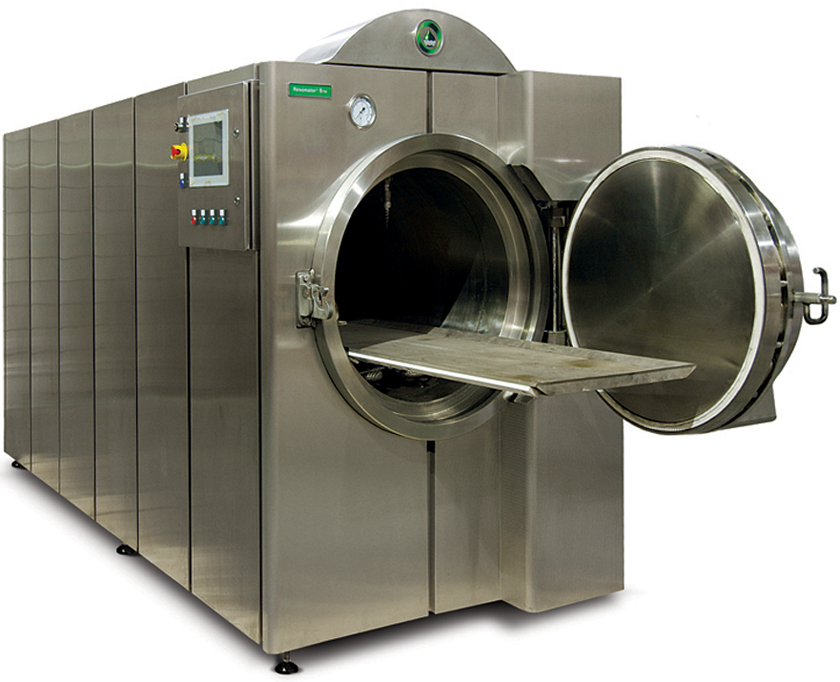
Bio Cremation
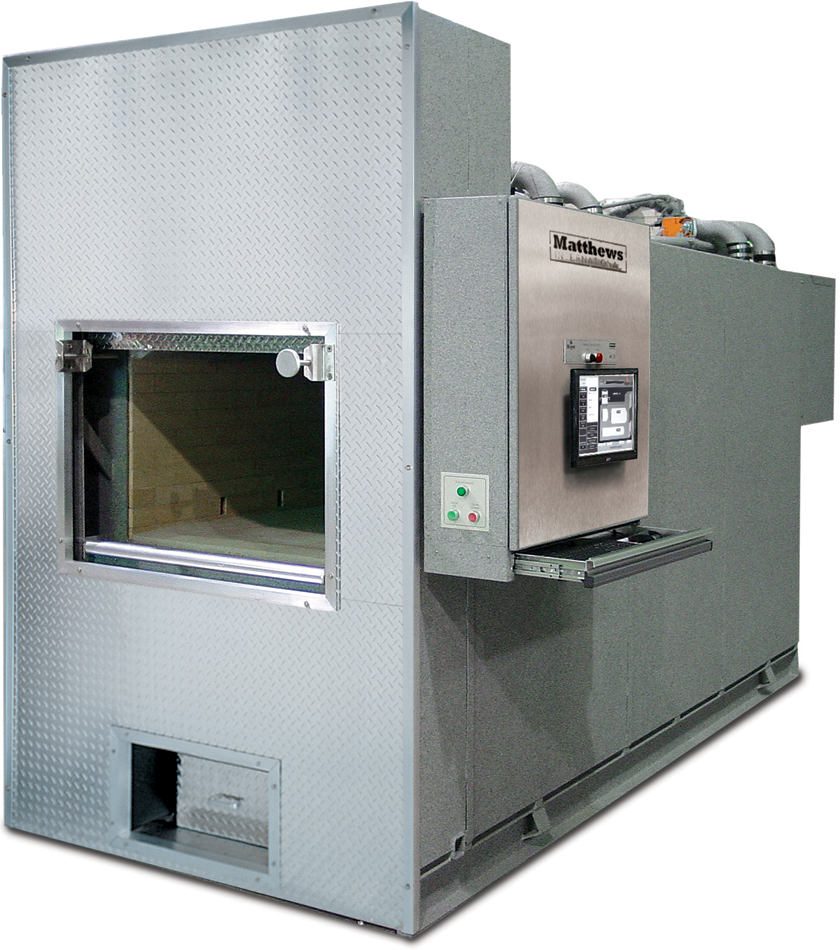
Power-Pak II PLUS Cremation System—Copyright© 2013 Matthews Cremation. All rights reserved. Used with the permission of Matthews Cremation.
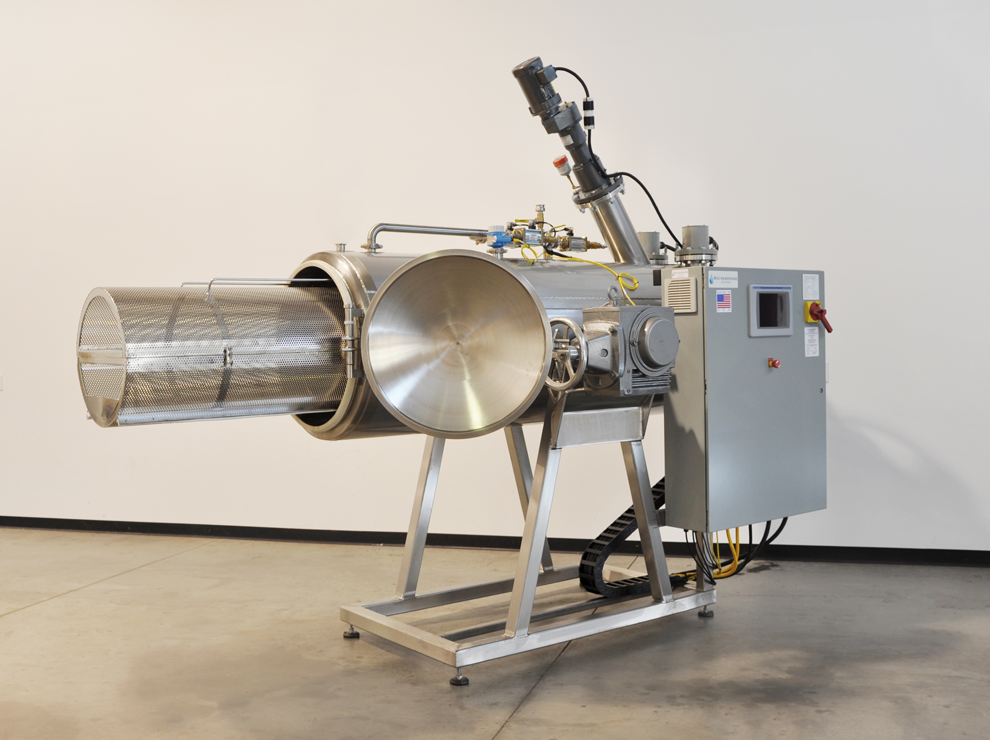
A low-temperature AH system designed by Bio-Response Solutions (image courtesy of Joe Wilson). AH = alkaline hydrolysis.
But there is more to these designs than aesthetics. Competing concerns about process efficiency and the sacredness or dignity of human remains also play a role in the interpretation of AH system design. Within their product catalog, Bio-Response Solutions highlights their “patent pending tip technology” as a “notable benefit” of their AH systems. The Bio-Response system is designed to be “loaded” while in a horizontal position, but then tipped at an angle during the disposition process. According to Wilson (2011), tipping the unit when in operation means that the system can use less water and alkali, while “suck[ing] less air” than units that operate in a horizontal position (Wilson 2011 interview). Assimilationists, however, are willing to forsake process efficiency for the sake of values independent of the hydrolyzation process itself. As Schaal stated in objection to the tipping approach, “We don’t tip you on your head. Our process is dignified” (Schaal interview). Still, both of the funeralized AH systems discussed here forsake some efficiency for the sake of dignity. Unlike some systems designed for medical and veterinary institutions, all funeralized AH systems are designed to process only one body at a time.
In addition, competing interests in speed, safety, and profitability cause concern among manufacturers, operators, and citizens in the vicinity of AH systems. Time is money, and a high-pressure system operating at 145 psi can hydrolyze a body in about three hours, which means that a funeral home could perform up to eight AH procedures in single day—roughly the same number as can be carried out by a single cremation retort. In contrast, a low-pressure system operating at 0 psi takes about twelve hours to hydrolyze a body, which means it could take a funeral home or crematory longer to profit from its initial investment in an AH system. Yet, what is gained in speed is paid for in perceived risk. As Hansen (2012) observes, “some residents reject the idea of having ‘a piece of machinery that contains 170 degree temperatures and 45,000 kg of pressure per every square meter’ in their neighborhoods. Does it take much imagination to think that some residents might consider such a machine to be a bomb?” 35
AH Futures
Within US funeral homes, sacred, domestic, and commercial spaces publicly intermingle, and diverse voices lay claim to the dead body. Historically, US funeral directors have asserted their social authority—and pursued their commercial interests—primarily through the medicalized and public health conceptions of the corpse, grounding their professional standing and expertise in the science and practice of embalming, which they sell as a service to the public.
The medicalized and public health conceptions of the corpse have never been sufficient to establish the US funeral director’s hegemony over dead bodies. The funeral director’s work must also express respect for the sacredness of the corpse. According to Cahill (1999), “most clergy seem content with their advisory jurisdiction…over funeral services, leaving the handling of details and corpses to funeral directors” (p. 108). Mirkes’s (2008) article illustrates the point, for her argument for the moral acceptability of AH largely defers, as her title makes clear, to the “mortuary science of alkaline hydrolysis.” Yet this apparent jurisdictional armistice cloaks ongoing contestations among funeral professionals and religious authorities. As Cahill notes, “boundary disputes between clergy and funeral directors do still erupt…” (p. 108). Thus, although the Bradshaws report that their customers turn to them for reassurance about the appropriateness of AH disposition (Bradshaw interview), religious authorities from many faiths continue to challenge funeral directors’ authority to adjudicate respectful disposition practices.
Mitford (1963, 90) challenged a key pillar of professional funeral work in the United States, concluding that “the public health benefits of embalming are elusive.” Her consumerist advocacy has contributed to the cremation boom in the United States, much to the chagrin of those funeral directors whose continued livelihood still relies heavily upon the sale of embalming services and burial merchandise. Over the past decade, green burial advocates, too, have subjected the public health conception of the corpse to criticism, insisting that “fears and myths about the ‘contagion’ from dead bodies” are “misplaced” (Slocum and Carlson 2011, 141). Driven mainly by concerns about the negative environmental impacts of embalmed earth burial and incineration, proponents of the green burial movement question the wisdom and necessity of routine reliance upon technological interventions for disposing of the natural and nutritive eco-corpse. Though developers and providers of AH technologies hope to capitalize on increasing public interest in ecologically friendly disposition options, they face obstacles stemming from potent concerns about the sacred dignity of human remains, and concerns about the public health implications of more widespread AH adoption—particularly with respect to the disposal of effluent.
The meanings and values conferred upon dead bodies are not static. In their efforts to include AH in US deathcare culture (or to exclude it), funeral stakeholders do not deploy rigid body concepts; rather, to adapt a term from Bowker and Star (2000), stakeholders “torque” those concepts to serve values and interests that continue to evolve as debates about AH unfold (p. 27). The popularity of AH among environmentally conscientious funeral consumers indicates that technological intervention into disposition does not necessarily clash with the natural dignity of the eco-corpse. And since technological intervention continues to be motivated (albeit problematically) by public health concerns, funeral stakeholders can appeal to AH as a way of reconciling the seemingly incommensurate public health and eco-conceptions of the dead body by transforming a dangerous body into harmless matter, thereby satisfying both the commercial interests of AH manufacturers and providers and the environmental interests of funeral consumers. Through AH, funeral stakeholders torque the meaning of the dead body’s dignity. For example, while Mirkes (2008) appeals to the mortuary science of AH to support her claim that AH shows no more disrespect for the corpse than do Church-approved cremation or embalming technologies, the California Catholic Conference, Inc., opposed AH on the grounds that both the process and the product of AH differ radically from those of cremation—an argument that would appear to resonate with Hindu and Buddhist cremation customers in Florida and Minnesota who have to date shown no interest in AH.
Entering the US funeral industry in the midst of a cremation boom, and at a time when the green burial movement is provoking a form of deathcare soul-searching that could become as powerful as the consumerist funeral reforms initiated in the early 1960s, AH would seem poised to prosper. Yet, AH is also exacerbating the social and professional disruptions caused by these broader funeral trends. It remains to be seen whether AH will find a lasting home within US deathcare culture, but its prospects depend largely upon whether funeral stakeholders can negotiate and align the various conceptions of the corpse studied here, along with the values and interests expressed through them.
Footnotes
Acknowledgment
I would like to thank my colleagues, Saul Halfon, Janet Abbate, James Collier, and Ellsworth Fuhrman for providing supportive comments on an earlier draft of this article. I am grateful, too, for helpful comments and suggestions provided by two anonymous reviewers for Science, Technology, & Human Values.
Declaration of Conflicting Interests
The author(s) declared no potential conflicts of interest with respect to the research, authorship, and/or publication of this article.
Funding
The author(s) received no financial support for the research, authorship, and/or publication of this article.