







Abstract
This article examines publication patterns over the last seventy years from the American Sociological Review and American Journal of Sociology, the two most prominent journals in sociology. We reconstructed the gender of all published authors and each author’s academic pedigree. Results would suggest that these journals published disproportionally more articles by male authors and their coauthors. These gender inequalities persisted even when considering citations and after controlling for the influence of academic affiliation. It would seem that the potentially positive advantage of working in a prestigious, elite sociology department, in terms of better learning environment and reputational signal, for higher publication opportunities only significantly benefits male authors. While our findings do not mean that these journals have biased internal policies or implicit practices, this publication pattern needs to be considered especially regarding the possibility of their “social closure” and isomorphism.
The construction of academic reputation is a complex organizational process in which the publishing system has a major role (Clemens et al. 1995). Although academic careers depend on complex factors, publications are key for tenure and promotion (Leahey, Keith, and Crockett 2010; Long 1992; Grant and Ward 1991). In an era of “publish or perish” hypercompetition, even funding agencies heavily rely on bibliometric indicators, such as the number of publications and citations, to allocate grants (Edwards and Roy 2017; Nederhof 2006). As a result, understanding publication patterns in prestigious journals could help reveal possible sources of inequality in academic credit allocation.
Previous research has shown that while prestigious journals determine stratification processes, shaping standards of performance and identity of a discipline within a context of excessive competition, their elitism could also penalize innovation, thus reducing academic diversity and so favor inertia. For instance, in a study of top sociological journals in 1987-1988, Clemens et al. (1995) found that women rarely appeared among the most prolific authors, and productivity and reputation could be orthogonal to one another (see also Karides et al. 2001). In a recent study on publications between 2000 and 2015, Teele and Thelen (2017) found that women are disproportionately underpublished in top political science journals. They found that the largest percentage of publications was dominated by all-male teams, with women less involved in coauthorship networks. They suggested that this could be due to a self-selection process, driven by women’s putative preference for qualitative methods.
The fact that there are gender differences in academic success even despite the rise of women in science is well known (Cole and Zuckerman 1984, 1987; Young 1995). Research suggests that women are penalized especially in science, technology, engineering, and mathematics research (Cain and Leahey 2014; Lomperis 1990; Kahn 1993; Sheltzer and Smith 2014), are paid less (Prpić 2002), and are preferably hired in lower level academic positions and in less prestigious institutes (Lomperis 1990; Heijstra, Bjarnason, and Rafnsdóttir 2015). They publish fewer papers and are cited less (e.g., Xie and Shauman 1998; Young 1995; Maliniak, Powers, and Walter 2013).
On the one hand, this situation may be due to gender differences in scientific collaboration patterns and attitudes. First, research would suggest that women tend to establish smaller and more homogeneous collaboration networks (Grant and Ward 1991; Renzulli, Aldrich, and Moody 2000), thus lowering their chance to be part of the core network of star scientists (Moody 2004). Second, they prefer more diversified research programs and so their research is less specialized, penalizing their visibility and success (Leahey 2006, 2007). This could decrease their access to relevant resources for funding and promotion (Xie and Shauman 1998; Weisshaar 2017) and make their academic careers less stable or rewarding (Hancock and Baum 2010; Preston 1994), which could also be due to distortion from hiring committees as a result of family obligations (Rivera 2017).
However, on the other hand, there are constructive processes in which gendered patterns could be internalized by women (e.g., Ridgeway 2009; MacPhee, Farro, and Canetto 2013; Brink and Benschop 2014). For instance, even when women do pursue an academic career, they have lower expectations of success (Prpić 2002; Fox and Stephan 2001; Leslie et al. 2015). This may be due to what Cech et al. (2011, 642) called “professional role confidence,” that is, “individuals’ confidence in their ability to fulfill the expected roles, competences, and identity features of a successful member of their profession.” Not only can these socially shared beliefs contribute to gendered persistence in male-dominated professions, they also build in gender penalties via self-reinforcing processes. This has been confirmed by a recent lab experiment, where subjects were asked to evaluate a sample of comparable academic articles in terms of quality, clarity, significance, and methodological rigor. Articles published by women received lower evaluations even by female evaluators (Krawczyk and Smyk 2016).
These gender penalties have important implications. While the under-representativeness of women calls for a response for equity, research on natural and cultural evolution has indicated that diversity is the key for adaptation, learning, and resilience in any complex system (e.g., Page 2010). Given that science is a self-organized and decentralized complex system, gender penalties could create an institutional context that reduces cultural and epistemic heterogeneity and diversity (Belle, Smith-Doerr, and O’Brien 2014). This could have negative implications for collective learning and experimentation. This is even more the case in sociology, which does not have a consensual epistemological or methodological standard (Dogan and Pahre 1989). It is therefore not surprising that in a recent review on diversity in working teams of scientists, Nielsen et al. (2017) found that teams that are more diverse in gender, ethnicity, or culture performed better. Misra et al. (2017) suggested that active inclusion of minorities tend to promote innovation, creativity, and positive reputational effects especially when teams are integrated.
In this paper, we examine gender publication patterns in top journals in sociology, that is, the American Sociological Review (ASR) and the American Journal of Sociology (AJS; Leahey 2007; Light 2013; Jacobs 2016). These two journals constitute the elite of our discipline, within a stratified publication market where competition, control, and boundaries are strong (some critics have even considered these journals as “alleged cartels,” see Platt 2016). Furthermore, they also differ in their historical origins, which trace back to a schism of American Sociological Association members in 1935, with AJS becoming the journal of an independent, prestigious department (Chicago) and ASR embedded in a representative association (e.g., Lengermann 1979; Abbott 1999).
While previous research suggests that sociology is probably less gender biased than other disciplines due to more women graduates (Lutter and Schröder 2016), it is probable that tenure and promotion in the academic elite is more competitive (Light 2009), as a result of the influence of symbolic capital in academic success (Bourdieu 1988). This would suggest that looking at the top could reveal gender inequality that weak competitiveness in lower academic layers could otherwise obscure. In addition, given that competitive pressure for publication is higher in these top journals, examining them could reveal general trends in hypercompetitive science today. As a result, we have employed the general design of a recent study of political science journals in the data collection strategy, while paying attention to academic affiliations over a longer timescale. We also integrated data on publications with available web data on authors’ academic pedigree to understand whether academic affiliation could contribute to inequalities in publishing.
The rest of the paper is organized as follows: the second section presents our data, while the third section presents our descriptive results. The fourth section presents statistical models. Finally, the fifth section summarizes our main findings and discusses limitations and further developments of our work.
Data Set
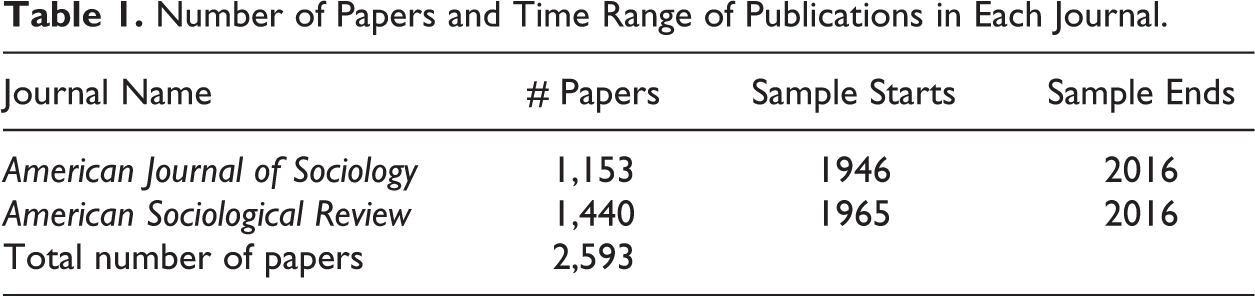
Data on all AJS and ASR publications were extracted from Scopus on January 20, 2017, and included article title, authors’ names and affiliation, and number of citations received. Table 1 shows the time range of publications in each of these journals.
Number of Papers and Time Range of Publications in Each Journal.
In order to check for authors’ gender, we used the authors’ first names to send automatic requests with R scripts to a database of numerous names extracted from social media profiles (Wais 2016). Simultaneously, a research assistant (hereafter RA) hand-coded author gender. In any conflicting attribution case, the RA searched for the online profile of authors, whenever available. We then matched the gender extracted from API 1 with the hand-coded version. In any discrepancies (41 of 2,897 authors), we used the hand-coded gender. In cases of missing data from the hand-coded procedure (22 of 2,897 authors), we used the automatic gender extracted from API, which was based on accuracy percentages (note that there were only 17 of 2,897 missing genders). As suggested by Young (1995), Maliniak, Powers, and Walter (2013), and Teele and Thelen (2017), we coded any article as written by Solo male, Solo female, All male team, All female team, and Cross gender collaboration. Furthermore, following Karides et al. (2001) and Teele and Thelen (2017), we used the American Sociological Association (hereafter ASA) annual membership as a proxy of the gender composition of the community. 2
In order to add some control variables, we also checked the curriculum vitae and online information of each author. This allowed us to identify the academic institution that awarded each scientist’s PhD. We also looked at the current gender composition of some of the most prestigious sociology departments in the Shanghai ranking by extracting data from the official websites. 3 These variables were used to estimate whether women could potentially benefit differently from a prestige effect in the publication process.
Descriptive Results
Figure 1 shows the historical trend of the percentage of women who authored an article in AJS and ASR compared to women who were ASA members (continuous line). Considering only the last year of our sample—2016, while women were a majority of ASA members (53 percent), they constituted less than a third of AJS and ASR authors. Although the two journals showed different dynamics, and the gender gap has been closing since 2000, at the current rate, it would take more than ten years to reach gender equality.
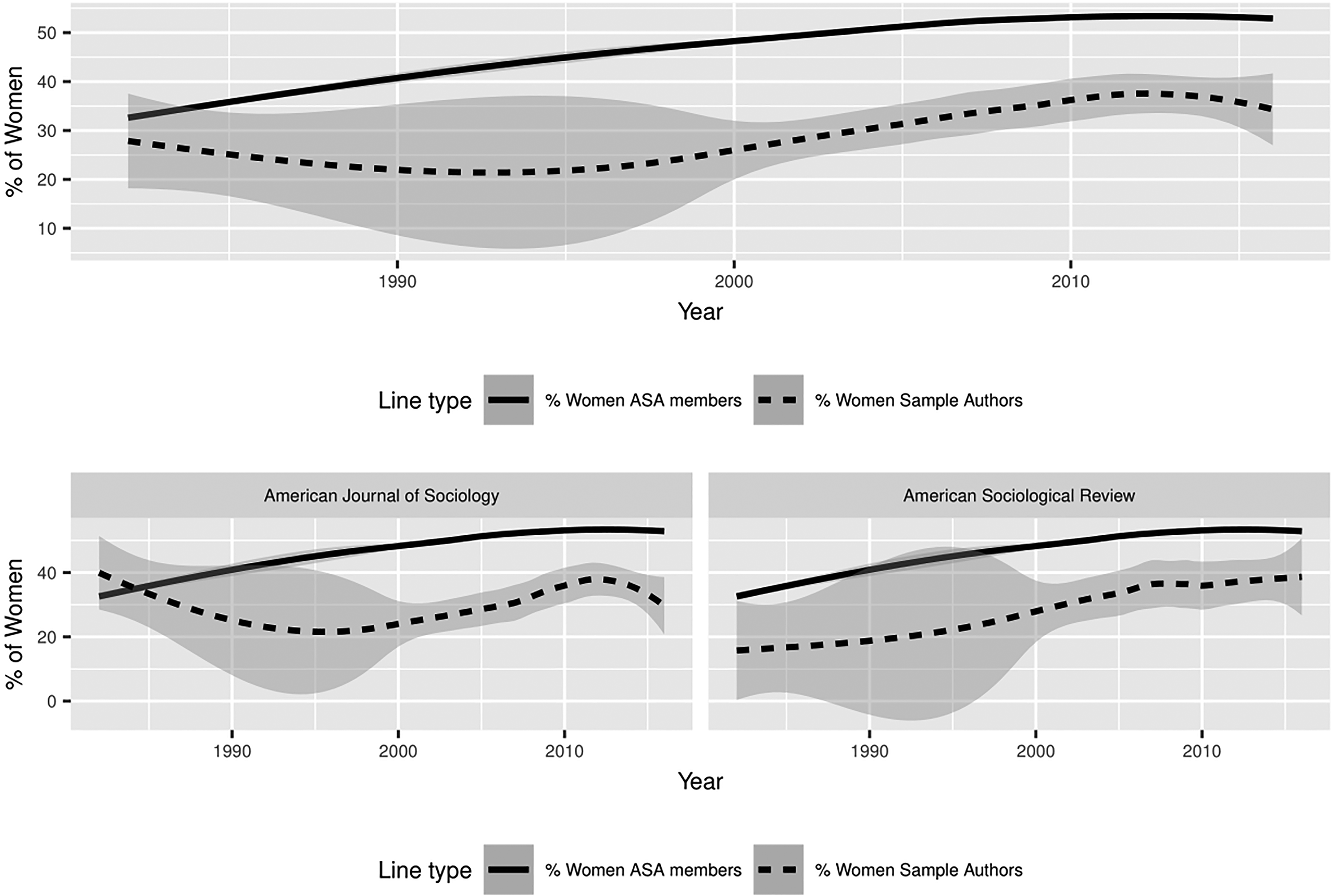
Percentage of women authors in American Journal of Sociology and American Sociological Review (dashed lines) compared to percentage of American Sociological Association (ASA) female members over time (continuous lines). (Top) The aggregate trend; (Bottom) the trend per journal. Data are based on a t test of the distributions. The gray zone indicates the confidence interval of the two lines.
The number of authors has increased over time (e.g., Wuchty, Jones, and Uzzi 2007), perhaps due to the increased number of articles published in these journals; Figure 2 shows that the number of women who published in AJS and ASR tended to increase less than men.
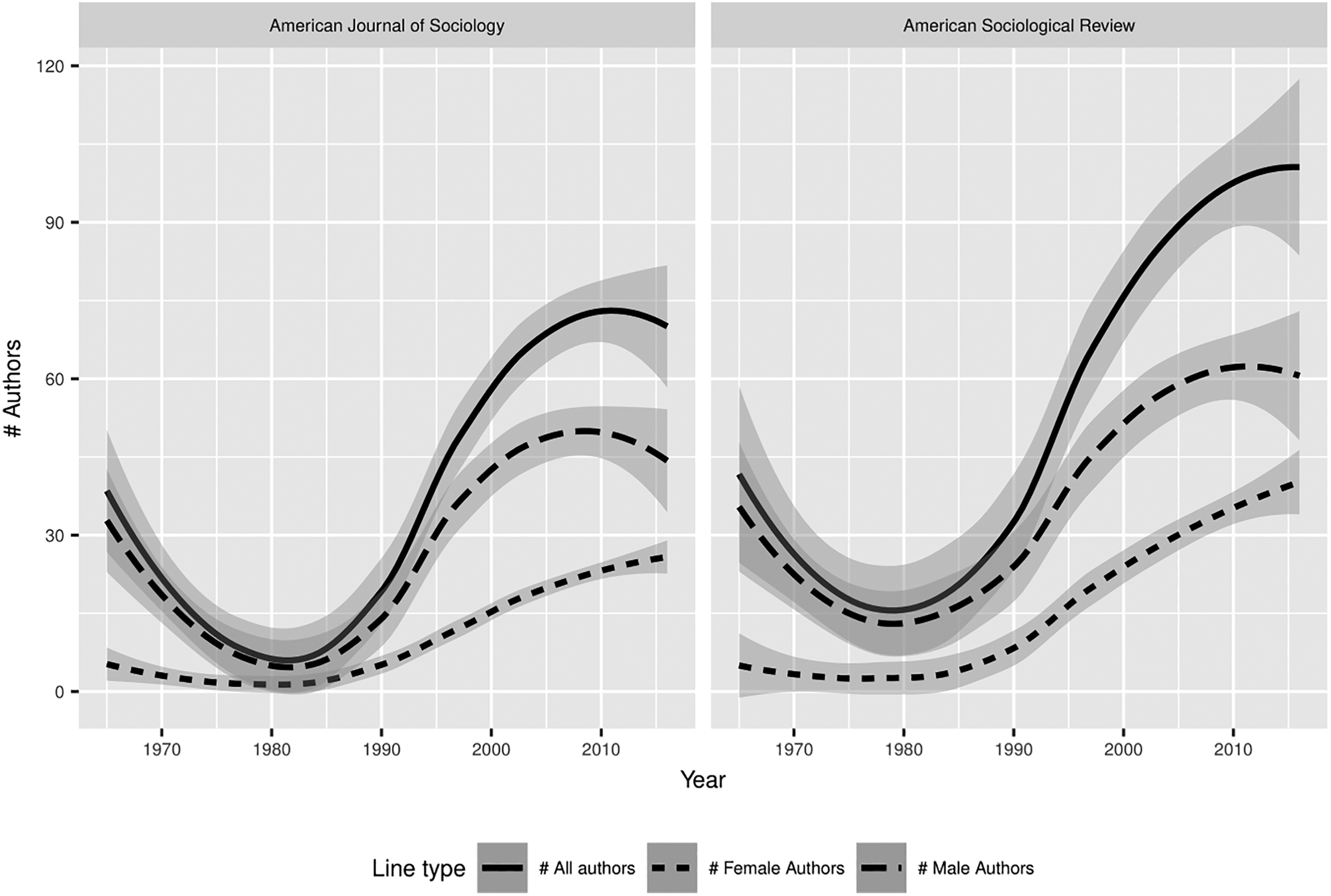
Gender trend of authorship in American Journal of Sociology and American Sociological Review.
When considering coauthorship patterns, while 84 percent of articles published in AJS and ASR had at least one (or more) male author(s), only 40 percent of these had at least one (or more) female author(s). In general, the picture approximates a 70/30 ratio, which is slightly better than Young’s (1995) study in political science but similar to that found more recently by Teele and Thelen (2017; see Table 2). Although norms and practices of collaboration might be context-specific, it seems that fields such as sociology and political science do not dramatically differ in terms of gender collaboration patterns.
The Share of Male and Female Authors.
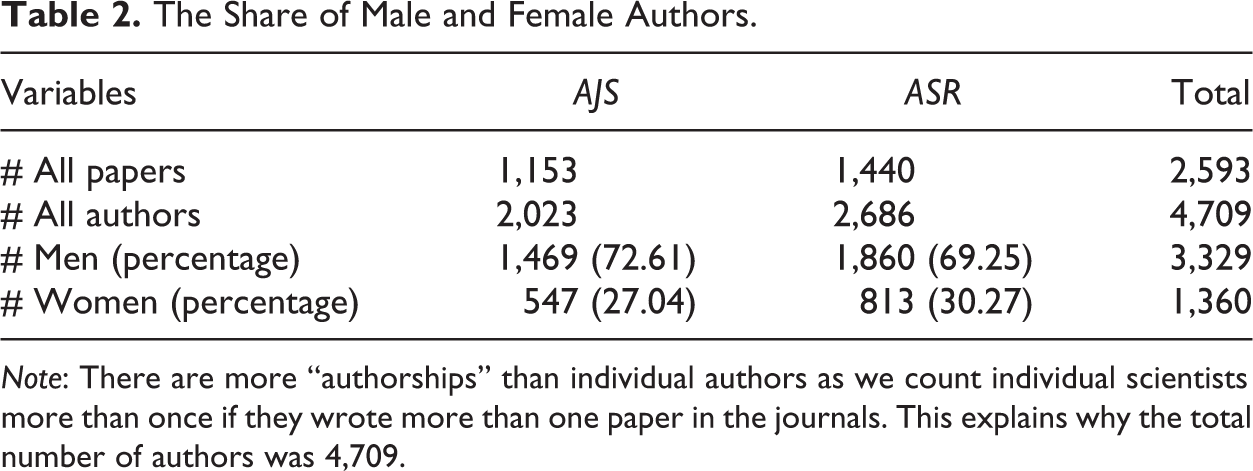
Note: There are more “authorships” than individual authors as we count individual scientists more than once if they wrote more than one paper in the journals. This explains why the total number of authors was 4,709.
Figure 3 shows that for both journals, only 11 percent of articles were published exclusively by solo women, whereas men sole-authored 37 percent of the papers in AJS and 30 percent in ASR. Only 5.4 percent of articles in ASR and 3.2 percent in AJS were published by all-female coauthor teams. However, Figure 4 shows that cross-gender coauthorship has increased recently probably due to a net increase of articles published by teams of coauthors.
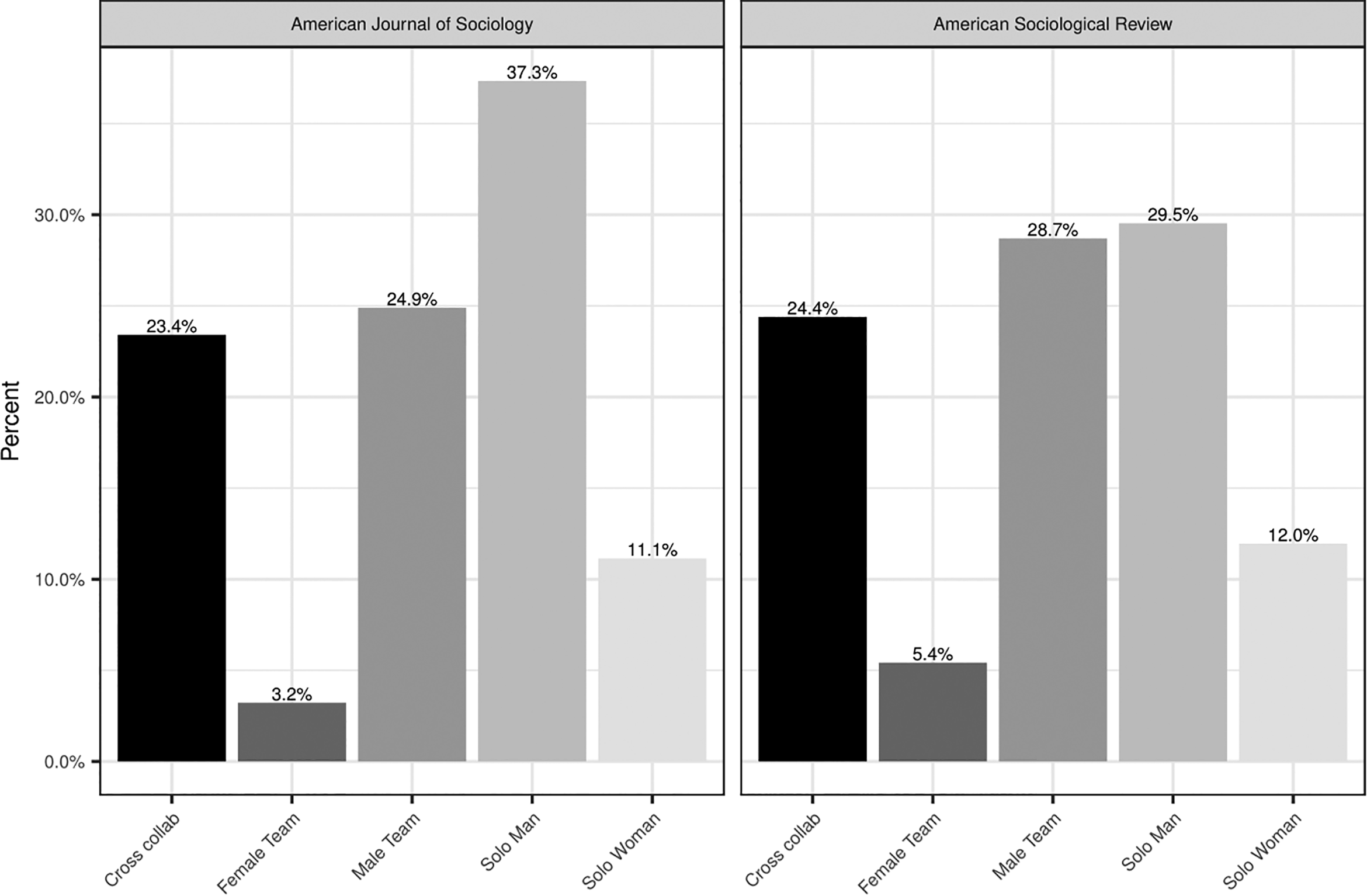
Gender coauthorship in American Journal of Sociology and American Sociological Review.
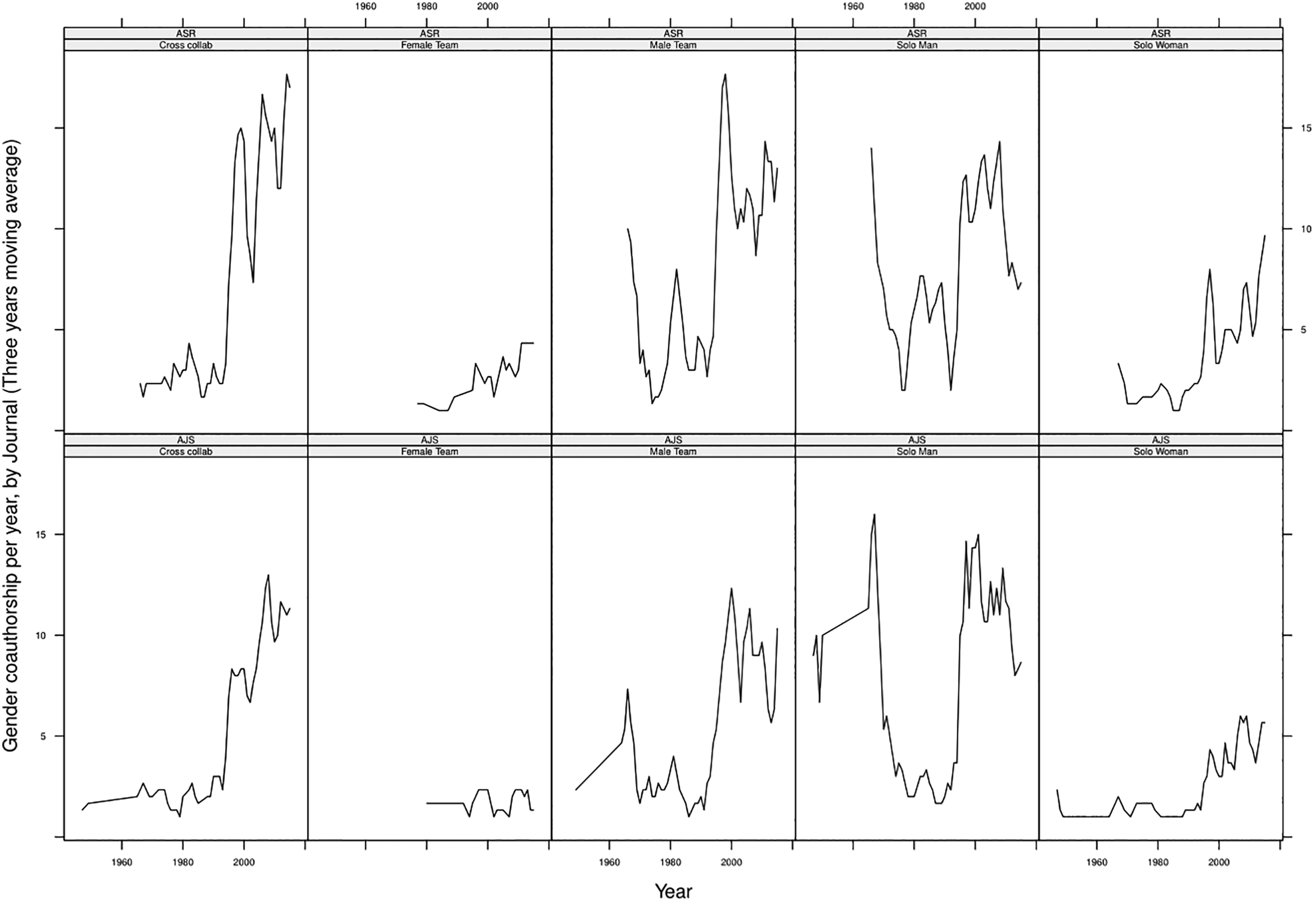
Gender coauthorship dynamics in American Journal of Sociology and American Sociological Review.
Figure 5 shows that women were first authors of these articles less frequently than men and that inequalities in author positions did not significantly change over time. The trend was similar in the case of cross-gender collaboration (see the bottom panel). Indeed, the first authors of mixed-gender teams were predominately men, with only a few exceptions for certain years in ASR, in which first authorships were more gender balanced.
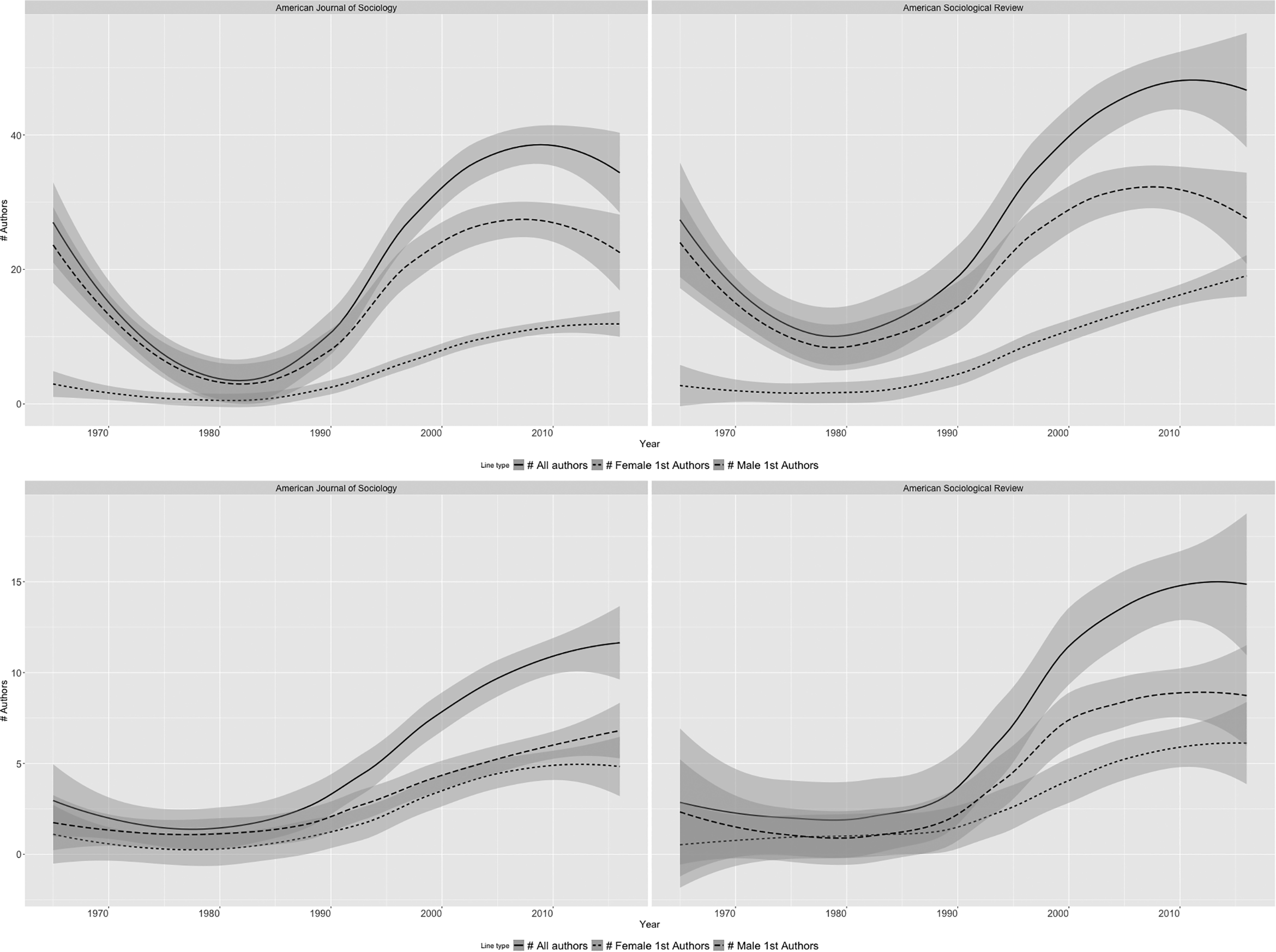
Gender difference in first authorship in American Journal of Sociology and American Sociological Review. (Top) The aggregate trend of all publications; (Bottom) the specific trend of cross-gender coauthored articles.
Figure 6 shows that women had only a 21.5 percent premium in terms of higher probability of publishing in AJS and ASR when they were a member of a prestigious sociology department against a 62 percent premium for men. Interestingly, cross-gender collaboration was more frequent among members of less prestigious departments (20.8 percent vs. 16.5 percent). Furthermore, the number of all-female teams of authors was higher when they included only females working in non–Ivy League departments (4.5 percent vs. 2.7 percent).
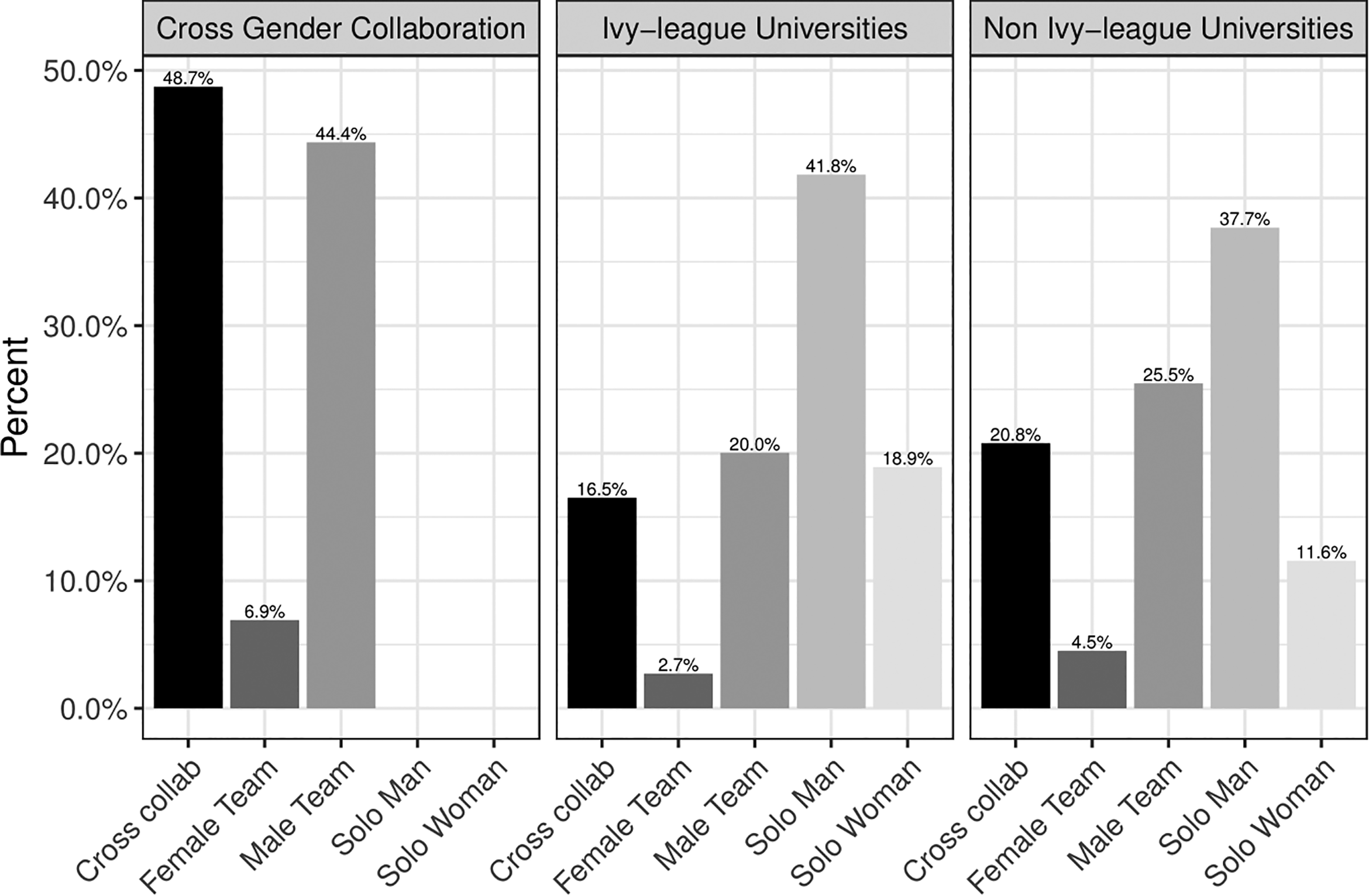
Gender coauthorship dynamics between authors affiliated in prestigious versus nonprestigious departments in American Journal of Sociology and American Sociological Review.
In order to qualitatively control for hiring inequalities, we checked the gender composition of a sample of prestigious sociology departments in 2017. Figure 7 shows that these departments hired men disproportionally, with the exception of New York University (46.88 percent of female among faculty members). This situation is similar to what Sheltzer and Smith (2014) found for the life sciences. Figure 8 shows the gender distribution of department members among the top 100 universities according to the Shanghai ranking. With only a few exceptions in which women are hired more than men, the gender balance was more favorable for men. This would confirm that in most prestigious universities, hiring and academic success are significantly gender biased.
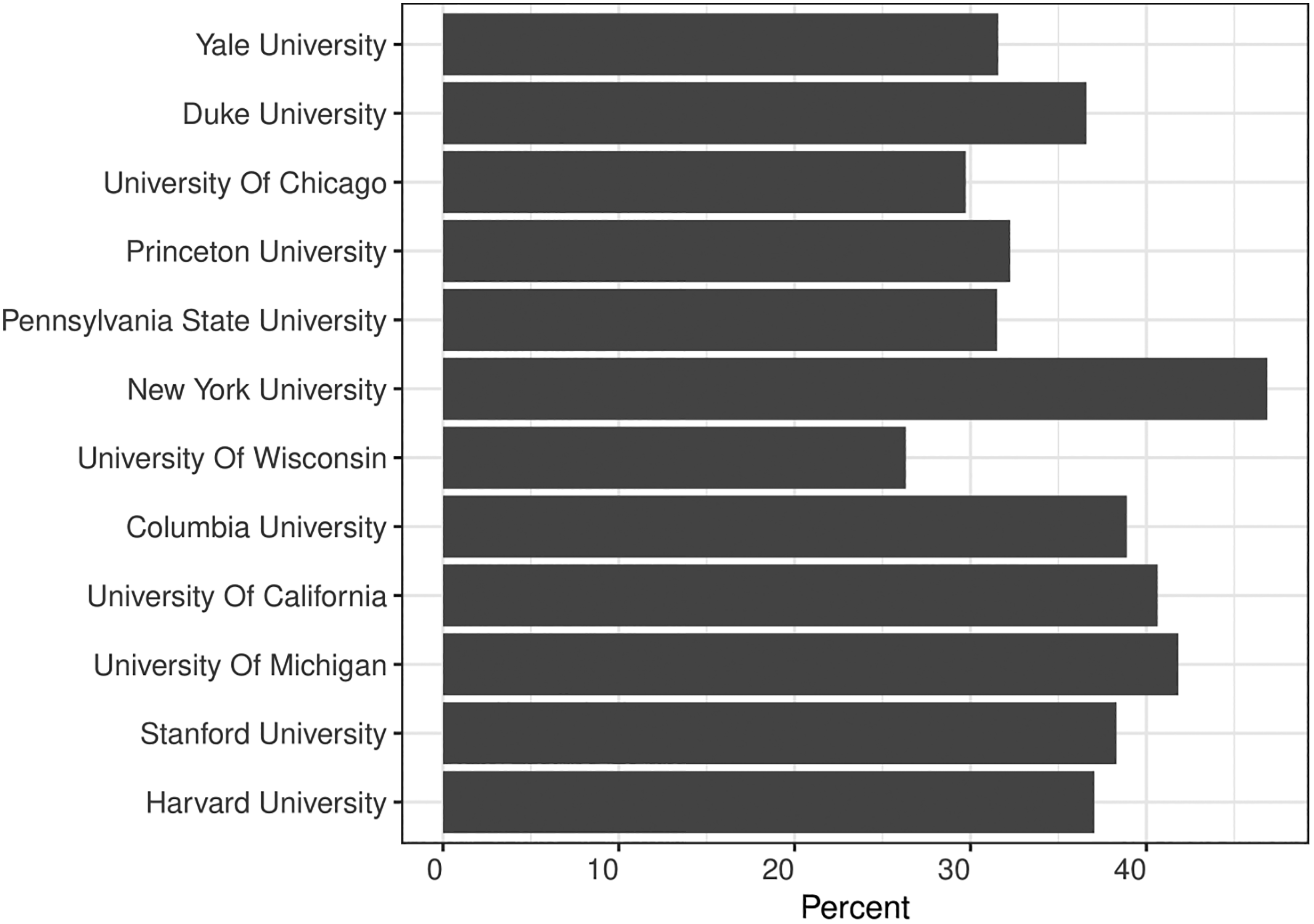
Percentage of female faculty members in some of the most prestigious sociology departments in 2017. Note that the y-axis lists departments according to the Shanghai ranking with the highest ranked at the bottom. Source: University websites.
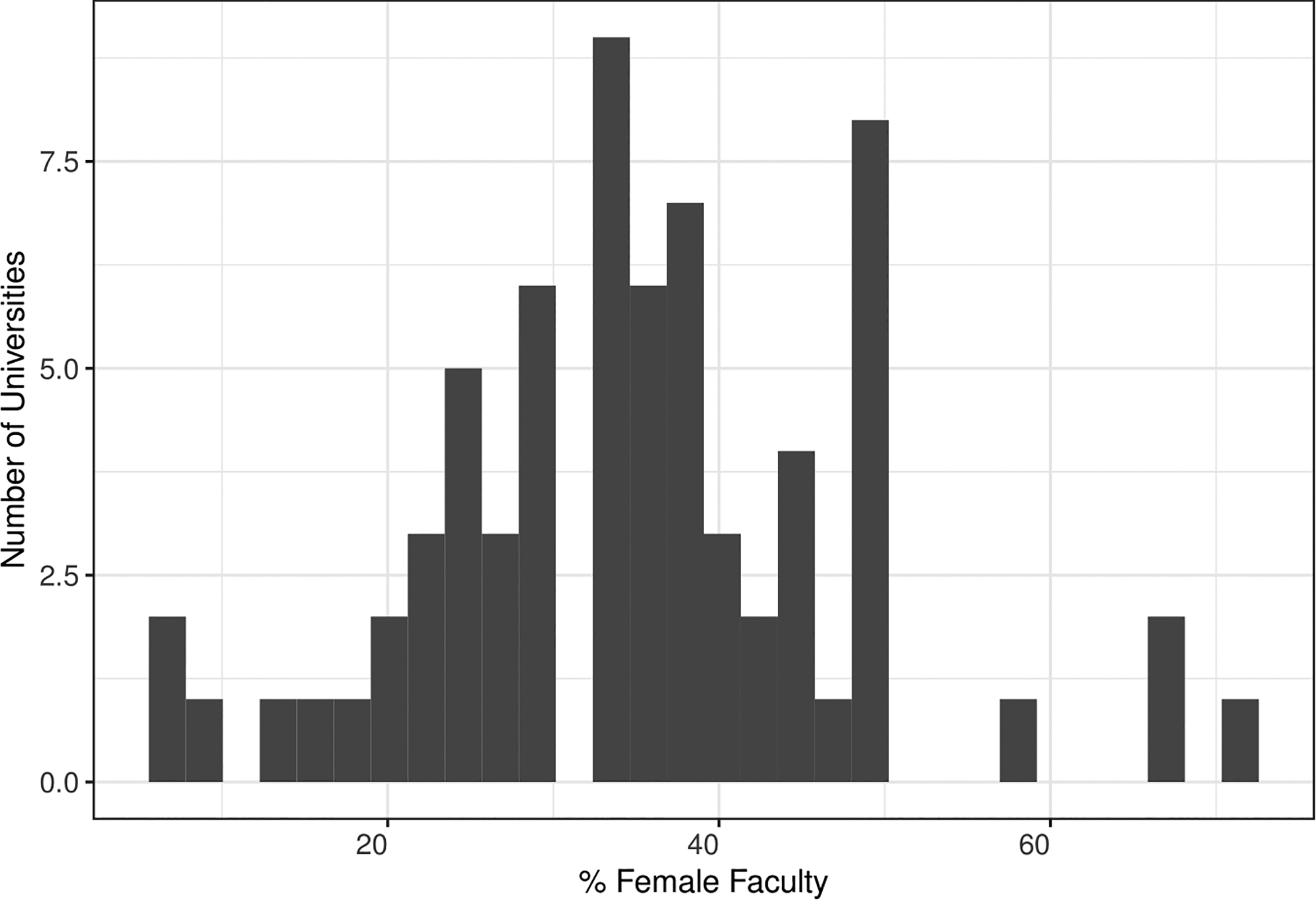
Gender patterns of current faculty of sociology in top 100 universities. Source: Shanghai ranking, data on 2017.
Statistical Models
In order to test our descriptive findings more robustly, we ran a negative binomial model (specifically due to count nature of our data; Snijders and Bosker 1999; Faraway 2005; Zuur et al. 2009), in which publishing in top journals was first examined as associated with gender. We controlled for departments by embedding each scientist in a crossed membership structure, which included the institution in which the scientists originally received their PhD and their latest academic affiliation (e.g., Akbaritabar, Casnici, and Squazzoni 2018). This allowed us to control for the prestige effect in two important stages of each scientist’s academic career. Furthermore, we checked whether gender penalties were less pronounced over the last decades (pre-post 2000), in which gender inequalities have been under the spotlight in the public debate, also informing institutional policies.
Tables 3 –5 show that differences were related to individual characteristics (see fixed effects in our models). When considering group variances (i.e., between the institution that awarded the author’s PhD title and his or her latest academic affiliation), we found minimal effects. The factor with the more robust effect was the authors’ accumulated citations. Indeed, Table 4 presents another variant of our multilevel models in which we estimated the influence of gender on accumulated citations of each author. Results confirmed that citations were more preferably attributed to articles in which men were authors, confirming a gender citation gap (Dion, Sumner, and Mitchell 2018).
Multilevel Negative Binomial Models (Aggregate Publications, Publications before 2000 and Publications after 2000).
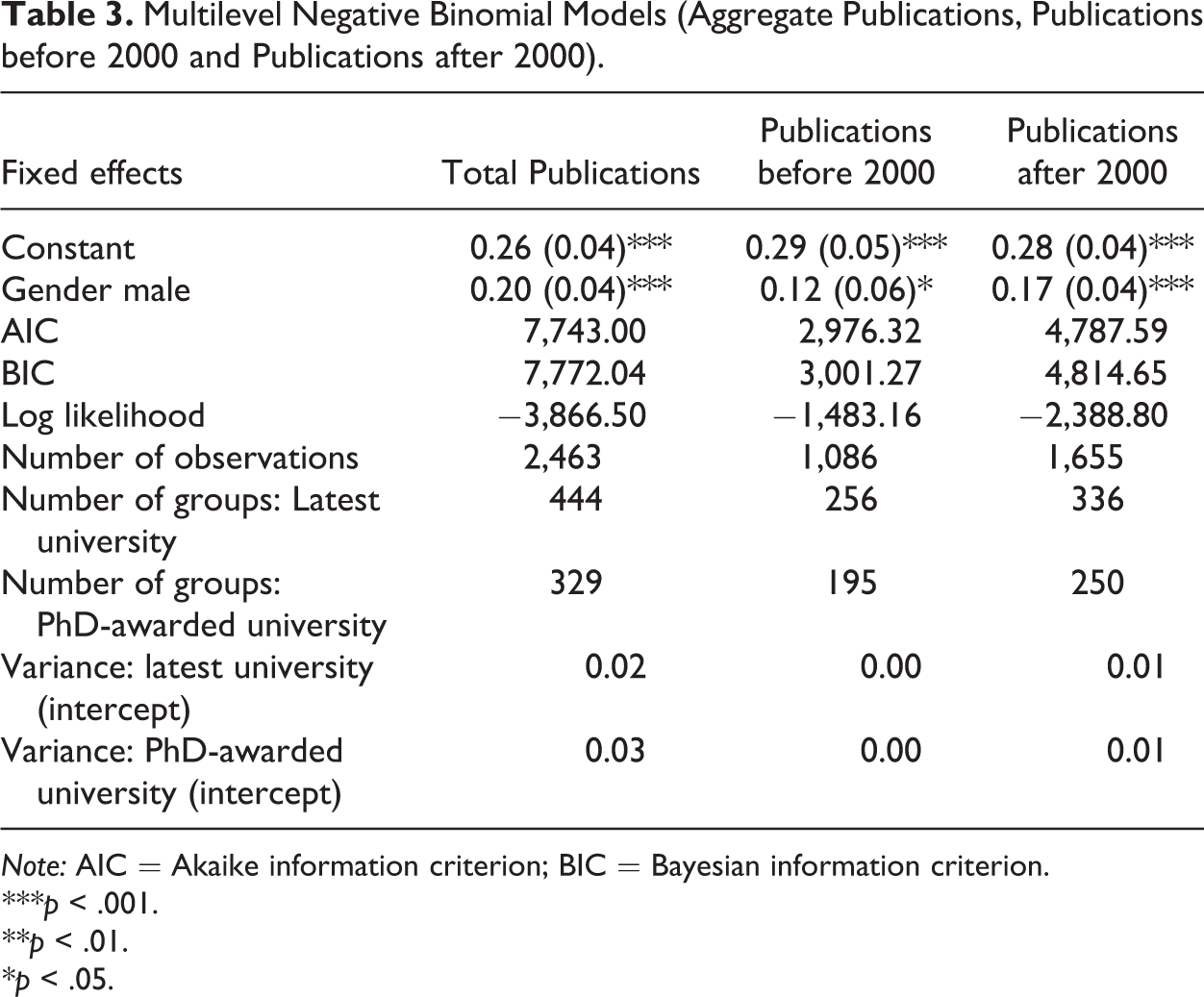
Note: AIC = Akaike information criterion; BIC = Bayesian information criterion.
***p < .001.
**p < .01.
*p < .05.
The Influence of Author’s Gender on Article Citations.
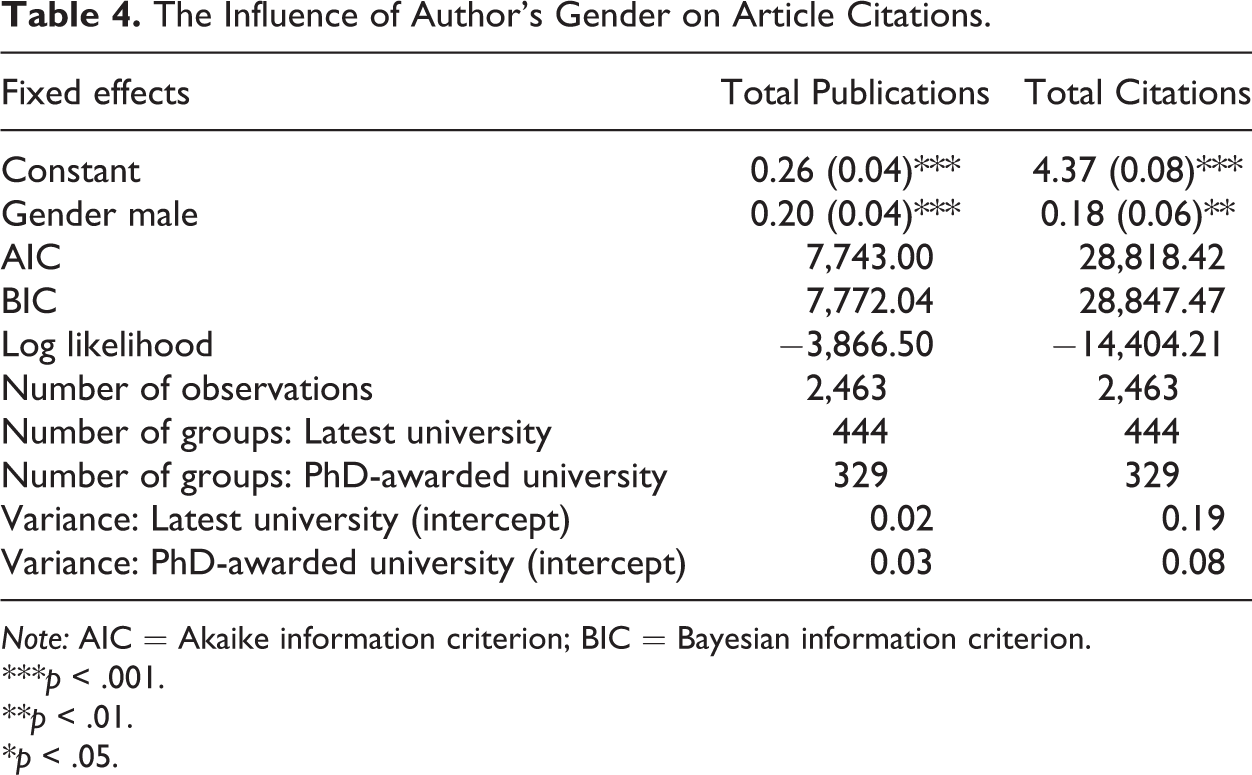
Note: AIC = Akaike information criterion; BIC = Bayesian information criterion.
***p < .001.
**p < .01.
*p < .05.
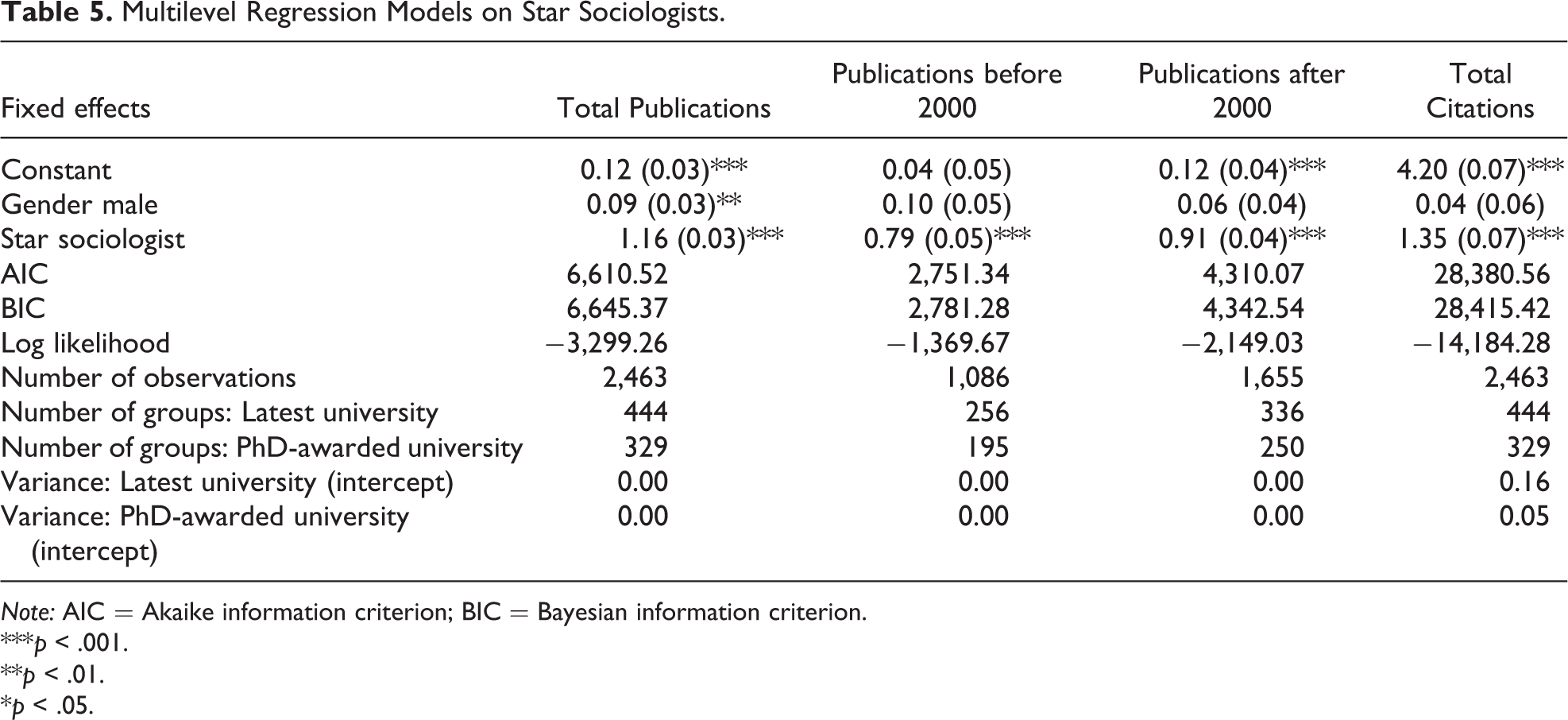
Multilevel Regression Models on Star Sociologists.
Note: AIC = Akaike information criterion; BIC = Bayesian information criterion.
***p < .001.
**p < .01.
*p < .05.
Finally, we looked at a restricted sample of more prolific, star authors, that is, those publishing more frequently in both journals. Among authors who published in both journals, 360 were men and 126 were women. Table 5 shows that publishing more in both journals was positively associated with higher recognition by the community but also that being a man was still significant in terms of prolificacy though not significant when considering recognition (i.e., citations).
Discussion and Conclusions
Scholarly journals are not only key to the quality and standards of research in a field, they also play a crucial role in the social organization of academic disciplines (Perrucci, Perrucci, and Subramaniam 2019). Mapping all publications in top sociology journals, that is, AJS and ASR, allowed us to reveal a gender pattern. These prestigious journals seemed to especially favor men and their exclusive coauthorship ties: close to 60 percent of articles in both journals have been authored exclusively by male authors, alone or in male teams. We did not find any relevant differences between the two journals. Although the situation has improved since 2000, these gender inequalities seem to be persistent even after considering the mediating effect of academic affiliation. Again, the potentially positive advantage of working in a prestigious, elite sociology department, in terms of better learning environment and reputational signal, only significantly benefited male authors.
As in Teele and Thelen’s (2017) study of publication patterns in political science journals, we found that the conventional standard of collaboration is the solo-male author or all-male teams, whereas women are less involved in coauthorships (Renzulli, Aldrich, and Moody 2000; Moody 2004). However, top journals in sociology seem at least more favorable to cross-gender collaborations than political science journals. If we consider only la crème de la crème, that is, authors publishing more frequently on both journals, we found that gender is less significant at least on recognition (i.e., citations). In any case, this would testify to the fact that gender penalties on publications could reflect a more complex context of institutional stratification, which traces back to unequal admission to elite institutions (Weeber 2006).
Obviously, estimating whether these unequal achievements are due to certain implicit discriminative practices among the academic elite or the mere consequence of a competitive, “winner takes all” academic market would require more in-depth data and analysis on journal submissions, referees, and editors (Østby et al. 2013; Siler and Strang 2014). As suggested by Hancock and Baum (2010) and Sheltzer and Smith (2014), it is also difficult to understand whether these outcomes incorporate endogenous self-selection bias tracing back to education, type of research, funding, and career (e.g., González-Álvarez and Cervera-Crespo 2017; Hancock and Baum 2010; Sheltzer and Smith 2014). Here, disentangling inequalities in publications from endogenous academic excellence formation mechanisms, which typically include nonlinear complex dynamics with potential institutional Matthew effects, would be necessary to assess editorial processes in more detail (Lamont 2009; Spencer and Freese 2015).
Examining these differences is also key to discussing the role of diversity in academia (Smith-Doerr, Alegria, and Sacco 2017). Encouraging diversity is beneficial to avoid group thinking and mainstream attitudes (Nielsen et al. 2017), detrimental especially in periods of uncertainty as they reduce epistemological and methodological pluralism. This is also the case for the risk of excessive isomorphism in faculty hiring and promotion, which could reduce the richness and variety of research submitted to scholarly journals (Dey, Milem, and Berger 1997). This in turn could favor “social closure” by journal editors and referees reinforcing the same standards of quality, value, and worth (Parkin 1979; Subramaniam, Perrucci, and Whitlock 2014).
Our study has certain limitations that need to be considered. First, our data do not cover the entirety of the academic domain, from education to funding and promotion. For instance, considering only publications ignores the gate-keeping role of journal editors, editorial boards, and referees (Siler and Strang 2014). Therefore, our results do not address editorial measures that could counterbalance these patterns. Second, a more in-depth attention to methods could help reveal vicious circles and self-reinforcing distortions in intellectual capital investment, which could point to education and training more than publications (Kahn 1993). In short, women may have fewer chances to publish in top journals because they do not perform the type of research that the journals prefer and in the specific way they prefer it (Teele and Thelen 2017). Unfortunately, without fine-grained internal journal data on manuscript submissions and peer review, it is impossible to estimate whether the gate-keeping function of scholarly journals contributes to the gender gap in recognition for women (Dion, Sumner, and Mitchell 2018). Recent research on scholarly journals in various fields found contrasting evidence on the effect of author reputation on editorial decisions, and so any generalization should be made with caution (Bravo et al. 2018; Teplitskiy et al. 2018)
Finally, it is possible that these patterns are less pronounced on average in less competitive journals. In general, the proliferation of journals, the high specialization of certain outlets, and the increasing number of online tools and platforms to share and communicate scientific articles have now formed a complex scholarly journal ecology (Fyfe et al. 2017; Pope and Marincola 2017). The richness and diversity of this ecology, as well as its continuous stratification and restructuring, could help counterbalance these patterns, for example, by providing outlets for relevant research that is not properly recognized by top journals. However, given the hypercompetition that characterizes the current situation of academia and the overproduction of scholarly articles, it is likely that the reputational signal of elite publications will be still important due to collective constraints of selective attention and even by hiring committees at the lower layers of the academic system.
Footnotes
Acknowledgments
We would like to thank the editor and referees for any comments or suggestions. A preliminary version of this article benefited from comments by Michèle Lamont and Kathleen Thelen. Usual caveats apply.
Declaration of Conflicting Interests
The author(s) declared no potential conflicts of interest with respect to the research, authorship, and/or publication of this article.
Funding
The author(s) received no financial support for the research, authorship, and/or publication of this article.
